June 13, 2022
Division of Corporate Finance
United States Securities and Exchange Commission
Washington, DC 20549
| Attn: | Stephen Krikorian |
| Melissa Walsh |
| Re: | Marathon Digital Holdings, Inc. | |
| Form 10-K for the Fiscal Year Ended December 31, 2021 | ||
| Form 10-Q for the Quarterly Period Ended March 31, 2022 | ||
| File No. 001-36555 |
Gentlepersons:
We are in receipt of your letter dated May 27, 2022, regarding our response, dated April 22, 2022, to your initial comment letter. Unless the context otherwise applies, we reference the comments in your May 27th letter as “comments” and comments in your original comment letter as “prior comments”. For ease of reference, we have set forth each of your comments below in bold with our response to each comment set forth immediately below each such comment.
Form 10-K for the Fiscal Year Ended December 31, 2021
Consolidated Statements of Operations, page F-5
| 1. | Please explain the basis for classifying the realized gain on the sale of digital currencies outside of loss from operations within other income/expenses. Cite the authoritative accounting literature that supports your accounting. |
During 2021, the Company entered into an agreement (analogous to a sponsorship agreement) to pay a developer, who worked on the bitcoin blockchain, for which work the Company did not receive any economic benefit, $8,000 per month in bitcoin (which payment occurred 10 times). The term of the agreement was less than one year, and the work done was not related to the Company’s core business of bitcoin mining. Due to the timing of the transactions and the volatility in the price for bitcoin, the Company had a realized gain on the disposition of the bitcoin of approximately $14,000 during the twelve months ended December 31, 2021. Due to the nature of the services not being related to the Company’s core business, the immaterial amount of the gain and the short timeframe of the arrangement, management concluded that these payments were non-operating expenses.
United States Securities
and Exchange Commission
June 13, 2022
Page 2
The Company considers any business expense that is not related to the company’s core business operations a non-operating expense. The treatment of this type of expense would fall under FASB 220-10-S99-2(9) – Regulation S-X Rule 5-03, income statements, which states: “State separately in the income statement or in a note thereto amounts of (a) losses on securities (net of profits) and (b) miscellaneous income deductions. Material amounts included under miscellaneous income deductions shall be separately stated in the income statement or in a note thereto, indicating clearly the nature of the transactions out of which the items arose.”
Notes to Consolidated Financial Statements
Note 1 - Organization and Description of Business, page F-8
| 2. | We note that you loaned bitcoin to NYDIG under the Master Securities Loan Agreements and the balance is classified as digital currencies, restricted on the balance sheet. Please describe the material rights and obligations of both parties to the borrowings. Explain how you are accounting for the borrowed bitcoin and the collateral. In addition, please provide the basis for your classification of the interest received on the bitcoin loans in your statement of cash flow. Cite the authoritative accounting literature that supports your accounting. |
Each of the loans is documented under a standard Securities Industry and Financial Markets Association form of Master Securities Loan Agreement (“MSLA”) with modifications made to accommodate digital assets and cross-default and set-off provisions. Per the MSLA, the parties have agreed that, until the loaned digital assets are required to be redelivered to the lender upon termination of a loan, the borrower has all of the incidents of ownership of the loaned digital assets, including the right to transfer the loaned digital assets to others. For each loan, (i) loan fees are paid monthly on the monthly anniversary of the trade date; (ii) the loan is uncollateralized; and (iii) either party may terminate the loan at any time with no early termination fee, penalty or make-whole.
We believe that bitcoin should accounted for by the Company as a non-financial asset under ASC 350-10-40-1 and therefore subject to the derecognition guidance in ASC 610-20, Gains and Losses from the Derecognition of Nonfinancial Assets. In this case, the Company does not meet the derecognition criteria, as control has not transferred to the borrower. There is no collateral and thus no accounting treatment for collateral. Interest income earned on the non-financial asset is subject to treatment under ASC 835-10 and ASC 835-30.
Please also note that the Company has determined that it will no longer engage in these transactions with NYDIG and is preparing to terminate the MSLA.
| 3. | We note that, on December 21, 2021 and December 30, 2021, you entered into two separate Simple Agreement for Future Equity (“SAFE”) agreements. Please describe the material rights and obligations of these agreements. Also provide us with your comprehensive analysis to support your accounting for these agreements with reference to the authoritative literature applied. Ensure that your response includes, but is not limited to, an analysis of why you reference the guidance in ASC 323, what consideration was given to the application of ASC 815, and how you assess impairment. |
SAFEs are contractual rights to receive equity securities if certain criteria are met and thus regulated by the SEC under federal securities law. The FASB has not issued any authoritative guidance related to SAFEs. Management has determined the investment in a SAFE to be treated under ASC 323 as SAFEs behave more like equity than debt (i.e.: there are no repayment obligations, accrued interest or fixed maturity).
United States Securities
and Exchange Commission
June 13, 2022
Page 3
Pursuant to ASC 323, Equity Method of Accounting for Investments, the initial investment in another company is recorded as an asset on the balance sheet at cost. An equity method investment is valued as of a specific reporting date with any activity related to the investment recorded through the income statement. Investments are typically current assets if the Company intends to sell them within a year, however as SAFEs have no expiration date, the Company classifies these types of investments as a noncurrent asset due to the indefinite life of the conversion.
Pursuant to ASC 815-40, entities must consider if SAFE investments classify as contracts that may be settled in its own stock; however, the Company is not the issuer in these scenarios, and is merely an investor, so it is not issuing its own stock.
The Company evaluated these investments under guidance provided by ASC 815 and concluded that these investments are not derivatives, nor do they contain embedded derivatives.
The SAFEs currently entered into are contractual agreements between unrelated third party entities and the Company, whereby the Company is granted the right to receive equity shares in the future if certain triggering events occur. As the investments made by the Company do not meet the above mentioned requirements to qualify as a derivative, they are not classified as derivatives under ASC 815.
The Company confers, on a quarterly basis, with each of the unrelated third party entities in which it has invested as to whether any impairment of the fair value of the investment has taken place. The Company will also utilize an outside valuation specialist if it is deemed necessary.
Notes to Consolidated Financial Statements
Note 2 - Summary of Significant Accounting Policies
Digital Currencies, page F-13
| 4. | We note your response to prior comment 11. Further explain how your policy of testing for impairment on a nightly basis complies with ASC 350. In this regard, consistent with ASC 350-30-35-19, you indicate that impairment exists when fair value is below carrying value, and ASC 350-30-35-18 indicates intangible assets should be tested for impairment at any time events or changes in circumstances indicate that it is more likely than not that the asset is impaired. |
An indefinite-lived intangible asset is initially carried at the value determined in accordance with FASB ASC 350-30-30-1 and should be tested for impairment annually or more frequently if events or changes in circumstances indicate it is more likely than not that the asset is impaired. Paragraphs 18B and 18C in FASB ASC 350-30-35 provide examples of relevant facts and circumstances that should be assessed to determine if it is more likely than not that an indefinite-lived intangible asset is impaired. For instance, a decline below cost in a quoted price on an exchange may be an event indicating that it is more likely than not that a cryptocurrency is impaired. If an impairment indicator exists and it is determined that the carrying amount of an intangible asset exceeds its fair value, an entity should recognize an impairment loss in an amount equal to that excess. After the impairment loss is recognized, the adjusted carrying amount becomes the new accounting basis of the intangible asset. Management referred to paragraphs 15–20 in FASB ASC 350- 30-35 for details on the subsequent accounting. In determining the fair value, management referred to ASC 820-10-35-6 which states: “If there is a principal market for the asset or liability, the fair value measurement shall represent the price in that market (whether that price is directly observable or estimated using another valuation technique), even if the price in a different market is potentially more advantageous at the measurement date”. Bitcoin is highly volatile and continuously traded 24 hours a day, 7 days a week with no specific closing price on any day. Since there is no recognizable cut off and bitcoin is constantly traded, the Company has concluded utilizing a standardized time on a daily basis to determine the closing price provides for consistency in evaluating impairment and eliminates any subjectivity as to when the impairment has occurred.
United States Securities
and Exchange Commission
June 13, 2022
Page 4
| 5. | We note your disposition of digital currencies of $80,000. Tell us how this is reflected on the statement of cash flows. Provide an accounting analysis that supports your presentation, and explain the basis for any differences in the presentation from prior periods. Also, please tell us whether you lend your cryptocurrency or otherwise purchase forward contracts related to cryptocurrency. Tell us and disclose your accounting policy for such transactions, and cite the supportive accounting literature. |
Disposition of digital currencies of $80,000 was related to transferring $8,000 worth of bitcoin each month for 10 months to the blockchain developer referenced above in Response #1, which cites the accounting analysis as well. Due to the lack of materiality and the unusual nature and subject matter of the transaction, we have included this item in “Changes in operating assets and liabilities: Digital Currencies” on the cash flow statement, including the change in presentation from prior periods. The Company relied on guidance provided by ASC 820-10-35-5 through 35-6A to determine the fair market value of the bitcoin transferred at the time the transfer occurred utilizing the public exchanges.
We are currently loaning 600 bitcoin to NYDIG, which is the subject of Response #2 with appropriate accounting analysis contained therein.
The Company is not currently purchasing forward contracts related to cryptocurrency.
Investment Fund, page F-15
Introductory Note to the responses with respect to the Investment Fund: The Company has recently determined to “collapse” this fund and hold all of its bitcoin directly in order to create a single combined source of collateral in anticipation of potential commercial debt financing in the future. The bitcoin formerly held in the fund is in the process of being transferred back to the Company and will be held directly on the Company’s balance sheet. We are in the process of terminating the fund (which we expect to be completed in the third quarter of this year), with the only assets remaining in the fund being approximately $500,000 in cash to be used to pay any invoices and fees as we unwind the fund. Our answers to the fund-related questions follow (anticipating this unwinding of the fund), and we wanted to make the Commission aware of this recent development.
United States Securities
and Exchange Commission
June 13, 2022
Page 5
| 6. | You indicate in response to prior comment 13 that your capital contribution to the investment fund was made in cash. Please reconcile this to your disclosures on page F-11 indicating that you purchased bitcoin through an investment fund and on page 48 that the bitcoin was purchased and placed into the investment fund. In addition, please explain the disclosures throughout your filing indicating that you hold bitcoin in an investment fund, expect to purchase additional bitcoin held by the investment fund, and may sell this bitcoin in future periods to generate cash. Also address your press release on January 25, 2021, stating that you purchased $150 million in bitcoin. In this regard, you have represented that you own 100% of a limited partnership interest in an investment fund and that entity invests in and holds bitcoin. |
Pursuant to the response to prior comment 13, the Company funded a $200 million capital contribution into the fund, and the fund purchased $150 million of bitcoin (with $50 million being refunded to the Company). As the Company owns 100% of the limited partnership interests in the fund, and the fund can be collapsed at any time, with the Company retaking direct ownership of the bitcoin in question, the Company, for all practical purposes, does own the bitcoin, even if technically indirectly through the fund of one. Thus, the Company’s position is that it effectively purchased and owns the bitcoin and thus believes its disclosures are correct. This point is further manifested by the fact that the Company is currently in the process of “collapsing” the fund and re-taking direct ownership of the bitcoin in question.
| 7. | We note your response to prior comment 13. Please provide us with your proposed revised accounting policy for your investment in the investment fund. That is, as previously requested, please address how you are accounting for your limited partnership interest in NYDIG Digital Assets Fund III, LP. |
The Company is not intending to revise its accounting policy for the investment in the investment fund. In addition, as discussed in more detail below the Company is actively collapsing the investment fund and anticipates the limited partnership interest in NYDIG Digital Assets Fund III, LP to be dissolved by the end of the third quarter of 2022.
| 8. | You refer to ASC 810-10-25-38A through 25-38J in response to prior comment 13. Please further describe to us the design and purpose of NYDIG Digital Assets Fund III, LP (“DAF III”). Include in your response: (1) the basis for why you would fund 100% of the capital of DAF III, yet not retain any control over how that capital is deployed; (2) why the General Partner does not receive any economics in performance of its duties; (3) whether DAF III is designed to take on other investors; and (4) whether DAF III is designed to hold investments other than bitcoin. |
The fund’s purpose is to invest in bitcoin and to reasonably capture the economic value of any other digital assets that may be granted to the Fund as a result of forks or airdrops and that have material value and are accessible to the fund.
(1) As previously noted, a purchase of $150 million of bitcoin is large relative to liquidity in the market and requires expertise that is unrelated to mining activity conducted by the sole Limited Partner (and the fund may not take on additional limited partners without the consent of its original limited partner, which is the Company), and the Investment Manager exercised meaningful discretion in determining the manner in which to execute the purchase.
(2) The General Partner is wholly owned by the Investment Manager, which receives compensation in the form of a management fee, thus the General Partner is indirectly compensated through the Investment Manager.
United States Securities
and Exchange Commission
June 13, 2022
Page 6
(3) As previously noted, the Fund is designed to, and the General Partner may, admit additional Limited Partners to the Fund, with the consent of the Limited Partner.
(4) The Fund’s principal investment is in bitcoin; however, the Fund may have more than one investment in the event of a fork or airdrop (i.e., the Investment Manager has discretion over whether to access forks or airdrops that the Fund could potentially be eligible to receive). With notice to the Limited Partner and an opportunity for the Limited Partner to withdraw, the General Partner could amend the Fund’s investment strategy in the future to include additional investments and/or investment strategies.
| 9. | Refer to your response to prior comment 13. Please identify for us the General Partner and Investment Manager and describe to us any related party relationships. In addition, provide us with your analysis of de facto agents pursuant to ASC 810-10-25-43. Further, and where applicable, explain what consideration was given to the remaining guidance in ASC 810-10-25-42 through 25-44B. |
The General Partner is NYDIG Digital Assets Fund III (GP) LLC, and the Investment Manager (“IM”) is NYDIG Asset Management LLC. Neither the General Partner nor the Investment Manager is an affiliate of Marathon Digital Holdings, Inc. The Company does not view either of the GP or the IM as a related party or de facto agent under ASC 810. We reviewed the remaining guidance in ASC 810—25-42 through 25-44B and made a determination that such guidance was not relevant to our set of facts.
| 10. | In order to help us further evaluate your response to prior comment 13, please clarify which entity is the limited partner of the Fund and whether the limited partner is a consolidated subsidiary of the Company for all periods; clarify to whom the Other Considerations #5 in your response refers and how its expectation “to purchase additional bitcoin held by the investment fund in future periods” is consistent with your accounting conclusion; and identify the various parties invested in or involved with the Fund and their relationships as well as the source of the Fund’s bitcoin. |
The Company is itself the limited partner of the fund and is the sole limited partner. The other parties involved are the General Partner and Investment Manager identified above in our response to Comment # 9. The party to whom the Other Considerations # 5 refers to the Company and the expectation is moot as disclosed above, the Company is to liquidate the fund in the near future.
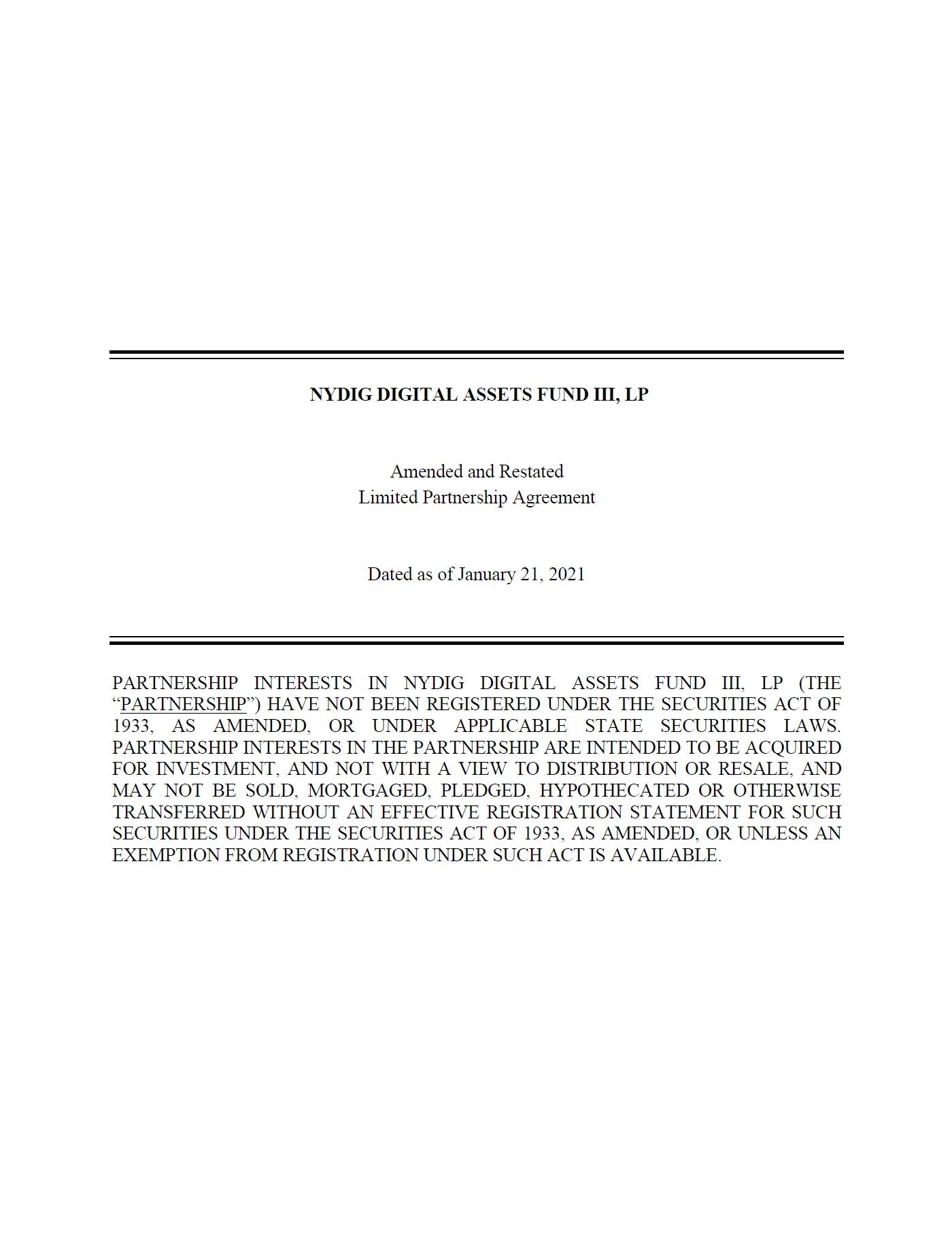
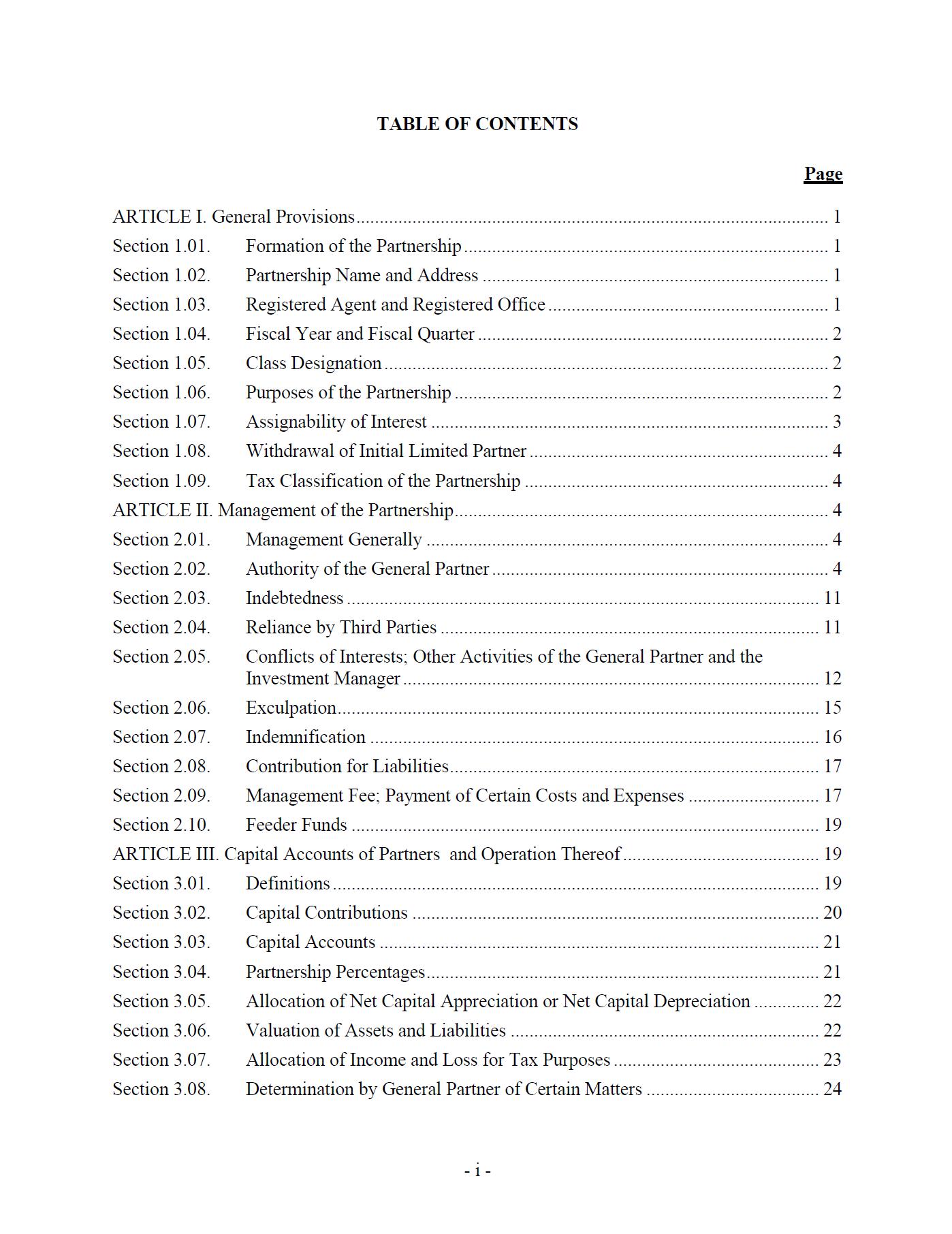
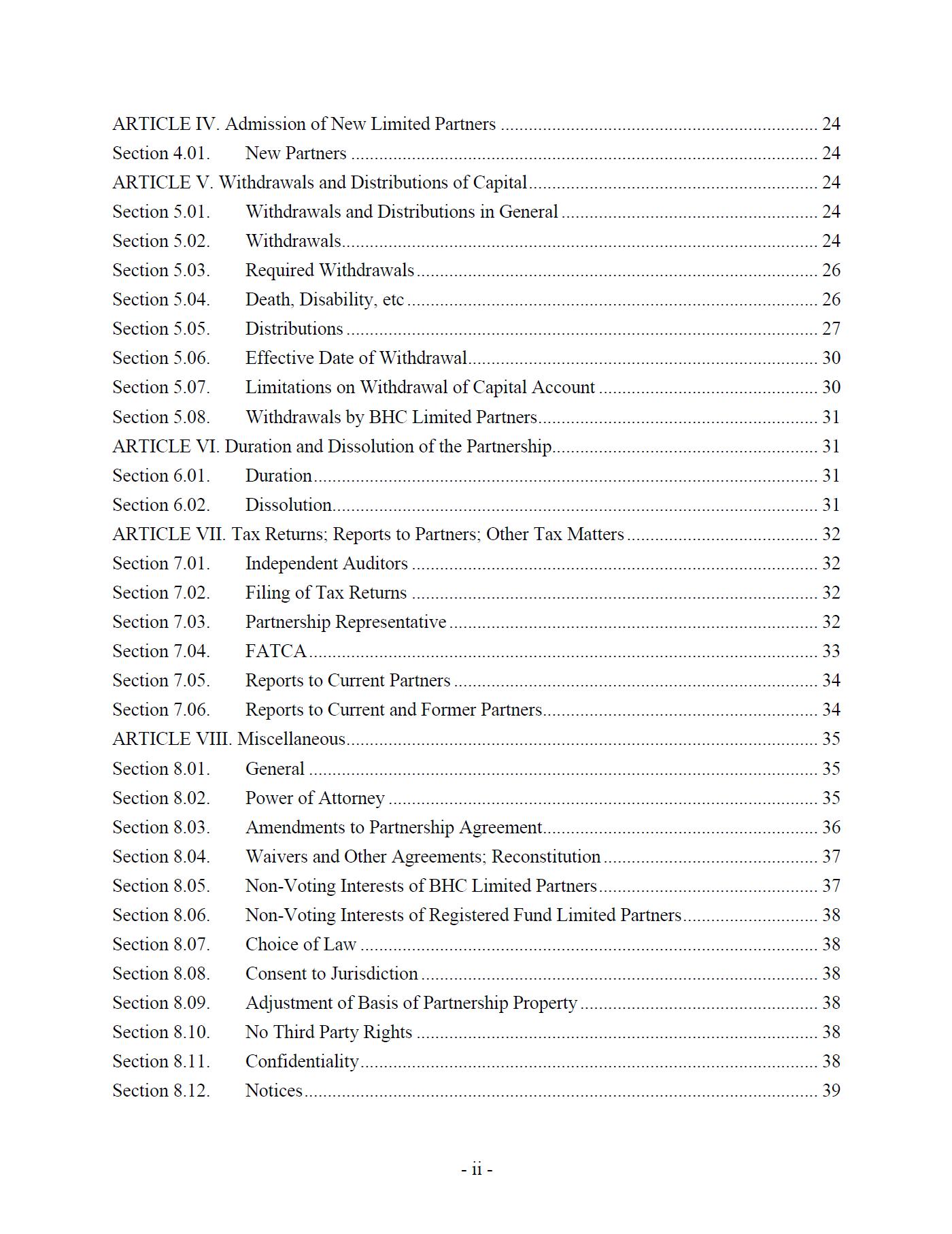
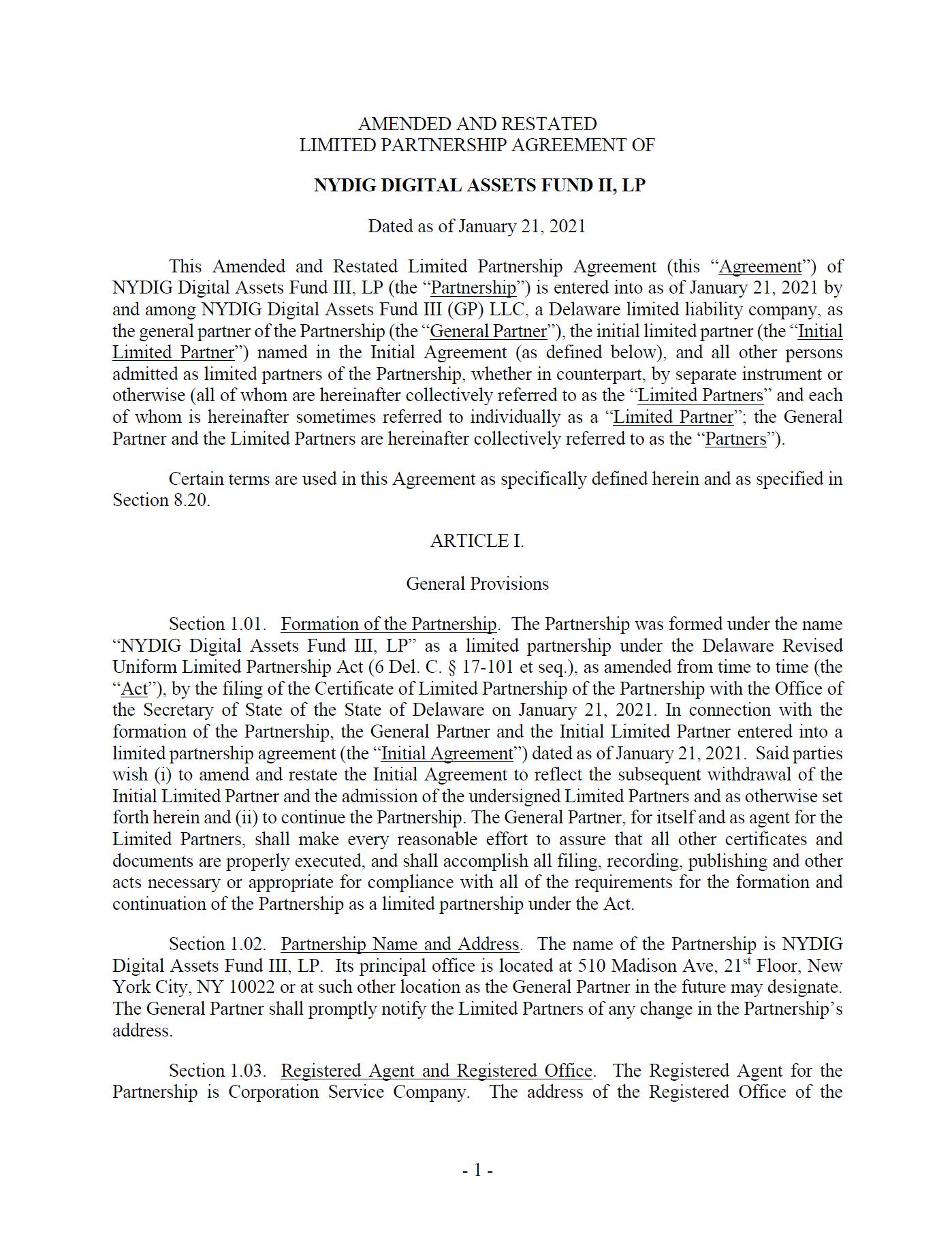
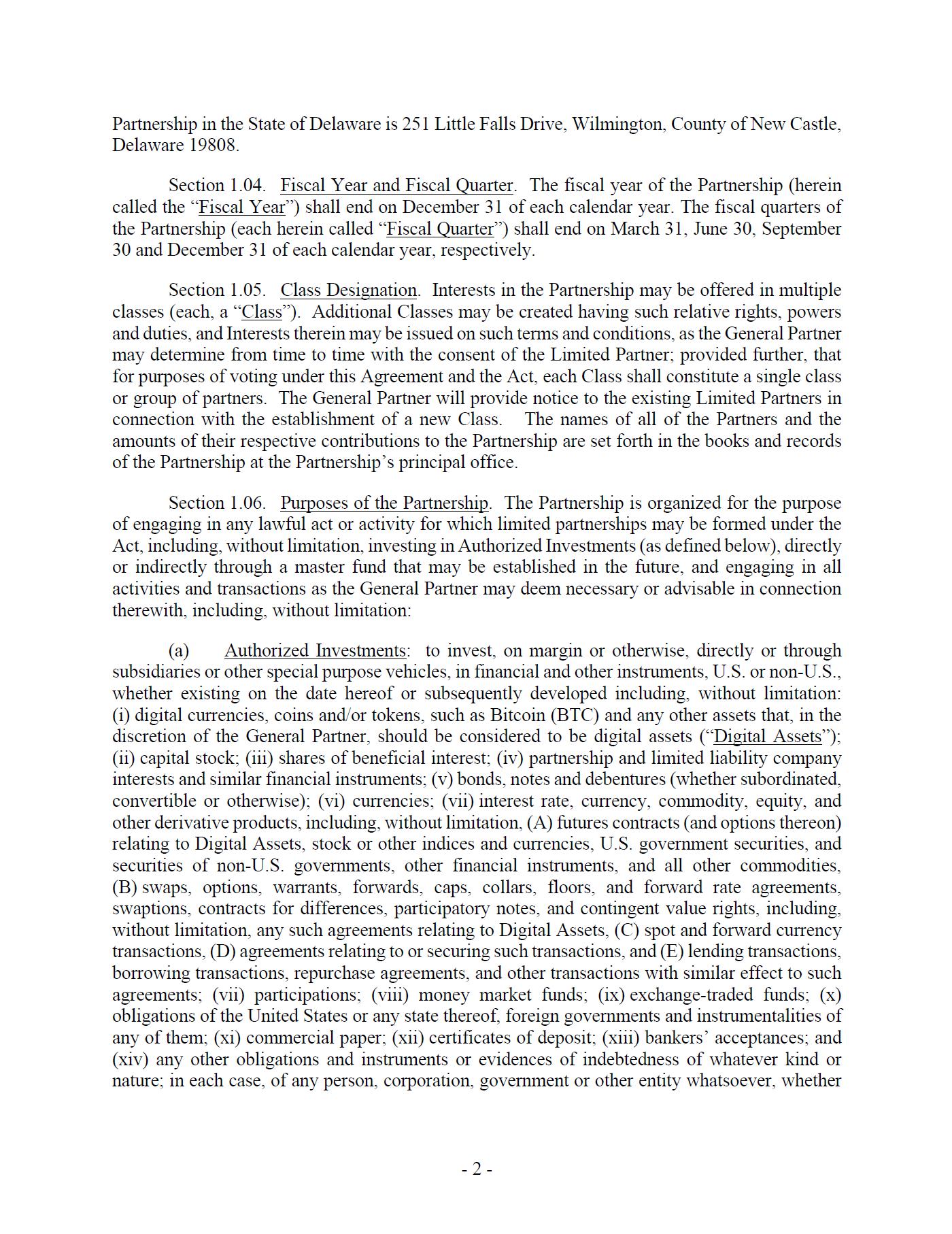
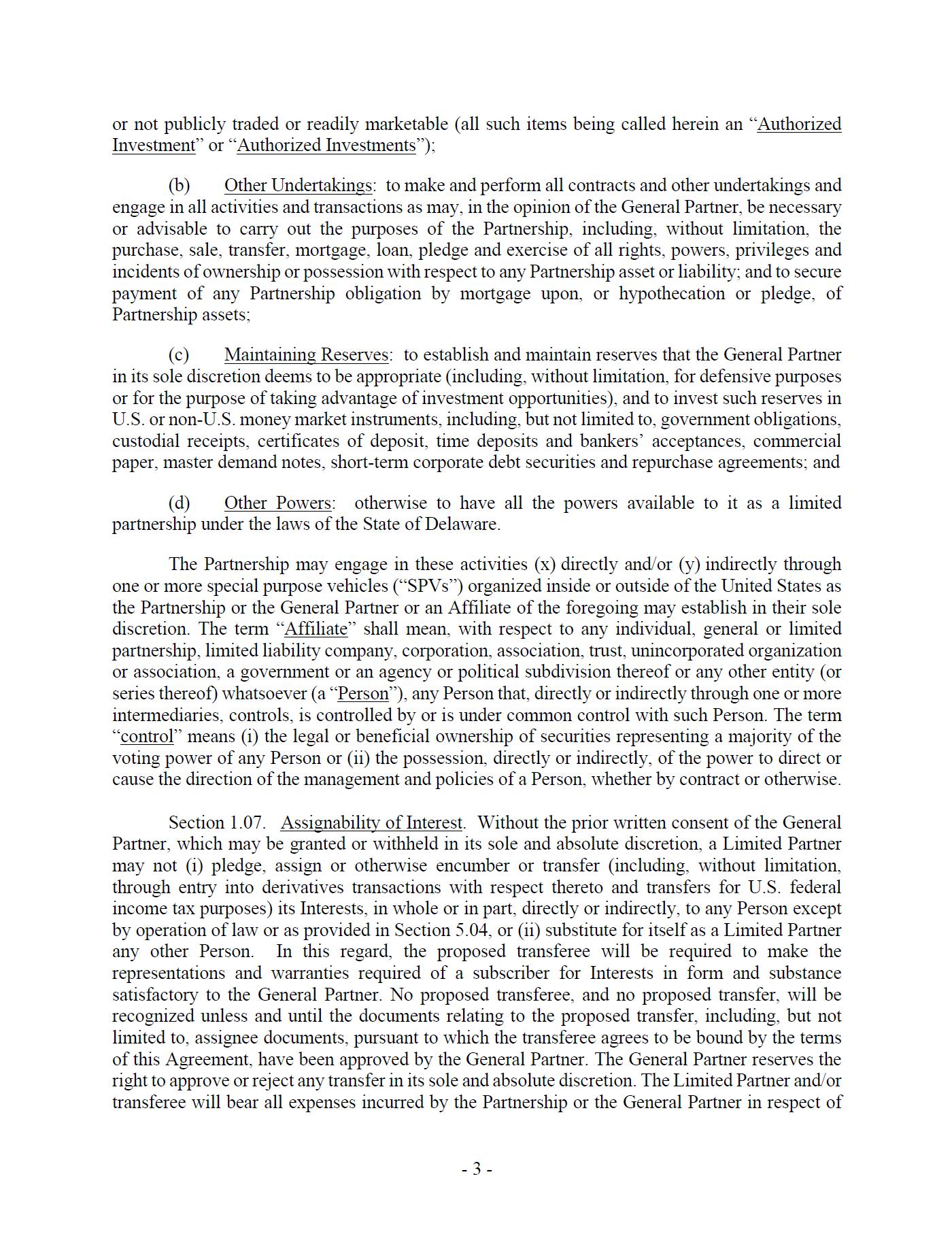
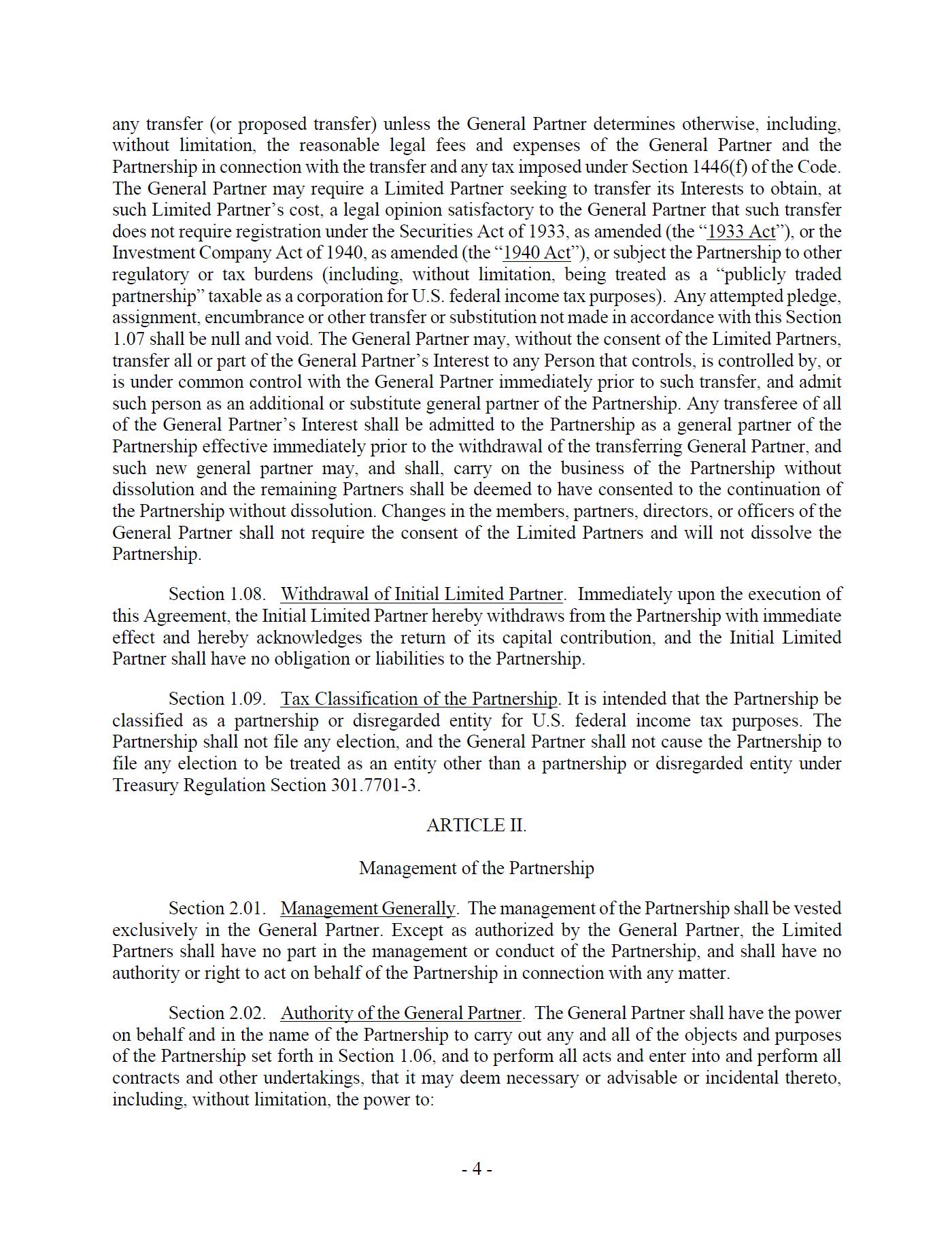
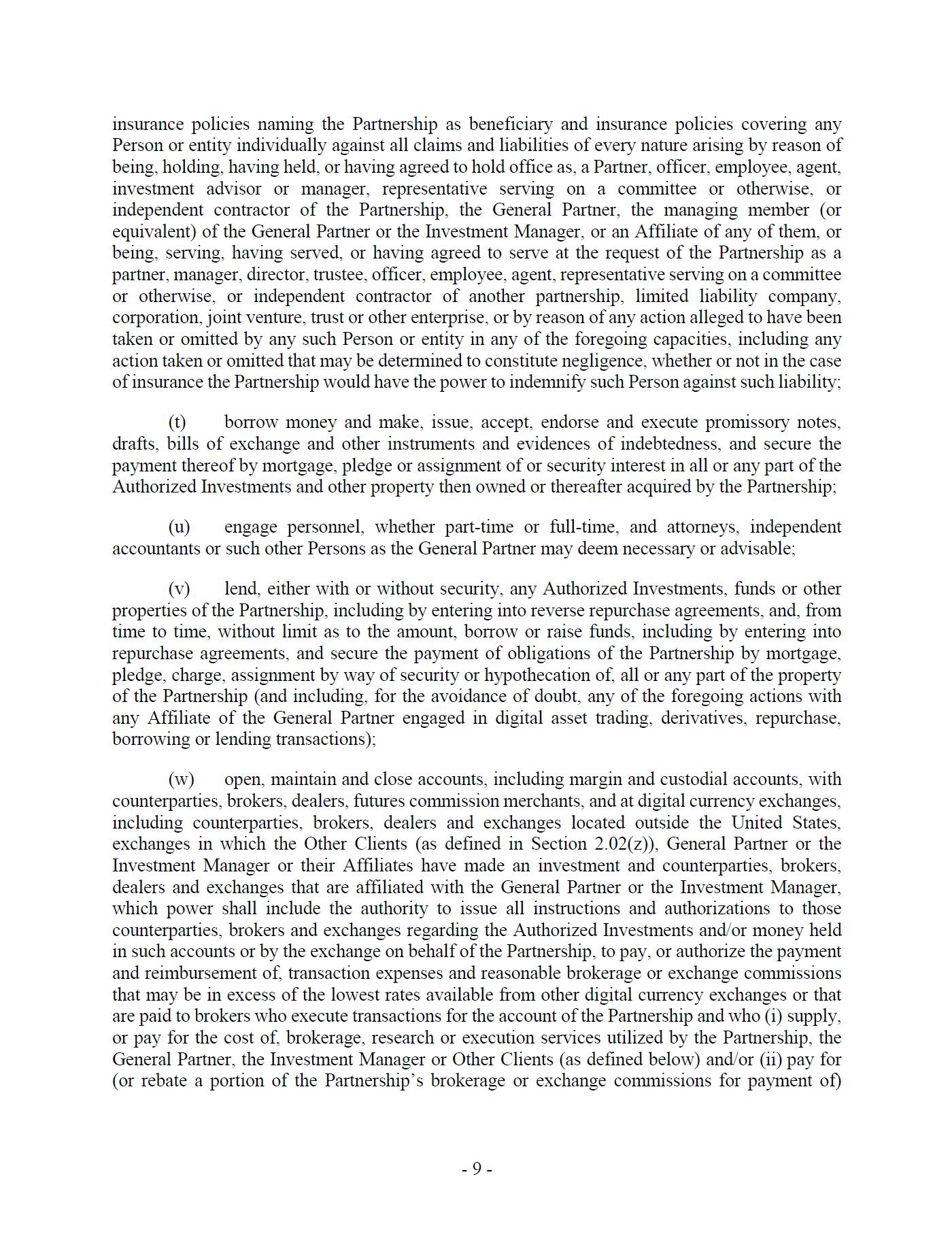
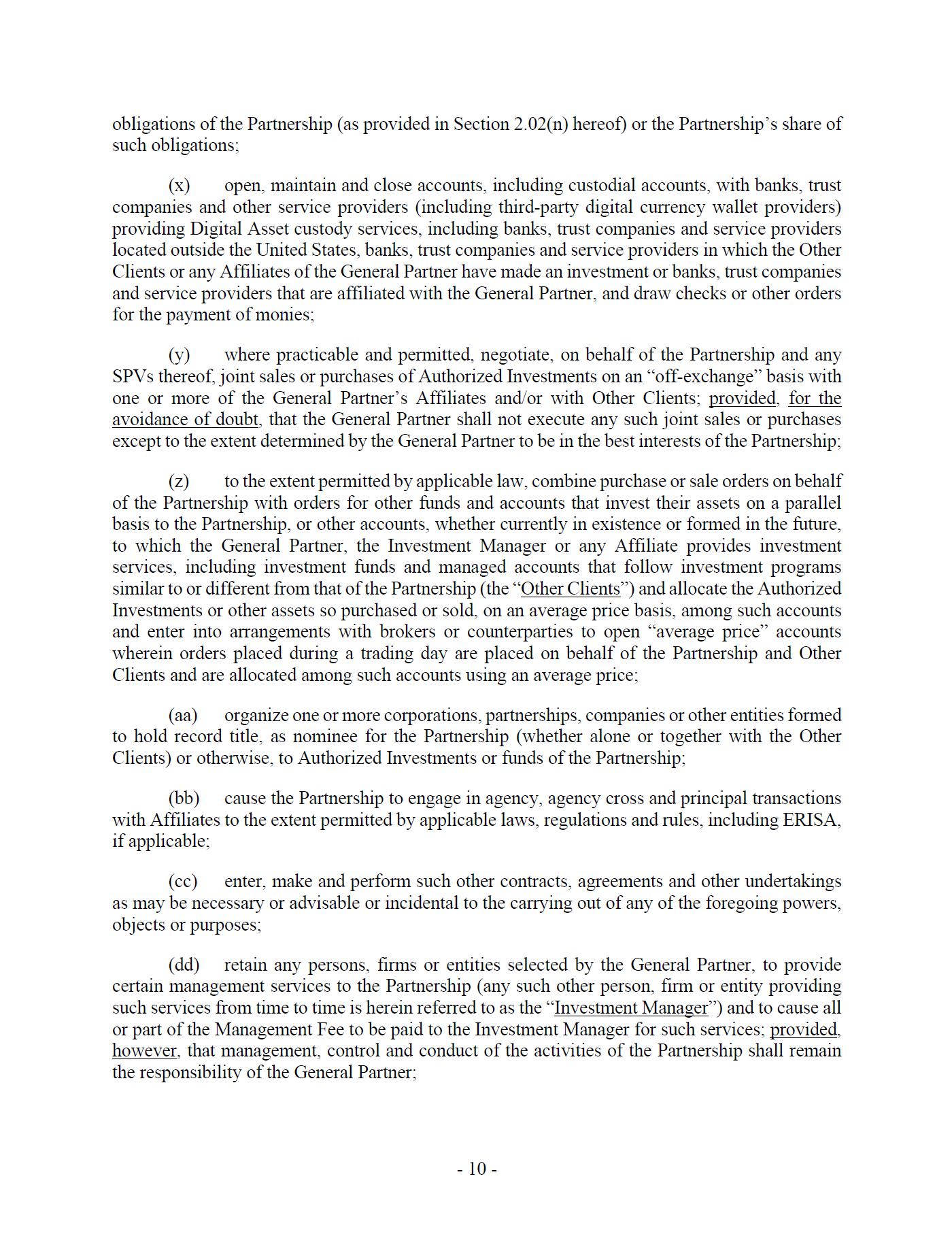
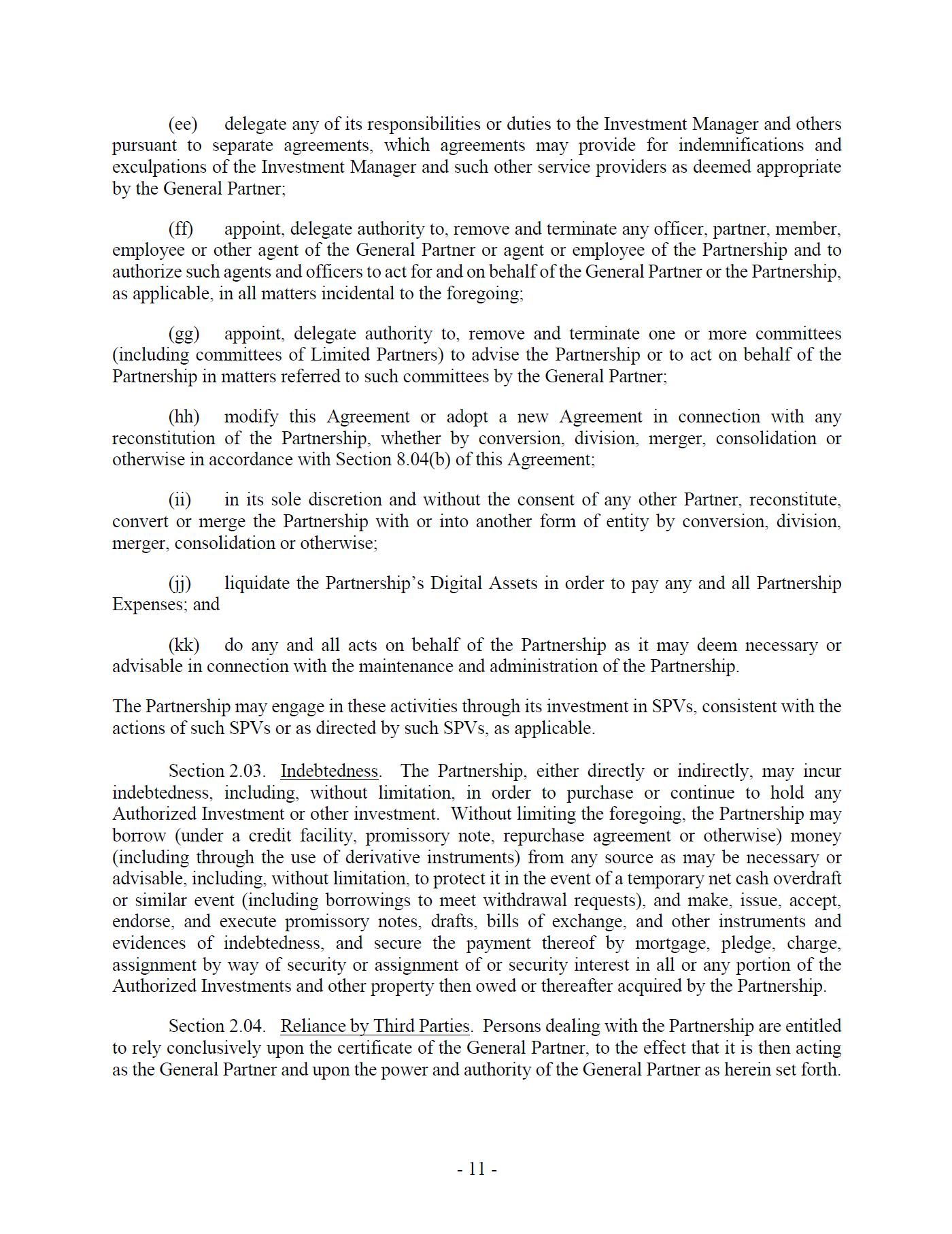
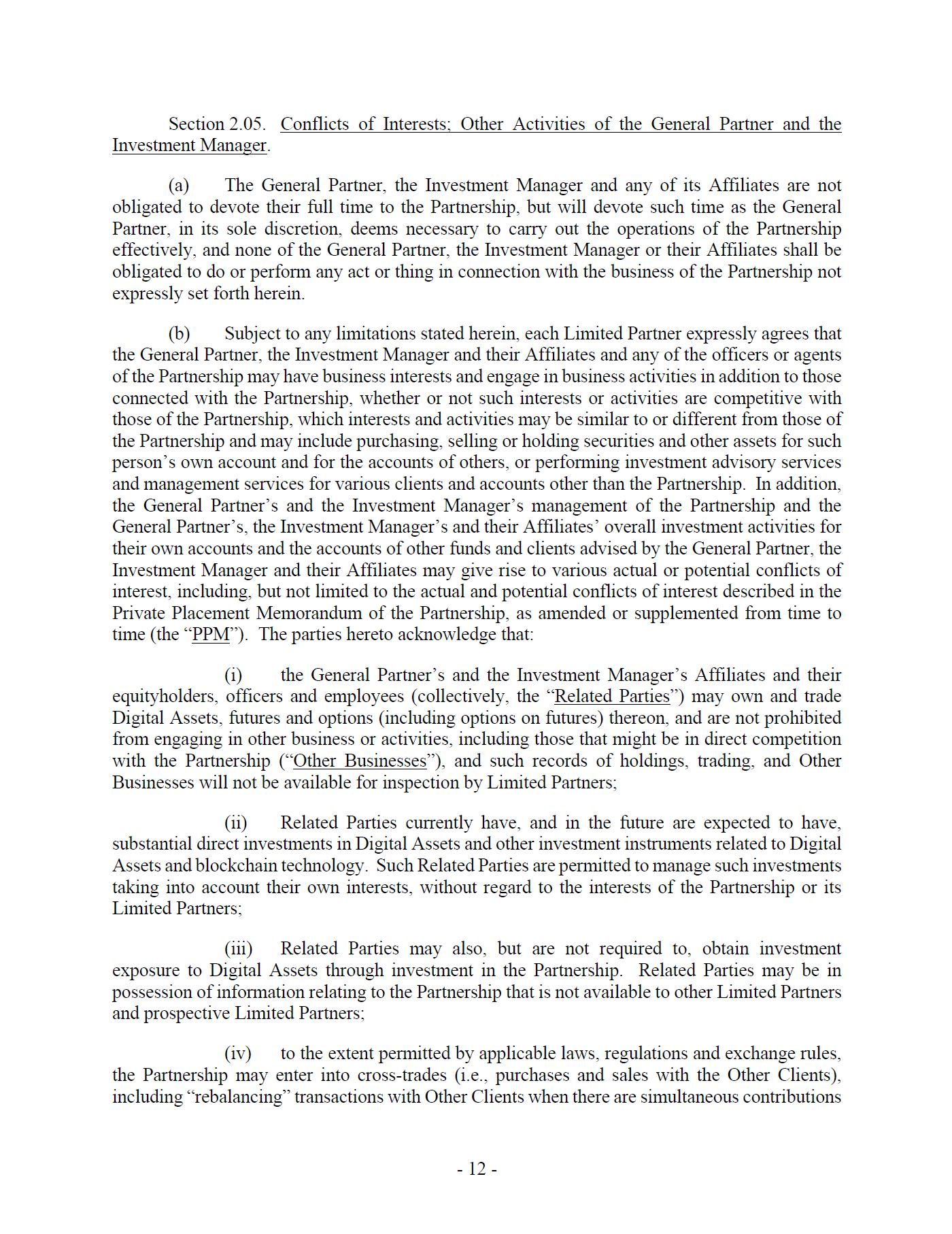
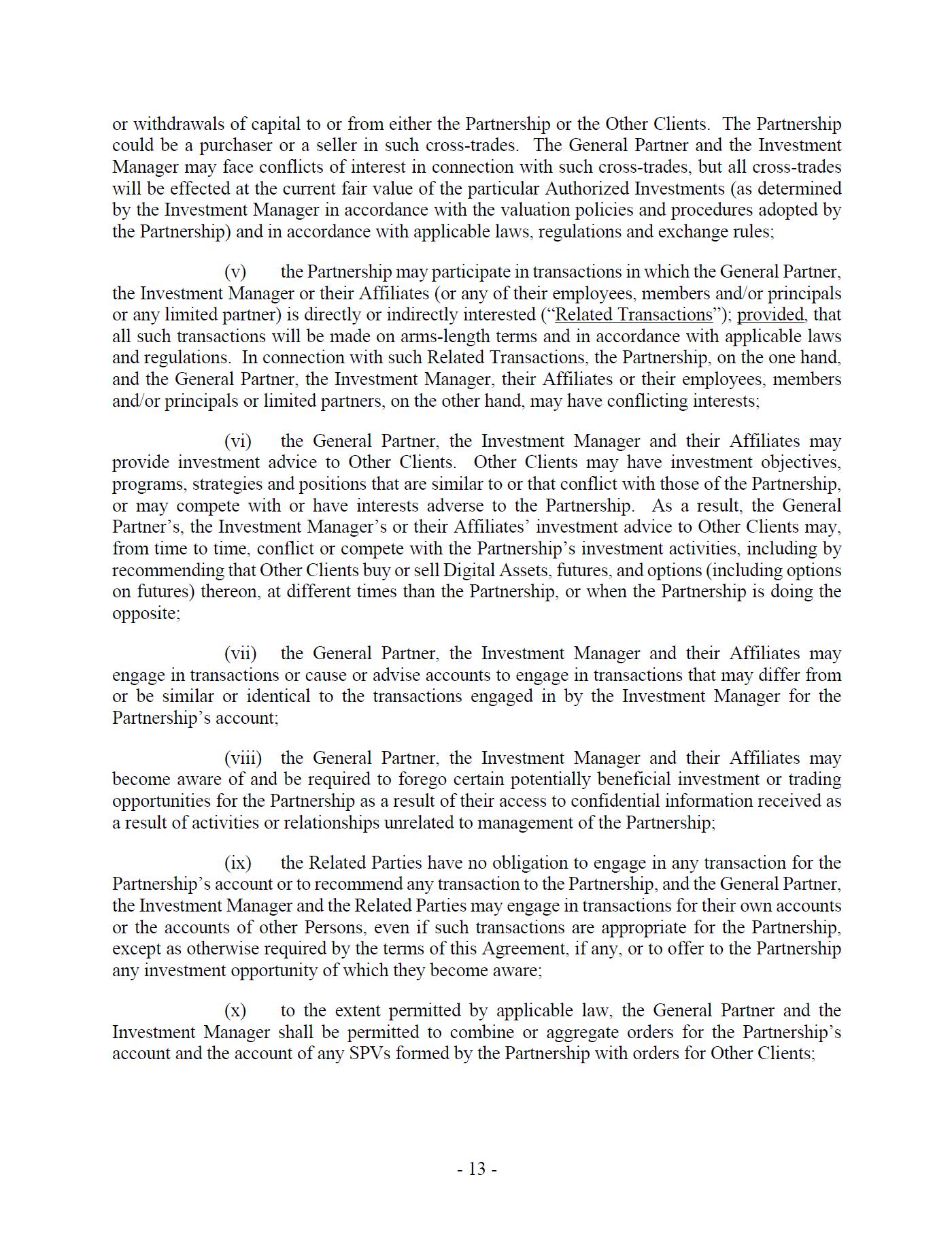
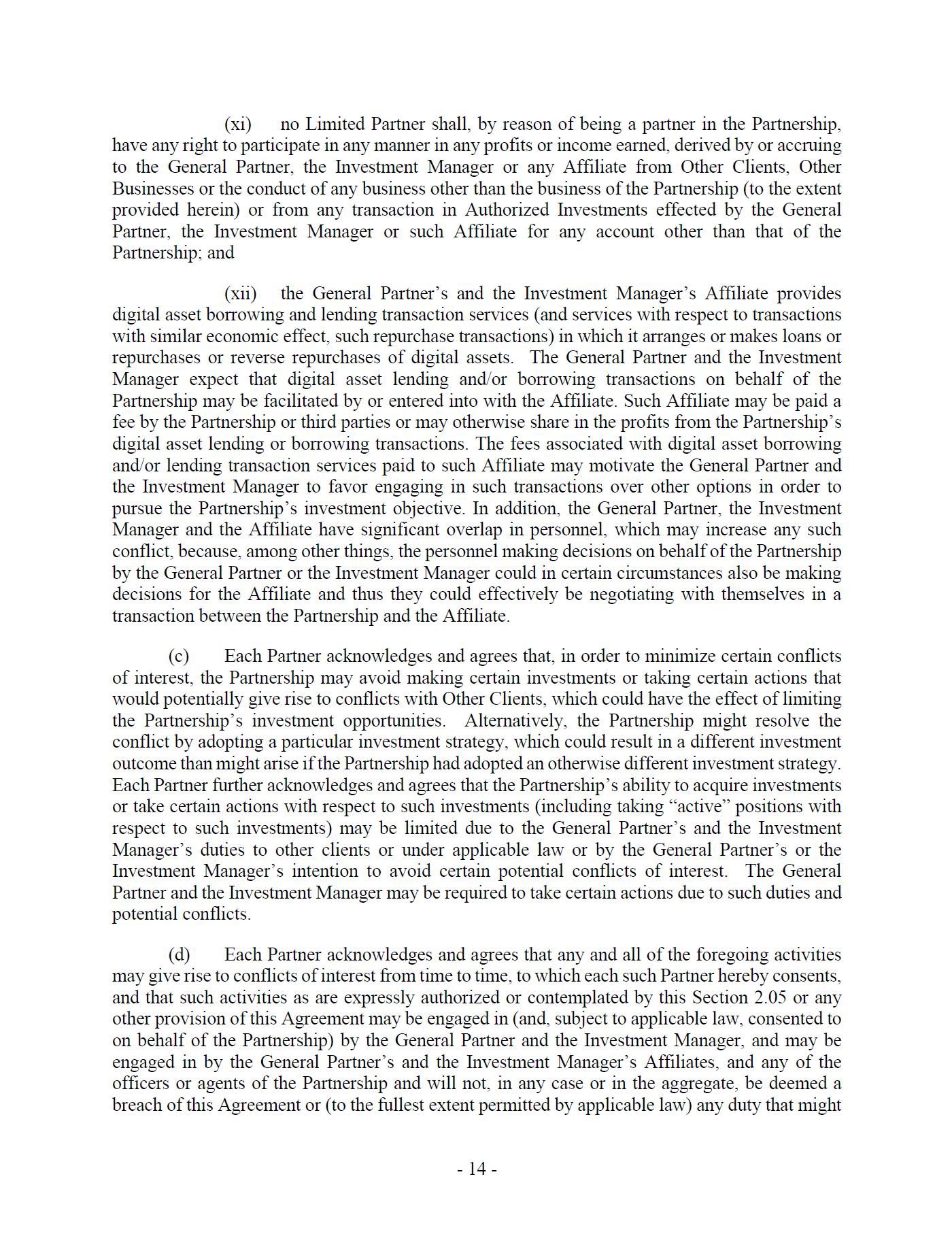
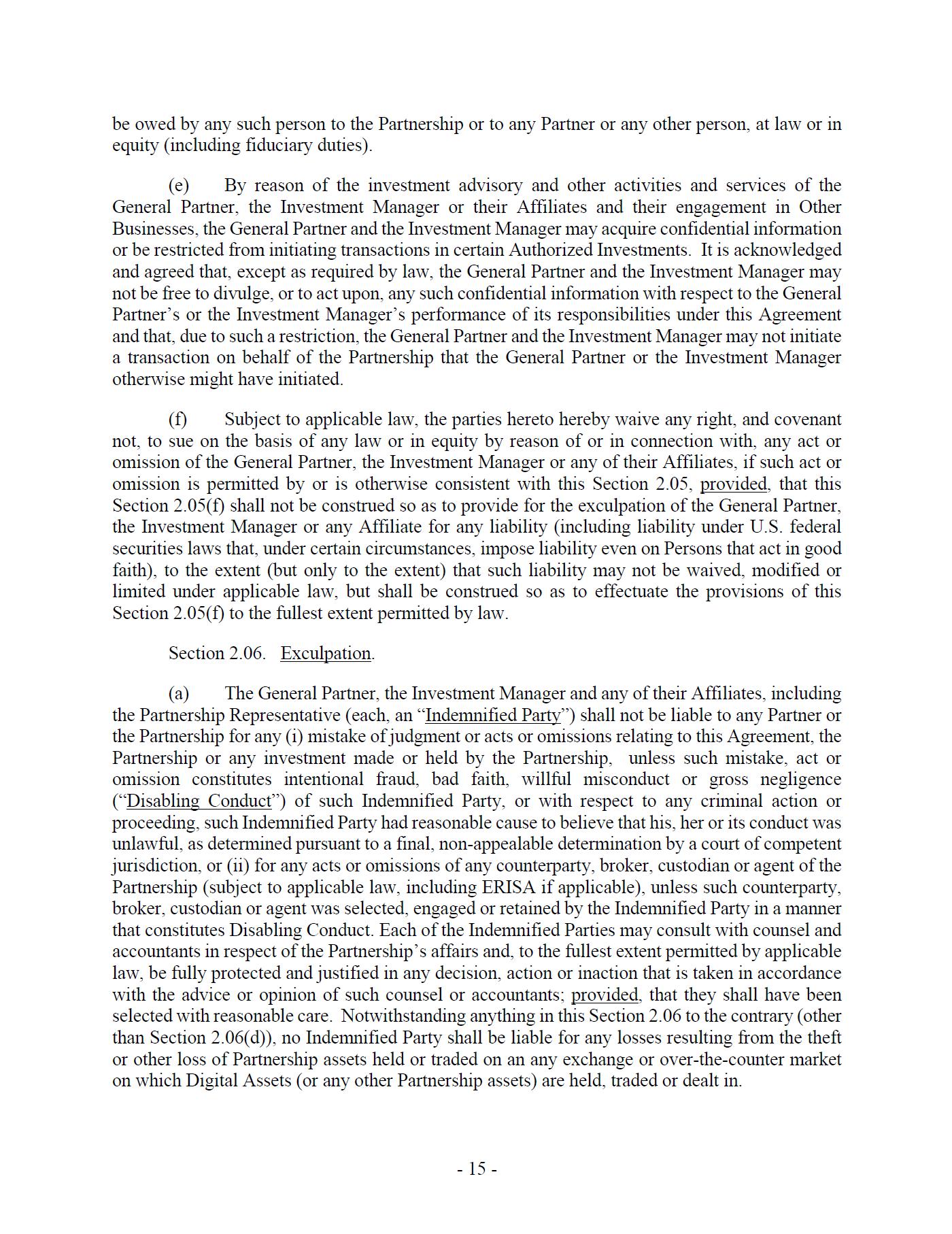
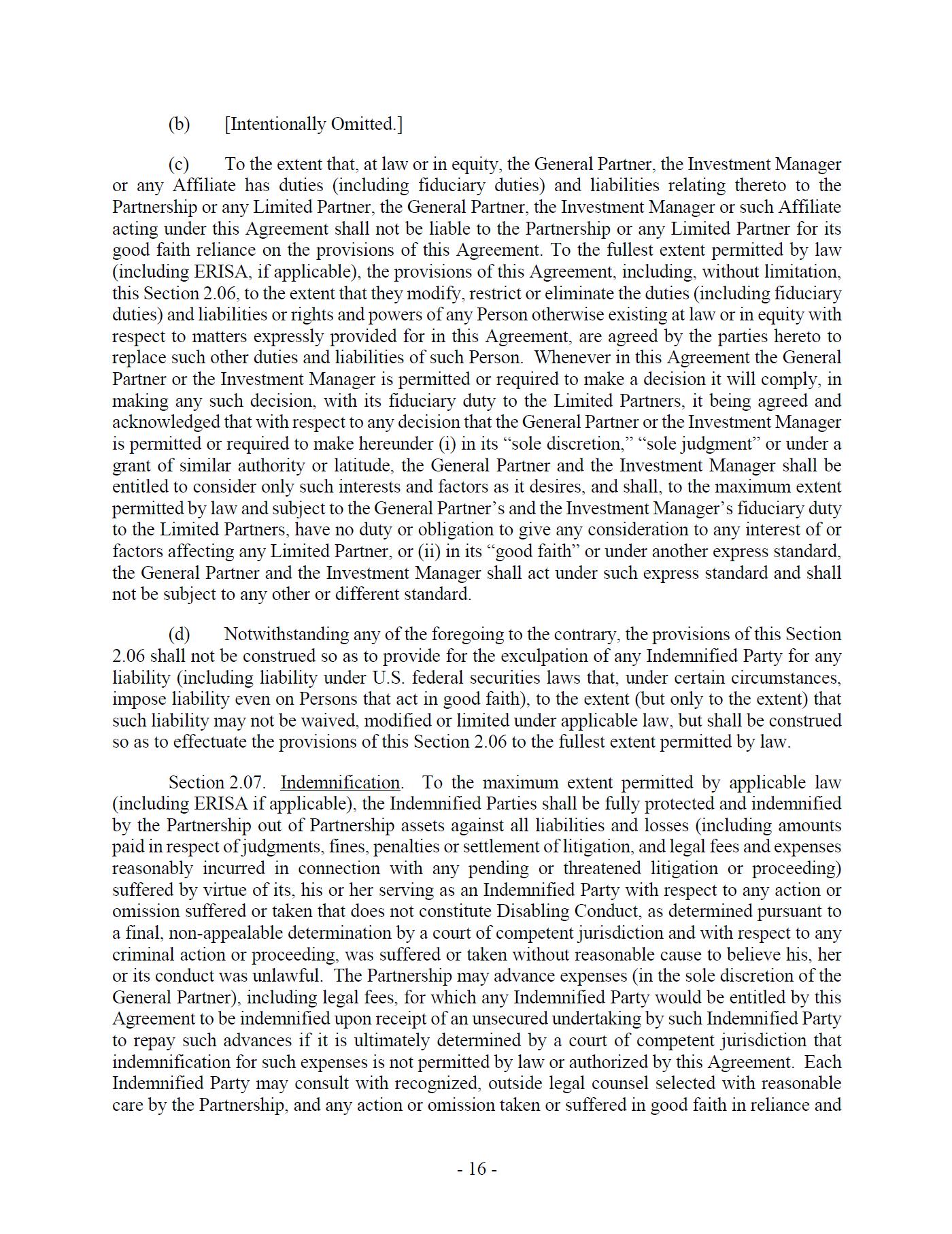
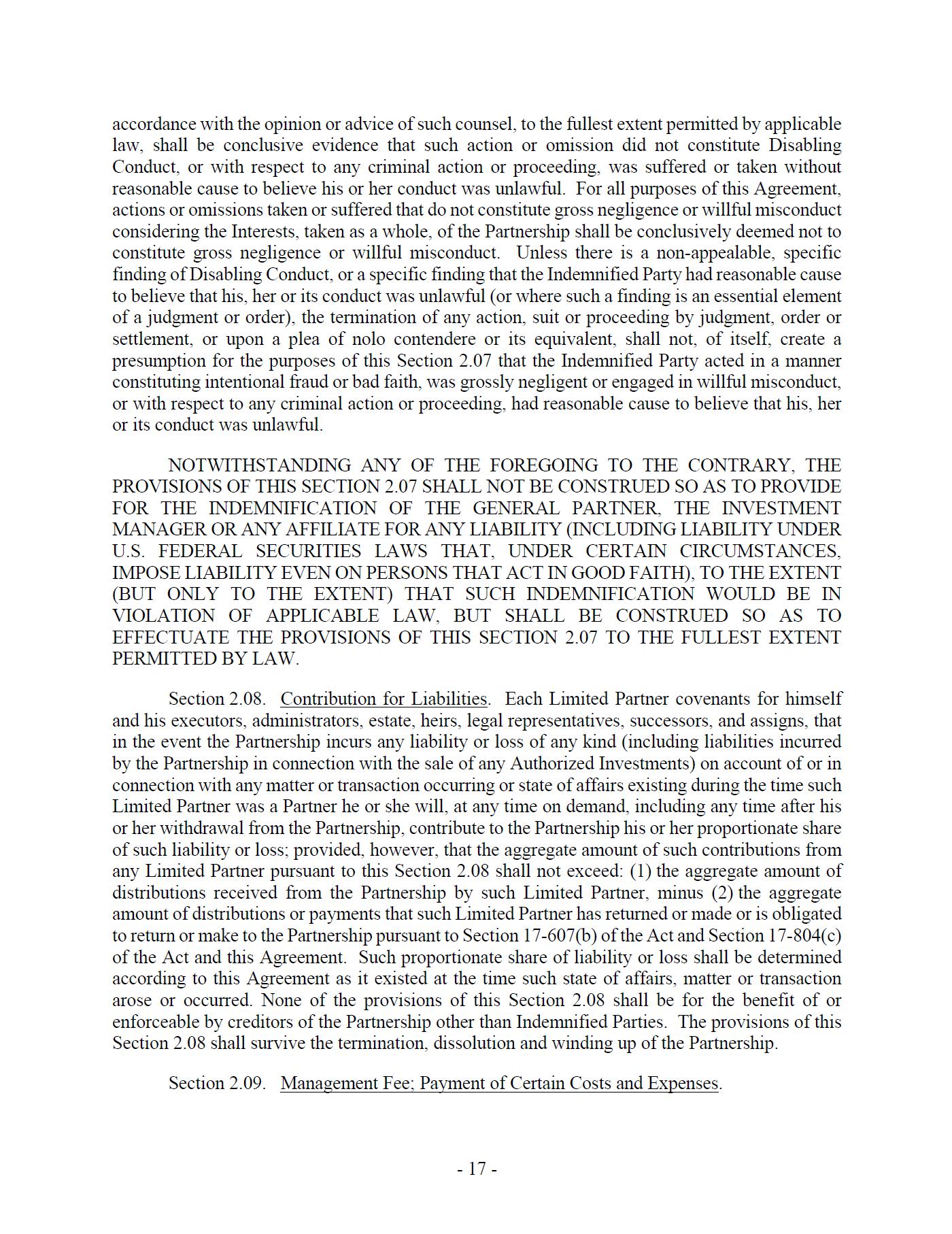
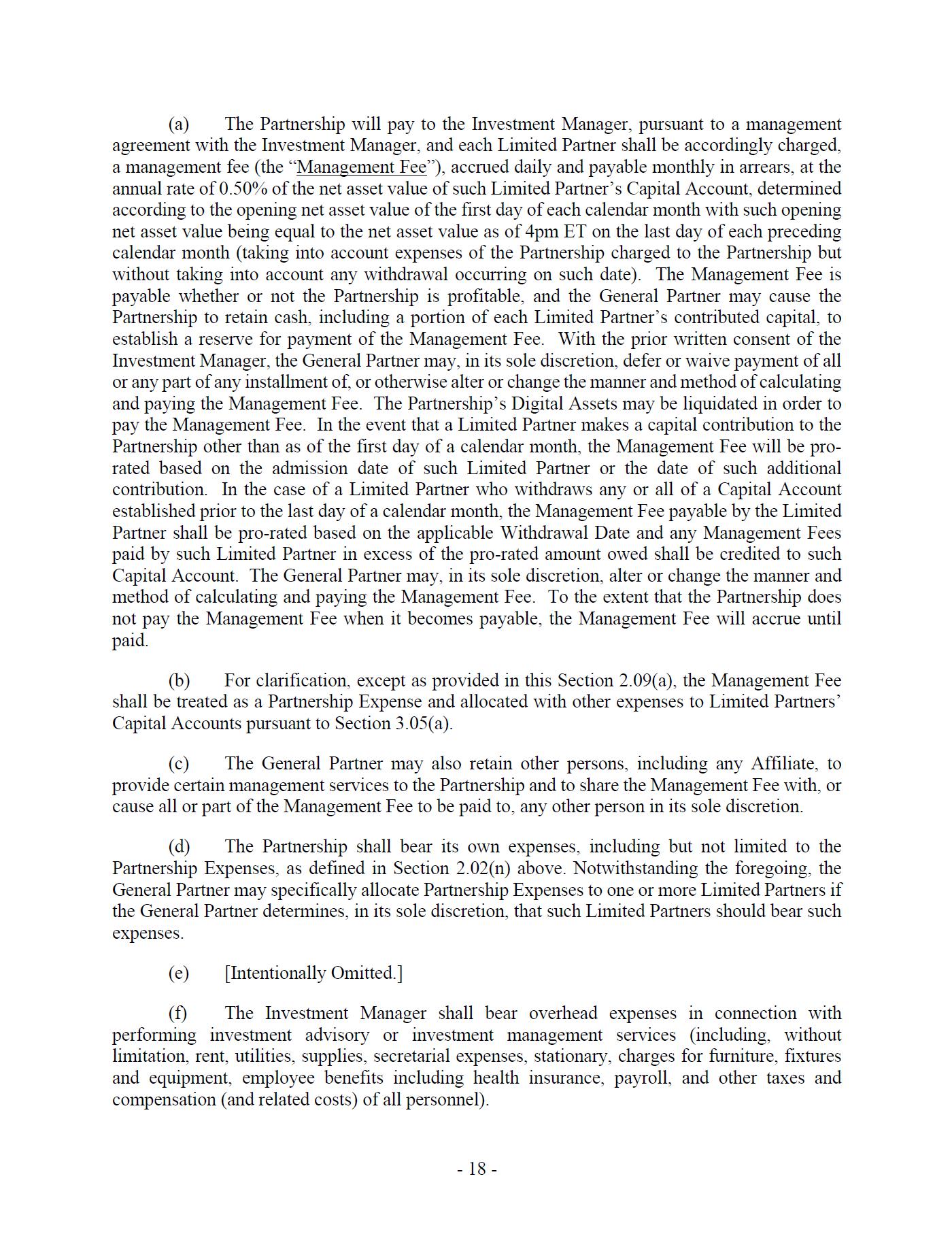
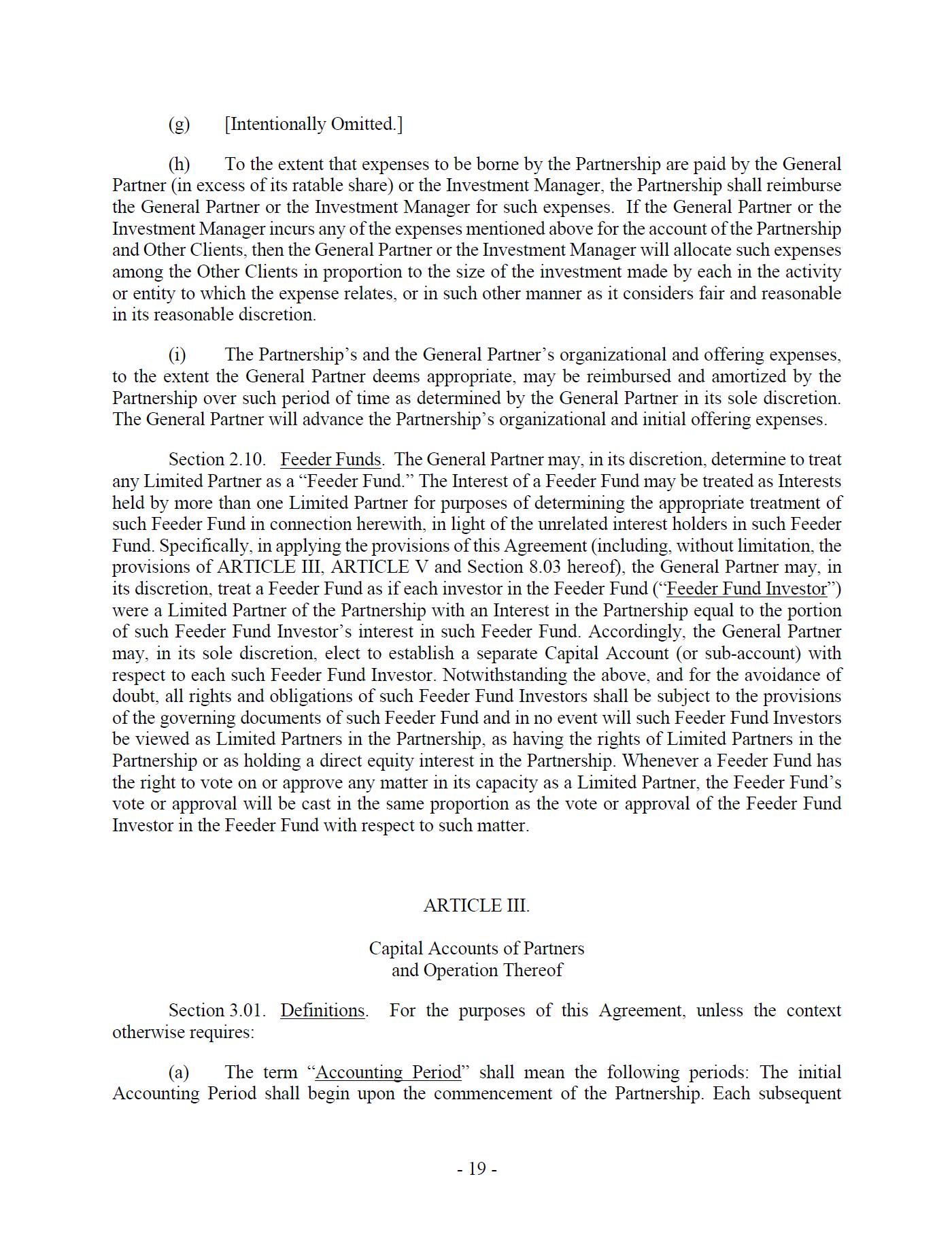
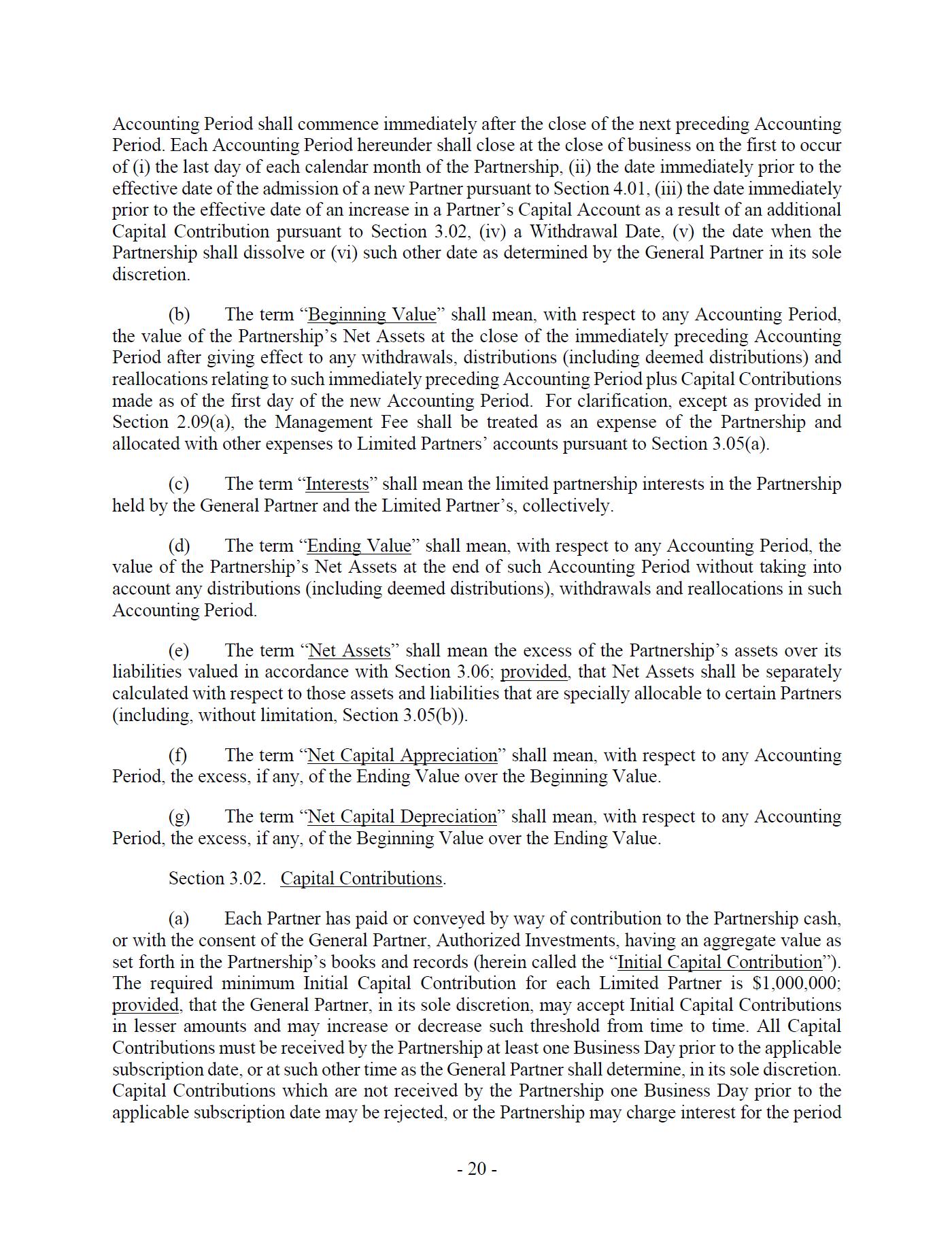
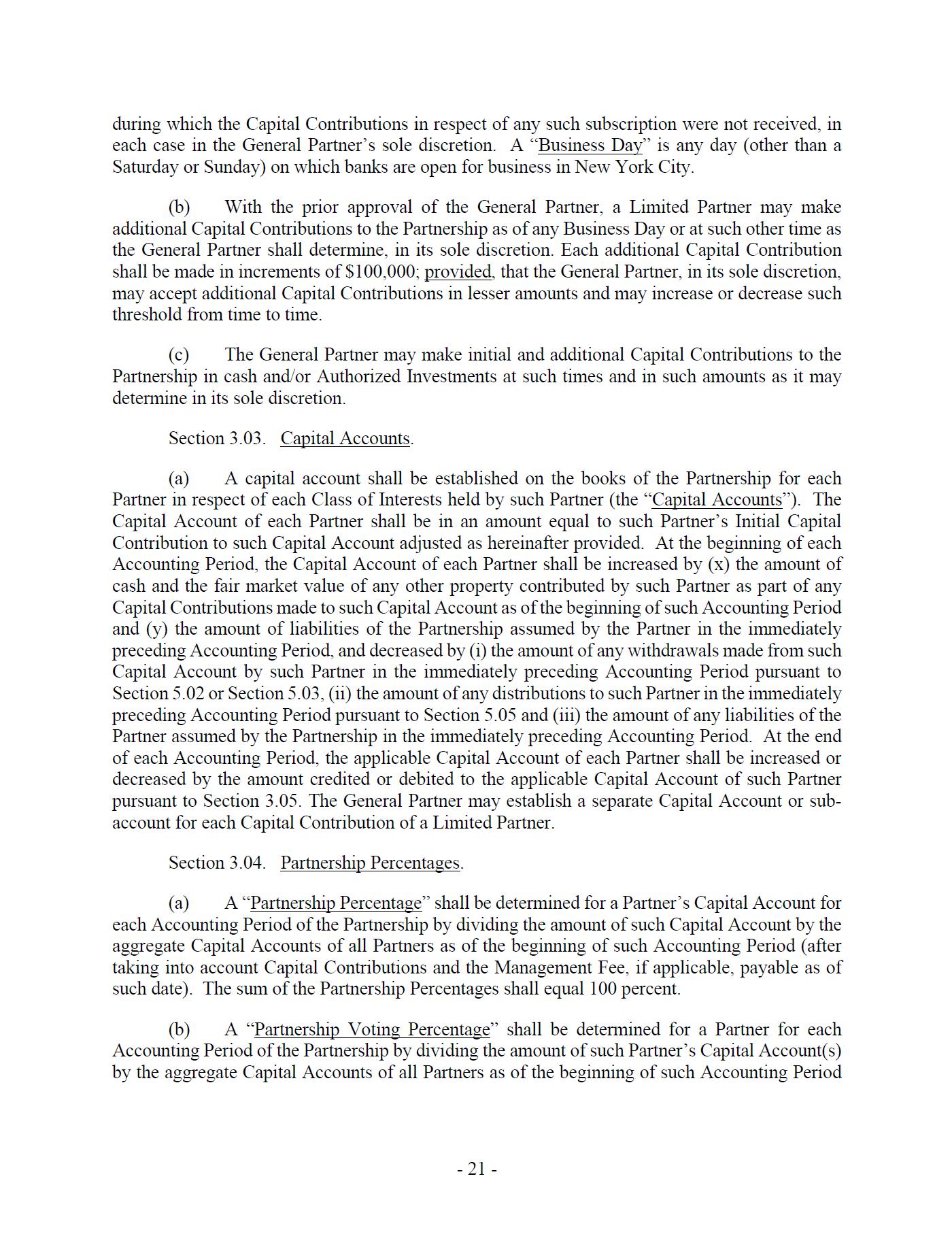
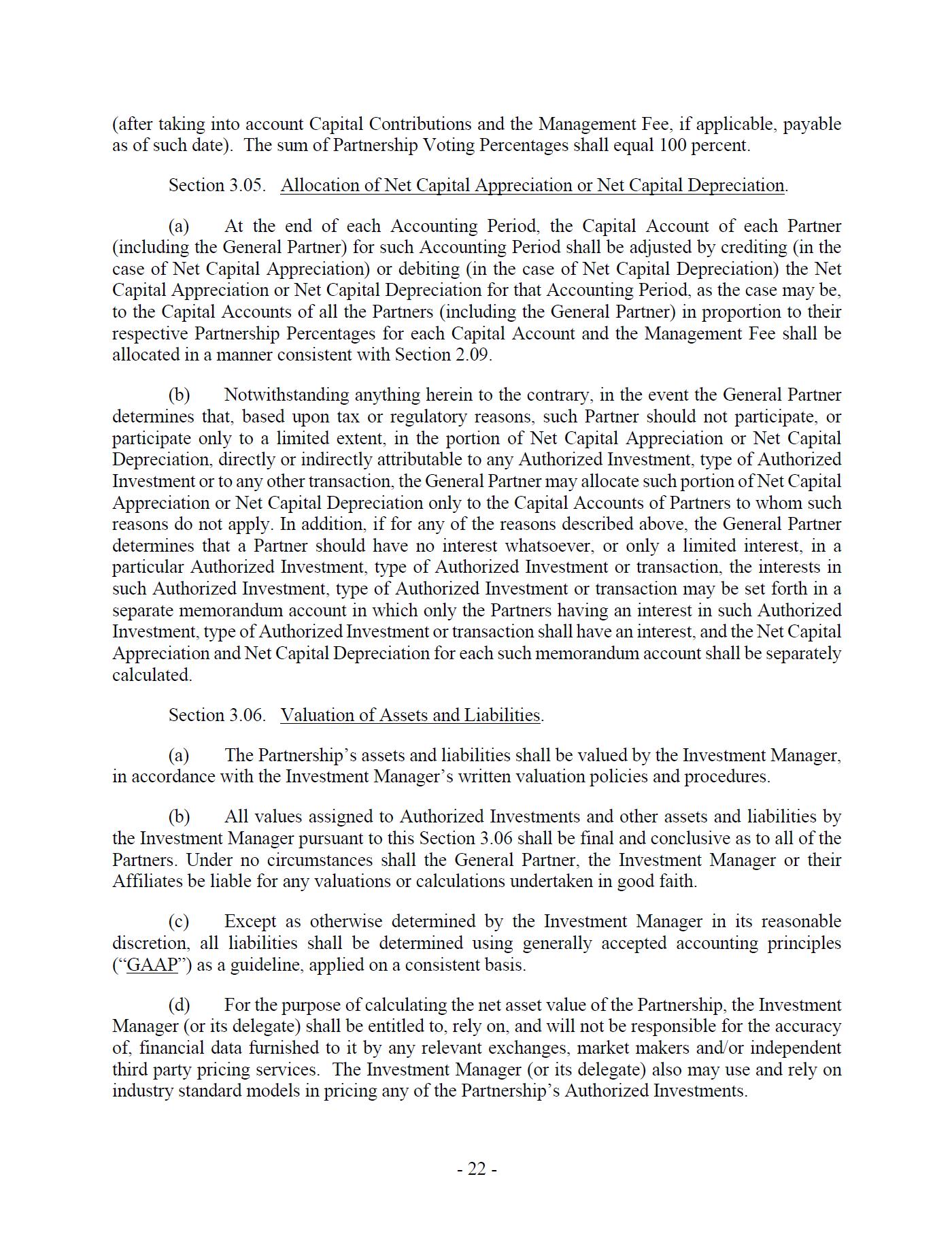
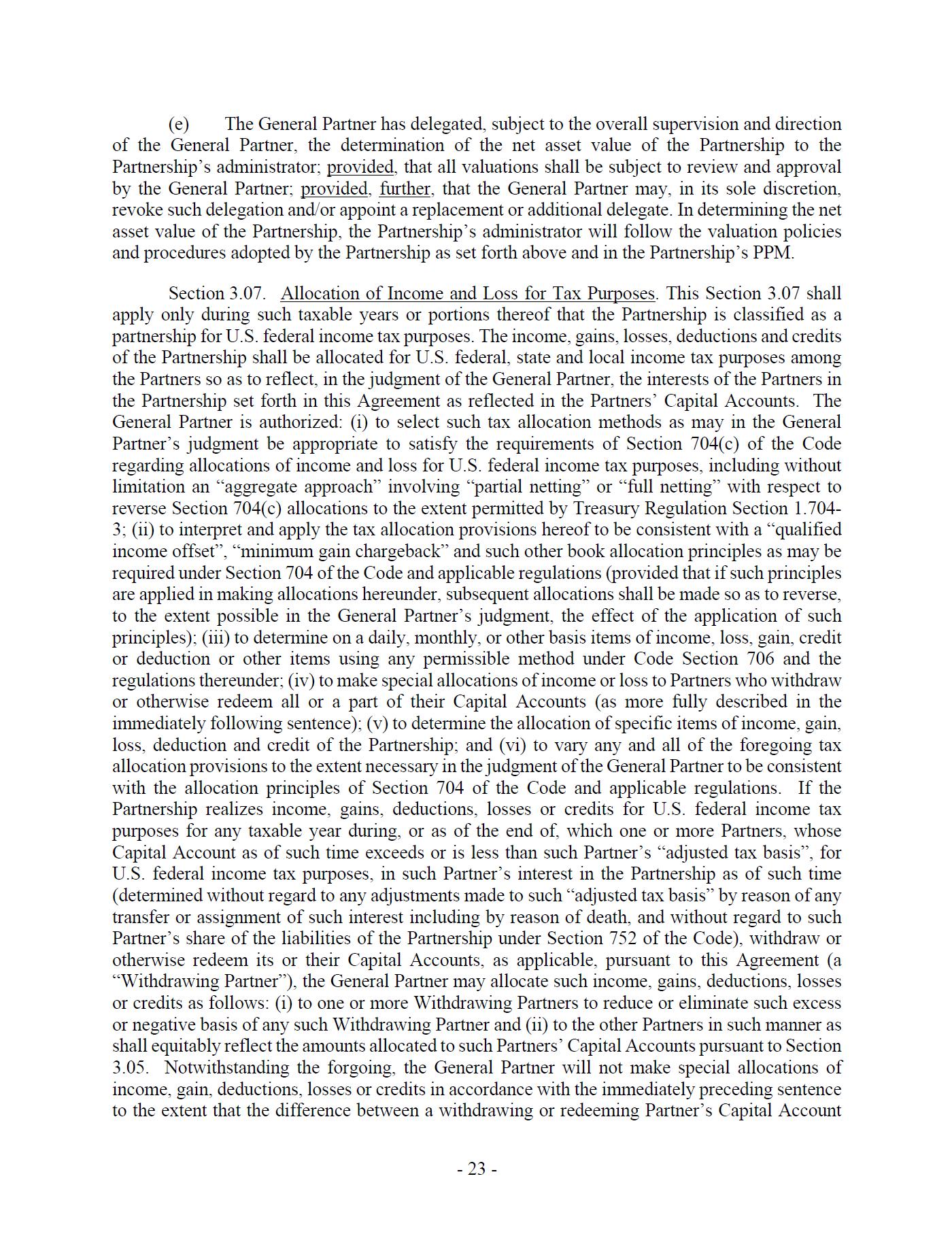
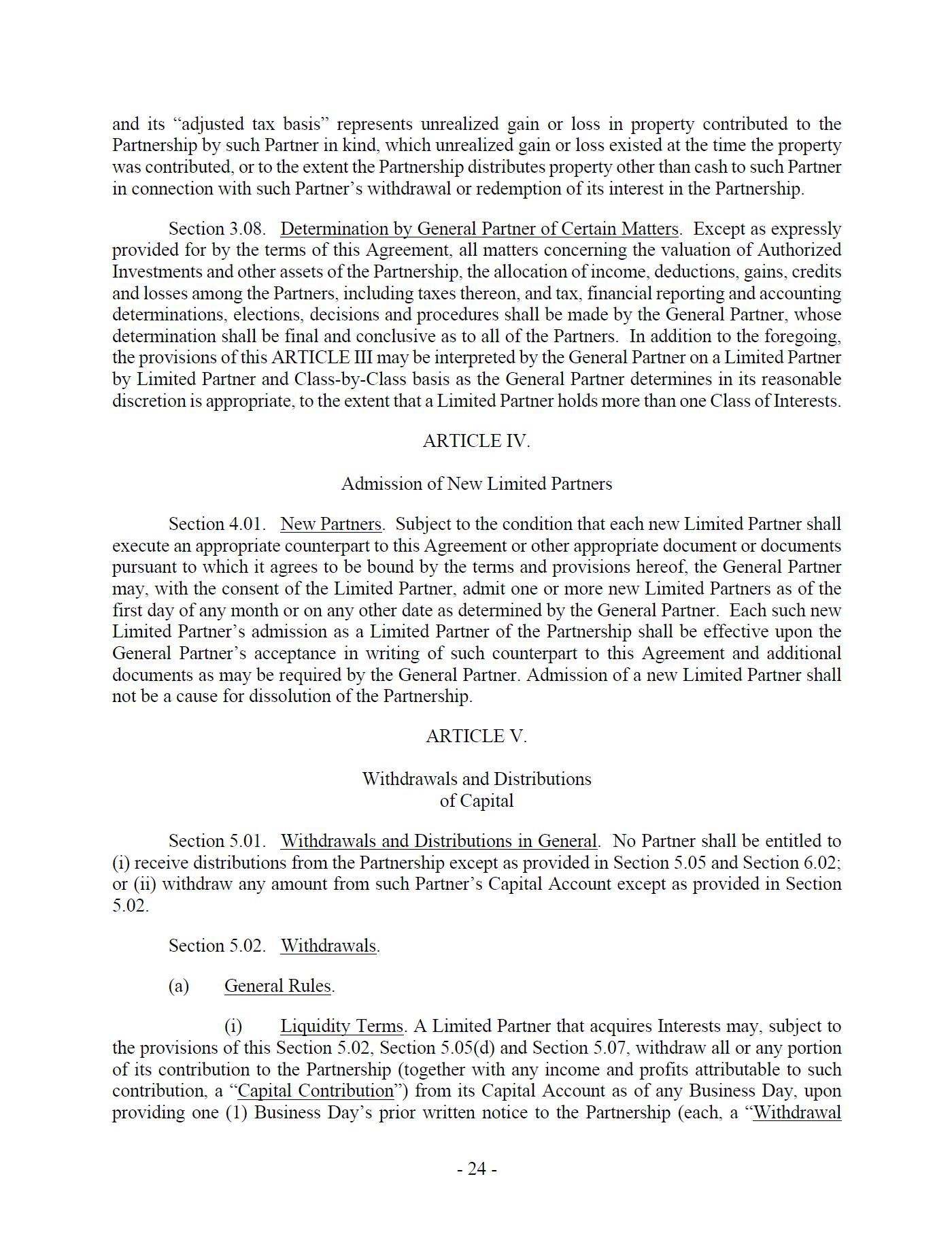
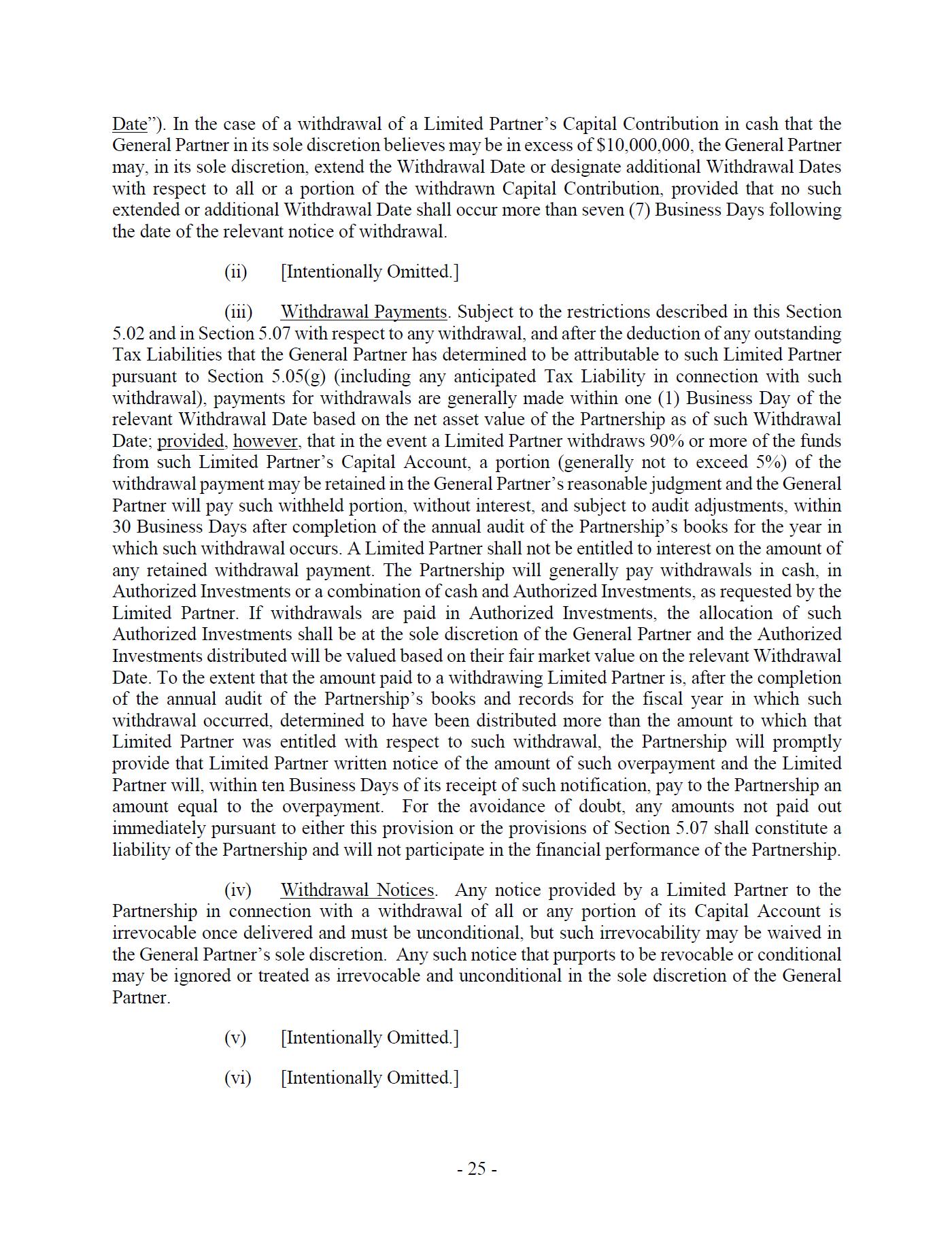
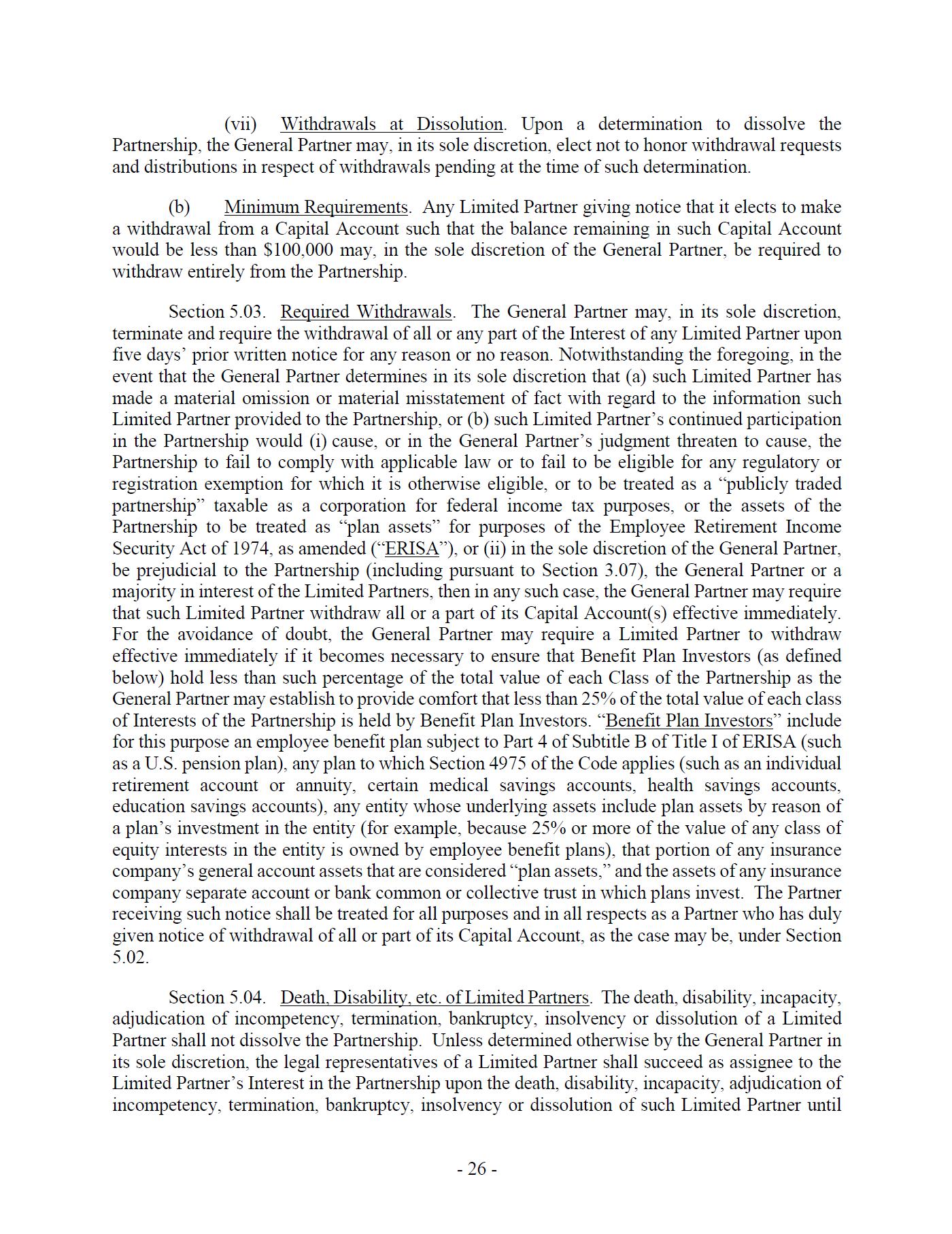
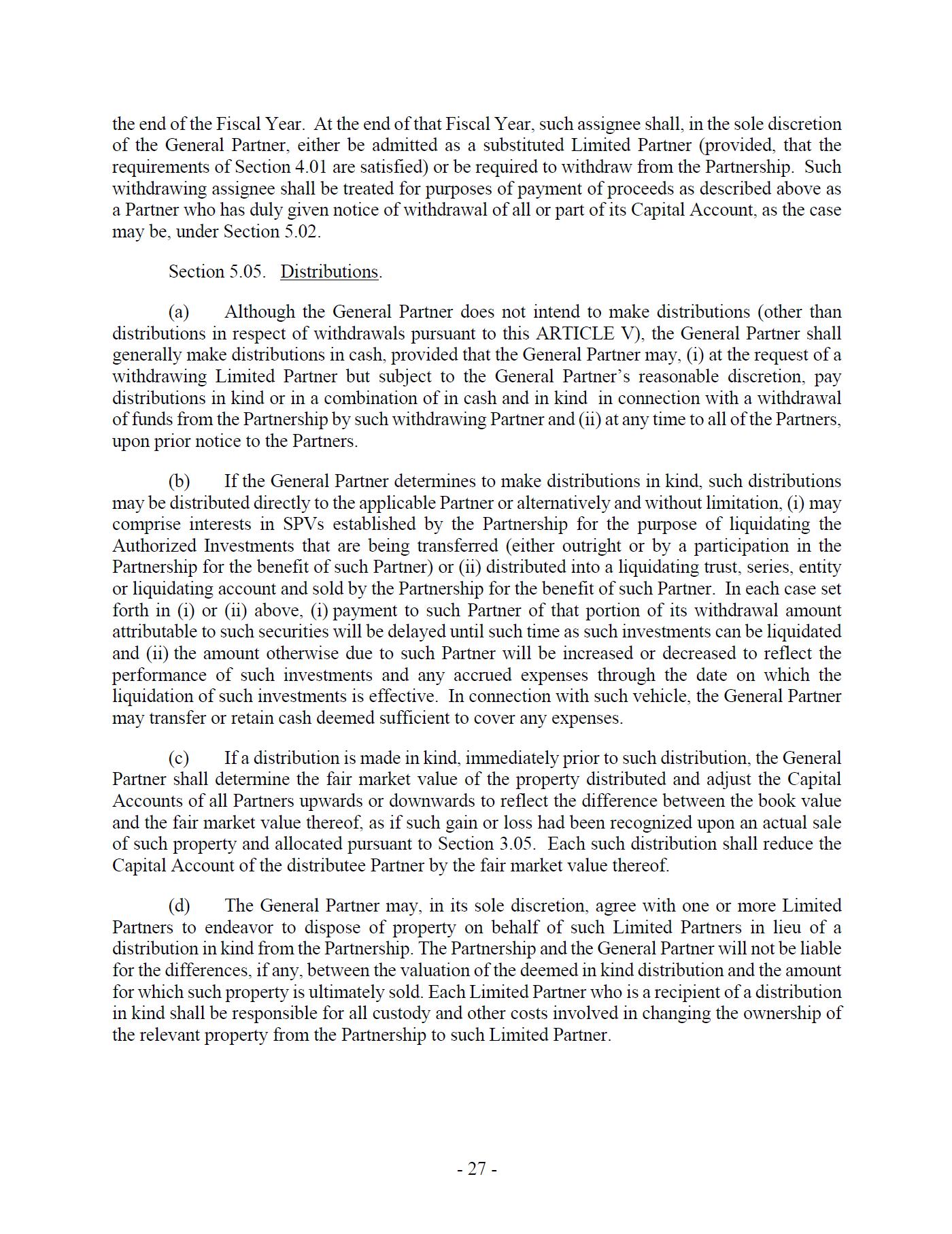
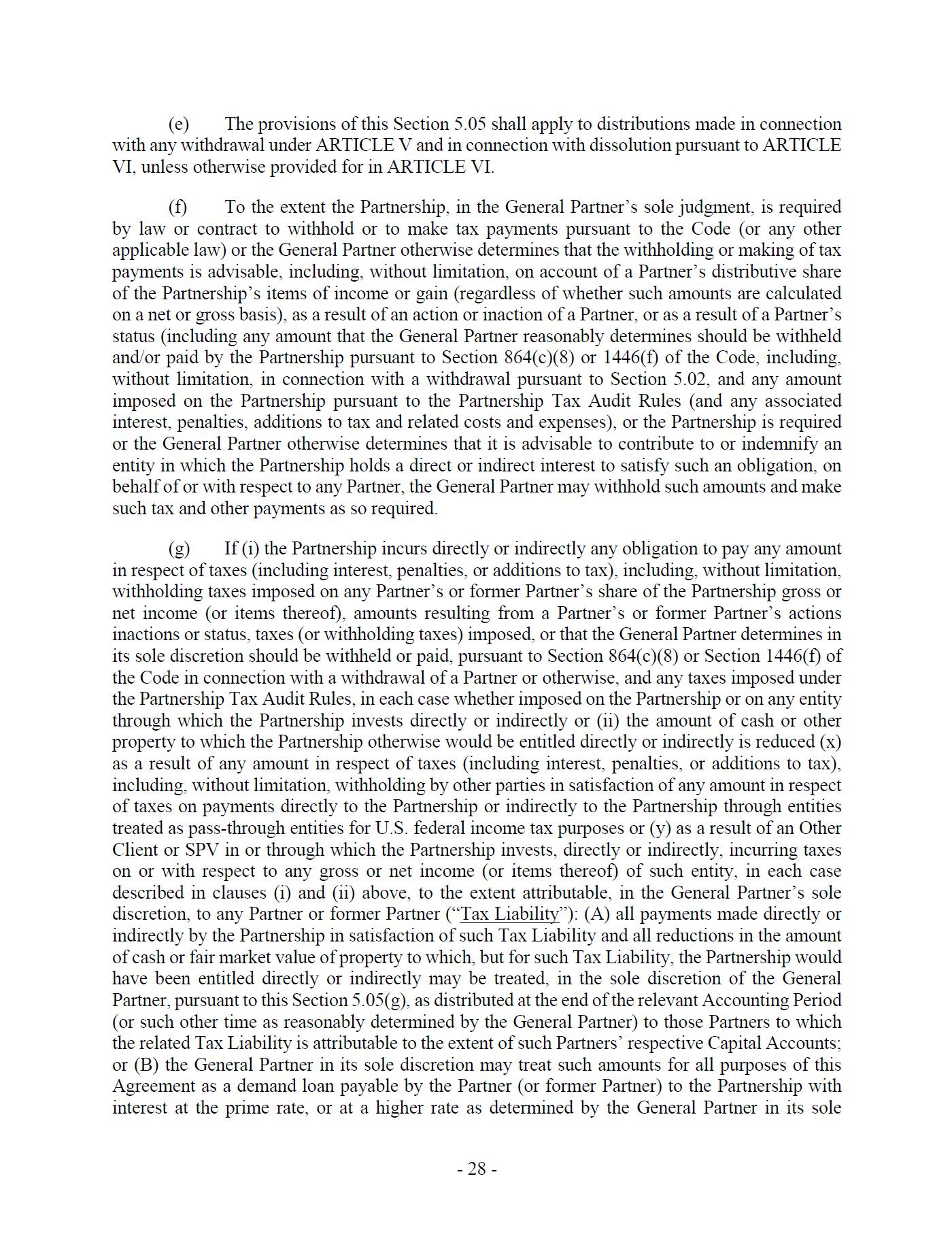
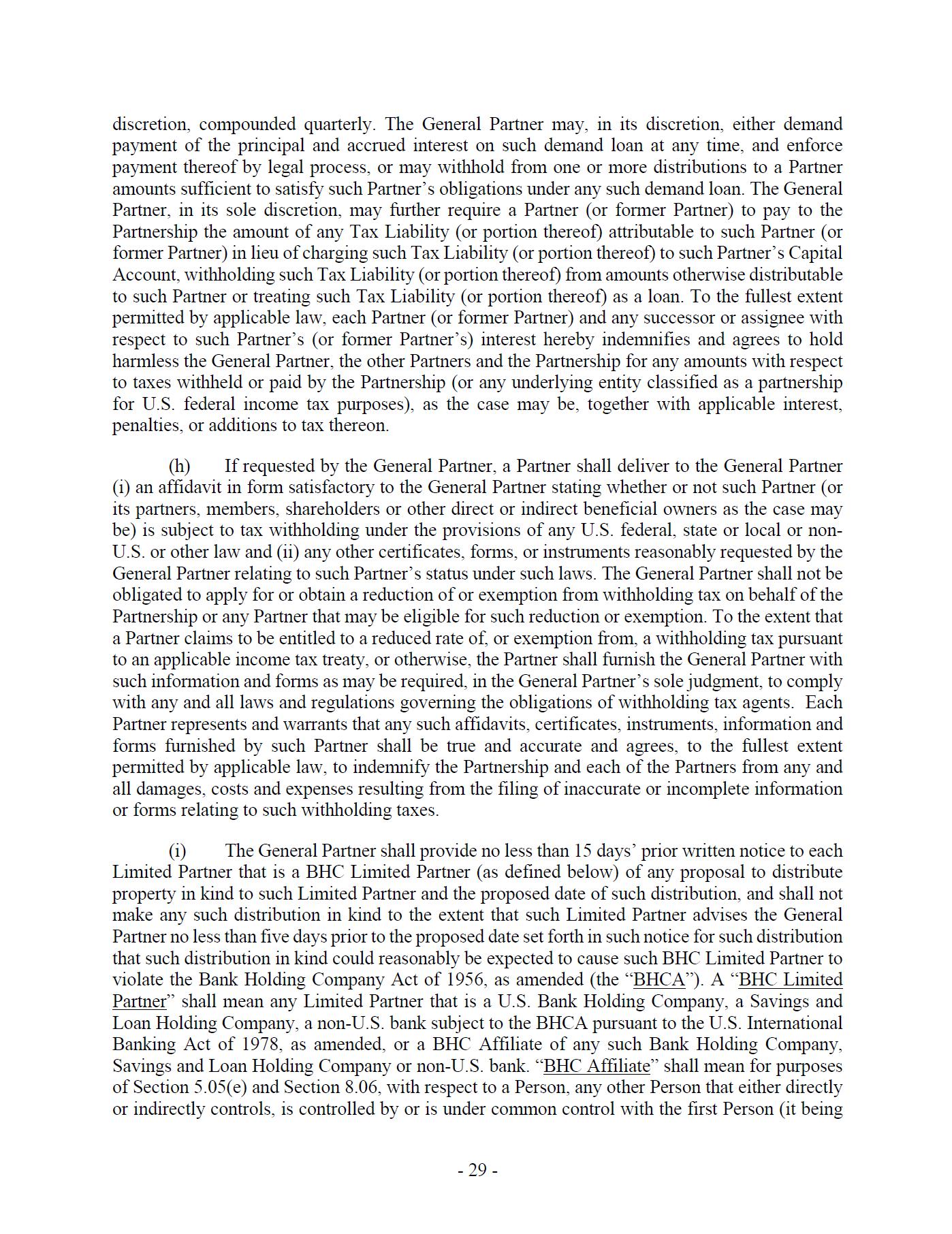
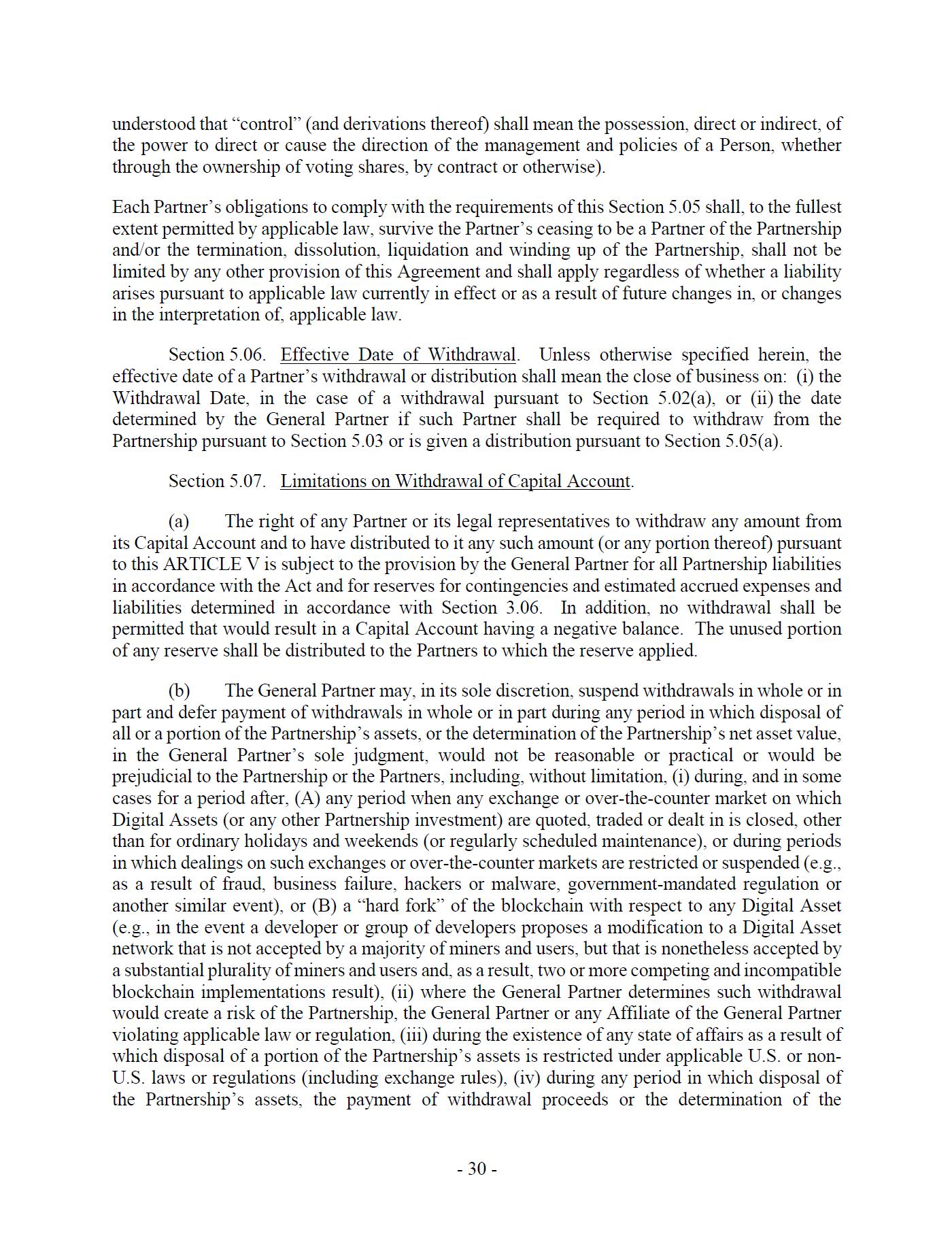
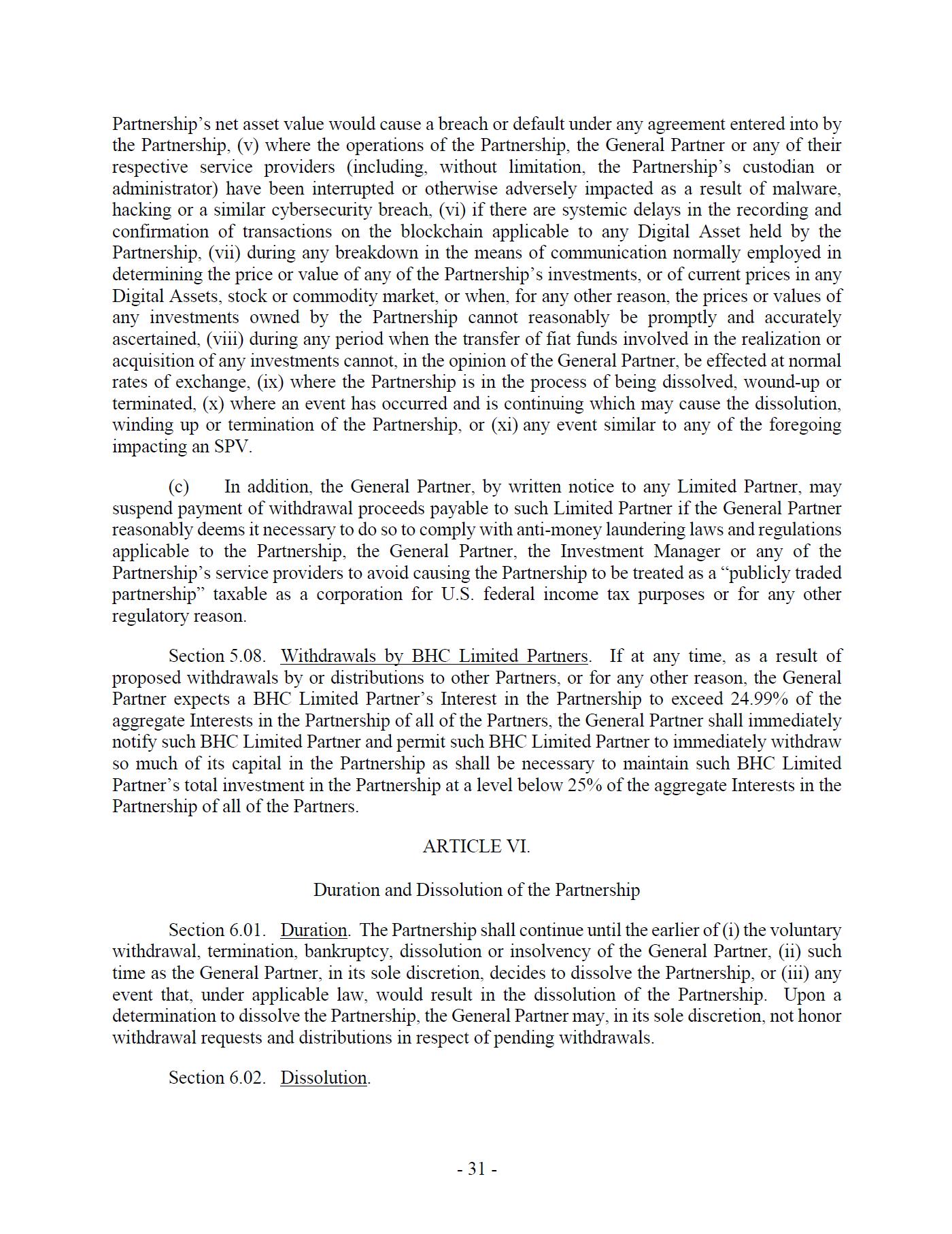
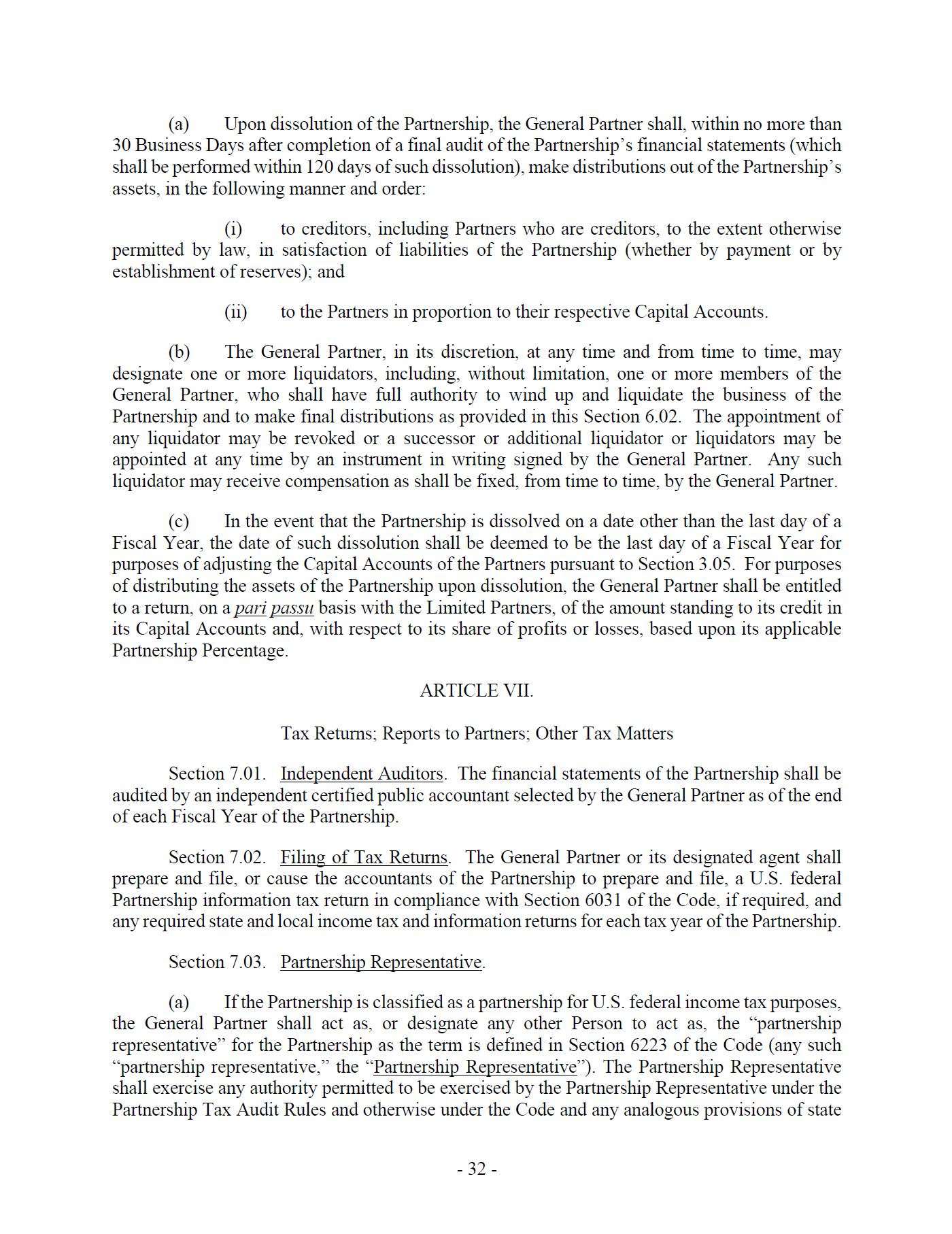
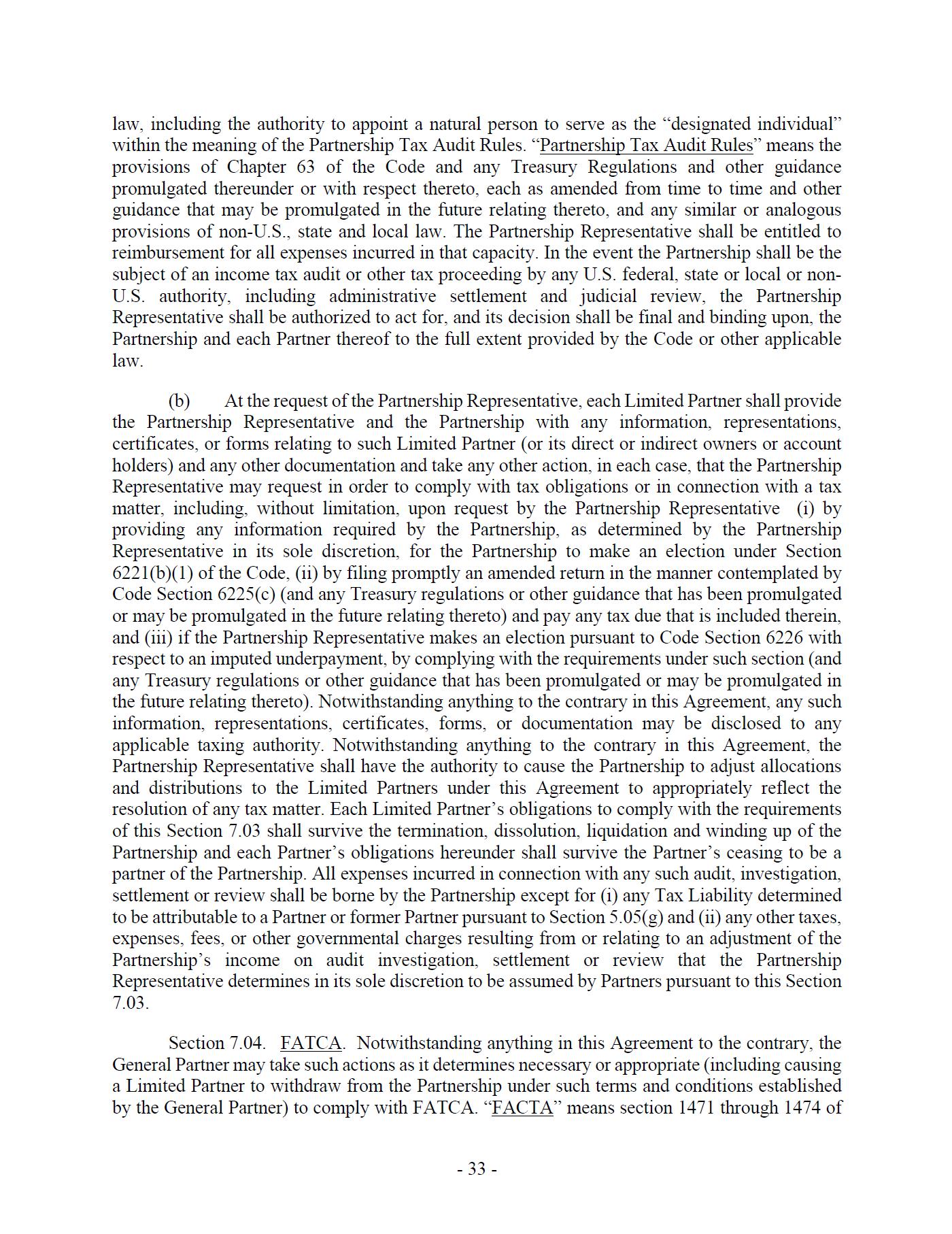
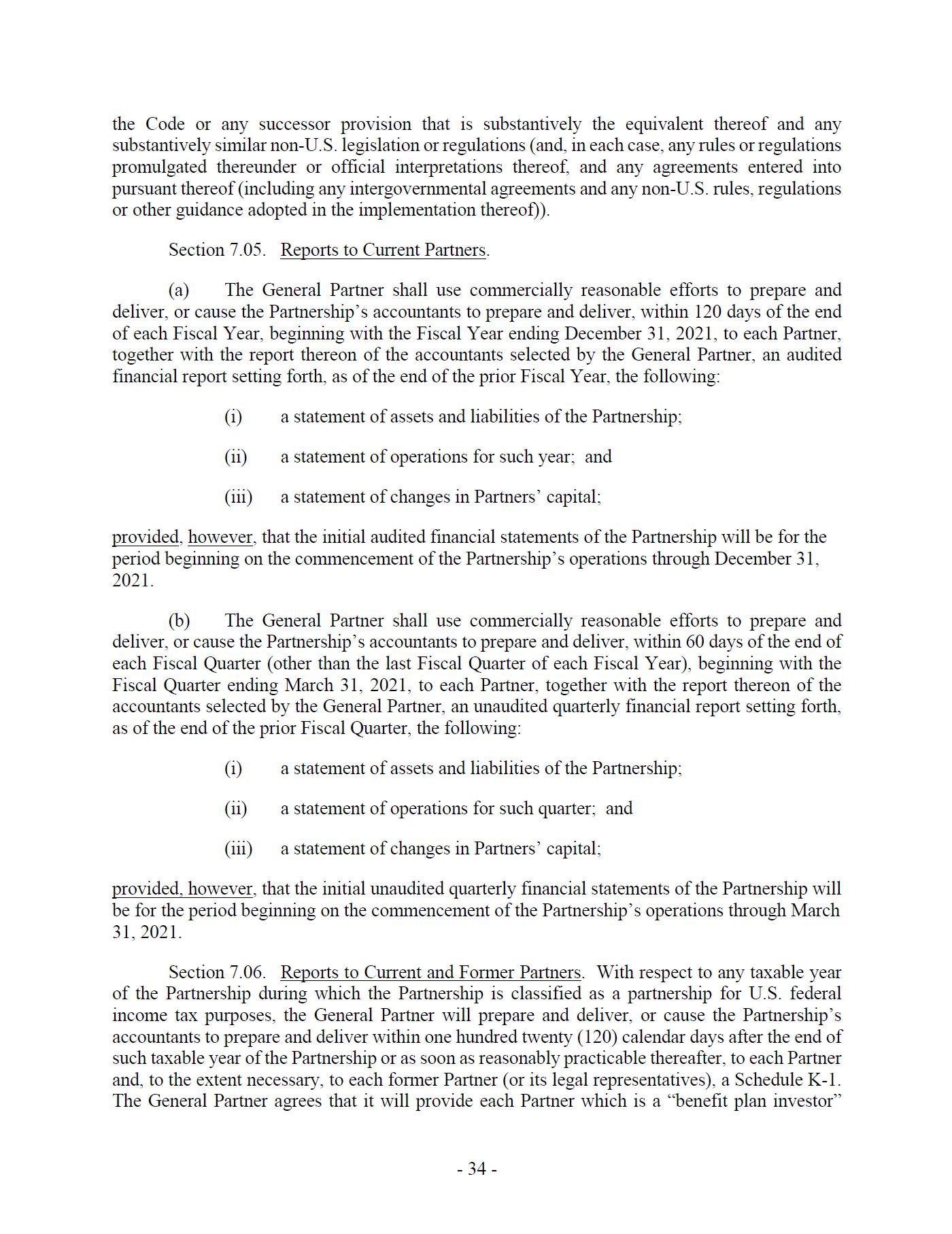
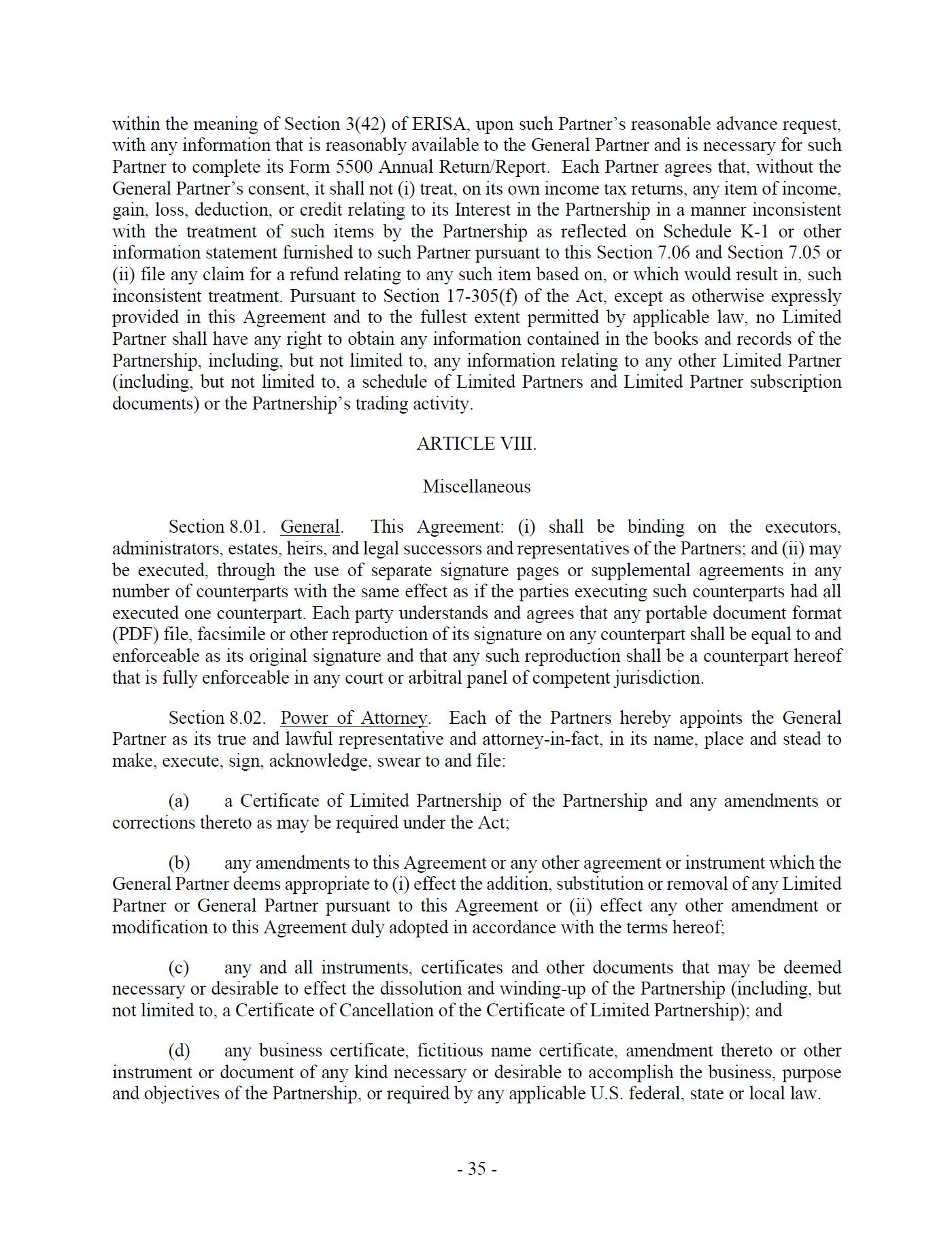
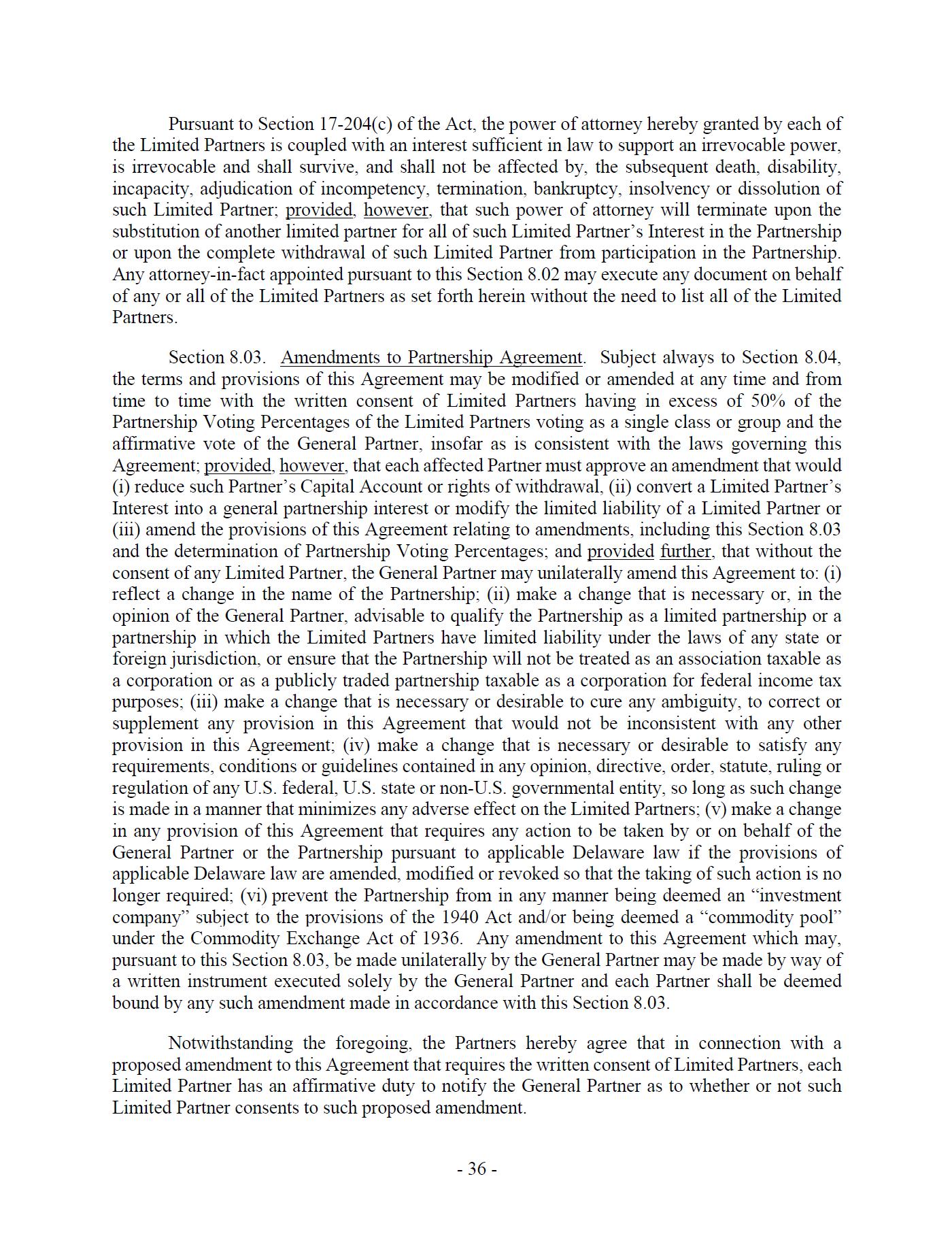
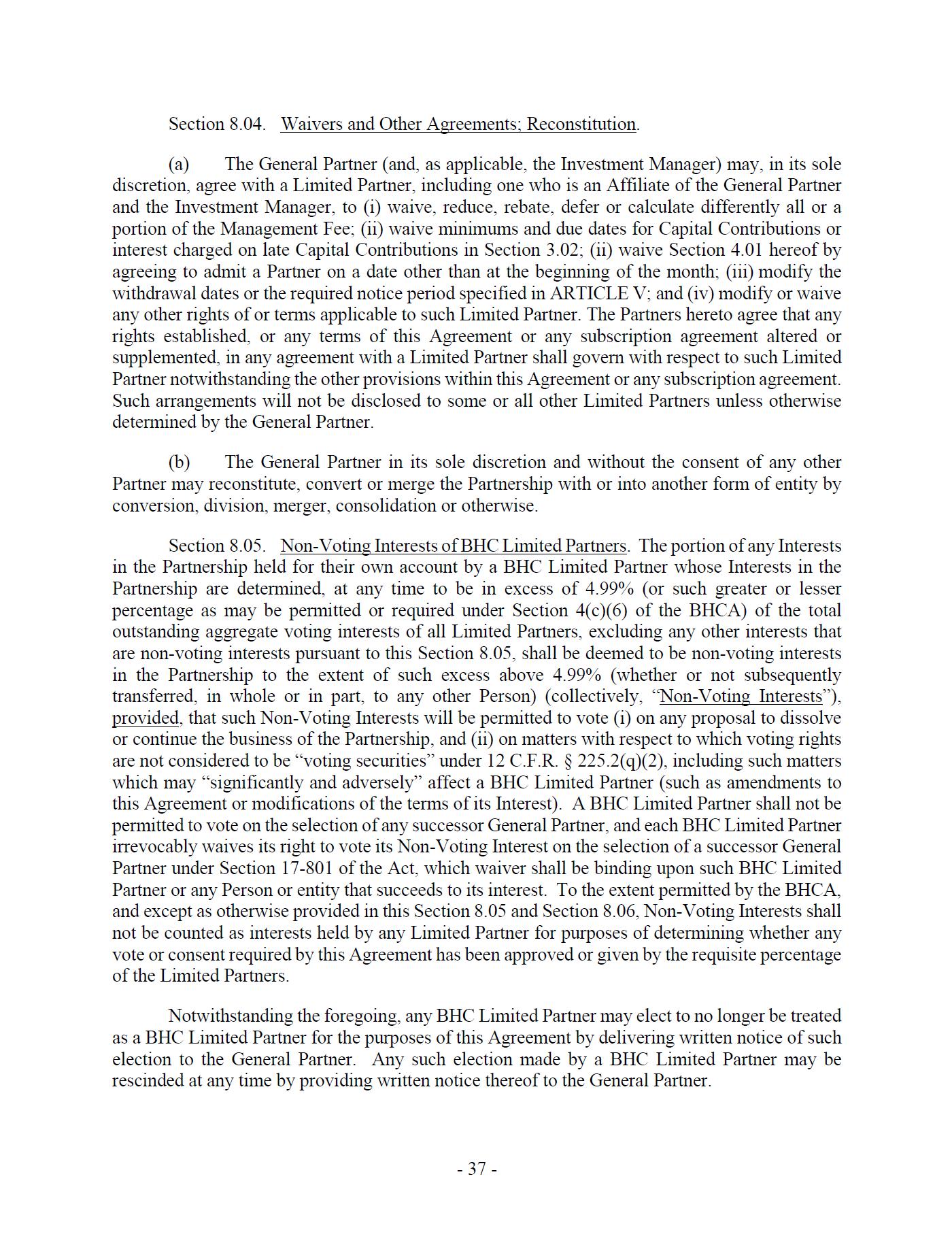
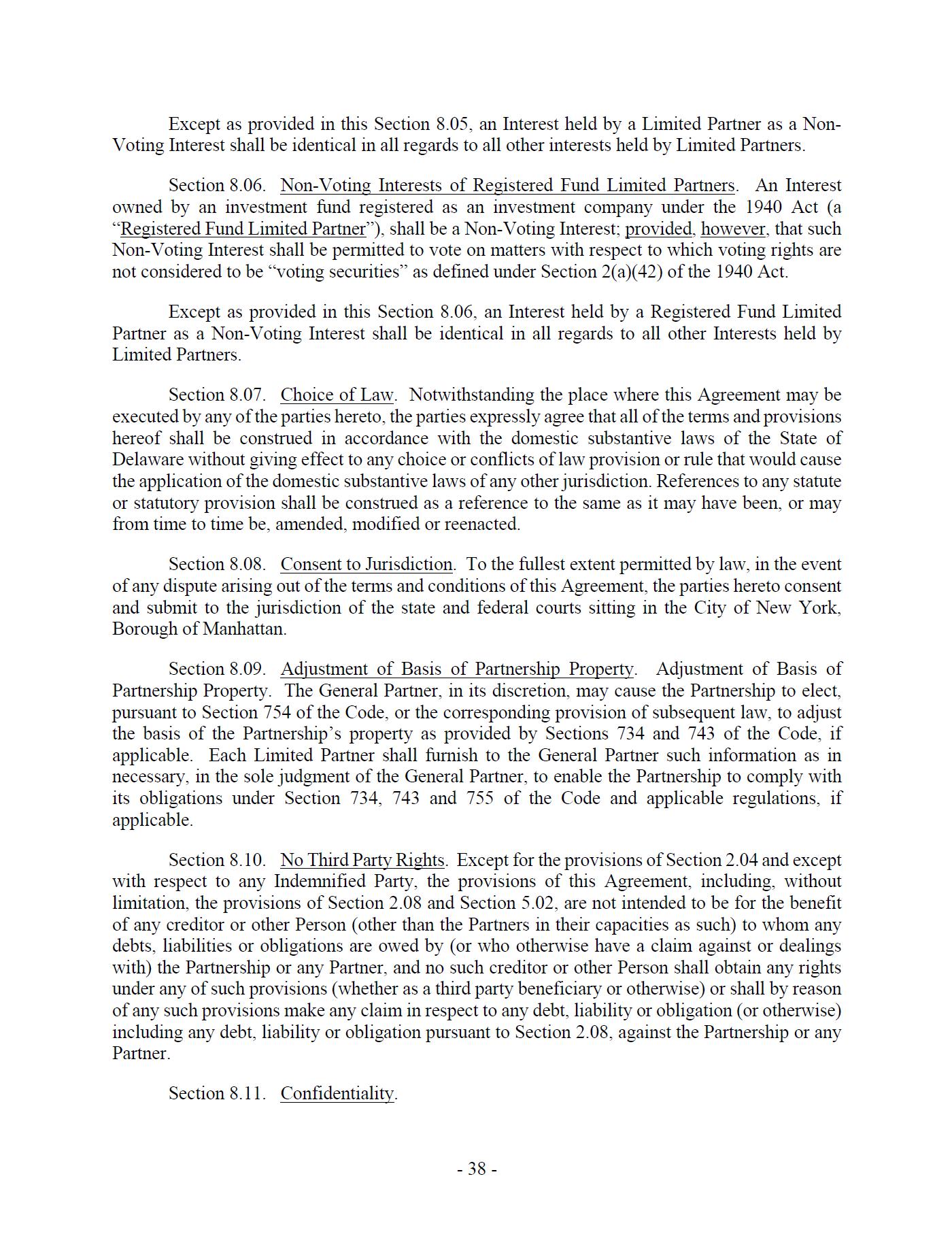
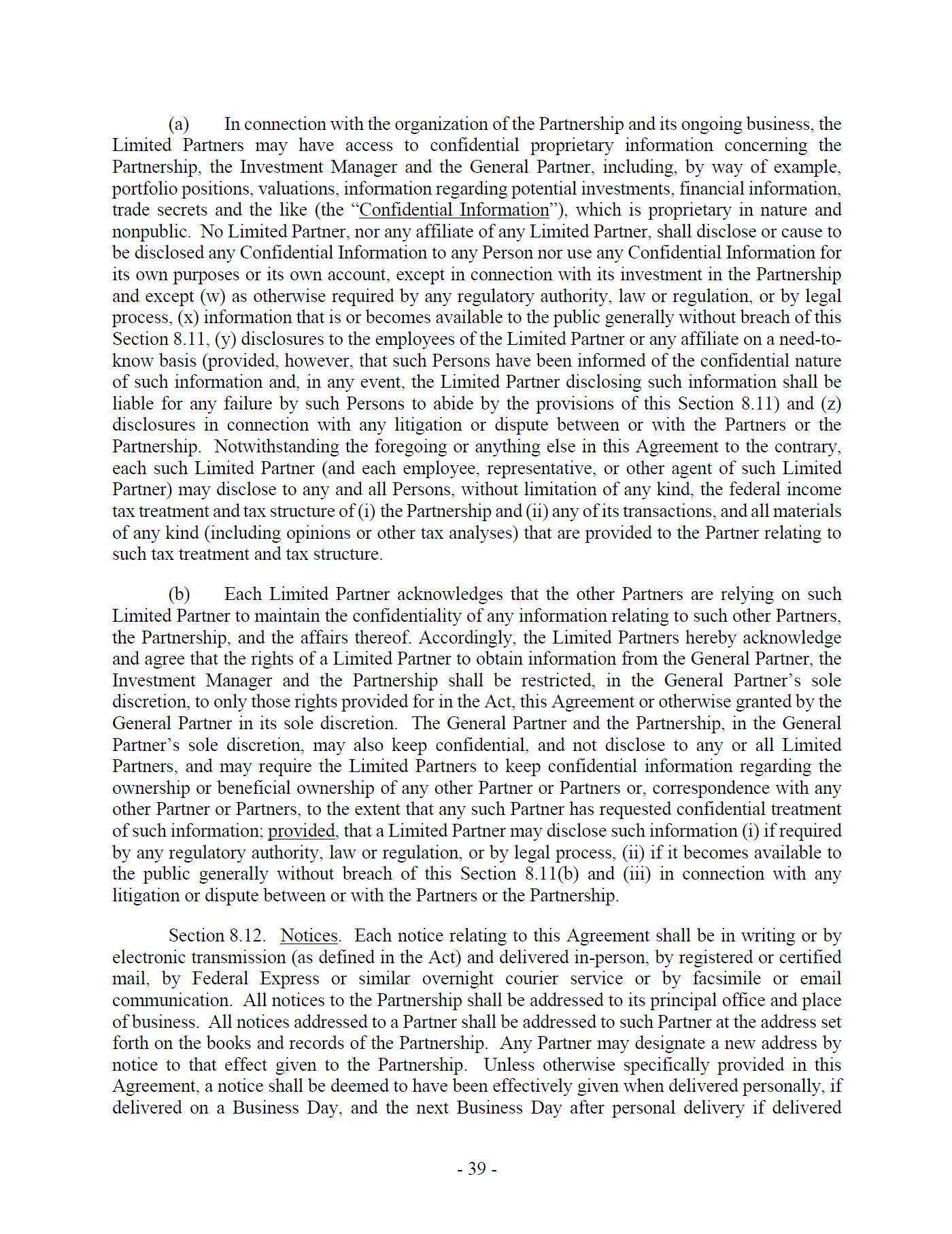
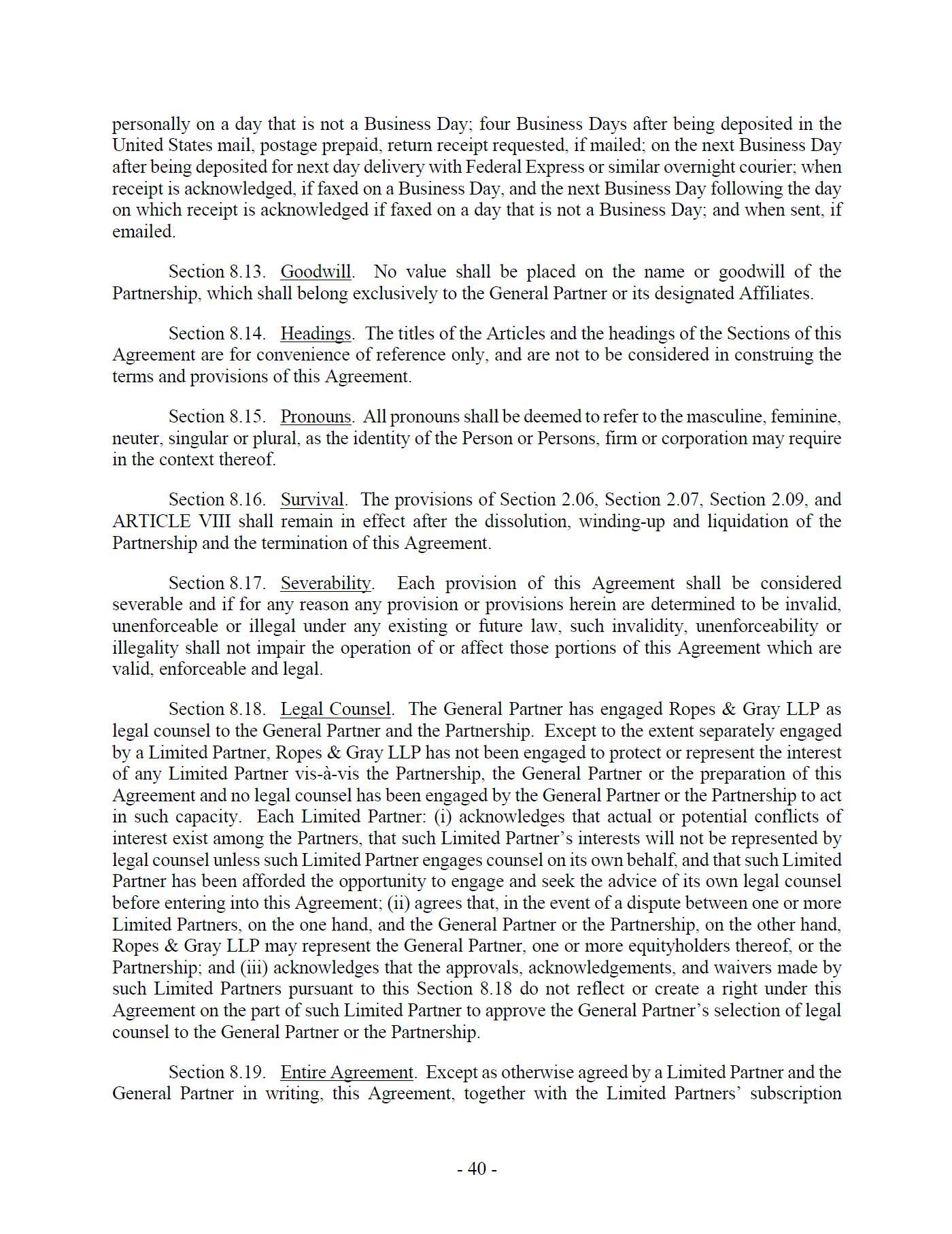
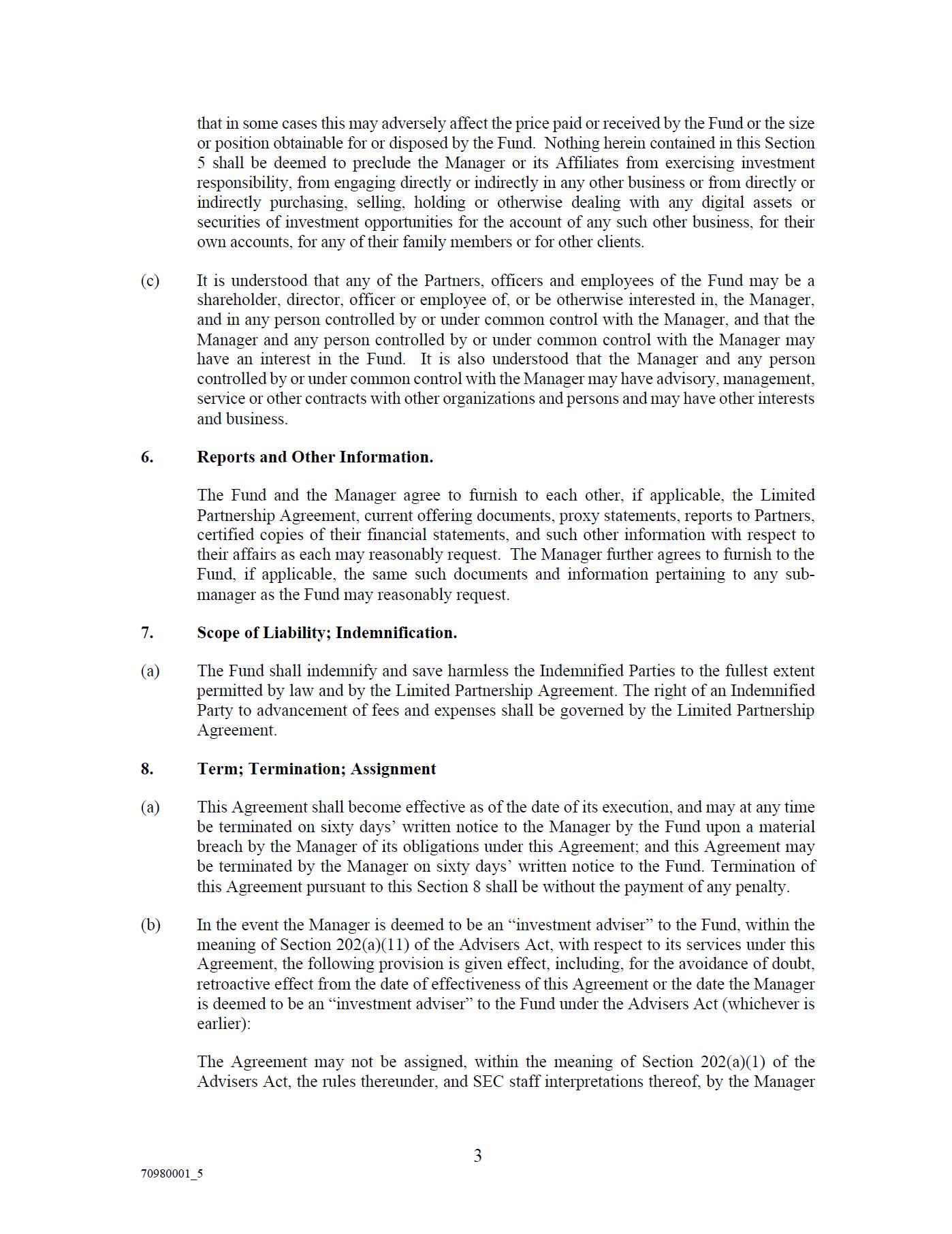
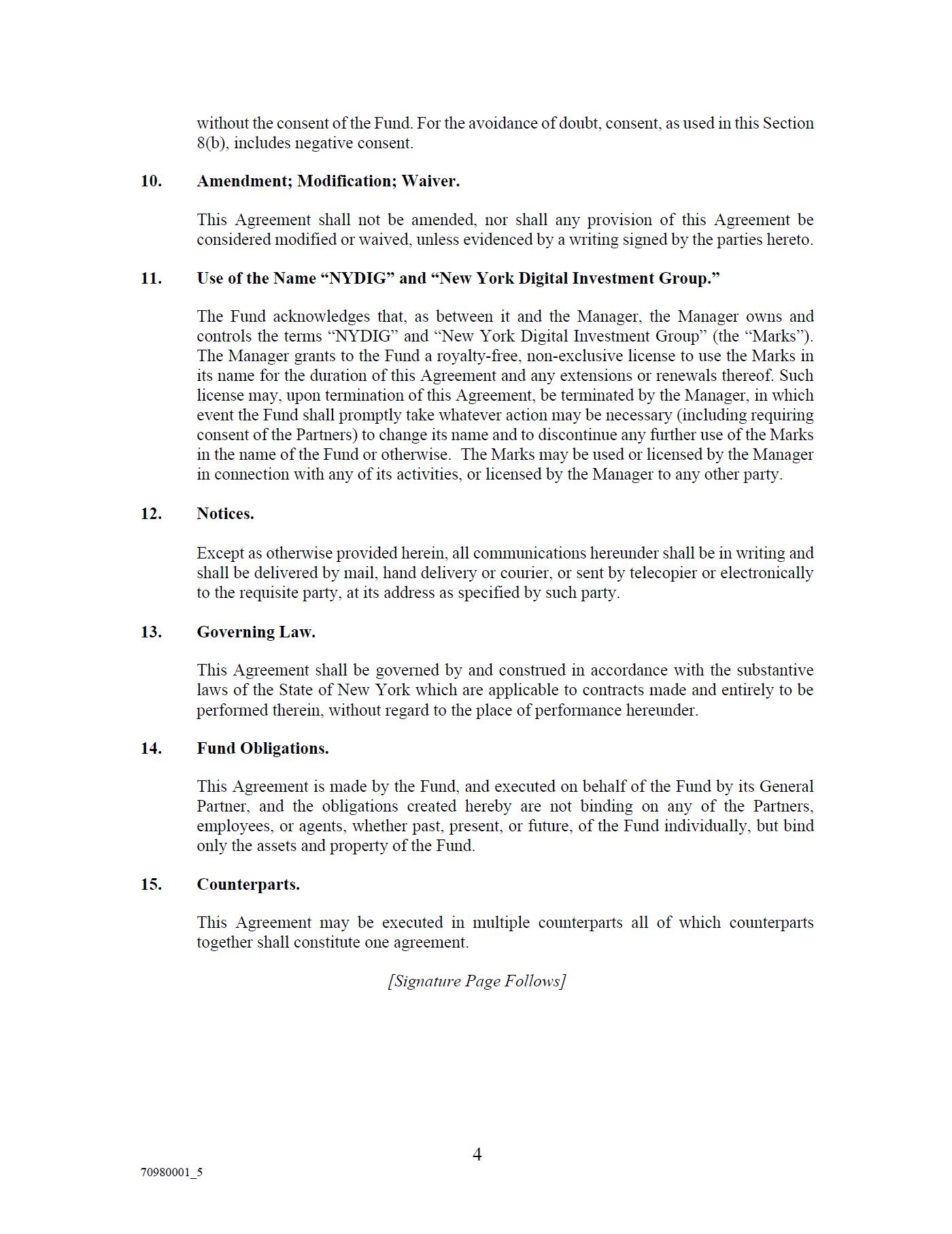
| 11. | We note your response to prior comment 13 and continue to evaluate your analysis. Please provide us with a copy of the DAF III partnership agreement, the agreement with the Investment Manager, and any other pertinent agreements concerning the governance of DAF III. |
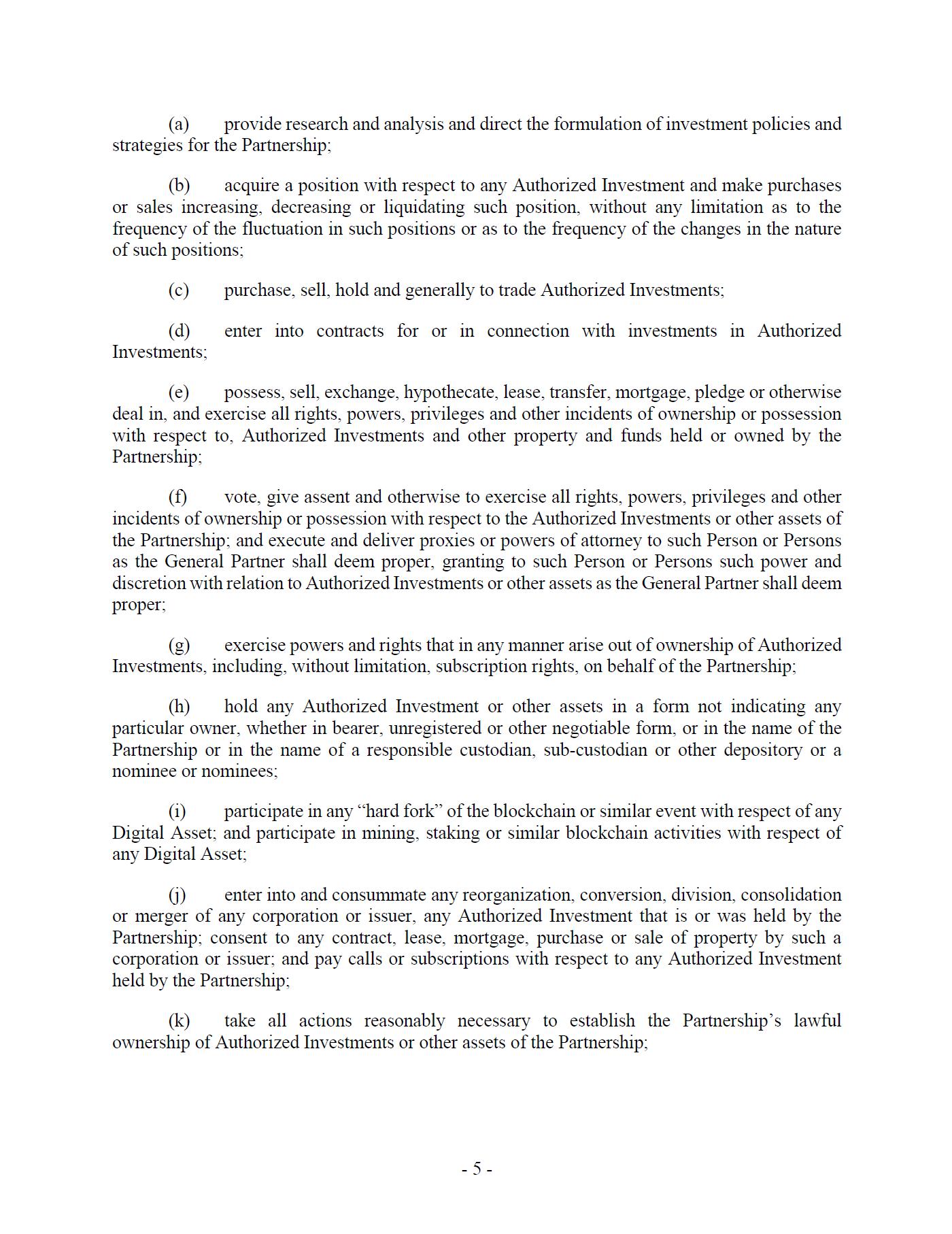
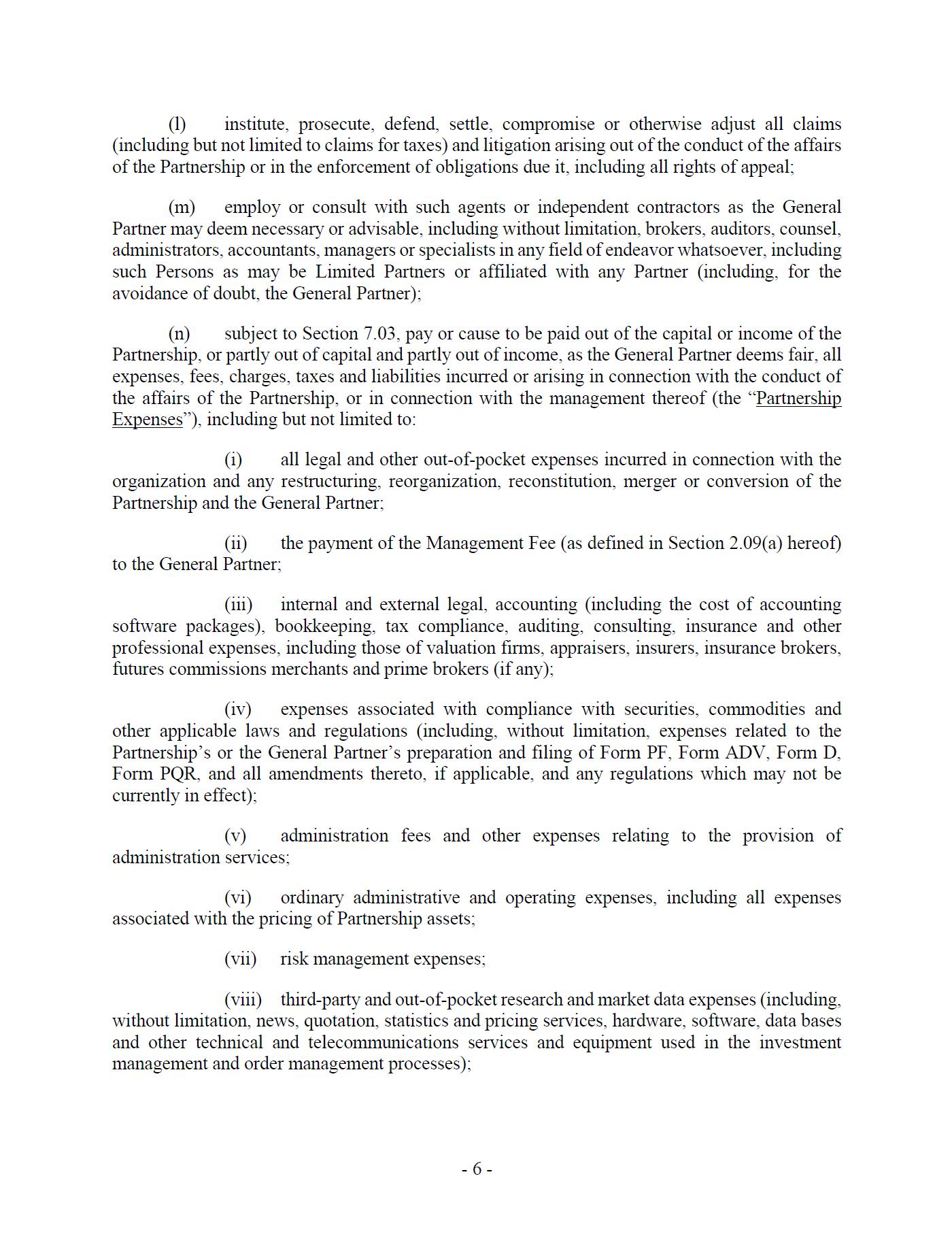
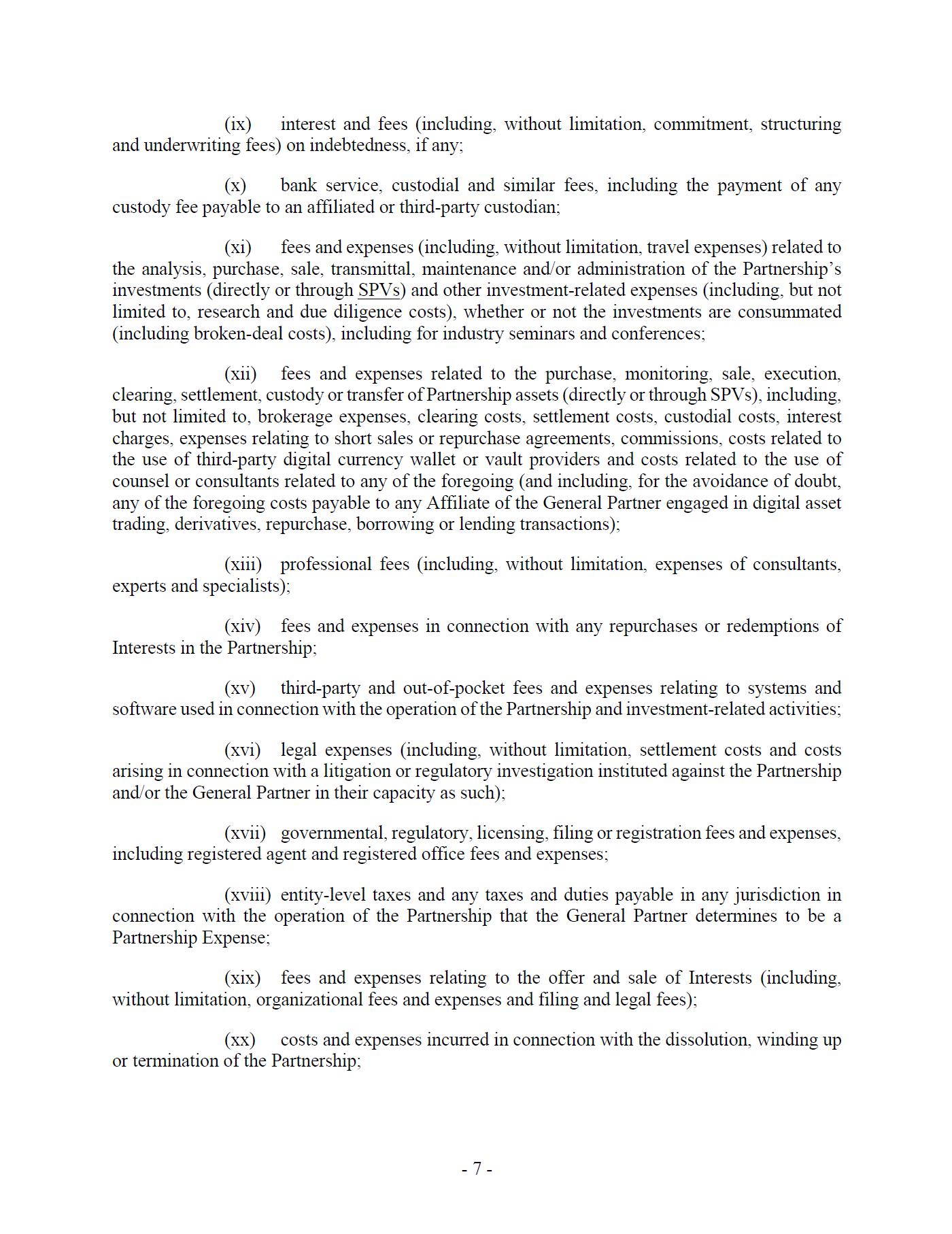
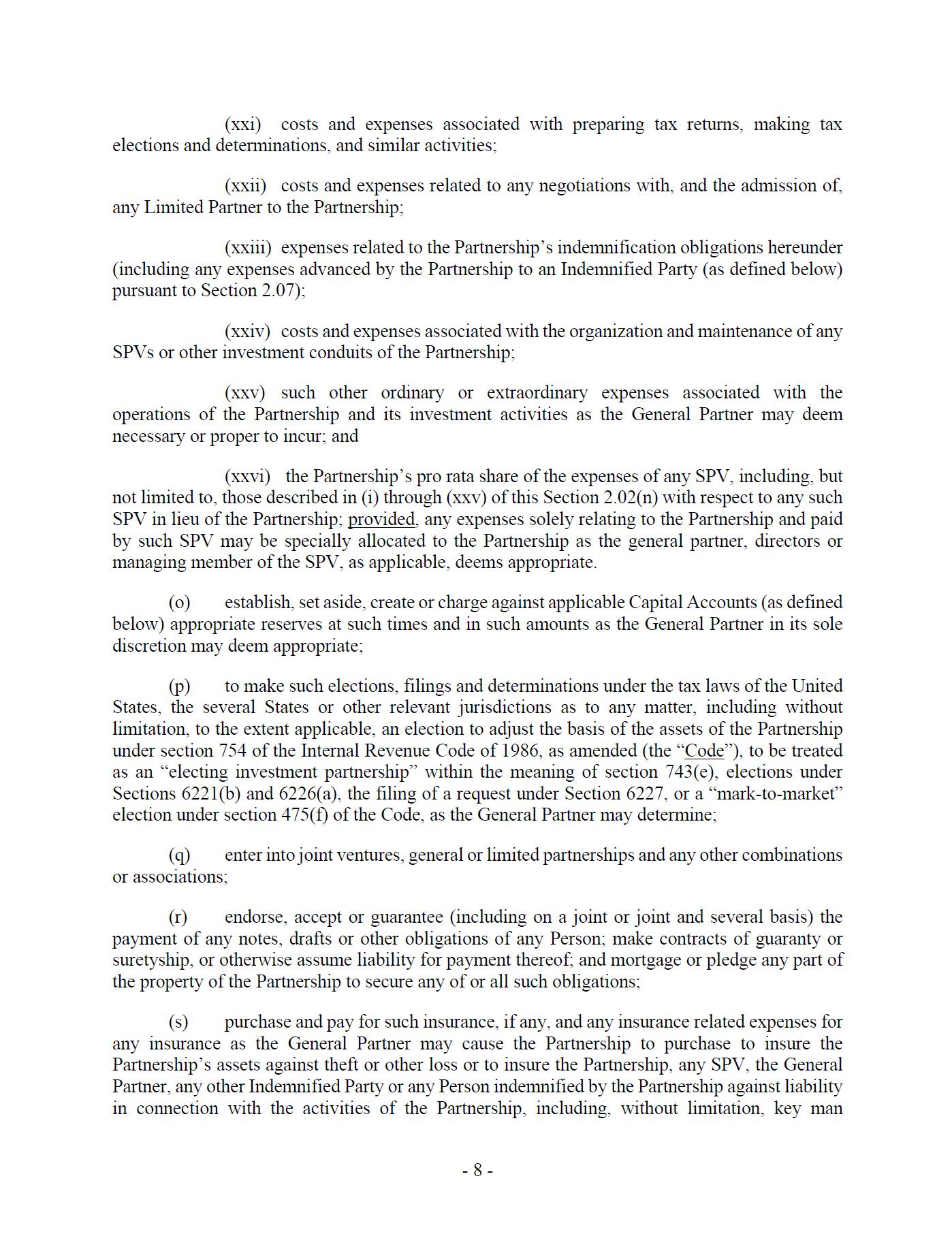
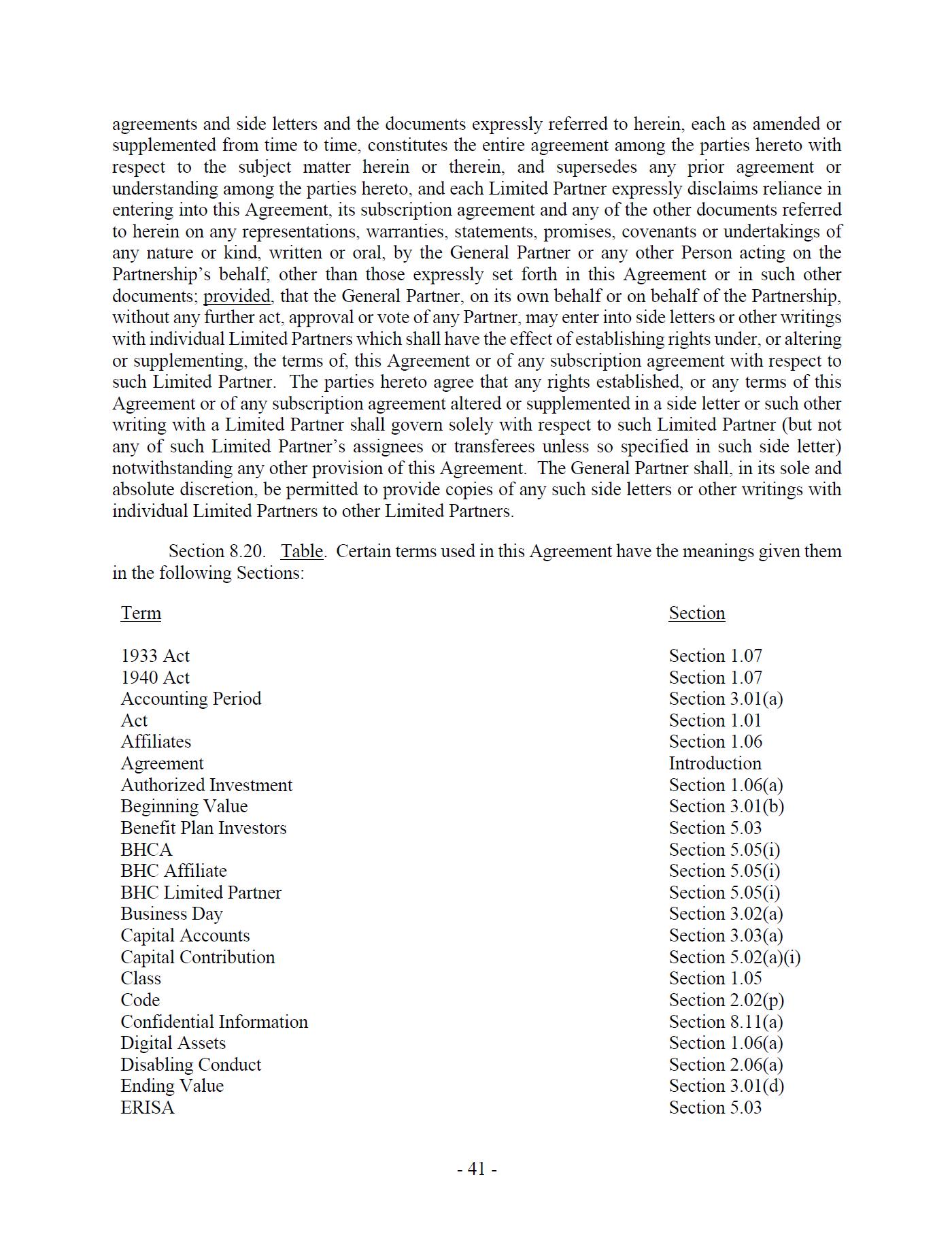
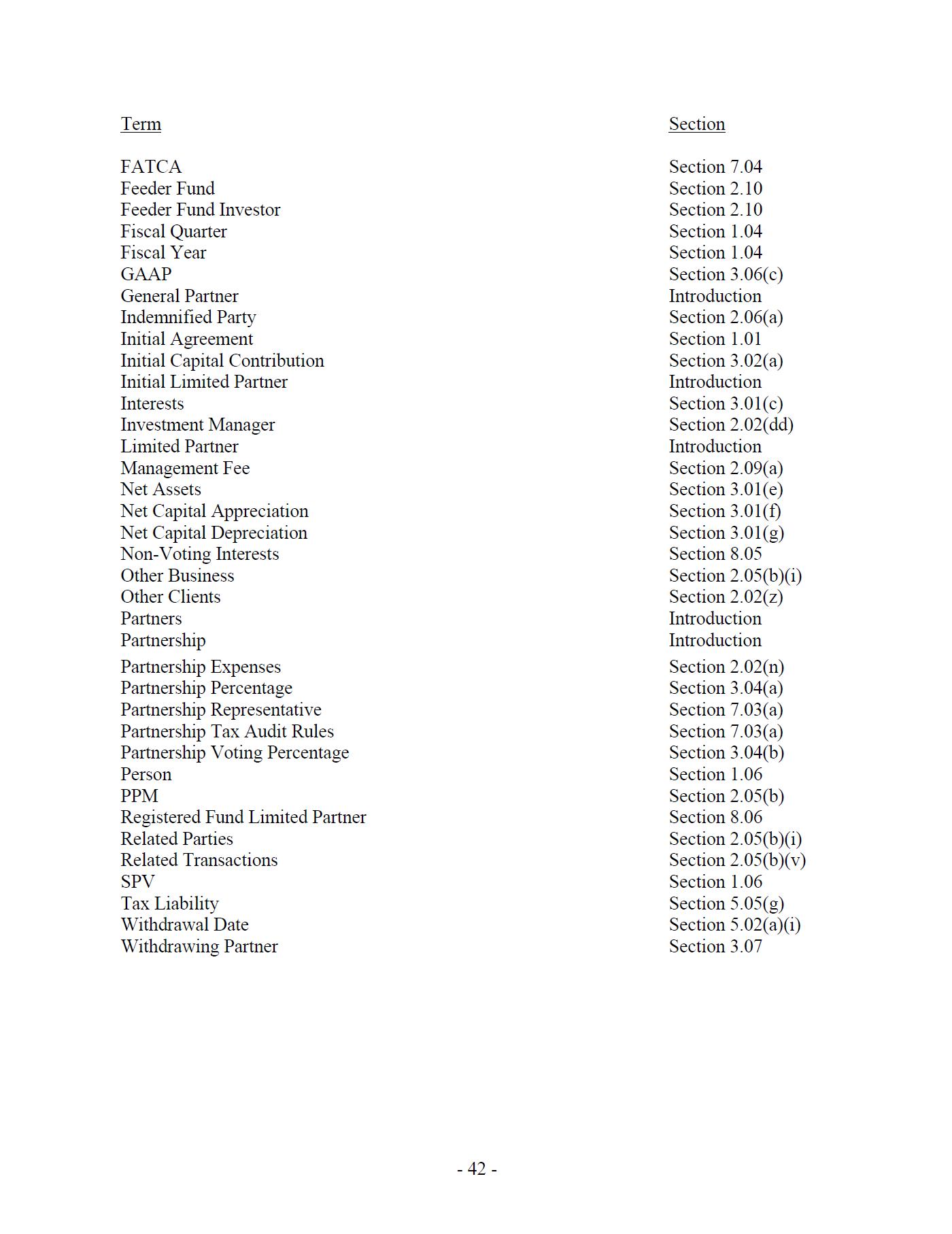
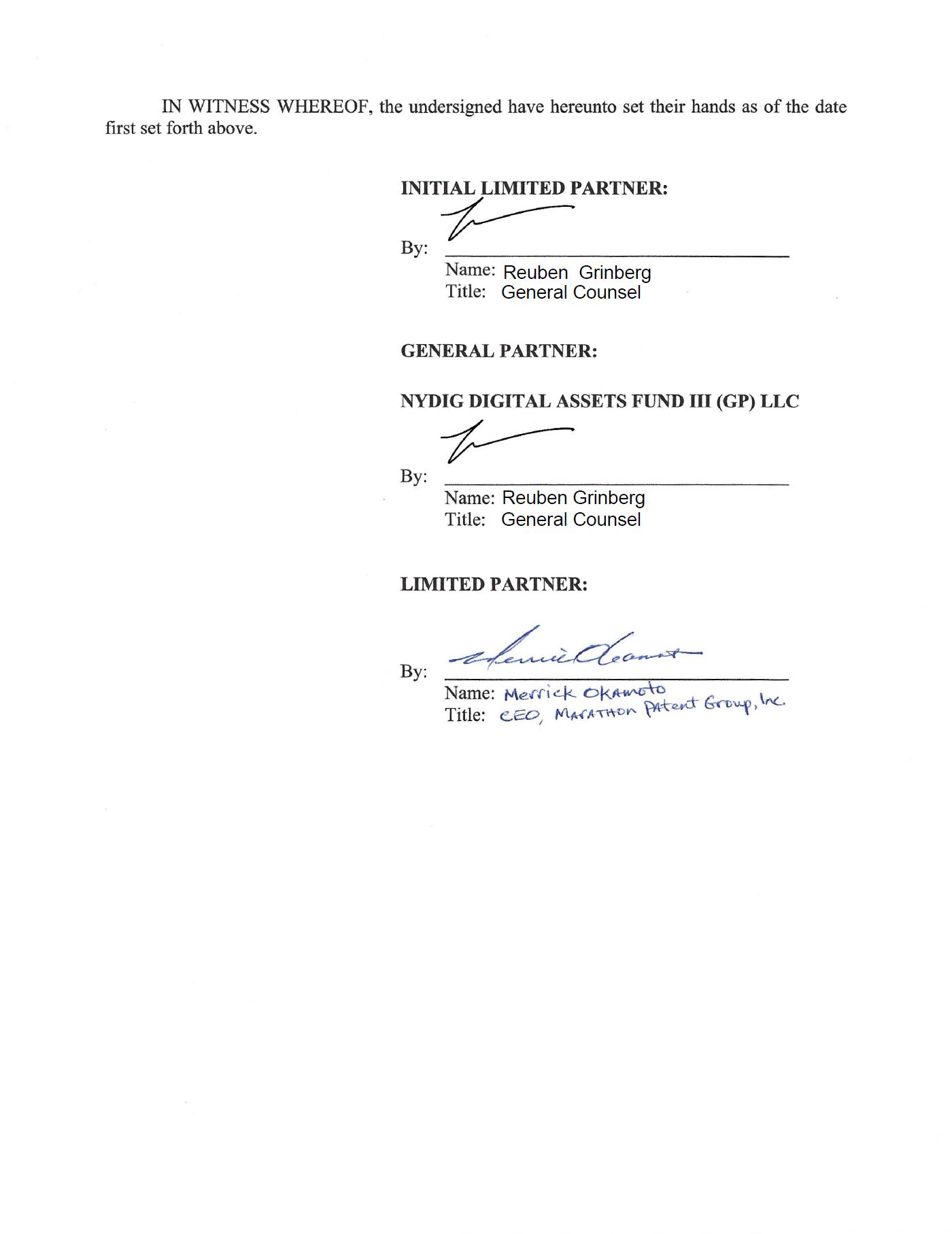
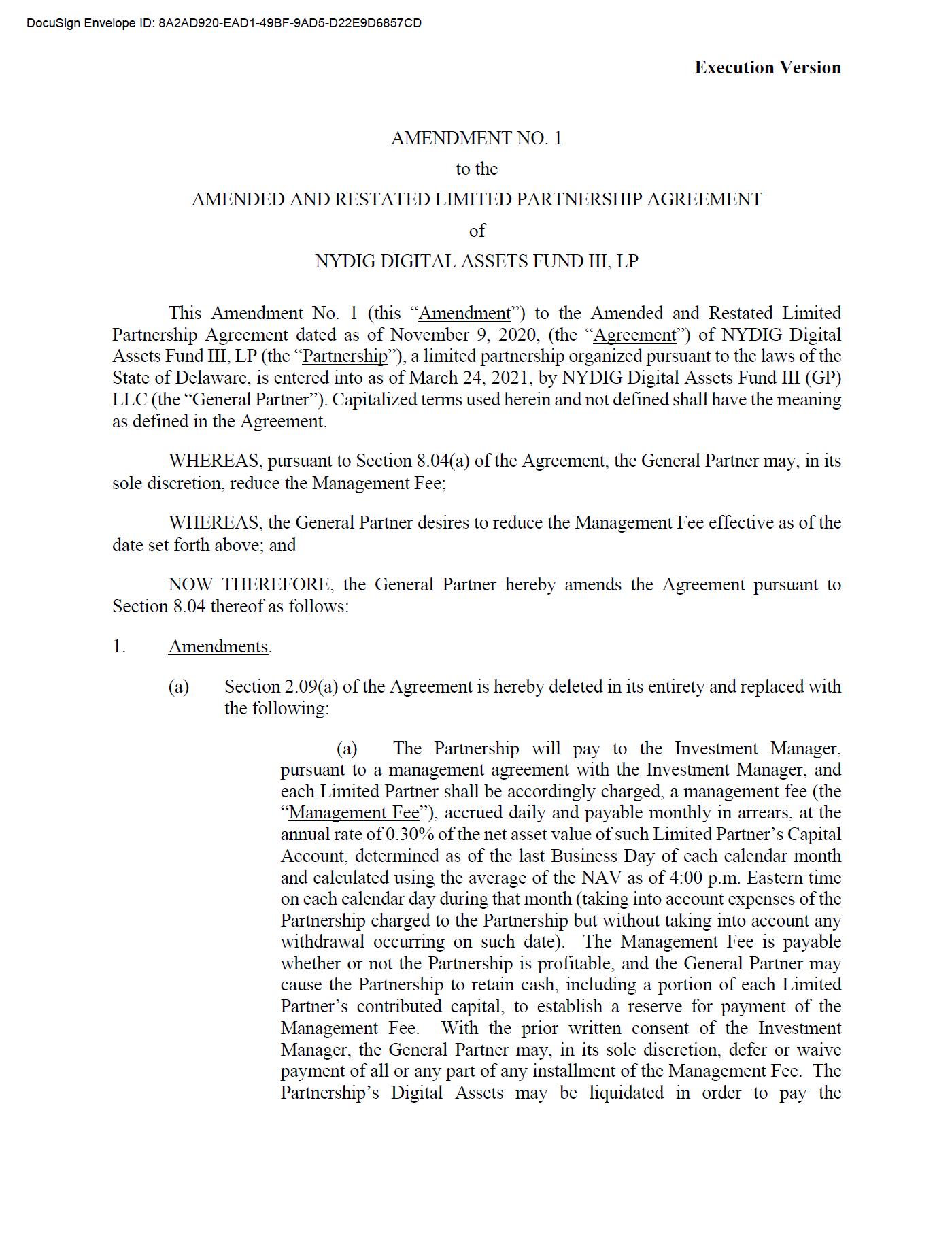
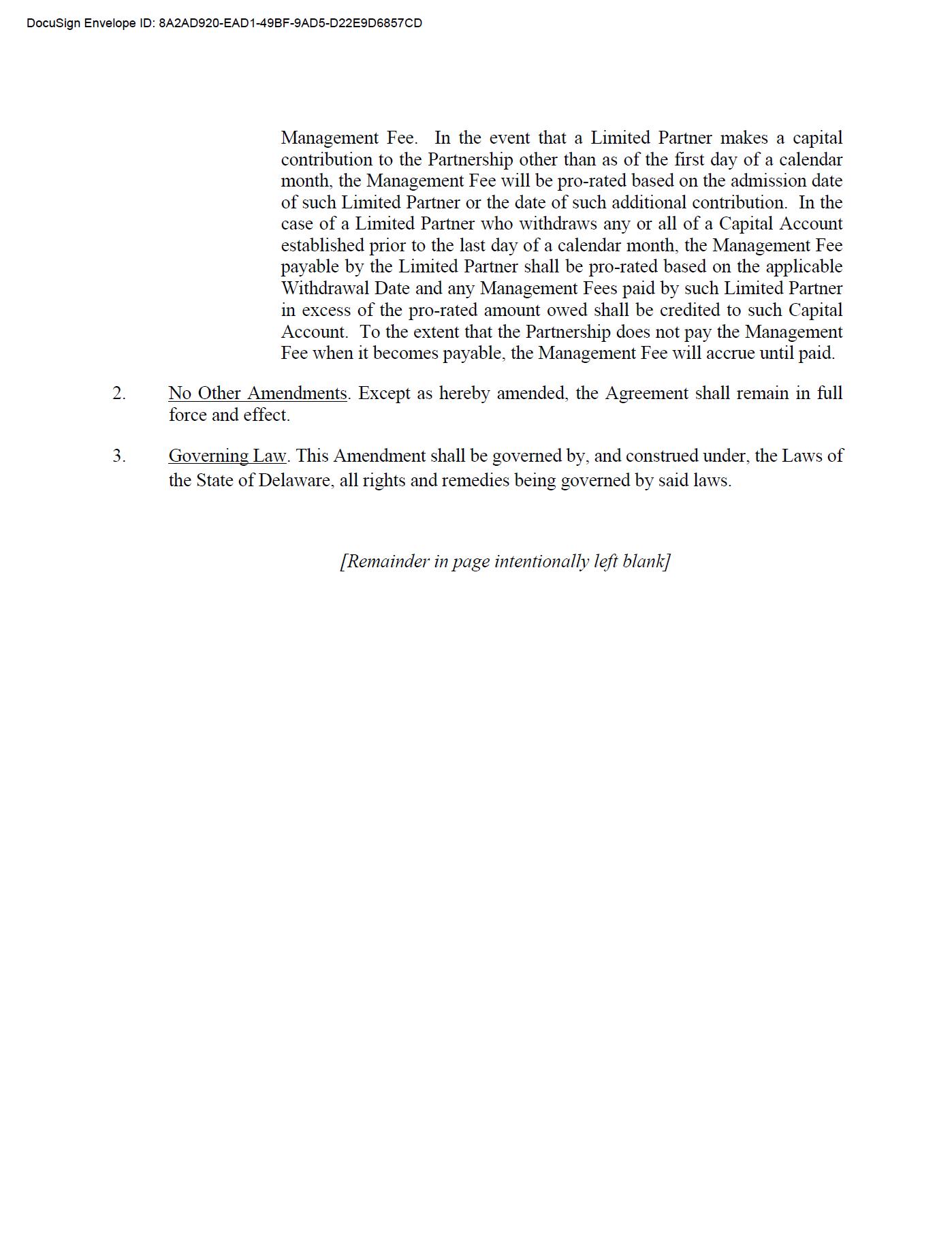
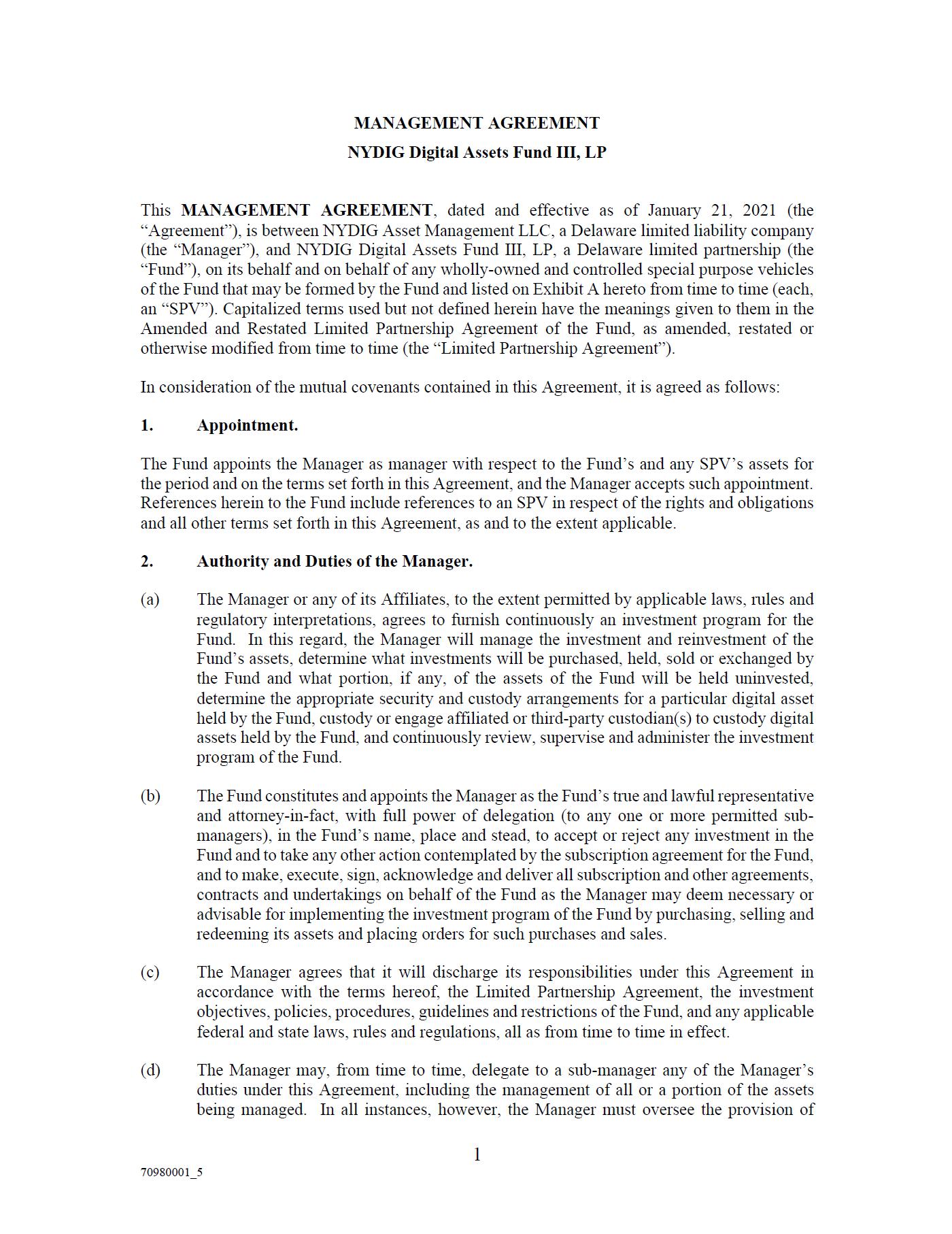
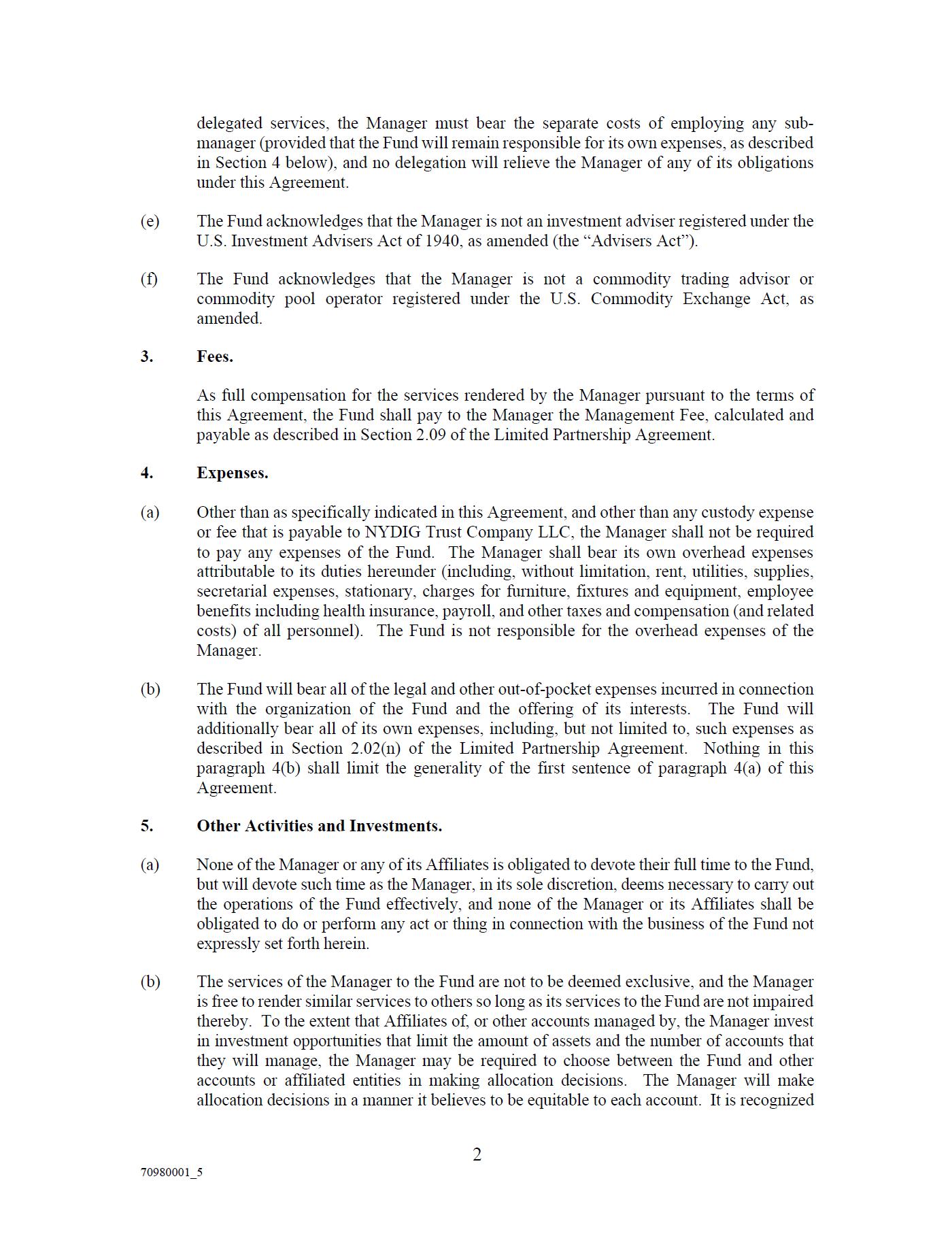
The Company has attached a copy of the DAF III partnership agreement (attached LPA and IMA).
United States Securities
and Exchange Commission
June 13, 2022
Page 7
Revenue Recognition, page F-15
| 12. | You indicate in response to prior comment 14 and in your disclosure on page 16 of your Form 10-Q for the quarterly period ended March 31, 2022, that you recognize revenue based on the closing price of bitcoin on the day of constructive receipt of the mining reward. We note that constructive receipt of the mining reward can be at least two days from contract inception. As previously requested, please tell us how you comply with ASC 606-10-32-21 to 32-24. That is, please provide us with your analysis of how you comply with the requirement to recognize the estimated fair value of the non-cash consideration at contract inception. In addition, please clarify the statement in your disclosure, “The value of the bitcoin rewards, utilizing the prevailing market prices at constructive receipt, is not materially different than the value recognized.” That is, how is there a difference in the value recognized if revenue is recognized based on the closing price of bitcoin on the day of constructive receipt. |
Regarding the statement that the constructive receipt of the mining reward can be at least two days from contract inception, that statement is in reference to the actual transfer from the pool wallet to the customer wallets by the custodian, NYDIG of any bitcoin earned outside of normal business hours (i.e., on weekends). The bitcoin rewards that are earned during non-business hours are immediately deposited into the pool wallet and as such, recorded at the pool level as revenue on the same day a block is solved. There is only a delay in the transfer from the pool wallet to the respective customers wallet (including the Company) when bitcoin is earned outside of normal business hours.
Per ASC 606-10-32-21, to determine the transaction price for contracts in which a customer promises consideration in a form other than cash, an entity shall measure the noncash consideration (or promise of noncash consideration) at fair value. The transaction price is the amount of consideration to which an entity expects to be entitled in exchange for transferring promised goods or services to a customer. The service provided by the Company is computing power in crypto asset transaction verification services to the network. The Company complies with ASC 606-10-32-21 as the Company utilizes the fair value of the block rewards received during each respective day using the closing spot price at 00:00 UTC.
Per ASC 606-10-32-22, if an entity cannot reasonably estimate the fair value of the noncash consideration, the entity shall measure the consideration indirectly by reference to the standalone selling price of the goods or services promised to the customer (or class of customer) in exchange for the consideration. The Company can identify the fair value of the noncash consideration therefore ASC 606-10-32-22 is not applicable.
Per ASC 606-10-32-23, the fair value of the noncash consideration may vary because of the form of the consideration. If the fair value of the noncash consideration promised by a customer varies for reasons other than only the form of the consideration (for example, the fair value could vary because of the entity’s performance), an entity shall apply the guidance in paragraphs 606-10-32-11 through 32-13. The Company can identify the fair value of the noncash consideration utilizing a consistent methodology each day consideration is received; therefore, ASC 606-10-32-23 is not applicable.
Per ASC 606-10-32-24, if a customer contributes goods or services (for example, materials, equipment, or labor) to facilitate an entity’s fulfilment of the contract, the entity shall assess whether it obtains control of those contributed goods or services. The Company has determined that it maintains complete control of the bitcoin rewarded to the pool for the services provided. Given the function of the bitcoin blockchain, it is not probable that a significant reversal of cumulative revenue will occur at the time the Company receives confirmation of the consideration it will receive.
United States Securities
and Exchange Commission
June 13, 2022
Page 8
Clarification of the statement “the value of the bitcoin rewards, utilizing the prevailing market prices at constructive receipt, is not materially different than the value recognized” follows. The recognition of revenue in bitcoin is currently 6.25 bitcoin per block. This never changes absent a “halving” event. However, the value of that reward in dollars (“USD”) is constantly fluctuating based on the price of bitcoin, which trades 24/7/365. Therefore, the price of bitcoin (in USD) on the exact moment the company earns a block will vary from the price of bitcoin (again in USD) when the company recognizes the revenue in USD at the end of the day. As outlined in our response to prior comment 11, we have a process in place to monitor this revenue recognition to ensure there are no material differences (in USD).
| 13. | We note your responses to prior comments 15 and 16 and disclosure on page 16 of your Form 10-Q for the quarterly period ended March 31, 2022. Please distinguish between how you recognized revenue as a pool participant and how revenue is recognized as the pool operator. We may have further comment. Also address the following: |
| ● | As the pool operator, explain how account for the block reward earned and how you present the allocation of the block reward to the 3rd party miners. Provide us with your comprehensive principal versus agent accounting analysis. Refer to ASC 606- 10-55-36 through 55-40; and |
As the pool operator, when the transaction verification service yields rewards, which occurs when the block is solved by one of the mining servers contributing hashrate to the pool, the pool receives the block reward (currently 6.25 bitcoin) plus transaction fees associated with the transactions in the block. The Company measures and records the gross amount of bitcoin received at the pool level in USD as revenue pursuant to ASC 606, mentioned above. For each block that is solved, the respective hashrate utilized in solving the block is calculated by the pool software and distributed to the customers of the pool by NYDIG, as custodian of the Company’s digital assets for verification and confirmation. Upon receiving confirmation from the customers of the pool, NYDIG will then distribute the confirmed amount of bitcoin to the customer’s respective wallet. When the bitcoin rewards are distributed to the customer’s wallets, the Company records a reduction in revenue of the pool wallet (utilizing the same fair market value when the bitcoin was constructively earned).
Per 606-10-55-36, when another party is involved in providing goods or services to a customer, the entity should determine whether the nature of its promise is a performance obligation to provide the specified goods or services itself (that is, the entity is a principal) or to arrange for those goods or services to be provided by the other party (that is, the entity is an agent). An entity determines whether it is a principal or an agent for each specified good or service promised to the customer. A specified good or service is a distinct good or service (or a distinct bundle of goods or services) to be provided to the customer (see paragraphs 606-10-25-19 through 25-22). If a contract with a customer includes more than one specified good or service, an entity could be a principal for some specified goods or services and an agent for others.
United States Securities
and Exchange Commission
June 13, 2022
Page 9
ASC 606 states that “[a]n entity is a principal if it controls the specified good or service before that good or service is transferred to a customer” (ASC 606-10-55-37). A principal obtains control over any one of the following (ASC 606-10-55-37A):
| a. | A good or another asset from the other party which the entity then transfers to the customer. Note that momentary control before transfer to the customer may not qualify. | |
| b. | A right to a service to be performed by the other party, which gives the entity the ability to direct that party to provide the service to the customer on the entity’s behalf. For example, an entity purchases airline tickets, planning to resell them. | |
| c. | A good or service from the other party that it then combines with other goods or services in providing the specified good or service to the customer. For example, a furniture manufacturer purchases goods from multiple vendors to build its products. |
The Company has concluded that it is a principal under ASC 606. The pool, operated by the Company, aggregates all computing power of the mining devices, which are connected to the bitcoin network, and utilizes the combined hashrate, which is the speed of solving mathematical problems involved in the production of new blocks running the proof-of-work algorithm. The transaction verification service is provided to the blockchain network by the pool. The transaction consideration, if any, is noncash consideration that is measured at fair value on the date it is earned at the pool level.
Per 606-10-55-38, an entity is an agent if the entity’s performance obligation is to arrange for the provision of the specified good or service by another party. An entity that is an agent does not control the specified good or service provided by another party before that good or service is transferred to the customer.
In accordance with 606-10-55-37 and 38, the Company is in full control of the goods (bitcoin rewards) to be transferred to the customer (pool participants). The bitcoin rewards are subject to the pool fees charged as discussed in this response letter.
Furthermore, pursuant to ASC 606-10-55-39:
| a. | The entity is primarily responsible for fulfilling the promise to provide the specified good or service. For example, the entity is responsible for the good or service meeting customer expectations. | |
| b. | The entity has inventory risk before or after (i.e., customer has a right of return) the specified good or service has been transferred to a customer. Inventory risk indicates that the entity controls the good or service even before it obtained a contract with the customer. | |
| c. | The entity has discretion in setting the price for the specified good or service. This may indicate that the entity has the ability to use or direct the use of the good or service. Note that agents sometimes have flexibility in setting prices too, so this indicator is not always helpful. |
United States Securities
and Exchange Commission
June 13, 2022
Page 10
All of the above factors were taken into consideration in determining revenue recognition under ASC 606.
| ● | You indicate that “mining revenues are recorded net of any pool fee, not gross, with an offsetting cost of revenue.” Please clarify this statement and differentiate your accounting for any pool fees earned as the pool operator with third party miners, as the pool operator and participant in your own pool, and when you participated in third party pools. Explain the nature of the amounts that are included in the offsetting cost of revenue. Tell us what consideration was given to whether the pool fee you retain relates to activities you must undertake to fulfill your contract as the pool operator. Also tell us whether the bitcoin rewarded among pool participants, net of the pool fee, represents the transaction price; and |
Regarding the previous sentence “mining revenues are recorded net of any pool fee, not gross, with an offsetting cost of revenue”, please see additional language above related to transactions when the pool contained third-party customers. The pool charged all pool participants, including the Company, a pool fee of 0.5% on all blocks earned by the pool. These amounts were immaterial and disclosed in our most recent Quarterly Report on Form 10-Q.
Effective April 30, 2022, third party miners are no longer permitted to participate in the Company’s mining pool, and prospectively, the Company will be the only participant and contribute 100% of the pool’s hashrate. As such, the Company will no longer incur pool fees for operating its own mining pool as the sole customer of the pool.
Regarding the nature of offsetting cost of revenue, the Company pays a monthly license fee to a third party vendor for access and utilization of the pool software. The pool fees retained relate directly to the Company’s responsibilities as pool operator. Without utilizing the pool software, the mining servers would not be able to properly perform the calculations essential to solving the transaction verification service equation and in turn, would not generate any revenue / bitcoin rewards.
The bitcoin rewarded to pool participants, net of the pool fee, represents the transaction price for the amounts distributed.
| ● | Provide us with your proposed revised revenue recognition policy disclosure in response to our comments. |
The Company is not proposing a revised revenue recognition policy. Pursuant to ASC 606-10-25-1, the Company uses the fair value of the digital assets measured at the time of receipt as the transaction price.
Note 5 - Debt, Commitments and Contingencies
Revolving Credit Line, page F-27
| 14. | We note the terms of the collateral for your revolving line of credit. Please provide us with your analysis of the accounting for any bitcoin stored in a custody account for the benefit of the Bank pledged as collateral. Cite the authoritative accounting literature relied upon. |
The Company relies on the guidance in FASB ASC 805, whereas the Company needs to evaluate whether any potential loss events, such as theft, impact the measurement of the asset on a monthly basis. The amount of required collateral (in USD) that is transferred to the custody account is confirmed on the date of transfer by the Lender in conjunction with the custody provider. That amount is reclassified into a restricted digital currency account on the Company’s balance sheet pursuant to ASC 820.
United States Securities
and Exchange Commission
June 13, 2022
Page 11
Form 10-Q for the Quarterly Period Ended March 31, 2022
Consolidated Condensed Statement of Operations, page 4
| 15. | Please clarify that the line item of total other (expenses) income excludes interest expense. |
Management confirms that the caption “total other (expenses) income” excludes the impact of interest expense. In response to previous comments, we determined to completely update our disclosures during the first quarter. As part of this effort, we updated our income statement presentation to show interest expense separately.
Management’s Discussion and Analysis of Financial Condition and Results of Operations Recent Developments, page 15
| 16. | We note from your disclosure here and in response to prior comment 8 that, on March 31, 2022, you negotiated to terminate the three agreements associated with the Hardin, Montana facility effective in the third quarter of 2022. Please tell us what consideration was given to the impairment of the assets related to the build-out of the Hardin Station. |
Pursuant to ASC 360, the Company has given consideration to impairment and determined that the value of the asset is not impaired. However, the useful life wherein the company is obtaining economic benefit has been reduced from the original term in the service agreement. As such, the Company has accelerated the depreciation expense on a monthly basis through the remainder of the term pursuant to ASC 360-10. We expect to continue our operations at Hardin through August 2022. The carrying costs of the assets remain at the original cost paid as reflected in the Company’s balance sheet.
Non-GAAP Financial Measures, page 17
| 17. | We note your revised presentation of non-GAAP measures in response to prior comments 3 and 4. Please address the following: |
| ● | Revise to remove the adjustment for changes in the fair market value of your investment fund from your computation of non-GAAP measures. In this regard, we note your explanation that the adjustment is due to the fundamentally different accounting for your self-mined bitcoin and because the amount can vary significantly from period-to-period. Refer to Question 100.04 of the Compliance and Disclosure Interpretations on Non-GAAP Financial Measures. |
Management made significant changes to MD&A, including non-GAAP disclosures, in its March 31, 2022 10-Q filing. These changes were driven by our desire to be responsive to previous comments and to provide investors with meaningful information related to our current operations. Specifically, we defined Adjusted Net Income as GAAP net income (or loss) for the period with adjustments to add back the impacts of (1) stock compensation expense, net of withholding taxes (2) changes in the fair market value of our investment fund and (3) the tax effects of the aforementioned adjustments. Since this is the non-GAAP measure used internally by management to evaluate earnings performance for the period, our position is that this non-GAAP measure, when taken as additional information in conjunction with the GAAP income statement, enables investors to evaluate the earnings of current operations exclusive of these two non-cash items. I wish to emphasize that the changes we made in our March 31, 2022 10-Q were undertaken as a means of being responsive to the Commission’s original comments while also providing investors with a certain level of transparency and insight into how Management evaluates performance. That being said, given the Commission’s initial comment and further comment on this matter, and absent any additional comment from the Commission on this matter we will, on a prospective basis exclude the change in fair value of the fund from the calculation of Adjusted Net Income.
United States Securities
and Exchange Commission
June 13, 2022
Page 12
| ● | Revise to remove the adjustment for impairment of digital currencies from your computation of adjusted EBITDA. As previously noted in prior comment 3, we believe that adjusting for impairment of mined cryptocurrency does not provide useful information to investors in light of your strategy to hold bitcoin as a long term investment and sell bitcoin in future periods as needed to generate cash for treasury management and other general corporate purposes, in addition to the recurring nature of this charge. |
Management also added a reconciliation from GAAP Net Income to Adjusted EBITDA to its March 31, 2022 10-Q filing. This was the first time we used this non-GAAP measure and we received positive feedback from investors for adding this non-GAAP measure. We define Adjusted EBITDA as:
| ● | GAAP net income (or loss) for the period with adjustments to add back the impacts of |
| ○ | interest expense | |
| ○ | income tax expense and | |
| ○ | depreciation and amortization |
| ● | This enables the investor to arrive at an EBITDA subtotal, which is then further adjusted for specific non-cash items which currently include: |
| ○ | stock compensation expense, net of withholding taxes | |
| ○ | changes in the fair market value of our investment fund | |
| ○ | changes in fair value of warrant liability | |
| ○ | impairment of digital currencies and | |
| ○ | other impairments of long-lived assets, |
| ● | This reconciliation results in what we define as “Adjusted EBITDA”. We stated that Adjusted EBITDA is used by management in evaluating operating performance and we believe it to be a meaningful non-GAAP measure used by investors to compare the Company’s operating performance with that of other companies within the industry. |
We believe that this presentation complies with Item 10(e)(1)(ii)(A) in that we present a clear reconciliation from the GAAP measure (Net Income) to a non-GAAP measure (EBITDA) and then a clear reconciliation from EBITDA to Adjusted EBITDA. It is important to note that none of the adjustments from EBITDA to Adjusted EBITDA represent normal, recurring cash operating expenses necessary to operate the company’s business.
United States Securities
and Exchange Commission
June 13, 2022
Page 13
In preparing our March 31, 2022 10-Q, we also attempted to take a completely fresh approach to the MD&A by creating a step-by-step “walk” for the investor through the components of the GAAP Net Income, including a comprehensive discussion as to the key drivers of each item. Upon completion of the GAAP portion of the MD&A, we discussed Adjusted Net Income (which we plan to modify or drop) and Adjusted EBITDA. Our discussion of Adjusted EBITDA, coming after GAAP Net Income, helps highlight the differences between the GAAP measure and the non-GAAP measure by building off of the MD&A discussion that precedes the Adjusted EBITDA section of the MD&A. We believe that this presentation supports the consideration of non-GAAP measures in conjunction with (and after giving consideration to) GAAP measures.
We also updated the description of our non-GAAP disclosures to emphasize that these disclosures need to be taken in conjunction with, and not as a replacement to, our GAAP disclosures:
“These supplemental financial measures are not measurements of financial performance under generally accepted accounting principles in the United States (“GAAP”) and, as a result, these measures may not be comparable to similarly titled measures of other companies. Management uses these non-GAAP financial measures internally to help understand, manage, and evaluate our business performance and to help make operating decisions. We believe that this combination of reconciliations from GAAP net income to non-GAAP measures is important when taken together with the GAAP financial results in that they provide a meaningful view of earnings performance for management and investors. We also believe that these non-GAAP measures provide additional information to investors about the Company’s performance because they eliminate certain items not associated with current-period transactions and other significant discrete items that might impact the comparison of period-to-period results
Non-GAAP financial measures are subject to material limitations as they are not in accordance with, or a substitute for, measurements prepared in accordance with GAAP. Our non-GAAP financial measures are not meant to be considered in isolation and should be read only in conjunction with our Consolidated Condensed Financial Statements, which have been prepared in accordance with GAAP. We rely primarily on such Consolidated Condensed Financial Statements to understand, manage, and evaluate our business performance and use the non-GAAP financial measures only supplementally.”
| ● | As previously requested in prior comment 4, explain the nature of the non-GAAP adjustment to adjusted EBITDA for amortization of prepaid service contracts. Explain why you believe that adjusting for this item is useful information to investors as it appears to represent a normal, recurring, operating expense. Refer to Item 10(e)(1)(i)(C) of Regulation S-K and Question 100.01 of the Compliance and Disclosure Interpretations on Non-GAAP Financial Measures. |
Amortization of prepaid service contracts constitute a non-cash expense and are included in cost of revenues on the income statement. Management’s position is that it is appropriate to exclude these amounts from the calculation of Adjusted EBITDA since they are (1) part of depreciation and amortization (within cost of revenues) and (2) are non-cash. As a result, the Company is not “excluding a normal, recurring cash operating expense necessary to operate a registrant’s business” from the non-GAAP measure of Adjusted EBITDA.
United States Securities
and Exchange Commission
June 13, 2022
Page 14
| • | Revise to present the most directly comparable GAAP financial measures to basic and diluted adjusted net income per share. Refer to Item 10(e)(1)(i)(A) and (ii)(E) of Regulation S-K and Question 102.10 of the Compliance and Disclosure Interpretation of Non-GAAP Financial Measures. |
Management will provide the required reconciliation on a prospective basis.
Liquidity and Capital Resources, page 21
| 18. | We note your disclosure here as well as the proposed prospective disclosure in response to prior comment 7. Further revise to provide quantitative and qualitative analysis of the underlying reasons for the material changes in net cash used by operating activities, as previously requested. |
As mentioned earlier, we undertook a complete revision of our MD&A in preparing the first quarter 10-Q and this comment resulted from oversight on my part in preparing the new version of our MD&A. We will address this prospectively by providing additional commentary on operating cash flows in all future filings.
In connection with responding to the staff’s comments, the Company acknowledges that (i) it is responsible for the adequacy and accuracy of the disclosure in its filing; (ii) staff comments or changes to disclosure in response to staff comments do not foreclose the Commission from taking any action with respect to the filing; and (iii) it may not assert staff comments as a defense in any proceeding initiated by the Commission or any person under the federal securities laws of the United States.
We hope you find that this response answers the staff’s questions, but please contact the undersigned at hugh@marathondh.com or our counsel, Jolie Kahn, Esq., at joliekahnlaw@sbcglobal.net, if you have any further questions or would like to discuss our response.
| Sincerely, | |
| /s/ Hugh Gallagher | |
| Hugh Gallagher | |
| Chief Financial Officer |