UNITED STATES
SECURITIES AND EXCHANGE COMMISSION
Washington, D.C. 20549

FORM 8-K

CURRENT REPORT
Pursuant to Section 13 or 15(d) of
The Securities Exchange Act of 1934

Date of Report (Date of earliest event reported): July 3, 2024

INSMED INCORPORATED
(Exact name of registrant as specified in its charter)

Virginia
000-30739
54-1972729
(State or other jurisdiction of incorporation)
(Commission File Number)
(IRS Employer Identification No.)

700 US Highway 202/206
Bridgewater, New Jersey

08807
(Zip Code)
(Address of principal executive offices)


Registrant’s telephone number, including area code: (908) 977-9900

Not Applicable
(Former name or former address, if changed since last report.)

Check the appropriate box below if the Form 8-K filing is intended to simultaneously satisfy the filing obligation of the registrant under any of the following provisions (see General Instruction A.2. below):


Written communications pursuant to Rule 425 under the Securities Act (17 CFR 230.425)


Soliciting material pursuant to Rule 14a-12 under the Exchange Act (17 CFR 240.14a-12)


Pre-commencement communications pursuant to Rule 14d-2(b) under the Exchange Act (17 CFR 240.14d-2(b))

Pre-commencement communications pursuant to Rule 13e-4(c) under the Exchange Act (17 CFR 240.13e-4(c))

Securities registered pursuant to Section 12(b) of the Act:

Title of each class
Trading Symbol(s)
Name of each exchange on which
registered
Common Stock, par value $0.01 per share
INSM
Nasdaq Global Select Market

Indicate by check mark whether the registrant is an emerging growth company as defined in Rule 405 of the Securities Act of 1933 (17 CFR 230.405) or Rule 12b-2 of the Securities Exchange Act of 1934 (17 CFR 240.12b-2).

Emerging growth company

If an emerging growth company, indicate by check mark if the registrant has elected not to use the extended transition period for complying with any new or revised financial accounting standards provided pursuant to Section 13(a) of the Exchange Act. ☐


ITEM 7.01 — Regulation FD Disclosure.

On July 3, 2024, Insmed Incorporated (the “Company”) issued a press release announcing additional findings from the Company’s ASPEN study, a global, randomized, double-blind, placebo-controlled Phase 3 study to assess the efficacy, safety, and tolerability of brensocatib in patients with non-cystic fibrosis bronchiectasis. A copy of the press release is attached hereto as Exhibit 99.1 and incorporated herein by reference.

The additional data will be presented by James Chalmers, MBChB, Ph.D., at the World Bronchiectasis Conference (WBC). A copy of the slide presentation to be used during the presentation is attached hereto as Exhibit 99.2 and incorporated herein by reference.

The information contained in this Item 7.01, including Exhibits 99.1 and 99.2, shall not be deemed “filed” for purposes of Section 18 of the Securities Exchange Act of 1934 (the “Exchange Act”), as amended, or incorporated by reference in any filing under the Securities Act of 1933, as amended, or the Exchange Act, except as shall be expressly set forth by specific reference in such a filing.

ITEM 9.01 – Financial Statements and Exhibits.

(d) Exhibits

Exhibit
No.
 
Description

Press Release issued by Insmed Incorporated, dated July 3, 2024.

Insmed Incorporated July 2024 WBC Presentation.
104

Cover Page Interactive Date File (embedded within the Inline XBRL document).


SIGNATURES

Pursuant to the requirements of the Securities Exchange Act of 1934, the registrant has duly caused this report to be signed on its behalf by the undersigned hereunto duly authorized.

Dated: July 3, 2024
INSMED INCORPORATED


By:
/s/ Michael A. Smith

Name:
Michael A. Smith

Title:
Chief Legal Officer and Corporate Secretary


Exhibit 99.1

Additional Positive Data from Pivotal ASPEN Study of Brensocatib in Patients with Bronchiectasis to be Presented at the 7th World Bronchiectasis Conference
 
—New Graph Depicting 52-Week FEV1 Data Illustrate Significantly Less Decline in Lung Function for Brensocatib 25 mg Versus Placebo—
 
—Additional Exploratory Endpoints to be Presented, Including FVC and Patient-Reported BEST Score—  
 
BRIDGEWATER, N.J., July 3, 2024 /PRNewswire/ -- Insmed Incorporated (Nasdaq: INSM), a global biopharmaceutical company on a mission to transform the lives of patients with serious and rare diseases, today announced that additional positive results from the ASPEN study, a global, randomized, double-blind, placebo-controlled Phase 3 study to assess the efficacy, safety, and tolerability of brensocatib in patients with non-cystic fibrosis bronchiectasis, will be presented tomorrow, July 4, 2024, at the 7th World Bronchiectasis Conference (WBC) in Dundee, Scotland. Slides from this presentation can be found here.
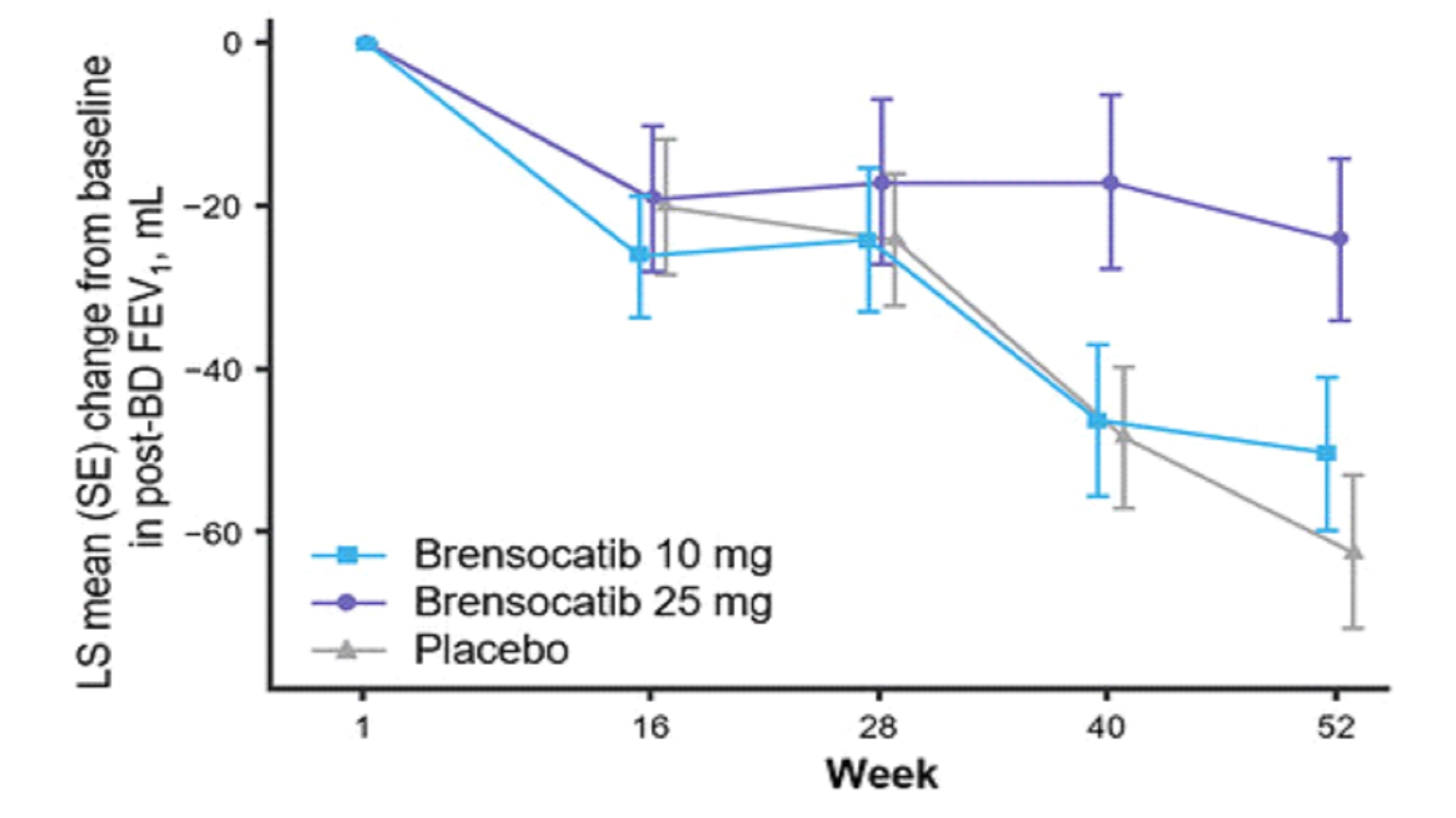


  Figure 1   Figure 2


Figure 3
 
Figure 4
 
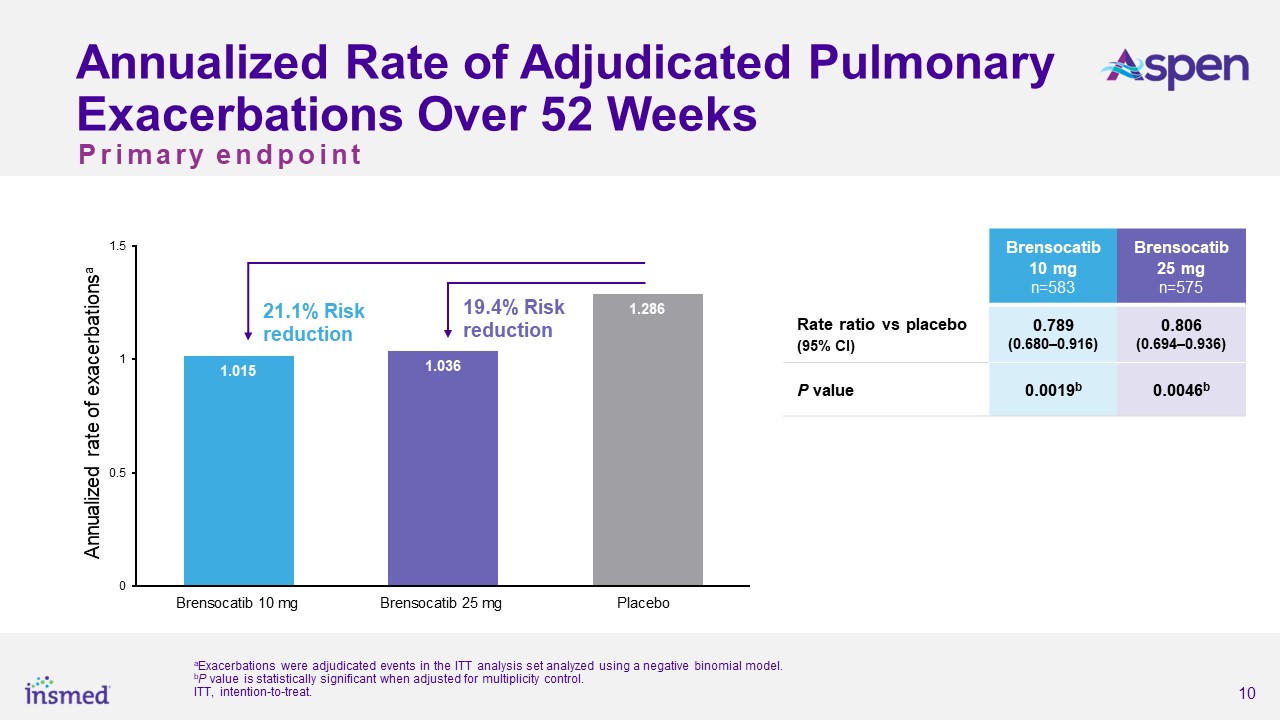
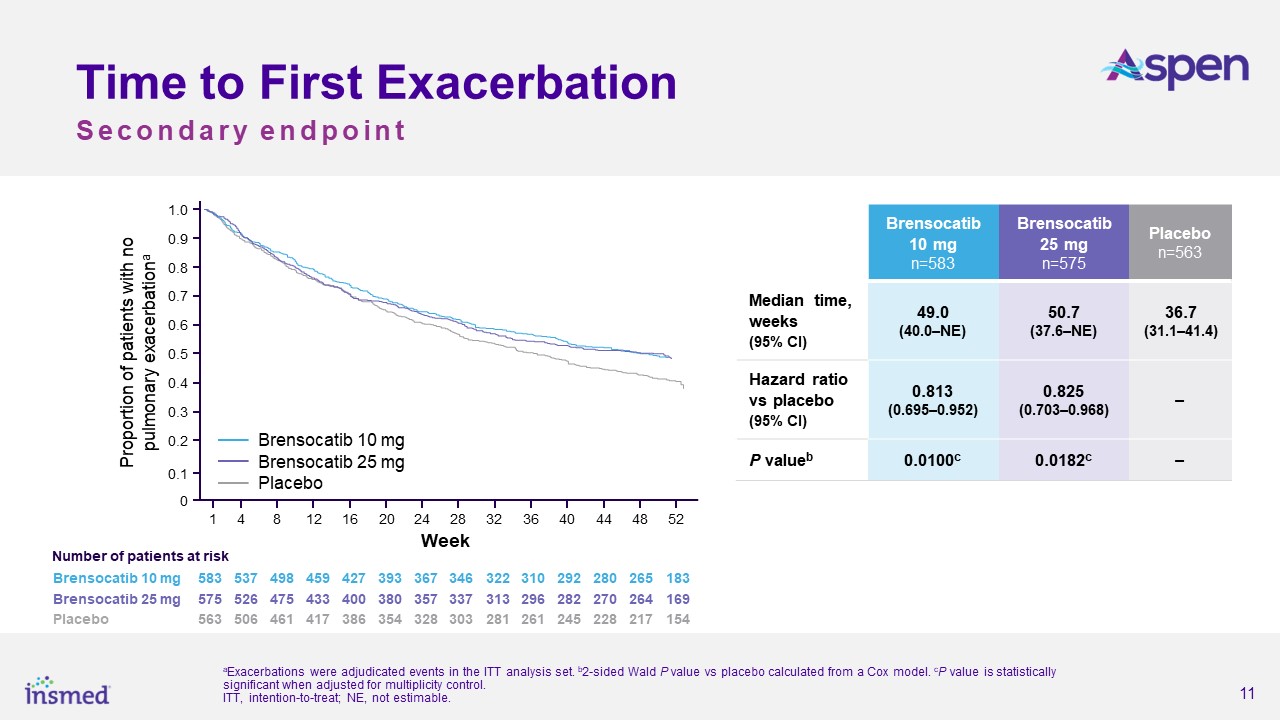
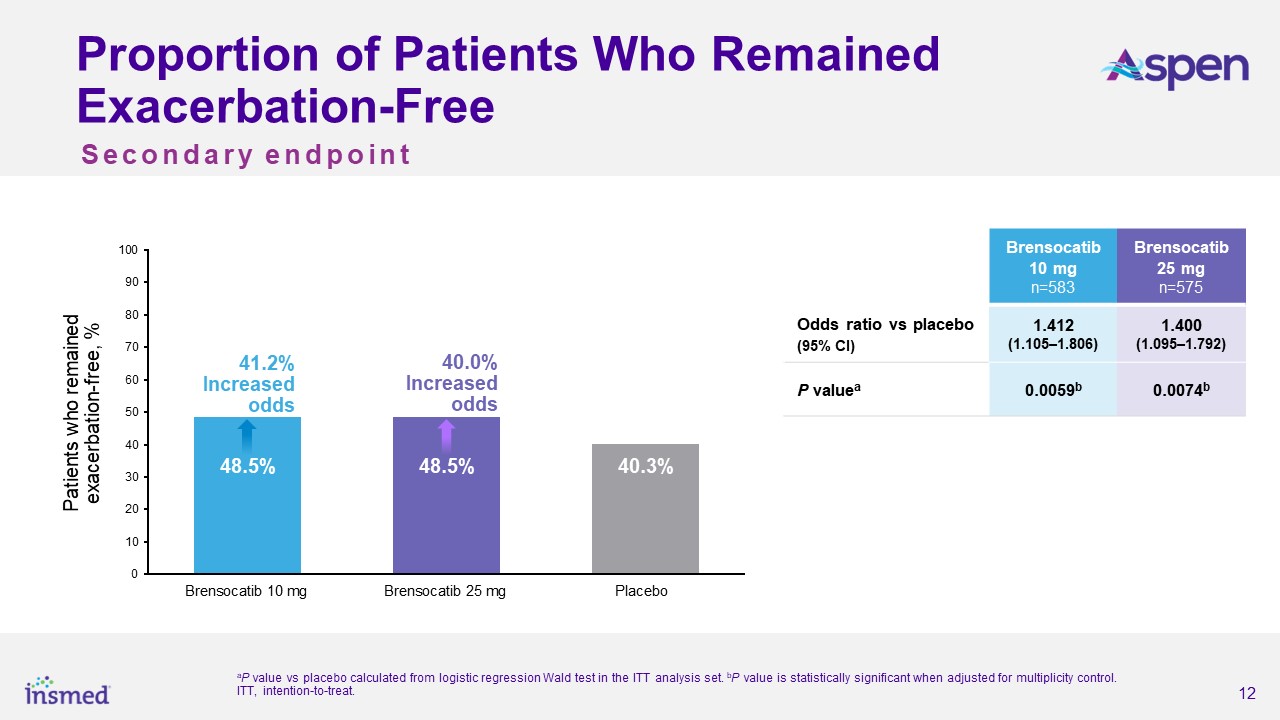
As previously announced, the ASPEN study met its primary endpoint, with both dosage strengths of brensocatib achieving statistical and clinical significance for the reduction in the annualized rate of pulmonary exacerbations (PEs) versus placebo over the 52-week treatment period. The annualized rate of exacerbations was 1.015 for the brensocatib 10 mg group, 1.036 for the brensocatib 25 mg group, and 1.286 for placebo, representing a 21.1% risk reduction from placebo for the brensocatib 10 mg group (p=0.0019) and a 19.4% risk reduction for the 25 mg group (p=0.0046). Both dosage strengths of brensocatib also met several secondary endpoints, including significantly prolonging the time to first exacerbation and significantly increasing the odds of remaining exacerbation-free over the treatment period.

“The ASPEN findings are critically important given that there is no approved treatment for bronchiectasis and there remains an urgent need for a therapy that can both reduce pulmonary exacerbations and lessen the burden of this disease. The data announced today further underscore the positive impact brensocatib may have on patients if approved,” said lead study investigator James Chalmers, MBChB, Ph.D., Professor and Consultant Respiratory Physician at the School of Medicine, University of Dundee, UK. “Bronchiectasis is a progressive disease that causes patients to lose lung function over time. Therefore, I am particularly encouraged by the data which showed that the 25 mg dose of brensocatib may slow the rate of decline of FEV1 and FVC, which represent clinically meaningful parameters of lung function that physicians consider important outcome measures.”
 
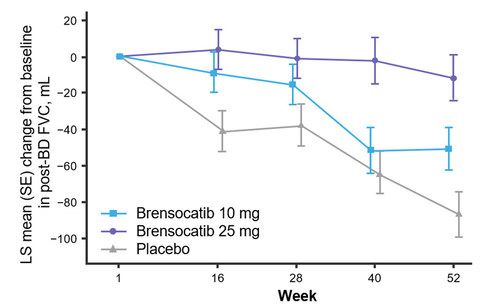
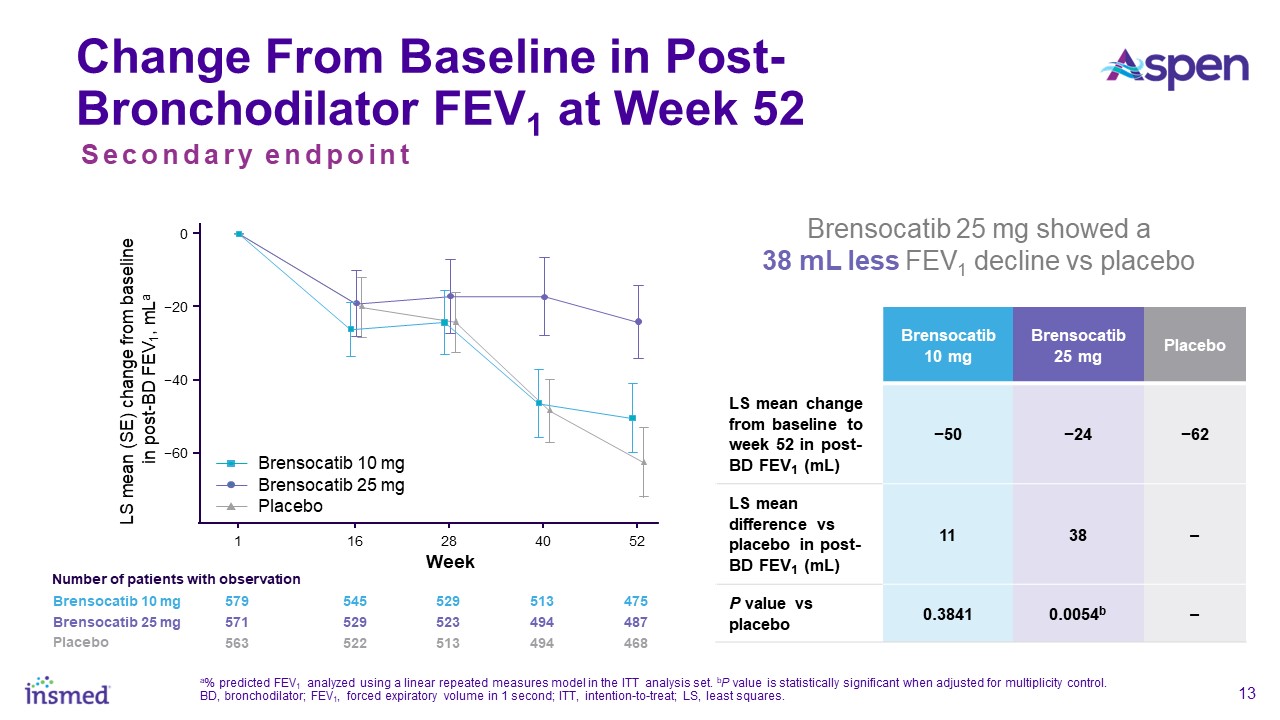
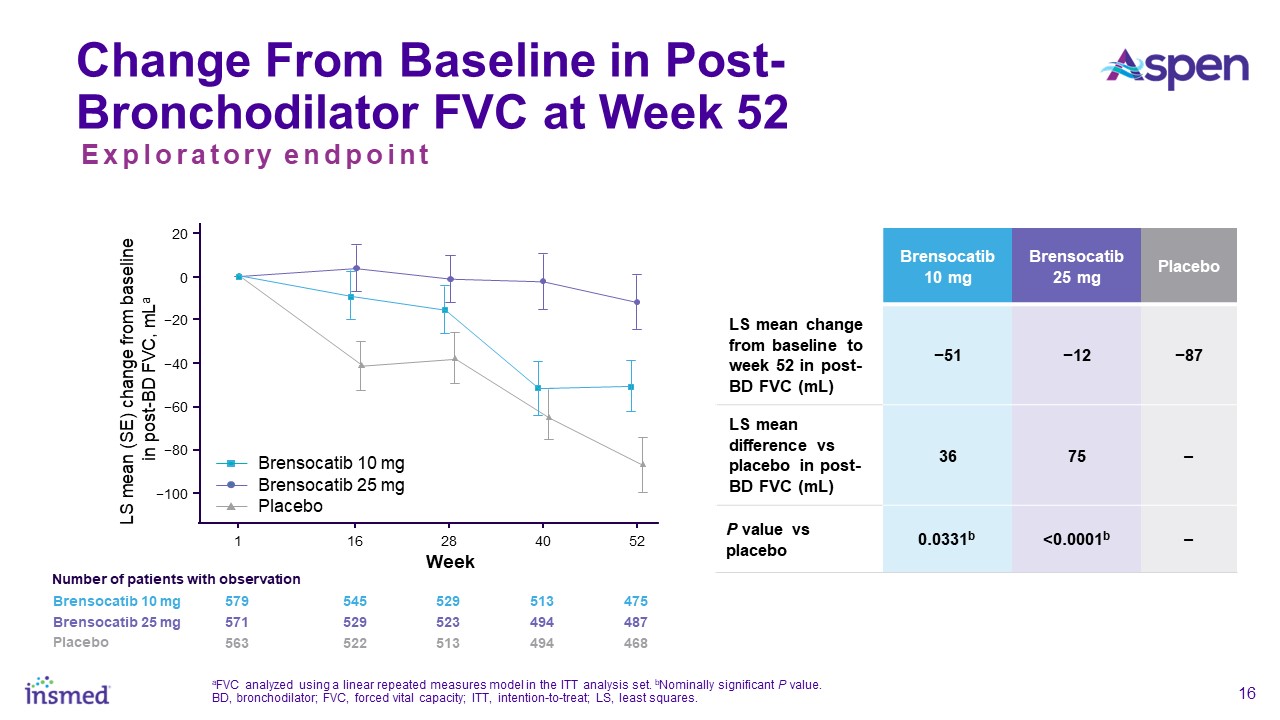
The study assessed change in lung function, as measured by change from baseline in post-bronchodilator forced expiratory volume over one second (FEV1) at Week 52, a key secondary endpoint. Patients treated with brensocatib 25 mg demonstrated significantly less FEV1 decline, preserving more lung function as compared to placebo (LS mean change of 38 mL, p=0.0054). Patients in the placebo arm lost on average 62 mL of FEV1 in one year. In addition, new data will be presented at WBC measuring the change from baseline in post-bronchodilator forced vital capacity (FVC) at Week 52, another measure of lung function and an exploratory endpoint in the study. Patients treated with brensocatib 25 mg showed nominally significantly less decline in FVC compared to placebo (LS mean change of 75 mL, p<0.0001).
 
“We are incredibly excited to share additional results from the ASPEN study with the bronchiectasis community at the World Bronchiectasis Conference, further building on the positive topline results we previously shared,” said Martina Flammer, M.D., MBA, Chief Medical Officer of Insmed. “Importantly, the additional data to be presented include exploratory endpoints that further support our belief that brensocatib may have a transformational impact on the management of bronchiectasis. The efficacy demonstrated in ASPEN, combined with a favorable safety profile that was comparable to placebo, underscore the potential for brensocatib to be used as a chronic treatment for patients with bronchiectasis, pending approval.”


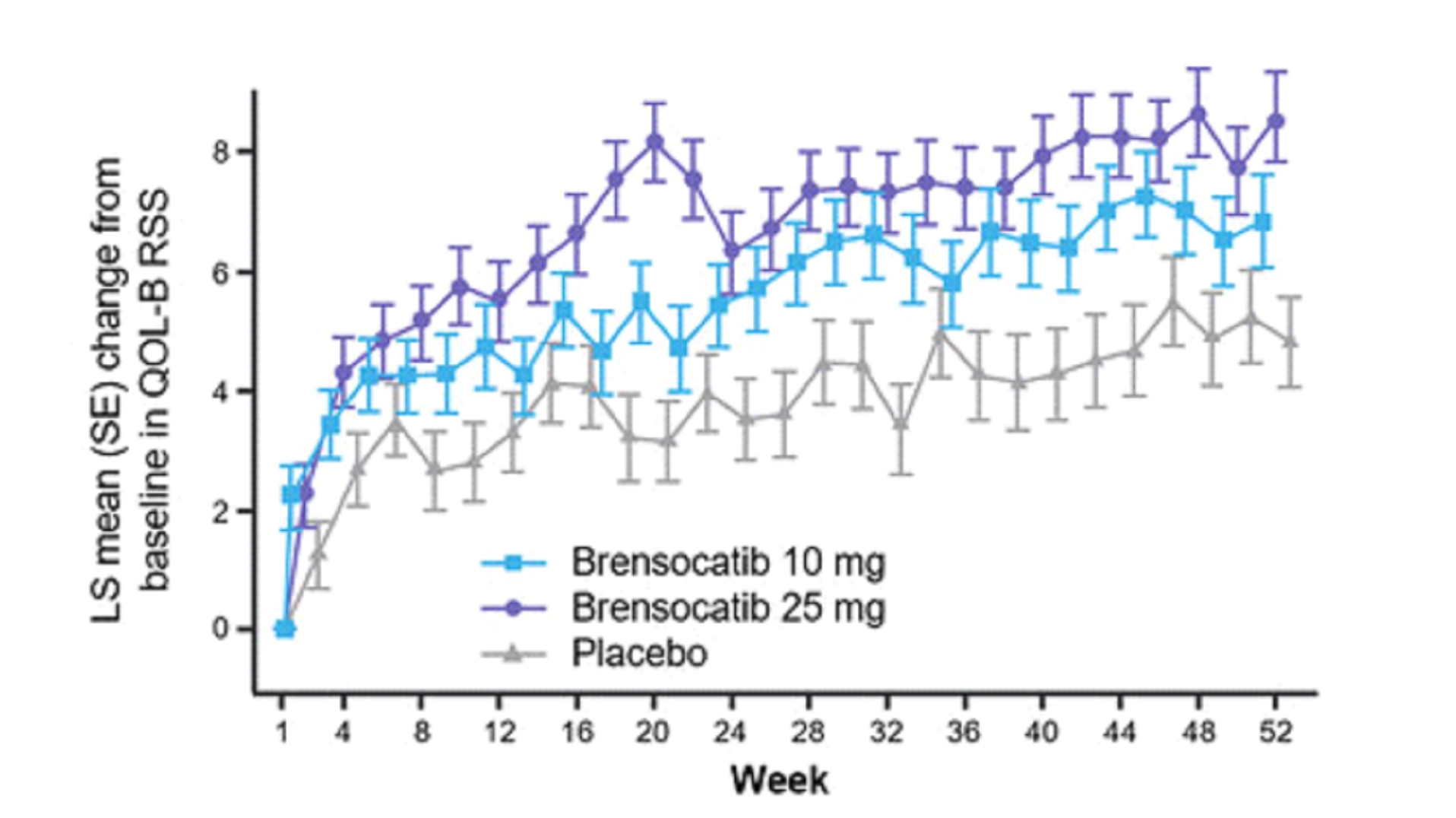
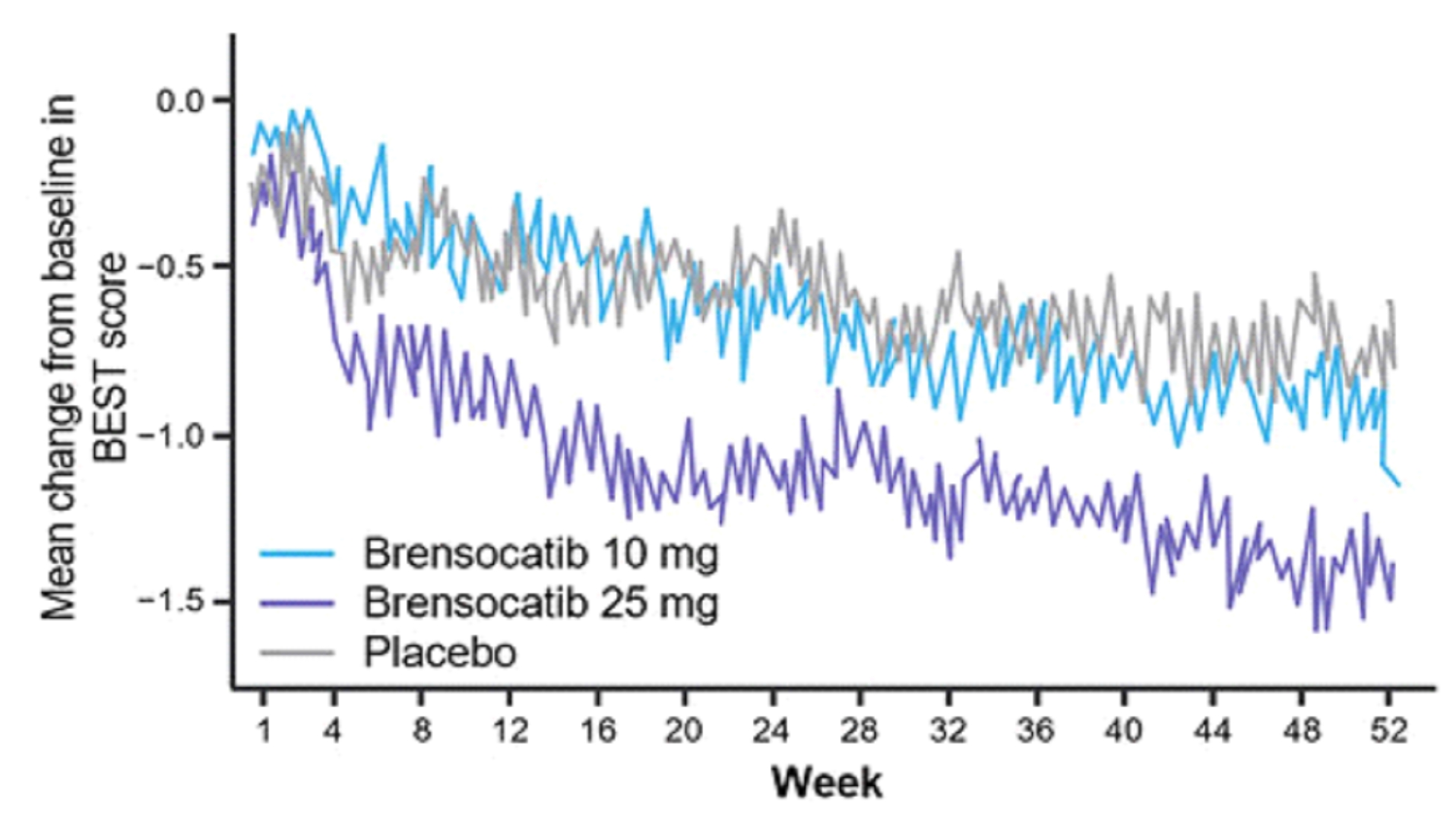
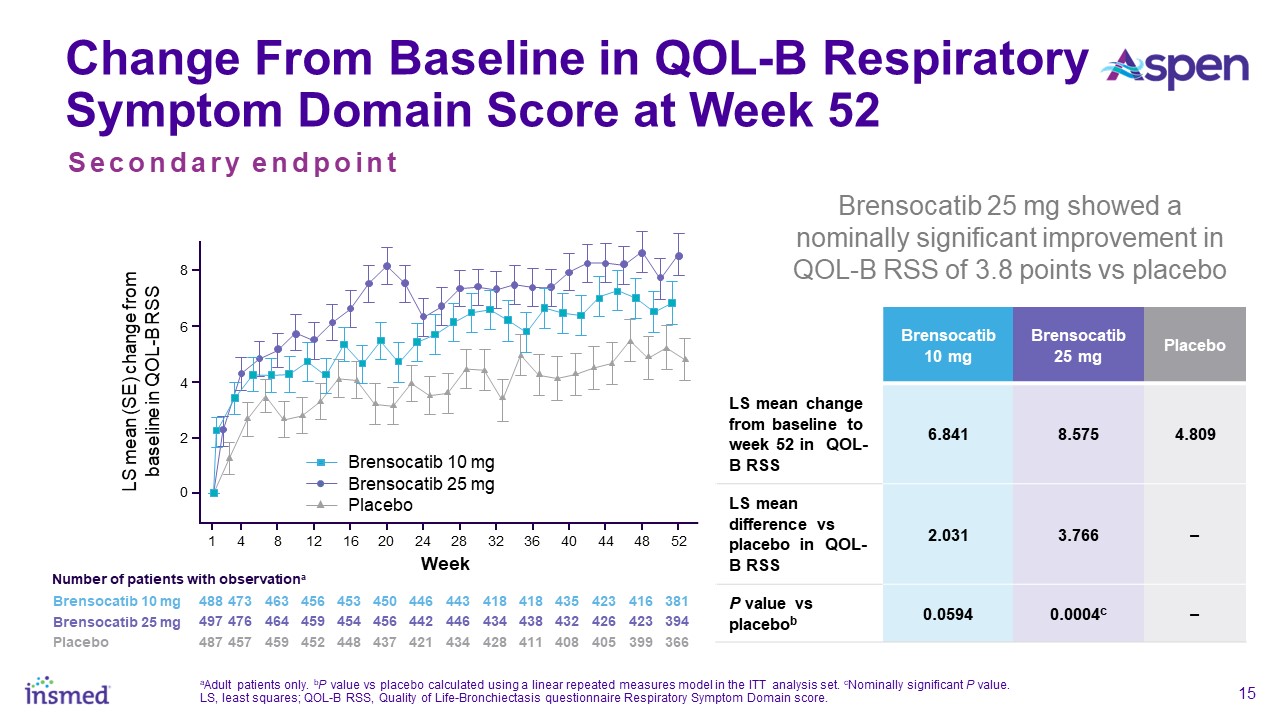
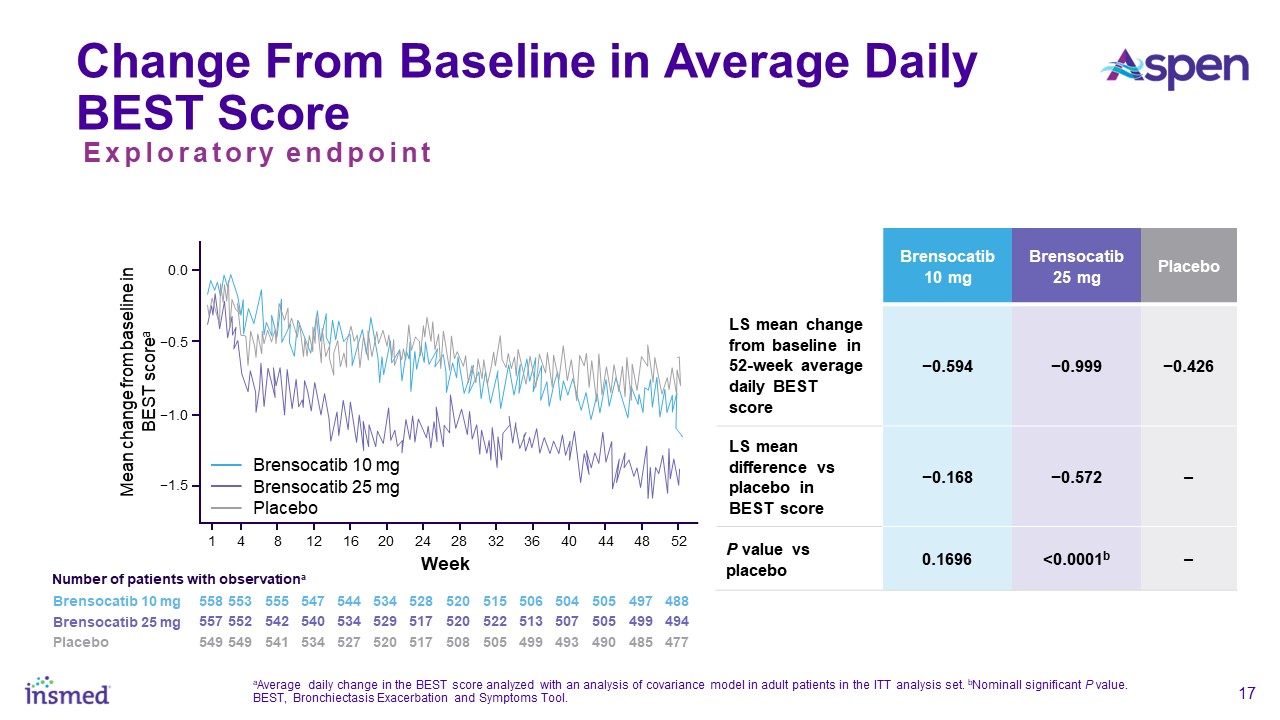
Patients in both dosage groups of brensocatib experienced numerical improvements in change from baseline in the Quality of Life-Bronchiectasis (QOL-B) Respiratory Symptom Domain Score, with the brensocatib 25 mg dose group demonstrating a nominally significant improvement of 3.8 points versus placebo (p=0.0004). Improvements in patient reported QOL-B Respiratory Symptom Domain Score were seen as early as 4 weeks in both brensocatib arms. New data will also be presented at WBC on the change in average daily bronchiectasis exacerbation and symptom tool (BEST) score, an exploratory endpoint, which is a novel symptom diary for bronchiectasis symptom burden and detection of exacerbations. Patients treated with brensocatib 25 mg showed a nominally significant 1-point decrease in BEST score compared to placebo.
 
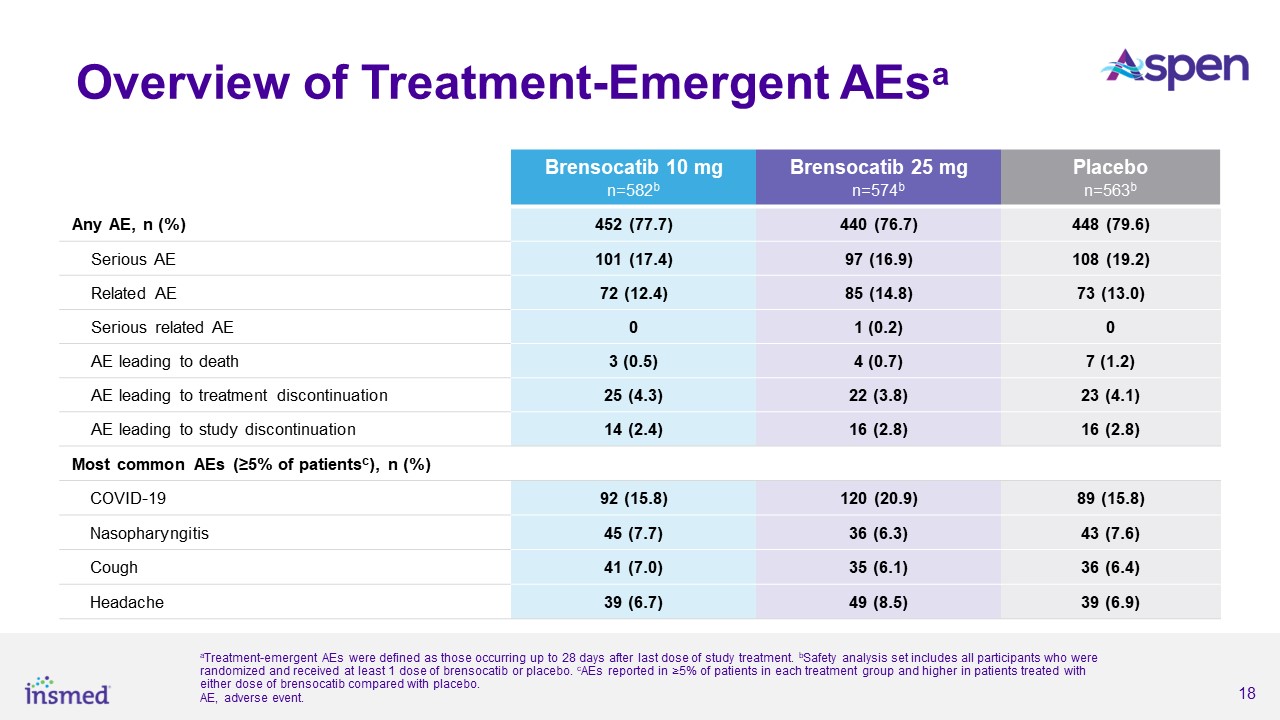
Brensocatib was well-tolerated in the study and demonstrated a favorable safety profile. Treatment-emergent adverse events (TEAEs) occurring in at least 5.0% of patients treated with either dose of brensocatib and more frequently than in placebo were COVID-19 (15.8%, 20.9%, 15.8%), nasopharyngitis (7.7%, 6.3%, 7.6%), cough (7.0%, 6.1%, 6.4%), and headache (6.7%, 8.5%, and 6.9%) for brensocatib 10 mg, brensocatib 25 mg, and placebo, respectively.
 
Insmed plans to file a New Drug Application with the U.S. Food and Drug Administration for brensocatib in patients with bronchiectasis in the fourth quarter of 2024. Pending regulatory approvals, Insmed anticipates a U.S. launch for brensocatib in mid-2025 followed by launches in Europe and Japan in the first half of 2026. If approved, brensocatib would be the first approved treatment for patients with bronchiectasis as well as the first approved dipeptidyl peptidase 1 (DPP1) inhibitor—a new mechanism of action with the potential to address a range of neutrophil-mediated diseases.
 
About ASPEN
 
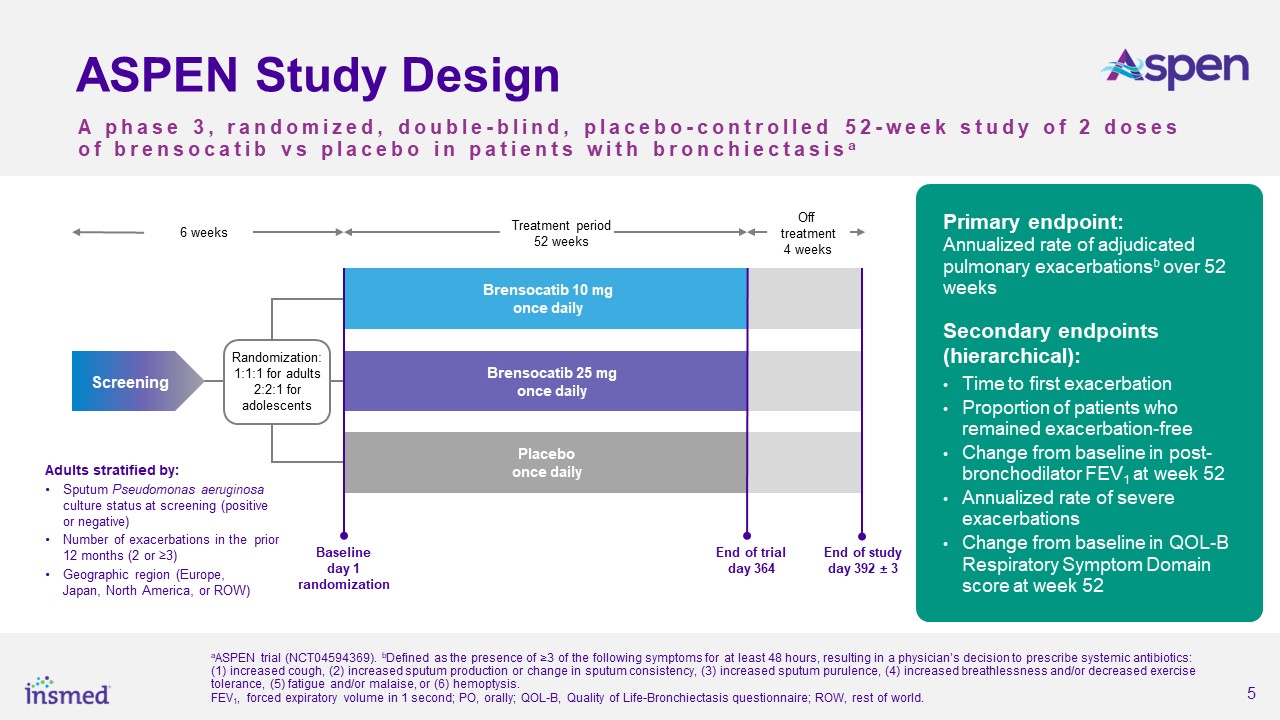
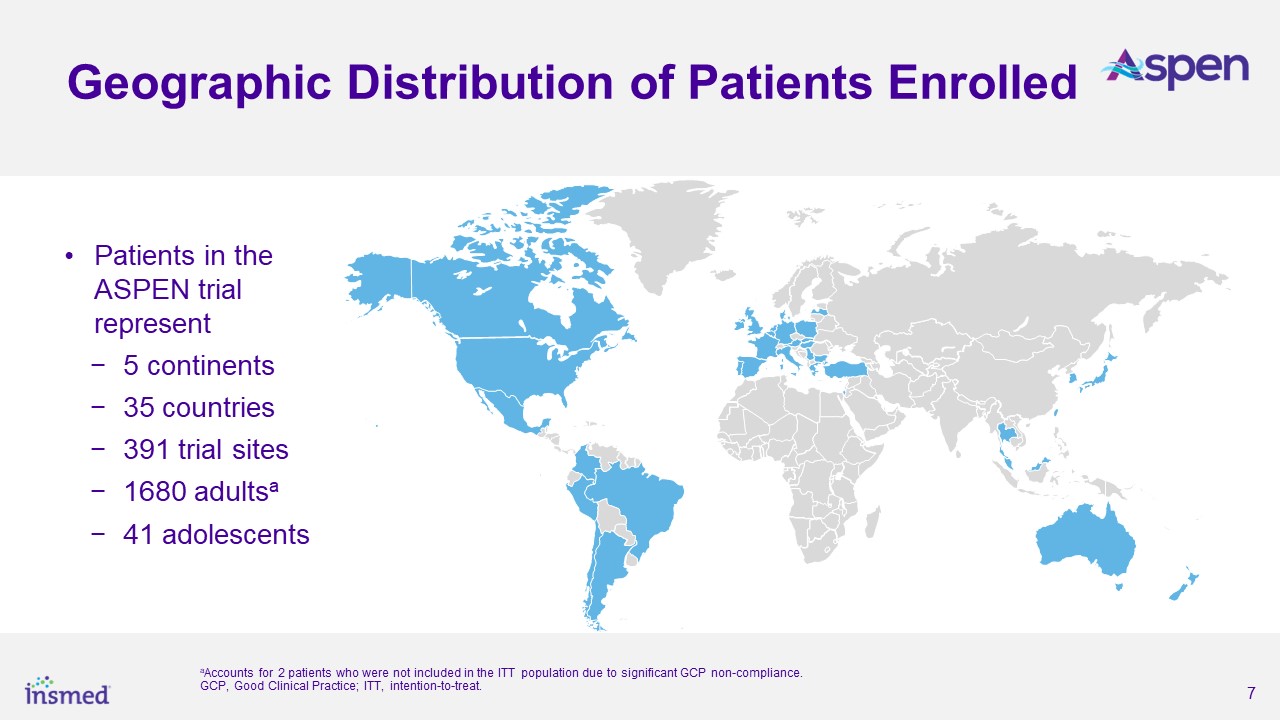
As part of the ASPEN study’s conduct, more than 460 trial sites were engaged in nearly 40 countries. After excluding sites that did not enroll any patients and all sites in Ukraine, the total number of active sites in ASPEN was 391 sites in 35 countries. Adult patients (ages 18 to 85 years) were randomized 1:1:1 and adolescent patients (ages 12 to <18 years) were randomized 2:2:1 for treatment with brensocatib 10 mg, brensocatib 25 mg, or placebo once daily for 52 weeks, followed by 4 weeks off treatment. The primary efficacy analysis included data from 1,680 adult patients and 41 adolescent patients.
 
About Bronchiectasis
 
Bronchiectasis is a serious, chronic lung disease in which the bronchi become permanently dilated due to a cycle of infection, inflammation, and lung tissue damage. The condition is marked by frequent pulmonary exacerbations requiring antibiotic therapy and/or hospitalizations. Symptoms include chronic cough, excessive sputum production, shortness of breath, and repeated respiratory infections, which can worsen the underlying condition. Bronchiectasis affects approximately 500,000 patients in the U.S., 600,000 patients in Europe, and 150,000 patients in Japan, and there are currently no approved therapies specifically targeting bronchiectasis in these regions.
 
About Brensocatib
 
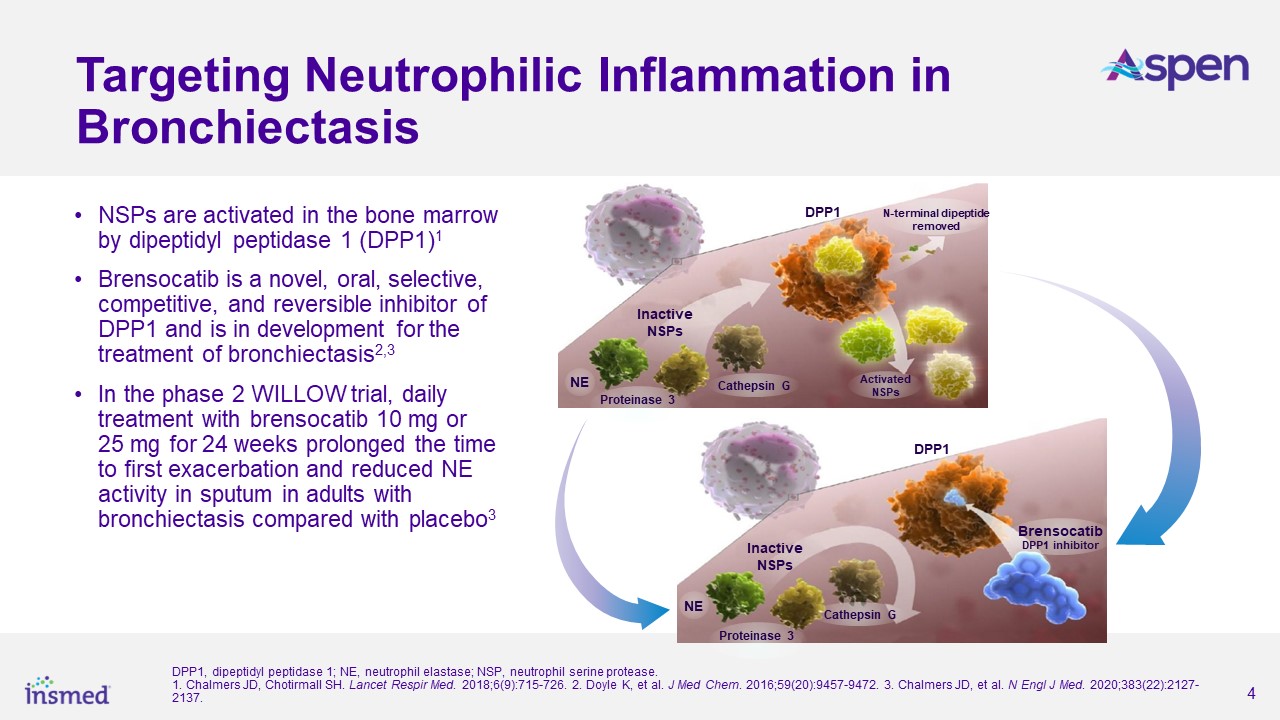
Brensocatib is a small molecule, oral, reversible inhibitor of dipeptidyl peptidase 1 (DPP1) being developed by Insmed for the treatment of patients with bronchiectasis, CRSsNP, and other neutrophil-mediated diseases. DPP1 is an enzyme responsible for activating neutrophil serine proteases (NSPs), such as neutrophil elastase, in neutrophils when they are formed in the bone marrow. Neutrophils are the most common type of white blood cell and play an essential role in pathogen destruction and inflammatory mediation. In chronic inflammatory lung diseases, neutrophils accumulate in the airways and result in excessive active NSPs that cause lung destruction and inflammation. Brensocatib may decrease the damaging effects of inflammatory diseases such as bronchiectasis by inhibiting DPP1 and its activation of NSPs. Brensocatib is an investigational drug product that has not been approved for any indication in any jurisdiction.
 
About Insmed
 
Insmed Incorporated is a global biopharmaceutical company on a mission to transform the lives of patients with serious and rare diseases. Insmed’s first commercial product is a first-in-disease therapy approved in the United States, Europe, and Japan to treat a chronic, debilitating lung disease. The Company is progressing a robust pipeline of investigational therapies targeting areas of serious unmet need, including neutrophil-mediated inflammatory diseases and rare pulmonary disorders. Insmed is also advancing an early-stage research engine encompassing a wide range of technologies and modalities, including artificial intelligence-driven protein engineering, gene therapy, and protein manufacturing. Insmed is headquartered in Bridgewater, New Jersey, with additional offices and research locations throughout the United States, Europe, and Japan. Visit www.insmed.com to learn more.


Forward-Looking Statements
 
This press release contains forward-looking statements that involve substantial risks and uncertainties. “Forward-looking statements,” as that term is defined in the Private Securities Litigation Reform Act of 1995, are statements that are not historical facts and involve a number of risks and uncertainties. Words herein such as “may,” “will,” “should,” “could,” “would,” “expects,” “plans,” “anticipates,” “believes,” “estimates,” “projects,” “predicts,” “intends,” “potential,” “continues,” and similar expressions (as well as other words or expressions referencing future events, conditions or circumstances) may identify forward-looking statements.
 
The forward-looking statements in this press release are based upon the Company’s current expectations and beliefs, and involve known and unknown risks, uncertainties and other factors, which may cause the Company’s actual results, performance and achievements and the timing of certain events to differ materially from the results, performance, achievements or timings discussed, projected, anticipated or indicated in any forward-looking statements. Such risks, uncertainties and other factors include, among others, the following: the risk that the full data set from the ASPEN study or data generated in further clinical trials of brensocatib will not be consistent with the topline results of the ASPEN study or any additional results of the ASPEN study; failure to obtain, or delays in obtaining, regulatory approvals for brensocatib in the U.S., Europe or Japan; failure to successfully commercialize brensocatib, if approved by applicable regulatory authorities, in the U.S., Europe or Japan, or to maintain U.S., European or Japanese approval for brensocatib once approved; uncertainties in the degree of market acceptance of brensocatib by physicians, patients, third-party payors and others in the healthcare community; inaccuracies in the Company’s estimates of the size of the potential markets for brensocatib or in data the Company has used to identify physicians; expected rates of patient uptake, duration of expected treatment, or expected patient adherence or discontinuation rates; inability of the Company, Esteve Pharmaceuticals, S.A., Thermo Fisher Scientific, Inc. or the Company’s other third-party manufacturers to comply with regulatory requirements related to brensocatib; the Company’s inability to obtain adequate reimbursement from government or third-party payors for brensocatib or acceptable prices for brensocatib; development of unexpected safety or efficacy concerns related to brensocatib; failure to obtain regulatory approval for potential future brensocatib indications; restrictions or other obligations imposed on us by agreements related to brensocatib, including our license agreement with AstraZeneca AB, and failure to comply with our obligations under such agreements; failure to successfully conduct future clinical trials for brensocatib, including due to the Company’s potential inability to enroll or retain sufficient patients to conduct and complete the trials or generate data necessary for regulatory approval, among other things; risks that the Company’s clinical studies will be delayed or that serious side effects will be identified during drug development; failure of third parties on which the Company is dependent to manufacture sufficient quantities of brensocatib for commercial or clinical needs, to conduct the Company’s clinical trials, or to comply with the Company’s agreements or laws and regulations that impact the Company’s business or agreements with the Company; the strength and enforceability of the Company’s intellectual property rights or the rights of third parties; the cost and potential reputational damage resulting from litigation to which the Company may become a party, including product liability claims; changes in laws and regulations applicable to the Company’s business and failure to comply with such laws and regulations; business or economic disruptions due to catastrophes or other events, including natural disasters or public health crises; and inability to repay the Company’s existing indebtedness and uncertainties with respect to the Company’s need and ability to access future capital.
 
The Company may not actually achieve the results, plans, intentions or expectations indicated by the Company’s forward-looking statements because, by their nature, forward-looking statements involve risks and uncertainties because they relate to events and depend on circumstances that may or may not occur in the future. For additional information about the risks and uncertainties that may affect the Company’s business, please see the factors discussed in Item 1A, “Risk Factors,” in the Company’s Annual Report on Form 10-K for the year ended December 31, 2023 and any subsequent Company filings with the Securities and Exchange Commission (SEC).
 
The Company cautions readers not to place undue reliance on any such forward-looking statements, which speak only as of the date of this press release. The Company disclaims any obligation, except as specifically required by law and the rules of the SEC, to publicly update or revise any such statements to reflect any change in expectations or in events, conditions or circumstances on which any such statements may be based, or that may affect the likelihood that actual results will differ from those set forth in the forward-looking statements.
 
Contact:
 
Investors:
 
Bryan Dunn
Executive Director, Investor Relations
Insmed
(646) 812-4030
bryan.dunn@insmed.com
 
 
Eleanor Barisser
Associate Director, Investor Relations
Insmed
(718) 594-5332
eleanor.barisser@insmed.com
 
 
Media:
 
Mandy Fahey
Executive Director, Corporate Communications
Insmed
(732) 718-3621
amanda.fahey@insmed.com


Exhibit 99.2

 A Phase 3, Randomized, Double-Blind, Placebo-Controlled Study to Assess the Efficacy, Safety, and Tolerability of Brensocatib Administered Once Daily for 52 Weeks in Patients With Non-Cystic Fibrosis Bronchiectasis - The ASPEN Study  James D. Chalmers,1 Pierre-Régis Burgel,2 Charles L. Daley,3 Anthony De Soyza,4 Charles S. Haworth,5 David Mauger,6 Kevin Mange,7 Ariel Teper,7 Carlos Fernandez,7 Chunpeng Fan,7 Xiangmin Zhang,7 Mark L. Metersky8  1Division of Molecular and Clinical Medicine, University of Dundee, Dundee, UK; 2Hôpital Cochin and Cystic Fibrosis National Reference Center, Service de Pneumologie, AP-HP and Université de Paris, Inserm U1016-Institut Cochin, Paris, France; 3National Jewish Health and the University of Colorado, Denver, CO, USA; 4Population and Health Sciences Institute, NIHR Biomedical Research Centre for Aging Newcastle University and Department of Respiratory Medicine, Newcastle upon Tyne NHS Foundation Trust, Newcastle upon Tyne, UK; 5Royal Papworth Hospital NHS Foundation Trust and University of Cambridge, Cambridge, UK; 6Pennsylvania State University, Hershey, PA, USA; 7Insmed Incorporated, Bridgewater, NJ, USA; 8University of Connecticut School of Medicine, Farmington, CT, USA. 
 

 Forward Looking Statement  Forward Looking Statements  This presentation contains forward-looking statements that involve substantial risks and uncertainties. "Forward-looking statements," as that term is defined in the Private Securities Litigation Reform Act of 1995, are statements that are not historical facts and involve a number of risks and uncertainties. Words herein such as "may," "will," "should," "could," "would," "expects," "plans," "anticipates," "believes," "estimates," "projects," "predicts," "intends," "potential," "continues," and similar expressions (as well as other words or expressions referencing future events, conditions or circumstances) may identify forward-looking statements.  The forward-looking statements in this presentation are based upon the Company's current expectations and beliefs, and involve known and unknown risks, uncertainties and other factors, which may cause the Company's actual results, performance and achievements and the timing of certain events to differ materially from the results, performance, achievements or timings discussed, projected, anticipated or indicated in any forward-looking statements. Such risks, uncertainties and other factors include, among others, the following: the risk that the full data set from the ASPEN study or data generated in further clinical trials of brensocatib will not be consistent with the topline results of the ASPEN study or any additional results of the ASPEN study; failure to obtain, or delays in obtaining, regulatory approvals for brensocatib in the U.S., Europe or Japan; failure to successfully commercialize brensocatib, if approved by applicable regulatory authorities, in the U.S., Europe or Japan, or to maintain U.S., European or Japanese approval for brensocatib once approved; uncertainties in the degree of market acceptance of brensocatib by physicians, patients, third-party payors and others in the healthcare community; inaccuracies in the Company's estimates of the size of the potential markets for brensocatib or in data the Company has used to identify physicians; expected rates of patient uptake, duration of expected treatment, or expected patient adherence or discontinuation rates; inability of the Company, Esteve Pharmaceuticals, S.A., Thermo Fisher Scientific, Inc.  or the Company's other third-party manufacturers to comply with regulatory requirements related to brensocatib; the Company's inability to obtain adequate reimbursement from government or third-party payors for brensocatib or acceptable prices for brensocatib; development of unexpected safety or efficacy concerns related to brensocatib; failure to obtain regulatory approval for potential future brensocatib indications; restrictions or other obligations imposed on us by agreements related to brensocatib, including our license agreement with AstraZeneca AB, and failure to comply with our obligations under such agreements; failure to successfully conduct future clinical trials for brensocatib, including due to the Company's potential inability to enroll or retain sufficient patients to conduct and complete the trials or generate data necessary for regulatory approval, among other things; risks that the Company's clinical studies will be delayed or that serious side effects will be identified during drug development; failure of third parties on which the Company is dependent to manufacture sufficient quantities of brensocatib for commercial or clinical needs, to conduct the Company's clinical trials, or to comply with the Company's agreements or laws and regulations that impact the Company's business or agreements with the Company; the strength and enforceability of the Company’s intellectual property rights or the rights of third parties; the cost and potential reputational damage resulting from litigation to which the Company may become a party, including product liability claims; changes in laws and regulations applicable to the Company's business and failure to comply with such laws and regulations; business or economic disruptions due to catastrophes or other events, including natural disasters or public health crises; and inability to repay the Company's existing indebtedness and uncertainties with respect to the Company's need and ability to access future capital.   The Company may not actually achieve the results, plans, intentions or expectations indicated by the Company's forward-looking statements because, by their nature, forward-looking statements involve risks and uncertainties because they relate to events and depend on circumstances that may or may not occur in the future. For additional information about the risks and uncertainties that may affect the Company's business, please see the factors discussed in Item 1A, "Risk Factors," in the Company's Annual Report on Form 10-K for the year ended December 31, 2023 and any subsequent Company filings with the Securities and Exchange Commission (SEC).  The Company cautions readers not to place undue reliance on any such forward-looking statements, which speak only as of the date of this presentation. The Company disclaims any obligation, except as specifically required by law and the rules of the SEC, to publicly update or revise any such statements to reflect any change in expectations or in events, conditions or circumstances on which any such statements may be based, or that may affect the likelihood that actual results will differ from those set forth in the forward-looking statements.  Please be aware that brensocatib is an investigational product that has not been approved for sale or found safe or effective by the FDA or any regulatory authority. 
 

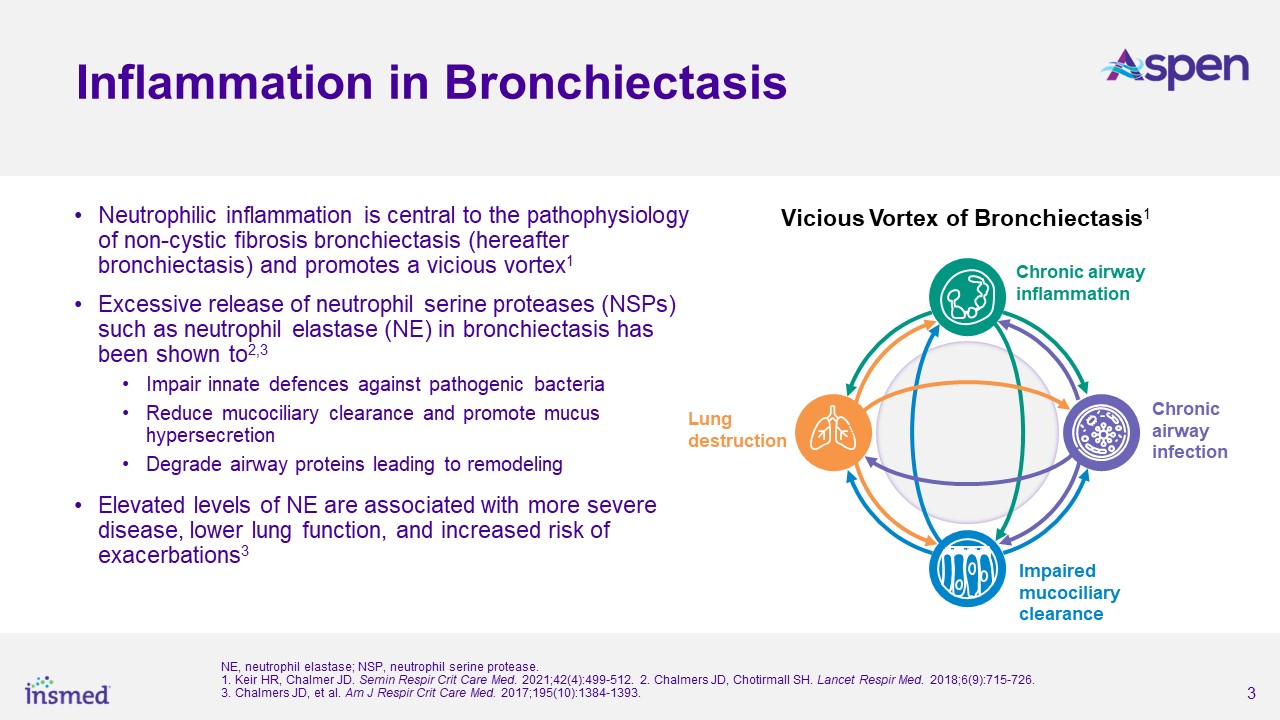
 Inflammation in Bronchiectasis  Neutrophilic inflammation is central to the pathophysiology of non-cystic fibrosis bronchiectasis (hereafter bronchiectasis) and promotes a vicious vortex1  Excessive release of neutrophil serine proteases (NSPs) such as neutrophil elastase (NE) in bronchiectasis has been shown to2,3  Impair innate defences against pathogenic bacteria  Reduce mucociliary clearance and promote mucus hypersecretion  Degrade airway proteins leading to remodeling  Elevated levels of NE are associated with more severe disease, lower lung function, and increased risk of exacerbations3  Vicious Vortex of Bronchiectasis1  NE, neutrophil elastase; NSP, neutrophil serine protease.1. Keir HR, Chalmer JD. Semin Respir Crit Care Med. 2021;42(4):499-512. 2. Chalmers JD, Chotirmall SH. Lancet Respir Med. 2018;6(9):715-726. 3. Chalmers JD, et al. Am J Respir Crit Care Med. 2017;195(10):1384-1393.  Lung destruction  Chronic airway inflammation  Chronic airway infection  Impaired mucociliary clearance 
 

 Targeting Neutrophilic Inflammation in Bronchiectasis  NSPs are activated in the bone marrow by dipeptidyl peptidase 1 (DPP1)1  Brensocatib is a novel, oral, selective, competitive, and reversible inhibitor of DPP1 and is in development for the treatment of bronchiectasis2,3  In the phase 2 WILLOW trial, daily treatment with brensocatib 10 mg or 25 mg for 24 weeks prolonged the time to first exacerbation and reduced NE activity in sputum in adults with bronchiectasis compared with placebo3  DPP1, dipeptidyl peptidase 1; NE, neutrophil elastase; NSP, neutrophil serine protease.   1. Chalmers JD, Chotirmall SH. Lancet Respir Med. 2018;6(9):715-726. 2. Doyle K, et al. J Med Chem. 2016;59(20):9457-9472. 3. Chalmers JD, et al. N Engl J Med. 2020;383(22):2127-2137.  DPP1  Inactive   NSPs  N-terminal dipeptide removed  Proteinase 3  NE  Activated  NSPs  Cathepsin G  DPP1  Inactive   NSPs  Proteinase 3  NE  Cathepsin G  Brensocatib  DPP1 inhibitor 
 

 ASPEN Study Design  Primary endpoint:Annualized rate of adjudicated pulmonary exacerbationsb over 52 weeks  Secondary endpoints (hierarchical):  Time to first exacerbation  Proportion of patients who remained exacerbation-free  Change from baseline in post-bronchodilator FEV1 at week 52  Annualized rate of severe exacerbations  Change from baseline in QOL-B Respiratory Symptom Domain score at week 52  Off treatment4 weeks  Treatment period  52 weeks  Baseline  day 1  randomization  End of trial  day 364  End of studyday 392 ± 3   6 weeks  Randomization:  1:1:1 for adults  2:2:1 for adolescents  Screening  Brensocatib 10 mg once daily  Brensocatib 25 mg once daily  Placeboonce daily  Adults stratified by:  Sputum Pseudomonas aeruginosa culture status at screening (positive or negative)  Number of exacerbations in the prior 12 months (2 or ≥3)  Geographic region (Europe, Japan, North America, or ROW)  aASPEN trial (NCT04594369). bDefined as the presence of ≥3 of the following symptoms for at least 48 hours, resulting in a physician’s decision to prescribe systemic antibiotics: (1) increased cough, (2) increased sputum production or change in sputum consistency, (3) increased sputum purulence, (4) increased breathlessness and/or decreased exercise tolerance, (5) fatigue and/or malaise, or (6) hemoptysis.   FEV1, forced expiratory volume in 1 second; PO, orally; QOL-B, Quality of Life-Bronchiectasis questionnaire; ROW, rest of world.   A phase 3, randomized, double-blind, placebo-controlled 52-week study of 2 doses of brensocatib vs placebo in patients with bronchiectasisa 
 

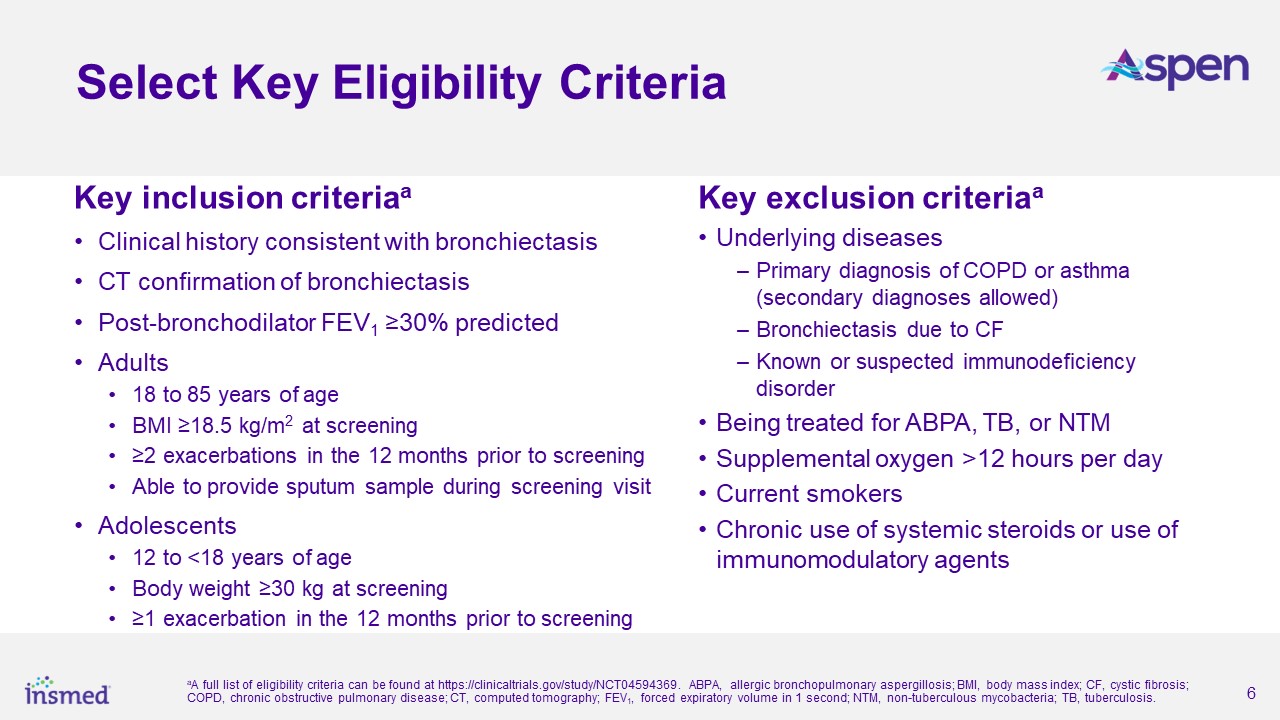
 Select Key Eligibility Criteria  Key inclusion criteriaa  Clinical history consistent with bronchiectasis  CT confirmation of bronchiectasis  Post-bronchodilator FEV1 ≥30% predicted   Adults  18 to 85 years of age  BMI ≥18.5 kg/m2 at screening  ≥2 exacerbations in the 12 months prior to screening  Able to provide sputum sample during screening visit  Adolescents  12 to <18 years of age  Body weight ≥30 kg at screening  ≥1 exacerbation in the 12 months prior to screening  aA full list of eligibility criteria can be found at https://clinicaltrials.gov/study/NCT04594369. ABPA, allergic bronchopulmonary aspergillosis; BMI, body mass index; CF, cystic fibrosis;   COPD, chronic obstructive pulmonary disease; CT, computed tomography; FEV1, forced expiratory volume in 1 second; NTM, non-tuberculous mycobacteria; TB, tuberculosis.  Key exclusion criteriaa  Underlying diseases  Primary diagnosis of COPD or asthma (secondary diagnoses allowed)  Bronchiectasis due to CF  Known or suspected immunodeficiency disorder  Being treated for ABPA, TB, or NTM  Supplemental oxygen >12 hours per day  Current smokers  Chronic use of systemic steroids or use of immunomodulatory agents 
 

 Geographic Distribution of Patients Enrolled  Patients in the ASPEN trial represent   5 continents  35 countries  391 trial sites  1680 adultsa   41 adolescents  aAccounts for 2 patients who were not included in the ITT population due to significant GCP non-compliance.GCP, Good Clinical Practice; ITT, intention-to-treat.  
 

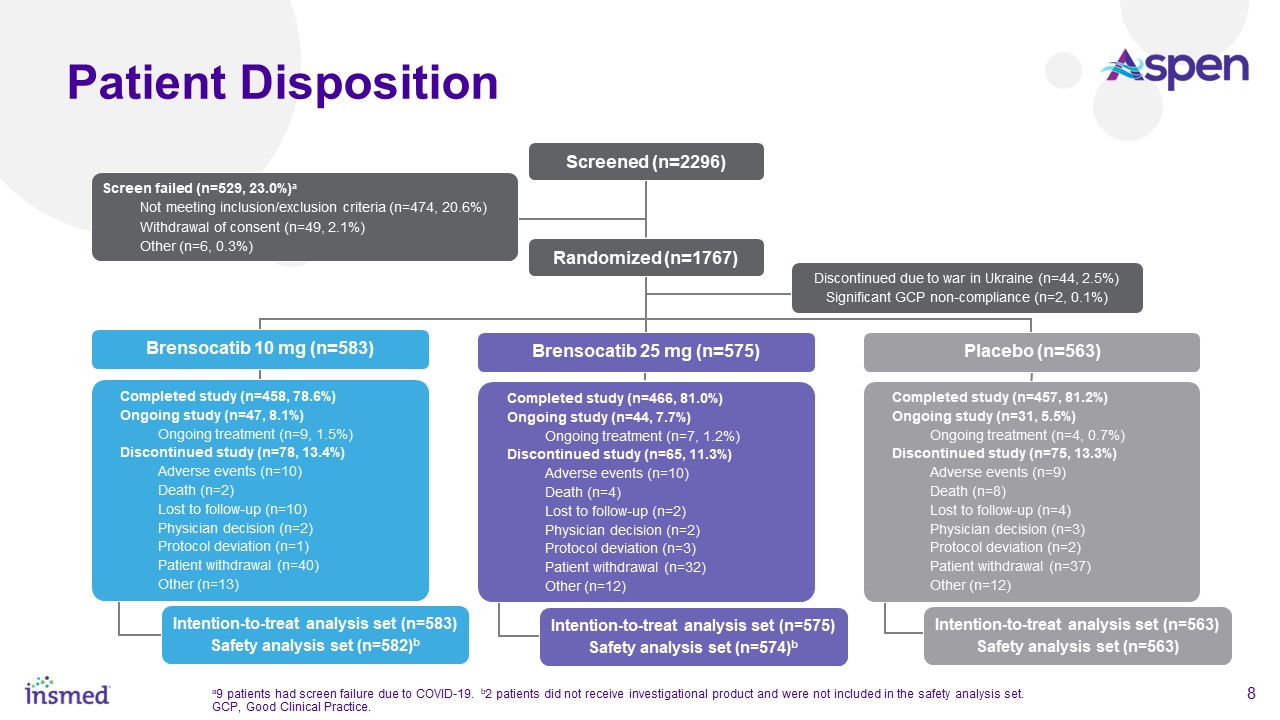
 Patient Disposition  Screened (n=2296)  Randomized (n=1767)  Brensocatib 10 mg (n=583)  Completed study (n=458, 78.6%)  Ongoing study (n=47, 8.1%)  Ongoing treatment (n=9, 1.5%)  Discontinued study (n=78, 13.4%)  Adverse events (n=10)  Death (n=2)   Lost to follow-up (n=10)  Physician decision (n=2)  Protocol deviation (n=1)  Patient withdrawal (n=40)  Other (n=13)  Intention-to-treat analysis set (n=583)  Safety analysis set (n=582)b  Brensocatib 25 mg (n=575)  Completed study (n=466, 81.0%)  Ongoing study (n=44, 7.7%)  Ongoing treatment (n=7, 1.2%)  Discontinued study (n=65, 11.3%)  Adverse events (n=10)  Death (n=4)   Lost to follow-up (n=2)   Physician decision (n=2)  Protocol deviation (n=3)  Patient withdrawal (n=32)  Other (n=12)      Intention-to-treat analysis set (n=575)  Safety analysis set (n=574)b  Placebo (n=563)  Completed study (n=457, 81.2%)  Ongoing study (n=31, 5.5%)  Ongoing treatment (n=4, 0.7%)  Discontinued study (n=75, 13.3%)  Adverse events (n=9)  Death (n=8)   Lost to follow-up (n=4)   Physician decision (n=3)  Protocol deviation (n=2)  Patient withdrawal (n=37)  Other (n=12)   Screen failed (n=529, 23.0%)a  Not meeting inclusion/exclusion criteria (n=474, 20.6%)  Withdrawal of consent (n=49, 2.1%)  Other (n=6, 0.3%)  Discontinued due to war in Ukraine (n=44, 2.5%)  Significant GCP non-compliance (n=2, 0.1%)  Intention-to-treat analysis set (n=563)  Safety analysis set (n=563)  a9 patients had screen failure due to COVID-19. b2 patients did not receive investigational product and were not included in the safety analysis set. GCP, Good Clinical Practice. 
 

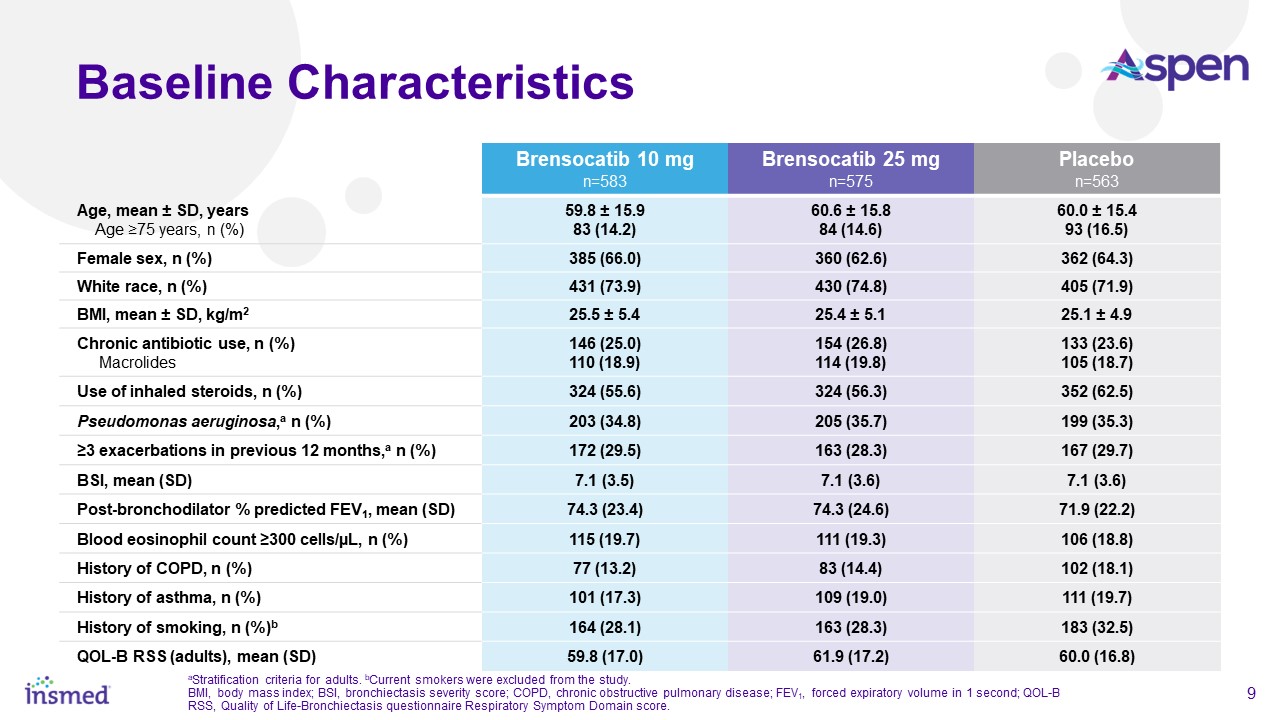
 Baseline Characteristics  aStratification criteria for adults. bCurrent smokers were excluded from the study.BMI, body mass index; BSI, bronchiectasis severity score; COPD, chronic obstructive pulmonary disease; FEV1, forced expiratory volume in 1 second; QOL-B RSS, Quality of Life-Bronchiectasis questionnaire Respiratory Symptom Domain score.  Brensocatib 10 mgn=583  Brensocatib 25 mgn=575  Placebon=563  Age, mean ± SD, years  Age ≥75 years, n (%)  59.8 ± 15.9  83 (14.2)  60.6 ± 15.8  84 (14.6)  60.0 ± 15.4  93 (16.5)  Female sex, n (%)  385 (66.0)  360 (62.6)  362 (64.3)  White race, n (%)  431 (73.9)  430 (74.8)  405 (71.9)  BMI, mean ± SD, kg/m2   25.5 ± 5.4  25.4 ± 5.1  25.1 ± 4.9  Chronic antibiotic use, n (%)   Macrolides  146 (25.0)  110 (18.9)  154 (26.8)  114 (19.8)  133 (23.6)  105 (18.7)  Use of inhaled steroids, n (%)  324 (55.6)  324 (56.3)  352 (62.5)  Pseudomonas aeruginosa,a n (%)  203 (34.8)  205 (35.7)  199 (35.3)  ≥3 exacerbations in previous 12 months,a n (%)  172 (29.5)  163 (28.3)  167 (29.7)  BSI, mean (SD)  7.1 (3.5)  7.1 (3.6)  7.1 (3.6)  Post-bronchodilator % predicted FEV1, mean (SD)   74.3 (23.4)  74.3 (24.6)  71.9 (22.2)  Blood eosinophil count ≥300 cells/µL, n (%)  115 (19.7)  111 (19.3)  106 (18.8)  History of COPD, n (%)  77 (13.2)  83 (14.4)  102 (18.1)  History of asthma, n (%)  101 (17.3)  109 (19.0)  111 (19.7)  History of smoking, n (%)b  164 (28.1)  163 (28.3)  183 (32.5)  QOL-B RSS (adults), mean (SD)  59.8 (17.0)  61.9 (17.2)  60.0 (16.8) 
 

 Annualized Rate of Adjudicated Pulmonary Exacerbations Over 52 Weeks  Primary endpoint  Annualized rate of exacerbationsa  21.1% Risk reduction  19.4% Risk reduction  aExacerbations were adjudicated events in the ITT analysis set analyzed using a negative binomial model.   bP value is statistically significant when adjusted for multiplicity control.   ITT, intention-to-treat.  Brensocatib 10 mgn=583  Brensocatib 25 mgn=575  Rate ratio vs placebo  (95% CI)   0.789  (0.680–0.916)  0.806  (0.694–0.936)  P value  0.0019b  0.0046b 
 

 Time to First Exacerbation  Secondary endpoint  Brensocatib 10 mgn=583  Brensocatib 25 mgn=575  Placebon=563  Median time, weeks   (95% CI)   49.0  (40.0–NE)  50.7  (37.6–NE)  36.7  (31.1–41.4)  Hazard ratio vs placebo (95% CI)   0.813   (0.695–0.952)  0.825  (0.703–0.968)  –  P valueb  0.0100c  0.0182c  –  Placebo  Brensocatib 25 mg  Brensocatib 10 mg  583  537  498  459  427  393  367  346  322  310  292  280  265  183  575  526  475  433  400  380  357  337  313  296  282  270  264  169  563  506  461  417  386  354  328  303  281  261  245  228  217  154  Number of patients at risk  Proportion of patients with no pulmonary exacerbationa  1.0  0.8  0.6  0.4  0.2  0  0.9  0.7  0.5  0.3  0.1  Brensocatib 10 mg   Brensocatib 25 mg  Placebo  1  4  8  12  16  20  24  28  32  36  40  44  48  52  Week  aExacerbations were adjudicated events in the ITT analysis set. b2-sided Wald P value vs placebo calculated from a Cox model. cP value is statistically significant when adjusted for multiplicity control.  ITT, intention-to-treat; NE, not estimable. 
 

 Proportion of Patients Who Remained Exacerbation-Free  Secondary endpoint  Patients who remained exacerbation-free, %  aP value vs placebo calculated from logistic regression Wald test in the ITT analysis set. bP value is statistically significant when adjusted for multiplicity control.  ITT, intention-to-treat.  Brensocatib 10 mgn=583  Brensocatib 25 mgn=575  Odds ratio vs placebo  (95% CI)   1.412   (1.105–1.806)  1.400  (1.095–1.792)  P valuea  0.0059b  0.0074b  40.0% Increased odds  41.2% Increased odds  40.3%  48.5%  48.5% 
 

 Change From Baseline in Post-Bronchodilator FEV1 at Week 52  Brensocatib 25 mg showed a 38 mL less FEV1 decline vs placebo  Brensocatib 10 mg  Brensocatib 25 mg  Placebo  LS mean change from baseline to week 52 in post-BD FEV1 (mL)  −50  −24  −62  LS mean difference vs placebo in post-BD FEV1 (mL)  11  38  –  P value vs placebo  0.3841  0.0054b  –  LS mean (SE) change from baseline   in post-BD FEV1, mLa  1  16  28  40  52  Week  0  −20  −40  −60  579  545  529  513  475  571  529  523  494  487  563  522  513  494  468  a% predicted FEV1 analyzed using a linear repeated measures model in the ITT analysis set. bP value is statistically significant when adjusted for multiplicity control.  BD, bronchodilator; FEV1, forced expiratory volume in 1 second; ITT, intention-to-treat; LS, least squares.  Brensocatib 10 mg   Brensocatib 25 mg  Placebo  Placebo  Brensocatib 25 mg  Brensocatib 10 mg  Number of patients with observation  Secondary endpoint 
 

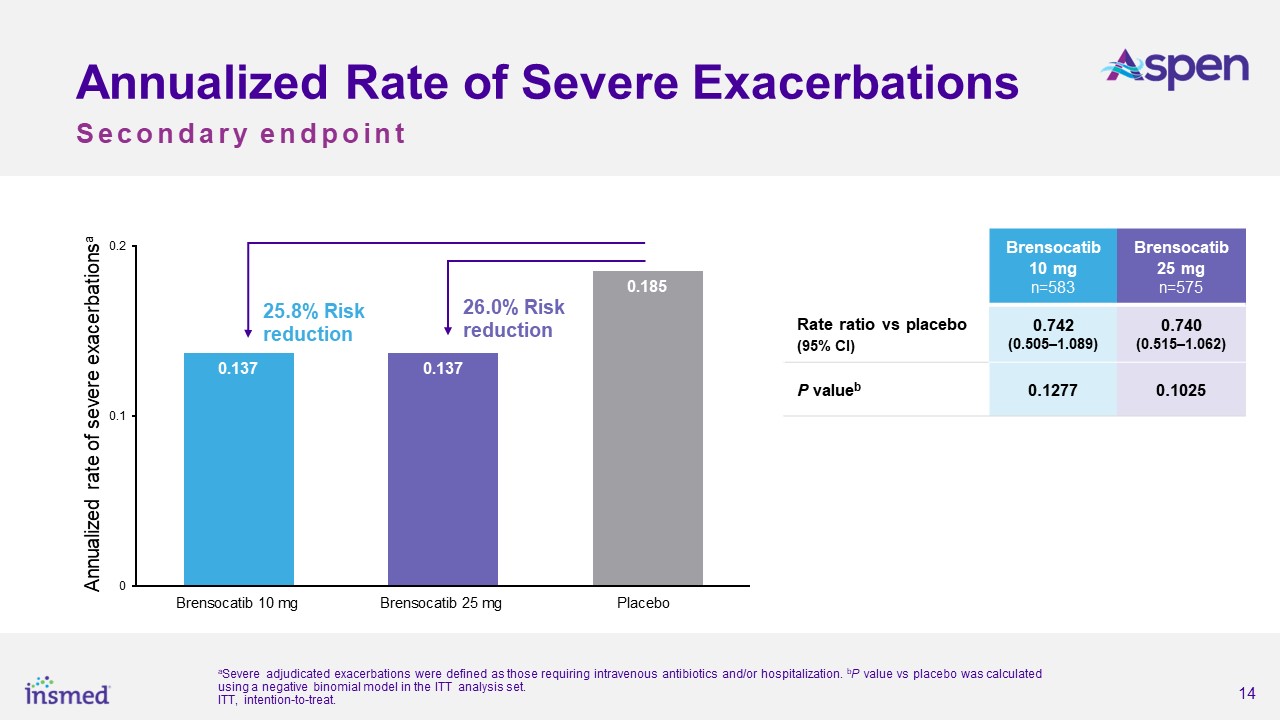
 Annualized Rate of Severe Exacerbations  Annualized rate of severe exacerbationsa  25.8% Risk reduction  26.0% Risk reduction  aSevere adjudicated exacerbations were defined as those requiring intravenous antibiotics and/or hospitalization. bP value vs placebo was calculated using a negative binomial model in the ITT analysis set.   ITT, intention-to-treat.  Brensocatib 10 mgn=583  Brensocatib 25 mgn=575  Rate ratio vs placebo  (95% CI)   0.742   (0.505–1.089)  0.740   (0.515–1.062)  P valueb  0.1277  0.1025  Secondary endpoint 
 

 Change From Baseline in QOL-B Respiratory Symptom Domain Score at Week 52  1  4  8  12  16  20  24  28  32  36  40  44  48  52  0  2  4  6  8  LS mean (SE) change from baseline in QOL-B RSS  488  473  463  456  453  450  446  443  418  418  435  423  416  381  497  476  464  459  454  456  442  446  434  438  432  426  423  394  487  457  459  452  448  437  421  434  428  411  408  405  399  366  Placebo  Brensocatib 25 mg  Brensocatib 10 mg  Number of patients with observationa  Week  Brensocatib 10 mg   Brensocatib 25 mg  Placebo  aAdult patients only. bP value vs placebo calculated using a linear repeated measures model in the ITT analysis set. cNominally significant P value.  LS, least squares; QOL-B RSS, Quality of Life-Bronchiectasis questionnaire Respiratory Symptom Domain score.  Brensocatib 25 mg showed a nominally significant improvement in QOL-B RSS of 3.8 points vs placebo  Brensocatib 10 mg  Brensocatib 25 mg  Placebo  LS mean change from baseline to week 52 in QOL-B RSS  6.841  8.575  4.809  LS mean difference vs placebo in QOL-B RSS  2.031  3.766  –  P value vs placebob  0.0594  0.0004c  –  Secondary endpoint 
 

 Change From Baseline in Post-Bronchodilator FVC at Week 52  Placebo  Brensocatib 25 mg  Brensocatib 10 mg  Number of patients with observation  545  529  513  475  529  523  494  487  522  513  494  468  579  571  563  aFVC analyzed using a linear repeated measures model in the ITT analysis set. bNominally significant P value.  BD, bronchodilator; FVC, forced vital capacity; ITT, intention-to-treat; LS, least squares.  1  16  28  40  52  Week  20  0  −40  −80  Brensocatib 10 mg   Brensocatib 25 mg  Placebo  −100  −20  −60  LS mean (SE) change from baseline   in post-BD FVC, mLa  Brensocatib 10 mg  Brensocatib 25 mg  Placebo  LS mean change from baseline to week 52 in post-BD FVC (mL)  −51  −12  −87  LS mean difference vs placebo in post-BD FVC (mL)  36  75  –  P value vs placebo  0.0331b  <0.0001b  –  Exploratory endpoint 
 

 Change From Baseline in Average Daily BEST Score  Exploratory endpoint  aAverage daily change in the BEST score analyzed with an analysis of covariance model in adult patients in the ITT analysis set. bNominall significant P value.  BEST, Bronchiectasis Exacerbation and Symptoms Tool.  1  4  8  12  16  20  24  28  32  36  40  44  48  52  −1.5  −1.0  −0.5  0.0  Week  Number of patients with observationa  Placebo  Brensocatib 25 mg  Brensocatib 10 mg  Brensocatib 10 mg   Brensocatib 25 mg   Placebo  558  553  555  547  544  534  528  520  515  506  504  505  497  488  557  552  542  540  534  529  517  520  522  513  507  505  499  494  549  549  541  534  527  520  517  508  505  499  493  490  485  477  Mean change from baseline in   BEST scorea  Brensocatib 10 mg  Brensocatib 25 mg  Placebo  LS mean change from baseline in 52-week average daily BEST score  −0.594  −0.999  −0.426  LS mean difference vs placebo in BEST score  −0.168  −0.572  –  P value vs placebo  0.1696  <0.0001b  – 
 

 Brensocatib 10 mgn=582b  Brensocatib 25 mgn=574b  Placebon=563b  Any AE, n (%)  452 (77.7)  440 (76.7)  448 (79.6)  Serious AE  101 (17.4)  97 (16.9)  108 (19.2)  Related AE  72 (12.4)  85 (14.8)  73 (13.0)  Serious related AE  0  1 (0.2)  0  AE leading to death  3 (0.5)  4 (0.7)  7 (1.2)  AE leading to treatment discontinuation  25 (4.3)  22 (3.8)  23 (4.1)  AE leading to study discontinuation  14 (2.4)  16 (2.8)  16 (2.8)  Most common AEs (≥5% of patientsc), n (%)  COVID-19  92 (15.8)  120 (20.9)  89 (15.8)  Nasopharyngitis  45 (7.7)  36 (6.3)  43 (7.6)  Cough  41 (7.0)  35 (6.1)  36 (6.4)  Headache  39 (6.7)  49 (8.5)  39 (6.9)  Overview of Treatment-Emergent AEsa  aTreatment-emergent AEs were defined as those occurring up to 28 days after last dose of study treatment. bSafety analysis set includes all participants who were randomized and received at least 1 dose of brensocatib or placebo. cAEs reported in ≥5% of patients in each treatment group and higher in patients treated with either dose of brensocatib compared with placebo.  AE, adverse event. 
 

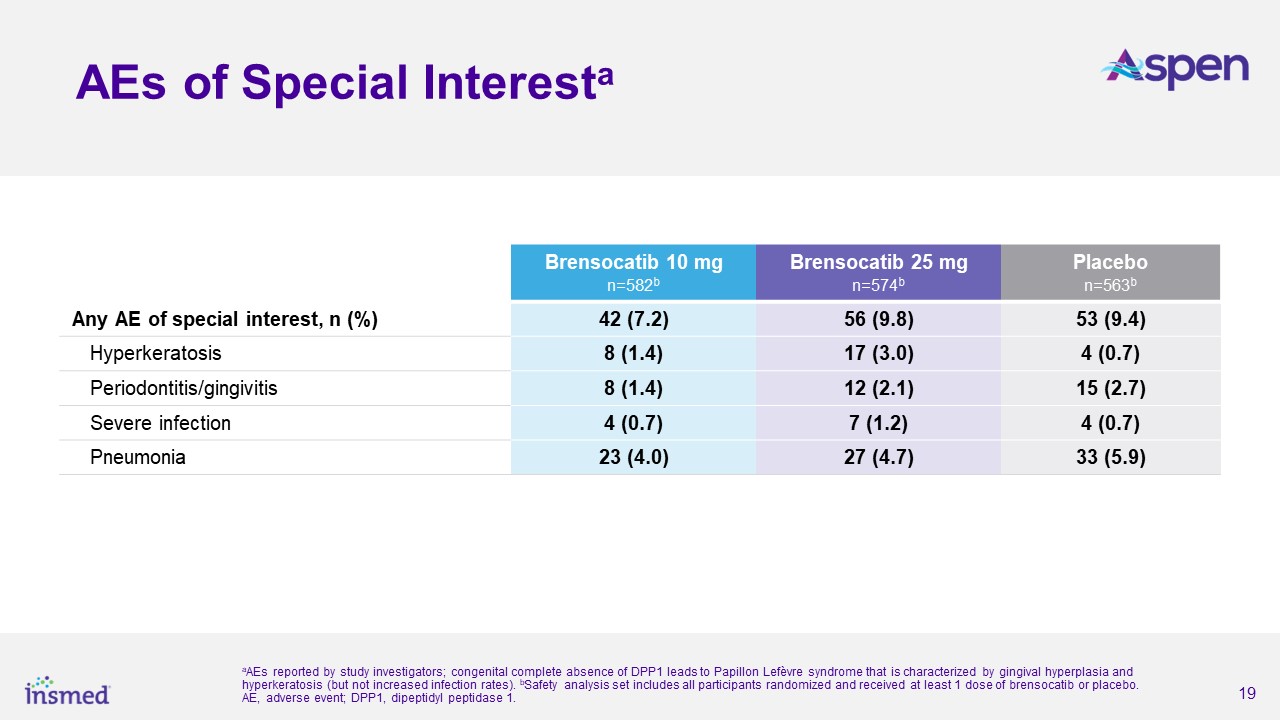
 Brensocatib 10 mgn=582b  Brensocatib 25 mgn=574b  Placebon=563b  Any AE of special interest, n (%)  42 (7.2)  56 (9.8)  53 (9.4)  Hyperkeratosis  8 (1.4)  17 (3.0)  4 (0.7)  Periodontitis/gingivitis  8 (1.4)  12 (2.1)  15 (2.7)  Severe infection  4 (0.7)  7 (1.2)  4 (0.7)  Pneumonia  23 (4.0)  27 (4.7)  33 (5.9)  AEs of Special Interesta  aAEs reported by study investigators; congenital complete absence of DPP1 leads to Papillon Lefèvre syndrome that is characterized by gingival hyperplasia and hyperkeratosis (but not increased infection rates). bSafety analysis set includes all participants randomized and received at least 1 dose of brensocatib or placebo.  AE, adverse event; DPP1, dipeptidyl peptidase 1. 
 

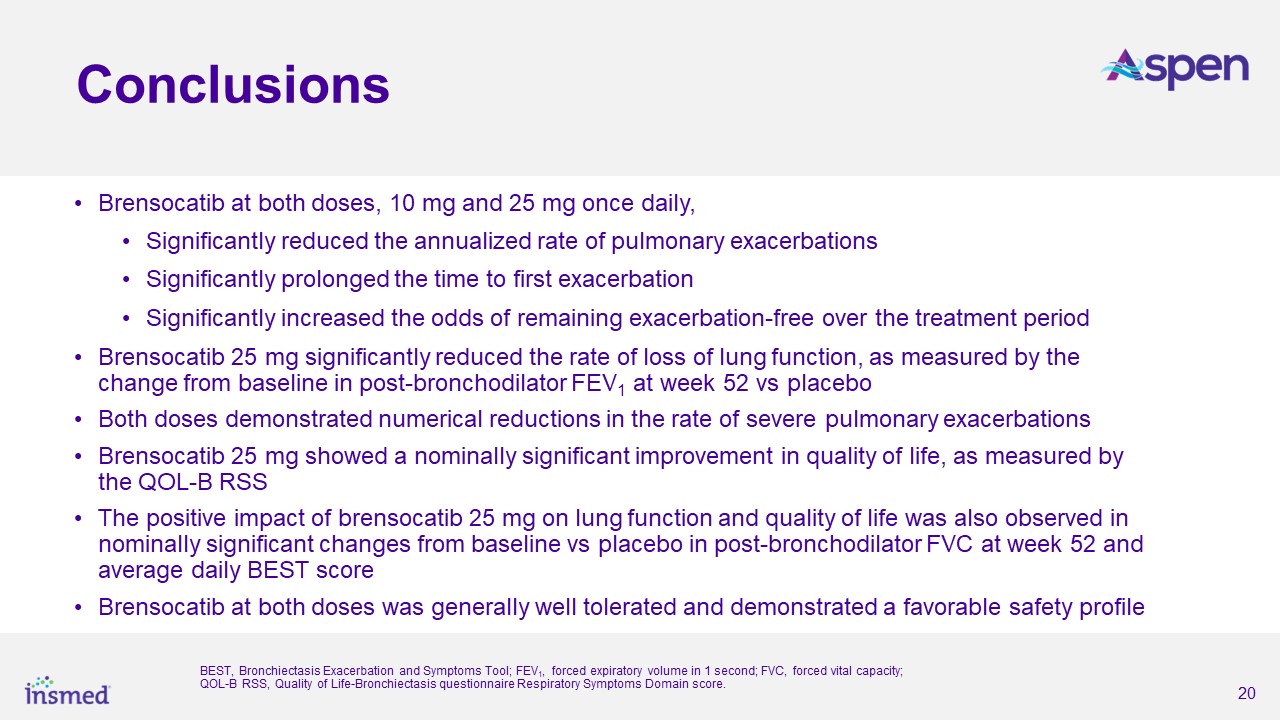
 Conclusions  Brensocatib at both doses, 10 mg and 25 mg once daily,   Significantly reduced the annualized rate of pulmonary exacerbations  Significantly prolonged the time to first exacerbation   Significantly increased the odds of remaining exacerbation-free over the treatment period  Brensocatib 25 mg significantly reduced the rate of loss of lung function, as measured by the change from baseline in post-bronchodilator FEV1 at week 52 vs placebo  Both doses demonstrated numerical reductions in the rate of severe pulmonary exacerbations   Brensocatib 25 mg showed a nominally significant improvement in quality of life, as measured by the QOL-B RSS  The positive impact of brensocatib 25 mg on lung function and quality of life was also observed in nominally significant changes from baseline vs placebo in post-bronchodilator FVC at week 52 and average daily BEST score  Brensocatib at both doses was generally well tolerated and demonstrated a favorable safety profile  BEST, Bronchiectasis Exacerbation and Symptoms Tool; FEV1, forced expiratory volume in 1 second; FVC, forced vital capacity; QOL-B RSS, Quality of Life-Bronchiectasis questionnaire Respiratory Symptoms Domain score. 
 

 Acknowledgements  We thank the patients who participated in the trial and their family members and caregivers, as well as the investigators, clinical research teams, and support staff at the trial sites for providing patient care and their contributions to this study  This study was funded by Insmed Incorporated, Bridgewater, NJ, USA  Medical writing support was provided by Lynsey Fettig, PhD, of Envision Pharma Group, and funded by Insmed Incorporated