cvco-2024033000002781662024FYFALSE0P1YP1Yhttp://fasb.org/us-gaap/2024#PropertyPlantAndEquipmentNethttp://fasb.org/us-gaap/2024#PropertyPlantAndEquipmentNethttp://fasb.org/us-gaap/2024#AccruedLiabilitiesCurrenthttp://fasb.org/us-gaap/2024#AccruedLiabilitiesCurrenthttp://fasb.org/us-gaap/2024#AccruedLiabilitiesCurrenthttp://fasb.org/us-gaap/2024#AccruedLiabilitiesCurrenthttp://fasb.org/us-gaap/2024#OtherLiabilitiesNoncurrenthttp://fasb.org/us-gaap/2024#OtherLiabilitiesNoncurrentiso4217:USDxbrli:sharesiso4217:USDxbrli:sharescvco:segmentxbrli:purecvco:noticecvco:homecvco:loan00002781662023-04-022024-03-3000002781662023-09-3000002781662024-05-1700002781662023-12-312024-03-3000002781662024-03-3000002781662023-04-010000278166us-gaap:ConsumerPortfolioSegmentMember2024-03-300000278166us-gaap:ConsumerPortfolioSegmentMember2023-04-010000278166us-gaap:CommercialPortfolioSegmentMemberus-gaap:NonrelatedPartyMember2024-03-300000278166us-gaap:CommercialPortfolioSegmentMemberus-gaap:NonrelatedPartyMember2023-04-010000278166us-gaap:RelatedPartyMemberus-gaap:CommercialPortfolioSegmentMember2024-03-300000278166us-gaap:RelatedPartyMemberus-gaap:CommercialPortfolioSegmentMember2023-04-0100002781662022-04-032023-04-0100002781662021-04-042022-04-020000278166us-gaap:CommonStockMember2021-04-030000278166us-gaap:TreasuryStockCommonMember2021-04-030000278166us-gaap:AdditionalPaidInCapitalMember2021-04-030000278166us-gaap:RetainedEarningsMember2021-04-030000278166us-gaap:AccumulatedOtherComprehensiveIncomeMember2021-04-0300002781662021-04-030000278166us-gaap:RetainedEarningsMember2021-04-042022-04-020000278166us-gaap:AccumulatedOtherComprehensiveIncomeMember2021-04-042022-04-020000278166us-gaap:CommonStockMember2021-04-042022-04-020000278166us-gaap:AdditionalPaidInCapitalMember2021-04-042022-04-020000278166us-gaap:TreasuryStockCommonMember2021-04-042022-04-020000278166us-gaap:CommonStockMember2022-04-020000278166us-gaap:TreasuryStockCommonMember2022-04-020000278166us-gaap:AdditionalPaidInCapitalMember2022-04-020000278166us-gaap:RetainedEarningsMember2022-04-020000278166us-gaap:AccumulatedOtherComprehensiveIncomeMember2022-04-0200002781662022-04-020000278166us-gaap:RetainedEarningsMember2022-04-032023-04-010000278166us-gaap:AccumulatedOtherComprehensiveIncomeMember2022-04-032023-04-010000278166us-gaap:CommonStockMember2022-04-032023-04-010000278166us-gaap:AdditionalPaidInCapitalMember2022-04-032023-04-010000278166us-gaap:TreasuryStockCommonMember2022-04-032023-04-010000278166us-gaap:CommonStockMember2023-04-010000278166us-gaap:TreasuryStockCommonMember2023-04-010000278166us-gaap:AdditionalPaidInCapitalMember2023-04-010000278166us-gaap:RetainedEarningsMember2023-04-010000278166us-gaap:AccumulatedOtherComprehensiveIncomeMember2023-04-010000278166us-gaap:RetainedEarningsMember2023-04-022024-03-300000278166us-gaap:AccumulatedOtherComprehensiveIncomeMember2023-04-022024-03-300000278166us-gaap:CommonStockMember2023-04-022024-03-300000278166us-gaap:AdditionalPaidInCapitalMember2023-04-022024-03-300000278166us-gaap:TreasuryStockCommonMember2023-04-022024-03-300000278166us-gaap:CommonStockMember2024-03-300000278166us-gaap:TreasuryStockCommonMember2024-03-300000278166us-gaap:AdditionalPaidInCapitalMember2024-03-300000278166us-gaap:RetainedEarningsMember2024-03-300000278166us-gaap:AccumulatedOtherComprehensiveIncomeMember2024-03-300000278166us-gaap:ConsumerPortfolioSegmentMember2023-04-022024-03-300000278166us-gaap:ConsumerPortfolioSegmentMember2022-04-032023-04-010000278166us-gaap:ConsumerPortfolioSegmentMember2021-04-042022-04-020000278166us-gaap:CommercialPortfolioSegmentMember2023-04-022024-03-300000278166us-gaap:CommercialPortfolioSegmentMember2022-04-032023-04-010000278166us-gaap:CommercialPortfolioSegmentMember2021-04-042022-04-020000278166us-gaap:CommercialPortfolioSegmentMember2024-03-300000278166us-gaap:CommercialPortfolioSegmentMember2023-04-010000278166srt:MinimumMemberus-gaap:BuildingAndBuildingImprovementsMember2024-03-300000278166srt:MaximumMemberus-gaap:BuildingAndBuildingImprovementsMember2024-03-300000278166srt:MinimumMemberus-gaap:MachineryAndEquipmentMember2024-03-300000278166srt:MaximumMemberus-gaap:MachineryAndEquipmentMember2024-03-300000278166srt:MinimumMember2024-03-300000278166srt:MaximumMember2024-03-300000278166cvco:ManufacturingDefectsMember2024-03-300000278166cvco:NonstructuralDefectsMember2024-03-300000278166us-gaap:CargoAndFreightMember2023-04-022024-03-300000278166us-gaap:CargoAndFreightMember2022-04-032023-04-010000278166us-gaap:CargoAndFreightMember2021-04-042022-04-020000278166cvco:CraftsmanMember2017-04-010000278166cvco:CraftsmanMember2022-04-020000278166us-gaap:DebenturesSubjectToMandatoryRedemptionMembercvco:CraftsmanMember2023-12-310000278166cvco:CraftsmanMember2024-03-300000278166us-gaap:DebenturesSubjectToMandatoryRedemptionMembercvco:CraftsmanMember2024-03-300000278166cvco:SubcontractedSiteImprovementsMember2023-04-022024-03-300000278166cvco:SubcontractedSiteImprovementsMember2022-04-032023-04-010000278166cvco:SubcontractedSiteImprovementsMember2021-04-042022-04-020000278166cvco:FactoryBuiltHousingMemberus-gaap:ManufacturedProductOtherMember2023-04-022024-03-300000278166cvco:FactoryBuiltHousingMemberus-gaap:ManufacturedProductOtherMember2022-04-032023-04-010000278166cvco:FactoryBuiltHousingMemberus-gaap:ManufacturedProductOtherMember2021-04-042022-04-020000278166cvco:FactoryBuiltHousingMemberus-gaap:ProductAndServiceOtherMember2023-04-022024-03-300000278166cvco:FactoryBuiltHousingMemberus-gaap:ProductAndServiceOtherMember2022-04-032023-04-010000278166cvco:FactoryBuiltHousingMemberus-gaap:ProductAndServiceOtherMember2021-04-042022-04-020000278166cvco:FactoryBuiltHousingMember2023-04-022024-03-300000278166cvco:FactoryBuiltHousingMember2022-04-032023-04-010000278166cvco:FactoryBuiltHousingMember2021-04-042022-04-020000278166cvco:FinancialServicesMembercvco:InsuranceAgencyCommissionsMember2023-04-022024-03-300000278166cvco:FinancialServicesMembercvco:InsuranceAgencyCommissionsMember2022-04-032023-04-010000278166cvco:FinancialServicesMembercvco:InsuranceAgencyCommissionsMember2021-04-042022-04-020000278166us-gaap:FinancialServiceOtherMembercvco:FinancialServicesMember2023-04-022024-03-300000278166us-gaap:FinancialServiceOtherMembercvco:FinancialServicesMember2022-04-032023-04-010000278166us-gaap:FinancialServiceOtherMembercvco:FinancialServicesMember2021-04-042022-04-020000278166cvco:FinancialServicesMember2023-04-022024-03-300000278166cvco:FinancialServicesMember2022-04-032023-04-010000278166cvco:FinancialServicesMember2021-04-042022-04-020000278166cvco:CountryPlaceMember2024-03-300000278166cvco:CountryPlaceMember2023-04-010000278166cvco:OtherRestrictedCashMember2024-03-300000278166cvco:OtherRestrictedCashMember2023-04-010000278166us-gaap:MortgageBackedSecuritiesMember2024-03-300000278166us-gaap:USStatesAndPoliticalSubdivisionsMember2024-03-300000278166us-gaap:CorporateDebtSecuritiesMember2024-03-300000278166us-gaap:MortgageBackedSecuritiesMember2023-04-010000278166us-gaap:USStatesAndPoliticalSubdivisionsMember2023-04-010000278166us-gaap:CorporateDebtSecuritiesMember2023-04-010000278166us-gaap:ConsumerPortfolioSegmentMember2022-04-020000278166us-gaap:ConsumerPortfolioSegmentMemberus-gaap:FinancialAssetNotPastDueMember2023-04-022024-03-300000278166us-gaap:ConsumerPortfolioSegmentMemberus-gaap:FinancialAssetNotPastDueMember2022-04-032023-04-010000278166cvco:FinancialAsset31To69DaysPastDueMemberus-gaap:ConsumerPortfolioSegmentMember2023-04-022024-03-300000278166cvco:FinancialAsset31To69DaysPastDueMemberus-gaap:ConsumerPortfolioSegmentMember2022-04-032023-04-010000278166cvco:FinancialAsset61To90DaysPastDueMemberus-gaap:ConsumerPortfolioSegmentMember2023-04-022024-03-300000278166cvco:FinancialAsset61To90DaysPastDueMemberus-gaap:ConsumerPortfolioSegmentMember2022-04-032023-04-010000278166us-gaap:ConsumerPortfolioSegmentMembercvco:FinancialAssetEqualToOrGreaterThan91DaysPastDueMember2023-04-022024-03-300000278166us-gaap:ConsumerPortfolioSegmentMembercvco:FinancialAssetEqualToOrGreaterThan91DaysPastDueMember2022-04-032023-04-010000278166us-gaap:ConsumerPortfolioSegmentMembercvco:FICOScoreGreaterThan680Member2024-03-300000278166cvco:FICOScore620To679Memberus-gaap:ConsumerPortfolioSegmentMember2024-03-300000278166cvco:FICOScoreLessThan620Memberus-gaap:ConsumerPortfolioSegmentMember2024-03-300000278166cvco:NoFICOScoreMemberus-gaap:ConsumerPortfolioSegmentMember2024-03-300000278166us-gaap:ConsumerPortfolioSegmentMembercvco:FICOScoreGreaterThan680Member2023-04-010000278166cvco:FICOScore620To679Memberus-gaap:ConsumerPortfolioSegmentMember2023-04-010000278166cvco:FICOScoreLessThan620Memberus-gaap:ConsumerPortfolioSegmentMember2023-04-010000278166cvco:NoFICOScoreMemberus-gaap:ConsumerPortfolioSegmentMember2023-04-010000278166stpr:TXus-gaap:FinanceReceivablesMemberus-gaap:GeographicConcentrationRiskMemberus-gaap:ConsumerPortfolioSegmentMember2023-04-022024-03-300000278166us-gaap:FinanceReceivablesMemberstpr:FLus-gaap:GeographicConcentrationRiskMemberus-gaap:ConsumerPortfolioSegmentMember2023-04-022024-03-300000278166stpr:TXus-gaap:FinanceReceivablesMemberus-gaap:GeographicConcentrationRiskMemberus-gaap:ConsumerPortfolioSegmentMember2022-04-032023-04-010000278166us-gaap:FinanceReceivablesMemberstpr:FLus-gaap:GeographicConcentrationRiskMemberus-gaap:ConsumerPortfolioSegmentMember2022-04-032023-04-010000278166us-gaap:CommercialPortfolioSegmentMember2022-04-020000278166us-gaap:CommercialPortfolioSegmentMemberus-gaap:PerformingFinancingReceivableMember2024-03-300000278166us-gaap:CommercialPortfolioSegmentMemberus-gaap:PerformingFinancingReceivableMember2023-04-010000278166us-gaap:FinanceReceivablesMemberus-gaap:CommercialPortfolioSegmentMemberstpr:NYus-gaap:GeographicConcentrationRiskMember2023-04-022024-03-300000278166us-gaap:FinanceReceivablesMemberus-gaap:CommercialPortfolioSegmentMemberstpr:NYus-gaap:GeographicConcentrationRiskMember2022-04-032023-04-010000278166us-gaap:FinanceReceivablesMemberus-gaap:CommercialPortfolioSegmentMemberus-gaap:CustomerConcentrationRiskMember2023-04-022024-03-300000278166us-gaap:FinanceReceivablesMemberus-gaap:CommercialPortfolioSegmentMemberus-gaap:CustomerConcentrationRiskMember2022-04-032023-04-010000278166us-gaap:BuildingAndBuildingImprovementsMember2024-03-300000278166us-gaap:BuildingAndBuildingImprovementsMember2023-04-010000278166us-gaap:MachineryAndEquipmentMember2024-03-300000278166us-gaap:MachineryAndEquipmentMember2023-04-010000278166us-gaap:LandMember2024-03-300000278166us-gaap:LandMember2023-04-010000278166us-gaap:ConstructionInProgressMember2024-03-300000278166us-gaap:ConstructionInProgressMember2023-04-010000278166us-gaap:CostOfSalesMember2023-04-022024-03-300000278166us-gaap:CostOfSalesMember2022-04-032023-04-010000278166us-gaap:CostOfSalesMember2021-04-042022-04-020000278166us-gaap:SellingGeneralAndAdministrativeExpensesMember2023-04-022024-03-300000278166us-gaap:SellingGeneralAndAdministrativeExpensesMember2022-04-032023-04-010000278166us-gaap:SellingGeneralAndAdministrativeExpensesMember2021-04-042022-04-020000278166us-gaap:GoodwillMember2024-03-300000278166us-gaap:GoodwillMember2023-04-010000278166us-gaap:TrademarksAndTradeNamesMember2024-03-300000278166us-gaap:TrademarksAndTradeNamesMember2023-04-010000278166cvco:StateInsuranceLicensesMember2024-03-300000278166cvco:StateInsuranceLicensesMember2023-04-010000278166us-gaap:CustomerRelationshipsMember2024-03-300000278166us-gaap:CustomerRelationshipsMember2023-04-010000278166us-gaap:OtherIntangibleAssetsMember2024-03-300000278166us-gaap:OtherIntangibleAssetsMember2023-04-010000278166us-gaap:RevolvingCreditFacilityMembercvco:TheRevolvingCreditFacilityMemberus-gaap:LineOfCreditMember2022-11-220000278166us-gaap:RevolvingCreditFacilityMembercvco:SecuredOvernightFinancingRateSOFRMembercvco:TheRevolvingCreditFacilityMemberus-gaap:LineOfCreditMember2022-11-222022-11-220000278166us-gaap:RevolvingCreditFacilityMembercvco:TheRevolvingCreditFacilityMembercvco:FederalFundsRateMemberus-gaap:LineOfCreditMember2022-11-222022-11-220000278166us-gaap:RevolvingCreditFacilityMembercvco:TermSecuredOvernightFinancingRateSOFRMembercvco:TheRevolvingCreditFacilityMemberus-gaap:LineOfCreditMember2022-11-222022-11-220000278166srt:MinimumMemberus-gaap:RevolvingCreditFacilityMembercvco:TermSecuredOvernightFinancingRateSOFRMembercvco:TheRevolvingCreditFacilityMemberus-gaap:LineOfCreditMember2022-11-220000278166srt:MaximumMemberus-gaap:RevolvingCreditFacilityMembercvco:TermSecuredOvernightFinancingRateSOFRMembercvco:TheRevolvingCreditFacilityMemberus-gaap:LineOfCreditMember2022-11-220000278166srt:MinimumMemberus-gaap:RevolvingCreditFacilityMemberus-gaap:BaseRateMembercvco:TheRevolvingCreditFacilityMemberus-gaap:LineOfCreditMember2022-11-220000278166srt:MaximumMemberus-gaap:RevolvingCreditFacilityMemberus-gaap:BaseRateMembercvco:TheRevolvingCreditFacilityMemberus-gaap:LineOfCreditMember2022-11-220000278166us-gaap:RevolvingCreditFacilityMembercvco:TheRevolvingCreditFacilityMemberus-gaap:LineOfCreditMember2022-11-222022-11-220000278166us-gaap:RevolvingCreditFacilityMembercvco:TheRevolvingCreditFacilityMemberus-gaap:LineOfCreditMember2024-03-300000278166srt:MinimumMember2023-04-022024-03-300000278166srt:MaximumMember2023-04-022024-03-300000278166us-gaap:EmployeeStockOptionMember2023-04-022024-03-300000278166us-gaap:RestrictedStockMember2023-04-022024-03-300000278166us-gaap:EmployeeStockOptionMember2022-04-032023-04-010000278166us-gaap:EmployeeStockOptionMember2021-04-042022-04-020000278166us-gaap:EmployeeStockOptionMember2024-03-300000278166us-gaap:EmployeeStockOptionMember2021-04-030000278166us-gaap:EmployeeStockOptionMember2020-03-292021-04-030000278166us-gaap:EmployeeStockOptionMember2022-04-020000278166us-gaap:EmployeeStockOptionMember2023-04-010000278166us-gaap:RestrictedStockUnitsRSUMember2021-04-030000278166us-gaap:RestrictedStockUnitsRSUMember2021-04-042022-04-020000278166us-gaap:RestrictedStockUnitsRSUMember2022-04-020000278166us-gaap:RestrictedStockUnitsRSUMember2022-04-032023-04-010000278166us-gaap:RestrictedStockUnitsRSUMember2023-04-010000278166us-gaap:RestrictedStockUnitsRSUMember2023-04-022024-03-300000278166us-gaap:RestrictedStockUnitsRSUMember2024-03-300000278166us-gaap:PerformanceSharesMember2021-04-030000278166us-gaap:PerformanceSharesMember2021-04-042022-04-020000278166us-gaap:PerformanceSharesMember2022-04-020000278166us-gaap:PerformanceSharesMember2022-04-032023-04-010000278166us-gaap:PerformanceSharesMember2023-04-010000278166us-gaap:PerformanceSharesMember2023-04-022024-03-300000278166us-gaap:PerformanceSharesMember2024-03-300000278166us-gaap:ShareBasedCompensationAwardTrancheOneMemberus-gaap:PerformanceSharesMember2024-03-300000278166us-gaap:ShareBasedCompensationAwardTrancheTwoMemberus-gaap:PerformanceSharesMember2024-03-300000278166us-gaap:PerformanceSharesMemberus-gaap:ShareBasedCompensationAwardTrancheThreeMember2024-03-300000278166us-gaap:PerformanceSharesMembersrt:ScenarioForecastMember2024-03-312024-06-290000278166us-gaap:EmployeeStockOptionMember2023-04-022024-03-300000278166us-gaap:EmployeeStockOptionMember2022-04-032023-04-010000278166us-gaap:EmployeeStockOptionMember2021-04-042022-04-020000278166us-gaap:FairValueInputsLevel2Memberus-gaap:CarryingReportedAmountFairValueDisclosureMember2024-03-300000278166us-gaap:FairValueInputsLevel2Memberus-gaap:EstimateOfFairValueFairValueDisclosureMember2024-03-300000278166us-gaap:FairValueInputsLevel2Memberus-gaap:CarryingReportedAmountFairValueDisclosureMember2023-04-010000278166us-gaap:FairValueInputsLevel2Memberus-gaap:EstimateOfFairValueFairValueDisclosureMember2023-04-010000278166us-gaap:FairValueInputsLevel1Memberus-gaap:CarryingReportedAmountFairValueDisclosureMember2024-03-300000278166us-gaap:EstimateOfFairValueFairValueDisclosureMemberus-gaap:FairValueInputsLevel1Member2024-03-300000278166us-gaap:FairValueInputsLevel1Memberus-gaap:CarryingReportedAmountFairValueDisclosureMember2023-04-010000278166us-gaap:EstimateOfFairValueFairValueDisclosureMemberus-gaap:FairValueInputsLevel1Member2023-04-010000278166us-gaap:FairValueInputsLevel3Memberus-gaap:CarryingReportedAmountFairValueDisclosureMember2024-03-300000278166us-gaap:EstimateOfFairValueFairValueDisclosureMemberus-gaap:FairValueInputsLevel3Member2024-03-300000278166us-gaap:FairValueInputsLevel3Memberus-gaap:CarryingReportedAmountFairValueDisclosureMember2023-04-010000278166us-gaap:EstimateOfFairValueFairValueDisclosureMemberus-gaap:FairValueInputsLevel3Member2023-04-010000278166srt:MaximumMembercvco:A401KPlanMember2023-04-022024-03-300000278166cvco:A401KPlanMember2023-04-022024-03-300000278166cvco:A401KPlanMember2022-04-032023-04-010000278166cvco:A401KPlanMember2021-04-042022-04-020000278166us-gaap:RelatedPartyMember2023-04-022024-03-300000278166us-gaap:RelatedPartyMember2022-04-032023-04-010000278166us-gaap:RelatedPartyMember2021-04-042022-04-020000278166us-gaap:RelatedPartyMember2024-03-300000278166us-gaap:RelatedPartyMember2023-04-010000278166cvco:KentuckyDreamHomesLLCMember2023-11-152023-11-150000278166cvco:KentuckyDreamHomesLLCMember2023-11-150000278166cvco:SolitaireMember2023-01-030000278166cvco:SolitaireMember2023-01-032023-01-030000278166cvco:SolitaireMember2023-04-022024-03-300000278166us-gaap:TrademarksAndTradeNamesMembercvco:SolitaireMember2023-01-030000278166cvco:SolitaireMemberus-gaap:CustomerRelatedIntangibleAssetsMember2023-01-030000278166us-gaap:NoncompeteAgreementsMembercvco:SolitaireMember2023-01-030000278166cvco:CraftsmanMember2021-07-040000278166cvco:CraftsmanMember2021-07-042021-07-040000278166cvco:CommodoreMember2021-09-242021-09-240000278166cvco:CommodoreMember2021-09-240000278166cvco:CommodoreMemberus-gaap:CustomerRelatedIntangibleAssetsMember2021-09-240000278166us-gaap:TrademarksAndTradeNamesMembercvco:CommodoreMember2021-09-240000278166us-gaap:OrderOrProductionBacklogMembercvco:CommodoreMember2021-09-240000278166us-gaap:NoncompeteAgreementsMembercvco:CommodoreMember2021-09-240000278166cvco:ConsumerFinanceMember2023-04-022024-03-300000278166cvco:ConsumerFinanceMember2022-04-032023-04-010000278166cvco:ConsumerFinanceMember2021-04-042022-04-020000278166cvco:InsuranceMember2023-04-022024-03-300000278166cvco:InsuranceMember2022-04-032023-04-010000278166cvco:InsuranceMember2021-04-042022-04-020000278166cvco:FactoryBuiltHousingMember2024-03-300000278166cvco:FactoryBuiltHousingMember2023-04-010000278166cvco:FinancialServicesMember2024-03-300000278166cvco:FinancialServicesMember2023-04-01
UNITED STATES SECURITIES AND EXCHANGE COMMISSION
Washington, D.C. 20549
FORM 10-K
(Mark One)
| | | | | |
| ☒ | ANNUAL REPORT PURSUANT TO SECTION 13 OR 15(d) OF THE SECURITIES EXCHANGE ACT OF 1934 |
For the fiscal year ended March 30, 2024
or
| | | | | |
| ☐ | TRANSITION REPORT PURSUANT TO SECTION 13 OR 15(d) OF THE SECURITIES EXCHANGE ACT OF 1934 |
For the transition period from to
Commission File Number 000-08822
CAVCO INDUSTRIES INC.
(Exact name of registrant as specified in its charter)
| | | | | | | | | | | | | | | | | |
| Delaware | 56-2405642 | |
| (State or other jurisdiction of
incorporation or organization) | (I.R.S. Employer
Identification No.) | |
| | | | | | | | | | | | | | | | | |
| 3636 North Central Ave, Ste 1200 | |
| Phoenix | Arizona | 85012 | |
| (Address of principal executive offices, including zip code) |
(602) 256-6263
(Registrant's telephone number, including area code)
Securities registered pursuant to Section 12(b) of the Act:
| | | | | | | | | | | | | | |
| Title of each class | Trading Symbol(s) | Name of each exchange on which registered | |
| Common Stock, par value $0.01 | CVCO | The Nasdaq Stock Market LLC | |
| | | (Nasdaq Global Select Market) | |
Securities registered pursuant to Section 12(g) of the Act: None
Indicate by check mark if the registrant is a well-known seasoned issuer, as defined in Rule 405 of the Securities Act. Yes ¨ No ý
Indicate by check mark if the registrant is not required to file reports pursuant to Section 13 or Section 15(d) of the Act. Yes ¨ No ý
Indicate by check mark whether the registrant (1) has filed all reports required to be filed by Section 13 or 15(d) of the Securities Exchange Act of 1934 during the preceding 12 months (or for such shorter period that the registrant was required to file such reports), and (2) has been subject to such filing requirements for the past 90 days. Yes ý No ¨
Indicate by check mark whether the registrant has submitted electronically every Interactive Data File required to be submitted pursuant to Rule 405 of Regulation S-T (§232.405 of this chapter) during the preceding 12 months (or for such shorter period that the registrant was required to submit such files). Yes ý No ¨
Indicate by check mark whether the registrant is a large accelerated filer, an accelerated filer, a non-accelerated filer, a smaller reporting company, or an emerging growth company. See the definitions of "large accelerated filer," "accelerated filer," "smaller reporting company," and "emerging growth company" in Rule 12b-2 of the Exchange Act.
| | | | | | | | | | | |
| Large Accelerated Filer | ý | Accelerated Filer | ☐ |
| Non-accelerated Filer | ☐ | Smaller Reporting Company | ☐ |
| Emerging Growth Company | ☐ | | |
If an emerging growth company, indicate by check mark if the registrant has elected not to use the extended transition period for complying with any new or revised financial accounting standards provided pursuant to Section 13(a) of the Exchange Act. ¨
Indicate by check mark whether the registrant has filed a report on and attestation to its management's assessment of the effectiveness of its internal control over financial reporting under Section 404(b) of the Sarbanes-Oxley Act (15 U.S.C. 7262(b)) by the registered public accounting firm that prepared or issued its audit report. ☒
If securities are registered pursuant to Section 12(b) of the Act, indicate by check mark whether the financial statements of the registrant included in the filing reflect the correction of an error to previously issued financial statements. ☐
Indicate by check mark whether any of those error corrections are restatements that required a recovery analysis of incentive-based compensation received by any of the registrant's executive officers during the relevant recovery period pursuant to § 240.10D-1(b). ¨
Indicate by check mark whether the registrant is a shell company (as defined in Rule 12b-2 of the Exchange Act). Yes ☐ No ☒
The aggregate market value of the voting and non-voting common equity held by non-affiliates as of September 30, 2023 (based on the closing price on the Nasdaq Global Select Market on September 29, 2023) was $1,383,823,206. Shares of Common Stock held by each officer, director and holder of 5% or more of the outstanding Common Stock have been excluded in that such persons may be deemed affiliates. This determination of affiliate status is not necessarily a conclusive determination for other purposes.
As of May 17, 2024, 8,283,185 shares of the registrant's Common Stock, $0.01 par value, were outstanding.
DOCUMENTS INCORPORATED BY REFERENCE
Portions of Cavco Industries, Inc.'s Definitive Proxy Statement relating to its 2024 Annual Meeting of Stockholders, which is expected to be filed within 120 days following the end of the registrant's fiscal year ended March 30, 2024, are incorporated by reference into Part III hereof.
CAVCO INDUSTRIES, INC.
ANNUAL REPORT ON FORM 10-K
FOR THE FISCAL YEAR ENDED MARCH 30, 2024
TABLE OF CONTENTS
PART I
ITEM 1. BUSINESS
General
Cavco Industries, Inc., a Delaware corporation, was formed on June 30, 2003, as a successor corporation to previous Cavco entities operating since 1965. Headquartered in Phoenix, Arizona, we design and produce factory-built homes primarily distributed through a network of independent and Company-owned retailers, planned community operators and residential developers. We are one of the largest producers of manufactured homes in the United States, based on reported wholesale shipments. Our products are marketed under a variety of brand names including Cavco, Fleetwood, Palm Harbor, Nationwide, Fairmont, Friendship, Chariot Eagle, Destiny, Commodore, Colony, Pennwest, R-Anell, Manorwood, MidCountry and Solitaire. We are also a leading producer of park model RVs, vacation cabins and factory-built commercial structures. Our finance subsidiary, CountryPlace Acceptance Corp. ("CountryPlace"), is an approved Federal National Mortgage Association ("FNMA" or "Fannie Mae") and Federal Home Loan Mortgage Corporation ("FHLMC" or "Freddie Mac") seller/servicer, and a Government National Mortgage Association ("GNMA" or "Ginnie Mae") mortgage-backed securities issuer that offers conforming mortgages, non-conforming mortgages and home-only loans to purchasers of factory-built homes. Our insurance subsidiary, Standard Casualty Company ("Standard Casualty"), provides property and casualty insurance primarily to owners of manufactured homes. The terms "Cavco," "us," "we," "our," the "Company," and any other similar terms refer to Cavco Industries, Inc. and its consolidated subsidiaries, unless otherwise indicated in this Annual Report on Form 10-K for the fiscal year ended March 30, 2024 ("Annual Report").
We construct homes using an assembly-line process in which each module or floor section is completed in stages. This assembly-line process is designed to be flexible in order to accommodate customer requested customizations. Our operations include a total of 31 homebuilding production lines, 29 located throughout the United States and two production lines in Mexico. We distribute our homes through a large network of independent distribution points in 48 states and Canada and 79 Company-owned U.S. retail stores, of which 47 are located in Texas.
CountryPlace originates and services single-family, conforming and non-confirming residential mortgages and home-only loans for itself and others. CountryPlace is authorized by the U.S. Department of Housing and Urban Development ("HUD") to directly endorse Federal Housing Administration ("FHA") Title I and Title II mortgage insurance, is an approved lender with the U.S. Department of Veteran Affairs ("VA") and the U.S. Department of Agriculture ("USDA") under its Single Family Housing Guaranteed Loan Program, is approved by GNMA to issue GNMA-insured mortgage-backed securities and is authorized to sell mortgages to, and service mortgages for, FNMA and FHLMC. A conforming mortgage or loan is one that conforms to the guidelines of a Government-Sponsored Enterprise ("GSE"), such as Fannie Mae, Freddie Mac or a government agency, such as FHA; a non-conforming mortgage or loan does not conform to these guidelines. For further information relating to consumer loans receivable, see Note 6 to the Consolidated Financial Statements.
Standard Casualty, located in Texas, specializes in homeowner property and casualty insurance products for the manufactured housing industry and holds insurance licenses in multiple states, primarily serving the Texas, Arizona, New Mexico and Nevada markets. In addition to writing direct policies, Standard Casualty assumes and cedes reinsurance in the ordinary course of business (see Note 15 to the Consolidated Financial Statements).
See Note 24 to the Consolidated Financial Statements for financial information regarding the Company's business segments, factory-built housing and financial services, which are also discussed below.
Business Strategies
Our operations are generally managed on a decentralized basis with oversight from the home office. This decentralization enables our operators to adapt to local market demand, be more customer focused and have the autonomy to make swift decisions, while still being held accountable for operational and financial performance.
Our marketing efforts are focused on providing manufactured homes that are customizable and appeal to a wide range of home buyers, on a regional basis, in the markets we serve. The primary demographics for our products are entry-level and move-up buyers and persons aged 55 and older. We also market and sell to manufactured housing community owners, subdivision developers and second home or vacation home buyers.
We focus on developing and maintaining the resources necessary to meet our customer's desire for varied and unique specifications in an efficient factory production environment. This enables us to attract distributors and consumers who desire the flexibility the custom home building process provides but who also seek the value and affordability created by building a home on a factory production line.
We strive to maintain a competitive advantage by reacting quickly to changes in the marketplace and to the specific needs of our distributors and consumers. We build homes of superior quality, offer innovative designs and floor plans, demonstrate exceptional value, provide the engineering and technical resources to enable custom home building, and focus on responsive and efficient customer service after the sale.
Products
A majority of our products are constructed in accordance with the National Manufactured Home Construction and Safety Standards promulgated by HUD ("HUD code"). We also build park model RVs, constructed to standards approved by the American National Standards Institute, a private, non-profit organization that administers and coordinates a voluntary standardization and conformity program. Park model RVs are less than 400 square feet in size, primarily used as vacation dwellings and seasonal living, and placed in planned communities, recreational home parks and resorts. We also produce a wide variety of modular homes, which include single and multi-section ranch, split-level and Cape Cod style homes, as well as two- and three-story homes, multi-family units and commercial modular structures, including apartment buildings, condominiums, hotels, workforce housing, schools and housing for U.S. military troops (e.g., barracks). Commercial buildings are constructed in the same facilities that the residential homes are built using similar assembly line processes and techniques. These commercial projects are generally engineered to the purchaser's specifications. The buildings are transported to the customer's site in the same manner as residential homes and are often set by crane and finished at the site.
We produce residential homes in a variety of floor plans. Most of these homes are single-story and generally range in size from approximately 500 to 3,300 square feet but may be larger in the case of multi-level modular homes.
Each home typically contains a living room, dining area, kitchen, one to five bedrooms and one or more bathrooms, is equipped with central heat and hot water systems, kitchen appliances, floor coverings and window treatments. Upgrades can include fireplaces, central air conditioning, tile roofs, high ceilings, skylights, hardwood floors, custom cabinetry, granite countertops and eco-friendly elements. We also offer a variety of structural, decorative and energy efficient customizations to meet the home buyer's specifications.
With manufacturing facilities strategically positioned across the United States and in Mexico, we utilize local market research to design homes to meet the demands of our customers. We have the ability to react and modify floor plans and designs to consumers' specific needs. By offering a full range of homes from entry-level models to large custom homes and with the ability to engineer designs in-house, we can accommodate a wide spectrum of customer requests.
We regularly introduce new floor plans and options to appeal to changing trends in different regions of the country. We have developed engineering systems that, through the use of computer-aided technology, permit customization of homes and assist with product development and enhancement. We work with a variety of partners to meet the expanding range of housing needs, including home buyer's private land, planned neighborhoods, recreational or resort properties and workforce accommodations for agriculture and industry.
We employ a concerted effort to identify niche market opportunities where our diverse product lines and custom building capabilities provide us with a competitive advantage. We are focused on building quality, energy efficient homes for the modern home buyer. Our green building initiatives involve the creation of an energy efficient envelope, including higher utilization of renewable materials and provide lower utility costs. We also build homes designed to use alternative energy sources, such as solar.
Once a factory-built home is built at our facilities, it is then generally transported by independent trucking companies or our Company-owned trucks either to a retail sales center, planned community, housing development, work site or the home buyer's site. Distributors, or other independent installers utilized by us for homes sold through our Company-owned retail stores, are responsible for placing the home on site and, in most instances, arranging for connections to utilities and providing installation and finish-out services. Although manufactured homes are designed to be transportable, cost considerations result in very few being moved from their original site after installation.
Factory-built Housing Segment
Manufacturing Operations. Our manufacturing facilities employ between approximately 80 to 250 employees each. Most homes are constructed in one or more floor sections or modules on a permanently affixed steel or wood support chassis. Each section is assembled in stages beginning with the construction of the chassis, followed by the addition of other constructed and purchased components, and ending with a final quality control inspection. The efficiency of the assembly-line process and the benefits of constructing homes in a controlled factory environment enable us to produce quality homes in less time and at a lower cost per square foot than building homes on individual sites.
We operate a total of 31 homebuilding production lines in Millersburg and Woodburn, Oregon; Riverside, California; Nampa, Idaho; Phoenix, Glendale and Goodyear, Arizona; Deming, New Mexico; Duncan, Oklahoma; Austin, Fort Worth, Seguin and Waco, Texas; Ojinaga, Mexico (2); Montevideo, Minnesota; Dorchester, Wisconsin; Nappanee and Goshen, Indiana; Lafayette, Tennessee; Douglas and Moultrie, Georgia; Shippenville (two lines) and Emlenton, Pennsylvania; Martinsville and Rocky Mount, Virginia; Crouse and Hamlet, North Carolina; and Ocala and Plant City, Florida. These manufacturing facilities range from approximately 79,000 to 341,000 square feet of floor space. The production schedules for our manufacturing facilities are based on wholesale orders received from independent and Company-owned retailers, planned community operators and residential developers. Our facilities are structured to operate on a one shift per day, five days per week basis, and a typical home is completed in approximately six production days.
Manufactured housing is a regional business and the primary geographic market for a typical manufacturing facility is within a cost-effective shipping radius of 350 miles. Each of our manufacturing facilities serves multiple distributors and a number of one-time purchasers. Because homes are produced to fill existing wholesale orders, our factories generally do not carry finished goods inventories, except for homes awaiting delivery. Materials used in homebuilding operations are mainly standard items carried by major suppliers and consist of wood, wood products, steel, gypsum wallboard, windows, doors, fiberglass insulation, carpet, vinyl, fasteners, plumbing materials, aluminum, appliances and electrical items. Fluctuations in the cost of materials and labor may affect gross margins from home sales to the extent that costs cannot be efficiently matched to the home sales price. We continue to monitor and react to inflation in these materials by maintaining a focus on our product pricing in response to higher materials costs, but such product pricing increases may lag behind the escalation of such costs.
From time to time and to varying degrees, we may experience shortages in the availability of materials and/or labor in the markets served. Availability of these inputs has not caused significant production halts in the current period, but we have experienced periodic shutdowns in other periods and shortages of primary building materials have caused production inefficiencies as we have needed to change processes in response to the delay in materials. These shortages may also result in extended order backlogs, delays in the delivery of homes and reduced gross margins from home sales.
It is difficult to predict the future of housing demand, employee availability, our supply chain or the Company's performance and operations. Our home order backlog at March 30, 2024 was approximately $191 million in wholesale sales values, down $53 million from $244 million one year earlier. Distributors may cancel orders prior to production without penalty. After production of a particular home has commenced, the order becomes non-cancelable and the distributor is obligated to take delivery of the home. Accordingly, until production of a particular home has commenced, we do not consider order backlog to be firm orders. We continue to focus on balancing the production levels and workforce size with the demand for our product offerings to maximize efficiencies.
Distribution. We sold 16,928, 19,376 and 16,697 factory-built homes in fiscal years 2024, 2023 and 2022, respectively, through Company-owned and independent distribution channels.
As of March 30, 2024, there were a total of 79 Company-owned retail stores, located in Oregon, Arizona, Nevada, New Mexico, Texas, Indiana, Oklahoma, Florida and New York. Forty-seven of the Company-owned retail stores are located in Texas. Company-owned retail stores are generally located on main roads or highways with high visibility, each having a sales office, which is generally a factory-built structure, and a variety of model homes of various sizes, floor plans, features and prices. Customers most often custom order a home to be built at one of our manufacturing facilities, or they may purchase a home from the inventory of homes maintained at retail locations, including model homes. Model homes may be displayed in a residential setting with sidewalks and landscaping. Each sales center usually employs a manager and one to five salespersons, who are compensated through a combination of salary and commission. We internally finance home inventories at Company-owned retail stores.
As of March 30, 2024, we had a network of independent distributors, of whom 10% were in North Carolina, 9% in Arizona, 6% in each of Florida and Texas, 5% each in California, New York and South Carolina, based on the quantity of wholesale shipments during fiscal year 2024. The remaining 54% were in 41 other states and Canada. As is common in the industry, our independent distributors typically sell homes produced by other manufacturers in addition to those we produce. Some independent distributors operate multiple sales outlets. No independent distributor accounted for 10% or more of factory-built housing revenue during any fiscal year within the three-year period ended March 30, 2024.
We continually seek to increase wholesale shipments by growing sales at existing independent distributors and by identifying new independent distributors to sell our homes. We provide comprehensive sales and product training, either physically or virtually, to independent retail sales associates, including providing opportunities to visit our manufacturing facilities to discuss and view new product designs as they are developed. These training seminars facilitate the sale of our homes by increasing the skill and knowledge of the retail sales consultants. In addition, we display our products at trade shows and support our distributors through the distribution of floor plan literature, brochures, decor selection displays, point of sale promotional material and Internet-based marketing assistance.
Independent distributors frequently finance a portion of their home purchases through wholesale floor plan financing arrangements. In most cases, we receive a deposit or a commitment from the distributor's lender for each home ordered. We then manufacture the home and ship it at the distributor's expense. Payment is due from the lender upon shipment of the product. For a description of wholesale floor plan financing arrangements used by independent distributors and our obligations in connection with these arrangements, see "Company Provided Financing — Commercial Financing" below.
Warranties. We provide the retail home buyer a one-year limited warranty covering defects in material or workmanship in home structure, plumbing and electrical systems. Nonstructural components of a cosmetic nature are generally warranted for 120 days from the date of delivery, except in specific cases where state laws require longer warranty terms. The warranty does not extend to installation and setup of the home, as the distributor is generally responsible for these activities. Appliances, floor coverings, roofing and certain other components are warranted by their original manufacturer for various lengths of time.
Financial Services Segment
Finance. We provide a source of retail home buyer financing on competitive terms through our subsidiary, CountryPlace. We offer conforming and non-conforming mortgages and home-only loans to purchasers of numerous brands of factory-built homes sold by Company-owned retail stores and certain independent distributors, builders, communities and developers. We are authorized to directly endorse FHA Title I and Title II mortgage insurance, are an approved lender with the VA and the USDA under its Single Family Housing Guaranteed Loan Program, are approved to issue GNMA-insured mortgage-backed securities and are authorized to sell mortgages to, and service mortgages for, Fannie Mae and Freddie Mac. Most loans originated by us are sold to investors, and we provide various loan servicing functions for non-affiliated entities under contract.
The loan contracts are fixed and step rate and have monthly scheduled payments of principal and interest. The scheduled payments for each contract would, if made on their respective due dates, result in a full amortization of the contract. Loan contracts secured by collateral that is geographically concentrated could experience higher rates of delinquencies, default and foreclosure losses than loan contracts secured by collateral that is more geographically dispersed. Our loan contracts are secured by factory-built homes located in 27 states, with the largest concentrations in Texas, Florida, New Mexico and Oklahoma (see Note 6 to the Consolidated Financial Statements for additional geographic concentration information).
We continue to assist customers in need by servicing existing loans and insurance policies and complying with state and federal regulations regarding loan forbearance, home foreclosures and policy cancellations. See further details in the "Government Regulation" section below.
Certain loans serviced for investors expose us to cash flow deficits if customers do not make contractual monthly payments of principal and interest in a timely manner. For certain loans serviced for Ginnie Mae and Freddie Mac, and home-only loans serviced for certain other investors, we must remit scheduled monthly principal and/or interest payments and principal curtailments regardless of whether monthly mortgage payments are collected from borrowers. Ginnie Mae permits cash obligations on loans in forbearance from COVID-19 to be offset by other incoming cash flows from loans such as loan pre-payments. Through fiscal year 2024, monthly collections of principal and interest from borrowers have exceeded scheduled principal and interest payments owed to investors; however, any future regulatory mandates requiring extended forbearance could negatively impact future cash obligations.
We believe that providing financing alternatives improves our responsiveness to the financing needs of prospective home buyers and presents opportunities for additional sources of loan origination and servicing revenues. We have expanded our home-only lending programs in recent years, partially with the support of independent third-party financiers. Home-only loans and non-conforming mortgages originated are either sold outright, grouped and sold as a pool of loans, or held for investment.
Insurance. Standard Casualty, located in Texas, specializes in homeowner property and casualty insurance products for the manufactured housing industry and holds insurance licenses in multiple states, primarily serving the Texas, Arizona, New Mexico and Nevada markets. In addition to writing direct policies, we assume and cede reinsurance in the ordinary course of business. In Texas, policies are written through one affiliated managing general agent, which produces all premiums, and through local agents, most of whom are manufactured home distributors. All business outside the state of Texas is written on a direct basis through local agents.
Company Provided Financing
Consumer Financing. Sales of factory-built homes are significantly affected by the availability and cost of consumer financing. There are three basic types of consumer financing in the factory-built housing industry: conforming mortgage loans that comply with the requirements of FHA, VA, USDA or GSEs; non-conforming mortgages for purchasers of the home and the land on which the home is placed; and personal property loans (often referred to as home-only or chattel loans) for consumers where the home is the sole collateral for the loan (generally HUD code homes).
Limited secondary market availability for non-conforming mortgages and home-only personal property loans secured by manufactured homes continues to cause consumer loans and mortgages secured by manufactured homes to be more expensive than those secured by site-built homes. We work independently and with other industry participants to develop secondary market opportunities for manufactured home-only loans and non-conforming mortgage portfolios and expand lending availability in the industry. Additionally, we continue to invest in community-based lending initiatives that provide home-only financing to residents of certain manufactured home communities. We also develop and invest in home-only lending programs to grow sales of homes through traditional distribution points. We believe that growing our investment and participation in home-only lending may provide additional sales growth opportunities for our factory-built housing operations and reduce our exposure to the actions of independent lenders.
We also work independently and with industry trade associations to encourage favorable legislative and GSE action to address the financing needs of buyers of affordable homes. Federal law requires GSEs to implement the "Duty to Serve" requirements specified in the Federal Housing Enterprises Financial Safety and Soundness Act of 1992, as amended by the Housing and Economic Recovery Act of 2008Fannie Mae and Freddie Mac periodically update their Underserved Markets Plans that describe, with specificity, the actions they would take over the applicable plan period to fulfill the "Duty to Serve" obligation. As with prior plans, the most recent plans offer enhanced mortgage loan products for manufactured homes titled as real property, including Fannie Mae's "MH Advantage" and Freddie Mac's "ChoiceHome" programs that began in the latter part of calendar year 2018. Although some progress has been made with these programs, meaningful positive impact in the form of increased home orders has yet to be realized. The plans do not include significant ongoing purchases of home-only loans during the three-year timeframe. Expansion of the secondary market for home-only loans through GSE participation could support further demand for housing as lending options would likely become more affordable to home buyers.
Commercial Financing. Certain of our wholesale factory-built housing sales to independent distributors are purchased through wholesale floor plan financing arrangements. Under a typical floor plan financing arrangement, an independent financial institution specializing in this line of business provides the distributor with a loan for the purchase price of the home and maintains a security interest in the home as collateral. The financial institution customarily requires Cavco, as the manufacturer of the home, to enter into a separate repurchase agreement with the financial institution that, upon default by the distributor and under certain other circumstances, obligates us to repurchase the financed home at declining prices over the term of the repurchase agreement (which, in most cases, is 18 to 24 months). The price at which we may be obligated to repurchase a home under these agreements is based upon the amount financed, plus certain administrative and shipping expenses. Our obligation under these repurchase agreements ceases upon the purchase of the home by the retail customer. The maximum amount of contingent obligations under such repurchase agreements was approximately $120.5 million and $177.9 million as of March 30, 2024 and April 1, 2023, respectively. The decrease is the result of lower home sales prices and a decreased number of units under these programs. The risk of loss under these agreements is spread over many distributors and is further reduced by the resale value of the homes that we obtain upon the execution of a repurchase.
We continue to make certain commercial loan programs available to members of our wholesale distribution chain. Under our commercial loan arrangements, we provide funds for financed home purchases by distributors, community owners and developers (see Note 7 to the Consolidated Financial Statements). Our involvement in commercial loans helps to increase the availability of manufactured home financing to distributors, community owners and developers and provides additional opportunity for product exposure to potential home buyers. While these initiatives support our ongoing efforts to expand product distribution, they also expose us to risks associated with the creditworthiness of this customer base and our inventory financing partners.
Industry Overview
General. Manufactured housing provides an alternative to other forms of new low-cost housing such as site-built housing and condominiums, and to existing housing such as pre-owned homes and apartments. According to statistics published by the Institute for Building Technology and Safety and the United States Department of Commerce, Bureau of the Census, for the 2023 calendar year, manufactured housing wholesale shipments of homes constructed in accordance with the HUD code accounted for an estimated 11.8% of all new single-family homes sold.
According to data reported by the Manufactured Housing Institute, approximately 89,000 HUD code manufactured homes were shipped during calendar year 2023, compared to the 113,000 shipped during calendar year 2022 and 106,000 shipments in 2021.
Home Buyer Demographics. We believe the sector of the housing market in which manufactured housing is most competitive includes consumers from diverse backgrounds with household incomes generally under $40,000. This segment has a high representation of persons aged 55 and older, as well as young single persons and young married couples. The low cost of a fully equipped manufactured home compared to a site-built alternative is attractive to these consumers. Persons in rural areas and those who presently live in manufactured homes also make up a significant portion of the demand for new manufactured housing. Innovative engineering and design, as well as efficient production techniques, continue to position manufactured homes to meet the demand for affordable housing in rural markets and manufactured housing communities. The markets for affordable factory-built housing are very competitive, as well as cyclical and seasonal. The industry is sensitive to employment levels, consumer confidence, the availability of financing and general economic conditions.
"First-time" and "move-up" buyers of affordable homes are historically among the largest segments of new manufactured home purchasers. Included in this group are lower-income households that are particularly affected by periods of low employment rates and underemployment. Consumer confidence is especially important among manufactured home buyers interested in our products for seasonal or retirement living.
The two largest manufactured housing consumer demographics, young adults and those who are age 55 and older, are both growing. According to World Bank, the U.S. adult population is estimated to expand by approximately 8.0 million between 2024 and 2029. A large segment of the population who are generally first-time home buyers, those born between 1976 to 1995 often referred to as Gen Y or Millennials, is attracted by the affordability, product diversity and location flexibility of factory-built homes. The age 55 and older category is reported to be the fastest growing segment of the U.S. population. This group is similarly interested in the value proposition; however, they are also motivated by the energy efficiency and low maintenance requirements of factory-built homes and by the lifestyle offered by planned communities that are specifically designed for homeowners who fall into this age group.
Competition
The manufactured housing industry is highly competitive at both the wholesale and retail levels, with competition based on several factors including price, product features, reputation for service and quality, depth of distribution, promotion, merchandising and the terms of retail customer financing. We compete with more than 30 other producers of manufactured homes, as well as with new and existing apartments, townhouses and condominiums and site-built homes.
There are a number of other national manufacturers competing for a significant share of the manufactured housing market in the United States, including Clayton Homes, Inc. and Skyline Champion Corporation, which may possess greater financial, manufacturing, distribution and marketing resources than us.
There are significant competitors to CountryPlace in the markets served. These competitors include national, regional and local banks, mortgage banks and independent finance companies such as: 21st Mortgage Corporation, an affiliate of Clayton Homes, Inc. and Berkshire Hathaway, Inc.; Triad Financial Services, Inc.; and Cascade Financial Services. Certain of these competitors are larger than CountryPlace and have access to substantially more capital. CountryPlace remains competitive in breadth of loan product offerings, interest rates, customer service and loan servicing capabilities.
The market for homeowners' insurance is highly competitive. Standard Casualty competes principally in property and casualty insurance for owners of manufactured homes with companies such as National Lloyds and American Modern Insurance, which may be larger and offer broader types of insurance allowing them to be more aggressive in their underwriting standards. Standard Casualty remains competitive in price, breadth of product offerings, product features, customer service, claim handling and use of technology.
Government Regulation
Our manufactured homes are subject to a number of federal, state and local laws, codes and regulations. Construction of manufactured housing is governed by the National Manufactured Housing Construction and Safety Standards Act of 1974, as amended, also referred to as the Home Construction Act. In 1976, HUD issued regulations under the Home Construction Act establishing comprehensive national construction standards. In 1994, the codes were amended and expanded to, among other things, address specific requirements for homes destined for geographic areas subject to severe weather conditions. The HUD regulations, known collectively as the Federal Manufactured Home Construction and Safety Standards, cover all aspects of manufactured home construction, including structural integrity, fire safety, wind loads, thermal protection and ventilation. Such regulations preempt conflicting state and local regulations on such matters and are subject to periodic change. Our manufacturing facilities, and the plans and specifications of the HUD code manufactured homes they produce, have been approved by a HUD-certified inspection agency. Further, an independent HUD-certified third-party inspector regularly reviews our manufactured homes for compliance with HUD regulations during construction. Failure to comply with applicable HUD regulations could expose us to a wide variety of sanctions, including mandated closings of our manufacturing facilities. We believe our manufactured homes are in substantial compliance with all present HUD requirements. Our park model RVs are not subject to HUD regulations, but we believe that our park model RVs are in substantial compliance with the standards of the American National Standards Institute.
Transporting manufactured homes on highways is subject to regulation by various federal, state and local authorities. Such regulations may prescribe size and road use limitations and impose lower than normal speed limits and various other requirements. Generally, our distributors are responsible for the transportation of homes from our factory to the final destination through independent third-party transportation companies.
Our manufactured homes are subject to local zoning and housing regulations. In certain cities and counties in areas where our homes are sold, local governmental ordinances and regulations have been enacted which restrict the placement of manufactured homes on privately-owned land or which require the placement of manufactured homes in manufactured home communities. Such ordinances and regulations may adversely impact our ability to sell homes for installation in communities where they are in effect. A number of states have adopted procedures governing the installation of manufactured homes. Utility connections are subject to state and local regulations, which must be complied with by the distributor or other person installing the home.
Certain warranties we issue, including our principal homeowners' warranties, may be subject to the Magnuson-Moss Warranty Federal Trade Commission Improvement Act (the "Magnuson-Moss Warranty Act"), which regulates the descriptions of warranties on consumer products. In the case of warranties subject to the Magnuson-Moss Warranty Act, we are subject to a number of additional regulatory requirements. For example, warranties that are subject to the Magnuson-Moss Warranty Act must be included in a single easy-to-read document that is generally made available prior to purchase. The Magnuson-Moss Warranty Act also prohibits certain attempts to disclaim or modify implied warranties and the use of deceptive or misleading terms. A claim for a violation of the Magnuson-Moss Warranty Act can be the subject of an action in federal court in which consumers may be able to recover attorneys' fees. The description and substance of our warranties are also subject to a variety of state laws and regulations. A number of states require manufactured home producers and distributors to post bonds to ensure the satisfaction of consumer warranty claims.
A variety of laws affect the financing of the homes we manufacture. The Federal Consumer Credit Protection Act (the "Truth-in-Lending Act" or "TILA") and Regulation Z promulgated thereunder require written disclosure of information relating to such financing, including the amount of the annual percentage interest rate and any finance charges. The Federal Fair Credit Reporting Act also requires certain disclosures to potential customers concerning credit information used as a basis to deny credit. The Federal Equal Credit Opportunity Act and Regulation B promulgated thereunder prohibit discrimination against any credit applicant based on certain specified grounds. The Real Estate Settlement Procedures Act ("RESPA") and Regulation X promulgated thereunder require certain disclosures regarding the nature and costs of real estate settlements. The Consumer Financial Protection Bureau ("CFPB") has adopted or proposed various Trade Regulation Rules dealing with unfair credit and collection practices and the preservation of consumers' claims and defenses. Direct loans and mortgage loans eligible for inclusion in a Ginnie Mae security are subject to the credit underwriting requirements of the FHA, USDA or VA. A variety of state laws also regulate the form of financing documents and the allowable deposits, finance charge and fees chargeable pursuant to financing documents. The Fair Debt Collection Practices Act, implemented by Regulation F, applies to certain loans and contracts that we service for certain investors and prohibits debt collectors from engaging in harassment or abuse, making false or misleading representations, or engaging in unfair practices in debt collection.
In 2010, the Dodd-Frank Wall Street Reform and Consumer Protection Act (the "Dodd-Frank Act") was passed into law. The Dodd-Frank Act was a sweeping piece of legislation designed to reform credit and lending practices after the global credit crisis of 2008. On May 24, 2018, the Economic Growth, Regulatory Relief, and Consumer Protection Act (the "Dodd-Frank Reform Act") was signed into law. The Dodd-Frank Reform Act revises portions of the Dodd-Frank Act, reduces the regulatory burden on smaller financial institutions, including eliminating certain provisions of the Secure and Fair Enforcement for Mortgage Licensing Act of 2008 (the "SAFE Act"). With the elimination of certain provisions of the SAFE Act, manufactured housing distributors can now assist home buyers with securing financing for the purchase of homes; however, they may not assist in negotiating the financing terms. This has facilitated access to financing and makes the overall home buying experience smoother for the consumer.
Certain CFPB mortgage finance rules required under the Dodd-Frank Act, and modified by the Dodd-Frank Reform Act, apply to consumer credit transactions secured by a dwelling, which include real property mortgages and home-only loans secured by manufactured homes. These rules defined standards for origination of a Qualified Mortgage ("QM"), established specific requirements for lenders to prove borrowers' ability to repay loans and outlined the conditions under which QMs are subject to safe harbor limitations on liability to borrowers. The rules also establish interest rates and other cost parameters for determining which QMs fall under safe harbor protection. Among other issues, QMs with interest rates and other costs outside the limits are deemed "rebuttable" by borrowers and expose the lender and its assignees (including investors in loans, pools of loans and instruments secured by loans or loan pools) to possible litigation and penalties.
The CFPB issued a final rule, effective June 30, 2021, with mandatory compliance as of October 1, 2022, which expands the definition of a General QM and gives lenders more leeway to determine a borrower's likelihood of repayment. Under the original QM rule, the ratio of the consumer's total monthly debt to total monthly income could not exceed 43% for a loan to be considered a QM. In December 2020, the Bureau issued a QM Final Rule which amended Regulation Z by replacing the original debt ratio-based QM definition with a limit based on loan pricing, among other changes to the definition.
The original QM rule also defined a temporary category of QMs, commonly known as the GSE Patch, which includes mortgages that are eligible to be purchased or guaranteed by either of the GSEs while operating under the federal conservatorship. Under the original QM rule, the GSE Patch was set to expire on July 1, 2021. However, the CFPB extended the mandatory compliance date of the new General QM rule beyond July 1, 2021. Nonetheless, some lenders originating loans for sale to the GSEs elected to no longer originate General QM loans with debt-to-income ratios in excess of 43% or GSE Patch QM loans for borrower applications received on or after July 1, 2021.
While many manufactured homes are currently financed with agency-conforming mortgages in which the ability to repay is verified, and interest rates and other costs are within the safe harbor limits established under the CFPB mortgage finance rules, certain loans to finance the purchase of manufactured homes, especially home-only loans and non-conforming mortgages, may fall outside the safe harbor limits. Failure to comply with these regulations, changes in these or other regulations, or the imposition of additional regulations, could affect our earnings, limit our access to capital and have a material adverse effect on our business and results of operations.
The CFPB rules amending TILA and RESPA expanded the types of mortgage loans that are subject to the protections of the Home Ownership and Equity Protections Act of 1994 ("HOEPA"), revised and expanded the tests for coverage under HOEPA, and imposed additional restrictions on mortgages that are covered by HOEPA. As a result, certain manufactured home loans are subject to HOEPA limits on interest rates and fees. Loans with rates or fees in excess of the limits are deemed "High Cost Mortgages" and provide additional protections for borrowers, including with respect to determining the value of the home. Based on our experience, we believe that most loans for the purchase of manufactured homes have been written at rates and fees that would not appear to be considered High Cost Mortgages under the new rule. Although some lenders may continue to offer loans that are now deemed High Cost Mortgages, the rate and fee limits appear to have deterred some lenders from offering loans to certain borrowers and may continue to make them reluctant to enter into loans subject to the provisions of HOEPA. As a result, some prospective buyers of manufactured homes may be unable to secure financing necessary to complete manufactured home purchases.
The Dodd-Frank Act amended provisions of TILA to require rules for appraisals on principal residences securing higher-priced mortgage loans ("HPML"). Certain loans secured by manufactured homes, primarily home-only loans, could be considered HPMLs. Among other things, the rules require creditors to provide copies of appraisal reports to borrowers prior to loan closing, although loans secured solely by a manufactured home and not land are exempt from the HPML appraisal requirement so long as the lender provides the home buyer with alternative information about the home value in one of three allowable forms. While it's not possible to determine the magnitude of these changes, some prospective home buyers may be deterred from completing a manufactured home purchase as a result of the disclosure of the appraised value.
The Dodd-Frank Act also required integrating disclosures provided by lenders to borrowers under TILA and RESPA. The final rule became effective October 3, 2015. The TILA-RESPA Integrated Disclosure ("TRID") mandated extensive changes to the mortgage loan closing process and necessitated significant changes to mortgage origination systems.
Regulation C of the Home Mortgage Disclosure Act ("HMDA") requires certain financial institutions, including non-depository institutions, to collect, record, report and disclose information about their mortgage lending activity. The data-related requirements in the HMDA and Regulation C are used to identify potential discriminatory lending patterns and enforce anti-discrimination statutes. The Dodd-Frank Act transferred rulemaking authority for HMDA to the CFPB, effective in 2011. It also amended HMDA to require financial institutions to report additional data points and to collect, record and report additional information. The CFPB issued a final rule amending Regulation C, which became effective on January 1, 2018. Modifications to the rule became effective July 1, 2020. Regulation C generally applies to consumer-purpose, closed-end loans and open-end lines of credit that are secured by a dwelling. Non-depository financial institutions are subject to Regulation C if they originate at least 100 covered closed-end mortgage loans or at least 200 covered open-end lines of credit in each of the two preceding calendar years. Violations of Regulation C, including incomplete, inaccurate or omitted data, are subject to administrative sanctions, including civil money penalties, and compliance can be enforced by the Federal Reserve Board, the Federal Deposit Insurance Corporation, the Office of the Comptroller of the Currency, the National Credit Union Administration, HUD or the CFPB.
FHA Title I program guidelines provide Ginnie Mae the ability to securitize manufactured home FHA Title I loans. These guidelines are intended to allow lenders to obtain new capital, which can then be used to fund new loans for their customers. Home-only loans have languished for several years while these changes were meant to broaden home-only financing availability for prospective homeowners. We are aware of only a small number of loans currently being securitized under the Ginnie Mae program.
On March 27, 2020, the CARES Act was signed into law. While the CARES Act contains a variety of provisions, including, among other things, unemployment benefit expansion and emergency funding of public health care initiatives, it also grants forbearance rights and foreclosure protection to borrowers with loans purchased by a GSE or insured by FHA, USDA or VA. Borrowers with these federally backed mortgage loans who are experiencing hardship due to the COVID-19 pandemic may request forbearance for six months, regardless of delinquency status. Forbearance may be extended for an additional six months at the borrower's request, and they may request up to two additional three-month extensions, for a maximum of 18 months of total forbearance. The federal foreclosure moratorium expired on July 31, 2021; however, mortgage servicers were precluded from proceeding with foreclosure until January 1, 2022. Effective August 31, 2021, the CFPB published rules to help homeowners pursue loss mitigation options with mortgage servicers to avoid foreclosure. These rules allowed mortgage servicers to offer certain streamlined loss mitigation options. The FHA allowed for an extension of the foreclosure-related eviction moratorium for foreclosed borrowers through September 30, 2021. When the eviction moratorium for federally backed loans ended, mortgage servicers could only proceed with foreclosures if borrowers had abandoned their properties or had not responded to mortgage servicers' efforts to assist with loss mitigation options. On May 11, 2023, the national emergency declaration for the COVID-19 pandemic ended.
The Treasury Department issued guidance regarding the Homeowner Assistance Fund ("HAF"), which was established under section 3206 of the American Rescue Plan Act of 2021. The HAF was established to mitigate financial hardships associated with the COVID-19 pandemic by providing funds to eligible state agencies for the purpose of preventing homeowner mortgage delinquencies, defaults, foreclosures, loss of utilities or home energy services and displacements of homeowners experiencing financial hardship after January 21, 2020, through qualified expenditures related to mortgages and housing. Eligible state agencies participating in HAF are responsible for the selection and qualification of borrowers to receive HAF funds.
Fannie Mae, Freddie Mac and Ginnie Mae each require that lenders such as CountryPlace maintain minimum levels of capital and liquidity to be eligible to sell or service single-family mortgage loans purchased by the GSEs or included in mortgage-backed securities guaranteed by Ginnie Mae. The current eligibility requirements became effective on December 31, 2015. On January 31, 2020, Federal Housing Finance Agency ("FHFA") initially released its "Servicer Eligibility 2.0" proposed enhancements to the requirements for public input. The requirements establish a minimum level of tangible net worth and liquidity that distinguishes between loans serviced for Ginnie Mae and the GSEs and include a fixed base capital requirement as well as an incremental charge that reflects the volume and risk of a seller/servicer's servicing portfolio. The requirements also establish minimum liquidity levels based on a fixed percentage of the sellers/servicers loans held for sale and interest rate lock commitments outstanding. Ginnie Mae eligibility requirements include risk-based capital adjustments for excess value of mortgage servicing rights. The final net worth and base liquidity requirements became effective on September 30, 2023, and additional loan origination and Ginnie Mae's risk-based capital requirements become effective December 31, 2023. We have evaluated the requirements and believe that, after review of CountryPlace's capital and liquidity, we continue to satisfy such requirements.
On April 19, 2021, the CFPB issued an interim final rule, effective November 30, 2021, amending Regulation F to require debt collectors to provide written notice to certain consumers of their protections under the Center for Disease Control and Prevention's eviction moratorium order of March 29, 2021. The interim final rule also prohibits certain communication methods and content and places limits on debt collectors' attempts to communicate with consumers who are obligated to repay debt, attorneys representing them or related parties.
On December 9, 2021, the Federal Trade Commission ("FTC") amended the Safeguards Rule, 16 CFR Part 314, which addresses the safeguard and protections that financial institutions are required to have in place to protect consumer financial data and other sensitive information. FTC delayed the effective date of the amended Safeguards Rule until June 9, 2023. The amended Safeguards Rule requires administrative, technical and physical safeguards to access, collect, distribute, process, protect, store, use, transmit, dispose of or otherwise handle certain types of consumer information.
Standard Casualty's insurance operations are regulated by the state insurance departments where it underwrites its policies. Our insurance product sales are subject to various state insurance laws and regulations, which govern allowable charges and other insurance practices. Underwriting, premiums, investments and capital reserves (including dividend payments to stockholders) are subject to the rules and regulations of these state agencies.
Governmental authorities have the power to enforce compliance with applicable regulations and violations may result in the payment of fines, the entry of injunctions or both. Although we believe that our operations are in substantial compliance with the requirements of all applicable laws and regulations, these requirements have generally become more stringent in recent years. Accordingly, we are unable to predict the ultimate cost of compliance with all applicable laws and enforcement policies.
Seasonality
The housing industry is generally subject to seasonal fluctuations based on new home buyer purchasing patterns. Demand for our core new home products typically peaks each spring and summer before declining in the winter, consistent with the overall housing industry, although this pattern became distorted during the COVID-19 pandemic. Diversification among our product lines and operations has partially offset the impact of any seasonal fluctuations. Additionally, demand patterns for park model RVs, cabins and homes used primarily for retirement or seasonal living partially offset general housing seasonality.
CountryPlace realizes no seasonal impacts from its mortgage servicing operations. However, the mortgage subsidiary does experience minimal seasonal fluctuation in its mortgage origination activities because of the time needed for loan application approval processes and subsequent home loan closing activities. Revenue for Standard Casualty is also not substantially impacted by seasonality, as it recognizes revenue from policy sales ratably over each policy's term year. However, we are subject to adverse effects from excessive policy claims that may occur during periods of inclement weather, including seasonal spring storms or fall hurricane activity in Texas where most of our policies are underwritten. Losses from catastrophic events are limited by reinsurance contracts in place as part of our loss mitigation structure. Purchasing reinsurance contracts mitigates the frequency and/or severity of losses incurred on insurance policies issued, such as in the case of a catastrophe that generates a large number of serious claims on multiple policies at the same time. Under these agreements, we may be required to repurchase and reestablish the reinsurance contracts for the remainder of the year to the extent that they have been utilized. See Note 15 to the Consolidated Financial Statements for additional information.
Environmental, Social and Governance ("ESG")
We are committed to being responsible stewards of the environment by considering our environmental impact and risks while conducting business and complying with environmental laws and regulations. In order to consider ourselves a successful company, we must also pay attention to and improve our impact on the environment. Success in our efforts to increase energy efficiency and waste reduction to positively impact lives and being responsible stewards of the environment are inseparable.
Senior management sets the direction regarding company environmental priorities and initiatives and monitors all progress and performance. Cavco's Board of Directors (the "Board") oversees all strategic priorities, including environmental initiatives and periodically reviews reports on Cavco's environmental management, strategy, disclosures, initiatives and policies.
We are conscious that the thoughtful choice of components and materials can further reduce our impact on the environment and provide clean, healthy air quality within the home. We constantly evaluate new materials, systems and products for our homes to determine where we can make cost efficient changes to improve the quality of living in our homes and the impact on the environment. We design our homes to be energy efficient and environmentally friendly, including prioritizing, when possible, the use of renewable materials and provide lower utility costs. Our homes are tightly constructed with upgraded insulation in the attic, walls and floors. These improvements eliminate air gaps and help maintain the desired indoor temperature and air quality, typically reducing the cost of heating and cooling over similar site-built construction. We also recognize the responsibility to educate our homebuyers on the impact they can have on the energy efficiency of their home by making some informed decisions during the planning and construction process.
Construction waste currently makes up 60 million tons of the debris filling the nation's limited landfill space each year according to a 2018 Environmental Protection Agency ("EPA") report. Our manufacturing process of building homes in centralized, environmentally protected building centers allows us to minimize adverse impacts on the environment, resulting in reduced levels of waste.
Building an entire home at a single site factory centralizes and reduces material deliveries as they are ordered and shipped in bulk to one location. It also allows workers to use public transportation or carpool to the same work location each day. Rather than having crews and managers potentially driving to multiple work sites each day, our entire work force makes one trip to the manufacturing plant, thereby reducing auto emissions and fuel costs.
Our repetitive manufacturing process minimizes waste and maximizes the utilization of materials that would otherwise go to a landfill. Every component we build is a system within a system. This reduces waste and increases efficiency. There are generally no wasted plumbing, duct or electrical runs or materials.
We are single-minded in our focus to engage, develop and support the people in our Company so we can all have rewarding careers and reach our fullest potential. At Cavco, we are driven by the conviction that the best way to build value for our stakeholders is by investing in the development of our team members and by providing them with safe, positive workplaces that present opportunities to grow and succeed. This is an important source of our strength as a company.
As we work together to make a difference in providing affordable homes nationally, we are committed to fostering the dream of homeownership for our team members. At Cavco, we have launched a formalized internal program to support our people. We call it Homes for our Own, and it generally involves two primary elements: education on the home buying process and financial assistance programs.
The communities where we live and work sustain local businesses, families and, of course, our employees. We recognize that Cavco's success is intrinsically linked to the well-being of our local communities. We are committed to building and strengthening communities in which we do business because it is a critical part of who we are and a natural outgrowth of our ONE Cavco mindset. Cavco employees across the Company engage in volunteering efforts that are important to their communities. Recognizing that our local team members often know the needs of their communities best, we launched a Company-wide CAVCOmmunity program to provide each location with access to funding to supplement their team's volunteer efforts. We are enormously proud of our employees' charitable efforts to support the needs of their fellow team members as well as their local community at large. Every time our team members work to improve the lives of others, it is a reflection of who we are at Cavco.
At Cavco, we are fortunate that the very nature of what we do has a positive impact on individual lives and the communities we serve. We provide the most affordable opportunity for homeownership. We take great pride in our impact through the homes, loans and insurance we provide to deserving families. We recently launched a new consumer-facing affordable home marketplace, taking a big step towards fulfilling our ONE Cavco goal to help customers buy homes that improve their lives.
We are committed to responsible corporate governance. Governance starts with the Company's leadership, which includes the executive officers and the Company's Board. As a public company, officers and Board members are fiscally prudent and legally responsible for proper use of Company funds and assets. The Company expects high standards of ethical conduct from its Board members, management, and all employees as described in Cavco's Corporate Governance Guidelines and in Cavco's Code of Conduct. We continue to focus on setting clear expectations. Our Executive Team will continue its stewardship through direct oversight and involvement. Cavco's Corporate Governance Guidelines, the charters of committees of our Board and our Code of Conduct can be found in the General Document section on our investor relations website at www.investor.cavco.com. Within the time period required by the Securities and Exchange Commission ("SEC"), we will post on our website any amendment to the Code of Conduct and any waiver applicable to any executive officer, director or senior financial officer. Unless expressly noted, the information on our investor relations website or any other website is not incorporated by reference in this Annual Report and should not be considered part of this Annual Report or any other filing we make with the SEC. Additional information on our Corporate Governance policies can be found in our proxy statement filed with the SEC.
Human Capital Resources
Our workforce is made up of approximately 6,500 skilled full-time team members. We believe that an engaged, productive workforce is critically important to creating shareholder value. To that end, we are committed to providing a safe workplace and opportunities for professional growth and advancement based on performance, qualification, demonstrated skills and achievement at a fair wage.
As part of our commitment to focus on safety, our Safety Now program builds safety awareness and provides training and incentives to create a "safety first" culture throughout our manufacturing operations. In addition to improved safety training, especially for our newest associates, elements of this program include encouraging employee suggestions for a safer workplace, enhanced safety signage and reward programs for teams with the lowest safety incident rates and those with the most improved safety records.
We also have a number of internal programs and campaigns to enhance the culture and capability of our workforce. Driven by our aspiration to make a difference by focusing on excellence, we implemented our SPARK initiative, which is designed to improve the onboarding experience of our team members and drive retention. Our IGNITION program provides leadership training to new managers and other employees in supervisory roles to enhance communication and other critical management skills to improve the oversight and motivation of other employees. This training includes increasing technical skills, improving professional skills, expanding technology experience and educating on safety and security protocols, to name a few. We also have the Master of Craft program which is a development program for manufacturing line workers that provides a structured path of training and development for an employee to learn more, earn more and map out their career along the way.
We have a multi-channel bi-lingual compliance training initiative so that our team members will understand our commitment to, and their responsibility for, maintaining high standards of integrity in the workplace. The program has been rolled out through our learning management system, with each new and existing team member being provided the same training.
We intend to be an employer of choice. To that end, we consistently assess the current landscape and labor market to refine our total rewards programs. We also monitor our progress in raising the incomes of our lowest wage earners so they can achieve success for themselves and their families. As mentioned above, we have started a program called Homes for Our Own. This program generally involves education and financial assistance for employees aspiring to own their own home. We strive to help employees understand the home buying process, from getting financially ready to buy and maintain a home to how the actual process works.
Available Information
The Company's periodic and current reports, proxy statements, as well as any amendments to those reports filed or furnished pursuant to Section 13(a) or 15(d) of the Securities Exchange Act of 1934, as amended (the "Exchange Act"), are made available free of charge through our website, www.cavcoindustries.com, as soon as reasonably practicable after they are electronically filed with, or furnished to, the SEC.
ITEM 1A. RISK FACTORS
Described below are certain risks to our business and the industry in which we operate. You should carefully consider the risks described below, together with the financial information and other information contained in this Annual Report and in our other public disclosures. If any of the following risks actually occurs, our business, financial condition, results of operations, cash flows, and prospects could be materially and adversely affected. As a result, our future results could differ materially from historical results and from guidance we may provide regarding our expectations of our future financial performance, and the trading price of our common stock could decline.
Business and Operational Risks
The impact of local or national emergencies can adversely affect our financial results, condition and prospects, including such impacts from state and federal regulatory action that restrict our ability to operate our business in the ordinary course and impacts on (i) customer demand and the availability of financing for our products, (ii) our supply chain and the availability of raw materials for the manufacture of our products, (iii) the availability of labor and the health and safety of our workforce and (iv) our liquidity and access to the capital markets
Severe weather conditions, natural disasters, hostilities and social unrest, terrorist activities, health epidemics or pandemics, concerns about the stability and solvency of financial institutions (such as liquidity concerns raised by the recent closures of Silicon Valley Bank, Signature Bank and First Republic Bank), or other local or national emergencies (both ones quickly resolved and ones that endure over long periods of time) can adversely affect consumer spending and confidence levels, the ability to obtain financing and supply availability and costs, as well as local operations in impacted markets, all of which can affect our financial results, condition and prospects. Our sales of affordable homes are largely dependent on the ability of consumers to obtain financing for the purchase of a home. Consumer financing is dependent on a number of economic factors, including the employment status of borrowers, which may be adversely affected by local or national emergencies. Consumer confidence is also an important factor to support home purchases and is subject to the adverse effects of an emergency situation. Our products are produced in a manner that is considered labor-intensive and requires a consistent and available workforce, which may be adversely affected by a large-scale decline in public health conditions or other emergencies.
The Company's results of operations can be adversely affected by labor shortages and the pricing, availability, or transportation costs of raw materials
The homebuilding industry has from time-to-time experienced labor shortages and other labor related issues. A number of factors may adversely affect the labor force available to us and our subcontractors in one or more of our markets. This includes high employment levels, construction market conditions and government regulation, which include laws and regulations related to workers' health and safety, wage and hour practices and immigration patterns or restrictions. An overall labor shortage or a lack of skilled or unskilled labor could cause significant increases in costs or delays in construction of homes, which could have a material adverse effect upon our revenue and results of operations.
Shortages or increased transportation costs from rising fuel prices could have an adverse impact to our operations.
Our results of operations can also be affected by the pricing and availability of raw materials. Key building materials include wood and wood products, gypsum wallboard, steel, windows, appliances, insulation and other petroleum-based products. There can be no assurance that sufficient supplies of these and other raw materials will continue to be available to us. Sudden increases in price or lack of availability of raw materials can be caused by natural disaster, regulation or other market forces, as has occurred in recent years. We have experienced production halts from shortages of primary building materials in the past, and although we attempt to increase the sales prices of our homes in response to higher materials costs, such increases may lag behind the escalation of material costs.
Excessive health and safety incidents relating to our operations could be costly to the Company
Home construction is inherently dangerous. While safety is a top priority, any failure in health and safety performance may result in additional health and workers' compensation costs or penalties for non-compliance with relevant regulatory requirements, which may result in difficulty attracting labor or a negative impact to our reputation.
Casualty losses associated with the Company's transportation operations may be large, which could adversely impact our financial performance
In the ordinary course of business, we may incur property or casualty losses during the transportation of raw materials or finished homes. Although we maintain general liability insurance, estimating the number and severity of claims, as well as related judgment or settlement amounts, is inherently difficult, and claims may ultimately prove to be more severe than our estimates. This, along with legal expenses, incurred but not reported claims, and other uncertainties can cause unfavorable differences between actual costs and our reserve estimates. Accordingly, ultimate results may differ materially from our estimates, which could result in losses and materially adversely affect our financial condition and results of operations.
The Company's results of operations could be adversely affected by significant warranty and construction defect claims on factory-built housing
In the ordinary course of business, we are subject to home warranty and construction defect claims. We record a reserve for estimated future warranty costs relating to homes sold based upon an assessment of historical claim experience. Construction defect claims may arise significantly after product completion. Although we maintain general liability insurance and reserves for such claims, there can be no assurance that warranty and construction defect claims will remain at current levels or that such reserves will continue to be adequate. Additionally, the cost of insurance has increased significantly in recent years. If we are not able to maintain current levels of coverage, or if warranty and construction defect claims exceed current levels, our results of operations or financial condition could be adversely affected.
Products supplied to the Company or work done by subcontractors can expose the Company to risks that could adversely affect its business
We sometimes rely on subcontractors to perform certain processes such as home setup or warranty work. In some cases, subcontractors may use improper processes or defective materials, which could result in the need for us to perform repairs on homes. In addition, although we expect all of our employees, officers and directors to comply at all times with all applicable laws, rules and regulations, there may be instances in which subcontractors or others through whom we do business engage in practices that do not comply with applicable laws, regulations or governmental guidelines. When we learn of practices that do not comply with applicable laws, regulations or guidelines, we move proactively to stop the non-complying practices as soon as possible. However, regardless of the steps we take after we learn of improper practices, we can in some instances be subject to fines or other governmental penalties and our reputation can be injured due to the practices having taken place.
Increases in the rate of cancellations of home sales orders could have an adverse effect on the Company's business
Our backlog reflects home sales orders with our distributors and home buyers for homes that have not yet entered production. Distributors and home buyers may cancel orders prior to production without penalty. If there is a downturn in the housing market, or if financing becomes less available or more expensive to obtain with higher interest rates, more distributors and homebuyers may cancel their agreements of sale with us, which would have an adverse effect on our business and results of operations.
The Company may not be able to successfully integrate past or future acquisitions to attain the anticipated benefits and such acquisitions may adversely impact the Company's liquidity
We have acquired industry competitors in the past and may consider additional strategic acquisitions if such opportunities arise. Prior acquisitions and any other acquisitions that may be considered in the future involve a number of risks, including the diversion of our management's attention from the existing business for those transactions that we complete, or possible adverse effects on our operating results and liquidity during the integration process. In addition, we may not be able to successfully or profitably integrate, operate, maintain and manage the operations or employees of past or future acquisitions. During the integration stage of an acquisition, we also may not be able to maintain uniform standards, controls, procedures and policies, which may lead to financial losses.
The Company's involvement in vertically integrated lines of business, including manufactured housing consumer finance, commercial finance and insurance, exposes the Company to certain risks
We offer conforming mortgages, non-conforming mortgages and home-only loans to purchasers of factory-built homes sold by Company-owned retail stores and independent distributors, builders, communities and developers through our subsidiary, CountryPlace. Most loans we originate are sold to investors. We also provide various loan servicing functions for non-affiliated entities under contract.
If customers are unable to repay their loans, we may be adversely affected. We make loans to borrowers that we believe are creditworthy based on underwriting guidelines. However, the ability of these customers to repay their loans may be affected by a number of factors, including, but not limited to: national, regional and local economic conditions; changes or weakness in specific industry segments; natural hazard risks affecting the region in which the borrower resides; and employment, financial or unexpected life circumstances.
If customers do not repay their loans, we may repossess or foreclose on the secured property in order to liquidate the loan collateral and minimize losses. The homes and land securing the loans are subject to fluctuating market values and proceeds realized from liquidating repossessed or foreclosed property are highly susceptible to adverse movements in collateral values. Home price depreciation and elevated levels of unemployment may result in additional defaults and increase the severity of loss upon collateral liquidation.
Some of the loans we originate, or may originate in the future, may not have a liquid market or the market may contract rapidly causing the loans to become illiquid. Although we offer loan products and price our loans at levels that we believe are marketable at the time of credit application approval, market conditions for such loans may deteriorate rapidly and significantly. Our ability to respond to changing market conditions is affected by credit approval and funding commitments we make in advance of loan completion. In this environment, it is difficult to predict the types of loan products and characteristics that may be susceptible to future market curtailments and tailor loan offerings accordingly. As a result, no assurances can be given that the market value of our loans will not decline in the future, or that a market will continue to exist for loan products.
We sell loans through GSE-related programs and to whole-loan purchasers and also finance certain loans with long-term credit facilities secured by the respective loans. In connection with these activities, we provide to GSEs, whole-loan purchasers and lenders, as the case may be, representations and warranties related to the loans sold or financed. These representations and warranties generally relate to the ownership of the loans, the validity of the liens securing the loans, the loans' compliance with the criteria for inclusion in the transactions, including compliance with underwriting standards or loan criteria established by buyers or lenders and our ability to deliver documentation in compliance with applicable laws. Generally, representations and warranties may be enforced at any time over the life of the loan. Upon a breach of a representation, we may be required to repurchase the loan or to indemnify a party for incurred losses. Although we maintain reserves for these contingent repurchase and indemnification obligations, these reserves may not be ultimately sufficient for incurred losses, which could have a material adverse effect on our operational results or financial condition.
Standard Casualty specializes in homeowner property and casualty insurance products for the manufactured housing industry, primarily serving the Texas, Arizona, New Mexico and Nevada markets. Property and casualty insurance companies are subject to certain risk-based capital requirements usually in accordance with model rules as specified by the National Association of Insurance Commissioners. Under these requirements, the amount of capital and surplus maintained by a property and casualty insurance company is determined based on its various risk factors.
Certain of our premiums and benefits are assumed from and ceded to other insurance companies under various reinsurance agreements. The ceded reinsurance agreements provide us with increased capacity to write larger risks. We remain obligated for amounts ceded in the event that the reinsurers do not meet their obligations. Substantially all of our assumed reinsurance is with one entity. Further, our policies in force may be subject to numerous risks, including geographic concentration, adverse selection, home deterioration, unusual weather events and regulation. Although claim amounts are recoverable through reinsurance for catastrophic losses up to policy maximums, subject to certain conditions, significant losses may be realized and our results of operations and financial condition could be adversely affected.
The Company's participation in certain financing programs for the purchase of its products by industry distributors and consumers may expose the Company to additional risk of credit loss, which could adversely impact its liquidity and results of operations
We are exposed to risks associated with the creditworthiness of certain independent distributors, builders, developers, community owners, inventory financing partners and home buyers, many of whom may be adversely affected by the volatile conditions in the economy and financial markets. These conditions could result in financial instability or other adverse effects, the consequences of which could include delinquencies by customers who purchase our products under special financing initiatives and the deterioration of collateral values. In addition, losses may be incurred if the collateral cannot be recovered or is liquidated at prices insufficient to recover recorded commercial loan notes receivable balances. The realization of any of these factors may adversely affect our cash flow, profitability and financial condition.
Information technology failures or cyber incidents could harm the Company's business
We are increasingly dependent on information technology systems and infrastructure to operate our business. In the ordinary course of business, we collect, store, process and transmit significant amounts of sensitive information, including proprietary business information, personal information and other confidential information, including that of our customers, vendors and suppliers. All information systems are subject to disruption, breach or failure. Potential vulnerabilities can be exploited from inadvertent or intentional actions of our employees, third-party vendors and business partners or by malicious third parties. Attacks of this nature are increasing in their frequency, levels of persistence, sophistication and intensity, and are being conducted by a variety of threat actors, including sophisticated and organized groups and individuals with a wide range of expertise and motives, such as organized criminal groups, industrial spies, nation states and others. In addition to the extraction of sensitive information, attacks could include the deployment of harmful malware, ransomware, denial of service attacks or other means, which could affect service reliability and threaten the confidentiality, integrity and availability of information.
We use enterprise-grade information technology and computer resources to carry out important operational activities and to aggregate and maintain business records from a variety of systems. Although most information is stored on servers that are secured in commercial data centers, individual systems, including back-up systems, are subject to damage or interruption from power outages, telecommunications failures, human error, computer viruses, security breaches and cyber incidents, which may infect our network infrastructure. Such systems are also vulnerable to catastrophic events such as fires, tornadoes, earthquakes and hurricanes. Given the unpredictability of the timing, nature and scope of information technology disruptions, if our computer systems and our backup systems are damaged, breached or cease to function properly, we could potentially be subject to production downtimes, operational delays, distraction of management, the compromising of confidential or otherwise protected information, destruction or corruption of data, security breaches, other manipulation or improper use of our systems and networks and financial losses from remedial actions. Significant disruptions in our, or our third-party vendors', information technology systems or other data security breaches or cyber incidents could adversely affect the business operations and result in the loss or misappropriation of, and unauthorized access to, sensitive information, which may force us to incur significant costs and engage in litigation, harm our reputation and subject us to liability under laws, regulations and contractual obligations. In addition, the costs of maintaining adequate protection against such threats are expected to increase and could be material to our operations.
Failure to maintain the security of personally identifiable information could adversely affect the Company.
In connection with our business, we collect and retain personally identifiable information (e.g., information regarding our customers, suppliers and employees), and there is an expectation that we will adequately protect that information. A significant theft, loss or fraudulent use of the personally identifiable information we maintain, or of our data, by cyber-criminals or others could adversely impact our reputation and could result in significant costs, fines or litigation.
The Company has contingent repurchase obligations related to wholesale financing provided to industry distributors
In accordance with customary business practice in the manufactured housing industry, we have entered into repurchase agreements with various financial institutions and other credit sources that provide floor plan financing to industry distributors, which provide that we will be obligated, under certain circumstances, to repurchase homes sold to distributors in the event of a default by a distributor under floor plan financing arrangements. Under these agreements, we have agreed to repurchase homes at declining prices over the term of the agreement (which in most cases is 18 to 24 months). Our obligation under these repurchase agreements ceases upon the purchase of the home by the retail customer. The maximum amount of contingent obligations under such repurchase agreements was approximately $120.5 million as of March 30, 2024, before reduction for the resale value of the homes. We may be required to honor contingent repurchase obligations in the future and may incur additional expense as a consequence of these repurchase agreements. In addition, the ability to recover losses on homes repurchased could be at risk in a declining price environment.
A write-off of all or part of the Company's goodwill could adversely affect its results of operations and financial condition
As of March 30, 2024, 9% of our total assets consisted of goodwill, all of which is attributable to our factory-built housing segment. In accordance with Financial Accounting Standards Board ("FASB") Accounting Standards Codification ("ASC") 350, Intangibles—Goodwill and Other ("ASC 350"), goodwill is tested at least annually for impairment. If goodwill becomes impaired, such impairment is charged as an expense in the period in which it occurs. Our goodwill could be impaired if developments affecting our manufacturing operations or the markets in which we produce manufactured homes lead us to conclude that the cash flows expected to be derived from our manufacturing operations will be substantially reduced.
If the Company is unable to establish or maintain relationships with its independent distributors who sell the Company's homes, revenue could decline
During fiscal year 2024, approximately 77% of our sales of factory-built homes were to independent distributors. As is common in the industry, independent distributors may also sell homes produced by competing manufacturers. We may not be able to establish relationships with new independent distributors or maintain good relationships with independent distributors that sell our homes. Even if we do establish and maintain relationships with independent distributors, these distributors are not obligated to sell our homes exclusively. The independent distributors with whom we have relationships can cancel these relationships on short notice. In addition, these distributors may not remain financially solvent, as they are subject to industry, economic, demographic and seasonal trends similar to those faced by us. If we do not establish and maintain relationships with solvent independent distributors in one or more of our markets, revenue in those markets could decline.
The Company's business and operations are concentrated in certain geographic regions, which could be impacted by market declines
Our operations are concentrated in certain states, most notably Texas, California, Florida, Arizona, and Oregon. Due to the concentrated nature of the operations, there could be instances where these regions are negatively impacted by economic, natural or population changes that could, in turn, negatively impact our results of operations more than those of other companies that are more geographically dispersed.
We operate 29 homebuilding production lines located in the Northwest, Southwest, South, Southeast, Midwest and Mid-Atlantic regions. We have a significant presence in Texas with factories in the cities of Austin, Fort Worth, Seguin and Waco, and a facility in Presidio that serves as a shipping point for homes produced in Mexico. Further, of the 79 Company-owned retail stores, 47 are located in Texas.
Loan contracts secured by collateral that is geographically concentrated could experience higher rates of delinquencies, default and foreclosure losses than loan contracts secured by collateral that is more geographically dispersed. We have loan contracts secured by factory-built homes located in 27 states, including Texas, Florida, New Mexico and Oklahoma. Standard Casualty also specializes in writing contracts for the manufactured housing industry, primarily serving the Texas, Arizona, New Mexico and Nevada markets.
The Company's income tax provision and other tax liabilities may be insufficient if taxing authorities initiate and are successful in asserting tax positions that are contrary to the Company's position
In the normal course of business, we are audited by various federal, state and local authorities regarding income tax matters. Significant judgment is required to determine our provision for income taxes and our liabilities for federal, state, local and other taxes. Although we believe our approach to determining the appropriate tax treatment is supportable and in accordance with tax laws and regulations and relevant accounting literature, it is possible that the final tax authority will take a position that is materially different than ours. As each audit is conducted, adjustments, if any, are recorded in our consolidated financial statements in the period determined. Such differences could have a material adverse effect on our income tax provision or benefit, or other tax reserves, and, consequently, on our results of operations, financial position or cash flows.
A prolonged delay by Congress and the President to approve budgets or continuing appropriation resolutions to facilitate the operations of the federal government could delay the completion of home sales and/or cause cancellations, and thereby negatively impact the Company's deliveries and revenues
Congress and the President may not timely approve budgets or appropriation legislation to facilitate the operations of the federal government. As a result, many federal agencies have historically and may again cease or curtail some activities. The affected activities include issuance of HUD certification labels to manufacturers, Internal Revenue Service verification of loan applicants' tax return information and approvals by the FHA and other government agencies to fund or insure mortgage loans under programs that these agencies operate. As a number of our home buyers use these programs to obtain financing to purchase homes, and many lenders, including CountryPlace, require ongoing coordination with these and other governmental entities to originate home loans, a prolonged delay in the performance of their activities could prevent prospective qualified buyers from obtaining the loans they need to complete such purchases, which could lead to delays or cancellations of home sales. These and other affected governmental bodies could cause interruptions in various aspects of our business and investments. Depending on the length of disruption, such factors could have a material adverse impact on our consolidated financial statements.
Some of the Company's manufacturing production employees are represented by unions, and failure to negotiate reasonable collective bargaining agreements may result in strikes, work stoppages or substantially higher ongoing labor costs
Certain manufacturing production employees (approximately 7% of our total employees) are represented by unions and are covered by collective bargaining agreements, which expire in April 2026 and February 2027. Wages, health and welfare benefits, work rules and other issues have historically been negotiated in a reasonable amount of time and have previously not resulted in any extended work stoppages. However, if we are unable to negotiate acceptable new agreements, it could result in worker strikes, loss of business, disruption of operations and increased operating costs as a result of higher wages or benefits paid to union members, which would have an adverse effect on our business and results of operations.
Shutdowns or delays at the United States/Mexico border could affect the Company's ability to ship materials to and receive finished goods from our Mexico production facilities
We have two production lines in Mexico which are dependent upon receiving materials from our facility in Presidio, Texas. Shutdown or delays at the United States/Mexico border could impact production at those facilities and our ability to receive the finished goods from those facilities, each of which could adversely affect our results of operations.
Industry and Economic Risks
Tightened credit standards, curtailed lending activity by home-only lenders and increased government lending regulations continue to constrain the consumer financing market which could continue to restrict sales of the Company's homes
Consumers who buy our manufactured homes have historically secured retail financing from third-party lenders. Home-only financing is usually more difficult to obtain than financing for site-built homes. The availability, terms and costs of retail financing depend on the lending practices of financial institutions, governmental policies and economic and other conditions, all of which are beyond our control.
Over time, home-only lenders have tightened the credit underwriting standards for loans to purchase manufactured homes, which has reduced lending volumes and negatively impacted our revenue. Most of the national lenders that have historically provided home-only loans have exited the manufactured housing sector of the home loan industry. Retail sales of manufactured housing could be adversely affected if remaining retail lenders curtail industry lending activities or exit the industry altogether.
Changes in laws or other events that adversely affect liquidity in the secondary mortgage market could hurt the business. GSEs and the FHA play significant roles in insuring or purchasing home mortgages and creating or insuring investment securities secured by home mortgages that are either sold to investors or held in their portfolios. These organizations provide significant liquidity to the secondary market. Any new federal laws or regulations that restrict or curtail their activities, or any other events or conditions that alter the roles of these organizations in the housing finance market, could affect the ability of our customers to obtain mortgage loans or could increase mortgage interest rates, fees and credit standards, which could reduce demand for our homes and/or the loans that we originate and adversely affect our results of operations.
Some investors are reluctant to own or participate in owning such loans because of the uncertainty of potential litigation and other costs. As a result, some prospective buyers of manufactured homes may be unable to secure the financing necessary to complete purchases. In addition, enhanced regulatory and compliance costs could force lenders to implement new processes, procedures, controls and infrastructure required to comply with the regulations. Compliance may constrain lenders' ability to profitably price certain loans. Failure to comply with such regulations, changes in these or other regulations, or the imposition of additional regulations, could affect our earnings, limit our access to capital and have a material adverse effect on the business and results of operations.
An increase in interest rates could reduce potential buyers' ability or desire to obtain financing with which to buy homes and adversely affect the Company's business or financial results.
The Federal Reserve Board has raised its benchmark rate multiple times in recent years, with further increases possible. Increases in interest rates could significantly increase the cost of owning a new home, which usually reduces the number of potential buyers who can afford, or are willing, to purchase homes we build. This could adversely impact demand for our homes and the ability of potential customers to obtain financing, adversely affecting our business, financial condition and operating results.
Availability of wholesale financing for industry distributors continues to be limited to a few floor plan lenders and lending limits may be reduced from time to time, which can negatively affect distributor demand
Manufactured housing distributors generally finance their inventory purchases with wholesale floor plan financing provided by lending institutions. The availability of wholesale financing is significantly affected by the number of floor plan lenders and their lending limits. Our independent distributors rely primarily on 21st Mortgage Corporation and smaller national and regional lending institutions that specialize in providing wholesale floor plan financing to manufactured housing distributors. Floor plan financing providers could further reduce their levels of floor plan lending. Reduced availability of floor plan lending negatively affects the inventory levels of our independent distributors, the number of retail sales center locations and related wholesale demand, and the availability of, and access to, capital on an ongoing basis.
The Company's operating results could be affected by market forces and declining housing demand
As a participant in the homebuilding industry, we are subject to market forces beyond our control. These market forces include employment levels, employment growth, interest rates, consumer confidence, home input supply availability, land availability and development costs, suppliers impacted by global conflicts, apartment and rental housing vacancy levels, inflation, deflation, bank-specific and broader financial institution liquidity risk and the health of the general economy. Unfavorable changes in any of the above factors or other issues could have an adverse effect on our revenues, earnings or financial position.
The cyclical and seasonal nature of the manufactured housing industry causes the Company's revenues and operating results to fluctuate, and we expect this cyclicality and seasonality to continue in the future
The manufactured housing industry is highly cyclical and seasonal and is influenced by many national and regional economic and demographic factors, including the availability of consumer financing for home buyers, the availability of wholesale financing for distributors, seasonality of demand, consumer confidence, interest rates, demographic and employment trends, income levels, housing demand, general economic conditions, including inflation and recessions, and the availability of suitable home sites. As a result of the foregoing economic, demographic and other factors, our revenues and operating results fluctuate, and we expect them to continue to fluctuate in the future.
The manufactured housing industry is highly competitive, and increased competition may result in lower revenue
The manufactured housing industry is highly competitive. Competition at both the manufacturing and retail levels is based upon many factors, including price, product features, reputation for service and quality, merchandising, terms of distributor promotional programs and the terms of retail customer financing. Numerous companies produce manufactured homes in our markets. Certain competitors also have their own retail distribution systems and consumer finance and insurance operations. In addition, there are many independent manufactured housing retail locations in most areas where we have retail operations. We believe that where wholesale floor plan financing is available, it is relatively easy for new distributors to enter into our markets as competitors. In addition, our products compete with other forms of low- to moderate-cost housing, including new and existing site-built homes, apartments, townhouses and condominiums. If we are unable to compete effectively in this environment, revenues could be reduced.
Deterioration in economic conditions and turmoil in financial markets could reduce the Company's earnings and financial condition
Deterioration in global, national, regional or local economic conditions and turmoil in financial markets could have a negative impact on our business. Among other things, unfavorable changes in employment levels, job growth, consumer confidence and income, inflation, deflation, trade tariffs, foreign currency exchange rates, interest rates and adverse developments with respect to specific financial institutions or the broader financial services industry may further reduce demand for our products or have an adverse effect on the availability of financing to our customers, which could negatively affect our business, results of operations and financial condition.
Changes in the exchange rates for Mexican Pesos could adversely affect the value of the Company's investments in Mexico and cause foreign exchange losses
We have production operations in Mexico, and unfavorable changes in the exchange rate for Mexican Pesos could adversely affect the reported value of our investments and/or results of operations.
Legal and Regulatory Risks
If favorable local zoning ordinances are not adopted or if local zoning ordinances become further restricted, the Company's revenue could decline and its business could be adversely affected
Manufactured housing communities and individual home placements are subject to local zoning ordinances and other local regulations relating to utility service and construction of roadways. In the past, property owners often have resisted the adoption of zoning ordinances permitting the location of manufactured homes in residential areas, which we believe has restricted the growth of the industry. Manufactured homes may not achieve widespread acceptance and localities may not adopt zoning ordinances permitting the development of manufactured home communities. If favorable local zoning ordinances are not adopted or become further restricted, our revenue could decline and the business, results of operations and financial condition could be adversely affected.
The Company is subject to extensive regulation affecting the production and sale of manufactured housing, which could adversely affect its profitability
A variety of federal, state and local laws and regulations affect the production and sale of manufactured housing. Please refer to Part I, Item 1, "Business - Government Regulation" for a description of many of these laws and
regulations. Our failure to comply with such laws and regulations could expose us to a wide variety of sanctions, including closing one or more manufacturing facilities. Regulatory matters affecting our operations are under regular review by governmental bodies and we cannot predict what effect, if any, new laws and regulations would have on us or the manufactured housing industry. Failure to comply with applicable laws or regulations or the passage in the future of new and more stringent laws, may adversely affect our financial condition or results of operations.
Changes in existing regulations or violations of existing or future regulations could have a materially adverse effect on the Company's operations and profitability
We are subject to regulation by the United States Department of Transportation, the EPA, the United States Department of Homeland Security and other state and federal agencies. Future laws and regulations or changes to existing laws and regulations may be more stringent, require changes in our operating practices, or require us to incur significant additional costs, which could materially adversely affect our business, financial condition, and results of operations.
The Company may face risks related to the SEC Litigation, including potential shareholder litigation or potential reputational damage that the Company may suffer as a result of the litigation
As disclosed in Part I, Item 3, "Legal Proceedings", on September 2, 2021, the SEC filed a civil complaint in the United States District Court, District of Arizona, naming the Company along with the Company's former Chairman, President & Chief Executive Officer ("former CEO") and the Company's former Chief Financial Officer ("former CFO"), alleging violations of the antifraud and internal accounting control provisions of the Exchange Act based on trading in the shares of another company directed by the former CEO that resulted in an unrealized gain of approximately $265,000. In fiscal 2022, the Company recorded an accrual relating to this loss contingency. On September 23, 2022, the United States District Court for the District of Arizona approved the settlement of the SEC action against the Company (the "SEC Settlement"). Without admitting or denying the findings of the consent judgment, the Company agreed to the imposition of an injunction against future violations of the antifraud and internal accounting control provisions of the Exchange Act and a monetary penalty of $1.5 million, which did not have a material impact on the Company's financial statements. The settlement resolves all claims in such action against the Company. In May 2024, the SEC settled all pending litigation with our former CFO and as a result all SEC claims against the Company and our former officers are now closed (collectively, the "SEC Litigation").
We are unable to predict what consequences any investigation by any regulatory agency may have on us, including significant legal and accounting expenses. These matters may also divert management's attention from other business concerns, which could harm the business and could result in reputational damage. Any proceedings commenced against us by a regulatory agency could result in administrative orders against us, the imposition of penalties and/or fines against us and/or the imposition of sanctions against certain of our current or former officers, directors and/or employees. The investigations, litigation or remedial actions we have taken or are currently undertaking may adversely affect our business.
Losses not covered by our Director and Officer ("D&O") insurance may be large, which could adversely impact the Company's financial performance
We maintain D&O liability insurance for losses or advancement of defense costs in the event legal actions are brought against the Company's directors, officers or employees for alleged wrongful acts in their capacity as directors, officers or employees. Such D&O insurance contains certain customary exclusions that may make it unavailable to the Company or its directors and officers in the event it is needed; and, in any case, the D&O insurance may not be adequate to fully protect the Company against liability for the conduct of its directors, officers or employees or the Company's indemnification obligations to its directors and officers.
General Risk Factors
The loss of any of the Company's executive officers, senior leadership or business operations managers or a significant number of operating employees could reduce its ability to execute its business strategy and could have a material adverse effect on its business and results of operations
We are dependent to a significant extent upon the efforts of our executive officers, senior leaders and business operations managers. The loss of the services of one or more of these individuals could impair our ability to execute our business strategy and have a material adverse effect upon our business, financial condition and results of operations. Also, the loss of a significant number of operating employees and our ability to hire qualified replacements could have a material adverse effect on our business. We currently have no key person life or other insurance for our executive officers.
The Company's liquidity and ability to raise capital may be limited
We may need to obtain debt or additional equity financing in the future. The type, timing and terms of the financing selected will depend on, among other things, our cash needs, the availability of other financing sources and prevailing conditions in the financial markets. There can be no assurance that any of these sources will be available to us at any time or that they will be available on satisfactory terms.
Our failure to maintain effective internal control over financial reporting could harm our business and financial results
Our management is responsible for maintaining effective internal control over financial reporting. Internal control over financial reporting is a process designed to provide reasonable assurance regarding the reliability of financial reporting for external purposes in accordance with accounting principles generally accepted in the United States. Because of its inherent limitations, internal control over financial reporting is not intended to provide absolute assurance that we would prevent or detect a misstatement of our financial statements or fraud.
Certain provisions of the Company's organizational documents could delay or make more difficult a change in control of the Company
Certain provisions of the Company's Restated Certificate of Incorporation, as amended, and Fourth Amended and Restated Bylaws could delay or make more difficult transactions involving a change of control and may have the effect of entrenching the current management or possibly depressing the market price of the Company's common stock. For example, the Company's Restated Certificate of Incorporation, as amended, and Fourth Amended and Restated Bylaws authorize blank series preferred stock, establish a staggered board of directors and impose certain procedural and other requirements for stockholder proposals.
ITEM 1B. UNRESOLVED STAFF COMMENTS
None.
ITEM 1C. CYBERSECURITY
Cybersecurity Risk Management and Strategy
We maintain a comprehensive cybersecurity risk management program modeled by relevant standards provided by organizations such as the National Institute of Standards and Technology ("NIST") and the International Organization for Standardization (27001 - Information Security Standard). Our cybersecurity program is part of our enterprise risk management strategy and includes policies and procedures designed to safeguard the confidentiality, integrity, and availability of our information assets.
Our cybersecurity program includes an incident response plan. Our incident response plan addresses the detection, reporting, analysis, response, recovery, communication, documentation, and post-incident review of cybersecurity incidents. We test and evaluate this plan on a routine basis. We train our team members on cybersecurity risks and mitigation and retain experienced cybersecurity consultants prepared to assist us in the event of any breach. For material cybersecurity risks, we’ve developed mitigation measures to reduce the risk’s likelihood of occurrence and/or its expected impact. Such mitigation measures have involved, among other things, implementing additional technology controls or policies, increased training for Company personnel, and obtaining additional insurance for the identified risk. Our Information Technology ("IT") team monitors material risks over time and updates the Company’s mitigation measures as appropriate. The IT team also regularly reports to the Company’s leadership team on the status of material risks, mitigation measures, and incidents related to such risks.
In addition to our incident response plan, we perform risk assessments throughout the year to identify and remediate potential cybersecurity threats and vulnerabilities. In connection with our assessment of potential cybersecurity risks, our IT team engages in threat modeling, vulnerability scanning and penetration testing.
We have also implemented a process to evaluate and review potential cybersecurity risks arising from our use of third-party vendors. As part of our vendor engagement protocols, we will consider, among other things, each potential vendor’s data backup procedures, incident reporting protocols and data privacy and encryption practices.
In addition to our internal exercises to test aspects of our cybersecurity program, we engage independent third parties annually to assess the risks associated with our IT resources and information assets. Among other matters, these third parties analyze information on the interactions of users of our information technology resources, including employees, and conduct penetration tests and scanning exercises to assess the performance of our cybersecurity systems and processes. Annually, we examine our cybersecurity program with these third parties, evaluating its effectiveness in part by considering industry standards and established frameworks, such as those set by NIST as guidelines.
For a discussion of how risks from cybersecurity threats affect our business, see “Part 1. Item 1A. Risk Factors – Risk Related to our Business – Information technology failures and data security breaches could harm our business” in this Annual Report on Form 10-K. As of the date of this Annual Report, we do not believe that any risks from cybersecurity threats, including as a result of previous cybersecurity incidents, have materially affected or are reasonably likely to have a material adverse effect on us, our business strategy, results of operations, or financial condition.
Cybersecurity Governance
Our Board has overall responsibility for risk oversight, with its committees assisting the Board in performing this function based on their respective areas of expertise. Our Board has delegated oversight of risks related to cybersecurity to the Legal and Compliance Oversight ("LCO") Committee and the review of materiality determinations of cyber incidents to the Audit Committee.
The LCO Committee is charged with, among other responsibilities, reviewing our cybersecurity processes for assessing key strategic, operational, and compliance risks. Further, the LCO Committee receives periodic reports on cybersecurity risks and management of those risks from our Senior Director of IT Governance, Risk and Compliance (“Senior Director”). The Senior Director’s presentations to the LCO Committee include assessments of cyber risks, the threat landscape, updates on incidents, and reports on our investments in cybersecurity risk mitigation and governance.
The Chair of the Audit Committee is regularly informed of both material and non-material cybersecurity risks and incidents. The full Audit Committee is notified any time our incident response program has determined that a cybersecurity incident is material or requires reporting to a regulatory body.
Our cybersecurity team is led by our Senior Director who reports directly to our Chief Financial Officer and is responsible for assessing and managing cybersecurity risks. The Senior Director is a Certified Information Security Professional and a Certified Information Systems Auditor with over 20 years of experience evaluating and remediating IT risk and leads security control implementation, risk and compliance monitoring, security tool management, and incident response planning. Reporting to the Senior Director, the Director of Information Security possesses expert knowledge in threat modeling and vulnerability testing methodologies. The Director of Information Security leads efforts to build security into all IT processes and procedures to protect against risks related to data leakage, broken authentication, injection flaws, improper encryption, and attacks on other application vulnerabilities.
ITEM 2. PROPERTIES
The following table sets forth certain information with respect to the Company's core properties:
| | | | | | | | | | | | | | | | | | | | |
| Location | | Date of
Commencement
of Operations | | Owned /
Leased | | Square
Feet |
| Active manufacturing facilities for factory-built housing segment: | | | | | | |
| Millersburg, Oregon | | 1995 | | Owned | | 169,000 | |
| Woodburn, Oregon | | 1976 | | Owned | | 221,000 | |
| Riverside, California | | 1960 | | Owned | | 107,000 | |
| Nampa, Idaho | | 1957 | | Owned | | 171,000 | |
| Glendale, Arizona | | 2022 | | Owned | | 118,000 | |
| Goodyear, Arizona | | 1993 | | Leased | | 250,000 | |
| Phoenix, Arizona | | 1978 | | Owned | | 79,000 | |
| Deming, New Mexico | | 2001 | | Owned | | 170,000 | |
| Duncan, Oklahoma | | 2022 | | Owned | | 170,000 | |
| Austin, Texas | | 1981 | | Owned | | 181,000 | |
| Fort Worth, Texas | | 1993 | | Owned | | 121,000 | |
| Seguin, Texas | | 2006 | | Owned | | 129,000 | |
| Waco, Texas | | 1971 | | Owned | | 132,000 | |
| Ojinaga, Mexico (1) | | 2011 | | Owned | | 145,000 | |
| Ojinaga, Mexico (2) | | 2018 | | Owned | | 127,000 | |
| Montevideo, Minnesota | | 1982 | | Owned | | 305,000 | |
| Dorchester, Wisconsin | | 1975 | | Leased | | 160,000 | |
| Nappanee, Indiana | | 1971 | | Owned | | 341,000 | |
| Goshen, Indiana | | 1972 | | Owned | | 163,000 | |
| Lafayette, Tennessee | | 1996 | | Owned | | 149,000 | |
| Moultrie, Georgia | | 2003 | | Owned | | 230,000 | |
| Douglas, Georgia | | 1988 | | Owned | | 142,000 | |
| Shippenville, Pennsylvania (1) | | 1972 | | Owned | | 162,000 | |
| Shippenville, Pennsylvania (2) | | 1988 | | Owned | | 164,000 | |
| Emlenton, Pennsylvania | | 2004 | | Owned | | 126,000 | |
| Martinsville, Virginia | | 1969 | | Owned | | 132,000 | |
| Rocky Mount, Virginia | | 1995 | | Owned | | 137,000 | |
| Crouse, North Carolina | | 1973 | | Owned | | 254,000 | |
| Hamlet, North Carolina | | 2022 | | Owned | | 184,000 | |
| Ocala, Florida | | 1984 | | Owned | | 91,000 | |
| Plant City, Florida | | 1981 | | Owned | | 87,000 | |
| Component and supply facilities for factory-built housing segment: | | | | | | |
| Presidio, Texas | | 2011 | | Owned | | 69,000 | |
| Martinsville, Virginia | | 1972 | | Owned | | 192,000 | |
| Nappanee, Indiana | | 1971 | | Leased | | 77,000 | |
| | | | | | | | | | | | | | | | | | | | |
| Inactive manufacturing facilities for factory-built housing segment: | | | | | | |
| Plant City, Florida | | | | Owned | | 94,000 | |
| Administrative and other locations: | | | | | | |
| Phoenix, Arizona (factory-built housing) | | | | Leased | | 23,000 | |
| Duncan, Oklahoma (factory-built housing) | | | | Owned | | 10,700 | |
| Plano, Texas (financial services) | | | | Leased | | 12,800 | |
| New Braunfels, Texas (financial services) | | | | Owned | | 9,000 | |
| Elkhart, Indiana (factory-built housing) | | | | Leased | | 23,000 | |
We own the land on which manufacturing facilities are located, except for the Goodyear, Arizona plant, which is currently leased through June 2026, with no current options to extend; and the Dorchester, Wisconsin plant, currently under lease through August 2037, with options to extend. We also own substantially all of the machinery and equipment used at these factories. In addition to production facilities, we own an office building and land in New Braunfels, Texas, which houses Standard Casualty's operations, as well as eight properties upon which active, Company-owned retail stores are located. The remaining active sales centers and a claims office are leased under operating leases with lease terms generally ranging from monthly to five years. Company-owned retail stores generally range in sizes up to nine acres. We lease office space in Plano, Texas for CountryPlace operations and factory-built housing administrative support services. The lease expires in July 2036, with options to extend. The Phoenix, Arizona home office is leased through March 2031. The Elkhart, Indiana office is leased through February 2040, with options to extend. We believe that all of these facilities are adequately maintained and suitable for the purposes for which they are used.
ITEM 3. LEGAL PROCEEDINGS
See the information under the "Legal Matters" caption in Note 17 to the Consolidated Financial Statements, which is incorporated herein by reference.
ITEM 4. MINE SAFETY DISCLOSURES
Not applicable.
PART II
ITEM 5. MARKET FOR REGISTRANT'S COMMON EQUITY, RELATED STOCKHOLDER MATTERS AND ISSUER PURCHASES OF EQUITY SECURITIES
The Company's common stock is traded on the Nasdaq Global Select Market ("Nasdaq") under the symbol CVCO.
As of May 17, 2024, the Company had 486 stockholders of record and approximately 32,600 beneficial holders of its common stock, based upon information in securities position listings by registered clearing agencies upon request of the Company's transfer agent.
In the past two fiscal years, we have not paid any dividends on the Company's common stock. The payment of dividends to Company stockholders is subject to the discretion of the Board, and various factors may prevent us from paying dividends. Such factors include Company cash requirements, covenants of our credit agreement dated November 22, 2022, by and among the Company, Bank of America, N.A., as administrative agent, swing line lender and letter of credit issuer, and the guarantors party thereto (the "Credit Agreement"), and liquidity or other requirements of state, corporate and other laws.
Issuer Purchases of Equity Securities
On May 25, 2022, the Board approved a $100 million stock repurchase program that may be used to purchase its outstanding common stock. On January 30, 2024, the Board approved another $100 million stock repurchase program under the same terms as the previous plans. The repurchase programs are funded using our available cash. The repurchases may be made in the open market or in privately negotiated transactions in compliance with applicable state and federal securities laws and other legal requirements. The level of repurchase activity is subject to market conditions and other investment opportunities. The repurchase programs do not obligate us to acquire any particular amount of common stock and may be suspended or discontinued at any time. Share repurchase activity during the three months ended March 30, 2024 was as follows:
| | | | | | | | | | | | | | | | | | | | | | | | | | |
| Period | | Total Number of Shares Purchased | | Average Price Paid Per Share | | Total Number of Shares Purchased as Part of the Publicly Announced Programs | | Approximate Dollar Value of Shares That May Yet Be Purchased Under the Programs
($000s) |
December 31, 2023 to
February 3, 2024 | | — | | | $ | — | | | — | | | $ | 138,964 | |
February 4, 2024 to
March 2, 2024 | | 17,500 | | | 367.14 | | | 17,500 | | | 132,540 | |
March 3, 2024 to
March 30, 2024 | | 16,400 | | | 372.15 | | | 16,400 | | | 126,437 | |
| | 33,900 | | | | 33,900 | | |
Performance Graph
The following graph compares the yearly percentage change in the cumulative total stockholder return on Cavco common stock during the five fiscal years ended March 30, 2024, with that of the Nasdaq Composite Index and the iShares U.S. Home Construction ETF. The comparison assumes $100 (with reinvestment of all dividends) was invested on March 30, 2019, in Cavco common stock and in each of the foregoing indices.
CAVCO INDUSTRIES, INC.
| | | | | | | | | | | | | | | | | | | | |
| 3/30/2019 | 3/28/2020 | 4/3/2021 | 4/2/2022 | 4/1/2023 | 3/30/2024 |
| Cavco Industries, Inc. | $ | 100 | | $ | 126 | | $ | 198 | | $ | 207 | | $ | 270 | | $ | 340 | |
| Nasdaq Composite Index | $ | 100 | | $ | 97 | | $ | 174 | | $ | 185 | | $ | 158 | | $ | 212 | |
| iShares U.S. Home Construction ETF | $ | 100 | | $ | 87 | | $ | 199 | | $ | 173 | | $ | 205 | | $ | 337 | |
ITEM 6. [RESERVED]
ITEM 7. MANAGEMENT'S DISCUSSION AND ANALYSIS OF FINANCIAL CONDITION AND RESULTS OF OPERATIONS
Forward-Looking Statements
This Annual Report includes "forward-looking statements" within the meaning of Section 27A of the Securities Act of 1933, as amended, Section 21E of the Exchange Act and the Private Securities Litigation Reform Act of 1995. In general, all statements included or incorporated in this Annual Report that are not historical in nature are forward-looking. These may include statements about the Company's plans, strategies and prospects under the headings "Business" and "Management's Discussion and Analysis of Financial Condition and Results of Operations." Forward-looking statements are often characterized by the use of words such as "believes," "estimates," "expects," "projects," "may," "will," "intends," "plans," or "anticipates," or by discussions of strategy, plans or intentions. Forward-looking statements are typically included, for example, in discussions regarding the manufactured housing and site-built housing industries; our financial performance and operating results; our liquidity and financial resources; our outlook with respect to the Company and the manufactured housing business in general; the expected effect of certain risks and uncertainties on our business, financial condition and results of operations; economic conditions and consumer confidence; changes in interest rates; potential acquisitions, strategic investments and other expansions; operational and legal risks; how we may be affected by a pandemic or other infectious outbreak; labor shortages and the pricing and availability of raw materials; governmental regulations and legal proceedings; the availability of favorable consumer and wholesale manufactured home financing; and the ultimate outcome of our commitments and contingencies.
Forward-looking statements involve risks, uncertainties and other factors that may cause our actual results, performance or achievements to be materially different from those expressed or implied by such forward-looking statements, many of which are beyond our control. To the extent that our assumptions and expectations differ from actual results, our ability to meet such forward-looking statements, including the ability to generate positive cash flow from operations, may be significantly hindered. Factors that could affect our results and cause them to materially differ from those contained in the forward-looking statements include, without limitation, those discussed under Item 1A, "Risk Factors," and elsewhere in this Annual Report. We expressly disclaim any obligation to update any forward-looking statements contained in this Annual Report, whether as a result of new information, future events or otherwise, except as required by law. For all of these reasons, you should not place undue reliance on any such forward-looking statements included in this Annual Report.
Introduction
The following should be read in conjunction with the Company's Consolidated Financial Statements and the related Notes that appear in Part IV of this Annual Report. References to "Note" or "Notes" pertain to the Notes to the Consolidated Financial Statements.
Company Outlook
It is difficult to predict the future of housing demand, employee availability, our supply chain or the Company's performance and operations. Our home order backlog at March 30, 2024 was approximately $191 million in wholesale sales values, down $53 million from $244 million one year earlier. Distributors may cancel orders prior to production without penalty. After production of a particular home has commenced, the order becomes non-cancelable and the distributor is obligated to take delivery of the home. Accordingly, until production of a particular home has commenced, we do not consider order backlog to be firm orders. We continue to focus on balancing the production levels and workforce size with the demand for our product offerings to maximize efficiencies.
We continue to make certain commercial loan programs available to members of our wholesale distribution chain. Under direct commercial loan arrangements, we provide funds for financed home purchases by distributors, community owners and developers (see Note 7 to the Consolidated Financial Statements). Our involvement in commercial loans helps to increase the availability of manufactured home financing to distributors, community owners and developers and provides additional opportunity for product exposure to potential home buyers. While these initiatives support our ongoing efforts to expand product distribution, they also expose us to risks associated with the creditworthiness of this customer base and our inventory financing partners.
In the financial services segment, we continue to assist customers in need by servicing existing loans and insurance policies and complying with state and federal regulations regarding loan forbearance, home foreclosures and policy cancellations. Certain loans serviced for investors expose us to cash flow deficits if customers do not make contractual monthly payments of principal and interest in a timely manner. For certain loans serviced for Ginnie Mae and Freddie Mac, and home-only loans serviced for certain other investors, we must remit scheduled monthly principal and/or interest payments and principal curtailments regardless of whether monthly mortgage payments are collected from borrowers. Ginnie Mae permits cash obligations on loans in forbearance from COVID-19 to be offset by other incoming cash flows from loans such as loan pre-payments. Through fiscal year 2024, monthly collections of principal and interest from borrowers have exceeded scheduled principal and interest payments owed to investors; however, any future regulatory mandates requiring extended forbearance could negatively impact future cash obligations.
The lack of an efficient secondary market for manufactured home-only loans and the limited number of institutions providing such loans result in higher borrowing costs for home-only loans and continue to constrain industry growth. We work independently and with other industry participants to develop secondary market opportunities for manufactured home-only loans and non-conforming mortgage portfolios and expand lending availability in the industry. Additionally, we continue to invest in community-based lending initiatives that provide home-only financing to residents of certain manufactured home communities. We also develop and invest in home-only lending programs to grow sales of homes through traditional distribution points. We believe that growing our investment and participation in home-only lending may provide additional sales growth opportunities for our factory-built housing operations and reduce our exposure to the actions of independent lenders.
We also work independently and with industry trade associations to encourage favorable legislative and GSE action to address the financing needs of buyers of affordable homes. Federal law requires GSEs to implement the "Duty to Serve" requirements specified in the Federal Housing Enterprises Financial Safety and Soundness Act of 1992, as amended by the Housing and Economic Recovery Act of 2008. In April 2022, Fannie Mae and Freddie Mac released their Underserved Markets Plans for 2022-2024 that describe, with specificity, the actions they would take over the three-year period to fulfill the "Duty to Serve" obligation. As with prior plans, the 2022-2024 plans offer enhanced mortgage loan products for manufactured homes titled as real property, including Fannie Mae's "MH Advantage" and Freddie Mac's "ChoiceHome" programs that began in the latter part of calendar year 2018. Although some progress has been made with these programs, meaningful positive impact in the form of increased home orders has yet to be realized. The plans do not include purchases of home-only loans during the three-year 2022-2024 timeframe. Expansion of the secondary market for home-only loans through GSEs could support further demand for housing as lending options would likely become more available to home buyers.
The insurance subsidiary is subject to adverse effects from excessive policy claims that may occur during periods of inclement weather, including seasonal spring storms or fall hurricane activity in Texas where most of its policies are underwritten. Where applicable, losses from catastrophic events are mitigated by reinsurance contracts in place as part of our loss mitigation structure. Purchasing reinsurance contracts mitigates the frequency and/or severity of losses incurred on insurance policies issued, such as in the case of a catastrophe that generates a large number of serious claims on multiple policies at the same time. Under these agreements, we may be required to repurchase and reestablish the reinsurance contracts for the remainder of the year to the extent that they have been utilized. See Note 15 to the Consolidated Financial Statements for additional information.
Results of Operations
Fiscal Year 2024 Compared to Fiscal Year 2023
Net Revenue.
Net revenue consisted of the following for fiscal years 2024 and 2023, respectively:
| | | | | | | | | | | | | | | | | | | | | | | |
| | Year Ended | | | | |
| ($ in thousands, except revenue per home sold) | March 30,
2024 | | April 1,
2023 | | Change |
| Net revenue: | | | | | | | |
| Factory-built housing | $ | 1,716,607 | | | $ | 2,069,450 | | | $ | (352,843) | | | (17.1) | % |
| Financial services | 78,185 | | | 73,263 | | | 4,922 | | | 6.7 | % |
| $ | 1,794,792 | | | $ | 2,142,713 | | | $ | (347,921) | | | (16.2) | % |
| | | | | | | |
| Total homes sold | 16,928 | | 19,376 | | (2,448) | | (12.6) | % |
| | | | | | | |
| Net factory-built housing revenue per home sold | $ | 101,406 | | | $ | 106,805 | | | $ | (5,399) | | | (5.1) | % |
In the factory-built housing segment, the decrease in Net revenue was primarily due to lower sales volume and selling prices, $372.1 million and $80.5 million, respectively, partially offset by the addition of Solitaire Homes which contributed $128.1 million in fiscal year 2024 compared to $28.3 million for one quarter of post acquisition activity in the prior fiscal year.
Net factory-built housing revenue per home sold is a volatile metric dependent upon several factors. A primary factor is the price disparity between sales of homes to independent distributors, builders, communities and developers ("Wholesale") and sales of homes to consumers by Company-owned retail stores ("Retail"). Wholesale sales prices are primarily comprised of the home and the cost to ship the home from a homebuilding facility to the home-site. Retail home prices include these items and retail markup, as well as items that are largely subject to home buyer discretion, which include installation, utility connections, site improvements, landscaping and other additional services. Changes to the proportion of home sales among our distribution channels between reporting periods impacts the overall net revenue per home sold. For fiscal 2024, we sold 13,047 homes Wholesale and 3,881 Retail versus 16,066 homes Wholesale and 3,310 homes Retail in the prior year. Our homes are constructed in one or more floor sections ("modules") which are then installed on the customer's site. Fluctuations in net factory-built housing revenue per home sold are also partially the result of changes in the number of modules per home, the selection of different home types/models and optional home upgrades, creating changes in product mix. These selections vary regularly based on consumer interests, local housing preferences and economic circumstances. Product prices are also periodically adjusted for the cost and availability of raw materials included in, and labor used to produce, each home. For these reasons, we have experienced, and expect to continue to experience, volatility in overall net factory-built housing revenue per home sold.
Financial services segment Net revenue increased 6.7% primarily due to $4.9 million from more insurance policies in force in the current year.
Gross Profit.
Gross profit consisted of the following for fiscal years 2024 and 2023, respectively:
| | | | | | | | | | | | | | | | | | | | | | | |
| | Year Ended | | | | |
| ($ in thousands) | March 30,
2024 | | April 1,
2023 | | Change |
| Gross profit: | | | | | | | |
| Factory-built housing | $ | 398,919 | | | $ | 523,529 | | | $ | (124,610) | | | (23.8) | % |
| Financial services | 27,983 | | | 31,403 | | | (3,420) | | | (10.9) | % |
| $ | 426,902 | | | $ | 554,932 | | | $ | (128,030) | | | (23.1) | % |
| | | | | | | |
| Gross profit as % of Net revenue: | | | | | | | |
| Consolidated | 23.8 | % | | 25.9 | % | | N/A | | (2.1) | % |
| Factory-built housing | 23.2 | % | | 25.3 | % | | N/A | | (2.1) | % |
| Financial services | 35.8 | % | | 42.9 | % | | N/A | | (7.1) | % |
In the factory-built housing segment, Gross profit decreased from the lower home sales prices and fewer units sold, partially offset by lower input costs. In the financial services segment, Gross profit decreased primarily due to higher weather-related claims and market fluctuations of the marketable equity securities in the insurance subsidiary's portfolio.
Selling, General and Administrative Expenses.
Selling, general and administrative expenses consisted of the following for fiscal years 2024 and 2023, respectively:
| | | | | | | | | | | | | | | | | | | | | | | |
| | Year Ended | | | | |
| ($ in thousands) | March 30,
2024 | | April 1,
2023 | | Change |
| Selling, general and administrative expenses: | | | | | | | |
| Factory-built housing | $ | 226,267 | | | $ | 237,898 | | | $ | (11,631) | | | (4.9) | % |
| Financial services | 21,653 | | | 20,425 | | | 1,228 | | | 6.0 | % |
| $ | 247,920 | | | $ | 258,323 | | | $ | (10,403) | | | (4.0) | % |
| | | | | | | |
| Selling, general and administrative expenses as % of Net revenue: | 13.8 | % | | 12.1 | % | | N/A | | 1.7 | % |
Selling, general and administrative expenses related to factory-built housing decreased primarily due to $19.5 million in lower wages, benefits and incentive compensation expense on declined earnings; $7.3 million from lower expenses incurred in engaging third-party consultants in relation to the non-recurring energy efficient home tax credits; and $2.1 million from lower legal expenses related to the SEC investigation, partially offset by the full year of Solitaire operations, which was acquired in the prior year's fourth quarter, which increased Selling, general and administrative expenses by $19.1 million.
Interest Income.
Interest income was $21.0 million in fiscal year 2024 and $10.7 million in fiscal year 2023. The increase is due to higher interest rates throughout fiscal year 2024.
Interest Expense.
Interest expense was $1.6 million in fiscal year 2024 and $0.9 million in fiscal year 2023 and consists primarily of interest related to finance leases and floor plan financing at our Craftsman retail location.
Other Income, net.
Other income, net primarily consists of realized and unrealized gains and losses on corporate investments, gains and losses from the sale of property, plant and equipment and partnership income from our unconsolidated joint ventures. For fiscal years 2024 and 2023, Other income, net was $0.8 million and $0.4 million, respectively. Prior year saw non-recurring retirement of property, plant and equipment with a $1.2 million loss. This was offset by $0.3 million of gains on corporate equity securities in fiscal 2024 compared to $0.8 million of gains in the prior fiscal year.
Income Before Income Taxes.
Income before income taxes consisted of the following for fiscal years 2024 and 2023, respectively:
| | | | | | | | | | | | | | | | | | | | | | | |
| | Year Ended | | | | |
| ($ in thousands) | March 30,
2024 | | April 1,
2023 | | Change |
| Income before income taxes: | | | | | | | |
| Factory-built housing | $ | 192,815 | | | $ | 296,415 | | | $ | (103,600) | | | (35.0) | % |
| Financial services | 6,365 | | | 10,348 | | | (3,983) | | | (38.5) | % |
| $ | 199,180 | | | $ | 306,763 | | | $ | (107,583) | | | (35.1) | % |
Income Tax Expense.
Income tax expense was $41.3 million, resulting in an effective tax rate of 20.7%, for the fiscal year ended March 30, 2024, compared to income tax expense of $65.9 million and an effective rate of 21.5% for the fiscal year ended April 1, 2023. The lower effective tax rate in fiscal year 2024 is primarily related to $4.2 million in tax credits related to the sale of energy efficient homes and Energy Star credits available under the Internal Revenue Code §45L and $2.4 million related to the research and development, solar, and work opportunity tax credits.
Fiscal Year 2023 Compared to Fiscal Year 2022
See Part II, Item 7, "Management's Discussion and Analysis of Financial Condition and Results of Operations - Results of Operations" in the Company's 2023 Annual Report on Form 10-K.
Liquidity and Capital Resources
We believe that cash and cash equivalents at March 30, 2024, together with cash flow from operations, will be sufficient to fund our operations, cover our obligations and provide for growth for the next 12 months and into the foreseeable future. We maintain cash in U.S. Treasury and other money market funds, some of which are in excess of federally insured limits, but we have not experienced any losses with regards to such excesses. We expect to continue to evaluate potential acquisitions of, or strategic investments in, businesses that are complementary to the Company, as well as other expansion opportunities. Such transactions may require the use of cash and have other impacts on our liquidity and capital resources. We have sufficient liquid resources including our $50.0 million revolving credit facility (the "Revolving Credit Facility"), of which no amounts were outstanding at March 30, 2024. The Credit Agreement includes the following financial covenants: (i) as of the end of any fiscal quarter, the Consolidated Total Leverage Ratio (as defined in the Credit Agreement) cannot exceed 3.25 to 1.00 and (ii) a requirement to maintain Consolidated EBITDA (as defined in the Credit Agreement) for any period of four fiscal quarters of at least $75 million. The Credit Agreement also contains customary representations and warranties, and affirmative and negative covenants. The Company anticipates compliance with its debt covenants and projects its level of cash availability to be in excess of cash needed to operate the business for the next year. Regardless, depending on our operating results and strategic opportunities, we may choose to seek additional or alternative sources of financing in the future. There can be no assurance that such financing would be available on satisfactory terms, if at all. If this financing were not available, it could be necessary for us to reevaluate our long-term operating plans to make more efficient use of our existing capital resources at such time. The exact nature of any changes to our plans that would be considered depends on various factors, such as conditions in the factory-built housing industry and general economic conditions outside of our control.
State insurance regulations restrict the amount of dividends that can be paid to stockholders of insurance companies. As a result, the assets owned by our insurance subsidiary are generally not available to satisfy the claims of Cavco or its subsidiaries. We believe that stockholders' equity at the insurance subsidiary remains sufficient and do not believe that the ability to pay ordinary dividends to Cavco will be restricted per state regulations.
The following is a summary of the Company's cash flows for fiscal years 2024 and 2023, respectively:
| | | | | | | | | | | | | | | | | |
| Year Ended | | |
| ($ in thousands) | March 30,
2024 | | April 1,
2023 | | $ Change |
| Cash, cash equivalents and restricted cash at beginning of the fiscal year | $ | 283,490 | | | $ | 259,334 | | | $ | 24,156 | |
| Net cash provided by operating activities | 224,682 | | | 255,693 | | | (31,011) | |
| Net cash used in investing activities | (31,709) | | | (129,341) | | | 97,632 | |
| Net cash used in financing activities | (107,710) | | | (102,196) | | | (5,514) | |
| Cash, cash equivalents and restricted cash at end of the fiscal year | $ | 368,753 | | | $ | 283,490 | | | $ | 85,263 | |
Net cash provided by operating activities decreased primarily from lower Net income adjusted for non-cash items during the period, partially offset by greater collections on commercial loans.
Consumer loan originations decreased $87.2 million to $90.8 million during the year ended March 30, 2024, from $178.0 million during the year ended April 1, 2023. Proceeds from the sale of consumer loans provided $91.5 million in cash, compared to $186.0 million in the previous year, a net decrease of $94.5 million.
Commercial loan originations decreased $20.8 million to $111.2 million during the year ended March 30, 2024, from $132.1 million during the year ended April 1, 2023. Proceeds from the collection on commercial loans provided $117.3 million in cash, compared to $98.2 million in the previous year, a net increase of $19.1 million.
Net cash used in investing activities for the year ended March 30, 2024 was primarily used for purchases of property, plant and equipment and acquisition of Kentucky Dream Homes during the year. Net cash used in investing activities for the year ended April 1, 2023 was primarily for the acquisition of Solitaire Homes and purchases of property, plant and equipment including opening manufacturing facilities in Glendale, Arizona and Hamlet, North Carolina.
Net cash used in financing activities for the year ended March 30, 2024 and April 1, 2023 was primarily related to common stock repurchases, partially offset by net proceeds received from the exercise of stock options.
Obligations and Commitments
We enter into commercial loan agreements with distributors, communities and developers under which the Company provides funds for financing homes. In addition, we enter into commercial loan arrangements with certain distributors of our products under which the Company provides funds for wholesale purchases. We have also invested in community-based lending initiatives that provide home-only financing to new residents of certain manufactured home communities. For additional information regarding our commercial loans receivable, see Note 7 to the Consolidated Financial Statements. Further, we invest in and develop home-only loan pools and lending programs to attract third-party financier interest in order to grow sales of new homes through traditional distribution points.
We have contractual lease obligations for certain production and retail locations, office space and equipment with durations ranging from monthly to 20 years. Certain lease agreements include one or more options to renew, with renewal terms that can extend the lease term by one to three years or more. For additional information related to these obligations, see Note 9 to the Consolidated Financial Statements. In addition, we also have contingent commitments at March 30, 2024 consisting of contingent repurchase obligations, construction contingent commitments, interest rate lock commitments ("IRLCs") and forward loan sale commitments. For additional information related to these contingent obligations, see Note 17 to the Consolidated Financial Statements.
See Part II, Item 7, "Management's Discussion and Analysis of Financial Condition and Results of Operations— Liquidity and Capital Resources" in the Company's 2023 Annual Report on Form 10-K for a discussion of changes in liquidity between fiscal years 2023 and 2022.
Critical Accounting Estimates
Our discussion and analysis of the Company's financial condition and results of operations is based upon its Consolidated Financial Statements, which have been prepared in accordance with U.S. generally accepted accounting principles. The preparation of these financial statements requires us to make estimates and judgments that affect the reported amounts of assets, liabilities, revenues and expenses and related disclosure of contingent assets and liabilities. We base these estimates and judgments on historical experience and on various other factors that are believed to be reasonable under the circumstances, the results of which form the basis for making judgments about the carrying values of assets and liabilities that are not readily apparent from other sources. Actual results may differ from these estimates under different assumptions or conditions. See "Forward-Looking Statements" above.
We believe the following accounting policies are critical to the Company's operating results or may affect significant judgments and estimates used in the preparation of the Consolidated Financial Statements and should be read in conjunction with the Notes to the Consolidated Financial Statements.
Warranties. Estimates include the number of homes still under warranty, including homes in distributor inventories, homes purchased by consumers still within the one-year warranty period, the timing in which work orders are completed and the historical average costs incurred to service a home. While the number of homes still under warranty and the timing in which work orders are completed are readily determinable, the average costs incurred will vary based on market prices, which are the primary subjective inputs in estimating the reserve. We expect that a 5% increase in average costs would increase our reserve proportionally.
Income Taxes and Deferred Tax Assets and Liabilities. The determination of the need for, or amount of, any valuation allowance involves significant judgment and is based upon the evaluation of both positive and negative evidence, including estimates of anticipated taxable profits in various jurisdictions with which the deferred tax assets are associated. At March 30, 2024, based on historical profits earned and forecasted taxable profits, we determined that all deferred tax assets, except for certain state net operating loss deferred tax assets, would be utilized in future periods. Additionally, the overall state income tax rate is based on income apportionment by state, which is estimated using prior year results, along with expected current year impacts.
Other Matters
Impact of Inflation. Our ability to maintain certain levels of gross margin can be adversely impacted by sudden increases in specific costs, such as the increases in material and labor. In addition, measures used to combat inflation, such as increases in interest rates, could also have an impact on the ability of home buyers to obtain affordable financing. We can give no assurance that inflation will not affect future profitability.
Recent Accounting Pronouncements
See Note 1 to the Consolidated Financial Statements for a discussion of recently issued and adopted accounting pronouncements.
ITEM 7A. QUANTITATIVE AND QUALITATIVE DISCLOSURES ABOUT MARKET RISK
Market risk is the risk of loss arising from adverse changes in market prices and interest rates. We may from time to time be exposed to interest rate risk inherent in our financial instruments. We manage exposure to these market risks through our regular operating and financing activities.
The Company's operations are interest rate sensitive. As overall manufactured housing demand can be adversely affected by increases in interest rates, a significant increase in wholesale or mortgage interest rates may negatively affect the ability of distributors and home buyers to secure financing. Higher interest rates could unfavorably impact revenues, gross margins and net earnings.
We are exposed to market risk related to the accessibility and terms of long-term financing of our consumer loans. While we previously accessed the asset-backed securities market to provide term financing of home-only and non-conforming mortgage originations, at present, independent asset-backed and mortgage-backed securitization markets are not readily available to us or other manufactured housing lenders. Accordingly, we have not securitized our loan originations as a means to obtain long-term funding.
We are also exposed to market risks related to the consumer and commercial loan notes receivables. For fixed and step rate instruments, changes in interest rates do not change future earnings and cash flows. However, changes in interest rates could affect the fair value of these instruments. Assuming the level of these instruments as of March 30, 2024 is held constant, a 1% (100 basis points) unfavorable change in average interest rates would adversely impact the fair value of these instruments, as follows:
| | | | | |
| ($ in thousands) | Reduction in Fair Value |
| Consumer loans receivable | $ | 1,122 | |
| Commercial loans receivable | 566 | |
| Other secured financing | 71 | |
In originating loans for sale, we issue IRLCs to prospective borrowers and third-party originators. These IRLCs represent an agreement to extend credit to a loan applicant, whereby the interest rate on the loan is set prior to loan closing or sale. These IRLCs bind us to fund the approved loan at the specified rate regardless of whether interest rates or market prices for similar loans have changed between the commitment date and the closing date. As such, outstanding IRLCs are subject to interest rate risk and related loan sale price risk during the period from the date of the IRLC through the earlier of the loan sale date or IRLC expiration date. The loan commitments generally range between 30 and 180 days; however, borrowers are not obligated to close the related loans. As a result, we are also subject to fallout risk related to IRLCs, which is realized if approved borrowers choose not to close on the loans within the terms of the IRLCs. As of March 30, 2024, we had outstanding IRLCs with a notional amount of $39.0 million recorded at fair value in accordance with FASB ASC 815, Derivatives and Hedging. The estimated fair values of IRLCs are based on quoted market values and are recorded in Prepaid expenses and other current assets for net favorable positions, or Accrued expenses and other current liabilities for net unfavorable positions, in the Consolidated Balance Sheets. The fair value of IRLCs is based on the value of the underlying loan adjusted for: (i) estimated cost to complete and originate the loan and (ii) the estimated percentage of IRLCs that will result in closed loans. The initial and subsequent changes in the value of IRLCs are a component of current income. Assuming the level of IRLCs is held constant, a 1% (100 basis points) increase in average interest rates would decrease the fair value of the obligations by approximately $0.1 million.
We have certain assets and liabilities for a production facility located in Ojinaga, Mexico, which imports raw materials and components and exports finished homes to our retail locations in the United States. This facility incurs expenses denominated in the Mexican Peso ("MXN") primarily for the payment of wages for employees, accounts payable arising from selling, general and administrative expenses, purchases of property plant and equipment and taxes imposed by foreign tax jurisdictions. Fluctuations in the exchange rate between the MXN and the US Dollar could have a material impact on our results of operations. A 10% change in exchange rates as of March 30, 2024 could have resulted in a revaluation loss of approximately $0.3 million.
ITEM 8. FINANCIAL STATEMENTS AND SUPPLEMENTARY DATA
Reference is made to the Consolidated Financial Statements, the Reports thereon, the Notes thereto and the supplementary data commencing on page F-1 of this report, which Consolidated Financial Statements, Reports, Notes and data are incorporated herein by reference.
ITEM 9. CHANGES IN AND DISAGREEMENTS WITH ACCOUNTANTS ON ACCOUNTING AND FINANCIAL DISCLOSURE
None.
ITEM 9A. CONTROLS AND PROCEDURES
Evaluation of Disclosure Controls and Procedures
The Company carried out an evaluation, under the supervision and with the participation of the Company's management, including its President and Chief Executive Officer and its Chief Financial Officer, of the effectiveness of its disclosure controls and procedures (as defined in the Exchange Act Rules 13a-15(e) and 15d-15(e)). Based upon that evaluation, the Company's President and Chief Executive Officer and its Chief Financial Officer concluded that, as of March 30, 2024, its disclosure controls and procedures were effective.
Management's Report on Internal Control Over Financial Reporting
The management of the Company is responsible for establishing and maintaining adequate internal control over financial reporting, as such term is defined in Exchange Act Rules 13a-15(f) and 15d-15(f). Internal control over financial reporting is a process designed to provide reasonable assurance regarding the reliability of financial reporting and the preparation of financial statements for external purposes in accordance with generally accepted accounting principles. Internal control over financial reporting includes those policies and procedures that (1) pertain to the maintenance of records that in reasonable detail accurately and fairly reflect the transactions and dispositions of the Company's assets; (2) provide reasonable assurance that transactions are recorded as necessary to permit preparation of financial statements in conformity with U.S. generally accepted accounting principles, and that the Company's receipts and expenditures are being made only in accordance with authorizations of our management and directors; and (3) provide reasonable assurance regarding prevention or timely detection of unauthorized acquisition, use or disposition of the Company's assets that could have a material effect on the financial statements.
Because of its inherent limitations, the Company's controls and procedures may not prevent or detect misstatements. A control system, no matter how well conceived and operated, can provide only reasonable, not absolute, assurance that the objectives of the controls system are met. Because of the inherent limitations in all controls systems, no evaluation of controls can provide absolute assurance that all control issues and instances of fraud, if any, have been detected.
Management assessed the effectiveness of the Company's internal control over financial reporting based on the criteria in Internal Control—Integrated Framework issued by the Committee of Sponsoring Organizations of the Treadway Commission (the "2013 framework"). Based on management's evaluation under the criteria in the 2013 framework, management concluded that the Company's internal control over financial reporting was effective as of March 30, 2024.
The effectiveness of the Company's internal control over financial reporting as of March 30, 2024 has been audited by RSM US LLP, an independent registered public accounting firm, as stated in their report, which appears herein.
Changes in Internal Control over Financial Reporting
There have been no changes in the Company's internal control over financial reporting (as defined in Exchange Act Rules 13a-15(f) and 15d-15(f)) that occurred during the fiscal quarter ended March 30, 2024, which have materially affected, or are reasonably likely to materially affect, the Company's internal control over financial reporting.
REPORT OF INDEPENDENT REGISTERED PUBLIC ACCOUNTING FIRM
To the Stockholders and the Board of Directors of Cavco Industries, Inc.
Opinion on the Internal Control Over Financial Reporting
We have audited Cavco Industries, Inc.'s (the Company) internal control over financial reporting as of March 30, 2024, based on criteria established in Internal Control - Integrated Framework issued by the Committee of Sponsoring Organizations of the Treadway Commission in 2013. In our opinion, the Company maintained, in all material respects, effective internal control over financial reporting as of March 30, 2024, based on criteria established in Internal Control - Integrated Framework issued by the Committee of Sponsoring Organizations of the Treadway Commission in 2013.
We have also audited, in accordance with the standards of the Public Company Accounting Oversight Board (United States) (PCAOB), the consolidated balance sheets of the Company as of March 30, 2024 and April 1, 2023, and the related consolidated statements of comprehensive income, stockholders’ equity and redeemable noncontrolling interest, and cash flows for each of the three fiscal years in the period ended March 30, 2024, and the related notes of the Company and our report dated May 24, 2024 expressed an unqualified opinion.
Basis for Opinion
The Company’s management is responsible for maintaining effective internal control over financial reporting and for its assessment of the effectiveness of internal control over financial reporting in the accompanying Management Report on Internal Controls Over Financial Reporting. Our responsibility is to express an opinion on the Company’s internal control over financial reporting based on our audit. We are a public accounting firm registered with the PCAOB and are required to be independent with respect to the Company in accordance with U.S. federal securities laws and the applicable rules and regulations of the Securities and Exchange Commission and the PCAOB.
We conducted our audit in accordance with the standards of the PCAOB. Those standards require that we plan and perform the audit to obtain reasonable assurance about whether effective internal control over financial reporting was maintained in all material respects. Our audit included obtaining an understanding of internal control over financial reporting, assessing the risk that a material weakness exists, and testing and evaluating the design and operating effectiveness of internal control based on the assessed risk. Our audit also included performing such other procedures as we considered necessary in the circumstances. We believe that our audit provides a reasonable basis for our opinion.
Definition and Limitations of Internal Control Over Financial Reporting
A company's internal control over financial reporting is a process designed to provide reasonable assurance regarding the reliability of financial reporting and the preparation of financial statements for external purposes in accordance with generally accepted accounting principles. A company's internal control over financial reporting includes those policies and procedures that (1) pertain to the maintenance of records that, in reasonable detail, accurately and fairly reflect the transactions and dispositions of the assets of the company; (2) provide reasonable assurance that transactions are recorded as necessary to permit preparation of financial statements in accordance with generally accepted accounting principles, and that receipts and expenditures of the company are being made only in accordance with authorizations of management and directors of the company; and (3) provide reasonable assurance regarding prevention or timely detection of unauthorized acquisition, use or disposition of the company's assets that could have a material effect on the financial statements.
Because of its inherent limitations, internal control over financial reporting may not prevent or detect misstatements. Also, projections of any evaluation of effectiveness to future periods are subject to the risk that controls may become inadequate because of changes in conditions, or that the degree of compliance with the policies or procedures may deteriorate.
| | | | | |
| /s/ RSM US LLP | |
| Phoenix, Arizona | |
| May 24, 2024 | |
ITEM 9B. OTHER INFORMATION
Rule 10b5-1 Trading Plans
A portion of the compensation of our executive officers is delivered in the form of deferred equity awards, including time and performance-based restricted stock unit awards. This compensation design is intended to align our executive compensation with the interests of our stockholders. Following the delivery of shares of our common stock under those equity awards, once any applicable service time vesting standards have been satisfied, our executive officers from time to time may engage in the open-market sale of some of those shares. Our executive officers may also engage from time to time in other transactions involving our securities.
Transactions in our securities by our executive officers are required to be made in accordance with our Securities Trading Policy, which, among other things, requires that the transactions be in accordance with applicable U.S. federal securities laws that prohibit trading while in possession of material nonpublic information. Rule 10b5-1 under the Exchange Act provides an affirmative defense that enables prearranged transactions in securities in a manner that avoids concerns about initiating transactions at a future date while possibly in possession of material nonpublic information. Our Securities Trading Policy permits our executive officers to enter into trading plans designed to comply with Rule 10b5-1. Accordingly, sales under these plans may occur at any time, including possibly before, simultaneously with, or immediately after significant events involving our Company.
During the three months ended March 30, 2024, no director or officer of the Company has adopted or terminated a "Rule 10b5-1 trading arrangement" or “non-Rule 10b5-1 trading arrangement,” as each term is defined in Item 408(a) of Regulation S-K.
ITEM 9C. DISCLOSURE REGARDING FOREIGN JURISDICTIONS THAT PREVENT INSPECTIONS
Not applicable.
PART III
ITEM 10. DIRECTORS, EXECUTIVE OFFICERS, AND CORPORATE GOVERNANCE
The information required to be disclosed by this item is incorporated herein by reference to our definitive proxy statement for the 2024 Annual Meeting of Stockholders (the "2024 Proxy Statement"), which proxy statement we expect to file with the SEC within 120 days after the end of our fiscal year ended March 30, 2024.
ITEM 11. EXECUTIVE COMPENSATION
The information required to be disclosed by this item is incorporated herein by reference to our 2024 Proxy Statement.
ITEM 12. SECURITY OWNERSHIP OF CERTAIN BENEFICIAL OWNERS AND MANAGEMENT AND RELATED STOCKHOLDER MATTERS
The information required to be disclosed by Item 403 of Regulation S-K is incorporated herein by reference to our 2024 Proxy Statement.
Equity Compensation Plan Information
The following table sets forth information as of March 30, 2024, with respect to the Company's compensation plans and individual compensation arrangements under which the Company's equity securities were authorized for issuance to directors, officers, employees, consultants and certain other persons and entities in exchange for the provision of goods or services.
| | | | | | | | | | | | | | | | | |
| Plan Category | Number of
Securities to be
Issued Upon
Exercise of
Outstanding
Options,
Warrants and
Rights (a) | | Weighted- Average Exercise Price of Outstanding Options, Warrants and Rights(1) | | Number of Securities
Remaining Available for
Future Issuance Under
Equity Compensation
Plans (Excluding
Securities Reflected in
Column (a)) |
| Equity compensation plans approved by stockholders | 157,103 | | | $ | 168.00 | | | 549,299 | |
| Equity compensation plans not approved by stockholders | — | | | — | | | — | |
| Total | 157,103 | | | $ | 168.00 | | | 549,299 | |
(1) Includes 62,702 service and performance-based restricted stock units, for which there is no exercise price reflected in this column.
ITEM 13. CERTAIN RELATIONSHIPS AND RELATED TRANSACTIONS, AND DIRECTOR INDEPENDENCE
The information required to be disclosed by this item is incorporated herein by reference to our 2024 Proxy Statement.
ITEM 14. PRINCIPAL ACCOUNTANT FEES AND SERVICES
The information required to be disclosed by this item is incorporated herein by reference to our 2024 Proxy Statement.
PART IV
ITEM 15. EXHIBITS AND FINANCIAL STATEMENT SCHEDULES
Financial Statements and Financial Statement Schedules
Financial Statements are listed in the Index to Consolidated Financial Statements on page F-1 of this Annual Report.
All schedules have been omitted because they are not applicable or the required information is included in the Consolidated Financial Statements or Notes thereto.
Exhibits
The documents listed below are being filed or have previously been filed on behalf of the Company and are incorporated herein by reference from the documents indicated and made a part hereof. Exhibits not identified as previously filed are filed herewith.
| | | | | | | | | | | | | | |
Exhibit
Number | Exhibit | | Filed/Furnished Herewith or
Incorporated by Reference | |
| | | Exhibit 3.1 to the Annual Report on Form 10-K for the fiscal year ended March 31, 2004 | |
| | | Exhibit 3.1 to the Quarterly Report on Form 10-Q for the fiscal quarter ended June 30, 2006 | |
| | | Exhibit 3.1 to the Quarterly Report on Form 10-Q for the fiscal quarter ended September 27, 2015 | |
| | | Exhibit 3.1 to the Quarterly Report on Form 10-Q filed on February 2, 2024 | |
| | | Exhibit 4.1 to the Annual Report on Form 10-K for the fiscal year ended March 28, 2020 | |
| | | Exhibit 10.6 to the Registration Statement on Form 10/A (File No. 000-08822) filed by Cavco on May 30, 2003 | |
| | | Exhibit 10.1 to the Quarterly Report on Form 10-Q for the fiscal quarter ended June 30, 2010 | |
| | | Exhibit A to the Corporation's Definitive Proxy Statement for its 2005 Annual Meeting of Stockholders filed by the Company with the Securities and Exchange Commission on May 23, 2005 | |
| | | Exhibit 10.2 to the Quarterly Report on Form 10-Q for the fiscal quarter ended June 30, 2010 | |
| | | Exhibit 10.1 to the Quarterly Report on Form 10-Q for the fiscal quarter ended September 26, 2015 | |
| | | Exhibit 10.1 to the Quarterly Report on Form 10-Q for the fiscal quarter ended June 30, 2012 | |
| | | Exhibit 10.1 to the Quarterly Report on Form 10-Q for the fiscal quarter ended July 2, 2016 | |
| | | Exhibit 10.1 to the Current Report on Form 8-K filed on January 8, 2019 | |
| | | Exhibit 10.2.10 to the Annual Report on Form 10-K for the fiscal year ended March 30, 2019 | |
| | | Exhibit 10.2.7 to the Annual Report on Form 10-K for the fiscal year ended April 2, 2022 | |
| | | Exhibit 10.2.8 to the Annual Report on Form 10-K for the fiscal year ended April 1, 2023 | |
| | | Exhibit 10.2.9 to the Annual Report on Form 10-K for the fiscal year ended April 1, 2023 | |
| | | Exhibit 10.1 to the Quarterly Report on Form 10-Q filed on November 3, 2023 | |
| | | Exhibit 10.1.1 to the Quarterly Report on Form 10-Q filed on November 3, 2023 | |
| | | | | | | | | | | | | | |
Exhibit
Number | Exhibit | | Filed/Furnished Herewith or
Incorporated by Reference | |
| | | Exhibit 10.1.2 to the Quarterly Report on Form 10-Q filed on November 3, 2023 | |
| | | Exhibit 10.1.3 to the Quarterly Report on Form 10-Q filed on November 3, 2023 | |
| | | Exhibit 10.1.4 to the Quarterly Report on Form 10-Q filed on November 3, 2023 | |
| | | Exhibit 10.1.5 to the Quarterly Report on Form 10-Q filed on November 3, 2023 | |
| | | Exhibit 10.1 to the Quarterly Report on Form 10-Q filed on February 2, 2024 | |
| | | Exhibit 10.1 to the Current Report on Form 8-K filed on April 2, 2019 | |
| | | Exhibit 10.6 to the Current Report on Form 8-K filed on April 2, 2019 | |
| | | Filed herewith | |
| | | Exhibit 10.3.6 to the Annual Report on Form 10-K for the fiscal year ended March 28, 2020 | |
| | | Current Report on Form 8-K filed on August 10, 2021 | |
| | | Exhibit 10.1 to the Quarterly Report on Form 10-Q for the fiscal quarter ended October 2, 2021 | |
| | | Exhibit 10.3.8 to the Annual Report on Form 10-K for the fiscal year ended March 28, 2020 | |
| | | Filed herewith | |
| | | Filed herewith | |
| | | Current Report on Form 8-K filed on July 2, 2021 | |
| | | Exhibit 10.5 to Current Report on Form 8-K filed on April 2, 2019 | |
| | | Exhibit 10.2 to the Quarterly Report on Form 10-Q for the fiscal quarter ended October 2, 2021 | |
| Asset Purchase Agreement, dated July 23, 2021, by and among Commodore Homes, LLC, The Commodore Corporation, TCC Clarion Limited Partnership, TCC Pennwest, LLC and each of the individual equityholders named therein, and Barry S. Shein, in his capacity as Sellers' representative | | Exhibit 10.3 to the Current Report on Form 8-K filed on July 26, 2021 | |
| | | Exhibit 10.1 to the Current Report on Form 8-K filed on November 23, 2022 | |
| | | Filed herewith | |
| | | Filed herewith | |
| | | Filed herewith | |
| | | Filed herewith | |
| | | Filed herewith | |
| | | Filed herewith | |
| | | | | | | | | | | | | | |
Exhibit
Number | Exhibit | | Filed/Furnished Herewith or
Incorporated by Reference | |
| | | Furnished herewith | |
| | | Filed herewith | |
| 101.INS | Inline XBRL Instance Document- the instance document does not appear in the Interactive Data File because its XBRL tags are embedded within the Inline XBRL document. | | | |
| 101.SCH | Inline XBRL Taxonomy Extension Schema | | | |
| 101.CAL | Inline XBRL Taxonomy Extension Calculation Linkbase | | | |
| 101.DEF | Inline XBRL Taxonomy Extension Definition Linkbase | | | |
| 101.LAB | Inline XBRL Taxonomy Extension Label Linkbase | | | |
| 101.PRE | Inline XBRL Taxonomy Extension Presentation Linkbase | | | |
| 104 | Cover Page Interactive Data File- the cover page interactive data file does not appear in the Interactive Data File because its XBRL tags are embedded within the Inline XBRL document | | | |
| | | | | |
| * | Management contract or compensatory plan or arrangement |
| | | | | |
| ** | These certifications are not "filed" for purposes of Section 18 of the Securities Exchange Act of 1934, as amended, or otherwise subject to the liability of that section. These certifications are not to be deemed incorporated by reference into any filing under the Securities Act of 1933, as amended, or the Securities Exchange Act of 1934, as amended, unless Cavco specifically incorporates them by reference. |
ITEM 16. FORM 10-K SUMMARY
None.
SIGNATURES
Pursuant to the requirements of Section 13 or 15(d) of the Securities Exchange Act of 1934, the Registrant has duly caused this report to be signed on its behalf by the undersigned, thereunto duly authorized.
| | | | | | | | |
| | CAVCO INDUSTRIES, INC. |
| | |
| Date: | May 24, 2024 | /s/ William C. Boor |
| | William C. Boor |
| | President and Chief Executive Officer |
| | (Principal Executive Officer) |
Pursuant to the requirements of the Securities Exchange Act of 1934, this report has been signed below by the following persons on behalf of the registrant and in the capacities and on the dates indicated.
| | | | | | | | | | | |
| Signature | | Title | Date |
| | | |
| /s/ William C. Boor | | Director, President and Chief Executive Officer | May 24, 2024 |
| William C. Boor | | (Principal Executive Officer) | |
| | | |
| /s/ Allison K. Aden | | Executive Vice President, Chief Financial Officer & Treasurer | May 24, 2024 |
| Allison K. Aden | | (Principal Financial Officer) | |
| | | |
| /s/ Paul W. Bigbee | | Chief Accounting Officer | May 24, 2024 |
| Paul W. Bigbee | | (Principal Accounting Officer) | |
| | | |
| /s/ Steven G. Bunger | | Chairman of the Board of Directors | May 24, 2024 |
| Steven G. Bunger | | | |
| | | |
| /s/ Susan L. Blount | | Director | May 24, 2024 |
| Susan L. Blount | | | |
| | | |
| /s/ David A. Greenblatt | | Director | May 24, 2024 |
| David A. Greenblatt | | | |
| | | |
| /s/ Richard A. Kerley | | Director | May 24, 2024 |
| Richard A. Kerley | | | |
| | | |
| /s/ Steven W. Moster | | Director | May 24, 2024 |
| Steven W. Moster | | | |
| | | |
| /s/ Julia W. Sze | | Director | May 24, 2024 |
| Julia W. Sze | | | |
CAVCO INDUSTRIES, INC.
INDEX TO CONSOLIDATED FINANCIAL STATEMENTS
REPORT OF INDEPENDENT REGISTERED PUBLIC ACCOUNTING FIRM
To the Stockholders and the Board of Directors of Cavco Industries, Inc.
Opinion on the Financial Statements
We have audited the accompanying consolidated balance sheets of Cavco Industries, Inc. (the Company) as of March 30, 2024 and April 1, 2023, the related consolidated statements of comprehensive income, stockholders' equity and redeemable noncontrolling interest and cash flows for each of the three years in the period ended March 30, 2024, and the related notes to the consolidated financial statements (collectively, the financial statements). In our opinion, the financial statements present fairly, in all material respects, the financial position of the Company as of March 30, 2024 and April 1, 2023, and the results of its operations and its cash flows for each of the three years in the period ended March 30, 2024, in conformity with accounting principles generally accepted in the United States of America.
We have also audited, in accordance with the standards of the Public Company Accounting Oversight Board (United States) (PCAOB), the Company's internal control over financial reporting as of March 30, 2024, based on criteria established in Internal Control - Integrated Framework issued by the Committee of Sponsoring Organizations of the Treadway Commission in 2013, and our report dated May 24, 2024 expressed an unqualified opinion on the effectiveness of the Company's internal control over financial reporting.
Basis for Opinion
These financial statements are the responsibility of the Company’s management. Our responsibility is to express an opinion on the Company’s financial statements based on our audits. We are a public accounting firm registered with the PCAOB and are required to be independent with respect to the Company in accordance with U.S. federal securities laws and the applicable rules and regulations of the Securities and Exchange Commission and the PCAOB.
We conducted our audits in accordance with the standards of the PCAOB. Those standards require that we plan and perform the audit to obtain reasonable assurance about whether the financial statements are free of material misstatement, whether due to error or fraud. Our audits included performing procedures to assess the risks of material misstatement of the financial statements, whether due to error or fraud, and performing procedures that respond to those risks. Such procedures included examining, on a test basis, evidence regarding the amounts and disclosures in the financial statements. Our audits also included evaluating the accounting principles used and significant estimates made by management, as well as evaluating the overall presentation of the financial statements. We believe that our audits provide a reasonable basis for our opinion.
Critical Audit Matter
The critical audit matter communicated below is a matter arising from the current period audit of the financial statements that was communicated or is required to be communicated to the audit committee and that: (1) relates to accounts or disclosures that are material to the financial statements and (2) involved our especially challenging, subjective or complex judgments. The communication of a critical audit matter does not alter in any way our opinion on the financial statements, taken as a whole, and we are not, by communicating the critical audit matter below, providing separate opinions on the critical audit matter or on the accounts or disclosures to which it relates.
Warranty Reserve
As described in Note 1 to the consolidated financial statements, the Company provides retail home buyers, builders or developers with a one year warranty for manufacturing defects from the date of sale to the retail customer. Nonstructural components of a cosmetic nature are warranted for 120 days, except in specific cases where state laws require longer warranty terms. The Company's warranty reserves were $31.7 million as of March 30, 2024 and estimated warranty costs are accrued in cost of sales at the time of sale. Management determines the warranty reserves based on estimates of the amounts necessary to settle existing and future claims on homes sold as of the balance sheet date. Factors used by management to calculate the warranty obligation are the estimated number of homes under warranty, including homes in distributor inventories, homes purchased by consumers within the one year warranty period, the timing in which work orders are completed and the historical average costs incurred to service a home.
We identified the warranty reserve as a critical audit matter because of the significant judgments made by management to estimate costs related to warranty reserves at the time of sale. This required a high degree of auditor judgment and an increased extent of effort when performing audit procedures to evaluate the reasonableness of management’s estimates of future warranty claims based on historical claims paid, specifically due to significant growth since inception, introduction of new product lines, acquisitions, and variability in repair costs.
Our audit procedures related to the Company’s significant estimates and assumptions of the warranty reserve included the following, among others:
•We obtained an understanding of the relevant controls related to the management’s estimation of the warranty accrual, including controls over the historical warranty claim data and projected
•We tested management’s process for determining the warranty reserve by evaluating the reasonableness of significant assumptions related to the estimation of future claims and the related costs to repair items under warranty.
•We evaluated the accuracy, completeness and relevance of the historical warranty claims as an input to management’s warranty accrual calculation.
•We evaluated management’s ability to accurately estimate the warranty accrual by comparing the warranty accrual from the prior year to the actual warranty claims paid in the subsequent year.
| | | | | |
/s/ RSM US LLP | |
| |
| We have served as the Company's auditor since 2015. |
| |
| Phoenix, Arizona | |
| May 24, 2024 | |
CAVCO INDUSTRIES, INC.
CONSOLIDATED BALANCE SHEETS
(Dollars in thousands, except per share amounts)
| | | | | | | | | | | |
| March 30,
2024 | | April 1,
2023 |
| ASSETS | | | |
| Current assets: | | | |
| Cash and cash equivalents | $ | 352,687 | | | $ | 271,427 | |
| Restricted cash, current | 15,481 | | | 11,728 | |
| Accounts receivable, net | 77,123 | | | 89,347 | |
| Short-term investments | 18,270 | | | 14,978 | |
| Current portion of consumer loans receivable, net | 20,713 | | | 17,019 | |
| Current portion of commercial loans receivable, net | 40,787 | | | 43,414 | |
| Current portion of commercial loans receivable from affiliates, net | 2,529 | | | 640 | |
| Inventories | 241,339 | | | 263,150 | |
| Prepaid expenses and other current assets | 82,870 | | | 92,876 | |
| Total current assets | 851,799 | | | 804,579 | |
| Restricted cash | 585 | | | 335 | |
| Investments | 17,316 | | | 18,639 | |
| Consumer loans receivable, net | 23,354 | | | 27,129 | |
| Commercial loans receivable, net | 45,660 | | | 53,890 | |
| Commercial loans receivable from affiliate, net | 2,065 | | | 4,033 | |
| Property, plant and equipment, net | 224,199 | | | 228,278 | |
| Goodwill | 121,934 | | | 114,547 | |
| Other intangibles, net | 28,221 | | | 29,790 | |
| Operating lease right-of-use assets | 39,027 | | | 26,755 | |
| Total assets | $ | 1,354,160 | | | $ | 1,307,975 | |
| LIABILITIES, REDEEMABLE NONCONTROLLING INTEREST AND STOCKHOLDERS' EQUITY | | | |
| Current liabilities: | | | |
| Accounts payable | $ | 33,531 | | | $ | 30,730 | |
| Accrued expenses and other current liabilities | 239,736 | | | 262,661 | |
| Total current liabilities | 273,267 | | | 293,391 | |
| Operating lease liabilities | 35,148 | | | 21,678 | |
| Other liabilities | 7,759 | | | 7,820 | |
| Deferred income taxes | 4,575 | | | 7,581 | |
| Redeemable noncontrolling interest | — | | | 1,219 | |
| Stockholders' equity: | | | |
Preferred stock, $0.01 par value; 1,000,000 shares authorized; No shares issued or outstanding | — | | | — | |
Common stock, $0.01 par value; 40,000,000 shares authorized; Issued 9,389,953 and 9,337,125 shares, respectively; Outstanding 8,320,718 and 8,665,324 shares, respectively | 94 | | | 93 | |
Treasury stock, at cost; 1,069,235 and 671,801 shares, respectively | (274,693) | | | (164,452) | |
| Additional paid-in capital | 281,216 | | | 271,950 | |
| Retained earnings | 1,027,127 | | | 869,310 | |
| Accumulated other comprehensive loss | (333) | | | (615) | |
| Total stockholders' equity | 1,033,411 | | | 976,286 | |
| Total liabilities, redeemable noncontrolling interest and stockholders' equity | $ | 1,354,160 | | | $ | 1,307,975 | |
See accompanying Notes to Consolidated Financial Statements
CAVCO INDUSTRIES, INC.
CONSOLIDATED STATEMENTS OF COMPREHENSIVE INCOME
(Dollars in thousands, except per share amounts)
| | | | | | | | | | | | | | | | | |
| Year Ended |
| March 30,
2024 | | April 1,
2023 | | April 2,
2022 |
Net revenue | $ | 1,794,792 | | | $ | 2,142,713 | | | $ | 1,627,158 | |
Cost of sales | 1,367,890 | | | 1,587,781 | | | 1,218,409 | |
Gross profit | 426,902 | | | 554,932 | | | 408,749 | |
Selling, general and administrative expenses | 247,920 | | | 258,323 | | | 206,253 | |
Income from operations | 178,982 | | | 296,609 | | | 202,496 | |
| Interest income | 20,998 | | | 10,679 | | | 3,537 | |
Interest expense | (1,649) | | | (910) | | | (702) | |
Other income, net | 849 | | | 385 | | | 6,658 | |
Income before income taxes | 199,180 | | | 306,763 | | | 211,989 | |
Income tax expense | (41,275) | | | (65,922) | | | (14,247) | |
Net income | 157,905 | | | 240,841 | | | 197,742 | |
Less: net income attributable to redeemable noncontrolling interest | 88 | | | 287 | | | 43 | |
Net income attributable to Cavco common stockholders | $ | 157,817 | | | $ | 240,554 | | | $ | 197,699 | |
| | | | | |
| Comprehensive income | | | | | |
Net income | $ | 157,905 | | | $ | 240,841 | | | $ | 197,742 | |
Reclassification adjustment for securities sold | 95 | | | (16) | | | (17) | |
| Applicable income taxes | (20) | | | 3 | | | 4 | |
Net change in unrealized position of investments held | 262 | | | (252) | | | (616) | |
Applicable income taxes | (55) | | | 53 | | | 129 | |
| Comprehensive income | 158,187 | | | 240,629 | | | 197,242 | |
| Less: comprehensive income attributable to redeemable noncontrolling interest | 88 | | | 287 | | | 43 | |
| Comprehensive income attributable to Cavco common stockholders | $ | 158,099 | | | $ | 240,342 | | | $ | 197,199 | |
| | | | | |
| Net income per share attributable to Cavco common stockholders | | | | | |
| Basic | $ | 18.55 | | | $ | 27.20 | | | $ | 21.54 | |
| Diluted | $ | 18.37 | | | $ | 26.95 | | | $ | 21.34 | |
Weighted average shares outstanding: | | | | | |
| Basic | 8,506,673 | | | 8,844,326 | | | 9,178,593 | |
| Diluted | 8,591,911 | | | 8,924,452 | | | 9,264,153 | |
See accompanying Notes to Consolidated Financial Statements
CAVCO INDUSTRIES, INC.
CONSOLIDATED STATEMENTS OF STOCKHOLDERS' EQUITY AND REDEEMABLE NONCONTROLLING INTEREST
(Dollars in thousands)
| | | | | | | | | | | | | | | | | | | | | | | | | | | | | | | | | | | | | | | | | | | | | | | | | | |
| Stockholders' Equity | | | |
| | | | | Treasury
Stock | | Additional paid-in capital | | Retained earnings | | Accumulated other comprehensive income (loss) | | Total | | | Redeemable Noncontrolling Interest |
| Common Stock | | | | | | | |
| Shares | | Amount | | | | | | | |
| Balance, April 3, 2021 | 9,241,256 | | | $ | 92 | | | $ | (1,441) | | | $ | 253,835 | | | $ | 431,057 | | | $ | 97 | | | $ | 683,640 | | | | $ | — | |
| Initial value of noncontrolling interest upon transaction | — | | | — | | | — | | | — | | | — | | | — | | | — | | | | 1,235 | |
| Net income | — | | | — | | | — | | | — | | | 197,699 | | | — | | | 197,699 | | | | 43 | |
| Other comprehensive loss, net | — | | | — | | | — | | | — | | | — | | | (500) | | | (500) | | | | — | |
| Net issuance of common stock under stock incentive plans | 51,022 | | | 1 | | | — | | | 4,155 | | | — | | | — | | | 4,156 | | | | — | |
| Stock-based compensation | — | | | — | | | — | | | 5,059 | | | — | | | — | | | 5,059 | | | | — | |
| Common stock repurchases | — | | | — | | | (59,599) | | | — | | | — | | | — | | | (59,599) | | | | — | |
| Distributions | — | | | — | | | — | | | — | | | — | | | — | | | — | | | | (375) | |
| Valuation adjustment | — | | | — | | | — | | | — | | | — | | | — | | | — | | | | (78) | |
| Balance, April 2, 2022 | 9,292,278 | | | $ | 93 | | | $ | (61,040) | | | $ | 263,049 | | | $ | 628,756 | | | $ | (403) | | | $ | 830,455 | | | | $ | 825 | |
| Net income | — | | | — | | | — | | | — | | | 240,554 | | | — | | | 240,554 | | | | 287 | |
| Other comprehensive loss, net | — | | | — | | | — | | | — | | | — | | | (212) | | | (212) | | | | — | |
| Net issuance of common stock under stock incentive plans | 44,847 | | | — | | | — | | | 2,637 | | | — | | | — | | | 2,637 | | | | — | |
| Stock-based compensation | — | | | — | | | — | | | 6,264 | | | — | | | — | | | 6,264 | | | | — | |
| Common stock repurchases | — | | | — | | | (103,412) | | | — | | | — | | | — | | | (103,412) | | | | — | |
| Distributions | — | | | — | | | — | | | — | | | — | | | — | | | — | | | | (780) | |
| Valuation adjustment | — | | | — | | | — | | | — | | | — | | | — | | | — | | | | 887 | |
| Balance, April 1, 2023 | 9,337,125 | | | $ | 93 | | | $ | (164,452) | | | $ | 271,950 | | | $ | 869,310 | | | $ | (615) | | | $ | 976,286 | | | | $ | 1,219 | |
| Net income | — | | | — | | | — | | | — | | | 157,817 | | | — | | | 157,817 | | | | 88 | |
| Other comprehensive income, net | — | | | — | | | — | | | — | | | — | | | 282 | | | 282 | | | | — | |
| Net issuance of common stock under stock incentive plans | 52,828 | | | 1 | | | — | | | 2,506 | | | — | | | — | | | 2,507 | | | | — | |
| Stock-based compensation | — | | | — | | | — | | | 6,760 | | | — | | | — | | | 6,760 | | | | — | |
| Common stock repurchases | — | | | — | | | (110,241) | | | — | | | — | | | — | | | (110,241) | | | | — | |
| Distributions | — | | | — | | | — | | | — | | | — | | | — | | | — | | | | (300) | |
| Valuation adjustment | — | | | — | | | — | | | — | | | — | | | — | | | — | | | | (33) | |
| Conversion to mandatorily redeemable noncontrolling interest | — | | | — | | | — | | | — | | | — | | | — | | | — | | | | (974) | |
| Balance, March 30, 2024 | 9,389,953 | | | $ | 94 | | | $ | (274,693) | | | $ | 281,216 | | | $ | 1,027,127 | | | $ | (333) | | | $ | 1,033,411 | | | | $ | — | |
See accompanying Notes to Consolidated Financial Statements
CAVCO INDUSTRIES, INC.
CONSOLIDATED STATEMENTS OF CASH FLOWS
(Dollars in thousands) | | | | | | | | | | | | | | | | | |
| Year Ended |
| March 30,
2024 | | April 1,
2023 | | April 2,
2022 |
| OPERATING ACTIVITIES | | | | | |
| Net income | $ | 157,905 | | | $ | 240,841 | | | $ | 197,742 | |
| Adjustments to reconcile net income to net cash provided by operating activities: | | | | | |
| Depreciation and amortization | 18,525 | | | 16,903 | | | 11,017 | |
| Provision for loan losses | (632) | | | (517) | | | (325) | |
| Deferred income taxes | (3,081) | | | 2,110 | | | (1,732) | |
| Stock-based compensation expense | 6,760 | | | 6,264 | | | 5,059 | |
| Non-cash interest income, net | (1,511) | | | (457) | | | (1,629) | |
| Loss (gain) on sale or retirement of property, plant and equipment, net | 132 | | | (281) | | | (220) | |
| Gain on investments and sale of loans, net | (9,041) | | | (12,300) | | | (18,364) | |
| Distribution of earnings from equity method investments | — | | | 4,306 | | | — | |
| Changes in operating assets and liabilities, net of acquisitions | | | | | |
| Accounts receivable | 11,566 | | | 10,238 | | | (27,268) | |
| Consumer loans receivable originated | (90,841) | | | (177,970) | | | (158,988) | |
| Proceeds from sales of consumer loans | 91,514 | | | 186,017 | | | 184,849 | |
| Principal payments received on consumer loans receivable | 6,760 | | | 8,967 | | | 11,553 | |
| Inventories | 44,856 | | | 38,866 | | | (73,804) | |
| Prepaid expenses and other current assets | 7,971 | | | (20,037) | | | (28,309) | |
| Commercial loans receivable originated | (111,245) | | | (132,050) | | | (67,896) | |
| Principal payments received on commercial loans receivable | 117,302 | | | 98,196 | | | 74,311 | |
| Accounts payable and accrued expenses and other current liabilities | (22,258) | | | (13,403) | | | 38,228 | |
| Net cash provided by operating activities | 224,682 | | | 255,693 | | | 144,224 | |
| INVESTING ACTIVITIES | | | | | |
| Purchases of property, plant and equipment | (17,421) | | | (44,106) | | | (18,653) | |
| Payments for acquisitions, net | (19,195) | | | (105,662) | | | (141,429) | |
| Proceeds from sale of property, plant and equipment and assets held for sale | 4,805 | | | 1,816 | | | 1,329 | |
| Purchases of investments | (13,026) | | | (12,533) | | | (12,799) | |
| Proceeds from sale of investments | 13,128 | | | 18,931 | | | 12,450 | |
| Return of invested capital from equity method investments | — | | | 12,213 | | | — | |
| Net cash used in investing activities | (31,709) | | | (129,341) | | | (159,102) | |
| FINANCING ACTIVITIES | | | | | |
| Payments for taxes on stock option exercises and releases of equity awards | (1,988) | | | (1,072) | | | (266) | |
| Proceeds from exercise of stock options | 4,495 | | | 3,709 | | | 4,422 | |
| Proceeds from secured financings and other | — | | | — | | | 106 | |
| Payments on secured financings and other | (488) | | | (641) | | | (9,383) | |
| Payments for common stock repurchases | (109,309) | | | (103,412) | | | (59,599) | |
| Distributions to noncontrolling interest | (420) | | | (780) | | | (375) | |
| Net cash used in financing activities | (107,710) | | | (102,196) | | | (65,095) | |
| Net increase (decrease) in cash, cash equivalents and restricted cash | 85,263 | | | 24,156 | | | (79,973) | |
| Cash, cash equivalents and restricted cash at beginning of the fiscal year | 283,490 | | | 259,334 | | | 339,307 | |
| Cash, cash equivalents and restricted cash at end of the fiscal year | $ | 368,753 | | | $ | 283,490 | | | $ | 259,334 | |
| Supplemental disclosures of cash flow information: | | | | | |
| Cash paid during the year for income taxes | $ | 36,757 | | | $ | 82,438 | | | $ | 31,415 | |
| Cash paid during the year for interest | $ | 801 | | | $ | 619 | | | $ | 451 | |
| Supplemental disclosures of noncash activity: | | | | | |
| Change in GNMA loans eligible for repurchase | $ | (3,287) | | | $ | (2,494) | | | $ | (16,238) | |
| Right-of-use assets recognized and operating lease obligations incurred | $ | 15,009 | | | $ | 14,455 | | | $ | 4,414 | |
| Fair value of assets acquired under finance lease | $ | — | | | $ | — | | | $ | 7,158 | |
| Finance lease obligations incurred | $ | — | | | $ | — | | | $ | 6,351 | |
| Non-cash consideration for acquisitions | $ | 5,430 | | | $ | — | | | $ | — | |
See accompanying Notes to Consolidated Financial Statements
CAVCO INDUSTRIES, INC.
NOTES TO CONSOLIDATED FINANCIAL STATEMENTS
1. Summary of Significant Accounting Policies
Principles of Consolidation. These Consolidated Financial Statements include the accounts of Cavco Industries, Inc. and its consolidated subsidiaries (collectively, "we," "us," "our," the "Company" or "Cavco"). All significant intercompany transactions and balances have been eliminated in consolidation. Certain prior period amounts have been reclassified to conform to current period classification. We have evaluated subsequent events after the balance sheet date of March 30, 2024, through the date of the filing of this report with the Securities and Exchange Commission (the "SEC") and there were no disclosable subsequent events. In addition, references throughout to numbered "Notes" refer to these Notes to Consolidated Financial Statements, unless otherwise stated.
Nature of Operations. Headquartered in Phoenix, Arizona, we design and produce factory-built housing products primarily distributed through a network of independent distributors located throughout the continental United States and Canada, as well as through Company-owned retail stores which offer our homes to retail customers. Our financial services segment is comprised of: a mortgage subsidiary, CountryPlace Acceptance Corp. ("CountryPlace"), which is an approved Federal National Mortgage Association ("Fannie Mae") and Federal Home Loan Mortgage Corporation ("Freddie Mac") seller/servicer and a Government National Mortgage Association ("Ginnie Mae" or "GNMA") mortgage-backed securities issuer that offers conforming mortgages, non-conforming mortgages and home-only loans to purchasers of factory-built homes; and an insurance subsidiary, Standard Casualty Co. ("Standard Casualty"), which provides property and casualty insurance primarily to owners of manufactured homes.
Fiscal Year. The Company operates on a 52-53 week fiscal year ending on the Saturday nearest to March 31st of each year. Each fiscal quarter consists of 13 weeks, with an occasional fourth quarter extending to 14 weeks, if necessary, for the fiscal year to end on the Saturday nearest to March 31st. The current fiscal year ended on March 30, 2024. Fiscal years 2024, 2023 and 2022 each consisted of 52 weeks.
Accounting Estimates. Preparation of financial statements in conformity with U.S. generally accepted accounting principles requires management to make estimates and assumptions that affect the amounts reported in the consolidated financial statements and accompanying notes. Due to uncertainties, actual results could differ from the estimates and assumptions used in preparation of the consolidated financial statements.
Factory-Built Housing Revenue Recognition - Wholesale. Revenue from homes sold to independent distributors, builders, communities and developers is generally recognized when the home is shipped, at which time title passes and it is probable that substantially all of the consideration will be received. Homes sold to independent distributors are generally either paid upon shipment or floor plan financed by the independent distributor through standard industry financing arrangements, which can include repurchase agreements. Manufacturing sales financed under floor plan arrangements that include repurchase agreements are reduced by a reserve for repurchase commitments (see Note 17).
Some of our independent distributors operate multiple sales outlets. No independent distributor accounted for 10% or more of factory-built housing revenue during any fiscal year within the three-year period ended March 30, 2024.
Factory-Built Housing Revenue Recognition - Retail. Sales by Company-owned retail stores are generally recognized when the customer has entered into a legally binding sales contract, the home is delivered and permanently located at the customer's site, the home is accepted by the customer, title has transferred and collectibility is probable.
Financial Services Revenue Recognition. Premium amounts collected on policies issued and assumed by Standard Casualty are amortized on a straight-line basis into Net revenue over the life of the policy. Premiums earned are net of reinsurance ceded. Policy acquisition costs are also amortized in Cost of sales over the life of the policy. Insurance agency commissions received from third-party insurance companies are recognized as revenue upon execution of the insurance policy as we have no future or ongoing obligation with respect to such policies.
Interest income on consumer loans receivables is recognized in Net revenue. Upon acquisition of previously securitized loan portfolios (the "Acquisition Date"), we evaluated the existing consumer loans receivable held for investment to determine whether there was evidence of deterioration of credit quality and the probability that we would be able to collect all amounts due according to the loans' contractual terms. We also considered expected prepayments and estimated the amount and timing of undiscounted principal, interest and other cash flows. We determined the excess of the loan pool's scheduled contractual principal and interest payments over the undiscounted expected cash flows as of the Acquisition Date as an amount that is not accreted into interest income (the non-accretable difference). The cash flow expected to be collected in excess of the carrying value of the acquired loans was accreted into Interest income over the remaining life of the loans (referred to as accretable yield). For loans originated and held for sale, loan origination fees and gains or losses on sales are recognized in Net revenue upon title transfer of the loans. We provide third-party servicing of mortgages and earn servicing fees each month based on the aggregate outstanding balances. Servicing fees are recognized in Net revenue when earned.
Cash and Cash Equivalents. Highly liquid investments with insignificant interest rate risk and original maturities of three months or less, when purchased, are classified as cash equivalents. Our cash equivalents are primarily comprised of U.S. Treasury and other money market funds and other depository accounts, some of which are in excess of Federal Deposit Insurance Corporation insured limits. We have not experienced any losses on such excesses.
Restricted Cash. Restricted cash primarily represents cash related to CountryPlace customer payments to be remitted to third parties and deposits received from retail customers required to be held in trust accounts. These funds cannot be accessed for general operating purposes (see Note 3).
Accounts Receivable. We extend credit terms on a customer-by-customer basis in the normal course of business, subject to normal industry risk, with many requiring a cash deposit with a sales order or payment upon delivery of a home. We review accounts receivable for estimated losses that may result from customers' inability to pay. As of March 30, 2024 and April 1, 2023, there were no allowances for doubtful accounts.
Investments. Management determines the appropriate classification of its investment securities at the time of purchase. Our investments include marketable debt and equity securities and non-marketable equity investments. Changes in unrealized net holding gains and losses on marketable equity securities are reported in earnings. Unrealized net holding gains and losses on available-for-sale debt securities are recorded in Accumulated other comprehensive income (loss) ("AOCI") in the Consolidated Balance Sheets. Realized gains and losses from the sale of securities are determined using the specific identification method (see Note 4). As of March 30, 2024, we have determined that all losses on available-for-sale debt securities were from market factors, and therefore we had no valuation allowance on such investments.
Consumer Loans Receivable. Consumer loans receivable consist primarily of manufactured housing loans originated by CountryPlace (held for investment or held for sale) and construction advances on mortgages.
Loans held for investment consist of loan contracts collateralized by the borrowers' homes and, in some instances, related land. Construction loans in progress are stated at the aggregate amount of cumulative funded advances. Loans held for sale are loans that, at the time of origination, are originated with the intent to resell to investors with which the Company has pre-existing purchase agreements, such as Fannie Mae and Freddie Mac, or to sell as part of a Ginnie Mae insured pool of loans and consist of loan contracts collateralized by single-family residential mortgages. Loans held for sale are stated at the lower of amortized cost or fair value on an aggregate basis.
Combined land and home mortgages are further disaggregated by the type of loan documentation: those conforming to the requirements of Government-Sponsored Enterprises ("GSEs") and those that are non-conforming. In most instances, our mortgages are secured by a first-lien position and are provided to consumers for the purchase of a home. Consumer loans held for investment include home-only personal property loans originated under our home-only lending programs. Accordingly, we classify our loans receivable as follows: conforming mortgages, non-conforming mortgages and home-only loans.
In measuring credit quality within each segment and class, we use commercially available credit scores (such as FICO®). At the time of each loan's origination, we obtain credit scores from each of the three primary credit bureaus, if available. To evaluate credit quality of individual loans, we use the mid-point of the available credit scores or, if only two scores are available, we use the lower of the two. We do not update credit bureau scores after the time of origination.
Commercial Loans Receivable. Our commercial loans receivable balance consists of amounts loaned under commercial loan programs for the benefit of our independent distributors and community operators' home purchasing needs. Under the terms of certain programs, we have entered into direct commercial loan arrangements with independent distributors and community operators wherein we provide funds to purchase home inventory or homes for placement in communities. Interest income on commercial loans receivable is recognized in Interest income in the Consolidated Statements of Comprehensive Income on an accrual basis.
Allowance for Loan Losses. Financial Accounting Standards Board ("FASB") Accounting Standards Update ("ASU") 2016-13, Financial Instruments - Credit Losses (Topic 326): Measurement of Credit Losses on Financial Instruments ("ASU 2016-13") requires a forward-looking impairment model based on expected losses rather than incurred losses. As of March 30, 2024 and April 1, 2023, we had an allowance for loan losses of $1.1 million and $1.2 million, respectively, on our consumer loans receivable (see Note 6).
To determine the appropriate level of the allowance for loan loss on our commercial loans receivable, we collectively evaluate loans based on their terms and duration. We have historically been able to resell repossessed homes, thereby mitigating loss exposure. However, if a default occurs and collateral is lost, we are exposed to loss of the full value of the home loan. If we determine that it is probable that a borrower will default, a specific reserve is determined and recorded within the estimated allowance for loan losses. We recorded allowance for loan losses of $0.8 million and $1.6 million at March 30, 2024 and April 1, 2023, respectively, related to commercial loans receivable (see Note 7).
Inventories. Raw material inventories are valued at the lower of cost or net realizable value, using the first in, first out method. Finished goods and work-in-process inventories are valued at the lower of cost or net realizable value, using the specific identification method.
Property, Plant and Equipment, Net. Property, plant and equipment are carried at cost. Depreciation is calculated using the straight-line method over the estimated useful life of each asset. Estimated useful lives for significant classes of assets are as follows: buildings and improvements, 10 to 39 years; and machinery and equipment, 3 to 25 years. Repairs and maintenance charges are expensed as incurred. We sell miscellaneous property, plant and equipment in the normal course of business.
Asset Impairment. We periodically evaluate the carrying value of long-lived assets to be held and used and held for sale for impairment when events and circumstances warrant such a review. The carrying value of a long-lived asset is considered impaired when the anticipated undiscounted cash flow from such asset is less than its carrying value. In that event, a loss is recognized based on the amount by which the carrying value exceeds the fair value of the long-lived asset group. Fair value is determined primarily using the anticipated cash flows discounted at a rate commensurate with the risk involved. Losses on long-lived assets to be disposed of are primarily determined based on independent appraisals and preliminary or definitive contractual arrangements less costs to dispose. There were no impairment losses recognized in fiscal years 2024, 2023 or 2022.
Business Combinations. We account for business combinations in accordance with FASB Accounting Standards Codification ("ASC") 805, Business Combinations, using the acquisition method of accounting, which allocates the fair value of the purchase consideration to the tangible and intangible assets acquired and liabilities assumed based on their estimated fair values. In the fair value evaluation of intangible assets acquired, there are significant estimates and assumptions, including forecasts of future cash flows, pre-tax income and revenue growth rates, as well as the selection of the royalty rates and discount rates. The excess of the purchase consideration over the fair values of these identifiable assets and liabilities is recorded as goodwill.
Goodwill and Other Intangibles, Net. We account for goodwill and other intangible assets in accordance with the provisions of ASC 350, Intangibles—Goodwill and Other. As such, we test goodwill at least annually for impairment. The Company has two reporting segments: factory-built housing and financial services. As of March 30, 2024, all of our goodwill is attributable to the factory-built housing reporting segment. Certain intangibles are considered indefinite-lived and others are finite-lived and are amortized over their useful lives. Finite-lived intangibles are generally amortized over 3 to 15 years on a straight-line basis and are reviewed for possible impairment whenever events or changes in circumstances indicate that the carrying amounts may not be recoverable. Indefinite-lived intangible assets are assessed annually for impairment first by making a qualitative assessment, and if necessary, performing a quantitative assessment and recording an impairment charge if the fair value of the asset is less than its carrying amount.
We performed our annual goodwill impairment analysis as of March 30, 2024, and determined that it was more likely than not that the fair value of the factory-built housing reporting segment exceeded its respective carrying value. There was no impairment recognized during fiscal years 2024, 2023 or 2022.
Warranties. We provide retail home buyers, builders or developers with a one year warranty for manufacturing defects from the date of sale to the retail customer. Nonstructural components of a cosmetic nature are warranted for 120 days, except in specific cases where state laws require longer warranty terms. Estimated warranty costs are accrued in Cost of sales at the time of sale. The warranty provision and reserves are based on estimates of the amounts necessary to settle existing and future claims on homes sold as of the balance sheet date. Factors used to calculate the warranty obligation are the estimated amount of homes still under warranty, including homes in distributor inventories, homes purchased by consumers within the one year warranty period, the timing in which work orders are completed and the historical average costs incurred to service a home.
Volume Rebates. Certain distributors, builders and developers can qualify for cash rebates generally based on the level of sales attained during a twelve-month period on specified products. Estimates of volume rebates are accrued at the time of sale and are recorded as a reduction of Net revenue.
Freight. Substantially all freight costs are recovered from our distributors and are included in Net revenue. Freight charges of $50.9 million, $61.5 million and $41.5 million were recognized in fiscal years 2024, 2023 and 2022, respectively.
Reserve for Repurchase Commitment. We are contingently liable under terms of repurchase agreements with the financial institutions that provide inventory financing to certain distributors of our products. These arrangements, which are customary in the industry, provide the lender a guarantee that we will repurchase our products in the event of default by the distributor. Our obligation under these repurchase agreements ceases upon the purchase of the home by the retail customer. The risk of loss under these agreements is spread over numerous distributors and the repurchase price generally declines over the period of the agreement (generally 18 to 24 months), further reduced by the resale value of repurchased homes. We apply FASB ASC 460, Guarantees ("ASC 460") to account for our liability for repurchase commitments. Following the inception of the commitment, the recorded reserve is reduced over the repurchase period in conjunction with applicable curtailment arrangements and is eliminated once the distributor sells the home. Changes in the reserve are recorded as an adjustment to Net revenue. See Note 17 for further discussion.
Reserve for Property Casualty Insurance Claims and Claims Expense. Standard Casualty establishes reserves for claims and claims expense on reported and unreported claims of insured losses. Our reserve process takes into account known facts and interpretations of circumstances and factors, including experience with similar cases, actual claims paid, historical trends involving claim payment patterns and pending levels of unpaid claims, loss management programs, product mix, contractual terms, changes in law and regulation, judicial decisions and economic conditions. In the normal course of business, we may also supplement our claims processes by utilizing third party adjusters, appraisers, engineers, inspectors and other professionals and information sources to assess and settle catastrophe and non-catastrophe related claims. The effects of inflation are implicitly considered in the reserving process. The applicable reserve balance was $10.5 million and $10.9 million as of March 30, 2024 and April 1, 2023, respectively, of which $5.2 million and $4.4 million related to incurred but not reported ("IBNR") losses, respectively.
Insurance. We are self-insured for a significant portion of our general and products liability, auto liability, health, property and workers' compensation liability coverage. Insurance is maintained for catastrophic exposures and those risks required to be insured by law. Estimated self-insurance costs are accrued for incurred claims and estimated IBNR losses. A reserve for products liability is actuarially determined and reflected in Accrued expenses and other current liabilities in the accompanying Consolidated Balance Sheets. The determination of claims and expenses and the appropriateness of the related liabilities are regularly reviewed and updated.
Advertising. Advertising costs are expensed as incurred and were $3.6 million in fiscal year 2024, $2.0 million in fiscal year 2023 and $1.4 million in fiscal year 2022.
Fair Value of Financial Instruments. Our financial instruments consist of cash and cash equivalents, restricted cash, accounts receivable, investments, consumer loans receivable, commercial loans receivable, accounts payable, certain accrued expenses and other current liabilities and secured credit facilities and other financings.
In accordance with FASB ASC 820, Fair Value Measurements and Disclosures ("ASC 820"), fair value is defined as the exchange price that would be received for an asset or paid to transfer a liability (an exit price) in the principal or most advantageous market for the asset or liability in an orderly transaction between market participants on the measurement date. ASC 820 also establishes a fair value hierarchy which requires an entity to maximize the use of observable inputs and minimize the use of unobservable inputs when measuring fair value.
The standard describes three levels of inputs that may be used to measure fair value:
| | | | | |
| Level 1 – | Quoted prices in active markets for identical assets or liabilities. |
| Level 2 – | Observable inputs other than Level 1 prices, such as quoted prices for similar assets or liabilities; quoted prices in markets that are not active; or other inputs that are observable or can be corroborated by observable market data for substantially the full term of the assets or liabilities. |
| Level 3 – | Unobservable inputs that are supported by little or no market activity and that are significant to the fair value of the assets or liabilities. |
The carrying amount of cash and cash equivalents approximates fair value because their maturity is less than three months. The carrying amounts of restricted cash, accounts receivable, accounts payable and certain accrued expenses and other current liabilities approximate fair value due to the short-term maturity of the amounts. See Note 20 for the fair values of our other financial instruments and the inputs used.
Foreign Currency. We have certain assets and liabilities in Ojinaga, Mexico related to a production facility that imports raw materials and exports finished homes to our retail lots located in the United States. The monetary assets and liabilities of this production facility are remeasured at each balance sheet date at the current exchange rate. Monetary assets and liabilities and related revenues and expenses are remeasured monthly using the average rates for the fiscal month. Remeasurement adjustments are recorded in Other income, net in the Consolidated Statements of Comprehensive Income.
Income Taxes. We account for income taxes pursuant to FASB ASC 740, Income Taxes ("ASC 740") and provide for income taxes utilizing the asset and liability approach. Under this approach, deferred taxes represent the future tax consequences expected to occur when the reported amounts of assets and liabilities are recovered or paid. The provision for income taxes generally represents income taxes paid or payable for the current year plus the change in deferred taxes during the year. Deferred taxes result from differences between the financial and tax bases of the Company's assets and liabilities and are adjusted for changes in tax rates and tax laws when changes are enacted.
The calculation of tax liabilities involves considering uncertainties in the application of complex tax regulations. We recognize liabilities for anticipated tax audit issues based on our estimate of whether, and the extent to which, additional taxes will be due. If payment of these amounts ultimately proves to be unnecessary, the reversal of the liabilities would result in tax benefits being recognized in the period of derecognition. If the estimate of tax liabilities proves to be less than the ultimate assessment, a further charge to expense would result. We use a two-step approach to evaluate uncertain tax positions. This approach involves recognizing any tax positions that are more likely than not to occur and then measuring those positions to determine the amounts to be recognized in the Consolidated Financial Statements.
Interest Income. Interest income consists of the interest earned on invested cash as well as interest earned from our commercial loan programs, recorded on an accrual basis.
Other Income, net. Other income primarily consists of realized and unrealized gains and losses on corporate investments, gains and losses on the sale of property, plant and equipment or assets held for sale and impairment of such assets, if necessary.
Stock-Based Compensation. Stock-based compensation is measured based on the fair value of the award on the date of grant and the corresponding expense is recognized over the period during which an employee is required to provide service in exchange for the award. Stock-based compensation expense is classified in the same line item of our Consolidated Statements of Comprehensive Income as other payroll-related expenses specific to the employee. Compensation expense related to service-based restricted stock units ("RSUs") is recognized on a straight-line basis over the requisite service period for the entire award. Compensation expense related to performance-based RSUs is recognized on a straight-line basis over the requisite service period for each separately vesting portion of the award as if the award was, in-substance, multiple awards (i.e., a graded vesting basis).
We use historical data to estimate pre-vesting forfeitures and record stock-based compensation cost, using the straight-line attribution method, only for those awards that are expected to vest. Compensation expense related to performance-based awards is based on management's estimate of the probability of the performance criteria being satisfied, adjusted at each balance sheet date (see Note 18).
Redeemable Noncontrolling Interest. In fiscal year 2017, we purchased a 50% ownership interest in Craftsman Homes, LLC and Craftsman Homes Development, LLC (collectively "Craftsman" or the "Entities") with an additional 20% acquired during fiscal year 2022. This additional purchase gave us a controlling interest, resulting in consolidation of the Entities and the recognition of a noncontrolling interest for the remaining third party ownership. Adjustments in the redemption value of the noncontrolling interest were recorded to Interest expense
We were contractually obligated to purchase an additional 20% of Craftsman on December 31, 2023. The estimated purchase price was recorded in Other liabilities. The remaining 10% was classified as a temporary equity mezzanine item between liabilities and stockholders' equity in the Consolidated Balance Sheets as Redeemable noncontrolling interest. The amount of income attributable to this Redeemable noncontrolling interest is included on the face of the Consolidated Statements of Comprehensive Income.
During fiscal year 2024, we executed amendments to the Membership Interest Purchase Agreement to acquire the entire remaining 30% for cash on January 1, 2024. Upon execution of the amendments, the remaining 30% became mandatorily redeemable, and the value attributed to the Redeemable noncontrolling interest was reclassed to Accrued expenses and other current liabilities on the Consolidated Balance Sheets at the estimated redemption value. On January 1, 2024 we acquired the remaining 30% interest.
Accumulated Other Comprehensive Income (Loss). AOCI is comprised of unrealized gains and losses on available-for-sale debt securities (see Note 4) and is presented net of tax. Accumulated unrealized loss on available-for-sale debt securities at the end of fiscal year 2024 was $0.4 million before tax, with an associated tax amount of $0.1 million, resulting in a net unrealized loss of $0.3 million. Accumulated unrealized loss on available-for-sale debt securities at the end of fiscal year 2023 was $0.8 million, with an associated tax amount of $0.2 million, for a net unrealized loss of $0.6 million.
Treasury Stock. We record repurchases of our common stock as treasury stock at cost. As we do not have a formal retirement plan for the shares acquired, and the ultimate disposition has not yet been decided, we show the cost of the acquired stock separately as a deduction from equity. Beginning January 1, 2023, the Inflation Reduction Act of 2022 imposed a 1% excise tax on the aggregate fair market value of stock repurchased by certain corporations during the taxable year, subject to adjustments. We have calculated the excise tax on purchases from the effective date through March 30, 2024, and this amount is recorded as an increase in our Treasury Stock.
Net Income Per Share. Basic earnings per common share is computed based on the weighted-average number of common shares outstanding during the reporting period. Diluted earnings per common share is computed based on the combination of dilutive common share equivalents, comprised of shares issuable under the Company's stock-based compensation plans and the weighted-average number of common shares outstanding during the reporting period. Dilutive common share equivalents include the dilutive effect of in-the-money options to purchase shares, which is calculated based on the average share price for each period using the treasury stock method (see Note 19).
Recently Issued or Adopted Accounting Pronouncements. From time to time, new accounting pronouncements are issued by the FASB and other regulatory bodies that are adopted as of the specified effective dates. Unless otherwise discussed, management believes that the impact of recently issued standards, which are not yet effective, will not have a material impact on the Company's Consolidated Financial Statements upon adoption.
2. Revenue from Contracts with Customers
Revenues are recognized when a good or service is transferred to a customer. A good or service is transferred when, or as, the customer obtains control of that good or service. Revenues are based on the consideration expected to be received in connection with our promises to deliver goods and services to the customers.
Site Improvements on Retail Sales. We recognize sales of subcontracted ancillary services, such as preparation of the home site or other exterior enhancements. Such services are provided as a convenience to the customer. As we are involved in the selection of subcontractors and ultimately responsible for execution of these services, under FASB ASC 606, Revenue from Contracts with Customers, we recognize the sale of these ancillary services on a gross basis. The revenues associated with these programs for fiscal years 2024, 2023 and 2022 were $57.6 million, $53.3 million and $43.9 million, respectively.
Additional Items. Expected consideration, and therefore revenue, reflects reductions for returns, allowances and other incentives, some of which may be contingent on future events. Additionally, our volume rebates are accrued at the time of sale and are recorded as a reduction of Net revenue.
In customer contracts for retail sales of manufactured homes, consideration includes certain state and local excise taxes billed to customers when those taxes are levied directly upon us by the taxing authorities. Expected consideration excludes sales and other taxes collected on behalf of taxing authorities. We elect to treat consideration for freight performed as a fulfillment activity. Therefore, Net revenue includes consideration for freight and other fulfillment activities performed prior to the customer obtaining control of the goods.
Practical Expedients and Exemptions. We generally expense sales commissions when incurred because the amortization period would be one-year or less. These costs are recorded within Selling, general and administrative expenses. In addition, we do not disclose the value of unsatisfied performance obligations for contracts with an expected length of one-year or less.
Disaggregation of Revenue. The following table summarizes Net revenue disaggregated by reportable segment and source (in thousands). All revenue from customers is recognized at a point in time, either when the customer takes delivery or when a third-party insurance contract is executed, as more fully discussed above.
| | | | | | | | | | | | | | | | | |
| March 30,
2024 | | April 1,
2023 | | April 2,
2022 |
| Factory-built housing | | | | | |
| Home sales | $ | 1,631,650 | | | $ | 2,017,399 | | | $ | 1,495,940 | |
| Delivery, setup and other revenues | 84,957 | | | 52,051 | | | 60,343 | |
| 1,716,607 | | | 2,069,450 | | | 1,556,283 | |
| Financial services | | | | | |
| Insurance agency commissions received from third-party insurance companies | 4,258 | | | 3,754 | | | 4,055 | |
| All other sources | 73,927 | | | 69,509 | | | 66,820 | |
| 78,185 | | | 73,263 | | | 70,875 | |
| $ | 1,794,792 | | | $ | 2,142,713 | | | $ | 1,627,158 | |
3. Restricted Cash
Restricted cash consisted of the following (in thousands):
| | | | | | | | | | | |
| | March 30,
2024 | | April 1,
2023 |
| Cash related to CountryPlace customer payments to be remitted to third parties | $ | 12,993 | | | $ | 11,123 | |
Other restricted cash | 3,073 | | | 940 | |
| 16,066 | | | 12,063 | |
| Less current portion | (15,481) | | | (11,728) | |
| $ | 585 | | | $ | 335 | |
| | | |
Corresponding amounts for customer payments to be remitted to third parties are recorded in Accounts payable.
The following table provides a reconciliation of Cash and cash equivalents and Restricted cash reported within the Consolidated Balance Sheets to the combined amounts shown in the Consolidated Statements of Cash Flows (in thousands):
| | | | | | | | | | | | | | | | | |
| March 30,
2024 | | April 1,
2023 | | April 2,
2022 |
| Cash and cash equivalents | $ | 352,687 | | | $ | 271,427 | | | $ | 244,150 | |
Restricted cash | 16,066 | | | 12,063 | | | 15,184 | |
| $ | 368,753 | | | $ | 283,490 | | | $ | 259,334 | |
4. Investments
Investments consisted of the following (in thousands):
| | | | | | | | | | | |
| March 30,
2024 | | April 1,
2023 |
Available-for-sale debt securities | $ | 18,669 | | | $ | 18,555 | |
Marketable equity securities | 11,961 | | | 9,989 | |
Non-marketable equity investments | 4,956 | | | 5,073 | |
| 35,586 | | | 33,617 | |
| Less short-term investments | (18,270) | | | (14,978) | |
| $ | 17,316 | | | $ | 18,639 | |
Investments in marketable equity securities consist of investments in the common stock of industrial and other companies.
Our non-marketable equity investments include investments in community-based initiatives that buy and sell our homes and provide home-only financing to residents of certain manufactured home communities and other distribution operations.
We record investments in fixed maturity securities classified as available-for-sale at fair value and record the difference between fair value and cost in AOCI.
The amortized cost and fair value of our investments in available-for-sale debt securities, by security type are shown in the table below (in thousands):
| | | | | | | | | | | | | | | | | | | | | | | |
| | March 30, 2024 |
| Amortized
Cost | | Gross
Unrealized
Gains | | Gross
Unrealized
Losses | | Fair
Value |
Residential mortgage-backed securities | $ | 2,933 | | | $ | — | | | $ | (68) | | | $ | 2,865 | |
State and political subdivision debt securities | 5,041 | | | 7 | | | (118) | | | 4,930 | |
Corporate debt securities | 11,117 | | | 4 | | | (247) | | | 10,874 | |
| $ | 19,091 | | | $ | 11 | | | $ | (433) | | | $ | 18,669 | |
| | | | | | | | | | | | | | | | | | | | | | | |
| | April 1, 2023 |
| Amortized
Cost | | Gross
Unrealized
Gains | | Gross
Unrealized
Losses | | Fair
Value |
Residential mortgage-backed securities | $ | 2,567 | | | $ | — | | | $ | (79) | | | $ | 2,488 | |
State and political subdivision debt securities | 6,023 | | | — | | | (254) | | | 5,769 | |
Corporate debt securities | 10,745 | | | — | | | (447) | | | 10,298 | |
| $ | 19,335 | | | $ | — | | | $ | (780) | | | $ | 18,555 | |
The following tables show gross unrealized losses and fair value, aggregated by investment category and length of time that individual securities had been in a continuous unrealized loss position (in thousands):
| | | | | | | | | | | | | | | | | | | | | | | | | | | | | | | | | | | |
| March 30, 2024 |
| | Less than 12 Months | | 12 Months or Longer | | Total |
| Fair
Value | | Unrealized
Losses | | Fair
Value | | Unrealized
Losses | | Fair
Value | | Unrealized
Losses |
Residential mortgage-backed securities | $ | 2,014 | | | $ | (24) | | | $ | 833 | | | $ | (44) | | | $ | 2,847 | | | $ | (68) | |
State and political subdivision debt securities | 493 | | | (1) | | | 3,442 | | | (117) | | | 3,935 | | | (118) | |
| Corporate debt securities | 397 | | | (3) | | | 8,501 | | | (244) | | | 8,898 | | | (247) | |
| $ | 2,904 | | | $ | (28) | | | $ | 12,776 | | | $ | (405) | | | $ | 15,680 | | | $ | (433) | |
| | | | | | | | | | | | | | | | | | | | | | | | | | | | | | | | | | | |
| April 1, 2023 |
| | Less than 12 Months | | 12 Months or Longer | | Total |
| Fair
Value | | Unrealized
Losses | | Fair
Value | | Unrealized
Losses | | Fair
Value | | Unrealized
Losses |
Residential mortgage-backed securities | $ | 1,345 | | | $ | (10) | | | $ | 1,117 | | | $ | (69) | | | $ | 2,462 | | | $ | (79) | |
State and political subdivision debt securities | 251 | | | — | | | 4,792 | | | (254) | | | 5,043 | | | (254) | |
| Corporate debt securities | 4,902 | | | (136) | | | 5,396 | | | (311) | | | 10,298 | | | (447) | |
| $ | 6,498 | | | $ | (146) | | | $ | 11,305 | | | $ | (634) | | | $ | 17,803 | | | $ | (780) | |
We are not aware of any changes to the securities or issuers that would indicate the losses above are indicative of credit impairment as of March 30, 2024. Further, we do not intend to, and it is more likely than not that we will not be required to, sell the investments before recovery of their amortized cost.
The amortized cost and fair value of our investments in available-for-sale debt securities, by contractual maturity, are shown in the table below (in thousands). Expected maturities differ from contractual maturities as borrowers may have the right to call or prepay obligations, with or without penalties.
| | | | | | | | | | | |
| | March 30, 2024 |
| Amortized
Cost | | Fair
Value |
Due in less than one year | $ | 6,420 | | | $ | 6,310 | |
Due after one year through five years | 9,352 | | | 9,107 | |
Due after five years through ten years | 225 | | | 227 | |
Due after ten years | 161 | | | 160 | |
Mortgage-backed securities | 2,933 | | | 2,865 | |
| $ | 19,091 | | | $ | 18,669 | |
We recognize investment gains and losses on available-for-sale debt securities when we sell or otherwise dispose of securities using the specific identification method. There were no gross gains realized on the sale of available-for-sale debt securities in either fiscal year 2024 or 2023 and an insignificant amount of gross gains was realized in fiscal year 2022. There were no gross losses realized on the sale of available-for-sale debt securities in fiscal years 2024, 2023 or 2022.
We recognize unrealized gains and losses on marketable equity securities from changes in market prices during the period as a component of earnings in the Consolidated Statements of Comprehensive Income. See Note 1 for further discussion. Net investment gains and losses on marketable equity securities for fiscal years 2024, 2023 and 2022 were as follows (in thousands):
| | | | | | | | | | | | | | | | | |
| Year Ended |
| March 30,
2024 | | April 1,
2023 | | April 2,
2022 |
Marketable equity securities: | | | | | |
| Net gain recognized during the period | $ | 1,869 | | | $ | 561 | | | $ | 2,160 | |
| Less: Net (gains) recognized on securities sold during the period | (348) | | | (958) | | | (551) | |
| Unrealized gains (losses) recognized during the period on securities still held | $ | 1,521 | | | $ | (397) | | | $ | 1,609 | |
5. Inventories
Inventories consisted of the following (in thousands):
| | | | | | | | | | | |
| | March 30,
2024 | | April 1,
2023 |
| Raw materials | $ | 78,241 | | | $ | 92,045 | |
| Work in process | 27,977 | | | 29,022 | |
| Finished goods | 135,121 | | | 142,083 | |
| $ | 241,339 | | | $ | 263,150 | |
6. Consumer Loans Receivable
The following table summarizes consumer loans receivable (in thousands):
| | | | | | | | | | | |
| March 30,
2024 | | April 1,
2023 |
| Loans held for investment, previously securitized | $ | 16,968 | | | $ | 21,000 | |
| Loans held for investment | 12,826 | | | 13,117 | |
Loans held for sale | 15,140 | | | 10,846 | |
Construction advances | 722 | | | 706 | |
| 45,656 | | | 45,669 | |
Deferred financing fees and other, net | (523) | | | (368) | |
Allowance for loan losses | (1,066) | | | (1,153) | |
| 44,067 | | | 44,148 | |
| Less current portion | (20,713) | | | (17,019) | |
| $ | 23,354 | | | $ | 27,129 | |
The allowance for loan losses reflects our judgment of the probable loss exposure on loans held for investment. The following table represents changes in the estimated allowance for loan losses, including related additions and deductions to the allowance for loan losses (in thousands): | | | | | | | | | | | |
| March 30,
2024 | | April 1,
2023 |
| Allowance for loan losses at beginning of fiscal year | $ | 1,153 | | | $ | 2,115 | |
| Change in estimated loan losses, net | (87) | | | (944) | |
| Charge-offs | — | | | (37) | |
| Recoveries | — | | | 19 | |
| Allowance for loan losses at end of fiscal year | $ | 1,066 | | | $ | 1,153 | |
The consumer loans held for investment had the following characteristics: | | | | | | | | | | | |
| March 30,
2024 | | April 1,
2023 |
| Weighted average contractual interest rate | 8.1 | % | | 8.2 | % |
| Weighted average effective interest rate | 10.4 | % | | 8.8 | % |
| Weighted average months to maturity | 196 | | 150 |
The following table is a consolidated summary of the delinquency status of the outstanding amortized cost of consumer loans receivable (in thousands): | | | | | | | | | | | |
| March 30,
2024 | | April 1,
2023 |
| Current | $ | 43,810 | | | $ | 43,252 | |
| 31 to 60 days | 1,063 | | | 1,247 | |
| 61 to 90 days | 131 | | | 213 | |
| 91+ days | 652 | | | 957 | |
| $ | 45,656 | | | $ | 45,669 | |
The following table disaggregates gross consumer loans receivable by credit quality indicator at loan inception and fiscal year of origination (in thousands):
| | | | | | | | | | | | | | | | | | | | | | | | | | | | | | | | | | | | | | | | | |
| March 30, 2024 |
| 2024 | | 2023 | | 2022 | | 2021 | | 2020 | | Prior | | Total |
| Prime- FICO score 680 and greater | $ | 14,107 | | | $ | 328 | | | $ | 96 | | | $ | 885 | | | $ | 1,808 | | | $ | 14,425 | | | $ | 31,649 | |
| Near Prime- FICO score 620-679 | 1,633 | | | — | | | — | | | 1,202 | | | 942 | | | 8,684 | | | 12,461 | |
| Sub-Prime- FICO score less than 620 | — | | | — | | | — | | | 18 | | | 49 | | | 723 | | | 790 | |
| No FICO score | 447 | | | — | | | — | | | — | | | — | | | 309 | | | 756 | |
| $ | 16,187 | | | $ | 328 | | | $ | 96 | | | $ | 2,105 | | | $ | 2,799 | | | $ | 24,141 | | | $ | 45,656 | |
| | | | | | | | | | | | | | | | | | | | | | | | | | | | | | | | | | | | | | | | | |
| April 1, 2023 |
| 2023 | | 2022 | | 2021 | | 2020 | | 2019 | | Prior | | Total |
| Prime- FICO score 680 and greater | $ | 9,471 | | | $ | 185 | | | $ | 1,051 | | | $ | 1,982 | | | $ | 1,191 | | | $ | 16,601 | | | $ | 30,481 | |
| Near Prime- FICO score 620-679 | 1,695 | | | — | | | 1,012 | | | 1,131 | | | 1,550 | | | 8,244 | | | 13,632 | |
| Sub-Prime- FICO score less than 620 | 84 | | | — | | | 19 | | | 51 | | | — | | | 1,033 | | | 1,187 | |
| No FICO score | — | | | — | | | — | | | — | | | 24 | | | 345 | | | 369 | |
| $ | 11,250 | | | $ | 185 | | | $ | 2,082 | | | $ | 3,164 | | | $ | 2,765 | | | $ | 26,223 | | | $ | 45,669 | |
Loan contracts secured by geographically concentrated collateral could experience higher rates of delinquencies, default and foreclosure losses than loan contracts secured by collateral that is more geographically dispersed. As of March 30, 2024, 46% of the outstanding principal balance of the consumer loans receivable portfolio was concentrated in Texas and 10% was concentrated in Florida. As of April 1, 2023, 44% of the outstanding principal balance of the consumer loans receivable portfolio was concentrated in Texas and 13% was concentrated in Florida. Other than Texas and Florida, no state had concentrations in excess of 10% of the principal balance of consumer loans receivable as of March 30, 2024 or April 1, 2023.
Collateral for repossessed loans is acquired through foreclosure or similar proceedings and is recorded at the estimated fair value of the home less the estimated costs to sell. At repossession, the fair value of the collateral is determined based on the historical recovery rates of previously charged-off loans; the loan is charged off and the loss is recorded to the allowance for loan losses. On a monthly basis, the fair value of the collateral is adjusted to the lower of the amount recorded at repossession or the estimated sales price less estimated costs to sell, based on current information. Repossessed homes totaled approximately $0.7 million as of March 30, 2024 and $1.1 million as of April 1, 2023, and are included in Prepaid expenses and other current assets in the Consolidated Balance Sheets. Foreclosure or similar proceedings in progress totaled approximately $0.4 million and $0.5 million as of March 30, 2024 and April 1, 2023, respectively.
7. Commercial Loans Receivable
The commercial loans receivable balance consists of direct financing arrangements for the home product needs of our independent distributors, community owners and developers. We also provide loans to independent floor plan lenders that then lend to distributors to finance their inventory purchases. The notes are secured by the homes as collateral and, in some instances, other security. Other terms of direct arrangements vary, depending on the needs of the borrower and the opportunity for the Company.
Commercial loans receivable, net consisted of the following (in thousands):
| | | | | | | | | | | |
| | March 30,
2024 | | April 1,
2023 |
| Loans receivable (including from affiliates) | $ | 91,938 | | | $ | 103,726 | |
Allowance for loan losses | (781) | | | (1,586) | |
| Deferred financing fees, net | (116) | | | (163) | |
| 91,041 | | | 101,977 | |
| Less current portion of commercial loans receivable (including from affiliates), net | (43,316) | | | (44,054) | |
| $ | 47,725 | | | $ | 57,923 | |
The commercial loans receivable balance had the following characteristics:
| | | | | | | | | | | |
| March 30,
2024 | | April 1,
2023 |
| Weighted average contractual interest rate | 7.4 | % | | 7.6 | % |
| Weighted average months outstanding | 12 | | 9 |
The risk of loss is spread over numerous borrowers. Borrower activity is monitored on a regular basis and contractual arrangements are in place to provide adequate loss mitigation in the event of a default. Historically, we have been able to sell repossessed homes, thereby mitigating loss exposure. If a default occurs and collateral is lost, we are exposed to loss of the full value of the home loan. We evaluate the potential for loss from the commercial loan programs on a collective basis, aggregating similar loans based on their terms. Our evaluation also considers the borrower's risk rating, overall financial stability, historical experience and estimates of other economic factors.
The following table represents changes in the estimated allowance for loan losses, including related additions and deductions to the allowance for loan losses (in thousands):
| | | | | | | | | | | |
| | March 30,
2024 | | April 1,
2023 |
| Balance at beginning of fiscal year | $ | 1,586 | | | $ | 1,011 | |
| Change in estimated loan losses, net | (805) | | | 575 | |
| | | |
| Balance at end of fiscal year | $ | 781 | | | $ | 1,586 | |
Loans are subject to regular review and are given management's attention whenever a problem situation appears to be developing. Loans with indicators of potential performance problems are placed on watch list status and are subject to additional monitoring and scrutiny. Nonperforming status includes loans accounted for on a non-accrual basis and accruing loans with principal payments 90 days or more past due. Our policy is to place loans on nonaccrual status when interest is past due and remains unpaid 90 days or more or when there is a clear indication that the borrower is unable or unwilling to make payments as they become due. We will resume accrual of interest once these factors have been remedied. Payments received on non-accrual loans are recorded on a cash basis, first to interest and then to principal, and charge-offs occur when it becomes probable that outstanding amounts will not be recovered. At March 30, 2024, there were no commercial loans 90 days or more past due that were still accruing interest, and we were not aware of any potential problem loans that would have a material effect on the commercial loans receivable balance.
The following table disaggregates our commercial loans receivable by credit quality indicator and fiscal year of origination (in thousands):
| | | | | | | | | | | | | | | | | | | | | | | | | | | | | | | | | | | | | | | | | | |
| March 30, 2024 | | | |
| | 2024 | | 2023 | | 2022 | | 2021 | | 2020 | | Total | | | | |
| Performing | | $ | 57,691 | | | $ | 25,066 | | | $ | 4,823 | | | $ | 2,144 | | | $ | 2,214 | | | $ | 91,938 | | | | | |
| | | | | | | | | | | | | | | | |
| | | | | | | | | | | | | | | | |
| | | | | | | | | | | | | | | | |
| | | | | | | | | | | | | | | | | | | | | | | | | | | | | | | | | | | | | | | | | | |
| April 1, 2023 | | | |
| | 2023 | | 2022 | | 2021 | | 2020 | | 2019 | | Total | | | | |
| Performing | | $ | 80,193 | | | $ | 16,028 | | | $ | 4,071 | | | $ | 2,203 | | | $ | 1,231 | | | $ | 103,726 | | | | | |
| | | | | | | | | | | | | | | | |
| | | | | | | | | | | | | | | | |
| | | | | | | | | | | | | | | | |
As of both March 30, 2024 and April 1, 2023, approximately 18% of our outstanding commercial loans receivable principal balance was concentrated in New York. No other state had concentrations in excess of 10% of the principal balance of the commercial loans receivable as of March 30, 2024 or April 1, 2023.
We had concentrations with one independent third-party and its affiliates that equaled 13% and 12% of the net commercial loans receivable principal balance outstanding, all of which was secured, as of March 30, 2024 and April 1, 2023, respectively. The risks created by these concentrations have been considered in the determination of the adequacy of the allowance for loan losses.
8. Property, Plant and Equipment, net
Property, plant and equipment, net, consisted of the following (in thousands):
| | | | | | | | | | | |
| | March 30,
2024 | | April 1,
2023 |
| Property, plant and equipment, at cost: | | | |
| Buildings and improvements | $ | 171,516 | | | $ | 167,291 | |
| Machinery and equipment | 81,142 | | | 76,826 | |
| Land | 39,822 | | | 39,822 | |
| Construction in progress | 8,405 | | | 5,472 | |
| 300,885 | | | 289,411 | |
| Accumulated depreciation | (76,686) | | | (61,133) | |
| $ | 224,199 | | | $ | 228,278 | |
Depreciation expense was $17.0 million in fiscal year 2024, $14.8 million in fiscal year 2023 and $9.6 million in fiscal year 2022.
Included in the balances above are certain assets under finance leases. See Note 9 for additional information.
9. Leases
We lease certain production and retail locations, office space and equipment. We determine if a contract or arrangement is, or contains, a lease at inception. Lease agreements with an initial term of 12 months or less are not recorded in the Consolidated Balance Sheets. Certain lease agreements include one or more options to renew, with renewal terms that can extend the lease term by one to three years or more. Generally, the exercise of lease renewal options is at our discretion. Some agreements also include options to purchase the leased property. The estimated life of assets and leasehold improvements is limited by the expected lease term, unless there is a transfer of title or purchase option that we are reasonably certain to exercise.
Certain of our lease agreements include rental payments adjusted periodically for inflation. These lease agreements do not contain any material residual value guarantees or material restrictive covenants.
Right of Use ("ROU") assets represent the right to use an underlying asset for the lease term and lease liabilities represent our obligation to make lease payments in accordance with the lease. Operating lease ROU assets and liabilities are recognized at the commencement date based on the present value of lease payments over the lease term. Since our leases do not provide a readily determinable implicit interest rate, we estimate an incremental borrowing rate. In determining the estimated incremental borrowing rate, we consider the lease period and comparable market interest rates, as well as any other information available at the lease commencement date. The lease term includes options to extend or terminate the lease when it is reasonably certain that we will exercise such options.
The following table provides information about the financial statement classification of our lease balances reported within the Consolidated Balance Sheets as of March 30, 2024 and April 1, 2023 (in thousands):
| | | | | | | | | | | | | | | | | |
| Classification | | March 30,
2024 | | April 1,
2023 |
| ROU assets | | | | | |
| Operating lease assets | Operating lease right-of-use assets | | $ | 39,027 | | | $ | 26,755 | |
| Finance lease assets | Property, plant and equipment, net (1) | | 5,913 | | | 6,088 | |
| Total lease assets | | | $ | 44,940 | | | $ | 32,843 | |
| | | | | |
| Lease Liabilities | | | | | |
| Current: | | | | | |
| Operating lease liabilities | Accrued expenses and other current liabilities | | $ | 5,303 | | | $ | 6,262 | |
| Finance lease liabilities | Accrued expenses and other current liabilities | | 80 | | | 347 | |
| Non-current: | | | | | |
| Operating lease liabilities | Operating lease liabilities | | 35,148 | | | 21,678 | |
| Finance lease liabilities | Other liabilities | | 6,086 | | | 5,896 | |
| Total lease liabilities | | | $ | 46,617 | | | $ | 34,183 | |
(1) Recorded net of accumulated amortization of $0.4 million and $0.3 million as of March 30, 2024 and April 1, 2023, respectively.
The following table provides information about the financial statement classification of our lease expenses reported within the Consolidated Statements of Comprehensive Income for the years ended March 30, 2024, April 1, 2023 and April 2, 2022 (in thousands):
| | | | | | | | | | | | | | | | | | | | | | | |
| | | Year Ended |
| Lease Expense Category | Classification | | March 30,
2024 | | April 1,
2023 | | April 2,
2022 |
Operating lease expense (2) | | | | | | | |
| Cost of sales | | $ | 1,119 | | | $ | 1,190 | | | $ | 1,160 | |
| Selling, general and administrative expenses | | 4,693 | | | 4,059 | | | 3,636 | |
| Finance lease expense | | | | | | | |
| Amortization of leased assets | Cost of sales | | 175 | | | 175 | | | 109 | |
| Interest on lease liabilities | Interest expense | | 279 | | | 283 | | | 151 | |
| Total lease expense | | | $ | 6,266 | | | $ | 5,707 | | | $ | 5,056 | |
(2) Excludes short-term and variable lease expenses, which are immaterial.
Cash payments for operating and finance leases were as follows (in thousands):
| | | | | | | | | | | | | | | | | |
| | March 30,
2024 | | April 1,
2023 | | April 2,
2022 |
| Operating leases | $ | 6,694 | | | $ | 5,609 | | | $ | 4,794 | |
| Finance leases | 356 | | | 356 | | | 220 | |
The present value of minimum payments for future fiscal years under non-cancelable leases as of March 30, 2024 was as follows (in thousands): | | | | | | | | | | | | | | | | | |
| Operating Leases | | Finance Leases | | Total |
| 2025 | $ | 7,074 | | | $ | 356 | | | $ | 7,430 | |
| 2026 | 7,396 | | | 356 | | | 7,752 | |
| 2027 | 4,870 | | | 356 | | | 5,226 | |
| 2028 | 3,979 | | | 356 | | | 4,335 | |
| 2029 | 3,810 | | | 356 | | | 4,166 | |
| Thereafter | 24,305 | | | 10,230 | | | 34,535 | |
| 51,434 | | | 12,010 | | | 63,444 | |
| Less: Amount representing interest | (10,983) | | | (5,844) | | | (16,827) | |
| $ | 40,451 | | | $ | 6,166 | | | $ | 46,617 | |
The following table provides information about the weighted average remaining lease terms and weighted average discount rates as of March 30, 2024: | | | | | | | | | | | |
| Remaining Lease Term (Years) | | Discount Rate |
| Operating leases | 10.3 | | 4.9 | % |
| Finance leases | 33.8 | | 4.5 | % |
10. Goodwill and Other Intangibles
Goodwill and other intangibles, net, consisted of the following (in thousands):
| | | | | | | | | | | | | | | | | | | | | | | | | | | | | | | | | | | |
| | March 30, 2024 | | April 1, 2023 |
| Gross
Carrying
Amount | | Accumulated
Amortization | | Net
Carrying
Amount | | Gross
Carrying
Amount | | Accumulated
Amortization | | Net
Carrying
Amount |
| Indefinite-lived: | | | | | | | | | | | |
Goodwill | $ | 121,934 | | | $ | — | | | $ | 121,934 | | | $ | 114,547 | | | $ | — | | | $ | 114,547 | |
Trademarks and trade names | 16,980 | | | — | | | 16,980 | | | 16,980 | | | — | | | 16,980 | |
State insurance licenses | 1,100 | | | — | | | 1,100 | | | 1,100 | | | — | | | 1,100 | |
| 140,014 | | | — | | | 140,014 | | | 132,627 | | | — | | | 132,627 | |
| Finite lived: | | | | | | | | | | | |
Customer relationships | 15,000 | | | (5,314) | | | 9,686 | | | 16,900 | | | (5,818) | | | 11,082 | |
Other | 1,114 | | | (659) | | | 455 | | | 1,114 | | | (486) | | | 628 | |
| $ | 156,128 | | | $ | (5,973) | | | $ | 150,155 | | | $ | 150,641 | | | $ | (6,304) | | | $ | 144,337 | |
At April 1, 2023 and March 30, 2024, the Company had Goodwill of $114,547 and $121,934, respectively. The change is due to current year acquisitions and adjustments to prior year acquisitions. All Goodwill resides in the Factory-built housing segment. At March 30, 2024 there are no accumulated impairment losses related to Goodwill.
Amortization expense recognized on intangible assets was $1.6 million during fiscal year 2024, $2.1 million during fiscal year 2023 and $1.4 million during fiscal year 2022. Customer relationships have a weighted average remaining life of 6.9 years and other finite lived intangibles have a weighted average remaining life of 2.5 years.
Expected amortization for future fiscal years is as follows (in thousands):
| | | | | |
| 2025 | $ | 1,530 | |
| 2026 | 1,488 | |
| 2027 | 1,415 | |
| 2028 | 1,299 | |
| 2029 | 1,265 | |
| Thereafter | 3,144 | |
| $ | 10,141 | |
11. Accrued Expenses and Other Current Liabilities
Accrued expenses and other current liabilities consisted of the following (in thousands):
| | | | | | | | | | | |
| | March 30,
2024 | | April 1,
2023 |
| Customer deposits | $ | 40,856 | | | $ | 45,193 | |
| Salaries, wages and benefits | 38,125 | | | 47,100 | |
| Unearned insurance premiums | 33,449 | | | 27,901 | |
| Estimated warranties | 31,718 | | | 31,368 | |
| Accrued volume rebates | 21,167 | | | 22,858 | |
| | | |
| | | |
| Accrued self-insurance | 14,124 | | | 11,467 | |
| | | |
| | | |
| | | |
| Other | 60,297 | | | 76,774 | |
| $ | 239,736 | | | $ | 262,661 | |
12. Warranties
Activity in the liability for estimated warranties for fiscal years 2024, 2023 and 2022 was as follows (in thousands):
| | | | | | | | | | | | | | | | | |
| | March 30,
2024 | | April 1,
2023 | | April 2,
2022 |
| Balance at beginning of fiscal year | $ | 31,368 | | | $ | 26,250 | | | $ | 18,032 | |
Purchase accounting additions | — | | | 1,250 | | | 5,909 | |
Charged to costs and expenses | 60,219 | | | 50,157 | | | 40,678 | |
Payments and deductions | (59,869) | | | (46,289) | | | (38,369) | |
| Balance at end of fiscal year | $ | 31,718 | | | $ | 31,368 | | | $ | 26,250 | |
13. Other Liabilities
The following table summarizes secured financings and other obligations (in thousands):
| | | | | | | | | | | |
| March 30,
2024 | | April 1,
2023 |
| Finance lease liabilities | $ | 6,166 | | | $ | 6,243 | |
| Other secured financing | 1,916 | | | 2,379 | |
| Mandatorily redeemable noncontrolling interest | — | | | 2,268 | |
| 8,082 | | | 10,890 | |
| Less current portion included in Accrued expenses and other current liabilities | (323) | | | (3,070) | |
| $ | 7,759 | | | $ | 7,820 | |
Scheduled maturities for future fiscal years of the Company's obligations consist of the following (in thousands).
| | | | | |
| 2025 | $ | 323 | |
| 2026 | 306 | |
| 2027 | 287 | |
| 2028 | 277 | |
| 2029 | 265 | |
| Thereafter | 6,624 | |
| $ | 8,082 | |
Actual payments may vary from those above, resulting from prepayments or other factors.
See Note 9 for further discussion of the finance lease obligations.
14. Debt
On November 22, 2022, we entered into a Credit Agreement among the Company, Bank of America, N.A., as administrative agent, swing line lender and letter of credit issuer, and the guarantors party thereto (the "Credit Agreement"), providing for a $50 million revolving credit facility (the "Revolving Credit Facility"), which may be increased from time to time through adding one or more tranches of term loans (each an "Incremental Term Facility") up to an aggregate amount of $100 million. The Credit Agreement matures on November 22, 2027.
Loans under the Revolving Credit Facility and any Incremental Term Facilities will bear interest at a rate equal to (i) the Secured Overnight Financing Rate, plus a credit spread adjustment of 0.10% (as adjusted, "Term SOFR"), plus the "applicable rate" or (ii) the "base rate" (defined as the highest of (a) the Bank of America prime rate, (b) the Federal Funds rate plus 0.50%, and (c) Term SOFR plus 1.00%) plus the "applicable rate." The applicable rate will be determined in accordance with a pricing grid based on the Company's Consolidated Total Leverage Ratio (as defined in the Credit Agreement) ranging from 1.125% to 1.350% per annum for Term SOFR rate loans and from 0.125% to 0.350% per annum for base rate loans. In addition, the Company will pay a commitment fee on the unused portion of the Revolving Credit Facility of 0.15% per annum.
The Revolving Credit Facility is recourse to certain of the Company's subsidiaries, on a joint and several basis as guarantors, but is unsecured.
The Credit Agreement includes the following financial covenants: (i) as of the end of any fiscal quarter, the Consolidated Total Leverage Ratio (as defined in the Credit Agreement) cannot exceed 3.25 to 1.00 and (ii) a requirement to maintain Consolidated EBITDA (as defined in the Credit Agreement) for any period of four fiscal quarters of at least $75 million. The Credit Agreement also contains customary representations and warranties, and affirmative negative covenants.
As of March 30, 2024, there were no borrowings outstanding under the Revolving Credit Facility and we were in compliance with all covenants.
15. Reinsurance and Insurance Loss Reserves
Standard Casualty is primarily a specialty writer of manufactured home physical damage insurance. Certain of our premiums and benefits are assumed from and ceded to other insurance companies under various reinsurance agreements. The ceded reinsurance agreements provide increased capacity to write larger risks while maintaining exposure to loss within our capital resources. We remain obligated for amounts ceded in the event that the reinsurers do not meet their obligations. Substantially all of the assumed reinsurance is with one entity.
The effects of reinsurance on premiums written and earned were as follows (in thousands):
| | | | | | | | | | | | | | | | | | | | | | | |
| Year Ended |
| March 30, 2024 | | April 1, 2023 |
| | Written | | Earned | | Written | | Earned |
| Direct premiums | $ | 47,448 | | | $ | 39,352 | | | $ | 32,671 | | | $ | 29,775 | |
| Assumed premiums—nonaffiliated | 37,426 | | | 35,630 | | | 34,153 | | | 32,809 | |
| Ceded premiums—nonaffiliated | (26,273) | | | (26,273) | | | (18,300) | | | (18,300) | |
| $ | 58,601 | | | $ | 48,709 | | | $ | 48,524 | | | $ | 44,284 | |
Typical insurance policies written or assumed have a maximum coverage of $0.4 million per claim, of which we cede $0.2 million of the risk of loss per reinsurance. Therefore, our risk of loss is limited to $0.2 million per claim on typical policies, subject to the reinsurers meeting their obligations. After this limit, amounts are recoverable through reinsurance for catastrophic losses in excess of $4.0 million per occurrence, up to a maximum of $110.0 million in the aggregate for that occurrence.
Purchasing reinsurance contracts mitigates the frequency and/or severity of losses incurred on insurance policies issued, such as in the case of a catastrophe that generates a large number of serious claims on multiple policies at the same time. Under these agreements, we may be required to repurchase and reestablish the reinsurance contracts for the remainder of the year to the extent that they have been utilized.
Standard Casualty establishes reserves for claims and claims expense on reported and IBNR claims of non-reinsured losses. The following details the activity in the reserve for fiscal years 2024, 2023 and 2022 (in thousands):
| | | | | | | | | | | | | | | | | |
| March 30,
2024 | | April 1,
2023 | | April 2,
2022 |
| Balance at beginning of fiscal year | $ | 10,939 | | | $ | 8,149 | | | $ | 7,451 | |
| Net incurred losses during the year | 37,490 | | | 33,466 | | | 25,962 | |
| Net claim payments during the year | (37,889) | | | (30,676) | | | (25,264) | |
| Balance at end of fiscal year | $ | 10,540 | | | $ | 10,939 | | | $ | 8,149 | |
16. Income Taxes
The provision for income taxes generally represents income taxes paid or payable for the current year plus the change in deferred taxes during the year. The following details the provision for income taxes for fiscal years 2024, 2023 and 2022 (in thousands):
| | | | | | | | | | | | | | | | | |
| | 2024 | | 2023 | | 2022 |
| Current | | | | | |
| Federal | $ | 36,023 | | | $ | 51,190 | | | $ | 7,271 | |
| State | 8,094 | | | 12,709 | | | 8,768 | |
| Foreign | 218 | | | 50 | | | — | |
| 44,335 | | | 63,949 | | | 16,039 | |
| Deferred | | | | | |
| Federal | (2,884) | | | 2,705 | | | (1,257) | |
| State | (98) | | | (732) | | | (535) | |
| Foreign | (78) | | | — | | | — | |
| (3,060) | | | 1,973 | | | (1,792) | |
| $ | 41,275 | | | $ | 65,922 | | | $ | 14,247 | |
A reconciliation of income taxes computed by applying the expected federal statutory income tax rate of 21% for fiscal years 2024, 2023 and 2022 to income before income taxes reported in the Consolidated Statements of Comprehensive Income is as follows (in thousands):
| | | | | | | | | | | | | | | | | |
| | 2024 | | 2023 | | 2022 |
| Federal income tax at statutory rate | $ | 41,828 | | | $ | 64,420 | | | $ | 44,518 | |
| State income taxes, net of federal benefit | 7,984 | | | 12,172 | | | 8,075 | |
| Tax credits | (6,662) | | | (10,847) | | | (37,488) | |
| Other | (1,875) | | | 177 | | | (858) | |
| $ | 41,275 | | | $ | 65,922 | | | $ | 14,247 | |
Net deferred tax assets and liabilities were as follows (in thousands):
| | | | | | | | | | | |
| | March 30,
2024 | | April 1,
2023 |
| Net deferred tax (liabilities) assets | | | |
| Goodwill | $ | (17,080) | | | $ | (16,041) | |
| Property, plant and equipment | (14,678) | | | (16,763) | |
| Warranty reserves | 7,668 | | | 7,355 | |
| Lease - Operating lease liability | 7,446 | | | 6,323 | |
| Lease - Right of use assets | (7,108) | | | (6,050) | |
| Research and experimentation expenditures | 5,940 | | | 2,712 | |
| Salaries and wages | 3,176 | | | 3,675 | |
| Inventory | 2,913 | | | 2,151 | |
| Accrued volume rebates | 2,868 | | | 2,713 | |
| Other | 4,280 | | | 6,344 | |
| $ | (4,575) | | | $ | (7,581) | |
The effective income tax rate for the current year was positively impacted by the recognition of tax credits. Of the total tax credits, $4.2 million related to the sale of energy efficient homes and Energy Star credits available under the Internal Revenue Code §45L and $2.4 million related to the Research and Development, Solar, and Work Opportunity Tax Credits. The §45L tax credit was initially established under the Federal Energy Policy Act of 2005 and was extended through December 31, 2032 by the Inflation Reduction Act of 2022.
We recorded an insignificant amount of unrecognized tax benefits during fiscal years 2024, 2023 and 2022, and there would be an insignificant effect on the effective tax rate if all unrecognized tax benefits were recognized. We classify interest and penalties related to unrecognized tax benefits in income tax expense. The total amount of unrecognized tax benefit related to any particular tax position is not anticipated to change significantly within the next 12 months. We believe that our income tax filing positions and deductions will be sustained on audit and we do not anticipate any adjustments that will result in a material change to our financial position.
We periodically evaluate the deferred tax assets based on the requirements established in ASC 740, which requires the recording of a valuation allowance when it is more likely than not that some portion or all of the deferred tax assets will not be realized. The determination of the need for, or amount of, any valuation allowance involves significant management judgment and is based upon the evaluation of both positive and negative evidence, including management projections of anticipated taxable income. At March 30, 2024, we had state net operating loss carryforwards totaling $3.5 million, which begin to expire in 2038, and no associated valuation allowance. We have evaluated our historical profits earned and forecasted taxable income and determined that all of the deferred tax assets would be utilized in future periods. Ultimate realization of the deferred tax assets depends on our ability to continue to earn profits, as we have historically, and to meet these forecasts in future periods.
Income tax returns are filed in the U.S. federal jurisdiction in several state jurisdictions, and in Mexico. In general, we are no longer subject to examination by the IRS or state and local income tax examinations by tax authorities for years before fiscal year 2020; however, we have filed refund claims for fiscal 2018 and 2020 which are currently being processed by the IRS.
17. Commitments and Contingencies
Repurchase Contingencies. We are contingently liable under terms of repurchase agreements with financial institutions providing inventory financing to independent distributors of our products. These arrangements, which are customary in the industry, provide for the repurchase of products sold to distributors in the event of default by the distributor. The risk of loss under these agreements is spread over numerous distributors. The price we may be obligated to pay generally declines over the period of the agreement (generally 18 to 24 months, calculated from the date of sale to the distributor) and the risk of loss is further reduced by the resale value of the repurchased homes.
The maximum amount for which the Company was liable under such agreements approximated $121 million at March 30, 2024, $178 million at April 1, 2023 and $141 million at April 2, 2022, without reduction for the resale value of the homes. During the fourth quarter of fiscal 2024, we received two repurchase demand notices. The inventory was obtained and resold to other dealers during the quarter at an immaterial loss. For all of fiscal 2024, we received five demand notices covering 11 homes. Our reserve for repurchase commitments was $2.9 million at March 30, 2024 and $5.2 million at April 1, 2023.
Construction-Period Mortgages. We fund construction-period mortgages through periodic advances during home construction. At the time of initial funding, we commit to fully fund the loan contract in accordance with a predetermined schedule. Subsequent advances are contingent upon the performance of contractual obligations by the seller of the home and the borrower. Cumulative advances on construction-period mortgages are carried at the amount advanced less a valuation allowance, and are included in Consumer loans receivable, net. The total loan contract amount, less cumulative advances, represents an off-balance sheet contingent commitment to fund future advances.
Loan contracts with off-balance sheet commitments are summarized below (in thousands): | | | | | | | | | | | |
| | March 30,
2024 | | April 1,
2023 |
| Construction loan contract amount | $ | 1,960 | | | $ | 2,214 | |
| Cumulative advances | (722) | | | (706) | |
| $ | 1,238 | | | $ | 1,508 | |
Representations and Warranties of Mortgages Sold. We sell loans to GSEs and whole-loan purchasers and finance certain loans with long-term credit facilities secured by the respective loans. In connection with these activities, we provide to GSEs and whole-loan purchasers and lenders representations and warranties related to the loans sold or financed. These representations and warranties generally relate to the ownership of the loan, the validity of the lien securing the loan, the loan's compliance with the criteria for inclusion in the sale transaction, including compliance with underwriting standards or loan criteria established by the buyer, and our ability to deliver documentation in compliance with applicable laws. Generally, representations and warranties may be enforced at any time over the life of the loan. Upon a breach of a representation, we may be required to repurchase the loan or to indemnify a party for incurred losses. Repurchase demands and claims for indemnification payments are reviewed on a loan-by-loan basis to validate if there has been a breach requiring repurchase. We manage the risk of repurchase through underwriting and quality assurance practices and by servicing the mortgage loans to investor standards. We maintain a reserve for these contingent repurchase and indemnification obligations. This reserve of $0.6 million as of March 30, 2024 and $0.7 million as of April 1, 2023, included in Accrued expenses and other current liabilities, reflects management's estimate of probable loss. We consider a variety of assumptions, including borrower performance (both actual and estimated future defaults), historical repurchase demands and loan default rates to estimate the liability for loan repurchases and indemnifications. There were no claim requests that resulted in the repurchase of a loan during the year ended March 30, 2024. In addition, we are subject to minimum net worth requirements and were in compliance for the year ended March 30, 2024.
Interest Rate Lock Commitments. In originating loans for sale, we issue interest rate lock commitments ("IRLCs") to prospective borrowers. These IRLCs represent an agreement to extend credit to a loan applicant, whereby the interest rate on the loan is set prior to loan closing or sale. These IRLCs bind us to fund the approved loan at the specified rate regardless of whether interest rates or market prices for similar loans have changed between the commitment date and the closing date. As such, outstanding IRLCs are subject to interest rate risk and related loan sale price risk during the period from the date of the IRLC through the earlier of the loan sale date or IRLC expiration date. The lock commitments generally range between 30 and 180 days; however, borrowers are not obligated to close the related loans. As a result, we are subject to fallout risk related to IRLCs, which is realized if approved borrowers choose not to close on the loans within the terms of the IRLCs unless the commitment is successfully paired with another loan that may mitigate losses from fallout.
As of March 30, 2024, we had outstanding IRLCs with a notional amount of $39.0 million, which are recorded at fair value in accordance with FASB ASC 815, Derivatives and Hedging ("ASC 815"). ASC 815 clarifies that the expected net future cash flows related to the associated servicing of a loan should be included in the measurement of all written loan commitments that are accounted for at fair value through earnings. The estimated fair value of IRLCs is recorded in Prepaid expenses and other current assets if in a net favorable position, or Accrued expenses and other current liabilities if in a net unfavorable position, in the Consolidated Balance Sheets. The fair value of IRLCs is based on the value of the underlying loan adjusted for: (1) estimated cost to complete and originate the loan and (2) the estimated percentage of IRLCs that will result in closed loans. The initial and subsequent changes in the value of IRLCs are a component of gain (loss) on loans held for sale. During fiscal year 2024 we recognized an insignificant non-cash loss on outstanding IRLCs. During fiscal years 2023 and 2022 we recognized insignificant non-cash gains on outstanding IRLCs.
Forward Sales Commitments. We manage the risk profiles of a portion of the outstanding IRLCs and mortgage loans held for sale by entering into forward sales of mortgage-backed securities and whole loan sale commitments (collectively "Commitments"). As of March 30, 2024, we had $2.8 million in outstanding Commitments. Commitments for forward sales of whole loans are typically in an amount proportionate with the amount of IRLCs expected to close in particular time frames, assuming no change in mortgage interest rates, for the respective loan products intended for whole loan sale.
The estimated fair values of Commitments are based on quoted market values and are recorded within Prepaid expenses and other current assets in the Consolidated Balance Sheets. During the fiscal year ended March 30, 2024, we recognized an insignificant non-cash gain on Commitments. During the fiscal years ended April 1, 2023 and April 2, 2022, we recognized non-cash losses of $0.3 million and $0.1 million, respectively, on Commitments.
Legal Matters. On September 2, 2021, the SEC filed a civil complaint in the United States District Court, District of Arizona, naming the Company along with the Company's former Chairman, President & Chief Executive Officer ("former CEO") and the Company's former Chief Financial Officer ("former CFO"), alleging violations of the antifraud and internal accounting control provisions of the Securities Exchange Act of 1934, as amended (the "Exchange Act"), based on trading in the shares of another company directed by the former CEO. In fiscal 2022, the Company recorded an accrual relating to this loss contingency. On September 23, 2022, the United States District Court for the District of Arizona approved the settlement of the SEC action against the Company. Without admitting or denying the findings of the consent judgment, the Company agreed to the imposition of an injunction against future violations of the antifraud and internal accounting control provisions of the Exchange Act and a monetary penalty of $1.5 million, which did not have a material impact on the Company's financial statements (collectively, the "SEC Litigation"). The settlement resolved all claims in the SEC Litigation against the Company. In May 2024, the SEC settled all outstanding claims against our former CFO thereby closing all SEC Litigation matters.
We are party to certain other lawsuits in the ordinary course of business. Based on management's present knowledge of the facts and (in certain cases) advice of outside counsel, management does not believe that loss contingencies arising from pending matters are likely to have a material adverse effect on our consolidated financial position, liquidity or results of operations after taking into account any existing reserves, which reserves are included in Accrued expenses and other current liabilities in the Consolidated Balance Sheets. However, future events or circumstances that may currently be unknown to management will determine whether the resolution of pending or threatened litigation or claims will ultimately have a material effect on our consolidated financial position, liquidity or results of operations in any future reporting periods.
18. Stock-Based Compensation
The Company maintains stock incentive plans whereby stock option grants or awards of RSUs may be made to certain officers, directors and key employees. In August 2023, our shareholders approved the 2023 Omnibus Equity Incentive Plan (the “Plan”). The Plan supersedes and replaces the Company’s 2005 Stock Incentive Plan, as amended (the “2005 Plan”). No further awards will be made pursuant to the 2005 Plan; provided, that the 2005 Plan shall remain in effect until all awards granted under the 2005 Plan have vested or been exercised, forfeited, cancelled, or have otherwise expired or terminated in accordance with the terms of such grants. The Plan permits the award of up to 550,000 shares of the Company's common stock, of which 549,299 shares were still available for grant as of March 30, 2024. The exercise price of stock option awards may not be below 100% of the fair market value of the Company's common stock at the date of grant. Stock options vest over a defined period as determined by the plan administrator (the Compensation Committee of the Board, which consists of independent directors), but typically is no more than five years and generally expire seven years from the date of grant. Upon option exercise, new shares of the Company's common stock are issued. Service-based RSUs vest over a defined period, typically three years. Performance-based RSUs vest based on the achievement of certain criteria, determined by the plan administrator, over the measurement period which is generally three years. When RSUs vest, unrestricted shares are issued. The stock incentive plans provide for accelerated vesting of stock option awards and RSUs when the participant is involuntarily terminated upon a change in control (as defined in the plans).
We apply the fair value recognition provisions of ASC 718, Compensation - Stock Compensation. Stock compensation expense was approximately $6.8 million, $6.3 million and $5.1 million for fiscal years 2024, 2023 and 2022, respectively. As of March 30, 2024, total unrecognized compensation cost was approximately $8.0 million and the related weighted-average period over which it is expected to be recognized is approximately 1.77 years.
Stock Options. The following table summarizes stock option activity for fiscal years 2024, 2023 and 2022:
| | | | | | | | | | | | | | | | | | | | | | | |
| Number
of Shares | | Weighted
Average
Exercise
Price per share | | Weighted
Average
Remaining
Contractual
Term (years) | | Aggregate
Intrinsic
Value
(in thousands) |
| Outstanding at April 3, 2021 | 251,749 | | | $ | 146.86 | | | 4.04 | | $ | 34,266 | |
| Exercised | (53,550) | | | 107.58 | | | | | |
| Forfeited, canceled or expired | (5,286) | | | 164.49 | | | | | |
| Outstanding at April 2, 2022 | 192,913 | | | $ | 157.23 | | | 3.34 | | $ | 16,724 | |
| | | | | | | |
| Exercised | (44,237) | | | 137.28 | | | | | |
| Forfeited, canceled or expired | (5,100) | | | 241.23 | | | | | |
| Outstanding at April 1, 2023 | 143,576 | | | $ | 160.40 | | | 2.88 | | $ | 22,591 | |
| | | | | | | |
| Exercised | (48,637) | | | 145.38 | | | | | |
| Forfeited, canceled or expired | (538) | | | 183.83 | | | | | |
| Outstanding at March 30, 2024 | 94,401 | | | $ | 168.00 | | | 2.21 | | $ | 21,812 | |
| | | | | | | |
| Exercisable at April 2, 2022 | 126,948 | | | $ | 149.90 | | | 2.82 | | $ | 11,941 | |
| Exercisable at April 1, 2023 | 116,434 | | | $ | 155.38 | | | 2.70 | | $ | 18,887 | |
| Exercisable at March 30, 2024 | 89,474 | | | $ | 167.13 | | | 2.15 | | $ | 20,752 | |
There were no grants of stock options in fiscal years 2024, 2023 or 2022.
The total intrinsic value of options exercised during fiscal years 2024, 2023 and 2022 was $7.8 million, $5.7 million and $7.9 million, respectively.
Restricted Stock Awards. A summary of RSU activity for fiscal years 2024, 2023 and 2022 is as follows:
| | | | | | | | | | | |
| |
| Number of Service-based units | | Weighted Average Grant Date Fair Value per share |
| Outstanding at April 3, 2021 | 4,585 | | | $ | 177.08 | |
| Awarded | 16,902 | | | 233.60 | |
| Released | (3,335) | | | 180.83 | |
| Forfeited | (505) | | | 215.90 | |
| Outstanding at April 2, 2022 | 17,647 | | | $ | 229.39 | |
| Awarded | 18,965 | | | 227.99 | |
| Released | (6,714) | | | 234.55 | |
| Forfeited | (1,030) | | | 283.27 | |
| Outstanding at April 1, 2023 | 28,868 | | | $ | 225.35 | |
| Awarded | 17,511 | | | 294.06 | |
| Released | (12,541) | | | 231.70 | |
| Forfeited | (1,254) | | | 250.71 | |
| Outstanding at March 30, 2024 | 32,584 | | | $ | 258.85 | |
The total intrinsic value of RSUs released during fiscal years 2024, 2023 and 2022 was $3.6 million, $1.6 million and $0.8 million, respectively. | | | | | | | | | | | |
| |
| Number of Performance-based units | | Weighted Average Grant Date Fair Value per share |
| Outstanding at April 3, 2021 | 12,939 | | | $ | 163.51 | |
| Awarded | 7,920 | | | 217.39 | |
| Forfeited | (805) | | | 192.64 | |
| Outstanding at April 2, 2022 | 20,054 | | | $ | 183.62 | |
| Awarded | 11,730 | | | 209.87 | |
| Additional shares granted by performance | 2,489 | | | 158.36 | |
| Released | (8,822) | | | 158.36 | |
| Outstanding at April 1, 2023 | 25,451 | | | $ | 202.00 | |
| Awarded | 12,125 | | | 295.01 | |
| Additional shares granted by performance | 1,658 | | | 167.84 | |
| Released | (6,988) | | | 167.95 | |
| Forfeited | (2,128) | | | 220.67 | |
| Outstanding at March 30, 2024 | 30,118 | | | $ | 244.15 | |
| Unvested target performance-based RSUs that may vest based upon performance conditions through fiscal year 2024 | 7,504 | | | |
| Unvested target performance-based RSUs that may vest based upon performance conditions through fiscal year 2025 | 11,187 | | | |
| Unvested target performance-based RSUs that may vest based upon performance conditions through fiscal year 2026 | 11,427 | | | |
Grants of performance-based RSUs are shown in the table above at the target amount in the year of the award. Additional shares awarded based upon achievement above target specified performance criteria are shown in the table above when they vest, which is generally in the first quarter of the fiscal year following the performance year. Cancellations of target awards based upon achievement below target specified performance criteria are shown in the table above in the period they are canceled, which is generally in the first quarter of the fiscal year following the performance year. The total intrinsic value of performance based RSUs released during fiscal years 2024 and 2023 was $2.1 million and $1.9 million, respectively, and none in fiscal year 2022.
Actual performance exceeded the target established for the three-year performance-based RSUs granted in fiscal year 2022. As a result, in the first quarter of fiscal year 2025, we expect 1,125 performance-based RSUs will vest and be released, in addition to the unvested target performance-based RSUs shown in the table above.
19. Earnings Per Share
The following table sets forth the computation of basic and diluted earnings per share for fiscal years 2024, 2023 and 2022 (dollars in thousands, except per share amounts):
| | | | | | | | | | | | | | | | | |
| Fiscal Year |
| | 2024 | | 2023 | | 2022 |
| Net income attributable to Cavco common stockholders | $ | 157,817 | | | $ | 240,554 | | | $ | 197,699 | |
| Weighted average shares outstanding: | | | | | |
| Basic | 8,506,673 | | | 8,844,326 | | | 9,178,593 | |
| Effect of dilutive securities | 85,238 | | | 80,126 | | | 85,560 | |
| Diluted | 8,591,911 | | | 8,924,452 | | | 9,264,153 | |
| Net income per share attributable to Cavco common stockholders | | | | | |
| Basic | $ | 18.55 | | | $ | 27.20 | | | $ | 21.54 | |
| Diluted | $ | 18.37 | | | $ | 26.95 | | | $ | 21.34 | |
| | | | | |
Anti-dilutive common stock equivalents excluded | 44 | | | 174 | | | 405 | |
| Outstanding RSUs excluded, as underlying performance criteria has not yet been met | 30,118 | | | 25,451 | | | 20,054 | |
20. Fair Value Measurements
The book value and estimated fair value of our financial instruments were as follows (in thousands):
| | | | | | | | | | | | | | | | | | | | | | | |
| | March 30, 2024 | | April 1, 2023 |
| | Book
Value | | Estimated
Fair Value | | Book
Value | | Estimated
Fair Value |
Available-for-sale debt securities (1) | $ | 18,669 | | | $ | 18,669 | | | $ | 18,555 | | | $ | 18,555 | |
Marketable equity securities (2) | 11,961 | | | 11,961 | | | 9,989 | | | 9,989 | |
Non-marketable equity investments (3) | 4,956 | | | 4,956 | | | 5,073 | | | 5,073 | |
Consumer loans receivable (4) (5) | 44,067 | | | 49,105 | | | 44,148 | | | 50,686 | |
Commercial loans receivable (5) | 91,041 | | | 80,764 | | | 101,977 | | | 97,106 | |
Other secured financing (6) | (1,916) | | | (1,841) | | | (2,379) | | | (2,332) | |
(1) Level 2: The fair value is based on observable market prices for identical securities. When observable market prices for identical securities are not available, we price our marketable debt instruments using non-binding market consensus prices that are corroborated with observable market data; quoted market prices for similar instruments; or pricing models, such as a discounted cash flow model, with all significant inputs derived from or corroborated with observable market data.
(2) Level 1: The fair value is based on quoted market prices.
(3) Level 3: The fair value approximates book value based on the non-marketable nature of the investments.
(4) Level 3: Includes consumer loans receivable held for investment, held for sale and construction advances.
(5) Level 3: The fair value is estimated using market interest rates of comparable loans.
(6) Level 2: The fair value is based on the discounted value of the expected remaining principal and interest cash flows.
Consumer loans held for investment are measured using Level 3 inputs that are calculated using estimated discounted future cash flows from the evaluation of loan credit quality and performance history to determine expected prepayments and defaults on the portfolio, discounted with rates considered to reflect current market conditions. Loans held for sale are measured at the lower of cost or fair value, less costs to sell, using inputs that consist of quoted market prices for mortgage-backed securities or investor purchase commitments for similar types of loan commitments on hand from investors. The cost of loans held for sale was lower than the fair value as of March 30, 2024.
Mortgage Servicing. Mortgage Servicing Rights ("MSRs") are the rights to receive a portion of the interest coupon and fees collected from the mortgagors for performing specified mortgage servicing activities, which consist of collecting loan payments, remitting principal and interest payments to investors, managing escrow accounts, performing loss mitigation activities on behalf of investors and otherwise administering the loan servicing portfolio. MSRs are recorded at fair value in Prepaid expenses and other current assets in the Consolidated Balance Sheets based on the present value of the expected future cash flows related to servicing these loans.
| | | | | | | | | | | |
| March 30,
2024 | | April 1,
2023 |
Number of loans serviced with MSRs | 3,842 | | | 4,070 | |
Weighted average servicing fee (basis points) | 34.79 | | | 34.71 | |
Capitalized servicing multiple | 188.59 | % | | 98.99 | % |
Capitalized servicing rate (basis points) | 65.61 | | | 34.36 | |
Serviced portfolio with MSRs (in thousands) | $ | 482,898 | | | $ | 520,458 | |
| MSRs (in thousands) | $ | 3,168 | | | $ | 1,788 | |
21. Employee Benefit Plans
We have self-funded group medical plans which are administered by third-party administrators. The medical plans have reinsurance coverage limiting liability for general individual employee loss to a maximum of $0.4 million. Incurred claims identified under the third-party administrator's incident reporting system and IBNR claims are accrued based on estimates that incorporate claim experience, as well as other considerations such as the nature of each claim or incident, relevant trend factors and advice from consulting actuaries when necessary. Medical claims expense was $32.9 million, $30.6 million and $22.8 million for fiscal years 2024, 2023 and 2022, respectively.
We sponsor an employee savings plan (the "401k Plan") that is intended to provide participating employees with additional income upon retirement. Employees may contribute their eligible compensation up to federal limits to the 401k Plan. The Company match is discretionary and may be up to 50% of the first 5% of eligible compensation contributed by employees. For calendar year 2023, the Company match was 30% of the first 5% of eligible compensation contributed by employees. Employees are eligible to participate on the first of the month following 90 days of service and employer matching contributions are vested progressively over 4 years. Employer matching contribution expense was $3.4 million in fiscal year 2024, $4.0 million in fiscal year 2023 and $1.3 million in fiscal year 2022.
Certain manufacturing facilities of The Commodore Corporation ("Commodore") participate in the IAM National Pension Fund, a multiemployer defined benefit plan. Participation in this plan is available to all hourly employees who are members of the participating collective bargaining unit. Beginning January 1, 2022, we contribute to the plan a specified amount per hour worked for each eligible employee. Benefits under this plan are based on a fixed monthly benefit rate per year of credited service. The risks of participating in this multiemployer plan differ from single-employer plans. The potential risks include, but are not limited to, the use of the Company's contributions to provide benefits to employees of other participating employers, the Company becoming obligated for other participating employers' unfunded obligations and, upon the Company's withdrawal from the plan, the Company being required to pay the plan an amount based on the underfunded status of the plan, referred to as a withdrawal liability.
The Company's participation in multiemployer plans for the fiscal year ended March 30, 2024 is outlined in the table below, with the following information:
•The Employer Identification Number is 51-6031295 and the three-digit plan number assigned to a plan by the Internal Revenue Service is 002.
•The most recent Pension Protection Act Zone Status available is for plan years that ended in calendar years 2023 and 2022, based on information provided to the Company by the plan. A plan in the "red" zone has been determined to be in "critical status," based on criteria established under the Internal Revenue Code ("Code"), and is generally less than 65% funded.
•The "RP Status Pending/Implemented" column indicates whether a Rehabilitation Plan ("RP") for plans in the "red" zone, as required by the Code, is pending or has been implemented by the plan as of the end of the plan year that ended in calendar year 2023.
•The "Surcharge Imposed" column indicates whether the Company contribution rate for its fiscal year that ended on March 30, 2024 included an amount in addition to the contribution rate specified in the applicable collective bargaining agreement ("CBA"), as imposed by a plan in "critical status," in accordance with the requirements of the Code.
| | | | | | | | | | | | | | | | | | | | | | | | | | | | | | | | | | | | | | | | | | | | | | | | | | | | |
| | | | Pension Protection Act Zone Status | | RP Status Pending / Implemented | | Contributions by the Company by fiscal year (in thousands) | | Expiration Date of CBAs |
| Pension Fund | | | | 2024 | | 2023 | | | 2024 | | 2023 | | 2022 | | Surcharge Imposed | |
| IAM National Pension Fund | | | | Red | | Red | | Implemented | | $ | 1,364 | | | $ | 1,507 | | | $ | 312 | | | Yes | | (1) |
(1) The expiration date of the CBA for the Pennwest manufacturing facility is February 2027, and the expiration date of the CBA for the Clarion and Colony manufacturing facilities is April 2026.
22. Related Party Transactions
We have non-marketable equity investments in other distribution operations outside of Company-owned retail stores. In the ordinary course of business, we sell homes and lend to certain of these operations through our commercial lending programs. For the fiscal years ended March 30, 2024, April 1, 2023 and April 2, 2022, the total amount of sales to related parties was $54.9 million, $65.6 million and $58.1 million, respectively. As of March 30, 2024, receivables from related parties included $8.5 million of accounts receivable and $4.6 million of commercial loans outstanding. As of April 1, 2023, receivables from related parties included $5.7 million of accounts receivable and $4.7 million of commercial loans outstanding.
23. Acquisitions
Fiscal Year 2024 Kentucky Dream Homes Acquisition
On November 15, 2023, the Company acquired certain assets and assumed certain liabilities of Kentucky Dream Homes, LLC ("KDH"), a manufactured home retailer with locations in Kentucky and Florida for total consideration of $23.3 million, which includes $5.4 million non-cash commercial loan forgiveness. The remaining $17.9 million was paid with cash on hand. The final purchase price is subject to customary adjustments. The business is included in the Factory-built housing reportable business segment. The fair value of the assets acquired and liabilities assumed included $23.5 million of inventory, $4.4 million of goodwill and certain other assets and liabilities. The purchase accounting is subject to final adjustment, primarily for the working capital and amounts allocated to goodwill. We have included the financial results in our Consolidated Financial Statements from the date of acquisition. Pro forma historical results of operations related to this acquisition have not been presented because they are not significant to our Consolidated Financial Statements for the periods presented.
Fiscal Year 2023 Solitaire Acquisition
On January 3, 2023, we completed the acquisition of Solitaire Inc. and other related entities (collectively "Solitaire Homes") by acquiring 100% of the outstanding stock of Solitaire Homes. The acquisition-date fair value of the total consideration was $110.8 million. In fiscal 2023, we expensed $2.4 million in acquisition related transaction costs in Selling, general and administrative expenses in the Consolidated Statements of Comprehensive Income. During the third fiscal quarter of 2024, we finalized the purchase price allocation related to the Solitaire acquisition, which did not have a material effect on the Consolidated Financial Statements.
The following table summarizes the estimated fair values of the assets acquired and liabilities assumed at the acquisition date (in thousands).
| | | | | |
| January 3,
2023 |
| (as finalized) |
| Cash | $ | 5,041 | |
| Investments | 334 | |
| Accounts receivable | 2,749 | |
| Inventories | 57,902 | |
| Property, plant and equipment | 36,006 | |
| Other current assets | 1,579 | |
Intangible assets(1) | 3,400 | |
| Total identifiable assets acquired | 107,011 | |
| Accounts payable and accrued liabilities | 11,335 | |
| Net identifiable assets acquired | 95,676 | |
Goodwill(2) | 15,107 | |
| Net assets acquired | $ | 110,783 | |
(1) Includes $1.3 million assigned to trade names, which are considered indefinite lived intangible assets and are not subject to amortization, $1.9 million assigned to customer-related intangibles, subject to a useful life of 10 years amortized on a straight-line basis, and $0.2 million for covenants not to compete from the sellers, amortized on a straight-line basis over the term of 5 years.
(2) Attributable to the Factory-built housing segment, all of which will be deductible for income tax purposes.
Solitaire Homes contributed Net revenue of $28.3 million and a Net loss of $0.9 million for the fiscal year ended April 1, 2023.
Pro Forma Impact of Acquisitions (Unaudited). The following table presents supplemental pro forma information as if the above acquisitions had occurred on April 4, 2021 (in thousands, except per share data):
| | | | | | | | | | | |
| Year Ended |
| April 1,
2023 | | April 2,
2022 |
| Net revenue | $ | 2,251,233 | | | $ | 1,914,866 | |
| Net income attributable to Cavco common stockholders | 251,903 | | | 208,149 | |
| Diluted net income per share | 28.23 | | | 22.47 | |
Fiscal Year 2022 Craftsman Acquisition
On July 4, 2021, we obtained an additional 20% ownership interest in Craftsman, which gave us a 70% controlling ownership interest and resulted in consolidation of the Entities. See Redeemable Noncontrolling Interest policy in Note 1. The purchase price on July 4, 2021 for 20% ownership was $2.5 million, valuing the Entities at $12.4 million. The remeasurement of the Entities assets and liabilities to fair value resulted in a non-cash gain of $3.3 million, recorded in Other income, net in the Consolidated Statements of Comprehensive Income.
During fiscal year 2024, we executed amendments to the Membership Interest Purchase Agreement to acquire the entire remaining 30% for cash on January 1, 2024.
Fiscal Year 2022 Commodore Acquisition
On September 24, 2021, we purchased certain manufactured housing assets and assumed certain liabilities of Commodore. The acquisition-date fair value of the total consideration was $146.0 million. During the second fiscal quarter of 2023, we finalized the purchase price allocation related to the Commodore acquisition, which did not have a material effect on the Consolidated Financial Statements.
The following table summarizes the estimated fair values of the assets acquired and liabilities assumed at the acquisition date (in thousands).
| | | | | |
| September 24,
2021 |
| (as finalized) |
| Cash | $ | 619 | |
| Accounts receivable | 20,930 | |
| Commercial loans | 30,922 | |
| Inventories | 31,787 | |
Property, plant and equipment(1) | 59,339 | |
| Other current assets | 534 | |
Intangible assets(2) | 12,500 | |
| Total identifiable assets acquired | 156,631 | |
| Accounts payable and accrued liabilities | 31,536 | |
| Net identifiable assets acquired | 125,095 | |
Goodwill(3) | 20,892 | |
| Net assets acquired | $ | 145,987 | |
(1) Includes assets acquired under finance leases.
(2) Includes $7.2 million assigned to customer-related intangibles, subject to a useful life of 11 years amortized on a straight-line basis; $3.8 million assigned to trademarks and trade names, which are considered indefinite lived intangible assets and are not subject to amortization; $1.0 million for acquired sales order
backlogs that will be amortized over the period to produce the associated backlog; and $0.5 million for a covenant not to compete from the sellers, amortized on a straight-line basis over the term of 5 years.
(3) Attributable to the Factory-built housing segment, all of which will be deductible for income tax purposes.
24. Business Segment Information
We operate principally in two segments: (1) factory-built housing, which includes wholesale and retail factory-built housing operations and (2) financial services, which includes manufactured housing consumer finance and insurance. The following tables provide selected financial data by segment (dollars in thousands):
| | | | | | | | | | | | | | | | | |
| Fiscal Year Ended |
| | March 30,
2024 | | April 1,
2023 | | April 2,
2022 |
Net revenue: | | | | | |
Factory-built housing | $ | 1,716,607 | | | $ | 2,069,450 | | | $ | 1,556,283 | |
Financial services | 78,185 | | | 73,263 | | | 70,875 | |
| $ | 1,794,792 | | | $ | 2,142,713 | | | $ | 1,627,158 | |
Net revenue for financial services consists of: | | | | | |
| Finance | $ | 18,881 | | | $ | 21,952 | | | $ | 23,004 | |
Insurance | 59,304 | | | 51,311 | | | 47,871 | |
| $ | 78,185 | | | $ | 73,263 | | | $ | 70,875 | |
Income before income taxes: | | | | | |
Factory-built housing | $ | 192,815 | | | $ | 296,415 | | | $ | 197,282 | |
Financial services | 6,365 | | | 10,348 | | | 14,707 | |
| $ | 199,180 | | | $ | 306,763 | | | $ | 211,989 | |
Depreciation: | | | | | |
Factory-built housing | $ | 16,754 | | | $ | 14,651 | | | $ | 9,451 | |
Financial services | 202 | | | 182 | | | 182 | |
| $ | 16,956 | | | $ | 14,833 | | | $ | 9,633 | |
Amortization: | | | | | |
Factory-built housing | $ | 1,544 | | | $ | 2,038 | | | $ | 1,270 | |
Financial services | 25 | | | 32 | | | 114 | |
| $ | 1,569 | | | $ | 2,070 | | | $ | 1,384 | |
Income tax expense: | | | | | |
Factory-built housing | $ | 39,749 | | | $ | 63,433 | | | $ | 10,853 | |
Financial services | 1,526 | | | 2,489 | | | 3,394 | |
| $ | 41,275 | | | $ | 65,922 | | | $ | 14,247 | |
Capital expenditures: | | | | | |
Factory-built housing | $ | 17,189 | | | $ | 44,085 | | | $ | 18,574 | |
Financial services | 232 | | | 21 | | | 79 | |
| $ | 17,421 | | | $ | 44,106 | | | $ | 18,653 | |
| | | | | | | | | | | |
| | March 30,
2024 | | April 1,
2023 |
| Total assets: | | | |
| Factory-built housing | $ | 1,141,237 | | | $ | 1,107,555 | |
| Financial services | 212,923 | | | 200,420 | |
| $ | 1,354,160 | | | $ | 1,307,975 | |
| | | | | | | | | | | | | | | | | |
| Fiscal Year Ended |
| | March 30,
2024 | | April 1,
2023 | | April 2,
2022 |
| Gross margin %: | | | | | |
| Consolidated | 23.8 | % | | 25.9 | % | | 25.1 | % |
| Factory-built housing | 23.2 | % | | 25.3 | % | | 23.9 | % |
| Financial services | 35.8 | % | | 42.9 | % | | 51.5 | % |
FORM OF RELEASE OF CLAIMS
This Release of Claims ("Agreement") is made and entered into by Mickey R. Dragash ("Employee") and Cavco Industries, Inc. (the "Company") on the date set forth below.
WHEREAS, Employee and the Company entered into an Employment Agreement dated April I, 2019 ("Employment Agreement"); and
WHEREAS, pursuant to the terms of the Employment Agreement, Employee agreed to execute and deliver Company a written waiver and general release agreement as a condition precedent to his right to receive certain amounts under the Employment Agreement;
NOW, THEREFORE, in consideration of the promises and payments set forth in the Employment Agreement, Employee agrees as follows:
1.Meaning of "Released Parties": The term "Released Parties", as used throughout this Agreement, includes the Company and all of its past, present, and future shareholders, parents, subsidiaries, and affiliates, joint venturers, and other current or former related entities thereof, and all of the past, present, and future officers, directors, employees, agents, insurers, legal counsel, and successors and assigns of said entities.
2.Employee's Release of Claims: In consideration for the severance payments and benefits provided for in the Employment Agreement and subject to Paragraph 4 of this Agreement, Employee, on behalf of himself, his spouse (if any), representatives, agents, heirs, trusts and assigns, hereby unconditionally and irrevocably releases Released Parties to the maximum extent permitted by law, from any and all claims, debts, obligations, demands, judgments, or causes of action of any kind whatsoever, whether known or unknown that Employee has or may have had prior to the date of Employee's execution of this Agreement for any action or omission by Released Parties and/or due to any matter whatsoever relating to Employee's employment or cessation of employment with the Company. Without limiting in any way the foregoing general release, this release specifically includes the following:
a.All claims and causes of action arising under the following laws, as amended: Section 1981 of the Civil Rights Act of 1866; Title VII of the Civil Rights Act; the Americans with Disabilities Act; the Federal Family and Medical Leave Act; the Worker Adjustment and Retraining Notification Act; the National Labor Relations Act; the Labor Management Relations Act; the Fair Credit Reporting Act; the Employee Retirement Income Security Act of 1974; the Genetic Information Nondiscrimination Act of 2008; the Health Insurance Portability and Accountability Act; the Occupational and Safety Health Act; the Equal Pay Act; Executive Orders 11246 and 11141; the Consolidated Omnibus Budget Reconciliation Act of 1986; the Rehabilitation Act of 1973; the Electronic Communications Privacy Act of 1986 (including the Stored Communications Act); the Arizona Wage Statute, A.R.S. § 23-350, et seq.; the Arizona Civil Rights Act; the Arizona Employment Protection Act; the Arizona wage statutes; the Arizona Medical Marijuana Law; and the Arizona Constitution; and
b.All claims and causes of action arising under any other federal, state or local law, regulation or ordinance, including for employment discrimination on any basis, hostile working environment, retaliation, wrongful discharge, retaliatory discharge, constructive discharge, unsafe working conditions, breach of express or implied contract, breach of collective bargaining agreement, breach of implied covenant of good faith and fair dealing, fraud, detrimental reliance, promissory estoppel, defamation, negligence, negligent or intentional misrepresentation, invasion of privacy, defamation, libel, slander, battery, failure to pay wages, bonuses, commissions, attorneys' fees, interference with economic gain or contractual relations, and intentional and negligent infliction of emotional distress or "outrage"; and
c.All claims and causes of action by the Employee that Released Parties have acted unlawfully or improperly in any manner whatsoever.
Nothing in this Release shall be interpreted to release any claims to Employee' s post employment benefits provided under the Employment Agreement, claims which may not be released as matter of law, or claims which arise under the terms of this Agreement or after the Effective Date of this Agreement, or to release Employee's right, if any, to any vested benefits under any retirement plan or stock subscription agreements. Employee acknowledges that this Agreement constitutes a full settlement, accord, and satisfaction of all claims covered by this Release.
3.Age Discrimination in Employment Act; Older Workers Benefit Protection Act of 1990: In addition to the general release in Paragraph 2 of this Agreement, the Employee is waiving and releasing any and all claims against Released Parties under the Age Discrimination and Employment Act ("ADEA'') that arose at any time during the Employee's employment with the Company, up to and including his last day of employment. This Agreement is subject to the terms of the Older Workers Benefit Protection Act of 1990 ("OWBPA"). The OWBPA provides that an individual cannot waive a right or claim under the ADEA unless the waiver is knowing and voluntary. Pursuant to the terms of the OWBPA, the Employee acknowledges and agrees that the Employee has been provided a copy of this Agreement, has signed this Agreement voluntarily, and with full knowledge of its consequences. In addition, the Employee hereby acknowledges and agrees as follows:
a.This Agreement has been written in a manner that is calculated to be understood, and is understood, by the Employee;
b.The release provisions of this Agreement apply to any rights the Employee may have under the ADEA up to the date of this Agreement;
c.The release provisions of this Agreement do not apply to any rights or claims the Employee may have under the ADEA that arise after the date he signs this Agreement;
d.The Employee has been advised that he should consult with an attorney prior to signing this Agreement;
e.The Employee has been provided a period of twenty-one (21) calendar days (the "Review Period") from his last day of employment with the Company to consider this Agreement. The Employee may, but is not required to, accept and sign this Agreement before the expiration of the Review Period, but no earlier than his last day of employment with the Company. If the Employee signs this Agreement before the expiration of the Review Period, the Employee agrees that he is knowingly and expressly waiving the time-period;
f.For a period of seven (7) calendar days following his signing of this Agreement, the Employee may revoke this Agreement by providing written notice of any such revocation to the President & CEO, on or before the seventh day after the Employee signs the Agreement. This Agreement shall become "effective" on the eighth calendar day after the Employee signs it if it has not been revoked during the seven (7) day revocation period (the "Effective Date");
g.Payment of any severance benefits is conditioned on the execution of this Agreement no later than five (5) days after the end of the Review Period and the running of the revocation period described in 3(f) ("Revocation Period"); and
h.The Employee may not sign this Agreement until after his last day of employment with the Company and the Agreement shall not be effective if the Employee executes the Agreement prior to such date.
4.Protected Rights: The Employee understands that nothing contained in this Agreement shall be construed to prohibit him from filing a charge with or participating in an investigation or proceeding conducted by the Equal Employment Opportunity Commission, the National Labor Relations Board, or any state or federal agency. The Employee understands that he has waived and released any and all claims for money damages and equitable relief that the Employee may recover from Released Parties pursuant to the filing or prosecution of any administrative charge against Released Parties, or any resulting civil proceeding or lawsuit brought on his behalf for the recovery of such relief, and which arises out of the matters that are and may be released or waived by this Agreement. The Employee also understands, however, that this Agreement does not limit his ability to communicate with any government agencies or otherwise participate in any investigation or proceeding that may be conducted by any government agency, including providing documents or other information, without notice to the Company. This Agreement also does not limit the Employee's right to receive an award for information provided to any government agencies.
5.Pension Plan: This Agreement shall not affect any vested rights the Employee has under an ERISA pension benefit plan(s).
6.Medicare: The Employee affirms, covenants, and warrants he is not a Medicare beneficiary and is not currently receiving, has not received in the past, will not have received at the time of payment pursuant to this Agreement, is not entitled to, is not eligible for, and has not applied for or sought Social Security Disability or Medicare benefits. In the event any statement in the preceding sentence is incorrect (for example, but not limited to, if the Employee is a Medicare beneficiary, etc.), the following sentences (i.e., the remaining sentences of this paragraph) apply. The Employee affirms, covenants, and warrants he has made no claim for illness or injury against, nor is he aware of any facts supporting any claim against, the Released Parties under which Released Parties could be liable for medical expenses incurred by the Employee before or after the execution of this agreement. Furthermore, the Employee is aware of no medical expenses which Medicare has paid and for which Released Parties are or could be liable now or in the future. The Employee agrees and affirms that, to the best of his knowledge, no liens of any governmental entities, including those for Medicare conditional payments, exist. The Employee will indemnify, defend, and hold Released Parties harmless from Medicare claims, liens, damages, conditional payments, and rights to payment, if any, including attorneys' fees, and the Employee further agrees to waive any and all future private causes of action for damages pursuant to 42 U.S.C. § 1395y(b)(3)(A) et seq.
7.Governing Law and Venue: This Agreement will be interpreted and construed in accordance with the laws of the State of Arizona, insofar as federal law does not control, and venue as to any dispute regarding this Agreement, or interpretation thereof, shall be in Maricopa County, Arizona.
8.Modification of Agreement: This Agreement shall not be modified, amended, or terminated unless such modification, amendment, or termination is executed in writing by the Employee, and an authorized representative of the Company.
9.The Employee's Representations: The Employee warrants that the Employee is over the age of eighteen (18) and competent to sign this Agreement; that in signing this Agreement the Employee is not relying on any statement or representation by the Company that is not contained in this Agreement, but is relying upon the Employee's judgment and/or that of the Employee's legal counsel and/or tax advisor; that the Agreement was signed knowingly and voluntarily without duress or coercion in any form; and that the Employee fully understands the same is a FULL and FINAL SETTLEMENT of any and all claims against Released Parties which have been or could have been asserted or on account or arising out of the Employee's employment relationship with the Company or the actions of any of Released Parties. The Employee further represents and certifies that the Employee has been given a fair opportunity to review the terms of this Agreement and has determined that it is in the Employee's best interest to enter into this Agreement.
10.Drafting and Construction: This Agreement may not be construed in favor of or against either the Employee or the Company (each, a "Party") on the grounds that said Party was less or more involved in the drafting process.
[SIGNATURES ON FOLLOWING PAGE]
ACCEPTED AND AGREED:
/s/ Mickey R. Dragash March 4, 2024
Mickey R. Dragash Date
CAVCO INDUSTRIES, INC.
/s/ Bill C Boor
By: William C. Boor
__________________________
Its: President and CEO
March 5, 2024
Date:
DocumentJanuary 9, 2024
Mr. Seth G. Schuknecht
Dear Seth,
Thank you for your interest and your time to explore employment with Cavco Industries. It has been great sharing the Cavco story with you. We are delighted to extend an offer for you to join the Cavco family. It is my pleasure to confirm your offer as Executive Vice President, General Counsel, Corporate Secretary, and Chief Compliance Officer at our Phoenix, Arizona corporate office. Your knowledge, experience, and energy are a great match for the needs of the Company.
The following are the terms of our offer of employment:
1.You would be employed in the capacity of Executive Vice President, General Counsel, Corporate Secretary and Chief Compliance Officer. This is an exempt position. You will report to the Chief Executive Officer, Bill Boor. This offer is contingent upon the favorable completion of background checks and drug testing. The tentative commencement date of your new role will be February 12th, 2024. The conditional employment offer as outlined below will be contingent on Board approval upon receipt of your written acceptance.
2.You will be paid a starting base salary of $350,000 per annum, paid bi-weekly per the Company’s standard practices. All compensation is to be paid in accordance with Cavco’s standard payroll practices and subject to all withholdings and deductions as required by law.
3.You will be eligible to participate in both short-term and long-term incentive programs. Both incentive programs will be prorated for FY2024 based on your start date. Incentive compensation is discretionary and contingent upon various factors including, but not limited to, successful completion of individual performance-based objectives, business unit(s) performance, and/or company performance. In order to qualify for the incentive payment, you must also be a full-time employee in good standing at the time the payment is made. Incentive payments will be paid in accordance with the company’s standard incentive program practices and subject to all withholding and employment taxes required by law.
A.Short-Term Incentive (STI): Your STI bonus target will be 100% of your base salary ($350,000).
Part 1: 75% of the target bonus ($262,500) will follow the structure of the STI program in place for the Senior Leadership Team (SLT) and is driven by business unit earnings.
• $0 payout below threshold
• $131,250.00 (50% of target) payout at threshold
• $262,500.00 (100% of target) payout at target
• $393,750.00 (150% of target) payout at stretch (maximum payout)
• Straight line interpolation between threshold, target, and stretch payout levels
Part 2: 25% of the target annual bonus up to ($87,500) will be determined based on assessment of your performance relative to individual objectives to be determined with your input.
B.Long term incentive (LTI)
Part 1: $140,000 of time-vested Restricted Stock Units (following the program in place for the other executives with a three-year vesting schedule).
Part 2: Performance-based PRSUs - $210,000 broken in two categories:
$105,000.00 relative Total Shareholder Return (TSR) to Peers
• $0 payout below threshold
• $52,500.00 (50% of target) payout at threshold
• $105,000.00 (100% of target) payout at target
• $210,000.00 (200% of target) payout at stretch (maximum payout)
• Straight line interpolation between threshold, target, and stretch payout levels
$105,000.00 relative unit volume to industry shipments
• $0 payout below threshold
• $52,500.00 (50% of target) payout at threshold
• $105,000.00 (100% of target) payout at target
• $210,000.00 (200% of target) payout at stretch (maximum payout)
• Straight line interpolation between threshold, target, and stretch payout levels
For the current fiscal year ending March 31,2024, a pro-rated LTI award will be granted at the next regularly scheduled Board Meeting and is dependent upon Board of Directors approval.
4.Additionally, a one-time equity grant will be processed following your start date, and you will be awarded an additional $100,000 of Restricted Stock Units (RSU). The Restricted Stock Units will be vested over 3 years in increments. This additional equity grant is in consideration of lost equity and bonus potential from previous employment.
5.Additionally, you will participate in our Salaried PTO Plan.
This plan will provide you 160 hours (20 days) of vacation and 40 hours (5 days) of sick leave annually. Both vacation and sick time will be governed by the company’s policies and practices at the time. Cavco reserves the right to change any and all benefits plans, at its sole discretion at any time.
6.As an employee of Cavco Industries Inc., you are also eligible to participate in our benefits plans and program in effect from time to time, including 401k, group medical and life insurance, disability benefits, and other fringe benefits as made available to other similarly situated team members of Cavco, in accordance with and subject to eligibility and other provisions of such plans and programs. The Cavco benefits plans are described in more detail in the attached Benefits Guide. The company reserves the right to change its benefits programs with or without notice in its sole discretion.
7.You will be subject to all applicable employment and other policies of Cavco, which are outlined in the Company’s new hire packet.
8.Upon acceptance, you agree not to solicit and/or enable solicitation of any employee, contractor, or consultant of Cavco or any Cavco subsidiary whether employed by Cavco or not. The non-solicitation agreement is in full force and effect for two years after termination of employment.
9.In addition, you agree not to disclose confidential or proprietary information to anyone for any reason unless compelled to do so by legal order during or after your employment with Cavco for an indefinite period term.
10.The offer is contingent upon the absence of any employment or consulting agreement with another company that would interfere with the responsibilities of the position. By accepting this offer, you confirm that you are able to accept this position and carry out the work that it would involve without breaching any legal restrictions on your activities, such as restrictions imposed by a former employer or an external consulting agreement. You confirm that you will inform us about any such restrictions and provide us with as much information about them prior to the start of your employment, including any agreements between you and your current or former employer describing such restrictions on your activities. You further confirm that you will not remove or take any documents or proprietary data or materials of any kind, electronic or otherwise, with you from your current or former employer to the Company without written authorization from your current or former employer. If you have any questions about the ownership of particular documents or other information, discuss such questions with your former employer before removing or copying the documents or information.
11.Cavco is an “at-will” employer, and this offer letter is not a guarantee of continued employment. This offer of employment or any other Cavco literature given to you is not, and is not intended to be interpreted to alter the employment relationship between you and Cavco. As an at-will employee, you will be free to terminate your employment with the Company at any time, with or without cause. Likewise, Cavco will have the right to reassign you, to change your compensation, or to terminate your employment at any time, with or without cause or notice.
Seth, we are excited to present this opportunity to join the Cavco Team; we hope that you will accept this offer. There will be many opportunities to utilize your talents in an atmosphere that encourages people to fully realize their potential.
Please indicate your acceptance of our offer by signing below and returning one copy of the letter via email, no later than 5:00 PM MST, January 10th, 2024. If you have any questions about this offer, please reach out to Todd Cantrill, Vice President of HR at 602-283-9266 or todd.cantrill@cavco.com.
Sincerely,
Bill Boor
President and CEO
I hereby certify my understanding that my employment will be “at-will” and that neither me nor any company representative have entered into a contract of any kind regarding the terms or duration of my employment. Cavco is an “at-will” employer, and this offer is not a guarantee of continued employment. This offer of employment or any other Cavco literature given to me is not, and is not intended to be interpreted to alter the employment relationship between me and Cavco. As an at-will employee, I will be free to terminate my employment with the Company at any time, with or without cause or advance notice. Likewise, Cavco will have the right to reassign me, to change my compensation, or to terminate my employment at any time, with or without cause or advance notice.
ACCEPTED AND AGREED: _Seth Schuknecht ___________________
Signature: /s/ Seth Schuknecht Date: Jan 30, 2024
DocumentSEVERANCE AGREEMENT
This SEVERANCE AGREEMENT (the “Agreement”) is entered into February 13, 2024 (the “Effective Date”), by and between Cavco Industries, Inc., a corporation organized under the laws of the State of Delaware (the “Company”), and Seth G. Schuknecht (“Executive”) (the Company and Executive are sometimes collectively referred to herein as the “Parties” and individually as a “Party”), all with reference to the following:
WHEREAS, the Company desires to employ Executive, and Executive is willing and able to accept such employment; and
WHEREAS, the Parties desire to set forth the terms and conditions regarding Executive’s termination of employment and the payment of any benefits associated therewith.
NOW, THEREFORE, in consideration of the promises and the mutual covenants in this Agreement, and for other good and valuable consideration, the receipt and sufficiency of which are acknowledged, the Parties agree as follows:
1.Defined Terms. Capitalized terms not otherwise defined shall have the meanings set forth in Exhibit A.
2.Termination of Employment. This Agreement and Executive’s employment shall terminate (i) at any time upon mutual written agreement of the Parties; (ii) by the Company, immediately and without prior notice, for Cause as provided in Section 2(a); (iii) by the Company for any reason not otherwise covered by clauses (i) or (ii) herein as provided in Section 2(b); or (iv) by Executive for any reason with advance written notice as provided in Section 2(e). There is no promised or contracted term of employment and either party may terminate the employment relationship at any time, subject to the following:
a.Termination for Cause; Voluntary Termination. At any time during the Executive’s employment, (i) the Company may immediately terminate Executive’s employment for Cause, and (ii) Executive may terminate his or her employment “voluntarily.” Upon the termination of Executive’s employment by the Company for Cause or by Executive’s voluntary termination, Executive shall be entitled to receive the Accrued Obligations. All other benefits, if any, due to Executive following Executive’s termination of employment pursuant to this Section 2(a) shall be determined in accordance with the plans, policies, and practices of the Company as then in effect; provided, that Executive shall not be entitled to any severance payments or benefits under this Agreement or any other agreement or severance plan, policy, or program of the Company (excluding any group health benefit plans). Executive shall not earn or accrue any additional compensation or other benefits under this Agreement following the Termination Date.
b.Termination Without Cause by the Company. At any time, the Company may terminate Executive’s employment without Cause. Upon the termination of Executive’s employment pursuant to this Section 2(b), Executive shall receive the Accrued Obligations. In addition, and contingent on Executive’s timely execution and non-revocation of the release agreement detailed in Section 2(d) herein, Executive shall be entitled to the following severance benefits:
i.Cash Severance. A cash severance payment (“Severance Payment”) equal to the sum of: (A) one (1) year of Executive’s base salary in effect as of the Executive’s Termination Date and (B) Executive’s annual target bonus amount as of the year of termination, subject to and in accordance with the terms of the Company’s Executive Leadership Team STI program. The Severance Payment shall be made during the sixty (60) day period following Executive’s Termination Date.
ii.Bonus Payment. A pro-rated bonus payment, for the period of time Executive was actually employed and worked during the fiscal year, equal to Executive’s annual target bonus amount as of the year of termination, subject to and in accordance with the terms of the Company’s Executive Leadership Team STI program. Payment of this pro-rated bonus will be made to Executive at the same time payment would have been paid had the Executive’s employment not been terminated.
iii.If Executive timely and properly elects continuation health care coverage pursuant to the Consolidated Omnibus Budget Reconciliation Act of 1985 (“COBRA”), the Company will pay the COBRA premium required for Executive and Executive’s dependents (if any) under the Company’s group medical and dental plans for a period of up to twelve (12) months following the Termination Date (or until such earlier time as Executive obtains other health care coverage and/or ceases to be eligible for COBRA coverage) (the “COBRA Premium”). Notwithstanding the foregoing, if the Company determines, in its sole discretion, that it cannot pay the COBRA Premium without a substantial risk of violating applicable law (including, without limitation, Section 2716 of the Public Health Service Act), the Company instead shall pay Executive, on the first day of each calendar month, a cash payment equal to the gross amount of the applicable COBRA Premiums, including any taxed amounts. No payments will be made after the first anniversary of the Executive’s Termination Date.
c.Termination Due to Change in Control. When there is a Change in Control and Executive’s employment is terminated by the Company without Cause as a direct result of the Change in Control during the period between six months prior to or within twelve (12) months after a Change in Control, then Executive shall receive the Accrued Obligations and, additionally, contingent on Executive’s timely execution of the release agreement detailed in Section 2(d) herein, Executive will be entitled to the following Change in Control severance benefits in lieu of (and not in addition to) the amounts otherwise payable to Executive under Section 2(b):
i.Cash Severance. A cash severance payment (“Severance Payment”) equal to the sum of: (A) one (1) year of Executive’s base salary in effect as of the Executive’s Termination Date and (B) Executive’s annual target bonus amount as of the year of termination, subject to and in accordance with the terms of the Company’s Executive Leadership Team STI program. The Severance Payment shall be made during the sixty (60) day period following Executive’s Termination Date.
ii.Bonus Payment. A pro-rated bonus payment, for the period of time Executive was actually employed and worked during the fiscal year, equal to Executive’s annual target bonus amount as of the year of termination, subject to and in accordance with the terms of the Company’s Executive Ledership Team STI program. Payment of this pro-rated bonus will be made to Executive at the same time payment would have been paid had the Executive’s employment not been terminated.
iii.Any Awards awarded to Executive that remain outstanding as of the date of termination shall immediately vest in full, if not previously vested, and shall remain exercisable as provided in the Stock Incentive Plan, provided that any Award subject to performance goals shall vest at the target levels of performance (regardless of the otherwise applicable vesting or exercise schedules or performance goals provided for under the applicable Award Agreement).
iv.If Executive timely and properly elects continuation health care coverage pursuant to the Consolidated Omnibus Budget Reconciliation Act of 1985 (“COBRA”), the Company will pay the COBRA premium required for Executive and Executive’s dependents (if any) under the Company’s group medical and dental plans for a period of up to twelve (12) months following the Executive’s termination of employment (or until such earlier time as Executive obtains other health care coverage and/or ceases to be eligible for COBRA coverage) (the “COBRA Premium”). Notwithstanding the foregoing, if the Company determines, in its sole discretion, that it cannot pay the COBRA Premium without a substantial risk of violating applicable law (including, without limitation, Section 2716 of the Public Health Service Act), the Company instead shall pay Executive, on the first day of each calendar month, a cash payment equal to the gross amount of the applicable COBRA Premiums, including any taxed amounts. No such payments will be made after the first anniversary of the Executive’s Termination Date.
d.Release Agreement. Payment and/or provision of any severance benefits pursuant to Sections 2(b) or 2(c) of this Agreement is contingent on Executive’s execution, delivery, and non-revocation of an effective release of claims against the Company and certain related persons and entities in substantially the form attached hereto as Exhibit B (the “Release”), The Release must be executed (and not revoked) by Executive within the time specified in the Release (the “Release Period”).
e.Notice of Termination. Any purported termination of Executive’s employment by the Company or by Executive shall be communicated by written notice of termination to the other Party in accordance with this Section 2. Such notice shall indicate the specific termination provision in this Agreement relied upon and shall, to the extent applicable, set forth in reasonable detail the facts and circumstances claimed to provide a basis for termination of Executive’s employment under the provision so indicated.
3.Miscellaneous.
a.Executive’s Representations. Executive hereby represents and warrants to the Company that Executive has read this Agreement in its entirety, fully understands the terms of this Agreement, has had the opportunity to consult with counsel prior to executing this Agreement, and is signing the Agreement voluntarily and with full knowledge of its significance.
b.Waiver. No provision of this Agreement may be modified, waived or discharged unless such waiver, modification, or discharge is agreed to in a writing signed by Executive and an officer of the Company (other than Executive) duly authorized by the Board to execute such amendment, waiver or discharge. No waiver by either Party of any breach of the other Party of, or compliance with, any condition or provision of this Agreement shall be deemed a waiver of similar or dissimilar provisions or conditions at the same or at any prior or subsequent time.
c.Successors and Assigns. This Agreement shall be binding upon, enforceable by, and insure to the benefit of the Company, and its personal or legal representatives, executors, administrators, successors, heirs, distributees, devisees and legaltees, but neither this Agreement, not any rights, payments or obligations arising hereunder may be assigned, pledged, transferred, or hypothecated by Executive.
d.Notice. For the purpose of this Agreement, notices and all other communications provided for in this Agreement shall be in writing and shall be deemed to have been duly given if delivered personally, if delivered by overnight courier service, or if mailed by registered mail, return receipt requested, postage prepaid, addressed to the respective addresses or to such other address as either Party may have furnished to the other in writing in accordance herewith, except that notice of change of address shall be effective only upon receipt; provided, however, that (i) notices sent by personal delivery or overnight courier shall be deemed given when delivered; and (ii) notices sent by registered mail shall be deemed given two (2) days after the date of deposit in the mail.
If to Executive, to such address as shall most currently appear on the records of the Company.
If to the Company, to:
Cavco Industries, Inc.
3636 North Central Avenue, Suite 1200
Phoenix, AZ 85012
Attention: President & CEO
e.Governing Law and Consent to Jurisdiction. This Agreement will be governed by and construed in accordance with the laws of the State of Arizona, without giving effect to any choice of law or conflicting provision or rule (whether of the State of Arizona or any other jurisdiction) that would cause the laws of any jurisdiction other than the State of Arizona to be applied. In furtherance of the foregoing, the law of the State of Arizona will control the interpretation and construction of this Agreement. Any action to enforce this Agreement must be brought in, and the Parties hereby consent to jurisdiction in, Maricopa County, Phoenix, Arizona. Each Party hereby waives the rights to claim that any such court is an inconvenient forum for the resolution of any such action.
f.Compliance with Section 409A. This Agreement and its payments and benefits are intended to comply with (or be exempt from) the requirements of Code Section 409A and will be interpreted and administered in accordance with such intention. In the event this Agreement or any benefit paid to Executive hereunder is deemed to be subject to Code Section 409A, Executive consents to the Company adopting such conforming amendments or taking such actions as the Company deems necessary, in its discretion (and without an obligation to do so), to comply with Code Section 409A and avoid the imposition of taxes under Code Section 409A. While it is intended that all payments and benefits provided under this Agreement to Executive will be exempt from or comply with Code Section 409A, the Company makes no representation or covenant to ensure that the payments under this Agreement are exempt from or compliant with Code Section 409A. The Company will have no liability to Executive or any other person if any amounts paid or payable are subject to the additional tax and/or penalties and/or interest under Code Section 409A.
i.Notwithstanding anything herein to the contrary, if at the time of Executive’s termination of employment with the Company Executive is a “specified employee” as defined in Section 409A, and the deferral of the commencement of any payments or benefits otherwise payable hereunder as a result of such termination of employment that are considered a “deferral of compensation” within the meaning of Section 409A is necessary in order to prevent any accelerated or additional tax under Section 409A, then the Company will defer the commencement of the portion of such payment of any such payments or benefits hereunder (without any reduction in such payments or benefits ultimately paid or provided to Executive) to the extent necessary to comply with Section 409A until the first business day to occur following the date that is six (6) months following the Termination Date (or the earliest date otherwise permitted under Section 409A). In the event that payments under this Agreement are deferred pursuant to this subclause (i) in order to prevent any accelerated tax or additional tax under Section 409A, then such payments shall be paid at the time specified under this subclause (i) without any interest thereon.
ii.Each payment made under this Agreement shall be considered to be a separate payment and not one of a series of payments for purposes of Section 409A.
g.Severability of Invalid or Unenforceable Provisions. The invalidity or unenforceability of any provision or provisions of this Agreement shall not affect the validity or enforceability of any other provision of this Agreement, which shall remain in full force and effect.
h.Advice of Counsel and Construction. Each Party acknowledges that such Party had the opportunity to be represented by counsel in the negotiation and execution of this Agreement. Accordingly, the rule of construction of contract language against the drafting party is hereby waived by each Party.
i.Entire Agreement. This Agreement constitutes the entire agreement between the Parties as of the Effective Date and supersedes all previous agreements and understandings between the Parties with respect to the subject matter hereof.
j.Withholding Taxes. The Company shall be entitled to withhold from any payment due to Executive hereunder any amounts required to be withheld by applicable tax laws or regulations.
k.Section Headings. The headings of the Sections hereof are provided for convenience only and are not to serve as a basis for interpretation or construction, and shall not constitute a part, of this Agreement.
a.Counterparts. This Agreement may be executed in one or more counterparts, each of which shall be deemed to be an original but all of which together will constitute one and the same instrument.
The Parties have executed this Agreement as of the date first above written.
Company
Cavco Industries, Inc.
By:
Name: William C. Boor
Title: President & Chief Executive Officer
Executive
Seth G. Schuknecht
EXHIBIT A
DEFINED TERMS
1.“Accrued Obligations” shall mean, at any point in time and except as expressly provided herein, any amounts to which the Executive is entitled to payment but have not yet been paid to Executive including, but not limited to, each of the following (but only to the extent such amounts are vested, earned or accrued at the time of payment): Executive’s base salary (calculated as of the time of termination), accrued but unused vacation or paid time off, and any other payments, business expenses, retention bonuses, entitlements or benefits vested, earned or accrued but unpaid under applicable benefit and compensation plans, programs, and other arrangements with the Company and/or any of its subsidiaries.
2.“Act” shall mean the Securities and Exchange Act of 1934, as amended.
3.“Award” shall mean a Cash Award, Option, Restricted Stock Award, or Stock Unit Award as defined in the Stock Incentive Plan.
4.“Board” shall mean the Company’s board of directors.
5.“Cause” shall mean the occurrence of one or more of the following: (i) Executive’s malfeasance, or gross misconduct, or dishonesty that materially harms the Company or its stockholders; (ii) Executive’s conviction of a felony that is materially detrimental to the Company or its stockholders; (iii) Executive’s conviction of, or entry of a plea nolo contendere to a felony that materially damages the Company’s financial condition or reputation or to a crime involving fraud; (iv) Executive’s material violation of the Company’s Code of Ethics, including breach of duty of loyalty in connection with the Company’s business; (v) Executive’s failure to perform duties under this Agreement, after written/email notice to Executive of such failure by the Board and an opportunity to cure of at least thirty (30) days; (vi) Executive’s failure to reasonably cooperate with, or Executive’s impedance or interference with, an investigation authorized by the Board after written/email notice to the Executive of such failure/impedence/interference by the Board and an opportunity to cure of at least thirty (30) days; (vii) Executive’s failure to follow a legal and proper Board directive, after notice by the Board and a thirty (30) day opportunity to cure; or (viii) Executive’s misconduct or gross negligence pursuant to the Sarbanes-Oxley Act, if and to the extent such conduct triggers a material restatement of the Company’s financial results.
6.“Change in Control” shall mean a change in control of a nature that would be required to be reported in response to Item 6(e) of Schedule 14A of Regulation 14A promulgated under the Act, whether or not the Company is then subject to such reporting requirement; provided, that, without limitation, such a change in control shall be deemed to have occurred if:
a.a third person, including a “Group” as defined in Section 13(d)(3) of the Act, becomes the beneficial owner of Shares having fifty (50) percent or more of the total number of votes that may be cast for the election of Directors; or
b.as a result of, or in connection with, a contested election for Directors, persons who were Directors immediately before such election shall cease to constitute a majority of the Board.
c.The Company transfers all or substantially all of its assets to another person or entity.
7.“Code” shall mean the Internal Revenue Code of 1986, as amended.
8.“Director” shall mean an individual who is a member of the Board.
9. “Section 409A” shall mean Code section 409A together with regulatory guidance promulgated thereunder, as amended from time to time.
10.“Share” shall mean a share of Cavco Industries common stock, par value $.01, and any share or shares of capital stock or other securities of Cavco Industries hereafter issued or issuable upon, in respect of or in substitution or in exchange for each present share. Such shares may be unissued or reacquired shares, as the Board, in its sole and absolute discretion, shall from time to time determine.
11.“Stock Incentive Plan” shall mean the Company 2005 Stock Incentive Plan as amended and approved by Company stockholders.
12.“Termination Date” shall mean the last date on which Executive is carried on the Company’s payroll as an employee.
EXHIBIT B
FORM OF RELEASE OF CLAIMS
This Release of Claims (“Agreement”) is made and entered into by Seth G. Schuknecht (“Employee”) and Cavco Industries, Inc. (the “Company”) on the date set forth below.
WHEREAS, Employee and the Company entered into a Severance Agreement dated February 13, 2024 (“Severance Agreement”); and
WHEREAS, pursuant to the terms of the Severance Agreement, Employee agreed to execute and deliver Company a written waiver and general release agreement as a condition precedent to Employee’s right to receive certain amounts under the Severance Agreement;
NOW, THEREFORE, in consideration of the promises and payments set forth in the Severance Agreement, to which Employee is not otherwise entitled, Employee agrees as follows:
1. Meaning of “Released Parties”: The term “Released Parties”, as used throughout this Agreement, includes the Company and all of its past and present shareholders, parents, subsidiaries, and affiliates, joint venturers, and other current or former related entities thereof, and all of the pastand present officers, directors, employees, agents, insurers, legal counsel, and successors and assigns of said entities.
2. Employee’s Release of Claims: In consideration for the severance payments and benefits provided for in the Severance Agreement and subject to Paragraph 4 of this Agreement, Employee, on behalf of himself/herself, his or her spouse (if any), representatives, agents, heirs, trusts and assigns, hereby unconditionally and irrevocably releases Released Parties to the maximum extent permitted by law, from any and all claims, debts, obligations, demands, judgments, or causes of action of any kind whatsoever, whether known or unknown that Employee has or may have had prior to the date of Employee’s execution of this Agreement for any action or omission by Released Parties and/or due to any matter whatsoever relating to Employee’s employment or cessation of employment with the Company. Without limiting in any way the foregoing general release, this release specifically includes the following:
a. All claims and causes of action arising under the following laws, as amended: Section 1981 of the Civil Rights Act of 1866; Title VII of the Civil Rights Act; the Americans with Disabilities Act; the Federal Family and Medical Leave Act; the Worker Adjustment and Retraining Notification Act; the National Labor Relations Act; the Labor Management Relations Act; the Fair Credit Reporting Act; the Employee Retirement Income Security Act of 1974; the Genetic Information Nondiscrimination Act of 2008; the Health Insurance Portability and Accountability Act; the Occupational and Safety Health Act; the Equal Pay Act; Executive Orders 11246 and 11141; the Consolidated Omnibus Budget Reconciliation Act of 1986; the Rehabilitation Act of 1973; the Electronic Communications Privacy Act of 1986 (including the Stored Communications Act); the Arizona Wage Statute, A.R.S. § 23-350, et seq.; the Arizona Civil Rights Act; the Arizona Employment Protection Act; the Arizona wage statutes; the Arizona Medical Marijuana Law; and the Arizona Constitution; and
b. All claims and causes of action arising under any other federal, state or local law, regulation or ordinance, including for employment discrimination on any basis, hostile working environment, retaliation, wrongful discharge, retaliatory discharge, constructive discharge, unsafe working conditions, breach of express or implied contract, breach of collective bargaining agreement, breach of implied covenant of good faith and fair dealing, fraud, detrimental reliance, promissory estoppel, defamation, negligence, negligent or intentional misrepresentation, invasion of privacy, defamation, libel, slander, battery, failure to pay wages, bonuses, commissions, attorneys’ fees, interference with economic gain or contractual relations, and intentional and negligent infliction of emotional distress or “outrage”; and
c. All claims and causes of action by Employee that Released Parties have acted unlawfully or improperly in any manner whatsoever.
Nothing in this Release shall be interpreted to release any claims to Employee’s post-employment benefits provided under the Severance Agreement, claims which may not be released as matter of law, or claims which arise under the terms of this Agreement or after the date on which Employee signs this Agreement, or to release Employee’s right, if any, to any vested benefits under any retirement plan or stock subscription agreements. Employee acknowledges that this Agreement constitutes a full settlement, accord, and satisfaction of all claims covered by this Release.
3. Age Discrimination in Employment Act; Older Workers Benefit Protection Act of 1990: In addition to the general release in Paragraph 2 of this Agreement, Employee is waiving and releasing any and all claims against Released Parties under the Age Discrimination and Employment Act (“ADEA”) that arose at any time during Employee’s employment with the Company, up to and including his last day of employment. This Agreement is subject to the terms of the Older Workers Benefit Protection Act of 1990 (“OWBPA”). The OWBPA provides that an individual cannot waive a right or claim under the ADEA unless the waiver is knowing and voluntary. Pursuant to the terms of the OWBPA, the Employee acknowledges and agrees that Employee has been provided a copy of this Agreement, has signed this Agreement voluntarily, and with full knowledge of its consequences. In addition, Employee hereby acknowledges and agrees as follows:
a. This Agreement has been written in a manner that is calculated to be understood, and is understood, by Employee;
b. The release provisions of this Agreement apply to any rights Employee may have under the ADEA up to the date Employee signs this Agreement;
c. The release provisions of this Agreement do not apply to any rights or claims Employee may have under the ADEA that arise after the date Employee signs this Agreement;
d. Employee has been advised that Employee should consult with an attorney prior to signing this Agreement;
e. Employee has been provided a period of twenty-one (21) calendar days (the “Review Period”) from Employee’s last day of employment with the Company to consider this Agreement. Employee may, but is not required to, accept and sign this Agreement before the expiration of the Review Period, but no earlier than Employee’s last day of employment with the Company. If Employee signs and returns this Agreement before the expiration of the Review Period, Employee agrees that Employee is knowingly and expressly waiving the time-period;
f. For a period of seven (7) calendar days following her signing of this Agreement, Employee may revoke this Agreement by providing written notice of any such revocation to the Company’s General Counsel, on or before the seventh day after Employee signs the Agreement. This Agreement shall become “effective” on the eighth calendar day after Employee signs it if it has not been revoked during the seven (7) day revocation period (the “Effective Date”);
g. Employee shall not be entitled to receive any severance benefits unless this Agreement is timely executed and returned to the Company on or by the end of the Review Period and there is no revocation during the revocation period described in Section 3(f) (“Revocation Period”); and
h. Employee may not sign this Agreement until after Employee’s last day of employment with the Company and the Agreement shall not be effective if the Employee executes the Agreement prior to such date.
4. Protected Rights: The Parties agree and acknowledge that the release and waiver set forth above shall not prevent Employee from participating in or cooperating with any local, state or federal agency, including the Equal Employment Opportunity Commission (“EEOC”), the National Labor Relations Board (“NLRB”), or the Securities and Exchange Commission (“SEC”) investigation or charge of discrimination. The Parties further agree and acknowledge that nothing in the Agreement prevents or prohibits Employee from reporting to or filing a charge of discrimination with a local, state or federal agency, including the EEOC, NLRB or SEC. Employee understands that Employee has waived and released any and all claims for money damages and equitable relief that Employee may recover from Released Parties pursuant to the filing or prosecution of any administrative charge against Released Parties, or any resulting civil proceeding or lawsuit brought on his behalf for the recovery of such relief, and which arises out of the matters that are and may be released or waived by this Agreement. Employee also understands, however, that this Agreement does not limit Employee’s ability to communicate with any government agencies or otherwise participate in any investigation or proceeding that may be conducted by any government agency, including providing documents or other information, without notice to the Company. This Agreement also does not limit Employee’s right to receive an award for information provided to any government agencies.
5. Pension Plan: This Agreement shall not affect any vested rights Employee has under an ERISA pension benefit plan(s).
6. Medicare: Employee affirms, covenants, and warrants Employee is not a Medicare beneficiary and is not currently receiving, has not received in the past, will not have received at the time of payment pursuant to this Agreement, is not entitled to, is not eligible for, and has not applied for or sought Social Security Disability or Medicare benefits. In the event any statement in the preceding sentence is incorrect (for example, but not limited to, if Employee is a Medicare beneficiary, etc.), the following sentences (i.e., the remaining sentences of this paragraph) apply. Employee affirms, covenants, and warrants Employee has made no claim for illness or injury against, nor is he aware of any facts supporting any claim against, the Released Parties under which Released Parties could be liable for medical expenses incurred by the Employee before or after the execution of this agreement. Furthermore, Employee is aware of no medical expenses which Medicare has paid and for which Released Parties are or could be liable now or in the future. Employee agrees and affirms that, to the best of Employee’s knowledge, no liens of any governmental entities, including those for Medicare conditional payments, exist. Employee will indemnify, defend, and hold Released Parties harmless from Medicare claims, liens, damages, conditional payments, and rights to payment, if any, including attorneys' fees, and the Employee further agrees to waive any and all future private causes of action for damages pursuant to 42 U.S.C. § 1395y(b)(3)(A) et seq.
7. Confidentiality and Non-Disclosure. Employee agrees and acknowledges that the Company has developed Confidential Information (as defined below) at great time and expense and further agrees that the Company has provided Employee with access to Confidential Information and specialized training. Employee covenants and agrees that, except to the extent Confidential Information becomes known to the general public other than by breach of Employee’s obligations: (a) Employee shall keep strictly confidential and not disclose to any person not employed by the Company any Confidential Information; and (b) Employee shall not use for Employee or for any other person or entity any Confidential Information.
“Confidential Information” means all confidential proprietary or business information related to the Company’s Business that was furnished to, obtained by, or created by Employee during Employee’s employment with the Company and which could be used to harm or compete against the Company. Confidential Information includes, by way of illustration, such information relating to: (a) the Company’s formulae and processes used to calculate and negotiate prices to be charged customers; (b) employee performance metrics and other personnel information; (c) the Company’s customers, including customer lists, preferences, contact information, and billing histories; (d) the Company’s finances, including financial statements, balance sheets, sales data, forecasts, and cost analyses; (e) the Company’s plans and projections for business opportunities for new or developing business, including marketing concepts and business plans; (f) the Company’s research and development activities, technical data, computer files, and software; and (g) the Company’s operating methods, business processes and techniques, services, products, prices, costs, service performance, and operating results.
Nothing herein shall be construed to prevent disclosure of Confidential Information as may be required by applicable law or regulation, or pursuant to the valid order of a court of competent jurisdiction or an authorized government agency, provided that the disclosure does not exceed the extent of disclosure required by such law, regulation or order. Except as otherwise provided by law, Employee shall provide written notice of any such order to an authorized officer of the Company within 24 hours of receiving such order where possible, but in any event sufficiently in advance of making any disclosure to permit the Company to contest the order or seek confidentiality protections, as determined in the Company’s sole discretion.
8. Return of Company Property. Employee agrees to immediately return to Company all of Company’s property in Employee’s possession, regardless of the type or medium upon which it is maintained, including, but not limited to, employee information, customer lists, mailing lists, account information, price lists, pricing information, any phone cards, phones, cellular phones, computers, business plans and strategies, financial data or reports, memoranda, correspondence, software, contract terms, compensation plans, and any other documents pertaining to the business of the Company, or its customers or vendors, and any other documents, writings and materials that Employee came to possess or otherwise acquired as a result of and/or in connection with Employee’s association with the Company. Employee further represents and warrants that Employee has not retained any copies, electronic or otherwise, of such property. Should Employee later find any Company property in Employee’s possession, Employee agrees to return it immediately.
9. Governing Law and Venue: This Agreement will be interpreted and construed in accordance with the laws of the State of Arizona, insofar as federal law does not control, and venue as to any dispute regarding this Agreement, or interpretation thereof, shall be in Maricopa County, Phoenix, Arizona.
10. Severability. If a court of competent jurisdiction determines that any provision of this Agreement is invalid, illegal, or incapable of being enforced, then the Parties request that such court or panel modify such provision by “blue-penciling,” reforming or otherwise modifying the provision in order to render such provision not invalid, illegal or incapable of being enforced and then enforce the provision as modified. The Parties further agree that each provision of this Agreement is severable from each other provision of this Agreement
11. Modification of Agreement: This Agreement shall not be modified, amended, or terminated unless such modification, amendment, or termination is executed in writing by the Employee, and an authorized representative of the Company.
12. The Employee’s Representations: Employee warrants that Employee is over the age of eighteen (18) and competent to sign this Agreement; that in signing this Agreement Employee is not relying on any statement or representation by the Company that is not contained in this Agreement, but is relying upon Employee’s judgment and/or that of Employee’s legal counsel and/or tax advisor; that the Agreement was signed knowingly and voluntarily without duress or coercion in any form; and that Employee fully understands the same is a FULL and FINAL SETTLEMENT of any and all claims against Released Parties which have been or could have been asserted or on account or arising out of the Employee’s employment relationship with the Company or the actions of any of Released Parties. Employee further represents and certifies that Employee has been given a fair opportunity to review the terms of this Agreement and has determined that it is in the Employee’s best interest to enter into this Agreement.
13. Drafting and Construction: This Agreement may not be construed in favor of or against either the Employee or the Company (each, a “Party”) on the grounds that said Party was less or more involved in the drafting process.
14. Headings. Section, paragraph and other captions or headings contained in this agreement are inserted as a matter of convenience and for reference, and in no way define, limit, extend or otherwise describe the scope or intent of this Agreement or any provision hereof and shall not affect in any way the meaning or interpretation of this Agreement.
15. Execution in Counterparts. This Agreement may be executed in one or more counterparts, none of which need to contain the signatures of each of the parties hereto and each of which shall be deemed an original.
ACCEPTED AND AGREED:
__________________________________ ________________________________
Seth G. Schuknecht Date
CAVCO INDUSTRIES, INC.
By:
Name: William C. Boor
Title: President and Chief Executive Officer
cvco-2024330xex14

23_300_COC_Rev: 01.15.24 OUR CODE OF CONDUCT
1. BUILDING A FOUNDATION OF INTEGRITY • Understanding Our Code • Working Together • Maintaining the Code • Fulfilling Our Shared Obligations 2. IMPLEMENTING THE CODE • Seeking Guidance • Reporting Violations • Investigations of Suspected Violations • Discipline for Code Violations • Non-Retaliation Policy • Fair Labor Practices 3. MAINTAINING SAFETY AND ACCOUNTABILITY THE WORKPLACE • Illegal Harassment is Prohibited • Safety and Health • Drug-Free Environment 4. ENGAGING IN ETHICAL BEHAVIOR • Conflicts of Interest • Improper Personal Benefits • Financial Interests in Other Businesses • Conducting Business with Cavco • Working Outside the Company with a Competitor • Working Outside the Company with a Supplier or Contractor • Working with Other Organizations • Family Members Working in the Industry 4. ENGAGING IN ETHICAL BEHAVIOR (CONT) • Family Members Working at the Company • Safeguarding Legitimate Business and Investment Opportunities • Entertainment, Gifts and Gratuities • Bribes or Kickbacks • Use of Company Property • Company Books and Records • Safeguarding Proprietary and Trade Secret Information 5. OBSERVING TRADEMARKS, COPYRIGHTS AND OTHER INTELLECTUAL PROPERTY • Company Intellectual Property • Intellectual Property Rights of Others 6. RESPONDING TO INQUIRIES FROM THE PRESS AND OTHERS ON BEHALF OF THE COMPANY 7. COMPLYING WITH ANTITRUST LAWS 8. INTERACTING WITH GOVERNMENT ENTITIES • Bribery of Foreign Officials
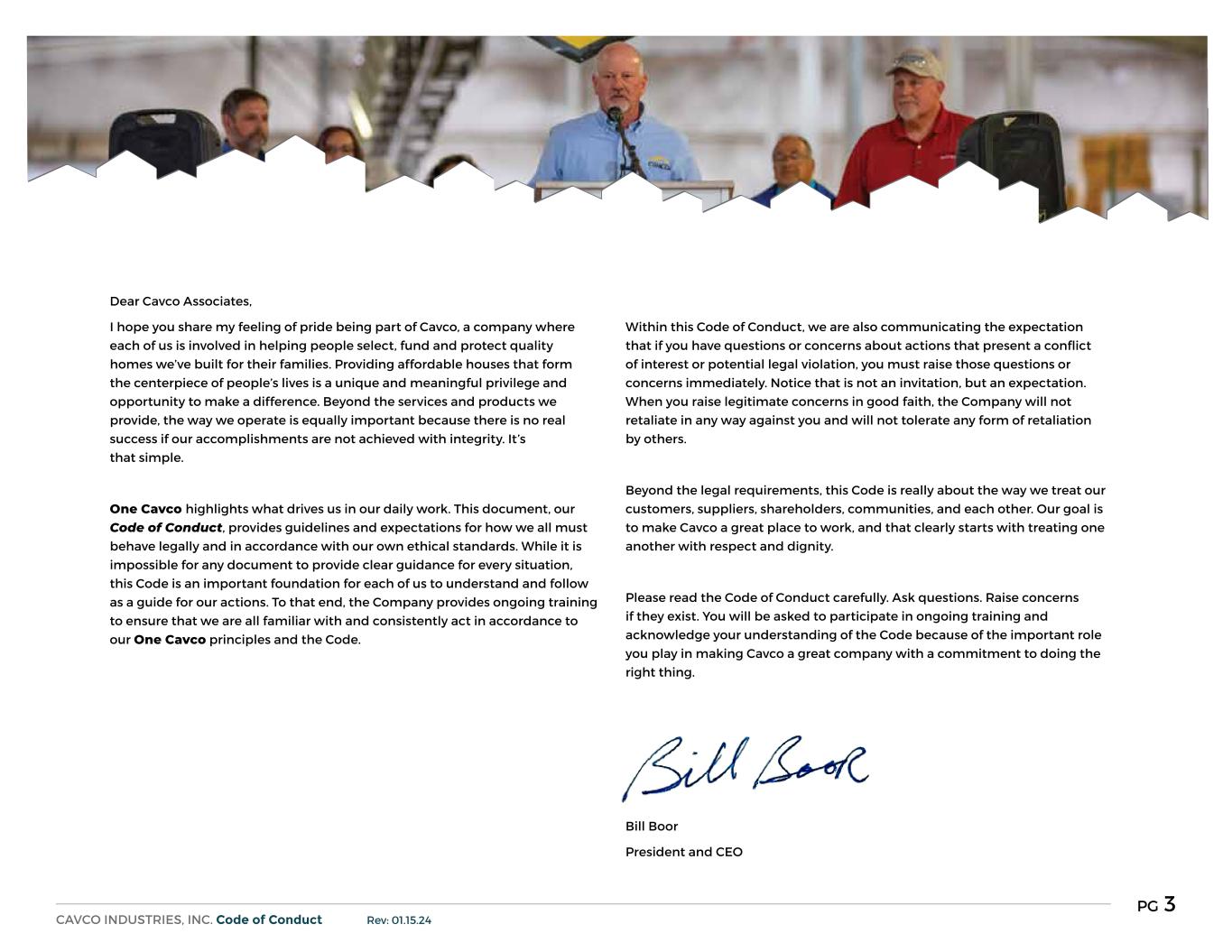
pg 3 CAVCO INDUSTRIES, INC. Code of Conduct Rev: 01.15.24 1. Building a Foundation of Integrity 2. Implementing the Code 3. Maintaining Safety & ... 4. Engaging in Ethical Behavior 5. Observing Trademarks ... 6. Responding to Inquiries from 7. Complying with Antitrust Laws 8. Interacting with Government Dear Cavco Associates, I hope you share my feeling of pride being part of Cavco, a company where each of us is involved in helping people select, fund and protect quality homes we’ve built for their families. Providing affordable houses that form the centerpiece of people’s lives is a unique and meaningful privilege and opportunity to make a difference. Beyond the services and products we provide, the way we operate is equally important because there is no real success if our accomplishments are not achieved with integrity. It’s that simple. One Cavco highlights what drives us in our daily work. This document, our Code of Conduct, provides guidelines and expectations for how we all must behave legally and in accordance with our own ethical standards. While it is impossible for any document to provide clear guidance for every situation, this Code is an important foundation for each of us to understand and follow as a guide for our actions. To that end, the Company provides ongoing training to ensure that we are all familiar with and consistently act in accordance to our One Cavco principles and the Code. Within this Code of Conduct, we are also communicating the expectation that if you have questions or concerns about actions that present a conflict of interest or potential legal violation, you must raise those questions or concerns immediately. Notice that is not an invitation, but an expectation. When you raise legitimate concerns in good faith, the Company will not retaliate in any way against you and will not tolerate any form of retaliation by others. Beyond the legal requirements, this Code is really about the way we treat our customers, suppliers, shareholders, communities, and each other. Our goal is to make Cavco a great place to work, and that clearly starts with treating one another with respect and dignity. Please read the Code of Conduct carefully. Ask questions. Raise concerns if they exist. You will be asked to participate in ongoing training and acknowledge your understanding of the Code because of the important role you play in making Cavco a great company with a commitment to doing the right thing. Bill Boor President and CEO

B U I L D I N G A F O U N D A T I O N O F I N T E G R I T Y1.
pg 5 CAVCO INDUSTRIES, INC. Code of Conduct Rev: 01.15.24 1. Building a Foundation of Integrity 2. Implementing the Code 3. Maintaining Safety & ... 4. Engaging in Ethical Behavior 5. Observing Trademarks ... 6. Responding to Inquiries from 7. Complying with Antitrust Laws 8. Interacting with Government UNDERSTANDING OUR CODE As a company, we have crafted this Code of Conduct (the “Code”) to ensure that we all understand our responsibilities to maintain the highest standards of integrity in our relationships with co-workers, customers, suppliers and investors. Regardless of our positions in Cavco, we must consistently demonstrate our commitment to comply with the Code of Conduct in letter and in spirit and avoid any illegal or unprofessional behavior that might present a conflict of inflict or expose Cavco, ourselves, our coworkers and anyone else related to the Company to potential legal or criminal liability. The foundation of our success as a company is deeply rooted in our reputation for integrity and principled business conduct. This Code provides a statement of the fundamental principles and key policies and procedures for the way we execute Company business. Our conduct should always reflect Cavco’s values, demonstrate ethical leadership and promote a work environment governed by integrity, honesty, legal compliance and trust. FULFILLING OUR SHARED OBLIGATIONS Our Code is a statement of Cavco’s expectations for individual and business conduct that applies to every employee as well as our Board of Directors. It governs every business decision we make. Also, we expect our suppliers, vendors and other third-party business partners to uphold the same high standards of Cavco and to follow the spirit of the Code. If you have ethical or legal concerns regarding any activity, you should immediately raise them. There are many reporting resources available to you as described in the following section, Implementing the Code. The Company’s Compliance Department is always available to answer all questions and provide guidance. WORKING TOGETHER To work together, we must be accountable and trust each other. Using the Code as a guide, we must each maintain the highest ethical standards and choose actions that reflect Cavco’s morals, integrity and professionalism. 1. Building a Foundation of Integrity
pg 6 CAVCO INDUSTRIES, INC. Code of Conduct Rev: 01.15.24 1. Building a Foundation of Integrity 2. Implementing the Code 3. Maintaining Safety & ... 4. Engaging in Ethical Behavior 5. Observing Trademarks ... 6. Responding to Inquiries from 7. Complying with Antitrust Laws 8. Interacting with Government ADMINISTRATION AND MAINTENANCE OF THE CODE With oversight from the Board of Directors, the Company’s executive leadership is responsible for setting clear expectations and high standards for ethical behavior throughout Cavco. We are committed to maintaining an environment where compliance with the law and this Code is expected. The Compliance Department, led by the General Counsel and Chief Compliance Officer, is responsible for administering and maintaining the Code. Investigation and Response: The Company takes seriously and will fully investigate all known potential violations. Relevant subject matter experts will be assigned by the Compliance Department to conduct the investigations. The Company is committed to protecting anyone who raises a concern in good faith. However, it is a violation of the Code to knowingly make a false accusation, lie to an investigator, interfere with or obstruct an investigation. Training: Upon joining Cavco, and periodically thereafter, all Directors and employees are required to participate in the Code training sessions. Acknowledgment: We require acknowledgement that Directors and employees have read the Code and agree to abide by it. Failure to read or acknowledge the Code is not an excuse for noncompliance with the Code. Waiver: No waivers of this Code shall be granted if you fail to comply with the Code or any applicable law or regulation, you will be subject to discipline that may include termination of employment. The Code is not a contract: The Code does not convey any specific employment rights or guarantee employment for any specific period of time. Employment with Cavco is “at will” meaning the Company can end the employment relationship at any time, for any reason, and all Directors and employees of the Company can do the same. 1. Building a Foundation of Integrity (Cont)
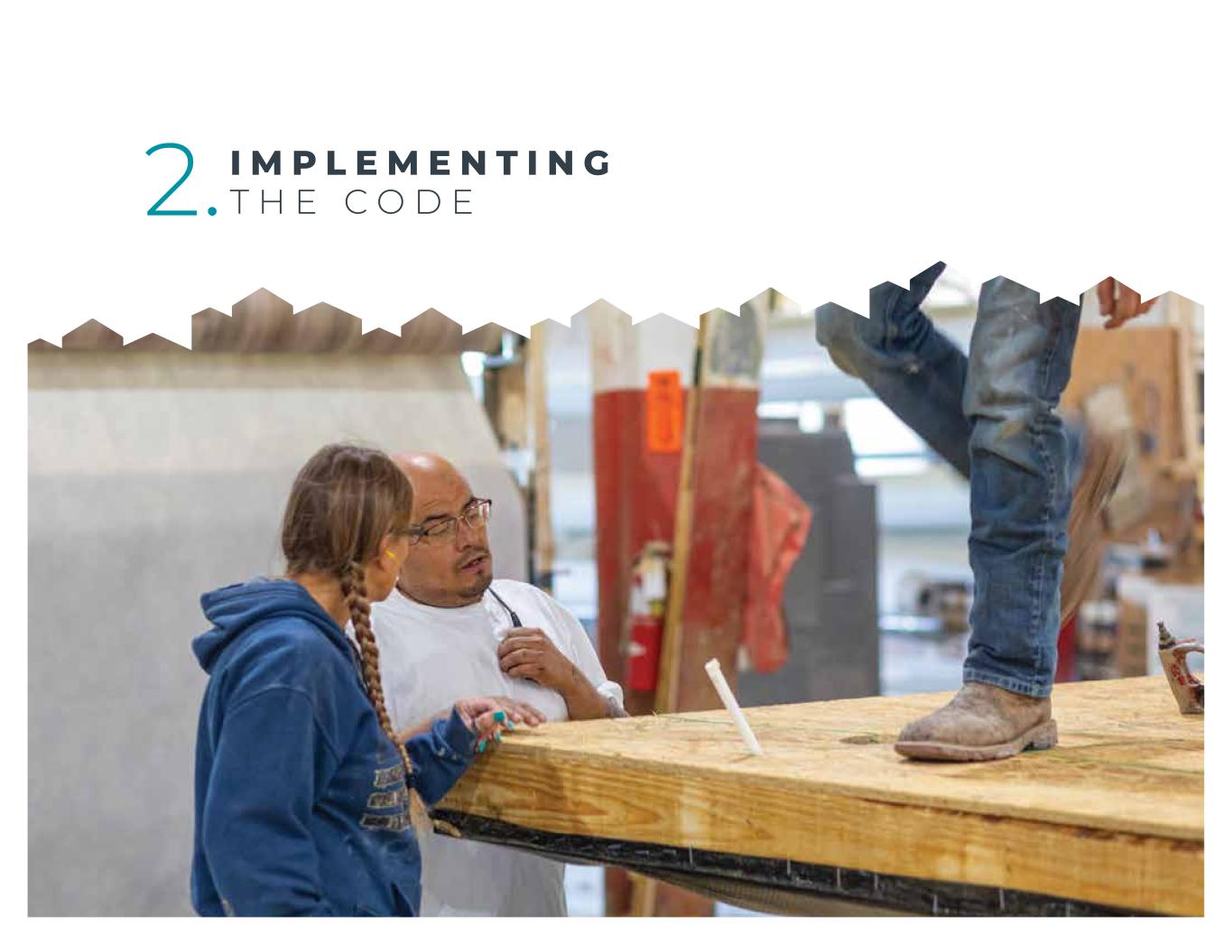
I M P L E M E N T I N G T H E C O D E2.
pg 8 CAVCO INDUSTRIES, INC. Code of Conduct Rev: 01.15.24 3. Maintaining Safety & ... 4. Engaging in Ethical Behavior 5. Observing Trademarks ... 6. Responding to Inquiries from 7. Complying with Antitrust Laws 8. Interacting with Government 2. Implementing the Code 1. Building a Foundation of SEEKING GUIDANCE The Code cannot provide definitive answers to all questions. If you have questions regarding any topic discussed in the Code, or if you are in doubt about the best ethical course of action in a particular situation, you should seek guidance from your supervisor, your local human resources representative, the Compliance Department or any other resources identified in “Reporting Violations” below. REPORTING VIOLATIONS To assist in the administration of the Code and to allow employees to report known or suspected violations of the Code, Cavco has established a Toll-Free Compliance Hotline at 1-844-93CAVCO. You can also access it online at www. speakupcavco.com or text 602-786-8683. The Speak Up Cavco! Compliance Hotline is an easy, risk-free way to anonymously report activities that may involve illegal or unethical behavior. The Speak Up Cavco! Compliance Hotline is available 24 hours a day, 365 days a year and is staffed by third-party professionals from Convercent by OneTrust. No one will be subject to retaliation because of a good faith report of suspected misconduct. If you know of or suspect a violation of applicable laws, regulations, or this Code, it is your responsibility to immediately report that information to your manager, Human Resources, or by using the SpeakUp Cavco! Compliance Hotline. You may also directly contact the Compliance Department at CavcoCompliance@cavco.com. NON-RETALIATION POLICY Cavco will not tolerate any reprisal or retaliation against any person who, in good faith, reports a known or suspected violation of any law, rule or regulation as well as the Code. Cavco will take appropriate disciplinary action, up to and including termination of employment, against anyone who retaliates, directly or indirectly, against any person for reporting an actual or suspected violation of any Company policy (including the Code), or applicable laws and regulations, or assisting in any investigation of any suspected violation. Retaliation can also result in civil or criminal liability. If an employee abuses Cavco’s reporting mechanisms by maliciously filing reports not in good faith, or filing reports that are known to be false or with reckless disregard for their truth or falsity, or obstructing an investigation, the offending employee will be subject to disciplinary action, up to and including termination. FAIR LABOR PRACTICES Cavco is committed to complying with all laws pertaining to freedom of association, collective bargaining, immigration, wages, hours and benefits as well as laws prohibiting forced, compulsory and child labor. 2. Implementing the Code

MAINTAINING SAFETY & ACCOUNTABILITY IN THE WORKPLACE3.
pg 10 CAVCO INDUSTRIES, INC. Code of Conduct Rev: 01.15.24 4. Engaging in Ethical Behavior 5. Observing Trademarks ... 6. Responding to Inquiries from 7. Complying with Antitrust Laws 8. Interacting with Government 3. Maintaining Safety & ... 2. Implementing the Code 1. Building a Foundation of At Cavco, we believe in fairness and equal opportunity. As a Cavco Director or employee, we must be committed to respecting the dignity of each individual. Employees must always conduct themselves in a mature, responsible, and professional manner. In addition, we each share the responsibility for maintaining a safe and productive workplace. Conduct at Cavco-sponsored or related functions and activities, whether on or offsite, must be professional at all times. Never pressure anyone to engage in the consumption of alcoholic beverages or drugs (legal or illegal), take any action that amounts to sexual or other unlawful harassment or discrimination, use language that is intended to harm or incite violence, or other unlawful behavior. ILLEGAL HARASSMENT IS PROHIBITED Harassment is unwelcome conduct that is based on race, color, ancestry, caste, creed, religion, sex, pregnancy, child birth, sexual orientation, gender identity, national origin, age (40 or older), disability, genetic information or predisposition, military service, military or veteran status, marital status, or any other protected classification under law. Harassment becomes unlawful where 1) enduring the offensive conduct becomes a condition of continued employment; or 2) the conduct is severe or pervasive enough to create a work environment that a reasonable person would consider intimidating, hostile or abusive. Anti-discrimination laws also prohibit harassment against individuals in retaliation for: filing a discrimination charge, testifying, participating in an investigation, proceeding, lawsuit under these laws or opposing employment practices that they reasonably believe discriminate against individuals in violation of employment laws. As part of Cavco’s commitment to a professional work environment, Directors and employees may not unlawfully threaten, intimidate, coerce or otherwise interfere with the job performance of other Directors, employees, customers, suppliers and vendors. Consequently, Cavco will not tolerate any form of unlawful harassment including, but not limited to, sexual advances, requests for sexual favors or other physical and psychological abuse from fellow employees, supervisors or business partners. Additionally, Cavco will not allow any acts of unlawful bullying or intimidation by an individual or group. Violations of Cavco’s harassment policy will result in corrective action up to and including termination. For more detailed information please see Cavco’s human resources policies posted on its intranet at: https://cavcoind1.hostpilot.com/ homenet/. SAFETY AND HEALTH Cavco strives to maintain safe working conditions for everyone. To this end, Cavco fully complies with all applicable health and safety laws, rules and regulations. Employees are responsible for being familiar with all Cavco safety rules and observing them at all times. You must immediately report any unsafe conditions to your supervisor, safety manager or the Cavco Corporate Risk Team. In addition, any job-related injury or illness must be immediately reported to your supervisor, safety manager or the Human Resources Department in order to comply with applicable workers’ compensation laws. For more information, please see the safety policies at your location, which provide guidelines on all safety issues. 3. Maintaining Safety and Accountability in the Workplace
pg 11 CAVCO INDUSTRIES, INC. Code of Conduct Rev: 01.15.24 2. Implementing the Code 4. Engaging in Ethical Behavior 5. Observing Trademarks ... 6. Responding to Inquiries from 7. Complying with Antitrust Laws 8. Interacting with Government 3. Maintaining Safety & ... 1. Building a Foundation of DRUG-FREE ENVIRONMENT Cavco is committed to providing a drug-free, safe and secure work environment for all of its employees. Therefore, the manufacture, consumption, distribution, possession or use of illegal drugs on Company premises, in Company vehicles or while conducting Company business off- site is strictly prohibited. The possession or consumption of over-the-counter or prescription drugs must conform to the Company’s policies. In addition, the use, consumption, distribution or possession of alcoholic beverages and legalized marijuana in certain states in any of the above locations or situations generally is prohibited. In certain instances, moderate alcohol consumption on Company property or while conducting Company business off-site, such as at a business dinner, may be permitted, but Cavco employees are expected to show good judgment at all times in connection with alcohol consumption. Violations of Cavco’s drug-free workplace policy will result in corrective action, including possible termination, and may also have legal consequences. Violation of drug-related laws may result in criminal prosecution, fines and imprisonment. If you have knowledge of any prohibited alcohol- or drug-related activities, you should immediately contact the Compliance Department or the Human Resources Department. 3. Maintaining Safety and Accountability in the Workplace (Cont)

E N G A G I N G I N E T H I C A L B E H A V I O R4.
pg 13 CAVCO INDUSTRIES, INC. Code of Conduct Rev: 01.15.24 2. Implementing the Code 3. Maintaining Safety & ... 5. Observing Trademarks ... 6. Responding to Inquiries from 7. Complying with Antitrust Laws 8. Interacting with Government 1. Building a Foundation of As we work with people both inside and outside of the Company, we must act ethically in the growth and advancement of Cavco. This includes making decisions that impact the Company independent of any unlawful or improper, outside influences. Our business and commercial decisions and actions should be based solely on the ethical advancement of Cavco’s legitimate interests, not upon personal relationships or other financial or tangible benefits we might receive. Conflicts of interest, or the appearance of any impropriety or unethical behavior, can damage Cavco’s reputation as well as the reputation of the persons involved. CONFLICTS OF INTEREST A conflict of interest occurs when individual personal interests unethically interfere, or even appear to interfere, with the legitimate, business objectives of the Company. Our obligation to conduct Cavco business in an honest, transparent and ethical manner includes the duty to deal ethically with real conflicts and prevent or eliminate any apparent and potential conflicts of interest between personal and Company business relationships. As Directors and employees of Cavco, we each have a duty to disclose any actual or apparent ethical conflicts of interest. Because there is no way to list every possible conflict that might arise, the examples below are some common examples of actual, apparent, and potential conflicts of interest, and who should be notified if we became aware of potential conflicts. If you become involved in a conflict situation that is not described below or have any questions about whether a particular activity would be a conflict situation, you should report it using the Disclosure module within Convercent by OneTrust or contact the Compliance Department. See “Reporting Violations” in Section 2 of the Code for reporting details. IMPROPER PERSONAL BENEFITS Conflicts of interest develop when any person we have a close personal relationship with including a partner or spouse, parents, children, siblings or any person living in a Director’s and employee’s home gains improper personal benefits because of their relationship to the Director or employee and their position with Cavco. A Director or employee may not accept any unlawful or ethically improper benefits because of their employment with the Company. FINANCIAL INTERESTS IN OTHER BUSINESSES Directors and employees of Cavco may not own or possess an interest in a company that does business with the Company (for example, a Company supplier) without first getting written approval from the General Counsel and Chief Compliance Officer. However, it is not considered a conflict of interest (and prior approval is not required) to own an interest of 1% or less of the outstanding shares of a publicly traded company that does business with Cavco. Similarly, Directors and employees may not own or otherwise hold an ownership interest in a private company that competes with Cavco. CONDUCTING BUSINESS WITH CAVCO Without prior written approval from the General Counsel and Chief Compliance Officer, a Director or employee may not participate in a joint venture, partnership or other commercial business arrangement with the Company. An employee in a position to approve bids for Cavco must judge all submitted bids impartially and bids must be accepted using reasonable business judgment with the best interests of the Company in mind. No one can participate in a bid process if there is an actual, or even a potential, conflict of interest. 4. Engaging in Ethical Behavior 4. Engaging in Ethical Behavior
pg 14 CAVCO INDUSTRIES, INC. Code of Conduct Rev: 01.15.24 2. Implementing the Code 3. Maintaining Safety & ... 5. Observing Trademarks ... 6. Responding to Inquiries from 7. Complying with Antitrust Laws 8. Interacting with Government 1. Building a Foundation of WORKING OUTSIDE THE COMPANY WITH A COMPETITOR As Directors and employees of Cavco who are employed to advance Cavco’s legitimate business interests, we are strictly prohibited from simultaneously being employed by or working with a commercial competitor of Cavco. This includes marketing products or services in competition with Cavco’s current or potential business activities. If there is any question about whether commercial or business activities you are considering are prohibited, it is your responsibility to consult with the General Counsel and Chief Compliance Officer to determine whether a planned activity will compete with any of Cavco’s business activities before pursing the activity in question. WORKING OUTSIDE THE COMPANY WITH A SUPPLIER OR CONTRACTOR Cavco Directors and employees may not be employed by, serve as a director of, or represent a supplier or contractor (or subcontractor) to the Company without prior Company approval. Additionally, Cavco Directors and employees may not accept money or benefits of any kind as compensation or payment for any advice or services that may have been provided to a supplier or contractor in connection with its business with the Company. WORKING WITH OTHER ORGANIZATIONS As responsible members of the communities where we live and work, the Company encourages all Directors and employees to participate in projects and causes that contribute to the greater good. However, Cavco Directors, officers and vice presidents of business units desiring to seek a board position with a for-profit or non-profit entity must have prior written approval from the General Counsel and Chief Compliance Officer. In addition, Cavco Board Directors, officers, vice presidents, General Managers, and company directors must obtain prior written approval from the General Counsel and Chief Compliance Officer prior to running for election or appointment to any city, county, state or federal government-related position. FAMILY MEMBERS WORKING IN THE INDUSTRY During the normal course of business, we may encounter situations where a spouse, significant other, child, parent, in-law or someone else with whom we have a close familial relationship is also a competitor, supplier or customer of the Company or employed by a competitor. These situations are not prohibited, but they do call for full disclosure and extra sensitivity to conflicts of interest and to the security and confidentiality of the Company’s information. Several factors will be considered in assessing these situations, including: (1) the relationship between the Company and the other company involved; (2) the nature of the employee’s responsibilities with the Company and those of the other person; and (3) the access each person has to their respective employer’s confidential, proprietary and trade secret information. Such a situation, however harmless it may appear, could arouse suspicion among other associates and adversely affect working relationships. As Directors and employees of Cavco, it is in our best interest to do everything possible to avoid even the appearance of unethical conduct to observers inside and outside of the Company. To remove any doubt or suspicion, all 4. Engaging in Ethical Behavior (Cont) 4. Engaging in Ethical Behavior
pg 15 CAVCO INDUSTRIES, INC. Code of Conduct Rev: 01.15.24 2. Implementing the Code 3. Maintaining Safety & ... 5. Observing Trademarks ... 6. Responding to Inquiries from 7. Complying with Antitrust Laws 8. Interacting with Government 1. Building a Foundation of employees must disclose the specific situation to a direct supervisor or Cavco’s Compliance Department through the Disclosure module within Convercent by OneTrust to assess the nature and extent of any concern and how it can be resolved. Cavco Board Directors, officers, vice presidents, General Managers, and company directors must disclose their specific situations directly to Cavco’s General Counsel and Chief Compliance Officer. In some instances, any risk to the Company’s interests may be sufficiently remote that the Company’s General Counsel and Chief Compliance Officer may only remind you to guard against inadvertently disclosing the Company’s proprietary and trade secret information and not to be involved in decisions on behalf of the Company that involve the other company. FAMILY MEMBERS WORKING AT THE COMPANY If a family member or another person with whom you have a significant and close personal relationship is also an employee of the Company, they should not be in a direct supervisory position over the other person in the relationship. In cases such as these, an employee must disclose the relationship to a supervisor and the Compliance Department through the Disclosure module within Convercent by OneTrust, and an Officer must disclose the relationship to Cavco’s General Counsel and Chief Compliance Officer. In these situations, the Company may reassign one or both of the employees. In some cases, Cavco’s employment of family members may also require approval by the Audit Committee as a “related party transaction.” SAFEGUARDING LEGITIMATE BUSINESS AND INVESTMENT OPPORTUNITIES We all must identify and disclose legitimate business and investment opportunities involving one or more of Cavco’s business lines obtained through our employment with the Company. If you have any questions about a business or investment opportunity, you should contact the General Counsel or Chief Compliance Officer. Furthermore, you are prohibited from using Cavco’s proprietary and trade secret information, or your position of influence at Cavco, for unlawful personal or financial gain. ENTERTAINMENT, GIFTS AND GRATUITIES Employees must make decisions based on uncompromised objective judgment. If they interact with anyone who has business dealings with the Company, such as suppliers, competitors, contractors or professional consultants, they must be mindful to conduct such activities in the best interest of Cavco using consistent and unbiased standards. Cavco employees must never accept gifts or other financial benefits if it could unethically compromise the reasonable exercise of business judgment or affect a business decision. We must never ask for gifts, entertainment or any other business courtesies from people doing business with the Company for personal gain. Unsolicited gifts and business courtesies, including meals and entertainment when part of a business meeting or shared with the host business contact, are permitted if they are: (1) customary and commonly accepted business courtesies; (2) not lavish; and (3) given and accepted without an express or implied understanding that we are in any way obligated by the acceptance of the gift or that the gift is a reward or inducement for any particular business decision already made or forthcoming. Gifts and entertainment that are valued at more than two hundred fifty dollars ($250.00) or that are lavish in nature require the written approval of the employee’s manager and the Compliance Department through the through the Disclosure module within Convercent by OneTrust. 4. Engaging in Ethical Behavior (Cont) 4. Engaging in Ethical Behavior
pg 16 CAVCO INDUSTRIES, INC. Code of Conduct Rev: 01.15.24 3. Maintaining Safety & ... 5. Observing Trademarks ... 6. Responding to Inquiries from 7. Complying with Antitrust Laws 8. Interacting with Government 2. Implementing the Code 1. Building a Foundation of Gifts of cash or cash equivalents (including securities, below-market loans, etc.) in any amount are strictly prohibited. Gifts, gratuities, awards, merchandise and/or other incentives of nominal value (generally not exceeding the face or fair market value of $250.00) may be accepted from vendors and customers, as well as potential vendors and potential customers, with whom we have an actual or potential business relationship. During the course of business, we may engage in reasonable entertainment with current or potential vendors and customers. At Cavco, “Reasonable entertainment” means entertainment (including activities such as golf and other sporting events, tickets to the theater, a concert and other productions, including vendor paid/customer paid trips, where true business discussions are held at industry or educational events, as long as the expense would be paid by the Company as a reasonable business expense if not paid by the other party. Also, “reasonable entertainment” only includes entertainment within the bounds of good taste, moderation and common sense to be judged in hindsight. If there are any questions regarding the reasonableness or permissibility of any gifts or entertainment under the Code, refer to the Company’s Gift and Entertainment Policy where more detail is available or obtain guidance from the Compliance Department. PROPERLY USING COMPANY PROPERTY Cavco’s physical property and resources are intended solely for the benefit of the Company’s legitimate business and commercial purposes. Cavco Directors , officers, vice presidents, managers, and supervisors are responsible for safeguarding and properly using the Company’s tangible and intangible property and resources that are under their supervision and control. This includes but is not limited to cash, trademarks, trade names, technology, merchandise, inventory, equipment, computers, telecommunications equipment and services, buildings and facilities, supplies, and Cavco’s proprietary and trade secret information. We are each steward of these assets and resources for the Company, and we must ensure that they are used for legal and proper purposes. Using Cavco’s assets for improper or illegal purposes is strictly prohibited. Prior to leaving Cavco, all identification cards or badges, access codes or devices, keys, laptops, computers, telephones, mobile phones, hand-held electronic devices, tools, credit cards and electronically stored or physical documents or files containing Cavco’s proprietary and trade secret information must be immediately returned to Cavco. Subject to applicable law, the contributions employees make to the development and use of Cavco’s products, equipment, marketing and sales research, materials and services or intellectual property while employed by the Company are “works made for hire” and, accordingly, Cavco’s property. These contributions remain Cavco’s property if our employment with the Company terminates for any reason. As an employee of any entity within Cavco, we sign the Acknowledgement at the end of this Code which assigns and transfers to Cavco all of such “work made for hire,” whether it was developed or discovered before or after the date the Acknowledgement was signed. 4. Supporting Our Company (Cont) 4. Engaging in Ethical Behavior
pg 17 CAVCO INDUSTRIES, INC. Code of Conduct Rev: 01.15.24 2. Implementing the Code 3. Maintaining Safety & ... 5. Observing Trademarks ... 6. Responding to Inquiries from 7. Complying with Antitrust Laws 8. Interacting with Government 1. Building a Foundation of COMPANY BOOKS AND RECORDS As part of Cavco’s commitment to integrity and financial transparency, it is the Company’s policy to make full, fair, accurate, timely and understandable disclosure in compliance with all applicable laws and regulations in all reports and documents that Cavco files with, or submits to, the Securities and Exchange Commission and in all other public communications made by the Company. Pursuant to the Company’s record retention policy, employees involved in maintaining and retaining the Company’s records must do so accurately, truthfully and in a timely manner, including all timesheets and travel and expense reports. We must be careful to record Cavco’s financial activities in compliance with all applicable laws and accounting practices, and fully reflect all Company transactions, as appropriate. In addition, Cavco requires that each of us comply with all internal financial-reporting procedures established by the Company. Making false, artificial or misleading entries, records or documentation is strictly prohibited. No bank account, brokerage fund or asset may be established or maintained without the approval of the Chief Accounting Officer or Treasurer. Cavco Directors, officers, vice presidents, managers, and supervisors are expected to provide truthful, accurate and complete information, upon request to Cavco’s attorneys and both internal and external auditors and accountants. We must never make, or cause to be made, any false or misleading statement in connection with any examination or audit of Cavco’s books and records. SAFEGUARDING PROPRIETARY AND TRADE SECRET INFORMATION As Directors and employees of Cavco, our positions may mean that we learn facts about the Company’s business, plans, operations or “secrets of success” that are not known to the general public or to competitors. “Proprietary and Trade Secret information” includes any formulas, patterns, compilations, programs, devices, methods, techniques, pricing, or processes of the Company that: (i) derive independent economic value, actual or potential, from not being generally known to the public or to other persons who can obtain economic value from its disclosure or use; and (ii) are the subject of efforts that are reasonable under the circumstances to maintain the secrecy of the information. Some examples of Proprietary and Trade Secret Information include, but are not limited to, non-public information such as: (1) customer data and records;(2) the terms offered or prices charged to customers or by suppliers; (3) current and potential customer and investor lists;(4) marketing or strategic plans;(5) product specifications; and (6) unreleased earnings information. Also, during the course of performing our duties and responsibilities, Board Directors, officers, vice presidents, and company directors may become privy to information concerning possible mergers or acquisitions with other companies that may require Cavco to maintain such information as confidential. Anyone who possesses or has access to Proprietary and Trade Secret Information must: • Not use the information for their own benefit or the personal benefit of persons inside or outside of Cavco. 4. Supporting Our Company (Cont) 4. Engaging in Ethical Behavior
pg 18 CAVCO INDUSTRIES, INC. Code of Conduct Rev: 01.15.24 2. Implementing the Code 3. Maintaining Safety & ... 5. Observing Trademarks ... 6. Responding to Inquiries from 7. Complying with Antitrust Laws 8. Interacting with Government 1. Building a Foundation of • Not transmit or disclose Proprietary and Trade Secret Information outside of Cavco, unless otherwise approved in writing by the Company or required in the performance of a Director’s or employee’s duties. • Carefully guard against disclosure of Proprietary and Trade Secret Information to people outside Cavco. • Not disclose Proprietary and Trade Secret Information to another Cavco employee unless the employee needs the information to carry out business responsibilities. However, it is important to state that treatment of information as confidential, proprietary or trade secret does not mean we cannot report apparent wrongdoing to the Compliance Hotline, the General Counsel and Chief Compliance Officer or the government authorities where it is appropriate to do so. Additionally, our obligation to treat Proprietary and Trade Secret Information as confidential does not end when we leave Cavco. 4. Supporting Our Company (Cont) 4. Engaging in Ethical Behavior

O B S E R V I N G T R A D E M A R K S C O P Y R I G H T S & O T H E R I N T E L L E C T U A L P R O P E R T Y 5.
pg 20 CAVCO INDUSTRIES, INC. Code of Conduct Rev: 01.15.24 2. Implementing the Code 3. Maintaining Safety & ... 4. Engaging in Ethical Behavior 6. Responding to Inquiries from 7. Complying with Antitrust Laws 8. Interacting with Government 1. Building a Foundation of COMPANY INTELLECTUAL PROPERTY The Company’s logos and names are examples of Cavco trademarks. We must never use Cavco trademarks for improper commercial gain or other unlawful use. Works of authorship such as written materials, designs or plans are the property of Cavco and may be covered by copyright laws or qualify as Proprietary and Trade Secret Information. To avoid violating these laws and Cavco’s Code, we must avoid making unapproved copies or creating works based on the concepts or functions contained in the Company’s copyrighted materials. INTELLECTUAL PROPERTY RIGHTS OF OTHERS Cavco’s policy is not to infringe upon the intellectual property rights of others. When using the name, trademarks, logos, music, images or printed materials of another company, including any such uses on the Company’s websites, we must do so properly with permission and in accordance with applicable law. Cavco licenses the use of much of its computer software from outside companies. In most instances, this computer software is protected by copyright. Company employees may not make, acquire or use unauthorized copies of computer software. 5. Observing Trademarks Copyrights & Other Intellectual Property 5. Observing Trademarks, Copyright ...
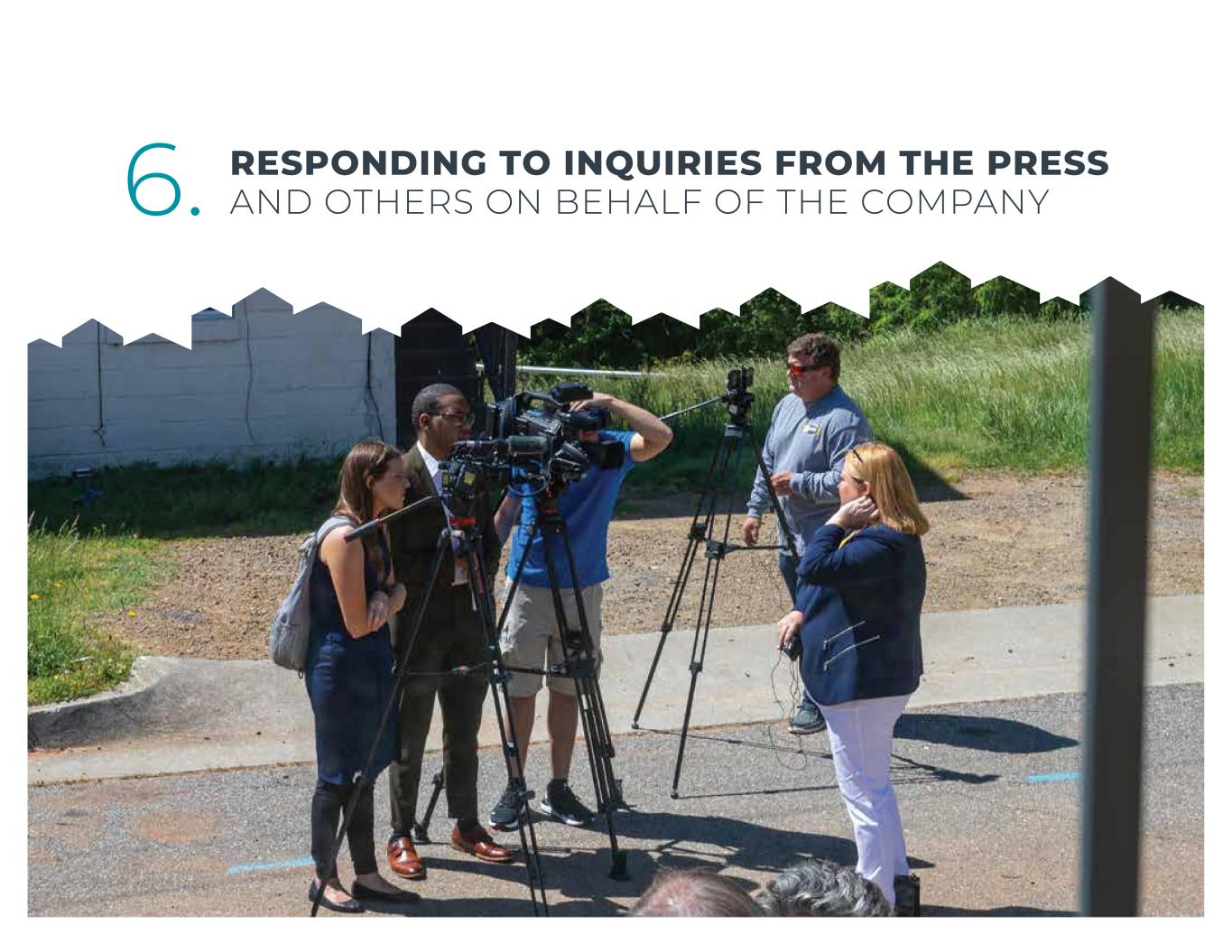
RESPONDING TO INQUIRIES FROM THE PRESS AND OTHERS ON BEHALF OF THE COMPANY6.
pg 22 CAVCO INDUSTRIES, INC. Code of Conduct Rev: 01.15.24 2. Implementing the Code 3. Maintaining Safety & ... 4. Engaging in Ethical Behavior 5. Observing Trademarks ... 7. Complying with Antitrust Laws 8. Interacting with Government 1. Building a Foundation of If the press, media or government regulators request a comment or statement regarding a legal or regulatory matter on behalf of the Company, please contact or direct them to Cavco’s General Counsel and Chief Compliance Officer. Any other requests for comments or statements on behalf of the Company, please coordinate with the SVP, Marketing & Communications. 6. Responding To Inquiries From The Press and Others On Behalf of the Company 6. Responding to Inquiries from the Press
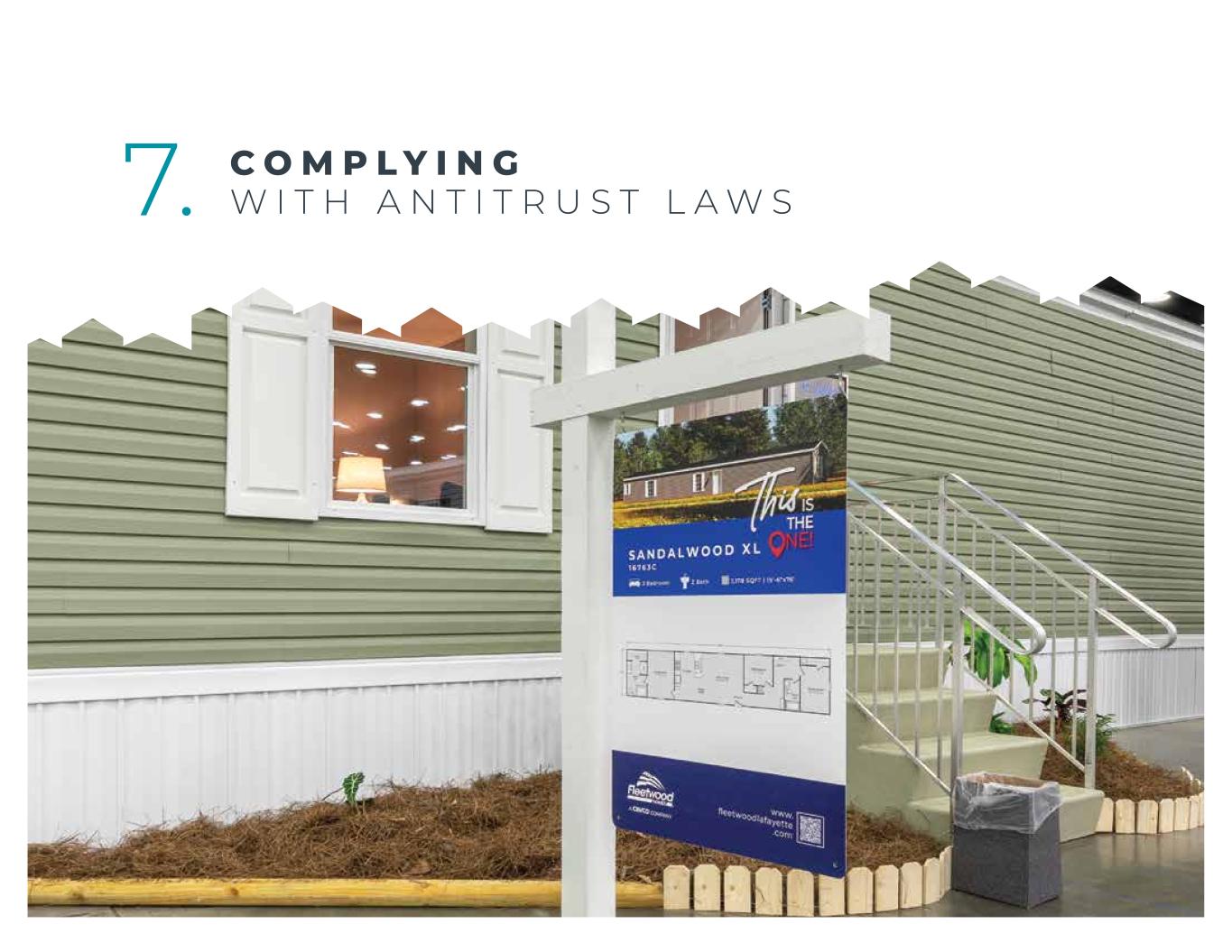
C O M P L Y I N G W I T H A N T I T R U S T L A W S7.
pg 24 CAVCO INDUSTRIES, INC. Code of Conduct Rev: 01.15.24 2. Implementing the Code 3. Maintaining Safety & ... 4. Engaging in Ethical Behavior 5. Observing Trademarks ... 6. Responding to Inquiries from 8. Interacting with Government 1. Building a Foundation of While Cavco competes vigorously in all of its business activities, its efforts in the marketplace must be conducted in accordance with all applicable antitrust and competition laws (“antitrust law”). The antitrust and competition laws are too extensive to be summarized in the Code. However, a primary goal of the antitrust laws is to promote and preserve each competitor’s independence when making decisions on price, output, and other competitively sensitive issues. Antitrust laws prohibit agreements between competitors that limit independent judgment or restrain trade. Some examples of this are agreements to fix prices, restrict output or supply, divide a market for customers, territories, products, or purchases. These rules, other than price fixing, are generally subject to a “rule of reason” standard. As Cavco employees, we must not agree with any competitor on any of these topics. Any communication with a competitor’s representative, no matter how innocuous it may seem at the time, may later be subject to legal scrutiny and form the basis for accusations of improper or illegal conduct. Accordingly, we must avoid becoming involved in situations where an unlawful agreement could be inferred such as discussions with competitors about selling prices, dividing markets, or coordinating marketing and sales efforts. Any of these may create serious legal problems for Cavco and the employee involved. 7. Complying with Antitrust Laws 7. Complying with Antitrust Laws

I N T E R A C T I N G W I T H G O V E R N M E N T E N T I T I E S8.
pg 26 CAVCO INDUSTRIES, INC. Code of Conduct Rev: 01.15.24 2. Implementing the Code 3. Maintaining Safety & ... 4. Engaging in Ethical Behavior 5. Observing Trademarks ... 6. Responding to Inquiries from 7. Complying with Antitrust Laws 1. Building a Foundation of BRIBERY OF FOREIGN OFFICIALS Company policy, the U.S. Foreign Corrupt Practices Act (the “FCPA”) and the laws of many other countries prohibit Cavco and its Directors, employees and agents from giving or offering to give money or anything of value to a foreign official, a foreign political party, a party official or a candidate for political office in order to influence official acts or decisions of that person or entity, to obtain or retain business or to secure any improper advantage. A foreign official is an officer or employee of a government or any department, agency, or instrumentality thereof, or of certain international agencies, such as the World Bank or the United Nations, or anyone acting in an official capacity on behalf of one of those entities. Officials of government-owned corporations are considered to be foreign officials. Payments made in forms other than cash may be illegal. The FCPA prohibits giving or offering to give “anything of value” if it is intended or could be perceived to influence a business or governmental decision or action. Bribes can take many different forms beyond just money. Non-cash items have been the basis of bribery prosecutions, including job offers, travel expenses, golf outings, automobiles and loans with favorable interest rates or repayment terms. Indirect payments made through agents, contractors or other third parties are also prohibited. Employees may not avoid liability by “turning a blind eye” when circumstances indicate a potential violation of the FCPA. The FCPA allows for certain permissible payments to foreign officials. Specifically, the law permits “facilitating” payments, which are payments of small value to effect routine government actions such as obtaining permits, licenses, visas, mail, utility hookups and the like. However, determining what is a permissible “facilitating” payment involves difficult legal judgments. Employees must consult the Legal Department before making, directly or indirectly, any payment or gift thought to be exempt from the FCPA. Cavco’s Compliance and Internal Audit Departments will conduct periodic compliance reviews and audits of relevant business units to ensure continued compliance with the FCPA, other anti-corruption laws and the Code 8. Interacting with Government Entities 8. Interacting with Government
Acknowledgment of Receipt and Review TO BE SIGNED AND RETURNED TO YOUR LOCAL HR REPRESENTATIVE OR CAVCOHR@CAVCO.COM I, _____________________________________________, acknowledge that I have received and read a copy of the Cavco Industries, Inc., Code of Conduct (the “Code”). I understand the contents of the Code. I agree to comply, and have complied, with the policies and procedures set out in the Code. I understand that, in addition to other knowledgeable personnel, including my supervisor, I should approach the General Counsel and Chief Compliance Officer if I have any questions about the Code generally or any questions about reporting a suspected violation of the Code. I understand and acknowledge that I always have the right to notify in good faith the General Counsel and Chief Compliance Officer of any known or suspected violation of this Code or other misconduct without fear of retaliation. SIGNATURE: PRINTED NAME: DATE:
DocumentCAVCO INDUSTRIES, INC.
SECURITIES TRADING POLICY
Effective Date: OCTOBER 30, 2023
This Securities Trading Policy (this “Policy”) sets forth guidelines with respect to transactions in the securities of Cavco Industries, Inc., (the “Company”) and the handling of confidential information about the Company and the companies with which the Company does business. The Company’s Board of Directors has adopted this Policy to promote compliance with federal and state securities laws that prohibit certain persons who are aware of material, non-public information about a company from: (i) trading in securities of that company; or (ii) providing material, non-public information to other persons who may trade on the basis of that information.
This Policy is divided into two parts: Part I describes the Company’s prohibition on the unauthorized disclosure (by Directors, Officers and employees) of material, non-public information, or the misuse of such information, in securities trading; and Part II imposes special additional trading restrictions on Directors, Officers and certain other employees that the Company may designate from time-to- time as "Covered Persons" because of their position, responsibilities or their actual or potential access to material, non-public information.
This Policy applies to all trading or other transactions in the Company’s securities, including: common stock, options and any other securities that the Company may issue, such as preferred stock, notes, bonds and convertible securities. This Policy further applies to all Officers of the Company and its subsidiaries, all members of the Company’s Board of Directors and all employees as identified by the Company (except for Part II, which applies only to certain employees). The Company may also determine that other persons should be subject to this Policy, such as contractors or consultants who have access to material, non-public information. This Policy also applies to family members, other members of a person’s household and entities controlled by a person covered by this Policy.
COMPANY POLICY
If a Director, Officer or any employee has material, non-public information relating to the Company or a Covered Entity (See below, definition in Part I), neither any such Director, Officer or employee, nor any of their respective family members, may buy, sell or gift securities of the Company or a Covered Entity, or engage in any other action to take advantage of or pass on to others material, non-public information. This Policy also applies to material, non-public information relating to a Covered Entity (including our clients, customers, contractors or suppliers) obtained in the course of employment by or association with the Company.
To avoid even the appearance of impropriety, additional restrictions on trading Company securities apply to Directors, certain Officers and certain employees. See subsection: “Procedures – Pre-Clearance of All Trades.”
Transactions that may be necessary or justifiable for independent reasons (such as the need to raise money for an emergency expenditure) are not exempted from the insider trading laws or from this Policy. The fact that the Director, Officer or employee may have relied on other factors in purchasing or selling securities while in possession or aware of material, non-public information will not absolve the person from liability under the law.
PART I
WHAT IS “INSIDER TRADING”?
“Insider trading” generally refers to: (1) trading in securities while in possession or aware of material, non-public information; or (2) providing material, non-public information to others who may trade on the basis of such information.
This means that Company insiders are prohibited from doing the following:
•Trading in Company securities, or the securities of another company or entity with which the Company is engaged in a transaction or project, or discussion about a transaction or project (a “Covered Entity”), including clients, customers, contractors and suppliers, while in possession or aware of material, non-public information concerning the Company or a Covered Entity;
•Having others trade on the Company insider’s behalf while the Company insider is in possession or is aware of material, non-public information; and
•Communicating material, non-public information concerning the Company or a Covered Entity to others who may then trade in the Company’s or Covered Entity’s stock, other securities or pass on the information to others who may trade in the Company’s or Covered Entity’s stock or other securities. This conduct is known as “tipping”.
The elements of insider trading are discussed below:
1. What is Material Information?
Information is considered “material” if a reasonable investor would consider that information important in making a decision to buy, hold or sell securities. Any information that could be expected to affect the Company’s stock price, whether positive or negative, should be considered material. “Inside information” could be material because of its expected effect on the price of the Company’s securities, the securities of another company or entity or the securities of several companies or entities. Moreover, the resulting prohibition against the misuse of inside information includes not only restrictions on trading in the Company’s securities but restrictions on trading in the securities of other companies or entities affected by the inside information.
There is no bright-line standard for assessing materiality. Rather, materiality is based on an assessment of all of the facts and circumstances. It is often evaluated by enforcement authorities with the benefit of hindsight. While it is not possible to define all categories of material information, some examples of information that ordinarily would be regarded as material are:
•Earnings, sales results or expectations;
•Financial forecasts;
•Changes in dividend/distribution policies, the declaration of a stock split or the offering of additional securities;
•Proposals, agreements or news regarding a pending or proposed merger, acquisition, tender offer, joint venture, divestiture, leveraged buyout, significant sale of assets or the disposition of a subsidiary;
•Cybersecurity risks and incidents, including vulnerabilities and breaches;
•Changes in relationships with major customers, including obtaining or losing customers;
•Important product developments or discoveries;
•Major financing developments;
•Changes in management or other major personnel changes;
•Criminal indictments, material civil litigation or government investigations;
•Significant disputes with major suppliers or customers;
•Labor disputes, including strikes or lockouts;
•Substantial changes in accounting methods;
•Debt service or liquidity problems;
•Impending bankruptcy or insolvency;
•Public offerings, including private sales of debt or equity securities;
•Calls, redemptions or repurchases of securities;
•Product defects or warranty issues;
•Major technological advances;
•Significant write-downs in assets or increases in reserves;
•Extraordinary borrowings; and
•Award or loss of a major contract.
2. What is Non-Public Information?
In order for information to qualify as inside information, it must not only be material but it must also be non-public. “Non-public information” is information which has not generally been made available to investors. At such time as material, non-public information has been properly released to the investing public, it loses its status as inside information.
However, for non-public information to become public information, it must be disseminated through recognized channels of distribution designed to reach the securities marketplace such as disclosure through the filing of a report with the Securities and Exchange Commission (“SEC”), disclosure by release to a national business and financial wire service (such as PR Newswire, Dow Jones or Reuters) or a national newspaper (such as The Wall Street Journal). Further, sufficient time must pass for the information to become available in the market (which could be up to several days).
Partial disclosure does not constitute public dissemination. So long as any material component of the inside information has yet to be publicly disclosed, the information is deemed non-public and may not be misused.
3. What is Trading?
Trading includes buying, selling and gifting stock, equities, bonds and other securities.
THE CONSEQUENCES
The consequences of insider trading violations can be staggering:
For individuals who trade on inside information (or tip such information to others), as of the date of this Policy:
•a civil penalty of up to three times the profit gained or loss avoided;
•a criminal fine (no matter how small the profit) of up to $5 million;
•a jail term of up to 20 years; and
•a cease and desist order to stop the violation and penalties for violations of such orders or the federal securities laws.
For a company (as well as possibly any supervisory person) that fails to take appropriate steps to prevent illegal trading by an employee, or tipping of inside information by an employee, as of the date of this Policy:
•a civil penalty of the greater of $1 million or three times the profit gained or loss avoided as a result of the employee’s violation; and
•a criminal penalty of up to $25 million.
Moreover, if an employee violates this Policy, fails to comply with this Policy or the Company’s procedures, Company imposed sanctions, up to and including dismissal, could result. Needless to say, any of the above consequences, even an SEC investigation that does not result in prosecution, can tarnish one’s reputation and irreparably damage a professional career.
Confidentiality
Serious problems could arise for the Company and you due to an unauthorized disclosure of internal information about the Company, whether or not the purposes of facilitating improper trading in the Company’s securities exist. Generally, securities regulations provide that when a company (such as the Company) discloses material, non-public information, it must provide broad, non-exclusionary public access to the information. Violations of these regulations can result in SEC enforcement actions resulting in injunctions and severe monetary penalties. It is the Company policy that all Directors, Officers and employees must maintain all material, non-public information about the Company, or a Covered Entity, in strict confidence and should not communicate such information to any person unless the person has a need to know the information for legitimate reasons related to the Company’s business. Similarly, a Director, Officer or employee should not discuss the Company’s, or a Covered Entity’s, affairs in public or quasi-public areas where a conversation may be overheard (i.e., restaurants, airplanes, elevators, etc.). This prohibition applies to inquiries about the Company, or a Covered Entity, which may be made by financial press, investment analysts or others in the financial community. It is important that all such inquiries requesting comment about the Company should be declined and referred to the Company’s Investor Relations Department.
Whether the information is proprietary information about the Company, Covered Entity or information that could have an impact on the Company or a Covered Entity’s stock price, Directors, Officers and employees must not pass the information on to others. Tipping results in liability for the insider who communicated such information even if the Company Insider does not actually trade himself or herself and for the person who received the information whether or not the person has reason to know that it was an improper disclosure and then acts on such information or passes it on to others who may act upon it.
TO SUMMARIZE:
NO TIPPING AND NO TRADING WHILE IN THE POSSESSION OF MATERIAL, NON-PUBLIC INFORMATION.
PART II
PROCEDURES
The Company has established additional procedures in order to assist it in the administration of this Policy, to facilitate compliance with laws prohibiting insider trading while in possession of material, non-public information and to avoid the appearance of any impropriety. These additional procedures are applicable only to those individuals described below.
Pre-Clearance of All Trades
Directors, Officers and any employee who, by virtue of their position: (i) is designated by the Board of Directors as a Section 16 filer; (ii) regularly has access or generates material, non-public information concerning the Company; (iii) are designated members of the corporate administrative group; or (iv) designated members of the corporate accounting group (each a “Covered Person”), are prohibited from trading in the Company’s securities at all times, even during periods that are not “blackout periods” (as described below), without first contacting the Company’s Legal Department and receiving written approval pursuant to this Policy. This restriction also applies to transactions by a Covered Person’s spouse, domestic partner and any other persons living in a Covered Person’s household as well as to transactions by entities controlled by a Covered Person. Trade pre-clearance requests must be submitted and approved by both the General Counsel & Chief Compliance Officer and the Chief Financial Officer & Treasurer (“CFO”) using the attached form. (See, Attachment A: Stock Trading Approval Form.)
Using the attached form, the President and Chief Executive Officer of the Company must receive prior written approval from the General Counsel & Chief Compliance Officer as well as the Chairman of the Board. The Chief Financial Officer must receive prior written approval from the General Counsel & Chief Compliance Officer as well as the President and Chief Executive Officer. Finally, the General Counsel & Chief Compliance Officer must receive prior written approval from the President and Chief Executive Officer as well as the Chief Financial Officer of the Company.
Unless revoked, written permission to execute a trade will normally remain valid until market close five (5) trading days after the day on which permission was granted (“Permitted Trading Window”). If the trade is not executed during the Permitted Trading Window, a Covered Person must request a new written approval pursuant to the process set forth in the preceding paragraph. If a Covered Person has any questions, concerns or is otherwise uncertain about anything in this pre-clearance process, the Covered Person is directed to talk to the Company’s General Counsel & Chief Compliance Officer. The Chairman of the Board, the President and Chief Executive Officer, the General Counsel & Chief Compliance Officer, and the Chief Financial Officer are under no obligation to approve a stock trade.
EVEN IF A COVERED PERSON RECEIVES PRE-CLEARANCE AND IT IS DURING A PERMITTED TRADING WINDOW, THE COVERED PERSON, INCLUDING ANY COMPANY, TRUST OR ENTITY CONTROLLED BY THE COVERED PERSON, THEIR SPOUSE, THEIR FAMILY MEMBERS OR OTHERS LIVING IN THEIR HOUSEHOLD, MAY NOT TRADE IN SECURITIES OF THE COMPANY OR A COVERED ENTITY IF THE COVERED PERSON IS IN POSSESSION OR AWARE OF MATERIAL, NON-PUBLIC INFORMATION ABOUT THE COMPANY OR ABOUT A COVERED ENTITY.
No Trading During Blackout Periods
In order to further minimize the possibility of an inadvertent and unintended insider trading violation, Covered Persons are prohibited from trading in the Company’s securities during the period beginning fifteen (15) days prior to the end of the Company’s fiscal quarter and ending two (2) business days following the public release by the Company of quarterly or year-end earnings (“Earnings Blackout”). Please realize that the “open window” periods are of general applicability only and do not serve to permit otherwise illegal trades. Trading in the Company’s stock is permitted only during the open window and all trades by Covered Persons must be approved in advance by both the General Counsel & Chief Compliance Officer and the Chief Financial Officer. Other events or developments during such periods may still cause some Directors, Officers or other employees to be in possession or aware of material, non-public information. In such event, a Director, Officer or employee still may not trade. A Director, Officer or employee may not trade even during the open window periods or with authorization if they are actually in possession or aware of material, non-public information about the Company or a Covered Entity. Also, trading during the open window periods is not a substitute for compliance with required pre-clearance procedures.
Other Restricted Trading Periods
From time to time, an event may occur that is material to the Company and is known by only a few Directors, Officers and/or employees (for example, a proposed acquisition). So long as the event remains material and non-public, the relevant Covered Persons may not trade Company or a Covered Entity’s securities. In such instances, the Company will announce to the Covered Persons a closed window or blackout period for trading in Company securities and, if appropriate, in securities of a Covered Entity (“Other Blackouts”). Note that Earnings Blackouts and Other Blackouts are independent of each other and the end or termination of an Earnings Blackout does not end, terminate or conclude Other Blackouts unless specifically instructed that it so does. Only the General Counsel & Chief Compliance Officer may lift the prohibition of an Other Blackout.
No Trading in Securities on a Short-Term Basis
The SEC’s “short-swing profit” rules already discourage Directors and certain Officers from selling any of the Company’s securities within six months of a purchase, or purchasing any of the Company’s securities within six months of a sale, by requiring that profits from such transactions be paid over to the Company. The Company is making this rule a prohibition and expanding it to include all Covered Persons. If there is an emergency situation, such as a sudden and significant change in financial circumstances which dictates that recently acquired securities be sold, an employee (but not a Director or Officer who is subject to the short-swing profit rules and who makes filings on Form 4) should contact the General Counsel & Chief Compliance Officer to seek a waiver to this Policy. This Company policy does not apply to transactions involving equity incentive plan award transactions, such as qualifying stock option grants and exercise and hold transactions, as these are generally exempt from the “short-swing profit” rules.
Standing Orders
Standing orders (except standing orders under approved Rule 10b5-1 plans, see below) should be used only for a very brief period of time. Standing orders must be pre-approved by the General Counsel & Chief Compliance Officer and the Chief Financial Officer. The problem with purchase or sales resulting from standing instructions to a broker is that there is no control over the timing of the trade. The broker could execute a trade when you are in possession or aware of material, non-public information. Standing orders include Limit and Good until Canceled orders. Standing orders (except under approved Rule 10b5-1 plans) that have not executed during the specified time period approved by the General Counsel & Chief Compliance Officer and the Chief Financial Officer must be cancelled. Upon expiration or termination of all unexecuted standing orders, a Director, Officer or employee must receive a new approval from the General Counsel & Chief Compliance Officer and the Chief Financial Officer to initiate another standing order.
Company Compensation Plans
For purposes of this Policy, the Company considers the election to have the Company withhold shares to satisfy tax withholding requirements (but not the sale of any such shares) to be exempt from this Policy.
10b5-1 Plans
This Policy and its restrictions do not apply to transactions under a pre-existing written plan, contract, instruction or arrangement under Rule 10b5-1 (an “Approved 10b5-1 Plan”) under the Securities Exchange Act of 1934, as amended (the “Exchange Act”), that:
(i) have been reviewed and approved by the General Counsel & Chief Compliance Officer and the Chief Financial Officer during an open window one (1) fiscal quarter in advance of any trades; (or, if revised or amended, such revisions or amendments have been reviewed and approved by the General Counsel & Chief Compliance Officer and the Chief Financial Officer during an open window one (1) fiscal quarter in advance of any subsequent trades);
(ii) were entered into in good faith by the Covered Person at a time when the Covered Person was not in possession of material, non-public information about the Company;
(iii) give a third party the discretionary authority to execute such purchases and sales, outside the control of the Covered Person, so long as such third party does not possess any material, non-public information about the Company and explicitly specifies the security or securities to be purchased or sold, the number of shares, the prices and/or dates of transactions or other formula(s) describing such transactions; and
(iv) no trades under an Approved 10b5-1 Plan may occur until the latter of: (a) 90 days after the Approved 10b5-1 Plan’s adoption or modifications of an Approved 10b5-1 Plan; or (b) two (2) business days after filing of a Form 10-Q or Form 10-K disclosing the Company’s financial results for the quarter in which the Approved 10b5-1 Plan was adopted or modified.
The minimum term for an Approved 10b5-1 Plan is six (6) months and the maximum term shall be twelve (12) months. During said term, a Company Insider may not conduct any trading activity outside of the Approved 10b5-1 Plan, except as specifically approved by the General Counsel & Chief Compliance Officer. It is expected that approval will only be considered for “sell to cover” transactions for tax withholding liabilities relating to option exercises, the vesting of restricted stock unit awards and similar equity awards. All Company Insiders who implement an Approved 10b5-1 Plan must use a broker approved by the Company. In order to prevent overlap, multiple approved 10b5-1 Plans are prohibited. Annually, the Company’s Internal Audit Department will be responsible for reviewing all trades and compliance with an Approved 10b5-1 Plan.
Additional Prohibited Transactions
Because we believe it is improper and inappropriate for the Company’s Directors, Officers or employees to engage in short-term or speculative transactions involving Company stock, it is the Company’s policy that Directors, Officers and all employees should not engage in any of the following activities with respect to securities of the Company:
•Hedging Transactions. No Director, Officer or employee shall engage in hedging transactions with respect to the Company’s securities where the Director, Officer or employee locks in a value for the Company security in exchange for protecting against upside or downside price movement. Hedging transactions where a Director, Officer or employee gives up full risks and rewards of security ownership, include, but are not limited to, selling short and transacting in derivative securities, as explained further below.
•Short Sales. No Director, Officer or employee shall engage in “short” selling of the Company’s securities. Short selling is the sale of a security that is not owned by the seller or which is consummated by the delivery of a security borrowed by or for the account of the seller.
•Buying or Selling “Derivative Securities”. No Director, Officer or employee shall buy or sell puts (i.e., options to sell), calls (i.e., options to purchase), future contracts or other forms of derivative securities relating to the Company’s securities. For these purposes, a security will be considered a derivative of another security if its value is derived from the value of the other security.
•Pledging. No Director, Officer or employee shall hold Company securities in a margin account or pledge Company securities as collateral for a loan. Margin sales or foreclosure sales may not occur at a time when the Director, Officer or employee is aware of material, non-public information or is not permitted to trade in Company securities at that time.
Form 144 Reports
Directors and certain Officers designated by the Company’s Board of Directors are required to file a Form 144 before making an open market sale of Company securities. Form 144 notifies the SEC of your intent to sell Company securities. Although often prepared and filed by your broker, this form and its timely filing is each individual’s personal responsibility, and is in addition to the Section 16 filer reports (Form 4 and Form 5) which are filed on your behalf by the Company.
Post-Transaction Notification
Section 16(a) of the Exchange Act requires that certain transactions by Directors and certain Officers be reported on Form 4, filed within two (2) business days following the date of the transaction. Consequently, in order to assist Directors and Officers in preparing these filings, the Company requires immediate notification of sufficient detail regarding any transaction to allow appropriate time for preparing and filing the required reports within the two-business-day deadline. Since the Company requires a day to prepare the Form 4 and a day to transmit the form to the SEC, all Directors and Officers subject to the filing requirements of Section 16(a) must report the details of any transaction in the Company’s securities to the Company at least by the close of business of the date the transaction occurred. This applies to all purchases, sales and transfers by gift or otherwise as well as trades pursuant to an approved 10b5-1 Plan and option exercises. It is the responsibility of the Director or Officer, not the broker, to report the details of any transaction in the Company’s securities.
Use of Knowledgeable Stockbroker
Each Director, Officer and employee is encouraged to select one stockbroker to effect all of their transactions in the Company’s securities. The chosen broker should become familiar with this Policy and the restrictions that apply to their transactions in the Company’s securities. Remember, however, that a broker has no legal responsibility for a client’s Section 16 filings or short-swing profit rule violations. It is the Covered Person’s, not the broker’s, responsibility to keep the Company’s Legal Department informed of all information about a trade and coordination of the filing of appropriate documents with the SEC (including, Form 4s and Form 144s), even if the Company or a broker is assisting in reporting a trade. Therefore, the best protection will come from your own awareness of the possible pitfalls. Using the same broker that is familiar with this Policy will help you constantly monitor your compliance with this Policy as well as with other securities laws obligations.
ADMINISTRATION OF POLICY
The General Counsel & Chief Compliance Officer is responsible for the administration of this Policy. The duties of the General Counsel & Chief Compliance Officer include, but are not limited to, the following (or oversight of the following):
(i) assisting with implementation and enforcement of this Policy;
(ii) circulating this Policy to all employees, conducting training on the Policy and ensuring that this Policy is amended as necessary to remain up-to-date with insider trading and other applicable laws;
(iii) in conjunction with the Chief Financial Officer, pre-clearing all trading in securities of the Company by Covered Persons in accordance with the procedures set forth in this Policy; and
(iv) providing approval of any Rule 10b5-1 plans and preventing any prohibited transactions.
Any person who has any questions about this Policy, or its application to any specific transactions, may obtain additional guidance from the General Counsel & Chief Compliance Officer. The Company may change or otherwise revise the terms of this Policy from time to time in order to respond to developments in law and practice.
CERTIFICATION OF COMPLIANCE
All Directors, Officers and employees are required to certify their understanding of and compliance with this Policy.
CERTIFICATION
The undersigned does hereby acknowledge receipt of Cavco Industries, Inc.’s Securities Trading Policy. The undersigned has read and understands (or has had explained) the Policy and agrees to comply with the Policy in every respect.
| | | | | |
| |
| __________________________________ |
| (Signature) |
| __________________________________ |
| (Please print name) |
| |
| Date: ________________________ | |
ATTACHMENT A
REQUEST FOR APPROVAL TO TRADE
CAVCO INDUSTRIES, INC., SECURITIES
__________________________________________________________________
Name:_______________________________
Type of Security [check all applicable boxes]
•Common stock
•Restricted stock
•Stock Option
Number of Shares/Amount of Security involved____________________
Class of Security involved in transaction: _____________________
Proposed Date(s) of Transaction ____________________
Type of Transaction
•Stock option exercise – Exercise Price $_______/share (Not sale price)
Exercise Price paid as follows:
•Broker’s cashless exercise (and sale)
•cash
•stock-for-stock exercise (swap)
•net exercise (and hold) (company reduces the amount of options issued to cover exercise price)
•other _____________________
Withholding tax paid as follows:
•Broker’s cashless exercise
•cash
•company reducing the amount of options issued to cover taxes
•other _____________________
•Purchase
•Sale
•Gift
Broker Contact Information
Company Name ___________________________________________
Contact Name ___________________________________________
Telephone ___________________________________________
Account Number ___________________________________________
Email ___________________________________________
Social Security or other Tax Identification Number (Last 4 #s) __________________________
Status (check all applicable boxes)
•Officer
•Board Member
•Employee Covered Person
The following Section is only required to be completed by Section 16 filers (who are generally Directors, designated Officers and key employees)
Filing Information (check all applicable boxes and blanks. Form 4 and 144
•Form 144 Required (for sale)
Date of filing of last Form 144 _____________________________________
•Form 4 Required
Date of filing of last Form 3 or 4 _____________________________________
List all of your stock transactions in the Company’s Securities within six (6) Months of the current transaction (if none, please indicate “None”):
All individuals must complete the following:
I am not currently in possession of any material non-public information relating to Cavco Industries, Inc., and its subsidiaries. I hereby certify that the statements made on this form are true and correct.
I understand that clearance may be rescinded prior to effectuating the above transaction if material non-public information regarding Cavco Industries, Inc., arises and, in the reasonable judgment of Cavco Industries, Inc., the completion of my trade would be inadvisable. I also understand that the ultimate responsibility for compliance with the insider trading provisions of the federal securities laws rests with me and that clearance of any proposed transaction should not be construed as a guarantee that I will not later be found to have been in possession of material, non-public information.
Signature: _____________________________ Date: ________________________
Print Name: ____________________________
Telephone Number Where You May Be Reached: ________________________
•Request Approved (transaction must be completed during the Window Period (as defined in the Cavco Industries, Inc., Securities Trading Policy) in which this approval was granted.
•Request Denied
•Request Approved with the following modification __________________________
Cavco Industries, Inc., Approval:
General Counsel & Chief Compliance Officer
Signature _____________________________ Date _____________________________
Name: ________________________________
Chief Financial Officer & Treasurer
Signature _____________________________ Date _____________________________
Name:
REMAINDER OF PAGE INTENTIONALLY LEFT BLANK
FREQUENTLY ASKED QUESTIONS ABOUT
CAVCO INDUSTRIES, INC.’S
SECURITIES TRADING POLICY
When can I buy or sell Cavco stock?
If you are a Covered Person, you can only trade during the permitted open window periods. The permitted open window period begins on the second business day after a quarterly earnings release. However, you cannot buy or sell Cavco stock during permitted open window periods if you are in possession of material, non-public information.
Covered Persons will receive a memo from Cavco’s General Counsel & Chief Compliance Officer near the end of each quarter that indicates when the permitted open window period is closing and when it will reopen.
Do I have to notify anyone before buying or selling Cavco stock or before exercising Cavco stock options?
All Covered Persons must complete a Request for Approval to Trade Cavco Industries, Inc., Securities and submit it to Cavco’s General Counsel & Chief Compliance Officer and Chief Financial Officer & Treasurer (CFO”) for approval at least two (2) business days before trading Cavco stock or exercising Cavco stock options. You may not complete the transaction unless it has been cleared in advance by Cavco’s General Counsel & Chief Compliance Officer and CFO.
In addition to approval, all Section 16 reporting officers must notify Cavco’s Chief Financial Officer and Director of Investor Relations before trading in Cavco stock or exercising Cavco options because transactions by Section 16 officers must be publicly reported. Section 16 filers must also notify the General Counsel & Chief Compliance Officer so that appropriate Securities and Exchange Commission (“SEC”) forms can be prepared and filed. Generally, Section 16 officers are limited to the most senior members of management and board members.
Are employees that are not a Covered Person required to comply with the permitted trading windows?
Employees who are not a Covered Person are free to trade at any time as long as they do not know material, non-public information about Cavco.
What is “material, non-public information”?
There is no single definition of material, non-public information. Generally, it is information that has not been publicly disclosed by Cavco and that is likely to affect the price of Cavco stock. Examples include:
•Better or worse than expected earnings;
•Possible mergers, acquisitions or divestitures; and
•Senior management changes.
A more comprehensive list of examples is included in Cavco’s Securities Trading Policy.
If you are not sure whether you know material, non-public information, you should check with your supervisor or Cavco’s General Counsel & Chief Compliance Officer.
Can I buy or sell Cavco stock if I know material, non-public information as long as we are in a permitted open trading window?
No. You can never trade in Cavco securities if you know material, non-public information about Cavco, even if it is during a permitted open trading window.
Can I exercise Cavco stock options if I know material, non-public information?
It depends. You can always exercise stock options for cash without selling the acquired stock even if you know material, non-public information. The Cavco equity-based compensation plan also allows for “stock-for-stock” or “netting” transactions. However, the sale of any shares acquired, including the sale of any shares that would be required to pay the exercise price, fees or costs associated with these types of transactions, are subject to the restrictions set forth in this Policy that includes, but is not limited to, knowledge of material, non-public information and Earnings Blackouts.
For Covered Persons, do the restrictions on buying or selling Cavco stock during permitted open window periods apply to stock option exercises?
It depends. If you are paying cash to exercise your options without selling the acquired stock, then the restrictions do not apply. In other words, you can exercise your stock options with cash without selling the acquired stock, even if you know material, non-public information.
As previously stated, the Cavco equity-based compensation plan allows for “stock-for-stock” or “netting” transactions. However, the sale of any shares acquired, including the sale of any shares that would be required to pay the exercise price, fees or costs associated with these types of transactions, are subject to the restrictions set forth in this Policy that includes, but is not limited to, knowledge of material, non-public information and Earnings Blackouts.
Are my spouse and children required to comply with the permitted window periods?
Yes. Spouses and children or other members of your immediate family (i.e., parents, grandparents, siblings, etc.) who share the same household with you must comply with permitted window periods. The SEC takes the position that trades made by your spouse or other members of your immediate family who live with you are the same as trades done directly by you.
Does Cavco’s Securities Trading Policy apply to call and put options involving Cavco stock?
Yes. The restrictions in Cavco’s Securities Trading Policy apply to all securities relating to Cavco stock, including call and put options. A call option gives a third person the right to buy (or call away) Cavco stock that you own when the price of Cavco stock increases. A put option gives you the right to force a third party to buy your Cavco stock (or put your Cavco stock) when the price of Cavco stock decreases.
More importantly, Cavco Directors, Officers or employees should never buy put options on Cavco stock or otherwise “short” Cavco’s stock.
Can the SEC really catch me if I am not a Section 16 officer and thus do not have to publicly report my stock holdings?
Yes. The SEC has a very sophisticated monitoring system for insider trading activities and takes enforcement action against hundreds of individuals each year. The SEC has made detection and prosecution of insider trading one of its highest priorities. To aid in finding offenders, it offers informants 10% (as of the Effective Date of Cavco Industries, Inc.’s Securities Trading Policy) of the civil penalties paid by a violator for insider trading.
Please note that these FAQs are a summary of certain portions of the Cavco Industries, Inc.’s Securities Trading Policy. Directors, Officers and employees must review and adhere to the entire Securities Trading Policy. If you have questions, please direct them to Cavco Industries, Inc.’s General Counsel & Chief Compliance Officer.
DocumentExhibit 21
SUBSIDIARIES OF CAVCO INDUSTRIES, INC.
As of March 30, 2024
| | | | | | | | | | | |
| Subsidiary | Jurisdiction | |
| Catskill-Valley Homes, LLC | Delaware | |
| Cavco Exchange LLC | Delaware | |
| Chariot Eagle, LLC | Florida | |
| Commodore Homes, LLC | Delaware | |
| CountryPlace Acceptance Corp. | Nevada | |
| CountryPlace Acceptance GP, LLC | Texas | |
| CountryPlace Acceptance LP, LLC | Delaware | |
| CountryPlace Mortgage, Ltd. | Texas | |
| CRG Holdings, LLC | Delaware | |
| Deming Manufactured Homes, LLC | New Mexico | |
| Destiny Homes, LLC | Delaware | |
| Diamond Home Transport, LLC | Oklahoma | |
| Elite Homebuilders, LLC | Indiana | |
| Elliott Homes, LLC | Oklahoma | |
| Elliott Manufactured Homes, Inc. | Oklahoma | |
| Fairmont Homes, LLC | Delaware | |
| Fleetwood Homes, Inc. | Delaware | |
| Kesterson Retail, LLC | Texas | |
| Lexington Homes, Inc. | Mississippi | |
| MH Group, LLC | Oklahoma | |
| Palm Harbor Homes, Inc. | Delaware | |
| Palm Harbor Insurance Agency of Texas, Inc. | Texas | |
| Palm Harbor Villages, Inc. | Delaware | |
| Palm Harbor Villages Real Estate, LLC | Texas | |
| R-Anell Housing Group, LLC | North Carolina | |
| SH Acquisitions, LLC | Delaware | |
| Solitaire de Mexico S. de R.L. de C.V. | Mexico | |
| Solitaire Holdings, LLC | Oklahoma | |
| Solitaire Homes, LLC | Texas | |
| Solitaire Home Transport, L.P. | Texas | |
| Solitaire Manufactured Homes, LLC | Oklahoma | |
| Standard Casualty Company | Texas | |
| Standard Insurance Agency, Inc. | Texas | |
DocumentExhibit 23
CONSENT OF INDEPENDENT REGISTERED PUBLIC ACCOUNTING FIRM
We consent to the incorporation by reference in the Registration Statement (No. 333-191171) on Form S-3 and Registration Statements (Nos. 333-106861, 333-132925, 333-209097, and 333-273570) on Form S-8 of Cavco Industries, Inc. of our reports dated May 24, 2024, relating to the consolidated financial statements, and the effectiveness of internal control over financial reporting of Cavco Industries, Inc., appearing in this Annual Report on Form 10-K of Cavco Industries, Inc. for the ended March 30, 2024.
| | | | | | | | |
| /s/ RSM US LLP | | |
| | |
| Phoenix, Arizona | | |
| May 24, 2024 | | |
DocumentExhibit 31.1
CERTIFICATION OF PRESIDENT AND CHIEF EXECUTIVE OFFICER
I, William C. Boor, certify that:
1.I have reviewed this annual report on Form 10-K of Cavco Industries, Inc.;
2.Based on my knowledge, this report does not contain any untrue statement of a material fact or omit to state a material fact necessary to make the statements made, in light of the circumstances under which such statements were made, not misleading with respect to the period covered by this report;
3.Based on my knowledge, the financial statements, and other financial information included in this report, fairly present in all material respects the financial condition, results of operations and cash flows of the registrant as of, and for, the periods presented in this report;
4.The registrant's other certifying officer(s) and I are responsible for establishing and maintaining disclosure controls and procedures (as defined in Exchange Act Rules 13a-15(e) and 15d-15(e)) and internal control over financial reporting (as defined in Exchange Act Rules 13a-15(f) and 15d-15(f)) for the registrant and have:
a)Designed such disclosure controls and procedures, or caused such disclosure controls and procedures to be designed under our supervision, to ensure that material information relating to the registrant, including its consolidated subsidiaries, is made known to us by others within those entities, particularly during the period in which this report is being prepared;
b)Designed such internal control over financial reporting, or caused such internal control over financial reporting to be designed under our supervision, to provide reasonable assurance regarding the reliability of financial reporting and the preparation of financial statements for external purposes in accordance with generally accepted accounting principles;
c) Evaluated the effectiveness of the registrant's disclosure controls and procedures and presented in this report our conclusions about the effectiveness of the disclosure controls and procedures, as of the end of the period covered by this report based on such evaluation; and
d) Disclosed in this report any change in the registrant's internal control over financial reporting that occurred during the registrant's most recent fiscal quarter (the registrant's fourth fiscal quarter in the case of an annual report) that has materially affected, or is reasonably likely to materially affect, the registrant's internal control over financial reporting; and
5.The registrant's other certifying officer(s) and I have disclosed, based on our most recent evaluation of internal control over financial reporting, to the registrant's auditors and the audit committee of the registrant's board of directors (or persons performing the equivalent functions):
a) All significant deficiencies and material weaknesses in the design or operation of internal control over financial reporting which are reasonably likely to adversely affect the registrant's ability to record, process, summarize and report financial information; and
b) Any fraud, whether or not material, that involves management or other employees who have a significant role in the registrant's internal control over financial reporting.
| | | | | | | | | | | |
| Date: | May 24, 2024 | | |
| | | |
| /s/ William C. Boor | |
| William C. Boor | |
| President and Chief Executive Officer | |
DocumentExhibit 31.2
CERTIFICATION OF CHIEF FINANCIAL OFFICER
I, Allison K. Aden certify that:
1.I have reviewed this annual report on Form 10-K of Cavco Industries, Inc.;
2.Based on my knowledge, this report does not contain any untrue statement of a material fact or omit to state a material fact necessary to make the statements made, in light of the circumstances under which such statements were made, not misleading with respect to the period covered by this report;
3.Based on my knowledge, the financial statements, and other financial information included in this report, fairly present in all material respects the financial condition, results of operations and cash flows of the registrant as of, and for, the periods presented in this report;
4.The registrant's other certifying officer(s) and I are responsible for establishing and maintaining disclosure controls and procedures (as defined in Exchange Act Rules 13a-15(e) and 15d-15(e)) and internal control over financial reporting (as defined in Exchange Act Rules 13a-15(f) and 15d-15(f)) for the registrant and have:
a)Designed such disclosure controls and procedures, or caused such disclosure controls and procedures to be designed under our supervision, to ensure that material information relating to the registrant, including its consolidated subsidiaries, is made known to us by others within those entities, particularly during the period in which this report is being prepared;
b)Designed such internal control over financial reporting, or caused such internal control over financial reporting to be designed under our supervision, to provide reasonable assurance regarding the reliability of financial reporting and the preparation of financial statements for external purposes in accordance with generally accepted accounting principles;
c) Evaluated the effectiveness of the registrant's disclosure controls and procedures and presented in this report our conclusions about the effectiveness of the disclosure controls and procedures, as of the end of the period covered by this report based on such evaluation; and
d) Disclosed in this report any change in the registrant's internal control over financial reporting that occurred during the registrant's most recent fiscal quarter (the registrant's fourth fiscal quarter in the case of an annual report) that has materially affected, or is reasonably likely to materially affect, the registrant's internal control over financial reporting; and
5.The registrant's other certifying officer(s) and I have disclosed, based on our most recent evaluation of internal control over financial reporting, to the registrant's auditors and the audit committee of the registrant's board of directors (or persons performing the equivalent functions):
a) All significant deficiencies and material weaknesses in the design or operation of internal control over financial reporting which are reasonably likely to adversely affect the registrant's ability to record, process, summarize and report financial information; and
b) Any fraud, whether or not material, that involves management or other employees who have a significant role in the registrant's internal control over financial reporting.
| | | | | | | | | | | |
| Date: | May 24, 2024 | | |
| | | |
| /s/ Allison K. Aden | |
| Allison K. Aden | |
| Executive Vice President, Chief Financial Officer & Treasurer | |
DocumentExhibit 32.1
CERTIFICATIONS OF
CHIEF EXECUTIVE OFFICER
AND
CHIEF FINANCIAL OFFICER
PURSUANT TO 18 U.S.C. 1350,
AS ADOPTED PURSUANT TO
SECTION 906 OF THE SARBANES-OXLEY ACT OF 2002
In connection with the Annual Report of Cavco Industries, Inc. (the "Registrant") on Form 10-K for the year ending March 30, 2024 as filed with the Securities and Exchange Commission on the date hereof (the "Report"), each of the undersigned, William C. Boor and Allison K. Aden, Chief Executive Officer and Chief Financial Officer, respectively, of the Registrant, hereby certifies, pursuant to 18 U.S.C. §1350, as adopted pursuant to §906 of the Sarbanes-Oxley Act of 2002, that to his or her knowledge:
(1)The Report fully complies with the requirements of section 13(a) or 15(d), as applicable, of the Securities Exchange Act of 1934, as amended; and
(2)The information contained in the Report fairly presents, in all material respects, the financial condition and results of operations of the Registrant.
| | | | | |
| May 24, 2024 | |
| |
| /s/ William C. Boor | |
| William C. Boor | |
| President and Chief Executive Officer | |
| |
| /s/ Allison K. Aden | |
| Allison K. Aden | |
| Executive Vice President, Chief Financial Officer & Treasurer | |
CAVCO INDUSTRIES, INC.
CLAWBACK POLICY
Effective as of December 1, 2023
I.Introduction
The Board of Directors (the “Board”) of Cavco Industries, Inc. (the “Company”) believes that it is in the best interest of the Company and its shareholders to adopt this Clawback Policy (the “Policy”) providing for the recoupment from certain Covered Executives (as defined below) of Incentive Compensation (as defined below) in the event of an accounting restatement (as described below) [or the occurrence of the other clawback events] described below. The Policy intends to comply with Section 10D of the Securities Exchange Act of 1934 (the "Exchange Act"), the rules of the Securities and Exchange Commission (“SEC”) thereto and applicable Nasdaq listing standards.
II. Administration
The Board will administer the Policy as recommended jointly by the Audit and Compensation Committees of the Board. Any determinations made by the Board shall be final and binding on all affected individuals.
III. Covered Executives
In accordance with Section 10D of the Exchange Act, as well as the listing standards of the Nasdaq stock exchange, this Policy applies to any current or former “executive officer”. The Board shall designate its “executive officers” on an annual basis and from time to time as additions or departures occur. For purposes of this Policy, “executive officer” means the Company’s president, principal financial officer, principal accounting officer (or if there is no such accounting officer, the controller), any vice-president of the Company in charge of a principal business unit, division, or function (such as sales, administration, or finance), any other officer who performs a policy-making function, or any other person who performs similar policy-making functions for the Company (each, a “Covered Executive”, and collectively, the “Covered Executives”).
IV. Recoupment; Accounting Restatement; Time Frame
The Board must recoup from all Covered Executives in the circumstances described in Section (a). The Board may in its exercise of reasonable discretion recoup from Covered Executives in the circumstances described in Section (b) below; provided, however, such events have not resulted in an accounting restatement subject to Section (a).
(a) Accounting Restatement. In the event the Company is required to prepare an accounting restatement of its financial statements due to material non-compliance, including to correct an error that while not material to previously issued financial statements would result in a material misstatement if the error were corrected in the current period or left uncorrected in the current period, the Board must recover Incentive Compensation, granted, paid, delivered, awarded or otherwise received by a Covered Executive during the three year period preceding the date on which the Company is required to prepare an accounting restatement. Such recovery applies to unpaid or unvested Incentive Compensation based upon determination of the correct financial reporting measure.
(b) Detrimental Conduct. To the extent that the Board determines, in its sole discretion, that one or more of the Covered Executives committed one or more willful acts of material fraud or material misconduct that directly or indirectly caused a Material Adverse Effect (as defined below), the Board may require reimbursement or forfeiture of certain Incentive Compensation granted, paid, delivered, awarded or otherwise received by a Covered Executive during the three-year period following the commission of the acts of fraud or misconduct and/or occurrence of a Material Adverse Effect, in either case, as determined by the Board in its sole discretion. Such forfeiture or reimbursement shall be sought, unless it is Impracticable to do so or the Board otherwise determines, in its sole discretion, that such forfeiture or recovery would not be in the best interests of the Company. “Material Adverse Effect” means any event, change, development or occurrence, individually or together with any other event, change, development, or occurrence, that the Board determines, in its sole discretion, is materially adverse to the finances, business, condition, assets, or results of operations of the Company. In addition to Incentive Compensation, if the Board determines that one or more of the Covered Executives committed one or more willful acts of material fraud or material misconduct that directly or indirectly caused a Material Adverse Effect the Board may require reimbursement or forfeiture of certain equity awards which vest solely based on the passage of time.
V. Incentive Compensation
For purposes of the Policy, provided the compensation is granted, earned or vested in whole or partially on the attainment of a financial metric, Incentive Compensation means any compensation that is granted, earned, or vested based wholly or in part upon attainment of a financial reporting measure, including, but not limited to, any of the following:
a.Non-equity incentive awards that are earned based wholly or in part on satisfying a financial reporting measure performance goal;
b.Bonuses paid from a bonus pool, the size of which is determined based wholly or in part on satisfying a financial reporting measure;
c.Other cash awards based on satisfaction of a financial reporting measure performance goal;
d.Restricted stock, restricted stock units, performance share units, stock options, and stock appreciation rights that are granted or become vested based wholly or in part on satisfying a financial reporting measure performance goal; and
e.Proceeds received upon the sale of shares acquired through an incentive plan that were granted or vested based wholly or in part on satisfying a financial reporting measure performance goal.
Financial reporting measure means measures that are determined and presented in accordance with the accounting principles used in preparing the Company’s financial statements, and any measures that are derived wholly or in part from such measures, including, but not limited to, the following:
a.Revenues;
b.Net income;
a.Operating income;
b.Profitability of one or more reportable segments;
c.Financial ratios (e.g., accounts receivable turnover and inventory turnover rates);
d.Earnings before interest, taxes, depreciation and amortization;
e.Funds from operations and adjusted funds from operations;
f.Liquidity measures (e.g., working capital, operating cash flow);
g.Return measures (e.g., return on invested capital, return on assets);
h.Earnings measures (e.g., earnings per share)
i.Sales per square foot or same store sales;
j.Revenue per user, or average revenue per user;
k.Cost per employee;
l.Any of such financial reporting measures relative to a peer group, where the Company’s financial reporting measure is subject to an accounting restatement; and
m.Tax basis income.
VI. Excess Incentive Compensation: Amount Subject to Recovery
In the case of an accounting restatement and resulting recalculation of a financial reporting measure, the amount of Incentive Compensation to be recovered by the Company from each Covered Executive is the amount of Incentive Compensation paid to each Covered Executive that exceeds what the Covered Executive would have received based on the restated financial reporting measure during the three-year period preceding the year the restatement or correction is determined to be required.
In the case of Detrimental Conduct, the amount of Incentive Compensation to be recovered from each Covered Executive will be determined in the Board’s discretion in an amount up to but not to exceed all Incentive Compensation received by such Covered Executive during the three-year period following the commission of the acts of fraud or misconduct and occurrence of a Material Adverse Effect in either case, as determined by the Board in its sole discretion.
Subject to compliance with any applicable law, the Company may effect recovery of Incentive Compensation under the Policy from any amount otherwise payable to a Covered Executive, including, if permitted by law, amounts payable to such individual under any otherwise applicable Company plan or program. Any recovery pursuant to this Policy shall be in addition to any other remedies that may be available to the Company under applicable law including, but not limited to, disciplinary action up to and including termination of employment or other services.
VII. Recovery Process
The amount of the recovery pursuant to this Policy will be determined pursuant to the following process:
a. The Audit Committee of the Board will have the initial responsibility to investigate any restatement to determine whether it triggers a recovery of Incentive Compensation under the Policy. The Audit Committee will report its findings to the Compensation Committee and make recommendations to the Compensation Committee as to the recovery of Incentive Compensation;
b. The Compensation Committee will review the Audit Committee’s report and make a determination as to the Covered Executive(s) from whom recovery will be sought and the amount of the recovery. The Compensation Committee’s determination will be reported to the Board.
c. The Board will then make a final review and determination as to the amount of the recovery and the Covered Executive(s) from whom recovery is sought.
It is expected that the Board will interpret the Policy as necessary to correct any error or ambiguity. Any determination by the Board under this Policy shall be final, binding and conclusive on all Covered Executives.
VIII. Method of Recoupment
Once the amount of Incentive Compensation to be recovered has been determined, the Company must recover such amounts “reasonably promptly”. The Board will determine, in its sole discretion, the method for recouping Incentive Compensation hereunder and such method may include, to the extent permitted by applicable law and Section 409A of the Internal Revenue Code, but not be limited to:
(a) Reimbursement or repayment of cash Incentive Compensation previously paid;
(b) Seeking recovery of any gain realized on the vesting, exercise, settlement, sale, transfer or other disposition of any equity-based awards;
(c) offsetting the recouped amount from any compensation otherwise owed by the Company to the Covered Executive;
(d) Cancelling all or a portion of outstanding vested or unvested equity awards (including any related dividend amounts paid or accrued with respect to such awards);
(e) Reducing the amount of any current or future compensation that may be awarded or become due and owing to the Covered Executive; and/or
(f) Taking any other remedial and recovery action permitted by law, as determined by the Board, including, without limitation, requiring the return of shares or the reimbursement of any net proceeds received as a result of the sale of shares.
IX. No Indemnification
The Company shall not indemnify any Covered Executives against the loss of any incorrectly awarded Incentive Compensation.
X. Interpretation
The Board will interpret and construe the Policy as well as make all determinations necessary, appropriate or advisable for the administration of the Policy. It is intended that the Policy be interpreted in a manner that is consistent with the requirements of Section 10D of the Exchange Act and any applicable rules or standards adopted by the Securities and Exchange Commission (the “SEC”) or the Nasdaq stock exchange on which the Company's securities are listed.
If any provision of this Policy is or becomes or is deemed to be invalid or unenforceable in any jurisdiction or as to any Covered Executive, such provision shall be construed or deemed amended to the conform with applicable law.
XI. Effective Date
This Policy shall be effective as of the date of adoption by the Board (the "Effective Date") and shall apply to Incentive Compensation approved, awarded or granted to Covered Executives on or after that date.
XII. Amendment; Termination
In its sole discretion, from time to time, the Board may amend the Policy for any reason, including, to reflect final regulations adopted by the SEC under Section 10D of the Exchange Act and to comply with any rules or standards adopted by Nasdaq on which the Company's securities are listed.
XIII. Other Recoupment Rights
The Board intends that the Policy will be applied to the fullest extent of the law. The Board may require that any employment agreement, equity award agreement or similar agreement entered into on or after the Effective Date shall, as a condition of the grant, require a Covered Executive to agree to abide by the terms of the Policy. Any right of recoupment under this Policy is in addition to, and not in lieu of, any other remedies or rights of recoupment that may be available to the Company pursuant to the terms of any similar policy in any employment agreement, equity award agreement, or similar agreement and any other legal remedies available to the Company.
XIV. Impracticability
The Board shall recover any excess Incentive Compensation in accordance with this Policy unless such recovery would be impracticable, as determined by the Board in accordance with Rule 10D-1 of the Exchange Act and the listing standards of Nasdaq on which the Company's securities are listed.
XV. Successors
This Policy shall be binding and enforceable against all Covered Executives and their beneficiaries, transferees, heirs, executors, administrators or other legal representatives.