UNITED STATES
SECURITIES AND EXCHANGE COMMISSION
WASHINGTON, D.C. 20549
FORM
(Mark One)
REGISTRATION STATEMENT PURSUANT TO SECTION 12(b) OR (g) OF THE SECURITIES EXCHANGE ACT OF 1934 |
OR
ANNUAL REPORT PURSUANT TO SECTION 13 OR 15(d) OF THE SECURITIES EXCHANGE ACT OF 1934 |
For the fiscal year ended
OR
TRANSITION REPORT PURSUANT TO SECTION 13 OR 15(d) OF THE SECURITIES EXCHANGE ACT OF 1934 |
OR
SHELL COMPANY REPORT PURSUANT TO SECTION 13 OR 15(d) OF THE SECURITIES EXCHANGE ACT OF 1934 |
Date of event requiring this shell company report
Commission file number:
(Exact name of Registrant as specified in its charter and translation of Registrant’s name into English)
(Jurisdiction of incorporation or organization)
(Address of principal executive offices)
Chief Executive Officer
Inventiva S.A.
Tel: +
info@inventivapharma.com
(Name, Telephone, Email and/or Facsimile number and Address of Company Contact Person)
Securities registered or to be registered pursuant to Section 12(b) of the Act.
Title of each class |
| Trading Symbol(s) |
| Name of each exchange on which registered |
The | ||||
* | The |
*Not for trading, but only in connection with the registration of the American Depositary Shares.
Securities registered or to be registered pursuant to Section 12(g) of the Act. None
Securities for which there is a reporting obligation pursuant to Section 15(d) of the Act. None
Indicate the number of outstanding shares of each of the issuer’s classes of capital or common stock as of the close of the period covered by the annual report.
Ordinary shares:
Indicate by check mark if the registrant is a well-known seasoned issuer, as defined in Rule 405 of the Securities Act. ☐ Yes ☒
If this report is an annual or transition report, indicate by check mark if the registrant is not required to file reports pursuant to Section 13 or 15(d) of the Securities Exchange Act of 1934. ☐ Yes ☒
Indicate by check mark whether the registrant (1) has filed all reports required to be filed by Section 13 or 15(d) of the Securities Exchange Act of 1934 during the preceding 12 months (or for such shorter period that the registrant was required to file such reports), and (2) has been subject to such filing requirements for the past 90 days. ☒
Indicate by check mark whether the registrant has submitted electronically every Interactive Data File required to be submitted pursuant to Rule 405 of Regulation S-T (§232.405 of this chapter) during the preceding 12 months (or for such shorter period that the registrant was required to submit such files). ☒
Indicate by check mark whether the registrant is a large accelerated filer, an accelerated filer, a non-accelerated filer, or an emerging growth company. See definition of “large accelerated filer,” “accelerated filer,” and “emerging growth company” in Rule 12b-2 of the Exchange Act.
Large accelerated filer ☐ | Non-accelerated filer ☐ | Emerging growth company |
If an emerging growth company that prepares its financial statements in accordance with U.S. GAAP, indicate by check mark if the registrant has elected not to use the extended transition period for complying with any new or revised financial accounting standards† provided pursuant to Section 13(a) of the Exchange Act.
† | The term “new or revised financial accounting standard” refers to any update issued by the Financial Accounting Standards Board to its Accounting Standards Codification after April 5, 2012. |
Indicate by check mark whether the registrant has filed a report on and attestation to its management’s assessment of the effectiveness of its internal control over financial reporting under Section 404(b) of the Sarbanes-Oxley Act (15 U.S.C. 7262(b)) by the registered public accounting firm that prepared or issued its audit report.
If securities are registered pursuant to Section 12(b) of the Act, indicate by check mark whether the financial statements of the registrant included in the filing reflect the correction of an error to previously issued financial statements.
Indicate by check mark whether any of those error corrections are restatements that required a recovery analysis of incentive-based compensation received by any of the registrant’s executive officers during the relevant recovery period pursuant to §240.10D-1(b). ☐
Indicate by check mark which basis of accounting the registrant has used to prepare the financial statements included in this filing:
U.S. GAAP ☐
If “Other” has been checked in response to the previous question, indicate by check mark which financial statement item the registrant has elected to follow. ☐ Item 17 ☐ Item 18
If this is an annual report, indicate by check mark whether the registrant is a shell company (as defined in Rule 12b-2 of the Exchange Act).
TABLE OF CONTENTS
| Page | |||
3 | ||||
4 | ||||
7 | ||||
| 7 | |||
7 | ||||
7 | ||||
72 | ||||
94 | ||||
94 | ||||
111 | ||||
128 | ||||
132 | ||||
133 | ||||
133 | ||||
148 | ||||
154 | ||||
154 | ||||
Material Modifications to the Rights of Security Holders and Use of Proceeds. | 154 | |||
154 | ||||
155 | ||||
155 | ||||
155 | ||||
155 | ||||
156 | ||||
Purchases of Equity Securities by the Issuer and Affiliated Purchasers. | 156 | |||
156 | ||||
156 | ||||
157 | ||||
Disclosure Regarding Foreign Jurisdictions that Prevent Inspections. | 157 | |||
157 | ||||
159 | ||||
159 | ||||
159 | ||||
160 | ||||
2
INTRODUCTION
Unless otherwise indicated, “Inventiva,” “the company,” “our company,” “we,” “us” and “our” refer to Inventiva S.A.
“INVENTIVA,” “PanNASH,” the Inventiva logo and other trademarks or service marks of Inventiva S.A. appearing in this Annual Report on Form 20-F, or annual report, are the property of Inventiva S.A. Solely for convenience, the trademarks, service marks and trade names referred to in this annual report are listed without the ® and ™ symbols, but such references should not be construed as any indicator that their respective owners will not assert, to the fullest extent under applicable law, their right thereto. All other trademarks, trade names and service marks appearing in this annual report are the property of their respective owners. We do not intend to use or display other companies’ trademarks and trade names to imply any relationship with, or endorsement or sponsorship of us by, any other companies.
Our audited consolidated financial statements have been prepared in accordance with International Financial Reporting Standards, or IFRS, Accounting Standards as issued by the International Accounting Standards Board, or IASB. Our consolidated financial statements included in this annual report are presented in euros and, unless otherwise specified, all monetary amounts are in euros. All references in this annual report to “$,” “US$,” “U.S.$,” “U.S. dollars,” “dollars” and “USD” mean U.S. dollars and all references to “€” and “euros,” mean euros, unless otherwise noted. Throughout this annual report, references to ADSs mean ADSs or ordinary shares represented by such ADSs, as the case may be.
3
SPECIAL NOTE REGARDING FORWARD-LOOKING STATEMENTS
This Annual Report on Form 20-F, or annual report, contains forward-looking statements within the meaning of Section 27A of the Securities Act of 1933, as amended, and Section 21E of the Securities Exchange Act of 1934, as amended, that are based on our management’s beliefs and assumptions and on information currently available to our management. All statements other than present and historical facts and conditions contained in this annual report, including statements regarding our future results of operations and financial positions, business strategy, plans and our objectives for future operations, are forward-looking statements. When used in this annual report, the words “anticipate,” “believe,” “can,” “continue,” “could,” “estimate,” “expect,” “goal,” “intend,” “is designed to,” “may,” “might,” “plan,” “will,” “would,” “potential,” “predict,” “objective,” “should,” “target,” or the negative of these and similar expressions identify forward-looking statements. Forward-looking statements include, but are not limited to, statements about:
| ● | our plans to develop and commercialize our product candidates; |
| ● | the timing, design, duration, recruitment costs, screening and enrollment of our planned and ongoing clinical trials; |
| ● | clinical trial data releases and publications, the information, insights and impacts that may be gathered from our planned and ongoing clinical trials; |
| ● | the timing of any planned investigational new drug, or IND, application or new drug application, or NDA; |
| ● | our plans to research, develop and commercialize our current and future product candidates; |
| ● | expectations with respect to the benefits of our existing and future partnerships, including our partnerships with Chia Tai Tianqing Pharmaceutical Group, Co., LTD., or CTTQ, and with Hepalys Pharma, Inc., or Hepalys, on the clinical development, commercialization and regulatory approvals of our product candidates, including potential acceleration of the commercialization of lanifibranor in Mainland China, Hong Kong Special Administrative Region, Macau Special Administrative Region, Taiwan, Japan and South Korea, if approved; |
| ● | our ability to successfully cooperate with existing partners or enter into new partnerships, and to fulfill our obligations under any such partnership agreements; |
| ● | the potential for further development of odiparcil; |
| ● | our ability to potentially enter into a partnership with a third party for the development and commercialization of odiparcil; |
| ● | the clinical utility, potential benefits and market acceptance of our product candidates; |
| ● | our commercialization, marketing and manufacturing capabilities and strategy; |
| ● | our ability to identify additional products or product candidates with significant commercial potential; |
| ● | our expectations related to the sufficiency of our capital resources and our ability to continue as a going concern, including our expectations with respect to raising additional funds, executing any potential transactions and achievement of milestones and operating targets; |
| ● | the expected use of proceeds from any financing transactions, including capital increases, royalty certificates and debt financing, and our ability to fulfill our obligations under any such agreements, including our ability to repay debt in a timely manner, or at all; |
| ● | developments and projections relating to our competitors and our industry; |
| ● | the impact of government laws and regulations; |
4
| ● | the effects of epidemics or pandemics on our business and, operations and clinical development timelines and plans; |
| ● | our intellectual property position; |
| ● | our estimates regarding future revenue, expenses, capital requirements and need for additional financing; |
| ● | unfavorable conditions in our industry, the global economy or global supply chain, including financial and credit market fluctuations, international trade relations, political turmoil, natural catastrophes, warfare (such as the conflict involving Russia and Ukraine, the state of war between Israel and Hamas and the related risk of a larger conflict), and terrorist attacks; and |
| ● | other risks and uncertainties, including those listed in this annual report under the caption “Risk Factors.” |
You should refer to the section of this annual report titled “Item 3.D Risk Factors” for a discussion of important factors that may cause our actual results to differ materially from those expressed or implied by our forward-looking statements. As a result of these factors, we cannot assure you that the forward-looking statements in this annual report will prove to be accurate. Furthermore, if our forward-looking statements prove to be inaccurate, the inaccuracy may be material. In light of the significant uncertainties in these forward-looking statements, you should not regard these statements as a representation or warranty by us or any other person that we will achieve our objectives and plans in any specified time frame or at all. We undertake no obligation to publicly update any forward-looking statements, whether as a result of new information, future events or otherwise, except as required by law.
You should read this annual report and the documents that we reference in this annual report and have filed as exhibits to this annual report completely and with the understanding that our actual future results may be materially different from what we expect. We qualify all of our forward-looking statements by these cautionary statements.
This annual report contains market data and industry forecasts that were obtained from industry publications. These data involve a number of assumptions and limitations, and you are cautioned not to give undue weight to such estimates. We have not independently verified any third-party information. While we believe the market position, market opportunity and market size information included in this annual report is generally reliable, such information is inherently imprecise.
Summary Risk Factors
| ● | We require substantial additional funding, which may not be available to us on acceptable terms, or at all, and failure to obtain this necessary capital when needed may force us to curtail, delay or discontinue our product candidate development efforts or other operations. These factors raise substantial doubt regarding our ability to continue as a going concern. |
| ● | We are a clinical-stage company with no approved products and no historical product revenues, which makes it difficult to assess our future prospects and financial results. |
| ● | We have incurred significant losses since our inception and anticipate that we will continue to incur significant losses for the foreseeable future. |
| ● | We are heavily dependent on the success of our product candidate lanifibranor. We cannot give any assurance that any product candidate, or any other compounds in development, will successfully complete clinical trials, receive regulatory approval or be commercialized. |
| ● | The regulatory approval processes of the U.S. Food and Drug Administration, or FDA, the European Medicines Agency, or EMA, the Chinese National Medical Products Administration, or NMPA, and other comparable regulatory authorities are lengthy, time consuming and inherently unpredictable, and if we are ultimately unable to obtain regulatory approval for our product candidates, our business will be substantially harmed. |
| ● | Clinical development is a lengthy and expensive process with an uncertain outcome, and results of earlier studies and trials as well as data from any interim analysis of ongoing clinical trials may not be predictive of future trial results. Clinical failure can occur at any stage of clinical development. |
5
| ● | We may not realize the benefits expected through the partnerships with CTTQ and Hepalys, and those partnerships could have adverse effects on our business. |
| ● | We currently have no marketing and sales organization. To the extent any of our product candidates for which we maintain commercial rights is approved for marketing, if we are unable to establish marketing and sales capabilities or enter into agreements with third parties to market and sell our product candidates, we may not be able to effectively market and sell any product candidates or generate product revenues. |
| ● | We face significant competition for our drug discovery and development efforts, and if we do not compete effectively, our commercial opportunities will be reduced or eliminated. |
| ● | We may encounter substantial delays in our clinical trials or we may fail to demonstrate safety and efficacy to the satisfaction of applicable regulatory authorities. |
| ● | We rely completely on third parties to manufacture our pre-clinical and clinical drug supplies and we intend to rely on third parties to produce commercial supplies of any approved product candidate. Manufacturers are subject to significant regulation with respect to manufacturing our products. The manufacturing facilities on which we rely may not continue to meet regulatory requirements and may have limited capacity. |
| ● | Voting control with respect to our company is concentrated in the hands of Frédéric Cren, our Chief Executive Officer, Pierre Broqua, our Deputy Chief Executive Officer and Chief Scientific Officer, and our significant shareholders and affiliates, who will continue to be able to exercise significant influence on us. |
| ● | The rights of shareholders in companies subject to French corporate law differ in material respects from the rights of shareholders of corporations incorporated in the United States. |
6
PART I
Item 1. Identity of Directors, Senior Management and Advisers
Not applicable.
Item 2. Offer Statistics and Expected Timetable
Not applicable.
Item 3. Key Information
A. [Reserved]
B. Capitalization and Indebtedness
Not applicable.
C. Reasons for the Offer and Use of Proceeds
Not applicable.
D. Risk Factors
Our business faces significant risks. You should carefully consider all of the information set forth in this annual report and in our other filings with the United States Securities and Exchange Commission, or the SEC, including the following risk factors which we face and which are faced by our industry. Our business, financial condition or results of operations could be materially adversely affected by any of these risks. This report also contains forward-looking statements that involve risks and uncertainties. Our results could materially differ from those anticipated in these forward-looking statements, as a result of certain factors including the risks described below and elsewhere in this annual report and our other SEC filings. See “Special Note Regarding Forward-Looking Statements” above.
7
Risks related to our Financial Position and Need for Additional Capital
We require substantial additional funding, which may not be available to us on acceptable terms, or at all, and failure to obtain this necessary capital when needed may force us to curtail, delay or discontinue our product candidate development efforts or other operations. These factors raise substantial doubt regarding our ability to continue as a going concern.
As of December 31, 2023, we had €26.9 million of available cash and cash equivalents, consisting of cash and short-term deposit accounts that are liquid and easily convertible within 3 months without penalty or risk of change in value. We also had €0.01 million of short-term deposits we consider liquid and easily available, and a €9.0 million long-term, two-year deposit forward contract entered into during the first quarter of 2023, included in “other non-current assets”, but accessible prior to the expiration of the term upon 31 days written notice. On January 18, 2024, we also drew down the second tranche of €25.0 million under the finance contract, or Finance Contract, with the European Investment Bank, or EIB.
The amount and timing of our future funding requirements will depend on many factors, including but not limited to:
| ● | the progress, costs, results of and timing of our ongoing and planned clinical trials; |
| ● | our ability to reach milestones under our existing partnership arrangements, including our partnerships with CTTQ and Hepalys, or enter into additional partnership agreements that would generate milestone payments, licensing fees or other sources of income; |
| ● | the willingness of the FDA, EMA, NMPA and other comparable regulatory authorities to accept the clinical trials and pre-clinical studies and other work from us or our partners as the basis for review and approval of product candidates; |
| ● | the outcome, costs and timing of seeking and obtaining regulatory approvals from the FDA, EMA and other comparable regulatory authorities; |
| ● | the need for additional or expanded pre-clinical studies and clinical trials beyond those that we envision conducting with respect to our current and future product candidates; |
| ● | the success of our current partners, including CTTQ and Hepalys, and any future partners, and the economic and other terms of any licensing, cooperation or other similar arrangements into which we may enter; |
| ● | the number of product candidates and indications that we pursue; |
| ● | the timing and costs associated with manufacturing our product candidates for clinical trials and pre-clinical studies and, if approved, for commercial sale; |
| ● | the timing and costs associated with establishing sales and marketing capabilities; |
| ● | market acceptance of any approved product candidates; |
| ● | the costs of acquiring, licensing or investing in additional businesses, products, product candidates and technologies; |
| ● | the cost to maintain, expand and defend the scope of our intellectual property portfolio, including the amount and timing of any payments we may be required to make, or that we may receive, in connection with licensing, filing, prosecution, defense and enforcement of any patents or other intellectual property rights; |
| ● | our need and ability to hire additional management, development and scientific personnel; and |
| ● | our need to implement additional internal systems and infrastructure, including financial and reporting systems. |
8
As of the date hereof, we estimate, given our current cost structure and our projected expenditure commitments, that we should have sufficient funds to finance our activities until the beginning of the third quarter of 2024. Accordingly, our current cash and cash equivalents and short and long-term deposits are not sufficient to cover our operating needs for at least the next 12 months. In order to cover our needs for the next 12 months, taking into account our current business plan, we estimate needing approximately an additional €100 million during this period. To fund our activities until the publication of topline results from our NATiV3 trial, which is targeted for the first half of 2026, we estimate we would need approximately an additional €175 million (assuming we receive approximately €25 million in potential milestone or other payments during the period) to €200 million (assuming no potential milestone payments) (each estimate inclusive of the above referenced €100 million). These events and conditions indicate that a material uncertainty exists that may cast significant doubt on our ability to continue as a going concern and, therefore, we may be unable to realize our assets and discharge our liabilities in the normal course of business.
These estimates are based on our current business plan and exclude (i) other expenses related to the potential development of odiparcil or resulting from any potential in-licensing or acquisition of additional product candidates or technologies, or any associated development we may pursue, (ii) any potential milestone payments (other than those referenced above) that may be received or paid by us or potential financing. We may have based these estimates on incorrect assumptions and may have to use our resources sooner than expected. These estimates may be shortened in the event of an increase, beyond our expectations, in expenditure relating to the development programs, or if our development programs progress more quickly than expected.
In order to finance our activities, we need to raise additional funds, and we are actively reviewing potential financing (including debt, equity and equity-linked or other instruments) and strategic options and are discussing with potential counterparties and our financial advisors.
In particular, we may seek to raise additional funds to achieve our development goals for our research and development programs through:
| ● | potential sales of ADSs under our existing At-The-Market program, having an aggregate offering price of $58.0 million from time to time, which has a term until August 2, 2024; |
| ● | other potential public or private securities offerings; and |
| ● | potential strategic transactions such as business development partnerships and/or royalty deals. |
Global macroeconomic conditions or disruptions and volatility in the U.S. and global financial markets linked in particular to geopolitical events that continue to impact the markets (including Russia’s invasion of Ukraine or the state of war between Israel and Hamas, including with respect to some clinical trial sites in Israel for the NATiV3 trial, and the related risk of a larger conflict) could affect our ability to obtain new financing.
The implementation and terms of any new financing will depend on factors, particularly economic and market factors, over which we have no control. Future financing could take the form of financial debt, which would affect our financial structure, a capital increase, which would result in shareholder dilution, other securities offerings or strategic transactions, such as a partnership or other arrangement.
In addition, we cannot guarantee that we will be able to obtain the necessary financing or execute any transaction, through any of the foregoing measures or otherwise, to meet our needs or to obtain funds at acceptable terms and conditions, on a timely basis, or at all especially taking into account the generally challenging environment for financing of biotech companies. If we are unable to obtain funding on a timely basis, we may be required to significantly curtail, delay or discontinue one or more of our research or development programs or the commercialization of any approved product or be unable to expand our operations or otherwise capitalize on our business opportunities, as desired, which could impair our prospects or our business operations. The perception that we may be unable to continue as a going concern may impede our ability to pursue any potential financing or strategic opportunities or to operate our business. Ultimately, if we are unable to continue as a going concern, we may have to liquidate our assets and may receive less than the value at which those assets are carried on our financial statements, and it is likely that investors will lose all or part of their investment. Any additional fundraising efforts may divert our management from their day-to-day activities, which may adversely affect our ability to develop and, if approved, commercialize our product candidates.
9
We are a clinical-stage company with no approved products and no historical product revenues, which makes it difficult to assess our future prospects and financial results.
We are a clinical-stage biotechnology company and we have not yet generated any revenue from product sales. Pharmaceutical product development is a highly speculative undertaking and involves a substantial degree of uncertainty. Our operations to date have been limited to developing our technology and undertaking clinical trials of our product candidates lanifibranor and odiparcil, and pre-clinical and clinical studies of other compounds in development. Lanifibranor is in clinical development and has not been approved for sale, and we may never have any product approved for commercialization. We decided to focus our clinical efforts on the development of lanifibranor and suspend our clinical efforts relating to odiparcil, and we are reviewing available options to optimize potential further development of odiparcil for the treatment of MPS VI and may seek a third-party partner to help pursue any potential development and commercialization of odiparcil. We have not yet demonstrated an ability to overcome many of the risks and uncertainties frequently encountered by companies in new and rapidly evolving fields, particularly in the pharmaceutical area. Consequently, the ability to predict our future operating results or business prospects is more limited than if we had a longer operating history or approved products on the market.
Our ability to generate revenue from product sales and achieve and maintain profitability depends on our ability, alone or with any current or future partners, to successfully complete the development of, and obtain the regulatory approvals necessary to commercialize, lanifibranor, odiparcil and any additional product candidates that we may pursue in the future. Currently, lanifibranor is our only product candidate in clinical development. Our prospects, including our ability to finance our operations and generate revenue from product sales, therefore will depend substantially on the development and commercialization of lanifibranor, as other programs in our pre-clinical portfolio are still in earlier stages of development. Since our inception in 2011, the majority of our revenue has been derived from our reliance on research partnerships related to lanifibranor, and we do not anticipate generating revenue from product sales for the next several years, if ever. Our ability to generate revenue from product sales depends heavily on our or any current or future partners’ success in:
| ● | timely and successful completion of clinical development of lanifibranor, our current clinical-stage product candidate, or any future product candidates; |
| ● | obtaining and maintaining regulatory and marketing approvals for lanifibranor and any future product candidates for which we or our partners successfully complete clinical trials; |
| ● | launching and commercializing any product candidates for which we or our partners obtain regulatory and marketing approval by establishing a sales force, marketing and distribution infrastructure or, alternatively, cooperating with a commercialization partner; |
| ● | obtaining coverage and adequate reimbursement from government and third-party payors for our current or any future product candidates, if approved, both in the United States and internationally, and reaching acceptable agreements with foreign government and third-party payors on pricing terms; |
| ● | developing, validating and maintaining a commercially viable, sustainable, scalable, reproducible and transferable manufacturing process for lanifibranor or any future product candidates that are compliant with current good manufacturing practices, or cGMP; |
| ● | establishing and maintaining supply and manufacturing relationships with third parties that can provide an adequate amount and quality of drugs and services to support our planned clinical development, as well as the market demand for lanifibranor and any future product candidates, if approved; |
| ● | obtaining market acceptance, if approved, of lanifibranor or any future product candidates as a viable treatment option by physicians, patients, third-party payors and others in the medical community; |
| ● | effectively addressing any competing technological and market developments; |
| ● | implementing additional internal systems and infrastructure, as needed; |
10
| ● | negotiating favorable terms in any partnership, licensing or other arrangements into which we may enter, and performing our obligations pursuant to such arrangements; |
| ● | maintaining, protecting and expanding our portfolio of intellectual property rights, including patents, trade secrets and know-how; |
| ● | avoiding and defending against third-party interference or infringement claims; and |
| ● | attracting, hiring and retaining qualified personnel. |
We have incurred significant losses since our inception and anticipate that we will continue to incur significant losses for the foreseeable future. We have never generated any revenue from product sales and may never achieve or maintain profitability.
We have incurred significant operating losses since our inception in 2011. We incurred net losses of €110.4 million, €54.3 million and €49.6 million for the years ended December 31, 2023, 2022 and 2021, respectively. We expect to continue to incur significant expenses and increasing operating losses for the foreseeable future. We have devoted substantially all of our efforts to the acquisition and pre-clinical and clinical development of our product candidates, as well as to building our intellectual property portfolio, research programs, management team and infrastructure. It could be several years, if ever, before we or our partners have a commercialized product and our commercialized products, if any, may not be profitable. The net losses we incur may fluctuate significantly from quarter to quarter and year to year. We anticipate that our expenses will increase significantly in connection with our ongoing activities as we:
| ● | continue the ongoing and planned clinical development of lanifibranor; |
| ● | initiate pre-clinical studies and clinical trials with respect to our other development programs; |
| ● | develop, maintain, expand and protect our intellectual property portfolio; |
| ● | manufacture, or have manufactured, clinical and commercial supplies of our product candidates; |
| ● | seek marketing approvals for our current and future product candidates that successfully complete clinical trials; |
| ● | establish a sales, marketing and distribution infrastructure to commercialize any product candidate for which we may obtain marketing approval; |
| ● | hire additional administrative, clinical, regulatory and scientific personnel; and |
| ● | continue to incur costs associated with operating as a public company in the United States. |
In order to become and remain profitable, we will need to develop and eventually commercialize, on our own or with partners, one or more product candidates with significant market potential. This will require us to be successful in a range of challenging activities, including completing clinical trials of our product candidates, developing commercial scale manufacturing processes, obtaining marketing approval, manufacturing, marketing and selling any current and future product candidates for which we may obtain marketing approval, and satisfying any post-marketing requirements. We may never succeed in any or all of these activities and, even if we do, we may never generate revenue from product sales or achieve profitability.
Because of the numerous risks and uncertainties associated with pharmaceutical products and development, we are unable to accurately predict the timing or amount of increased expenses or when, or if, we will be able to achieve profitability. If we are required by the FDA, or other regulatory authorities such as the EMA, to perform studies and trials in addition to those currently expected, or if there are any delays in the development or in the completion of any planned or future pre-clinical studies or clinical trials of our current or future product candidates, our expenses could increase and profitability could be further delayed.
11
Even if we do achieve profitability, we may not be able to sustain or increase profitability on a quarterly or annual basis. Our failure to become and remain profitable would decrease the value of our company and could impair our ability to raise capital, maintain our research and development efforts, expand our business or continue our operations. A decline in the value of our company also could cause the price of the ordinary shares and ADSs to decline.
Raising additional capital may cause dilution to our existing shareholders, restrict our operations or require us to relinquish rights to our product candidates or technologies.
We may seek to raise additional funding through a combination of equity or equity-linked or other securities offerings, debt financings, partnerships and/or licensing arrangements or other strategic transactions. To the extent that we raise additional capital through the sale of equity or convertible debt securities, your ownership interest will be diluted, and the terms may include liquidation or other preferences that adversely affect the rights of our shareholders. For example, at the general shareholder meeting of January 25, 2023, our shareholders delegated the authority to our Board of Directors to increase our share capital by issuance of ordinary shares or securities giving access to our share capital. On August 30, 2023, our Board of Directors decided to proceed with (i) a capital increase by issuing and selling an aggregate of 9,618,638 new ordinary shares in a transaction exempt from registration under the U.S. Securities Act of 1933, as amended, or the Securities Act, and (ii) the issuance of royalty certificates, or Royalty Certificates, in a transaction exempt from registration under the Securities Act. The Royalty Certificates provide the holders thereof with the right to an annual payment of royalties equal to 2% of the future net sales, if any, of lanifibranor in (i) the United States, (ii) the countries of the European Union or (iii) the United Kingdom, whichever occurs first, if at all. The payment obligations under the Royalty Certificates may reduce the revenue we are able to derive from potential future net sales of lanifibranor, if any, which could adversely affect the value of our company and the prices that investors are willing to pay for our ADSs, and could adversely affect our business, financial condition and results of operations.
The incurrence of additional indebtedness and/or the issuance of certain equity securities could result in increased fixed payment obligations and could also result in certain additional restrictive covenants, such as limitations on our ability to incur additional debt and/or issue additional equity, limitations on our ability to acquire or license intellectual property rights and other operating restrictions that could adversely impact our ability to conduct our business. For example, on November 28, 2022 and on January 4, 2024, we issued 2,266,023 and 3,144,654 warrants, respectively, to the EIB, as a condition to access to the first tranche and second tranche of €25 million each under the finance contract with the EIB. As of the date hereof, if all the warrants issued to the EIB in connection with the first tranche and the second tranche were exercised, the EIB would hold 6,022,504 of our ordinary shares, equal to approximately 10.3% of our outstanding current share capital. The warrants include provisions that increase the number of shares issuable upon exercise of the warrants in the event we issue additional equity securities under certain circumstances. In addition, issuance of additional equity securities, or the possibility of such issuance, may cause the market price of our ordinary shares or ADSs to decline. In the event that we enter into partnerships and/or licensing arrangements in order to raise capital, we may be required to accept unfavorable terms, including relinquishing or licensing to a third party on unfavorable terms our rights to technologies or product candidates that we otherwise would seek to develop or commercialize ourselves or potentially reserve for future potential arrangements when we might be able to achieve more favorable terms. Additional funding may not be available to us on acceptable terms, or at all. If we are unable to obtain funding on a timely basis, we may be required to significantly curtail one or more of programs or cease operations altogether.
In addition, we have issued, and may in the future issue, additional equity securities as consideration for business development transactions, which may also dilute our existing shareholders’ or holders of our ADSs ownership interests. In August 2021, we filed a shelf registration statement on Form F-3, or the Shelf Registration Statement, pursuant to which we may offer and sell ordinary shares, ADSs representing ordinary shares and warrants to purchase ordinary shares or ADSs for aggregate gross sale proceeds of up to $300.0 million and established an “At-The-Market” program, or the 2021 ATM Program, that allowed us to offer and sell our ADSs having an aggregate offering price of up to $100.0 million from time to time pursuant to a sales agreement with Jefferies LLC, subject to the terms and conditions described in that sales agreement and SEC rules and regulations. Through the 2021 ATM Program, we raised $30 million in gross proceeds in September 2021, $1.9 million in October 2021, and €9.4 million in June 2022. In September 2023, we terminated the 2021 ATM Program and the sales agreement with Jefferies LLC, and established a new “At-The-Market” program, or the 2023 ATM Program, and entered into a new sales agreement with Cowen and Company, LLC, pursuant to which we may offer and sell our ADSs having an aggregate offering price of up to an aggregate of $58.0 million from time to time, subject to the terms and conditions described in that sales agreement and SEC rules and regulations. If we make further sales under our 2023 ATM Program, the Shelf Registration Statement or otherwise, the sales could dilute our shareholders, reduce the price of our ordinary shares or ADSs or impede our ability to raise future capital.
12
In addition, the French Commercial Code imposes certain limitations on our ability to price certain offerings of our share capital without preferential subscription rights (sans droit préférentiel de souscription), which limitation may prevent us from successfully completing any such offering. At our general meeting of shareholders on January 25, 2023, our shareholders approved our proposal to authorize us to increase our share capital by issuance of ordinary shares or securities convertible into ordinary shares without preemptive subscription rights for the existing shareholders, subject to certain restrictions and limitations. These authorizations are due to expire in March 2025 for the third resolution and the fourth resolution (respectively public offering and private placement) and in July 2024 for the sixth resolution (reserved offering) and we expect to seek to renew these authorizations at the next annual general meeting of shareholders, although we cannot guarantee that we will be able to obtain further authorizations. If we are unable to obtain further authorization from our shareholders in the future, or otherwise continue to be limited by the terms of such authorizations approved by our shareholders in the future, our ability to raise capital, could be adversely affected. In any event, an inability to borrow or raise additional capital in a timely manner and on attractive terms could prevent us from expanding our business or taking advantage of opportunities and could otherwise have a material adverse effect on our business and growth prospects. In addition, if we use a substantial amount of our funds to acquire or in-license products or product candidates, we may not have sufficient additional funds to conduct all of our operations in the manner we would otherwise choose.
Furthermore, as part of our policy to incentivize our managers, directors and employees and in order to attract and retain qualified personnel, we have issued and granted to our managers, directors, employees and consultants or service providers share warrants, or BSAs, warrants to subscribe for founder’s shares, or BSPCEs, free shares, or AGAs, and performance units, or PAGUP.
As of the date of this Annual Report, the exercise of all the dilutive instruments outstanding granted and not yet exercised, representing 8,146,837 underlying shares, would result in a dilution of approximately 13.4% based on a share capital of €524,771.
If we raise additional funds through partnerships, strategic transactions or marketing, distribution or licensing arrangements with third parties, we may have to relinquish valuable rights, future revenue streams, products or product candidates or grant licenses on terms that may not be favorable to us. For example, see the following risk factor with respect to our Royalty Certificates. If we choose to pursue a partnership for any of our product candidates, we may be required to relinquish certain valuable rights depending on the terms of such a transaction. If we are unable to raise additional funds through equity or debt financings when needed, we may be required to grant rights to develop and market products or product candidates that we would otherwise prefer to develop and market ourselves.
Through the Royalty Certificates, we transferred to the holders thereof rights to receive certain payments in connection with potential future net sales of lanifibranor, if any, which may reduce our ability to realize potential future revenue from such sales.
In August 30, 2023, we entered into subscription agreements with certain investors pursuant to which we agreed to issue and sell Royalty Certificates, which provide the holders thereof with the right to an annual payment of royalties equal to 2% of the future net sales, if any, of lanifibranor beginning on the fiscal year following the start of the sales of lanifibranor following the granting of the market authorization for lanifibranor in (i) the United States, (ii) the countries of the European Union or (iii) the United Kingdom, whichever occurs the first, if at all. The Royalty Certificates have a term of 15 years following the date of issue and do not provide for an accelerated repayment in case of change of control. We may at any time repurchase in full the Royalty Certificates by paying an amount equal to (i) the global cap of €92.1 million minus any royalties paid prior to such repurchase or (ii) a price to be agreed between us and the holders of the Royalty Certificates.
The payment obligations under the Royalty Certificates may reduce the revenue we are able to derive from potential future net sales of lanifibranor, if any, and a repurchase of Royalty Certificates would require us to use our cash resources, which could adversely affect the value of our company and the prices that investors are willing to pay for our ADSs, and could adversely affect our business, financial condition and results of operations.
13
Risks Related to Product Development, Regulatory Approval and Commercialization
We are heavily dependent on the success of our product candidate lanifibranor. We cannot give any assurance that any product candidate, or any other compounds in development, will successfully complete clinical trials, receive regulatory approval or be commercialized.
We do not have any drugs that have received regulatory approval and may never be able to develop marketable products. We expect that a substantial portion of our efforts and expenses for the foreseeable future will be devoted to the clinical development of lanifibranor, and as a result, our business currently depends heavily on the successful development, regulatory approval and commercialization of this product candidate. The development of lanifibranor has been and will continue to be a time-consuming and costly process, and may leave us with insufficient resources to advance other programs. In 2020, we decided to focus our clinical efforts on the development of lanifibranor and suspend our clinical efforts relating to odiparcil. In addition, we previously entered into a partnership with AbbVie for the development of cedirogant, which ended in October 2022 when AbbVie decided to stop the development of cedirogant following the analysis of a nonclinical toxicology study.
14
We cannot be certain that lanifibranor will receive regulatory approval or be successfully commercialized, even if we receive regulatory approval. The research, testing, manufacturing, safety, efficacy, labeling, approval, sale, marketing and distribution of our product candidates are, and will remain, subject to comprehensive regulation by the FDA in the United States, the European Union and EMA in Europe and regulatory authorities in other countries, with regulations differing from country to country. For example, the changes that we announced in January 2023 to our clinical development plan for lanifibranor for the treatment of NASH may not meet our expectations of being beneficial to the overall development program and may not result in an approvable New Drug Application, whether by accelerated or full approval. While we have reduced the number of biopsies and trial duration of our NATiV3 Phase III clinical trial of lanifibranor in NASH, we may not complete the trial when expected. As a result, other NASH therapies in development may become commercially available during the conduct of our ongoing NATiV3 trial and our planned Phase III trial in patients with NASH and compensated cirrhosis. For example, in March 2024, Madrigal announced that it had received FDA approval of Rezdiffra for the treatment of patients with NASH with moderate to advanced liver fibrosis. Moreover, any cost efficiencies that we previously hoped to gain by having confirmation of efficacy in a previously planned Part 2 of the NATiV3 trial will now be borne by a separate clinical trial in NASH and compensated cirrhosis, such that it may ultimately take longer and cost more to get approved, if at all. In addition, while the protocol amendments, submitted to the FDA in January 2023, are designed to align with the FDA’s public communication suggesting that an alternative approach to seek full approval in patients with NASH could be considered upon submission of positive results of a Phase III trial using a histology surrogate endpoint in patients with NASH and a Phase III clinical outcome trial in patients with NASH and compensated cirrhosis, there can be no assurance that these or any other protocol amendments we have made or may make in the future will result in an approvable New Drug Application. Although the FDA has not objected to the January 2023 protocol amendments, its guidance during a consultation preceding the submission of the January 2023 protocol amendments was to continue our NATiV3 trial as originally planned prior to the protocol amendments. In addition, we have not received input from the FDA on our recent protocol amendments in connection with a treatment-related Suspected Unexpected Serious Adverse Reaction, or SUSAR, in the NATiV3 trial in the first quarter of 2024. In the first quarter of 2024 following a routine visit in our NATiV3 clinical trial of lanifibranor in NASH, an adverse event of elevated aminotransferases in liver tests in a patient enrolled in the trial was reported. This event has been assessed as a treatment-related SUSAR. Other milder cases of elevation of aminotransferases among trial participants have also been reported. We decided to voluntarily pause screening and randomization to implement changes to the enrollment criteria to exclude patients diagnosed or with a predisposition to autoimmune liver or thyroid disease and more frequent liver monitoring for patients enrolled in the trial as recommended by the Data Monitoring Committee. Prior to the voluntary pause, 478 sites were activated in 24 countries, 913 patients were randomized, including 731 in the main cohort, and over 550 patients were in screening. On March 7, 2024, we announced that we had lifted this voluntary pause. As of the date hereof, a portion of U.S. sites operating under central Institutional Review Board, or IRB, have resumed screening and randomization and we are working towards reactivating the remaining sites in the United States and other countries. We are currently targeting: the last patient first visit for the first half of 2024, the randomization of the last patient for the second half of 2024, the last patient last visit for the first half of 2026, the publication of the topline results for the first half of 2026, and the NDA submission for the second half of 2026. Resumption of screening and randomization may be slower than anticipated, there can be no guarantee that regulatory authorities will accept those modifications as sufficient, will not impose a clinical hold, that new patients will be willing or able to enroll in the trial with the new criteria, or that patients currently enrolled in the trial will be willing or able to continue the trial based on the new information, which could further delay, or prevent us from completing, our trials. Even if we are able to complete our trials with lanifibranor, including NATiV3, the SUSAR may impact the safety assessment of regulatory authorities reviewing a potential NDA or marketing authorization for lanifibranor, which may lead to a rejection of the application, a request for additional studies of lanifibranor, or a requirement for labeling that includes significant use or distribution restrictions or significant safety warnings, including boxed warnings, if lanifibranor is approved. In addition, our partners, such as CTTQ and Hepalys, may not be successful in developing and seeking regulatory approval for lanifibranor and/or effectively commercializing approved products, if any. As a result of delays, other NASH therapies in development (in addition to Rezdiffra by Madrigal Pharmaceuticals, or Madrigal, which recently received FDA approval for the treatment of adult patients with NASH with moderate to advanced liver fibrosis) may become commercially available during the conduct of our ongoing NATiV3 trial and our planned Phase III trial in patients with NASH and compensated cirrhosis.
15
We will not be permitted to market our drug candidates in the United States or Europe until we receive approval of an NDA from the FDA or a marketing authorization application, or MAA, from the European Commission (based on the positive opinion of the EMA), respectively. We have not submitted any marketing applications for any of our product candidates. NDAs and MAAs must include extensive preclinical and clinical data and supporting information to establish the drug candidate’s safety and effectiveness for each desired indication. NDAs and MAAs must also include significant information regarding the chemistry, manufacturing and controls for the drug. Obtaining approval of a NDA or a MAA is a lengthy, expensive and uncertain process, and we may not be successful in obtaining approval. We have received a Fast Track and Breakthrough Therapy Designation from the FDA and the NMPA for the development of lanifibranor for the treatment of NASH. In September 2021, the FDA decided that their designation also encompasses the treatment of NASG with compensated cirrhosis. While the Fast Track Designation for lanifibranor in NASH permits close and regular contact between us and the FDA, the FDA and the EMA review processes can take more than one year to complete and approval is never guaranteed. If we submit an NDA to the FDA, the FDA must decide whether to accept or reject the submission for filing, before even reviewing the scientific basis. Regulators of other jurisdictions, such as the EMA and the NMPA, have their own procedures for approval of drug candidates. Failure to obtain regulatory approval for lanifibranor or odiparcil in the United States, Europe or other jurisdictions by us or our potential partners will prevent us from commercializing and marketing lanifibranor or odiparcil in such jurisdictions.
Even if we or any of our partners were to successfully obtain approval from the FDA, EMA, NMPA and comparable foreign regulatory authorities for our product candidates, any approval might contain significant limitations related to use restrictions for specified age groups, warnings, precautions or contraindications, or may be subject to burdensome post-approval study or risk management requirements. Furthermore, even if we or our current or future partners obtain regulatory approval for lanifibranor or odiparcil, we will still need to develop a commercial infrastructure, or otherwise develop relationships with partners to commercialize, establish a commercially viable pricing structure and obtain coverage and adequate reimbursement from third-party payors, including and government healthcare programs. If we, or our current or future partners, are unable to successfully commercialize lanifibranor or odiparcil, we may not be able to generate sufficient revenue to continue our business.
We may seek accelerated approval from the FDA and conditional authorization from EMA if our NATiV3 Phase III clinical trial of lanifibranor in NASH is successful at the 72-week endpoint but, even if granted, accelerated approval and conditional authorization require completion of the trial to obtain full approval.
If the data from our ongoing NATiV3 Phase III clinical trial of lanifibranor in NASH are positive, we intend to seek approval under the FDA’s accelerated approval pathway and the EMA’s conditional authorization pathway. A product may be eligible for accelerated approval if it treats a serious or life-threatening condition, generally provides a meaningful advantage over available therapies and demonstrates an effect on a surrogate endpoint that is reasonably likely to predict clinical benefit. As a condition of approval, the FDA may require that a sponsor of a product receiving accelerated approval perform adequate and well-controlled post-marketing clinical trials. These confirmatory trials must be completed with due diligence. In addition, the FDA currently requires as a condition for accelerated approval pre-approval of promotional materials, which could adversely impact the timing of the commercial launch of the product. Even if we do receive accelerated approval or conditional authorization, we may not experience a faster development or regulatory review or approval process, and receiving accelerated approval does not provide assurance of ultimate full FDA or EMA approval.
16
Due to our limited resources and access to capital, we must and have in the past decided to prioritize development of certain product candidates; these decisions may prove to have been wrong and may adversely affect our revenues.
Because we have limited resources and access to capital to fund our operations, we must decide which product candidates to pursue and the amount of resources to allocate to each. As such, we are currently primarily focused on the development of lanifibranor. Our decisions concerning the allocation of research, partnership, management and financial resources toward particular compounds, product candidates or therapeutic areas may not lead to the development of viable commercial products and may divert resources away from better opportunities. For example, in 2020 we decided to focus our clinical efforts on the development of lanifibranor. As part of this decision, we suspended our clinical efforts relating to odiparcil. In addition, we previously committed resources to pursuing the development of lanifibranor for the treatment of patients with systemic sclerosis, or SSc, through clinical trials. However, following the results of a Phase IIb clinical trial of lanifibranor for the treatment of SSc, we ceased development of lanifibranor in this indication in February 2019. Similarly, our potential decisions to delay, terminate or partner with third parties in respect of certain product development programs, including regarding the suspension of our development of odiparcil, may also prove not to be optimal and could cause us to miss valuable opportunities. In addition, we previously entered into a partnership with AbbVie for the development of cedirogant, which ended in October 2022 when AbbVie decided to stop the development of cedirogant following the analysis of a nonclinical toxicology study. If we make incorrect determinations regarding the market potential of our product candidates or misread trends in the pharmaceutical industry, our business, financial condition and results of operations could be materially adversely affected.
The clinical and commercial success of lanifibranor, as well as our other product candidates, will depend on a number of factors, many of which are beyond our control, and we or our partners may be unable to complete the development or commercialization of our product candidates or our other compounds in development.
The clinical and commercial success of lanifibranor, as well as our other product candidates and compounds in development will depend on a number of factors, including the following:
| ● | the timely completion of pre-clinical studies and clinical trials by us and our partners; |
| ● | our and our partners’ ability to demonstrate the safety and efficacy of our product candidates to the satisfaction of the relevant regulatory authorities; |
| ● | whether we or our partners are required by the FDA or other regulatory authorities to conduct additional pre-clinical studies or clinical trials, and the scope and nature of such studies or trials, prior to approval to market our products; |
| ● | the timely receipt of necessary marketing approvals from the FDA, the EMA, the NMPA and other comparable regulatory authorities, including pricing and reimbursement determinations; |
| ● | the ability to successfully commercialize our product candidates, if approved for marketing and sale by the FDA, the EMA, the NMPA or other comparable regulatory authorities, whether alone or in partnership with others; |
| ● | our ability and the ability of our third-party manufacturing partners to manufacture quantities of our product candidates at quality levels necessary to meet regulatory requirements and at a scale sufficient to meet anticipated demand at a cost that allows us to achieve profitability; |
| ● | our and our partners’ success in educating health care providers and patients about the benefits, risks, administration and use of our product candidates, if approved; |
| ● | acceptance of our product candidates, if approved, as safe and effective by patients and the healthcare community; |
| ● | the achievement and maintenance of compliance with all regulatory requirements applicable to our product candidates; |
| ● | the maintenance of an acceptable safety profile of our products following any approval; |
17
| ● | the availability, perceived advantages, relative cost, relative safety, and relative efficacy of alternative and competitive treatments; |
| ● | our and our partners’ ability to obtain and sustain coverage and an adequate level of pricing or reimbursement for our products by third party payors; |
| ● | our and our partner’s ability to enforce successfully the intellectual property rights for our product candidates and against the products of potential competitors; and |
| ● | our and our partner’s ability to avoid or succeed in third party claims, including patent infringement claims, and patent interference, reexamination, post grant review, derivation, and opposition proceedings, and other proceedings at the United States Patent and Trademark Office, or USPTO, and foreign patent offices. |
Many of these factors are beyond our control. Accordingly, we cannot assure you that we will ever be able to achieve profitability through the sale of, or royalties from, our product candidates. If we or our partners are not successful in obtaining approval for and commercializing our product candidates, or are delayed in completing those efforts, our business and operations would be adversely affected.
The regulatory approval processes of the FDA, the EMA, the NMPA and other comparable regulatory authorities are lengthy, time consuming and inherently unpredictable, and if we are ultimately unable to obtain regulatory approval for our product candidates, our business will be substantially harmed.
The time required to obtain approval by the FDA, the EMA, the NMPA and other comparable regulatory authorities is unpredictable but typically takes many years following the commencement of clinical trials and depends upon numerous factors, including the substantial discretion of the regulatory authorities. In addition, approval policies, regulations, or the type and amount of clinical data necessary to gain approval may change during the course of a product candidate’s clinical development and may vary among jurisdictions.
Although the FDA may accept data from clinical trials conducted outside the United States, acceptance of this data is subject to certain conditions imposed by the FDA. Furthermore, while these clinical trials are subject to applicable local laws, FDA acceptance of the data will be dependent upon its determination that the trials also comply with all applicable U.S. laws and regulations. There can be no assurance that the FDA will accept data from trials conducted outside of the United States. If the FDA does not accept the data from any clinical trials that we or our partners conduct outside the United States, it would likely result in the need for additional clinical trials, which would be costly and time-consuming and delay or permanently halt our ability to develop and market these or other product candidates in the United States. We have not obtained regulatory approval for any product candidate and it is possible that none of our existing product candidates or any product candidates we may seek to develop in the future will ever obtain regulatory approval.
Our product candidates could fail to receive regulatory approval for many reasons, including the following:
| ● | the FDA, the EMA or other comparable regulatory authorities may disagree with the design or implementation of our clinical trials, including the changes to our clinical development plan for lanifibranor for the treatment of NASH, as announced in January 2023; |
| ● | we or our partners may be unable to demonstrate to the satisfaction of the FDA, the EMA, the NMPA or other comparable regulatory authorities that a product candidate is safe and effective for its proposed indication; |
| ● | the results of clinical trials may not meet the level of statistical significance required by the FDA, the EMA, the NMPA or other comparable regulatory authorities for approval; |
| ● | we or our partners may be unable to demonstrate that a product candidate’s clinical and other benefits outweigh its safety risks; |
| ● | the FDA, the EMA, the NMPA or other comparable regulatory authorities may disagree with our or our partners’ interpretation of data from pre-clinical studies or clinical trials; |
18
| ● | the data collected from clinical trials of our product candidates may not be sufficient to support the submission of an NDA or other submission or to obtain regulatory approval in the United States, Europe or elsewhere; |
| ● | the FDA, the EMA, the NMPA or other comparable regulatory authorities may fail to approve the manufacturing processes or facilities of third-party manufacturers with which we contract for clinical and commercial supplies or such processes or facilities may not pass a pre-approval inspection; and the approval policies or regulations of the FDA, the EMA, the NMPA or other comparable regulatory authorities may change or differ from one another significantly in a manner rendering our clinical data insufficient for approval. |
This lengthy approval process as well as the unpredictability of future clinical trial results may result in our or our partners’ failure to obtain regulatory approval to market lanifibranor and/or other product candidates, which would harm our business, results of operations and prospects significantly. In addition, even if we were to obtain approval, regulatory authorities may approve any of our product candidates for fewer or more limited indications than we request, may grant approval contingent on the performance of costly post-marketing clinical trials, or may approve a product candidate with a label that does not include the labeling claims necessary or desirable for the successful commercialization of that product candidate. In certain jurisdictions, regulatory authorities may not approve the price we intend to charge for our products. Any of the foregoing scenarios could materially harm the commercial prospects for our product candidates.
We have not previously submitted an NDA, an MAA, or any similar drug approval filing to the FDA, the EMA, the NMPA or any comparable regulatory authority for any product candidate, and we cannot be certain that any of our product candidates will be successful in clinical trials or receive regulatory approval. Further, our product candidates may not receive regulatory approval even if they are successful in clinical trials. Even if we successfully obtain regulatory approvals to market one or more of our product candidates, our revenues will be dependent, to a significant extent, upon the size of the markets in the territories for which we gain regulatory approval and have commercial rights or share in revenues from the exercise of such rights. If the markets for patient subsets that we are targeting are not as significant as we estimate, we may not generate significant revenues from sales of such products, if approved.
Even if we receive regulatory approval for any of our product candidates, we will be subject to ongoing obligations and continued regulatory review, which may result in significant additional expense. Additionally, our product candidates, if approved, could be subject to labeling and other restrictions and market withdrawal and we may be subject to penalties if we fail to comply with regulatory requirements or experience unanticipated problems with our products.
Any regulatory approvals that we receive for our product candidates may also be subject to limitations on the approved indicated uses for which the product may be marketed or to the conditions of approval, or contain requirements for potentially costly post-marketing testing, including Phase IV clinical trials, and surveillance to monitor the safety and efficacy of the product candidate, and we may be required to include labeling that includes significant use or distribution restrictions or significant safety warnings, including boxed warnings. For example, in the first quarter of 2024, following a routine visit in our NATiV3 clinical trial of lanifibranor in NASH, a SUSAR of elevated aminotransferases in liver tests in a patient enrolled in the trial was reported. Other milder cases of elevation of aminotransferases among trial participants have also been reported. A potential regulatory approval for lanifibranor may be conditioned upon frequent liver monitoring of patients or other conditions, restrictions or exclusions, which would be a competitive disadvantage against other drugs that would not have such monitoring requirement or other conditions or restrictions.
If the FDA, the EMA, the NMPA or any other comparable regulatory authority approves any of our product candidates, the manufacturing processes, labeling, packaging, distribution, adverse event reporting, storage, advertising, promotion and recordkeeping for the product will be subject to extensive and ongoing regulatory requirements. These requirements include submissions of safety and other post-marketing information and reports, registration requirements and continued compliance with current good manufacturing practices, or cGMPs, and good clinical practices, or GCPs, for any clinical trials that we conduct post-approval. Later discovery of previously unknown problems with a product, including adverse events of unanticipated severity or frequency, or with our third-party manufacturers or manufacturing processes, or failure to comply with regulatory requirements, may result in, among other things:
| ● | restrictions on the marketing or manufacturing of the product, withdrawal of the product from the market, or voluntary product recalls; |
| ● | fines, untitled or warning letters or holds on clinical trials; |
19
| ● | refusal by the FDA, the EMA, NMPA or any other comparable regulatory authority to approve pending applications or supplements to approved applications filed by us, or suspension or revocation of product approvals; |
| ● | product seizure or detention, or refusal to permit the import or export of products; and |
| ● | injunctions or the imposition of civil or criminal penalties. |
Moreover, if any of our product candidates are approved, our product labeling, advertising and promotion will be subject to regulatory requirements and continuing regulatory review. The FDA strictly regulates the promotional claims that may be made about drug products. In particular, a product may not be promoted for uses that are not approved by the FDA as reflected in the product’s approved labeling.
Any government investigation of alleged violations of law could require us to expend significant time and resources in response and could generate negative publicity. The occurrence of any event or penalty described above may inhibit our or our partners’ ability to develop or commercialize lanifibranor or other product candidates, and harm our business, financial condition and results of operations.
In addition, the policies of the FDA, the EMA, the NMPA and other comparable regulatory authorities may change and additional government regulations may be enacted that could prevent, limit or delay regulatory approval of our product candidates. If we are slow or unable to adapt to changes in existing requirements or the adoption of new requirements or policies, or if we are not able to maintain regulatory compliance, we may lose any marketing approval that we may have obtained, which would adversely affect our business, prospects and ability to achieve or sustain profitability.
Clinical development is a lengthy and expensive process with an uncertain outcome, and results of earlier studies and trials as well as data from any interim analysis of ongoing clinical trials may not be predictive of future trial results. Clinical failure can occur at any stage of clinical development.
Clinical testing is expensive and can take many years to complete, and its outcome is inherently uncertain. Failure can occur at any time during the clinical trial process. Although product candidates may demonstrate promising results in early clinical (human) trials and pre-clinical (animal) studies, they may not prove to be effective in subsequent clinical trials. For example, testing on animals may occur under different conditions than testing in humans and therefore the results of animal studies may not accurately predict human experience. Likewise, early clinical studies may not be predictive of eventual safety or effectiveness results in larger-scale pivotal clinical trials. The results of pre-clinical studies and previous clinical trials as well as data from any interim analysis of ongoing clinical trials of our product candidates, as well as studies and trials of other products with similar mechanisms of action to our product candidates, may not be predictive of the results of ongoing or future clinical trials. There can be significant variability in safety and/or efficacy results between different trials of the same product candidate due to numerous factors, including changes in trial protocols, differences in composition of the patient populations, adherence to the dosing regimen and other trial protocols and the rate of dropout among clinical trial participants. For example, in the first quarter of 2024, following a routine visit in our NATiV3 clinical trial of lanifibranor in NASH, a serious adverse event of elevated aminotransferases in liver tests in a patient was reported. This event has been assessed as a treatment-related SUSAR, and is the first reported in all clinical trials with lanifibranor. In addition, certain of the completed clinical trials for lanifibranor were conducted in patients with type 2 diabetes, or T2D, which is a different indication than we are currently pursuing. The results generated in trials for lanifibranor in this other indication do not ensure that the current or future clinical trials for lanifibranor in NASH will continue to demonstrate similar safety and/or efficacy results.
In addition, we did not control the pre-clinical and clinical development of lanifibranor and odiparcil prior to 2012 and we have relied on Abbott Laboratories, or Abbott, and Abbott’s partners to have conducted such research and development in accordance with the applicable protocol, legal, regulatory and scientific standards, having accurately reported the results of all clinical trials conducted prior to our acquisition of lanifibranor and odiparcil, and having correctly collected and interpreted the data from these studies and trials. To the extent any of these has not occurred, expected development time and costs may be increased which could adversely affect any future revenue from lanifibranor and odiparcil by us or our partners.
20
Product candidates in later stages of clinical trials may fail to show the desired safety and efficacy traits despite having progressed through pre-clinical studies and earlier clinical trials. In addition to the safety and efficacy traits of any product candidate, clinical trial failures may result from a multitude of factors including flaws in trial design, dose selection, placebo effect and patient enrollment criteria. A number of companies in the pharmaceutical industry have suffered significant setbacks in advanced clinical trials due to lack of efficacy or adverse safety profiles, notwithstanding promising results in earlier trials, and it is possible that we will as well. Based upon negative or inconclusive results, we or our partners may decide, or regulators may require us, to conduct additional clinical trials or pre-clinical studies. For example, we previously pursued the development of lanifibranor for the treatment of patients with SSc. However, following the results of our Phase IIb clinical trial of lanifibranor for the treatment of SSc, we ceased development of lanifibranor in this indication in February 2019. In addition, data obtained from trials and studies are susceptible to varying interpretations, and regulators may not interpret our data as favorably as we do, which may delay, limit or prevent regulatory approval.
We may encounter substantial delays in our clinical trials or we may fail to demonstrate safety and efficacy to the satisfaction of applicable regulatory authorities.
We may experience delays in our ongoing clinical trials and we do not know whether planned clinical trials will begin on time, need to be redesigned, enroll patients on time or be completed on schedule, if at all.
We previously experienced such delays with the initiation of our recently completed Phase IIb clinical trial of lanifibranor in patients with NASH and our Phase Ib/II clinical trial of odiparcil in a pediatric population with MPS VI, as well as delays in our plans to report data related to each of these trials. For example, the recruitment and screening of new patients for the investigator-initiated Phase II trial evaluating lanifibranor in patients with Non-Alcoholic Fatty Liver Disease, or NAFLD, and T2D, was temporarily suspended due to the COVID-19 pandemic and topline results were announced in June 2023, as opposed to the first half of 2022 as initially expected.
We have also encountered delays in our NATiV3 trial. For example, in 2022, due to the Russian invasion in Ukraine, we determined to put recruitment for our NATiV3 trial in Ukraine on hold and to remove all of the planned sites in Russia from the NATiV3 trial, which, together with higher than originally projected screen failure rate resulting in slower than anticipated enrollment rate and higher than originally projected screen failure rate, contributed to a delay in patient enrollment. In addition, in the first quarter of 2024, following a routine visit during our NATiV3 clinical trial of lanifibranor in NASH, a SUSAR of elevated aminotransferases in liver tests in a patient was reported. Other milder cases of elevation of aminotransferases among trial participants have also been reported. As a result of this SUSAR, we decided to voluntarily pause screening and randomization to implement changes to the enrollment criteria to exclude patients diagnosed or with a predisposition to autoimmune liver or thyroid disease and more frequent liver monitoring for patients enrolled in the trial as recommended by the Data Monitoring Committee. Prior to the voluntary pause, 478 sites were activated in 24 countries, 913 patients were randomized, including 731 in the main cohort, and over 550 patients were in screening. On March 7, 2024, we announced that we had lifted this voluntary pause. As of the date hereof, a portion of U.S. sites operating under central IRB have resumed screening and randomization and we are working towards reactivating the remaining sites in the United States and other countries. We are currently targeting: the last patient first visit for the first half of 2024, the randomization of the last patient for the second half of 2024, the last patient last visit for the first half of 2026, the publication of the topline results for the first half of 2026, and the NDA submission for the second half of 2026. However, the ultimate impact of the pause on the overall timeline of the trial remains unclear, as we added new exclusion criteria, which may increase the screen failure rate, and the SUSAR, new exclusion criteria and increased liver monitoring may discourage potential trial participants. While our January 2023 protocol amendments reduced the number of biopsies and trial duration of our NATiV3 Phase III clinical trial of lanifibranor in NASH, we may experience enrollment and other delays such as the ones that have contributed to the expected completion of the trial being later than originally planned, and the trial may experience additional delays and be complete later than currently anticipated. As a result, other NASH therapies in development may become commercially available during the conduct of our ongoing NATIV3 trial and our planned Phase III trial in patients with NASH and compensated cirrhosis. For example, in March 2024, Madrigal announced that it had received FDA approval of Rezdiffra for the treatment of patients with NASH with moderate to advanced liver fibrosis. There can also be no assurance that any of the protocol amendments we have made or may make in the future will result in an approvable New Drug Application.
In addition, clinical trials can be delayed for a variety of reasons, including delays related to:
| ● | obtaining regulatory approval to commence a trial; |
| ● | reaching agreement on acceptable terms with prospective contract research organizations, or CROs, and clinical trial sites, the terms of which can be subject to extensive negotiation and may vary significantly among different CROs and trial sites; |
21
| ● | obtaining IRB or ethics committee approval at each site; |
| ● | obtaining regulatory concurrence on the design and parameters for the trial; |
| ● | obtaining approval for the designs of our clinical development programs for each country targeted for trial enrollment; |
| ● | recruiting suitable patients to participate in a trial, which may be impacted by the number of competing trials that are enrolling patients; |
| ● | having patients complete a trial or return for post-treatment follow-up; |
| ● | clinical sites deviating from trial protocol or dropping out of a trial; |
| ● | potential clinical holds; |
| ● | adding new clinical trial sites; |
| ● | manufacturing sufficient quantities of product candidate or obtaining sufficient quantities of comparator drug for use in clinical trials; |
| ● | the availability of adequate financing and other resources; or |
| ● | pandemics and health crises and related responses and measures. |
We could encounter delays if a clinical trial is suspended or terminated by us, by the IRBs or ethics committees of the institutions in which such trials are being conducted, by the data and safety monitoring board for such trial or by the FDA, the EMA, the NMPA or other comparable regulatory authorities. A suspension or termination may be imposed due to a number of factors, including failure to conduct the clinical trial in accordance with regulatory requirements or our clinical protocols, inspection of the clinical trial operations or trial site by the FDA, the EMA, the NMPA or other comparable regulatory authorities resulting in the imposition of a clinical hold, safety issues or adverse side effects, failure to demonstrate a benefit from using a drug, changes in governmental regulations or administrative actions, manufacturing issues or lack of adequate funding to continue the clinical trial. For example, it is possible that safety issues or adverse side effects could be observed in our trials, which could result in a delay, suspension or termination of those trials, such as the SUSAR that was reported in the first quarter of 2024. If we experience delays in the completion of, or termination of, any clinical trial of our product candidates, the commercial prospects of our product candidates will be harmed, and our ability to generate product revenues from any of these product candidates will be delayed. For example, we decided to focus our clinical efforts on the development of lanifibranor. As part of this decision, we suspended our clinical efforts relating to odiparcil. In addition, any delays in completing our clinical trials will increase our costs, slow down our product candidate development and approval process and jeopardize our ability to commence product sales and generate revenues. Any of these occurrences may harm our business, financial condition and prospects significantly. In addition, many of the factors that cause or lead to a delay in the commencement or completion of clinical trials may also ultimately lead to the denial of regulatory approval of our product candidates.
If lanifibranor or any other product candidate is found to be unsafe or lack efficacy, we will not be able to obtain regulatory approval for it and our business would be materially harmed. For example, if the results of our NATiV3 Phase III clinical trial for lanifibranor in NASH do not achieve the primary efficacy endpoints or demonstrate unexpected safety findings, such as the SUSAR reported in the first quarter of 2024 or similar or additional adverse events, the prospects for approval of lanifibranor, as well as the price of our ordinary shares or ADSs, would be materially and adversely affected.
22
Moreover, principal investigators for our clinical trials may serve as our scientific advisors or consultants from time to time and receive compensation in connection with such services. Under certain circumstances, we may be required to report some of these relationships to the FDA or other regulatory authorities. The FDA or other regulatory authorities may conclude that a financial relationship between us and a principal investigator has created a conflict of interest or otherwise affected interpretation of the trial results. The FDA or other regulatory authority may therefore question the integrity of the data generated at the applicable clinical trial site and the utility of the clinical trial itself may be jeopardized. This could result in a delay in approval, or rejection, of our marketing applications by the FDA or other regulatory authority, as the case may be, and may ultimately lead to the denial of marketing approval of one or more of our product candidates.
Enrollment and retention of patients in clinical trials is an expensive and time-consuming process and could be made more difficult or rendered impossible by multiple factors outside our control, including difficulties in identifying NASH patients and significant competition for recruiting NASH patients in clinical trials.
Identifying and qualifying patients to participate in our clinical trials is critical to our success. We have in the past and may in the future encounter delays in enrolling, or be unable to enroll, a sufficient number of patients to complete any of our clinical trials, and even once enrolled we may be unable to retain a sufficient number of patients to complete any of our trials. In particular, as a result of the inherent difficulties in diagnosing NASH, the significant competition for recruiting NASH patients in clinical trials, and the higher than originally projected screen failure rate resulting in slower than anticipated enrollment rate, we experienced delays in recruiting patients with NASH for our completed NATiVE Phase IIb clinical trial of lanifibranor in that indication and in recruiting patients for our NATiV3 Phase III clinical trial of lanifibranor in NASH. While we amended the protocol for the NATiV3 trial in part to potentially accelerate enrollment, there can be no assurance that the protocol amendments will have the desired effect, and we or our potential future partners may be unable to enroll the patients we need to complete our NATiV3 trial or other potential future clinical trials on a timely basis, or at all. As a result, we may be unable to attain previously announced anticipated timing milestones with respect to clinical or regulatory development of lanifibranor. Enrollment challenges could be exacerbated if the FDA or EMA require us or our partners to conduct pivotal trials of lanifibranor in larger patient populations than we anticipate. There can also be no assurance that any of the protocol amendments we have made or may make in the future will result in an approvable New Drug Application.
Additionally, patient enrollment and retention in clinical trials depends on many factors, including the size of the patient population, the nature of the trial protocol, our ability to recruit clinical trial investigators with the appropriate competencies and experience, the existing body of safety and efficacy data with respect to the study drug, the number and nature of competing treatments and ongoing clinical trials of competing drugs for the same disease, the proximity of patients to clinical sites and the eligibility criteria for the trials, the patient referral by physicians, the willingness of patients to be enrolled in our clinical trials, our ability to obtain and maintain patient consents and the risk that patients enrolled in clinical trials will drop out of the trials before completion. For example, in the first quarter of 2024 following a routine visit during the course of our NATiV3 clinical trial, a SUSAR of elevated aminotransferases in liver tests was reported. See “—We are heavily dependent on the success of our product candidate lanifibranor. We cannot give any assurance that any product candidate, or any other compounds in development, will successfully complete clinical trials, receive regulatory approval or be commercialized.” In connection with the SUSAR, we updated our informed consent form and were required to obtain new consents from patients already enrolled and must use these consents for new enrollment. There can be no guarantee that new patients will be willing or able to enroll in the trial under these conditions, or that patients currently enrolled in the trial will be willing or able to continue the trial based on the new information, which could delay, or prevent us from completing, our trials. Furthermore, any negative results we may report in clinical trials of our product candidates, or results that we report that are less favorable or perceived to be less favorable than those reported with respect to competitor product candidates, may make it difficult or impossible to recruit and retain patients in other clinical trials of those product candidates. Delays or failures in planned patient enrollment or retention may result in increased costs, program delays or both, which could have a harmful effect on our ability to develop lanifibranor or could render further development impossible. In addition, we may rely on CROs and clinical trial sites to ensure proper and timely conduct of our future clinical trials and, while we intend to enter into agreements governing their services, we will be limited in our ability to compel their actual performance.
23
We have encountered delays in the recruitment for our NATiV3 trial of lanifibranor in NASH, which was initiated in the second half of 2021, primarily due to a higher than originally projected screen failure rate resulting in slower than anticipated enrollment rate in 2021 until mid-2023. In addition, we experienced a slower than predicted site activation, screening and enrollment due to negative impacts from the COVID-19 pandemic during 2020 and 2021, and were unable to conduct clinical trial activities at sites located in Ukraine, following our determination in 2022 to put recruitment for our NATiV3 trial in Ukraine on hold and to remove all of the planned sites in Russia from the trial due to the Russian invasion of Ukraine and we temporarily paused screening and enrollment in the trial in connection with the SUSAR reported in the first quarter in 2024. Furthermore, we face strong competition for enrollment from competitors who have received marketing authorization, such as Madrigal with Rezdiffra, or are conducting ongoing clinical trials evaluating their drug candidates in NASH, such as Novo Nordisk, Akero Therapeutics and 89Bio, each of which is conducting a Phase III clinical trial. As of the date of this report, approximately 70 Phase I, II and III clinical trials enrolling patients with NASH are listed on the clinicaltrials.gov website. These competitors could obtain marketing authorization in the indications targeted by us, which could have a negative impact on the recruitment and retention of patients randomized to the placebo group. Moreover, certain patients could prefer to undergo treatment that has obtained a marketing authorization, such as Rezdiffra from Madrigal or others that may obtain a marketing authorization in the future, rather than participate or continue their participation in an ongoing clinical study with the possibility of being assigned to the placebo-controlled part. As a result, the timing of our clinical trials, including NATiV3, and results thereof may be materially different than our projections.
We are developing certain of our product candidates in combination with other therapies, and safety or supply issues with combination use products may delay or prevent development and approval of our therapeutic candidates.
We are developing certain of our product candidates in combination with one or more approved or investigational therapies. Even if any product candidate we or our partners develop were to receive marketing approval or be commercialized for use in combination with other existing therapies, we would continue to be subject to the risks that the FDA, the EMA, the NMPA or similar foreign regulatory authorities could revoke approval of the therapy used in combination with our product or that safety, efficacy, manufacturing or supply issues could arise with any of those existing therapies. If the therapies we use in combination with our product candidates are replaced as the standard of care for the indications we choose for any of our product candidates, the EMA, the FDA, the NMPA or similar foreign regulatory authorities outside may require us to conduct additional clinical trials. The occurrence of any of these risks could result in our own products, if approved, being removed from the market or being less successful commercially.
We or our partners also may evaluate our product candidates in combination with one or more therapies that have not yet been approved for marketing by the FDA, the EMA, the NMPA or similar foreign regulatory authorities. We will not be able to market and sell any product candidate we develop in combination with an unapproved therapy if that unapproved therapy does not ultimately obtain marketing approval. In addition, unapproved therapies face the same risks described with respect to our product candidates currently in development, including the potential for serious adverse effects, delay in their clinical trials and lack of FDA, EMA, or NMPA approval.
If the FDA, the EMA, the NMPA or similar foreign regulatory authorities do not approve these other therapies or revoke their approval of, or if safety, efficacy, manufacturing, or supply issues arise with, the therapies we or our partners choose to evaluate in combination with our product candidates, we may be unable to obtain approval of or market any such product candidate.
We may not be successful in our efforts to discover and develop additional product candidates.
A key element of our strategy is to build a pipeline of product candidates and progress these product candidates through clinical development for the treatment of a variety of diseases. Although our research and development efforts to date have resulted in a pipeline of product candidates directed at various diseases, we may not be able to develop product candidates that are safe and effective. Even if we are successful in continuing to build our pipeline, the potential product candidates that we identify may not be suitable for clinical development, including as a result of being shown to have harmful side effects or other characteristics that indicate that they are unlikely to be products that will receive marketing approval and achieve market acceptance. If we do not continue to successfully develop and begin to commercialize product candidates, we will face difficulty in obtaining product revenues in future periods, which could result in significant harm to our financial position and adversely affect the price of our ordinary shares or ADSs.
24
We have received Orphan Drug Designation from the FDA and the European Commission and Rare Pediatric Disease Designation from the FDA for odiparcil for the treatment of MPS VI, and we may seek Orphan Drug Designation for our future product candidates, however we may be unable to maintain the benefits associated with Orphan Drug Designation, including the potential for market exclusivity, which could limit the potential profitability of our drug candidates, if approved.
Regulatory authorities in some jurisdictions, including the United States and the European Union, may designate drugs for relatively small patient populations as orphan drugs. Under the Orphan Drug Act of 1983, the FDA may designate a drug as an orphan drug if it is a drug intended to treat a rare disease or condition, which is generally defined as a patient population of fewer than 200,000 individuals in the United States, or if it affects more than 200,000, there is no reasonable expectation that sales of the drug in the United States will be sufficient to offset the costs of developing and making the drug available in the United States. Generally, if a drug with an orphan drug designation subsequently receives the first marketing approval for an indication for which it receives the designation, then the drug is eligible for a seven-year period of marketing exclusivity in the United States and a ten-year period of marketing exclusivity in the European Union during which the competent authority may not approve another marketing application for the same drug for the same indication, except in limited circumstances, such as if a subsequent application demonstrates that its product is clinically superior. During an orphan drug’s exclusivity period, however, competitors may receive approval for drugs with different active moieties for the same indication as the approved orphan drug, or for drugs with the same active moiety as the approved orphan drug, but for different indications. Orphan drug exclusivity could block the approval of one of our products for seven years if a competitor obtains approval for a drug with the same active moiety intended for the same indication before we do, unless we are able to demonstrate that grounds for withdrawal of the orphan drug exclusivity exist or that our product is clinically superior. Further, if a designated orphan drug receives marketing approval for an indication broader than the rare disease or condition for which it received orphan drug designation, it may not be entitled to exclusivity. A designated orphan drug may not receive orphan drug exclusivity if it is approved for a use that is broader than the indication for which it received orphan drug designation.
We have received orphan drug designation from the FDA and from the EMA for odiparcil for the treatment of MPS VI. Similarly, in the European Union, a medicinal product may receive orphan designation granted by the European Commission. We intend to pursue orphan drug designation for other future drug candidates as applicable. Even if we obtain orphan drug designation for a drug candidate, we may not obtain orphan exclusivity, and any such exclusivity, if attained, may not effectively protect the drug from the competition of different drugs for the same condition, which could be approved during the exclusivity period. Additionally, after an orphan drug is approved, the FDA could subsequently approve another application for the same indication if the FDA concludes that the later drug is shown to be safer, more effective or makes a major contribution to patient care. Orphan drug exclusive marketing rights in the United States also may be lost if the FDA later determines that the request for designation was materially defective or if the manufacturer is unable to assure sufficient quantity of the drug to meet the needs of patients with the rare disease or condition. The failure to obtain an orphan drug designation for any drug candidates we may develop, the inability to maintain that designation for the duration of the applicable period, or the inability to obtain or maintain orphan drug exclusivity could reduce our ability to make sufficient sales of the applicable drug candidate to balance our expenses incurred to develop it, which would have a negative impact on our operational results and financial condition.
25
Fast Track and Breakthrough Therapy Designations from the FDA or the NMPA may not actually lead to a faster development or regulatory review or approval process.
The FDA has granted Fast Track and Breakthrough Therapy Designations, and the NMPA has granted Breakthrough Therapy Designation, to lanifibranor for the treatment of patients with NASH.
If a product is intended for the treatment of a serious or life-threatening condition and the product demonstrates the potential to address unmet medical needs for this condition, the product sponsor may apply for Fast Track Designation with the FDA. Breakthrough Therapy Designation with the FDA may be requested and granted for products that are intended, alone or in combination with one or more other products, to treat a serious or life-threatening condition and preliminary clinical evidence indicates that the product may demonstrate substantial improvement over currently approved therapies on one or more clinically significant endpoints. Similarly, Breakthrough Therapy Designation with the NMPA may be requested and granted for products that are intended for the prevention and treatment of diseases that seriously endanger life or seriously affect quality of life and there exists no effective treatment or there is sufficient evidence to show a significant clinical benefit of the product over the existing treatments. Even though we have received Fast Track and Breakthrough Therapy Designations from the FDA and Breakthrough Therapy Designation from the NMPA for lanifibranor for the treatment of NASH we may not experience a faster development, review or approval process compared to conventional FDA or NMPA procedures and these designations do not change the approval standards of the FDA and the NMPA. The FDA and the NMPA may withdraw such designations if they believe that the designation is no longer supported by data from our clinical development program.
Moreover, in March 2024, Madrigal announced that it had received FDA approval of Rezdiffra for the treatment of adult patients with NASH with moderate to advanced liver fibrosis. We may lose lanifibranor’s Fast Track Designation if the FDA concludes that Rezdiffra addresses the unmet medical need for patients with NASH. We may also lose the FDA’s Breakthrough Therapy Designation if the FDA concludes that lanifibranor does not demonstrate substantial improvement over Rezdiffra on one or more clinically significant endpoints. Loss of either of these designations would negatively impact our ability to develop and commercialize lanifibranor and our prospects.
The EMA, FDA, NMPA and other regulatory agencies actively enforce the laws and regulations prohibiting the promotion of drugs for off-label uses. If we or our partners are found to have improperly promoted off-label use, we may become subject to significant liability.
The EMA, the FDA, the NMPA and other regulatory agencies strictly regulate the promotional claims that may be made about prescription drug products, such as our product candidates, if approved. In particular, a product may not be promoted for uses that are not approved by the EMA, the FDA, the NMPA or such other regulatory agencies as reflected in the product’s approved labeling. For example, if we receive marketing approval for lanifibranor for NASH, physicians, in their professional medical judgment, may nevertheless prescribe the drug product to their patients in a manner that is inconsistent with the approved label. If we are found to have promoted such off-label use, we may become subject to significant liability under the U.S. Federal Food, Drug, and Cosmetic Act and other statutory authorities, such as laws prohibiting false claims for reimbursement. The federal government has levied large civil and criminal fines against companies for alleged improper promotion and has enjoined several companies from engaging in off-label promotion. The FDA has also requested that companies enter into consent decrees or permanent injunctions under which specified promotional conduct is changed or curtailed. If we or our partners cannot successfully manage the promotion of our products, if approved, we could become subject to significant liability, which would harm our reputation and negatively impact our financial condition.
26
Even if any of our product candidates are commercialized, they may not be accepted by physicians, healthcare payors, patients or the medical community in general, and may also become subject to market conditions that could harm our business.
Even if we or our partners obtain regulatory approval for one or more of our product candidates, the product may not gain market acceptance or prevalent usage among physicians, healthcare payors, patients and the medical community, which is critical to commercial success. Our current product candidates both treat diseases which may not frequently be identified by physicians. For example, because various co-morbidities often confound the diagnosis of NASH and NASH diagnosis currently requires liver biopsy, many physicians may not be trained to identify or treat NASH specifically, which could lead to limited prescribing of lanifibranor even if the product candidate obtains regulatory approval and is commercialized. Market acceptance of any product candidate for which we or our partners receive approval depends on a number of factors, including:
| ● | the efficacy and safety as demonstrated in clinical trials; |
| ● | the timing of market introduction of the product candidate as well as competitive products; |
| ● | the clinical indications for which the product candidate is approved and physician and medical community awareness of and familiarity with such indications; |
| ● | acceptance by physicians, the medical community and patients of the product candidate as a safe and effective treatment; |
| ● | with respect to lanifibranor, the perception of peroxisome proliferator-activated receptor, or PPAR, agonists as a class of drugs; |
| ● | the convenience of prescribing and initiating patients on the product candidate; |
| ● | the potential and perceived advantages of such product candidate over alternative treatments; |
| ● | the cost of treatment in relation to alternative treatments, including any similar generic treatments; |
| ● | pricing and the availability of coverage and adequate reimbursement by third-party payors; |
| ● | relative convenience and ease of administration; |
| ● | the prevalence and severity of adverse side effects; and |
| ● | the effectiveness of sales and marketing efforts. |
If our product candidates are approved but fail to achieve an adequate level of acceptance by physicians, healthcare payors, patients and the medical community, we will not be able to generate significant revenues, and we may not become or remain profitable.
We currently have no marketing and sales organization. To the extent any of our product candidates for which we maintain commercial rights is approved for marketing, if we are unable to establish marketing and sales capabilities or enter into agreements with third parties to market and sell our product candidates, we may not be able to effectively market and sell any product candidates, or generate product revenues.
We currently do not have a marketing or sales organization for the marketing, sales and distribution of pharmaceutical products. In order to independently commercialize any product candidates that receive marketing approval and for which we maintain commercial rights, we would have to build marketing, sales, distribution, managerial and other non-technical capabilities or make arrangements with third parties to perform these services, and we may not be successful in doing so. Factors that may inhibit our efforts to commercialize our products on our own include:
| ● | our inability to recruit, train and retain adequate numbers of effective sales and marketing personnel; |
27
| ● | the inability of sales personnel to obtain access to physicians, educate physicians about patients for whom our product candidates may be appropriate treatment options and attain adequate numbers of physicians to prescribe any drugs; |
| ● | the inability of reimbursement professionals to negotiate arrangements for formulary access, reimbursement, and other acceptance by payors; |
| ● | restricted or closed distribution channels that make it difficult to distribute our products to segments of the patient population; |
| ● | the lack of complementary medicines to be offered by sales personnel, which may put us at a competitive disadvantage relative to companies with more extensive product lines; and |
| ● | unforeseen costs and expenses associated with creating an independent sales and marketing organization. |
In the event of successful development of lanifibranor or any other product candidates in those indications where we can do so in a capital efficient manner, we may elect to build a targeted specialty sales force which will be expensive and time consuming. Any failure or delay in the development of our internal sales, marketing and distribution capabilities would adversely impact the commercialization of these products. With respect to our product candidates for larger indications, we may partner with third parties that have direct sales forces and established distribution systems, either to augment our own sales force and distribution systems or in lieu of our own sales force and distribution systems. If we are unable to enter into partnerships with third parties for the commercialization of approved products, if any, on acceptable terms or at all, or if any such partner does not devote sufficient resources to the commercialization of our product or otherwise fails in commercialization efforts, we may not be able to successfully commercialize any of our product candidates that receive regulatory approval. If we are not successful in commercializing our product candidates, either on our own or through partnerships with one or more third parties, our future revenue will be materially and adversely impacted.
Even if we obtain and maintain approval for our current and future product candidates from the FDA, we or our partners may nevertheless be unable to obtain approval for our product candidates outside of the United States, which would limit our market opportunities and could harm our business.
Approval of a product candidate in the United States by the FDA does not ensure approval of such product candidate by regulatory authorities in other countries or jurisdictions, and approval by one foreign regulatory authority does not ensure approval by regulatory authorities in other foreign countries or by the FDA. If approved, sales of lanifibranor and any future product candidate outside of the United States will be subject to foreign regulatory requirements governing clinical trials and marketing approval. Even if the FDA grants marketing approval for a product candidate, comparable regulatory authorities of foreign countries also must approve the manufacturing and marketing of the product candidate in those countries. Approval procedures vary among jurisdictions and can involve requirements and administrative review periods different from, and more onerous than, those in the United States, including additional pre-clinical studies or clinical trials. In many countries outside the United States, a product candidate must be approved for reimbursement before it can be approved for sale in that country. In some cases, the price that we or our partners intend to charge for any product candidates, if approved, is also subject to approval. Obtaining approval for lanifibranor or any future product candidate in the European Union from the European Commission following the opinion of the EMA or in other foreign jurisdictions, if we or our partners choose to submit a marketing authorization application there, would be a lengthy and expensive process. Even if a product candidate is approved, the FDA, the EMA, the NMPA or other foreign regulatory authorities, as the case may be, may limit the indications for which the drug may be marketed, require extensive warnings on the drug labeling or require expensive and time-consuming additional clinical trials or reporting as conditions of approval.
Obtaining foreign regulatory approvals and compliance with foreign regulatory requirements could result in significant delays, difficulties and costs for us or our partners and could delay or prevent the introduction of lanifibranor or any future product candidate in certain countries.
Further, clinical trials conducted in one country may not be accepted by regulatory authorities in other countries. Also, regulatory approval for lanifibranor or any future product candidate may be withdrawn. If we or our partners fail to comply with the regulatory requirements, our target market will be reduced and our ability to realize the full market potential of lanifibranor or any future product candidate will be negatively impacted, and our or our partners’ business, prospects, financial condition and results of operations could be harmed.
28
Coverage and reimbursement decisions by third-party payors may have an adverse effect on pricing and market acceptance.
There is significant uncertainty related to third-party coverage and reimbursement of newly approved drugs. To the extent that we retain commercial rights following clinical development, we would seek approval to market our product candidates in the United States, the European Union and other selected jurisdictions. Market acceptance and sales of our product candidates, if approved, in both domestic and international markets will depend significantly on the availability of coverage and adequate reimbursement from third-party payors for any of our product candidates and may be affected by existing and future healthcare reform measures. Government authorities and other third-party payors, such as private health insurers and health maintenance organizations, decide which drugs they will cover and establish payment levels. We cannot be certain that coverage and adequate reimbursement will be available for any of our product candidates, if approved. We cannot guarantee that we will be able to obtain price levels and reimbursement rates as high as those granted to other products that may be approved for the treatment of NASH, particularly because these products may have a different therapeutic approach from those developed by us. Also, we cannot be certain that reimbursement policies will not reduce the demand for any of our product candidates, if approved. If reimbursement is not available or is available on a limited basis for any of our product candidates, if approved, we or our partners may not be able to successfully commercialize any such product candidate. Reimbursement by a third-party payor may depend upon a number of factors, including, without limitation, the third-party payor’s determination that use of a product is:
| ● | a covered benefit under its health plan; |
| ● | safe, effective and medically necessary; |
| ● | appropriate for the specific patient; |
| ● | cost-effective; and |
| ● | neither experimental nor investigational. |
Obtaining coverage and reimbursement approval for a product from a government or other third-party payor is a time consuming and costly process that could require us to provide supporting scientific, clinical and cost-effectiveness data for the use of our products to the payor. We may not be able to provide data sufficient to gain acceptance with respect to coverage and reimbursement at a satisfactory level. If reimbursement of our future products, if any, is unavailable or limited in scope or amount, such as may result where alternative or generic treatments are available, we may be unable to achieve or sustain profitability.
Moreover, no uniform policy for coverage and reimbursement exists in the United States, and coverage and reimbursement can differ significantly from payor to payor. While Medicare Part D applies only to drug benefits for Medicare beneficiaries, private third-party payors often follow Medicare coverage policy and payment limitations in setting their own payment rates, but also have their own methods and approval process apart from Medicare determinations. Any negotiated prices for any of our product candidates, if approved, covered by a Part D prescription drug plan will likely be lower than the prices we might otherwise obtain outside of the Medicare Part D prescription drug plan. Any reduction in payment under Medicare Part D may result in a similar reduction in payments from non-governmental payors.
In certain countries, particularly in the European Union, the pricing of prescription pharmaceuticals is subject to governmental control. In these countries, pricing negotiations with governmental authorities can take considerable time after the receipt of marketing approval for a product candidate. To obtain reimbursement or pricing approval in some countries, we may be required to conduct additional clinical trials that compare the cost-effectiveness of our product candidates to other available therapies. If reimbursement of any of our product candidates, if approved, is unavailable or limited in scope or amount in a particular country, or if pricing is set at unsatisfactory levels, we may be unable to achieve or sustain profitability of our products in such country.
29
The delivery of healthcare in the European Union, including the establishment and operation of health services and the pricing and reimbursement of medicines, is almost exclusively a matter for national, rather than EU, law and policy. National governments and health service providers have different priorities and approaches to the delivery of healthcare and the pricing and reimbursement of products in that context. In general, however, the healthcare budgetary constraints in most EU member states have resulted in restrictions on the pricing and reimbursement of medicines by relevant health service providers. Coupled with ever-increasing EU and national regulatory burdens on those wishing to develop and market products, this could prevent or delay marketing approval of our product candidates, restrict or regulate post-approval activities and affect our or our partners’ ability to commercialize any products for which we obtain marketing approval.
Changes in healthcare law and implementing regulations, as well as changes in healthcare policy, may impact our business in ways that we cannot currently predict, and may have a significant adverse effect on our business and results of operations.
In the United States and some foreign jurisdictions, there have been, and continue to be, several legislative and regulatory changes and proposed changes regarding the healthcare system that could prevent or delay marketing approval of drug candidates, restrict or regulate post-approval activities, and affect our ability to profitably sell any drug candidates for which we obtain marketing approval. Among policy makers and payors in the United States and elsewhere, including in the European Union, there is significant interest in promoting changes in healthcare systems with the stated goals of containing healthcare costs, improving quality and/or expanding access. In the United States, the pharmaceutical industry has been a particular focus of these efforts and has been significantly affected by major legislative initiatives.
The Patient Protection and Affordable Care Act, as amended by the Health Care and Education Reconciliation Act of 2010, or collectively the Affordable Care Act, substantially changed the way healthcare is financed by both the government and private insurers, and significantly impacts the U.S. pharmaceutical industry. The Affordable Care Act, among other things: (1) increased the minimum Medicaid rebates owed by manufacturers under the Medicaid Drug Rebate Program and expanded rebate liability from fee-for-service Medicaid utilization to include the utilization of Medicaid managed care organizations as well; (2) established a branded prescription drug fee that pharmaceutical manufacturers of branded prescription drugs must pay to the federal government; (3) expanded the list of covered entities eligible to participate in the 340B drug pricing program by adding new entities to the program; (4) established a new Medicare Part D coverage gap discount program, in which manufacturers must agree to offer 70% point-of-sale discounts off negotiated prices of applicable brand drugs to eligible beneficiaries during their coverage gap period, as a condition for the manufacturer’s outpatient drugs to be covered under Medicare Part D; (5) extended manufacturers’ Medicaid rebate liability to covered drugs dispensed to individuals who are enrolled in Medicaid managed care organizations; (6) expanded eligibility criteria for Medicaid programs by, among other things, allowing states to offer Medicaid coverage to additional individuals and by adding new mandatory eligibility categories for individuals with income at or below 133% of the federal poverty level, thereby potentially increasing manufacturers’ Medicaid rebate liability; (7) created a new methodology by which rebates owed by manufacturers under the Medicaid Drug Rebate Program are calculated for certain drugs and biologics, including our product candidates, that are inhaled, infused, instilled, implanted or injected; (8) established a new Patient-Centered Outcomes Research Institute to oversee, identify priorities in, and conduct comparative clinical effectiveness research, along with funding for such research; (9) established a Center for Medicare and Medicaid Innovation at the Centers for Medicare & Medicaid Services, or CMS, to test innovative payment and service delivery models to lower Medicare and Medicaid spending, potentially including prescription drug spending; and (10) created a licensure framework for follow-on biologic products. There have been judicial, Congressional, and executive branch challenges to certain aspects of the Affordable Care Act. In addition, there have been a number of health reform measures by the Biden administration that have impacted the Affordable Care Act. For example, on August 16, 2022, President Biden signed the Inflation Reduction Act of 2022, or IRA, into law, which among other things, extends enhanced subsidies for individuals purchasing health insurance coverage in Affordable Care Act marketplaces through plan year 2025. The IRA also eliminates the “donut hole” under the Medicare Part D program beginning in 2025 by significantly lowering the beneficiary maximum out-of-pocket cost and creating a new manufacturer discount program. It is possible that the Affordable Care Act will be subject to judicial or Congressional challenges in the future. It is unclear how such challenges and the healthcare reform measures of the Biden administration will impact the Affordable Care Act and our business. We continue to evaluate the Affordable Care Act and its possible repeal and replacement, as the extent to which any such changes may impact our business or financial condition remains uncertain.
30
Other legislative changes have been proposed and adopted since the Affordable Care Act was enacted. These changes include aggregate reductions to Medicare payments to providers of up to 2% per fiscal year pursuant to the Budget Control Act of 2011 and subsequent laws, which began in 2013 and, due to subsequent legislative amendments to the statute, including the BBA, and the Infrastructure Investment and Jobs Act, will remain in effect until 2032 unless additional Congressional action is taken. Additionally, on March 11, 2021, President Biden signed the American Rescue Plan Act of 2021 into law, which eliminates the statutory Medicaid drug rebate cap, currently set at 100% of a drug’s average manufacturer price, for single source and innovator multiple source drugs, beginning January 1, 2024. New laws may result in additional reductions in Medicare and other healthcare funding, which may adversely affect customer demand and affordability for our products and, accordingly, the results of our financial operations.
Also, there has been heightened governmental scrutiny recently over the manner in which drug manufacturers set prices for their marketed products, which has resulted in several Congressional inquiries and proposed and enacted federal and state legislation designed to, among other things, bring more transparency to product pricing, review the relationship between pricing and manufacturer patient programs, and reform government program reimbursement methodologies for drug products. For example, at the federal level, in July 2021, the Biden administration released an executive order, “Promoting Competition in the American Economy,” with multiple provisions aimed at prescription drugs. In response to Biden’s executive order, on September 9, 2021, HHS released a Comprehensive Plan for Addressing High Drug Prices that outlines principles for drug pricing reform and sets out a variety of potential legislative policies that Congress could pursue as well as potential administrative actions HHS can take to advance these principles. In addition, the IRA, among other things, (1) directs HHS to negotiate the price of certain single-source drugs and biologics covered under Medicare and (2) imposes rebates under Medicare Part B and Medicare Part D to penalize price increases that outpace inflation. These provisions take effect progressively starting in fiscal year 2023. On August 29, 2023, HHS announced the list of the first ten drugs that will be subject to price negotiations, although the Medicare drug price negotiation program is currently subject to legal challenges. It is currently unclear how the IRA will be implemented but is likely to have a significant impact on the pharmaceutical industry. In response to the Biden administration’s October 2022 executive order, on February 14, 2023, HHS released a report outlining three new models for testing by the CMS Innovation Center which will be evaluated on their ability to lower the cost of drugs, promote accessibility, and improve quality of care. It is unclear whether the models will be utilized in any health reform measures in the future. Further, on December 7, 2023, the Biden administration announced an initiative to control the price of prescription drugs through the use of march-in rights under the Bayh-Dole Act. On December 8, 2023, the National Institute of Standards and Technology published for comment a Draft Interagency Guidance Framework for Considering the Exercise of March-In Rights which for the first time includes the price of a product as one factor an agency can use when deciding to exercise march-in rights. While march-in rights have not previously been exercised, it is uncertain if that will continue under the new framework.
At the state level, legislatures have increasingly passed legislation and implemented regulations designed to control pharmaceutical and biological product pricing, including price or patient reimbursement constraints, discounts, restrictions on certain product access and marketing cost disclosure and transparency measures, and, in some cases, designed to encourage importation from other countries and bulk purchasing. For example, since 2016, Vermont requires certain manufacturers identified by the state to justify their price increases. Further, on January 5, 2024, the FDA approved Florida’s Section 804 Importation Program (SIP) proposal to import certain drugs from Canada for specific state healthcare programs. It is unclear how this program will be implemented, including which drugs will be chosen, and whether it will be subject to legal challenges in the United States or Canada. Other states have also submitted SIP proposals that are pending review by the FDA.
We expect that these and other healthcare reform measures that may be adopted in the future, may result in more rigorous coverage criteria and lower reimbursement, and in additional downward pressure on the price that we receive for any approved product. Any reduction in reimbursement from Medicare or other government-funded programs may result in a similar reduction in payments from private payors. The implementation of cost containment measures or other healthcare reforms may prevent us from being able to generate revenue, attain profitability or commercialize our drugs, once marketing approval is obtained. We cannot predict what healthcare reform initiatives may be adopted in the future. However, it is possible that there will be further legislation or regulation that could harm the business, financial condition and results of operations.
31
In the European Union, coverage and reimbursement status of any drug candidates for which we obtain regulatory approval are provided for by the national laws of EU Member States. The requirements may differ across the EU Member States. Also at the national level, actions have been taken to enact transparency laws regarding payments between pharmaceutical companies and health care professionals.
We face significant competition for our drug discovery and development efforts, and if we do not compete effectively, our commercial opportunities will be reduced or eliminated.
The biotechnology and pharmaceutical industries are intensely competitive and subject to rapid and significant technological change. Our drug discovery and development efforts may target diseases and conditions that are already subject to existing therapies or that are being developed by our competitors, many of which have substantially greater resources, larger research and development staffs and facilities, more experience in completing pre-clinical testing and clinical trials, and formulation, marketing and manufacturing capabilities than we do. As a result of these resources, our competitors may develop drug products that render our products obsolete or noncompetitive by developing more effective drugs or by developing their products more efficiently. Our ability to develop competitive products would be limited if our competitors succeeded in obtaining regulatory approvals for drug candidates more rapidly than we were able to or in obtaining patent protection or other intellectual property rights that limited our drug development efforts. Any drug products resulting from our research and development efforts, or from our joint efforts with partners or licensees, might not be able to compete successfully with our competitors’ existing and future products, or obtain regulatory approval in the United States, European Union or elsewhere. Further, we may be subject to additional competition from alternative forms of treatment, including generic or over-the-counter drugs.
In March 2024, Madrigal announced that it had received FDA approval of Rezdiffra for the treatment of patients with NASH with moderate to advanced liver fibrosis.
In addition to Madrigal, other competitors could obtain marketing authorization in the indications targeted by us. As of the date of this report, approximately 70 Phase I, II and III clinical trials enrolling patients are listed on the clinicaltrials.gov website. For example, Novo Nordisk is conducting a Phase III clinical study for the treatment of NASH with its lead molecule semaglutide, which is already marketed for the treatment of type 2 diabetes and obesity, and Akero Therapeutics and 89 Bio are also evaluating their respective investigational NASH medications in Phase III clinical trials. Other companies, including Altimmune, AstraZeneca, Lilly, GNM Bio, NorthSea, Terns, Viking, BMS, BI, Pfizer, Regeneron and Gilead Sciences have drug candidates for the treatment of NASH that are in less advanced clinical or preclinical development stages.
This competition may have a negative effect on our ability to recruit patients into our clinical trials, as certain patients could prefer to undergo treatment that has obtained a marketing authorization, such as Rezdiffra from Madrigal or others that may obtain a marketing authorization in the future, rather than participate or continue their participation in an ongoing clinical study with the possibility of being assigned to the placebo-controlled part. In addition, our Fast Track and Breakthrough Designations may be negatively impacted as well as our ability to develop and commercialize our product candidates, including lanifibranor, and our prospects. Even if we ultimately obtain approval of our product candidates, including lanifibranor, competitors may negatively impact our revenues and ability to achieve milestones.
ERT is the standard of care for the treatment of MPS with current therapies being marketed by BioMarin Pharmaceuticals, Inc., Takeda, Sanofi Genzyme, Shire Plc and Ultragenyx Pharmaceuticals, Inc. Additional ERTs, as well as gene therapy approaches to treating MPS, are in various stages of pre-clinical and clinical development.
Mergers and acquisitions in the pharmaceutical and biotechnology industries could result in even more resources being concentrated among a small number of our competitors. Competition may reduce the number and types of patients available to us to participate in clinical trials, particularly with respect to NASH, because some patients who might have opted to enroll in our trials may instead opt to enroll in a trial being conducted by one of our competitors.
32
Part of our business strategy involves seeking partnerships from time to time with other organizations or companies, such as our exclusive license and collaboration agreement with CTTQ, or CTTQ License Agreement, and potentially a partnership with respect to potential further development of odiparcil. The strong competition between market participants like us who seek such partners could affect our negotiating power and the terms under which we may be able to find a partner if at all. We cannot assure that we will be able to enter into partnerships as and when needed, and if we are unable to enter into development and commercial partnerships and/or sales and marketing arrangements on acceptable terms or timing, or at all, we may be unable to successfully develop and seek regulatory approval for our product candidates and/or effectively market and sell approved products, if any.
Our product candidates may cause undesirable side effects or have other properties that could delay or prevent their regulatory approval, limit the commercial profile of an approved label, or result in significant negative consequences following marketing approval, if any.
Results of our trials could reveal a high and unacceptable severity and prevalence of certain side effects. In such an event, our or our partners’ trials could be suspended or terminated and the FDA, the EMA, the NMPA or comparable regulatory authorities could order us to cease further development of or deny approval of our product candidates for any or all targeted indications. The drug-related side effects could affect patient recruitment or the ability of enrolled patients to complete the trial or result in potential product liability claims. Any of these occurrences may harm our business, financial condition and prospects significantly.
For example, in the first quarter of 2024 following a routine visit in our NATiV3 clinical trial of lanifibranor in NASH, an adverse event of elevated aminotransferases in liver tests in a patient enrolled in the trial was reported. This event has been assessed as a treatment-related SUSAR. Other milder cases of elevation of aminotransferases among trial participants have also been reported. We decided to voluntarily pause screening and randomization to implement changes to the enrollment criteria to exclude patients diagnosed or with a predisposition to autoimmune liver or thyroid disease and more frequent liver monitoring for patients enrolled in the trial as recommended by the Data Monitoring Committee. Prior to the voluntary pause, 478 sites were activated in 24 countries, 913 patients were randomized, including 731 in the main cohort, and over 550 patients were in screening. On March 7, 2024, we announced that we had lifted this voluntary pause. As of the date hereof, a portion of U.S. sites operating under central IRB have resumed screening and randomization and we are working towards reactivating the remaining sites in the United States and other countries. We are currently targeting: the last patient first visit for the first half of 2024, the randomization of the last patient for the second half of 2024, the last patient last visit for the first half of 2026, the publication of the topline results for the first half of 2026, and the NDA submission for the second half of 2026. However, the resumption of screening and randomization may be slower than anticipated. There can be no guarantee that regulatory authorities will accept those modifications as sufficient, will not impose a clinical hold, that new patients will be willing or able to enroll in the trial with the new criteria, or that patients currently enrolled in the trial will be willing or able to continue the trial based on the new information, which could further delay, or prevent us from completing, our trials. Even if we are able to complete our trials with lanifibranor, including NATiV3, the SUSAR may impact the safety assessment of regulatory authorities reviewing a potential NDA or marketing authorization for lanifibranor, which may lead to a rejection of the application, a request for additional studies of lanifibranor, or a requirement for labeling that includes significant use or distribution restrictions or significant safety warnings, including boxed warnings, if lanifibranor is approved.
If one or more of our product candidates receives marketing approval, and we or others later identify undesirable side effects caused by such products, a number of potentially significant negative consequences could result, including:
| ● | regulatory authorities may withdraw approvals of such product; |
| ● | regulatory authorities may require additional warnings on the label; |
| ● | we may be required to create a medication guide outlining the risks of such side effects for distribution to patients; |
| ● | we could be sued and held liable for harm caused to patients; and |
| ● | our reputation may suffer. |
Any of these events could prevent us or our partners from achieving or maintaining market acceptance of the particular product candidate, if approved, and could significantly harm our business, results of operations and prospects.
33
We may not be able to conduct, or contract others to conduct, animal testing in the future, which could harm our research and development activities.
Certain laws and regulations relating to drug development require us to test our product candidates on animals before initiating clinical trials involving humans. Animal testing activities have been the subject of controversy and adverse publicity. Animal rights groups and other organizations and individuals have attempted to stop animal testing activities by pressing for legislation and regulation in these areas and by disrupting these activities through protests and other means. To the extent the activities of these groups are successful, our research and development activities may be interrupted or delayed.
The lack of a reliable non-invasive method for the diagnosis of NASH is likely to present a major challenge to lanifibranor’s market penetration, if ever commercialized.
Liver biopsy is the standard approach for the diagnosis of inflammation and fibrosis associated with NASH. However, the procedure-related morbidity and, in rare cases, mortality, sample errors, costs, patient discomfort and thus lack of patient interest in undergoing the procedure limit its use. As such, only patients with a high risk of NASH, which includes patients with metabolic syndrome and an indication of NAFLD are generally sent for liver biopsy. Because NASH tends to be asymptomatic until the disease progresses, many individuals with NASH remain undiagnosed until the disease has reached its late stages, if at all. The lack of a reliable non-invasive method for the diagnosis of NASH is likely to present a major challenge to lanifibranor’s market penetration, as many practitioners and patients may not be aware that a patient suffers from NASH and requires treatment. As such, use of lanifibranor might not be as wide-spread as our actual target market and this may limit the commercial potential of lanifibranor.
A further challenge to lanifibranor’s market penetration is that currently a liver biopsy is the standard approach for measuring improvement in NASH patients. Because it would be impractical to subject all patients that take lanifibranor, when and if it approved, to regular and repeated liver biopsies, it will be difficult to demonstrate lanifibranor’s effectiveness to practitioners and patients unless and until a reliable non-invasive method for the diagnosis and monitoring of NASH becomes available, as to which there can be no assurance.
While other companies in the industry are currently working on advancing non-invasive diagnostic approaches, none of these has been clinically validated, and the timetable for commercial validation, if at all, is uncertain. Moreover, such diagnostics may also be subject to regulation by FDA or other regulatory authorities as medical devices and may require premarket clearance or approval.
Clinical trials of our product candidates may not uncover all possible adverse effects that patients may experience.
Clinical trials are conducted in representative samples of the potential patient population which may have significant variability. Clinical trials are by design based on a limited number of subjects and of limited duration for exposure to the product used to determine whether, on a potentially statistically significant basis, the planned safety and efficacy of any product candidate can be achieved. As with the results of any statistical sampling, we cannot be sure that all side effects of our product candidates may be uncovered, and it may be the case that only with a significantly larger number of patients exposed to the product candidate for a longer duration, may a more complete safety profile be identified. Further, even larger clinical trials may not identify rare serious adverse effects or the duration of such studies may not be sufficient to identify when those events may occur. There have been other products that have been approved by the regulatory authorities but for which safety concerns have been uncovered following approval. Such safety concerns have led to labelling changes or withdrawal of products from the market, and any of our product candidates may be subject to similar risks.
The SUSAR of elevated aminotransferases reported in our NATiV3 clinical trial in the first quarter of 2024 is the first reported in all clinical trials with lanifibranor. Patients treated with our products, if approved, may experience similar adverse reactions to the SUSAR or other adverse reactions and it is possible that the FDA or other regulatory authorities may ask for additional safety data as a condition of, or in connection with, our efforts to obtain approval of our product candidates. If safety problems occur or are identified after our product candidates reach the market, we may, or regulatory authorities may require us to amend the labeling of our products, recall our products or even withdraw approval for our products.
34
Risks Related to Our Reliance on Third Parties
We may not be successful in establishing development and commercialization partnerships, including with respect to lanifibranor and odiparcil, which could adversely affect, and potentially prohibit, our ability to develop our product candidates.
Developing pharmaceutical products, conducting clinical trials, obtaining regulatory approval, establishing manufacturing capabilities and marketing approved products are expensive. Accordingly, we have sought and may in the future seek to enter into partnerships with companies that have more resources and experience. For example, in September 2022, we entered into the CTTQ License Agreement to develop and commercialize lanifibranor in Mainland China, Hong Kong Special Administrative Region, Macau Special Administrative Region and Taiwan, collectively the “CTTQ Territory”, and in September 2023 we entered into an exclusive licensing agreement with Hepalys, or Hepalys License Agreement, to develop and commercialize lanifibranor for the treatment of NASH in Japan and South Korea, collectively the “Hepalys Territory”. In situations where we enter into a development and commercial partnership arrangement for a product candidate, we may also seek to establish additional partnerships for development and commercialization in territories outside of those addressed by existing partnership arrangements for such product candidate. If we are unable to enter into any additional development and commercial partnerships and/or sales and marketing arrangements on acceptable terms, or at all, we may be unable to successfully develop and seek regulatory approval for our product candidates and/or effectively market and sell approved products, if any.
In 2020, we decided to focus our clinical efforts on the development of lanifibranor and suspend our clinical efforts relating to odiparcil. In the future, we may partner with third-party partners for the development and commercialization of odiparcil or other product candidates. If we are unable to obtain a partner for odiparcil or any of our product candidates, we may be unable to advance the development of odiparcil which could have a negative impact on our business, results of operations, financial condition and growth prospects. Even if we are able to establish such a partnership, there can no assurance that such partnership will be successful. If we partner with a third party for development and commercialization of odiparcil, we can expect to relinquish some or all of the control over the potential success of odiparcil to the third party. We will likely have limited control over the amount and timing of resources that our partners dedicate to the development or commercialization of odiparcil, or any other product candidate. Our ability to generate revenues from these arrangements will depend on our partners’ abilities and efforts to successfully perform the functions assigned to them in these arrangements. Partnerships involving odiparcil, or our other product candidates, could pose numerous risks to us, including the following:
| ● | partners have significant discretion in determining the efforts and resources that they will apply to these partnerships and may not perform their obligations as expected; |
| ● | partners may deemphasize or not pursue development and commercialization of odiparcil or our other product candidates or may elect not to continue or renew development or commercialization programs based on clinical trial results, changes in the partners, strategic focus, including as a result of a sale or disposition of a business unit or development function, or available funding or external factors such as an acquisition that diverts resources or creates competing priorities; |
| ● | partners may delay clinical trials, provide insufficient funding for a clinical trial program, stop a clinical trial or abandon a product candidate, repeat or conduct new clinical trials or require a new formulation of a product candidate for clinical testing; |
| ● | partners could independently develop, or develop with third parties, products that compete directly or indirectly with our product candidates if the partners believe that competitive products are more likely to be successfully developed or can be commercialized under terms that are more economically attractive than ours; |
| ● | a partner with marketing and distribution rights to multiple products may not commit sufficient resources to the marketing and distribution of our product relative to other products; |
| ● | partners may not properly obtain, maintain, defend or enforce our intellectual property rights or may use our proprietary information and intellectual property in such a way as to invite litigation or other intellectual property related proceedings that could jeopardize or invalidate our proprietary information and intellectual property or expose us to potential litigation or other intellectual property related proceedings; |
35
| ● | disputes may arise between the partners and us that result in the delay or termination of the research, development or commercialization of our product candidates or that result in costly litigation or arbitration that diverts management attention and resources; |
| ● | partnerships may be terminated and, if terminated, may result in a need for additional capital to pursue further development or commercialization of the applicable product candidates; |
| ● | partnership agreements may not lead to development or commercialization of product candidates in the most efficient manner or at all; and |
| ● | if a partner of ours were to be involved in a business combination, the continued pursuit and emphasis on our drug development or commercialization program could be delayed, diminished or terminated. |
We may not be successful in maintaining development and commercialization partnerships, and any partner may not devote sufficient resources to the development or commercialization of our product candidates or may otherwise fail in development or commercialization efforts, which could adversely affect our ability to develop certain of our product candidates and our financial condition and operating results.
The partnership arrangements that we have established, and any partnership arrangements that we may enter into in the future, may not ultimately be successful, which could have a negative impact on our business, results of operations, financial condition and growth prospects. It is also possible that a partner may not devote sufficient resources to the development or commercialization of our product candidate, decides to no longer consider the development or commercialization of a drug candidate as a priority, or may otherwise fail in development or commercialization efforts, in which event the development and commercialization of such product candidate could be delayed or terminated and our business could be substantially harmed. If we partner with a third party for development and commercialization of a product candidate, we can expect to relinquish some or all of the control of the future success of that product candidates to the third party. For example, we previously entered into a partnership with AbbVie for the development of cedirogant, which ended in October 2022 when AbbVie decided to stop the development of cedirogant following the analysis of a nonclinical toxicology study. In addition, we previously entered into a partnership with Boehringer Ingelheim, or BI, for the development of new treatments for idiopathic pulmonary fibrosis, which ended in November 2019 following BI’s decision to prioritize other products in its portfolio.
In addition, in September 2022, we entered into the CTTQ License Agreement to develop and commercialize lanifibranor under which we granted CTTQ an exclusive right (i) to develop, import, export, use, manufacture, offer for sale, promote, market, distribute, sell and otherwise commercialize any pharmaceutical product containing lanifibranor and (ii) to develop and manufacture lanifibranor within the CTTQ Territory, in exchange for an upfront payment upon signing of the agreement, certain payments upon the achievement of specified development, regulatory and commercial milestones and specified royalty rights, if approved. CTTQ joined our ongoing NATiV3 Phase III clinical trial evaluating lanifibranor in NASH and has initiated a Phase I clinical pharmacology study in parallel. In addition, in September 2023, we entered into the Hepalys License Agreement with Hepalys to develop and commercialize lanifibranor for the treatment of NASH in the Hepalys Territory. Hepalys is expected to start the clinical development of lanifibranor by conducting two Phase I clinical trials in patients and healthy volunteers in Japan. It is anticipated that these studies would support, if positive, the initiation of a dedicated pivotal trial in patients with NASH in the Hepalys Territory, which is planned to start once the results of our ongoing NATiV3 trial are available. Hepalys will be responsible for conducting and financing all development trials in the Hepalys Territory needed to file for a new drug application in these territories.
In addition, the terms of any partnership or other arrangement that we establish may not be favorable to us or may not be perceived as favorable, which may negatively impact the trading price of our ordinary shares or ADSs. In some cases, we may be responsible for continuing development of a product candidate or research program under a partnership and the payment we receive from our partner may be insufficient to cover the cost of this development. Moreover, partnerships and sales and marketing arrangements are complex and time consuming to negotiate, document and implement and they may require substantial resources to maintain.
36
We are subject to a number of additional risks associated with our dependence on partnerships with third parties, the occurrence of which could cause our partnership arrangements to fail. Conflicts may arise between us and partners, such as conflicts concerning the interpretation of clinical data, the achievement of milestones, the interpretation of financial provisions or the ownership of intellectual property developed during the partnership. If any such conflicts arise, a partner may have significantly greater financial and managerial resources on which to draw and could act in its own self-interest, which may be adverse to our best interests. Any such disagreement between us and a partner could result in one or more of the following, each of which could delay or prevent the development or commercialization of our product candidates, and in turn prevent us from generating sufficient revenues to achieve or maintain profitability:
| ● | reductions in the payment of royalties or other payments we believe are due pursuant to the applicable partnership arrangement; for example, at the end of January 2022, we received a milestone payment from AbbVie of €4 million following the inclusion of the first psoriasis patient in the Phase IIb clinical study with cedirogant (ABBV-157). However, following the termination of this partnership on October 28, 2022, we will not receive additional milestone payments under this partnership with AbbVie; |
| ● | actions taken by a partner inside or outside our partnership which could negatively impact our rights or benefits under our partnership including termination of the partnership for convenience by the partner; |
| ● | unwillingness on the part of a partner to keep us informed regarding the progress of its development and commercialization activities or to permit public disclosure of the results of those activities; or |
| ● | a partner, as in the case of the partnership with Boehringer Ingelheim, may decide to terminate a partnership before the end of the contract in order to prioritize other products in its portfolio. |
If our partnerships on research and development candidates do not result in the successful development and commercialization of products or if one of our partners terminates its agreement with us, we may not receive any future research funding or milestone or royalty payments under the partnership. If we do not receive the funding we expect under these agreements, the development of our product candidates could be delayed and we may need additional resources to develop product candidates.
We rely on third parties to conduct our pre-clinical studies and clinical trials. If these third parties do not successfully carry out their contractual duties or meet expected deadlines, we may not be able to obtain regulatory approval for or commercialize our product candidates and our business could be substantially harmed.
We have relied upon and plan to continue to rely upon CROs to monitor and manage data for our pre-clinical and clinical programs. We rely on these parties for execution of our pre-clinical studies and clinical trials, and we control only certain aspects of their activities. We and our CROs also rely upon clinical sites and investigators for the performance of our clinical trials in accordance with the applicable protocols and applicable legal, regulatory and scientific standards. Nevertheless, we are responsible for ensuring that each of our studies and trials is conducted in accordance with the applicable protocol and applicable legal and regulatory requirements and scientific standards, and our reliance on CROs as well as clinical sites and investigators does not relieve us of our regulatory responsibilities. We, our CROs, as well as the clinical sites and investigators are required to comply with current GCPs, which are regulations and guidelines enforced by the FDA, the Competent Authorities of the Member States of the European Economic Area, or EEA, and comparable regulatory authorities for all of our products in clinical development.
37
Regulatory authorities enforce these GCPs through periodic inspections of trial sponsors, investigators and clinical sites. If we, any of our CROs or any of the clinical sites or investigators fail to comply with applicable GCPs, the clinical data generated in our clinical trials may be deemed unreliable and the FDA, the EMA, the NMPA or comparable regulatory authorities may require us to perform additional clinical trials before approving our marketing applications. We cannot assure you that upon inspection by a given regulatory authority, such regulatory authority will determine that any of our clinical trials comply with GCP regulations. We also cannot assure you that our CROs, as well as the clinical sites and investigators, will perform our clinical trials in accordance with the applicable protocols as well as applicable legal and regulatory requirements and scientific standards, or report the results obtained in a timely and accurate manner. Furthermore, the operations of our CROs may be constrained or disrupted by the COVID-19 pandemic. In addition to GCPs, our clinical trials must be conducted with product produced under cGMP regulations. While we have agreements governing activities of our CROs, we have limited influence over the actual performance of our CROs as well as the performance of clinical sites and investigators. In addition, significant portions of the clinical trials for our product candidates are and will continue to be conducted outside of France, which makes it more difficult for us to monitor CROs as well as clinical sites and investigators and perform visits of our clinical sites, and requires us to rely heavily on CROs to ensure the proper and timely conduct of our clinical trials in accordance with the applicable protocols and compliance with applicable regulations, including GCPs. Failure to comply with applicable protocols and regulations in the conduct of the clinical trials for our product candidates may require us to repeat clinical trials, which would delay the regulatory approval process.
Some of our CROs have an ability to terminate their respective agreements with us if it can be reasonably demonstrated that the safety of the subjects participating in our clinical trials warrants such termination, if we make a general assignment for the benefit of our creditors or if we are liquidated.
If any of our relationships with these CROs terminate, we may not be able to enter into arrangements with alternative CROs or to do so on commercially reasonable terms. In addition, our CROs are not our employees, and except for remedies available to us under our agreements with such CROs, we cannot control whether or not they devote sufficient time and resources to our pre-clinical and clinical programs. If CROs do not successfully carry out their contractual duties or obligations or meet expected deadlines, if they need to be replaced, or if the quality or accuracy of the clinical data they obtain is compromised due to the failure (including by clinical sites or investigators) to adhere to our clinical protocols, regulatory requirements or for other reasons, our clinical trials may be extended, delayed or terminated and we may not be able to obtain regulatory approval for or successfully commercialize our product candidates.
As a result, our results of operations and the commercial prospects for our product candidates would be harmed, our costs could increase substantially and our ability to generate revenues could be delayed significantly.
Switching or adding additional CROs involves additional cost and requires management time and focus. In addition, there is a natural transition period when a new CRO commences work. As a result, delays may occur, which can materially impact our ability to meet our desired clinical development timelines. Though we carefully manage our relationships with our CROs, there can be no assurance that we will not encounter challenges or delays in the future or that these delays or challenges will not have a material adverse impact on our business, financial condition and prospects. For example, the randomization carried out by Avant Santé, our CRO in Mexico, experienced delays in 2023.
38
We rely completely on third parties to manufacture our pre-clinical and clinical drug supplies and we intend to rely on third parties to produce commercial supplies of any approved product candidate. Manufacturers are subject to significant regulation with respect to manufacturing our products. The manufacturing facilities on which we rely may not continue to meet regulatory requirements and may have limited capacity.
If, for any reason, we were to experience an unexpected loss of supply of our product candidates or placebo or comparator drug used in certain of our clinical trials, whether as a result of manufacturing, supply or storage issues or otherwise, we could experience delays, disruptions, suspensions or terminations of, or be required to restart or repeat, any pending or ongoing clinical trials. We do not currently have, nor do we plan to acquire, the infrastructure or capability internally to manufacture our pre-clinical and clinical drug supplies and we lack the resources and the capability to manufacture any of our product candidates on a clinical or commercial scale. The facilities used by our contract manufacturers or other third-party manufacturers to manufacture our product candidates are subject to the FDA’s, the EMA’s, the NMPA’s and other comparable regulatory authorities’ pre-approval inspections that will be conducted after we submit our NDA to the FDA or the required approval documents to any other relevant regulatory authority. In addition, such facilities are subject to regulatory inspections and investigations in the ordinary course of business. We do not control the implementation of the manufacturing process of, and are completely dependent on, our contract manufacturers or other third-party manufacturers for compliance with the cGMPs for manufacture of both active drug substances and finished drug products. If our contract manufacturers or other third-party manufacturers cannot successfully manufacture material that conforms to applicable specifications and the strict regulatory requirements of the FDA, the EMA, the NMPA or others, or if the operations of such manufacturers are impacted by regulatory investigations, we will not be able to secure and/or maintain regulatory approvals for our products manufactured at these facilities. In addition, we have no control over the ability of our contract manufacturers or other third-party manufacturers to maintain adequate quality control, quality assurance and qualified personnel. If the FDA, the EMA, the NMPA or other comparable regulatory authority finds deficiencies at these facilities for the manufacture of our product candidates or if it withdraws any approval because of deficiencies at these facilities in the future, we may need to find alternative manufacturing facilities, which would significantly impact our ability to develop, obtain regulatory approval for or market our product candidates, if approved. Further, our agreements with our contract and other third-party manufacturers generally limit these parties’ liability to us and we therefore may not be able to obtain reimbursement for losses or damages that we incur as a result of actions by such parties.
We rely on our manufacturers to purchase from third-party suppliers the materials necessary to produce our product candidates for our clinical trials. There are a limited number of suppliers for raw materials that we use to manufacture our drugs and there may be a need to assess alternate suppliers to prevent a possible disruption of the manufacture of the materials necessary to produce our product candidates for our clinical trials, and if approved, for commercial sale. We do not have any control over the process or timing of the acquisition of these raw materials by our manufacturers. Moreover, we currently do not have any agreements for the commercial production of these raw materials. Although we generally do not begin a clinical trial unless we believe we have access to a sufficient supply of a product candidate to complete the clinical trial, any significant delay in the supply of a product candidate, or the raw material components thereof, for an ongoing clinical trial due to the need to replace a contract manufacturer or other third-party manufacturer could considerably delay completion of our clinical trials, product testing and potential regulatory approval of our product candidates. If our manufacturers or we are unable to purchase these raw materials after regulatory approval has been obtained for our product candidates, the commercial launch of our product candidates would be delayed or there would be a shortage in supply, which would impair our ability to generate revenues from the sale of our product candidates. Additionally, if we receive regulatory approval for our product candidates, we may experience unforeseen difficulties or challenges in the manufacture of our product candidates on a commercial scale compared to the manufacture for clinical purposes.
We expect to continue to depend on contract manufacturers or other third-party manufacturers for the foreseeable future. We currently obtain our supplies of finished drug product through individual purchase orders. We have not entered into long-term agreements with our current contract manufacturers or with any alternate fill/finish suppliers. Although we intend to do so prior to any commercial launch in order to ensure that we maintain adequate supplies of finished drug product, we may be unable to enter into such an agreement or do so on commercially reasonable terms, which could have a material adverse impact upon our business.
39
We may not realize the benefits expected through the partnerships with CTTQ and Hepalys and the partnerships could have adverse effects on our business.
In September 2022, we entered into the CTTQ License Agreement. The purpose of the CTTQ License Agreement is to develop and commercialize lanifibranor in the CTTQ Territory. Under the terms of the CTTQ License Agreement, CTTQ has the sole right and is solely responsible for all aspects of the commercialization of the licensed products in the territory, subject to regulatory approval. The CTTQ License Agreement provides that CTTQ will either join our ongoing NATiV3 Phase III clinical trial of lanifibranor in NASH or undertake an independent study. In connection with the license, CTTQ paid us an upfront payment and is obligated to make additional payments upon the achievement of certain development, regulatory and commercial milestones. In addition, subject to regulatory approval, CTTQ is obligated to pay to us tiered royalties based on incremental annual net sales by CCTQ. There is no assurance that any of the milestones will be achieved or that we will receive any milestone payments or royalties.
In September 2023, we announced that we had entered into the Hepalys License Agreement with Hepalys to develop and commercialize lanifibranor in the Hepalys Territory. Hepalys is expected to start the clinical development of lanifibranor by conducting two Phase I studies in Japanese patients and healthy volunteers. It is anticipated that these studies would support, if positive, the initiation of a dedicated pivotal trial in Japanese and Korean patients with NASH, which is planned to start once the results of our ongoing NATiV3 trial are available. In connection with the Hepalys License Agreement, Hepalys paid us an upfront payment and is obligated to make additional payments upon the achievement of certain development, regulatory and commercial milestones. In addition, subject to regulatory approval, Hepalys is obligated to pay to us tiered royalties based on net sales of lanifibranor in the Hepalys Territory. There is no assurance that any of the milestones will be achieved or that we will receive any milestone payments or royalties.
These existing and potential future agreements with our partners are generally subject to termination by the counterparty under certain circumstances. Accordingly, even if we believe that the development of certain product candidates, including lanifibranor, is worth pursuing, our partners may choose not to continue with such development, if we materially deviate from the original program timelines, the contractual terms, or breach the contractual terms. If any of our partnerships are terminated, we may be required to devote additional resources to the development of our product candidates or seek a new partner, and the terms of any additional partnerships or other arrangements that we establishes may not be favorable to us, available under commercially reasonable terms or available at all.
We are also at risk that our partnerships or other arrangements may not be successful. Factors that may affect the success of our partnerships include the following:
| ● | our partners may incur financial, legal or other difficulties that force them to limit or reduce their participation in our joint projects; |
| ● | our partners may be pursuing alternative technologies or developing alternative products that are competitive to our technology and products, either on their own or in partnership with others; |
| ● | our partners may terminate the partnership, which could make it difficult for us to attract new partners or adversely affect our reputation in the business and financial communities; and |
| ● | our partners may pursue higher priority programs or change the focus of their development programs, which could affect their commitment to us. |
If we cannot maintain successful partnerships, our business, financial condition and operating results may be adversely affected.
40
In addition, and particularly with respect to our partnership with CTTQ, adverse changes in the economic and political policies relating to China could have a material adverse effect on the expected benefits from this partnership. An escalation of trade tensions between the U.S. and China has resulted in trade restrictions that could harm our ability to participate in Chinese markets and numerous additional such restrictions have been threatened by both the Chinese and U.S. governments. We may find it impossible to comply with these or other conflicting regulations in the U.S., EMEA, France and China, which could make it difficult or impossible to realize the benefits from this partnership with CTTQ. Sustained uncertainty about, or worsening of, current global economic conditions and further escalation of trade tensions between the U.S. and its trading partners, especially China, could result in a global economic slowdown and long-term changes to global trade, including retaliatory trade restrictions that could further restrict our activities in China. In addition, the Chinese economic, legal, and political landscape differs from other countries in many respects, including the level of government involvement and regulation, control of foreign exchange and allocation of resources, and uncertainty regarding the enforceability and scope of protection for contractual and intellectual property rights. The Chinese government has exercised and continues to exercise substantial control over the Chinese economy through regulation and state ownership. The laws, regulations and legal requirements in China are also subject to frequent changes and the exact obligations under and enforcement of laws and regulations are often subject to unpublished internal government interpretations and policies which makes it challenging to ascertain compliance with such laws and, at times, enforcement of agreements. Changes in political conditions in China and changes in the state of geopolitical relations are difficult to predict and could adversely affect the benefits under the CTTQ License Agreement.
We are dependent on single-source suppliers for some of the components and materials used in, and the processes required to develop, our development candidates and investigational medicines.
We currently depend on single-source suppliers for some of the components and materials used in lanifibranor. We cannot ensure that these suppliers will remain in business, have sufficient capacity or supply to meet our needs, or that they will not be purchased by one of our competitors or another company that is not interested in continuing to work with us. Our use of single-source suppliers of raw materials, components and finished goods exposes us to several risks, including:
| ● | delays to the development timelines for our product candidates; |
| ● | interruption of supply resulting from modifications to or discontinuation of a supplier’s operations; |
| ● | delays in product shipments resulting from uncorrected defects, reliability issues, or a supplier’s variation in a component; |
| ● | a lack of long-term supply arrangements for key components with our suppliers; |
| ● | inability to obtain adequate supply in a timely manner, or to obtain adequate supply on commercially reasonable terms; |
| ● | difficulty and cost associated with locating and qualifying alternative suppliers for our components in a timely manner; |
| ● | production delays related to the evaluation and testing of components from alternative suppliers, and corresponding regulatory qualifications; |
| ● | delay in delivery due to our suppliers prioritizing other customer orders over ours; |
| ● | damage to our reputation caused by defective components produced by our suppliers; |
| ● | potential price increases; and |
| ● | delays due to the COVID-19 pandemic or geopolitical events, including the pending conflict between Russia and Ukraine. |
There are, in general, relatively few alternative sources of supply for substitute components. These vendors may be unable or unwilling to meet our future demands for our clinical trials or commercial sale.
41
Establishing additional or replacement suppliers for these components, materials, and processes could take a substantial amount of time and it may be difficult to establish replacement suppliers who meet regulatory requirements. Any disruption in supply from any single-source supplier could lead to supply delays or interruptions which would damage our business, financial condition, results of operations, and prospects. If we have to switch to a replacement supplier, the manufacture and delivery of our product candidates could be interrupted for an extended period, which could adversely affect our business. Establishing additional or replacement suppliers for any of the components used in our product candidates, if required, may not be accomplished quickly. If we are able to find a replacement supplier, the replacement supplier would need to be qualified and may require additional regulatory authority approval, which could result in further delay.
Any interruption or delay in the supply of components or materials, or our inability to obtain components or materials from alternate sources at acceptable prices in a timely manner, could impair our ability to meet the demand for our investigational medicines.
Manufacturing issues may arise that could increase product and regulatory approval costs or delay commercialization of our products.
As the manufacturing processes are scaled up they may reveal manufacturing challenges or previously unknown impurities that could require resolution in order to proceed with our planned clinical trials and obtain regulatory approval for the commercial marketing of our products. In the future, we may identify manufacturing issues or impurities that could result in delays in the clinical program and regulatory approval for our products, increases in our operating expenses, or failure to obtain or maintain approval for our products. Our reliance on third-party manufacturers entails risks, including the following:
| ● | the inability to meet our product specifications, including product formulation, and quality requirements consistently; |
| ● | a delay or inability to procure or expand sufficient manufacturing capacity; |
| ● | manufacturing and product quality issues, including those related to scale-up of manufacturing; |
| ● | costs and validation of new equipment and facilities required for scale-up; |
| ● | a failure to comply with cGMP and similar quality standards; |
| ● | the inability to negotiate manufacturing agreements with third parties under commercially reasonable terms; |
| ● | termination or nonrenewal of manufacturing agreements with third parties in a manner or at a time that is costly or damaging to us; |
| ● | the reliance on a limited number of sources, and in some cases, single sources for key materials, such that if we are unable to secure a sufficient supply of these key materials, we will be unable to manufacture and sell our product candidates in a timely fashion, in sufficient quantities or under acceptable terms; |
| ● | the lack of qualified backup suppliers for those materials that are currently purchased from a sole or single source supplier; |
| ● | operations of our third-party manufacturers or suppliers could be disrupted by conditions unrelated to our business or operations, including the bankruptcy of the manufacturer or supplier; |
| ● | disruption of the distribution of chemical supplies between the U.K. and E.U.; |
| ● | carrier disruptions or increased costs that are beyond our control; and |
| ● | the failure to deliver our products under specified storage conditions and in a timely manner. |
42
Any of these events could lead to delays in any clinical study we may undertake, failure to obtain regulatory approval or impact our ability to successfully commercialize any product candidates. Some of these events could be the basis for FDA or other regulatory authorities’ action, including injunction, recall, seizure, or total or partial suspension of production.
Risks Related to Our Intellectual Property
If we are unable to obtain and maintain patent protection for our product candidates, or if the patent protection obtained is not sufficiently broad in scope or is non-exclusive, our competitors could develop and commercialize products and technology similar or identical to our product candidates, and our ability to successfully commercialize any product candidates we may develop may be adversely affected.
Our commercial success depends on obtaining and maintaining proprietary rights to our product candidates and other compounds in development for the treatment of NASH, MPS and other diseases, as well as successfully defending these rights against third party challenges. We will only be able to protect our product candidates and our other compounds in development, and their uses from unauthorized use by third parties to the extent that valid and enforceable patents or effectively protected trade secrets, cover them.
Our ability to obtain patent protection for our product candidates and other compounds in development is uncertain due to a number of factors, including:
| ● | we may not have been the first to make the inventions covered by pending patent applications or issued patents; |
| ● | we may not have been the first to file patent applications for our product candidates or the compositions we developed or for their uses; |
| ● | others may independently develop identical, similar or alternative products or compositions and uses thereof; |
| ● | our disclosures in patent applications may not be sufficient to meet the statutory requirements for patentability; |
| ● | any or all of our pending patent applications may not result in issued patents; |
| ● | we may choose not to seek or obtain patent protection in countries that may eventually provide us a significant business opportunity; |
| ● | any patents issued to us may not provide a basis for commercially viable products, may not provide any competitive advantages, or may be successfully challenged, narrowed, invalidated or circumvented by third parties; |
| ● | our compositions and methods may not be patentable; |
| ● | others may design around our patent claims to produce competitive products which fall outside of the scope of our patents; or |
| ● | others may identify prior art or other bases which could invalidate our patents. |
43
Even if we have or obtain patents covering our product candidates or compositions, we may still be barred from making, using and selling our product candidates or technologies because of the patent rights of others. Others may have filed, and in the future may file, patent applications covering compositions or products that are similar or identical to ours. If a patent owned by a third party covers one of our product candidates or its use, we may need to obtain a license to such third party patent. If we are unable to obtain a license, this could materially affect our ability to develop the product candidate or sell the resulting product if approved. Because patent applications in the United States are not published until 18 months from their priority date, there may be currently pending applications unknown to us that may later result in issued patents that our product candidates or compositions may infringe. Additionally, because the scope of claims in pending patent applications can change, there may be pending applications whose claims do not currently cover any of our product candidates but may be altered such that one or more of our product candidates are covered when the resulting patent issues. These patent applications may have priority over patent applications filed by us.
Moreover, even if we are able to obtain patent protection, such patent protection may be insufficient to achieve our business objectives. For example, the coverage claimed in a patent application can be significantly reduced before the patent is issued, and its scope can be reinterpreted after issuance, which could allow others to develop products that are similar to, or better than, ours in a way that is not covered by the claims of our patents. Furthermore, some of our future owned and in-licensed patents and patent applications are, and may in the future be, co-owned with third parties. If we are unable to obtain an exclusive license to any such third party co-owners’ interest in such patents or patent applications, such co-owners may be able to license their rights to other third parties, including our competitors, and our competitors could market competing products and technology. In addition, we may need the cooperation of any such co-owners of our patents in order to enforce such patents against third parties, and such cooperation may not be provided to us. Therefore, even if patent applications we rely on issue as patents, they may not provide us with any meaningful protection, prevent third parties from competing with us, or otherwise provide us with any competitive advantage.
Obtaining and maintaining a patent portfolio entails significant expense and resources. Part of the expense includes periodic maintenance fees, renewal fees, annuity fees, various other governmental fees on patents and/or applications due in several stages over the lifetime of patents and/or applications, as well as the cost associated with complying with numerous procedural provisions during the patent application process. We may or may not choose to pursue or maintain protection for particular inventions. In addition, there are situations in which failure to make certain payments or noncompliance with certain requirements in the patent process can result in abandonment or lapse of a patent or patent application, resulting in partial or complete loss of patent rights in the relevant jurisdiction. If we choose to forgo patent protection or allow a patent application or patent to lapse purposefully or inadvertently, our competitive position could suffer.
Moreover, in future partnerships, we may not have the right to control the preparation, filing or prosecution of patent applications, or to maintain the patents, covering technology subject to our partnership or license agreements with third parties. In addition, in future partnerships, our counterparty may have the right to enforce the patent rights subject to the applicable agreement without our involvement or consent or to otherwise control the enforcement of such patent rights. Therefore, these patents and patent applications may not be prosecuted or enforced in a manner consistent with the best interests of our business.
Legal actions to enforce our patent rights can be expensive and may involve the diversion of significant management time. In addition, these legal actions could be unsuccessful and could also result in the invalidation of our patents or a finding that they are unenforceable. We may or may not choose to pursue litigation or other actions against those that have infringed on our patents, or used them without authorization, due to the associated expense and time commitment of monitoring these activities. If we fail to protect or to enforce our intellectual property rights successfully, our competitive position could suffer, which could harm our results of operations.
Pharmaceutical patents and patent applications involve highly complex legal and factual questions, which, if determined adversely to us, could negatively impact our patent position.
The patent positions of biotechnology and pharmaceutical companies can be highly uncertain and involve complex legal and factual questions. The interpretation and breadth of claims allowed in some patents covering pharmaceutical compositions may be uncertain and difficult to determine, and are often affected materially by the facts and circumstances that pertain to the patented compositions and the related patent claims. The standards of the USPTO, the European Patent Office, and other foreign counterparts are sometimes uncertain and could change in the future.
44
Consequently, the issuance and scope of patents cannot be predicted with certainty. Patents, if issued, may be challenged, invalidated or circumvented. Certain U.S. patents and patent applications may also be subject to interference proceedings, and U.S. patents may be subject to reexamination proceedings, post-grant review and/or inter partes review and derivation proceedings in the USPTO. European patents and other foreign patents may be subject also to opposition or comparable proceedings in the corresponding foreign patent office, which could result in either loss of the patent or denial of the patent application or loss or reduction in the scope of one or more of the claims of the patent or patent application. In addition, such interference, reexamination, post-grant review, inter partes review and opposition proceedings may be costly. Accordingly, rights under any issued patents may not provide us with sufficient protection against competitive products or processes.
In addition, changes in or different interpretations of patent laws in the United States, Europe, and other jurisdictions may permit others to use our discoveries or to develop and commercialize our technology and products without providing any compensation to us, or may limit the number of patents or claims we can obtain. The laws of some countries do not protect intellectual property rights to the same extent as U.S. and European laws and those countries may lack adequate rules and procedures for defending our intellectual property rights. If we fail to obtain and maintain patent protection and trade secret protection of our product candidates, we could lose our competitive advantage and competition we face would increase, reducing any potential revenues and adversely affecting our ability to attain or maintain profitability.
Developments in patent law could have a negative impact on our business.
As is the case with other biopharmaceutical companies, our success is heavily dependent on intellectual property, particularly patents. Obtaining and enforcing patents in the biopharmaceutical industry involves both technological and legal complexity and is therefore costly, time consuming and inherently uncertain. Changes in either the patent laws or interpretation of the patent laws in the United States could increase the uncertainties and costs. Recent patent reform legislation in the United States and other countries, including the Leahy-Smith America Invents Act (the Leahy-Smith Act), signed into law on September 16, 2011, could increase those uncertainties and costs surrounding the prosecution of our patent applications and the enforcement or defense of our issued patents. The Leahy-Smith Act includes a number of significant changes to U.S. patent law. These include provisions that affect the way patent applications are prosecuted, redefine prior art and provide more efficient and cost-effective avenues for competitors to challenge the validity of patents. These include allowing third-party submission of prior art to the USPTO during patent prosecution and additional procedures to attack the validity of a patent by USPTO administered post-grant proceedings, including post-grant review, inter partes review, and derivation proceedings. After March 2013, under the Leahy-Smith Act, the United States transitioned to a first inventor to file system in which, assuming that the other statutory requirements are met, the first inventor to file a patent application will be entitled to the patent on an invention regardless of whether a third party was the first to invent the claimed invention. However, the Leahy-Smith Act and its implementation could increase the uncertainties and costs surrounding the prosecution of our patent applications and the enforcement or defense of our issued patents, all of which could have a material adverse effect on our business, financial condition, results of operations and prospects.
The U.S. Supreme Court has ruled on several patent cases in recent years, either narrowing the scope of patent protection available in certain circumstances or weakening the rights of patent owners in certain situations. Depending on future actions by the U.S. Congress, the U.S. courts, the USPTO and the relevant law-making bodies in other countries, the laws and regulations governing patents could change in unpredictable ways that would weaken our ability to obtain new patents or to enforce our existing patents and patents that we might obtain in the future. For example, recent decisions raise questions regarding the award of patent term adjustment, or PTA, for patents where related patents have issued without PTA. Thus, it cannot be said with certainty how PTA will or will not be viewed in future and whether patent expiration dates may be impacted.
45
Similarly, changes in patent law and regulations in other countries or jurisdictions or changes in governmental bodies that enforce them or changes in how the relevant governmental authority enforces patent laws or regulations may weaken our ability to obtain new patents or to enforce patents that we have licensed or that we may obtain in the future. For example, the complexity and uncertainty of European patent laws have also increased in recent years. In Europe, a new unitary patent system took effect on June 1, 2023, which will significantly impact European patents, including those granted before the introduction of such a system. Under the unitary patent system, all European patents, including those issued prior to June 1, 2023, now by default automatically fall under the jurisdiction of a new European Unified Patent Court, or the UPC, for litigation involving such patents. As the UPC is a new court system, there is no precedent for the court, increasing the uncertainty of any litigation. Our European patent applications, if issued, could be challenged in the UPC. During the first seven years of the UPC’s existence, the UPC legislation allows a patent owner to opt its European patents out of the jurisdiction of the UPC. We may decide to opt out our future European patents from the UPC, but doing so may preclude us from realizing the benefits of the UPC. Moreover, if we do not meet all of the formalities and requirements for opt-out under the UPC, our future European patents could remain under the jurisdiction of the UPC. The UPC will provide our competitors with a new forum to centrally revoke our European patents, and allow for the possibility of a competitor to obtain pan-European injunction. It is uncertain how the UPC will impact granted European patents in the biotechnology and pharmaceutical industries. We cannot predict how future decisions by the courts, the United States Congress, or the USPTO may impact the value of our patents. Any similar adverse change in the patent laws of other jurisdictions could also adversely affect our business, financial condition, results of operations, and prospects.
If we are unable to protect the confidentiality of our trade secrets, our business and competitive position would be harmed.
In addition to patent protection, because we operate in the highly technical field of development of therapies, we rely in part on trade secret protection in order to protect our proprietary technology and processes. However, trade secrets are difficult to protect. It is our policy to enter into confidentiality and intellectual property assignment agreements with our employees, consultants, outside scientific partners, sponsored researchers, and other advisors. These agreements generally require that the other party keep confidential and not disclose to third parties any confidential information developed by the party or made known to the party by us during the course of the party’s relationship with us. These agreements also generally provide that inventions conceived by the party in the course of rendering services to us will be our exclusive property. However, these agreements may not be honored and may not effectively assign intellectual property rights to us. Adequate remedies may not exist in the event of unauthorized use or disclosure of our confidential information. The disclosure of our trade secrets would impair our competitive position and may materially harm our business, financial condition and results of operations.
In addition to contractual measures, we try to protect the confidential nature of our proprietary information using physical and technological security measures. Such measures may not, for example, in the case of misappropriation of a trade secret by an employee or third party with authorized access, provide adequate protection for our proprietary information. Our security measures may not prevent an employee or consultant from misappropriating our trade secrets and providing them to a competitor, and recourse we take against such misconduct may not provide an adequate remedy to protect our interests fully. Enforcing a claim that a party illegally disclosed or misappropriated a trade secret can be difficult, expensive, and time-consuming, and the outcome is unpredictable. In addition, courts outside the United States may be less willing to protect trade secrets, with protection varying across Europe and in other countries. Trade secrets may be independently developed by others in a manner that could prevent legal recourse by us. If any of our confidential or proprietary information, such as our trade secrets, were to be disclosed or misappropriated, or if any such information was independently developed by a competitor, our competitive position could be harmed.
We will not seek to protect our intellectual property rights in all jurisdictions throughout the world and we may not be able to adequately enforce our intellectual property rights even in the jurisdictions where we seek protection.
Filing, prosecuting and defending patents on our product candidates in all countries and jurisdictions throughout the world would be prohibitively expensive, and our intellectual property rights in some countries could be less extensive than those in the United States and Europe, assuming that rights are obtained in the United States and Europe. Furthermore, even if patents are granted based on our European patent applications, we may not choose to perfect or maintain our rights in all available European countries. In addition, the laws of some foreign countries do not protect intellectual property rights to the same extent as laws in the United States and Europe. Consequently, we may not be able to prevent third parties from practicing our inventions in all countries, or from selling or importing products made using our inventions. The statutory deadlines for pursuing patent protection in individual foreign jurisdictions are based on the priority dates of each of our patent applications.
46
Competitors may use our technologies in jurisdictions where we do not pursue and obtain patent protection to develop their own products and further, may export otherwise infringing products to territories where we have patent protection, but enforcement is not as strong as that in the United States and Europe. These products may compete with our products and our patents or other intellectual property rights may not be effective or sufficient to prevent them from competing. Even if we pursue and obtain issued patents in particular jurisdictions, our patent claims or other intellectual property rights may not be effective or sufficient to prevent third parties from so competing.
The laws of some foreign countries do not protect intellectual property rights to the same extent as the laws of the United States and Europe. Many companies have encountered significant problems in protecting and defending intellectual property rights in certain foreign jurisdictions. The legal systems of some countries, particularly developing countries, do not favor the enforcement of patents and other intellectual property protection, especially those relating to pharmaceuticals or biotechnologies. This could make it difficult for us to stop the infringement of our patents, if obtained, or the misappropriation of our other intellectual property rights. For example, many foreign countries have compulsory licensing laws under which a patent owner must grant licenses to third parties. In addition, many countries limit the enforceability of patents against third parties, including government agencies or government contractors. In these countries, patents may provide limited or no benefit. Patent protection must ultimately be sought on a country-by-country basis, which is an expensive and time-consuming process with uncertain outcomes. Accordingly, we may choose not to seek patent protection in certain countries, and we will not have the benefit of patent protection in such countries.
Proceedings to enforce our patent rights in foreign jurisdictions could result in substantial costs and divert our efforts and attention from other aspects of our business, could put our patents at risk of being invalidated or interpreted narrowly, could put our patent applications at risk of not issuing and could provoke third parties to assert claims against us. We may not prevail in any lawsuits that we initiate and the damages or other remedies awarded, if any, may not be commercially meaningful. In addition, changes in the law and legal decisions by courts in the United States, Europe and other jurisdictions may affect our ability to obtain adequate protection for our technology and the enforcement of intellectual property.
Accordingly, our efforts to enforce our intellectual property rights around the world may be inadequate to obtain a significant commercial advantage from the intellectual property that we develop or license.
We may be subject to claims by third parties asserting ownership or commercial rights to inventions we develop or obligations to make compensatory payments to employees.
Third parties may in the future make claims challenging the inventorship or ownership of our intellectual property. We have written agreements with partners that provide for the ownership of intellectual property arising from our partnerships. These agreements provide that we must negotiate certain commercial rights with partners with respect to joint inventions or inventions made by our partners that arise from the results of the partnership. In some instances, there may not be adequate written provisions to address clearly the resolution of intellectual property rights that may arise from a partnership. If we cannot successfully negotiate sufficient ownership and commercial rights to the inventions that result from our use of a third-party partner’s materials where required, or if disputes otherwise arise with respect to the intellectual property developed with the use of a partner’s samples, we may be limited in our ability to capitalize on the market potential of these inventions. In addition, we may face claims by third parties that our agreements with employees, contractors, or consultants obligating them to assign intellectual property to us are ineffective, or in conflict with prior or competing contractual obligations of assignment, which could result in ownership disputes regarding intellectual property we have developed or will develop and interfere with our ability to capture the commercial value of such inventions. Litigation may be necessary to resolve an ownership dispute, and if we are not successful, we may be precluded from using certain intellectual property, or may lose our exclusive rights in that intellectual property. Either outcome could have an adverse impact on our business.
While it is our policy to require our employees and contractors who may be involved in the development of intellectual property to execute agreements assigning such intellectual property to us, we may be unsuccessful in executing or obtaining such an agreement with each party who, in fact, develops intellectual property that we regard as our own. In addition, such agreements may be breached or may not be self-executing, and we may be forced to bring claims against third parties, or defend claims they may bring against us, to determine the ownership of what we regard as our intellectual property. If we fail in prosecuting or defending any such claims, in addition to paying monetary damages, we may lose valuable intellectual property rights or personnel.
47
Third parties may assert that our employees or consultants have wrongfully used or disclosed confidential information or misappropriated trade secrets.
We employ individuals who were previously employed at universities, pharmaceutical companies or biopharmaceutical companies, including our competitors or potential competitors. Although we try to ensure that our employees and consultants do not use the proprietary information or know-how of others in their work for us, we may be subject to claims that we or our employees, consultants or independent contractors have inadvertently or otherwise used or disclosed intellectual property, including trade secrets or other proprietary information, of a former employer or other third parties. Litigation may be necessary to defend against these claims. If we fail in defending any such claims, in addition to paying monetary damages, we may lose valuable intellectual property rights or personnel. Even if we are successful in defending against such claims, litigation could result in substantial costs and be a distraction to management and other employees.
A dispute concerning the infringement or misappropriation of our proprietary rights or the proprietary rights of others could be time consuming and costly, and an unfavorable outcome could harm our business.
Our success will depend in part on our ability to operate without infringing the intellectual property and proprietary rights of third parties. We cannot assure you that our business, products and methods do not or will not infringe the patents or other intellectual property rights of third parties.
There is significant litigation in the pharmaceutical industry regarding patent and other intellectual property rights. While we are not currently subject to any pending intellectual property litigation, and are not aware of any such threatened litigation, we may be exposed to future litigation by third parties based on claims that our product candidates, technologies or activities infringe the intellectual property rights of others. If our development activities are found to infringe any such intellectual property rights, we may have to pay significant damages or seek licenses to such rights. For example, a patentee could prevent us from making, using, selling or offering to sell our drug or composition that is covered by the claims of the patentee’s patent. We may need to resort to litigation to enforce a patent issued to us, to protect our trade secrets, or to determine the scope and validity of third-party proprietary rights. From time to time, we may hire scientific personnel or consultants formerly employed by other companies involved in one or more areas similar to the activities conducted by us. Either we or these individuals may be subject to allegations of trade secret misappropriation or other similar claims as a result of prior affiliations. Even if we are successful in these proceedings, we may incur substantial costs and divert management time and attention in pursuing these proceedings, which could have a material adverse effect on us. If we are unable to avoid infringing the rights of others, we may be required to seek a license, defend an infringement action or challenge the validity of such rights in court, or redesign our products. Patent and other intellectual property litigation is costly and time consuming. We may not have sufficient resources to bring these actions to a successful conclusion. Any adverse ruling or perception of an adverse ruling in defending ourselves against these claims could have a material adverse impact on our cash position and the price of our ordinary shares or ADSs. Any legal action against us or our partners could lead to:
| ● | payment of substantial damages for past use of the asserted intellectual property and potentially treble damages, if we are found to have willfully infringed a party’s patent rights; |
| ● | injunctive or other equitable relief that may effectively block our ability to further develop, commercialize, and sell our product candidates; or |
| ● | us or our partners having to enter into license arrangements that may not be available on commercially acceptable terms, if at all, all of which could have a material adverse impact on our cash position and business and financial condition. As a result, we could be prevented from commercializing current or future product candidates. |
Any of these risks coming to fruition could have a material adverse effect on our business, results of operations, financial condition and prospects.
48
Issued patents covering our product candidates could be found to be invalid or unenforceable if challenged in court.
If we or one of our licensing partners initiated legal proceedings against a third party to enforce a patent covering our product candidate, the defendant could counterclaim that the patent covering our product candidate is invalid and/or unenforceable. In patent litigation, defendant counterclaims alleging invalidity and/or unenforceability are commonplace. Grounds for a validity challenge include alleged failures to meet any of several statutory requirements in most jurisdictions, including lack of novelty, obviousness or non-enablement. In the United States, grounds for unenforceability assertions include allegations that someone connected with prosecution of the patent withheld relevant information from the USPTO, or made a misleading statement, during prosecution. Third parties may also raise similar claims before administrative bodies in the United States or abroad, even outside the context of litigation. Such mechanisms include re-examination, post grant review and equivalent proceedings in foreign jurisdictions (e.g., opposition proceedings). Such proceedings could result in revocation or amendment of our patents in such a way that they no longer cover our product candidates or competitive products. The outcome following legal assertions of invalidity and unenforceability is unpredictable.
With respect to validity, for example, we cannot be certain that there is no invalidating prior art, of which we and the patent examiner were unaware during prosecution. If a defendant were to prevail on a legal assertion of invalidity and/or unenforceability, we would lose at least part, and perhaps all, of the patent protection on our product candidates. Such a loss of patent protection would have a material adverse impact on our business.
Patent terms may be inadequate to protect our competitive position on our product candidates for an adequate amount of time.
Given the amount of time required for the development, testing and regulatory review of new product candidates such as lanifibranor, patents protecting such candidates might expire before or shortly after such candidates are commercialized. We expect to seek extensions of patent terms in the United States and, if available, in other countries where we are prosecuting patents. In the United States, the Drug Price Competition and Patent Term Restoration Act of 1984 permits extension of the term of one U.S. patent that includes at least one claim covering the composition of matter of an FDA-approved drug, an FDA-approved method of treatment using the drug and/or a method of manufacturing the FDA-approved drug. The extended patent term cannot exceed the shorter of five years beyond the non-extended expiration of the patent or 14 years from the date of the FDA approval of the drug. However, the applicable authorities, including the FDA and the USPTO in the United States, and any equivalent regulatory authority in other countries, may not agree with our assessment of whether such extensions are available, and may refuse to grant extensions to our patents, or may grant more limited extensions than we request. In addition, to the extent we wish to pursue patent term extension based on a patent that we in-license from a third party, we would need the cooperation of that third party. Further, we may not elect to extend the most beneficial patent to us or the claims underlying the patent that we choose to extend could be invalidated. If any of the foregoing occurs, our competitors may be able to take advantage of our investment in development and clinical trials by referencing our clinical and pre-clinical data and launch their drug earlier than might otherwise be the case.
Intellectual property rights do not address all potential threats to any competitive advantage we may have.
The degree of future protection afforded by our intellectual property rights is uncertain because intellectual property rights have limitations, and intellectual property rights may not adequately protect our business or permit us to maintain our competitive advantage. The following examples are illustrative:
| ● | Others may be able to make compounds that are the same as or similar to our current or future product candidates but that are not covered by the claims of the patents that we own or have exclusively licensed. |
| ● | We or any of our licensors or partners might not have been the first to make the inventions covered by the issued patent or pending patent application that we own or have exclusively licensed. |
| ● | We or any of our licensors or partners might not have been the first to file patent applications covering certain of our inventions. |
| ● | Others may independently develop similar or alternative technologies or duplicate any of our technologies without infringing our intellectual property rights. |
| ● | The prosecution of our pending patent applications may not result in granted patents. |
49
| ● | Granted patents that we own or have exclusively licensed may not provide us with any competitive advantages, or may be held invalid or unenforceable, as a result of legal challenges by our competitors. |
| ● | Patent protection on our product candidates may expire before we are able to develop and commercialize the product, or before we are able to recover our investment in the product. |
| ● | Our competitors might conduct research and development activities in the United States and other countries that provide a safe harbor from patent infringement claims for such activities, as well as in countries in which we do not have patent rights, and may then use the information learned from such activities to develop competitive products for sale in markets where we intend to market our product candidates. |
If our trademarks and trade names are not adequately protected, then we may not be able to build name recognition in our markets of interest and our business may be adversely affected.
Our registered or unregistered trademarks or trade names may be challenged, infringed, circumvented or declared generic or determined to be infringing on other marks. We may not be able to protect our rights to these trademarks and trade names, which we need to build name recognition by potential partners or customers in our markets of interest. Over the long term, if we are unable to establish name recognition based on our trademarks and trade names, then we may not be able to compete effectively and our business may be adversely affected. In addition, some of our trademarks may conflict with trademarks of others. In the event of a conflict, a third party could bring claims against us that could cause us to incur substantial expenses or restrict our ability to use certain marks. Any of the foregoing could have an adverse effect on our business.
Risks Related to Our Organization, Structure and Operation
Our future success depends on our ability to retain the members of our management and to attract, retain and motivate qualified personnel. If we are not successful in attracting and retaining highly qualified personnel, we may not be able to successfully implement our business strategy.
Our industry has experienced a high rate of turnover of management personnel in recent years. Our ability to compete in the highly competitive biotechnology and pharmaceutical industries depends upon our ability to attract and retain highly qualified managerial, scientific and medical personnel. We are highly dependent on our management, scientific and medical personnel, especially our executive officers: Frédéric Cren, our Chief Executive Officer, and Pierre Broqua, our Deputy Chief Executive Officer and Chief Scientific Officer, whose services are critical to the successful implementation of our product candidate acquisition, development and regulatory strategies. We are not aware of any present intention of any of these individuals to leave our company. Although we maintain “key man” insurance with respect to certain of our key employees, this insurance may be insufficient to compensate us for the losses we may incur if we no longer have the services of such key employees. In order to induce valuable employees to continue their employment with us, we have provided founder’s share warrants (bons de souscription de parts de créateur d’entreprise), share warrants (bons de souscription d’actions) and free shares (actions gratuites) that vest over time, as well as performance units (plan d’attribution gratuite d’unités de performance) that vest upon the achievement of presence criteria and certain performance criteria or milestones. The value to employees of such warrants, free shares and performance units that vest is significantly affected by movements in our share price that are beyond our control, and may at any time be insufficient to counteract more lucrative offers from other companies.
Despite our efforts to retain valuable employees, members of our management, scientific and development teams may terminate their employment with us. The loss of the services of any of the members of management or other key employees and our inability to find suitable replacements could harm our business, financial condition and prospects. Our success also depends on our ability to continue to attract, retain and motivate highly skilled junior, mid-level, and senior managers as well as junior, mid-level, and senior scientific and medical personnel.
50
We may not be able to attract or retain qualified management and scientific personnel in the future due to the intense competition for a limited number of qualified personnel among biopharmaceutical, biotechnology, pharmaceutical and other businesses. Many of the other pharmaceutical companies that we compete against for qualified personnel have greater financial and other resources, different risk profiles and a longer history in the industry than we do. They also may provide more diverse opportunities and better chances for career advancement. Some of these characteristics may be more appealing to high quality candidates than what we have to offer. If we are unable to continue to attract and retain high quality personnel, the rate and success at which we can develop and commercialize product candidates will be limited.
If we fail to manage our growth effectively, our ability to develop and commercialize products could suffer.
We expect that if our drug discovery efforts continue to generate drug candidates, our clinical drug candidates continue to progress in development, and we continue to build our development, medical and commercial organizations, we will require significant additional investment in personnel, management and resources. Our ability to achieve our research, development and commercialization objectives depends on our ability to respond effectively to these demands and expand our internal organization, systems, controls and facilities to accommodate additional anticipated growth. If we are unable to manage our growth effectively, our business could be harmed and our ability to execute our business strategy could suffer.
If product liability lawsuits are brought against us, we may incur substantial liabilities and may be required to limit commercialization of any of our product candidates, if approved.
We face an inherent risk of product liability as a result of the clinical testing of our product candidates and will face an even greater risk if we commercialize any products. For example, we may be sued if any product we develop allegedly causes injury or is found to be otherwise unsuitable during product testing, manufacturing, marketing or sale. Any such product liability claims may include allegations of defects in manufacturing, defects in design, a failure to warn of dangers inherent in the product, negligence, strict liability and a breach of warranties. Physicians and patients may not comply with any warnings that identify known potential adverse effects and patients who should not use our products. Claims could also be asserted under state consumer protection acts. If we cannot successfully defend ourselves against product liability claims, we may incur substantial liabilities or be required to stop development or, if approved, limit commercialization of our product candidates. Even successful defense would require significant financial and management resources. Regardless of the merits or eventual outcome, liability claims may result in:
| ● | delay or termination of clinical trials; |
| ● | injury to our reputation; |
| ● | withdrawal of clinical trial participants; |
| ● | initiation of investigations by regulators; |
| ● | costs to defend the related litigation; |
| ● | a diversion of management’s time and our resources; |
| ● | substantial monetary awards to trial participants or patients; |
| ● | decreased demand for our product candidates; |
| ● | product recalls, withdrawals or labeling, marketing or promotional restrictions; |
| ● | loss of revenues from product sales; and |
| ● | the inability to commercialize any of our product candidates, if approved. |
51
Our inability to obtain and retain sufficient product liability insurance at an acceptable cost to protect against potential product liability claims could prevent or inhibit the development or commercialization of our product candidates. We currently carry clinical trial liability insurance at levels which we believe are appropriate for our clinical trials. Although we maintain such insurance, any claim that may be brought against us could result in a court judgment or settlement in an amount that is not covered, in whole or in part, by our insurance or that is in excess of the limits of our insurance coverage. Our insurance policies also have various exclusions, and we may be subject to a product liability claim for which we have no coverage. We will have to pay any amounts awarded by a court or negotiated in a settlement that exceed our coverage limitations or that are not covered by our insurance, and we may not have, or be able to obtain, sufficient capital to pay such amounts.
Risks from the improper conduct of employees, agents, contractors, or partners could adversely affect our reputation and our business, prospects, operating results, and financial condition.
We cannot ensure that our compliance controls, policies, and procedures will in every instance protect us from acts committed by our employees, agents, contractors, or partners that would violate the laws or regulations of the jurisdictions in which we operate, including, without limitation, healthcare, employment, foreign corrupt practices, environmental, competition, and patient privacy and other privacy laws and regulations. Such improper actions could subject us to civil or criminal investigations, and monetary and injunctive penalties, and could adversely impact our ability to conduct business, operating results, and reputation.
In particular, our business activities may be subject to the Foreign Corrupt Practices Act, or FCPA, and similar anti-bribery or anti-corruption laws, regulations or rules of other countries in which we operate, including the U.K. Bribery Act. The FCPA generally prohibits offering, promising, giving, or authorizing others to give anything of value, either directly or indirectly, to a non-U.S. government official in order to influence official action, or otherwise obtain or retain business. The FCPA also requires public companies to make and keep books and records that accurately and fairly reflect the transactions of the corporation and to devise and maintain an adequate system of internal accounting controls. Our business is heavily regulated and therefore involves significant interaction with public officials, including officials of non-U.S. governments. Additionally, in many other countries, the health care providers who prescribe pharmaceuticals are employed by their government, and the purchasers of pharmaceuticals are government entities; therefore, our dealings with these prescribers and purchasers are subject to regulation under the FCPA. Recently the SEC and Department of Justice have increased their FCPA enforcement activities with respect to pharmaceutical companies. There is no certainty that all of our employees, agents, contractors, or partners, or those of our affiliates, will comply with all applicable laws and regulations, particularly given the high level of complexity of these laws. Violations of these laws and regulations could result in significant administrative, civil and criminal fines and sanctions against us, our officers, or our employees, the closing down of our facilities, requirements to obtain export licenses, cessation of business activities in sanctioned countries, exclusion from participation in federal healthcare programs including Medicare and Medicaid, implementation of compliance programs, integrity oversight and reporting obligations, and prohibitions on the conduct of our business. Any such violations could include prohibitions on our ability to offer our products in one or more countries and could materially damage our reputation, our brand, our international expansion efforts, our ability to attract and retain employees, and our business, prospects, operating results and financial condition.
We could be subject to liabilities under environmental, health and safety laws or regulations, or fines, penalties or other sanctions, if we fail to comply with such laws or regulations or otherwise incur costs that could have a material adverse effect on the success of our business.
We are subject to numerous French and U.S. federal, state, local and foreign environmental, health and safety laws, regulations, and permitting requirements, including those governing laboratory procedures, decontamination activities and the handling, transportation, use, remediation, storage, treatment and disposal of hazardous materials and wastes. Our operations involve the use of hazardous and flammable materials, including chemicals, radioactive isotopes and biological materials and produce hazardous waste products. We generally contract with third parties for the disposal of these materials and wastes. We cannot eliminate the risk of contamination or injury from these materials or wastes either at our sites or at third party disposal sites. In the event of such contamination or injury, we could be held liable for any resulting damages, and any liability could exceed our resources. We also could incur significant costs associated with civil or criminal fines and penalties. Although we maintain workers’ compensation insurance to cover us for costs and expenses we may incur due to injuries to our employees resulting from the use of hazardous materials or other work-related injuries, this insurance may not provide adequate coverage against potential liabilities.
52
In addition, we may incur substantial costs in order to comply with current or future environmental, health and safety laws, regulations or permitting requirements. These current or future laws, regulations and permitting requirements may impair our research, development or production efforts. Failure to comply with these laws, regulations and permitting requirements also may result in substantial fines, penalties or other sanctions.
We are subject to stringent and changing U.S. and foreign laws, regulations, and rules, contractual obligations, industry standards, policies and other obligations related to privacy, data security, and data protection. Our actual or perceived failure to comply with such obligations could lead to regulatory investigations or actions; litigation (including class claims) and mass arbitration demands; fines and penalties; disruptions of our business operations; reputational harm; loss of revenue or profits; loss of customers or sales; and other adverse business consequences.
In the ordinary course of business, we collect, receive, store, process, generate, use, transfer, disclose, make accessible, protect, secure, dispose of, transmit, and share (collectively, processing) proprietary, confidential and sensitive data, including personal data (such as health-related data), proprietary and confidential business data, trade secrets, intellectual property, data we collect about trial participants in connection with clinical trials, and sensitive third-party data (collectively, sensitive information). Our data processing activities subject us to numerous data privacy, data security, and data protection obligations, such as various laws, regulations, guidance, industry standards, external and internal privacy and security policies, contracts, and other obligations relating to data privacy and security.
In the United States, federal, state, and local governments have enacted numerous data privacy and security laws, including federal health information privacy laws, state data breach notification laws, state health information privacy laws, consumer protection laws (e.g., Section 5 of the Federal Trade Commission Act) and other similar laws (e.g., wiretapping laws). In the past few years, numerous U.S. states—including California, Virginia, Colorado, Connecticut, and Utah—have enacted comprehensive privacy laws that impose certain obligations on covered businesses, including providing specific disclosures in privacy notices and affording residents with certain rights concerning their personal data. As applicable, such rights may include the right to access, correct, or delete certain personal data, and to opt-out of certain data processing activities, such as targeted advertising, profiling, and automated decision-making. The exercise of these rights may impact our business and ability to provide our products and services. Certain states also impose stricter requirements for processing certain personal data, including sensitive information, such as conducting data privacy impact assessments. These state laws allow for statutory fines for noncompliance. For example, the California Consumer Privacy Act of 2018, as amended by the California Privacy Rights Act of 2020, or CPRA, or collectively the CCPA, applies to personal data of consumers, business representatives, and employees who are California residents, and requires businesses to provide specific disclosures in privacy notices and honor requests of such individuals to exercise certain privacy rights. The CCPA provides for fines for noncompliance (up to $7,500 per intentional violation) and allows private litigants affected by certain data breaches to recover significant statutory damages. Similar comprehensive privacy laws have been passed or are being considered in several other states, as well as at the federal and local levels, and we expect more states to pass similar laws in the future. Although the CCPA and other states exempt some data processed in the context of clinical trials as well as protected health information under the Health Insurance Portability and Accountability Act of 1996, or HIPAA, these developments may further complicate compliance efforts and may increase legal risk and compliance costs for us and the third parties upon whom we rely.
In addition, we obtain certain information from third parties (including research institutions from which we obtain clinical trial data) that is subject to privacy and security requirements under HIPAA, as amended by the Health Information Technology for Economic and Clinical Health Act of 2009, or HITECH. HIPAA imposes specific requirements relating to the privacy, security, and transmission of individually identifiable health information. See “—Our current and future operations are subject to applicable fraud and abuse, transparency, government price reporting, and other healthcare laws and regulations. If we are unable to comply, or have not fully complied, with such laws, we could face substantial penalties.”
Outside the United States, an increasing number of laws, regulations, and industry standards govern data privacy and security. For example, the European Union’s General Data Protection Regulation (“EU GDPR”), the United Kingdom’s GDPR (“UK GDPR”), Brazil’s General Data Protection Law (Lei Geral de Proteção de Dados Pessoais, or “LGPD”) (Law No. 13,709/2018), and China’s Personal Information Protection Law (“PIPL”) impose strict requirements for processing personal data.
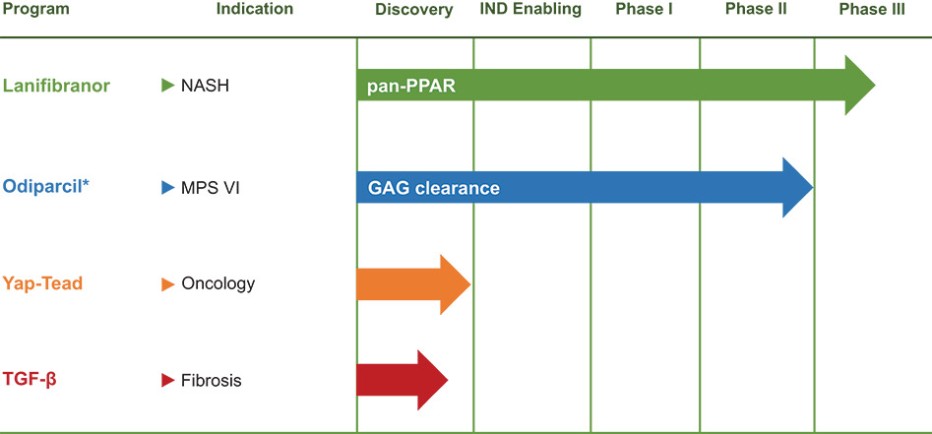
53
The European Union’s and United Kingdom’s implementation of Regulation (EU) 2016/679, known as the General Data Protection Regulation, or the EU and UK GDPR, as well as EU Member States’ and the United Kingdom’s implementing national legislations, apply to the collection and processing of personal data, including health-related information, by companies located in the European Economic Area, or EEA or the United Kingdom. In certain circumstances, the EU and UK GDPR also apply to companies located outside of the EEA or United Kingdom and processing personal data of individuals located in the EEA or United Kingdom.
These laws impose strict obligations on the ability to process personal data, including health-related information. These include, amongst others, requirements relating to (1) limiting the processing of personal data to only what is necessary for a specified, explicit and legitimate purpose, (2) obtaining a legal basis for the processing of personal data, (3) obtaining, in some situations, the consent of the individuals to whom the personal data relates, (4) the information provided to the individuals about how their personal data is used, (5) ensuring the security and confidentiality of the personal data by implementing and maintaining appropriate technical and organizational safeguards, (6) the obligation to notify, in certain circumstances, regulatory authorities and affected individuals of personal data breaches, (7) extensive internal privacy governance obligations, (8) obligations to honor rights of individuals in relation to their personal data (for example, the right to access, correct and delete their data), and (9) meeting the exceptions under applicable laws to process health-related information. The EU and UK GDPR impose strict rules on the transfer of personal data outside of the EEA or the United Kingdom respectively, to countries which are deemed to have inadequate levels of data protection safeguards in place, such as the United States. There are currently various mechanisms that may be used to transfer personal data from the EEA and UK to other countries, including the United States, in compliance with law, such as the EEA Standard Contractual Clauses, or SCCs, the UK’s International Data Transfer Agreement/Addendum and the EU-U.S. Data Privacy Framework and the UK extension thereto (which allows for transfers to relevant U.S.-based organizations who self-certify compliance and participate in the Framework). Currently, these mechanisms are subject to legal challenges, and there is no assurance that we can satisfy or rely on these or other mechanisms to lawfully transfer personal data to the United States. In addition, Switzerland similarly restricts personal data transfers outside of those jurisdictions to countries that do not provide an adequate level of personal data protection. If we cannot implement a valid compliance mechanism for cross-border data transfers or if the requirements for a legally-compliant transfer are too onerous, we may face increased exposure to regulatory actions, substantial fines, injunctions against processing or transferring personal data from Europe or other foreign jurisdictions, and the interruption or degradation of our operations. The inability to export personal data to the United States could significantly and negatively impact our business operations, including by limiting our ability to collaborate with parties that are subject to such cross-border data transfer or localization laws; or requiring us to increase our personal data processing capabilities and infrastructure in foreign jurisdictions at significant expense. Some European regulators have prevented companies from transferring personal data out of Europe for allegedly violating the GDPR’s cross-border data transfer limitations.
As we are established in France, our conduct of clinical trials is subject to specific provisions of the Act No. 78-17 of 6 January 1978 on Information Technology, Data Files and Civil Liberties, as amended, and in particular Section 3 of the Chapter III of the Title II relating to the processing of personal data in the health sector. These provisions require, among others, the filing of compliance undertakings with “standard methodologies” adopted by the French Data Protection Authority, or CNIL, or, if not complying, obtaining a specific authorization from the CNIL.
In addition to data privacy and security laws, we are contractually subject to industry standards adopted by industry groups and, we are, or may become subject to such obligations in the future. We are also bound by contractual obligations related to data privacy and security, and our efforts to comply with such obligations may not be successful. For example, certain privacy laws, such as the GDPR and the CCPA, require our customers to impose specific contractual restrictions on their service providers. Our contracts may not contain limitations of liability, and even where they do, there can be no assurance that limitations of liability in our contracts are sufficient to protect us from liabilities, damages, or claims related to our data privacy and security obligations.
Potential pecuniary fines for noncompliance with the EU and UK GDPR include fines of up to the greater of €20 million/£17.5 million or 4% of the total worldwide annual turnover of the preceding financial year. In addition to administrative fines, a wide variety of other potential enforcement powers are available to competent supervisory authorities to investigate potential and suspected violations of the EU and UK GDPR, including audit and inspection rights, and powers to impose a temporary or definitive limitation, including a ban on processing of personal data. The EU and UK GDPR also confer a right of action on data subjects to lodge complaints with supervisory authorities and obtain compensation for damages resulting from non-compliance with the EU or UK GDPR. Under the EU GDPR, companies may face private litigation related to processing of personal data brought by classes of data subjects or consumer protection organizations authorized at law to represent their interests. The EU and UK GDPR have increased our responsibility and liability in relation to personal data that we process, and we may be required to put in place additional potential mechanisms to ensure compliance with the EU and UK data protection rules.
54
We publish privacy policies, marketing materials and other statements regarding data privacy and security. If these policies, materials or statements are found to be deficient, lacking in transparency, deceptive, unfair, or misrepresentative of our practices, we may be subject to investigation, enforcement actions by regulators or other adverse consequences.
Obligations related to data privacy and security (and consumers’ data privacy expectations) are quickly changing, becoming increasingly stringent, and creating uncertainty. Additionally, these obligations may be subject to differing applications and interpretations, which may be inconsistent or conflict among jurisdictions. Compliance with data privacy and security obligations requires us to devote significant resources, which may necessitate changes to our services, information technologies, systems, and practices and to those of any third parties that process personal data on our behalf.
We may at times fail (or be perceived to have failed) in our efforts to comply with our data privacy and security obligations. Moreover, despite our efforts, our personnel or third parties on whom we rely may fail to comply with such obligations, which could negatively impact our business operations. If we or the third parties on which we rely fail, or are perceived to have failed, to address or comply with applicable data privacy and security obligations, we could face significant consequences, including but not limited to: government enforcement actions (which could include civil, criminal and administrative penalties, investigations, penalties, audits, inspections, and similar), private litigation (including class action claims) and mass arbitration demands, adverse publicity, additional reporting requirements and/or oversight; bans on processing personal data, orders to destroy or not use personal data, and imprisonment of company officials. In particular, plaintiffs have become increasingly more active in bringing privacy-related claims against companies, including class claims and mass arbitration demands. Some of these claims allow for the recovery of statutory damages on a per violation basis, and, if viable, carry the potential for monumental statutory damages, depending on the volume of data and the number of violations. Any of these events could have a material adverse effect on our reputation, business, or financial condition, including but not limited to: loss of customers; interruptions or stoppages in our business operations (including our clinical trials); inability to process personal data or to operate in certain jurisdictions; limited ability to develop or commercialize our products; expenditure of time and resources to defend any claim or inquiry; adverse publicity; or substantial changes to our business model or operations.
Our current and future operations are subject to applicable fraud and abuse, transparency, government price reporting, and other healthcare laws and regulations. If we are unable to comply, or have not fully complied, with such laws, we could face substantial penalties.
Healthcare providers, physicians and third-party payors will play a primary role in the recommendation and prescription of any future drug candidates we may develop and any drug candidates for which we obtain marketing approval. Our current and future arrangements with healthcare providers, physicians, third-party payors and customers may expose us to broadly applicable fraud and abuse and other healthcare laws and regulations that may affect the business or financial arrangements and relationships through which we would market, sell and distribute our products. Even though we do not and will not control referrals of healthcare services or bill directly to Medicare, Medicaid or other third-party payors, federal and state healthcare laws and regulations pertaining to fraud and abuse and patients’ rights are and will be applicable to our business. The laws that may affect our ability to operate include, but are not limited to:
| ● | The federal Anti-Kickback Statute, which prohibits any person or entity from, among other things, knowingly and willfully soliciting, receiving, offering or paying any remuneration, directly or indirectly, overtly or covertly, in cash or in kind, to induce or reward either the referral of an individual for, or the purchase, order or recommendation of an item or service reimbursable, in whole or in part, under a federal healthcare program, such as the Medicare and Medicaid programs. The term “remuneration” has been broadly interpreted to include anything of value. The federal Anti-Kickback Statute has also been interpreted to apply to arrangements between pharmaceutical manufacturers on the one hand and prescribers, purchasers, and formulary managers on the other hand. There are a number of statutory exceptions and regulatory safe harbors protecting some common activities from prosecution. |
55
| ● | Federal civil and criminal false claims laws, such as the False Claims Act, or FCA, which can be enforced by private citizens through civil qui tam actions and civil monetary penalty laws, prohibit individuals or entities from, among other things, knowingly presenting, or causing to be presented, false, fictitious or fraudulent claims for payment of federal funds, and knowingly making, using or causing to be made or used a false record or statement material to a false or fraudulent claim to avoid, decrease or conceal an obligation to pay money to the federal government. For example, pharmaceutical companies have been prosecuted under the FCA in connection with their alleged off-label promotion of drugs, purportedly concealing price concessions in the pricing information submitted to the government for government price reporting purposes, and allegedly providing free product to customers with the expectation that the customers would bill federal health care programs for the product. In addition, a claim including items or services resulting from a violation of the federal Anti-Kickback Statute constitutes a false or fraudulent claim for purposes of the FCA. As a result of a modification made by the Fraud Enforcement and Recovery Act of 2009, a claim includes “any request or demand” for money or property presented to the U.S. government. In addition, manufacturers can be held liable under the FCA even when they do not submit claims directly to government payors if they are deemed to “cause” the submission of false or fraudulent claims. |
| ● | HIPAA, among other things, imposes criminal liability for executing or attempting to execute a scheme to defraud any healthcare benefit program, including private third-party payors, knowingly and willfully embezzling or stealing from a healthcare benefit program, willfully obstructing a criminal investigation of a healthcare offense, and creates federal criminal laws that prohibit knowingly and willfully falsifying, concealing or covering up a material fact or making any materially false, fictitious or fraudulent statement or representation, or making or using any false writing or document knowing the same to contain any materially false, fictitious or fraudulent statement or entry in connection with the delivery of or payment for healthcare benefits, items or services. |
| ● | HIPAA, as amended by HITECH, and their implementing regulations, which impose privacy, security and breach reporting obligations with respect to individually identifiable health information upon entities subject to the law, such as health plans, healthcare clearinghouses and certain healthcare providers, known as covered entities, and their respective business associates and their subcontractors that perform services for them that involve individually identifiable health information. HITECH also created new tiers of civil monetary penalties, amended HIPAA to make civil and criminal penalties directly applicable to business associates, and gave state attorneys general new authority to file civil actions for damages or injunctions in U.S. federal courts to enforce HIPAA laws and seek attorneys’ fees and costs associated with pursuing federal civil actions. |
| ● | Federal and state consumer protection and unfair competition laws, which broadly regulate marketplace activities and activities that potentially harm consumers. |
| ● | The federal transparency requirements under the Physician Payments Sunshine Act, created under the Affordable Care Act, which requires, among other things, certain manufacturers of drugs, devices, biologics and medical supplies reimbursed under Medicare, Medicaid, or the Children’s Health Insurance Program to report to CMS information related to payments and other transfers of value provided to physicians (defined to include doctors, dentists, optometrists, podiatrists and chiropractors), other healthcare professionals (such as physician assistants and nurse practitioners), and teaching hospitals, as well as information regarding physician ownership and investment interests, including such ownership and investment interests held by a physician’s immediate family members. |
| ● | State and foreign law equivalents of each of the above federal laws, such as anti-kickback and false claims laws, that may impose similar or more prohibitive restrictions, and may apply to items or services reimbursed by non-governmental third-party payors, including private insurers. |
| ● | State and foreign laws that require pharmaceutical companies to implement compliance programs, comply with the pharmaceutical industry’s voluntary compliance guidelines and the relevant compliance guidance promulgated by the federal government, or to track and report gifts, compensation and other remuneration provided to physicians and other health care providers, marketing expenditures and/or drug pricing, state and local laws that require the registration of pharmaceutical sales representatives and other federal, state and foreign laws that govern the privacy and security of health information or personally identifiable information in certain circumstances, including state health information privacy and data breach notification laws which govern the collection, use, disclosure, and protection of health-related and other personal information, many of which differ from each other in significant ways and often are not pre-empted by HIPAA, thus requiring additional compliance efforts. |
56
We have entered into consulting and scientific advisory board arrangements with physicians and other healthcare providers, including some who could influence the use of our drug candidates, if approved. Because of the complex and far-reaching nature of these laws, regulatory agencies may view these transactions as prohibited arrangements that must be restructured, or discontinued, or for which we could be subject to other significant penalties. We could be adversely affected if regulatory agencies interpret our financial relationships with providers who may influence the ordering and use of our drug candidates, if approved, to be in violation of applicable laws.
The scope and enforcement of each of these laws is uncertain and subject to rapid change in the current environment of healthcare reform. Federal and state enforcement bodies have recently increased their scrutiny of interactions between healthcare companies and healthcare providers, which has led to a number of investigations, prosecutions, convictions and settlements in the healthcare industry. Responding to investigations can be time-and resource-consuming and can divert management’s attention from the business. Any such investigation or settlement could increase our costs or otherwise have an adverse effect on our business.
Ensuring that our business arrangements with third parties comply with applicable healthcare laws and regulations will likely be costly. If our operations are found to be in violation of any of these laws or any other current or future governmental laws and regulations that may apply to us, we may be subject to significant civil, criminal and administrative penalties, damages, fines, disgorgement, imprisonment, exclusion from government funded healthcare programs, such as Medicare and Medicaid, contractual damages, reputational harm, diminished profits and future earnings, additional reporting obligations and oversight if we become subject to a corporate integrity agreement or other agreement to resolve allegations of non-compliance with these laws, and the curtailment or restructuring of our operations, any of which could substantially disrupt our operations. If any of the physicians or other healthcare providers or entities with whom we expect to do business is found to be not in compliance with applicable laws, they may be subject to criminal, civil or administrative sanctions, including exclusions from government funded healthcare programs.
We must maintain effective internal control over financial reporting, and if we are unable to do so, the accuracy and timeliness of our financial reporting may be adversely affected, which could have a material adverse effect on our business, investor confidence and market price.
We must maintain effective internal control over financial reporting in order to accurately and timely report our results of operations and financial condition. In addition, as a U.S. public company, Section 404 of the Sarbanes-Oxley Act of 2002, or the Sarbanes-Oxley Act, requires, among other things, that we assess the effectiveness of our disclosure controls and procedures annually and the effectiveness of our internal control over financial reporting at the end of each fiscal year. We are required to perform system and process evaluation and testing of our internal control over financial reporting to allow our management to report on the effectiveness of our internal control over financial reporting. However, while we remain an emerging growth company, we will not be required to include an attestation report on internal control over financial reporting issued by our independent registered public accounting firm. We will incur substantial additional professional fees and internal costs to expand our accounting and finance functions in addition to expending significant management efforts.
The rules governing the standards that must be met for our management to assess our internal control over financial reporting pursuant to Section 404 of the Sarbanes-Oxley Act are complex and require significant documentation, testing and possible remediation. These stringent standards require that our audit committee be advised and regularly updated on management’s review of internal control over financial reporting. We have designed, our internal control over financial reporting in order to comply with this obligation. This process is time-consuming, costly and complicated. In addition, our independent registered public accounting firm will be required to attest to the effectiveness of our internal controls over financial reporting beginning with our annual report following the date on which we are no longer an “emerging growth company,” which will occur upon the earliest of: (1) the last day of the fiscal year in which we have total annual gross revenue of $1.235 billion or more; (2) December 31, 2025; (3) the date on which we have issued more than $1.0 billion in nonconvertible debt during the previous three years; and (4) the date on which we are deemed to be a large accelerated filer under the rules of the SEC. Our management may not be able to effectively and timely implement controls and procedures that adequately respond to the increased regulatory compliance and reporting requirements that will be applicable to us as a U.S. public company. If we fail to staff our accounting and finance function adequately or maintain internal control over financial reporting adequate to meet the demands that will be placed upon us as a U.S. public company, including the requirements of the Sarbanes-Oxley Act, our business and reputation may be harmed and the price of our ordinary shares or ADSs may decline.
Furthermore, investor perceptions of us may be adversely affected, which could cause a decline in the market price of our ordinary shares or ADSs.
57
If our data or our information technology systems, or those of third parties upon which we rely, are or were compromised, we could experience adverse consequences resulting from such compromise, including but not limited to regulatory investigations or actions; litigation; fines and penalties; disruptions of our business operations; reputational harm; loss of revenue or profits; loss of customers or sales; and other adverse consequences.
In the ordinary course of our business, we process sensitive information.
Cyberattacks, malicious internet-based activity, and online and offline fraud are prevalent and continue to increase. These threats are becoming increasingly difficult to detect. These threats come from a variety of sources, including traditional computer “hackers,” threat actors, personnel (such as through theft or misuse), sophisticated nation-states, and nation-state-supported actors. We and the third parties upon which we rely may be subject to a variety of evolving threats, including but not limited to social-engineering attacks (including through deep fakes, which may be increasingly more difficult to identify as fake, and phishing attacks), malicious code (such as viruses and worms), malware (including as a result of advanced persistent threat intrusions), denial-of-service attacks credential stuffing, credential harvesting, personnel misconduct or error, ransomware attacks, supply-chain attacks, software bugs, server malfunctions, software or hardware failures, loss of data or other information technology assets, adware, attacks enhanced or facilitated by AI, telecommunications failures, earthquakes, fires, floods, and other similar threats. Ransomware attacks, including by organized criminal threat actors, nation-states, and nation-state-supported actors, are becoming increasingly prevalent and severe and can lead to significant interruptions in our operations, loss of data and income, reputational harm, and diversion of funds. Extortion payments may alleviate the negative impact of a ransomware attack, but we may be unwilling or unable to make such payments due to, for example, applicable laws or regulations prohibiting such payments. Similarly, supply-chain attacks have increased in frequency and severity, and we cannot guarantee that third parties and infrastructure in our supply chain or our third-party partners’ supply chains have not been or will not be compromised. Some actors now engage and are expected to continue to engage in cyber-attacks, including without limitation nation-state actors for geopolitical reasons and in conjunction with military conflicts and defense activities. During times of war and other major conflicts, we or the third parties upon which we rely may be vulnerable to a heightened risk of these attacks, including retaliatory cyber-attacks, that could materially disrupt our systems and operations, supply chain, and ability to conduct our clinical trials.
Remote work has become more common and has increased risks to our information technology systems and data, as more of our employees work from home, utilizing network connections outside our premises.
Future or past business transactions (such as acquisitions or integrations) could also expose us to additional cybersecurity risks and vulnerabilities, as our systems could be negatively affected by vulnerabilities present in acquired or integrated entities’ systems and technologies. Furthermore, we may discover security issues that were not found during due diligence of such acquired or integrated entities, and it may be difficult to integrate companies into our information technology environment and security program.
We rely upon third-party service providers and technologies to operate critical business systems to process sensitive information in a variety of contexts, including, without limitation, third-party providers of cloud-based infrastructure, encryption and authentication technology, employee email, and other functions. Our ability to monitor these third parties’ information security practices is limited, and these third parties may not have adequate information security measures in place. If our third-party service providers experience a security incident or other interruption, we could experience adverse consequences. While we may be entitled to damages if our third-party service providers fail to satisfy their privacy or security-related obligations to us, any award may be insufficient to cover our damages, or we may be unable to recover such award.
While we have implemented security measures designed to protect against cybersecurity incidents, there can be no assurance that these measures will be effective. We take steps designed to detect, mitigate, and remediate vulnerabilities in our information systems (such as our hardware and/or software, including that of third parties upon which we rely). We may not, however, detect or remediate all such vulnerabilities in our information technology systems (including our products) including on a timely basis. Further, we may experience delays in developing and deploying remedial measures and patches designed to address identified vulnerabilities. Vulnerabilities could be exploited and result in a security incident. For example, in November 2021, a malicious third party exploited a vulnerability in our email server and gained unauthorized access to our email environment. The forensic investigations have shown that only our email system was affected and the vulnerability has been remediated. While this incident did not expose any personal or proprietary data and, therefore, did not require notification under applicable laws and regulations, we voluntarily notified the Commission nationale de l’informatique et des libertés (CNIL). Any security incident, claim or investigation may result in litigation and potential liability for us, damage our brand and reputation, in our incurring significant external and internal legal and advisory costs, as well as the diversion of management’s attention from the operation of our business or could otherwise harm our business.
58
Any of the foregoing threats (or similar threats) could cause a security incident or other interruption. A security incident or other interruption could result in unauthorized, unlawful, or accidental acquisition, modification, destruction, loss, alteration, encryption, disclosure of, or access to our sensitive information. A security incident or other interruption could disrupt our ability (and that of third parties upon whom we rely) to conduct our clinical trials and operate our business. We may expend significant resources or modify our business activities (including our clinical trial activities) to try to protect against security incidents. Certain data privacy and security obligations may require us to implement and maintain specific security measures, industry-standard or reasonable security measures to protect our information technology systems and sensitive information.
In addition, with respect to any future incidents, applicable data privacy and security obligations may require us to notify relevant stakeholders, including affected individuals, customers, regulators, and investors, of security incidents. Such disclosures are costly, and the disclosures or the failure to comply with such requirements could lead to adverse consequences. If we (or a third party upon whom we rely) experience a security incident or are perceived to have experienced a security incident, we may experience adverse consequences. These consequences may include: government enforcement actions (for example, investigations, fines, penalties, audits, and inspections); additional reporting requirements and/or oversight; restrictions on processing sensitive information (including personal data); litigation (including class claims); indemnification obligations; negative publicity; reputational harm; monetary fund diversions; diversion of management attention; interruptions in our operations (including availability of data); financial loss; and other similar harms. Further, the loss of product development or clinical trial data could result in delays in our regulatory approval efforts and significantly increase our costs to recover or reproduce the data. To the extent that any security incident results in a loss of, or damage to, our sensitive information or applications, or inappropriate disclosure of sensitive information, we could incur liability and our development programs and the development of our product candidates could be delayed.
In addition to experiencing a security incident, third parties may gather, collect, or infer sensitive information about us from public sources, data brokers, or other means that reveals competitively sensitive details about our organization and could be used to undermine our competitive advantage or market position.
We are subject to governmental export and import controls that could limit our ability to operate our business and subject us to liability if we are not in compliance with applicable laws.
We are subject to export control and import laws and regulations and various economic and trade sanctions regulations administered by the U.S. Treasury Department’s Office of Foreign Assets Controls. Exports of our product candidates must be made in compliance with these laws and regulations. If we fail to comply with these laws and regulations, we and certain of our employees could be subject to substantial civil or criminal penalties, including the possible loss of export or import privileges; fines, which may be imposed on us and responsible employees or managers; and, in extreme cases, the incarceration of responsible employees or managers.
In addition, changes in our product candidates or changes in applicable export or import laws and regulations may create delays in the introduction or provision of our product candidates in other jurisdictions, prevent others from using our product candidates or, in some cases, prevent the export or import of our product candidates to certain countries, governments or persons altogether. Any limitation on our ability to export or provide our product candidates could adversely affect our business, financial condition and results of operations. U.S. or other jurisdictions’ sanctions that may be imposed as a result of the conflict between Russia and Ukraine may impact our ability to continue activities. For example, in 2022, we determined to close trial sites located in Ukraine and Russia due to the Russian invasion in Ukraine for our NATiV3 trial, which, together with higher than originally projected screen failure rate resulting in slower than anticipated enrollment rate, contributed to a delay in patient enrollment.
Business interruptions could delay us in the process of developing our product candidates.
Loss of our laboratory facilities through fire or other causes could have an adverse effect on our ability to continue to conduct our business. We currently have insurance coverage to compensate us for such business interruptions; however, such coverage may prove insufficient to fully compensate us for the damage to our business resulting from any significant property or casualty loss to our facilities.
59
We may undertake strategic acquisitions in the future and any difficulties from integrating such acquisitions could adversely affect our share price, operating results and results of operations.
We may acquire companies, businesses and products that complement or augment our existing business. We may not be able to integrate any acquired business successfully or operate any acquired business profitably. Integrating any newly acquired business could be expensive and time-consuming. Integration efforts often take a significant amount of time, place a significant strain on managerial, operational and financial resources, result in loss of key personnel and could prove to be more difficult or expensive than we predict. The diversion of our management’s attention and any delay or difficulties encountered in connection with any future acquisitions we may consummate could result in the disruption of our on-going business or inconsistencies in standards and controls that could negatively affect our ability to maintain third-party relationships. Moreover, we may need to raise additional funds through public or private debt or equity financing, or issue additional shares, to acquire any businesses or products, which may result in dilution for shareholders or the incurrence of indebtedness.
As part of our efforts to acquire companies, business or product candidates or to enter into other significant transactions, we conduct business, legal and financial due diligence with the goal of identifying and evaluating material risks involved in the transaction. Despite our efforts, we ultimately may be unsuccessful in ascertaining or evaluating all such risks and, as a result, might not realize the intended advantages of the transaction. If we fail to realize the expected benefits from acquisitions we may consummate in the future or have consummated in the past, whether as a result of unidentified risks or liabilities, integration difficulties, regulatory setbacks, litigation with current or former employees and other events, our business, results of operations and financial condition could be adversely affected. If we acquire product candidates, we will also need to make certain assumptions about, among other things, development costs, the likelihood of receiving regulatory approval and the market for such product candidates. Our assumptions may prove to be incorrect, which could cause us to fail to realize the anticipated benefits of these transactions.
In addition, we will likely experience significant charges to earnings in connection with our efforts, if any, to consummate acquisitions. For transactions that are ultimately not consummated, these charges may include fees and expenses for investment bankers, attorneys, accountants and other advisors in connection with our efforts. Even if our efforts are successful, we may incur, as part of a transaction, substantial charges for closure costs associated with elimination of duplicate operations and facilities and acquired in-process research and development charges. In either case, the incurrence of these charges could adversely affect our results of operations for particular periods.
Our international operations and partnerships subject us to various risks, and our failure to manage these risks could adversely affect our results of operations.
We face significant operational risks as a result of doing business internationally, such as:
| ● | fluctuations in foreign currency exchange rates; |
| ● | differing payor reimbursement regimes, governmental payors or patient self-pay systems and price controls; |
| ● | potentially adverse and/or unexpected tax consequences, including penalties due to the failure of tax planning or due to the challenge by tax authorities on the basis of transfer pricing and liabilities imposed from inconsistent enforcement; |
| ● | potential changes to the accounting standards, which may influence our financial situation and results; |
| ● | becoming subject to the different, complex and changing laws, regulations and court systems of multiple jurisdictions and compliance with a wide variety of foreign laws, treaties and regulations; |
| ● | changes in a specific country’s or region’s political or economic conditions; |
| ● | reduced protection of, or significant difficulties in enforcing, intellectual property or contractual rights in certain countries; |
| ● | difficulties in attracting and retaining qualified personnel; |
60
| ● | restrictions imposed by local labor practices and laws on our business and operations, including unilateral cancellation or modification of contracts; |
| ● | rapid changes in global government, economic and political policies and conditions, political or civil unrest or instability, terrorism or epidemics and other similar outbreaks or events, and potential failure in confidence of our suppliers or customers due to such changes or events; and |
| ● | tariffs, trade protection measures, import or export licensing requirements, trade embargoes and other trade barriers. |
At the end of 2021 and into 2022, tensions between the U.S. and Russia escalated when Russia amassed large numbers of military ground forces and support personnel on the Ukraine-Russia border and, in February 2022, Russia invaded Ukraine. In response, NATO has deployed additional military forces to Eastern Europe, including to Lithuania, and the Biden administration announced certain sanctions against Russia. The invasion of Ukraine and the retaliatory measures that have been taken, or could be taken in the future, by the U.S., NATO, and other countries have created global security concerns that could result in a regional conflict and otherwise have a lasting impact on regional and global economies, any or all of which could disrupt our supply chain and adversely affect our ability to conduct ongoing and future clinical trials of our product candidates, including our ongoing NATiV3 Phase III clinical trial for lanifibranor. For example, in 2022, we determined to close trial sites located in Ukraine and Russia for our NATiV3 clinical trial of lanifibranor due to the Russian invasion in Ukraine, which, together with higher than originally projected screen failure rate, resulted in slower than anticipated enrollment rate and contributed to a delay in patient enrollment. In addition, the state of war between Israel and Hamas, including with respect to some clinical trial sites in Israel for the NATiV3 trial, could impact our company and our trial sites in Israel.
If we are unable to use tax loss carryforwards and/or tax credits to reduce future taxable income or benefit from favorable tax legislation, our business, results of operations and financial condition may be adversely affected.
At December 31, 2023, we had cumulative carry forward tax losses of €377.6 million in France. These are available to carry forward and offset against future taxable income for an indefinite period in France. If we are unable to use tax loss carryforwards to reduce future taxable income, our business, results of operations and financial condition may be adversely affected. In France, the use of these carry forward tax losses is capped at €1 million annually, plus 50% of the fraction of profits exceeding this limit. The unutilized balance of these tax losses can be carried forward to subsequent years and set-off under the same conditions without any time limits. However, it is possible that future fiscal changes could limit our ability to utilize the balance of any tax loses, which could adversely affect our results.
As a company active in research and development in France, we have benefited from certain research and development incentives including, for example, the French research tax credit (credit d’impôt recherche), or CIR. These tax credits can be used to offset French corporate income tax due. The excess portion beyond that used to offset corporate income tax due is generally refunded in cash at the end of a three-year fiscal period; however, as long as we are considered a small or medium-sized entity (petite ou moyenne entreprise) in France, the CIR tax credit is refundable in the fiscal year after it is generated, provided that we comply with eligibility requirements. The research and development incentives are calculated based on the amount of eligible research and development expenditures. The French CIR tax credit amounted to €5.3 million for the year ended December 31, 2023.
In addition, the French tax authorities have audited in the past, and may again audit in the future, research and development programs in respect of which a tax credit has been claimed in order to assess whether it qualifies for the tax credit regime. The tax authorities may challenge our eligibility for, or our calculation of, certain tax reductions and/or deductions in respect of our research and development activities and expenditures, and should the French tax authorities be successful, we may be liable for additional corporate income tax, and penalties and interest related thereto, which could have a significant impact on our results of operations and future cash flows.
For example, on July 29, 2017, we received a proposed accounting adjustment from the tax authorities, which contests certain elements of the calculation of the CIR from which we benefited in respect of the 2013, 2014 and 2015 financial years. Following receipt of a proposed settlement in respect of the tax disputes relating to the CIR in respect of the 2013 to 2015 financial years, we accepted this proposal and the expenses to be paid have been settled.
61
Furthermore, if the French government decides to eliminate, or reduce the scope or the rate of, the research and development incentive benefit, either of which it could decide to do at any time, our results of operations could be adversely affected. Moreover, the tax authorities may reconsider the methods used by us to calculate research and development expenditure in order to determine the amount of the tax credit.
We may be exposed to significant foreign exchange risk.
We incur portions of our expenses, and may in the future derive revenues, in currencies other than the euro, in particular, the U.S. dollar. As a result, we are exposed to foreign currency exchange risk as our results of operations and cash flows are subject to fluctuations in foreign currency exchange rates. We currently do not engage in hedging transactions to protect against uncertainty in future exchange rates between particular foreign currencies and the euro. Therefore, for example, an increase in the value of the euro against the U.S. dollar could be expected to have a negative impact on our revenue and earnings growth as U.S. dollar revenue and earnings, if any, would be translated into euros at a reduced value. We cannot predict the impact of foreign currency fluctuations, and foreign currency fluctuations in the future may adversely affect our financial condition, results of operations and cash flows.
The requirements of being a U.S. public company may strain our resources and divert management’s attention.
We are required to comply with various corporate governance and financial reporting requirements under the Sarbanes-Oxley Act, the Securities and Exchange Act of 1934, as amended, or the Exchange Act, and the rules and regulations adopted by the Securities and Exchange Commission and the Public Corporation Accounting Oversight Board. Further, compliance with various regulatory reporting requires significant commitments of time from our management and our directors, which reduces the time available for the performance of their other responsibilities. Our failure to track and comply with the various rules may materially adversely affect our reputation, ability to obtain the necessary certifications to financial statements, lead to additional regulatory enforcement actions, and could adversely affect the value of our ordinary shares or ADSs.
Risks Related to Ownership of our Ordinary Shares and ADSs
The market price of our equity securities may be volatile, and purchasers of our ordinary shares or ADSs or could incur substantial losses.
The market price for our ordinary shares and ADSs may be volatile. From January 1, 2023 to March 29, 2024, the closing price of our ADSs ranged from a high of $6.53 to a low of $2.43 per ADS. The stock market in general and the market for biopharmaceutical companies in particular have experienced extreme volatility that has often been unrelated to the operating performance of particular companies. As a result of this volatility, investors may not be able to sell their ordinary shares or ADSs at or above the price originally paid for the security. The market price for our ordinary shares and ADSs may be influenced by many factors, including:
| ● | actual or anticipated fluctuations in our financial condition and operating results; |
| ● | actual or anticipated changes in our growth rate relative to our competitors; |
| ● | competition from existing products or new products that may emerge; |
| ● | announcements by us, our partners or our competitors of significant acquisitions, strategic partnerships, joint ventures, partnerships, or capital commitments; |
| ● | our ability to enter into a partnership with a third party for the development and commercialization of odiparcil; |
| ● | the amount and timing of any regulatory and commercial milestone payments, or royalty payments, for lanifibranor under the CTTQ License Agreement and the Hepalys License Agreement; |
| ● | failure to meet or exceed financial estimates and projections of the investment community or that we provide to the public; |
| ● | issuance of new or updated research or reports by securities analysts; |
62
| ● | fluctuations in the valuation of companies perceived by investors to be comparable to us; |
| ● | share price and volume fluctuations attributable to inconsistent trading volume levels of our shares; |
| ● | market manipulation, including coordinated buying or selling activities; |
| ● | additions or departures of key management or scientific personnel; |
| ● | disputes or other developments related to proprietary rights, including patents, litigation matters, and our ability to obtain patent protection for our technologies; |
| ● | changes to coverage policies or reimbursement levels by commercial third-party payors and government payors and any announcements relating to coverage policies or reimbursement levels; |
| ● | announcement or expectation of additional debt or equity financing efforts; |
| ● | sales of our ordinary shares or ADSs by us, our insiders or our other shareholders; and |
| ● | general economic and market conditions. |
These and other market and industry factors may cause the market price and demand for our ordinary shares or ADSs to fluctuate substantially, regardless of our actual operating performance, which may limit or prevent investors from readily selling their ordinary shares or ADSs and may otherwise negatively affect the liquidity of our capital shares.
If we do not achieve our projected development and commercialization goals in the timeframes we announce and expect, our business will be harmed and the price of our securities could decline as a result.
We sometimes estimate for planning purposes the timing of the accomplishment of various scientific, clinical, regulatory and other product development objectives. These milestones may include our expectations regarding the commencement or completion of scientific studies, clinical trials, the submission of regulatory filings, or commercialization objectives. From time to time, we may publicly announce the expected timing of some of these milestones, such as the completion of an ongoing clinical trial, the receipt of data from a clinical trial, the initiation of other clinical programs, receipt of marketing approval, or a commercial launch of a product. For example, the results of the investigator-initiated Phase II clinical trial evaluating lanifibranor in NAFLD and T2D were announced in June 2023, as opposed to the first half of 2022 as initially expected, because recruitment and screening of new patients for the trial was temporarily suspended due to the COVID-19 pandemic.
The achievement of many of these milestones may be outside of our control. All of these milestones are based on a variety of assumptions which may cause the timing of achievement of the milestones to vary considerably from our estimates, including:
| ● | our available capital resources or capital constraints we experience; |
| ● | the rate of progress, costs and results of our clinical trials and research and development activities, including the extent of scheduling conflicts with participating clinicians and partners, and our ability to identify and enroll patients who meet clinical trial eligibility criteria; |
| ● | our receipt of approvals by the EMA, FDA and other regulatory agencies and the timing thereof; |
| ● | other actions, decisions or rules issued by regulators; |
| ● | our ability to access sufficient, reliable and affordable supplies of compounds and raw materials used in the manufacture of our product candidates; |
| ● | the efforts of our partners with respect to the commercialization of our products; and |
63
| ● | the securing of, costs related to, and timing issues associated with, product manufacturing as well as sales and marketing activities. |
If we fail to achieve announced milestones in the timeframes we expect, the commercialization of our product candidates may be delayed, our business and results of operations may be harmed, and the trading price of our ordinary shares and ADSs may decline as a result.
Voting control with respect to our company is concentrated in the hands of Frédéric Cren, our Chief Executive Officer, Pierre Broqua, our Deputy Chief Executive Officer and Chief Scientific Officer, and our significant shareholders and affiliates, who will continue to be able to exercise significant influence on us.
In accordance with French law, double voting rights automatically attach to each ordinary share of companies listed on a regulated market (such as the Euronext Paris, where our ordinary shares are listed) that is held of record in the name of the same shareholder for a period of at least two years, except as otherwise set forth in a company’s bylaws. Our bylaws do not exclude such double voting rights. However, under French law, ordinary bearer shares in the form of ADSs are not eligible for double voting rights. To our knowledge, among our shareholders who hold ordinary shares to which are attached double voting rights, Frédéric Cren, our Chief Executive Officer and Pierre Broqua, our Deputy Chief Executive Officer and Chief Scientific Officer hold the most significant portion. Double voting rights attach to the 5,612,224 ordinary shares held by Frédéric Cren, and to the 3,882,500 ordinary shares held by Pierre Broqua, as of March 1, 2024. Given the double voting rights per share attributed to ordinary shares held by Mr. Cren and Dr. Broqua, Mr. Cren and Dr. Broqua together beneficially own approximately 18% of our outstanding ordinary shares (including ordinary shares underlying ADSs), but control approximately 29% of the voting rights of our outstanding share capital as of March 1, 2024. As a result, Mr. Cren and Dr. Broqua, if they act together, have a significant influence over all matters that require approval by our shareholders, such as the election of directors and approval of significant corporate transactions. Such corporate action might be taken even if other shareholders oppose them. This concentration of ownership might also have the effect of delaying or preventing a change of control of our company that other shareholders may view as beneficial. As members of our Board of Directors, Mr. Cren and Dr. Broqua have a duty to act without self-interest, on a well-informed basis and to not make any decision against our corporate interest (intérêt social) considering the interests of our shareholders, employees and other stakeholders as a whole. However, as shareholders, Mr. Cren and Dr. Broqua are entitled to vote their shares in their own interests, which may not always be in the interests of our shareholders generally. In addition, Mr. Cren and Dr. Broqua have the ability to control the management and major strategic investments of our company as a result of their positions as our Chief Executive Officer and Deputy Chief Executive Officer and Chief Scientific Officer, respectively.
Further, our executive officers, directors, current 5% or greater shareholders and affiliated entities, including BVF Partners L.P., New Enterprise Associates, Sofinnova Crossover I SLP, Qatar Holding LLC, and entities affiliated with Yiheng Capital Management, L.P. together beneficially own approximately 73% of our outstanding ordinary shares (including ordinary shares underlying ADSs) and approximately 74% of the voting rights of our outstanding share capital as of March 1, 2024. As a result, these shareholders, if they act together, will have control over all matters that require approval of our shareholders.
This concentrated control limits your ability to influence corporate matters for the foreseeable future and potentially in perpetuity, particularly because purchasers of ADSs or ordinary shares in the open market will be unlikely to meet the requirements to have double voting rights attach to any ordinary shares held by them. This concentrated control could also discourage a potential investor from acquiring our ADSs or ordinary shares and might harm the market price of our ADSs or ordinary shares.
Fluctuations in the exchange rate between the U.S. dollar and the euro may increase the risk of holding our ordinary shares and ADSs.
Our ordinary shares currently trade on Euronext Paris in euros, while our ADSs trade on Nasdaq in U.S. dollars. Fluctuations in the exchange rate between the U.S. dollar and the euro may result in temporary differences between the value of our ADSs and the value of our ordinary shares, which may result in heavy trading by investors seeking to exploit such differences.
In addition, as a result of fluctuations in the exchange rate between the U.S. dollar and the euro, the U.S. dollar equivalent of the proceeds that a holder of our ADSs would receive upon the sale in France of any ordinary shares withdrawn from the depositary and the U.S. dollar equivalent of any cash dividends paid in euros on our ordinary shares represented by our ADSs could also decline.
64
If securities or industry analysts do not publish research or publish inaccurate research or unfavorable research about our business, the price of our ordinary shares and ADSs and trading volume could decline.
The trading market for our ordinary shares and ADSs depends in part on the research and reports that securities or industry analysts publish about us or our business. If no or few securities or industry analysts cover our company, the trading price for our ordinary shares and ADSs would be negatively impacted. If one or more of the analysts who covers us downgrades our ordinary shares and ADSs or publishes incorrect or unfavorable research about our business, the price of our ordinary shares and ADSs would likely decline. If one or more of these analysts ceases coverage of our company or fails to publish reports on us regularly, or downgrades our ordinary shares and ADSs, demand for our ordinary shares and ADSs could decrease, which could cause the price of our ordinary shares and ADSs or trading volume to decline.
We have no present intention to pay dividends on our ordinary shares in the foreseeable future and, consequently, your only opportunity to achieve a return on your investment during that time is if the price of our ordinary shares or ADSs, as applicable, appreciates.
We have never declared or paid any cash dividends on our ordinary shares and we have no present intention to pay dividends in the foreseeable future. Any recommendation by our Board of Directors to pay dividends will depend on many factors, including our financial condition (including losses carried-forward), results of operations, legal requirements and other factors. Further, under French law, the determination of whether we have been sufficiently profitable to pay dividends is made on the basis of our statutory financial statements prepared and presented in accordance with accounting standards applicable in France. In addition, payment of dividends may subject us to additional taxes under French law. See “Item 10.B Memorandum and Articles of Association” for further details on the limitations on our ability to declare and pay dividends. Therefore, we may be more restricted in our ability to declare dividends than companies not based in France. If the price of our ordinary shares or ADSs declines before we pay dividends, you will incur a loss on your investment, without the likelihood that this loss will be offset in part or at all by potential future cash dividends.
The rights of shareholders in companies subject to French corporate law differ in material respects from the rights of shareholders of corporations incorporated in the United States.
We are a French public limited company (société anonyme). Our corporate affairs are governed by our bylaws and by the laws governing companies incorporated in France. The rights of shareholders and the responsibilities of members of our Board of Directors are in many ways different from the rights and obligations of shareholders in companies governed by the laws of U.S. jurisdictions. For example, in the performance of its duties, our Board of Directors is required by French law to consider the interests of our company, its shareholders, its employees and other stakeholders, rather than solely our shareholders and/or creditors. It is possible that some of these parties will have interests that are different from, or in addition to, your interests as a shareholder or holder of ADSs. Further, in accordance with French law, double voting rights automatically attach to each ordinary share of companies listed on a regulated market (such as the Euronext Paris, where our ordinary shares are listed) that is held of record in the name (action au nominatif) of the same shareholder for a period of at least two years, except as otherwise set forth in a company’s bylaws. Our bylaws currently do not exclude such double voting rights; however, the holders of two-thirds of our outstanding voting rights may vote to amend our bylaws to exclude such double voting rights at any extraordinary general meeting of our shareholders. See the sections of this annual report titled “Item 6.C Board Practices” and the documents referenced in “Item 10.B Memorandum and Articles of Association.”
Our bylaws and French corporate law contain provisions that may delay or discourage a takeover attempt.
Provisions contained in our bylaws and French corporate law could make it more difficult for a third-party to acquire us, even if doing so might be beneficial to our shareholders. In addition, provisions of our bylaws impose various procedural and other requirements, which could make it more difficult for shareholders to effect certain corporate actions. These provisions include the following:
| ● | under French law, the owner of 90% of the share capital and voting rights of a public company with registered seat in France and whose shares are listed on a regulated market in a Member State of the European Union or in a state party to the European Economic Area, or EEA, Agreement, including France, has the right to force out minority shareholders following a tender offer made to all shareholders; |
65
| ● | under French law, a non-French resident must file a declaration for statistical purposes with the Bank of France (Banque de France) within twenty working days following the date of certain direct foreign investments in us, including any purchase of our ADSs. In particular, such filings are required in connection with investments exceeding €15 million that lead to the acquisition of at least 10% of our company’s share capital or voting rights or cross such 10% threshold; |
| ● | under French law, certain investments in a French company relating to certain strategic industries that are considered essential for the protection of public health, such as biotechnologies, by individuals or entities are subject to prior authorization of the Ministry of Economy pursuant to Law No. 2019-486 (and as from April 1, 2020 pursuant to the decree No. 2019-1590); Decree No. 2020-892 of 22 July 2020, as amended by Decree No. 2020-1729 of 28 December 2020, Decree No. 2021-1758 of 22 December 2021, Decree No. 2022-1622 of 23 December 2022 and Decree No. 2023-1293 of 28 December 2023 perpetuates the lowering of the threshold for controlling foreign investments to 10% of the voting rights in companies whose shares are listed on a regulated market; |
| ● | a merger (i.e., in a French law context, a stock for stock exchange following which our company would be dissolved into the acquiring entity and our shareholders would become shareholders of the acquiring entity) of our company into a company incorporated in the European Union would require the approval of our Board of Directors as well as a two-thirds majority of the votes cast by the shareholders present, represented by proxy or voting by mail at the relevant meeting; |
| ● | a merger of our company into a company incorporated outside of the European Union would require 100% of our shareholders to approve it; |
| ● | under French law, a cash merger is treated as a share purchase and would require the consent of each participating shareholder; |
| ● | our shareholders have granted and may grant in the future our Board of Directors broad authorizations to increase our share capital or to issue additional ordinary shares or other securities, such as warrants, to our shareholders, the public or qualified investors, including as a possible defense following the launching of a tender offer for our shares; |
| ● | our shareholders have preferential subscription rights on a pro rata basis on the issuance by us of any additional securities for cash or a set-off of cash debts, which rights may only be waived by the extraordinary general meeting (by a two-thirds majority vote) of our shareholders or on an individual basis by each shareholder; |
| ● | our Chief Executive Officer and Deputy Chief Executive Officer have double voting rights with respect to ordinary shares held by them, and their interests may not be aligned with those of our shareholders more generally with respect to a takeover attempt; |
| ● | our Board of Directors has the right to appoint directors to fill a vacancy created by the resignation or death of a director, for the remaining duration of such director’s term of office and subject to the approval by the shareholders of such appointment at the next shareholders’ meeting, which prevents shareholders from having the sole right to fill vacancies on our Board of Directors; |
| ● | our Board of Directors can be convened by our chairman, or our managing director, if any, upon request made to the chairman or, when no board meeting has been held for more than two consecutive months, by directors representing at least one third of the total number of directors; |
| ● | our Board of Directors meetings can only be regularly held if at least half of the directors attend either physically or by way of videoconference or teleconference enabling the directors’ identification and ensuring their effective participation in the board’s decisions; |
| ● | our shares are nominative or bearer, if the legislation so permits, according to the shareholder’s choice; |
| ● | approval of at least a majority of the votes cast by shareholders present, represented by a proxy, or voting by mail at the relevant ordinary shareholders’ general meeting is required to remove directors with or without cause; |
66
| ● | advance notice is required for nominations to the Board of Directors or for proposing matters to be acted upon at a shareholders’ meeting, except that a vote to remove and replace a director can be proposed at any shareholders’ meeting without notice; |
| ● | our bylaws can be amended in accordance with applicable laws; |
| ● | the crossing of certain thresholds has to be disclosed and can impose certain obligations; see the documents referenced in the section of this annual report titled “Item 10.B Memorandum and Articles of Association;” |
| ● | transfers of shares shall comply with applicable insider trading laws and regulations and, in particular, with the Regulation (EU) No 596/2014 of the European Parliament and of the Council of 16 April 2014 on market abuse, or Market Abuse Regulation; and |
| ● | pursuant to French law, our bylaws, including the sections relating to the number of directors and election and removal of a director from office, may only be modified by a resolution adopted by at least a two-third majority of the votes cast by our shareholders present, represented by a proxy or voting by mail at the meeting. |
Holders of our ADSs are not treated as shareholders of our company.
Holders of our ADSs are not treated as shareholders of our company, unless they withdraw the ordinary shares underlying our ADSs. The depositary, or its nominee, is the holder of the ordinary shares underlying our ADSs. Holders of ADSs therefore do not have any rights as shareholders of our company, other than the rights that they have pursuant to the deposit agreement.
You may not be able to exercise your right to vote the ordinary shares underlying your ADSs.
Holders of ADSs may exercise voting rights with respect to the ordinary shares represented by the ADSs only in accordance with the provisions of the deposit agreement. The deposit agreement provides that, upon receipt of notice of any meeting of holders of our ordinary shares, the depositary will fix a record date for the determination of ADS holders who shall be entitled to give instructions for the exercise of voting rights. Upon timely receipt of notice from us, if we so request, the depositary shall distribute to the holders as of the record date (1) the notice of the meeting or solicitation of consent or proxy sent by us and (2) a statement as to the manner in which instructions may be given by the holders.
Holders of ADSs may instruct the depositary to vote the ordinary shares underlying their ADSs. Otherwise, ADS holders will not be able to exercise their right to vote, unless they withdraw the ordinary shares underlying the ADSs they hold. However, ADS holders may not know about the meeting far enough in advance to withdraw those ordinary shares. If we ask for instructions from holders of ADSs, the depositary, upon timely notice from us, will notify them of the upcoming vote and arrange to deliver our voting materials to them. We cannot guarantee ADS holders that they will receive the voting materials in time to ensure that they can instruct the depositary to vote their ordinary shares or to withdraw their ordinary shares so that they can vote them themselves. If the depositary does not receive timely voting instructions from a holder of ADSs, it may give a proxy to a person designated by us to vote the ordinary shares underlying such holder’s ADSs. In addition, the depositary and its agents are not responsible for failing to carry out voting instructions or for the manner of carrying out voting instructions. This means that ADS holders may not be able to exercise their right to vote, and there may be nothing they can do if the ordinary shares underlying their ADSs are not voted as they requested. For example, Bank of New York Mellon, the depositary, failed to timely submit the voting instructions of ADS holders for the general meeting of shareholders held on May 19, 2022 to Société Générale Securities Services, the custodian for the depositary in France. Due to this delay, the voting of the ADS holders did not count. This did not impact the adoption or rejection of the resolutions on the agenda of that general meeting.
67
The right as a holder of ADSs to participate in any future preferential subscription rights or to elect to receive dividends in shares may be limited, which may cause holders of our ADSs to be diluted.
According to French law, if we issue additional securities for cash, current shareholders will have preferential subscription rights for these securities on a pro rata basis unless they waive those rights at an extraordinary meeting of our shareholders (by a two-thirds majority vote) or individually by each shareholder. However, our ADS holders in the United States will not be entitled to exercise or sell such rights unless we register the rights and the securities to which the rights relate under the Securities Act or an exemption from the registration requirements is available. In addition, the deposit agreement provides that the depositary will not make rights available to purchasers of ADSs in the U.S. offering unless the distribution to ADS holders of both the rights and any related securities are either registered under the Securities Act or exempted from registration under the Securities Act. Further, if we offer holders of our ordinary shares the option to receive dividends in either cash or shares, under the deposit agreement the depositary may require satisfactory assurances from us that extending the offer to holders of ADSs does not require registration of any securities under the Securities Act before making the option available to holders of ADSs. We are under no obligation to file a registration statement with respect to any such rights or securities or to endeavor to cause such a registration statement to be declared effective. Moreover, we may not be able to establish an exemption from registration under the Securities Act. Accordingly, ADS holders may be unable to participate in our rights offerings or to elect to receive dividends in shares and may experience dilution in their holdings. In addition, if the depositary is unable to sell rights that are not exercised or not distributed or if the sale is not lawful or reasonably practicable, it will allow the rights to lapse, in which case you will receive no value for these rights.
Holders of ADSs may be subject to limitations on the transfer of their ADSs and the withdrawal of the underlying ordinary shares.
ADSs are transferable on the books of the depositary. However, the depositary may close its books at any time or from time to time when it deems expedient in connection with the performance of its duties. The depositary may refuse to deliver, transfer or register transfers of ADSs generally when our books or the books of the depositary are closed, or at any time if we or the depositary think it is advisable to do so because of any requirement of law, government or governmental body, or under any provision of the deposit agreement, or for any other reason, subject to the right of ADS holders to cancel their ADSs and withdraw the underlying ordinary shares. Temporary delays in the cancellation of your ADSs and withdrawal of the underlying ordinary shares may arise because the depositary has closed its transfer books or we have closed our transfer books, the transfer of ordinary shares is blocked to permit voting at a shareholders’ meeting or we are paying a dividend on our ordinary shares. In addition, ADS holders may not be able to cancel their ADSs and withdraw the underlying ordinary shares when they owe money for fees, taxes and similar charges and when it is necessary to prohibit withdrawals in order to comply with any laws or governmental regulations that apply to ADSs or to the withdrawal of ordinary shares or other deposited securities.
68
ADS holders may not be entitled to a jury trial with respect to claims arising under the deposit agreement, which could result in less favorable outcomes to the plaintiff(s) in any such action.
The deposit agreement governing our ADSs provides that holders and beneficial owners of ADSs irrevocably waive the right to a trial by jury in any legal proceeding arising out of or relating to the deposit agreement or the ADSs, including in respect of claims under federal securities laws, against us or the depositary to the fullest extent permitted by applicable law. If this jury trial waiver provision is prohibited by applicable law, an action could nevertheless proceed under the terms of the deposit agreement with a jury trial. To our knowledge, the enforceability of a jury trial waiver under the federal securities laws has not been finally adjudicated by a federal court. However, we believe that a jury trial waiver provision is generally enforceable under the laws of the State of New York, which govern the deposit agreement, by a court of the State of New York or a federal court, which have non-exclusive jurisdiction over matters arising under the deposit agreement, applying such law. In determining whether to enforce a jury trial waiver provision, New York courts and federal courts will consider whether the visibility of the jury trial waiver provision within the agreement is sufficiently prominent such that a party has knowingly waived any right to trial by jury. We believe that this is the case with respect to the deposit agreement and the ADSs. In addition, New York courts will not enforce a jury trial waiver provision in order to bar a viable setoff or counterclaim sounding in fraud or one which is based upon a creditor’s negligence in failing to liquidate collateral upon a guarantor’s demand, or in the case of an intentional tort claim (as opposed to a contract dispute), none of which we believe are applicable in the case of the deposit agreement or the ADSs. No condition, stipulation or provision of the deposit agreement or ADSs serves as a waiver by any holder or beneficial owner of ADSs or by us or the depositary of compliance with any provision of the federal securities laws. If you or any other holder or beneficial owner of ADSs brings a claim against us or the depositary in connection with such matters, you or such other holder or beneficial owner may not be entitled to a jury trial with respect to such claims, which may have the effect of limiting and discouraging lawsuits against us and/or the depositary. If a lawsuit is brought against us and/or the depositary under the deposit agreement, it may be heard only by a judge or justice of the applicable trial court, which would be conducted according to different civil procedures and may result in different outcomes than a trial by jury would have had, including results that could be less favorable to the plaintiff(s) in any such action, depending on, among other things, the nature of the claims, the judge or justice hearing such claims, and the venue of the hearing.
We are an “emerging growth company” under the JOBS Act and will be able to avail ourselves of reduced disclosure requirements applicable to emerging growth companies, which could make our ordinary shares or ADSs less attractive to investors.
We are an “emerging growth company,” as defined in the U.S. Jumpstart Our Business Startups Act of 2012, or the JOBS Act, and we intend to take advantage of certain exemptions from various reporting requirements that are applicable to other public companies that are not “emerging growth companies,” including not being required to comply with the auditor attestation requirements of Section 404(b) of the Sarbanes-Oxley Act, and exemptions from the requirements of holding a nonbinding advisory vote on executive compensation and shareholder approval of any golden parachute payments not previously approved. In addition, Section 107 of the JOBS Act also provides that an emerging growth company can take advantage of the extended transition period provided in Section 7(a)(2)(B) of the Securities Act, for complying with new or revised accounting standards. We will not take advantage of the extended transition period provided under Section 7(a)(2)(B) of the Securities Act for complying with new or revised accounting standards. Since IFRS makes no distinction between public and private companies for purposes of compliance with new or revised accounting standards, the requirements for our compliance as a private company and as a public company are the same. We cannot predict if investors will find our ordinary shares or ADSs less attractive because we may rely on these exemptions. If some investors find our ordinary shares or ADSs less attractive as a result, there may be a less active trading market for our ordinary shares or ADSs and the price of our ordinary shares or ADSs may be more volatile. We may take advantage of these reporting exemptions until we are no longer an emerging growth company. We will remain an emerging growth company until the earliest of (1) the last day of the fiscal year in which we have total annual gross revenue of $1.235 billion or more; (2) December 31, 2025; (3) the date on which we have issued more than $1.0 billion in nonconvertible debt during the previous three years; and (4) the date on which we are deemed to be a large accelerated filer under the rules of the SEC.
69
As a foreign private issuer, we are exempt from a number of rules under the U.S. securities laws and are permitted to file less information with the SEC than a U.S. company. This may limit the information available to holders of ordinary shares or ADSs.
We are a foreign private issuer, as defined in the SEC’s rules and regulations and, consequently, we are not subject to all of the disclosure requirements applicable to public companies organized within the United States. For example, we are exempt from certain rules under the Exchange Act that regulate disclosure obligations and procedural requirements related to the solicitation of proxies, consents or authorizations applicable to a security registered under the Exchange Act, including the U.S. proxy rules under Section 14 of the Exchange Act. In addition, our officers and directors are exempt from the reporting and “short-swing” profit recovery provisions of Section 16 of the Exchange Act and related rules with respect to their purchases and sales of our securities. Moreover, while we currently make annual and semi-annual filings with respect to our listing on Euronext Paris and file financial reports on an annual and semi-annual basis, we are not required to file periodic reports and financial statements with the SEC as frequently or as promptly as U.S. domestic issuers and are not required to file quarterly reports on Form 10-Q or current reports on Form 8-K under the Exchange Act. Accordingly, there is, and will continue to be, less publicly available information concerning our company than there would be if we were not a foreign private issuer.
As a foreign private issuer, we are permitted and we follow certain home country practices in relation to corporate governance matters that differ significantly from Nasdaq’s corporate governance standards. These practices may afford less protection to shareholders than they would enjoy if we complied fully with the corporate governance standards of the Nasdaq Global Market.
As a foreign private issuer listed on the Nasdaq Global Market, we are subject to Nasdaq’s corporate governance standards. However, Nasdaq rules provide that foreign private issuers are permitted to follow home country corporate governance practices in lieu of Nasdaq’s corporate governance standards as long as notification is provided to Nasdaq of the intention to take advantage of such exemptions. We rely on exemptions for foreign private issuers and follow French corporate governance practices in lieu of Nasdaq’s corporate governance standards, to the extent possible. Certain corporate governance practices in France, which is our home country, differ significantly from Nasdaq corporate governance standards.
For example, as a French company, neither the corporate laws of France nor our bylaws require a majority of our directors to be independent and we can include non-independent directors as members of our remuneration committee, and our independent directors are not required to hold regularly scheduled meetings at which only independent directors are present. Nevertheless, the Middlenext Code (middlenext Code de gouvernement d’entreprise) recommends that at least two directors should be independent (as construed under such code) in a widely-held company like ours (as an indication Middlenext Code provides that, for a board of directors of significant size, the ratio of independent ratio of independent directors could be at least one third for a controlled company, and close to 50% for a company with diluted capital). The Middlenext Code only applies on a “comply-or-explain” basis and we may in the future either decide not to apply this recommendation or change the corporate code to which we refer.
We are also exempt from provisions set forth in Nasdaq rules which require an issuer to provide in its bylaws for a generally applicable quorum, and that such quorum may not be less than one-third of the outstanding voting stock. Consistent with French law, our bylaws provide that, at the first meeting convened, a quorum requires the presence of shareholders having at least (1) 20% of the shares entitled to vote in the case of an ordinary shareholders’ general meeting or at an extraordinary shareholders’ general meeting where shareholders are voting on a capital increase by capitalization of reserves, profits or share premium (in case of lack of quorum, no quorum is required at the second meeting convened), or (2) 25% of the shares entitled to vote in the case of any other extraordinary shareholders’ general meeting (in case of lack of quorum, it is decreased to at least 20% of the shares entitled to vote at the second meeting convened).
As a foreign private issuer, we are required to comply with Rule 10A-3 of the Exchange Act, relating to audit committee composition and responsibilities. Under French law, the audit committee may only have an advisory role and appointment of our statutory auditors, in particular, must be decided by the shareholders at our annual meeting.
Therefore, our shareholders may be afforded less protection than they otherwise would have under Nasdaq’s corporate governance standards applicable to U.S. domestic issuers. For an overview of our corporate governance practices, see “Item 6.C Board Practices.”
70
We may lose our foreign private issuer status in the future, which could result in significant additional cost and expense.
While we currently qualify as a foreign private issuer, the determination of foreign private issuer status is made annually on the last business day of an issuer’s most recently completed second fiscal quarter and, accordingly, the next determination will be made with respect to us on June 30, 2024. In the future, we would lose our foreign private issuer status if we fail to meet the requirements necessary to maintain our foreign private issuer status as of the relevant determination date. We will remain a foreign private issuer until such time that more than 50% of our outstanding voting securities are held by U.S. residents and any of the following three circumstances applies: (1) the majority of our executive officers or directors are U.S. citizens or residents; (2) more than 50% of our assets are located in the United States; or (3) our business is administered principally in the United States.
The regulatory and compliance costs to us under U.S. securities laws as a U.S. domestic issuer may be significantly more than costs we incur as a foreign private issuer. If we are not a foreign private issuer, we will be required to file periodic reports and registration statements on U.S. domestic issuer forms with the SEC, which are more detailed and extensive in certain respects than the forms available to a foreign private issuer. We would be required under current SEC rules to prepare our financial statements in accordance with U.S. GAAP, rather than IFRS, and modify certain of our policies to comply with corporate governance practices associated with U.S. domestic issuers. Such conversion of our financial statements to U.S. GAAP would involve significant time and cost. In addition, we may lose our ability to rely upon exemptions from certain corporate governance requirements on U.S. stock exchanges that are available to foreign private issuers such as the ones described herein and exemptions from procedural requirements related to the solicitation of proxies.
U.S. investors may have difficulty enforcing civil liabilities against our company and directors and senior management and the experts named.
Certain members of our Board of Directors and senior management and certain experts are non-residents of the United States, and all or a substantial portion of our assets and the assets of such persons are located outside the United States. As a result, it may not be possible to serve process on such persons or us in the United States or to enforce judgments obtained in U.S. courts against them or us based on civil liability provisions of the securities laws of the United States. Additionally, it may be difficult to assert U.S. securities law claims in actions originally instituted outside of the United States. Foreign courts may refuse to hear a U.S. securities law claim because foreign courts may not be the most appropriate forums in which to bring such a claim. Even if a foreign court agrees to hear a claim, it may determine that the law of the jurisdiction in which the foreign court resides, and not U.S. law, is applicable to the claim. Further, if U.S. law is found to be applicable, the content of applicable U.S. law must be proved as a fact, which can be a time-consuming and costly process, and certain matters of procedure would still be governed by the law of the jurisdiction in which the foreign court resides. In particular, there is some doubt as to whether French courts would recognize and enforce certain civil liabilities under U.S. securities laws in original actions or judgments of U.S. courts based upon these civil liability provisions. In addition, awards of punitive damages in actions brought in the United States or elsewhere may be unenforceable in France. An award for monetary damages under the U.S. securities laws would be considered punitive if it does not seek to compensate the claimant for loss or damage suffered but is intended to punish the defendant. French law provides that a shareholder, or a group of shareholders, may initiate a legal action to seek indemnification from the directors of a corporation in the corporation’s interest if it fails to bring such legal action itself. If so, any damages awarded by the court are paid to the corporation and any legal fees relating to such action may be borne by the relevant shareholder or the group of shareholders.
The enforceability of any judgment in France will depend on the particular facts of the case as well as the laws and treaties in effect at the time. The United States and France do not currently have a treaty providing for recognition and enforcement of judgments (other than arbitration awards) in civil and commercial matters. See “Enforcement of civil liabilities.”
U.S. holders of our ADSs may suffer adverse tax consequences if we are characterized as a passive foreign investment company.
Generally, if, for any taxable year, at least 75% of our gross income is passive income, or at least 50% of the average value (determined on the basis of a weighted quarterly average) of our assets is attributable to assets that produce passive income or are held for the production of passive income, we would be characterized as a passive foreign investment company, or PFIC, for U.S. federal income tax purposes. For purposes of these tests, passive income includes dividends, interest, and gains from the sale or exchange of investment property and rents and royalties other than rents and royalties which are received from unrelated parties in connection with the active conduct of a trade or business.
71
Assets that produce or are held for the production of passive income may include cash (unless held in a non-interest bearing account for short term working capital needs), marketable securities, and other assets that may produce passive income.
Based on our current estimates of the composition of our income and valuation of our assets for the taxable year ending December 31, 2023, we do not believe that we were a PFIC for the year ending December 31, 2023. Our status as a PFIC will depend on the composition of our income and the composition and value of our assets (which, may be determined in large part by reference to the market value of our ADSs, which may be volatile) from time to time. Our status as a PFIC is a fact-intensive determination made on an annual basis and we cannot provide any assurances regarding our PFIC status for the past, current or future taxable years. Our U.S. counsel expresses no opinion regarding our past, current or future PFIC status. If we are characterized as a PFIC, our U.S. shareholders may suffer adverse tax consequences, including having gains realized on the sale of our ADSs treated as ordinary income, rather than as capital gain and the loss of the preferential rate applicable to dividends received on our ADSs by individuals who are U.S. shareholders, and having interest charges apply to distributions by us and the proceeds of sales of the ADSs. A U.S. shareholder of a PFIC generally may mitigate these adverse U.S. federal income tax consequences by making a “qualified electing fund,” or QEF, election, or, to a lesser extent, a “mark to market” election. If we determine that we are a PFIC for any taxable year, we will use commercially reasonable efforts to, and currently expect to, provide the necessary information for U.S. holders to make a QEF election. For further discussion of the PFIC rules and the adverse U.S. federal income tax consequences in the event we are classified as a PFIC, see the section of this annual report titled “Item 10.E Taxation.”
Item 4. Information on the Company.
| A. | History and Development of the Company |
We were founded in 2011 and incorporated in France under the legal name Inventiva S.A. as a société anonyme, or S.A., in 2016. Our principal executive offices are located at 50 rue de Dijon, 21121 Daix, France and Our telephone number is +33 3 80 44 75 00. We are registered at the Dijon Trade and Companies Register (Registre du commerce et des sociétés) under the number 537 530 255. Our agent for service of process in the United States is Cogency Global Inc., 122 East 42nd Street, 18th Floor, New York, New York 10168.
In February 2017, we completed the initial public offering of our ordinary shares on Euronext Paris, raising €48.5 million in gross proceeds. In July 2020, we completed the initial public offering of our ordinary shares in the form of American Depositary Shares, or ADSs, on the Nasdaq Global Market, raising approximately $107.7 million in gross proceeds (or €94.1 million based on exchange rate on July 15, 2020, the date of receipt of funds). In August 2021, we established the 2021 ATM Program for an aggregate gross sales proceeds of up to $100 million in August 2021 and raised $30 million in gross proceeds through that program in September 2021, $1.9 million in October 2021, and €9.4 million in June 2022. In September 2023, we terminated the 2021 ATM Program and established the new 2023 ATM Program for an aggregate offering price of up to $58.0 million.
On August 31, 2023, we announced a financing of €35.7 million, in gross proceeds, consisting of two transactions: (i) a capital increase reserved to specified categories of investors through the issuance of 9,618,638 newly-issued ordinary shares, at a subscription price of €3.18 per share and aggregate gross proceeds of €30.6 million and (ii) the issuance of Royalty Certificates for an aggregate amount of €5.1 million.
Our actual capital expenditures for the years ended December 31, 2023, 2022 and 2021 amounted to €539,827, €561,000 and €534,000, respectively. These capital expenditures primarily consisted of acquisition of research equipment and technical installation.
The SEC maintains an Internet site that contains reports, proxy information statements and other information regarding issuers that file electronically with the SEC. The address of that site is http://www.sec.gov. Our website address is www.inventivapharma.com. The reference to our website is an inactive textual reference only and information contained in, or that can be accessed through, our website or any other website cited in this annual report is not part of this annual report.
72
| B. | Business Overview |
Overview
We are a clinical-stage biopharmaceutical company focused on the development of oral small molecule therapies for the treatment of non-alcoholic steatohepatitis, or NASH, and other diseases with significant unmet medical need. We have built a pipeline backed by a discovery engine with an extensive library of proprietary molecules, a wholly-owned research and development facility and a team with significant expertise and experience in the development of compounds that target nuclear receptors, transcription factors and epigenetic modulation. Leveraging these assets and expertise, we are advancing lanifibranor for the treatment of NASH, as well as a pipeline of earlier stage programs in oncology and other diseases with significant unmet medical need.
Lanifibranor for the Treatment of NASH. We are developing our lead product candidate, lanifibranor, for the treatment of patients with NASH, a progressive, chronic liver disease. NASH is believed to affect up to 12% of the United States adult population and is a leading cause of cirrhosis, liver transplantation and liver cancer. Compared to the general population, patients with NASH have a ten-fold greater risk of liver-related mortality. NASH is characterized by a metabolic process known as steatosis, or the excessive accumulation of fat in the liver, inflammation and ballooning of liver cells and progressive liver fibrosis that can ultimately lead to cirrhosis. Lanifibranor is an orally-available small molecule in development for the treatment of NASH that acts to induce anti-fibrotic, anti-inflammatory and beneficial vascular and metabolic changes in the body by activating all three peroxisome proliferator-activated receptor, or PPAR, isoforms. PPARs are well-characterized nuclear receptor proteins that regulate gene expression, and their relevance for the fibrotic, inflammatory, vascular and metabolic processes that characterize NASH is well-established. While there are other PPAR agonists that target only one or two PPAR isoforms, lanifibranor is the only pan-PPAR agonist, meaning that it targets the three isoforms, in clinical development. We believe that this pan-PPAR approach provides for a combination of anti-fibrotic, anti-inflammatory and beneficial vascular and metabolic effects that cannot be obtained with single and dual PPAR agonists. Currently, lanifibranor is our only product candidate in clinical development.
In June 2020, we announced positive topline results from our NATIVE Phase IIb clinical trial of lanifibranor in patients with NASH. In this trial, treatment with lanifibranor at a dose of 1,200 mg met the primary endpoint of a reduction in inflammation and ballooning with no worsening of fibrosis after 24 weeks of treatment, while continuing to show the favorable tolerability profile observed in prior clinical trials of lanifibranor. Treatment with lanifibranor at doses of 800 mg and 1,200 mg also met the key secondary endpoints of resolution of NASH with no worsening of fibrosis and, at the 1,200 mg dose, improvement in liver fibrosis without worsening NASH, which are the primary endpoints relevant for seeking accelerated approval from the U.S. Food and Drug Administration, or FDA, and conditional approval from the European Medical Agency, or EMA, after completion of our Phase III clinical trial, if successful. On October 12, 2020, the FDA granted Breakthrough Therapy Designation to lanifibranor for the treatment of NASH based on Phase IIb data, in addition to Fast Track designation which was previously granted to lanifibranor in this indication. In September 2021, the FDA decided that the Fast Track designation previously granted to lanifibranor in NASH also encompasses the treatment of NASH patients with compensated cirrhosis. We believe that lanifibranor is the first oral drug candidate to be granted this status for the treatment of NASH since January 2015. The Breakthrough Therapy Designation by the FDA is intended to expedite the development and review of drug candidates for serious or life-threatening conditions. To qualify for this designation, drug candidates must show preliminary clinical evidence that they may demonstrate a substantial improvement on at least one clinically significant endpoint over available therapies or over placebo if there are no approved therapies. In October 2021, we announced the publication of results from our NATIVE Phase IIb clinical trial in the New England Journal of Medicine. In December 2021, we announced positive results of a clinical QT/QTc study demonstrating lanifibranor had no impact on QT/QTc intervals. This study assessed lanifibranor impact on cardiac repolarization and was conducted in accordance with FDA guidance in a Phase I double-blind clinical trial. The QT/QTc study was conducted in 217 healthy subjects who were randomized into 4 arms: placebo, lanifibranor 1200mg/day, lanifibranor 2400 mg/day and moxifloxacin 400mg/ day (positive control). The primary endpoint was electrocardiogram (ECG) and monitored during the first 24 hours. Results showed that repeated daily administration of lanifibranor dosed at 2-fold higher than anticipated maximal therapeutic dose had no effect on cardiac electrical activity as shown by achieving the pre-specified primary endpoint of demonstrating no prolongation of the QT interval in healthy subjects. Lanifibranor was well tolerated at both dose levels.
73
In light of the results of our NATiVE Phase IIb clinical trial of lanifibranor in patients with NASH, we initiated a Phase III clinical trial of lanifibranor in NASH, NATiV3, in the second half of 2021. However, due to the invasion of Ukraine by Russia in 2022, we determined to put recruitment for our NATiV3 trial in Ukraine on hold and to remove all of the planned sites in Russia from the trial. In addition, from 2021 until mid-2023 we faced a higher than originally projected screen failure rate resulting in slower than anticipated enrollment rate, which caused a delay in the enrollment of patients in the trial, and we saw slower than predicted site activation, screening and enrollment due to negative impacts from the COVID-19 pandemic in 2020 and 2021.
In January 2023, we announced that we had decided to modify the clinical development plan of lanifibranor for the treatment of NASH. The protocol amendments, submitted to the FDA in January 2023, were designed to align with an FDA public communication suggesting that an alternative approach to seek full approval in patients with NASH could be considered upon submission of positive results of a Phase III trial using a histology surrogate endpoint in patients with NASH and a Phase III clinical outcome trial in patients with NASH and compensated cirrhosis. Although the FDA’s guidance during a consultation preceding the January 2023 protocol amendments was to continue our NATiV3 trial as originally planned, the FDA did not object to the January 2023 protocol amendments, which we expected to improve enrollment rates and compress the time to completion of the trial and thus benefit the overall lanifibranor clinical program by:
| * | reducing the number of biopsies a patient undergoes during the trial from three, as originally planned, to two, |
| * | reducing the trial duration a patient has to consent to from 7 years, as originally planned, to 72 weeks, |
| * | offering all patients in the trial access to a lanifibranor treatment for at least 48 weeks by allowing them to enter into a new active treatment extension study, and |
| * | potentially expanding the addressable patient population to include patients with NASH and compensated cirrhosis through the conduct of an additional Phase III trial, rather than the originally planned Part 2 of our NATiV3 Phase III clinical trial of lanifibranor in NASH. |
The NATiV3 trial, including the amended protocol, has been designed as a double-blind, placebo-controlled global pivotal Phase III clinical trial to assess the potential benefit of lanifibranor treatment on liver-related clinical outcomes. Patients will be randomized 1:1:1 to receive lanifibranor (800mg once daily or 1200mg once daily) or placebo. We anticipate submission of a new drug application, or NDA, to the FDA for accelerated approval based on liver histological endpoints of approximately 900 patients treated over a 72-week period for our Phase III trial, if the data is positive. After the pre-specified histological analysis, the trial will remain blinded and all patients randomized in the trial will have access to the active treatment if they decide to continue in a new active 48-week treatment extension study. A placebo-controlled exploratory cohort has been initiated in parallel to the NATiV3 trial and will include approximately 200 patients with NASH and fibrosis who are not eligible for the NATiV3 trial. We anticipate that this exploratory cohort may allow the generation of additional results using non-invasive tests and contribute to the safety database requirement to support the planned submission for potential accelerated approval. Under the new trial design, the originally-planned Part 2 of the NATiV3 trial, a clinical outcome trial that was planned to be conducted in approximately 2,000 patients with F2 and F3 fibrosis for a maximum period of seven years, will be replaced by a placebo-controlled Phase III outcome trial which will be event driven and is expected to last approximately three years depending on patient enrollment. The Phase III outcome trial is expected to randomize approximately 800 patients with NASH and compensated cirrhosis. If the results of the outcome trial in patients with NASH and compensated cirrhosis confirm sufficient clinical benefit, we anticipate the results will be used in our planned submission of an NDA to the FDA for full approval and the potential expansion of the addressable patient population beyond patients with F2 and F3 fibrosis to include patients with NASH and compensated cirrhosis, a patient population at an increased risk of liver-related morbidity and mortality and for which the anti-fibrotic properties of lanifibranor could potentially prevent worsening of the disease. There is no assurance that we will achieve the anticipated benefits of any protocol amendments or additional measures we have made or may make in the future.
In December 2023, we announced that our partner CTTQ, who joined our NATiV3 trial, randomized the first patient in China and that lanifibranor was granted Breakthrough Therapy Designation for NASH by the NMPA. In addition, our partner Hepalys is expected to conduct two Phase I clinical trials in patients and healthy volunteers in Japan. It is anticipated that these studies could support, if positive, the initiation of a dedicated pivotal trial in patients with NASH in the Hepalys Territory, which is planned to start once the results of our ongoing NATiV3 trial are available.
74
In the first quarter of 2024 following a routine visit in our NATiV3 clinical trial of lanifibranor in NASH, an adverse event of elevated aminotransferases in liver tests in a patient enrolled in the trial was reported. This event has been assessed as a treatment-related SUSAR. Other milder cases of elevation of aminotransferases among trial participants have also been reported. We decided to voluntarily pause screening and randomization to implement changes to the enrollment criteria to exclude patients diagnosed or with a predisposition to autoimmune liver or thyroid disease and more frequent liver monitoring for patients enrolled in the trial as recommended by the Data Monitoring Committee. Prior to the voluntary pause, 478 sites were activated in 24 countries, 913 patients were randomized, including 731 in the main cohort, and over 550 patients were in screening. On March 7, 2024, we announced that we had lifted this voluntary pause. As of the date hereof, a portion of U.S. sites operating under central IRB have resumed screening and randomization and we are working towards reactivating the remaining sites in the United States and other countries. We are currently targeting: the last patient first visit for the first half of 2024, the randomization of the last patient for the second half of 2024, the last patient last visit for the first half of 2026, the publication of the topline results for the first half of 2026, and the NDA submission for the second half of 2026.
In March 2024, we announced positive results from our LEGEND trial, a multi-center, randomized, 24-week treatment, placebo-controlled Phase II Proof-of-Concept trial to assess the safety and efficacy of lanifibranor in combination with the SGLT2 inhibitor empagliflozin for the treatment of patients with non-cirrhotic NASH and T2D. The trial was double-blind for the placebo arm and lanifibranor (800mg daily) arm, and open-label for the combination of lanifibranor (800mg daily) and empagliflozin (10 mg daily) arm. The diagnosis of non-cirrhotic NASH was based on historic histology evaluation or a combination of non-invasive methods including diagnostic methods including imaging. As planned per protocol, the interim analysis was done once half of the 63 planned randomized patients with NASH completed the 24-week treatment period or prematurely discontinued from treatment. The study achieved the primary efficacy endpoint with an absolute reduction in Hemoglobin A1c, or HbA1c, of 1.14% and 1.59% in patients with NASH and T2D treated with lanifibranor (800mg daily) or in combination with empagliflozin (10mg daily) at week 24 compared to an increase of 0.26% observed in the placebo arm. The study also demonstrated a statistically significant reduction in hepatic steatosis measured by MRI-PDFF, in patients treated with lanifibranor alone and in combination with empagliflozin, -47% and -38% respectively, compared to placebo (0%). 83% and 67% of patients treated with lanifibranor alone or in combination with empagliflozin respectively, showed a reduction greater or equal to 30% of their hepatic fat, compared to 0% in the placebo arm. In addition, the study demonstrated a statistically significant effect on several secondary and exploratory endpoints, including liver enzymes (alanine aminotransferase, or ALT, and aspartate aminotransferase, or AST), insulin resistance (HOMA-IR), HDL, and adiponectin. Markers of liver inflammation and fibrosis (corrected T1 relaxation time (cT1) assessed by LiverMultiScan®) were assessed for the first time with lanifibranor and showed a significant effect with lanifibranor alone and in combination with empagliflozin. The study also demonstrated that patients treated with lanifibranor in combination with empagliflozin maintained a stable weight throughout the 24 weeks study, addressing the moderate, metabolically healthy, weight gain that can be observed in some patients treated with lanifibranor alone. Furthermore, these results demonstrated a significant relative reduction in the VAT/SAT ratio (visceral and subcutaneous adipose tissue) in patients treated with lanifibranor alone or in combination with empagliflozin, -5% and -17% respectively, compared to an increase of 11% in patients under placebo. This result reflects a shift from pro-inflammatory visceral fat towards metabolically healthy adipose tissue.
The LEGEND trial was a proof-of-concept intended to demonstrate proof of concept and the potential additional benefits of the combination between lanifibranor and empagliflozin and the possibility to address the weight gain observed in some patients treated with lanifibranor alone. The study met its primary efficacy endpoints, and several secondary and exploratory endpoints, including with respect to combining lanifibranor with empagliflozin to manage the weight gain observed in some patients treated with lanifibranor alone. We therefore decided to stop the recruitment in the LEGEND trial as defined per protocol. We do not expect to further study the combination of lanifibranor and empagliflozin but expect to include the safety data from the LEGEND trial in a potential submission for marketing approval.
75
In June 2023, we announced positive topline results of the investigator-initiated Phase II clinical trial evaluating lanifibranor in patients with NAFLD and T2D. The Phase II clinical trial randomized 38 patients into two arms, with patients receiving placebo or treatment with lanifibranor at 800mg/day for 24 weeks. The study achieved the primary efficacy endpoint with a 44% reduction of Intra Hepatic Triglycerides, or IHTG, measured using proton magnetic resonance spectroscopy in patients with NAFLD and T2D treated with lanifibranor compared to 12% in the placebo arm. This result is consistent with the Phase IIb NATiVE trial findings, in which lanifibranor demonstrated a statistically significant effect on steatosis reduction as measured by CAP/Fibroscan. The trial demonstrated a statistically significant higher proportion of patients achieving a greater than 30% liver triglyceride reduction (65% vs. 22%, p =0.008) as well as NAFLD resolution (25% vs. 0%, p = 0.048) defined as IHTG ≤ 5.5% at week 24, with lanifibranor compared to placebo. In addition, the trial demonstrated a significant effect on a series of secondary endpoints, including glycemic control (reduction in hemoglobin A1c), atherogenic dyslipidemia (i.e., increase in HDL-C), hepatic insulin action (i.e., fasting hepatic glucose production, hepatic insulin resistance index), insulin-stimulated muscle glucose disposal (i.e., in gold-standard euglycemic insulin clamp studies during high-dose insulin stimulation) and amelioration of the adipose tissue dysfunction with a robust increase in plasma adiponectin. The treatment with lanifibranor 800mg/once daily for 24 weeks was well tolerated, with no safety concerns reported.
Odiparcil for the Treatment of MPS. Our second clinical-stage asset is odiparcil, which we were previously developing for the treatment of patients with mucopolysaccharidoses, or MPS, a group of rare genetic disorders characterized by an excessive accumulation of large sugar chains, known as glycosaminoglycans, or GAGs, in cells. As announced in 2020, we have decided to focus our clinical efforts on the development of lanifibranor for the treatment of NASH and as part of this decision, we are reviewing available options for potential further development of odiparcil for the treatment of MPS VI and may seek a third-party partner to help pursue the development and commercialization of odiparcil.
For the potential development of odiparcil, we had proposed to the FDA a potential single 52-week randomized, double-blind, placebo-controlled trial, followed by a 52-week safety extension with fifty MPS VI patients aged 5 to 15 receiving placebo or a low or high dose of odiparcil, depending on the patient’s weight, with approval potentially being sought after the initial 52 weeks of treatment if the primary end-point of improvement of a 6-minute walk test were met. In August 2022, we received feedback from the FDA that a single Phase II/III clinical trial with odiparcil in children with MPS VI could potentially support a marketing application. While we continue to suspend all MPS-related research and development activities while we evaluate our options, we believe the potential for an efficient development pathway for odiparcil for the treatment of MPS VI exists based on the FDA’s feedback and we continue to review potential options to further development of odiparcil for the treatment of MPS VI, which may include pursuing a partnership.
Odiparcil is an orally-available small molecule designed to modify how GAGs are synthesized. Odiparcil acts to facilitate the production of soluble GAGs that can be excreted in the urine, rather than accumulating in cells. Odiparcil has received orphan drug designation from the FDA and EMA and Rare Pediatric Disease Designation from the FDA for the treatment of MPS VI.
Discovery Engine. We have a scientific team of approximately 90 people with deep biology, medicinal and computational chemistry, pharmacokinetics, pharmacology and clinical development expertise. We also own a library of approximately 240,000 pharmacologically relevant molecules, 60% of which are proprietary, as well as a wholly-owned research and development facility. Using these assets and this expertise, we focus on discovering small molecule compounds that target nuclear receptors, transcription factors and epigenetic modulation with the goal of identifying and developing compounds addressing a wide range of indications. Our Hippo signaling pathway program aims to disrupt the interaction between yes-associated protein, or YAP, and transcription enhancer associated domain transcription factors, or TEAD, an interaction that plays a key role in oncogenic and fibrotic processes. In xenograft and orthotopic models of malignant pleural mesothelioma, or MPM, we observed that YAP-TEAD inhibition was associated with reduced tumor growth and we are in the process of selecting a development candidate for our Hippo program, which we anticipate entering pre-clinical development in 2024.
We are also advancing a pre-clinical program for the treatment of idiopathic pulmonary fibrosis, or IPF, and have validated a new target within the transforming growth factor beta, or TGF-β, signaling pathway. We aim to find an agonist of NR4A1 that could modulate the TGF-β1 pathway, which is the main driver of the fibrogenesis. Even though the TGF-β1 pathway appears to be central in the development of fibrosis, prior strategies targeting it directly were unsuccessful and even deleterious. We believe NR4A1 has anti-fibrotic properties coming from its ability to regulate the TGF- β1 signaling. We are evaluating the anti-fibrotic properties of agonist compounds that directly bind to NR4A1 and keep it in an active form to inhibit the TGF-β1 signaling.
76
Our Pipeline

| * | We suspended all MPS-related research and development activities in 2020, and continue to evaluate our options for potential further development of odiparcil for the treatment of MPS. |
Our goal is to rapidly deliver multiple, novel and differentiated oral small molecule therapies to patients suffering from NASH, MPS, cancer and other diseases with significant unmet medical need. To work towards achieving our goal, we are pursuing the following strategies:
| ● | Demonstrate the Safety and Efficacy of Lanifibranor in the Treatment of NASH with Two Pivotal Clinical Trials. Please see above “Item 4.B Information on the Company—Business Overview—Overview—Lanifibranor for the Treatment of NASH” for information about the clinical trials evaluating lanifibranor. |
Lanifibranor has received Fast Track Designation from the FDA for the treatment of NASH. Based on the broad anti-fibrotic and anti-inflammatory properties, as well as beneficial vascular and metabolic effects, of lanifibranor observed in pre-clinical and clinical development to date, we may also pursue development of lanifibranor for the treatment of NASH patients with stage 4 fibrosis, which is considered cirrhosis of the liver. Given our belief that NASH is underdiagnosed and poorly understood by the medical community, we have founded and sponsored the development of the panNASH Initiative, which is a working group of international independent scientific and medical NASH experts that aims to increase the visibility and contribute to a better understanding of NASH, including improving diagnosis and establishing best practices for the treatment of the disease. As part of the clinical development program of lanifibranor, we entered into an agreement with CTTQ in September 2022 to support the clinical development and potential commercialization of lanifibranor in China. CTTQ joined our ongoing NATiV3 Phase III clinical trial evaluating lanifibranor in NASH with the randomization of the first patient in China in 2023, and has initiated a Phase I clinical pharmacology study in parallel.
| ● | Leverage the Power of Our Discovery Engine to Identify and Advance Additional Novel Programs in Areas with High Unmet Medical Need. We plan to leverage our library of approximately 240,000 pharmacologically relevant molecules, our advanced research and development facilities and our medicinal, computational chemistry, pharmacokinetics and pharmacology expertise to identify and develop new compounds. For example, we are in the process of selecting a development candidate for our Hippo program, which we anticipate entering pre-clinical development in 2024. |
77
| ● | Selectively Seek Strategic Partnerships to Maximize the Value of Our Assets. Our differentiated product candidates and robust discovery engine may enable us to address a wide variety of indications. We plan to selectively form research, development and commercial strategic partnerships around product candidates or disease areas that we believe could benefit from the resources of either larger biopharmaceutical companies or those specialized in a particular area of relevance. We have entered into agreements with CTTQ to support the clinical development and potential commercialization of lanifibranor in China and with Hepalys to develop and commercialize lanifibranor for the treatment of NASH in the Hepalys Territory, if approved, and we are also evaluating other potential partnerships and arrangements for the clinical development and potential commercialization of lanifibranor. |
| ● | Potentially Optimize the Development of Odiparcil. We have decided to focus our clinical efforts on the development of lanifibranor for the treatment of NASH. During this time, we have suspended all MPS-related research and development activities and are reviewing available options to optimize the development of odiparcil for the treatment of MPS VI. In 2022 we received feedback from the FDA indicating that odiparcil could be administered to pediatric patients with MPS VI and that our design of a single Phase II/III study could potentially support a future marketing application for odiparcil. We continue to evaluate possible options for the further development of odiparcil for the treatment of MPS VI. As part of this decision, we may seek a strategic partner to help pursue the development of odiparcil in MPS patients. |
Competition
The commercialization of new drugs is competitive, and we may face worldwide competition from major pharmaceutical companies, specialty pharmaceutical companies, biotechnology companies and ultimately generic companies. Our competitors may develop or market therapies that are more effective, safer or less costly than any that we are commercializing, or may obtain regulatory or reimbursement approval for their therapies more rapidly than we may obtain approval for ours.
In March 2024, Madrigal announced that it had received FDA approval of Rezdiffra for the treatment of patients with NASH with moderate to advanced liver fibrosis.
In addition to Madrigal, other competitors could obtain marketing authorization in the indications targeted by us. As of the date of this report, approximately 70 Phase I, II and III clinical trials enrolling patients are listed on the clinicaltrials.gov website. For example, Novo Nordisk is conducting a Phase III clinical study for the treatment of NASH with its lead molecule semaglutide, which is already marketed for the treatment of type 2 diabetes and obesity, and Akero Therapeutics and 89 Bio are also evaluating their respective investigational NASH medications in a Phase III clinical trials. Other companies, including Altimmune, AstraZeneca, Lilly, GNM Bio, NorthSea, Terns, Viking, BMS, BI, Pfizer, Regeneron and Gilead Sciences have drug candidates for the treatment of NASH that are in less advanced clinical or preclinical development stages.
This competition may have a negative effect on our ability to recruit patients into our clinical trials, as certain patients could prefer to undergo treatment that has obtained a marketing authorization, such as Rezdiffra from Madrigal or others that may obtain a marketing authorization in the future, rather than participate or continue their participation in an ongoing clinical study with the possibility of being assigned to the placebo-controlled part. In addition, our Fast Track and Breakthrough Designations may be negatively impacted as well as our ability to develop and commercialize our product candidates, including lanifibranor, and our prospects. Even if we ultimately obtain approval of our product candidates, including lanifibranor, competitors may negatively impact our revenues and ability to achieve milestones.
ERT is the standard of care for the treatment of MPS with current therapies being marketed by BioMarin Pharmaceuticals, Inc., Takeda, Sanofi Genzyme, Shire Plc and Ultragenyx Pharmaceuticals, Inc. Additional ERTs, as well as gene therapy approaches to treating MPS, are in various stages of pre-clinical and clinical development.
Although we believe our product candidates possess attractive attributes, we cannot ensure that our product candidates will achieve regulatory or market acceptance. If our product candidates fail to gain regulatory approvals and acceptance in their intended markets, we may not generate meaningful revenues or achieve profitability.
78
Intellectual Property
Our success will significantly depend upon our ability to obtain and maintain patent and other intellectual property and proprietary protection for our drug candidates in the United States and internationally, including composition-of-matter, dosage and formulation patents, as well as patent and other intellectual property and proprietary protection for our novel biological discoveries and other important technology inventions and know-how. In addition to patents, we rely upon unpatented trade secrets, know-how, and continuing technological innovation to develop and maintain our competitive position. We protect our proprietary information, in part, using confidentiality agreements with our commercial partners, partners, employees and consultants and invention assignment agreements with our employees. We also have confidentiality agreements or invention assignment agreements with our commercial partners and selected consultants. Despite these measures, any of our intellectual property and proprietary rights could be challenged, invalidated, circumvented, infringed or misappropriated, or such intellectual property and proprietary rights may not be sufficient to permit us to take advantage of current market trends or otherwise to provide competitive advantages. In addition, such confidentiality agreements and invention assignment agreements can be breached and we may not have adequate remedies for any such breach. For more information, please see “Risk Factors - Risks Relating to Our Intellectual Property.”
As of March 1, 2024, with respect to lanifibranor, we own six issued U.S. patents and approximately 192 patents and patent applications in other jurisdictions. As of March 1, 2024, with respect to odiparcil, we own two issued U.S. patents, and approximately 87 patents in other jurisdictions. We cannot predict whether the patent applications we pursue will issue as patents in any particular jurisdiction or whether the claims of any issued patents will provide any proprietary protection from competitors. The patent portfolios for our lead product candidates as of March 1, 2024 are summarized below.
The term of individual patents depends upon the legal term of the patents in the countries in which they are obtained. In most countries in which we are seeking patent protection for our product candidates, the patent term is 20 years from the earliest date if filing a non-provisional patent application. In the United States, the term of a patent may be lengthened by a patent term adjustment, which provides for term extension in the case of administrative delays at the United States Patent and Trademark Office in granting a patent, or may be shortened if a patent is terminally disclaimed over another patent with an earlier expiration date. Furthermore, in the United States, the term of a patent covering an FDA approved drug may be eligible for a patent term extension under the Hatch-Waxman Amendments as compensation for the loss of patent term during the FDA regulatory review process. The period of extension may be up to five years beyond the expiration of the patent but cannot extend the remaining term of a patent beyond a total of 14 years from the date of product approval. Only one patent among those eligible for an extension may be extended. In the future, if any of our product candidates receives FDA approval, we expect to apply for a patent term extension, if available, to extend the term of the patent covering such approved product candidate. We also expect to seek patent term extensions in any jurisdictions where they are available, however, there is no guarantee that the applicable authorities, including the FDA, will agree with our assessment of whether such an extension should be granted, and even if granted, the length of such an extension.
Lanifibranor
With respect to lanifibranor patent rights, as of March 1, 2024, we own six U.S. patents, which are due to expire by December 2026, September 2027, June 2035, November 2039, and December 2041 excluding any additional term for patent term extension. Outside the United States, we own approximately 150 patents issued in approximately 55 jurisdictions, including Australia, Canada, China, a number of European countries, Japan, Korea, Israel and Russia. We also own approximately 42 patent applications pending in approximately 13 jurisdictions including in Patent Cooperation Treaty, or PCT, jurisdictions, such as Australia, Brazil, Canada, China, Europe, Egypt, Israel, Japan, Hong Kong, Mexico, and the United States, and non-PCT jurisdictions such as Argentina, Bolivia, Paraguay, Uruguay, and Taiwan. The foregoing patents and patent applications cover lanifibranor, methods of making and using lanifibranor, polymorphic forms of lanifibranor, combination therapies and diagnostic methods.
On November 28, 2022, we announced that the United States Patent and Trademark Office granted a patent (U.S. Patent No. 11,504,380) that protects the use of lanifibranor for the treatment of cirrhotic patients at risk of progressing from compensated stage to decompensated stage.
79
Odiparcil
With respect to odiparcil, as of March 1, 2024, we own two issued U.S. patents, which are due to expire in October 2034, excluding any additional term for patent term extension. Outside the United States, we own approximately 87 patents issued in approximately 43 jurisdictions, including a number of European countries, Ukraine, Russia, Malaysia, Kazakhstan, Japan, Israel, Mexico, Korea, China, Canada, Australia, Azerbaijan, South Africa, Algeria, Brazil, Belarus, Morocco, and Tunisia. The foregoing patents and patent applications cover methods of using odiparcil.
YAP/TAZ-TEAD program
With respect to Yap-Tead program, as of March 1, 2024, we own one issued U.S. patent, which is due to expire in October 2036, excluding any additional term for patent term extension. Outside the United States, we own approximately 52 patents issued in approximately 30 jurisdictions, including a number of European countries, Ukraine, Japan, Israel, Mexico, Korea, China, Canada, and Australia. The foregoing patents and patent applications cover new compounds inhibitors of the YAP/TAZ-TEAD interaction and their use in the treatment of cancer.
Manufacturing
We rely on contract manufacturing organizations, or CMOs, to produce our drug candidates in accordance with the FDA’s current Good Manufacturing Practices, or cGMP, regulations for use in our clinical trials. The manufacture of pharmaceuticals is subject to extensive cGMP regulations, which impose various procedural and documentation requirements and govern all areas of record keeping, production processes and controls, personnel and quality control. Our small molecule drug candidate lanifibranor is manufactured using common chemical engineering and synthetic processes from commercially available raw materials.
To meet our projected needs for clinical supplies to support our activities through regulatory approval and commercial manufacturing, the CMOs with whom we currently work will need to increase the scale of production or we will need to secure alternate suppliers.
If we are unable to obtain sufficient quantities of drug candidates or receive raw materials in a timely manner, we could be required to delay our ongoing clinical trials and seek alternative manufacturers, which would be costly and time-consuming.
Government Regulation and Approval
United States - FDA Process
In the United States, the FDA regulates drugs. The Federal Food, Drug, and Cosmetic Act and other federal and state statutes and regulations, govern, among other things, the research, development, testing, manufacture, storage, recordkeeping, approval, labeling, promotion and marketing, distribution, post-approval monitoring and reporting, sampling, and import and export of drugs. To obtain regulatory approvals in the United States and in foreign countries, and subsequently comply with applicable statutes and regulations, we will need to spend substantial time and financial resources.
Approval Process
The FDA must approve any new drug or a drug with certain changes to a previously approved drug before a manufacturer can market it in the United States. If a company does not comply with applicable United States requirements it may be subject to a variety of administrative or judicial sanctions, such as FDA refusal to approve pending applications, warning or untitled letters, clinical holds, drug recalls, drug seizures, total or partial suspension of production or distribution, injunctions, fines, civil penalties, and criminal prosecution. The steps we must complete before we can market a drug include:
| ● | completion of pre-clinical laboratory tests, animal studies, and formulation studies, all performed in accordance with the FDA’s good laboratory practice, or GLP, regulations; |
| ● | submission to the FDA of an investigational new drug, or IND, application for human clinical testing, which must become effective before human clinical studies start. The sponsor must update the IND annually; |
80
| ● | approval of the study by an independent IRB or ethics committee representing each clinical site before each clinical study begins; |
| ● | performance of adequate and well-controlled human clinical studies to establish the safety and efficacy of the drug for each indication to the FDA’s satisfaction; |
| ● | submission to the FDA of a new drug application, or NDA; |
| ● | potential review of the drug application by an FDA advisory committee, where appropriate and if applicable; |
| ● | satisfactory completion of an FDA inspection of the manufacturing facility or facilities to assess compliance with current good manufacturing practices, cGMP, or regulations; and |
| ● | FDA review and approval of the NDA. |
It generally takes companies many years to satisfy the FDA approval requirements, but this varies substantially based upon the type, complexity, and novelty of the drug or disease. Pre-clinical tests include laboratory evaluation of a drug’s chemistry, formulation, and toxicity, as well as animal trials to assess the characteristics and potential safety and efficacy of the drug. The conduct of the pre-clinical tests must comply with federal regulations and requirements, including GLP. The company submits the results of the pre-clinical testing to the FDA as part of an IND along with other information, including information about the product drug’s chemistry, manufacturing and controls, and a proposed clinical study protocol. Long term pre-clinical tests, such as animal tests of reproductive toxicity and carcinogenicity, may continue after submitting the initial IND.
The FDA requires a 30-day waiting period after the submission of each IND before the company can begin clinical testing in humans. The FDA may, within the 30-day time period, raise concerns or questions relating to one or more proposed clinical studies and place the study on a clinical hold. In such a case, the company and the FDA must resolve any outstanding concerns before the company begins the clinical study. Accordingly, the submission of an IND may or may not be sufficient for the FDA to permit the sponsor to start a clinical study. The company must also make a separate submission to an existing IND for each successive clinical study conducted during drug development.
Clinical Studies
Clinical studies involve administering the investigational new drug to healthy volunteers or patients under the supervision of a qualified investigator. The company must conduct clinical studies:
| ● | in compliance with federal regulations; |
| ● | in compliance with good clinical practice, or GCP, an international standard meant to protect the rights and health of patients and to define the roles of clinical study sponsors, administrators, and monitors; as well as |
| ● | under protocols detailing the objectives of the trial, the safety monitoring parameters, and the effectiveness criteria. |
The company must submit each protocol involving testing on United States patients and subsequent protocol amendments to the FDA as part of the IND. The FDA may order the temporary, or permanent, discontinuation of a clinical study at any time, or impose other sanctions, if it believes that the sponsor is not conducting the clinical study in accordance with FDA requirements or presents an unacceptable risk to the clinical study patients. The sponsor must also submit the study protocol and informed consent information for patients in clinical studies to an IRB for approval. An IRB may halt the clinical study, either temporarily or permanently, for failure to comply with the IRB’s requirements, or may impose other conditions.
81
Companies generally divide the clinical investigation of a drug into three or four phases. While companies usually conduct these phases sequentially, they are sometimes overlapped or combined.
| ● | Phase I. The company evaluates the drug in healthy human subjects or patients with the target disease or condition. These studies typically evaluate the safety, dosage tolerance, metabolism and pharmacologic actions of the investigational new drug in humans, the side effects associated with increasing doses, and, if possible, gain early evidence on effectiveness. |
| ● | Phase II. The company administers the drug to a limited patient population to evaluate dosage tolerance and optimal dosage, identify possible adverse side effects and safety risks, and preliminarily evaluate efficacy. |
| ● | Phase III. The company administers the drug to an expanded patient population, generally at geographically dispersed clinical study sites, to generate enough data to statistically evaluate dosage, clinical effectiveness and safety, to establish the overall benefit-risk relationship of the investigational drug, and to provide an adequate basis for product approval. |
| ● | Phase IV. In some cases, the FDA may condition approval of an NDA for a drug on the company’s agreement to conduct additional clinical studies after approval. In other cases, a sponsor may voluntarily conduct additional clinical studies after approval to gain more information about the drug. We typically refer to such post-approval studies as Phase IV clinical studies. |
A pivotal study is a clinical study that adequately meets regulatory agency requirements to evaluate a drug’s efficacy and safety to justify the approval of the drug. Generally, pivotal studies are Phase III studies, but the FDA may accept results from Phase II studies if the study design provides a well-controlled and reliable assessment of clinical benefit, particularly in situations in which there is an unmet medical need and the results are sufficiently robust.
The FDA, the IRB, or the clinical study sponsor may suspend or terminate a clinical study at any time on various grounds, including a finding that the research subjects are being exposed to an unacceptable health risk. Additionally, an independent group of qualified experts organized by` the clinical study sponsor, known as a data and safety monitoring board, may oversee some clinical studies. This group provides authorization for whether or not a study may move forward at designated check points based on access to certain data from the study.
Submission of an NDA
After we complete the required clinical testing, we can prepare and submit an NDA to the FDA, who must approve the NDA before we can start marketing the drug in the United States. An NDA must include all relevant data available from pertinent pre-clinical and clinical studies, including negative or ambiguous results as well as positive findings, together with detailed information relating to the drug’s chemistry, manufacturing, controls, and proposed labeling, among other things. Data can come from company-sponsored clinical studies on a drug, or from a number of alternative sources, including studies initiated by investigators. To support marketing authorization, the data we submit must be sufficient in quality and quantity to establish the safety and effectiveness of the investigational drug to the FDA’s satisfaction.
The cost of preparing and submitting an NDA is substantial. The submission of most NDAs is additionally subject to a substantial application user fee, and the manufacturer and/or sponsor under an approved NDA are also subject to annual program user fees. The FDA typically increases these fees annually. Orphan drug designation entitles a party to financial incentives such as opportunities for grant funding towards clinical study costs, tax advantages, and user-fee waivers.
The FDA has 60 days from its receipt of an NDA to determine whether it will accept the application for filing based on the agency’s threshold determination that the application is sufficiently complete to permit substantive review. Once the FDA accepts the filing, the FDA begins an in-depth review. The FDA has agreed to certain performance goals in the review of NDAs. Under the Prescription Drug User Fee Act, the FDA has a goal of responding to standard review NDAs within ten months after the 60-day filing review period, but this timeframe is often extended. The FDA reviews most applications for standard review drugs within twelve months and most applications for priority review drugs within six to eight months. Priority review can be applied to drugs that the FDA determines offer major advances in treatment, or provide a treatment where no adequate therapy exists.
82
The FDA may also refer applications for novel drugs that present difficult questions of safety or efficacy, to an advisory committee. This is typically a panel that includes clinicians and other experts that will review, evaluate, and recommend whether the FDA should approve the application. The FDA is not bound by the recommendation of an advisory committee, but it generally follows such recommendations. Before approving an NDA, the FDA will typically inspect one or more clinical sites to assure compliance with GCP, and will inspect the facility or the facilities at which the drug is manufactured. The FDA will not approve the drug unless compliance with cGMP is satisfactory and the NDA contains data that provide evidence that the drug is safe and effective in the indication studied.
The FDA’s Decision on an NDA
After the FDA evaluates the NDA and the manufacturing facilities, it issues either an approval letter or a complete response letter. A complete response letter indicates that the FDA has completed its review of the application, and the agency has determined that it will not approve the application in its present form. A complete response letter generally outlines the deficiencies in the submission and may require substantial additional clinical data and/or other significant, expensive, and time-consuming requirements related to clinical studies, pre-clinical studies and/or manufacturing. The FDA has committed to reviewing resubmissions of the NDA addressing such deficiencies in two or six months, depending on the type of information included. Even if we submit such data the FDA may ultimately decide that the NDA does not satisfy the criteria for approval. Also, the government may establish additional requirements, including those resulting from new legislation, or the FDA’s policies may change, which could delay or prevent regulatory approval of our drugs under development.
An approval letter authorizes commercial marketing of the drug with specific prescribing information for specific indications. As a condition of NDA approval, the FDA may require a risk evaluation and mitigation strategy, or REMS, to help ensure that the benefits of the drug outweigh the potential risks. REMS can include medication guides, communication plans for healthcare professionals, special training or certification for prescribing or dispensing, dispensing only under certain circumstances, special monitoring, and the use of patient registries. The requirement for REMS can materially affect the potential market and profitability of the drug. Moreover, the FDA may condition approval on substantial post-approval testing and surveillance to monitor the drug’s safety or efficacy. Once granted, the FDA may withdraw drug approvals if the company fails to comply with regulatory standards or identifies problems following initial marketing.
Changes to some of the conditions established in an approved application, including changes in indications, labeling, or manufacturing processes or facilities, require submission and FDA approval of a new NDA or NDA supplement before we can implement the change. An NDA supplement for a new indication typically requires clinical data similar to that in the original application, and the FDA uses the same procedures and actions in reviewing NDA supplements as it does in reviewing new NDAs. As with new NDAs, the FDA often significantly extends the review process with requests for additional information or clarification.
Post-approval Requirements
The FDA regulates drugs that are manufactured or distributed pursuant to FDA approvals and has specific requirements pertaining to recordkeeping, periodic reporting, drug sampling and distribution, advertising and promotion and reporting of adverse experiences with the drug. After approval, the FDA must provide review and approval for most changes to the approved drug, such as adding new indications or other labeling claims. There also are continuing, annual user fee requirements for any marketed drugs and the establishments who manufacture our drugs, as well as new application fees for supplemental applications with clinical data.
In some cases, the FDA may condition approval of an NDA for a drug on the sponsor’s agreement to conduct additional clinical studies after approval. In other cases, a sponsor may voluntarily conduct additional clinical studies after approval to gain more information about the drug. Such post-approval studies are typically referred to as Phase IV clinical studies.
Drug manufacturers are subject to periodic unannounced inspections by the FDA and state agencies for compliance with cGMP requirements. There are strict regulations regarding changes to the manufacturing process, and, depending on the significance of the change, it may require prior FDA approval before we can implement it. FDA regulations also require investigation and correction of any deviations from cGMP and impose reporting and documentation requirements upon us and any third-party manufacturers that we may decide to use. Accordingly, manufacturers must continue to expend time, money and effort in the area of production and quality control to maintain compliance with cGMP and other aspects of regulatory compliance.
83
The FDA may withdraw approval if a company does not comply with regulatory requirements and maintain standards or if problems occur after the drug reaches the market. If a company or the FDA discovers previously unknown problems with a drug, including adverse events of unanticipated severity or frequency, issues with manufacturing processes, or the company’s failure to comply with regulatory requirements, the FDA may revise the approved labeling to add new safety information; impose post-marketing studies or other clinical studies to assess new safety risks; or impose distribution or other restrictions under a REMS program. Other potential consequences may include:
| ● | restrictions on the marketing or manufacturing of the drug, complete withdrawal of the drug from the market or drug recalls; |
| ● | fines, warning letters or holds on post-approval clinical studies; |
| ● | the FDA refusing to approve pending NDAs or supplements to approved NDAs, or suspending or revoking of drug license approvals; |
| ● | drug seizure or detention, or refusal to permit the import or export of drugs; or |
| ● | injunctions or the imposition of civil or criminal penalties. |
The FDA strictly regulates marketing, labeling, advertising, and promotion of drugs that are placed on the market. Drugs may be promoted only for the approved indications and in accordance with the provisions of the approved label. The FDA and other agencies actively enforce the laws and regulations prohibiting the promotion of off-label uses. We could be subject to significant administrative, civil and criminal liability if we violated any of these laws and regulations.
Expedited Development and Review Programs
The FDA has a number of programs intended to expedite the development or review of products that meet certain criteria. For example, new drugs are eligible for Fast Track Designation if they are intended to treat a serious or life-threatening disease or condition and demonstrate the potential to address unmet medical needs for the disease or condition. Fast Track Designation applies to the combination of the product and the specific indication for which it is being studied. The sponsor of a Fast Track product has opportunities for more frequent interactions with the review team during product development, and the FDA may consider for review sections of the NDA on a rolling basis before the complete application is submitted, if the sponsor provides a schedule for the submission of the sections of the NDA, the FDA agrees to accept sections of the NDA and determines that the schedule is acceptable, and the sponsor pays any required user fees upon submission of the first section of the NDA.
Any product submitted to the FDA for approval, including a product with a Fast Track Designation, may also be eligible for other types of FDA programs intended to expedite development and review, such as priority review and accelerated approval. A product is eligible for priority review if it has the potential to provide safe and effective therapy where no satisfactory alternative therapy exists or a significant improvement in the treatment, diagnosis or prevention of a disease compared to marketed products. The FDA will attempt to direct additional resources to the evaluation of an application for a new drug designated for priority review in an effort to facilitate the review. The FDA endeavors to review applications with priority review designations within six months of the filing date as compared to ten months for review of new molecular entity NDAs under its current PDUFA review goals.
In addition, a product may be eligible for accelerated approval. Drug products intended to treat serious or life-threatening diseases or conditions may be eligible for accelerated approval upon a determination that the product has an effect on a surrogate endpoint that is reasonably likely to predict clinical benefit, or on a clinical endpoint that can be measured earlier than irreversible morbidity or mortality, that is reasonably likely to predict an effect on irreversible morbidity or mortality or other clinical benefit, taking into account the severity, rarity, or prevalence of the condition and the availability or lack of alternative treatments. As a condition of approval, the FDA may require that a sponsor of a drug receiving accelerated approval perform adequate and well-controlled post-marketing clinical trials. In addition, the FDA currently requires pre-approval of promotional materials as a condition for accelerated approval, which could adversely impact the timing of the commercial launch of the product.
84
The Food and Drug Administration Safety and Innovation Act established a category of drugs referred to as “breakthrough therapies” that may be eligible to receive Breakthrough Therapy Designation. A sponsor may seek FDA designation of a product candidate as a “breakthrough therapy” if the product is intended, alone or in combination with one or more other products, to treat a serious or life-threatening disease or condition and preliminary clinical evidence indicates that the product may demonstrate substantial improvement over existing therapies on one or more clinically significant endpoints, such as substantial treatment effects observed early in clinical development. The designation includes all of the Fast Track program features, as well as more intensive FDA interaction and guidance. The Breakthrough Therapy Designation is a distinct status from both accelerated approval and priority review, which can also be granted to the same drug if relevant criteria are met. If a product is designated as breakthrough therapy, the FDA will work to expedite the development and review of such drug.
Fast Track Designation, Breakthrough Therapy Designation, priority review, and accelerated approval do not change the standards for approval, but may expedite the development or approval process. Even if a product qualifies for one or more of these programs, the FDA may later decide that the product no longer meets the conditions for qualification or decide that the time period for FDA review or approval will not be shortened.
Rare Pediatric Disease Priority Review Voucher Program
FDA awards priority review vouchers to sponsors of designated rare pediatric disease product applications as an incentive to encourage development of new drug and biological products for prevention and treatment of rare pediatric diseases. Specifically, under this program, a sponsor who receives an approval for a drug or biologic for a “rare pediatric disease” may qualify for a voucher that can be redeemed to receive a priority review of a subsequent marketing application for a different product. The sponsor of a rare pediatric disease drug product receiving a priority review voucher may transfer (including by sale) the voucher to another sponsor. The voucher may be further transferred any number of times before the voucher is used, as long as the sponsor making the transfer has not yet submitted the application. The FDA may also revoke any priority review voucher if the rare pediatric disease drug for which the voucher was awarded is not marketed in the United States within one year following the date of approval.
For the purposes of this program, a “rare pediatric disease” is a (a) serious or life-threatening disease in which the serious or life-threatening manifestations primarily affect individuals aged from birth to 18 years, including age groups often called neonates, infants, children, and adolescents; and (b) rare disease or conditions within the meaning of the Orphan Drug Act. A sponsor may choose to request Rare Pediatric Disease Designation, but the designation process is entirely voluntary; requesting designation is not a prerequisite to requesting or receiving a priority review voucher. In addition, sponsors who choose not to submit a Rare Pediatric Disease Designation request may nonetheless receive a priority review voucher if they request such a voucher in their original marketing application and meet all of the eligibility criteria.
Absent any extension, Congress has only authorized the Rare Pediatric Disease Priority Review Voucher program until September 30, 2024. However, if a drug candidate receives Rare Pediatric Disease Designation before December 18, 2024, it is eligible to receive a voucher if it is approved before September 30, 2026.
Orphan Drug Designation
The FDA may grant orphan drug designation to drugs intended to treat a rare disease or condition that affects fewer than 200,000 individuals in the United States, or if it affects more than 200,000 individuals in the United States, there is no reasonable expectation that the cost of developing and making the drug for this type of disease or condition will be recovered from sales in the United States.
Orphan drug designation entitles a party to financial incentives such as opportunities for grant funding towards clinical study costs, tax advantages, and user-fee waivers. In addition, if a drug receives FDA approval for the indication for which it has orphan drug designation, the drug may be entitled to orphan drug exclusivity, which means the FDA may not approve any other application to market the same drug for the same indication for a period of seven years, except in limited circumstances, such as a showing of clinical superiority over the drug with orphan exclusivity.
85
Pediatric Information
Under the Pediatric Research Equity Act, or PREA, NDAs or supplements to NDAs must contain data to assess the safety and effectiveness of the drug for the claimed indications in all relevant pediatric subpopulations and to support dosing and administration for each pediatric subpopulation for which the drug is safe and effective. The FDA may grant full or partial waivers, or deferrals, for submission of data. Unless otherwise required by regulation, PREA does not apply to any drug for an indication for which the FDA has granted an orphan drug designation.
Healthcare Reform
In the United States and foreign jurisdictions, the legislative landscape continues to evolve. There have been a number of legislative and regulatory changes to the healthcare system that could affect our current and future results of operations. In particular, there have been and continue to be a number of initiatives at the federal and state levels that seek to reform the way in which healthcare is funded and reduce healthcare costs. In March 2010, the Patient Protection and Affordable Care Act, as amended by the Health Care and Education Reconciliation Act of 2009, or collectively, the Affordable Care Act, was enacted, which includes measures that have significantly changed health care financing by both governmental and private insurers. The Affordable Care Act, among other things: (1) increased the minimum Medicaid rebates owed by manufacturers under the Medicaid Drug Rebate Program and expanded rebate liability from fee-for-service Medicaid utilization to include the utilization of Medicaid managed care organizations as well; (2) established a branded prescription drug fee that pharmaceutical manufacturers of branded prescription drugs must pay to the federal government; (3) expanded the list of covered entities eligible to participate in the 340B drug pricing program by adding new entities to the program; (4) established a new Medicare Part D coverage gap discount program, in which manufacturers must agree to offer 70% point-of-sale discounts off negotiated prices of applicable brand drugs to eligible beneficiaries during their coverage gap period, as a condition for the manufacturer’s outpatient drugs to be covered under Medicare Part D; (5) extended manufacturers’ Medicaid rebate liability to covered drugs dispensed to individuals who are enrolled in Medicaid managed care organizations; (6) expanded eligibility criteria for Medicaid programs by, among other things, allowing states to offer Medicaid coverage to additional individuals and by adding new mandatory eligibility categories for individuals with income at or below 133% of the federal poverty level, thereby potentially increasing manufacturers’ Medicaid rebate liability; (7) created a new methodology by which rebates owed by manufacturers under the Medicaid Drug Rebate Program are calculated for certain drugs and biologics, including our product candidates, that are inhaled, infused, instilled, implanted or injected; (8) established a new Patient-Centered Outcomes Research Institute to oversee, identify priorities in, and conduct comparative clinical effectiveness research, along with funding for such research; (9) established a Center for Medicare and Medicaid Innovation at the Centers for Medicare & Medicaid Services, or CMS, to test innovative payment and service delivery models to lower Medicare and Medicaid spending, potentially including prescription drug spending; and (10) created a licensure framework for follow-on biologic products.
There have been judicial, Congressional and executive branch challenges to certain aspects of the Affordable Care Act. In addition, there have been a number of health reform measures by the Biden administration that have impacted the Affordable Care Act. For example, on August 16, 2022, President Biden signed the Inflation Reduction Act of 2022, or IRA, into law, which among other things, extends enhanced subsidies for individuals purchasing health insurance coverage in Affordable Care Act marketplaces through plan year 2025. The IRA also eliminates the “donut hole” under the Medicare Part D program beginning in 2025 by significantly lowering the beneficiary maximum out-of-pocket cost and creating a new manufacturer discount program. It is possible that the Affordable Care Act will be subject to judicial or Congressional challenges in the future. It is unclear how such challenges and the healthcare reform measures of the Biden administration will impact the Affordable Care Act.
In addition, other health reform measures have been proposed and adopted in the United States since the Affordable Care Act was enacted. For example, as a result of the Budget Control Act of 2011, as amended, providers are subject to Medicare payment reductions of 2% per fiscal year until 2032, unless additional Congressional action is taken. Under current legislation, the actual reduction in Medicare payments will vary from 1% in 2022 to up to 4% in the final fiscal year of this sequester. Further, the American Taxpayer Relief Act of 2012 reduced Medicare payments to several providers and increased the statute of limitations period for the government to recover overpayments from providers from three to five years. Additionally, on March 11, 2021, President Biden signed the American Rescue Plan Act of 2021 into law, which eliminates the statutory Medicaid drug rebate cap, currently set at 100% of a drug’s average manufacturer price, for single source and innovator multiple source drugs, beginning January 1, 2024.
86
Further, there has been heightened governmental scrutiny over the manner in which manufacturers set prices for their marketed products, which has resulted in several recent Congressional inquiries and proposed and enacted federal and state legislation designed to, among other things, bring more transparency to drug pricing, review the relationship between pricing and manufacturer patient programs, reduce the cost of drugs under Medicare, and reform government program reimbursement methodologies for drugs. For example, at the federal level, in July 2021, the Biden administration released an executive order, “Promoting Competition in the American Economy,” with multiple provisions aimed at prescription drugs. In response to Biden’s executive order, on September 9, 2021, HHS released a Comprehensive Plan for Addressing High Drug Prices that outlines principles for drug pricing reform and sets out a variety of potential legislative policies that Congress could pursue as well as potential administrative actions HHS can take to advance these principles. In addition, the IRA, among other things, (1) directs HHS to negotiate the price of certain single-source drugs and biologics covered under Medicare and (2) imposes rebates under Medicare Part B and Medicare Part D to penalize price increases that outpace inflation. These provisions will take effect progressively starting in fiscal year 2023. On August 29, 2023, HHS announced the list of the first ten drugs that will be subject to price negotiations, although the Medicare drug price negotiation program is currently subject to legal challenges. In response to the Biden administration’s October 2022 executive order, on February 14, 2023, HHS released a report outlining three new models for testing by the CMS Innovation Center which will be evaluated on their ability to lower the cost of drugs, promote accessibility, and improve quality of care. It is unclear whether the models will be utilized in any health reform measures in the future. Further, on December 7, 2023, the Biden administration announced an initiative to control the price of prescription drugs through the use of march-in rights under the Bayh-Dole Act. On December 8, 2023, the National Institute of Standards and Technology published for comment a Draft Interagency Guidance Framework for Considering the Exercise of March-In Rights which for the first time includes the price of a product as one factor an agency can use when deciding to exercise march-in rights. While march-in rights have not previously been exercised, it is uncertain if that will continue under the new framework.
At the state level, legislatures have increasingly passed legislation and implemented regulations designed to control pharmaceutical and biological product pricing, including price or patient reimbursement constraints, discounts, restrictions on certain product access and marketing cost disclosure and transparency measures, and, in some cases, designed to encourage importation from other countries and bulk purchasing. For example, on January 5, 2024, the FDA approved Florida’s Section 804 Importation Program (SIP) proposal to import certain drugs from Canada for specific state healthcare programs. It is unclear how this program will be implemented, including which drugs will be chosen, and whether it will be subject to legal challenges in the United States or Canada. Other states have also submitted SIP proposals that are pending review by the FDA.
European Union-EMA Process
In the European Union, our product candidates may also be subject to extensive regulatory requirements. As in the United States, medicinal products can only be marketed if a marketing authorization, or MA, from the competent regulatory agencies has been obtained.
Similar to the United States, the various phases of pre-clinical and clinical research in the European Union are subject to significant regulatory controls. Clinical trials of medicinal products in the European Union must be conducted in accordance with European Union and national regulations and the International Conference on Harmonization, or ICH, guidelines on GCP. Although the EU Clinical Trials Directive 2001/20/EC has sought to harmonize the European Union clinical trials regulatory framework, setting out common rules for the control and authorization of clinical trials in the European Union, the EU Member States have transposed and applied the provisions of the Directive differently. This has led to significant variations in the Member State regimes. To improve the current system, Regulation (EU) No 536/2014 on clinical trials on medicinal products for human use, which repealed Directive 2001/20/EC, was adopted on April 16, 2014 and published in the European Official Journal on May 27, 2014. The Regulation aims at harmonizing and streamlining the clinical trials authorization process, simplifying adverse event reporting procedures, improving the supervision of clinical trials, and increasing their transparency. Although the Regulation entered into force on June 16, 2014, it will not be applicable until six months after the full functionality of the IT portal and database envisaged in the Regulation is confirmed (after the publication of the notice referred to in Article 83(2)). This is not expected to occur until 2019. Until then the Clinical Trials Directive 2001/20/EC will still apply.
Under the current regime, before a clinical trial can be initiated it must be approved in each of the EU Member States where the trial is to be conducted by two distinct bodies: the National Competent Authority, or NCA, and one or more Ethics Committees, or ECs. Under the current regime all suspected unexpected serious adverse reactions, or SUSARs, to the investigated drug that occur during the clinical trial have to be reported to the NCA and ECs of the Member State where they occurred.
87
European Union Marketing Authorizations
In the European Economic Area, or EEA, medicinal products can only be commercialized after obtaining a marketing authorization or MA, from the competent regulatory authorities. There are different types of marketing authorizations including:
Centralized Procedure
A centralized MA is issued by the European Commission through the centralized procedure, based on the opinion of the CHMP and is valid in all EU Member States and throughout the entire territory of the EEA.
The centralized procedure is mandatory for certain types of products, such as biotechnology medicinal products, orphan medicinal products, and medicinal products containing a new active substance indicated for the treatment of acquired immune deficiency syndrome, or AIDS, cancer, neurodegenerative disorders, diabetes, autoimmune and viral diseases. The centralized procedure is optional for products containing a new active substance not yet authorized in the EEA, or for products that constitute a significant therapeutic, scientific or technical innovation or which are in the interest of public health in the European Union.
National Mas, which are issued by the competent authorities of the Member States of the EEA and only cover their respective territory, are available for products not falling within the mandatory scope of the centralized procedure.
When a medicinal product does not fall within the mandatory scope of the Centralized Procedure, the applicant may use the decentralized procedure or the mutual recognition procedure in order to obtain a marketing authorization in one or more countries in the European Union. In these cases, the competent authorities of the Member States will issue the MA.
Decentralized Procedure
If the product has not received a national MA in any Member State at the time of application, it can be approved simultaneously in various Member States through the decentralized procedure.
Under the decentralized procedure, an identical dossier is submitted to the competent authorities of each of the Member States in which the MA is sought, one of which is selected by the applicant as the Reference Member State, or RMS. The competent authority of the RMS prepares a draft assessment report, a draft summary of the product characteristics, or SPC, and a draft of the labeling and package leaflet, which are sent to the other Member States (referred to as the Concerned Member States, or CMSs) for their approval. If the CMSs raise no objections, based on a potential serious risk to public health, to the assessment, SPC, labeling, or packaging proposed by the RMS, the product is subsequently granted a national MA in all the Member States (i.e. in the RMS and the CMSs).
Under the above described procedures, before granting the MA, the EMA or the competent authorities of the Member States of the EEA make an assessment of the risk-benefit balance of the product on the basis of scientific criteria concerning its quality, safety and efficacy.
The European Commission may also grant a so-called “conditional marketing authorization” prior to obtaining the comprehensive clinical data required for an application for a full MA. Such conditional marketing authorizations may be granted for product candidates (including medicines designated as orphan medicinal products), if (1) the risk-benefit balance of the product candidate is positive, (2) it is likely that the applicant will be in a position to provide the required comprehensive clinical trial data, (3) the product fulfills an unmet medical need and (4) the benefit to public health of the immediate availability on the market of the medicinal product concerned outweighs the risk inherent in the fact that additional data are still required. A conditional marketing authorization may contain specific obligations to be fulfilled by the MA holder, including obligations with respect to the completion of ongoing or new studies, and with respect to the collection of pharmacovigilance data. Conditional marketing authorizations are valid for one year, and may be renewed annually, if the risk-benefit balance remains positive, and after an assessment of the need for additional or modified conditions and/or specific obligations.
88
Orphan Drug Designation
In the European Union, Regulation (EC) No 141/2000, as amended, states that a drug will be designated as an orphan drug if its sponsor can establish (Article 3) that it is intended for the diagnosis, prevention or treatment of a life-threatening or chronically debilitating condition affecting not more than five in ten thousand persons in the European Union when the application is made, or that it is intended for the diagnosis, prevention or treatment of a life-threatening, seriously debilitating or serious and chronic condition in the European Union and that without incentives it is unlikely that the marketing of the drug in the European Union would generate sufficient return to justify the necessary investment; and that there exists no satisfactory method of diagnosis, prevention or treatment of the condition in question that has been authorized in the European Union or, if such method exists, that the drug will be of significant benefit to those affected by that condition pursuant to Regulation (EC) No. 847/2000 of April 27, 2000 laying down the provisions for implementation of the criteria for designation of a medicinal product as an orphan medicinal product and definitions of the concepts “similar medicinal product” and “clinical superiority.” A sponsor applying for designation of a medicinal product as an orphan medicinal product shall apply for designation at any stage of the development of the medicinal product.
If a centralized procedure MA in respect of an orphan drug is granted pursuant to Regulation (EC) No 726/2004, regulatory authorities will not, for a period of usually ten years, accept another application for a MA, or grant a MA or accept an application to extend an existing MA, for the same therapeutic indication, in respect of a similar drug. This period may however be reduced to six years if, at the end of the fifth year, it is established, in respect of the drug concerned, that the criteria for orphan drug designation are no longer met, in other words, when it is shown on the basis of available evidence that the product is sufficiently profitable not to justify maintenance of market exclusivity.
Pursuant to Regulation (EC) No 1901/2006, all applications for marketing authorization for new medicines must include the results of studies as described in a pediatric investigation plan, or PIP, agreed between regulatory authorities and the applicant, unless the medicine is exempt because of a deferral or waiver (e.g., because the relevant disease or condition occurs only in adults). Before the EMA is able to begin its assessment of a centralized procedure MA application, it will validate that the applicant has complied with the agreed pediatric investigation plan. The applicant and the EMA may, where such a step is adequately justified, agree to modify a pediatric investigation plan to assist validation. Modifications are not always possible; may take longer to agree than the period of validation permits; and may still require the applicant to withdraw its marketing authorization application, or MAA, and to conduct additional non-clinical and clinical studies. Products that are granted a MA on the basis of the pediatric clinical trials conducted in accordance with the PIP are eligible for a six month extension of the protection under a supplementary protection certificate (if any is in effect at the time of approval) or, in the case of orphan medicinal products, a two-year extension of the orphan market exclusivity. This pediatric reward is subject to specific conditions and is not automatically available when data in compliance with the PIP are developed and submitted.
The exclusivity period may increase to 12 years if, among other things, the MAA includes the results of studies from an agreed pediatric investigation plan. Notwithstanding the foregoing, a MA may be granted for the same therapeutic indication to a similar drug if:
| ● | the holder of the MA for the original orphan drug has given its consent to the second applicant; |
| ● | the holder of the MA for the original orphan drug is unable to supply sufficient quantities of the drug; or |
| ● | the second applicant can establish in the application that the second drug, although similar to the orphan drug already authorized, is safer, more effective or otherwise clinically superior. |
Pursuant to Regulation (EC) No. 847/2000 of April 27, 2000 laying down the provisions for implementation of the criteria for designation of a medicinal product as an orphan medicinal product and definitions of the concepts “similar medicinal product” and “clinical superiority,” a sponsor applying for designation of a medicinal product as an orphan medicinal product shall apply for designation at any stage of the development of the medicinal product.
The abovementioned Regulation (EC) No. 141/2000 provides for other incentives regarding orphan medicinal products. It notably provides for a protocol assistance. The sponsor of an orphan medicinal product may indeed, prior to the submission of an application for marketing authorization, request advice from EMA on the conduct of the various tests and trials necessary to demonstrate the quality, safety and efficacy of the medicinal product. Besides, EMA shall draw up a procedure on the development of orphan medicinal products, covering regulatory assistance for the definition of the content of the application for authorization.
89
Regulation (EC) No. 141/2000 also provides that medicinal products designated as orphan medicinal products under the provisions of this Regulation shall be eligible for incentives made available by the European Union and by the Member States to support research into, and the development and availability of, orphan medicinal products and in particular aid for research for small- and medium-sized undertakings provided for in framework programs for research and technological development.
French Regulatory Framework
In France, Law No. 2011-2012 of December 29, 2011 relating to the reinforcement of the health safety of drug and health product candidates, as amended, completed by Decree No. 2012-745 of May 9, 2012 relating to public declarations of interest and transparency in terms of public health and health safety, set out rules in the French Public Health Code (Code de la santé publique) regarding disclosures on remuneration and advantages awarded to certain health professionals by companies that produce or market health products (Articles L. 1453-1 and D. 1453-1 et seq. of the French Public Health Code). These provisions were redefined and expanded by French Decree No. 2016-41 of January 26, 2016. Under this decree, companies that produce or market health products such as drug candidates in France, or that provide services associated with these products, must disclose, any advantages and remuneration effectively awarded to health professionals of over ten euros in value, as well as any agreements entered into with health professionals, along with detailed information on each agreement (exact purpose, date of signature, duration, direct beneficiary and ultimate beneficiary, and amount under the agreement).
The French Public Health Code also contains “anti-gift” provisions that, in general, prohibit companies that make or market health products from awarding payments or advantages to health professionals, with a limited number of exceptions, and strictly define the conditions under which such payments or advantages may legally be granted. The provisions resulting from French Law No. 2011-2012 were modified by French Ordinance No. 2017-49 of January 19, 2017 which, in particular, made them applicable to a wider range of natural and legal persons, specified the scope of transactions excluded from the ban and transactions authorized under certain conditions, and set out a new process for authorization. A decree dated August 7, 2020 sets the amounts for which the benefit, depending on the service provided, is considered negligible and does not require any declaratory action. A second decree of August 7, 2020 defines the amounts above which the agreement is subject to an authorization regime, with amounts below these amounts requiring a simple declaration. The decree also sets out the timetable for notifying the competent authority. Failure to comply with some or all of these rules, in addition to posing a significant risk to their reputations, may result in significant criminal penalties being imposed on the companies and healthcare professionals concerned.
In France, any advertising or promotion of medication must comply with the authorized summary of the product characteristics; consequently, any promotion on unauthorized allegations is prohibited.
The promotion of drugs subject to medical prescription and aimed at the general public is also prohibited in the EU. Although the overall principles for the advertising and promotion of medication are set by EU directives, each member state is free to set more or less restrictive conditions to implement these principles.
If companies do not comply with applicable requirements, they may be subject to fines, suspensions or withdrawals of their marketing authorizations, recalls or confiscations of their products, operating restrictions and legal proceedings, among others.
Other International Markets-Drug Approval Process
In some international markets (such as China or Japan), although data generated in the United States or European Union trials may be submitted in support of a marketing authorization application, regulators may require additional clinical studies conducted in the host territory, or studying people of the ethnicity of the host territory, prior to the filing or approval of marketing applications within the country.
90
Pricing and Reimbursement
Significant uncertainty exists as to the coverage and reimbursement status of any drugs for which we may obtain regulatory approval. In the United States and markets in other countries, sales of any drugs for which we receive regulatory approval for commercial sale will depend in part on the availability of coverage and reimbursement from third-party payors. Third-party payors include government authorities, managed care plans, private health insurers and other organizations. The process for determining whether a payor will provide coverage for a drug may be separate from the process for setting the reimbursement rate that the payor will pay for the drug. Third-party payors may limit coverage to specific drugs on an approved list, or formulary, which might not include all of the FDA-approved drugs for a particular indication. Moreover, a payor’s decision to provide coverage for a drug does not imply that an adequate reimbursement rate will be approved.
Additionally, no uniform policy for coverage and reimbursement exists in the United States. Third-party payors often rely upon Medicare coverage policy and payment limitations in setting their own reimbursement rates, but also have their own methods and approval process apart from Medicare determinations. Therefore, coverage and reimbursement for drugs can differ significantly from payor to payor. Adequate third-party reimbursement may not be available to enable us to maintain price levels sufficient to realize an appropriate return on our investment in drug development.
Third-party payors are increasingly challenging the price and examining the medical necessity and cost-effectiveness of drugs and services, in addition to their safety and efficacy. To obtain coverage and reimbursement for any drug that might be approved for sale, we may need to conduct expensive pharmacoeconomic studies to demonstrate the medical necessity and cost-effectiveness of our drug. These studies will be in addition to the studies required to obtain regulatory approvals. If third-party payors do not consider a drug to be cost-effective compared to other available therapies, they may not cover the drug after approval as a benefit under their plans or, if they do, the level of payment may not be sufficient to allow a company to sell its drugs at a profit.
The United States government, state legislatures and foreign governments have shown significant interest in implementing cost containment programs to limit the growth of government-paid health care costs, including price controls, restrictions on reimbursement and requirements for substitution of generic drugs for branded prescription drugs. By way of example, the Affordable Care Act and the IRA contain provisions that may reduce the profitability of drugs, including, for example, increased rebates for drugs sold to Medicaid programs, extension of Medicaid rebates to Medicaid managed care plans, mandatory discounts for certain Medicare Part D beneficiaries, annual fees based on pharmaceutical companies’ share of sales to federal health care programs, price negotiations, and inflation rebates. Adoption of government controls and measures, and tightening of restrictive policies in jurisdictions with existing controls and measures, could limit payments for our drugs.
In the European Community, governments influence the price of drugs through their pricing and reimbursement rules and control of national health care systems that fund a large part of the cost of those drugs to consumers. Some jurisdictions operate positive and negative list systems under which drugs may only be marketed once a reimbursement price has been agreed to by the government. To obtain reimbursement or pricing approval, some of these countries may require the completion of clinical studies that compare the cost effectiveness of a particular drug candidate to currently available therapies. Other member states allow companies to fix their own prices for medicines, but monitor and control company profits. The downward pressure on health care costs in general, particularly prescription drugs, has become very intense. In addition, in some countries, cross-border imports from low-priced markets exert a commercial pressure on pricing within a country. The marketability of any drugs for which we receive regulatory approval for commercial sale may suffer if third-party payors fail to provide coverage and adequate reimbursement. In addition, the focus on cost containment measures in the United States and other countries has increased and we expect will continue to increase the pressure on pharmaceutical pricing. Coverage policies and third-party reimbursement rates may change at any time. Even if we attain favorable coverage and reimbursement status for one or more drugs for which we receive regulatory approval, less favorable coverage policies and reimbursement rates may be implemented in the future.
91
Other Healthcare Laws Impacting Sales, Marketing, and Other Company Activities
Numerous regulatory authorities in addition to the FDA, including, in the United States, the CMS, other divisions of HHS, the United States Department of Justice, and similar foreign, state, and local government authorities, regulate and enforce laws and regulations applicable to sales, promotion and other activities of pharmaceutical manufacturers. These laws and regulations may impact, among other things, our clinical research programs, proposed sales and marketing and education activities, and financial and business relationships with future prescribers of our product candidates, once approved. These laws and regulations include federal, state and foreign anti-kickback, false claims, and data privacy and security laws, which are described below, among other legal requirements that may affect our current and future operations.
The FDA regulates all advertising and promotion activities for drugs under its jurisdiction both prior to and after approval. Only those claims relating to safety and efficacy that the FDA has approved may be used in labeling. Physicians may prescribe legally available drugs for uses that are not described in the drug’s labeling and that differ from those we tested and the FDA approved. Such off-label uses are common across medical specialties, and often reflect a physician’s belief that the off-label use is the best treatment for the patients. The FDA does not regulate the behavior of physicians in their choice of treatments, but FDA regulations do impose stringent restrictions on manufacturers’ communications regarding off-label uses. Promotion of off-label uses of drugs can also implicate the false claims laws described below.
Anti-kickback laws including, without limitation, the federal Anti-Kickback Statute that applies to items and services reimbursable under governmental healthcare programs such as Medicare and Medicaid, make it illegal for a person or entity to, among other things, knowingly and willfully solicit, receive, offer or pay remuneration, directly or indirectly, to induce, or in return for, purchasing, leasing, ordering, or arranging for or recommending the purchase, lease, or order of any good, facility, item, or service reimbursable, in whole or in part, under a federal healthcare program. Due to the breadth of the statutory provisions, limited statutory exceptions and regulatory safe harbors, and the scarcity of guidance in the form of regulations, agency advisory opinions, sub-regulatory guidance and judicial decisions addressing industry practices, it is possible that our practices might be challenged under anti-kickback or similar laws. Moreover, recent healthcare reform legislation has strengthened these laws. For example, the Affordable Care Act, among other things, amends the intent requirement of the federal Anti-Kickback Statute and criminal healthcare fraud statute to clarify that a person or entity does not need to have actual knowledge of these statutes or specific intent to violate them in order to have committed a crime. In addition, Affordable Care Act clarifies that the government may assert that a claim that includes items or services resulting from a violation of the federal Anti-Kickback Statute constitutes a false or fraudulent claim for purposes of the federal civil False Claims Act.
False claims laws, including, without limitation, the federal civil False Claims Act, and civil monetary penalties laws, prohibit, among other things, any individual or entity from knowingly and willingly presenting, or causing to be presented for payment, to the federal government (including Medicare and Medicaid) claims for reimbursement for, among other things, drugs or services that are false or fraudulent, claims for items or services not provided as claimed, or claims for medically unnecessary items or services. Our activities relating to the sales and marketing of our drugs may be subject to scrutiny under these laws.
The federal Health Insurance Portability and Accountability Act of 1996, or HIPAA, prohibits, among other things, executing or attempting to execute a scheme to defraud any healthcare benefit program, including private third-party payors, knowingly and willfully embezzling or stealing from a healthcare benefit program, willfully obstructing a criminal investigation of a healthcare offense, and creates federal criminal laws that prohibit knowingly and willfully falsifying, concealing or covering up a material fact or making any materially false, fictitious or fraudulent statement or representation, or making or using any false writing or document knowing the same to contain any materially false, fictitious or fraudulent statement or entry in connection with the delivery of or payment for healthcare benefits, items or services.
HIPAA, as amended by the Health Information Technology for Economic and Clinical Health Act, and their implementing regulations, governs the conduct of certain electronic healthcare transactions and imposes requirements with respect to safeguarding the security and privacy of protected health information on health plans, healthcare clearinghouses, and certain healthcare providers, known as covered entities, and individual and entities who provide services involving protected health information to such covered entities, known as business associates, as well as their covered subcontractors.
92
The federal Physician Payments Sunshine Act requires certain manufacturers of drugs, devices, biologics, and medical supplies to report annually to CMS information related to payments and other transfers of value to physicians, as defined by such law (defined to include doctors, dentists, optometrists, podiatrists and chiropractors), other healthcare professionals (such as physician assistants and nurse practitioners), and teaching hospitals, as well as information regarding ownership and investment interests held by such physicians and their immediate family members.
In addition, we may be subject to state and foreign law equivalents of each of the above federal laws, such as anti-kickback, self-referral, and false claims laws which may apply to our business practices, including but not limited to, research, distribution, sales and marketing arrangements as well as submitting claims involving healthcare items or services reimbursed by any third-party payor, including commercial insurers; state laws that require pharmaceutical manufacturers to comply with the industry’s voluntary compliance guidelines and the applicable compliance guidance promulgated by the federal government that otherwise restricts payments that may be made to healthcare providers; state laws that require pharmaceutical manufacturers to file reports with states regarding marketing information, such as the tracking and reporting of gifts, compensation and other remuneration and items of value provided to healthcare professionals and entities; state and local laws requiring the registration of pharmaceutical sales representatives; and state laws governing the privacy and security of health information in certain circumstances, many of which differ from each other in significant ways, thus complicating compliance efforts.
Violations of these laws may result in significant criminal, civil and administrative sanctions, including fines and civil monetary penalties, imprisonment, the possibility of exclusion from federal healthcare programs (including Medicare and Medicaid), disgorgement, contractual damages, reputational harm and the imposition of corporate integrity agreements or other similar agreements with governmental entities, which may impose, among other things, rigorous operational and monitoring requirements on companies. Similar sanctions and penalties, as well as individual imprisonment, also can be imposed upon executive officers and employees, including criminal sanctions against executive officers under the so-called “responsible corporate officer” doctrine, even in situations where the executive officer did not intend to violate the law and was unaware of any wrongdoing. Given the significant penalties and fines that can be imposed on companies and individuals if convicted, allegations of such violations often result in settlements, which can include significant civil sanctions and additional corporate integrity obligations, even if the company or individual being investigated admits no wrongdoing.
Similar restrictions are imposed on the promotion and marketing of drugs in the European Union and other countries. Even in those countries where we may not be directly responsible for the promotion and marketing of our drugs, if our potential international distribution partners engage in inappropriate activity it can have adverse implications for us.
| C. | Organizational Structure |
The following diagram illustrates our corporate structure:

(1)Inventiva Inc. was incorporated in the state of New Jersey on January 5, 2021.
93
D. | Property, Plants and Equipment |
Our corporate headquarters is located in Daix, France, where we occupy approximately 129,000 square feet of space that we own. The building is used for our research and development, laboratory and office space. We believe our existing facilities meet our current needs.
Item 4A. Unresolved Staff Comments.
Not applicable.
Item 5. Operating and Financial Review and Prospects.
You should read the following discussion of our operating and financial review and prospects in conjunction with our audited consolidated financial statements and the related notes thereto included elsewhere in this Annual Report. In addition to historical information, the following discussion and analysis contains forward looking statements that reflect our plans, estimates and beliefs. Our actual results and the timing of events could differ materially from those anticipated in the forward looking statements. Factors that could cause or contribute to these differences include those discussed below and elsewhere in this Annual Report, particularly in sections titled “Risk Factors” and “Special Note Regarding Forward Looking Statements.” The audited consolidated financial statements as of and for the years ended December 31, 2023, 2022 and 2021 were prepared in accordance with IFRS Accounting Standards, as issued by the IASB.
Overview
We are a clinical-stage biopharmaceutical company focused on the development of oral small molecule therapies for the treatment of NASH and other diseases with significant unmet medical need. We have built a pipeline backed by a discovery engine with an extensive library of proprietary molecules, a wholly-owned research and development facility and a team with significant expertise and experience in the development of compounds that target nuclear receptors, transcription factors and epigenetic modulation. Leveraging these assets and expertise, we are advancing lanifibranor for the treatment of NASH, as well as a pipeline of earlier stage programs in oncology and other diseases with significant unmet medical need.
We began our operations in 2012 following the purchase of assets from Abbott. Our operations have focused on organizing and staffing our company, business planning, raising capital, entering into collaboration agreements, and conducting pre-clinical and clinical development of our product candidates. We do not have any products approved for sale and have not generated any revenue from product sales. We received a net aggregate of €96.0 million in payments from Abbott pursuant to agreements entered into in connection with our formation, and raised €44.6 million in net proceeds from the initial public offering of our ordinary shares on Euronext Paris in February 2017, followed by €32.4 million in net proceeds from a private placement of our ordinary shares in April 2018, €8.6 million in net proceeds from two capital increases for categories of investors in September and October 2019, €14.6 million in net proceeds from a capital increase for categories of investors in February 2020.
In May 2020, we entered into three credit agreements pursuant to which we received €10.0 million in the form of State Guaranteed Loans (Prêts Garantis par l’Etat, or “PGE”), which were provided by a syndicate of French banks and are guaranteed by the French government in the context of the COVID-19 pandemic. The loans were initially set to mature in May 2021, but were amended to extend the maturity date for up to an additional four years. The amendments provide for linear repayment extension over four years, beginning in July 2022 for one PGE loan, and in September 2022 for the other two PGE loans, until May 2026.
In July 2020, we completed our initial public offering on the Nasdaq Global Market of an aggregate of 7,478,261 new ordinary shares in the form of American Depositary Shares, each representing one ordinary share at an offering price of $14.40 per ADS, for an aggregate gross proceeds amount of $107.7 million, equivalent to approximately €94.1 million (based on exchange rate on July 15, 2020, date of receipt of funds), before deduction of underwriting commissions and estimated expenses payable by us. Our net proceeds from this global offering were approximately €87 million. We established an “At-The-Market” program for aggregate gross sales proceeds of up to $100,000,000 in August 2021 and raised $30 million in gross proceeds through that program in September 2021, $1.9 million in October 2021 and €9.4 million in June 2022.
94
In May 2022, we entered into the Finance Contract with the EIB for up to €50 million. The Finance Contract provides for a loan in two equal tranches of €25 million. On December 8, 2022, we received the disbursement of the first tranche. Capitalized interest for the first tranche is 8% and repayment is due in December 2026, four years after its disbursement. On January 19, 2024, we received the second tranche. The second tranche carries a 7% interest capitalized annually and repayment is due in January 2027, three years after its disbursement.
In June 2022, we entered into three loan agreements with a syndicate of French banks for a total amount of €5.3 million. One loan agreement was part of a state-guaranteed PGE loan facility with Bpifrance, and the other two loan agreements were part of a stimulus economic plan (Prêts Participatifs Relance, or “PPR”) granted by Crédit Agricole Champagne-Bourgogne and Société Générale. The 2022 PGE loan granted by Bpifrance is guaranteed up to 90% by the French government and has a maturity aligned with the existing May 2020 PGE, for which we have opted for a linear repayment extension until May 2026. The two PPR loans are guaranteed predominantly by the French government and feature an eight-year financing period and a four-year repayment period.
On August 31, 2023, we announced a financing of €35.7 million, in gross proceeds, consisting of two transactions: (i) a capital increase reserved to specified categories of investors through the issuance of 9,618,638 newly-issued ordinary shares with a nominal value of €0.01 per share, at a subscription price of €3.18 per share and aggregate gross proceeds of €30.6 million, or August 2023 Share Issuance, and (ii) the issuance of the Royalty Certificates for an aggregate amount of €5.1 million.
We also received payments of €4.6 million and €9.5 million under our CTTQ License Agreement and Hepalys License Agreement, respectively, and from research tax credits, subsidies, and bank borrowings.
We have incurred significant operating losses since our inception. Our net loss was €49.6 million, €54.3 million and €110.4 million for the year ended December 31, 2021, 2022 and 2023, respectively. We had cash and cash equivalents of €86.6 million, €86.7 million and €26.9 million as of December 31, 2021, 2022 and 2023, respectively. We expect to continue to incur significant expenses and increasing operating losses for the foreseeable future as we advance clinical development and prepare for potential commercialization of lanifibranor and continue our pre-clinical and research and development efforts of our other product candidates. Our net losses may fluctuate significantly from quarter to quarter and year to year, depending on the timing of our clinical trials, the payment of milestone and other payments, if any, under our collaborations with CTTQ and Hepalys, and any potential other partners, and our expenditures on other research and development activities. We anticipate that our expenses will increase substantially in connection with our ongoing activities, as we:
| ● | continue the ongoing and planned clinical development of lanifibranor; |
| ● | initiate pre-clinical studies and clinical trials with respect to our other development programs; |
| ● | develop, maintain, expand and protect our intellectual property portfolio; |
| ● | manufacture, or have manufactured, clinical and commercial supplies of our product candidates; |
| ● | seek marketing approvals for our current and future product candidates that successfully complete clinical trials; |
| ● | establish a sales, marketing and distribution infrastructure to commercialize any product candidate for which we may obtain marketing approval; |
| ● | hire additional clinical, quality control and scientific personnel; and |
| ● | incur additional costs associated with operating as a public company in the United States. |
95
Impact of business and geopolitical events
The recruitment and screening of new patients for the investigator-initiated Phase II trial evaluating lanifibranor in NAFLD and T2D was temporarily suspended due to the COVID-19 pandemic in 2021. We have also encountered delays in our NATiV3 trial. For example, in 2022, due to the Russian invasion in Ukraine, we determined to put recruitment for our NATiV3 trial in Ukraine on hold and to remove all of the planned sites in Russia from the NATiV3 trial, which, together with higher than originally projected screen failure rate resulting in slower than anticipated enrollment rate and higher than originally projected screen failure rate, contributed to a delay in patient enrollment. In January 2023, we announced that we had decided to modify the clinical development plan of lanifibranor for the treatment of NASH, which we expect should improve enrollment rates and compress the time to completion of the trial.
In the first quarter of 2024, following a routine visit in our NATiV3 clinical trial of lanifibranor in NASH, a SUSAR of elevated aminotransferases in liver tests in a patient was reported. Other milder cases of elevation of aminotransferases among trial participants have also been reported. We decided to voluntarily pause screening and randomization to implement changes to the enrollment criteria to exclude patients diagnosed or with a predisposition to autoimmune liver or thyroid disease and more frequent liver monitoring for patients enrolled in the trial as recommended by the DMC. On March 7, 2024, we announced that we had lifted this voluntary pause. As of the date hereof, a portion of U.S. sites operating under central IRB have resumed screening and randomization and we are working towards reactivating the remaining sites in the United States and other countries. We are currently targeting: the last patient first visit for the first half of 2024, the randomization of the last patient for the second half of 2024, the last patient last visit for the first quarter of 2026, and the publication of the topline results for the first half of 2026. Resumption of screening and randomization may be slower than anticipated, there can be no guarantee that regulatory authorities will accept those modifications as sufficient, will not impose a clinical hold, that new patients will be willing or able to enroll in the trial with the new criteria, or that patients currently enrolled in the trial will be willing or able to continue the trial based on the new information, which could further delay, or prevent us from completing, our trials. While our January 2023 protocol amendments reduced the number of biopsies and trial duration of our NATiV3 Phase III clinical trial of lanifibranor in NASH, we have experienced enrollment and other delays such as the ones that have contributed to the expected completion of the trial being later than originally planned, and the trial may experience additional delays and be complete later than currently anticipated. As a result, in addition to Rezdiffra commercialized by Madrigal, other NASH therapies in development may become commercially available during the conduct of our ongoing NATiV3 trial and our planned Phase III trial in patients with NASH and compensated cirrhosis. There can also be no assurance that any of the protocol amendments we have made or may make in the future will result in an approvable New Drug Application.
In March 2024, we announced positive results from our LEGEND trial. The LEGEND trial was designed as a multi-center, randomized, 24-week treatment, placebo-controlled Phase II Proof-of-Concept trial to assess the safety and efficacy of lanifibranor in combination with the SGLT2 inhibitor empagliflozin for the treatment of patients with non-cirrhotic NASH and T2D. The trial was double-blind for the placebo arm and lanifibranor (800mg daily) arm, and open-label for the combination of lanifibranor (800mg daily) and empagliflozin (10 mg daily) arm. The diagnosis of non-cirrhotic NASH was based on historic histology evaluation or a combination of non-invasive methods including diagnostic methods including imaging. As planned per protocol, the interim analysis was done once half of the 63 planned randomized patients with NASH completed the 24-week treatment period or prematurely discontinued from treatment. The study achieved the primary efficacy endpoint with an absolute reduction in Hemoglobin A1c, or HbA1c, of 1.14% and 1.59% in patients with NASH and T2D treated with lanifibranor (800mg daily) or in combination with empagliflozin (10mg daily) at week 24 compared to an increase of 0.26% observed in the placebo arm. Given that the primary endpoint of LEGEND was met, and statistically significant results were achieved on several key additional markers, we decided to stop the recruitment as defined per protocol.
Geopolitical events such as Russia’s invasion of Ukraine or the state of war between Israel and Hamas, including with respect to some clinical trial sites in Israel for the NATiV3 trial, could further affect us, our trials and our business operations in the future.
However, at this present date, we are not aware of specific events or circumstances that would require us to update our estimates, assumptions and judgments or to revise the carrying amounts of our assets and liabilities. Such estimates may be adjusted as new events occur and additional information is obtained. The adjustments will be recognized in the consolidated financial statements as soon as we become aware of such new events or additional information. Actual results may differ from the estimates and any differences may have a material impact on our consolidated financial statements.
96
Key Components of Our Results of Operations
Revenue
Our €17.5 million of revenue for the year ended December 31, 2023 consisted primarily of €12.7 million and €4.6 million in up-front and milestone payments, as well as service fees, received in connection with our licensing and collaboration agreements with Hepalys and CTTQ, respectively.
On September 20, 2023, we entered into the Hepalys License Agreement with Hepalys, a new company created by Catalys Pacific, incorporated in Japan. In parallel, we entered into the Catalys Option Agreement to acquire 30% of the shares of Hepalys. On September 26, 2023, we exercised our option with an effective date on October 11, 2023. Under the terms of the Hepalys License Agreement, we (i) received a $10 million upfront payment from Hepalys on October 18, 2023 (corresponding to €9.5 million at the exchange rate as of the payment date) and (ii) will be eligible to receive up to $231 million in milestone payments if certain clinical, regulatory and commercial conditions are met. Subject to regulatory approval, we have the right to receive tiered royalties from mid double digits to low twenties based on net sales of lanifibranor in Japan and South Korea. In November 2023, we completed the transfer of know-how and IP to Hepalys pursuant to the Hepalys License Agreement, and consequently recognized revenue for an amount of amount €12.7 million in accordance with IFRS 15. The amount of €12.7 million recorded as revenue as of December 31, 2023 is composed of the upfront payment ($10 million) and the fair value ($3.6 million) of the option to acquire 30% of the shares of Hepalys under the Catalys Option Agreement.
In September 2022, we entered into a licensing and collaboration agreement with CTTQ to develop, import, manufacture, commercialize and market lanifibranor, subject to regulatory approval, for the treatment of NASH and potentially other metabolic diseases, in China, Hong Kong, Macau and Taiwan (Greater China). On September 28, 2022, we invoiced to CTTQ $12.6 million (the total invoiced corresponds to the initial payment of $12 million, and an additional billing of $0.6 million not included in the contract, following an agreement reached between the parties after the signature of the licensing and collaboration agreement). On November 4, 2022, CTTQ paid us $11.4 million after deducting the withholding taxes of $1.3 million)1 and is obligated to make (i) additional payments for an aggregate amount of up to $40 million upon the achievement of certain development and regulatory milestones; and (ii) additional payments for an aggregate amount of up to $250 million upon the achievement of certain commercial milestones. In addition, subject to regulatory approval of lanifibranor, we have the right to receive tiered royalties ranging from high single-digit to mid-teen double digits of net sales by CTTQ in Greater China during the first three years of commercialization and from low to mid-teen double digits starting from year four. Depending on multiple factors, including Chinese regulatory authorities’ decisions, CTTQ is expected to either join our ongoing NATiV3 Phase III clinical trial of lanifibranor in NASH or run an independent local Phase III clinical trial of lanifibranor. CTTQ will bear all costs associated with the trials conducted in Greater China. In 2023, we received two short-term milestone payments under the CTTQ License Agreement together amounting to a total of $5 million. The first milestone payment of $2 million was received in July 2023 following the NMPA’s IND approval and the second milestone of $3 million was received in December 2023 following the randomization by CTTQ of the first patient in China in the global NATiV3 Phase III clinical trial.
To date, we have not generated any revenue from the sale of products and do not expect to do so for several years, if ever. Our ability to generate product revenue and to become profitable will depend upon our ability to successfully develop and commercialize lanifibranor and our other potential programs. Because of the numerous risks and uncertainties associated with product development and regulatory approval, we are unable to predict the amount or timing of product revenue.
1 We invoiced €12.8 million on September 28, 2022 (corresponds to the initial payment of €12.1 million euros, and an additional invoicing of €0.6 million) and received on November 4, 2022, €11.5 million after deduction of withholding tax for €1.3 million. The exchange rate on the invoice date was 1.009 euros for one dollar.
97
Other Income
Our other income consists primarily of research tax credits.
Research tax credits (crédit d’impôt recherche), or CIR, are granted by the French tax authorities to encourage technical and scientific research by French companies. Companies that demonstrate expenses that meet the required criteria, including research expenses located in France or certain other European countries, receive a tax credit that can be used against the payment of the corporate tax due the fiscal year in which the expenses were incurred and during the next three fiscal years. Companies may receive cash reimbursement for any excess portion. We requested the reimbursement of the CIR for 2020 in 2021 (fully paid in June 2021), the reimbursement of the CIR for 2021 in 2022 (fully paid in April 2022), the reimbursement of the CIR for 2022 in 2023 (fully paid April 2023) and we expect to request the reimbursement of the CIR for 2023 in 2024. Each request for reimbursement was and is expected to be made under the community tax rules for small and medium sized entities and in compliance with the current regulations. CIRs are subject to audit by the French tax authorities.
In 2023, 2022 and 2021, the CIR corresponds to the amount of research tax credit recorded for each period and corrective claim established by us following the July 22, 2020 decision of the French administrative supreme court (“Conseil d’Etat”). The CIR (for France) for the years ended December 31, 2023, 2022, and 2021 amounted €5.3 million, €5.2 million and €3.6 million, respectively.
Research and Development Expenses
Research and development expenses consist primarily of costs incurred in connection with the development of our product candidates and pre-clinical programs. We expense research and development costs as incurred. These expenses include:
| ● | personnel expenses, including salaries, benefits and share-based compensation expense, for employees engaged in research and development activities; |
| ● | costs of funding research performed by third parties, including payments made by us pursuant to agreements with contract research organizations, trial sites and consultants that conduct our pre-clinical studies and clinical trials; |
| ● | expenses incurred under agreements with contract manufacturing organizations, including manufacturing scale-up expenses and the cost of acquiring and manufacturing pre-clinical study and clinical trial materials; |
| ● | expenses for regulatory activities, including filing fees paid to regulatory agencies; |
| ● | depreciation and amortization; and |
| ● | allocated expenses for facility costs, including rent, utilities and maintenance. |
Following the application of IFRS 16 Leases as of January 1, 2019, only rent that is exempt from IFRS 16 is recognized as expense.
We typically use our employee, consultant, and infrastructure resources across our development programs. We track certain outsourced development costs by product candidate, but we do not allocate all personnel costs or other internal costs to specific product candidates.
98
We expect that our research and development expenses will increase for the foreseeable future as we seek to advance development of lanifibranor and potentially other product candidates. Further, product candidates in later stages of clinical development generally have higher development costs than those in earlier stages of clinical development, primarily due to the increased size and duration of later-stage clinical trials. The successful development of our product candidates is highly uncertain. At this time, we cannot reasonably estimate or know the nature, timing and costs of the efforts that will be necessary to complete the remainder of the development of lanifibranor, and we may never succeed in obtaining regulatory approval for lanifibranor or any product candidates we may decide to develop. We are also unable to predict when, if ever, material net cash inflows may commence from sales of lanifibranor or any product candidates we may develop, due to the numerous risks and uncertainties associated with clinical development, including risks and uncertainties related to:
| ● | the number of clinical sites included in the trials; |
| ● | the length of time required to enroll suitable patients; |
| ● | the number of patients that ultimately participate in the trials; |
| ● | the number of doses patients receive; |
| ● | the duration of patient follow-up; |
| ● | the results of our clinical trials; |
| ● | the establishment of commercial manufacturing capabilities; |
| ● | the receipt of marketing approvals; and |
| ● | the commercialization of product candidates. |
General and Administrative Expenses
General and administrative expenses include personnel costs, including salaries, benefits and share-based compensation expense, for personnel other than employees engaged in research and development and marketing and business development activities. General and administrative expenses also include fees for professional services, mainly related to audit and legal services; consulting costs; communications and travel costs; allocated expenses for facility costs, including rent, utilities, and maintenance; directors’ attendance fees; and insurance costs.
We anticipate that our general and administrative expenses will increase in the future as we grow our support functions for the expected increase in our research and development activities and the potential commercialization of our product candidates. We also anticipate continuing expenses associated with being a public company in the United States and France, including costs related to audit, legal, regulatory, and tax-related services associated with maintaining compliance with U.S. and French exchange listing and SEC and AMF requirements, director and officer insurance premiums, and investor relations costs.
Marketing — Business Development Expenses
Marketing — business development expenses consist primarily of consulting fees and other taxes, and personnel costs, including salaries, benefits, and share-based compensation expense, for our business development team. We anticipate that our sales and marketing expenses will increase in the future as we prepare for the potential launch and commercialization of our product candidates, if approved.
99
Other Operating Income (Expenses)
Other operating income (expense) of 2023 relates exclusively to transaction costs.
For the year ended December 31, 2022, our other operating income (expenses) consisted primarily of:
| ● | reversal of provision related to tax litigation with the French tax authority regarding payroll taxes for fiscal years 2016 and 2017, which amounted to €0.2 million; |
| ● | the reversal of provision related to Notice of Recovery penalties related to the payroll taxes for the taxable year 2016 and 2017, which amounted to €0.1 million; |
| ● | the late payment interest on CIR 2013 to 2015, which amounted to €0.1 million; and |
| ● | costs related to capital increase in the context of our “At The Market” (“ATM program”), which amounted to €0.1 million. |
For the year ended December 31, 2021, our other operating income (expenses) consisted primarily of:
| ● | the reversal of provision related to our research tax credit for the fiscal years 2013 to 2015, which amounted to €1.5 million, offset by the accrued expense accounted for the same amount; |
| ● | costs related to the public offering of securities insurance entered into in connection with our initial public offering on the Nasdaq Global Market in July 2020, amounting to €0.8 million; and, |
| ● | to a lesser extent, the reversal of the depreciation of the tax loss carry-back receivable amounting to €0.3 million and the reassessment of the CIR 2017 receivable for a net amount of €0.2 million. |
Net Financial Income (Expense)
Net financial income (expense) of 2023 relates primarily to interest cost, foreign exchange losses and fair value losses on derivatives, partially offset by income received from cash and cash equivalents and short-term investments. Our cash and cash equivalents have been deposited primarily in cash accounts and term deposit accounts with short maturities.
Net financial income (expense) of 2022 primarily related to foreign exchange gains and losses, interest and other expense for loans and other financial debts as well as fair value loss on derivatives, offset by income received from cash and cash equivalents and short-term investments. Our cash and cash equivalents have been deposited primarily in cash accounts and term deposit accounts with short maturities.
The net financial income (expense) of 2021 primarily related to foreign exchange gains and losses as well as fair value gains and losses on forwards. Our cash and cash equivalents have been deposited primarily in cash accounts and term deposit accounts with short maturities.
Income Tax
Income tax reflects our current income tax, as well as our deferred tax income (expense).
A. Operating Results
Comparison of the Years Ended December 31, 2022 and 2023
100
Revenue
In the year ended December 31, 2023, the revenue generated amounted to €17.5 million, an increase of €5.3 million compared to revenue of €12.2 million generated for the year ended December 31, 2022.
Revenues for 2023 consist mainly of (i) €12.7 million, recognized our arrangements with Hepalys, comprised of the $10 million (€9.5 million) upfront payment and $3.6 million (€3.4 million) fair value of the option to acquire 30% of the shares of Hepalys, and (ii) €4.6 million, recognized under the license agreement with CTTQ following the receipt of two regulatory milestone payments from CTTQ in connection with IND approval from the NMPA to initiate the clinical development in mainland China of lanifibranor in NASH, and the randomization of the first patient.
Revenues of €12.2 million for 2022 consisted mainly of the initial payment of $12.0 million following the signing of the CTTQ License Agreement on September 22, 2022.
Other Income
We generated other income of €5.7 million in the year ended December 31, 2023, compared to other income of €6.6 million generated in the year ended December 2022, which represents a decrease of 14%. Other income mainly consisted of CIR for 2023 and 2022 in the amounts of €5.3 million and €5.2 million recorded in 2023 and 2022 respectively.
Research and Development Expenses
Our research and development expenses were €110.0 million in the year ended December 31, 2023, an increase of €49.5 million compared to research and development expenses of €60.5 million in the year ended December 31, 2022.
The components of our research and development expenses were as follows for the periods presented:
| Year ended December 31, |
|
|
| |||
(in thousands of €) |
| 2022 |
| 2023 |
| % change |
|
Research, pre‑clinical study and clinical trial expenses | 42,375 | 88,162 |
| 108 | % | ||
Personnel costs, other than share‑based compensation | 9,751 | 10,895 |
| 12 | % | ||
Share‑based compensation expense | 1,397 | 2,673 |
| 91 | % | ||
Other expenses | 6,945 | 8,283 |
| 19 | % | ||
Total research and development expenses | 60,469 | 110,012 |
| 82 | % | ||
The increase in our research and development expenses was primarily the result of (i) a €45.8 million increase in research, pre-clinical study and clinical trial expenses, mainly related to research and development for lanifibranor, particularly for the NATiV3 Phase III trial and the LEGEND Phase IIa trial; (ii) a €1.1 million increase related to salary increases and the increase in the headcount of the development and executive team working on the lanifibranor trials; (iii) a €1.3 million increase in share-based compensation expense related to new share-based payment plans; and (iv) a €1.3 million increase in other expenses due to the amortization costs of the right to use Fibroscans equipment.
The expenses related to research and development are partially offset by the reinvoicing to CTTQ of specific costs related to CRO expenses for clinical trials in China, for an amount of €4 million in 2023 compared to €1.5 million in 2022.
101
Research, pre-clinical study and clinical trial expenses are broken down by product candidate for the years ended December 31, 2022 and 2023 in the following table:
| Year ended December 31, |
|
|
| |||
(in thousands of €) |
| 2022 |
| 2023 |
| % change |
|
Lanifibranor | 40,332 | 85,896 | 113 | % | |||
YAP/TEAD |
| 991 |
| 1,207 |
| 22 | % |
NUAK |
| 124 |
| — |
| (100) | % |
NR4A1 |
| 787 |
| 905 |
| 15 | % |
Other |
| 141 |
| 153 |
| 9 | % |
Total Research, pre‑clinical study and clinical trial expenses |
| 42,375 |
| 88,162 |
| 108 | % |
The increase by €45.8 million in research, pre-clinical study and clinical trial expenses is primarily related to lanifibranor, for which the related research, pre-clinical study and clinical trial expenses increased by €45.5 million mainly due to the NATiV3 Phase III clinical trial for lanifibranor in NASH. Our management decided to stop the NUAK program end of 2022 following a reallocation of resources.
General and Administrative Expenses
Our general and administrative expenses were €13.8 million in the year ended December 31, 2023, an increase of €0.9 million, or 7% compared to general and administrative expenses of €12.9 million in the year ended December 31, 2022 mainly related to the personnel costs and consulting fees due to an increase of headcount as well as granted bonuses.
Marketing — Business Development Expenses
Our marketing - business development expenses were €2.0 million in the year end December 31, 2023, a decrease of €0.6 million, compared to the marketing - business development expenses of €2.6 million in the year ended December 31, 2022.
The decrease is primarily due to a decrease of consulting fees (€0.4 million) and a decrease of the withholding tax (€0.8 million) related to entering into the license and collaboration agreements with CTTQ, but offset by a €0.5 increase in other operating expenses related to advertisements and public relations.
Other Operating Income (Expenses)
For the year ended December 31, 2023, our other operating income (expense) of (€44 thousand) were exclusively due to transaction costs.
For the year ended December 31, 2022, our other operating income (expenses) consisted primarily of:
| ● | reversal of provision related to tax litigation with the French tax authority regarding payroll taxes for fiscal years 2016 and 2017, which amounted to €0.2 million; |
| ● | the reversal of provision related to Notice of Recovery penalties related to the payroll taxes for the taxable year 2016 and 2017, which amounted to €0.1 million; |
| ● | the late payment interest on CIR 2013 to 2015, which amounted to €0.1 million; and |
| ● | costs related to capital increase in the context of our 2021 ATM program, which amounted to €0.1 million. |
Net Financial Income (Expense)
Our net financial loss was €5.1 million for the year ended December 31, 2023. The net financial loss mainly includes interests related to the PGE loans, the PPR loans and the Finance Contract, financial interest on lease liabilities in which €6.9 million correspond to interests related to the Finance Contract (€5.2 million); change in fair value of the EIB Warrants issued in connection with the first tranche (€0.4 million); and foreign exchange losses (€1.3 million).
102
Our net financial income was €2.8 million for the year ended December 31, 2022. The net financial income includes (i) the losses from the change in fair value linked to derivatives (warrants linked to the finance contract with EIB in 2022) and (ii) the foreign exchange gain generated by cash and cash equivalents denominated in U.S. dollars and the favorable exchange rate of euro against the U.S. dollar over the period. Foreign exchange gains for the year ended December 31, 2022 also include the €2.4 million related to the unwinding of a short-term deposit that amounted to $31 million and composed of $8 million in the first quarter, in the third quarter for $15 million and $8 million on the fourth quarter.
Income Tax
In 2023, 2022 and 2021, we have faced tax losses. As the recoverability of our tax losses is not considered probable in subsequent periods due to the uncertainties inherent in our business, no deferred tax assets were recognized in the consolidated financial statements as of December 31, 2023, 2022 and 2021 in connection with tax losses carry-forward. Current taxes and deferred tax assets recognized as of December 31, 2023 are related to Inventiva Inc.
In 2023, income tax expenses amount to €607 thousand. The tax expenses mainly relate to the deferred tax assets allowance of €481 thousand for Inventiva Inc.
In 2022, we faced a tax expense of €34 thousand and a deferred tax income of €54 thousand, both related to the activity of our subsidiary Inventiva Inc.
Comparison of the Years Ended December 31, 2022 and 2021
Revenue
We generated revenue of €12.2 million in the year ended December 31, 2022, an increase of €8.0 million compared to revenue of €4.2 million generated for the year ended December 31, 2021. The increase was related to the initial payment of $12.0 million2 following the license and collaboration agreement we signed with CTTQ on September 22, 2022. In the year ended December 31, 2021, the revenue primarily originated from the milestone payment of €4.0 million following the launch of Phase IIb clinical trials with cedirogant as part of the collaboration agreement with AbbVie, which trial and partnership was terminated by AbbVie later in 2022.
Other Income
We generated other income of €6.6 million in the year ended December 31, 2022, compared to other income of €4.3 million generated in the year ended December 2021, which represents an increase of 54%. Other income mainly consisted of research tax credit (both in France and in the U.S.) for 2021 and 2022 in the amounts of €3.8 million and €5.9 million recorded in 2021 and 2022 respectively.
Research and Development Expenses
Our research and development expenses were €60.5 million in the year ended December 31, 2022, an increase of €12.0 million compared to research and development expenses of €48.5 million in the year ended December 31, 2021.
The components of our research and development expenses were as follows for the periods presented:
| Year ended December 31, |
|
| ||||
(in thousands of €) |
| 2021 |
| 2022 |
| % change |
|
Research, pre‑clinical study and clinical trial expenses | 33,004 | 42,375 | 28 | % | |||
Personnel costs, other than share‑based compensation |
| 8,352 |
| 9,751 |
| 17 | % |
Share‑based compensation expense |
| 1,293 |
| 1,397 |
| 8 | % |
Other expenses |
| 5,803 |
| 6,945 |
| 20 | % |
Total research and development expenses |
| 48,452 |
| 60,469 |
| 25 | % |
103
The increase in our research and development expenses was primarily the result of a €9.4 million increase in research, pre-clinical study and clinical trial expenses, mainly related to lanifibranor NATiV3 Phase III clinical trial for NASH and the initiation of the LEGEND Phase IIa clinical trial, and to a lesser extent, a €1.5 million increase, or 16%, in connection with personnel costs.
2. We invoiced €12.8 million on September 28, 2022 (corresponds to the initial payment of €12.1 million euros, and an additional invoicing of €0.6 million) and received on November 4, 2022, €11.5 million after deduction of withholding tax for €1.3 million. The exchange rate on the invoice date was 1.009 euros for one dollar.
104
Research, pre-clinical study and clinical trial expenses are broken down by product candidate for the years ended December 31, 2021 and 2022 in the following table:
| Year ended December 31, |
|
| ||||
(in thousands of €) |
| 2021 |
| 2022 |
| % change |
|
Lanifibranor | 31,324 | 40,332 | 29 | % | |||
YAP/TEAD |
| 732 |
| 991 |
| 35 | % |
NUAK |
| 481 |
| 124 |
| (74) | % |
NR4A1 |
| 235 |
| 787 |
| 234 | % |
Other |
| 232 |
| 141 |
| (39) | % |
Total Research, pre‑clinical study and clinical trial expenses |
| 33,004 |
| 42,375 |
| 25 | % |
The increase by €9.4 million in research, pre-clinical study and clinical trial expenses is primarily related to lanifibranor, for which the related research, pre-clinical study and clinical trial expenses increased by €9.0 million mainly due to the NATiV3 Phase III clinical trial for lanifibranor in NASH.
General and Administrative Expenses
Our general and administrative expenses were €12.9 million in the year ended December 31, 2022, an increase of €1.8 million, or 16% compared to general and administrative expenses of €11.2 million in the year ended December 31, 2021. The increase is mainly due to (i) the additional insurance, legal, audit, communication (investors relations) and consulting fees related to our dual listing status following our initial public offering on the Nasdaq Global Market and (ii) the full year effect of our U.S. affiliate.
Marketing — Business Development Expenses
Our marketing — business development expenses were €2.6 million in the year end December 31, 2022, an increase of €2.2 million, compared to the marketing — business development expenses of €0.4 million in the year ended December 31, 2021.
The increase is primarily due to consulting fees (€0.6 million) and withholding tax (€1.3 million) related to entering into the license and collaboration agreements with CTTQ in September 2022; and, to a lesser extent, to the increase in communication expenses related to the NATiV3 clinical trial.
Other Operating Income (Expenses)
In the year ended December 31, 2022, our net other operating expense was almost nil.
In the year ended December 31, 2021, we had net other operating expense of €0.6 million, primarily related to insurance costs relating to the public offering of securities, for an amount of €0.8 million partially offset by the reassessment of the CIR 2017 receivable for a net amount of €0.2 million and a reversal of depreciation of the tax loss carry back receivable for €0.3 million.
Net Financial Income (Expense)
Our net financial income was €2.8 million for both the year ended December 31, 2022 and the year ended December 31, 2021. The net financial income for both years mainly includes (i) the losses from the change in fair value linked to derivatives (warrants linked to the finance contract with EIB in 2022 and forward currency contracts in 2021) and (ii) the foreign exchange gain generated by cash and cash equivalents denominated in U.S. dollars and the favorable exchange rate of euro against the U.S. dollar over the period. Foreign exchange gains for the year ended December 31, 2022 also include the €2.4 million related to the unwinding of a short-term deposit that amounted to $31 million and composed of $8 million in the first quarter, in the third quarter for $15 million and $8 million on the fourth quarter.
105
Income Tax
In 2022, we faced a tax expense of €34 thousand and a deferred tax income of €54 thousand, both related to the activity of our subsidiary Inventiva Inc.
In 2021, we faced a tax expense of €30 thousand related to the activity of our subsidiary Inventiva Inc. and paid €364 thousand regarding a deficit carry-back.
B. | Liquidity and Capital Resources |
As of December 31, 2021, 2022 and 2023, we had cash and cash equivalents of €86.6 million, €86.8 million and €26.9 million respectively. Since our inception, we have incurred operating losses and have financed our activities through successive capital increases, borrowings, upfront and milestone payments under collaboration and license agreements with our partners, subsidies and reimbursement of CIR receivables. During the year ended December 31, 2023, we had used $81.6 million cash in operating activities and $7.7 million cash in investing activities, and our financing activities provided $29.1 million cash.
Sources of Liquidity
In August 2023, we entered into subscription agreements with respect to the August 2023 Share Issuance, pursuant to which we raised €30.6 million in gross proceeds (€28.0 million in net proceeds), and the Royalty Certificates for an aggregate amount of €5.1 million.
In August 2021, we established the 2021 ATM Program and, through this program, we raised €25.4 million in net proceeds from the sales of ADSs to existing and new specialized institutional investors in September and October 2021. In addition, in June 2022, we raised €8.8 million in net proceeds from the sale of ADSs to existing and new specialized institutional investors. In September 2023, we terminated the 2021 ATM Program and the sales agreement with Jefferies LLC, established the 2023 ATM Program, and entered into a new sales agreement with Cowen and Company, LLC, which has a term until August 2, 2024, pursuant to which we may offer and sell our ADSs having an aggregate offering price of up to $58.0 million from time to time.
In June 2022, we entered into three loan agreements with a syndicate of French banks for a total amount of €5.3 million. One loan agreement was part of a state-guaranteed PGE, loan facility with Bpifrance and the other two loan agreements were part of a PPR stimulus economic plan granted by Crédit Agricole Champagne-Bourgogne and Société Générale.
On May 16, 2022, we entered into the Finance Contract with the EIB for up to €50 million to support our preclinical and clinical pipeline, including to fund a portion of our Phase III clinical trial of lanifibranor in patients with NASH. The Finance Contract provides for funding in two equal tranches of €25 million subject to several conditions (See Item 10.C Material Contracts—Finance Contract with the European Investment Bank). Following the achievement of the conditions, the disbursement of the first tranche occurred in December 2022 and the disbursement of the second tranche occurred in January 2024.
As at December 31, 2022, we had received an aggregate of €13.0 million and €3.0 million in upfront and milestone payments under our now-terminated collaboration agreements with AbbVie and BI, respectively.
In September 2022, we entered into the CTTQ License Agreement with CTTQ to develop and commercialize lanifibranor, in Mainland China, Hong Kong Special Administrative Region, Macau Special Administrative Region and Taiwan. In connection with the license, CTTQ paid us an upfront payment of $12.6 million, including $1.3 million of withholding taxes (€12.1 million), upon signing of the agreement, and will pay (i) additional payments for an aggregate amount of up to $40 million upon the achievement of certain development and regulatory milestones; and (ii) additional payments for an aggregate amount of up to $250 million upon the achievement of certain commercial milestones. In addition, subject to regulatory approval, CTTQ will pay us tiered royalties from high single-digit to mid-teen double digits of net sales for the first three years after the first sale of the applicable lanifibranor product, and low to mid-teen double digits starting from the fourth year after the first sale. In 2023, we received two short-term milestone payments, the first milestone payment of $2 million was received in July 2023 for the NMPA’s IND approval and the second milestone of $3 million was received in December 2023 following the randomization by CTTQ of the first patient in China in the global NATiV3 Phase III clinical trial (€4.3 million total).
106
In September 2023, we entered into the Hepalys License Agreement with Hepalys to develop and commercialize lanifibranor in Japan and South Korea. Under the terms of the Hepalys License Agreement, we (i) received a $10 million (€9.5 million) upfront payment from Hepalys on October 18, 2023 and (ii) will be eligible to receive up to $231 million in milestone payments if certain clinical, regulatory and commercial conditions are met. Subject to regulatory approval, we have the right to receive tiered royalties from mid double digits to low twenties based on net sales of lanifibranor in Japan and South Korea.
Due to our status as a European small and medium-sized enterprise, we receive payment for research tax credits granted in the previous period. Consequently, cash proceeds from research tax credits in a given period correspond to the amount of credits calculated on eligible expenditure for the previous period.
We requested the reimbursement of the CIR for 2020 in 2021 (fully paid in June 2021 for an amount of €4.2 million), the reimbursement of the CIR for 2021 in 2022 (fully paid in April 2022 for an amount of €3.6 million), the reimbursement of the CIR for 2022 in 2023 (fully paid April 2023 for an amount of €5.2 million).
Cash Flow
The following table shows a summary of our cash flows for the periods indicated:
| Year ended December 31, | |||||
(in thousands of €) |
| 2021 |
| 2022 |
| 2023 |
Net cash used in operating activities |
| (47,629) |
| (44,928) |
| (81,614) |
Net cash provided by (used in) investing activities |
| (1,793) |
| 8,868 |
| (7,731) |
Net cash provided by financing activities |
| 25,447 |
| 37,268 |
| 29,081 |
Net (decrease) increase in cash and cash equivalents |
| (23,975) |
| 1,208 |
| (60,263) |
Operating Activities
During the year ended December 31, 2023, we used €81.6 million cash in operating activities. Cash used in operating activities mainly reflects our net loss of €110.4 million (mainly due to research and development expenses which amounted to €110 million for the year ended December 31, 2023, mainly related to research and development expenses for lanifibranor, including the NATiV3 Phase III trial, and which includes the receipt of milestone payments from CTTQ (€4.3 million after deduction of withholding tax for €0.5 million) and the receipt of the upfront payment from Hepalys (€9.5 million)) mainly compensated by an increase of €22.5 million in the working capital.
During the year ended December 31, 2022, we used €44.9 million cash in operating activities. Cash used in operating activities mainly reflected our net loss, which amounted to €54.3 million (mainly due to research and development expenses which amounted to €60.5 million at year ended December 31, 2022, and to the receipt of the initial payment from CTTQ pursuant to the license and collaboration agreement, amounted to €11.5 million net, after €1.3 million of withholding taxes) compensated by an increase of €9.3 million in the working capital.
During the year ended December 31, 2021, we used €47.6 million cash in operating activities. Cash used in operating activities mainly reflected our net loss of €49.6 million, due to research and development expenses, which amounted to €48.4 million for the year ended December 31, 2021, compared to €23.7 million for the year ended December 31, 2020.
Investing Activities
During the year ended December 31, 2023, we used €7.7 million cash in investing activities. Cash used in investing activities reflected mainly the increase in non-current financial assets of €9 million related to new deposits, and in a decrease of €0.7 million due to an anticipated reimbursement of deposit.
During the year ended December 31, 2022, investing activities provided €8.9 million cash. Cash provided by investing activities mainly reflected the decrease in short-term deposit related to the unwinding of a deposit at the end of 2022 amounted to €8.8 million.
107
During the year ended December 31, 2021, we used €1.8 million cash in investing activities. Cash used in investing activities reflected mainly the increase in short-term deposit accounts denominated in U.S. dollars of €1.3 million.
Financing Activities
During the year ended December 31, 2023 financing activities provided €29.1 million cash, consisting of (i) a capital increase reserved to specified categories of investors through the issuance of 9,618,638 newly-issued ordinary shares, at a subscription price of €3.18 per share and aggregate gross proceeds of €30.6 million (€28.0 million in net proceeds, and €2.5 million of transactions costs) and (ii) the issuance of Royalty Certificates for an aggregate amount of €5.1 million. This was partially offset by repayments of debt for €2.5 million and lease liabilities for €1.6 million.
During the year ended December 31, 2022, financing activities provided €37.3 million cash, consisting of (i) €8.8 million in net proceeds related to capital increases through the ATM program and subscriptions to warrants by the EIB, (ii) the receipt of the first tranche of the Finance Contract with EIB of €25 million, and (iii) the subscription of three guaranteed state loans of €5.3 million in the aggregate. This was partially offset by the reimbursements of the loan for €1.0 million and of the lease debt for €0.7 million.
During the year ended December 31, 2021, financing activities provided €25.4 million cash, primarily consisting of the net proceeds of €25.4 million from a capital increase following ATM issuances on September 27, 2021 and on October 1, 2021.
Material cash requirements
The following table discloses aggregate information about material contractual obligations and periods in which payments were due as of December 31, 2023.
(in thousands of €) |
| 2024 |
| Thereafter |
| Total |
Bank borrowings and other loans |
| 3,011 |
| 27,914 |
| 30,925 |
Lease liabilities |
| 2,298 |
| 4,267 |
| 6,565 |
Purchase obligations - Obligations Under the Terms of CRO/CMO Agreements |
| 89,959 |
| 189,099 |
| 279,058 |
Total |
| 95,267 |
| 221,280 |
| 316,547 |
The commitment amounts in the table above are associated with contracts that are enforceable and legally binding and that specify all significant terms, including interest on long-term debt, fixed or minimum services to be used, fixed, minimum or variable price provisions, and the approximate timing of the actions under the contracts. The table does not include obligations under agreements that we can cancel without a significant penalty. Future events could cause actual payments to differ from these estimates. All amounts (except lease liabilities) in the table above are presented gross and are undiscounted.
Bank borrowings and other loans represent a €30.9 million cash requirements as of December 31, 2023 and are related to:
- | The three loans taken out in May 2020 from a syndicate of French banks, in the form of the loans guaranteed by the French government for a total amount of €10.0 million in the context of the Covid-19 pandemic. These loans were initially set to mature in May 2021, but were amended to extend the maturity for up to an additional four years. The amendments provide for reimbursement over four years, with the first payment due in July 2022 for one loan, and the first payment due in September 2022 for the two loans, €6.5 million is outstanding on December 31, 2023. |
- | The three loans taken out in June 2022 from a syndicate of French banks, in the form of the loans guaranteed by the French government for a total amount of €5.3 million. The French state-guaranteed loan granted by Bpifrance is guaranteed up to 90% by the French government and has a maturity aligned with the existing 2020 PGE for which we have opted for a linear repayment extension until May 2026. The two equity recovery loans, obtained as part of a French government initiative to support companies, have been granted by Crédit Agricole Champagne-Bourgogne and Société Générale. The equity recovery loans are guaranteed predominantly by the state and feature an eight-year financing period and a four-year repayment period, €5.3 million is outstanding on December 31, 2023. |
- | The disbursement of the first tranche of the Finance Contract, in the amount of €25 million, on December 8, 2022. |
108
Leases represent a €6.6 million cash requirement as of December 31, 2023 with a repayment horizon up to 2027.
In connection with the LEGEND and NATiV3 clinical trials of lanifibranor, we have entered into agreements with several contract research organizations and contract manufacturing organizations. The total amount to be paid under these agreements amounted globally to €279 million as of December 31, 2023, with a repayment horizon up to 2029. These obligations represent off-balance sheet commitments.
Operating Capital Requirements
We expect our expenses to increase in connection with our ongoing activities, particularly as we continue the research and development of, continue or initiate clinical trials of, and seek marketing approval for, our product candidates. In addition, if we obtain marketing approval for any of our product candidates, we expect to incur significant commercialization expenses related to program sales, marketing, manufacturing and distribution to the extent that such sales, marketing and distribution are not the responsibility of collaborators. Accordingly, we need to obtain substantial additional funding in connection with our continuing operations. If we are unable to raise capital when needed or on attractive terms, we may be required to significantly curtail, delay or discontinue one or more of our research or development programs or the commercialization of any approved product or be unable to expand our operations or otherwise capitalize on our business opportunities, as desired, which could impair our prospects or our business operations.
As of the date hereof, we estimate, given our current cost structure and our projected expenditure commitments, that we should have sufficient funds to finance our activities until the beginning of the third quarter of 2024. Accordingly, our current cash and cash equivalents and short and long-term deposits are not sufficient to cover our operating needs for at least the next 12 months. In order to cover our needs for the next 12 months, taking into account our current business plan, we estimate needing approximately an additional €100 million during this period. To fund our activities until the publication of topline results from our NATiV3 trial, which is targeted for the first half of 2026, we estimate we would need approximately an additional €175 million (assuming we receive approximately €25 million in potential milestone or other payments during the period) to €200 million (assuming no potential milestone payments) (each estimate inclusive of the above referenced €100 million).These events and conditions indicate that a material uncertainty exists that may cast significant doubt on our ability to continue as a going concern and, therefore, we may be unable to realize our assets and discharge our liabilities in the normal course of business.
These estimates are based on our current business plan and exclude (i) other expenses related to the potential development of odiparcil or resulting from any potential in-licensing or acquisition of additional product candidates or technologies, or any associated development we may pursue, (ii) any potential milestone payments (other than those referenced above) that may be received or paid by us or potential financing. We may have based these estimates on incorrect assumptions and may have to use our resources sooner than expected. These estimates may be shortened in the event of an increase, beyond our expectations, in expenditure relating to the development programs, or if our development programs progress more quickly than expected.
In order to finance our activities, we need to raise additional funds, and we are actively reviewing potential financing (including debt, equity and equity-linked or other instruments) and strategic options and are discussing with potential counterparties and our financial advisors.
In particular, we may seek to raise additional funds to achieve our development goals for our research and development programs through:
| ● | potential sales of ADSs under our existing At-The-Market program, having an aggregate offering price of $58.0 million from time to time, which has a term until August 2, 2024; |
| ● | other potential public or private securities offerings; and |
| ● | potential strategic transactions such as business development partnerships and/or royalty deals. |
Global macroeconomic conditions or disruptions and volatility in the U.S. and global financial markets linked in particular to geopolitical events that continue to impact the markets (including Russia’s invasion of Ukraine or the state of war between Israel and Hamas, including with respect to some clinical trial sites in Israel for the NATiV3 trial, and the related risk of a larger conflict) could affect our ability to obtain new financing.
109
The implementation and terms of any new financing will depend on factors, particularly economic and market factors, over which we have no control. Future financing could take the form of financial debt, which would affect our financial structure, a capital increase, which would result in shareholder dilution, other securities offerings or strategic transactions, such as a partnership or other arrangement.
In addition, we cannot guarantee that we will be able to obtain the necessary financing or execute any transaction, through any of the foregoing measures or otherwise, to meet our needs or to obtain funds at acceptable terms and conditions, on a timely basis, or at all especially taking into account the generally challenging environment for financing of biotech companies. If we are unable to obtain funding on a timely basis, we may be required to significantly curtail, delay or discontinue one or more of our research or development programs or the commercialization of any approved product or be unable to expand our operations or otherwise capitalize on our business opportunities, as desired, which could impair our prospects or our business operations. The perception that we may be unable to continue as a going concern may impede our ability to pursue any potential financing or strategic opportunities or to operate our business. Ultimately, if we are unable to continue as a going concern, we may have to liquidate our assets and may receive less than the value at which those assets are carried on our financial statements, and it is likely that investors will lose all or part of their investment. Any additional fundraising efforts may divert our management from their day-to-day activities, which may adversely affect our ability to develop and, if approved, commercialize our product candidates.
For more information as to the risks associated with our future funding needs, see “Item 3.D—Risk Factors.”
C.Research and Development, patents and licenses, etc.
For a discussion of our research and development activities, see “Item 4.B—Business Overview” and “Item 5.A—Operating Results.”
D.Trend Information
For a discussion of trends, see “Item 4.B—Business Overview,” “Item 5.A—Operating Results” and “Item 5.B—Liquidity and Capital Resources.”
E.Critical Accounting Estimates
Our consolidated financial statements for the years ended December 31, 2021, 2022, and 2023 respectively, have been prepared in accordance with IFRS Accounting Standards as issued by the IASB.
110
Item 6. Directors, Senior Management and Employees.
| A. | Directors and Senior Management |
The following table sets forth information concerning our executive officers and directors as of the date hereof:
Name |
| Age |
| Position(s) |
Executive Officers | ||||
Frédéric Cren | 58 | Chief Executive Officer and Chairman of the Board of Directors | ||
Pierre Broqua | 62 | Deputy Chief Executive Officer, Chief Scientific Officer and Director | ||
Jean Volatier | 59 | Chief Financial Officer and Deputy General Manager | ||
Michael Cooreman | 66 | Chief Medical Officer | ||
Alice Roudot-Ketelers | 53 | Chief Operating Officer | ||
Eric Duranson | 50 | General Counsel | ||
Nathalie Harroy | 57 | Head of Human Resources | ||
Pascaline Clerc | 44 | Executive Vice President, Strategy and Corporate Affairs | ||
Non-Employee Directors | ||||
Chris Buyse(1)(4)(5) | 59 | Director | ||
Lucy Lu | 49 | Director | ||
Heinz Maeusli(3) | 61 | Director | ||
Annick Schwebig(2)(3)(6) | 73 | Director | ||
Martine Zimmermann | 55 | Director |
(1) | Chairman of the audit committee. |
(2) | Chairman of the compensation and appointments committee. |
(3) | Member of the audit committee. |
(4) | Member of the compensation and appointments committee. |
(5) | As representative of Sofia BV, the legal entity that holds this board seat. |
(6) | As representative of Cell+, the legal entity that holds this board seat. |
Executive officers
Frédéric Cren has served as our Chief Executive Officer since co-founding Inventiva in 2011, and as the chairman of our Board of Directors since May 2016. Previously, he served as the General Manager, Research of Abbott Laboratories, a pharmaceutical company, from 2010 until 2012. He received a master’s degree in business administration from INSEAD, a master’s degree in international relations from Johns Hopkins University and a bachelor’s degree in economics from Paris IX Dauphine University.
Pierre Broqua has served as our Chief Scientific Officer since co-founding Inventiva in 2011, and as our Deputy Chief Executive Officer and a member of our Board of Directors since May 2016. Previously, Dr. Broqua served as a Head of Research for Abbott Laboratories from 2010 until 2012. He has a doctor of philosophy degree in pharmacology from the University of Paris Descartes and a master’s degree in chemistry and biochemistry from Université Pierre et Marie Curie, Paris.
111
Jean Volatier has served as our Chief Financial Officer since August 2012, and as our Deputy General Manager since January 26, 2024. Previously, Mr. Volatier was a senior consultant for I Care Environnement, a consulting company from January 2011 to October 2011, the interim Chief Financial Officer of the NAOS Group, a skin care company, from April 2010 to November 2010, and the Chief Financial Officer of the Soufflet Group, an agro-industry company from January 2007 to October 2008. He holds a master’s degree in management from Paris IX Dauphine University, PSL University, an executive specialized master’s degree in corporate social responsibility from MINES-ParisTech, PSL University, and the diplome d’etudes superieures comptables et financieres. He serves as board member, audit committee president and member of the corporate social responsibility committee of MaaT Pharma, a biotech company listed on Euronext since December 2021.
Michael Cooreman has served as our Chief Medical Officer since October 2020. From 2017 to 2020, Dr. Cooreman was Vice President, Science and Medicine, in charge of global research and development in gastroenterology and hepatology at Ferring Pharmaceuticals. From 2015 to 2017, Dr. Cooreman served as Chief Medical Officer at ImmusanT, a biotechnology company located in the United States. He holds a Doctor of Medicine degree from the University of Louvain, Belgium, and a doctor degree from the Heinrich Heine University in Düsseldorf, Germany.
Alice Roudot-Ketelers has served as our has served as our Chief Operating Officer since February 2023 after having served as Vice President Pharmaceutical & Clinical Development from August 2021 to January 2023. From June 2014 to July 2021, Ms. Roudot-Ketelers served as Vice President Clinical Development at Genfit, a French biopharmaceutical company dedicated metabolic and liver-related diseases, where she was in charge of all drug development programs and oversaw cross-functional teams in Chemistry, Manufacturing and Controls, non-clinical and clinical development up to Phase III trials. She holds a master’s degree in Pharmacy from the University of Lyon, and a Doctor of Pharmacy degree from the University of Lille.
Eric Duranson has served as our General Counsel since July 2021. From February 2020 to June 2021, Mr. Duranson served as the head of the legal team for Western Europe of ResMed, a medical device company, and from January 2017 to January 2020 as the head of the for Western Europe legal team for Thermo Fisher Scientific, an analytical laboratory instrument manufacturing company. Prior to that, Mr. Duranson also served as in-house counsel for Sanofi Pasteur from May 2002 to October 2016 and bioMérieux from 1999 to May 2002. He holds a master’s degree in international business law from University Jean Moulin, Lyon III, and a master’s degree in ethics and health law from University Jean Moulin, Lyon III.
Nathalie Harroy has served as our Head of Human Resources since Inventiva’s inception in 2012. Prior to joining Inventiva, from 2010 to 2012 Ms. Harroy worked in human resources at Abbott Laboratories. Before its acquisition by Abbott Laboratories in 2010, she held various human resource-related roles within Solvay Pharmaceuticals. Ms. Harroy worked in R&D and the Scientific Affairs Division of Fournier Laboratories prior to its acquisition by Solvay Pharmaceuticals. She holds a DESE degree in Human Resources Management from Conservatoire National des Arts et Métiers (CNAM), Dijon.
Pascaline Clerc has served as our Executive Vice President, Strategy and Corporate Affairs since October 2023. Prior to that, she served as our Vice President of Global External Affairs between April 2021 and October 2023. Before joining Inventiva, from January 2018 to April 2021, Ms. Clerc served as founder and science policy & strategy advisor at Meliora Strategy, LLC, and as Vice President, External Affairs US at Genfit between January 2019 and October 2020. Ms. Clerc also served as Senior Director of Policy and Advocacy, Animal Testing Research Issues at The Humane Society of the United States between December 2012 and March 2017. She holds a master’s degree in biochemistry, cellular and molecular biology from the University Grenoble Alpes and a Ph.D in cellular biology from the University Grenoble Alpes.
Non-Employee Directors
Chris Buyse has served as a member of our Board of Directors since February 2017. Chris Buyse is currently the managing partner of Fund+, which is a life sciences investment fund that he co-founded in 2015. Previously, Mr. Buyse was Chief Financial Officer at ThromboGenics NV, a public biotechnology company, from 2006 to 2014. He is currently also serving as a director of Hyloris Pharmaceuticals NV, since December 2020, and IPA Therapeutics Inc., since August 2023. Mr. Buyse previously served as director of EYE-D Pharma SA, between March 2019 and March 2023. As director of Bone Therapeutics SA from 2008 to 2018, as director of Keyware Technologies NV from 2006 to 2019, and as director of Celyad SA from 2008 to 2022. Mr. Buyse holds a master’s degree in applied economic sciences from the University of Antwerp and a master’s degree in business administration from the Vlerick School of Management in Ghent.
112
Lucy Lu has served as a member of our Board of Directors since May 2018. She serves as the Chief Executive Officer of Microbial Machines, a biotech company focused on synthetically engineered bacteria to detect and treat diseases of the alimentary track since March 2023, and served as the Chief Operations Officer of Innovative Cellular Therapeutics, Inc., a development-stage biotech company focused on CAR T therapy for solid tumors, between April 2022 and February 2024. Prior to that, Dr. Lu was the Chief Executive Officer and a member of the Board of Directors of Avenue Therapeutics, Inc., a public biotechnology company, since its inception in 2015 until March 2022, and Executive Vice President and Chief Financial Officer of Fortress Biotech, Inc. from 2012 to 2017. Dr. Lu serves as a board member of Veru Inc., a public biopharmaceutical company, since 2021. Dr. Lu holds a doctor of medicine degree from the New York University School of Medicine and a master’s degree in business administration from the Leonard N. Stern School of Business at New York University. She also received a bachelor’s degree from the University of Tennessee’s College of Arts and Sciences.
Heinz Maeusli has served as a member of our Board of Directors since May 2019. Mr. Maeusli also serves as director and member of the audit committee and nominating & corporate governance committee of Lantheus since 2020. He previously served on the as a director and chairman of the audit committee of Progenics Pharmaceuticals from November 2019 to June 2020. Prior to joining our board, he served from 2003 to 2018 as the Chief Financial Officer of Advanced Accelerator Applications, a biopharmaceutical company operating in the field of nuclear medicine. Mr. Maeusli holds master’s degrees in business from Columbia Business School in New York and from the University of St. Gallen.
Annick Schwebig has served as a member of our Board of Directors since February 2017. In 2000, she founded Actelion Pharmaceuticals France SAS, a pharmaceuticals company specializing in developing drugs for orphan diseases, and was its Chairman and Chief Executive Officer from 2000 to 2015. Ms. Schwebig has held senior positions in the pharmaceutical industry, including Vice President Medical Affairs France and Vice President Research and Development Europe at Bristol-Myers Squibb, a global biopharmaceutical company, from 1983 to 2000. Ms. Schwebig has been a member of the Board of Directors of Cellectis S.A., a biotechnology company, between 2011 and June 2023. Ms. Schwebig is a graduate of the Paris Faculty of Medicine.
Martine Zimmermann has served as a member of our Board of Directors since April 2021. Ms. Zimmermann has been the Senior Vice President and Head of Regulatory Affairs and R&D Quality of Ipsen Biopharmaceuticals, a global biopharmaceuticals company, since January 2023. Previously, she served as Senior Vice President, Head of Global Regulatory & Quality Affairs of Alexion Pharma International from June 2016 until January 2023 and in various roles of increasing responsibility at Alexion Pharma International since 2009. Throughout her career, she has acquired extensive expertise as Regulatory Affairs Executive in both small and large pharmaceutical groups, holding senior roles in the United States, Europe and Asia-Pacific. Ms. Zimmermann has worked across all phases of drug development within several therapeutic areas, interacting with relevant regulatory authorities in key markets, including the U.S. Food and Drug Administration, the European Medicines agency and the Japanese Pharmaceuticals and Medical Devices Agency. Ms. Zimmerman also serves as director of Ligand Pharmaceuticals since 2023 and previously served as director of Caelum Biosciences between 2018 and 2019. Ms. Zimmerman holds a Doctor of Pharmacy degree from the University of Strasbourg.
113
Diversity of the Board of Directors
Board Diversity Matrix (As of the date of this Report) | ||||
|---|---|---|---|---|
Country of Principal Executive Offices | France | |||
Foreign Private Issuer | Yes | |||
Disclosure Prohibited under Home Country Law | No | |||
Total Number of Directors | 7 | |||
Female | Male | Non-Binary | Did Not | |
Part I: Gender Identity | ||||
Directors | 3 | 4 | 0 | 0 |
Part II: Demographic Background | ||||
Underrepresented Individual in Home Country Jurisdiction | 1 | |||
LGBTQ+ | 0 | |||
Did Not Disclose Demographic Background | 2 | |||
The information regarding the diversity of our Board of Directors for the year ended December 31, 2022 is available in our Annual Report on Form 20-F for the year ended December 31, 2022.
Family Arrangements and Selection Arrangements
There are no family relationships among any of our executive officers or directors.
B. | Compensation |
114
Compensation of Directors and Executive Officers
The aggregate compensation paid and benefits in kind granted by us to our current executive officers and directors, including share-based compensation, for the year ended December 31, 2023 was €3.3 million. For the year ended December 31, 2023, the total amount to be set aside or accrued to provide pension, retirement or similar benefits to our directors or our executive officers was €0.5 million.
Non-Employee Director Compensation
The total annual compensation amount is set by the Annual General Meeting. The most recent decision was made on May 28, 2018, setting this amount at €250,000 with effect from 2018. The following table sets forth information regarding the compensation earned by our non-employee directors for service on our Board of Directors during the year ended December 31, 2023. Mr. Cren, who is our Chief Executive Officer, and Dr. Broqua, who is our Deputy Chief Executive Officer and Chief Scientific Officer, are directors but do not receive any additional compensation for their services as directors.
The compensation of our non-employee directors takes their attendance at meetings of the Board of Directors and its committees into account as follows:
| ● | For attending at least 80% of the meetings of the Board of Directors held during the financial year: 50,000 euros per year per member; |
| ● | For attending less than 80% of the meetings of the Board of Directors held during the financial year: a prorated amount based on 50,000 euros per year for 100% attendance; |
| ● | For chairing a committee of our Board of Directors: a maximum of €13,000 per year; and |
| ● | For membership of a committee of our Board of Directors (other than as chairperson): a maximum of €7,000 per year. |
The 80% rule set out in the first two bullets above does not apply to compensation committees of our Board of Directors. The maximum compensation for attending committee meetings explained in the last two bullets assumes attendance of 100% of the meetings of such committees during the financial year. In the event of absence from a committee meeting, the compensation will be prorated.
The compensation our non-employee directors received for the financial year 2023 is set out in the table below.
Gross Fees | Warrants | |||||
Name |
| Earned (€)(1) |
| (€)(2) |
| Total (€) |
Sofia BV, represented by Chris Buyse | 61,200 | — | 61,200 | |||
Lucy Lu(3) | 43,200 | — | 43,200 | |||
CELL+, represented by Annick Schwebig | 61,200 | — | 61,200 | |||
Heinz Maeusli |
| 49,200 |
| — |
| 49,200 |
Martine Zimmermann |
| 21,600 |
| — |
| 21,600 |
(1) | Includes out-of-pocket expenses paid by us. |
(2) | This column represents the full grant date fair value of share warrants (bons de souscription d’actions) granted during the year as measured pursuant to the Black-Scholes option-pricing model. |
(3) | The Board of Directors, in its meeting on November 9, 2022, appointed Dr. Lucy Lu as a new director. Dr. Lu had previously been Sofinnova Partners’ representative at Inventiva’s Board of Directors since January 2020. The nomination of Dr. Lu was ratified by the shareholders during the general shareholders meeting that took place on January 25, 2023. |
115
Executive Director Compensation
The following table sets forth information regarding compensation earned by Frédéric Cren, our Chairman of the Board and Chief Executive Officer, and by Pierre Broqua, our Deputy Chief Executive Officer, Chief Scientific Officer and Director, during the year ended December 31, 2023.
Equity | All Other | Paid | Incentive | |||||||||||
Salary | Bonus | awards | Compensation | leave | payments | Total | ||||||||
Name and principal position |
| (€) |
| (€) |
| (€) |
| (€) |
| (€) |
| (€) |
| (€) |
Frédéric Cren | 305,006 | (1) | 148,690 | (2) | 524,969 | (3) | 25,034 | (4) | — | — | 1,003,699 | |||
Chief Executive Officer and Chairman of the Board |
|
|
|
|
| |||||||||
Pierre Broqua |
| 244,816 | (1) | 100,987 | (2) | 524,969 | (3) | 17,653 | (4) | — |
| 50,000 | (5) | 938,425 |
Deputy Chief Executive Officer, Chief Scientific Officer and Director |
|
|
|
|
|
|
|
|
|
|
|
|
|
(1) | Reflects gross compensation before taxes. |
(2) | For fiscal year 2023, variable compensation has been determined based on the achievement of targets set at the beginning of the year by the Board of Directors in view of Compensation and Appointments Committee recommendations. The performance criteria, which are qualitative in nature, are related to product development, clinical studies results, regulatory approval for certain products, as well as the marketing strategy and financial visibility. |
(3) | Reflects valuation of 515,000 share warrants, and 600,000 performance warrants granted during fiscal year 2023. |
(4) | Represents housing, car allowances and social guarantees for company managers and executives (GSC). |
(5) | On December 20, 2023, we entered into an agreement for the transfer and communication of know-how with Mr. Pierre Broqua (the “Regulated Agreement”) to secure the transfer of Mr. Broqua’s intellectual property rights in the research and development work he carried out up to December 31, 2022 (the “Work Rights”). In consideration for the assignment of Work Rights, we will pay Mr. Broqua (i) €50,000 euros and (ii) a further €50,000 subject to the granting of a marketing authorization or the conclusion of a licensing agreement with a third party relating to the patents associated with the assignment of Work Rights (the “Assignment Remuneration”). The Board of Directors intends to propose a change to the remuneration policy for Mr. Broqua in respect of the 2023 financial year to provide for the allocation of the Assignment Remuneration at the 2024 Annual General Meeting. The foregoing payments of the Assignment Remuneration is subject to the approval by the 2024 Annual General Meeting of the resolution relating to the approval of the amendment to the remuneration policy for the Chief Executive Officer in respect of the 2023 financial year. |
Following the entry in force of the Sapin 2 Law (French law No. 2016-1691 of December 9, 2016), the payment of the elements of variable compensation and, as appropriate, exceptional compensation attributed for a financial year to the Chairman of the Board, the Chief Executive Officer and the Deputy Chief Executive Officer, is conditional on approval by the next ordinary general meeting of their elements of compensation, paid or attributed during the said financial year (ex post vote). The payments of the above variable compensation are subject to approval by our shareholders at the extraordinary shareholder meeting to be held on May 23, 2024.
116
Limitations on Liability and Indemnification Matters
Under French law, provisions of bylaws that limit the liability of directors are ineffective. However, French law allows sociétés anonymes to contract for and maintain liability insurance against civil liabilities incurred by any of their directors and officers involved in a third-party action, provided that they acted in good faith and within their capacities as directors or officers of the company. Criminal liability cannot be indemnified under French law, whether directly by the company or through liability insurance. We have liability insurance for our directors and officers, including insurance against liability under the Securities Act. We also may enter into agreements with our directors and executive officers to provide contractual indemnification. With certain exceptions and subject to limitations on indemnification under French law, these agreements will provide for indemnification for damages and expenses including, among other things, attorneys’ fees, judgments and settlement amounts incurred by any of these individuals in any action or proceeding arising out of his or her actions in that capacity. Certain of our non-employee directors may also, through their relationships with their employers or partnerships, be insured against certain liabilities in their capacity as members of our Board of Directors. These arrangements may discourage shareholders from bringing a lawsuit against our directors and executive officers for breach of their duty. These provisions also may have the effect of reducing the likelihood of derivative litigation against directors and executive officers, even though such an action, if successful, might otherwise benefit us and our shareholders. Furthermore, a shareholder’s investment may be adversely affected to the extent we pay any costs of settlement and damage awards against directors and officers pursuant to any insurance arrangements.
Equity Incentives
We believe our ability to grant equity incentives is a valuable and necessary compensation tool that allows us to attract and retain the best available personnel for positions of substantial responsibility, provides additional incentives to employees and promotes the success of our business. Due to French corporate law and tax considerations, we have historically granted or may grant in the future several different equity incentive instruments to our directors, executive officers, employees and other service providers, including:
| ● | founder’s share warrants (bons de souscription de parts de créateur d’entreprise, or BSPCE), which are granted to our officers and employees; |
| ● | share warrants (bons de souscription d’actions, or BSA), which have historically only been granted to non-employee directors and a consultant of the company; |
| ● | restricted, or free, shares (actions gratuites, or AGA); and |
| ● | stock options (options de souscription et/ou d’achats d’actions). |
| ● | performance units (plan d’attribution gratuite d’unités de performance, or PAGUP) |
Our Board of Directors’ authority to grant these equity incentive instruments and the aggregate amount authorized to be granted under these instruments must be approved by a two-thirds majority of the votes held by our shareholders present, represented or voting by authorized means, at the relevant extraordinary shareholders’ meeting. Once approved by our shareholders, our Board of Directors can grant founder’s share warrants and share warrants for up to 18 months, and free shares and stock options for up to 38 months from the date of the applicable shareholders’ approval. The authority of our Board of Directors to grant equity incentives may be extended or increased only by extraordinary shareholders’ meetings. As a result, we typically request that our shareholders authorize new pools of equity incentive instruments at every annual shareholders’ meeting.
We had sixteen share-based compensation plans in force in 2023 for our executive officers, non-employee directors, employees and service providers, the BSPCE 2013-1 and BSPCE 2021 Plans, AGA 2021-1, AGA 2021 bis and AGA 2022, AGA 2023-1, AGA 2023-2 Plans, the BSA 2017, BSA 2018, BSA 2019, BSA 2019 bis, BSA 2019 ter, and BSA 2021, BSA 2023-1 and BSA 2023-2 Plans, and the 2023 PAGUP Plan. In general, founder’s share warrants and share warrants no longer continue to vest following termination of the employment, office or service of the holder and all vested shares must be exercised within post-termination exercise periods set forth in the grant documents. In the event of certain changes in our share capital structure, such as a consolidation or share split or dividend, French law and applicable grant documentation provides for appropriate adjustments of the numbers of shares issuable and/or the exercise price of the outstanding warrants.
117
Founder’s Share Warrants (bons de souscription de parts de créateur d’entreprise)
Founder’s share warrants have traditionally been granted to certain of our employees who were French tax residents because the warrants carry favorable tax and social security treatment for French tax residents. Similar to options, founder’s share warrants entitle a holder to exercise the warrant for the underlying vested shares at an exercise price per share determined by our Board of Directors and at least equal to the fair market value of an ordinary share on the date of grant. However, unlike options, the exercise price per share is fixed as of the date of implementation of the plans pursuant to which the warrants may be granted, rather than as of the date of grant of the individual warrants.
Our shareholders, or pursuant to delegations granted by our shareholders, our Board of Directors, determines the recipients of the warrants, the dates of grant, the number and exercise price of the founder’s share warrants to be granted, the number of shares issuable upon exercise and certain other terms and conditions of the founder’s share warrants, including the period of their exercisability and their vesting schedule.
In 2023, we had two founder’s share warrants plans in force:
BSPCE 2013-1 (2013) Plan (plan terminated in January 2024)
| BSPCE 2013-1 |
| |
Plan title |
| (2013) plan |
|
Meeting date | November 25, 2013 | ||
Dates of allocation | December 13, 2013 | ||
Total number of BSPCEs authorized | 15,013 | (1) | |
Total number of BSPCEs granted | 9,027 | (2) | |
Start date for the exercise of the BSPCEs | (3) | ||
BSPCE expiration date | January 25, 2024 | ||
BSPCE exercise price | € 58.50 | (4) | |
Number of shares subscribed as of December 31, 2023 | — | ||
Total number of BSPCEs granted but not exercised as of December 31, 2023 | — | ||
Total number of shares available for subscription as of December 31, 2023 | — | ||
Maximum number of new shares that can be issued | — |
(1) | Represents the aggregate number of warrants authorized under the BSPCE 2013-1 plans. |
(2) | Of which 2,729 BSPCEs need to be excluded following cancellation or lapse for the BSPCE 2013-1 (2013) plan. |
(3) | Prior to lapsing, the vested BSPCE 2013-1 share warrants were exercisable, all or in part, at the election of each holder, (1) within three days as from the notification by us that an agreement has been entered into between one or more shareholders and another party resulting in the change of control of the Company within the meaning of Article L. 233-3-I of the French Commercial Code, as a result of transfer of our shares or merger by absorption of us, or (2) within ten days following the end of a period of 30 calendar days beginning on the date on which the price of our shares (including ordinary shares in the form of ADSs) is fixed as part of an initial public offering by us, and the admission of our shares to a regulated or unregulated market, in France, the EU or a stock exchange outside the EU, or (3) in the event of our shares being admitted to trading on a regulated or unregulated market, in France, EU or foreign exchange: (x) if the listing takes place between December 5 and 31 of a year “N”, during a period from January 5 to 20 of each calendar year as from the second year following the year “N” in which the listing occurred; (y) if the listing takes place during a period other than the period referred to above: during a period from January 5 to 20 of each calendar year from the date immediately following the calendar year in which the listing took place. Notwithstanding the foregoing, in case of notification by us to the holders of BSPCE 2013-1 that the shareholders holding more than half of the capital and voting rights have accepted a purchase offer from one or more shareholders or third parties, acting alone or jointly, for all of the shares issued by us, the holders would have been required to exercise all of their BSPCE 2013-1 within 20 days from such notification. |
(4) | Price for the subscription of 100 new ordinary shares. |
118
BSPCE 2021 (2021) Plan
On April 16, 2021, the Board of Directors approved the allocation of 600,000 founder share warrants (BSPCE 2021) to Mr. Frédéric Cren and Mr. Pierre Broqua as corporate officers of the Company;
| BSPCE 2021 |
| |
Plan title |
| (2021) plan |
|
Decision of issuance by the Board of Directors |
| 04/16/2021 | |
Grant date |
| 04/16/2021 | |
Beneficiary |
| Directors | (1) |
Number of BSPCE granted |
| 600,000 | |
Expiration date |
| 03/31/2034 | |
Number of shares per BSPCE |
| 1 | |
Subscription price (€) |
| 0 | |
Exercise price (€) |
| 11.74 | |
Performance condition |
| Partially | (2) |
Valuation method used |
| Monte Carlo | |
Fair value at grant date (€) |
| 5.4 – 5.7 |
(1)Mr. Cren and Mr. Broqua each received a grant of 300,000 founder share warrants.
(2) | The vesting of the BSPCE 2021 occurred as follows: (i) 50% of the BSPCE 2021 vested if the holder is employed by us at the date of the Board of Directors meeting voting on the financial statements for the fiscal year ending December 31, 2023 and (ii) 50% of the BSPCE 2021 vest if (i) the abovementioned presence condition is met, and (ii) certain performance conditions are met. The performance conditions were as follows: (i) sufficient cash flow for the next 12 months (10%), (ii) recruitment of new patients in the NATiV3 study (20%) and total shareholder return (20%). At its meeting on March 25, 2024, the Board of Directors acknowledged that of the 50% of BSPCE 2021 subject to performance conditions, 72% had become exercisable and 28% had lapsed. |
Share Warrants (bons de souscription d’actions)
Share warrants have historically been granted to our non-employee directors and consultants that regularly work in partnership with us. Similar to options, share warrants entitle a holder to exercise the warrant for the underlying vested shares at an exercise price per share determined by our Board of Directors and at least equal to the fair market value of an ordinary share on the date of grant. However, unlike options, the exercise price per share is fixed as of the date of implementation of the plans pursuant to which the warrants may be granted, rather than as of the date of grant of the individual warrants.
As of December 31, 2023, we had issued eight types of share warrants as follows:
| BSA | BSA | BSA | BSA | BSA | BSA |
| BSA | BSA | |||||||
Plan title |
| 2017 plan |
| 2018 plan |
| 2019 plan |
| 2019 bis plan |
| 2019 ter plan |
| 2021 plan |
| 2023 plan |
| 2023-2 Plan |
Meeting date |
| May 29, 2017 |
| May 28, 2018 |
| May 27, 2019 |
| May 27, 2019 |
| May 27, 2019 |
| April 16, 2021 | May 25, 2023 | December 15, 2023 | ||
Decision of issuance by the Board of Directors | May 29, 2017 | December 14, 2018 | June 28, 2019 | March 9, 2020 | March 9, 2020 | April 16, 2021 | May 25, 2023 | December 15, 2023 | ||||||||
Total number of BSAs authorized (General meeting) | 600,000 | 600,000 | 600,000 | (1) | 600,000 | (1) | 600,000 | (1) | 50,000 | 10,000 | 20,000 | |||||
Total number of BSAs authorized (Board of Directors) | 195,000 | (2) | 126,000 | (3) | 10,000 | 10,000 | 36,000 | 50,000 | 10,000 | 20,000 | ||||||
Total number of BSA subscribed | 195,000 | 126,000 | 10,000 | 10,000 | 36,000 | 16,000 | — | — | ||||||||
Start date for the exercise of the BSAs | (2) | (3) | (4) | (5) | (6) | (8) | (9) | (9) | ||||||||
BSA expiration date | May 29, 2027 | December 14, 2028 | June 28, 2029 | March 9, 2030 | March 9, 2030 | March 31, 2034 | March 31, 2036 | March 31, 2036 | ||||||||
BSA exercise price per share | €6.675 | €6.067 | €2.20 | €3.68 | €3.68 | €11.74 | €2.51 | €3.91 | ||||||||
Number of shares subscribed as of December 31, 2023 | — | — | — | — | — | — | — | — | ||||||||
Total number of shares available for subscription as of December 31, 2023 | 130,000 | 116,000 | 10,000 | 10,000 | 36,000 | 14,333 | 10,000 | 20,000 | ||||||||
Maximum number of new shares that can be issued | 130,000 | 116,000 | 10,000 | 10,000 | (7) | 36,000 | (7) | 14,333 | 10,000 | 20,000 |
(1) | Total number of BSAs authorized for all 2019 plans is 600,000. |
119
(2) | All rights granted under this plan have fully vested. 10,000 BSA 2017 were exercised and 55,000 BSA 2017 were cancelled or have lapsed. |
(3) | All rights granted under this plan have fully vested. 10,000 BSA 2018 were cancelled or have lapsed. |
(4) | All rights granted under this plan have fully vested. |
(5) | All rights granted under this plan have fully vested. |
(6) | BSA 2019 ter share warrants have been subscribed to. If subscribed, they will only be exercisable in three tranches at the end of the following periods: (1) one third on March 9, 2021, (2) one third on March 9, 2022 and (3) the balance on March 9, 2023, subject to, for each of these dates, that a consultancy agreement still being in effect and no notice of termination having been given by David Nikodem and/or Sapidus Consulting Group LLC or by us. |
(7) | On March 9, 2020, our Board of Directors granted 10,000 BSA 2019 bis and 36,000 BSA 2019 ter all of which have been subscribed by the beneficiaries. |
(8) | The BSA 2021 share warrants will vest on the date of the meeting of the Board of Directors whose agenda is the approval of our financial statements for the fiscal year ending December 31, 2023. Subject to this vesting period, BSA 2021 share warrants may be exercised by the holders according to the following conditions: (1) fifty percent (50.00%) of the BSA 2021 will be exercisable subject to compliance by each of the holders with a condition of presence; and (2) fifty percent (50.00%) of the BSA 2021 will be exercisable subject to (i) compliance by each of the holders with a condition of presence and (ii) the achievement of certain performance conditions. 30,000 BSA granted under this plan were cancelled in June 2021 and 4,000 were cancelled in 2022. The BSA 2021 share warrants will expire ten years after vesting. |
(9) | Estimated date: the BSA 2023 and BSA 2023-2 may be exercised from the date of the Board of Directors’ meeting called to approve our financial statements for the financial year ending December 31, 2025, and until the end of a period of ten (10) years from that date. |
Our shareholders, or pursuant to delegations granted by our shareholders, our Board of Directors, determines the recipients of the warrants, the dates of grant, the number and exercise price of the share warrants to be granted, the number of shares issuable upon exercise and certain other terms and conditions of the share warrants, including the period of their exercisability and their vesting schedule.
Free Shares (actions gratuites)
Under our Free Share Plans, adopted by our Board of Directors on:
| ● | April 16, 2021 for the 2021 Free Share Plan |
| ● | December 8, 2021 for the 2021 bis Free Share Plan |
| ● | December 8, 2022 for the 2022 Free Share Plan |
| ● | May 25, 2023 for the 2023-1 Free Share Plan, |
| ● | December 15, 2023 for the 2023-2 Free Share Plan, |
we have granted free shares to certain of our employees and officers.
Free shares may be granted to any individual employed by us or by any affiliated company. Free shares may also be granted to our Chairman, our Chief Executive Officer and our Deputy Chief Executive Officer. However, no free share may be granted to a beneficiary holding more than 10% of our share capital or to a beneficiary who would hold more than 10% of our share capital as a result of such grant. In addition, under French law, the maximum number of shares that may be granted shall not exceed 10% of the share capital as at the date of grant of the free shares (30% if the allocation benefits all employees).
The conditions for the allocation of free shares as decided by the Board of Directors at its meetings of April 16, 2021 and December 8, 2022, May 25, 2023 and, December 15, 2023 are set out below. None of the interested parties holds more than 10% of the share capital, no allocation will result in one of the interested parties holding more than 10% of the share capital and no corporate officer has benefited from said allocations:
120
2021-1 Free Share Plan
On April 16, 2021, the Board of Directors adopted a plan to allocate 466,000 shares (“AGA 2021-1”) to 93 employees.
Rights granted under the AGA 2021-1 plan will vest on the date of the meeting of the Board of Directors whose agenda is the approval of our financial statements relating to the fiscal year ending December 31, 2023. Subject to this vesting period, 50% of the shares will be definitely allocated subject to compliance by the beneficiary with a condition of presence and 50% of the shares will be definitively allocated subject to (i) the fulfillment by the beneficiary of a condition of presence and (ii) the achievement of certain performance conditions.
Since their issuance, certain beneficiaries have left us and 18,000 shares issued pursuant to AGA 2021-1 have expired and were cancelled.
2021 bis Free Share Plan
On December 8, 2022, the Board of Directors adopted a plan to allocate 123,000 shares (the “AGA 2021 bis”) to 13 employees.
Rights granted under the AGA 2021 bis plan will vest on the date of the meeting of the Board of Directors whose agenda is the approval of our financial statements relating to the fiscal year ending December 31, 2023. Subject to this vesting period, 50% of the rights shares will be definitely allocated subject to compliance by the beneficiary with a condition of presence and 50% of the shares will be definitively allocated subject to (i) the fulfillment by the beneficiary of a condition of presence and (ii) the achievement of certain performance conditions.
2022 Free Share Plan
On December 8, 2022, the Board of Directors adopted a plan to allocate 373,000 shares (the “AGA 2022”) to 110 employees.
Rights granted under the AGA 2022 plan will vest on the date of the meeting of the Board of Directors whose agenda is the approval of our financial statements relating to the fiscal year ending December 31, 2023. Subject to this vesting period, 50% of the rights shares will be definitively allocated subject to compliance by the beneficiary with a condition of presence and 50% of the shares will be definitively allocated subject to (i) the fulfillment by the beneficiary of a condition of presence and (ii) the achievement of certain performance conditions.
2023 Free Share Plans
On May 25, 2023, the Board of Directors adopted a plan to allocate 300,000 shares (the “AGA 2023-1”) to Pierre Broqua.
Rights granted under the AGA 2023-1 plan will vest on the date of the meeting of the Board of Directors whose agenda is the approval of our financial statements relating to the fiscal year ending December 31, 2023. Subject to this vesting period, 75% of the rights shares will be definitely allocated subject to compliance by the beneficiary with a condition of presence and 25% of the shares will be definitively allocated subject to the achievement of certain performance conditions.
On December 15, 2023, the Board of Directors adopted a plan to allocate 760,000 shares (the “AGA 2023-2”) to 122 employees.
Rights granted under the AGA 2023-2 plan will vest on the date of the meeting of the Board of Directors whose agenda is the approval of our financial statements relating to the fiscal year ending December 31, 2023. Subject to this vesting period, 100% of the rights shares will be definitely allocated subject to compliance by the beneficiary with a condition of presence.
121
Performance Units Plan
The Board of Directors decided on May 25, 2023 to grant 300,000 performance units, or PAGUP 2023. The PAGUP is contingently cash settled. The most probable settlement is equity settled.
|
| Reference |
| Outstanding |
|
|
| Forfeited / |
|
| ||||||
Type |
| Grant Date |
| Price |
| 1/1/2023 |
| Issued (1) |
| Exercised (1) |
| Lapsed (1) |
| Outstanding (1) |
| Exercisable (1) |
PAGUP 2023 | 5/25/2023 | € 2.60 | — | 300,000 | — | — | 300,000 | — | ||||||||
TOTAL PAGUP |
| — |
| 300,000 |
| — |
| — |
| 300,000 |
| — |
| (1) | As of December 31, 2023. |
The main characteristics of the PAGUP 2023 are:
| ● | Grant date: May 25, 2023 |
| ● | Beneficiary: Frédéric Cren, as Chief Executive Officer and Chairman of our Board of Directors |
| ● | Vesting and holding period (in years): 4 |
| ● | Service condition: Yes |
| ● | Market Performance condition: No |
| ● | Number of performance units granted: 300,000 |
| ● | Number of shares per performance unit: 1 |
| ● | Valuation method used: PAGUPs 2023 are valued on the basis of the share price less future dividends, discounted at the risk-free rate. |
| ● | Fair value per PAGUP 2023 at grant date: €2.60 |
The purpose of this plan is to provide Frédéric Cren, Chief Executive Officer and chairman of our board, with a long-term incentive scheme under economically comparable conditions to those granted to Pierre Broqua, Deputy Chief Executive Officer and director, under the AGA 2023-1 plan. As of May 25, 2023, Frédéric Cren is not eligible for a free allotment of our shares under Article L. 225-197-1 II of the French Commercial Code, as he holds more than 10% of our share capital. However, Article L. 225-197-1 II of the French Commercial Code has been amended and now states that only shares in the company held directly by an employee or corporate officer for less than seven years are included in this percentage. Frédéric Cren therefore became eligible for a free allotment of shares on this basis, the Board of Directors undertakes to allot to the beneficiary, in substitution for the performance units, an equivalent number of free shares. The free shares that will replace the performance units will be governed by AGA Regulation 2023-1.
122
C. | Board Practices |
Board Composition
Our Board of Directors currently consists of seven members, less than a majority of whom are citizens or residents of the United States. Under French law and our bylaws, our Board of Directors must be comprised of among three and 18 members, without prejudice to the derogation established by law in the event of merger. The number of directors of each gender may not be less than 40%. Any appointment made in violation of this limit that is not remedied within six months of this appointment will be null and void. Within these limits, the number of directors is determined by our shareholders. Directors are appointed, reappointed to their position, or removed by our ordinary general meeting, and in particular, any appointment which remedies a violation of the 40% limit must be ratified by our shareholders at the next ordinary general meeting. Their term of office, in accordance with our bylaws, is three years. By way of exception and in order only to allow the implementation or maintenance of the staggered terms of office of directors, the ordinary shareholders’ general meeting may appoint one or more directors for a term of one (1) year or two (2) years. Directors chosen or appointed to fill a vacancy must be elected by our Board of Directors for the remaining duration of the current term of the vacant director. The appointment must then be ratified at the next shareholders’ general meeting. In the event the Board of Directors would be comprised of less than three directors as a result of a vacancy, the remaining directors shall immediately convene a shareholders’ general meeting to elect one or several new directors so there are at least three directors serving on the Board of Directors, in accordance with French law.
The following table sets forth the names of our directors, the years of their initial appointment as directors of the board and the expiration dates of their current term.
| Current position(s) |
| Year of initial |
| Term | |
Frédéric Cren | Chief Executive Officer; Chairman of the Board of Directors | 2011(1) | 2025 | |||
Pierre Broqua | Deputy Chief Executive Officer; Chief Scientific Officer; Director | 2011(2) | 2025 | |||
Sofia BV represented by Chris Buyse | Director | 2017(3) | 2025 | |||
Lucy Lu | Director | 2022(4) | 2024 | |||
Heinz Maeusli | Director | 2019 | 2024(4) | |||
Martine Zimmermann | Director | 2021 | 2024(4) | |||
CELL+ represented by Annick Schwebig | Director | 2017 | 2025 |
(1) | Mr. Cren served as our President until our transformation into a société anonyme pursuant to the shareholders’ meeting dated May 31, 2016 and has served as our Chief Executive Officer and Chairman of the Board of Directors since then. |
(2) | Dr. Broqua was appointed Deputy Chief Executive Officer and Director following our transformation into a société anonyme pursuant to the shareholders’ meeting dated May 31, 2016. |
(3) | Sofia BV, represented by Chris Buyse, was elected as director at the general shareholders meeting of May 19, 2022. Prior to that, Pienterjan BVBA, represented by Chris Buyse, was a director from 2017. |
(4) | The Board of Directors, in its meeting of November 9, 2022, appointed Dr. Lucy Lu as a new director. Dr. Lu had previously been Sofinnova Partners’ representative at Inventiva’s Board of Directors since January 2020. The nomination of Dr. Lu was ratified by the shareholders during the general shareholders meeting that took place on January 25, 2023. |
(5) | In accordance with article 15 of our articles of association, the general shareholders meeting of May 19, 2022 reduced the terms of office of Martine Zimmerman and Heinz Maeusli during their mandate renewal to two years, to follow the recommendation of the Middlenext Governance Code that companies have staggered renewal terms for directors. |
123
Director Independence
As a foreign private issuer, under the listing requirements and rules of the Nasdaq Global Market, we are not required to have independent directors on our board of directors, except to the extent that our audit committee is required to consist of independent directors, subject to certain phase-in schedules. Nevertheless, our Board of Directors has undertaken a review of the independence of the directors and considered whether any director has a material relationship with us that could compromise his or her ability to exercise independent judgment in carrying out his or her responsibilities. Based upon information requested from, and provided by, each director concerning such director’s background, employment and affiliations, including family relationships, our Board of Directors has determined that all of our directors, except for Frédéric Cren and Pierre Broqua, qualify as “independent directors” as defined under applicable rules of the Nasdaq Global Market and the independence requirements contemplated by the Exchange Act. In making these determinations, our Board of Directors considered the current and prior relationships that each non-employee director has had with our company and all other facts and circumstances that our Board of Directors deemed relevant in determining their independence, including the beneficial ownership of our ordinary shares by each non-employee director and his or her affiliated entities (if any).
Furthermore, our board has determined that, under the criteria of the MiddleNext Code, five of our directors are “independent directors.” The MiddleNext Code sets out the five following criteria justifying the independence of directors, characterized by the absence of any significant financial, contractual or family relationship likely to affect their independence of judgment:
| ● | they must not be a salaried employee or corporate officer of us or our group and must not have held such a position within the last five years; |
| ● | they must not be in a significant business relationship with us or our group (e.g., client, supplier, competitor, provider, creditor, banker, etc.) within the last two years; |
| ● | they must not be a reference shareholder or hold a significant number of voting rights (i.e. less than 10% of the share capital); |
| ● | they must not have close relationships or family ties with any of our corporate officer or reference shareholder; and |
| ● | they must not have been our auditor within the last six years. |
Based on these criteria, our Board of Directors has determined that Sofia BV represented by Chris Buyse, CELL+ represented by Annick Schwebig, Lucy Lu, Martine Zimmermann and Heinz Maeusli are “independent directors” under the independence criteria of the MiddleNext Code. In making such determination, our Board of Directors considered the relationships that each non-employee director has with us and all other facts and circumstances the Board of Directors deemed relevant in determining the director’s independence, including the number of ordinary shares beneficially owned by the director and his or her affiliated entities, if any.
Role of the Board in Risk Oversight
Our Board of Directors is primarily responsible for setting our strategy, overseeing our risk management activities and overseeing our Chief Executive Officer. Our audit committee is entrusted with the task to assist our board in the risk management oversight. The audit committee also monitors our system of disclosure controls and procedures and internal control over financial reporting and reviews contingent financial liabilities. The audit committee, among other things, examines our balance sheet commitments and risks and the relevance of risk monitoring procedures. While our board oversees our risk management, our management is responsible for day-to-day risk management processes. Our Board of Directors expects our management to consider risk and risk management in each business decision, to proactively develop and monitor risk management strategies and processes for day-to-day activities and to effectively implement risk management strategies adopted by the Board of Directors.
124
Corporate Governance Practices
As a French société anonyme listed on the regulated market of Euronext Paris, we are subject to various corporate governance requirements under French law. In addition, as a foreign private issuer listed on the Nasdaq Global Market, we will be subject to Nasdaq corporate governance listing standards. However, the corporate governance standards provide that foreign private issuers are permitted to follow home country corporate governance practices in lieu of Nasdaq rules, with certain exceptions. We intend to rely on these exemptions for foreign private issuers and follow French corporate governance practices in lieu of the Nasdaq corporate governance rules, which would otherwise require that (1) a majority of our Board of Directors consist of independent directors; (2) we establish a nominating and corporate governance committee; and (3) our compensation committee be composed entirely of independent directors.
As a foreign private issuer, we are required to comply with Rule 10A-3 of the Exchange Act, relating to audit committee composition and responsibilities. Rule 10A-3 provides that the audit committee must have direct responsibility for the nomination, compensation and choice of our auditors, as well as control over the performance of their duties, management of complaints made, and selection of consultants. However, if the laws of a foreign private issuer’s home country require that any such matter be approved by the Board of Directors or the shareholders, the audit committee’s responsibilities or powers with respect to such matter may instead be advisory.
Under French law, the audit committee may only have an advisory role and appointment of our statutory auditors, in particular, must be decided by the shareholders at our annual meeting.
In addition, Nasdaq rules require that a listed company specify that the quorum for any meeting of the holders of ordinary shares be at least 331/3% of the outstanding shares of the company’s voting stock. Consistent with French law, our bylaws provide that a quorum requires the presence of shareholders having at least (1) 20% of the shares entitled to vote in the case of an ordinary shareholders’ general meeting or at an extraordinary shareholders’ general meeting where shareholders are voting on a capital increase by capitalization of reserves, profits or share premium, or (2) 25% of the shares entitled to vote in the case of any other extraordinary shareholders’ general meeting. If a quorum is not present, the meeting is adjourned. There is no quorum requirement when an ordinary general meeting is reconvened, but the reconvened meeting may consider only questions which were on the agenda of the adjourned meeting. When an extraordinary general meeting is reconvened, the quorum required is 20% of the shares entitled to vote, except where the reconvened meeting is considering capital increases through capitalization of reserves, profits or share premium. For these matters, no quorum is required at the reconvened meeting. If a quorum is not present at a reconvened meeting requiring a quorum, then the meeting may be adjourned for a maximum of two months.
Board Committees
The Board of Directors has established an audit committee and a compensation and appointments committee, which operate pursuant to rules of procedure adopted by our Board of Directors. The composition and functioning of all of our committees complies with all applicable requirements of the French Commercial Code, the Nasdaq Global Market and SEC rules and regulations.
In accordance with French law, committees of our board of directors only have an advisory role and can only make recommendations to our board of directors. As a result, decisions will be made by our board of directors taking into account non-binding recommendations of the relevant board committee.
Audit Committee. Our audit committee assists our Board of Directors in its oversight of our corporate accounting and financial reporting and submits the selection of our statutory auditors, their remuneration and independence for approval. Chris Buyse as representative of Sofia BV, Annick Schwebig as representative of CELL+ and Heinz Maeusli currently serve on our audit committee. Chris Buyse as representative of Sofia BV is the chairperson of our audit committee. Our board has determined that each of Chris Buyse as representative of Sofia BV, Annick Schwebig as representative of CELL+ and Heinz Maeusli are independent within the meaning of the applicable listing rules and the independence requirements contemplated by Rule 10A-3 under the Exchange Act. Our Board of Directors has determined that Chris Buyse as representative of Sofia BV is an “audit committee financial expert” as defined by SEC rules and regulations and that each of the members of the audit committee qualifies as financially sophisticated under the applicable exchange listing rules.
The principal responsibility of our audit committee is to monitor the existence and efficacy of the company’s financial audit and risk control procedures on an ongoing basis. Our Board of Directors has specifically assigned the following duties to the audit committee:
125
Financial statements and financial information:
| ● | examining our annual and interim financial statements; |
| ● | validating the relevance of our accounting methods, choices and policies; |
| ● | verifying the relevance of the financial information published by us; |
Internal control:
| ● | assuring that internal control procedures are implemented and followed, with the assistance of internal and external quality audits; |
| ● | examining and approving the schedule of work for internal and external audits; |
| ● | reviewing any subject capable of having a meaningful financial and accounting impact on us; |
| ● | risk management; |
| ● | cybersecurity; |
| ● | examining the state of significant disputes and off-balance-sheet commitments and risks, the adequacy of risk monitoring procedures and the relevance of any regulated agreements; |
| ● | directing the selection of statutory auditors, their compensation and ensuring their independence; |
| ● | helping to ensure the correct performance of the statutory auditors; and |
| ● | establishing the rules for the use of statutory auditors for work other than auditing accounts and verifying the correct execution thereof. |
Compensation and Appointments Committee. Annick Schwebig as representative of CELL+ and Chris Buyse as representative of Sofia BV currently serve on our compensation and appointments committee. Annick Schwebig as representative of CELL+ is the chairperson of our compensation and appointments committee. The Compensation and Appointments Committee meets at least four times a year to assess the individual performance of directors and corporate officers. The Committee recommends to the Board of Directors the decisions to be taken regarding the compensation of directors and corporate officers.
Our Board of Directors has specifically assigned the following duties to the compensation and appointments committee:
| ● | formulating recommendations and proposals concerning (1) the various components to compensation, pension and health insurance plans for officers and directors, (2) the procedures for establishing the variable portion of their compensation; (3) a general policy for awarding shares pursuant to our equity incentive plans (including dilutive instruments); |
| ● | examining the amount of compensation and the system for distributing them among the directors taking into account their dedication and the tasks performed within the Board of Directors; |
| ● | advising and assisting the Board of Directors as necessary in the selection of senior executives and the establishment of their compensation; |
| ● | assessing any increases in capital reserved to employees; |
| ● | assisting the Board of Directors when selecting new members; |
126
| ● | ensuring the implementation of structures and procedures to allow the application of good governance practices within the company; |
| ● | preventing conflicts of interest within the Board of Directors; and |
| ● | implementing the Board of Directors’ evaluation procedure. |
Frequency of Board and Board Committee Meetings
Under the terms of its internal regulations, the Board of Directors meets at least 4 times a year, and as often as our interests require. In 2023, the Board of Directors met eight times. The annual collective attendance rate of the Board of Directors is over 91%.
In 2023, the Audit Committee met five times, on January 25, March 27, June 26, September 26, and December 15, 2023. In 2023, the annual collective attendance rate of the Audit Committee was over 93%. During this year, the deployment of our risk management and internal control system was reviewed, including the SOX (Sarbanes-Oxley) framework.
In 2023, the Compensation and Appointments Committee met four times, on January 6, January 30, May 2, and November 27, 2023. In 2023, the annual collective attendance rate of Compensation and Appointments Committee was 100%.
D. | Employees |
As of December 31, 2023, we had 123 employees, 120 of whom were full-time employees and 3 of whom were part-time employees. As of December 31, 2023, 96 of our employees were engaged in research and development activities and 27 of our employees were engaged in business development, finance, information systems, facilities, human resources or administrative support. As of December 31, 2023, 112 of our employees were located in France, 9 in the U.S and 2 elsewhere.
Our French employees are represented by collective bargaining agreements of the pharmaceutical industry. We believe that we maintain good relations with our employees.
| At December 31, | |||||
Function: |
| 2021 |
| 2022 |
| 2023 |
Business development, Finance, IT, Facilities, Human Resources or Administrative Support |
| 23 |
| 24 |
| 27 |
Research and development |
| 82 |
| 89 |
| 96 |
Total |
| 105 |
| 113 |
| 123 |
Geography: |
|
|
|
|
|
|
France |
| 98 |
| 103 |
| 112 |
United States |
| 5 |
| 8 |
| 9 |
Elsewhere |
| 2 |
| 2 |
| 2 |
Total |
| 105 |
| 113 |
| 123 |
| E. | Share Ownership |
For information regarding the share ownership of our directors and senior management, see “Item 6.B Compensation” and “Item 7.A Major Shareholders.”
| F. | Disclosure of a registrant’s action to recover erroneously awarded compensation. |
Not applicable.
127
Item 7. Major Shareholders and Related Party Transactions.
| A. | Major Shareholders |
The following table and accompanying footnotes sets forth, as of March 1, 2024, information regarding beneficial ownership of our ordinary shares by:
| ● | each person, or group of affiliated persons, known by us to beneficially own more than 5% of our ordinary shares; |
| ● | each of our executive officers; |
| ● | each of our directors; and |
| ● | all of our executive officers and directors as a group. |
Beneficial ownership is determined according to the rules of the SEC and generally means that a person has beneficial ownership of a security if he, she or it possesses sole or shared voting or investment power of that security, including free shares that vest within 60 days of March 1, 2024 and options and warrants that are currently exercisable or exercisable within 60 days of March 1, 2024. Shares subject to free shares that vest within 60 days of March 1, 2024 and shares subject to warrants currently exercisable or exercisable within 60 days of March 1, 2024 are deemed to be outstanding for computing the percentage ownership of the person holding these free shares and warrants and the percentage ownership of any group of which the holder is a member, but are not deemed outstanding for computing the percentage of any other person.
Except as indicated by the footnotes below, we believe, based on the information furnished to us, that the persons named in the table below have sole voting and investment power with respect to all shares shown that they beneficially own, subject to community property laws where applicable. The information does not necessarily indicate beneficial ownership for any other purpose, including for purposes of Sections 13(d) and 13(g) of the Securities Act.
Our calculation of the percentage of beneficial ownership is based on 52,115,807 of our ordinary shares outstanding as of March 1, 2024.
128
Unless otherwise indicated, the address of each beneficial owner listed in the table below is c/o Inventiva S.A., 50 rue de Dijon, 21121 Daix, France.
Number of | Percentage of |
| |||
shares | shares |
| |||
beneficially | beneficially |
| |||
Name of beneficial owner |
| owner |
| owned |
|
5% Shareholders: |
|
|
|
| |
BVF Partners L.P.(1) |
| 8,545,499 |
| 16.4 | % |
Frédéric Cren(2) |
| 5,827,224 |
| 11.1 | % |
New Enterprise Associates(3) |
| 5,572,953 |
| 10.7 | % |
Qatar Holding LLC(4) |
| 5,157,233 |
| 9.9 | % |
Sofinnova Crossover I SLP(5) |
| 5,070,266 |
| 9.7 | % |
Pierre Broqua(6) | 4,097,500 | 7.8 | % | ||
Entities affiliated with Yiheng Capital Management, L.P.(7) | 3,845,676 | 7.4 | % | ||
Directors and Executive Officers: |
|
| |||
Frédéric Cren(2) |
| 5,827,224 |
| 11.1 | % |
Pierre Broqua(6) |
| 4,097,500 |
| 7.8 | % |
Jean Volatier(8) |
| 171,300 |
| * | |
Michael Cooreman(9) |
| 36,500 |
| * | |
Alice Roudot-Ketelers(10) |
| 36,500 |
| * | |
Eric Duranson(11) |
| 36,500 |
| * | |
Nathalie Harroy(12) |
| 80,033 |
| * | |
Pascaline Clerc(13) | 18,250 | * | |||
Sofia BV, represented by Chris Buyse(14) |
| 30,000 |
| * | |
Lucy Lu |
| — |
| — | |
CELL+ represented by Annick Schwebig(15) |
| 33,076 |
| * | |
Heinz Maeusli |
| — |
| — | |
Martine Zimmermann |
| — |
| — | |
All directors and executive officers as a group (13 persons) |
| 10,366,883 |
| 19.7 | % |
* Represents beneficial ownership of less than 1%.
(1) | The information shown is based upon disclosures on a Schedule 13D/A filed with the SEC on September 25, 2023 by BVF Partners L.P. (“BVF Partners”) on behalf of itself and Biotechnology Value Fund, L.P. (“BVF”), BVF I GP LLC (“BVF GP”), Biotechnology Value Fund II, L.P. (“BVF2”), BVF II GP, LLC (“BVF2 GP”), Biotechnology Value Trading Fund OS LP (“Trading Fund OS”), BVF Partners OS Ltd. (“Partners OS”), BVF GP Holdings LLC (“BVF GPH”), BVF Inc., and Mark N. Lampert. BVF beneficially owned 4,630,461 shares, including 451,003 shares underlying ADSs held by it, (ii) BVF2 beneficially owned 3,321,861 shares, including 234,997 Shares underlying ADSs held by it, (iii) Trading Fund OS beneficially owned 397,086 shares, including 40 Shares underlying ADSs held by it, and (iv) 196,091 Shares were held by BVF, BVF2, Trading Fund OS and a certain managed accounts. The principal business address for BVF Partners L.P. is 44 Montgomery Street 40th Floor, San Francisco, CA 94104. |
(2) | Consists of 5,612,224 ordinary shares and 215,000 founder share warrants granted under the BSPCE 2021 Plan that vested on March 25, 2024. |
(3) | Consists of 4,110,367 ordinary shares and 1,462,586 ADSs. The principal business address for New Enterprise Associates is 1954 Greenspring Drive, Suite 600, Timonium, Maryland 21093, United States. |
(4) | The information shown is based upon disclosures on a Schedule 13G filed with the SEC on September 5, 2023 by Qatar Investment Authority on behalf of itself and Qatar Holding LLC. Consists of 5,157,233 ordinary shares. The principal business address for Qatar Investment Authority is Ooredoo Tower (Building 14), Al Dafna Street (Street 801), Al Dafna (Zone 61), Doha, P.O. Box 23224, Qatar. |
(5) | The information shown is based upon disclosures on a Schedule 13G filed with the SEC on February 9, 2024 by Sofinnova Crossover I SLP (“SC”), Sofinnova Partners SAS (“SP SAS”), and Antoine Papiernik (“Papiernik”), Cédric Moreau (“Moreau”), Kinam Hong (“Hong”), Joseph Anderson (“Anderson”) and Jacques Theurillat (“Theurillat”), the members of the investment committee of SC. SP SAS is the management company of SC. Consists of 5,070,266 ordinary shares, including ordinary shares represented by ADSs held by Sofinnova Crossover I SLP. The principal business address of each is 7-11, boulevard Haussmann 75009 Paris, France. |
129
(6) | Consists of 3,882,500 ordinary shares and 215,000 founder share warrants granted under the BSPCE 2021 Plan that vested on March 25, 2024. |
(7) | Consists of 3,845,676 ordinary shares held for the account of Yiheng Capital Partners, L.P. (the “Partnership”). Yiheng Capital Management, LP (the “Investment Manager”) serves as investment manager to the Partnership. Mr. Yuanshan Guo is the managing member of the Investment Manager. In such capacity, Mr. Guo and the Investment Manager may be deemed to have voting and dispositive power with respect to the shares held for the Partnership. Each disclaims beneficial ownership of the securities reported herein except to the extent of that person’s pecuniary interest therein. The principal office of each is 101 California Street, Suite 2880, San Francisco, CA 94111. |
(8) | Consists of 149,800 ordinary shares and 21,500 free shares granted under the AGA 2021 Plan that vested on March 25, 2024. |
(9) | Consists of 15,000 ordinary shares and 21,500 free shares granted under the AGA 2021 Plan that vested on March 25, 2024. |
(10) | Consists of 15,000 ordinary shares and 21,500 free shares granted under the AGA 2021 Plan that vested on March 25, 2024. |
(11) Consists of 15,000 ordinary shares and 21,500 free shares granted under the AGA 2021 Plan that vested on March 25, 2024.
(12) | Consists of 65,700 ordinary shares and 14,333 free shares granted under the AGA 2021 Plan that vested on March 25, 2024. |
(13) | Consists of 7,500 ordinary shares and 10,750 free shares granted under the AGA 2021 Plan that vested on March 25, 2024. |
(14) | Consists of 30,000 ordinary shares issuable upon the exercise of share warrants (BSA). |
(15) | Consists of 30,000 ordinary shares issuable upon the exercise of share warrants (BSA) and 3,076 shares held by Dr. Schwebig in her own name. |
Significant Changes in Percentage Ownership
According to its filings with the Securities and Exchange Commission, Yiheng Capital Management L.P. purchased 982,679 ordinary shares or ADSs in the second quarter of 2022, increasing its position by approximately 59%, to approximately 6.5%.
On August 30, 2023, we entered into subscription agreements with certain investors, pursuant to which we agreed to issue and sell, and such investors agreed to purchase and acquire, an aggregate of 9,618,638 of our ordinary shares. In this transaction,
| ● | Qatar Holding LLC, who did not previously own any of our shares, subscribed to 5,157,233 new ordinary shares for an amount of approximately €16.4 million, representing an approximate 9.9% stake in us; |
| ● | Sofinnova Partners, who held a stake of approximately 8.0% prior to the transaction, subscribed to 1,688,327 new ordinary shares for an amount of approximately €5.4 million. After the transaction, Sofinnova Partners held approximately 9.7% of our share capital on a non-diluted basis; and |
| ● | Yiheng Capital, who held a stake of approximately 6.3% prior to the transaction, subscribed to 1,200,750 new ordinary shares for an amount of approximately €3.8 million. After the transaction, Yiheng Capital held approximately 7.4% of our share capital on a non-diluted basis. |
Voting Rights
A double voting right is attached to each registered share which is held in the name of the same shareholder for at least two years. Any of our principal shareholders who have held our ordinary shares in registered form for at least two years have this double voting right.
Shareholders in the United States
As of December 31, 2023, to the best of our knowledge 21,291,980 of our outstanding ordinary shares (including ordinary shares in the form of ADSs) were held by 12 shareholders of record in the United States. The actual number of holders is greater than these numbers of record holders, and includes beneficial owners whose ordinary shares or ADSs are held in street name by brokers and other nominees. This number of holders of record also does not include holders whose shares may be held in trust by other entities.
130
B. | Related Party Transactions |
Since January 1, 2023, we have engaged in the following transactions with our directors, executive officers and holders of more than 5% of our outstanding voting securities and their affiliates, which we refer to as our related parties.
Arrangements with Our Directors and Executive Officers
Director and Executive Officer Compensation
We are parties to employment agreements and other compensation arrangements, including equity compensation arrangements, with our directors and executive officers in the ordinary course of business.
Agreement with Pierre Broqua
On December 15, 2023, the Board of Directors authorized the Company to enter into an agreement with Pierre Broqua, Deputy Chief Executive Officer, Chief Scientific Officer and director of the Company. In this agreement, Pierre Broqua transferred certain of his intellectual property rights related to patents to us in consideration of a payment of €50,000 (net of taxes) and an additional one-time milestone payment of €50,000 (net of taxes) conditioned upon the occurrence of (i) regulatory approval for lanifibranor in the U.S. or the EU, or (ii) Inventiva entering into a license agreement covering the U.S. or EU market. This agreement was executed on December 20, 2023.
Related Person Transaction Policy
We comply with French law regarding approval of transactions with related parties. We have adopted a related person transaction policy that sets forth our procedures for the identification, review, consideration and approval or ratification of related person transactions.
For purposes of our policy only, a related person transaction is defined as (1) any transaction, arrangement or relationship (or any series of similar transactions, arrangements or relationships) in which we and any related person are, were or will be participants and the amount involved exceeds $120,000 or (2) any agreement or similar transaction under French law which falls within the scope of Article L. 225-38 of the French Commercial Code. However, such transactions, when entered into in the ordinary course of business (“opérations courantes”), at arms’ length (“conclues à des conditions normales”) (the “Ordinary Transactions Conducted under Normal Conditions”) or entered into between a fully-owned company and its holding company and not exceeding US$120,000, are deemed not to create or involve a material interest on the part of the related person and are not to be reviewed, nor will they require approval or ratification, under our policy.
A related person is any executive officer, director (or any natural person representing a director on the Board on an ongoing basis), censeur, or beneficial owner of more than 5% of any class of our voting securities, including any of their immediate family members and any entity owned or controlled by such persons.
Under the policy, any proposed transaction that has been identified as a related person transaction may be consummated or materially amended only following approval by our board of directors in accordance with the provisions of our policy. Any related person transaction falling within the scope of Article L. 225-38 of the French Commercial Code is subject to (i) prior approval of our board of directors and (ii) ratification by our shareholders at our next general meeting of shareholders based on a special report of our auditors, with the relevant related persons abstaining from voting. Any related person transaction, if not initially identified as a related person transaction prior to consummation, shall be submitted to the Board for review and ratification in accordance with the approval policies set forth above as soon as reasonably practicable. The Board shall consider whether to ratify and continue, amend and ratify, or terminate or rescind such related person transaction.
Our management must present information regarding the related person transaction to our board of directors, for review, consideration and approval or ratification. The presentation must include a description of, among other things, the material facts, the interests, direct and indirect, of the related persons, the benefits to us of the transaction and whether the transaction is on terms that are comparable to the terms available to or from, as the case may be, an unrelated third party or to or from employees generally.
131
Under the policy, we will collect information that we deem reasonably necessary from each director, executive officer and, to the extent feasible, significant shareholder to enable us to identify any existing or potential related-person transactions and to effectuate the terms of the policy.
In addition, under our Code of Business Conduct and Ethics, our employees and directors will have an affirmative responsibility to disclose any transaction or relationship that reasonably could be expected to give rise to a conflict of interest.
In considering related person transactions, our board of directors, will take into account the relevant available facts and circumstances including, but not limited to:
| ● | the risks, costs and benefits to us; |
| ● | the impact on a director’s independence in the event that the related person is a director, immediate family member of a director or an entity with which a director is affiliated; |
| ● | the availability of other sources for comparable services or products; and |
| ● | the terms available to or from, as the case may be, unrelated third parties or to or from employees generally. |
The policy requires that, in determining whether to approve, ratify or reject a related person transaction, our board of directors must consider, in light of known circumstances, whether the transaction is in, or is not inconsistent with, our best interests and those of our shareholders, as our board of directors, determines in the good faith exercise of its discretion.
In addition, our board of directors has also set up an additional internal procedure to regularly review whether the Ordinary Transactions Conducted under Normal Conditions, meet these conditions. The procedure is based on (i) an identification of such transactions by the Finance department through a review of the financial flows during the past financial year between the company and any related person or entity, (ii) a common analysis by the Finance department, the Legal Department and the General management of the current status of the criteria used to classify these transactions, and (iii) a validation of this analysis by the audit committee, which reports to our board of directors.
All of the transactions described above were entered into prior to the adoption of the written policy, but all were approved by our board of directors to the extent required by, and in compliance with, French law.
C. | Interests of Experts and Counsel |
Not applicable.
Item 8. Financial Information.
A. | Consolidated Statements and Other Financial Information |
Financial Statements
Our consolidated financial statements are included at the end of this annual report, starting at page F-1.
Dividend Distribution Policy
We have never declared or paid any dividends on our ordinary shares. We do not anticipate paying cash dividends on our ordinary shares or ADSs in the foreseeable future and intend to retain all available funds and any future earnings for use in the operation and expansion of our business, given our state of development.
132
Subject to the requirements of French law and our bylaws, dividends may only be distributed from our distributable profits, plus any amounts held in our available reserves which are reserves other than legal and statutory and revaluation surplus. See “Item 10.B Memorandum and Articles of Association” for further details on the limitations on our ability to declare and pay dividends. Dividend distributions, if any in the future, will be made in euros and converted into U.S. dollars with respect to the ADSs, as provided in the deposit agreement.
Legal Proceedings
From time to time, we may be involved in various claims and legal proceedings relating to claims arising out of our operations. We are not currently a party to any legal proceedings that, in the opinion of our management, are likely to have a material adverse effect on our business. Regardless of outcome, litigation can have an adverse impact on us because of defense and settlement costs, diversion of management resources and other factors.
B. | Significant Changes |
Not applicable.
Item 9. The Offer and Listing.
A. | Offer and Listing Details |
Our ADS have been listed on the Nasdaq Global Market under the symbol “IVA” since July 10, 2020. Prior to that date, there was no public trading market for ADSs. Our ordinary shares have been trading on Euronext Paris under the symbol “IVA” since February 2017. Prior to that date, there was no public trading market for our ordinary shares.
B. | Plan of Distribution |
Not applicable.
C. | Markets |
Our ADS have been listed on the Nasdaq Global Market under the symbol “IVA” since July 10, 2020. Prior to that date, there was no public trading market for ADSs. Our ordinary shares have been trading on Euronext Paris under the symbol “IVA” since February 2017.
D. | Selling Shareholders |
Not applicable.
E. | Dilution |
Not applicable.
F. | Expenses of the Issue |
Not applicable.
Item 10. Additional Information.
A. | Share Capital |
Not applicable.
133
B. | Memorandum and Articles of Association |
The information set forth in Exhibit 2.4 is incorporated herein by reference.
C. | Material Contracts |
Finance Contract with the European Investment Bank
On May 16, 2022, we entered into the Finance Contract with the EIB for up to €50 million to support our preclinical and clinical pipeline, including to fund a portion of our NATiV3 Phase III clinical trial of lanifibranor in patients with NASH.
The Finance Contract provides for funding in two equal tranches of €25 million.
| ● | The disbursement of the first tranche was subject to, among other conditions, (i) our entering into a subscription agreement to issue warrants to EIB, in a form and substance satisfactory to EIB, and (ii) the receipt by us from the date of the Finance Contract of an aggregate amount of at least €18 million, paid either in exchange for our shares, or through upfront or milestone payments. We satisfied the conditions and drew down this first tranche in December 2022. |
| ● | The disbursement of the second tranche was further subject to, among other conditions, (i) the full drawdown of the first tranche, (ii) the receipt by us from the date of the Finance Contract of an aggregate amount of at least €70 million (inclusive of the €18 million set forth above), paid either in exchange for our shares, or through upfront or milestone payments, (iii) the issuance of warrants to EIB, (iv) (a) an out-licensing, partnership or royalty transaction with an upfront payment of at least €10 million, or (b) the initiation of a Phase III clinical trial of cedirogant by AbbVie, a which partnership has been terminated following AbbVie’s decision to stop the development of cedirogant following the analysis of a nonclinical toxicology study; and (v) evidence of at least (a) 850 patients enrolled, or (b) 650 patients enrolled and 300 sites activated, globally in our Phase III clinical trial of lanifibranor. We satisfied the conditions and drew down this second tranche in January 2024. |
Borrowings under the Finance Contract shall bear an interest rate equal to 8% per annum for the first tranche and 7% per annum for the second tranche. The interest shall be capitalized annually, starting on the first anniversary of the disbursement of the relevant tranche. Each tranche shall be repayable in a single instalment on the relevant maturity date. Repayment of the first tranche is due in December 2026 (four years after its disbursement) and repayment of the second tranche is due in January 2027 (three years after the disbursement of the second tranche). The Finance Contract may be prepaid, in whole or in part, for a prepayment fee, either at the election of us or as a result of EIB’s demand following certain prepayment events, including a change of control or change in senior management of the Company. The prepayment fee shall be equal to 6% of the prepayment amount in the first year after disbursement, 4% of the prepayment amount in the second year after disbursement, 3% of the prepayment amount in the third year after disbursement and 2% of the prepayment amount after the third year after disbursement. Subject to certain terms and conditions, upon the occurrence of an event of default, EIB may demand immediate repayment by us of all or part of the outstanding funds, together with accrued interest, any prepayment fee, and all other accrued or outstanding amounts under the Finance Contract, and/or cancel the undisbursed tranches. Such events of default include: (i) any amount payable to EIB not being paid by the due date, (ii) any information, document, representation, warranty or statement given to the EIB proving to be incorrect, incomplete or misleading (iii) any default in relation to any loan, or any obligation arising out of any financial transaction, (iv) if we enter a state of suspension of payments (cessation des paiements) or are unable to pay our debts as they fall due, and (iv) any corporate action, legal proceedings or other procedure or step is taken in relation to the suspension of payments, a moratorium of any indebtedness, dissolution, administration or reorganization, or if we take steps towards a substantial reduction in our capital, are declared insolvent or cease or resolve to cease to carry on the whole or any substantial part of its business or activities.
The Finance Contract contains certain representations and warranties provided by us, and we shall pay all taxes, duties, fees and other impositions applied in connection with the Finance Contract. The Finance Contract shall be governed by French law, and any dispute arising under the Finance Contract shall be subject to the jurisdiction of the Courts of Paris.
134
In connection with the Finance Contract, we have also agreed to issue warrants to EIB as a condition to the drawdown of each tranche, or EIB Warrants, in accordance with the terms and conditions of the warrant agreement entered into July 1, 2022. The number of EIB Warrants to be issued per tranche is determined based on (i) the aggregate amount paid either in exchange for our shares, or through upfront or milestone payments, from the date of the Finance Contract to the time of the disbursement of the relevant tranche, and (ii)(a) the average price per share paid for our shares in its most recent qualifying equity offering, or (b) for the first tranche only, in case of no qualifying equity offering, the average price per share of our shares over the last 90 trading days. Initially, each EIB Warrant gave EIB the right to subscribe for one ordinary share in exchange for the exercise price. As of the date of this Annual Report, following the capital increases over the period since the inception of the Finance Contract and the drawdown of the second tranche in January 2024, each EIB Warrant issued in connection with the drawdown of the first tranche, or Tranche A Warrant, gives EIB the right to subscribe for 1.27 ordinary share in exchange for the exercise price. The subscription price is €0.01 per warrant, which is offset by an arrangement fee of €0.01 per warrant to be paid by us to EIB.
The warrants shall be exercisable for a period of twelve years following the earliest to occur of (i) a change of control event, (ii) the maturity date of the first tranche, (iii) an event of default under the Finance Contract, or (iv) a repayment demand by the EIB under the Finance Contract. The warrants shall automatically be deemed null and void if they are not exercised after twelve years. Subject to certain terms and conditions, each warrant will entitle EIB to one of our shares in exchange for the exercise price. The exercise price will be equal to 95% of the volume weighted average of the trading price of our shares over an agreed upon period. EIB is entitled to a put option to require us to buy back all or part of the warrants then exercisable but not yet exercised, subject to certain terms and conditions. Furthermore, we are entitled to a call option to require EIB to sell to us all shares and other securities, including the warrants, and a right of first refusal to buy back any warrants that are offered for sale to a third party, subject to certain terms and conditions.
| ● | On November 28, 2022, we issued 2,266,023 EIB Warrants as a condition to the drawdown of first tranche, representing approximately 4.4% of our then-outstanding share capital. The exercise price of these Tranche A Warrants is €4.0152 if and when they may be exercised. The potential gross proceeds if all Tranche A Warrants were exercised, would amount to €9.1 million. The exercise ratio of Tranche A warrants has been adjusted following the capital increases over the period since the inception of the Finance Contract and the issue of Tranche B warrants (as defined below). As of the date of this Annual Report, one Tranche A Warrant entitles its holder to subscribe for 1.27 ordinary shares. |
| ● | On January 4, 2024, we issued 3,144,654 EIB Warrants as a condition to the drawdown of the second tranche, or Tranche B Warrants, representing approximately 6.08% of our then-outstanding share capital. The exercise price of these Tranche B Warrants is €3.95 if and when they may be exercise. The potential gross proceeds if all Tranche B Warrants were exercised, would amount to €12.4 million. As of the date of this Annual Report, one Tranche B Warrant entitles its holder to subscribe for one ordinary share. |
As of the date of this Annual Report, if all the EIB Warrants issued in connection with the first tranche and the second tranche were exercised, the EIB would hold around 10.3% of our current share capital.
License and Collaboration Agreement with Chia Tai Tianqing Pharmaceutical Group, Co., LTD
On September 21, 2022, we entered into the CTTQ License Agreement with CTTQ to develop and commercialize lanifibranor in Mainland China, Hong Kong Special Administrative Region, Macau Special Administrative Region and Taiwan (each, a “CTTQ Region”).
135
The CTTQ License Agreement provides CTTQ an exclusive right (i) to develop, import, export, use, manufacture, offer for sale, promote, market, distribute, sell and otherwise commercialize any pharmaceutical product containing lanifibranor (a) alone as the sole active pharmaceutical ingredient or (b) together with one or more Additional Actives (as defined in the Agreement) (a “Combination Product” and, together with lanifibranor, the “Licensed Products”); and (ii) to develop and manufacture lanifibranor within the CTTQ Territory. CTTQ has the right to grant sublicenses to its affiliates without our consent or to a third party with our written consent. We will transfer to CTTQ a copy of our know-how related to the Licensed Products that is necessary or reasonably useful for initiating the development of the Licensed Products and making the IND application to the Chinese regulatory agency. Following the receipt of IND approval from the NMPA in May 2023, CTTQ decided to join our ongoing NATiV3 Phase III clinical trial with lanifibranor for the treatment of adult patients with NASH and has initiated a Phase I clinical pharmacology study in parallel. CTTQ randomized the first patient in China in the NATiV3 trial in December 2023. CTTQ will bear all costs associated with the trials conducted in Greater China. CTTQ shall be solely responsible, at its own expense, for all regulatory activities with respect to the Licensed Products in the CTTQ Territory, including preparing, filing, obtaining and maintaining regulatory approvals for the Licensed Products.
We shall provide technical guidance and services to support the transfer of technology for manufacturing purposes.
Under the terms of the CTTQ License Agreement, CTTQ has the sole right and is solely responsible for all aspects of the commercialization of the Licensed Products in the CTTQ Territory, subject to regulatory approval, including (i) developing and executing a commercial launch and pre-launch plan, (ii) negotiating the price and reimbursement statuses of the Licensed Products with applicable governmental authorities, (iii) marketing, advertising and promotion, (iv) booking sales and distribution and performance of related services, (v) handling all aspects of order processing, invoicing and collection, inventory and receivables, (vi) providing customer support, including handling medical queries, and performing other related functions, and (vii) conforming its practices and procedures to applicable laws relating to the marketing, detailing and promotion of the Licensed Products in the CTTQ Territory. CTTQ shall bear all of the costs and expenses incurred in connection with such commercialization activities. We shall own and retain all right, title and interest in and to all trademarks, logos and trade names associate with any Licensed Product worldwide and have the sole right to register and maintain all such trademarks, logos and trade names worldwide.
In connection with the license, CTTQ paid us an upfront payment of $12.6 million, including $1.3 million of withholding taxes, upon signing of the agreement, and will pay (i) additional payments for an aggregate amount of up to $40 million upon the achievement of certain development and regulatory milestones; and (ii) additional payments for an aggregate amount of up to $250 million upon the achievement of certain commercial milestones. In addition, subject to regulatory approval, CTTQ will pay us tiered royalties from high single-digit to mid-teen double digits of net sales for the first three years after the first sale of the applicable Licensed Product, and low to mid-teen double digits starting from the fourth year after the first sale. Royalties shall be payable, on a CTTQ Region-by-CTTQ Region and Licensed Product-by-Licensed Product basis, from the period beginning on the date of the first commercial sale of such Licensed Product in such CTTQ Region and continuing until the expiration of the royalty obligations with respect to such Licensed Product in such CTTQ Region as specified in the agreement (the “CTTQ Royalty Term”).
136
Pursuant to the CTTQ License Agreement, any inventions developed during the term of the agreement by us, and any patents filed, claiming or disclosing any such invention shall be solely and exclusively owned by us. Any inventions developed during the term of the CTTQ License Agreement by CTTQ, and any patents filed claiming or disclosing any such invention shall be solely and exclusively owned by CTTQ. Any inventions developed during the term jointly by both us and CTTQ shall be jointly owned by us and CTTQ and, in such case, the share of each party’s ownership shall be determined based on each party’s contribution to the invention.
In 2023, we received two short-term milestone payments under the CTTQ License Agreement together amounting to a total of $5 million. The first milestone payment of $2 million was received in July 2023 following the NMPA’s IND approval and the second milestone of $3 million was received in December 2023 following the randomization by CTTQ of the first patient in China in the global NATiV3 Phase III clinical trial.
The CTTQ License Agreement terminates upon the expiration of the final CTTQ Royalty Term with respect to all Licensed Products. The CTTQ License Agreement can be terminated by mutual consent or by either party if the other party (i) is in material breach of the CTTQ License Agreement; or (ii) files for or institutes proceedings related to bankruptcy, reorganization, dissolution, liquidation or winding up.
Research and Development Agreement with AbbVie
In August 2012, we entered into a research services agreement with AbbVie, which included a collaboration to identify orally-available inverse agonists of the nuclear receptor RORγ for the treatment of moderate to severe psoriasis and other auto-immune diseases. AbbVie was responsible, at its sole cost and discretion, for all further development and commercialization activities related to the RORγ program. Our joint efforts led to the discovery of cedirogant, which was being evaluated by AbbVie in a Phase II clinical trial for the treatment of moderate to severe psoriasis. On October 28, 2022, AbbVie announced that they decided to stop the development of cedirogant and the collaboration agreement was terminated accordingly.
Licensing agreement with Hepalys Pharma, Inc. and related agreements
On September 20, 2023, we entered into the Hepalys License Agreement with Hepalys to develop and commercialize lanifibranor in Japan and South Korea (each a “Hepalys Region”). Hepalys is a new company created by Catalys Pacific, incorporated in Japan.
The Hepalys License Agreement provides Hepalys an exclusive right to (i) develop, import, export (within the Hepalys Territory), use, offer for sale, promote, market, distribute, sell and otherwise commercialize lanifibranor in the Hepalys Territory, (ii) process, fill, finish, package, label, test, and manage inventories of lanifibranor for clinical and commercial supply, and (iii) only in the event of supply failure, manufacture lanifibranor (solely for Hepalys’s own use). We retained the right to develop, whether itself or through any third party, lanifibranor in the South Korea solely for the purposes of obtaining regulatory approvals and commercialization of lanifibranor outside of the Hepalys Territory. Hepalys has the right to grant sublicenses to its affiliates without our consent or to a third party with our written consent. We will transfer to Hepalys a copy of our know-how related to the Licensed Products that is necessary or reasonably useful for initiating the development of lanifibranor and making the IND application to the Japanese regulatory agency. Hepalys will not participate in our ongoing NATiV3 clinical trial; instead, Hepalys is expected to start the clinical development of lanifibranor by conducting two Phase I studies in Japanese patients and healthy volunteers. It is anticipated that these studies would support, if positive, the initiation of a dedicated pivotal trial in Japanese and Korean patients with NASH, which is planned to start once the results of NATiV3, the ongoing pivotal Phase III trial currently being conducted by us, are available. Hepalys will be responsible for conducting and financing all development trials in the Hepalys Territory needed to file for a new drug application in these territories. We are responsible for the manufacture and supply of lanifibranor to Hepalys.
In connection with the license, Hepalys paid us an upfront payment of $10 million, which we received on October 18, 2023, and will pay additional payments for an aggregate amount of up to up $231 million in milestone payments if certain clinical, regulatory and commercial conditions are met. In addition, subject to regulatory approval, we have the right to receive tiered royalties from mid double digits to low twenties based on net sales of lanifibranor in the Hepalys Territory, on a Hepalys Region-by-Hepalys Region basis, from the period beginning on the date of the first commercial sale in such Hepalys Region in the Territory and continuing until the expiration of the royalty obligations with respect to such product in such Hepalys Region as specified in the agreement (the “Hepalys Royalty Term”). Upon the expiration of the Hepalys Royalty Term in each Region, subject to regulatory approval, Hepalys shall have a fully-paid up, perpetual, irrevocable license with respect to the product in such Region.
137
Under the terms of the Hepalys License Agreement, we (i) received a $10 million upfront payment from Hepalys on October 18, 2023 and (ii) will be eligible to receive up to $231 million in milestone payments if certain clinical, regulatory and commercial conditions are met. Subject to regulatory approval, we have the right to receive tiered royalties from mid double digits to low twenties based on net sales of lanifibranor in the Hepalys Territory.
Pursuant to the Hepalys License Agreement, any inventions developed during the term of the agreement by us, and any patents filed, claiming or disclosing any such invention shall be solely and exclusively owned by us. Any inventions developed during the term of the Hepalys License Agreement by Hepalys, and any patents filed claiming or disclosing any such invention shall be solely and exclusively owned by Hepalys. Any inventions developed during the term jointly by both us and Hepalys shall be jointly owned by us and Hepalys and, in such case, the share of each party’s ownership shall be 50%.
The Hepalys License Agreement terminates upon the expiration of the final Hepalys Royalty Term. The Hepalys License Agreement can be terminated by mutual consent or by either party if the other party (i) is in material breach of the Hepalys License Agreement; or (ii) files for or institutes proceedings related to bankruptcy, reorganization, dissolution, liquidation or winding up.
On September 20, 2023, we also entered into an option agreement, or the Catalys Option Agreement, with Catalys Pacific Fund II, LP, or Catalys, to acquire 1,500,000 ordinary shares of Hepalys from Catalys. On September 26, 2023, we exercised our option at an aggregate exercise price of ¥300 (equal to €1.90).
Finally, on September 20, 2023, we entered into a shareholders agreement, the Catalys Shareholders Agreement, with Catalys and Hepalys. Among other provisions, the Catalys Shareholders Agreement provides that we may not sell our shares of Hepalys without approval of Hepalys’s Board of Directors, we are required to sign a lock-up agreement in the event of an initial public offering of Hepalys, and we are granted certain non-voting observer rights at Hepalys’s Board of Directors. In addition, the Catalys Shareholders Agreement contains certain provisions in the event of a proposed change of control, including information rights, drag-along rights for Hepalys (that could require us to sell our Hepalys shares), and tag-along rights (pursuant to which we may require Catalys to cause a third party to purchase all or part of the Hepalys shares we own as a condition to the completion of a change of control event). Finally, we have a right to purchase all of the shares held by each other shareholder of Hepalys at a set of agreed-upon prices based on the stage of development of lanifibranor. The Catalys Shareholders Agreement may be terminated by mutual agreement among the parties, upon the earlier of (i) the closing of certain change of control events, (ii) the closing of the buy-out by us of other shareholders of Hepalys and (iii) Hepalys’s filing of the final application for an initial public offering in Japan, or by Hepalys or Catalys if an underwriter requests that the agreement be terminated in connection with an initial public offering of Hepalys in Japan.
Capital Increase and Royalty Certificates
On August 30, 2023, we entered into subscription agreements, or the New Share Subscription Agreements, with certain investors, pursuant to which we agreed to issue and sell, and such investors agreed to purchase and acquire, an aggregate of 9,618,638 of our ordinary shares, nominal value €0.01 per share, or the New Shares, in a transaction exempt from registration under the Securities Act. The subscription price of the New Shares was €3.18 per share. In connection with the entry into the New Share Subscription Agreements, the investors party thereto agreed not to sell, transfer or otherwise dispose of the New Shares for a period of six months following the date of closing, subject to certain specified exceptions.
Concurrently with the entry into the New Share Subscription Agreement, on August 30, 2023, we entered into subscription agreements, or the Royalty Certificate Subscription Agreements, with certain investors, pursuant to which we agreed to issue and sell, and such investors agreed to purchase and acquire, an aggregate of 51 Royalty Certificates, in a transaction exempt from registration under the Securities Act. The subscription price of the Royalty Certificate was €100,000 per certificate.
138
The Royalty Certificates will provide the holders thereof with the right to an annual payment of Royalties equal to 2% of the future net sales, if any, of our product candidate lanifibranor beginning on the fiscal year following the start of the sales of lanifibranor following the granting of the market authorization for lanifibranor in (i) the United States, (ii) the countries of the European Union or (iii) the United Kingdom, whichever occurs the first, if at all. The Royalty Certificates will have a term of 15 years following the date of issue and do not provide for an accelerated repayment in case of change of control. We may at any time repurchase in full the Royalty Certificates by paying an amount equal to (i) the global cap of €92.1 million minus any Royalties paid prior to such repurchase or (ii) a price to be agreed between us and the holders of the Royalty Certificates. We have a preemptive right on any transfer of Royalty Certificates. In connection with the entry into the Royalty Certificate Subscription Agreements, the investors party thereto have agreed not to sell, transfer or otherwise dispose of the Royalty Certificates for a period of six months following the date of closing, subject to certain specified exceptions.
We received aggregate gross proceeds of €35.7 million from the issuance and sale of the New Shares and the Royalty Certificates.
D. | Exchange Controls |
Under current French foreign exchange control regulations there are no limitations on the amount of cash payments that we may remit to residents of foreign countries. Laws and regulations concerning foreign exchange controls do, however, require that all payments or transfers of funds made by a French resident to a non-resident such as dividend payments be handled by an accredited intermediary. All registered banks and substantially all credit institutions in France are accredited intermediaries.
E. | Taxation |
Material U.S. Federal Income Tax Considerations for U.S. Holders
The following is a summary of certain material U.S. federal income tax considerations relating to the acquisition, ownership and disposition of ADSs by a U.S. holder (as defined below). This summary addresses only the U.S. federal income tax considerations for U.S. holders that hold such ADSs as capital assets within the meaning of Section 1221 of the U.S. Internal Revenue Code of 1986, as amended, or the Code. This summary does not address all U.S. federal income tax matters that may be relevant to a particular U.S. holder. This summary does not address tax considerations applicable to a holder of ADSs that may be subject to special tax rules including, without limitation, the following:
| ● | banks, financial institutions or insurance companies; |
| ● | brokers, dealers or traders in securities, currencies, commodities, or notional principal contracts; |
| ● | tax-exempt entities or organizations, including an “individual retirement account” or “Roth IRA” as defined in Section 408 or 408A of the Code, respectively; |
| ● | real estate investment trusts, regulated investment companies or grantor trusts; |
| ● | persons that hold the ADSs as part of a “hedging,” “integrated” or “conversion” transaction or as a position in a “straddle” for U.S. federal income tax purposes; |
| ● | S corporations, partnerships (including entities or arrangements treated as partnerships for U.S. federal income tax purposes) or other pass-through entities, or persons that will hold the ADSs through such an entity; |
| ● | certain former U.S. citizens or long term residents of the United States; |
| ● | corporations that accumulate income to avoid U.S. federal income tax; |
| ● | persons that received ADSs as compensation for the performance of services; |
| ● | holders that own directly, indirectly, or through attribution 10% or more of our ADSs and shares by vote or value; and |
139
| ● | holders that have a “functional currency” other than the U.S. dollar. |
Further, this summary does not address the U.S. federal non-income tax considerations, including estate or gift tax considerations, the Medicare contribution tax on net investment income, the alternative minimum tax considerations, the special tax accounting rules under Section 451(b) of the Code, or any U.S. state, local, or non-U.S. tax considerations of the ownership or disposition of the ADSs.
This description is based on the Code, existing, proposed and temporary U.S. Treasury Regulations promulgated thereunder and administrative and judicial interpretations thereof, in each case as in effect and available on the date hereof. All the foregoing is subject to change, which change could apply retroactively, and to differing interpretations, all of which could affect the tax considerations described below. There can be no assurances that the U.S. Internal Revenue Service, or the IRS, will not take a position concerning the tax consequences of the ownership or disposition of the ADSs or that such a position would not be sustained. Holders should consult their own tax advisers concerning the U.S. federal, state, local and non-U.S. tax consequences of the ownership and disposition of the ADSs in their particular circumstances.
For the purposes of this summary, a “U.S. holder” is a beneficial owner of ADSs that is (or is treated as), for U.S. federal income tax purposes:
| ● | an individual who is a citizen or resident of the United States; |
| ● | a corporation, or other entity that is treated as a corporation for U.S. federal income tax purposes, created or organized in or under the laws of the United States, any state thereof, or the District of Columbia; |
| ● | an estate, the income of which is subject to U.S. federal income taxation regardless of its source; or |
| ● | a trust, if a court within the United States is able to exercise primary supervision over its administration and one or more U.S. persons have the authority to control all of the substantial decisions of such trust or has a valid election in effect under applicable U.S. Treasury Regulations to be treated as a United States person. |
If a partnership (or any other entity or arrangement treated as a partnership for U.S. federal income tax purposes) holds ADSs, the U.S. federal income tax consequences relating to an investment in the ADSs will depend in part upon the status of the partner and the activities of the partnership. Such a partner or partnership should consult its tax advisor regarding the U.S. federal income tax considerations of owning and disposing the ADSs in its particular circumstances.
Persons considering an investment in the ADSs should consult their own tax advisors as to the particular tax consequences applicable to them relating to the ownership and disposition of the ADSs, including the applicability of U.S. federal, state and local tax laws and non-U.S. tax laws.
The discussion below assumes that the representations contained in the deposit agreement are true and that the obligations in the deposit agreement and any related agreement will be complied with in accordance with their terms. Generally, a U.S. holder of an ADS should be treated for U.S. federal income tax purposes as the beneficial owner of the ordinary shares represented by the ADSs. Accordingly, no gain or loss will be recognized upon an exchange of ADSs for ordinary shares. The U.S. Treasury has expressed concerns that intermediaries in the chain of ownership between the holder of an ADS and the issuer of the security underlying the ADS may be taking actions that are inconsistent with the beneficial ownership of the underlying security. Accordingly, the creditability of foreign taxes, if any, as described below, could be affected by actions taken by intermediaries in the chain of ownership between the holders of ADSs and our company if as a result of such actions the holders of ADSs are not properly treated as beneficial owners of the underlying ordinary shares.
Passive Foreign Investment Company Considerations. In general, a corporation organized outside the United States generally will be classified as a passive foreign investment company, or PFIC, for U.S. federal income tax purposes in any taxable year in which, after applying certain look-through rules with respect to the income and assets of its subsidiaries, either: (1) at least 75% of its gross income is “passive income” or (2) at least 50% of the average quarterly value of its total gross assets (which would generally be measured by fair market value of our assets, and for which purpose the total value of our assets may be determined in part by the market value of the ADSs, which are subject to change) is attributable to assets that produce “passive income” or are held for the production of “passive income.”
140
Passive income for this purpose generally includes dividends, interest, royalties, rents (other than royalties and rents which are received from unrelated parties in connection with the active conduct of a trade or business), gains from commodities and securities transactions, the excess of gains over losses from the disposition of assets which produce passive income, and includes amounts derived by reason of the temporary investment of funds raised in offerings of the ADSs. Assets that produce or are held for the production of passive income generally include cash (unless held in a non-interest bearing account for short term working capital needs) marketable securities, and other assets that may produce passive income. Generally, in determining whether a non-U.S. corporation is a PFIC, a proportionate share of the income and assets of each corporation in which it owns, directly or indirectly, at least a 25% interest (by value) is taken into account. Whether we are a PFIC for any taxable year will depend on the composition of our income (including whether we receive certain non-refundable grants or subsidies and whether such amounts and reimbursements of certain refundable research tax credits will constitute gross income for purposes of the PFIC test) and the composition and value of our assets (which, may be determined in large part by reference to the market price of the ADSs, which is likely to continue to fluctuate)in each year, and because this is a factual determination made annually after the end of each taxable year, there can be no assurance that we will not be considered a PFIC in any taxable year.
Based on our current estimates of the composition of our income and the composition and valuation of our assets for the taxable year ending December 31, 2023, we do not believe that we were a PFIC for the year ending December 31, 2023. Our status as a PFIC is a fact-intensive determination made on an annual basis after the end of each taxable year and we cannot provide any assurances regarding our PFIC status for the past, current or future taxable years. Accordingly, our U.S. counsel expresses no opinion with respect to our PFIC status for any prior taxable year, and also expresses no opinion with regard to our current or future PFIC status.
If we are a PFIC for any year during which a U.S. holder holds ADSs, we must generally continue to be treated as a PFIC by that holder for all succeeding years during which the U.S. holder holds the ADSs, unless we cease to meet the requirements for PFIC status and the U.S. holder makes a “deemed sale” election with respect to the ADSs. If the election is made, the U.S. holder will be deemed to sell the ADSs it holds at their fair market value on the last day of the last taxable year in which we qualified as a PFIC, and any gain recognized from such deemed sale would be taxed under the PFIC excess distribution regime. After the deemed sale election, the U.S. holder’s ADSs would not be treated as shares of a PFIC unless we subsequently become a PFIC.
If we are a PFIC, and you are a U.S. holder, then unless you make one of the elections described below, a special tax regime will apply to both (a) any “excess distribution” by us to you (generally, your ratable portion of distributions in any year which is greater than 125% of the average annual distribution received by you in the shorter of the three preceding years or your holding period for the ADSs) and (b) any gain realized on the sale or other disposition of the ADSs. Under this regime, any excess distribution and realized gain will be treated as ordinary income and will be subject to tax as if (a) the excess distribution or gain had been realized ratably over your holding period, (b) the amount deemed realized in each year had been subject to tax in each year of that holding period at the highest marginal rate for such year (other than income allocated to the current period or any taxable period before we became a PFIC, which would be subject to tax at the U.S. holder’s regular ordinary income rate for the current year and would not be subject to the interest charge discussed below), and (c) the interest charge generally applicable to underpayments of tax had been imposed on the taxes deemed to have been payable in those years.
Certain elections may alleviate some of the adverse consequences of PFIC status and would result in an alternative treatment of the ADSs. A U.S. holder can make an election, if we provide the necessary information, to treat us as a “qualified electing fund” or QEF in the first taxable year in which we are treated as a PFIC with respect to the U.S. holder. Generally, a U.S. holder must make the QEF election by attaching a separate properly completed IRS Form 8621 to the U.S. holder’s timely filed U.S. federal income tax return for the first taxable year in which the U.S. holder held our ADSs that includes the close of our taxable year for which we met the PFIC gross income test or gross asset test. If we determine that we are a PFIC for any taxable year, we will use commercially reasonable efforts to, and currently expect to, provide the information necessary for U.S. holders to make a QEF election.
141
If a U.S. holder makes a QEF election with respect to a PFIC, the U.S. holder will be currently taxable on its pro rata share of the PFIC’s ordinary earnings and net capital gain (at ordinary income and capital gain rates, respectively) for each taxable year that the entity is classified as a PFIC. If a U.S. holder makes a QEF election with respect to us, any distributions paid by us out of our earnings and profits that were previously included in the U.S. holder’s income under the QEF election would not be taxable to the holder. A U.S. holder will increase its tax basis in its ADSs by an amount equal to any income included under the QEF election and will decrease its tax basis by any amount distributed on the ADSs that is not included in the holder’s income. If a U.S. holder has made a QEF election with respect to its ADSs, any gain or loss recognized by the U.S. holder on a sale or other disposition of such ADSs will constitute capital gain or loss. U.S. holders should consult their tax advisors regarding making QEF elections in their particular circumstances. If a U.S. holder does not make and maintain a QEF election for the U.S. holder’s entire holding period for our ADSs by making the election for the first year in which the U.S. holder owns our ADSs, the U.S. holder will be subject to the adverse PFIC rules discussed above unless the U.S. holder can properly make a “purging election” with respect to our ADSs in connection with the U.S. holder’s QEF election. A purging election may require the U.S. holder to recognize taxable gain on the U.S. holder’s ADSs.
Alternatively, if a U.S. holder makes a mark-to-market election, the U.S. holder generally will recognize as ordinary income any excess of the fair market value of the ADSs at the end of each taxable year over its adjusted tax basis, and will recognize an ordinary loss in respect of any excess of the adjusted tax basis of the ADSs over its fair market value at the end of the taxable year (but only to the extent of the net amount of income previously included as a result of the mark-to-market election). If a U.S. holder makes the election, the U.S. holder’s tax basis in the ADSs will be adjusted to reflect these income or loss amounts. Any gain recognized on the sale or other disposition of ADSs in a year when we are a PFIC will be treated as ordinary income and any loss will be treated as an ordinary loss (but only to the extent of the net amount of income previously included as a result of the mark-to-market election) and thereafter as capital loss. The mark-to-market election is available only if we are a PFIC and the ADSs are “regularly traded” on a “qualified exchange.” The ADSs will be treated as “regularly traded” in any calendar year in which more than a de minimis quantity of the ADSs are traded on a qualified exchange on at least 15 days during each calendar quarter (subject to the rule that trades that have as one of their principal purposes the meeting of the trading requirement as disregarded). The Nasdaq Global Market is a qualified exchange for this purpose and, consequently, if the ADSs remain listed on the Nasdaq Global Market and are regularly traded, the mark-to-market election will be available to a U.S. holder. Once made, the election cannot be revoked without the consent of the IRS, unless the ADSs cease to be marketable.
If we are determined to be a PFIC, the general tax treatment for U.S. holders described in this section would apply to indirect distributions and gains deemed to be realized by U.S. holders in respect of any of our future subsidiaries that also may be determined to be PFICs. Moreover, a mark-to-market election generally would not be available with respect to any such subsidiaries.
If we were a PFIC (or with respect to a particular U.S. holder were treated as a PFIC) for a taxable year in which we paid a dividend or for the prior taxable year, the favorable tax rate described in “–Distributions” below with respect to dividends paid to certain non-corporate U.S. holders would not apply.
If a U.S. holder owns ADSs during any taxable year in which we are a PFIC, the U.S. holder generally will be required to file an IRS Form 8621 (Information Return by a Shareholder of a Passive Foreign Investment Company or Qualified Electing Fund) with respect to the company, generally with the U.S. holder’s federal income tax return for that year. If our company were a PFIC for a given taxable year, then you should consult your tax advisor concerning your annual filing requirements.
The U.S. federal income tax rules relating to PFICs are complex. Prospective U.S. investors are urged to consult their own tax advisers with respect to the acquisition, ownership and disposition of the ADSs, the consequences to them of an investment in a PFIC, any elections available with respect to the ADSs and the IRS information reporting obligations with respect to the acquisition, ownership and disposition of the ADSs.
U.S. Federal Income Tax Consequences If We Are Not a PFIC. The description of the U.S. federal income tax consequences of the receipt of distributions and the sale or other taxable exchange of our ADSs, described in the following two section “—Distributions” and “—Sale, Exchange or Other Taxable Disposition of the ADSs,” apply only if we are not a PFIC in the relevant year and our stock is not subject to the rules described above under “—Passive Foreign Investment Company Considerations” because we were a PFIC with respect to a U.S. holder and its ADSs in a prior year.
142
Distributions. Subject to the discussion under “Passive Foreign Investment Company Considerations,” above, the gross amount of any distribution (before reduction for any amounts withheld in respect of French withholding tax) actually or constructively received by a U.S. holder with respect to ADSs will be taxable to the U.S. holder as a dividend to the extent of the U.S. holder’s pro rata share of our current and accumulated earnings and profits as determined under U.S. federal income tax principles. Distributions in excess of earnings and profits will be non-taxable to the U.S. holder to the extent of, and will be applied against and reduce (but not below zero), the U.S. holder’s adjusted tax basis in the ADSs. Distributions in excess of earnings and profits and such adjusted tax basis will generally be taxable to the U.S. holder as described below under “Sale, exchange or other taxable disposition of the ADSs.” However, since we do not calculate our earnings and profits under U.S. federal income tax principles, it is expected that any distribution will be reported as a dividend, even if that distribution would otherwise be treated as a non-taxable return of capital or as capital gain under the rules described above. Non-corporate U.S. holders may qualify for the preferential rates of taxation applicable to long-term capital gains (i.e., gains from the sale of capital assets held for more than one year) with respect to dividends on ADSs if we are a “qualified foreign corporation” and certain other requirements are met. A non-United States corporation (other than a corporation that is classified as a PFIC for the taxable year in which the dividend is paid or the preceding taxable year) generally will be considered to be a qualified foreign corporation (a) if it is eligible for the benefits of a comprehensive tax treaty with the United States which the Secretary of Treasury of the United States determines is satisfactory for purposes of these rules and which includes an exchange of information provision, or (b) with respect to any dividend it pays on ADSs which are readily tradable on an established securities market in the United States. The ADSs are currently listed on the Nasdaq Global Market, which is an established securities market in the United States, and we expect the ADSs to be readily tradable on the Nasdaq Global Market. However, there can be no assurance that the ADSs will be considered readily tradable on an established securities market in the United States in later years. Moreover, the Company, which is incorporated under the laws of France, believes that it qualifies as a resident of France for purposes of, and is eligible for the benefits of, the Convention between the Government of the United States of America and the Government of the French Republic for the Avoidance of Double Taxation and the Prevention of Fiscal Evasion with Respect to Taxes on Income and Capital, signed on August 31, 1994, as amended and currently in force, or the Treaty, although there can be no assurance in this regard. Further, the IRS has determined that the Treaty is satisfactory for purposes of the qualified dividend rules and that it includes an exchange-of-information program. Therefore, subject to the discussion under “Passive Foreign Investment Company Considerations,” above, if the Treaty is applicable, or if the ADSs are readily tradable on an established securities market in the United States, such dividends will generally be “qualified dividend income” in the hands of individual U.S. holders eligible for the preferential tax rates, provided that certain conditions are met, including conditions relating to holding period and the absence of certain risk reduction transactions. The dividends will not be eligible for the dividends-received deduction generally allowed to corporate U.S. holders.
A U.S. holder generally may claim the amount of any French withholding tax as either a deduction from gross income or a credit against its U.S. federal income tax liability. However, the foreign tax credit is subject to numerous complex limitations that must be determined and applied on an individual basis. Each U.S. holder should consult its own tax advisors regarding the foreign tax credit rules.
In general, the amount of a distribution paid to a U.S. holder in a foreign currency will be the dollar value of the foreign currency calculated by reference to the spot exchange rate on the day the U.S. holder receives the distribution, (actually or constructively), regardless of whether the foreign currency is converted into U.S. dollars at that time. Any foreign currency gain or loss a U.S. holder realizes on a subsequent conversion of foreign currency into U.S. dollars will be U.S. source ordinary income or loss. If dividends received in a foreign currency are converted into U.S. dollars on the day they are received, a U.S. holder should not be required to recognize foreign currency gain or loss in respect of the dividend.
Sale, Exchange or Other Taxable Disposition of the ADSs. A U.S. holder will generally recognize gain or loss for U.S. federal income tax purposes upon the sale, exchange or other taxable disposition of ADSs in an amount equal to the difference between the U.S. dollar value of the amount realized from such sale or exchange and the U.S. holder’s adjusted tax basis in those ADSs, determined in U.S. dollars. Subject to the discussion under “Passive Foreign Investment Company Considerations” above, this gain or loss will generally be a capital gain or loss. A U.S. holder’s adjusted tax basis in the ADSs generally will be equal to the cost of such ADSs. Under current law, capital gain from the sale, exchange or other taxable disposition of ADSs of a non-corporate U.S. holder is generally eligible for a preferential rate of taxation applicable to capital gains, if the non-corporate U.S. holder’s holding period determined at the time of such sale, exchange or other taxable disposition for such ADSs exceeds one year (i.e., such gain is long-term taxable gain). The deductibility of capital losses for U.S. federal income tax purposes is subject to limitations under the Code. Any such gain or loss that a U.S. holder recognizes generally will be treated as U.S. source gain or loss for foreign tax credit limitation purposes.
143
Backup Withholding and Information Reporting. U.S. holders generally will be subject to information reporting requirements with respect to dividends on ADSs and on the proceeds from the sale, exchange or disposition of ADSs that are paid within the United States or through U.S.-related financial intermediaries, unless the U.S. holder is an “exempt recipient.” In addition, U.S. holders may be subject to backup withholding on such payments, unless the U.S. holder provides a taxpayer identification number and a duly executed IRS Form W-9 or otherwise establishes an exemption. Backup withholding is not an additional tax, and the amount of any backup withholding will be allowed as a credit against a U.S. holder’s U.S. federal income tax liability and may entitle such holder to a refund, provided that the required information is timely furnished to the IRS.
Foreign Asset Reporting. Certain U.S. holders who are individuals are required to report information relating to an interest in the ADSs, subject to certain exceptions (including an exception for shares held in accounts maintained by U.S. financial institutions) by filing IRS Form 8938 (Statement of Specified Foreign Financial Assets) with their federal income tax return. U.S. holders are urged to consult their tax advisors regarding their information reporting obligations, if any, with respect to their ownership and disposition of the ADSs.
Material French Income Tax Considerations for U.S. Holders
The following describes the material French income tax considerations for U.S. holders of purchasing, owning and disposing of the ADSs.
This discussion does not purport to be a complete analysis or listing of all potential tax effects of the acquisition, ownership or disposition of the ADSs to any particular investor, and does not discuss tax considerations that arise from rules of general application or that are generally assumed to be known by investors. All of the following is subject to change. Such changes could apply retroactively and could affect the consequences described below.
France has introduced a comprehensive set of new tax rules applicable to French assets that are held by or in foreign trusts. These rules provide inter alia for the inclusion of trust assets in the settlor’s net assets for the purpose of applying the French real estate wealth tax, for the application of French gift and death duties to French assets held in trust, for a specific tax on value of the French assets of foreign trusts not already subject to the French real estate wealth tax and for a number of French tax reporting and disclosure obligations. The following discussion does not address the French tax consequences applicable to securities (including ADSs) held in trusts. If ADSs are held in trust, the grantor, trustee and beneficiary are urged to consult their own tax advisor regarding the specific tax consequences of acquiring, owning and disposing of securities.
The description of the French income tax and wealth tax consequences set forth below is based on the Treaty, and the tax guidelines issued by the French tax authorities in force as of the date herein.
If a partnership (or any other entity treated as partnership for U.S. federal income tax purposes) holds ADSs, the tax treatment of the partnership and a partner in such partnership generally will depend on the status of the partner and the activities of the partnership. Such partner or partnership is urged to consult its own tax adviser regarding the specific tax consequences of acquiring, owning and disposing of securities.
This discussion applies only to investors that hold ADSs as capital assets that have the U.S. dollar as their functional currency, that are entitled to Treaty benefits under the “Limitation on benefits” provision contained in the Treaty, and whose ownership of the ADSs is not effectively connected to a permanent establishment or a fixed base in France. Certain U.S. holders (including, but not limited to, U.S. expatriates, partnerships or other entities classified as partnerships for U.S. federal income tax purposes, banks, insurance companies, regulated investment companies, tax-exempt organizations, financial institutions, persons subject to the alternative minimum tax, persons who acquired the securities pursuant to the exercise of employee share options or otherwise as compensation, persons that own (directly, indirectly or by attribution) 5% or more of our voting stock or 5% or more of our outstanding share capital, dealers in securities or currencies, persons that elect to mark their securities to market for U.S. federal income tax purposes and persons holding securities as a position in a synthetic security, straddle or conversion transaction) may be subject to special rules not discussed below.
U.S. holders are urged to consult their own tax advisors regarding the tax consequences of the purchase, ownership and disposition of securities in light of their particular circumstances, especially with regard to the “Limitations on benefits” provision.
144
Tax on Sale or Other Disposition
As a matter of principle, under French tax law, a U.S. holder should not be subject to any French tax on any capital gain from the sale, exchange, repurchase or redemption by us of ordinary shares or ADSs, provided such U.S. holder is not a French tax resident for French tax purposes and has not held more than 25% of our dividend rights, known as “droits aux benefices sociaux”, at any time during the preceding five years, either directly or indirectly, and, as relates to individuals, alone or with relatives (as an exception, a U.S holder resident, established or incorporated in a non-cooperative State or territory as defined in Article 238-0 A of the French Code général des impôts (French Tax Code, or FTC) other than those States or territories mentioned in 2° of 2 bis of the same Article 238-0 A should be subject to a 75% withholding tax in France on any such capital gain, regardless of the fraction of the dividend rights it holds). The list of non-cooperative State or territory is published by decree and is in principle updated annually. This list was last updated on 3 February 2023, and currently includes American Samoa, Anguilla, the Bahamas, the British Virgin Islands, Fiji, Guam, Palaos, Panama, Samoa, Seychelles, Trinidad and Tobago, Turk and Caicos, the United States Virgin Islands and Vanuatu. States referred to in Article 238-0 A, 2 bis-2° of the FTC, and thus outside of the scope of Article 244 bis B of the FTC, are currently American Samoa, Fiji, Guam, Palaos, Samoa, Trinidad and Tobago and the United States Virgin Islands.
Under application of the Treaty, a U.S. holder who is a U.S. resident for purposes of the Treaty and entitled to Treaty benefit will not be subject to French tax on any such capital gain unless the ordinary shares or the ADSs form part of the business property of a permanent establishment or fixed base that the U.S. holder has in France. U.S. holders who own ordinary shares or ADSs through U.S. partnerships that are not resident for Treaty purposes are advised to consult their own tax advisors regarding their French tax treatment and their eligibility for Treaty benefits in light of their own particular circumstances. A U.S. holder that is not a U.S. resident for Treaty purposes or is not entitled to Treaty benefit (and in both cases is not resident, established or incorporated in a non-cooperative State or territory as defined in Article 238-0 A of the FTC other than those States or territories mentioned in 2° of 2 bis of the same Article 238-0 A) and has held more than 25% of our dividend rights, known as “droits aux benefices sociaux,” at any time during the preceding five years, either directly or indirectly, and, as relates to individuals, alone or with relatives will be subject to a levy in France at the rate of 12.8% if such U.S. holder is an individual or 25% for corporate bodies or other legal entities. Special rules apply to U.S. holders who are residents of more than one country.
Pursuant to Article 235 ter ZD of the FTC, purchases of shares or ADSs of a French company listed on a regulated market of the European Union or on a foreign regulated market formally acknowledged by the French Financial Market Authority, or AMF, are subject to a 0.3% French tax on financial transactions provided that the issuer’s market capitalization exceeds one billion euros as of December 1 of the year preceding the taxation year. Nasdaq is not currently acknowledged by the French AMF but this may change in the future. A list of French relevant companies whose market capitalization exceeds 1 billion euros as of December 1 of the year preceding the taxation year is published annually by the French State. As at December 1, 2023, our market capitalization did not exceed one billion euros.
A list of relevant French companies whose market capitalization exceeds €1.0 billion as of December 1 of the year preceding the taxation year within the meaning of Article 235 ter ZD of the FTC used to be published annually by the French Ministry of Economy. It is now published by the French tax authorities, and could be amended at any time. Pursuant to Regulations BOI-ANNX-000467-20/12/2023 issued on December 20, 2023, we are currently not included in such list. Please note that such list may be updated from time to time, or may not be published anymore in the future.
Purchases of our securities may be subject to such tax provided that our market capitalization exceeds one billion euros and that Nasdaq is acknowledged by the French AMF.
In the case where Article 235 ter ZD of the FTC is not applicable, transfers of shares issued by a listed French company are subject to uncapped registration duties at the rate of 0.1% if the transfer is evidenced by a written statement (acte) executed either in France or outside France. Although there is no case law or official guidelines published by the French tax authorities on this point, transfers of ADSs should remain outside of the scope of the aforementioned 0.1% registration duties.
145
Taxation of Dividends
Dividends paid by a French corporation to non-residents of France are generally subject to French withholding tax at a rate of 12.8% for individuals or 25% for corporate bodies or other legal entities. Dividends paid by a French corporation in a non-cooperative State or territory, as defined in Article 238-0 A of the FTC other than those States or territories mentioned in 2° of 2 bis of the same Article 238-0 A, may be subject to French withholding tax at a rate of 75%. However, eligible U.S. holders entitled to Treaty benefits under the “Limitation on benefits” provision contained in the Treaty who are U.S. residents, other than individuals subject to the French withholding tax rate at 12.8%, as defined pursuant to the provisions of the Treaty, will not be subject to this 25% or 75% withholding tax rate, but may be subject to the withholding tax at a reduced rate (as described below).
Under the Treaty, the rate of French withholding tax on dividends paid to an eligible U.S. holder who is a U.S. resident as defined pursuant to the provisions of the Treaty and whose ownership of the ordinary shares or ADSs is not effectively connected with a permanent establishment or fixed base that such U.S. holder has in France, may be reduced to 15%, or to 5% if such U.S. holder is a corporation and owns directly or indirectly at least 10% of the share capital of the issuer; such U.S. holder may claim a refund from the French tax authorities of the amount withheld in excess of the Treaty rates of 15% or 5%, if any.
For U.S. holders that are not individuals but are U.S. residents, as defined pursuant to the provisions of the Treaty, the requirements for eligibility for Treaty benefits, including the reduced 5% or 15% withholding tax rates contained in the “Limitation on benefits” provision of the Treaty, are complex, and certain technical changes were made to these requirements by the protocol of January 13, 2009. U.S. holders are advised to consult their own tax advisors regarding their eligibility for Treaty benefits in light of their own particular circumstances. Dividends paid to an eligible U.S. holder may immediately be subject to the reduced rates of 5% or 15% provided that:
| ● | such holder establishes before the date of payment that it is a U.S. resident under the Treaty by completing and providing the depositary with a treaty form (Form 5000) in accordance with the French guidelines (BOI-INT-DG-20-20-20-20-12/09/2012); or |
| ● | the depositary or other financial institution managing the securities account in the U.S. of such holder provides the French paying agent with a document listing certain information about the U.S. holder and its ordinary shares or ADSs and a certificate whereby the financial institution managing the U.S. holder’s securities account in the United States takes full responsibility for the accuracy of the information provided in the document. |
Otherwise, dividends paid to a U.S. holder, other than individuals subject to the French withholding tax rate at 12.8%, will be subject to French withholding tax at the rate of 25%, or 75% for any U.S. holder if paid in a non-cooperative State or territory (as defined in Article 238-0 A of the FTC, other than those States or territories mentioned in 2° of 2 bis of the same Article 238-0 A), and then reduced at a later date to 5% or 15%, provided that such holder duly completes and provides the French tax authorities with the treaty forms Form 5000 and Form 5001 before December 31 of the calendar year following the year during which the dividend is paid (due to recent case law regarding the statute of limitation for filing a withholding tax claim).
Certain qualifying pension funds and certain other tax-exempt entities are subject to the same general filing requirements as other U.S. holders except that they may have to supply additional documentation evidencing their entitlement to these benefits.
Since the withholding tax rate applicable under French domestic law to U.S. holders who are individuals does not exceed the cap provided in the Treaty (i.e. 15%), the 12.8% rate shall apply, without any reduction provided under the Treaty.
146
Besides, pursuant to Article 235 quater of the FTC and under certain conditions (in particular, in addition to certain reporting obligations, in addition to certain reporting obligations, the interest held in the distributing company must not enable the beneficiary to participate effectively in the management or control of that company and the beneficiary company is located in a country that has signed an administrative assistance agreement with France to combat tax evasion and avoidance, as well as an administrative assistance agreement on tax collection, and that is not a non-cooperative country), a corporate U.S. holder which is in a tax loss position for the fiscal year during which the dividend is received may be entitled to a deferral regime, and obtain a withholding tax refund. The tax deferral ends in respect of the first financial year during which this U.S. holder is in a profit making position, as well as in the cases set out in Article 235 quater of the FTC. Also, pursuant to Article 235 quinquies of the FTC and under certain conditions, a corporate U.S. holder may be entitled to a refund of a fraction of the withholding tax, up to the difference between the withholding tax paid (on a gross basis) and the withholding tax based on the dividend net of the expenses incurred for the acquisition and conservation directly related to the income, provided broadly (i) that these expenses would have been tax deductible had the U.S. holder been established in France, and (ii) that the tax rules in the United States do not allow the U.S. holder to offset the withholding tax.
Estate and Gift Taxes
In general, a transfer of securities by gift or by reason of death of a U.S. holder that would otherwise be subject to French gift or inheritance tax, respectively, will not be subject to such French tax by reason of the Convention between the Government of the United States of America and the Government of the French Republic for the Avoidance of Double Taxation and the Prevention of Fiscal Evasion with Respect to Taxes on Estates, Inheritances and Gifts, dated November 24, 1978 (as amended by the protocol of December 8, 2004), unless the donor or the transferor is domiciled in France at the time of making the gift or at the time of his or her death, or the securities were used in, or held for use in, the conduct of a business through a permanent establishment or a fixed base in France.
Real Estate Wealth Tax
On January 1, 2018, the French wealth tax (impôt de solidarité sur la fortune) was replaced with a French real estate wealth tax (impôt sur la fortune immobilière) which applies only to individuals owning French real estate assets or rights, directly or indirectly through one or more legal entities and whose net taxable assets amount to at least 1,300,000 euros.
French real estate wealth tax may only apply to U.S. holders to the extent the company holds real estate assets that are not allocated to its operational activity, for the fraction of the value of the financial rights representing such assets, and does not generally apply to securities held by an eligible U.S. holder who is a U.S. resident, as defined pursuant to the provisions of the Treaty, provided that such U.S. holder does not own directly or indirectly more than 25% of the issuer’s financial rights.
F. | Dividends and Paying Agents |
Not applicable.
G. | Statement by Experts |
Not applicable.
H. | Documents on Display |
We are subject to the information reporting requirements of the Exchange Act applicable to foreign private issuers and under those requirements we file reports with the SEC. Those reports may be inspected without charge at the locations described below. As a foreign private issuer, we are exempt from the rules under the Exchange Act related to the furnishing and content of proxy statements, and our officers, directors and principal shareholders are exempt from the reporting and short-swing profit recovery provisions contained in Section 16 of the Exchange Act. In addition, we are not required under the Exchange Act to file periodic reports and financial statements with the SEC as frequently or as promptly as United States companies whose securities are registered under the Exchange Act. Nevertheless, we file with the SEC an Annual Report on Form 20-F containing financial statements that have been examined and reported on, with and opinion expressed by an independent registered public accounting firm.
147
We maintain a corporateentivapharma.com. We intend to post our annual report on our website promptly following it being filed with the SEC. Information contained on, or that can be accessed through, our website does not constitute a part of this annual report. We have included our website address in this annual report solely as an inactive textual reference.
The Securities and Exchange Commission maintainsw.sec.gov) that contains reports, proxy and information statements and other information regarding registrants, such as INVENTIVA S.A., that file electronically with the SEC.
With respect to references made in this annual report to any contract or other document of our company, such references are not necessarily complete and you should refer to the exhibits attached or incorporated by reference to this annual report for copies of the actual contract or document.
I. | Subsidiary Information |
Not required.
J. | Annual Report to Security Holders. |
To the extent we furnish an annual report to security holders, we will furnish any such report under the cover of Form 6-K.
Item 11. Quantitative and Qualitative Disclosures About Market Risk.
Foreign Currency Exchange Risk
We use the euro as our functional currency for our financial communications. However, a portion of our operating expenses is denominated in foreign currencies as a result of our studies and clinical trials performed in the United States, United Kingdom, Switzerland, Australia, Canada and Sweden. In addition, we are exposed to exchange rate risk with respect to the funding of our U.S. subsidiary and its R&D activities in the U.S.
During 2023, expenses in foreign currencies totaled approximately €46.8 million based on the exchange rates in effect at the date of each transaction, or approximately 37.2% of our operating expenses, compared to approximately €15.9 million, or 21%, during 2022. As a result, we are exposed to foreign exchange risk inherent in operating expenses incurred. The exposure to foreign exchange risk is unlikely to have a material adverse impact on our results of operations or financial position. However, unfavorable exchange rate fluctuations between the euro and the dollar, which are difficult to predict, could affect our financial situation. A five-percentage point increase in exchange rates would have an impact of €0.35 million. In addition, we currently have revenues in euros and U.S. dollars. As we advance our clinical development in the United States and potentially commercialize our product candidates in that market, we expect to face greater exposure to exchange rate risk and would then consider using exchange rate hedging techniques at that time.
Our cash and cash equivalents were €26.9 million and €86.7 million as of December 31, 2023 and 2022, respectively. As of December 31, 2023, 72.6% of our cash and cash equivalents were held in euros, 27.4% were denominated in U.S. dollars. Changes in exchange rates had no material impact on U.S. dollar balances held by us.
A five-percentage point increase in exchange rates would reduce the carrying value of net financial assets and liabilities held in foreign currencies at December 31, 2023 by €-0.35 million and as at December 31, 2022 by €-1.59 million. A five-percentage point decrease in exchange rates would increase the carrying value of net financial assets and liabilities held in foreign currencies at December 31, 2023 by €0.35 million and as at December 31, 2022 by €1.75 million.
Interest Rate Risk
We believe we have very low exposure to interest rate risk. Such exposure primarily involves our money market funds and time deposit accounts. The outstanding bank loans bear interest at a fixed rate, and we are therefore not subject to interest rate risk with respect to these loans. Changes in interest rates have a direct impact on the rate of return on these investments and the cash flows generated. The repayment flows of the conditional advances from BPI France are not subject to interest rate risk.
148
Fair Value Measurement - Derivatives Risk
We are exposed to the fluctuations of the changes in the fair value of the EIB warrants (derivatives), as the changes on the performance of the underlying can have a significant impact on our Statement of Income (Loss). A one-percentage point increase or decrease in fluctuation would have an impact of €0.11 million on the EIB warrants fair value and on our Statement of Income (Loss).
Credit Risk
We are exposed to credit risk from our operating activities, primarily trade receivables, and cash, cash equivalents and deposits held with banks and financial institutions. Cash, cash equivalents and deposits are maintained with financial institutions in France and the United States. We are also potentially subject to concentrations of credit risk in our trade receivables. Concentrations of credit risk are with respect to trade receivables owed by a limited number of commercial partners. Our exposure to credit losses is low, however, owing largely to the credit quality of our collaboration partners, the significant majority of which are considerably larger than us.
Liquidity Risk
As of December 31, 2023, we had €26.9 million of available cash and cash equivalents, consisting of cash and short-term deposit accounts that are liquid and easily convertible within 3 months without penalty or risk of change in value. We also had €0.01 million of short-term deposits that are considered by us as liquid and easily available, and a €9.0 million long-term, two-year deposit forward contract entered into during the first quarter of 2023, included in “other non-current assets”, but accessible prior to the expiration of the term upon 31 days written notice. On January 18, 2024, we also drew down the second tranche of €25.0 million under the Finance Contract with the EIB.
The amount and timing of our future funding requirements will depend on many factors, including but not limited to:
| ● | the progress, costs, results of and timing of our ongoing and planned clinical trials; |
| ● | our ability to reach milestones under our existing partnership arrangements, including our partnerships with CTTQ and Hepalys, or enter into additional partnership agreements that would generate milestone payments, licensing fees or other sources of income; |
| ● | the willingness of the FDA, EMA, NMPA and other comparable regulatory authorities to accept the clinical trials and pre-clinical studies and other work from us or our partners as the basis for review and approval of product candidates; |
| ● | the outcome, costs and timing of seeking and obtaining regulatory approvals from the FDA, EMA and other comparable regulatory authorities; |
| ● | the need for additional or expanded pre-clinical studies and clinical trials beyond those that we envision conducting with respect to our current and future product candidates; |
| ● | the success of our current partners, including CTTQ and Hepalys, and any future partners, and the economic and other terms of any licensing, cooperation or other similar arrangements into which we may enter; |
| ● | the number of product candidates and indications that we pursue; |
| ● | the timing and costs associated with manufacturing our product candidates for clinical trials and pre-clinical studies and, if approved, for commercial sale; |
| ● | the timing and costs associated with establishing sales and marketing capabilities; |
| ● | market acceptance of any approved product candidates; |
| ● | the costs of acquiring, licensing or investing in additional businesses, products, product candidates and technologies; |
149
| ● | the cost to maintain, expand and defend the scope of our intellectual property portfolio, including the amount and timing of any payments we may be required to make, or that we may receive, in connection with licensing, filing, prosecution, defense and enforcement of any patents or other intellectual property rights; |
| ● | our need and ability to hire additional management, development and scientific personnel; and |
| ● | our need to implement additional internal systems and infrastructure, including financial and reporting systems. |
As of the date hereof, we estimate, given our current cost structure and our projected expenditure commitments, that we should have sufficient funds to finance our activities until the beginning of the third quarter of 2024. Accordingly, our current cash and cash equivalents and short and long-term deposits are not sufficient to cover our operating needs for at least the next 12 months. In order to cover our needs for the next 12 months, taking into account our current business plan, we estimate needing approximately an additional €100 million during this period. To fund our activities until the publication of topline results from our NATiV3 trial, which is targeted for the first half of 2026, we estimate we would need approximately an additional €175 million (assuming we receive approximately €25 million in potential milestone or other payments during the period) to €200 million (assuming no potential milestone payments) (each estimate inclusive of the above referenced €100 million).These events and conditions indicate that a material uncertainty exists that may cast significant doubt on our ability to continue as a going concern and, therefore, we may be unable to realize our assets and discharge our liabilities in the normal course of business.
These estimates are based on our current business plan and exclude (i) other expenses related to the potential development of odiparcil or resulting from any potential in-licensing or acquisition of additional product candidates or technologies, or any associated development we may pursue, (ii) any potential milestone payments (other than those referenced above) that may be received or paid by us or potential financing. We may have based these estimates on incorrect assumptions and may have to use our resources sooner than expected. These estimates may be shortened in the event of an increase, beyond our expectations, in expenditure relating to the development programs, or if our development programs progress more quickly than expected.
In order to finance our activities, we need to raise additional funds, and we are actively reviewing potential financing (including debt, equity and equity-linked or other instruments) and strategic options and are discussing with potential counterparties and our financial advisors.
In particular, we may seek to raise additional funds to achieve our development goals for our research and development programs through:
| ● | potential sales of ADSs under our existing At-The-Market program, having an aggregate offering price of $58.0 million from time to time, which has a term until August 2, 2024; |
| ● | other potential public or private securities offerings; and |
| ● | potential strategic transactions such as business development partnerships and/or royalty deals. |
Global macroeconomic conditions or disruptions and volatility in the U.S. and global financial markets linked in particular to geopolitical events that continue to impact the markets (including Russia’s invasion of Ukraine or the state of war between Israel and Hamas, including with respect to some clinical trial sites in Israel for the NATiV3 trial, and the related risk of a larger conflict) could affect our ability to obtain new financing.
The implementation and terms of any new financing will depend on factors, particularly economic and market factors, over which we have no control. Future financing could take the form of financial debt, which would affect our financial structure, a capital increase, which would result in shareholder dilution, other securities offerings or strategic transactions, such as a partnership or other arrangement.
150
In addition, we cannot guarantee that we will be able to obtain the necessary financing or execute any transaction, through any of the foregoing measures or otherwise, to meet our needs or to obtain funds at acceptable terms and conditions, on a timely basis, or at all especially taking into account the generally challenging environment for financing of biotech companies. If we are unable to obtain funding on a timely basis, we may be required to significantly curtail, delay or discontinue one or more of our research or development programs or the commercialization of any approved product or be unable to expand our operations or otherwise capitalize on our business opportunities, as desired, which could impair our prospects or our business operations. The perception that we may be unable to continue as a going concern may impede our ability to pursue any potential financing or strategic opportunities or to operate our business. Ultimately, if we are unable to continue as a going concern, we may have to liquidate our assets and may receive less than the value at which those assets are carried on our financial statements, and it is likely that investors will lose all or part of their investment. Any additional fundraising efforts may divert our management from their day-to-day activities, which may adversely affect our ability to develop and, if approved, commercialize our product candidates.
Inflation Risk
We believe that inflation will have a general impact on our business in line with overall price increases, increases in the cost of borrowing, and operating in an inflationary economy. We have seen a 5-10% price increase in 2023 during negotiations with our vendors and are not able to offset such higher costs through price increases, as we do not currently have any approved products. We cannot predict the timing, strength, or duration of any inflationary period or economic slowdown or its ultimate impact on us. If the conditions in the general economy significantly deviate from present levels and continue to deteriorate, it could have a material adverse effect on our business, financial condition, results of operations and prospects.
Item 12. Description of Securities Other than Equity Securities.
| A. | Debt Securities |
Not applicable.
| B. | Warrants and Rights |
Not applicable.
| C. | Other Securities |
Not applicable.
| D. | American Depositary Shares |
The Bank of New York Mellon, as depositary, registers and delivers American Depositary Shares, or ADSs. Each ADS represents one ordinary share (or a right to receive one ordinary share) deposited with Société Générale Securities Services, as custodian for the depositary in France. Each ADS will also represent any other securities, cash or other property that may be held by the depositary. The depositary’s office at which the ADSs are administered and its principal executive office are located at 240 Greenwich Street, New York, New York 10286.
A deposit agreement among us, the depositary and the ADS holders sets out the ADS holder rights as well as the rights and obligations of the depositary. New York law governs the deposit agreement and the ADSs. A copy of the deposit agreement is incorporated by reference as an exhibit to this annual report.
151
Fees and Charges
Pursuant to the terms of the deposit agreement, the holders of ADSs will be required to pay the following fees:
Persons depositing or withdrawing ordinary shares or ADSs must pay: |
| For: |
$5.00 (or less) per 100 ADSs (or portion of 100 ADSs) | · Issue of ADSs, including issues resulting from a distribution of ordinary shares or rights · Cancellation of ADSs for the purpose of withdrawal, including if the deposit agreement terminates | |
$0.05 (or less) per ADS | · Any cash distribution to you | |
A fee equivalent to the fee that would be payable if securities distributed to you had been ordinary shares and the shares had been deposited for issue of ADSs | · Distribution of securities distributed to holders of deposited securities which are distributed by the depositary to you | |
$0.05 (or less) per ADS per calendar year | · Depositary services | |
Registration or transfer fees | · Transfer and registration of ordinary shares on our share register to or from the name of the depositary or its agent when you deposit or withdraw shares | |
Expenses of the depositary | · Cable (including SWIFT) and facsimile transmissions as expressly provided in the deposit agreement · Converting foreign currency to U.S. dollars | |
Taxes and other governmental charges the depositary or the custodian have to pay on any ADS or share underlying an ADS, for example, share transfer taxes, stamp duty or withholding taxes | · As necessary | |
Any charges payable by the depositary, custodian or their agents in connection with the servicing of deposited securities | · As necessary |
The depositary collects its fees for delivery and surrender of ADSs directly from investors depositing ordinary shares or surrendering ADSs for the purpose of withdrawal or from intermediaries acting for them. The depositary collects fees for making distributions to investors by deducting those fees from the amounts distributed or by selling a portion of distributable property to pay the fees. The depositary may collect its annual fee for depositary services by deduction from cash distributions or by directly billing investors or by charging the book-entry system accounts of participants acting for them. The depositary may collect any of its fees by deduction from any cash distribution payable to ADS holders that are obligated to pay those fees. The depositary may generally refuse to provide for-fee services until its fees for those services are paid.
From time to time, the depositary may make payments to us to reimburse or share revenue from the fees collected from ADS holders, or waive fees and expenses for services provided, generally relating to costs and expenses arising out of establishment and maintenance of the ADS program. In performing its duties under the deposit agreement, the depositary may use brokers, dealers, foreign currency or other service providers that are affiliates of the depositary and that may earn or share fees, spreads or commissions.
The depositary may convert foreign currency itself or through any of its affiliates and, in those cases, acts as principal for its own account and not as an agent, fiduciary or broker on behalf of any other person and earns revenue, including, without limitation, fees and spreads that it will retain for its own account. The spread is the difference between the exchange rate assigned to the currency conversion made under the deposit agreement and the rate that the depositary or its affiliate receives in an offsetting foreign currency trade. The depositary makes no representation that the exchange rate used or obtained in any currency conversion under the deposit agreement will be the most favorable rate that could be obtained at the time or as to the method by which that rate will be determined, subject to its obligations under the deposit agreement.
152
Payment of Taxes
You will be responsible for any taxes or other governmental charges payable on your ADSs or on the deposited securities represented by any of your ADSs. The depositary may refuse to register any transfer of your ADSs or allow you to withdraw the deposited securities represented by your ADSs until such taxes or other charges are paid. It may apply payments owed to you or sell deposited securities represented by your ADSs to pay any taxes owed and you will remain liable for any deficiency. If the depositary sells deposited securities, it will, if appropriate, reduce the number of ADSs registered in your name to reflect the sale and pay you any net proceeds, or send you any property, remaining after it has paid the taxes. Your obligation to pay taxes and indemnify us and the depository against any tax claims will survive the transfer or surrender of your ADSs, the withdrawal of the deposited ordinary shares as well as the termination of the deposit agreement.
153
PART II
Item 13. Defaults, Dividend Arrearages and Delinquencies.
Not applicable.
Item 14. Material Modifications to the Rights of Security Holders and Use of Proceeds.
Not applicable.
Item 15. Controls and Procedures.
| A. | Disclosure Controls and Procedures |
We have carried out an evaluation under the supervision and with the participation of management, including our Chief Executive Officer (principal executive officer) and Chief Financial Officer (principal financial officer), of our disclosure controls and procedures (as defined in Rule 13a-15(e) and 15d-15(e) of the Exchange Act) as of the end of the period covered by this Annual Report on Form 20-F. Our Chief Executive Officer and Chief Financial Officer, after evaluating the effectiveness of our disclosure controls and procedures as of December 31, 2023, have concluded that, as of such date, our disclosure controls and procedures were effective at the reasonable assurance level.
| B. | Management’s Annual Report on Internal Control Over Financial Reporting |
Our management is responsible for establishing and maintaining adequate internal controls over financial reporting (as defined in Rules 13a-15(f) and 15d-15(f) under the Exchange Act). The company’s internal control over financial reporting includes those policies and procedures that (1) pertain to the maintenance of records that, in reasonable detail, accurately and fairly reflect the transactions and dispositions of the assets of the company; (2) provide reasonable assurance that transactions are recorded as necessary to permit preparation of financial statements in accordance with generally accepted accounting principles, and that receipts and expenditures of the company are being made only in accordance with authorizations of management and directors; and (3) provide reasonable assurance regarding prevention or timely detection of unauthorized acquisition, use, or disposition of the company’s assets that could have a material effect on the financial statements. Nevertheless, due to its inherent limitations, internal control over financial reporting may not prevent or detect misstatements and it can only provide reasonable assurance regarding the reliability of financial reporting and the preparation of financial statements for external purposes, in accordance with IFRS Accounting Standards as issued by the International Accounting Standards Board. In addition, projections of any evaluation of effectiveness to future periods are subject to the risk that controls may become inadequate because of changes in conditions, or that the degree of compliance with the policies or procedures may deteriorate.
Under the supervision and with the participation of our Chief Executive Officer (principal executive officer) and Chief Financial Officer (principal financial officer), management conducted an assessment of our internal control over financial reporting using the criteria set forth in the Internal Control - Integrated Framework (2013) issued by the Committee of Sponsoring Organizations of the Treadway Commission, or the 2013 COSO Framework. In connection with this assessment and the preparation of our consolidated financial statements for the year ended December, 31, 2023, our management concluded that our internal control over financial reporting was effective as of December 31, 2023.
| C. | Attestation Report of the Registered Public Accounting Firm |
This annual report does not include an attestation report of the company’s registered public accounting firm due to a transition period established by rules of the SEC for emerging growth companies.
| D. | Changes in Internal Control Over Financial Reporting |
There were no changes in our internal control over financial reporting (as defined in Rule 13a-15(f) of the Exchange Act) that occurred during the period covered by this Annual Report that has materially affected, or is reasonably likely to materially affect, our internal control over financial reporting.
154
Item 16. [RESERVED]
Item 16A. Audit Committee Financial Expert.
Our board of directors has determined that Chris Buyse as representative of Sofia BV is an “audit committee financial expert” as defined by SEC rules and regulations and has the requisite financial sophistication under the applicable rules and regulations of the Nasdaq Stock Market. Mr. Buyse is independent as such term is defined in Rule 10A-3 under the Exchange Act and under the listing standards of the Nasdaq Stock Market.
Item 16B. Code of Business Conduct and Ethics.
We have adopted a Code of Business Conduct and Ethics, or the Code of Conduct, applicable to all of our employees, senior management and directors. The Code of Conduct is available on our website at www.inventivapharma.com.
Item 16C. Principal Accountant Fees and Services.
KPMG S.A., or KPMG, has served as our independent registered public accounting firm for 2022 and 2023. Our accountants billed the following fees to us for professional services in each of those fiscal years:
Year ended | ||||
December 31, | ||||
(in thousands of euros) |
| 2023 |
| 2022 |
Audit Fees |
| 1,218 |
| 810 |
Audit-Related Fees |
| 14 |
| 30 |
Tax Fees | — | — | ||
All Other Fees |
| — |
| — |
Total |
| 1,232 |
| 839 |
Auditor Name |
| Auditor Location |
| Auditor Firm ID |
|
|
“Audit Fees” are the aggregate fees billed for the audit of our annual financial statements. This category also includes services that KPMG provides, such as consents and review of documents filed with the SEC.
“Audit-Related Fees” are the aggregate fees billed for assurance and related services that are reasonably related to the performance of the audit and are not reported under Audit Fees.
“Tax Fees” are fees for tax compliance, tax advice, and tax planning. There were no “Tax Fees” billed or paid during 2023 and 2022.
“All Other Fees” are any additional amounts billed for services provided by KPMG. There were no “Other Fees” billed or paid during 2023 and 2022.
Audit and Non-Audit Services Pre-Approval Policy
The audit committee is responsible for advising on the statutory auditors to be proposed for appointment by the general meeting of shareholders, the amount of their fees and ensuring their independence, ensuring that the statutory auditors carry out their duties properly and setting the rules for the involvement of the statutory auditors in any work other than auditing the accounts, and verifying that this work is carried out properly. In recognition of this responsibility, the audit committee has adopted a policy governing the pre-approval of all audit and permitted non-audit services performed by our independent registered public accounting firm to ensure that the provision of such services does not impair the independent registered public accounting firm’s independence from us and our management. Unless a type of service to be provided by our independent registered public accounting firm has received general pre-approval from the audit committee, it requires specific pre-approval by the audit committee. The payment for any proposed services in excess of pre-approved cost levels requires specific pre-approval by the audit committee.
155
Pursuant to its pre-approval policy, the audit committee may delegate its authority to pre-approve services to the chairperson of the audit committee. The decisions of the chairperson to grant pre-approvals must be presented to the full audit committee at its next scheduled meeting. The audit committee may not delegate its responsibilities to pre-approve services to the management.
The audit committee has considered the non-audit services provided by KPMG as described above and believes that they are compatible with maintaining KPMG’s independence as our independent registered public accounting firm.
Item 16D. Exemptions from the Listing Standards for Audit Committees.
Not applicable.
Item 16E. Purchases of Equity Securities by the Issuer and Affiliated Purchasers.
Not applicable.
Item 16F. Change in Registrant’s Certifying Accountant.
Not applicable.
Item 16G. Corporate Governance.
As a French société anonyme, we are subject to various corporate governance requirements under French law. In addition, as a foreign private issuer listed on the Nasdaq Global Market, we are subject to Nasdaq corporate governance listing standards. However, the corporate governance standards provide that foreign private issuers are permitted to follow home country corporate governance practices in lieu of Nasdaq rules, with certain exceptions. Currently, we rely on these exemptions for foreign private issuers and follow French corporate governance practices in lieu of the Nasdaq corporate governance rules, which would otherwise require that (1) at least two members of the board of directors consist of independent directors (as an indication Middlenext Code provides that, for a board of directors of significant size, the ratio of independent ratio of independent directors could be at least one third for a controlled company, and close to 50% for a company with diluted capital); (2) we establish a nominating and corporate governance committee; and (3) our remuneration committee be composed entirely of independent directors.
The following is a summary of the significant ways in which our corporate governance practices differ from those followed by U.S. companies listed on Nasdaq:
· | Audit Committee. As a foreign private issuer, we are required to comply with Rule 10A-3 of the Exchange Act, relating to audit committee composition and responsibilities. Rule 10A-3 provides that the audit committee must have direct responsibility for the nomination, compensation and choice of our auditors, as well as control over the performance of their duties, management of complaints made, and selection of consultants. However, if the laws of a foreign private issuer’s home country require that any such matter be approved by the board of directors or the shareholders, the audit committee’s responsibilities or powers with respect to such matter may instead be advisory. Under French law, the audit committee may only have an advisory role and appointment of our statutory auditors, in particular, must be decided by the shareholders at our annual meeting. |
156
· | Quorum Requirements. Nasdaq rules require that a listed company specify that the quorum for any meeting of the holders of common stock be at least 331/3% of the outstanding shares of the company’s voting stock. Consistent with French law, our bylaws provide that a quorum requires the presence of shareholders having at least (1) 20% of the shares entitled to vote in the case of an ordinary shareholders’ general meeting or at an extraordinary shareholders’ general meeting where shareholders are voting on a capital increase by capitalization of reserves, profits or share premium, or (2) 25% of the shares entitled to vote in the case of any other extraordinary shareholders’ general meeting. If a quorum is not present, the meeting is adjourned. There is no quorum requirement when an ordinary general meeting is reconvened, but the reconvened meeting may consider only questions which were on the agenda of the adjourned meeting. When an extraordinary general meeting is reconvened, the quorum required is 20% of the shares entitled to vote, except where the reconvened meeting is considering capital increases through capitalization of reserves, profits or share premium. For these matters, no quorum is required at the reconvened meeting. If a quorum is not present at a reconvened meeting requiring a quorum, then the meeting may be adjourned for a maximum of two months. |
Item 16H. Mine Safety Disclosure.
Not applicable.
Item 16I. Disclosure Regarding Foreign Jurisdictions that Prevent Inspections.
Not applicable.
Item 16K. Cybersecurity.
Risk management and strategy
We have implemented and maintain various information security processes designed to identify, assess and manage material risks from cybersecurity threats to our critical computer networks, third party hosted services, communications systems, hardware and software, and our critical data, including intellectual property, confidential information that is proprietary, strategic or competitive in nature, and data related to our clinical trials, clinical candidates, and proprietary molecules, or Information Systems and Data.
Our information security function, led by our Chief Information Officer, and supported by members of our Information Technology (IT) and Quality Assurance teams, helps identify, assess, and manage the cybersecurity threats and risks to our IT infrastructure. These teams works to identify and assess risks from cybersecurity threats by monitoring and evaluating our threat environment and our risk profile using various methods including, for example: manual and automated tools (including cybersecurity software for incident detection and response); subscribing to and analyzing reports that identify cybersecurity threats; utilizing a third-party SOC; conducting scans of our threat environment; evaluating threats reported to us; working with third parties to conduct vulnerability assessments; and conducting risk assessments.
The Chief Information Officer reviews the cybersecurity risks identified by the information security function and the related action plan, before presenting it to the Chief Financial Officer and to the Risk Management committee, which is composed of the members of our management’s executive committee, generally twice per year, and to the Audit committee.
Our assessment and management of material risks from cybersecurity threats are integrated into our overall risk management processes. For example, cybersecurity risk is addressed as a component of our enterprise risk management program.
We use third-party service providers to assist us from time to time to identify, assess, and manage material risks from cybersecurity threats, including for example certain professional services firms, threat intelligence providers, cybersecurity consultants, cybersecurity software and managed service providers, and penetration testing firms.
We use third-party service providers to perform a variety of functions throughout our business, application providers, hosting companies, CROs and CMOs. We leverage contractual obligations related to data protection on certain of our vendors and seek to prioritize established vendors who may have such data protection measures in place.
157
For a description of the risks from cybersecurity threats that may materially affect us and how they may do so, see our risk factors under Part 1. Item 1A. Risk Factors in this Annual Report on Form 20-F, including the risk factor entitled “If our data or our information technology systems, or those of third parties upon which we rely, are or were compromised, we could experience adverse consequences resulting from such compromise, including but not limited to regulatory investigations or actions; litigation; fines and penalties; disruptions of our business operations; reputational harm; loss of revenue or profits; loss of customers or sales; and other adverse consequences.”
Governance
Our board of directors addresses our cybersecurity risk management as part of its general oversight function. The board of directors’ audit committee is responsible for overseeing our risk management processes generally, including oversight and mitigation of risks from cybersecurity threats.
Our cybersecurity risk assessment and management processes are implemented and maintained by certain Company management, including our Chief Information Officer and IT and security committee, which includes senior management including our CEO and Chief Financial Officer. Our Chief Information Officer has 7 years of experience in cybersecurity and information security, including prior roles as a cybersecurity consultant, engineer, and chief information security officer.
Our Chief Information Officer is responsible for hiring appropriate personnel, helping to integrate cybersecurity risk considerations into our overall risk management strategy, and communicating key priorities to relevant personnel. Our Chief Financial Officer, under the supervision of the Chief Executive Officer, is responsible for approving budgets, reviewing our preparation for cybersecurity incidents, approving cybersecurity processes, and reviewing security assessments and other security-related reports, proposed and prepared by the Chief Information Officer. As part of our management’s oversight, cybersecurity incidents are escalated the Chief Information Officer, and depending on the circumstances, may be raised to additional members of our management, as appropriate.
The audit committee has access to various reports, summaries or presentations related to cybersecurity threats, risk and mitigation which may be presented to the audit committee by the Chief Financial Officer and the Head of Internal Control.
158
PART III
Item 17. Financial Statements.
See response to Item 18.
Item 18. Financial Statements.
See pages F-1 through F-80 of this annual report.
159
Item 19.Exhibits.
Incorporation by Reference | |||||||||||
|---|---|---|---|---|---|---|---|---|---|---|---|
Exhibit | Description | Schedule/ Form | File Number | Exhibit |
| File Date | |||||
1.1* |
|
|
|
| |||||||
2.2 | F-6 | 333-239477 | 1 | 06/26/20 | |||||||
2.3 | F-6 | 333-239477 | 1 | 06/26/20 | |||||||
2.4* | |||||||||||
4.1†* | Summary of BSA 2017, BSA 2018 and BSA 2019, BSA 2019 bis, BSA 2019 ter, and BSA 2021 Plans | ||||||||||
4.2†* | |||||||||||
4.3†* | Summary of AGA 2021-1, AGA 2021 bis and AGA 2022 Free Share Plans (English Translation) | ||||||||||
4.4†* | |||||||||||
4.5 | Finance Contract between the European Investment Bank and Inventiva, dated May 16, 2022 | 6-K | 001-39374 | 99.2 | 05/16/22 | ||||||
4.6# | 6-K | 001-39374 | 99.1 | 09/27/22 | |||||||
4.7 | Sales Agreement between Inventiva and Cowen and Company, LLC, dated September 28, 2023. | 6-K | 001-39374 | 1.1 | 09/28/23 | ||||||
4.8#* | Exclusive Licensing Agreement between Inventiva and Hepalys Pharma, Inc., dated September 20, 2023 | ||||||||||
4.9* | |||||||||||
8.1 | 20-F | 001-39374 | 8.1 | 03/15/21 | |||||||
12.1* | |||||||||||
12.2* | |||||||||||
13.1** | |||||||||||
15.1* | |||||||||||
97* | |||||||||||
101.INS | Inline XBRL Instance Document | ||||||||||
101.SCH | Inline XBRL Taxonomy Extension Schema Document | ||||||||||
101.CAL | Inline XBRL Taxonomy Extension Calculation Linkbase Document | ||||||||||
101.DEF | Inline XBRL Taxonomy Extension Definition Linkbase Document | ||||||||||
160
Incorporation by Reference | |||||||||||
|---|---|---|---|---|---|---|---|---|---|---|---|
Exhibit | Description | Schedule/ Form | File Number | Exhibit |
| File Date | |||||
101.LAB | Inline XBRL Taxonomy Extension Label Linkbase Document | ||||||||||
101.PRE | Inline XBRL Taxonomy Extension Presentation Linkbase Document | ||||||||||
104 | Cover Page Interactive Data File (formatted as inline XBRL and contained in Exhibit 101) | ||||||||||
* | Filed herewith. |
** | Furnished herewith. |
† | Indicates a management contract or any compensatory plan, contract or arrangement. |
# | Certain portions of this exhibit (indicated by asterisks) have been redacted in accordance with Regulation S-K, Item 601(b)(10). |
161
SIGNATURES
The registrant hereby certifies that it meets all of the requirements for filing this Form 20-F and that it has duly caused and authorized the undersigned to sign this annual report on its behalf.
INVENTIVA S.A. | ||
By: | /s/ Frédéric Cren | |
Name: Frédéric Cren | ||
Title: Chief Executive Officer | ||
Date: April 3, 2024
162
INDEX TO CONSOLIDATED FINANCIAL STATEMENTS
INVENTIVA S.A.
Page | |
Consolidated Financial Statements as of and for the Years Ended December 31, 2023, 2022 and 2021 | |
Report of Independent Registered Public Accounting Firm (PCAOB ID 1253) | F-2 |
Consolidated Statements of Financial Position as of December 31, 2023, 2022 and 2021 | F-4 |
Consolidated Statements of Income (Loss) for the Years Ended December 31, 2023, 2022 and 2021 | F-5 |
F-6 | |
F-7 | |
Consolidated Statements of Cash Flows for the Years Ended December 31, 2023, 2022 and 2021 | F-8 |
F-9 |
F-1
| ||
KPMG S.A. Tour EQHO 2 Avenue Gambetta CS 60055 92066 Paris la Défense Cedex France | Téléphone :+33 (0)1 55 68 68 68 Télécopie :+33 (0)1 55 68 73 00 Site internet :www.kpmg.fr |
Report of Independent Registered Public Accounting Firm
To the Shareholders and Board of Directors
Inventiva S.A.
Opinion on the Consolidated Financial Statements
We have audited the accompanying consolidated statements of financial position of Inventiva S.A. and subsidiary (the Company) as of December 31, 2023, 2022 and 2021, the related consolidated statements of income (loss), comprehensive income (loss), changes in shareholders’ equity, and cash flows for each of the years in the three-year period ended December 31, 2023, and the related notes (collectively, the consolidated financial statements). In our opinion, the consolidated financial statements present fairly, in all material respects, the financial position of the Company as of December 31, 2023, 2022 and 2021, and the results of its operations and its cash flows for each of the years in the three-year period ended December 31, 2023, in conformity with IFRS Accounting Standards as issued by the International Accounting Standards Board.
Going Concern
The accompanying consolidated financial statements have been prepared assuming that the Company will continue as a going concern. As discussed in Note 3.18 to the consolidated financial statements, the Company has incurred operating losses and negative cash flows from operations since inception and given its current cost structure and its projected expenditure commitments, the Company estimates that it should be able to finance its activities until the beginning of the third quarter of 2024. Accordingly, the Company’s current cash and cash equivalents and deposits are not expected to be sufficient to cover its operating needs for at least the next twelve months. These matters raise substantial doubt about the ability of the Company to continue as a going concern. Management’s plans in regard to these matters are also described in Note 3.18. The consolidated financial statements do not include any adjustments that might result from the outcome of this uncertainty.
Basis for Opinion
These consolidated financial statements are the responsibility of the Company’s management. Our responsibility is to express an opinion on these consolidated financial statements based on our audits. We are a public accounting firm registered with the Public Company Accounting Oversight Board (United States) (PCAOB) and are required to be independent with respect to the Company in accordance with the U.S. federal securities laws and the applicable rules and regulations of the Securities and Exchange Commission and the PCAOB.
We conducted our audits in accordance with the standards of the PCAOB. Those standards require that we plan and perform the audit to obtain reasonable assurance about whether the consolidated financial statements are free of material misstatement, whether due to error or fraud. The Company is not required to have, nor were we engaged to perform, an audit of its internal control over financial reporting. As part of our audits, we are required to obtain an understanding of internal control over financial reporting but not for the purpose of expressing an opinion on the effectiveness of the Company’s internal control over financial reporting. Accordingly, we express no such opinion.
F-2
|
Our audits included performing procedures to assess the risks of material misstatement of the consolidated financial statements, whether due to error or fraud, and performing procedures that respond to those risks. Such procedures included examining, on a test basis, evidence regarding the amounts and disclosures in the consolidated financial statements. Our audits also included evaluating the accounting principles used and significant estimates made by management, as well as evaluating the overall presentation of the consolidated financial statements. We believe that our audits provide a reasonable basis for our opinion.
We have served as the Company’s auditor since 2012.
Paris La Défense, France
April 2, 2024
KPMG S.A.
/s/ Philippe Jacques Grandclerc
Philippe Jacques Grandclerc
Partner
F-3
CONSOLIDATED STATEMENTS OF FINANCIAL POSITION
(IN THOUSANDS OF EUROS)
As of December 31, | ||||||||
| Notes |
| 2021 |
| 2022 |
| 2023 | |
ASSETS |
|
|
|
|
| |||
Non‑current assets |
|
|
|
|
| |||
Intangible assets |
| 4 |
| | | | ||
Property, plant and equipment |
| 5 |
| | | | ||
Deferred tax assets | 8 | — | — | | ||||
Investments accounted for using the equity method | 6 | — | — | | ||||
Other non‑current assets |
| 7 |
| | | | ||
Total non‑current assets |
| | |
| | |||
Current assets |
|
|
| |||||
Inventories |
| 9 |
| | | | ||
Trade receivables and others |
| 10.1 |
| | | | ||
Tax receivables |
| 10.2 |
| | | | ||
Other current assets |
| 10.2 |
| | | | ||
Cash and cash equivalents |
| 11 |
| | | | ||
Total current assets |
| | |
| | |||
Total assets |
| | |
| | |||
LIABILITIES AND SHAREHOLDERS’ EQUITY |
|
|
|
| ||||
Shareholders’ equity |
|
|
|
|
| |||
Share capital |
|
| | | | |||
Premiums related to share capital |
| | |
| | |||
Reserves |
| ( | ( |
| ( | |||
Translation reserve | ( | ( | | |||||
Net loss for the period |
| ( | ( |
| ( | |||
Total Shareholders’ equity |
| 12 |
| | | ( | ||
Non‑current liabilities |
|
|
|
|
| |||
Long-term debt |
| 13 |
| | | | ||
Long-term debt - derivatives | 13.3 | — | | | ||||
Royalty certificates liabilities | 13.5 | — | — | | ||||
Provisions for retirement benefit obligations |
| 15 |
| | | | ||
Long‑term contract liabilities |
|
| — | | | |||
Other non-current liabilities | 16.1 | — | — | | ||||
Total non‑current liabilities |
| | |
| | |||
Current liabilities |
|
|
|
|
|
| ||
Short‑term debt |
| 13 |
| | | | ||
Short‑term provisions |
| 14 |
| | — | — | ||
Trade payables |
| 17 |
| | | | ||
Short‑term contract liabilities |
| 17 |
| — | | | ||
Other current liabilities |
| 16.2 |
| | | | ||
Total current liabilities |
| | |
| | |||
Total liabilities | | | | |||||
Total liabilities and shareholders' equity |
| | |
| | |||
The accompanying notes form an integral part of these consolidated financial statements
F-4
CONSOLIDATED STATEMENTS OF INCOME (LOSS)
(IN THOUSANDS OF EUROS, EXCEPT SHARE AND PER SHARE AMOUNTS)
Year ended December 31, | ||||||||
| Notes |
| 2021 |
| 2022 |
| 2023 | |
Revenues and other income |
|
|
| |||||
Revenues |
| 19.1 |
| | | | ||
Other income |
| 19.2 |
| | | | ||
Total revenues and other income |
| | | | ||||
Research and development costs |
| 20 |
| ( | ( | ( | ||
Marketing — Business development expenses |
| 20 |
| ( | ( | ( | ||
General and administrative expenses |
| 20 |
| ( | ( | ( | ||
Other operating income (expenses) |
| 21 |
| ( | | ( | ||
Operating profit(loss) |
| ( | ( | ( | ||||
Financial income | 22 |
| | | | |||
Financial expenses | 22 |
| ( | ( | ( | |||
Financial income (loss) |
|
| | | ( | |||
Share of net loss - Equity method | 23 | — | — | ( | ||||
Income tax |
| 24 |
| ( | | ( | ||
Net loss for the period |
| ( | ( | ( | ||||
Basic/diluted loss per share (euros/share) |
|
| ( | ( | ( | |||
Weighted average number of shares outstanding used to calculate basic/diluted loss per share | 25 |
| | | | |||
The accompanying notes form an integral part of these consolidated financial statements
F-5
CONSOLIDATED STATEMENTS OF COMPREHENSIVE INCOME (LOSS)
(IN THOUSAND OF EUROS)
Year ended December 31, | ||||||
| 2021 |
| 2022 |
| 2023 | |
Net loss for the period |
| ( | ( |
| ( | |
Items that will be reclassified subsequently to profit or loss | ( | ( | | |||
Currency translation differences - equity method | — | — | | |||
Currency translation differences |
| ( | ( |
| | |
Items that will not be reclassified subsequently to profit or loss |
| | |
| ( | |
Remeasurement of defined benefit plans |
| | |
| ( | |
Total comprehensive loss |
| ( | ( |
| ( | |
The accompanying notes form an integral part of these consolidated financial statements
F-6
CONSOLIDATED STATEMENTS OF CHANGES IN SHAREHOLDERS’ EQUITY
(IN THOUSANDS OF EUROS, EXCEPT SHARE AMOUNTS)
|
| Share capital |
|
|
|
|
| |||||||||
Premiums | ||||||||||||||||
|
| related to |
|
|
|
| ||||||||||
Number of | share | Net profit | Translation | Shareholders’ | ||||||||||||
In euros, except number of shares | Notes | shares | Amount | capital | (loss) | Reserves | Reserves | equity | ||||||||
At January 1, 2021 |
| |
| |
| ( |
| — |
| |
| | ||||
Net loss for the period |
| — | — |
| — |
| ( |
| — |
| — |
| ( | |||
Other comprehensive loss |
| — | — |
| — |
| — |
| ( |
| |
| ( | |||
Total comprehensive loss |
| — | — |
| — |
| ( |
| ( |
| |
| ( | |||
Appropriation of 2020 net loss |
| — | — |
| — |
| |
| — |
| ( |
| — | |||
Issue of ordinary shares | 12.1 |
| |
| |
| — |
| — |
| — |
| | |||
Vesting of bonus shares |
| 12.4 |
| |
| — |
| — |
| — |
| ( |
| — | ||
Share-based payment compensation expenses |
| 12 |
| — | — |
| — |
| — |
| — |
| |
| | |
BSA share warrants subscription premium |
| 12.3 |
| — | — |
| — |
| — |
| — |
| |
| | |
Treasury shares |
| 12.2 |
| — | — |
| — |
| — | — |
| ( |
| ( | ||
Other |
|
| — | — |
| — |
| — | — |
| |
| | |||
At December 31, 2021 |
|
| |
| |
| ( | ( |
| ( |
| | ||||
Net loss for the period |
| — | — |
| — |
| ( |
| — |
| — |
| ( | |||
Other comprehensive income | — | — | — | — | ( | |||||||||||
Total comprehensive loss |
| — | — |
| — |
| ( |
| ( |
| |
| ( | |||
Appropriation of 2021 net income (loss) |
| — | — |
| — |
| |
| — |
| ( |
| — | |||
Issue of ordinary shares | 12.1 |
| |
| |
| — |
| — |
| — |
| | |||
Transaction costs | 12.1 |
| — | — |
| ( |
| — |
| — |
| — |
| ( | ||
Share-based payment compensation expenses | 12 |
| — | — |
| — |
| — |
| — |
| |
| | ||
Treasury shares | 12.2 |
| — | — |
| — |
| — |
| — |
| ( |
| ( | ||
At December 31, 2022 |
|
| |
| |
| ( |
| ( |
| ( |
| | |||
Net loss for the period |
|
| — | — |
| — |
| ( |
| — |
| — |
| ( | ||
Remeasurement of defined benefit plans |
|
| — | — |
| — |
| — |
| — |
| ( |
| ( | ||
Currency translation differences |
| — | — |
| — |
| — |
| |
| — |
| | |||
Total comprehensive loss |
| — | — |
| — |
| ( |
| |
| ( |
| ( | |||
Appropriation of 2022 net income (loss) |
| — | — |
| — |
| |
| — |
| ( |
| — | |||
Issue of ordinary shares | 12.1 |
| |
| |
| — |
| — |
| — |
| | |||
Transaction costs | 12.1 | — | — | ( | — | — | — | ( | ||||||||
Vesting of bonus shares | 12.4 | ( | — | — | — | — | ||||||||||
Share-based payment compensation expenses | 12 | — | — | — | — | — | ||||||||||
BSA share warrants subscription premium | 12.3 | — | — | — | — | — | ||||||||||
Treasury shares | 12.2 | — | — | — | — | — | ||||||||||
Other | — | — | — | — | — | ( | ( | |||||||||
At December 31, 2023 | ( | ( | ( | |||||||||||||
The accompanying notes form an integral part of these consolidated financial statements
F-7
CONSOLIDATED STATEMENTS OF CASH FLOWS
(IN THOUSANDS OF EUROS)
| Year ended December 31, | |||||
| 2021 |
| 2022 |
| 2023 | |
Cash flows used in operating activities |
|
| ||||
Net loss for the period | ( | ( | ( | |||
Elimination of non-cash or non-operating income and expenses | ||||||
Depreciation, amortization and provisions | ( | | | |||
Deferred and current taxes | | ( | | |||
Tax credits | ( | ( | ( | |||
Cost of debt | | | | |||
Share‑based compensation expense | | | | |||
Share of net profit of associates and joint ventures accounted for using the equity method | — | — | | |||
Exchange (gains) / losses | ( | | | |||
Fair value variation through profit and loss | | | | |||
Other (1) | — | — | ( | |||
Cash flows used in operations before tax, interest and changes in working capital | ( | ( | ( | |||
Decrease / (increase) in operating and other receivables | ( | | ( | |||
Increase / (decrease) in operating and other payables | | | | |||
Decrease / (increase) in inventories | ( | | ( | |||
Tax credit received | | | | |||
Other(2) | ( | ( | | |||
Tax, interest and changes in operating working capital | | | | |||
Net cash used in operating activities | ( | ( | ( | |||
|
| |||||
Cash flows provided by (used in) investing activities |
|
| ||||
Purchases of property, plant and equipment and intangible assets | ( | ( | ( | |||
Disposals of property, plant and equipment and intangible assets | | | | |||
Decrease / (Increase) in short-term deposit accounts | ( | | | |||
Decrease / (Increase) in other non-current financial assets | ( | ( | ( | |||
Net cash flows provided by (used in) investing activities | ( | | ( | |||
|
| |||||
Cash flows provided by (used in) financing activities |
|
| ||||
Capital increase net of transaction costs(3) | | | | |||
Issue of royalty certificates | — |
| — |
| | |
Subscription of borrowings | — |
| |
| — | |
Repayment of debt | ( |
| ( |
| ( | |
Repayment of lease liabilities | ( |
| ( |
| ( | |
Net cash flows provided by financing activities | |
| |
| | |
Net increase (decrease) in cash and cash equivalents | ( |
| |
| ( | |
Cash and cash equivalents at beginning of period | |
| |
| | |
Exchange (gains) / losses | |
| ( |
| | |
Net cash and cash equivalents at the end of period | |
| |
| | |
(1)
(2)
(3)
The accompanying notes form an integral part of these consolidated financial statements
F-8
Notes to the consolidated financial statements
Note 1. Company information
1.1.Company information
Inventiva S.A. is a public limited company registered and domiciled in France. Its head office is located at 50 rue de Dijon, 21121 Daix. The consolidated financial statements of the company Inventiva include Inventiva S.A. and its subsidiary Inventiva Inc., created in January 2021 (the group is designated as “Inventiva” or the “Company”).
Inventiva’s ordinary shares have been listed on compartment B of Euronext Paris regulated market since February 2017 and Inventiva’s American Depositary Shares (“ADSs”), each representing one ordinary share, have been listed on the Nasdaq Global Market since July 2020.
Inventiva is a clinical-stage biopharmaceutical company focused on the development of oral small molecule therapies for the treatment of non-alcoholic steatohepatitis (“NASH”) and other diseases with significant unmet medical need.
Leveraging its expertise and experience in the domain of compounds targeting nuclear receptors, transcription factors and epigenetic modulation, Inventiva is currently advancing lanifibranor for the treatment of NASH, as well as a pipeline of earlier stage programs and in oncology discovery.
Lanifibranor, its lead product candidate, is being developed for the treatment of patients with NASH, a chronic and progressive liver disease for which there are currently no approved therapies. In 2020, the Company announced positive topline data from its Phase IIb clinical trial evaluating lanifibranor for the treatment of patients with NASH and announced that the U.S. Food and Drug Administration (“FDA”) had granted the Company the status of Breakthrough Therapy and Fast Track designation. The Company initiated the pivotal Phase III trial of lanifibranor in NASH (“NATiV3”) in the second half of 2021 and a Phase IIa combination trial with lanifibranor and empagliflozin in patients with NASH and Type 2 Diabetes (“T2D”) (“LEGEND”).
In the first half of 2022, the Company faced delays in its NATiV3 trial that were primarily due to a higher than originally projected screen failure rate resulting in slower than anticipated enrollment rate. In addition, the Company experienced slower than predicted site activation, screening and enrollment due to negative impacts from the COVID-19 pandemic, mainly during the years 2020 and 2021, and the Company was unable to conduct clinical trial activities at sites originally located in Ukraine due to the war and made the decision to close all sites in Russia. Global geopolitical events that continue to impact the markets (including Russia's invasion of Ukraine or the state of war between Israel and Hamas) could affect the Company.
In January 2023, the Company amended the protocol for the NATiV3 trial in part to potentially accelerate enrollment and identified additional sites to help compensate for the inability to use sites in Ukraine and Russia. The revised study design limits the planned duration of the trial to
F-9
In 2022, the Company entered into a license and collaboration agreement with Chia Tai Tianqing Pharmaceutical Group, Co., LTD (“CTTQ”), a Sino Biopharm group company, to develop and commercialize, subject to regulatory approval, lanifibranor for the treatment of NASH and other metabolic diseases in Mainland China, Hong Kong Special Administrative Region, Macau Special Administrative Region and Taiwan (“CTTQ Territory”). In May 2023, the Company announced that CTTQ had received the Investigational New Drug (“IND”) approval from the Chinese National Medicine Products Administration (“NMPA”) allowing CTTQ to initiate the clinical development of lanifibranor in NASH in mainland China. CTTQ is participating in the ongoing NATiV3 Phase III trial and is conducting a Phase I clinical pharmacology study. In December 2023, the Company announced that lanifibranor had been granted “Breakthrough Therapy Designation” by the NMPA and that the first patient had been randomized in China into the global NATiV3 Phase III clinical trial evaluating lanifibranor in patients with NASH. In the framework of its participation in the Company’s NATiV3 Phase III global clinical trials, CTTQ bears all costs associated with these trials conducted in the CTTQ Territory. In July and December 2023, the Company received two milestones payments from CTTQ for an aggregate net proceeds of $
On September 20, 2023, the Company and Hepalys Pharma, Inc. (“Hepalys”) announced an exclusive licensing agreement to develop and commercialize lanifibranor in Japan and South Korea (the “Hepalys License Agreement”). Hepalys is a new company created by Catalys Pacific Fund II, LP (“Catalys”). Under the Hepalys License Agreement, the Company received a $
In the first quarter of 2024, following a routine visit during our NATiV3 clinical trial of lanifibranor in NASH, a Suspected Unexpected Serious Adverse Reaction (“SUSAR”) was reported in a patient. As a result of this SUSAR, the Company decided to voluntarily pause screening and randomization to implement changes to the enrollment criteria to exclude patients diagnosed or with a predisposition to autoimmune liver or thyroid disease and more frequent liver monitoring for patients enrolled in the trial as recommended by the Data Monitoring Committee1. Prior to this pause, the Company believes it was on track to complete screening by the end of the first quarter of 2024.
On March 7, 2024, the Company announced that screening activities had resumed in American sites under central IRB. The impact of the pause on the overall timeline of the trial remains unclear, as new exclusion criteria were added, which may increase the screen failure rate, and the SUSAR, new exclusion criteria and increased liver monitoring may discourage potential trial participants.
The Company expects the first visit of the last patient to be in the first half of 2024 (versus the first quarter of 2024 as previously announced) and to complete randomization in the third quarter of 2024. The publication of the topline results of the part 1 of the NATiV3 trial is targeted for the first half of 2026. If the results of the trial confirm sufficient clinical benefit and a continued good safety profile, the Company plans to file an application for accelerated approval in the United States and conditional authorization in the European Union for the marketing of lanifibranor.
The Company’s pipeline also includes odiparcil for the treatment of patients with mucopolysaccharidosis type VI (“MPS VI”), a group of rare genetic diseases. Based on feedback from the U.S. Food and Drug Administration (“FDA”), the Company believes there is potential for an efficient development pathway for odiparcil for the treatment of MPS VI and it continues to review potential options to further develop odiparcil for the treatment of MPS VI, which may include pursuing or creating a partnership, license or other transaction.
1 | A DMC is an independent group of experts who monitor patient safety and treatment efficacy data while a clinical trial is ongoing. |
F-10
1.2.Significant events of 2023
Business
Changes in the clinical development of lanifibranor
On January 4, 2023, the Company announced changes to the clinical development of lanifibranor, including plans for a new Phase III trial in patients with NASH and compensated cirrhosis. The Company expects that the changes will be beneficial to the lanifibranor clinical program by reducing the number of biopsies and the trial duration, eventually offering all patients in the trial access to treatment and potentially expanding the addressable patient population beyond patients with F2 and F3 fibrosis to patients with NASH and compensated cirrhosis.
On July 27, 2023, the Company announced the improved patient enrollment rate for its pivotal NATiV3 Phase III trial of lanifibranor in non-cirrhotic NASH. The previously announced revised study design limits the duration of the trial to
Service contract with Avant Santé
On February 21, 2023, the Company entered into a study service agreement with Avant Santé, a contract research organization (“CRO”) based in Mexico, in connection with the NATiV3 clinical trial. Pursuant to the terms of the agreement, the CRO was to randomize
CTTQ
On May 22, 2023, CTTQ received Investigational New Drug (“IND”) approval from the NMPA to initiate the clinical development in mainland China of lanifibranor in NASH. CTTQ decided to participate in the ongoing NATiV3 Phase III trial which, if positive, is expected to support a potential filing of a new drug application in China. In parallel, CTTQ will conduct a Phase I clinical pharmacology study. The Company invoiced CTTQ for $
On December 20, 2023, the Company announced the randomization by CTTQ of the first patient in China in the NATiV3 clinical trial. The Company invoiced CTTQ for $
These were the two short-term milestones payments under the license and collaboration agreement with CTTQ. Following the receipt, the Company had met all financial and operational conditions precedent to draw the €
In addition, lanifibranor was granted Breakthrough Therapy Designation for NASH by the NMPA. Lanifibranor is believed to be the first drug candidate to receive such designation from both the FDA and the NMPA.
Results of Phase II clinical trial evaluating lanifibranor in patients with T2D and nonalcoholic fatty liver disease (“NAFLD”)
On June 13, 2023, the Company announced positive topline results from the investigator-initiated Phase II clinical trial evaluating lanifibranor in patients with T2D and NAFLD.
The study achieved the primary efficacy endpoint demonstrating a
F-11
The study also demonstrated that a significantly higher proportion of patients achieved a greater than
In addition, the study demonstrated a significant effect on a series of secondary endpoints and amelioration of the adipose tissue dysfunction with a robust increase in plasma adiponectin. The treatment with lanifibranor
1.The Company invoiced €
2.The Company invoiced €
F-12
Amendment to the CRO Contract with Pharmaceutical Research Associates Group B.V.
On June 26, 2023, in connection with the NATiV3 Phase III trial in NASH, the Company entered into a new amendment to the April 2021 agreement with retroactive effect in January 2021 with Pharmaceutical Research Associates Group B.V. (“PRA”) (see Note 26. – Commitments related to operational activities), which amends provisions relating to study information following changes to the trial protocol. The commitment to PRA amounts to €
As of December 31, 2023, the total amount still to be paid under the LEGEND and NATiV3 PRA agreements amounts to €
(See Note 1.3 – Significant events of 2022 and 2021, Note 3.17 – Other income and Note 26. – Commitments related to operational activities).
Capital increase and issuance of royalty certificates
On August 31, 2023, the Company announced a financing of €
The price of the new shares was €
Settlement and delivery of the new shares took place on September 5, 2023.
The Royalty Certificates were issued pursuant to a decision by the Board of Directors on August 30, 2023, in accordance with the provisions of article L. 228-36-A of the French Commercial Code, to certain investors who participated in the capital increase. The certificates grant holders the right to receive annual royalties equal to
These certificates do not provide additional financial rights beyond royalties and do not apply to products other than lanifibranor. They have a term and do not provide for an accelerated repayment in case of change of control. The Company may at any time repurchase in full the Royalty Certificates by paying an amount equal to (i) the global cap of €
The Company intends to use the proceeds primarily to fund part of the NATiV3 Phase III clinical trial of lanifibranor in NASH.
The accounting treatment is described in Note 3.8 – Royalty Certificates liabilities.
Licensing agreement with Hepalys
On September 20, 2023, the Company and Hepalys announced that they had entered into the Hepalys License Agreement.
Hepalys is a new company created by Catalys, incorporated in Japan. In parallel, the Company entered into the Catalys Option Agreement to acquire
F-13
In addition, on September 20, 2023, the Company, Catalys and Hepalys entered into the Catalys Shareholders Agreement, pursuant to which the Company has the option to acquire the outstanding shares of Hepalys at a pre-agreed multiple of post-money valuation under certain conditions and has a right of first refusal if Hepalys receives an offer for the license and rights related to lanifibranor.
Hepalys is expected to start the clinical development of lanifibranor by conducting two Phase I studies in Japanese patients and healthy volunteers. It is anticipated that these studies would support, if positive, the initiation of a dedicated pivotal trial in Japanese and Korean patients with NASH, which is planned to start once the results of NATiV3, the ongoing pivotal Phase III trial currently being conducted by the Company, are available. Hepalys will be responsible for conducting and financing all development trials in Japan and South Korea needed to file for a new drug application in these territories.
The Hepalys License Agreement is expected to accelerate the time to market of lanifibranor in Japan and South Korea if regulatory approvals are obtained. According to external publications, both countries are major markets, with up to
Under the terms of the Hepalys License Agreement, the Company (i) received a $
In November 2023, the Company completed the transfer of know-how to Hepalys pursuant to the Hepalys License Agreement, and the Company consequently recognized revenue for an amount of €
Acquisition of
On September 26, 2023, pursuant to the terms of the Catalys Option Agreement, the Company exercised its option to buy
The investment in Hepalys is accounted for using the equity method of accounting as of December 31, 2023 (see Note 2.2 – Scope and method of consolidation and Note 6. – Investments accounted for using the equity method).
At-The-Market program in the United States
On September 28, 2023, the Company announced the termination of the Jefferies ATM (See Note 1.3 – Significant events of 2022 and 2021) and that it had established a new At-The-Market program (“Cowen ATM”) and new sales agreement with Cowen and Company, LLC (“Cowen”) as agent. The maximum amount of $
The Company currently intends to use the net proceeds, if any, of sales of ADSs issued under the Cowen ATM program to fund the research and development of its product candidates, and for working capital and general corporate purposes.
F-14
The new ordinary shares will be admitted to trading on the regulated market of Euronext in Paris and the issued ADSs will trade on the Nasdaq Global Market.
The Phase II study led by Dr. Kenneth Cusi evaluating lanifibranor in patients with T2D and MASLD was selected as late breaker
On November 6, 2023, the Company announced a late breaker abstract that presents results from the investigator-initiated Phase II clinical trial evaluating lanifibranor in patients with T2D and NAFLD sponsored by Dr. Cusi at the University of Florida.
Share-based payments
On May 25, 2023, the Board of Directors granted the following incentive awards:
- |
- |
- |
On December 15, 2023, the Board of Directors decided to grant the following incentives:
- |
- |
The plans are described in Note 12. – Shareholders’ equity.
1.3.Significant events of 2022 and 2021
Business
Amendments to the CRO agreement with Pharmaceutical Research Associates Group B.V. – NATiV3 and LEGEND studies
In April 2021, Company entered into an agreement with PRA, as CRO, in connection with the NATiV3 clinical trial in NASH, with retroactive effect in January 2021. The contract aims to support the regulatory approval of the product in adult patients in Europe and in the United States.
Effective January 14, 2022, in connection with the LEGEND Phase IIa clinical trial, the Company entered into an agreement with PRA, a CRO. Under the terms of the agreement, PRA is to support a clinical trial to evaluate benefit for patients of the combination of lanifibranor with empagliflozin, an SGLT2 inhibitor, in patients with T2D and non-cirrhotic NASH.
On February 1, 2022, the Company amended its April 2021 agreement with PRA related to the NATiV3 clinical trial to include a bonus and malus mechanism. Depending on whether PRA reaches four milestones in the NATiV3 clinical trial before or after certain dates, PRA will receive a bonus or pay the Company a malus.
On April 12, 2022, and on November 10, 2022, the Company further amended its agreement with PRA related to the NATiV3 clinical trial to extend the timelines, with respect to the milestones, and to revise the country/site distribution of the trial. The Company is obligated to pay PRA up to an aggregate of €
(See Note 3.13 – Other income and Note 26. – Commitments related to operational activities).
F-15
AbbVie discontinues development of cedirogant
On May 5, 2021, following the encouraging results from the Phase Ib clinical study, AbbVie announced the launch of Phase IIb development of the cedirogant clinical study in the second half of 2021.
In accordance with the terms of the collaboration agreement between the Company and AbbVie, the initiation of Phase IIb generated a €
The Company previously had a strategic collaboration with AbbVie in the area of autoimmune diseases. On October 28, 2022, AbbVie announced that they decided to stop the development of cedirogant (formerly ABBV-157). The Company’s and AbbVie’s joint efforts led to the discovery of cedirogant, which was being evaluated by AbbVie in a Phase II clinical trial for the treatment of moderate to severe psoriasis at the time of AbbVie’s decision to discontinue further clinical development and the partnership.
Phase III NATiV3 clinical trial
On September 8, 2021, the Company announced the initiation of its NATiV3 Phase III clinical trial evaluating lanifibranor for the treatment of NASH.
Investigational New Drug application accepted by the FDA for the Phase II clinical trial combining lanifibranor and empagliflozin in patients with NASH and type 2 diabetes
On March 8, 2022, the Company announced that the FDA has completed the safety assessment of the Investigational New Drug (“IND”) application and concluded that the proof-of-concept LEGEND Phase IIa clinical trial combining its lead drug candidate lanifibranor with empagliflozin, an SGLT2 inhibitor, in patients with T2D and non-cirrhotic NASH could proceed.
The LEGEND Phase IIa clinical trial was a multicenter, randomized, placebo-controlled trial and aimed to evaluate the safety and efficacy of lanifibranor in combination with empagliflozin, an SGLT2 inhibitor, for the treatment of patients with non-cirrhotic NASH and T2D. The clinical trial was conducted double-blind for the “placebo” and “lanifibranor” arms and open label for the arm combining lanifibranor and empagliflozin. A total of
The primary efficacy endpoint of the clinical trial was the absolute change in hemoglobin A1c (HbA1c) at the end of weeks treatment compared to the start of treatment. Secondary endpoints included changes in liver enzymes, makers of glucose and lipid parameters, markers of inflammation and fibrosis, MRI-PDFF, body weight evolution and body fat composition. The study was designed to provide important information on the evolution of body weight and its composition in patients with NASH and T2D treated with lanifibranor in combination with empagliflozin. See Note 29 – Events after the reporting date for the publication of the results.
Service Agreement with Summit Clinical Research LLC (“Summit”)
In February 2022, the Company entered into a service agreement with Summit in connection with the NATiV3 trial. Under the terms of the agreement, Summit is to provide services to support recruitment and commitment of volunteers for the NATiV3 clinical trial. The Company agreed to pay Summit a minimum aggregate amount of $
F-16
Development of odiparcil
In August 2022, the Company received feedback from the FDA indicating that odiparcil can be administered to pediatric patients with MPS VI and that the single Phase II/III study design presented by the Company could potentially support a future marketing application for odiparcil. Although the Company does not currently plan to pursue the development of odiparcil on its own, the Company continues to evaluate possible options to pursue the development of odiparcil for the treatment of MPS VI, which could include entering into a partnership.
License and collaboration agreement with CTTQ
On September 21, 2022, the Company entered into a license and collaboration agreement with CTTQ to develop, import, manufacture, commercialize and market lanifibranor, subject to regulatory approval, for the treatment of NASH and potentially other metabolic diseases, in the CTTQ Territory. The Company invoiced CTTQ for $
In addition, subject to regulatory approval of lanifibranor, the Company has the right to receive tiered royalties ranging from high single-digit to mid-teen double digits of net sales by CTTQ in the CTTQ Territory during the first three years of commercialization and from low to mid-teen double digits starting from year four. Following the receipt of IND approval from the NMPA in May 2023, CTTQ decided to join our ongoing NATiV3 Phase III clinical trial with lanifibranor for the treatment of adult patients with NASH and has initiated a Phase I clinical pharmacology study in parallel. CTTQ randomized the first patient in China in the NATiV3 trial in December 2023.CTTQ will bear all costs associated with the trials conducted in the CTTQ Territory.
The accounting treatment and accounting impacts as of December 31, 2023 are described in Note 3.12 – Revenue, Note 3.17 – Use of estimates and judgment, and Note 19. – Revenues and other income.
New patent extending intellectual property protection for lanifibranor in the United States
On November 28, 2022, the Company announced that it secured a new patent expanding the intellectual property protection of its lead product candidate lanifibranor in the United States. This new patent further strengthens the Company’s patent portfolio for lanifibranor, which already has patents protecting the use of lanifibranor to treat non-alcoholic steatohepatitis and fibrotic diseases. This patent further expands the intellectual property protection of lanifibranor in the United States for use in patients with cirrhotic NASH.
Tax dispute
Tax audit on payroll tax for years 2016 and 2017
On January 6, 2021, following the positive response of the tax authorities to the request for deferral of payment concerning the payroll tax for the years 2016 and 2017, the Company provided a guarantee, in the form of a bank guarantee from Crédit Agricole, in the amount of €
By letter dated November 26, 2021, the French tax authorities rejected the Company’s claim for a total amount of €
3.The Company invoiced €
F-17
Tax audit on payroll tax for years 2013 to 2015
On January 25, 2021, the administrative court of Dijon rejected the Company’s contest claim against the tax authorities regarding the claim filed in October 2018 and its introductory request of September 2019. Abbott and the Company did not wish to contest this decision.
On February 11, 2021, the Company received formal notice to pay the amounts due to the French tax authorities under the notice of assessment issued on August 17, 2018 for an amount of €
On June 9, 2021, in accordance with the French tax authorities, the Company paid €
Following this payment, the Company obtained in August 2021 the partial release of the bank guarantee set up in 2019 and 2020, for a total amount of €
Tax audit on research tax credit for years 2013 to 2015
On November 26, 2021, in accordance with the clearance granted by the mediator in January 2021, the tax authorities partially accepted the Company’s claim relating to the research tax credit for the years 2013 to 2015 and granted €
In addition, the Company filed corrective CIR forms for the years 2013, 2014 and 2015 in December 2017 and June 2018, resulting in a total additional claim of €
Following this letter, the provision recorded for a total amount of €
As part of the request for payment deferral concerning the CIR, the Company had set up, on February 1, 2019, a bank guarantee for an amount of €
Tax audit on research tax credit for year 2017
On December 6, 2021, the Company sent a new letter specifying that €
In a letter dated January 17, 2022, the tax authorities accepted this request and granted a tax rebate of €
F-18
Settlement
On February 15, 2022, the Company received a global settlement from the French tax authorities regarding the tax audit carried out on payroll taxes for 2016 and 2017, and on French Research Tax Credit (Credit d’impôt recherche or “CIR”) 2013 to 2015. This proposal has been accepted by the Company. During 2022, accruals of €
Governance
Appointment of Dr. Lucy Lu as a director of its Board of Directors
Effective November 9, 2022, the Company’s Board of Directors appointed Dr. Lucy Lu as Director on its Board of Directors in lieu of Sofinnova Partners. The nomination of Dr. Lucy Lu has been ratified by the shareholders during the general shareholders meeting held on January 25, 2023.
Creation of Inventiva U.S. subsidiary, Inventiva Inc.
Inventiva Inc. was incorporated in the state of New Jersey on January 5, 2021. Inventiva owns
Following its incorporation, the Company’s financial statements were supplemented for the first time, by consolidation of the
Equity financing
Implementation of an At-The-Market program in the United States
On August 2, 2021, the Company announced the implementation of an At-The-Market (“Jefferies ATM”) program allowing the Company to issue and sell, including with unsolicited investors who have expressed an interest, ordinary shares in the form of ADSs, each ADS representing
Raising through At-The-Market program
On September 23, 2021, the Company raised $
On October 1, 2021, the Company raised $
F-19
On June 15, 2022, the Company raised €
Movements in the Company’s capital are described in Note 12.1 – Share capital.
Bank financing and cash flow
Payments received from the Research Tax Credit (“CIR”)
On the first half of 2021, the Company received the entire CIR for the fiscal year 2020, totaling €
On April 21, 2022, the Company received French Research tax credits (crédit d’impôt recherche, or “CIR”) for the fiscal year 2021 totaling €
Settlement of the
The
The Company entered into a €
On May 16, 2022, the Company entered into a finance contract with EIB for up to €
The Finance Contract provides for funding in
The disbursement of the second tranche (“Tranche B”) under the Finance Contract was subject to, among other conditions, (i) the Company issuing EIB Warrants, (ii) the full drawdown of Tranche A, (iii) the receipt by the Company from the date of the Finance Contract of an aggregate amount of at least €
Borrowings under the Finance Contract bear an interest rate equal to
On December 8, 2022, and on January 18, 2024, the Company drew down Tranche A and Tranche B, respectively, each for an of €
The accounting treatment and impact on the 2022 and 2023 financial years appear in Note 3.7 – Loans and borrowings and Note 13. – Financial debt.
F-20
The Company obtains non-dilutive financing of €
In June 2022, the Company entered into
The PGE loan granted by Bpifrance in 2022 is guaranteed for up to
The PPR loans, obtained as part of a French government initiative to support companies, have been granted by Crédit Agricole Champagne-Bourgogne and Société Générale. They are guaranteed predominantly by the French government and feature an
The accounting treatment and impact on the 2022 and 2023 financial years appear in Note 3.7 – Loans and borrowings and Note 13. – Financial debt.
The Company entered into a warrant agreement with the European Investment Bank and issued
On July 1, 2022, in connection with the Finance Contract with EIB (see paragraph above “The Company entered into a €
The number of EIB Warrants issued to EIB is determined based on (i) the aggregate amount raised by the Company through one or more equity offerings, or through upfront or milestone payments, from the date of the Finance Contract to the time of the disbursement of the relevant tranche, and (ii)(a) the average price per share paid for the Company’s shares in its most recent qualifying equity offering or (b) for Tranche A only, in case of no qualifying equity offering, the volume weighted average price per share of the Company over the last calendar days.
The EIB Warrants shall have a maturity of
EIB has a put option which may require the Company to repurchase all or part of the unexercised EIB Warrants then exercisable at their intrinsic value (subject to a cap equal to the amount drawn under the Finance Contract) under certain circumstances (for example, in the event of a change of control or on the maturity date of Tranche A or in the event of default). The Company (or a substitute third party) has a call option to require EIB to sell all shares and other securities of the Company, including the EIB Warrants, to the Company, subject to certain terms and conditions (for example, in case of a public take-over bid from a third party). The exercise ratio of Tranche A warrants has been adjusted following the capital increase carried out on September 5, 2023 and the issue of Tranche B warrants. As of the date of authorization of the issuance of these financial statements, one Tranche A warrant entitles its holder to subscribe for
F-21
On November 28, 2022, the Company issued
The accounting treatment and impact on the 2022 financial year appear in Note 3.7 – Loans and borrowings and Note 13. – Financial debt.
Share-based payments
New Long-Term Incentive Plan (“LTI Plan”)
On April 16, 2021, the Board of Directors of the Company approved the allocation of an LTI Plan, which is detailed as follows:
| ● | a total of |
| ● | a total of |
| ● | a total of |
Vesting of
On June 28, 2021, the Chairman and Chief Executive Officer of the Company recorded a capital increase arising from the vesting of AGA 2019-1 bonus share awards in an amount of €
New bonus shares awards plans (“AGA”)
On December 8, 2021, the Board of Directors of the Company approved the allocation of
Grants under the AGA 2022 plan
On December 8, 2022, the Board of Directors decided to grant
Note 2. Basis of preparation and statement of compliance
2.1.Basis of preparation for the consolidated financial statements
The Company has prepared these consolidated financial statements in accordance with International Financial Reporting Standards as adopted by the European Union and IFRS® Accounting Standards as issued by the International Accounting Standard Board (“IASB”).
These consolidated financial statements as of December 31, 2023 and for the twelve months ended December 31, 2023, 2022 and 2021 were authorized for issue by the Company’s Board of Directors on March 25, 2024.
F-22
Standards, amendments to existing standards and interpretations published by the IASB whose application has been mandatory since January 1, 2023
The application of standards, amendments to existing standards and interpretations whose application has been mandatory since January 1, 2023 primarily concern:
| - | Disclosure of Accounting Policies – Amendments to IAS 1 and IFRS Practice Statement 2; |
| - | Definition of Accounting Estimates – Amendments to IAS 8; |
| - | Deferred Tax related to Assets and Liabilities arising from a Single Transaction – Amendments to IAS 12; and |
| - | International tax reform – Amendment to IAS 12. |
Those amendments had no material impact on the Company’s consolidated financial statements for the year ended December 31, 2023.
Standards, amendments to existing standards and interpretations published by the IASB whose application is not yet mandatory
No standards, amendments to existing standards or interpretations that may have material impact on the Company's financial statements had been published but were not yet applicable as of December 31, 2023.
2. 2.Scope and method of consolidation
| ● | Accounting policy |
In accordance with IFRS 10 Consolidated Financial Statements, an entity (subsidiary) is consolidated when it is controlled by the company (the parent).
Subsidiaries are all entities over which the Company has control. The Company controls an entity when it is exposed to, or has rights to, variable returns from its involvement with the entity and could affect those returns through its power to direct the activities of the entity. Subsidiaries are consolidated from the date on which control is transferred to the Company. They are deconsolidated from the date the control ceases.
All intercompany transactions, balances, and unrealized gains on transactions between group companies are eliminated. Unrealized losses are also eliminated unless the transaction provides evidence of an impairment of the transferred asset. Accounting policies of subsidiaries are consistent with the policies adopted by the Company.
| ● | Consolidated entities |
As of December 31, 2023, the scope of consolidation consists of
|
| Percent of |
| |||
Date of | Ownership | |||||
incorporation | Interest | Accounting Method | ||||
INVENTIVA Inc. |
| 01/05/2021 |
| | % | Fully Consolidated |
F-23
The table below shows the contribution of the consolidated entities as of December 31, 2023, 2022 and 2021 in the consolidated financial statements:
December 31, 2023 |
|
|
| Consolidation |
| Inventiva | ||
(in thousands of euros) | Inventiva S.A. | Inventiva Inc. | adjustments | consolidated | ||||
Net income (loss) |
| ( |
| ( |
| ( |
| ( |
Total assets |
| |
| |
| ( |
| |
Shareholders’ equity |
| ( |
| |
| ( |
| ( |
|
|
|
| |||||
December 31, 2022 | Consolidation | Inventiva | ||||||
(in thousands of euros) | Inventiva S.A. | Inventiva Inc. | adjustments | consolidated | ||||
Net income (loss) |
| ( |
| |
| |
| ( |
Total assets |
| |
| |
| ( |
| |
Shareholders’ equity |
| |
| |
| ( |
| |
|
|
|
| |||||
December 31, 2021 | Consolidation | Inventiva | ||||||
(in thousands of euros) | Inventiva S.A. | Inventiva Inc. | adjustments | consolidated | ||||
Net income (loss) |
| ( |
| |
| |
| ( |
Total assets |
| |
| |
| ( |
| |
Shareholders’ equity |
| |
| |
| ( |
| |
| ● | Interests in associates and joint ventures |
Hepalys is incorporated and has its principal place of business in Japan. The Company’s proportion of ownership interest is
2.3Foreign currency translation
| ● | Functional and presentation currency |
The Company’s consolidated financial statements are presented in euros, which is also its functional currency. The functional currency of Inventiva Inc. is the U.S. dollar. All amounts presented in these notes to the consolidated financial statements are denominated in euros unless otherwise stated.
| ● | Translation of financial statements into presentation currency |
The results and financial position of foreign operations that have a functional currency different from the presentation currency are translated into euros, the presentation currency, as follows:
| ● | Assets and liabilities for each balance sheet presented are translated at the closing rate on the date of that balance sheet, |
| ● | Income and expenses for each statement of (income) loss and statement of comprehensive (income) loss are translated at average exchange rates (which is an approximate value of the exchange rate on the transaction date in the absence of significant fluctuations. Income and expenses are translated at the transaction dates if the exchange rates fluctuate significantly), and |
| ● | All resulting exchange differences are recognized in other comprehensive income. |
Exchange rate (USD per EUR) |
| As of December 31, 2023 | As of December 31, 2022 |
| As of December 31, 2021 | |
Average exchange rate for the period |
| | ||||
Exchange rate at period end |
| |
F-24
Note 3. Accounting principles
The principal accounting policies applied in the preparation of the financial statements are described below. Unless otherwise stated, the same policies have been consistently applied for all periods presented.
3.1.Property, plant, and equipment
Property, plant, and equipment are recognized at historical cost, less depreciation and impairment losses, if any.
Depreciation is calculated based on the estimated useful life of assets using the straight-line method. A complete review of the useful lives of acquired non-current assets is performed on an annual basis. Any material adjustments are reflected prospectively in the depreciation schedule.
The principal useful lives applied are as follows:
| ● | Buildings: |
| ● | Fixtures and fittings: |
| ● | Technical facilities: |
| ● | Equipment and tooling: |
| ● | General facilities, miscellaneous fixtures, and fittings: |
| ● | Office equipment: |
| ● | IT equipment: |
| ● | Furniture: |
3.2.Lease contracts
Lease contracts are recognized in accordance with the standard IFRS 16 - Leases as follows:
| ● | an asset, representing its right to use the leased asset during the lease term (right-of-use asset); |
| ● | a liability, representing the value of the outstanding lease payments (lease liability). |
For each asset, the discount rate used to calculate the lease liability is determined based on the incremental borrowing rate at the date the Company obtains control of the use of leased asset. The incremental borrowing rate is the rate of interest that a lessee would have to pay to borrow over a similar term, and with a similar security, the funds necessary to obtain an asset of a similar value to the right-of-use asset in a similar economic environment.
See Note 13.4 – Lease Liabilities.
Exemptions
Rental expenses for short-term and low-value (less than €5,000) leases continue to be recognized in operating expenses in the Company’s statement of income (loss).
F-25
3.3.Impairment of non-financial assets
IAS 36 — Impairment of Assets requires that depreciated and amortized assets be tested for impairment whenever specific events or circumstances indicate that their carrying amount may exceed their recoverable amount. The excess of the carrying amount of the asset over the recoverable amount is recognized as an impairment. The recoverable amount of an asset is the higher of its value in use and its fair value less costs to sell. Impaired non-financial assets are examined at each year-end or half-year closing date for a possible impairment reversal.
3.4.Derivatives
The Company may have to use derivative financial instruments to hedge its exposure to exchange rate risks (Currency forward sales). The Company has not opted for hedge accounting in accordance with IFRS 9.
The derivatives used to hedge exchange rate risks are measured at their fair value in the statement of financial position. All changes in fair value of derivative instruments are recognized in the statement of income (loss) and classified in financial income (loss). The fair values of derivatives are estimated based on commonly used valuation models considering data from active markets.
On May 16, 2022, the Company entered into a credit facility with EIB. This financial instrument includes two instruments (i) a host contract representing a debt component (the loans) and (ii) EIB Warrants. The two instruments issued (loans and EIB Warrants) on the date of conclusion are economically and intrinsically linked according to the IFRS 9 criteria, thus the transaction is analyzed as a single hybrid instrument on issue in which there is a host contract representing a debt component (the loans) and a derivative (the EIB Warrants). The financial instrument includes different options too: a BSA call option, a prepayment option of the loan and a BSA put option. The prepayment option is not a separate derivative instrument.
The EIB Warrants, put option and call option are each classified as derivatives on own equity instruments, because the “fixed-for-fixed” rule under IAS 32, which provides that derivatives will be classified as equity if they can only be settled by delivering a fixed number of shares in exchange for a fixed amount of cash or another financial asset, is not met (non-cash settlement option which may result in exchanging a variable number of shares, for a variable price). The derivatives are recognized at fair value through profit and loss. The fair value is estimated using the Longstaff Schwartz model which takes into account data from active markets and unobservable data (directly and indirectly) (see Note 3.17 – Use of estimates and judgment).
The put option can only be exercised in the framework and for the purposes of a cashless exercise of the EIB Warrants, and thus cannot be exercised on a standalone basis. The put option comes into effect upon the issuance of EIB Warrants by the Issuer and remains in effect for the lifetime of the EIB Warrants. In addition, the put option is not independently transferable from the EIB Warrants. Thus, the put option is not bifurcated and it is to be considered as part of the valuation of the EIB Warrants.
The call option is exercisable by the Company, under very specific circumstances wherein the value of the EIB Warrants increases due to a takeover bid for the Company. The Company believes it is very unlikely that it will take advantage of exercising the call option. Thus, the call option has been valued at zero and does not require bifurcation.
The accounting treatment and impact on the 2022 and 2023 financial years is described in Note 13. - Financial debt.
3.5.Cash and cash equivalents
Cash and cash equivalents include cash on hand and demand deposits, as well as other short-term highly liquid investments with maturities of three months or less, convertible at a known amount, and subject to an insignificant risk of change in value.
Short-term bank deposits may be recognized as cash equivalents when they:
| ● | have an original maturity of three months or less, or there are exit options from the short-term bank deposits at any time; |
| ● | are readily convertible to a known cash amount; and |
F-26
| ● | are subject to an insignificant risk of decrease in value. |
Bank overdrafts are recorded in liabilities in the statement of financial position under short-term debt.
3.6.Share-based payments plans
Since the Company’s inception, the Company put in place compensation plans settled in equity instruments in the form of share warrants awarded to employees (Bons de souscription de parts de créateur d’entreprise, BSPCE or BSPCE share warrants) and to a non-employee (Bons de souscription d’actions, BSA or BSA share warrants), bonus share award to employees (Attribution gratuite d’actions, AGA or AGA bonus share award) and free performance units plans (Attribution gratuite d'unités de performance, PAGUP or PAGUP free performance units).
In accordance with IFRS 2 — Share-based Payment, services received are recognized in expenses with a corresponding increase in equity in the period in which the benefit is granted to the employee or non-employee. The values of the BSAs, BSPCEs, AGAs and PAGUPs are determined with the assistance of an independent expert using the methods described below.
The values of equity instruments are determined, using option valuation models (in particular, a Black and Scholes model or a Monte-Carlo simulation, depending on whether the plans are subject to market performance condition), on the basis of the value of the underlying equity instrument on the grant date, the volatility, observed on the historical share price of the Company and on a sample of comparable listed companies, and the estimated lifespan associated equity instruments.
The amount recognized as an expense is adjusted to reflect the number of awards for which the related service and non-market conditions are expected to be met, such that the amount ultimately recognized is based on the number of awards that meet related service and non-market conditions. For share-based payment awards where the payment is based on shares with market conditions at market acquisition, the grant date fair value of the share-based payment is measured to reflect these conditions and there is no adjustment for differences between the expected results and the actual result.
Movement, details, and measurement of the fair value of options incorporates the vesting conditions of these plans are described in Note 12.3 - Share warrants plan, Note 12.4 - Bonus share award plans and Note 12.5 – Performance units plans.
3.7.Loans and borrowings
Bank loans are initially recognized at fair value, i.e., the issue proceeds (fair value of the consideration received) net of transaction costs incurred and the fair value at inception date of the derivative instruments of the debt concerned. Borrowings are subsequently measured at amortized cost, calculated using the effective interest rate method. Any difference between initial fair value and repayment value is recognized in the statement of income (loss) over the life of the loan using the effective interest rate method.
The effective interest rate is the discount rate at which the present value of all future cash flows (including transaction costs) over the expected life of the loan, or where appropriate, over a shorter period of time, is equal to the loan’s initial carrying amount.
The accounting treatment applied to the financing contract entered with the EIB is described in Note 13. – Financial debt.
3.8.Royalty Certificates liabilities
The royalty certificates are a contractual obligation for the Company to make cash payments to investors amounting to
The Company concluded that they do not include embedded derivatives related to the variability of royalties that are based on future net sales which variable is not specific to a party to the contract.
F-27
In addition, the Company concluded that the early redemption payment clause was an embedded derivative with a fair value considered to be nil. Consequently there is no embedded derivative to be accounted for separately. (see Note 3.17 – Use of estimates and judgment).
Royalty Certificates are initially measured at fair value (refer to Note 13. – Financial debt for valuation model applied). They are subsequently measured at amortized cost calculated using the effective interest rate (“EIR”) method (see Note 3.17 – Use of estimates and judgment).
3.9.Current and deferred tax
Tax assets and liabilities for the current and prior periods are measured at the amount expected to be recovered from or paid to the tax authorities, using tax rates and tax laws enacted or substantively enacted at the end of the reporting period.
The income tax charge for the period comprises current tax due and the deferred tax charge. The tax expense is recognized in the statement of income (loss) unless it relates to items recorded in other comprehensive income and expense or directly in equity, in which case the tax is also recorded in other comprehensive income and expense or directly in equity.
Current taxes
The current tax expense is calculated based on taxable profit for the period, using tax rates enacted or substantively enacted at the end of the year in the countries where the Company’s subsidiaries operate and generate taxable income.
Deferred taxes
Deferred taxes are recognized when there are temporary differences between the carrying amount of assets and liabilities in the Company’s financial statements and the corresponding tax basis used to calculate taxable profit. Deferred taxes are not recognized if they arise from the initial recognition of an asset or liability in a transaction other than a business combination which, at the time of the transaction, does not affect either the accounting or the taxable profit (tax loss).
Deferred tax assets and liabilities are measured at the tax rates that are expected to apply to the period when the asset is realized or the liability is settled, based on tax rates and tax laws enacted or substantively enacted by the end of the reporting period. Deferred tax assets and liabilities are not discounted.
Deferred tax assets and liabilities are offset when a legally enforceable right exists to set off current tax assets against current tax liabilities and the deferred taxes concern the same entity and the same tax authority.
Deferred tax assets
Deferred tax assets are recognized for all deductible temporary differences, unused tax losses and unused tax credits to the extent that it is probable that the temporary difference will reverse in the foreseeable future and that taxable profit will be available against which the deductible temporary difference, unused tax losses or unused tax credits can be utilized. It includes the research tax credit granted by the U.S. Government granted by the tax authorities to encourage technical and scientific research by U.S. companies (see Note 8 - Deferred tax assets).
The recoverable amount of deferred tax assets is reviewed at the end of each reporting period and their carrying amount is reduced to the extent that it is no longer probable that sufficient taxable profit will be available to allow the benefit of part or all of the deferred tax assets to be utilized. Unrecognized deferred tax assets are reassessed at the end of each reporting period and are recognized when it becomes probable that future taxable profit will be available to offset the temporary differences.
Deferred tax liabilities
Deferred tax liabilities are recognized for all taxable temporary differences associated with investments in subsidiaries, branches and associates, and interests in joint arrangements, except when the parent, investor, joint venturer or joint operator is able to control the timing of the reversal of the temporary difference and it is probable that the temporary difference will not reverse in the foreseeable future.
F-28
3.10.Provisions for retirement benefit obligations
Retirement benefit obligations
The Company operates a defined benefit pension plan. Its obligations in respect of the plan are limited to the lump sum payments upon retirements, which are expensed in the period in which the employees provide the corresponding service.
The liability recorded in the statement of financial position in respect of defined benefit pension plans and other post-retirement benefits is the present value of the defined benefit obligation at the statement of financial position date. The defined benefit obligation is calculated annually by independent actuaries using the projected unit credit method. The present value of the defined benefit obligation is determined by discounting estimated future cash outflows, using the interest rate of high-quality corporate bonds of a currency and term consistent with the currency and term of the pension obligation concerned. In determining the present value and the related current service cost and, where applicable, past service cost, the benefit is attributed to periods of service under the plan’s benefit formula. However, if an employee’s service in later years will lead to a materially higher level of benefit than in earlier years, the benefit is attributed on a straight-line basis from:
| ● | the date when service by the employee first leads to benefits under the plan (whether or not the benefits are conditional on further service) until |
| ● | the date when further service by the employee will lead to no material amount of further benefits under the plan, other than from further salary increases. |
Actuarial gains and losses arise from the effect of changes in assumptions and experience adjustments (i.e., differences between the assumptions used and actual data). These actuarial gains and losses are recognized wholly and immediately in other comprehensive income and expense and are not subsequently reclassified to the statement of income (loss).
The net expense in respect of defined benefit obligations recognized in the statement of income (loss) for the period corresponds to:
| ● | The service cost for the period (acquisition of additional rights). |
| ● | The interest cost. |
| ● | The past service cost. |
| ● | The impact of any plan settlements, amendments and curtailments. |
The discounting effect of the obligation is recognized in net financial income and expenses.
Termination benefits
Termination benefits are payable when a company terminates an employee’s employment contract before the normal retirement age or when an employee accepts compensation as part of a voluntary redundancy. In the case of termination benefits, the event that gives rise to an obligation is the termination of employment. In the case of an offer made to encourage voluntary redundancy, termination benefits are measured based on the number of employees expected to accept the offer.
Profit-sharing and bonus plans
The Company recognizes a liability and an expense for profit-sharing and bonus plans based on a formula that takes into consideration the Company’s performance.
F-29
3.11.Other provisions
In accordance with IAS 37 — Provisions, Contingent Liabilities and Contingent Assets, a provision should be recognized when: (i) an entity has a present legal or constructive obligation as a result of a past event; (ii) it is probable that an outflow of resources embodying economic benefits will be required to settle the obligation; and (iii) a reliable estimate can be made of the amount of the obligation. Provisions for restructuring include termination benefits. No provisions are recognized for future operating losses.
Where there are a number of similar obligations, the probability that an outflow will be required in settlement is determined by considering the class of obligations as a whole. Although the likelihood of outflow for any one item may be small, it may well be probable that some outflow of resources will be needed to settle the class of obligations as a whole. If that is the case, a provision is recognized.
The provision represents the best estimate of the amount required to settle the present obligation at the end of the reporting period. Where the effect of the time value of money is material, the amount of a provision corresponds to the present value of the expected costs that the Company considers necessary to settle the obligation. The pre-tax discount rate used reflects current market assessments of the time value of money and specific risks related to the liability. The effect of discounting provisions due to the time value of money is recognized in net financial income and expenses.
3.12.Revenue
Revenue is recognized in accordance with IFRS 15 — Revenue from Contracts with Customers.
Under IFRS 15, revenue is recognized when the Company fulfills a performance obligation by providing separate goods or services to a customer, when the customer obtains control of those goods or services. An asset is transferred when the customer obtains control of that asset or service. Under this standard, each contract must be analyzed on a case-by-case basis in order to verify whether it contains performance obligations to customers, and, if applicable, to identify the nature of said obligations in order to appropriately account for the amount that the Company has received or is entitled to receive from customers:
| - | The transfer of the right to use the intellectual property, via a license granted by the Company, as it exists at the time of the transfer, the date of which will determine that of the revenue recognition; |
| - | If the license is considered as a right of access to the intellectual property of the Company over the life of the license, the revenue would be recognized over this lifetime; |
| - | The supply of products whose revenues would be recognized at the time of transfer of control of the delivered products; |
- | Revenue from variable consideration, such as development or regulatory milestones, and which are recognized when the achievement is highly probable; or |
- | Potential revenue from sales-based or usage-based royalty promised in exchange for a license of intellectual property would not be recognized until the achievement of the milestone or completion of the sale. |
The accounting treatment of the contracts with customers are detailed in Note 19.1 – Revenues.
3.13.Other income
Research tax credit
It includes the research tax credit (crédit d’impôt recherche, or “CIR”) granted by the French tax authorities to encourage technical and scientific research by French companies and it is recorded in the “Tax receivables” line of the statement of financial position. Regarding CIR companies demonstrating that they have expenses that meet the required criteria, including research expenses located in France or certain other European countries, receive a tax credit that can be used against the payment of the corporate tax due the fiscal year in which the expenses were incurred and during the next three fiscal years; provided, that companies may receive cash reimbursement for any excess portion.
F-30
Only those companies meeting the EU definition of a small or medium-sized entity (“SME”) are eligible for payment in cash of their CIR (to the extent not used to offset corporate taxes payable) in the year following the request for reimbursement. Inventiva meets the EU definition of an SME and therefore should continue to be eligible for prepayment.
Inventiva has been eligible for CIR since inception. The CIR is recognized in “Other income” during the reporting period in which the eligible expenditure is incurred as it meets the definition of government grant as defined in IAS 20 Accounting for Government Grants and Disclosure of Government Assistance (“IAS 20”).
Other grants
The Company could receive subsidies from several public bodies. The subsidies are related to net income and granted to compensate for incurred expenses. They are therefore recognized in net income as other income for the period in which it becomes reasonably certain that they will be received.
3.14.Fair value measurement
In the table below, financial instruments are measured at fair value according to a hierarchy comprising three levels of valuation inputs:
| ● | Level 1: Quoted prices (unadjusted) in active markets for identical assets or liabilities that the entity can access at the measurement date. |
| ● | Level 2: Inputs other than quoted market prices included within Level 1 that are observable for the asset or liability, either directly or indirectly. |
| ● | Level 3: Unobservable inputs for the asset or liability. |
The table below present the financial assets and liabilities of the Company measured at fair value at December 31, 2023:
At December 31, 2023 (in thousands of euros) |
| Level 1 |
| Level 2 |
| Level 3 |
Financial assets at fair value through profit or loss |
| |||||
Derivatives instruments assets | — | — | — | |||
Term deposits |
| — |
| — |
| — |
Total assets |
| — |
| — |
| — |
Financial liabilities at fair value through profit or loss | ||||||
Long-term financial debt - derivatives | — | — | | |||
Total liabilities |
| — |
| — |
| |
See Note 13.3 - Derivatives.
The table below present the financial assets and liabilities of the Company measured at fair value at December 31, 2022:
At December 31, 2022 (in thousands of euros) |
| Level 1 |
| Level 2 |
| Level 3 |
Financial assets at fair value through profit or loss |
|
|
|
|
|
|
Derivatives instruments assets | — | — | — | |||
Term deposits |
| — |
| — |
| — |
Total assets |
| — |
| — |
| — |
Financial liabilities at fair value through profit or loss | ||||||
Long-term financial debt – derivatives | — | — | | |||
Total liabilities |
| — |
| — |
| |
F-31
The table below present the financial assets and liabilities of the Company measured at fair value at December 31, 2021:
At December 31, 2021 (in thousands of euros) |
| Level 1 |
| Level 2 |
| Level 3 |
Financial assets at fair value through profit or loss |
|
|
|
|
|
|
Derivatives instruments assets | — | — | — | |||
Term deposits | | — | — | |||
Total assets |
| |
| — |
| — |
Financial liabilities at fair value through profit or loss | ||||||
Long-term financial debt – derivatives | — | — | — | |||
Total liabilities |
| — |
| — |
| — |
3.15.Foreign currency transactions
Presentation currency and functional currency of financial statements
The financial statements of the Company have been prepared in euros, which also constitutes the functional currency of the Company. All amounts mentioned in this annex to the financial statements are expressed in euros, unless otherwise indicated.
Translation of foreign currency transactions
As of December 31, 2023, foreign currency transactions include bank accounts and term deposits in U.S dollars implemented after the initial public offering on the Nasdaq Global Market in July 2020 (“IPO”). Certain purchasing transactions are carried out in foreign currencies for our studies and clinical trials conducted in the United States and to a lesser degree the United Kingdom, Switzerland, Australia, Canada and Sweden. For the year ended December 31, 2023, these expenses in a foreign currency amounted to approximately €
These transactions are translated into euros at the exchange rate prevailing at the date of each transaction. Purchasing transactions in foreign currencies are presented in operating income as they relate to the Company’s ordinary activities. Foreign exchange gains and losses relating to short-term investments and bank accounts in U.S. dollars are presented in financial income (loss).
3.16.Segment information
The assessment of the entity’s performance and the decisions about resources to be allocated are made by the chief operating decision maker (the CEO), based on the management reporting system of the entity.
Only
For the company’s geographical split please refer to tables below:
| As of December 31, | |||||
(in thousands of euros) |
| 2021 |
| 2022 |
| 2023 |
France |
| |
| |
| |
USA |
| — |
| — |
| — |
Intangible assets |
| |
| |
| |
France |
| |
| |
| |
USA |
| |
| |
| |
Property, plant and equipment |
| |
| |
| |
France |
| |
| |
| |
USA |
| — |
| |
| |
Other non-current assets |
| |
| |
| |
F-32
| As of December 31, | |||||
(in thousands of euros) |
| 2021 |
| 2022 |
| 2023 |
France |
| |
| |
| |
USA |
| |
| — |
| — |
China |
| — |
| |
| |
Japan |
| — |
| — |
| |
Revenue |
| |
| |
| |
3.17.Use of estimates and judgment
The preparation of financial statements in accordance with IFRS Accounting Standards requires:
| ● | Management to make judgments when selecting appropriate assumptions for accounting estimates, which consequently involve a certain degree of uncertainty. |
| ● | Management to make estimates and apply assumptions that affect the reported amounts of assets, liabilities, revenues and expenses, as well as information presented for the period. |
The estimates and judgments, which are updated on an ongoing basis, are based on past experience and other factors, in particular assumptions of future events, deemed reasonable in light of circumstances.
The conflict in Ukraine and the state of war between Israel and Hamas have not led to any material changes in the estimates or judgements made by management in the preparation of the Company’s consolidated financial statements.
The Company makes estimates and assumptions concerning the future. The resulting accounting estimates, by definition, often differ from actual reported values. Estimates and assumptions that could lead to a significant risk of a material adjustment in the carrying amount of assets and liabilities in the subsequent period are analyzed below.
Revenue
| ● | Identifying performance obligations - A promised good or service will need to be recognized separately in revenue if it is distinct as defined in IFRS 15. In determining whether the performance obligation is separate, the Company analyses if (i) the good or service is distinct in absolute terms, i.e. it can be useful to the customer, either on its own or in combination with resources that the customer can obtain separately; and if (ii) the good or service is distinct in the context of the contract, i.e. it can be identified separately from the other goods and services in the contract because there is not a high degree of interdependence or integration between this element and the other goods or services promised in the contract. If either of these two conditions is not met, the good or service is not distinct, and the Company must group it with other promised goods or services until it becomes a distinct group of goods or services. |
In the context of Biotech industry R&D services are generally capable of being distinct if:
| - | The entity sells the services on their own - i.e. without a related license. This indicates that customers can benefit from the services on their own and they are therefore capable of being distinct; or |
| - | The customer can benefit from the services together with the license that has already been transferred to the customer. Readily available resources include goods or services that have already been transferred. If the license is transferred at the beginning of the contract, the services will typically be capable of being distinct. |
F-33
In making this determination, the key analysis is whether the R&D services significantly modify or customize the drug compound so that the intellectual property is significantly different at the end of the arrangement as a result of the services. This may be more frequent in early stages of development when the formula is being developed or when the services are developing an existing technology for a significantly different use.
| ● | Allocation of transaction price to performance obligations - A contract's transaction price is allocated to each distinct performance obligation and recognized as revenue when, or as, the performance obligation is satisfied. To determine the proper revenue recognition method, the Company evaluates whether the contract should be accounted for as more than one performance obligation. This evaluation requires significant judgment; some of the Company's contracts have a single performance obligation as the promise to transfer the individual goods or services is not separately identifiable from other promises in the contracts and, therefore, not distinct. For contracts with multiple performance obligations, the Company allocates the contract's transaction price to each performance obligation using our best estimate of the standalone selling price of each distinct good or service in the contract. |
| ● | Non-cash consideration - To determine the transaction price for contracts in which a customer promises consideration in a form other than cash, an entity shall measure the non-cash consideration (or promise of non-cash consideration) at fair value. If an entity cannot reasonably estimate the fair value of the non-cash consideration, the entity shall measure the consideration indirectly by reference to the stand-alone selling price of the goods or services promised to the customer (or class of customer) in exchange for the consideration. The fair value of the non-cash consideration may vary because of the form of the consideration (for example, a change in the price of a share to which an entity is entitled to receive from a customer). |
| ● | Variable consideration - Due to the nature of the work required to be performed on many of the Company's performance obligations, the estimation of total revenue and cost at completion is complex, subject to many variables and requires significant judgment. It is common for the collaboration and license agreements to contain variable consideration that can increase the transaction price. Variability in the transaction price arises primarily due to milestone payments obtained following the achievement of specific milestones (e.g., scientific results or regulatory or commercial approvals). The Company includes the related amounts in the transaction price when it is highly probable that a significant reversal in the amount of cumulative revenue recognized will not occur when the uncertainty associated with the variable consideration is subsequently resolved. The effect of the increase of the transaction price due to milestones payments is recognized as an adjustment to revenue on a cumulative catch-up basis. |
| ● | Revenue recognized over time and input method - Some of the Company's performance obligations are satisfied over time as work progresses, thus revenue is recognized over time, using an input measure of progress as it best depicts the transfer of control to the customers. |
The application of the IFRS 15 on the current contracts with customers is detailed in Note 19.1 - Revenues.
CIR
The amount of the CIR is determined based on the Company's internal and external expenditure in the reporting period. Only eligible research costs may be included when calculating the CIR. Compliance with the eligibility criteria for expenses when calculating the Tax Credit may require some judgment on the part of the Company.
Valuation of share warrants and bonus share award plans
Fair value measurements of share warrants and bonus share award granted to employees are based on actuarial models which require the Company to factor certain assumptions into its calculations (see Note 12.3 - Share warrants plan and Note 12.4 - Bonus share award plans).
F-34
Measurement of retirement benefit obligations
The Company operates a defined benefit pension plan. Its defined benefit plan obligations are measured in accordance with actuarial calculations based on assumptions such as discount rates, the rate of future salary increases, employee turnover, mortality tables and expected increases in medical costs. The assumptions used are generally reviewed and updated annually. The main assumptions used and the methods chosen to determine them are set out in Note 3.10 - Provisions for retirement benefit obligations. The Company considers that the actuarial assumptions used are appropriate and justified in light of current circumstances. Nevertheless, retirement benefit obligations are likely to change in the event that actuarial assumptions are revised.
Derivatives
The Company may have to use derivative financial instruments to hedge its exposure to exchange rate risks (Currency forward sales). The Company has not opted for hedge accounting in accordance with IFRS 9. The fair values of these derivatives are estimated on the basis of commonly used valuation models considering data from active markets.
The fair value measurement of the EIB Warrants and the put options related to those EIB Warrants is based on the LongStaff Schwartz option valuation model which makes assumptions about complex and subjective variables. These variables include the value of the Company's shares, the expected volatility of the share price over the lifetime of the instrument, and the present and future behavior of holders of those instruments. There is a high inherent risk of subjectivity when using an option valuation model to measure the fair value of derivative instruments and of the equity instruments in accordance with IAS 32 Financial Instruments - Presentation (“IAS 32”) and IFRS 9. The fair value measurement of the debt component of the EIB Warrants was determined by discounting cash flows at market rate (unobservable input). The valuation approach and assumptions utilized are disclosed in Note 13. - Financial debt.
Royalty Certificates
The value of the purchase options, separate derivative instruments, at inception and subsequent dates is nil and has no impact on the financial statements.
The EIR is calculated based on future cash flows, estimated on the basis of development and commercialization plans and budgets approved by the Board of Directors of the Company. If there is a change in the timing or amount of estimated cash flows, then the gross carrying amount of the amortized cost of the financial liability is adjusted in the period of change to reflect the revised actual and estimated cash flows, with a corresponding income or expense being recognized in profit or loss. The revised gross carrying amount of the amortized cost of the financial liability is calculated by discounting the future revised estimated cash flows at the original EIR.
Subcontracting Costs Related to Clinical Trials
Following the initiation of the Phase III clinical trial evaluating lanifibranor in NASH, the Company has signed contracts with contract research organizations. These CRO contracts are intended to conduct clinical trials, to support regulatory approval of the product in Europe and the United States and to manage pharmacovigilance operations (see Note 26. – Commitments related to operational activities).
In order to reflect the time that may exist between the time when expenses are incurred by subcontractors in clinical trials and the time they are re-invoiced to Inventiva, the Company estimates a liability for accrued expenses or a prepaid expense to be recorded in the consolidated financial statements at each closing date.
For each contract, the subcontracting expenses incurred at the consolidated statement of financial position date are estimated on the basis of information provided at each consolidated statement of financial position date by the CRO, in accordance with the contractual terms, and cost analyses carried out by the Company.
This estimate is then compared with the amount of invoices received at the period end date.
F-35
When the estimated incurred expenses are higher than the invoiced expenses, a provision for accrued expenses is recorded in the consolidated financial statements (see Note 16.2 – Other current liabilities). When the expenses incurred are lower than the expenses invoiced, a prepaid expense is recorded in the consolidated financial statements (see Note 10.2 – Tax receivables and Other current assets).
3.18.Going concern
From inception, the Company has financed its growth through successive capital increases, debt, collaboration and license agreements and reimbursements of CIR receivables. The Company continues to pursue its research and development activities for its product candidates.
The Company has incurred operating losses and negative cash flows from operations since inception due to the innovative nature of the product candidates it is developing, which necessitates a research and development phase spanning multiple years. The Company does not expect to generate revenue from product sales in the near future. With the biopharmaceutical industry's product development phases requiring increasing investments, the Company's financing needs will continue to grow as clinical trials of the Company's drug candidates progress and the Company invests to develop existing and new product candidates.
As of December 31, 2023, the Company had €
As of December 31, 2023, the Company also had:
| ● | a € |
| ● | a € |
Following December 31, 2023, the Company drew down Tranche B of €
F-36
As of the date of authorization of the issuance of these consolidated financial statements, the Company estimates, given its current cost structure and its projected expenditure commitments, that it should have sufficient funds to finance its activities until the beginning of the third quarter of 2024. Accordingly, the Company’s current cash and cash equivalents and the short and long-term deposits will not be sufficient to cover its operating needs for at least the next 12 months. These events and conditions indicate that a material uncertainty exists that may cast significant doubt on the Company’s ability to continue as a going concern and, therefore, the Company may be unable to realize its assets and discharge its liabilities in the normal course of business.
This estimate is based on the Company’s current business plan and excludes (i) other expenses related to the potential development of odiparcil or resulting from any potential in-licensing or acquisition of additional product candidates or technologies, or any associated development the Company may pursue, (ii) any potential milestone payments that may be received or paid by the Company or potential additional financing. The Company may have based this estimate on incorrect assumptions and may have to use its resources sooner than anticipated.
In order to finance its activities, the Company needs to raise additional funds, and is currently actively reviewing potential financing (including debt, equity and equity-linked or other instruments) and strategic options and is discussing these options with potential counterparties and with its financial advisors.
In particular, the Company may seek to raise additional funds to achieve its development goals for its research and development programs through:
| ● | potential sales of ADSs under the Company’s existing Cowen ATM program, having an aggregate offering price of $ |
| ● | other potential public or private securities offerings; and |
| ● | potential strategic transactions such as business development partnerships and/or royalty deals. |
The Company cannot guarantee that it will be able to obtain the necessary financing, through any of the foregoing measures or otherwise, to meet its needs or to obtain funds at acceptable terms and conditions, on a timely basis, or at all, especially taking into account the generally challenging environment for financing of biotech companies. If the Company is unable to obtain funding on a timely basis, it may be required to significantly curtail, delay or discontinue one or more of its research or development programs or the commercialization of any approved product or be unable to expand its operations or otherwise capitalize on its business opportunities, as desired, which would impair the Company’s prospects and business operations.
The consolidated financial statements as of and for the year ended December 31, 2023, have been prepared on a going concern basis assuming the Company will continue to operate for the foreseeable future. As such, they do not include any adjustments related to the amount or classification of assets and liabilities that may be required if the Company were not able to continue as a going concern.
F-37
Note 4. Intangible assets
(in thousands of euros) |
| January 1, 2021 |
| Increases |
| Decreases |
| December 31, 2021 |
Library of compounds | |
| — |
| — |
| | |
Software | |
| |
| ( |
| | |
Intangible assets, gross | |
| |
| ( |
| | |
Amortization of library of compounds | ( |
| ( |
| — |
| ( | |
Amortization of software | ( |
| ( |
| |
| ( | |
Amortization | ( |
| ( |
| |
| ( | |
Intangible assets, net | |
| ( |
| ( |
| |
(in thousands of euros) |
| January 1, 2022 |
| Increases |
| Decreases |
| December 31, 2022 |
Library of compounds |
| |
| — |
| — |
| |
Software |
| |
|
| — |
| | |
Intangible assets, gross |
| |
|
| — |
| | |
Amortization of library of compounds |
| ( |
| ( |
| — |
| ( |
Amortization of software |
| ( |
| ( |
| — |
| ( |
Amortization |
| ( |
| ( |
| — |
| ( |
Intangible assets, net |
| |
| ( |
| — |
| |
(in thousands of euros) |
| January 1, 2023 |
| Increases |
| Decreases |
| December 31, 2023 |
Library of compounds |
| |
| — | — | | ||
Software |
| |
| | — | | ||
Intangible assets, gross |
| |
| | — | | ||
Amortization of library of compounds |
| ( |
| ( | — | ( | ||
Amortization of software |
| ( |
| ( | — | ( | ||
Amortization and impairment |
| ( |
| ( | — | ( | ||
Intangible assets, net |
| |
| ( | — | |
During the 2023 financial year, software was acquired for €
In the absence of any indication of impairment,
F-38
Note 5. Property, plant, and equipment
| January 1, |
|
|
|
| December 31, | ||||
(in thousands of euros) |
| 2023 |
| Increases |
| Decreases |
| Others |
| 2023 |
Land |
| |
|
|
| |
| | ||
Buildings |
| |
|
|
| |
| | ||
Technical facilities, equipment and tooling |
| |
| |
| ( |
| |
| |
Other property, plant and equipment |
| |
| |
| ( |
| |
| |
Property, plant and equipment in progress |
| |
| |
| |
| ( |
| |
Right of use |
| |
| |
| |
| ( |
| |
Property, plant and equipment, gross |
| |
| |
| ( |
| ( |
| |
Depreciation and impairment of buildings |
| ( |
| ( |
| |
| |
| ( |
Depreciation and impairment of technical facilities, equipment and tooling |
| ( |
| ( |
| |
| |
| ( |
Depreciation and impairment of other property, plant and equipment |
| ( |
| ( |
| |
| |
| ( |
Depreciation and impairment of right of use |
| ( |
| ( |
| |
| ( |
| ( |
Depreciation and impairment |
| ( |
| ( |
| |
| ( |
| ( |
Property, plant and equipment, net |
|
| |
| ( |
| ( |
| |
In 2023, the gross value of property, plant and equipment increased by €
| January 1, |
|
|
|
| December 31, | ||||
(in thousands of euros) | 2022 | Increases | Decreases | Others | 2022 | |||||
Land |
| |
|
|
|
| | |||
Buildings |
| |
| |
| ( |
|
| | |
Technical facilities, equipment and tooling |
| |
| |
| ( |
|
| | |
Other property, plant and equipment |
| |
| |
|
|
| | ||
Property, plant and equipment in progress |
| |
| |
|
|
| | ||
Right of use | | | | | ||||||
Property, plant and equipment, gross |
| |
| |
| ( |
| |
| |
Depreciation and impairment of buildings |
| ( |
| ( |
| |
|
| ( | |
Depreciation and impairment of technical facilities, equipment and tooling |
| ( |
| ( |
| |
|
| ( | |
Depreciation and impairment of other property, plant and equipment |
| ( |
| ( |
|
|
| ( | ||
Depreciation and impairment of right of use |
| ( |
| ( |
|
| ( |
| ( | |
Depreciation and impairment | ( | ( | | ( | ( | |||||
Property, plant and equipment, net |
| |
| |
| ( |
| |
| |
F-39
Changes during the period 2022 mainly correspond to the recognition of rights of use assets, notably the Fibroscans equipment leases for €
| January 1, |
|
|
|
| December 31, | ||||
(in thousands of euros) |
| 2021 |
| Increases |
| Decreases |
| Others |
| 2021 |
Land | |
| |
| — |
| — |
| | |
Buildings | |
| |
| — |
| — |
| | |
Technical facilities, equipment and tooling | |
| |
| ( |
| — |
| | |
Other property, plant and equipment | |
| |
| ( |
| — |
| | |
Property, plant and equipment in progress | |
| |
| — |
| ( |
| | |
Right of use | |
| |
| ( |
| — |
| | |
Property, plant and equipment, gross | |
| |
| ( |
| ( |
| | |
Depreciation and impairment of buildings | ( |
| ( |
| — |
| — |
| ( | |
Depreciation and impairment of technical facilities, equipment and tooling | ( |
| ( |
| |
| — |
| ( | |
Depreciation and impairment of other property, plant and equipment | ( |
| ( |
| |
| — |
| ( | |
Depreciation and impairment of right of use | ( |
| ( |
| |
| — |
| ( | |
Depreciation and impairment | ( |
| ( |
| |
| ( |
| ( | |
Property, plant and equipment, net | |
| |
| — |
| ( |
| |
Changes during the period 2021 mainly correspond to acquisition of technical facilities, equipment, and tools for €
On September 21, 2021, the Company entered into a Fibroscans lease agreement with Echosens to equip the open clinical trial centers for the Phase III clinical study evaluating lanifibranor in NASH patients.
In the absence of any indication of impairment, no impairment tests have been performed on amortizable tangible assets and right of use in the years ended December 31, 2021, 2022 and 2023.
Note 6. Investments accounted for using the equity method
On September 26, 2023, pursuant to the terms of the Catalys Option Agreement, the Company exercised its option to buy
As of October 11, 2023, the acquisition date, the fair value of this option amounts to $
Concurrently, on September 29, 2023, Hepalys’s shareholders agreed to a capital increase of $
The Company analyzed its ownership of Hepalys and concluded that, as of December 31, 2023, it has a significant influence but not control or joint control of Hepalys. The significant influence is reflected through the ownership of percentage of interests held, the percentage of potential voting rights owned by the Company including the option, under the Catalys Shareholders Agreement, to acquire all outstanding shares of Hepalys at a pre-agreed multiple of post-money valuation that was exercisable as at December 31, 2023, as well as the active participation in the business of Hepalys in the framework of the Hepalys License Agreement.
F-40
The investment in Hepalys is accounted for using the equity method of accounting as of December 31, 2023.
The tables below provide the summarized statement of financial position of Hepalys. The disclosed information reflects the amounts presented in the financial statements of Hepalys and not the Company's share of those amounts. They have been amended to reflect adjustments made by the Company when using the equity method, in this case fair value adjustments. The tables below provide also the reconciliation between the Hepalys statement of financial position and the carrying amount in the Company statement of financial position.
| December 31, |
| October 11, |
| |
(in thousands of euros) | 2023 | 2023 | |||
Intangible assets | | |
| ||
Total non-current assets |
| |
| | |
Other current assets |
| |
| | |
Cash and cash equivalents |
| |
| | |
Total current assets |
| |
| | |
Deferred assets |
| |
| | |
Total assets |
| |
| | |
Capital stock |
| |
| | |
Capital reserve |
| |
| | |
earnings brought forward |
| ( |
| ( | |
Net loss for the period |
| ( |
| ( | |
Treasury Shares |
| ( |
| | |
Shareholders’ equity |
| |
| | |
Total non-current liabilities |
| — |
| — | |
Trade payables |
| |
| | |
Other current liabilities |
| |
| | |
Total current liabilities |
| |
| | |
Total equity and liabilities |
| |
| | |
Opening net assets |
| |
| — | |
Loss for the period |
| ( |
| — | |
Other comprehensive income |
| |
| — | |
Capital variations |
| ( |
| — | |
Closing net assets |
| |
| — | |
Group's share in % |
| | % | | % |
(in thousands of euros) |
|
| |||
Group's share |
| |
| | |
Elimination of unrealised profit on downstream sales |
| ( |
| — | |
Goodwill |
| |
| — | |
Carrying amount |
| |
| |
Note 7. Other non-current assets
As of | ||||||
December 31, | ||||||
(in thousands of euros) |
| 2021 |
| 2022 |
| 2023 |
Long‑term deposit accounts | |
| |
| | |
Advance payments – non-current | |
| |
| | |
Accrued income | |
| |
| | |
Security deposits | |
| |
| | |
Other non‑current assets | |
| |
| | |
F-41
Long-term deposits accounts
As of December 31, 2023, long-term deposit accounts with more than a year of maturity increased by €
| - | the entry into a € |
| - | the change of maturity of a € |
In the fiscal year 2022, deposit accounts whose maturity was shorter than one year from December 31, 2022 had been reclassified as current assets (see Note 10. – Trade receivables, tax receivables and other current assets), resulting in a decrease in the “Long-term deposit accounts” of €
At December 31, 2021,
| - |
| - |
These pledges were granted as part of the surety provided by the Company to the French tax authorities in connection with its tax disputes, in the form of €
Advances payments – non-current
As of December 31, 2023, non-current advances to suppliers amounted to €
Note 8. Deferred tax assets
| As of December 31, | |||||
(in thousands of euros) |
| 2021 |
| 2022 |
| 2023 |
Tax credits |
| — |
| — |
| |
Deferred tax assets |
| — |
| — |
| |
Inventiva S.A. and Inventiva Inc. are taxed as two separate entities and cannot apply the tax consolidation. For each entity, the deferred tax assets and deferred tax liabilities is offset in the consolidated financial statements. Deferred tax assets are recognized only when an entity have sufficient evidence that it will have a sufficient taxable benefit available to use the unused tax losses in the foreseeable future.
Inventiva S.A. has recorded tax losses for 2023 and every year since 2017. As recovery of these losses in future periods is considered unlikely due to the uncertainty inherent to the Company’s activity,
F-42
Inventiva Inc. recognized deferred tax assets for an amount €
The balance of unrecognized deferred taxes on Inventiva S.A. tax loss carryforwards amounts to €
Note 9. Inventories
As of | ||||||
December 31, | ||||||
(in thousands of euros) |
| 2021 |
| 2022 |
| 2023 |
Laboratory inventories | |
| |
| | |
Inventories write‑down | ( |
| ( |
| ( | |
Inventories | |
| |
| | |
Note 10. Trade receivables, tax receivables and other current assets
10.1.Trade receivables and others
Trade receivables and others break down as follows:
As of | ||||||
December 31, | ||||||
(in thousands of euros) |
| 2021 |
| 2022 |
| 2023 |
3 months or less |
| |
| | | |
Between 3 and 6 months |
| — |
| — | — | |
Between 6 and 12 months |
| — |
| — | — | |
More than 12 months |
| — |
| — | — | |
Trade receivables and others |
| |
| | | |
The average payment period is
As of December 31, 2023, trade receivables and others mainly consisted of the reinvoicing to CTTQ of a share of costs incurred as of December 31, 2023 for the Phase I clinical pharmacology study and the ongoing NATiV3 Phase III trial.
As of December 31, 2021, the trades receivables consisted exclusively of a receivable from AbbVie following the launch of the Phase IIb trial for the cedirogant program for a total amount of €
F-43
10.2.Tax receivables and Other current assets
As of December 31, | ||||||
(in thousands of euros) |
| 2021 |
| 2022 |
| 2023 |
CIR and other research tax credits | | | | |||
Other |
| | |
| | |
Tax receivables |
| | | | ||
Prepaid expenses |
| | | | ||
Short-term deposit accounts | | | | |||
Current accrued income | | | | |||
Liquidity agreement - Cash | | | | |||
VAT receivables | | | | |||
Other receivables |
| | | | ||
Other current assets |
| | | | ||
Other current assets and receivables |
| | | | ||
French Research Tax Credit (“CIR”)
As of December 31, 2023, tax receivables amounted to €
As of December 31, 2022, tax receivables were mainly composed of CIR and other research tax credits for an amount of €
As of December 31, 2021, tax receivables mainly corresponded to the research tax credits receivables for 2021 for a total amount of €
Prepaid expenses
As of December 31, 2023, prepaid expenses decreased by €
As of December 31, 2022, the €
As of December 31, 2021, prepaid expenses mainly related to research costs incurred in connection with CRO contracts with third parties, and to a lesser extent, to computer maintenance research equipment, patent annuity costs and insurance premiums relating to the first quarter of 2022.
Short-term deposit accounts
As of December 31, 2023, short-term deposit accounts are composed exclusively of accrued interest. The decrease compared to December 31, 2022 of €
F-44
As of December 31, 2022, short-term deposit accounts decreased by €
Current accrued income
As of December 31, 2023, the current accrued income correspond to the advance invoiced to CTTQ, (see Note 16.1 – Other non–current liabilities), for an amount of €
Note 11. Cash and cash equivalents
As of December 31, | ||||||
(in thousands of euros) |
| 2021 |
| 2022 |
| 2023 |
Other cash equivalents(1) |
| | | | ||
Cash at bank and at hand |
| | | | ||
Cash and cash equivalents |
| | | | ||
As of December 31, 2023, cash and cash equivalents amounted to €
During the year ended December 2023, IVA received an aggregate amount of €
On August 31, 2023, the Company announced a €
F-45
Note 12. Shareholders’ equity
12.1. | Share capital |
The share capital is set at €
Changes in share capital during the years ended December 31, 2023, 2022 and 2021 are as follows:
Premiums | ||||||||||
related to | Number of | |||||||||
Date |
| Nature of the transactions |
| Share capital |
| share capital |
| shares |
| Nominal value |
Balance as of 31 December 2020 | ||||||||||
June 28, 2021 | Capital increase by issuance of ordinary shares – Vesting of AGAs by Company employees (AGA 2019-1) | | — | | | |||||
September 27, 2021 |
| Capital increase by issuance of ordinary shares – (ATM) |
| |
| |
| |
| |
January 10, 2021 |
| Capital increase by issuance of ordinary shares – (ATM) |
| |
| |
| |
| |
January 10, 2021 |
| Transaction costs related to ATM |
| — |
| ( |
| — |
| |
| Balance as of 31 December 2021 |
| |
| |
| |
| | |
June 15, 2022 |
| Capital increase by issue of ordinary shares – (ATM3) |
| |
| |
| |
| |
June 15, 2022 |
| Transaction costs related to ATM |
| — |
| ( |
| — |
| — |
| Balance as of 31 December 2022 |
| |
| |
| |
| | |
August 30, 2023 |
| August 2023 Share Issuance |
| |
| |
| |
| |
August 30, 2023 |
| Transaction costs related to the capital increase |
| — |
| ( |
| — |
| — |
December 8, 2023 |
| Vesting of bonus shares |
| |
| ( |
| |
| |
Balance as of December 31, 2023 |
|
| |
| |
| |
| |
During the year ended December 2023, the main impact on share capital relates to the August 2023 Share Issuance consisting of the issuance of
In December 2023, the bonus share award plan AGA 2022 was vested, increasing the share capital by €
During the years ended December 31, 2022 and 2021, the main impacts on the share capital related to the following events:
| - | Capital increase of € |
| - | Capital increase of € |
| - | Final acquisition of |
For more details on the operations of the fiscal year 2022 and 2021, please refer to Note 1.3 - Significant events of 2022 and 2021.
Movements related to BSA share warrants plans and AGA bonus shares award plans are described in Note 12.3 - Share warrants plan and Note 12.4 - Bonus share award plans.
F-46
12.2. | Liquidity agreement |
On January 19, 2018, the Company entered into a liquidity agreement with Kepler Cheuvreux, replacing the previous liquidity agreement with Oddo BHF. This agreement with Kepler Cheuvreux, as amended in 2019, automatically renews for 12-month periods unless terminated by either party. Under the terms of the agreement, the investment services provider (“ISP”) is authorized to buy and sell the Company’s treasury shares without interference from the Company in order to ensure the liquidity of the shares on the Euronext market.
The liquidity agreement with Kepler Cheuvreux was extended for a new period of
On December 31, 2023, 2022 and 2021, treasury shares acquired by the Company through its ISP, as well as the gains or losses resulting from share purchase, sale, issue and cancellation transactions during the years 2023,2022 and 2021, were accounted for as a deduction from equity. Consequently, these transactions had no impact on the Company’s results.
12.3. | Share warrants plan |
Share-based payments correspond to:
| - | BSPCE founder share warrants granted to Company employees in 2013 and 2015; |
| - | BSA share warrants granted to Company directors in 2017, with a subscription price set at € |
| - | BSA share warrants granted to Company service providers in 2018, with a subscription price set at € |
| - | BSA share warrants granted in 2019 to David Nikodem, a member of Sapidus Consulting Group LLC, a service provider of Inventiva, with a subscription price set at € |
| - | BSA share warrants granted in 2020 to David Nikodem, a member of Sapidus Consulting Group LLC, and Jérémy Goldberg, a member of PG Healthcare LLC, both service providers of Inventiva, with a subscription price set at € |
| - | BSPCE founder share warrants granted in 2021, to Frederic Cren and Pierre Broqua, Company’s Directors; |
| - | BSA share warrants granted in 2021 to David Nikodem, a member of Sapidus Consulting Group LLC, a service provider of Inventiva, with a subscription price set at € |
| - | BSA share warrants granted in 2023 to David Nikodem, a member of Sapidus Consulting Group LLC, a service provider of Inventiva, with a subscription price set at € |
| - | BSA share warrants granted in 2023 to David Nikodem, a member of Sapidus Consulting Group LLC, a service provider of Inventiva, with a subscription price set at € |
F-47
Characteristics of BSPCE share warrant plans
As of January 1, 2023, two BSPCE share warrant plans were outstanding: BSPCE 2013-1 and BSPCE 2021.
The main characteristics of BSPCE plans are described in the following table:
| BSPCE 2013-1 |
| BSPCE 2021 |
| |
Decision of issuance by the Board of Directors |
| 12/13/2013 | 04/16/2021 | ||
Grant date |
| 12/13/2013 | 04/16/2021 | ||
Beneficiary |
| Executive Directors | |||
Number of BSPCE granted |
| | | ||
Expiration date |
| 12/13/2023 | 03/31/2034 | ||
Number of shares per BSPCE |
| | |||
Subscription price (€) | | | |||
Exercise price (€) | | ||||
Performance condition | No | Partially(1) | |||
Valuation method used | Black and Scholes | Monte Carlo | |||
Fair value at grant date (€) | [ | ||||
Expected volatility | % | | % | ||
Average life (years) | |||||
Risk-free rate | % | | % | ||
Expected dividends |
| — | — |
| (1) | The fair value at grant date is different depending on whether the BSPCEs are subject to market performance conditions. |
The BSPCE 2013-1 plan expired on December 13, 2023. All the outstanding BSPCEs 2013-1 at January 1, 2023 were forfeited.
Characteristics of BSA share warrant plans
As of December 31, 2023,
The main characteristics of BSA plans are described in the following table:
|
| BSA | BSA |
|
| |||||||||||
| BSA 2017 |
| 2018-1 |
| BSA 2019 |
| 2019 Bis |
| BSA 2019 ter |
| BSA 2021 |
| BSA 2023 | BSA 2023-2 | ||
Decision of issuance by the Board of Directors | 05/29/2017 | 12/14/2018 |
| 06/28/2019 |
| 03/09/2020 |
| 03/09/2020 | 04/16/2021 | 05/25/2023 | 12/15/2023 | |||||
Grant date | 05/29/2017 | 12/14/2018 |
| 06/28/2019 |
| 03/09/2020 |
| 03/09/2020 | 04/16/2021 | 05/25/2023 | 12/15/2023 | |||||
Beneficiary | Directors | Service providers |
| Service providers |
| Service providers |
| Service providers | Service providers | Service providers | Service providers | |||||
Vesting period (year) | 3 tranches: | between |
|
|
| between | ||||||||||
Expiration date | 05/29/2027 | 12/14/2028 |
| 06/28/2029 |
| 03/09/2030 |
| 03/09/2030 | 03/31/2034 | 03/31/2036 | 03/31/2036 | |||||
Number of BSA granted | | |
| |
| |
| | | |||||||
Number of shares per BSA | | |
| |
| |
| | | |||||||
Subscription premium price per share (€) | | |
| |
| |
| | | |||||||
Exercise price per share (€) | | |
| |
| |
| | | |||||||
Performance condition | No | No |
| No |
| No |
| No | Yes | No | No | |||||
Valuation method | Black and Scholes | Black and Scholes | Black and Scholes | Black and Scholes | Black and Scholes | Monte Carlo | Black and Scholes | Black and Scholes | ||||||||
Fair value per BSA at grant date (€) | | | | | | [ | ||||||||||
Expected volatility | | % | | % | | % | | % | | % | | % | ||||
Average life (years) | | | | | | | ||||||||||
Risk free rate | | % | | % | | % | | % | | % | | % | ||||
Expected dividends | — | — |
| — |
| — |
| — | — | — | — |
| (1) | The fair value at grant date is different depending on whether the BSAs are subject to market performance conditions. |
F-48
On May 25, 2023, the Company granted David Nikodem, a member of Sapidus Consulting Group LLC, a service provider of the Company,
On December 15, 2023, the Company granted David Nikodem, a member of Sapidus Consulting Group LLC, a service provider of the Company,
Movements in BSPCE share warrants and BSA share warrants (in number of shares issuable upon exercise)
|
| Exercise |
| Outstanding |
|
|
|
| Outstanding |
| Number of | |||||
price | at Jan 1, | Forfeited / | at December 31, | exercisable | ||||||||||||
Type |
| Grant Date |
| (in euros) |
| 2023 |
| Issued |
| Exercised |
| Lapsed |
| 2023 |
| shares |
BSPCE - Plan 2013 |
| 12/13/2013 |
| |
| |
| — |
| — |
| ( |
| — |
| — |
BSPCE - Plan 2021 | 04/16/2021 | | | — | — | ( | | | ||||||||
TOTAL BSPCE share warrants |
|
|
|
|
| |
| — |
| — |
| ( |
| |
| |
BSA - Plan 2017 |
| 05/29/2017 |
| |
| |
| — |
| — |
| — |
| |
| |
BSA - Plan 2018 |
| 12/14/2018 |
| |
| |
| — |
| — |
| — |
| |
| |
BSA 2019 |
| 06/28/2019 |
| |
| |
| — |
| — |
| — |
| |
| |
BSA 2019 bis | 03/09/2020 | | | — | — | — | | | ||||||||
BSA 2019 ter | 03/09/2020 | | | — | — | — | | | ||||||||
BSA 2021 | 04/16/2021 | | | — | — | ( | | — | ||||||||
BSA 2023 | 05/25/2023 | | — | | — | — | | — | ||||||||
BSA 2023 - 2 | 12/15/2023 | | — | | — | — | | — | ||||||||
TOTAL BSA share warrants |
|
|
|
|
| |
| |
| — |
| ( |
| |
| |
Total share warrants |
| |
| |
| — |
| ( |
| |
| |
Over the year ended December 31, 2023,
On December 31, 2023, a total of
Share based payment expense totalized €
|
| Exercise |
| Outstanding |
|
|
|
| Outstanding |
| Number of | |||||
price | at January 1, | at December 31, | shares | |||||||||||||
Type | Grant date |
| (in euros) |
| 2022 |
| Issued |
| Exercised |
| Forfeited |
| 2022 |
| exercisable | |
BSPCE — 2013 plan | Dec. 13, 2013 |
| |
| |
| — |
| — |
| — |
| |
| | |
BSPCE Plan 2021 | April 16, 2021 |
| |
| |
| — |
| — |
| ( |
| |
| — | |
Total BSPCE |
|
|
|
| |
| — |
| — |
| ( |
| |
| | |
BSA — 2017 plan | May 29, 2017 |
| |
| |
| — |
| — |
| — |
| |
| | |
BSA — 2018 plan | Dec. 14, 2018 |
| |
| |
| — |
| — |
| — |
| |
| | |
BSA — 2019 plan | June 28, 2019 | | | — | — | — | | | ||||||||
BSA 2019 Bis | March 9, 2020 | | | — | — | — | | | ||||||||
BSA 2019 Ter | March 9, 2020 |
| |
| |
| — |
| — |
| — |
| |
| | |
BSA - Plan 2021-1 | April 16, 2021 |
| |
| |
| — |
| — |
| ( |
| |
| — | |
Total BSA |
| | — | — | ( | | | |||||||||
Total | | — | — | ( | | |
F-49
The change in BSPCE and BSA share warrants over 2022 can be broken down as follows:
| ● | Cancellation of |
| ● | Cancellation of |
On December 31, 2022, a total of
|
| Exercise |
| Outstanding |
|
|
|
| Outstanding |
| Number of | |||||
price | at January 1, | at December 31, | shares | |||||||||||||
Type |
| Grant date |
| (in euros) |
| 2021 |
| Issued |
| Exercised |
| Forfeited |
| 2021 |
| exercisable |
BSPCE — 2013 plan |
| Dec. 13, 2013 |
| |
| |
| — |
| — |
| — |
| |
| |
BSPCE Plan 2021 | April 16, 2021 | | — | | — | — | | — | ||||||||
Total BSPCE |
|
|
| |
| |
| — |
| — |
| |
| | ||
BSA — 2017 plan |
| May 29, 2017 |
| |
| |
| — |
| — |
| — |
| |
| |
BSA — 2018 plan |
| Dec. 14, 2018 |
| |
| |
| — |
| — |
| — |
| |
| |
BSA — 2019 plan |
| June 28, 2019 |
| |
| |
| — |
| — |
| — |
| |
| |
BSA 2019 Bis | March 9, 2020 | | | — | — | — | | | ||||||||
BSA 2019 Ter |
| March 9, 2020 |
| |
| |
| — |
| — |
| — |
| |
| |
BSA - Plan 2021-1 | April 16, 2021 | | — | | — | ( | | — | ||||||||
Total BSA |
| |
| |
| — |
| ( |
| |
| | ||||
Total | | | — | ( | | |
The change in BSPCE and BSA share warrants over 2021 can be broken down as follows:
| ● | the issuance of |
| ● | the issuance of |
At December 31, 2021, a total of
12.4. | Bonus share award plans |
As of December 31, 2023,
The Board of Directors decided on May 25, 2023 to grant
The Board of Directors decided on December 15, 2023 to grant
F-50
The main characteristics are described in the table below:
| AGA 2021 |
| AGA 2021-bis |
| AGA 2022 | AGA 2023 | AGA 2023-2 | |||
Decision of issuance by the Board of Directors |
| 04/16/2021 |
| 12/08/2021 | 12/08/2022 | 05/25/2023 | 12/15/2023 | |||
Grant date |
| 04/16/2021 |
| 12/08/2021 | 12/08/2022 | 05/25/2023 | 12/15/2023 | |||
Beneficiary |
| Employees |
| Employees | Employees | Executive | Employees | |||
Vesting period (year) |
|
| ||||||||
Holding period (year) |
| — |
| — | ||||||
Service condition |
| Yes |
| Yes | Yes | Yes | Yes | |||
Performance condition |
| Partially (1) |
| Partially (1) | No | No | No | |||
Number of AGA granted |
| |
| | ||||||
Number of shares per AGA |
| |
| | ||||||
Valuation method used | Dual (1) | Dual (1) | Dual(1) | Dual(1) | Dual(1) | |||||
Fair value per AGA at grant date | [ | [ | ||||||||
Expected volatility | | % | | % | N/A | N/A | N/A | |||
Average life (years) | N/A | N/A | N/A | |||||||
Risk-free rate | | % | | % | N/A | N/A | N/A | |||
Expected dividends | — | — | – | – | – | |||||
Stock price reference | N/A | N/A | N/A | N/A | N/A | |||||
Non-transferable discount |
| N/A |
| N/A | N/A | N/A | N/A |
| (1) | AGA 2021-1 and AGA 2021-bis plans are partially composed of AGAs subject to a market performance condition. AGAs 2022, AGAs 2023-1 and AGAs 2023-2 are not subject to a market performance condition. Accordingly, AGAs not subject to performance conditions are valued on the basis of the share price less future dividends, discounted at the risk-free rate. AGAs subject to performance conditions are valued using the same method, adjusted by a discount applied to reflect the performance condition. This discount is determined using the “Monte Carlo” analysis. The fair value at the grant date is different depending on whether the AGAs are subject to market performance conditions. |
Movements in AGA bonus shares (in number of shares issuable upon exercise)
Stock price | Outstanding | Outstanding | ||||||||||||
at grant date | at Jan 1, | Forfeited / | at December 31, | |||||||||||
Type |
| Grant Date |
| (in euros) |
| 2023 |
| Granted |
| Vested |
| Lapsed |
| 2023 |
AGA - Plan 2021 - 1 | 04/16/2021 | | | — | — | ( | | |||||||
AGA - Plan 2021 - bis | 12/08/2021 | | | — | — | ( | | |||||||
AGA 2022 | 12/08/2022 | | | — | ( | ( | — | |||||||
AGA 2023-1 | 05/25/2023 | | — | | — | — | | |||||||
AGA 2023-2 | 12/15/2023 | | — | | — | ( | | |||||||
TOTAL free shares |
|
|
|
|
| |
| |
| ( |
| ( |
| |
During 2023, the change in AGA bonus shares over the period can be broken down as follows:
-New bonus share award plan AGA 2023-1 granted
-New bonus share award plan AGA 2023-2 granted
The decrease in AGA bonus shares over 2023 is due to:
- |
F-51
- |
- | Cancellation of |
- | The definitive vesting of |
At December 31, 2023,a total of
Share-based compensation expense with respect to bonus shares award plans totaled €
Stock price | Outstanding | |||||||||||||
at grant | Outstanding | at | ||||||||||||
date | at January | Forfeited/ | December 31, | |||||||||||
Type |
| Grant date |
| (in euros) |
| 1 , 2022 |
| Issued |
| Vested |
| Lapsed |
| 2022 |
AGA —2021‑1 plan | 04/16/21 | | | — | — | ( | ||||||||
AGA —2021‑bis plan | 12/08/21 | | | — | — | ( | ||||||||
AGA —2022 plan | 12/08/22 | | — | | — | — | ||||||||
Total AGA |
|
|
| |
| |
| — |
| ( |
| |
During 2022, the change in AGA bonus shares over the period can be broken down as follows:
-New bonus share award plan AGA 2022 granted
- | The cancellation of |
At December 31, 2022,
Share based payments expense totaled €
Stock price | Outstanding | |||||||||||||
at grant | Outstanding | at | ||||||||||||
date | at January 1, | Forfeited / | December 31, | |||||||||||
Type |
| Grant date |
| (in euros) |
| 2021 |
| Issued |
| Vested |
| Lapsed |
| 2021 |
AGA — 2019-1 plan |
| 08/28/19 |
| |
| |
| — |
| ( |
| — |
| — |
AGA — 2021-1 plan |
| 04/16/21 |
| |
| — |
| |
| — |
| ( |
| |
AGA —2021-bis plan |
| 12/08/21 |
| |
| — |
| |
| — |
| — |
| |
Total AGA |
|
|
|
|
| |
| |
| ( |
| ( |
| |
During 2021, the change in AGA bonus shares over the period can be broken down as follows:
| ● | The allocation of two new plans AGA 2021-1 and AGA 2021-bis to employees of the Company for a total of |
| ● | The definitive vesting of |
| ● | The cancellation of a total of |
F-52
At December 31, 2021,
The 2021-1 and 2021-bis AGAs are exercisable with a condition of presence, combined for half of them with certain performance conditions, at the end of a vesting period expiring on the date of the Board of Directors’ meeting planned to approve the Company’s financial statements for the year ending December 31, 2023 and will be exercisable no later than March 31, 2034.
12.5.Performance units plans
The Board of Directors decided on 25 May 2023 to grant
Reference | Outstanding | Outstanding | Number of | |||||||||||||
price | at Jan 1, | Forfeited / | at December 31, | exercisable | ||||||||||||
Type |
| Grant Date |
| (in euros) |
| 2023 |
| Issued |
| Exercised |
| Lapsed |
| 2023 |
| shares |
PAGUP 2023 | 05/25/2023 |
| |
| — |
| |
| — |
| — |
| |
| — | |
TOTAL PAGUP |
| — |
| |
| — |
| — |
| |
| — |
The main characteristics of the PAGUP 2023 are:
| ● | Decision of issuance by the Board of Directors and grant date: May 25, 2023 |
| ● | Beneficiary: Frederic Cren, as Chief Executive Officer, chairman of the Board of Directors of the Company and co-founder. |
| ● | Vesting and holding period (year): |
| ● | Service condition: Yes |
| ● | Market Performance condition: No |
| ● | Number of performance unit granted: |
| ● | Number of shares per performance unit: |
| ● | Valuation method used: PAGUPs 2023 are valued on the basis of the share price less future dividends, discounted at the risk-free rate. |
| ● | Fair value per PAGUP 2023 at grant date: € |
The purpose of this plan is to provide Frédéric Cren, Chief Executive Officer and chairman of the Board of Directors of the Company, with a long-term incentive scheme under economically comparable conditions to those granted to Pierre Broqua, Deputy Chief Executive Officer and director of the Company, under the AGA 2023-1 plan. As of May 25, 2023, Frédéric Cren is not eligible for a free allotment of Company shares under Article L. 225-197-1 II of the French Commercial Code, as he holds more than
Share - based compensation expense with respect to PAGUP totaled €
F-53
Note 13. Financial debt
| As of | |||||
December 31, | ||||||
(in thousands of euros) |
| 2021 |
| 2022 |
| 2023 |
Bank borrowings |
| | |
| | |
Derivatives instruments | — | | | |||
Accrued interest payable on loans | | | | |||
Lease liabilities |
| | |
| | |
Royalty certificates liabilities | | | | |||
Total debt |
| | |
| | |
The breakdown between long-term and short-term debt is as follows:
December 31, 2021 |
| Less than 1 |
| Between 1 and |
| Between 3 and |
| More than |
(in thousands of euros) | year | 3 years | 5 years | 5 years | ||||
Bank borrowings |
| |
| |
| |
| — |
Derivatives |
| — |
| — |
| — |
| — |
Accrued interest payable on loans |
| — |
| |
| — |
| — |
Lease liabilities |
| |
| |
| — |
| — |
Total debt |
| |
| |
| |
| — |
December 31, 2022 |
| Less than 1 |
| Between 1 and |
| Between 3 and |
| More than |
(in thousands of euros) | year | 3 years | 5 years | 5 years | ||||
Bank borrowings |
| |
| |
| |
| |
Derivatives |
| — |
| — |
| |
| — |
Accrued interest payable on loans |
| |
| — |
| |
| — |
Lease liabilities |
| |
| |
| — |
| — |
Total debt |
| |
| |
| |
| |
December 31, 2023 |
| Less than 1 |
| Between 1 and |
| Between 3 and |
| More than |
(in thousands of euros) | year | 3 years | 5 years | 5 years | ||||
Bank borrowings |
| |
| |
| |
| |
Derivatives |
| — |
| — |
| |
| — |
Accrued interest payable on loans |
| |
| — |
| |
| — |
Lease liabilities |
| |
| |
| — |
| — |
Royalty certificates liabilities |
| — |
| — |
| — |
| |
Total debt |
| |
| |
| |
| |
The maturity of long-term debt and of short-term borrowings and debt is determined according to repayment estimates as at December 31, 2021, 2022 and 2023.
F-54
Movements in the period break down as follows:
(in thousands of euros) |
| |
January 1, 2021 |
| |
Subscription of new leases | | |
Repayment of bank borrowings | ( | |
Repayment of lease liabilities | ( | |
Accrued interests | ( | |
December 31, 2021 | | |
Subscription of state-guaranteed PGE loan | | |
Subscription of PPR loan |
| |
Subscription of derivatives instruments (2) | | |
Subscription of bank borrowings (1) (2) | | |
New lease contracts | | |
Repayment of bank borrowings | ( | |
Repayment of lease liabilities | ( | |
Capitalized interests | | |
Change in fair value of derivatives instruments (2) | | |
Exchange rate change |
| |
December 31, 2022 | | |
New lease contracts | | |
Issue of royalty certificates (1) | | |
Repayment of bank borrowings | ( | |
Repayment of lease liabilities | ( | |
Interests on royalty certificates | | |
Capitalized interest (2) | | |
Change in fair value of derivatives instruments (2) | | |
Exchange rate change | ( | |
December 31, 2023 |
| |
(1) Net proceed
(2) EIB’s loan and warrants
Movements are further detailed as follows:
| Debt | Debt | ||||||||||||
carried | carried | |||||||||||||
on the | Effect of | on the | ||||||||||||
balance | movements | balance | ||||||||||||
sheet at | Capitalized | Fair | in | sheet on | ||||||||||
Jan. 1, | Additions | interest | Repayments | Value | exchange | December | ||||||||
(in thousands of euros) |
| 2023 |
| (+) |
| (+) |
| (-) |
| Variation |
| rates |
| 31, 2023 |
Lease liabilities | | |
| ( |
| ( | | |||||||
PGE SG 2020 (state-guaranteed) | |
|
| ( |
|
| | |||||||
PGE BPI France 2020 (state-guaranteed) | |
|
| ( |
|
| | |||||||
PGE CA 2020 (state-guaranteed) | |
|
| ( |
|
| | |||||||
PPR CA 2022 | |
|
|
|
|
| | |||||||
PPR SG 2022 |
| |
|
|
|
|
|
|
|
|
|
|
| |
PGE BPI France 2022 (state-guaranteed) |
| |
|
|
|
|
|
|
|
|
|
|
| |
BEI EMPRUNT PART 1 2022 |
| |
|
|
|
|
|
|
|
|
|
|
| |
DETTE BSA BEI 2022 |
| |
|
|
|
|
|
|
| |
|
|
| |
Royalty certificates |
| — |
| |
| |
|
|
|
|
|
|
| |
Accrual interests |
| |
| — |
| |
|
|
|
|
|
|
| |
Total Debt |
| |
| |
| |
| ( |
| |
| ( |
| |
F-55
Debt carried | ||||||||||||
Debt carried | Effect of | on the | ||||||||||
on the balance | movements | balance sheet | ||||||||||
sheet at Jan. 1, | Additions | Repayments | Fair Value | in exchange | on December | |||||||
(in thousands of euros) |
| 2022 |
| (+) |
| (-) |
| Variation |
| rates |
| 31, 2022 |
Lease liabilities |
| |
| |
| ( |
| — |
| |
| |
PGE SG 2020 (state-guaranteed) |
| |
| — |
| ( |
| — |
| — |
| |
PGE BPI France 2020 (state-guaranteed) |
| |
| — |
| ( |
| — |
| — |
| |
PGE CA 2020 (state-guaranteed) |
| |
| — |
| ( |
| — |
| — |
| |
PPR CA 2022 |
| — |
| |
| — |
| — |
| — |
| |
PPR SG 2022 |
| — |
| |
| — |
| — |
| — |
| |
PGE BPI France 2022 (state-guaranteed) |
| — |
| |
| — |
| — |
| — |
| |
BEI EMPRUNT PART 1 2022 |
| — |
| |
| — |
| — |
| — |
| |
DETTE BSA BEI 2022 |
| — |
| |
| — |
| |
| — |
| |
Accrual interests |
| |
| |
| — |
| — |
| — |
| |
Total Debt |
| |
| |
| ( |
| |
| |
| |
13.1.French state-guaranteed loan (“PGE”) and equity recovery loans (“PPR”)
In May 2020, the Company entered into
In June 2022, the Company entered into
The PGE loan granted by Bpifrance in 2022 is guaranteed up to
The PGE repayments in 2023 amounted to €
13.2. Credit facility agreement with the European Investment Bank
On May 16, 2022, the Company entered into the Finance Contract with the EIB for up to €
| ● | On December 8, 2022, the Company received the disbursement of Tranche A. Capitalized interest for Tranche A is |
| ● | On January 18, 2024, the Company received the disbursement of Tranche B (see Note 29. – Events after the reporting date). Capitalized interest for Tranche B is |
The Finance Contract may, in certain circumstances, be prepaid, in whole or in part, for a prepayment fee, either at the election of the Company or as a result of EIB’s demand following certain prepayment events, including a change of control or change in senior management of the Company.
Subject to certain terms and conditions, upon the occurrence of usual events of default (i.e., including payment default, misrepresentation, cross default), EIB may demand immediate repayment by the Company of all or part of the outstanding loan. As of December 31, 2023 and as of date of authorization of the issuance of these financial statements, none of the conditions that would result in an immediate demand by EIB for the repayment were met.
F-56
Tranche A of €
The capitalized interest amounted to €
13.3. Derivatives
On July 1, 2022, in connection with the Finance Contract with EIB (see section above “Credit facility agreement with the European Investment Bank”), the Company entered into a warrant agreement as a condition to the potential funding of the two tranches of the credit facility. Each EIB Warrant has a subscription price of €
The number of EIB Warrants issued to EIB was determined based on (i) the aggregate amount raised by the Company through one or more equity offerings, or through upfront or milestone payments, from the date of the Finance Contract to the time of the disbursement of the relevant tranche, and (ii)(a) the average price per share paid for the Company’s shares in its most recent qualifying equity offering or (ii)(b) for Tranche A only, in case of no qualifying equity offering, the volume weighted average price per share of the Company over the last
The EIB Warrants have a maturity of
On November 28, 2022, the Company issued
The warrants issued to EIB in connection with the Finance Contract do not meet the “fixed for fixed” criteria (non-cash settlement option which may result in exchanging a variable number of shares for a variable price) and are accounted for as standalone derivative instruments. The Company’s put options meet the definition of a derivative that are valued with the EIB Warrants.
The warrant agreement includes a put option: EIB may request the Company to buy back the EIB Warrants in cash. In this context the purchase price will be defined as the difference between the volume weighted average of the trading price of the ordinary shares over the last
At inception, the financial debts are split between (i) a debt component accounted for at amortized cost, and (ii) a premium corresponding to the initial fair value of attached EIB Warrants (then remeasured at fair value through profit and loss) including a component corresponding to the put options.
Valuation approach
The fair value of the EIB Warrants has been estimated based on a Longstaff Schwartz approach, including the put option and the attached cap.
F-57
This approach enables the estimation of the value of American options (that may be exercised during a specific period of time) with complex way of exercise (the warrant holder may exercise the warrants on the market based on the Company’s share price or exercise the put option based on the
The Longstaff Schwartz approach is also based on the value of the underlying equity instrument at the valuation date, the volatility observed on the historical share price of the Company, and the contractual lifespan associated equity instruments.
The hypothesis and results are detailed in the following tables:
| BSA 2022 |
| |
Grant date |
| 11/28/2022 | |
Expiration date |
| 11/28/2030 | |
Number of BSA issued |
| | |
Subscription premium price per share (€) |
| | |
Exercise price per share (€) |
| | |
Valuation method |
| Longstaff Schwartz |
| As of November 28, |
| As of December 31, |
| As of December 31, |
| |
| 2022 (Grant Date) |
| 2022 |
| 2023 | ||
Number of BSA outstanding |
| ||||||
Number of shares per BSA | |||||||
Stock price (€) |
| |
| |
| | |
Maturity (years) |
|
|
| ||||
Volatility |
| | % | | % | | % |
Cap of the put option (k€) |
| |
| |
| | |
Risk free rate |
| Euribor 6M |
| Euribor 6M |
| Euribor 6M | |
Expected dividends |
| — |
| — |
| — | |
Fair Value (k€) |
| |
| |
| | |
Unit fair value |
| |
| |
| |
13.4. Lease liabilities
As of December 31, 2023
Lease liabilities amount to €
As of December 31, 2022
The net increase in lease liabilities of €
13.5. Royalty Certificates liabilities
On August 31, 2023, the Company announced the issuance of the Royalty Certificates for an aggregate amount of €
F-58
The Royalty Certificates are accounted at the inception at the fair value (€
Fair value as of December 31, 2023
On December 31, 2023, the fair value of the Royalty Certificates, calculated using discounted cash flow approach, amounts to €
The fair value corresponds to the net present value of royalties, which depend on assumptions made by the Company with regards to the probability of success of its studies, the markets sales of lanifibranor and the discount rate (
Note 14. Provisions
| January 1, |
|
| December 31, | ||||
(in thousands of euros) |
| 2021 |
| Additions |
| Reversals/reclasses |
| 2021 |
CIR 2013-2015 | | — | ( | — | ||||
CIR 2017 | | — | ( | — | ||||
Long‑term provisions |
| |
| — |
| ( | — | |
Payroll taxes 2016-2018 | | | — | | ||||
Short‑term provisions |
| |
| |
| — | | |
Total Provisions |
| |
| |
| ( | |
(in thousands of euros) |
| January 1, 2022 |
| Additions |
| Reversals/reclasses |
| December 31, 2022 |
Long‑term provisions |
| — |
| — |
| — |
| — |
Payroll taxes 2016-2018 |
| |
| — |
| ( |
| — |
Short‑term provisions |
| |
| — |
| ( |
| — |
Total Provisions |
| |
| — |
| ( |
| — |
January 1, | December 31, | |||||||
(in thousands of euros) |
| 2023 |
| Additions |
| Reversals/reclasses |
| 2023 |
Long‑term provisions |
| — |
| — |
| — |
| — |
Short‑term provisions |
| — |
| — |
| — |
| — |
Total Provisions |
| — |
| — |
| — |
| — |
Provisions booked at January 1, 2022 relate to the late payment penalties as a result of the tax audit carried out on payroll taxes 2016- 2017.
The reversal of provisions for the period is due to the receipt of two formal notices from the tax authorities concerning late payments penalties on the tax audit carried out on the CIR and payroll taxes.
The settlements of the CIR and payroll tax disputes is described in Note 16.2 – Other current liabilities.
Provisions booked at December 31, 2021 were related to:
- | The CIR risk and payroll taxes risk pursuant to the tax audit carried out by the French tax authority in July 2016 for the years ended December 31, 2013, 2014 and 2015 (long term for CIR risk and short term for payroll taxes risk); |
- | In September 2019, a tax adjustment risk regarding payroll taxes for the years ended December 31, 2016, 2017 and 2018; and |
- | The CIR risk for the year ended December 31, 2017 in connection with the partial reimbursement received in December 2019. |
F-59
Note 15. Provisions for retirement benefit obligations
Retirement benefit obligations are determined based on the rights set forth in the national collective bargaining agreement for the French pharmaceutical industry (IDCC 176/Brochure 3104) and in accordance with IAS 19 — Employee Benefits. These rights depend on the employee’s final salary and seniority within the Company at his/her retirement date.
Principal actuarial assumptions
The following assumptions were used to measure the obligation:
| As of December 31, |
| |||||
Parameters |
| 2021 |
| 2022 |
| 2023 |
|
Retirement age | years | years | years | ||||
Payroll taxes | | % | | % | | % | |
Salary growth rate | | % | | % | | % | |
Discount rate | | % | | % | | % | |
Mortality table | TGH/TGF 05 | TGH/TGF 05 |
| TGH/TGF 05 | |||
The discount rate corresponds to the rates of Eurozone AA-rated corporate bonds with maturities of over
Net provision
The provision recorded in respect of defined benefit schemes at the end of each reporting period is shown in the table below:
As of December 31, | ||||||
(in thousands of euros) |
| 2021 |
| 2022 |
| 2023 |
Retirement benefit obligations |
| | |
| | |
Total obligation |
| | |
| | |
Given the absence of plan assets at December 31, 2023, 2022 and 2021 the total amount of the provision corresponds to the estimated obligation at those dates.
Changes in the net provision
Changes in the provision recorded in respect of defined benefit schemes break down as follows:
As of December 31, | ||||||
(in thousands of euros) |
| 2021 |
| 2022 |
| 2023 |
Provision at beginning of period |
| ( | ( |
| ( | |
Other changes | | — | — | |||
Expense for the period |
| ( | ( |
| ( | |
Actuarial gains or losses recognized in other comprehensive income |
| | |
| ( | |
Provision at end of period |
| ( | ( |
| ( | |
Breakdown of expense recognized for the year
As of December 31, | ||||||
(in thousands of euros) |
| 2021 |
| 2022 |
| 2023 |
Service cost for the period |
| ( | ( |
| ( | |
Interest cost for the period |
| ( | ( |
| ( | |
Benefits for the period |
| | |
| — | |
Total |
| ( | ( |
| ( | |
For the year ended December 31, 2023, the total expense related to the retirement benefit obligation remains stable in comparison to 2022 and 2021.
F-60
Breakdown of actuarial gains and losses recognized in comprehensive income (loss)
The actuarial gains (losses) can be analyzed as follows:
As of December 31, | ||||||
(in thousands of euros) |
| 2021 |
| 2022 |
| 2023 |
Demographic changes |
| ( | |
| ( | |
Changes in actuarial assumptions |
| | |
| ( | |
Total |
| | |
| ( | |
Demographic differences mainly relate to salary adjustments.
Changes in actuarial assumptions relate to movements in the discount rate (
Sensitivity analysis
A
| ||
31/12/2023 | In thousands of euros | |
Benefit obligation at 31/12/2023 at |
| |
Benefit obligation at 31/12/2023 at |
| |
Benefit obligation at 31/12/2023 at |
| |
| ||
31/12/2022 | In thousands of euros | |
Benefit obligation at 31/12/2022 at |
| |
Benefit obligation at 31/12/2022 at |
| |
Benefit obligation au 31/12/2022 at |
| |
| ||
31/12/2021 | In thousands of euros | |
Benefit obligation au 31/12/2021 at |
| |
Benefit obligation au 31/12/2021 at |
| |
Benefit obligation at 31/12/2021 at |
| |
Note 16. Other current and non-current liabilities
16.1. Other non-current liabilities
The other non-current liabilities amount to €
F-61
16.2. Other current liabilities
As of December 31, | ||||||
(in thousands of euros) |
| 2021 |
| 2022 |
| 2023 |
Employee‑related payables |
| | | | ||
Accrued payroll and other employee‑related taxes |
| | | | ||
VAT payables | | | | |||
Other accrued taxes and employee‑related expenses |
| | | | ||
Other miscellaneous payables |
| | | | ||
Other current liabilities |
| | | | ||
No discounting has been performed on other current liabilities as their maturity is less than 1 year at the end of the period.
At December 31, 2023, other current liabilities increased by €
At December 31 2022, other current liabilities decreased by €
At December 31, 2021, other current liabilities mainly consist of “Other miscellaneous payables”, as well as “Employee-related payables” and “Accrued payroll and other employee-related taxes”.
Other miscellaneous payables at December 31, 2021 mainly correspond to:
- | An accrued expense for an amount of € |
- | An accrued expense for an amount of |
Accrued payroll and other employee-related taxes mainly relate to payables to social security and employee-benefit organizations such as URSSAF, KLESIA and APGIS for the full year of 2023.
Other accrued taxes and employee-related expenses concern provisions for payroll taxes, such as professional training charges, apprenticeship tax, the employer’s contribution to construction investment in France and the payroll tax.
Note 17. Trade payables and short-term contract liabilities
| As of December 31, | |||||
(in thousands of euros) |
| 2021 |
| 2022 |
| 2023 |
Trade payables | | |
| | ||
Short-term contract liabilities | — | | | |||
Trade payables and other current liabilities | | |
| | ||
No calculations have been made to discount trade payables and other current liabilities to present value as payment is due within one year of the end of the reporting period.
Trade payables include €
F-62
17.1. Trade payables
Trade payables break down as follows:
| As of December 31, | |||||
(in thousands of euros) |
| 2021 |
| 2022 |
| 2023 |
Due in 30 days | | |
| | ||
Due in 30-60 days | | |
| | ||
Due in more than 60 days | — | |
| — | ||
Trade payable | | |
| | ||
As of December 31, 2023, trade payables are composed of accrued liabilities for €
As of December 31, 2023, trade payables increased by €
F-63
Note 18. Financial assets and liabilities
The table below presents the carrying amount of financial assets and liabilities by IFRS 9 accounting category:
| At December 31, 2023 | |||||||||
Financial | ||||||||||
Book value on | assets/liabilities | |||||||||
the statement of | carried at fair | Financial assets | Liabilities | |||||||
financial | value through | carried at | carried at | |||||||
(in thousands of euros) |
| position |
| profit or loss |
| amortized cost | amortized cost |
| Fair value | |
Financial assets | ||||||||||
Long‑term deposit accounts | |
| — |
| | — |
| | ||
Long-term security deposits | | — | | — | | |||||
Advance payment | | — | | — | | |||||
Short‑term deposit accounts | | — | | — | | |||||
Trade receivables | |
| — |
| | — |
| | ||
Other receivables | | — | | — | | |||||
Cash and cash equivalents | | — | | — | | |||||
Total assets | |
| — |
| | — |
| | ||
Financial liabilities |
|
|
|
|
|
| ||||
Long-term debt | |
| — |
| — | |
| | ||
Derivative instruments | | | — | — | | |||||
Royalty certificates liabilities | | — | — | | | |||||
Short‑term debt | |
| — |
| — | |
| | ||
Trade payables | |
| — |
| — | |
| | ||
Other miscellaneous payables | |
| — |
| — | |
| | ||
Total liabilities | |
| |
| — | |
| | ||
| At December 31,2022 | |||||||||
Financial | ||||||||||
Book value on | assets/liabilities | |||||||||
the statement of | carried at fair | Financial assets | Liabilities | |||||||
financial | value through | carried at | carried at | |||||||
(in thousands of euros) |
| position |
| profit or loss |
| amortized cost | amortized cost |
| Fair value | |
Financial assets | ||||||||||
Long-term accrued income | | — | | — | | |||||
Long-term deposit accounts | |
| — |
| | — |
| | ||
Long-term security deposits | |
| — |
| | — |
| | ||
Advance payment | | — | | — | | |||||
Current accrued income | | — | | — | | |||||
Short-term deposit accounts | | — | | — | | |||||
Other receivables | |
| — |
| | — |
| | ||
Cash and cash equivalents | |
| — |
| | — |
| | ||
Total assets | |
| — |
| | — |
| | ||
Financial liabilities |
|
|
| |||||||
Long-term debt | |
| — |
| — | |
| | ||
Derivative instruments | | | — | — | | |||||
Short-term debt | |
| — |
| — | |
| | ||
Trade payables | | — | — | | | |||||
Other miscellaneous payables | | — | — | | | |||||
Total liabilities | | | — | | | |||||
F-64
| At December 31,2021 | |||||||||
Financial | ||||||||||
Book value on | assets/liabilities | |||||||||
the statement of | carried at fair value | Financial assets | Liabilities | |||||||
financial | through profit or | carried at | carried at | |||||||
(in thousands of euros) |
| position |
| loss |
| amortized cost | amortized cost |
| Fair value | |
Financial assets |
|
|
|
|
|
|
|
| ||
Long-term accrued income | |
| — |
| | — |
| | ||
Long-term deposit accounts | | — | | — | | |||||
Long-term security deposits | |
| — |
| | — |
| | ||
Advance payment | | — | | — | | |||||
Short-term deposit accounts | |
| |
| — | — |
| | ||
Trade receivables | | — | | — | | |||||
Other receivables | |
| — |
| | — |
| | ||
Cash and cash equivalents | |
| — |
| | — |
| | ||
Total assets | |
| |
| | — |
| | ||
Financial liabilities |
|
|
| |||||||
Long-term debt | |
| — |
| — | |
| | ||
Short-term debt | | — | — | | | |||||
Trade payables | | — | — | | | |||||
Other miscellaneous payables | | — | — | | | |||||
Total liabilities | — | — | | | ||||||
Note 19. Revenues and other income
| ||||||
Year ended December 31, | ||||||
(in thousands of euros) |
| 2021 |
| 2022 |
| 2023 |
Revenue |
| | |
| | |
Total revenues |
| | |
| | |
Tax credits |
| | |
| | |
Subsidies |
| | |
| | |
Other |
| | |
| | |
Total other income |
| | |
| | |
Total revenues and other income |
| | |
| | |
19.1. Revenues
Revenue is recognized under IFRS 15 – Revenue from contracts with customers (see Note 3.12 - Revenue). For the period ended December 31, 2023, €
Revenue recognition applied to CTTQ
Following the IFRS 15 analysis,
| ● | Transfer of Know-How: all data and information that is useful for the development, manufacture or commercialization of the licensed compound or licensed products in the field in the licensee territory. The transfer of know-how corresponds to a right-to-use license and the transfer of this license has been completed as of January 1, 2023. Revenue was recognized at that point in time (see below); |
F-65
| ● | Development Services – Phase I: In the course of the development services to be completed during - Phase I, the Company provides development services in connection with the license, which is controlled by CTTQ since its transfer, for a certain period of time that will enhance it in the meantime. Based on the Company’s assessment of the nature of the services the development services – Phase I were determined to be a separate performance obligation as the promise is separately identifiable as part of the contract and CTTQ can benefit from the services together with the license that has already been transferred to it. CTTQ has access to the developments overtime and revenue is recognized accordingly (see below); and |
| ● | Transfer of the manufacturing technology: this transfer gives CTTQ rights to the intellectual property, as such the transfer of the manufacturing technology is determined to be a license in the context of the agreement, in accordance with IFRS 15. The transfer of the manufacturing technology corresponds to a right-to-use license and the transfer of this license has not been completed as of December 31, 2022. Revenue will be recognized at the point in time at which the performance obligation will be fulfilled (see below). |
Under the license, CTTQ is committed to make the following payments:
| ● | Upfront payment: Non-refundable upfront fee: $ |
| ● | Regulatory milestones: Development and regulatory milestone payments – |
| ● | Commercial milestones: Sales-based milestone payments, divided into |
| ● | Royalties: Sales-based royalties. |
According to the contract the non-refundable upfront fee is due on the effective date as defined in the contract. The potential regulatory and commercial milestone payments may represent up to $
The consideration for the licensing contract consists of fixed and variable parts. The license contract in place provides distinct right-to-use licenses, therefore under IFRS 15 the fixed part of the consideration is recognized at the point in time when the licensee can direct the use and benefit from the license. For any variable consideration revenue is recognized at the point in time when the variable constraint is removed. Sales-based royalties revenue is recognized at the later when (i) the subsequent sale occurs and (ii) the performance obligation has been satisfied.
Under IFRS 15, the allocation and recognition of revenue was determined as follows based on the stand alone selling price of each of the performance obligations:
| ● | The $ |
| ● | Regulatory and commercial milestones payments whose payment depends on the achievement of certain technical, regulatory or commercial events, as provided in the contract, are variable compensation that will be recognized as revenue if and when the milestones are met. |
F-66
The Company invoiced CTTQ for $
| ● | Royalties on commercial sales, if any, by CTTQ will be recognized as revenue when the underlying sales will be made, under the terms and timeframes set out in the agreement. |
This contract contains several performance obligations. As a result, the Company has ensured, as required by IFRS 15, that the revenue allocation of the transaction corresponds to the stand-alone selling price of each obligation.
Revenue recognition applied to Hepalys License Agreement
On September 20, 2023, the Company entered into the Hepalys License Agreement (see Note 1.2 – Significant events of 2023).
Following the analysis of the Hepalys License Agreement, the Company determined that the agreement is to be accounted as a contract with a customer in accordance with IFRS 15 – Revenue from contracts with customers (see Note 3.12 – Revenue).
Following the IFRS 15 analysis,
| ● | Transfer of the Company intellectual property: all data and information that is useful for exploiting of the licensed compound or licensed products in the field in the licensee territory. The transfer of know-how corresponds to a right-to-use license and the transfer of this license has been fully completed in the course of November 2023. Revenue is recognized at a point in time accordingly. |
At the same time, the parties entered into a manufacture and supply agreement which relates to the supply of the licensed product in the course of the clinical study and for commercial purposes. A specific price is determined for the supply of licensed products. Management considers that the price is in accordance with the market practice and reflects a stand-alone selling price that is not part of the transaction price of the Hepalys License Agreement and does not give rise to a material right. As such management determines that no part of the transaction price determined should be allocated in regards of the Hepalys Clinical Supply Agreement.
When determining the transaction price of the Hepalys License Agreement as of December 31, 2023, management considered the payments which Hepalys is committed to make under the Hepalys License Agreement as well as non-cash consideration.
The payments under the Hepalys License Agreement are the following:
| ● | Upfront payment: Non-refundable upfront fee: $ |
| ● | Development milestones: Development milestone payments – |
| ● | Commercial milestones: Sales-based milestone payments, divided into |
| ● | Royalties: Sales-based royalties. |
4.The Company invoiced €
5.The Company invoiced €
F-67
According to the Hepalys License Agreement, the non-refundable upfront payment is due within thirty days after the effective date of the contract. The potential development and commercial milestone payments may represent up to $
Management also identified non-cash consideration when determining the transaction price of the contract. In the framework of the Hepalys License Agreement, the Company entered into the Catalys Option Agreement to acquire
The consideration for the Hepalys License Agreement consists of fixed and variable components. The Hepalys License Agreement provides distinct right-to-use licenses. Therefore, under IFRS 15, the fixed part of the consideration is recognized at a point in time when the licensee can direct the use and benefit from the license. Estimated variable considerations for development milestones are included in the estimated transaction price when it is highly probable that the resulting revenue recognized would not have to be reversed in a future period. This is unlikely to be before each related milestone is achieved. This amount will be recognized as revenue when it is included in the transaction price. Estimated variable considerations for commercial milestones are included in the estimated transaction price only when the cumulative threshold specified in the contract has been reached and revenue is recognized at a point in time. Sales-based royalties’ revenue is recognized at the later when (i) the subsequent sale occurs and (ii) the performance obligation has been satisfied.
Consequently the transaction price (cash and non-cash considerations) is fully allocated to the license under the Hepalys License Agreement, and comprised the following:
| ● | The upfront payment of $ |
| ● | The fair value of the option (non-cash consideration) amounting to $ |
Revenue recognition applied to AbbVie
In 2021, revenue amounted to €
On October 28, 2022, AbbVie announced its decision to stop the development of cedirogant (previously ABBV-157), as described in Note 1.3 - Significant events of 2022 and 2021.
F-68
19.2. Other income
Research tax credit
Tax credits are the 2023 CIR as of December 31, 2023, in the amount of €
Note 20. Operating expenses
Marketing — | ||||||||
| Research and |
| business |
| General and |
| ||
December 31, 2021 | development | development | administrative | |||||
(in thousands of euros) |
| expenses |
| expenses |
| expenses |
| Total |
Disposables |
| ( | — | — | ( | |||
Energy and liquids |
| ( | — | — | ( | |||
Patents |
| ( | — | — | ( | |||
Studies |
| ( | — | — | ( | |||
Maintenance |
| ( | — | — | ( | |||
Fees |
| ( | ( | ( | ( | |||
IT systems |
| ( | ( | ( | ( | |||
Support costs (including taxes) |
| — | — | ( | ( | |||
Personnel costs |
| ( | ( | ( | ( | |||
Depreciation, amortization and provisions |
| ( | — | ( | ( | |||
Other |
| ( | ( | ( | ( | |||
Total operating expenses |
| ( | ( | ( | ( |
|
| Marketing — |
|
| ||||
Research and | business | General and | ||||||
December 31, 2022 | development | development | administrative | |||||
(in thousands of euros) | expenses | expenses | expenses | Total | ||||
Disposables |
| ( | — | — | ( | |||
Energy and liquids |
| ( | — | — | ( | |||
Patents |
| ( | — | — | ( | |||
Studies |
| ( | — | ( | ( | |||
Maintenance |
| ( | — | — | ( | |||
Fees |
| ( | ( | ( | ( | |||
IT systems |
| ( | ( | ( | ( | |||
Support costs (including taxes)(1) |
| — | ( | ( | ( | |||
Personnel costs |
| ( | ( | ( | ( | |||
Depreciation, amortization and provisions |
| ( | — | ( | ( | |||
Other |
| ( | ( | ( | ( | |||
Total operating expenses |
| ( | ( | ( | ( |
(1) | In November 2022, the Chinese government levied a withholding tax corresponding to |
F-69
|
| Marketing — |
|
| ||||
Research and | business | General and | ||||||
December 31, 2023 | development | development | administrative | |||||
(in thousands of euros) | expenses | expenses | expenses | Total | ||||
Disposables |
| ( | — | — | ( | |||
Energy and liquids |
| ( | — | — | ( | |||
Patents |
| ( | — | — | ( | |||
Studies |
| ( | — | — | ( | |||
Maintenance |
| ( | — | — | ( | |||
Fees |
| ( | ( | ( | ( | |||
IT systems |
| ( | ( | ( | ( | |||
Support costs (including taxes)(1) |
| | ( | ( | ( | |||
Personnel costs |
| ( | ( | ( | ( | |||
Depreciation, amortization and provisions |
| ( | — | ( | ( | |||
Other |
| ( | ( | ( | ( | |||
Total operating expenses |
| ( | ( | ( | ( |
In the year ended December 31, 2023, Research and development costs include the deduction of the reinvoicing to CTTQ of specific costs related to CRO expenses for clinical trials in China, for an amount of €
20.1. | Personnel costs and headcount |
|
| Marketing — |
|
| ||||
Research and | business | General and | ||||||
December 31, 2021 | development | development | administrative | |||||
(in thousands of euros) | expenses | expenses | expenses | Total | ||||
Wages, salaries and similar costs |
| ( |
| ( |
| ( |
| ( |
Payroll taxes |
| ( |
| — |
| ( |
| ( |
Provisions for retirement benefit obligations |
| ( |
| — |
| ( |
| ( |
Share‑based compensation expense |
| ( |
| ( |
| ( |
| ( |
Total personnel costs |
| ( |
| ( |
| ( |
| ( |
|
| Marketing — |
|
| ||||
Research and | business | General and | ||||||
December 31, 2022 | development | development | administrative | |||||
(in thousands of euros) |
| expenses |
| expenses |
| expenses |
| Total |
Wages, salaries and similar costs |
| ( |
| ( |
| ( |
| ( |
Payroll taxes |
| ( |
| ( |
| ( |
| ( |
Provisions for retirement benefit obligations |
| ( |
| — |
| ( |
| ( |
Share‑based compensation expense(1) |
| ( |
| ( |
| ( |
| ( |
Total personnel costs |
| ( |
| ( |
| ( |
| ( |
(1)The recruitment of patients for the NATiV3 Phase III clinical trial being one of the performance conditions for the allocation of securities giving access to the capital, the delay during the third quarter of 2022 led to a recalculation of the IFRS 2 charge. The expense for the year includes a reversal of €
F-70
|
| Marketing — |
|
| ||||
Research and | business | General and | ||||||
December 31, 2023 | development | development | administrative | |||||
(in thousands of euros) |
| expenses |
| expenses |
| expenses |
| Total |
Wages, salaries and similar costs |
| ( |
| ( |
| ( |
| ( |
Payroll taxes |
| ( |
| ( |
| ( |
| ( |
Provisions for retirement benefit obligations |
| ( |
| — |
| ( |
| ( |
Share-based compensation expense |
| ( |
| ( |
| ( |
| ( |
Total personnel costs |
| ( |
| ( |
| ( |
| ( |
As of December 31, 2023,
Note 21. Other operating income and expenses
Other operating income and expenses break down as follows:
As of December 31, | ||||||
(in thousands of euros) |
| 2021 |
| 2022 |
| 2023 |
Proceeds - Disposals of fixed assets | | — | — | |||
Reversal of provisions - CIR 2013-2015 | | — | — | |||
Reversal of provisions - tax litigation | | | — | |||
Reversal of provisions - AMR penalties | | | — | |||
Reversal of impairment on the carry back receivable | | — | — | |||
Total other operating income |
| | |
| — | |
Disposals of assets | — | ( | — | |||
Provision for risk on payroll taxes |
| ( | — |
| — | |
Accrued expenses to be paid to the tax authorities - CIR 2013 to 2015 | ( | — | — | |||
Late payment interest on CIR 2013-2015 | — | ( | — | |||
Waiver of CIR 2017 claim | ( | — | — | |||
CIR provision |
| ( | — |
| — | |
Transaction costs |
| ( | ( |
| ( | |
Total other operating expenses |
| ( | ( |
| ( | |
Other operating income (expenses) |
| ( | |
| ( | |
During 2023, other operating income and expenses are exclusively due to transaction costs.
During 2022, other operating income and expenses decreased respectively by €
During 2021, other operating income were mainly composed of:
(i) | The progress of discussions with the French tax authorities concerning the tax credit for the years 2013 to 2015. As a result, a reversal of the provision for tax risks on the CIR for the years 2013 to 2015, for € |
(ii) | The progress of exchanges with the French tax authorities concerning the CIR for the year 2017. As a result, a reversal of a provision for tax risk on the CIR for fiscal year 2017, in the amount of € |
(iii) | The full allowance of the carry back receivable recorded at December 31, 2020 for € |
(iv) | Insurance costs relating to the Public Offering of Securities Insurance taken out in connection with the Company’s IPO on the Nasdaq Global Market in July 2020 for an amount of € |
F-71
Note 22. Financial income and expenses
As of December 31, | ||||||
(in thousands of euros) |
| 2021 |
| 2022 |
| 2023 |
Income from cash equivalents |
| | | | ||
Foreign exchange gains |
| | | | ||
Total financial income |
| |
| |
| |
Interest cost |
| ( |
| ( |
| ( |
Foreign exchange losses | ( |
| ( |
| ( | |
Losses on fair value variation |
| ( |
| ( |
| ( |
Other financial expenses |
| ( |
| ( |
| ( |
Total financial expenses |
| ( |
| ( |
| ( |
Net financial income |
| |
| |
| ( |
For the year ended December 31, 2023, financial expenses mainly include:
- | Interests in which: |
| o | € |
| o | € |
| o | € |
| o | interests on the PGE loans, the PPR loans; |
- | change in fair value of the EIB Warrants issued in connection with Tranche A; and |
- | foreign exchange losses. |
For the year ended December 31, 2023, financial income mainly include:
- | Income interest related from deposit account denominated in U.S |
- | Foreign exchange gains |
For the year ended December 31, 2022, financial income is mainly composed of foreign exchange gains related to bank accounts denominated in U.S and the appreciation of dollar against euro during the period. Foreign exchange gains include €
For the year ended December 31, 2021, financial income mainly came from foreign exchange gains related to bank accounts denominated in U.S.
Financial expenses mainly included foreign exchange losses related to the foreign currency short-term deposits and the change in fair value resulting from the settlement of three foreign currency forward sales contracts.
F-72
Note 23. Share of net profit – Equity method
The tables below provide the summarized statement of income (loss) for the associate Hepalys. The information disclosed reflects the amounts presented in the financial statements of Hepalys and not the Company's share of those amounts. They have been amended to reflect adjustments made by the Company when using the equity method, in this case fair value adjustments. The tables below provide also the reconciliation between Hepalys' loss and the share of net loss recognized in the Company statement of financial position.
| For the period | |
started January 1, 2023, | ||
(in thousands of euros) | to December 31, 2023 | |
General and administrative expenses | ( | |
Net operating loss | ( | |
Financial income |
| |
Financial expenses |
| ( |
Net financial income |
| ( |
Income (expense) tax |
| ( |
Net loss for the period |
| ( |
Exchange difference on translation of foreign operations |
| |
Items that will not be reclassified subsequently to profit or loss |
| |
Total comprehensive loss |
| ( |
| For the period |
| |
started October 11, 2023, | |||
(in thousands of euros) | to December 31, 2023 | ||
Net loss for the period | ( |
| |
Exchange difference on translation of foreign operations | |
| |
Items that will not be reclassified subsequently to profit or loss |
| | |
Total comprehensive loss |
| ( | |
Group's share in % |
| | % |
Share of net loss |
| ( | |
Elimination of downstream sales |
| ( | |
Share of net loss - Equity method |
| ( |
In 2023, Hepalys did not generate any sales.
F-73
Note 24. Income tax
| As of December 31, |
| |||||
(in thousands of euros) | 2021 | 2022 | 2023 |
| |||
Loss before tax |
| ( |
| ( |
| ( | |
Theoretical tax rate |
| | % | | % | | % |
Tax benefit at theoretical rate |
| |
| |
| | |
Tax credits |
| |
| |
| | |
Permanent differences |
| ( |
| ( |
| ( | |
Temporary differences |
| — |
| — |
| ( | |
Tax rate differences |
| ( |
| |
| | |
Non recognition of deferred tax assets related to tax losses and temporary differences |
| ( |
| ( |
| ( | |
Impairment loss of deferred tax asset |
| — |
| — |
| ( | |
Actual income tax benefit |
| ( |
| |
| ( | |
of which |
|
|
|
|
|
| |
Current taxes |
| ( |
| ( |
| ( | |
Deferred taxes |
| — |
| |
| ( | |
Effective tax rate |
| | % | | % | | % |
As of December 31, 2023, income tax expenses amount to €
As the imputation of tax benefits on tax losses of Inventiva S.A., at short or mid-term, were considered unlikely due to the growth phase of the Company and regarding the nil projected tax rate as of December 31, 2023, no current taxes were recorded as of December 31, 2023, for Inventiva S.A.
Tax credits mainly include the CIR, non-taxable income, classified in other operating income (see Note 19. - Revenues and other income).
Inventiva S.A. faced a tax loss in the years ended December 31, 2023, 2022 and 2021. As the recoverability of these tax losses is not considered probable in subsequent periods due to the uncertainties inherent in the Company’s business,
Note 25. Basic and diluted loss per share
Basic earnings (loss) per share are calculated by dividing net income (loss) attributable to owners of the Company by the weighted average number of ordinary shares outstanding during the period.
As of December 31, | ||||||
(in thousands of euros) |
| 2021 |
| 2022 |
| 2023 |
Net loss for the period |
| ( | ( |
| ( | |
Weighted average number of shares outstanding used to calculate basic/diluted loss per share (1) |
| | |
| | |
Basic/diluted loss per share (in €) | ( | ( | ( | |||
(1)In accordance with IAS 33.19, basic/diluted earnings per share exclude treasury shares held by the Group as of December 31, 2023.
As the Company recorded a loss in 2021, 2022 and 2023, diluted earnings (loss) per share are identical to basic earnings (loss) per share. Share based payment plans (BSAs, BSPCEs, AGAs and PAGUPs) are not included as their effects would be anti-dilutive.
F-74
Note 26. Commitments related to operational activities
Obligations under the terms of subcontracting agreements
In the ordinary course of its business, the Company enters into agreements with CROs for clinical trials, as well as with contract manufacturing organizations (“CMOs”) for clinical and commercial supply manufacturing, commercial and pre-commercial activities, research and development activities and other services and products for operating purposes. The Company’s agreements generally provide for termination with specified periods of advance notice.
Such agreements are generally cancellable contracts and are not included in the description of the Company’s contractual obligations and commitments.
Commitments given and received
December 31, 2023 |
| |
(in thousands of euros) | Total | |
CRO1 |
| |
CMO |
| |
Lease |
| |
Others |
| |
Total commitments given |
| |
Agreements concerning the provision of facilities |
| |
Total commitments received |
| |
1Including CRO with Pharmaceutical Research Associates Group B.V.
Contract CRO with Pharmaceutical Research Associates Group B.V.
In April 2021, in connection with the NATiV3 Phase III trial in NASH, the Company entered into an agreement, with retroactive effect in January 2021, with PRA, acting as a CRO. The contract aims to support the regulatory approval of lanifibranor in adult patients in Europe and in the United States.
The Company also entered into a CRO agreement with PRA in connection with the LEGEND Phase IIa clinical trial, effective January 14, 2022. Under the terms of the agreement, PRA will conduct a clinical trial to evaluate the benefit for patients of the combination of lanifibranor with empagliflozin, an SGLT2 inhibitor, in patients with T2D and non-cirrhotic NASH. The commitment to PRA under this agreement amounts to an aggregate of €
On June 26, 2023, in connection with the NATiV3 Phase III trial in NASH, the Company entered into a new amendment to the April 2021 agreement with retroactive effect in January 2021 with PRA. The amendment updates the provisions relating to study information following changes to the trial protocol. In September 2023, the Company entered into a new amendment which amounted the commitment to PRA to €
As of December 31, 2023, the amount remaining to be paid under the contract is €
Note 27. Related-party transactions
On May 25, 2023, the Board of Directors authorized, and the Shareholders’ Meeting approved the decision to grant to Frédéric Cren, as Chief Executive Officer and chairman of the Board of Directors, and Pierre Broqua, as Deputy Chief Executive Officer and director of the Company, severance payment in case of revocation or non-renewal of their mandates or due to a of change of control (excluding revocation or non-renewal for serious misconduct). The amount of the severance payment is capped at
F-75
These commitments aim to secure the interests of the Company through predefined departure conditions. As of December 31, 2023,
On December 15, 2023, the Board of Directors authorized the Company to enter into an agreement with Pierre Broqua, Deputy Chief Executive Officer, Chief Scientific Officer and director of the Company. In this agreement, Pierre Broqua transferred certain of his intellectual property rights related to patents to the Company against payment of up to €
- | the granting of a marketing authorization in the European Union and/or the United States for a product whose compound, indication or manufacturing process is covered by one or more patents; or |
- | the signing by the Company of a license agreement relating to one or more patents in the European Union and/or the United States. |
This agreement was signed on December 20, 2023.
The table below sets out the compensation awarded to the members of the executive team (including the executive and corporate officers) that was recognized in expenses for the years ended December 31, 2021, 2022 and 2023.
As of December 31, | ||||||
(in thousands of euros) |
| 2021 |
| 2022 |
| 2023 |
Short-term benefits |
| | |
| | |
Post-employment benefits |
| | ( |
| | |
Other long-term benefits |
| — | — |
| — | |
End of contract indemnities |
| — | — |
| — | |
Share-based payment |
| | |
| | |
Net total |
| | |
| | |
Note 28. Financial risk management
Through its business activities, the Company is exposed to various types of financial risk: foreign exchange risk, credit risk and liquidity risk.
Foreign exchange risk
On July 15, 2020, the Company closed its IPO for aggregate gross proceeds of $
The Company decided not to immediately convert the entire cash proceeds obtained through the capital increase into euros, because some of that cash will be used to cover expenses denominated in USD over the coming years. Nevertheless, the Company incurs the majority of its expenses in euros and some of its USD cash resources may therefore have to be converted into euros in order to meet its business needs, thereby exposing the Company to foreign exchange risk.
Prior to May 14, 2021,
However, the Company has taken the appropriate steps to ensure that hedging instruments can be put in place at any time to protect its activities against exchange rate fluctuations, whenever it deems necessary and in accordance with its investment policy.
F-76
The table below shows, at December 31, 2023, the sensitivity analysis of the Company’s assets denominated in USD under the reasonable assumption of a variation of
31/12/2023 | ||||
| Fair value as of |
| Impact of a 5% change | |
(in thousands dollars) | December 31, 2023 | in exchange rate | ||
Cash & cash equivalents dominated in US Dollars |
| |
| ( |
Short-term deposits dominated in US Dollars |
| |
| ( |
End of period rate at 31/12/23 |
| |
| |
Credit risk
Credit risk arises from cash and cash equivalents and deposits with banks and financial institutions, as well as from client exposures.
The Company’s exposure to credit risk chiefly stems from to trade receivables. The Company has put in place a system to monitor its receivables and their payment and clearance.
Generally, the Company is not exposed to a concentration of credit risk given the outstanding trade receivables balance at each reporting date.
Liquidity risk
Liquidity risk management aims to ensure that the Company has access to sufficient liquidity and financial resources to be able to meet present and future obligations.
The Company prepares short term cash forecasts and annual operating cash flow forecasts as part of its budget procedures.
Prudent liquidity risk management involves maintaining sufficient liquidity, having access to financial resources through appropriate credit facilities and being able to unwind market positions.
The Company’s operations have consumed substantial amounts of cash since its inception. Developing pharmaceutical product candidates, including conducting clinical trials, is expensive, lengthy and risky, and the Company expects its research and development expenses to increase substantially in connection with its ongoing activities. Accordingly, the Company will continue to require substantial additional capital to continue its clinical development activities and potentially engage in commercialization activities.
At the date of these consolidated financial statements, the Company estimates, given its current cost structure and its projected expenditure commitments, to be able to finance its activities until the beginning of the third quarter of 2024 (see Note 3.18 – Going concern for more details).
Although to finance its activities beyond its cash horizon, the Company is currently actively reviewing potential financing (including debt, equity and equity-linked or other instruments) and strategic options and is discussing these options with potential counterparties and with its financial advisors, it cannot guarantee that it will be able to obtain the necessary financing, through any of the foregoing measures or otherwise, to meet its needs or to obtain funds at acceptable terms and conditions, on a timely basis, or at all, especially taking into account the generally challenging environment for financing of biotech companies. If the Company is unable to obtain funding on a timely basis, it may be required to significantly curtail, delay or discontinue one or more of its research or development programs or the commercialization of any approved product or be unable to expand its operations or otherwise capitalize on its business opportunities, as desired, which would impair the Company’s prospects and business operations.
These events and conditions indicate that a material uncertainty exists that may cast significant doubt on the Company’s ability to continue as a going concern and, therefore, the Company may be unable to realize its assets and discharge its liabilities in the normal course of business.
If the Company is unable to continue its operations, it may be required to liquidate its assets and receive consideration less than the value at which its assets are recorded in its financial statements, and investors could then lose all or part of their investment.
F-77
Interest Rate Risk
The Company has a relatively low exposure to interest rate risk. Such exposure primarily involves the money market funds and time deposit accounts. The outstanding bank loans bear interest at a fixed rate, and therefore the Company is not subject to interest rate risk with respect to these loans. Changes in interest rates have a direct impact on the rate of return on these investments and the cash flows generated. The repayment flows of the conditional advances from BPI France are not subject to interest rate risk.
Fair Value Measurement - Derivatives Risk
The Company is exposed to the fluctuations of the changes in the fair value of the EIB Warrants (derivatives), as the changes on the performance of the underlying can have a significant impact on the Statement of Income (Loss) statement. A
Inflation Risk
Inflation have a general impact on its business in line with overall price increases, increases in the cost of borrowing, and operating in an inflationary economy. The Company have seen a
Note 29. Events after the reporting date
The Company issued
On January 4, 2024, the Company issued
The exercise price of the EIB Warrants issued in connection with Tranche B is equal to €
The EIB Warrants have a maturity of twelve years and shall be exercisable following the earliest to occur of (i) the maturity date of Tranche A (i.e. on December 8, 2026), (ii) a change of control event, (iii) an event of default under the Finance Contract, or (iv) a repayment demand by EIB under the Finance Contract. The EIB Warrants will automatically be deemed null and void if not exercised within the
EIB has a put option which may require the Company to repurchase all or part of the unexercised EIB Warrants then exercisable at their intrinsic value (subject to a cap equal to the amount drawn under the Finance Contract) under certain circumstances (for example, in the event of a change of control or on the maturity date of Tranche A or in the event of default). The Company (or a substitute third party) has a call option to require EIB to sell all shares and other securities of the Company, including the warrants, to the Company, subject to certain terms and conditions. In addition, the Company has a right of first refusal to buy-back all EIB Warrants offered for sale to a third party, subject to certain terms and conditions.
On the basis of the
F-78
The exercise ratio of Tranche A warrants has been adjusted following the issue of Tranche B warrants. As of the date of authorization of the issuance of these financial statements, one Tranche A warrant entitles its holder to subscribe for
The Company draws down Tranche B of €
On January 18, 2024, the Company drew down Tranche B of €
After the drawdown of Tranche A in December 2022, the Company had an option to access further €
Tranche B carries a
Tranche B of €
Treatment-related Suspected Unexpected Serious Adverse Reaction in the first quarter of 2024
On February 15, 2024, the Company announced that an adverse event of elevated aminotransferases in liver tests was reported in a patient enrolled in the trial following a scheduled visit. The patient has been without clinical symptoms throughout the period of observation. This event has been assessed as a treatment-related SUSAR. Other milder cases of elevation of aminotransferases among trial participants have also been reported. The Company decided to voluntarily pause screening and randomization to implement changes to the enrollment criteria to exclude patients diagnosed or with a predisposition to autoimmune liver or thyroid disease and more frequent liver monitoring for patients enrolled in the trial as recommended by the Data Monitoring Committee6 (“DMC”). On March 7, 2024, the Company announced that it had lifted the voluntary pause on screening and randomization of its NATiV3 clinical trial, that sites operating under central IRB in the United States resumed screening activities, and that it expects to obtain necessary approvals to restart screening and randomization in other countries in the weeks after the announcement. Patients currently enrolled in the Phase III NATiV3 trial are continuing to receive treatment under the new liver monitoring schedule recommended by the DMC. This SUSAR is the first reported in all clinical trials with lanifibranor.
On March 7, 2024, the Company received the first approval from the central IRB overseeing clinical research in the United States. Clinical sites located in the United States operating under central IRB have meanwhile resumed screening and randomization activities. This is an important milestone as
The Company expects the first visit of the last patient to be in the first half of 2024 (versus the first quarter of 2024 as previously announced). No impact on the financial statements is expected.
F-79
The Company to present the results of LEGEND Phase IIa combination trial with lanifibranor and empagliflozin in patients with MASH/NASH and T2D
The LEGEND (Lanifibranor in combination with the SGLT2 inhibitor empagliflozin in patients with NASH and type 2 diabetes) trial has been designed as a multi-center, randomized, treatment, placebo-controlled Phase IIa trial to assess the safety and efficacy of lanifibranor in combination with the SGLT2 inhibitor empagliflozin for the treatment of patients with non-cirrhotic MASH/NASH and T2D. The diagnosis of non-cirrhotic MASH/NASH is based on historic histology evaluation or a combination of non-invasive methods including diagnostic methods including imaging. The trial is double-blind for the placebo and lanifibranor arms and open-label for the combination of lanifibranor and empagliflozin arm. The results presented concern a pre-specified interim analysis on the first half of randomized patients, who have either completed the treatment period or prematurely discontinued from treatment earlier. The primary efficacy endpoint of the trial is the absolute change in Hemoglobin A1c (HbA1c) at week 24 compared to baseline. Secondary endpoints include changes in liver enzymes, markers of glucose and lipid metabolism, MRI-PDFF, markers of inflammation and fibrosis, body weight evolution and body fat composition.
6 A DMC is an independent group of experts who monitor patient safety and treatment efficacy data while a clinical trial is ongoing.
F-80
Exhibit 1.1
INVENTIVA
Société anonyme à Conseil d’administration
with a share capital of €521,158.07
Registered office: 50 Rue de Dijon, 21121, Daix, France
Dijon Trade and Companies Register 537 530 255
ARTICLES OF ASSOCIATION
UPDATED TO REFLECT THE CHIEF EXECUTIVE OFFICER’S DECISIONS OF
8th December 2023
PART I
FORM - NAME - OBJECTS - REGISTERED OFFICE - TERM
ARTICLE 1. FORM
The company (the “Company”) is a French société anonyme à conseil d’administration [public limited company run by a board of directors], governed by the current laws and regulations applicable to sociétés anonymes and by these articles of association.
The Company was converted from a société par actions simplifiée [simplified company limited by shares] into a société anonyme à conseil d’administration following a decision adopted on 31 May 2016.
ARTICLE 2. NAME
The Company’s name is:
INVENTIVA
In all documents issued by the Company which are intended for third parties, the name must be preceded or followed immediately by the words “Société Anonyme” or the initials “SA” and by an indication of the amount of share capital, its registered office and its company registration number.
ARTICLE 3. OBJECTS
The Company is engaged, both in France and elsewhere, in the following activities:
| − | research and development, production, distribution and marketing, at different stages of development, with respect to all products, principally pharmaceutical, cosmetic and chemical products, including in the area of animal health; |
| − | provision of study, advisory or commercial services and, more generally, any ancillary services, similar or connected to the activities described above, including the leasing of laboratories or offices; |
| − | participation of the Company, by any means, directly or indirectly, in any operations that may be related to its objects through the creation of new companies, contribution, subscription or purchase of company securities or rights, merger or otherwise, creation, acquisition, leasing, management lease of any businesses or establishments; |
| − | and, more generally, any financial, commercial, industrial, civil, immovable or movable operations related directly or indirectly to its company objects or any similar or related objectives which may facilitate its expansion or growth. |
ARTICLE 4. REGISTERED OFFICE - BRANCHES
The Company’s registered office is situated at 50 Rue de Dijon, 21121 Daix, France.
It may be transferred to any other place in the same geographical department or an adjoining geographical department by simple decision of the Board of Directors, provided that such decision is ratified at the next Ordinary General Meeting of Shareholders, or elsewhere by decision of the Extraordinary General Meeting of Shareholders, subject to compliance with current laws.
If the Board of Directors decides to transfer the registered office in accordance with the law, it is authorised to amend the articles of association accordingly.
Offices, agencies and branches may be established in any other country.
2
ARTICLE 5. TERM
The Company’s term is 99 years as from its entry on the Trade and Companies Register, unless that term is extended or the Company is wound up early.
PART II
SHARE CAPITAL - SHARES
ARTICLE 6. SHARE CAPITAL
The share capital amounts to five hundred and twenty-one thousand one hundred and fifty-eight and seven cents (€521,158.07).
It is divided into fifty-two million, one hundred and fifteen thousand, eight hundred and seven (52,115,807) shares each with a nominal value of one-euro cent (€0.01), all being of the same category and fully paid up.
ARTICLE 7. INCREASE IN SHARE CAPITAL
The share capital may be increased by any means and according to any procedures laid down by law. The Extraordinary General Meeting, based on the report drawn up by the Board of Directors, is alone competent to decide on any increase in share capital. It may delegate its authority or powers to the Board of Directors. Shareholders have, in proportion to the amount of their shares, a pre-emptive right to subscribe for the cash shares issued for the purposes of a capital increase and may waive that right on an individual basis. The Extraordinary General Meeting may decide to withdraw that pre-emptive right under the conditions laid down by law.
The right to the allotment of new shares to shareholders, as a result of the incorporation of reserves, profits or issue premiums, belongs with the bare owner, subject to the usufructuary’s rights.
ARTICLE 8. PAYING UP OF SHARES
In the case of a capital increase, the shares may, according to the decision adopted by the Meeting or by the Board of Directors (where the respective powers have been granted to the latter) be paid up, at the time of subscription, either in full or in a fraction which cannot be less than one quarter of their nominal amount, in which case the resulting surplus may be called on one or more occasions, in accordance with current laws.
Subscribers and shareholders will be notified of the requirement to pay the fraction to be paid up at least fifteen days before the date established for each payment, either by means of a notice published in a journal of legal notices in the place where the Company has its registered office or by means of an individual registered letter sent by the same date.
In the event of any delay in the payment of the sums owed on the amount of the shares that is not paid up, interest will automatically and without the need for any formality become payable at the legal rate, with effect from the due date, without prejudice to any personal action that the Company may bring against the defaulting shareholder and to the enforcement measures laid down by law.
3
ARTICLE 9. REDUCTION/REDEMPTION OF SHARE CAPITAL
A reduction in share capital may be authorised or decided by the Extraordinary General Meeting, which may delegate any powers necessary for that purpose to the Board of Directors. Under no circumstances can this operation affect equality between shareholders.
The share capital can only be reduced to an amount lower than the statutory minimum under the condition precedent of a capital increase intended to reinstate the capital to an amount at least equal to that minimum amount, unless the Company converts into a company of a different form.
If these provisions are not observed, any interested party may petition the courts to have the Company wound up.
However, the court cannot wind up the Company if, on the day on which it decides on the merits of the petition, the situation has been remedied.
The share capital may be redeemed in accordance with the provisions laid down by law. The Extraordinary General Meeting of Shareholders may decide to redeem the share capital and any such operation must take place, using distributable sums within the meaning of Article L. 232-11 of the Commercial Code, by means of an equal reimbursement on each share of the same category. This will not bring about any reduction in share capital. Shares that are fully or partly redeemed lose a proportional entitlement to reimbursement of the nominal value. They retain all their other rights.
ARTICLE 10. FORM OF SHARES
Shares are in registered or bearer form, at the shareholder’s option. They can only be in bearer form once they have been fully paid up.
Shares may be registered in the name of an intermediary under the conditions set out in Articles L. 228-1 et seq of the Commercial Code. The intermediary is required to declare his status as an intermediary holding securities for others, under the conditions laid down by laws and regulations.
The Company is authorised to ask, at any time, the central depository that looks after the issue account for its securities for the information prescribed by law in relation to the identification of securities conferring, immediately or in the future, the right to vote in meetings of shareholders.
ARTICLE 11. REACHING OF THRESHOLDS
Any person who, acting alone or jointly, holds or no longer holds, directly or indirectly via companies that he controls within the meaning of Article L. 233-3 of the Commercial Code, a number of shares representing 2% of the Company’s capital or voting rights (calculated in accordance with the provisions of Articles L. 233-7 and L. 233-9 of the Commercial Code and in accordance with the General Regulation of the Autorité des marchés financiers) is required, by no later than the close of trading on the fourth market day following the day on which the ownership threshold indicated above is reached, to notify the Company of this circumstance by registered letter with acknowledgement of receipt specifying the total number of shares and voting rights that he holds. The person required to notify the Company of this circumstance will specify the number of shares that he holds which give future access to the capital and the voting rights attached thereto as well as any other information required under the aforementioned laws and regulations.
This disclosure must be repeated under the same conditions described above whenever a new 2% fraction of the capital or voting rights is reached, whether upwards or downwards.
Unless they have been disclosed under the conditions described above, shares exceeding the fraction that should have been disclosed are stripped of voting rights in meetings of shareholders, if,
4
at the time of a meeting, the failure to disclose has been observed and if one or more shareholders jointly holding at least 5% of the capital so request during that meeting. The stripping of voting rights will apply to all meetings of shareholders that are held until the expiry of a period of two years following the date on which the disclosure was actually made.
ARTICLE 12. INDIVISIBILITY OF SHARES - BARE OWNERSHIP AND USUFRUCT
Shares are indivisible in the Company’s eyes. Co-holders of shares are represented in General Meetings by one of their number or by a joint representative of their choice. If no agreement is reached on the choice of representative, the latter is appointed by order of the President of the Commercial Court, ruling on an interim application, at the request of whichever co-holder applies first. The voting right attached to the share belongs to the usufructuary in Ordinary General Meetings and to the bare owner in Extraordinary General Meetings. However, shareholders may agree among themselves on any other distribution with regard to the exercise of voting rights in General Meetings. In this case, they must inform the Company of their agreement by registered letter sent to the registered office and the Company will be required to respect this agreement in any General Meeting held after the expiry of a period of one month following the sending of the registered letter, the postmark being taken as proof of the date of sending,
The shareholder’s right to receive or consult Company documents may also be exercised by each of the co-holders of joint shares, by the usufructuary and the bare owner of shares.
ARTICLE 13. TRANSFER OF SHARES
Shares are freely transferable subject to compliance with the relevant laws and regulations.
Ownership of shares issued in registered form is determined by reference to their entry in the share registers in the name of the respective holder or holders. Shares that are obliged to take the registered form can only be traded on the stock market if they are previously placed into an administration account held by an authorised intermediary.
Shares that are not obliged to take the registered form can only be traded on the stock market if they are converted into bearer form.
Ownership of bearer shares is determined by reference to their entry in a bearer account held by an authorised financial intermediary.
The transfer of registered or bearer shares takes place, in relation to third parties and to the Company, by direct transfer into the accounts of the issuing company or those of the authorised financial intermediary.
The transmission of shares, either gratuitously or following death, also takes place by direct transfer upon production of evidence of the conveyance under the conditions laid down by law.
ARTICLE 14. RIGHTS AND OBLIGATIONS ATTACHED TO SHARES
Each share carries the right to a proportional share of the Company’s profits and assets according to the proportion of the capital that it represents.
Unless otherwise specified by law or in the articles of association, each share carries the right to one vote at General Meetings of shareholders.
All shareholders are entitled to be informed about the Company’s performance and to receive certain Company documents in the time and manner laid down by laws and regulations. Shareholders are only liable for losses in the amount that they contributed to the Company.
5
By owning shares, holders are automatically obliged to comply with the decisions of the General Meeting and with these articles of association. The transfer includes all dividends due and unpaid and future dividends as well as, where applicable, a share of the reserve funds, unless otherwise notified to the Company. Whenever it is necessary to possess a certain number of shares in order to exercise any particular right, in the event of exchange, consolidation or allocation of securities or for the purposes of a capital increase or reduction, merger or any other operation, shareholders possessing a number lower than the required number can only exercise those rights if they deal personally with obtaining the required number of shares.
PART III
ADMINISTRATION AND SUPERVISION OF THE COMPANY
ARTICLE 15. BOARD OF DIRECTORS
I. Appointment / Dismissal of directors
The Company is governed by a Board of Directors made up of no fewer than three and no more than eighteen members, subject to the exception provided for by law in the event of merger.
Directors are appointed, renewed or dismissed by the Ordinary General Meeting. They are always eligible for re-election.
Directors are appointed for a term of three (3) years, which expires at the close of the Ordinary General Meeting called to approve the accounts for the previous year and held in the year in which their term of office expires. By way of exception and in order to allow exclusively for the implementation or maintenance of the rotation of directors’ terms of office, the Ordinary General Meeting may appoint one or more directors for a period of one (1) or two (2) years.
No more than one third of Board members may be over seventy (70) years of age.
Directors need not be shareholders of the Company.
A Company employee can only be appointed as a director if his employment contract corresponds to an actual job. The number of directors working for the Company under an employment contract cannot exceed one third of the directors in office.
II. Legal person director
Directors may be natural or legal persons. In this latter case, a legal person is obliged, upon appointment, to designate a permanent representative who is subject to the same conditions and obligations and the same civil and criminal liabilities as if he were a director in his own name, without prejudice to the joint and several liability of the legal person that he represents. The permanent representative of a legal person director is subject to the same age requirements as those which apply to natural person directors.
The permanent representative designated by the legal person director has the same term of office as the legal person itself.
If the legal person terminates its permanent representative’s mandate, it is required to notify the Company immediately, by registered letter, of this termination and to identify its new permanent representative. The same applies in the event of the permanent representative’s death or resignation.
The designation of the permanent representative and the cessation of his mandate are subject to the same publicity requirements as if he were a director in his own name.
6
III. Vacancy, death, resignation
If one or more director posts become vacant following death or resignation, the Board of Directors may, where this occurs between two general meetings, make provisional appointments.
If the number of directors falls below the statutory minimum, the remaining directors must immediately call an Ordinary General Meeting to reinstate the required number of Board members.
The provisional appointments made by the Board require ratification at the next Ordinary General Meeting. If they are not ratified, any decisions taken and acts carried out previously by the Board will be no less lawful.
ARTICLE 16. ORGANISATION OF THE BOARD
The Board of Directors elects from within its members a Chairman who must be a natural person, failing which the appointment will be null and void. The Board determines his remuneration.
No person over the age of sixty-five (65) may be appointed as Chairman. If the Chairman goes beyond that age while in office, he is obliged to step down automatically.
The Chairman is elected for a term not exceeding that of his directorship. He is eligible for re-election. The Board of Directors may dismiss the Chairman at any time.
The Chairman organises and directs the work of the Board of Directors and reports on his actions to the General Meeting. He ensures that the Company’s bodies are operating efficiently and, in particular, that the directors are able to carry out their work.
The Company may also appoint, from among its natural person members, a Vice Chairman, who chairs Board meetings in the Chairman’s absence.
At the Chairman’s proposal, the Board may appoint (up to a maximum of two) one or more Observer(s), who may be natural or legal persons, chosen from among the shareholders or otherwise.
The Board of Directors sets the term of office of the Observers, their powers and, where applicable, the terms of their remuneration.
Observers are invited to all Board meetings and take part in the discussions but do so in an advisory capacity only.
ARTICLE 17. BOARD DISCUSSIONS
The Board of Directors meets at the invitation of its Chairman or, in case of temporary unavailability, death or incapacity of the Chairman, at the request of at least one third of the directors. If the Board has not met for more than two months, at least one third of the directors may ask the Chairman to call a Board meeting to discuss a specific agenda, in which case the Chairman must allow that request. The Chief Executive Officer may also ask the Chairman to call a Board meeting to discuss a specific agenda.
Notices of meetings may be given by any means, including verbally.
The meeting takes place either at the registered office or at any other place indicated in the notice of meeting.
Meetings are chaired by the Chairman of the Board of Directors or, failing that, by the Vice Chairman or by any other director appointed by the Board.
The Board is only quorate if at least half of the directors are present.
7
Decisions are taken by a majority of the members present or represented. In the event of a tie, the Chair of the meeting has a casting vote.
For the purposes of calculating quorum and majority, unless otherwise specified, directors are deemed to be present if they take part in the Board meeting by video conference or by telecommunication the nature and terms of implementation of which are determined by current regulations.
A member of the Board of Directors may give a written proxy to another Board member to represent him at a Board meeting.
Each member of the Board of Directors can, for the same meeting, hold only one proxy received according to the previous paragraph.
The provisions of the two paragraphs above apply to the permanent representative of a legal person.
Where a Works Council has been set up, the representatives on that Council, appointed in accordance with the Labour Code, must be invited to all Board meetings.
The Board of Directors may also take decisions by written consultation of the directors under the conditions laid down by laws.
ARTICLE 18. POWERS OF THE BOARD OF DIRECTORS
The Board of Directors determines the Company’s business strategies and oversees their implementation. Subject to the powers expressly granted by law to shareholders and in accordance with the Company’s objects, all matters relating to the smooth running of the Company are submitted to the Board, which settles the Company’s affairs by virtue of the decisions that it makes.
The Board of Directors carries out any controls and checks that it considers appropriate. Each director may ask to receive any documents and information necessary for the performance of his tasks.
The Board of Directors may decide to set up study committees responsible for examining the matters referred to them by the Board of Directors or its Chairman.
The Board of Directors may, up to the total amount that it determines, authorise the Chief Executive Officer to furnish securities, sureties or guarantees in the Company’s name under the conditions laid down by laws and regulations.
The Board of Directors may also decide, with the right to delegate powers, to issue bonds under the conditions set out in Articles L. 228-40 et seq of the Commercial Code, as well as any transferable securities representing a financial claim as referred to in Article L. 228-36-A of the Commercial Code and any transferable securities giving access to the existing capital or entitlement to the allotment of debt securities.
ARTICLE 19. SENIOR MANAGEMENT
1- Form of operation
The Company is managed by a natural person appointed by the Board of Directors, with the title of Chief Executive Officer. This natural person may be the Chairman of the Board of Directors.
The Board of Directors chooses between these two forms of operation applicable to the senior management.
The Board’s decision concerning the choice of form of operation is taken by a majority of the directors present or represented. This choice remains in force until otherwise decided by the Board of Directors under the same conditions.
8
Shareholders and third parties are informed about this choice under the conditions laid down in current regulations.
2- Senior management
The Chief Executive Officer is a natural person chosen from among the directors or otherwise.
The Chief Executive Officer’s term of office is determined by the Board at the time of appointment. However, if the Chief Executive Officer is a director, his term of office cannot exceed that of his directorship.
No person over the age of sixty-five (65) may be appointed as Chief Executive Officer. When the Chief Executive Officer reaches this age limit, he is obliged to step down automatically.
The Chief Executive Officer may be dismissed at any time by the Board of Directors. If the Chief Executive Officer does not also perform the role of Chairman of the Board of Directors, he may be entitled to damages if he is dismissed without just cause.
The Chief Executive Officer has the broadest powers to act in all circumstances in the Company’s name. He exercises these powers in accordance with the Company’s objects and subject to the powers expressly granted by law to meetings of shareholders and to the Board of Directors.
He represents the Company in its dealings with third parties. The Company is bound by the actions of the Chief Executive Officer even if they do fall within the Company’s objects, unless it can prove that the third party knew that the action in question went beyond the Company’s objects or could not have been unaware of that fact given the circumstances, on the understanding that the mere publication of the articles of association is not sufficient evidence of the foregoing.
The Board of Directors may restrict the Chief Executive Officer’s powers but these restrictions are not binding on third parties.
3- Deputy General Managers
At the proposal of the Chief Executive Officer, whether this role is performed by the Chairman of the Board of Directors or by another person, the Board of Directors may appoint, for a period that it will determine, one or more natural persons responsible for assisting the Chief Executive Officer, with the title of Deputy General Manager.
The Board of Directors may choose the Deputy General Managers from among the directors or otherwise and cannot appoint more than five (5).
The age limit is set at sixty-five (65). When a Deputy General Manager reaches this age limit, he is obliged to step down automatically.
Deputy General Managers may be dismissed at any time by the Board of Directors, on a proposal by the Chief Executive Officer. If it is decided that the Deputy General Manager was dismissed without just reason, he may be entitled to claim for damages.
If the Chief Executive Officer steps down from office or is unable to perform his duties, the Deputy General Managers will, unless otherwise decided by the Board, retain their duties and powers until the new Chief Executive Officer is appointed.
In agreement with the Chief Executive Officer, the Board of Directors determines the extent and duration of the powers granted to the Deputy General Managers. The Deputy General Managers hold the same powers as the Chief Executive Officer in their dealings with third parties.
ARTICLE 20. DIRECTORS’ AND EXECUTIVES’ REMUNERATION
1 - Members of the Board of Directors may receive a fixed annual remuneration, the total amount of which is determined by the Ordinary General Meeting and is maintained until decided otherwise.
9
The distribution of remuneration is made by the Board of Directors between its members in the proportions determined by the Board.
The Board may also grant special remuneration for assignments or offices entrusted to its members, in the cases and under the conditions laid down by law.
2 - The Board of Directors determines the remuneration of the Chairman of the Board of Directors, of the Chief Executive Officer and of the Deputy General Managers. Such remuneration may be fixed and/or proportional.
ARTICLE 21. CONCURRENT HOLDING OF OFFICES
The restriction on the concurrent holding of positions as director, chief executive officer and deputy general manager applies under the conditions and subject to the exemptions laid down by law.
ARTICLE 22. RELATED-PARTY TRANSACTIONS
Any related-party transaction concluded directly or through an intermediary between the Company and one of its directors, its chief executive officer, one of its deputy general managers, one of its shareholders holding more than 10% of voting rights or, in the case of a shareholder company, the controlling company within the meaning of Article L. 233-3 of the Commercial Code, must be submitted to the Board of Directors for prior approval.
The same applies to transactions in which one of the persons listed in the previous paragraph is indirectly involved, as well as transactions concluded between the Company and an external undertaking, if the chief executive officer, one of the deputy general managers or one of the Company’s shareholders is an owner, partner with unlimited liability, member with unlimited liability, manager, director, supervisory board member or generally an executive of that external undertaking.
The Board of Directors must substantiate its decision to approve the transaction by showing how the transaction will be of benefit to the Company and, in particular, by specifying the financial conditions attached to that transaction.
Transactions concluded and authorised during previous years but continued to be carried out over the course of the past year are reviewed each year by the Board of Directors and notified to the Auditors under the conditions laid down by law.
The provisions of the paragraphs above do not apply either to day-to-day transactions concluded at arm’s length or to transactions concluded between two companies one of which holds, directly or indirectly, the whole of the other’s share capital, where applicable minus the minimum number of shares required to meet the requirements of Article L. 225-1 of the Commercial Code.
The report provided for in Article L. 225-102 of the Commercial Code mentions (except where they concern day-to-day transactions concluded at arm’s length) the transactions concluded directly or through an intermediary between, on the one hand (and where applicable), the chief executive officer, one of the deputy general managers, or one of the shareholders holding more than 10% of the Company’s voting rights and, on the other hand, another company in which the Company owns, directly or indirectly, more than half of the share capital.
ARTICLE 23. AUDITORS
One or more regular Auditors are appointed in accordance with Article L. 823-1 of the French Commercial Code and carry out their supervisory duties in accordance with the law.
10
Their permanent mission, which excludes any involvement in management activities, is to verify the Company’s books and securities and to check that the Company’s accounts and correct and accurate.
11
PART IV
SHAREHOLDERS’ MEETINGS
ARTICLE 24. NATURE OF MEETINGS
Shareholder decisions are taken in a General Meeting.
Ordinary General Meetings are meetings at which shareholders are called to take decisions that do not amend the articles of association.
Extraordinary General Meetings are meetings at which shareholders are called to decide on or authorise direct or indirect amendments to the articles of association. Decisions taken at General Meetings are binding on all shareholders, even those who are absent, dissenting or unable to act.
ARTICLE 25. CALLING AND HOLDING OF GENERAL MEETINGS
General Meetings are called either by the Board of Directors or by the Auditors, or by a representative appointed in court at the request either of one or more shareholders representing at least one twentieth of the capital or a group of shareholders meeting the conditions set out in article L. 225-120 of the Commercial Code or, in urgent circumstances, at the request of any interested party or the Works Council.
Where the Company’s shares are admitted for trading on a regulated market or if not all shares are in registered form, the Company is obliged, at least thirty-five (35) days before any Meeting is held, to publish a notice of meeting in the Bulletin des Annonces Légales Obligatoires (BALO) containing the information provided for by current laws.
General Meetings are called by publishing the notice in a journal authorised to receive legal notices in the geographical department in which the registered office is situated and also in the Bulletin des Annonces Légales Obligatoires (BALO).
However, the publications mentioned in the previous paragraph may be replaced by a notification sent to each shareholder, at the Company’s expense, by simple or registered letter. This notification may also be sent by an electronic means of telecommunication used in accordance with the appropriate regulations.
Meetings are held at the registered office or in any other place indicated in the notice of meeting.
All shareholders may attend Meetings, either personally or via a proxy, subject to proving their identity and ownership of shares, according to the manner laid down by current laws and regulations.
The Board of Directors may decide, at the time of calling the Meeting, that shareholders may attend and vote at any Meeting by videoconference or other method of telecommunication and data transmission (including Internet), in accordance with the terms and conditions laid down by the applicable laws and regulations at the time of its use. This decision is mentioned in the notices of meeting published in the Bulletin des Annonces Légales Obligatoires (BALO).
Proxy voting is carried out according to the terms and conditions laid down by laws and regulations. In particular, all shareholders may submit proxy voting forms either in hard copy or (at the Board of Directors’ decision published in the notice of meeting) electronically before the meetings. Proxy forms may be submitted either in hard copy or electronically before the Meetings.
If the Board of Directors decides, at the time of calling the Meeting, to allow the electronic submission of voting or proxy forms, the electronic signature on those forms may come from a reliable process for identifying the shareholder and including a link to the remote form onto which his signature is affixed. Any votes thus cast before the Meeting by this electronic means, as well as
12
the acknowledgement of receipt sent, will be regarded as irrevocable documents binding on everyone. The proxy can, however, be revoked according to the same manner required for the appointment of the proxy. In the event of a share ownership transfer taking place before the second working day preceding the Meeting at midnight, Paris time, the company will, as applicable, invalidate or amend accordingly the proxy or the vote cast before the meeting by this electronic means.
Where a Works Council has been set up, two members of that Council, appointed in accordance with the Labour Code, must be invited to all General Meetings regardless of the nature of those Meetings and their agenda. In the case of resolutions that need to be carried unanimously, shareholders must be given the opportunity to speak at the Meeting if they so request.
ARTICLE 26. AGENDA
The agenda for Meetings is drawn up by the person calling the Meeting.
One or more shareholders, representing at least the required proportion of share capital and acting according to the conditions and time periods laid down by law, have the right to request, by registered letter with acknowledgement of receipt or by electronic telecommunication, that items or motions be added to the agenda for the Meeting.
The Works Council may also request that motions be added to the agenda for the Meeting.
The Meeting can only discuss an item if it is included on the agenda, which cannot be amended at second call. It may, however, in all circumstances dismiss one or more members of the Board of Directors and replace them.
ARTICLE 27. HOLDING OF THE MEETING - COMMITTEE - MINUTES
Meetings are chaired by the Chairman of the Board of Directors or, in his absence, by a vice chairman or by a director specially appointed for that purpose by the Board. Failing that, the Meeting itself appoints its Chair.
If called by an Auditor or by an administrator appointed by the court, the Meeting is chaired by the person calling the same.
The two shareholders present who, either by themselves or as representatives, represent the largest number of votes accept and perform the rule of scrutateur [assistant].
The bureau [committee] thus formed appoints a Secretary, who need not be one of the members of the Meeting.
An attendance sheet is kept under the conditions laid down by law.
The proceedings of Meetings are recorded in minutes signed by the members of the bureau and kept in a special minute book as required by law. Copies and extracts of those minutes are lawfully certified under the conditions laid down by law.
13
ARTICLE 28. QUORUM - VOTING
General Meetings, whether ordinary, extraordinary or both, resolve in accordance with the quorum and majority conditions laid down in the provisions governing them and exercise the powers conferred upon them by law.
The voting right attached to capital or dividend shares is proportional to the proportion of capital that they represent. Each share carries the right to one vote.
However, a double voting right is lawfully granted to all fully paid-up shares for which proof is given that the shares have been registered for at least two years to the same shareholder, or to a person whose rights are transferred to that shareholder as a result of succession, liquidation of community property between spouses or gift inter vivos granted by a shareholder to his or her spouse or to a relative entitled to inherit or following a transfer resulting from a merger or demerger of a shareholder company.
In the event of a capital increase by incorporation of reserves, profits or issue or merger premiums, the double voting right is granted, with effect from their issue, to bonus registered shares allotted to a shareholder in respect of their existing shares already carrying that right.
The double voting right will be automatically withdrawn from any share that has been converted into bearer form or whose ownership has been transferred unless such transfer is the result of succession, liquidation of community of property between spouses or gift inter vivos granted by a shareholder to his or her spouse or to a relative entitled to inherit or following a transfer resulting from a merger or demerger of a shareholder company.
PART V
FINANCIAL YEAR - COMPANY ACCOUNTS -
ALLOCATION AND DISTRIBUTION OF PROFITS
ARTICLE 29. FINANCIAL YEAR
The financial year begins on 1 January and ends on 31 December.
ARTICLE 30. SCHEDULE - ANNUAL ACCOUNTS - BALANCE SHEET
The operations performed by the company are properly recorded in accordance with laws and commercial practices.
At the end of each financial year, the Board of Directors draws up a schedule of the various assets and liabilities. It also draws up the annual accounts in accordance with the provisions of Part II of Book I of the Commercial Code.
It attaches to the balance sheet a statement of the securities, sureties and guarantees furnished by the Company and a statement of the sureties granted by the Company.
It draws up an annual report containing the information required by law.
Where applicable, the annual report includes the group management report if the Company is required to draw up and publish consolidated accounts under the conditions laid down by law.
Where applicable, the Board of Directors draws up forward-looking accounting documents under the conditions laid down in laws and regulations.
14
All of these documents are made available to the Auditors under the conditions laid down by laws and regulations.
ARTICLE 31. ALLOCATION AND DISTRIBUTION OF PROFITS
On the basis of the profit for each year (minus any previous losses), a deduction is firstly made with respect to the sums required to form the reserve as required by law.
Thus, five per cent is set aside to form the statutory reserve. This deduction will cease to be compulsory when the statutory reserve has reached one tenth of the share capital but will resume if, for any reason whatsoever, the statutory reserve has fallen beneath that fraction.
The distributable profit is made up of the profit for the year (minus losses carried forward from previous years and sums transferred to reserves as required by law or by the articles of association) plus any profit carried forward.
Based on this profit, the General Meeting determines the proportion allotted to shareholders in the form of dividends and takes the sums that it deems appropriate to assign to any optional, ordinary or special, reserve funds, or to be carried forward.
However, except in the case of a capital reduction, no distribution can be made to shareholders where shareholders’ equity is or falls, as a consequence of that reduction, below half of the share capital, plus any reserves that the law or the articles of association do not allow to be distributed.
The General Meeting may also decide to distribute sums taken from the optional reserves either to provide or to supplement a dividend or as an exceptional distribution, in which case the decision will expressly indicate the reserve items from which the deductions will be made. However, dividends are distributed firstly from the distributable profit for the year. Any losses are, after the accounts have been approved by the General Meeting, posted in a special account and charged against profits for subsequent years until they are cleared.
ARTICLE 32. PAYMENT OF DIVIDENDS
The General Meeting may grant shareholders the choice, for all or part of the dividend or interim dividend to be distributed, of having the dividend paid in cash or in shares, under the conditions laid down by law.
The conditions for payment of dividends in cash are determined by the General Meeting or, failing that, by the Board of Directors.
ARTICLE 33. SHAREHOLDERS’ EQUITY LESS THAN HALF THE SHARE CAPITAL
If, as a result of losses recorded in the accounts, the Company’s shareholders’ equity falls below half of the share capital, the Board of Directors is obliged, within four months of the approval of the accounts showing these losses, to call an Extraordinary General Meeting of Shareholders in order to decide whether the Company should be wound up early.
If it is decided not to wind up the Company, the latter must, by no later than the end of the second year following that in which the losses were recorded and subject to the provisions of Article L. 224-2 of the Commercial Code, reduce its capital by an amount at least equal to the amount of the losses that could not be charged to the reserves if, during that period, shareholders’ equity has not been reinstated to an amount at least equal to half of the share capital. If these stipulations are not observed, any interested party may petition the courts to have the Company wound up.
However, the Court cannot wind up the Company if, on the day on which it decides on the merits of the petition, the situation has been remedied.
15
PART VI
WINDING UP - DISPUTES
ARTICLE 34. WINDING UP
Upon the expiry of the Company’s term or if the Company is wound up early, the General Meeting determines the liquidation procedures and appoints one or more liquidators whose powers it determines and who perform their duties in accordance with the law.
ARTICLE 35. DISPUTES
Any disputes arising throughout the duration of the Company or, after it has been wound up, during the course of the liquidation proceedings, either between shareholders, management bodies, supervisory bodies and the Company, or between the shareholders themselves, in relation to the Company’s affairs or compliance with the Articles of Association, will be resolved in accordance with the law and referred to the jurisdiction of the competent courts.
**
16
Exhibit 2.4
DESCRIPTION OF SECURITIES REGISTERED PURSUANT TO SECTION 12 OF THE SECURITIES
EXCHANGE ACT OF 1934
The following description sets forth certain material terms and provisions of the securities of Inventiva S.A. (“Inventiva,” the “Company,” “we,” “us” and “our”) that are registered under Section 12 of the U.S. Securities Exchange Act of 1934, as amended (the “Exchange Act”). This description also summarizes relevant provisions of our by-laws and French law. The following summary does not purport to be complete and is subject to, and is qualified in its entirety by reference to, the applicable provisions of French law and our by-laws, a copy of which is incorporated by reference as an exhibit to the Annual Report on 20-F of which this Exhibit is a part. We encourage you to read our by-laws and the applicable provisions of French law for additional information.
General
As of December 31, 2023, we had the following series of securities registered pursuant to Section 12(b) of the Exchange Act:
Title of Each Class | Trading Symbol | Name of Each Exchange on |
Ordinary shares, nominal value | IVA | The Nasdaq Stock Market LLC |
American Depositary Shares, each | * | The Nasdaq Stock Market LLC |
*Not for trading, but only in connection with the registration of the American Depositary Shares.
The following is a description of the rights of (i) the holders of ordinary shares and (ii) the holders of American Depositary Shares, or ADSs. Ordinary shares underlying the outstanding ADSs are held by Bank of New York Mellon, as depositary.
I.ORDINARY SHARES
Our legal and commercial name is Inventiva S.A. We were founded in 2011 and incorporated as a société anonyme, or S.A., in 2016. We are registered at the Dijon Trade and Companies Register (Registre du commerce et des sociétés) under the number 537 530 255.
As of December 31, 2023, our outstanding share capital consisted of a total of 51,752,807 issued ordinary shares, fully paid and with a nominal value €0.01 per share.
Key Provisions of Our Bylaws and French Law Affecting Our Ordinary Shares
The description below reflects a summary of the key terms of our bylaws and summarizes the material rights of holders of our ordinary shares under French law. Please note that this is only a summary and is not intended to be exhaustive. For further information, please refer to the full text of our bylaws, a copy of which has been filed as an exhibit to our Annual Report on Form 20-F of which this Exhibit is a part.
Corporate Purpose (Article 3 of the Bylaws)
Our corporate purpose in France and abroad includes the research and development, production, distribution and marketing, at different stages of development, with respect to all products, principally pharmaceutical, cosmetic and chemical products, including in the area of animal health. Our company is also engaged in the provision of study, advisory or commercial services and, more generally, any ancillary services, similar or connected to the activities described hereof, including the leasing of laboratories or offices. Our company may participate, by any means, directly or indirectly in any operations that may be related to its purpose through the creation of new companies, contribution, subscription or purchase of company securities or rights, merger or otherwise, creation, acquisition, leasing, management lease of any businesses or establishments.
More generally, we are authorized to engage in any financial, commercial, industrial, civil immovable or movable operations related directly or indirectly to the company’s purpose or any similar or related purpose which may facilitate its expansion or growth.
Directors (Articles 15 to 22 of the Bylaws)
Duties of the Board (Article 18 of the Bylaws). Except for powers given to our shareholders by law and within the limit of the corporate purpose, our board of directors is responsible for all matters relating to the successful operations of our company and, through its resolutions, governs matters involving the company.
Appointment and Term (Article 15 of the Bylaws). Our board of directors must be composed of at least three members, but may not exceed eighteen members, subject to the dispensation established by law in the event of merger. Directors are appointed, renewed or dismissed by the ordinary general meeting. The term of a director is three years. By way of exception and in order only to allow the implementation or maintenance of the staggered terms of office of directors, the ordinary shareholders' general meeting may appoint one or more directors for a term of one (1) year or two (2) years. Directors may be re-elected at our annual ordinary share meetings; however, a director over the age of 70 may not be appointed if such appointment would result in the number of directors over the age of 70 constituting more than one-third of the board. An employee can only be appointed as a director if his or her employment contract corresponds to an actual job. The number of directors who are also our employees cannot exceed one-third of the board. Directors need not to be shareholders of our company and may be natural persons or legal entities except for the chairman of the board who must be a natural person. Legal entities appointed to the board must designate a permanent representative. If a director dies or resigns between annual meetings, the board may appoint a temporary director to fill the vacancy, subject to ratification at the next ordinary general meeting, or, if such vacancy results in a number of directors below three, the board must call an ordinary general meeting to fill the vacancy.
Organization (Article 16 of the Bylaws). The board must elect a chairman from among the board members. The chairman must be a natural person, age 65 or younger, and may be removed by the board at any time. The board may also elect a natural person as vice president to preside in the chairman’s absence and may designate up to two non-voting board observers.
Deliberations (Article 17 of the Bylaws). At least half of the number of directors in office must be present to constitute a quorum. Decisions are made by a majority of the directors present or represented and, if there is a tie, the vote of the chairman will carry the decision. Meetings may be held as often as required; however, the chairman is required to call a meeting with a determined agenda upon the request of at least one-third of the directors if the board has not met for more than three months. French law and our charter and bylaws allow directors to attend meetings in person or, to the extent permitted by applicable law and with specified exceptions in our bylaws, by videoconference or other telecommunications arrangements.
Directors’ Voting Powers on Proposal, Arrangement or Contract in Which Any Director is Materially Interested (Article 22 of the Bylaws). Under French law, any agreement entered into, directly or through an intermediary, between us and any director that is not entered into in the ordinary course of our business and upon standard market terms is subject to the prior authorization of the board of directors (it being specified that the interested director cannot vote on such decision). The same provision applies to agreements between us and another company, except where such company is one of our wholly owned subsidiaries, if one of our directors is the owner or a general partner, manager,
director, general manager or member of the executive or supervisory board of the other company, as well as to agreements in which one of our directors has an indirect interest.
Directors’ Compensation (Article 20 of the Bylaws). Directors’ compensation for their functions is determined at the annual ordinary general meeting. The board of directors may also grant exceptional compensation for missions or offices conferred upon directors subject to the circumstances and conditions provided for by law.
Board of Directors’ Borrowing Powers (Article 18 of the Bylaws). There are currently no limits imposed by our bylaws on the amounts of loans or borrowings that the board of directors may approve.
Rights, Preferences and Restrictions Attaching to Ordinary Shares (Articles 11, 14, 28, 31 and 32 of the Bylaws)
Dividends. We may only distribute dividends out of our distributable profits, plus any amounts held in our reserves that the shareholders decide to make available for distribution, other than those reserves that are specifically required by law.
“Distributable Profits” consist of our statutory net profit in each fiscal year, calculated in accordance with accounting standards applicable in France, as increased or reduced by any profit or loss carried forward from prior years, less any contributions to the reserve accounts pursuant to French law.
Legal Reserve. Pursuant to French law, we must allocate 5% of our statutory net profit for each year to our legal reserve fund before dividends may be paid with respect to that year. Funds must be allocated until the amount in the legal reserve is equal to 10% of the aggregate par value of the issued and outstanding share capital.
Approval of Dividends. Pursuant to French law, our board of directors may propose a dividend for approval by the shareholders at the annual ordinary general meeting.
Upon recommendation of our board of directors, our shareholders may decide to allocate all or part of any distributable profits to special or general reserves, to carry them forward to the next fiscal year as retained earnings or to allocate them to the shareholders as dividends. However, dividends may not be distributed when our net assets are or would become as a result of such distribution lower than the amount of the share capital plus the amount of the legal reserves which, under French law, may not be distributed to shareholders.
Our board of directors may distribute interim dividends after the end of the fiscal year but before the approval of the financial statements for the relevant fiscal year when the interim statement of financial position, established during such year and certified by an auditor, reflects that we have earned distributable profits since the close of the last financial year, after recognizing the necessary depreciation and provisions and after deducting prior losses, if any, and the sums to be allocated to reserves, as required by law or the bylaws, and including any retained earnings. The amount of such interim dividends may not exceed the amount of the profit so defined.
Distribution of Dividends. Dividends are distributed to shareholders pro rata according to their respective holdings of shares. In the case of interim dividends, distributions are made to shareholders on the date set by our board of directors during the meeting in which the distribution of interim dividends is approved. The actual dividend payment date is decided by the shareholders at an ordinary general shareholders’ meeting or by our board of directors in the absence of such a decision by the shareholders. Shareholders that own shares on the actual payment date are entitled to the dividend.
Shareholders may be granted an option to receive dividends in cash or in shares, in accordance with legal conditions. The conditions for payment of dividends in cash shall be set at the shareholders’ meeting or, failing this, by the board of directors.
Timing of Payment. Pursuant to French law, dividends must be paid within a maximum of nine months after the close of the relevant fiscal year, unless extended by court order. Dividends not claimed within five years after the payment date shall be deemed to expire and revert to the French state.
Voting Rights. We only have ordinary shares outstanding. Each share shall entitle its holder to vote and be represented in the shareholders’ meetings in accordance with the provisions of French law and of our bylaws. Ownership of one share implies, ipso jure, adherence to our bylaws and the decisions of the shareholders’ meeting.
In general, each shareholder is entitled to one vote per share at any general shareholders’ meeting. Pursuant to our bylaws, however, a double voting right is attached to each registered ordinary share which is held in the name of the same shareholder for at least two years. However, under French law, ordinary bearer shares in the form of ADSs are not eligible for double voting rights.
Under French law, treasury shares or shares held by entities controlled by us are not entitled to voting rights and do not count for quorum purposes.
Rights to Share in Our Profit. Each share entitles its holder to a portion of the corporate profits and assets proportional to the amount of share capital represented thereby.
Rights to Share in the Surplus in the Event of Liquidation. If we are liquidated, any assets remaining after payment of the debts, liquidation expenses and all of the remaining obligations will first be used to repay in full the par value of our shares. Any surplus will be distributed pro rata among shareholders in proportion to the number of shares respectively held by them, taking into account, where applicable, of the rights attached to shares of different classes.
Repurchase and Redemption of Shares. Under French law, we may acquire our own shares. Such acquisition may be challenged on the ground of market abuse regulations. However, Market Abuse Regulation (EU) No. 596/2014 of April 16, 2014, or MAR, provides for safe harbor exemptions when the acquisition is made for one of the following purposes:
· | to decrease our share capital, provided that such a decision is not driven by losses and that a purchase offer is made to all shareholders on a pro rata basis, with the approval of the shareholders at an extraordinary general meeting; in this case, the shares repurchased must be cancelled within one month from the expiry of the purchase offer; |
· | to meet obligations arising from debt securities that are exchangeable into equity instruments; |
· | to provide shares for distribution to employees or managers under a profit-sharing, free share or share option plan; in this case the shares repurchased must be distributed within 12 months from their repurchase failing which they must be cancelled; or |
· | we benefit from a simple exemption when the acquisition is made under a liquidity contract complying with the general regulations of, and market practices accepted by the French Financial Markets Authority, or the AMF. |
All other purposes, and especially share buy-backs made for external growth operations in pursuance of Article L. 22-10-62 of the French Commercial Code, while not forbidden, must be pursued in strict compliance of market manipulation and insider dealing rules.
Under MAR and in accordance with the general regulations (réglement général) of the AMF, or the General Regulations, a corporation shall report to the competent authority of the trading value on which the shares have been admitted to trading or are traded, no later than by the end of the seventh daily market session following the date of the execution of the transaction, all the transactions relating to the buy-back program, in a detailed form and in an aggregated form.
No such repurchase of shares may result in us holding, directly or through a person acting on our behalf, more than 10% of our issued share capital. Shares repurchased by us continue to be deemed “issued” under French law but are not entitled to dividends or voting rights so long as we hold them directly or indirectly, and we may not exercise the pre-emptive rights attached to them.
Sinking Fund Provisions. Our bylaws do not provide for any sinking fund provisions.
Liability to Further Capital Calls. Shareholders are liable for corporate liabilities only up to the par value of the shares they hold; they are not liable to further capital calls.
Requirements for Holdings Exceeding certain percentages. None, except as described below under the section titled “Form, holding and transfer of shares (Articles 10 and 13 of the bylaws) - ownership of ordinary shares and ADSs by non-French persons.”
Actions Necessary to Modify Shareholders’ Rights. Shareholders’ rights may be modified as allowed by French law. Only the extraordinary shareholders’ meeting is authorized to amend any and all provisions of our bylaws. It may not, however, increase shareholder commitments without the prior approval of each shareholder.
Special Voting Rights of Warrant Holders. Under French law, the holders of warrants of the same class (i.e., warrants that were issued at the same time and with the same rights), including founder’s share warrants (bons de souscription de parts de créateur d’entreprise) and share warrants (bons de souscription d’actions), are entitled to vote as a separate class at a general meeting of that class of warrant holders under certain circumstances, principally in connection with any proposed modification of the terms and conditions of the class of warrants or any proposed issuance of preferred shares or any modification of the rights of any outstanding class or series of preferred shares.
Rules for Admission to and Calling Annual Shareholders’ Meetings and Extraordinary Shareholders’ Meetings (Section IV of the Bylaws)
Access to, participation in and voting rights at shareholders’ meetings. Shareholders’ meetings are composed of all shareholders, regardless of the number of shares they hold. Each shareholder has the right to attend the meetings and participate in the discussions (1) personally; (2) by granting proxy to his/her spouse, his/her partner with whom he/she has entered into a civil union or to another shareholder or to any person for legal entities; (3) by sending a proxy to the company without indication of the mandate; (4) by voting by correspondence; or (5) at the option of the board of directors at the time the meeting is called, by videoconference or another means of telecommunication, including internet, in accordance with applicable laws that allow identification. The board of directors organizes, in accordance with legal and regulatory requirements, the participation and vote of these shareholders at the meeting, assuring, in particular, the effectiveness of the means of identification.
Participation in shareholders’ general meetings, in any form whatsoever, is subject to registration or registration of shares two trading days prior to the date of the relevant general meeting under the conditions provided by applicable laws.
The final date for returning voting ballots by correspondence is set by the board of directors and disclosed in the notice of meeting published in the French Journal of Mandatory Statutory Notices, or BALO (Bulletin des Annonces Légales Obligatoires). This date cannot be earlier than three days prior to the meeting.
A shareholder who has voted by correspondence will no longer be able to participate directly in the meeting or to be represented. In the case of returning the proxy form and the voting by correspondence form, the proxy form is taken into account, subject to the votes cast in the voting by correspondence form.
A shareholder may be represented at meetings by any individual or legal entity by means of a proxy form which we send to such shareholder either at the shareholder’s request or at our initiative. A shareholder’s request for a proxy form must be received at the registered office at least five days before the date of the meeting. The proxy is only valid for a single meeting or for successive meetings convened with the same agenda. It can also be granted for two meetings, one ordinary, and the other extraordinary, held on the same day or within a period of 15 days.
A shareholder may vote by correspondence by means of a voting form, which we send to such shareholder either at the shareholder’s request or at our initiative, or which we include in an appendix to a proxy voting form under the conditions provided for by current laws and requirements. A shareholder’s request for a voting form must be received at the registered office at least six days before the date of the meeting. The voting form is also available on our website at least 21 days before the date of the meeting. The voting form must be recorded by us three days prior to the
shareholders’ meeting, in order to be taken into consideration. The voting by correspondence form addressed by a shareholder is only valid for a single meeting or for successive meetings convened with the same agenda.
To better understand the voting rights of the ADSs, you should carefully read the section titled “American Depositary Shares - Voting rights.”
Notice of Annual Shareholders’ Meetings. Shareholders’ meetings are convened by our board of directors, or, failing that, by the statutory auditors, or by a court appointed agent or liquidator in certain circumstances. Meetings are held at our registered offices or at any other location indicated in the meeting announcement (avis de réunion). A meeting announcement is published in the BALO at least 35 days prior to a meeting, as well as on our website at least 21 days prior to the meeting. In addition to the particulars relative to the company, it indicates, notably, the meeting’s agenda and the draft resolutions that will be presented. The requests for recording of issues or draft resolutions on the agenda must be addressed to the company under the conditions provided for in the current legislation.
Subject to special legal provisions, the convening notice (avis de convocation) is sent out at least 15 days prior to the date of the meeting, by means of a notice inserted both in a legal announcement bulletin of the registered office department and in the BALO. Further, the holders of registered shares for at least a month at the time of the latest of the insertions of the convening notice shall be summoned individually, by regular letter (or by registered letter if they request it and include an advance of expenses) sent to their last known address. This notice may also be transmitted by electronic means of telecommunication, in lieu of any such mailing, to any shareholder requesting it beforehand by registered letter with acknowledgment of receipt in accordance with legal and regulatory requirements, specifying his e-mail address. The latter may at any time expressly request by registered letter to the company with acknowledgment of receipt that the aforementioned means of telecommunication should be replaced in the future by a mailing.
The convening notice must also indicate the conditions under which the shareholders may vote by correspondence and the places and conditions in which they can obtain voting forms by mail.
The convening notice may be addressed, where appropriate, with a proxy form and a voting by correspondence form, under the conditions specified in our bylaws, or with a voting by correspondence form alone, under the conditions specified in our bylaws. When the shareholders’ meeting cannot deliberate due to the lack of the required quorum, the second meeting must be called at least ten days in advance in the same manner as used for the first notice.
Agenda and Conduct of Annual Shareholders’ Meetings. The agenda of the shareholders’ meeting shall appear in the convening notice of the meeting and is set by the author of the notice. The shareholders’ meeting may only deliberate on the items on the agenda except for the removal of directors and the appointment of their successors which may be put to vote by any shareholder during any shareholders’ meeting. Pursuant to French law and our current share capital, one or more shareholders representing 5% of our share capital, acting in accordance with legal requirements and within applicable time limits, may request the inclusion of items or proposed resolutions on the agenda. Such request must be received at the latest on the 25th day preceding the date of the shareholders’ meeting, and in any event no later than the 20th day following the date of the shareholders’ meeting announcement.
Shareholders’ meetings shall be chaired by the Chairman of the board of directors or, in his or her absence, by a Deputy Chairman or by a director elected for this purpose. Failing that, the meeting itself shall elect a Chairman. Vote counting shall be performed by the two members of the meeting who are present and accept such duties, who represent, either on their own behalf or as proxies, the greatest number of votes.
Ordinary Shareholders’ Meeting. Ordinary shareholders’ meetings are those meetings called to make any and all decisions that do not amend our bylaws. An ordinary meeting shall be convened at least once a year within six months of the end of each fiscal year in order to approve the annual accounts for the relevant fiscal year or, in case of postponement, within the period established by court order. Upon first notice, the meeting may validly deliberate only if the shareholders present or represented by proxy or voting by mail represent at least one-fifth of the shares entitled to vote. Upon second notice, no quorum is required. Decisions are made by a majority of the votes held by the shareholders present, or represented by proxy, or voting by mail. Abstentions will not be taken into account in the votes cast. In addition, pursuant to an AMF recommendation dated 15 June 2015, French listed companies may be
required to conduct a consultation of the ordinary shareholders meeting prior to the disposal of the majority of their assets, under certain circumstances.
Extraordinary shareholders’ meeting. Our bylaws may only be amended by approval at an extraordinary shareholders’ meeting. Our bylaws may not, however, be amended to increase shareholder commitments without the approval of each shareholder. Subject to the legal provisions governing share capital increases from reserves, profits or share premiums, the resolutions of the extraordinary meeting shall be valid only if the shareholders present, represented by proxy or voting by mail represent at least one-fourth of all shares entitled to vote upon first notice, or one-fifth upon second notice. If the latter quorum is not reached, the second meeting may be postponed to a date no later than two months after the date for which it was initially called. Decisions are made by a two-thirds majority of the votes held by the shareholders present, represented by proxy, or voting by mail. Abstentions will not be taken into account in the votes cast.
Provisions having the effect of delaying, deferring or preventing a change in control of our company
Provisions contained in our bylaws and French corporate law, could make it more difficult for a third party to acquire us, even if doing so might be beneficial to our shareholders. These provisions include the following:
· | under French law, the owner of 90% of the share capital and voting rights of a public company listed on a regulated market in a Member State of the European Union or in a state party to the EEA Agreement, including from the main French Stock Exchange, has the right to force out minority shareholders following a tender offer made to all shareholders; |
· | under French law, a non-French resident must file a declaration for statistical purposes with the Bank of France (Banque de France) within twenty working days following the date of certain direct foreign investments in us, including any purchase of our ADSs. In particular, such filings are required in connection with investments exceeding €15,000,000 that lead to the acquisition of at least 10% of our company’s share capital or voting rights or cross such 10% threshold; see “Limitations affecting shareholders of a French company”; |
· | under French law, certain investments in a French company relating to certain strategic industries by individuals or entities are subject to prior authorization of the Ministry of Economy pursuant to Law n°2019-486 (and as from April 1, 2020 pursuant to the decree n°2019-1590). Decree no. 2020-892 of 22 July 2020, as amended by Decree no. 2020-1729 of 28 December 2020, Decree no. 2021-1758 of 22 December 2021, Decree no. 2022-1622 of 23 December 2022 and Decree no. 2023-1293 of 28 December 2023 perpetuates the lowering of the threshold for controlling foreign investments to 10% of the voting rights in companies whose shares are listed on a regulated market; |
· | a merger (i.e., in a French law context, a share for share exchange following which our company would be dissolved into the acquiring entity and our shareholders would become shareholders of the acquiring entity) of our company into a company incorporated in the European Union would require the approval of our board of directors as well as a two-thirds majority of the votes held by the shareholders present, represented by proxy or voting by mail at the relevant meeting; |
· | a merger of our company into a company incorporated outside of the European Union would require 100% of our shareholders to approve it; |
· | under French law, a cash merger is treated as a share purchase and would require the consent of each participating shareholder; |
· | our shareholders have granted and may grant in the future our board of directors broad authorizations to increase our share capital or to issue additional ordinary shares or other securities, such as warrants, to our shareholders, the public or qualified investors, including as a possible defense following the launching of a tender offer for our shares; |
· | our shareholders have preferential subscription rights on a pro rata basis on the issuance by us of any additional securities for cash or a set-off of cash debts, which rights may only be waived by the extraordinary general meeting (by a two-thirds majority vote) of our shareholders or on an individual basis by each shareholder; |
· | our board of directors has the right to appoint directors to fill a vacancy created by the resignation or death of a director, subject to the approval by the shareholders of such appointment at the next shareholders’ meeting, which prevents shareholders from having the sole right to fill vacancies on our board of directors; |
· | our board of directors can be convened by our chairman or our managing director, if any, or, when no board meeting has been held for more than two consecutive months, by directors representing at least one third of the total number of directors; |
· | our board of directors meetings can only be regularly held if at least half of the directors attend either physically or by way of videoconference or teleconference enabling the directors’ identification and ensuring their effective participation in the board’s decisions; |
· | our shares are nominative or bearer, if the legislation so permits, according to the shareholder’s choice; |
· | approval of at least a majority of the votes held by shareholders present, represented by a proxy, or voting by mail at the relevant ordinary shareholders’ general meeting is required to remove directors with or without cause; |
· | advance notice is required for nominations to the board of directors or for proposing matters to be acted upon at a shareholders’ meeting, except that a vote to remove and replace a director can be proposed at any shareholders’ meeting without notice; |
· | our bylaws can be amended in accordance with applicable laws; |
· | the crossing of certain thresholds has to be disclosed and can impose certain obligations; see Declaration of crossing of ownership thresholds (Article 11 of the bylaws); |
· | transfers of shares shall comply with applicable insider trading rules and regulations, and in particular with MAR; and |
· | pursuant to French law, the sections of the bylaws relating to the number of directors and election and removal of a director from office may only be modified by a resolution adopted by at least a two-third majority vote of our shareholders present, represented by a proxy or voting by mail at the meeting. |
Declaration of Crossing of Ownership Thresholds (Article 11 of the Bylaws)
Set forth below is a summary of certain provisions of the French Commercial Code applicable to us. This summary is not intended to be a complete description of applicable rules under French law.
Any individual or legal entity referred to in Articles L. 233-7, L. 233-9 and L. 223-10 of the French Commercial Code coming to directly or indirectly own, or cease to own, alone or in concert, a number of shares representing a fraction of the company’s capital or voting rights greater or equal to 5%, 10%, 15%, 20%, 25%, 30%, 33.33%, 50%, 66.66%, 90% and 95% shall inform the company as well as the AMF of the total number of shares and voting rights and of securities giving access to the capital or voting rights that it owns immediately or over time within a period of four trading days from the crossing of the said holding thresholds.
This obligation applies when crossing each of the above-mentioned thresholds in a downward direction.
In case of failure to declare shares or voting rights exceeding the fraction that should have been declared, such shares shall be deprived of voting rights at General Meetings of Shareholders for any meeting that would be held until
the expiry of a period of two years from the date of regularization of the notification in accordance with Article L. 233-14 of the French Commercial Code. Additional sanctions may apply in particular pursuant to Article L. 621-15 of the French Monetary and Financial Code.
In addition, any shareholder crossing, alone or acting in concert, the 10%, 15%, 20% or 25% threshold shall file a declaration with the AMF pursuant to which it shall expose its intention over the following six months, including notably whether it intends to continue acquiring shares of the company, it intends to acquire control over the company, its intended strategy for the company.
Further, and subject to certain exemptions, any shareholder crossing, alone or acting in concert, the 30% threshold shall file a mandatory public tender offer with the AMF. Also, any shareholder holding directly or indirectly a number between 30% and 50% of the capital or voting rights and who, in less than 12 consecutive months, increases his/her/its holding of capital or voting rights by at least 1% of a company’s capital or voting rights, shall file a mandatory public tender offer.
In addition to the thresholds provided for by applicable laws and regulations, any person who comes to hold or ceases to hold, acting alone or in concert within the meaning of Article L. 233-10 of the French Commercial Code, directly or indirectly, a number of shares representing at least 2% of the share capital or voting rights, including beyond the reporting thresholds provided for by laws and regulations, must inform the company of the total number of shares and voting rights of the company that such person holds, by registered letter with return receipt requested sent to the company’s registered office within four trading days after crossing such threshold(s). Such person shall also indicate the number of securities giving access to the capital and the voting right potentially attached thereto, as well as any other information provided for by law.
The notification shall be repeated in the conditions stated above each time an additional fraction of 2% of the share capital or voting rights is crossed upward or downward.
In the event of failure to comply with the notification requirements described above, shares exceeding the fraction that should have been notified will be deprived of voting rights at shareholders’ meetings if, at such meetings, the notification failure has been recorded and if one or more shareholders jointly holding at least 5% of the share capital so request. Loss of voting rights shall be applicable in all shareholders’ meetings that would be held up until two years following proper notification.
Changes in Share Capital (Article 7 of the Bylaws)
Increases in share capital. As the bylaws do not provide any specific stipulations, the share capital may be increased, decreased or amortized by any methods or means authorized by law. Pursuant to French law, our share capital may be increased only with shareholders’ approval at an extraordinary general shareholders’ meeting following the recommendation of our board of directors. The shareholders may delegate to our board of directors either the authority (délégation de compétence) or the power (délégation de pouvoir) to carry out any increase in share capital. If shareholders delegate authority to the board of directors at an extraordinary general meeting to decide a capital increase (délégation de compétence), the delegation determines the period (26 months maximum) during which the board of directors may decide to carry out the capital increase and the overall threshold of the capital increase. If shareholders delegate power to the board of directors at an extraordinary general meeting to carry out a capital increase (délégation de pouvoir) already decided by the extraordinary general meeting, the board of directors is granted the power to determine the terms and conditions of the capital increase within the limits set forth by the extraordinary general meeting.
Increases in our share capital may be effected by:
· | issuing additional shares; |
· | increasing the par value of existing shares; |
· | creating a new class of equity securities; and |
· | exercising the rights attached to securities giving access to the share capital. |
Increases in share capital by issuing additional securities may be effected through one or a combination of the following:
· | in consideration for cash; |
· | in consideration for assets contributed in kind; |
· | through an exchange offer; |
· | by conversion of previously issued debt instruments; |
· | by capitalization of profits, reserves or share premium; and |
· | subject to certain conditions, by way of offset against debt incurred by us. |
Decisions to increase the share capital through the capitalization of reserves, profits and/or share premium require shareholders’ approval at an extraordinary general shareholders’ meeting, acting under the quorum and majority requirements applicable to ordinary shareholders’ meetings. Increases effected by an increase in the par value of shares require unanimous approval of the shareholders, unless effected by capitalization of reserves, profits or share premium. All other capital increases require shareholders’ approval at an extraordinary general shareholders’ meeting acting under the regular quorum and majority requirements for such meetings.
Reduction in Share Capital. Pursuant to French law, any reduction in our share capital requires shareholders’ approval at an extraordinary general shareholders’ meeting following the recommendation of our board of directors. The share capital may be reduced either by decreasing the par value of the outstanding shares or by reducing the number of outstanding shares. The number of outstanding shares may be reduced by the repurchase and cancellation of shares. Holders of each class of shares must be treated equally unless each affected shareholder agrees otherwise.
Preferential Subscription Right. According to French law, if we issue additional securities for cash, current shareholders will have preferential subscription rights to these securities on a pro rata basis. Preferential subscription rights entitle the individual or entity that holds them to subscribe pro rata based on the number of shares held by them to the issuance of any securities increasing, or that may result in an increase of, our share capital by means of a cash payment or a set-off of cash debts. The preferential subscription rights are transferable during the subscription period relating to a particular offering, such period starting two days prior to the opening of the subscription period and ending two days prior to the closing of the subscription period.
The preferential subscription rights with respect to any particular offering may be waived at an extraordinary general meeting by a two-thirds vote of our shareholders or individually by each shareholder. Our board of directors and our independent auditors are required by French law to present reports to the shareholders’ meeting that specifically address any proposal to waive the preferential subscription rights.
In the future, to the extent permitted under French law, we may seek shareholder approval to waive preferential subscription rights at an extraordinary general shareholders’ meeting in order to authorize the board of directors to issue additional shares and/or other securities convertible or exchangeable into shares.
Form, Holding and Transfer of Shares (Articles 10 and 13 of the Bylaws)
Form of shares. The shares are held in registered form, until their full payment. When they are fully paid up, they may be in registered form or bearer, at the option of the shareholders.
Further, in accordance with applicable laws, we may request at any time from the central depository responsible for holding our shares, or directly to one or several intermediaries listed in Article L. 211-3 of the French Monetary and Financial Code, information regarding the owners of our ordinary shares in accordance with Article L. 228-2 of the French Commercial Code.
Holding of shares. In accordance with French law concerning the “dematerialization” of securities, the ownership rights of shareholders are represented by book entries instead of share certificates. Shares issued are registered in individual accounts opened and maintained by us or any authorized intermediary, in the name of each shareholder and kept according to the terms and conditions laid down by the legal and regulatory provisions. Each shareholder’s account shows the name of the relevant shareholder and number of shares held.
Ownership of ordinary shares and ADSs by non-French persons. Neither French law nor our bylaws limit the right of non-residents of France or non-French persons to own or, where applicable, to vote our securities. However, non-French residents must file a declaration for statistical purposes with the Bank of France (Banque de France) within twenty working days following the date of certain direct foreign investments in us, including any purchase of our ADSs. In particular, such filings are required in connection with investments exceeding €15,000,000 that lead to the acquisition of at least 10% of our company’s share capital or voting rights or cross such 10% threshold. Violation of this filing requirement may be sanctioned by five years of imprisonment and a fine up to twice the amount of the relevant investment. This amount may be increased fivefold if the violation is made by a legal entity.
Assignment and transfer of shares. Shares are freely negotiable, subject to applicable legal and regulatory provisions. French law notably provides for standstill obligations and prohibition of insider trading. They are registered in a share account and transferred by means of a transfer order from account to account. We must receive notice of any transfer for it to be validly registered in our accounts.
Differences in Corporate Law
We are a société anonyme, or S.A., incorporated under the laws of France. The laws applicable to French sociétés anonymes differ from laws applicable to U.S. corporations and their shareholders. The following discussion summarizes material differences between the provisions of the rights of holders of our ordinary shares and the rights of holders of the common shares of a typical corporation incorporated under the laws of the state of Delaware, which result from differences in governing documents and the laws of France and Delaware. For a more complete discussion, please refer to the Delaware General Corporation Law, French law (including the French Commercial Code) and our bylaws.
| France | Delaware |
Number of Directors | Under French law, a société anonyme must have at least three and may have up to 18 directors. The number of directors is fixed by or in the manner provided in the bylaws. The number of directors of each gender may not be less than 40%. Any appointment made in violation of this limit that is not remedied will be null and void. | Under Delaware law, a corporation must have at least one director and the number of directors shall be fixed by or in the manner provided in the bylaws. |
Director Qualifications | Under French law, a corporation may prescribe qualifications for directors under its bylaws. In addition, under French law, members of a board of directors of a corporation may be legal entities, and such legal entities may designate an individual to represent them and to act on their behalf at meetings of the board of directors. | Under Delaware law, a corporation may prescribe qualifications for directors under its certificate of incorporation or bylaws. |
Removal of Directors | Under French law, directors may be removed from office, with or without cause, at any shareholders’ meeting without notice or justification, by a simple majority vote. | Under Delaware law, unless otherwise provided in the certificate of incorporation, directors may be removed from office, with or without cause, by a majority stockholder vote, though in the case of a corporation whose board is classified, stockholders may effect such removal only for cause. |
Vacancies on the Board of Directors | Under French law, vacancies on the board of directors resulting from death or a resignation, provided that at least three directors remain in office, may be filled by a majority of the remaining directors pending ratification by the shareholders by the next shareholders’ meeting. | Under Delaware law, vacancies on a corporation’s board of directors, including those caused by newly created directorships, may be filled by a majority of the remaining directors (even though less than a quorum). |
Annual General Meeting | Under French law, the annual general meeting of shareholders shall be held at such place, on such date and at such time as decided each year by the board of directors and notified to the shareholders in the convening notice of the annual meeting, within six months after the close of the relevant fiscal year unless such period is extended by court order. | Under Delaware law, the annual meeting of stockholders shall be held at such place, on such date and at such time as may be designated from time to time by the board of directors or as provided in the certificate of incorporation or by the bylaws. |
General or Special Meetings | Under French law, general meetings of the shareholders may be called by the board of directors or, failing that, by the statutory auditors, or by a court appointed agent at the request of any interested party in an emergency, or of one or more shareholders representing at least 5% of the share capital, or of a shareholders' association meeting the conditions set out in Article L. 225-120 of the French Commercial Code or liquidator in certain circumstances, or by the majority shareholder in capital or voting rights following a public tender offer or exchange offer or the transfer of a controlling block on the date decided by the board of directors or the relevant person. | Under Delaware law, special meetings of the stockholders may be called by the board of directors or by such person or persons as may be authorized by the certificate of incorporation or by the bylaws. |
Notice of General Meetings | Under French law, a meeting announcement is published in the Bulletin des Annonces Légales Obligatoires (BALO) at least 35 days prior to a meeting and made available on the website of the company at least 21 days prior to the meeting. Subject to limited exceptions provided by French law an additional convening notice is sent out at least 15 days prior to the date of the meeting, by means of a notice inserted both in a legal announcement bulletin of the registered | Under Delaware law, unless otherwise provided in the certificate of incorporation or bylaws, written notice of any meeting of the stockholders must be given to each stockholder entitled to vote at the meeting not less than ten nor more than 60 days before the date of the meeting and shall specify the place, date, hour, and purpose or purposes of the meeting. |
| office department and in the BALO. Further, shareholders holding registered shares for at least a month at the time of the notices shall be summoned individually, by regular letter (or by registered letter if they request it and include an advance of expenses) sent to their last known address. This notice to registered shareholders may also be transmitted by electronic means of telecommunication, in lieu of any such mailing, to any shareholder requesting it beforehand by registered letter with acknowledgment of receipt in accordance with legal and regulatory requirements, specifying his email address. When the shareholders’ meeting cannot deliberate due to lack of required quorum, the second meeting must be called at least 10 calendar days in advance in the same manner as used for the first notice. The convening notice shall specify the name of the company, its acronym, legal form, share capital, registered office address, registration number with the French Trade and Companies Register (Registre du commerce et des sociétés), the place, date, hour and agenda of the meeting and its nature (ordinary or extraordinary meeting). This notice must also indicate the conditions under which the shareholders may vote by correspondence and the places and conditions in which they can obtain voting forms by mail and, as the case may be, the e-mail address to which they may send written questions. | |
Proxy | Each shareholder has the right to attend the meetings and participate in the discussions (1) personally, or (2) by granting proxy to his/her spouse, his/her partner with whom he/she has entered into a civil union or to another shareholder or to any individual or legal entity of his choosing, and in addition to the persons mentioned in I of Article L. 225-106 of the French Commercial Code, a shareholder may be represented by any other natural person or legal entity of his or her choice when the company's shares are admitted to trading on a regulated market; or (3) by sending a proxy to the company without indication of the mandate, or (4) by voting by correspondence, or (5) by videoconference or another means of telecommunication in accordance with applicable laws that allow identification. | Under Delaware law, at any meeting of stockholders, a stockholder may designate another person to act for such stockholder by proxy, but no such proxy shall be voted or acted upon after three years from its date, unless the proxy provides for a longer period. A director of a Delaware corporation may not issue a proxy representing the director’s voting rights as a director. |
| The proxy is only valid for a single meeting or for successive meetings convened with the same agenda. It can also be granted for two meetings, one ordinary, and the other extraordinary, held on the same day or within a period of 15 days. | |
Shareholder action by written consent | Under French law, shareholders’ action by written consent is not permitted in a société anonyme. | Under Delaware law, a corporation’s certificate of incorporation (1) may permit stockholders to act by written consent if such action is signed by all stockholders, (2) may permit stockholders to act by written consent signed by stockholders having the minimum number of votes that would be necessary to take such action at a meeting or (3) may prohibit actions by written consent. |
Preemptive Rights | Under French law, in case of issuance of additional shares or other securities for cash or set-off against cash debts, the existing shareholders have preferential subscription rights to these securities on a pro rata basis unless such rights are waived by a two-thirds majority of the votes held by the shareholders present at the extraordinary general meeting deciding or authorizing the capital increase, voting in person or represented by proxy or voting by mail. In case such rights are not waived by the extraordinary general meeting, each shareholder may individually either exercise, assign or not exercise its preferential rights. Preferential subscription rights may only be exercised during the subscription period. In accordance with French law, the exercise period shall not be less than five trading days. Preferential subscription rights are transferable during a period equivalent to the subscription period but starting two business days prior to the opening of the subscription period and ending two business days prior to the closing of the subscription period. | Under Delaware law, unless otherwise provided in a corporation’s certificate of incorporation, a stockholder does not, by operation of law, possess preemptive rights to subscribe to additional issuances of the corporation’s stock or to any security convertible into such stock. |
Sources of Dividends | Under French law, dividends may only be paid by a French société anonyme out of “distributable profits,” plus any distributable reserves and “distributable premium” that the shareholders decide to make available for distribution, other than those reserves that are specifically required by law. | Under Delaware law, dividends may be paid by a Delaware corporation either out of (1) surplus or (2) in case there is no surplus, out of its net profits for the fiscal year in which the dividend is declared and/or the preceding fiscal year, except when the capital is diminished by depreciation in the value of its property, or by losses, or otherwise, to an amount less than the aggregate amount of capital |
| “Distributable profits” consist of the unconsolidated net profits of the relevant corporation for each fiscal year, as increased or reduced by any profit or loss carried forward from prior years. “Distributable premium” refers to the contribution paid by the shareholders in addition to the nominal value of their shares for their subscription that the shareholders decide to make available for distribution. Except in case of a share capital reduction, no distribution can be made to the shareholders when the net equity is, or would become, lower than the amount of the share capital plus the reserves which cannot be distributed in accordance with the law or the bylaws. | represented by issued and outstanding stock having a preference on the distribution of assets. |
Repurchase of Shares | Under French law, a private corporation may acquire its own shares. Such acquisition may be challenged on the ground of market abuse regulations. However, MAR provides for safe harbor exemptions when the acquisition is made for the following purposes: · to decrease its share capital, provided that such decision is not driven by losses and that a purchase offer is made to all shareholders on a pro rata basis, with the approval of the shareholders at the extraordinary general meeting deciding the capital reduction, in which case, the shares repurchased must be cancelled within one month from the expiry of the purchase offer; · with a view to distributing within one year of their repurchase the relevant shares to employees or managers under a profit-sharing, free share or share option plan; not to exceed 10% of the share capital, in which case the shares repurchased must be distributed within 12 months from their repurchase failing which they must be cancelled; or · to meet obligations arising from debt securities, that are exchangeable into equity instruments. A simple exemption is provided when the acquisition is made under a buy-back program to be authorized by the shareholders in accordance with the provisions of Article L. 225-209 of the | Under Delaware law, a corporation may generally redeem or repurchase shares of its stock unless the capital of the corporation is impaired or such redemption or repurchase would impair the capital of the corporation. |
| French Commercial Code and in accordance with the General Regulations. All other purposes, and especially share buy-backs for external growth operations by virtue of Article L. 225-209 of the French Commercial Code, while not forbidden, must be pursued in strict compliance of market manipulations and insider dealing rules. Under MAR and in accordance with the General Regulations, a corporation shall report to the competent authority of the trading venue on which the shares have been admitted to trading or are traded, no later than by the end of the seventh daily market session following the date of the execution of the transaction, all the transactions relating to the buy-back program, in a detailed form and in an aggregated form. | |
Liability of Directors | Under French law, the bylaws may not include any provisions limiting the liability of directors. | Under Delaware law, a corporation’s certificate of incorporation may include a provision eliminating or limiting the personal liability of a director to the corporation and its stockholders for damages arising from a breach of fiduciary duty as a director. However, no provision can limit the liability of a director for: · any breach of the director’s duty of loyalty to the corporation or its stockholders; · acts or omissions not in good faith or that involve intentional misconduct or a knowing violation of law; · intentional or negligent payment of unlawful dividends or stock purchases or redemptions; or · any transaction from which the director derives an improper personal benefit. |
Voting Rights | French law provides that, double voting rights are automatically granted to ordinary shares being held of record for more than two years, unless the bylaws of the Company provide otherwise. | Delaware law provides that, unless otherwise provided in the certificate of incorporation, each stockholder is entitled to one vote for each share of capital stock held by such stockholder. |
Shareholder Vote on Certain Transactions | Generally, under French law, completion of a merger, dissolution, sale, lease or exchange of all or substantially all of a corporation’s assets requires: | Generally, under Delaware law, unless the certificate of incorporation provides for the vote of a larger portion of the stock, completion of a merger, consolidation, sale, |
| · the approval of the board of directors; and · approval by a two-thirds majority of the votes held by the shareholders present, represented by proxy or voting by mail at the relevant meeting or, in the case of a merger with a non-EU company, approval of all shareholders of the corporation. | lease or exchange of all or substantially all of a corporation’s assets or dissolution requires: · the approval of the board of directors; and · approval by the vote of the holders of a majority of the outstanding stock or, if the certificate of incorporation provides for more or less than one vote per share, a majority of the votes of the outstanding stock of a corporation entitled to vote on the matter. |
Dissenters’ Appraisal Rights | French law does not provide for any such right but provides that a merger is subject to shareholders’ approval by a two-thirds majority vote as stated above. | Under Delaware law, a holder of shares of any class or series has the right, in specified circumstances, to dissent from a merger or consolidation by demanding payment in cash for the stockholder’s shares equal to the fair value of those shares, as determined by the Delaware Chancery Court in an action timely brought by the corporation or a dissenting stockholder. Delaware law grants these appraisal rights only in the case of mergers or consolidations and not in the case of a sale or transfer of assets or a purchase of assets for stock. Further, no appraisal rights are available for shares of any class or series that is listed on a national securities exchange or held of record by more than 2,000 stockholders, unless the agreement of merger or consolidation requires the holders to accept for their shares anything other than: · shares of stock of the surviving corporation; · shares of stock of another corporation that are either listed on a national securities exchange or held of record by more than 2,000 stockholders; · cash in lieu of fractional shares of the stock described in the two preceding bullet points; or · any combination of the above. In addition, appraisal rights are not available to holders of shares of the surviving corporation in specified mergers that do not require the vote of the stockholders of the surviving corporation. |
Standard of Conduct for Directors | French law does not contain specific provisions setting forth the standard of | Delaware law does not contain specific provisions setting forth the standard of |
| conduct of a director. However, directors have a duty to act without self-interest, on a well-informed basis and they cannot make any decision against a corporation’s corporate interest (intérêt social). | conduct of a director. The scope of the fiduciary duties of directors is generally determined by the courts of the State of Delaware. In general, directors have a duty to act without self-interest, on a well-informed basis and in a manner they reasonably believe to be in the best interest of the stockholders. |
Shareholder Suits | French law provides that a shareholder, or a group of shareholders, may initiate a legal action to seek indemnification from the directors of a corporation in the corporation’s interest if it fails to bring such legal action itself. If so, any damages awarded by the court are paid to the corporation and legal fees relating to such action may be borne by the relevant shareholder or the group of shareholders. The plaintiff must remain a shareholder through the duration of the legal action. There is no other case where shareholders may initiate a derivative action to enforce a right of a corporation. A shareholder may alternatively or cumulatively bring individual legal action against the directors, provided he has suffered distinct damages from those suffered by the corporation. In this case, any damages awarded by the court are paid to the relevant shareholder. | Under Delaware law, a stockholder may initiate a derivative action to enforce a right of a corporation if the corporation fails to enforce the right itself. The complaint must: · state that the plaintiff was a stockholder at the time of the transaction of which the plaintiff complains or that the plaintiff’s shares thereafter devolved on the plaintiff by operation of law; and · allege with particularity the efforts made by the plaintiff to obtain the action the plaintiff desires from the directors and the reasons for the plaintiff’s failure to obtain the action; or · state the reasons for not making the effort. Additionally, the plaintiff must remain a stockholder through the duration of the derivative suit. The action will not be dismissed or compromised without the approval of the Delaware Court of Chancery. |
Amendment of Certificate of Incorporation | Unlike companies incorporated under Delaware law, the organizational documents of which comprise both a certificate of incorporation and bylaws, companies incorporated under French law only have bylaws as organizational documents. | Under Delaware law, generally a corporation may amend its certificate of incorporation if: ● its board of directors has adopted a resolution setting forth the amendment proposed and declared its advisability; and ● the amendment is adopted by the affirmative votes of a majority (or greater percentage as may be specified by the corporation) of the outstanding shares entitled to vote on the amendment and a majority (or greater percentage as may be specified by the corporation) of the outstanding shares of each class or series of stock, if any, |
| | entitled to vote on the amendment as a class or series. |
Amendment of Bylaws | Under French law, only the extraordinary shareholders’ meeting is authorized to adopt or amend the bylaws. The extraordinary shareholders’ meeting may authorize the Board of Directors to amend the by-laws to comply with legal provisions, subject to the ratification of such amendments by the next extraordinary shareholders’ meeting | Under Delaware law, the stockholders entitled to vote have the power to adopt, amend or repeal bylaws. A corporation may also confer, in its certificate of incorporation, that power upon the board of directors. |
II.AMERICAN DEPOSITARY SHARES
The Bank of New York Mellon has agreed to act as the depositary for the American Depositary Shares. The Bank of New York Mellon’s depositary offices are located at 240 Greenwich Street, New York, New York 10286. American Depositary Shares are frequently referred to as ADSs and represent ownership interests in securities that are on deposit with the depositary. ADSs may be represented by certificates that are commonly known as American Depositary Receipts, or ADRs. The depositary typically appoints a custodian to safekeep the securities on deposit. In this case, the custodian is Société Générale.
We have appointed The Bank of New York Mellon as depositary pursuant to a deposit agreement. A copy of the deposit agreement is on file with the SEC under cover of a Registration Statement on Form F-6. You may obtain a copy of the deposit agreement from the SEC’s website (www.sec.gov). Please refer to Registration Number 333-239477 when retrieving such copy.
You may hold ADSs either (1) directly (a) by having an ADR, which is a certificate evidencing a specific number of ADSs, registered in your name, or (b) by having uncertificated ADSs registered in your name in the Direct Registration System, or DRS, or (2) indirectly by holding a security entitlement in ADSs through your broker or other financial institution that is a direct or indirect participant in the Depository Trust Company, or DTC. If you hold ADSs directly, you are a registered ADS holder, also referred to as an ADS holder. This description assumes you are an ADS holder. If you hold the ADSs indirectly, you must rely on the procedures of your broker or other financial institution to assert the rights of ADS holders described in this section. You should consult with your broker or financial institution to find out what those procedures are.
DRS is a system administered by DTC pursuant to which the depositary may register the ownership of uncertificated ADSs, which ownership is confirmed by periodic statements sent by the depositary to the registered holders of uncertificated ADSs.
As an ADS holder, you will not be treated as one of our shareholders and you will not have shareholder rights. French law governs shareholder rights. The depositary will be the holder of the ordinary shares underlying your ADSs. As a holder of ADSs, you will have ADS holder rights. A deposit agreement among us, the depositary and you, as an ADS holder, and all other persons directly and indirectly holding ADSs sets out ADS holder rights as well as the rights and obligations of the depositary. New York law governs the deposit agreement and the ADRs. In the event of any discrepancy between the ADRs and the deposit agreement, the deposit agreement governs.
The following is a summary of the material provisions of the deposit agreement. For more complete information, you should read the entire deposit agreement and the form of ADR. For directions on how to obtain copies of those documents, see “Item 10.B Additional Information - Documents on Display” of our Annual Report on 20-F. Unless otherwise indicated or the context otherwise requires, references to “you” in this section refer to purchasers of ADSs.
Dividends and Other Distributions
How will you receive dividends and other distributions on the ordinary shares?
The depositary has agreed to pay or distribute to you the cash dividends or other distributions it or the custodian receives on ordinary shares or other deposited securities, after deducting its fees and expenses. You will receive these distributions in proportion to the number of ordinary shares your ADSs represent.
Cash. We do not expect to declare or pay any cash dividends or cash distributions on our ordinary shares for the foreseeable future. The depositary will convert any cash dividend or other cash distribution we pay on the ordinary shares or any net proceeds from the sale of any ordinary shares, rights, securities or other entitlements into U.S. dollars if it can do so on a reasonable and can transfer the U.S. dollars to the United States. If that is not possible or if any government approval is needed and cannot be obtained, the deposit agreement allows the depositary to distribute the foreign currency only to those ADS holders to whom it is possible to do so. It will hold the foreign currency it cannot convert for the account of the ADS holders who have not been paid. It will not invest the foreign currency and it will not be liable for any interest. Before making a distribution, any withholding taxes or other governmental charges, together with fees and expenses of the depositary that must be paid, will be deducted. See “Material U.S. federal income and French tax considerations.” It will distribute only whole U.S. dollars and cents and will round fractional cents to the nearest whole cent. If the exchange rates fluctuate during a time when the depositary cannot convert the foreign currency, you may lose some or all of the value of the distribution.
Ordinary Shares. The depositary may distribute additional ADSs representing any ordinary shares we distribute as a dividend or free distribution. The depositary will only distribute whole ADSs. It will sell ordinary shares which would require it to deliver a fractional ADS, or ADSs representing those ordinary shares, and distribute the net proceeds in the same way as it does with cash. If the depositary does not distribute additional ADSs, the outstanding ADSs will also represent the new ordinary shares. The depositary may sell a portion of the distributed ordinary shares, or ADSs representing those shares, sufficient to pay its fees and expenses in connection with that distribution.
Rights to Purchase Additional Ordinary Shares. If we offer holders of our securities any rights to subscribe for additional ordinary shares or any other rights, the depositary may (1) exercise those rights on behalf of ADS holders, (2) distribute those rights to ADS holders or (3) sell those rights and distribute the net proceeds to ADS holders, in each case after deduction or upon payment of its fees and expenses. To the extent the depositary does not do any of those things, it will allow the rights to lapse unexercised. In that case, you will receive no value for them.
The depositary will exercise or distribute rights only if we ask it to and provide satisfactory assurances to the depositary that it is legal to do so. If the depositary makes rights available to you, it will exercise the rights and purchase the ordinary shares on your behalf and in accordance with your instructions. The depositary will then deposit the ordinary shares and deliver ADSs to you. It will only exercise rights if you pay it the exercise price and any other charges the rights require you to pay and comply with other applicable instructions. U.S. securities laws may restrict the ability of the depositary to distribute rights or ADSs or other securities issued on exercise of rights to all or certain ADS holders, and the securities distributed may be subject to restrictions on transfer.
Other Distributions. The depositary will send to you anything else we distribute on deposited securities by any means it determines is legal, fair and practical. If it cannot make the distribution in that way, the depositary may adopt another method. It may decide to sell what we distributed and distribute the net proceeds, in the same way as it does with cash. Or, it may decide to hold what we distributed, in which case ADSs will also represent the newly distributed property. However, the depositary is not required to distribute any securities (other than ADSs) to ADS holders unless it receives satisfactory evidence from us that it is legal to make that distribution. In addition, the depositary may sell a portion of the distributed securities or property sufficient to pay its fees and expenses in connection with that distribution.
Neither we nor the depositary are responsible for any failure to determine that it may be lawful or feasible to make a distribution available to any ADS holders. We have no obligation to register ADSs, ordinary shares, rights or other securities under the Securities Act. We also have no obligation to take any other action to permit the distribution of ADSs, shares, rights or anything else to ADS holders. This means that you may not receive the distributions we make on our ordinary shares or any value for them if it is illegal or impractical for us to make them available to you.
Deposit, Withdrawal and Cancellation
How are ADSs issued?
The depositary will deliver ADSs if you or your broker deposits ordinary shares or evidence of rights to receive ordinary shares with the custodian. Upon payment of its fees and expenses and of any taxes or charges, such as stamp taxes or share transfer taxes or fees, the depositary will register the appropriate number of ADSs in the names you request and will deliver the ADSs to or upon the order of the person or persons that made the deposit.
How can ADS holders withdraw the deposited securities?
You may surrender your ADSs at the depositary’s office. Upon payment of its fees and expenses and of any taxes or governmental charges payable in connection with such surrender or withdrawal, the depositary will deliver the ordinary shares and any other deposited securities underlying the ADSs to you or a person designated by you at the office of the custodian or through a book-entry delivery. Alternatively, at your request, risk and expense, the depositary will, if feasible, deliver the amount of deposited securities represented by the surrendered ADSs for delivery at the depositary’s office or to another address you may specify. The depositary may charge you a fee and its expenses for instructing the custodian regarding delivery of deposited securities.
How can ADS holders interchange between certificated ADSs and uncertificated ADSs?
You may surrender your ADRs to the depositary for the purpose of exchanging your ADRs for uncertificated ADSs. The depositary will cancel the ADRs and will send you a statement confirming that you are the owner of uncertificated ADSs. Alternatively, upon receipt by the depositary of a proper instruction from a registered holder of uncertificated ADSs requesting the exchange of uncertificated ADSs for certificated ADSs, the depositary will execute and deliver to you an ADR evidencing those ADSs.
Voting rights
How do you vote?
You may instruct the depositary to vote the number of whole deposited ordinary shares your ADSs represent. If we request the depositary to solicit your voting instructions (and we are not required to do so), the depositary will notify you of shareholders’ meetings or other solicitations of consents and arrange to deliver our voting materials to you. Those materials will describe the matters to be voted on and explain how you may instruct the depositary how to vote. For instructions to be valid, they must reach the depositary by a date set by the depositary.
The depositary will endeavor, in so far as practicable, to vote or cause to be voted the amount of deposited ordinary shares represented by those ADSs in accordance with the instructions set forth in your request. The depositary will only vote, or attempt to vote, according to the instruction given by you and received by the depositary. If we do not request the depositary to solicit your voting instructions, you can still send voting instructions, and, in that case, the depositary may try to vote as you instruct, but it is not required to do so. In any event, the depositary will not exercise any discretion in voting deposited securities and it will only vote or attempt to vote as instructed or as described in the following sentence. If (i) we asked the depositary to solicit your instructions at least 30 days before the meeting date, (ii) the depositary does not receive voting instructions from you by the specified date and (iii) we confirm to the depositary that:
· | we wish to receive a proxy to vote uninstructed shares; |
· | we reasonably do not know of any substantial shareholder opposition to a particular question; and |
· | the particular question is not materially adverse to the interests of shareholders, |
the depositary will consider you to have authorized and directed it to give, and it will give, a discretionary proxy to a person designated by us to vote the number of deposited securities represented by your ADSs as to that question.
We cannot assure you that you will receive the voting materials in time to ensure that you can instruct the depositary to vote your ordinary shares. In addition, the depositary and its agents are not responsible for failing to carry out voting instructions or for the manner of carrying out voting instructions. This means that you may not be able to exercise your right to vote and there may be nothing you can do if your ordinary shares are not voted as you requested.
In order to give you a reasonable opportunity to instruct the depositary as to the exercise of voting rights relating to deposited securities, if we request the depositary to act, we will give the depositary notice of any such meeting and details concerning the matters to be voted upon at least 30 days in advance of the meeting date except where under French law the notice period for such meeting is less than 30 days. If we request that the depositary act less than 30 days in advance of a meeting date, the depositary shall use commercially reasonable efforts to distribute the information and otherwise comply with the voting provisions described above.
Except as described above, you will not be able to exercise your right to vote unless you withdraw the ordinary shares. However, you may not know about the shareholder meeting enough in advance to withdraw the ordinary shares.
Fees and Expenses
What fees and expenses will you be responsible for paying?
Pursuant to the terms of the deposit agreement, the holders of ADSs will be required to pay the following fees:
Persons depositing or withdrawing ordinary shares or ADSs must pay: | For: |
$5.00 (or less) per 100 ADSs (or portion of 100 ADSs) | · Issue of ADSs, including issues resulting from a distribution of ordinary shares or rights |
· Cancellation of ADSs for the purpose of withdrawal, including if the deposit agreement terminates | |
$0.05 (or less) per ADS | · Any cash distribution to you |
A fee equivalent to the fee that would be payable if securities distributed to you had been ordinary shares and the shares had been deposited for issue of ADSs | · Distribution of securities distributed to holders of deposited securities which are distributed by the depositary to you |
$0.05 (or less) per ADS per calendar year | · Depositary services |
Registration or transfer fees | · Transfer and registration of ordinary shares on our share register to or from the name of the depositary or its agent when you deposit or withdraw shares |
Expenses of the depositary | · Cable (including SWIFT) and facsimile transmissions as expressly provided in the deposit agreement |
· Converting foreign currency to U.S. dollars |
Taxes and other governmental charges the depositary or the custodian have to pay on any ADS or share underlying an ADS, for example, share transfer taxes, stamp duty or withholding taxes | · As necessary |
Any charges payable by the depositary, custodian or their agents in connection with the servicing of deposited securities | · As necessary |
The depositary collects its fees for delivery and surrender of ADSs directly from investors depositing ordinary shares or surrendering ADSs for the purpose of withdrawal or from intermediaries acting for them. The depositary collects fees for making distributions to investors by deducting those fees from the amounts distributed or by selling a portion of distributable property to pay the fees. The depositary may collect its annual fee for depositary services by deduction from cash distributions or by directly billing investors or by charging the book-entry system accounts of participants acting for them. The depositary may collect any of its fees by deduction from any cash distribution payable to ADS holders that are obligated to pay those fees. The depositary may generally refuse to provide for-fee services until its fees for those services are paid.
From time to time, the depositary may make payments to us to reimburse or share revenue from the fees collected from ADS holders, or waive fees and expenses for services provided, generally relating to costs and expenses arising out of establishment and maintenance of the ADS program. In performing its duties under the deposit agreement, the depositary may use brokers, dealers, foreign currency or other service providers that are affiliates of the depositary and that may earn or share fees, spreads or commissions.
The depositary may convert foreign currency itself or through any of its affiliates and, in those cases, acts as principal for its own account and not as an agent, fiduciary or broker on behalf of any other person and earns revenue, including, without limitation, fees and spreads that it will retain for its own account. The spread is the difference between the exchange rate assigned to the currency conversion made under the deposit agreement and the rate that the depositary or its affiliate receives in an offsetting foreign currency trade. The depositary makes no representation that the exchange rate used or obtained in any currency conversion under the deposit agreement will be the most favorable rate that could be obtained at the time or as to the method by which that rate will be determined, subject to its obligations under the deposit agreement.
Payment of Taxes
You will be responsible for any taxes or other governmental charges payable on your ADSs or on the deposited securities represented by any of your ADSs. The depositary may refuse to register any transfer of your ADSs or allow you to withdraw the deposited securities represented by your ADSs until such taxes or other charges are paid. It may apply payments owed to you or sell deposited securities represented by your ADSs to pay any taxes owed and you will remain liable for any deficiency. If the depositary sells deposited securities, it will, if appropriate, reduce the number of ADSs registered in your name to reflect the sale and pay you any net proceeds, or send you any property, remaining after it has paid the taxes. Your obligation to pay taxes and indemnify us and the depository against any tax claims will survive the transfer or surrender of your ADSs, the withdrawal of the deposited ordinary shares as well as the termination of the deposit agreement.
Reclassifications, Recapitalizations and Mergers
If we: | Then: |
Change the nominal value of our ordinary shares | The cash, ordinary shares or other securities received by the depositary will become deposited securities. |
Reclassify, split up or consolidate any of the deposited securities | Each ADS will automatically represent its equal share of the new deposited securities. |
Distribute securities on the ordinary shares that are not distributed to you | The depositary may also deliver new ADSs or ask you to surrender your outstanding ADRs in exchange for new ADRs identifying the new deposited securities. The depositary may also sell the new deposited securities and distribute the net proceeds if we are unable to assure the depositary that the distribution (a) does not require registration under the Securities Act or (b) is exempt from registration under the Securities Act. |
Recapitalize, reorganize, merge, liquidate, sell all or substantially all of our assets, or take any similar action | Any replacement securities received by the depositary shall be treated as newly deposited securities and either the existing ADSs or, if necessary, replacement ADSs distributed by the depositary will represent the replacement securities. The depositary may also sell the replacement securities and distribute the net proceeds if the replacement securities may not be lawfully distributed to all ADS holders. |
Amendment and Termination
How may the deposit agreement be amended?
We may agree with the depositary to amend the deposit agreement and the ADRs without your consent for any reason. If an amendment adds or increases fees or charges, except for taxes and other governmental charges, registration fees, facsimile costs, delivery costs or other such expenses, or that would otherwise prejudice a substantial right of ADS holders, it will not become effective for outstanding ADSs until 30 days after the depositary notifies ADS holders of the amendment. At the time an amendment becomes effective, you are considered, by continuing to hold your ADSs, to agree to the amendment and to be bound by the ADRs and the deposit agreement as amended.
How may the deposit agreement be terminated?
The depositary will terminate the deposit agreement if we ask it to do so, in which case the depositary will give notice to you at least 90 days prior to termination. The depositary may also terminate the deposit agreement if the depositary has told us that it would like to resign and we have not appointed a new depositary within 60 days. In such case, the depositary must notify you at least 90 days before termination. In addition, the depositary may initiate termination of the deposit agreement if (1) we delist our shares from an exchange on which they were listed and do not list the shares on another exchange; (2) we appear to be insolvent or enter insolvency proceedings; (3) all or substantially all the value of the deposited securities has been distributed either in cash or in the form of securities; (4) there are no deposited securities underlying the ADSs or the underlying deposited securities have become apparently worthless; or (5) there has been a replacement of deposited securities.
After termination, the depositary and its agents will do the following under the deposit agreement but nothing else: collect dividends and other distributions on the deposited securities, sell rights and other property, and deliver ordinary shares and other deposited securities upon cancellation of ADSs. At any time after the termination date, the depositary may sell the deposited securities. After that, the depositary will hold the money it received on the sale, as well as any other cash it is holding under the deposit agreement, unsegregated and without liability for interest, for the pro rata benefit of the ADS holders that have not surrendered their ADSs. Normally, the depositary will sell as soon as practicable after the termination date.
After the termination date and before the depositary sells, ADS holders can still surrender their ADSs and receive delivery of deposited securities, except that the depositary may refuse to accept a surrender for the purpose of withdrawing deposited securities if it would interfere with the selling process. The depositary may refuse to accept a surrender for the purpose of withdrawing sale proceeds until all the deposited securities have been sold. The depositary will continue to collect distributions on deposited securities, but, after the termination date, the depositary is not required to register any transfer of ADSs or distribute any dividends or other distributions on deposited securities to
the ADS holder (until they surrender their ADSs) or give any notices or perform any other duties under the deposit agreement except as described in this paragraph.
Limitations on Obligations and Liability
The deposit agreement expressly limits our obligations and the obligations of the depositary. It also limits our liability and the liability of the depositary to ADS holders. We and the depositary:
· | are only obligated to take the actions specifically set forth in the deposit agreement without negligence or bad faith; |
· | are not liable if either of us is prevented or delayed by law or circumstances beyond our control from performing our obligations under the deposit agreement; |
· | are not liable if either of us exercises, or fails to exercise, discretion permitted under the deposit agreement; |
· | are not liable for the inability of any holder of ADSs to benefit from any distribution on deposited securities that is not made available to holders of ADSs under the terms of the deposit agreement, or for any special, consequential or punitive damages for any breach of the terms of the deposit agreement; |
· | are not liable for any tax consequences to any holders of ADSs on account of their ownership of ADSs; |
· | have no obligation to become involved in a lawsuit or other proceeding related to the ADSs or the deposit agreement on your behalf or on behalf of any other person; |
· | are not liable for the acts or omissions of any securities depository, clearing agency or settlement system; and |
· | may rely upon any documents we believe in good faith to be genuine and to have been signed or presented by the proper person. |
In the deposit agreement, we and the depositary agree to indemnify each other under certain circumstances. Additionally, we, the depositary and each owner and holder waives the right to a jury trial in an action against us or the depositary arising out of or relating to the deposit agreement.
Requirements for Depositary Actions
Before the depositary will deliver or register a transfer of an ADS, make a distribution on an ADS, or permit withdrawal of ordinary shares, the depositary may require:
· | payment of any tax or other governmental charges and any stock transfer or registration fees charged by third parties for the transfer of any ordinary shares or other deposited securities; |
· | satisfactory proof of the identity and genuineness of any signature or other information it deems necessary; and |
· | compliance with regulations it may establish, from time to time, consistent with the deposit agreement, including presentation of transfer documents. |
The depositary may refuse to deliver ADSs or register transfers of ADSs generally when the transfer books of the depositary or our transfer books are closed or at any time if the depositary or we think it advisable to do so.
Your Right to Receive the Ordinary Shares Underlying Your ADSs
ADS holders have the right to cancel their ADSs and withdraw the underlying ordinary shares at any time except:
· | when temporary delays arise because: (1) the depositary has closed its transfer books or we have closed our transfer books; (2) the transfer of ordinary shares is blocked to permit voting at a shareholders’ meeting; or (3) we are paying a dividend on our ordinary shares; |
· | when you owe money to pay fees, taxes and similar charges; and |
· | when it is necessary to prohibit withdrawals in order to comply with any U.S. or foreign laws or governmental regulations that apply to ADSs or to the withdrawal of ordinary shares or other deposited securities. |
This right of withdrawal is not limited by any other provision of the deposit agreement.
Direct Registration System
In the deposit agreement, all parties to the deposit agreement acknowledge that the DRS and Profile Modification System, or Profile, will apply to ADSs upon acceptance thereof to DRS by DTC. DRS is the system administered by DTC under which the depositary may register the ownership of uncertificated ADSs and such ownership will be evidenced by periodic statements sent by the depositary to the registered holders of uncertificated ADSs. Profile is a required feature of DRS that allows a DTC participant, claiming to act on behalf of a registered holder of ADSs, to direct the depositary to register a transfer of those ADSs to DTC or its nominee and to deliver those ADSs to the DTC account of that DTC participant without receipt by the depositary of prior authorization from the ADS holder to register that transfer.
In connection with and in accordance with the arrangements and procedures relating to DRS/Profile, the parties to the deposit agreement understand that the depositary will not determine whether the DTC participant that is claiming to be acting on behalf of an ADS holder in requesting registration of transfer and delivery as described above has the actual authority to act on behalf of the ADS holder (notwithstanding any requirements under the Uniform Commercial Code). In the deposit agreement, the parties agree that the depositary’s reliance on and compliance with instructions received by the depositary through the DRS/Profile System and in accordance with the deposit agreement will not constitute negligence or bad faith on the part of the depositary.
Shareholder Communications; Inspection of Register of Holders of ADSs; ADS Holder Information
The depositary will make available for your inspection at its office all communications that it receives from us as a holder of deposited securities that we make generally available to holders of deposited securities. The depositary will send you copies of those communications or otherwise make those communications available to you if we ask it to. You have a right to inspect the register of holders of ADSs, but not for the purpose of contacting those holders about a matter unrelated to our business or the ADSs.
Each holder of ADSs will be required to provide certain information, including proof of taxpayer status, residence and beneficial ownership (as applicable), from time to time and in a timely manner as we, the depositary or the custodian may deem necessary or proper to fulfill obligations under applicable law.
Jury Trial Waiver
The deposit agreement provides that, to the extent permitted by law, ADS holders waive the right to a jury trial of any claim they may have against us or the depositary arising out of or relating to our shares, the ADSs or the deposit agreement, including any claim under the U.S. federal securities laws. If we or the depositary opposed a jury trial demand based on the waiver, the court would determine whether the waiver was enforceable in the facts and circumstances of that case in accordance with applicable case law.
You will not, by agreeing to the terms of the deposit agreement, be deemed to have waived our or the depositary’s compliance with U.S. federal securities laws or the rules and regulations promulgated thereunder.
III.LIMITATIONS AFFECTING SHAREHOLDERS OF A FRENCH COMPANY
Ownership of ADSs or Shares by Non-French Residents
Neither the French Commercial Code nor our bylaws presently impose any restrictions on the right of non-French residents or non-French shareholders to own and vote shares. However, non-French residents must file a declaration for statistical purposes with the Bank of France (Banque de France) within twenty working days following the date of certain direct foreign investments in us, including any purchase of our ADSs. In particular such filings are required in connection with investments exceeding €15,000,000 that lead to the acquisition of at least 10% of our company’s share capital or voting rights or cross such 10% threshold. Violation of this filing requirement may be sanctioned by five years of imprisonment and a fine up to twice the amount of the relevant investment. This amount may be increased fivefold if the violation is made by a legal entity.
Further, any investment:
(i) by (a) any non-French citizen, (b) any French citizen not residing in France, (c) any non-French entity or (d) any French entity controlled by one of the aforementioned individuals or entities;
(ii) that will result in the relevant investor (a) acquiring control of an entity having its registered office in France, (b) acquiring all or part of a business line of an entity having its registered office in France, or (c) for non-EU or non-EEA investors crossing, directly or indirectly, alone or in concert, a 25% threshold of voting rights in an entity having its registered office in France; and
(iii) developing activities in certain strategic industries related to:
(a) activities likely to prejudice national defense interests, participating in the exercise of official authority or likely to prejudice public order and public security (including activities related to weapons, dual-use goods and technologies, IT systems, cryptology, data capturing devices, gambling, toxic agents or data storage),
(b) activities relating to essential infrastructure, goods or services (including energy, water, transportation, space, telecom, public health, farm products or media),
(c) research and development activities related to critical technologies (including cybersecurity, artificial intelligence, robotics, additive manufacturing, semiconductors, quantum technologies, energy storage or biotechnology) or dual-use goods and technologies, is subject to the prior authorization of the French Minister in charge of the Economy, such authorization may be subject to certain undertakings.
Absent such authorization, the French Minister in charge of the Economy might direct the relevant investor to (i) submit a request for authorization, (ii) have the previous situation restored at its own expense, or (iii) amend the investment. The relevant investor may be found criminally liable and may be sanctioned with a fine not to exceed the greater of the following amounts: (i) twice the amount of the relevant investment, (ii) 10% of the annual turnover before tax of the target company or (iii) €5 million (for a company) or €1 million (for an individual).
In addition, French Decree (Décret) No. 2020-892 of July 22, 2020, as amended by French Decree No. 2020-1729 of December 28, 2020, French Decree No. 2021-1758 of December 22, 2021, French Decree No. 2022-1622 of December 23, 2022 and French Decree No. 2023-1293 of 28 December 2023, (i) perpetuates the lowering of the threshold that triggers foreign investment review to 10% of the voting rights of French companies whose shares are admitted to trading on a regulated market until December 23, 2022, and (ii) subjects this new threshold to a fast track review procedure, which allows for a simplified form, limits the Minister’s review period to 10 days, and deems the transaction authorized in the absence of a response after 10 days.
Foreign Exchange Controls
Under current French foreign exchange control regulations there are no limitations on the amount of cash payments that we may remit to residents of foreign countries. Laws and regulations concerning foreign exchange controls do, however, require that all payments or transfers of funds made by a French resident to a non-resident such as dividend payments be handled by an accredited intermediary. All registered banks and substantially all credit institutions in France are accredited intermediaries.
Availability of Preferential Subscription Rights
Our shareholders have preferential subscription rights described under the section titled “Ordinary Shares - Key provisions of our bylaws and French law affecting our ordinary shares - Changes in share capital (Article 7 of the bylaws) - Preferential subscription right.” Under French law, shareholders have preferential rights to subscribe for cash issues of new shares or other securities giving rights to acquire additional shares on a pro rata basis. Holders of our securities in the United States, which may be in the form of shares or ADSs, may not be able to exercise preferential subscription rights for their securities unless a registration statement under the Securities Act is effective with respect to such rights or an exemption from the registration requirements imposed by the Securities Act is available. We may, from time to time, issue new shares or other securities giving rights to acquire additional shares (such as warrants) at a time when no registration statement is in effect and no Securities Act exemption is available. If so, holders of our securities in the United States will be unable to exercise any preferential subscription rights and their interests will be diluted. We are under no obligation to file any registration statement in connection with any issuance of new shares or other securities. We intend to evaluate at the time of any rights offering the costs and potential liabilities associated with registering the rights, as well as the indirect benefits to us of enabling the exercise by holders of shares and holders of ADSs in the United States of the subscription rights, and any other factors we consider appropriate at the time, and then to make a decision as to whether to register the rights. We cannot assure you that we will file a registration statement.
For holders of our ordinary shares in the form of ADSs, the depositary may make these rights or other distributions available to ADS holders. If the depositary does not make the rights available to ADS holders and determines that it is impractical to sell the rights, it may allow these rights to lapse. In that case ADS holders will receive no value for them. The section titled “American Depositary Shares - Dividends and Other Distributions” explains in detail the depositary’s responsibility in connection with a rights offering.
Exhibit 4.1
Summary of BSA Plans
Share warrants (bons de souscription d’actions), or BSAs, entitle a holder to exercise the warrant for the underlying vested shares at an exercise price per share determined by our board of directors and at least equal to the fair market value of an ordinary share on the date of grant. In addition to any exercise price payable by a holder upon the exercise of any share warrant, share warrants need to be subscribed for at a price which is determined by the board of directors at the time of the grant.
Administration. Pursuant to delegations granted at our annual meeting, our board of directors determines the recipients, dates of grant and exercise price of share warrants, the number of share warrants to be granted and the terms and conditions of the share warrants, including their exercise period and their vesting period. In its discretion, the board of directors has the authority to extend the exercise period of share warrants post-termination.
Underlying shares. Each BSA 2017, each BSA 2018, each BSA 2019, each BSA 2019 bis, each BSA 2019 ter, each BSA 2021, each BSA 2023-1 and each BSA 2023-2 gives the holder the right to purchase one (1) ordinary share.
Allocation. Our BSAs are generally granted to directors, employees or consultants of our company. BSAs may be transferred.
Standard terms. The conditions to exercise our BSAs are as follows:
(a) The BSAs 2017 can be exercised in one or several occasions. In the event of a takeover bid or a public exchange offer accepted by the board of directors, each holder shall have thirty (30) days starting from acceptance of such offer to exercise all of their BSAs 2017 or to sell them to the initiator of the takeover bid or the public exchange offer, otherwise the BSAs 2017 that have not been exercised or sold during this period will be null and void (unless the board of directors gives a waiver before the end of such period).
(b) The BSAs 2018 can be exercised in one or several occasions. In the event of a takeover bid or a public exchange offer accepted by the board of directors, each holder shall have thirty (30) days starting from acceptance of such offer to exercise all of their BSAs 2018 or to sell them to the initiator of the takeover bid or the public exchange offer, otherwise the BSAs 2018 that have not been exercised or sold during this period will be null and void (unless the board of directors gives a waiver before the end of such period). Subject to the terms and conditions relating to the exercise of the BSAs 2018 mentioned in the BSA 2018 Allotment Plan, in case of the death of a holder, his heirs may only exercise the BSAs 2018 that vested in one single occasion within six (6) months from the death of such holder.
(c) The BSAs 2019 can be exercised in one or several occasions.
(d) The BSAs 2019 bis can be exercised in one or several occasions.
(e) The BSAs 2019 ter can be exercised in one or several occasions.
In the event that the Company is the subject of a takeover bid or a public exchange offer accepted by the board of directors, each holder will have five (5) days starting from the opening of the public offering to exercise all of their BSAs 2019, BSAs 2019 bis or BSAs 2019 ter or to sell them to the initiator of the takeover bid or the public exchange offer, otherwise the BSAs 2019, BSAs 2019 bis or BSAs 2019 ter that have not been exercised or sold during this period will be null and void.
(f) The BSAs 2021 are to be exercisable as from the date of the board of directors’ meeting reviewing and setting the financial accounts for the fiscal year ending on December 31, 2023, which occurred on March 25, 2024, as follows:
(i) 50% of the BSA 2021 are to be exercisable subject to a condition of presence; and
(ii) 50% of the BSA 2021 are to be exercisable subject to (i) a condition of presence and (ii) the satisfaction of certain performance conditions.
The subscription price of the 30,000 BSAs 2021 granted to ISLS Consulting was not paid and such BSAs are therefore null and void.
(g) Subject to vesting, the BSAs 2023-1 and BSA 2023-2 can be exercised in one or several occasions as from the date of the board of directors’ meeting reviewing and setting the financial accounts for the fiscal year ending on December 31, 2025. The holder on the one hand and the Company on the other hand shall be bound by a consultancy agreement which has not been the subject of a notice of termination for the entire period between the subscription date and the exercise date.
Vesting period. The vesting period of our BSAs is defined as follows:
The vesting for the BSAs 2017 occurred for one-third on May 29, 2018, one-third on May 29, 2019 and the balance on May 29, 2020.
The vesting for the BSAs 2018 occurred as follows:
(i) regarding the BSAs 2018 granted to Mr. David Nikodem: one-third on September 1, 2019, one-third on September 1, 2020 and the balance on September 1, 2021;
(ii) regarding the BSAs 2018 granted to JPG Healthcare LLC: on November 8, 2019; and
(iii) regarding the BSAs 2018 granted to ISLS Consulting, one-third on December 14, 2019, one-third on December 14, 2020 and the balance on December 14, 2021, provided that, (a) in each case, the vesting of the BSAs 2018 will be null and void if the respective service agreement between the Company and the recipient (or the company that he represents) is terminated before the end of the first vesting period or in the case of the death of the recipient and (b) regarding the BSAs 2018 granted to Mr. Nikodem, (x) if such termination occurs after September 1, 2019 at the Company’s initiative and without any breach of the provisions of the agreement by Sapidus (the company represented by the recipient), the vesting of the outstanding BSAs 2018 will amount to 1,000 BSAs 2018 per full month of execution of the aforementioned agreement since the last vesting period and (y) if such termination occurs after September 1, 2019 at Sapidus’ initiative, no vesting will occur between such date and the date on which the termination of the agreement is effective.
Notwithstanding the foregoing, in the event of a takeover bid or a public exchange offer accepted by the board of directors, the vesting of all the BSAs 2018 will occur immediately.
The vesting for the BSAs 2019 occurred immediately on the subscription date.
The vesting for the BSAs 2019 bis occurred immediately on the subscription date.
The vesting for the BSAs 2019 ter occurred immediately on the subscription date.
The compliance with the vesting conditions of the BSAs 2021 was determined by the board of directors at its meeting on March 25, 2024.
The BSAs 2023-1 and BSAs 2023-2 will vest on the date the board of directors vote on the financial statements for the fiscal year ending on December 31, 2025.
Final date for exercising share warrants. The BSAs will expire (i) on May 29, 2027 for the BSAs 2017, (ii) on December 14, 2028 for the BSAs 2018, (iii) on June 28, 2029 for the BSAs 2019, (iv) on March 9, 2030 for BSAs 2019 bis and BSAs 2019 ter, (v) on the tenth anniversary of the board of directors’ meeting voting on the financial statements for the fiscal year ending on December 31, 2023, for the BSAs 2021 and (vi) on the tenth anniversary of the board of directors’ meeting voting on the financial statements for the fiscal year ending on December 31, 2025, for the BSAs 2023-1 and the BSAs 2023-2.
Exhibit 4.2
Summary of BSPCE Plans
Founder’s share warrants (bons de souscription de parts de créateur d’entreprise), or BSPCEs, entitle a holder to exercise the warrant for the underlying vested shares at an exercise price per share determined by our Board of Directors and at least equal to the fair market value of an ordinary share on the date of grant. Because one of the conditions to be eligible to issue BSPCEs is that a company’s market capitalization not exceed €150M, we have not been eligible to issue BSPCEs after April 2021. The first grant of BSPCEs, or BSPCEs 2013, occurred in 2013. The BSPCE 2013 plan expired in January 2024. The second and final allocation of BSPCEs was approved on April 16, 2021, or the BSPCEs 2021.
Administration. Pursuant to delegations granted at our annual meeting of shareholders, the Board of Directors determined the grant numbers, recipients, dates of grant and exercise price of the BSPCEs , and their terms and conditions, including their exercise period and vesting schedule.
Underlying shares. Subject the performance conditions described below, each BSPCE 2021 gives the holder the right to purchase one (1) ordinary share.
Allocation. Our BSPCEs 2021 were granted to our co-founders, Frederic Cren and Pierre Broqua. Founder’s share warrants may not be transferred other than by inheritance.
Standard terms. The vested BSPCE 2021 may be exercised in all or in part at the election of each holder by a notification to the Chairman of the Board of Directors and payment of the full amount of their subscription. The exercise price for the BSPCE 2021 is €11.74 per share.
Vesting period. The vesting of the BSPCE 2021 occurred as follows:
(i) | 50% vested if the holder was employed by us at the date of the Board of Directors meeting voting on the financial statements for the fiscal year ending December 31, 2023, and |
(ii) | 50% of the BSPCE 2021 vested if |
a. | the abovementioned presence condition is met, and |
b. | the following performance conditions were met: |
i. | sufficient cash flow for the next 12 months (10%), |
ii. | recruitment of new patients in the NATiV3 study (20%), and |
iii. | total shareholder return (20%). |
At its meeting on March 25, 2024 (the "BSPCE 2021 Exercise Date"), the Board of Directors acknowledged that of the 50% of BSPCE 2021 subject to performance conditions, 72% had become exercisable and 28% had lapsed.
Final date for exercising share warrants. The BSPCE 2021 will expire 10 years after the BSPCE 2021 Exercise Date.
Exhibit 4.3
Summary of Free Share Plans
Free Shares (actions gratuites) are allotted for free to holders at an issuance price equal to the par value as set forth in the by-laws (€0.01). The issuance of the Free Shares will occur automatically at the end of the vesting period, by way of a capital increase, which will be realized by debiting the unavailable reserve (réserve non disponible) established for this matter or the issue premiums.
Administration. Pursuant to delegations granted at our annual meeting, our board of directors determines the recipients, dates of grant and final allotment of free shares, the number of free shares to be granted and the terms and conditions of the free shares, including their acquisition period.
Underlying shares. Each Free Share gives the right to one (1) ordinary share.
Allocation. Our Free Shares are generally granted to executive officers, directors, employees or consultants of our company. Free Shares 2022 and Free Shares 2023-2 may only be transferred one year after vesting and subject to exceptions provided for below.
Standard terms. The final allotment of our Free Shares will occur as follows:
(a) The Free Shares 2021-1 and Free Shares 2021 bis vested on March 25, 2024 as follows:
(i) 50% based on a condition of presence; and
(ii) 50% based on (a) a condition of presence, and (b) certain performance conditions.
(b) The Free Shares 2022 vested on December 8, 2023 based on a condition of presence.
(c) The Free Shares 2023-1 will vest on the date of the meeting of the Board of Directors held after the close of the accounts for the financial year ending December 31, 2026 as follows:
(i) seventy-five percent (75%) based on (i) a presence condition, and (ii) a condition that we grant Free Shares to all of our employees no later than December 31, 2023; and
(ii) twenty-five percent (25%) based on (i) a presence condition, (ii) a condition that we grant Free Shares to all of our employees no later than December 31, 2023, and (iii) performance conditions.
The abovementioned vesting conditions to grant Free Shares to all employees were satisfied on December 15, 2023.
In the event of a change of control occurring before the second anniversary of their initial allocation, the beneficiary has an option between (i) renouncing his or her Free Shares 2023-1 in exchange for a lump sum paid by the Company (calculated on the basis of 90% of the number of 2023-1 Free Shares multiplied by the share price on the day of the change of control) or (ii) entering into a liquidity agreement with the Company covering all the Free Shares 2023-1 vested at the end of the vesting period, which would be reduced to two years. The Free Shares 2023-1 would be sold at the share price on the date of the change of control increased by 10% if the closing price on the vesting date is greater than or equal to the price on the vesting date and reduced by 10% if the closing price on the vesting date is less than the price on the vesting date. In the event of a change of control occurring after the second anniversary of the grant date, the vesting period will be automatically reduced to end on the date of the change of control.
(d) The Free Shares 2023-2 will vest one year after the date of grant (December 15, 2023), subject to a condition of presence.
In the event of a change of control occurring before the first anniversary of their allocation, beneficiaries that are not residents of the United States for tax purposes may choose (i) renunciation in exchange for compensation paid by the Company (calculated on the basis of 75% of the number of Free Shares 2023-2, subject to the condition of presence multiplied by the share price on the day of the change of control) or (ii) the conclusion of a deferred liquidity agreement with the Company covering all the free shares allocated at the end of the acquisition period. The shares will be sold at the price of the Company's ordinary shares at which the change of control occurred, plus any dividends attached to
these shares and not distributed by the Company. Beneficiaries who are resident in the United States for tax purposes will benefit from compensation under the conditions referred to in clause (i) of the immediately preceding sentence.
Exhibit 4.4
Performance Units (PAGUP)
On May 25, 2023, the Company's board of directors (the “Board”) granted 300,000 free performance units, or PAGUPs, to Mr. Frédéric Cren, the Chief Executive Officer and Chairman of the Board of the Company.
The purpose of this plan is to provide Mr. Cren with a long-term incentive scheme under economically comparable conditions to those granted to Pierre Broqua, Deputy Chief Executive Officer and director of the Company, under the AGA 2023-1 plan. As of May 25, 2023, Frédéric Cren was not eligible for a free allotment of Company shares under Article L. 225-197-1 II of the French Commercial Code, as he held more than 10% of the Company's share capital. However, Article L. 225-197-1 II of the French Commercial Code has been recently amended and now states that only shares in the company held directly by an employee or corporate officer for less than seven years are included in this percentage. Mr. Cren therefore became eligible for a free allotment of shares on this basis, the Board of Directors undertakes to allot to the beneficiary, in substitution for the performance units, an equivalent number of free shares. The free shares that will replace the performance units will be governed by the terms of the AGA 2023-1, or Free Share 2023-1, plan.
Definitive allocation is thus dependent on (i) a condition of presence, (ii) a condition that we grant Free Shares to all of the Company’s employees no later than December 31, 2023, and (iii) certain performance conditions.
Because the Company granted Free Shares to all employees on December 15, 2023, the condition in clause (ii) of the immediately preceding sentence has been met.
The PAGUP is allocated free of charge, will be adjusted based on the Company’s share price and will be paid out in cash, subject to fulfillment of the vesting conditions, at the end of the vesting period (each performance unit being equivalent in value to the price of an ordinary share in the Company on the vesting date).
The PAGUP plan provides that, in the event of a change of control occurring before the second anniversary of their allocation, beneficiaries may choose between (i) renunciation in exchange for compensation paid by the Company (calculated on the basis of 90% of the number of 2023 performance units multiplied by the share price on the day of the change of control) or (ii) receipt at the end of the vesting period, which would be reduced to two years, of an amount in cash equal to the opening price on the Euronext Paris regulated market of an ordinary share of the Company on the vesting date, less any social security contributions and taxes to be paid or withheld by the Company in accordance with applicable laws and regulations.
Exhibit 4.8
CERTAIN CONFIDENTIAL INFORMATION CONTAINED IN THIS EXHIBIT (INDICATED BY [***]) HAS BEEN OMITTED BECAUSE IT IS BOTH NOT MATERIAL AND IS THE TYPE THAT INVENTIVA S.A. TREATS AS PRIVATE OR CONFIDENTIAL.
EXCLUSIVE LICENSE AGREEMENT
THIS EXCLUSIVE LICENSE AGREEMENT (the “Agreement”) is entered into as of September 20th, 2023 (the “Effective Date”), by and between INVENTIVA S.A., a company incorporated under the laws of France, having its principal place of business at 50, rue de Dijon à Daix (21121), France (“Inventiva”), and Hepalys Pharma, Inc., a company incorporated under the laws of Japan, having its registered office located at 2-3-11, Nihonbashihoncho, Chuo-ku, Tokyo 103-0023 (“Licensee”).
RECITALS
WHEREAS, Inventiva has rights to the small molecule known as lanifibranor (IVA337);
WHEREAS, Licensee is a newly created company established by Catalys Pacific, LLC; and
WHEREAS, Licensee desires to obtain from Inventiva, and Inventiva desires to grant to Licensee, an exclusive license under the Inventiva IP to Exploit the Licensed Compound(s) and/or the Licensed Products in the Field in the Territory (each as defined below), subject to the terms and conditions of this Agreement.
NOW, THEREFORE, in consideration of the foregoing premises and the mutual covenants herein contained, and for other good and valuable consideration, the receipt and sufficiency of which are hereby acknowledged, Inventiva and Licensee hereby agree as follows:
1. | DEFINITIONS |
1.1.“Additional Active(s)” means any active pharmaceutical ingredient(s) that is not the Licensed Compound.
1.2.“Affiliate” shall mean any company or entity controlled by, controlling, or under common control with a Party or another entity (only for so long as such control exists). For the purpose of this definition, an entity shall be deemed to “control” another entity, if it owns directly or indirectly, more than fifty percent (50%) of the outstanding voting securities, capital stock, or other comparable equity or ownership interest of such entity, or exercises equivalent influence over such entity. Notwithstanding anything to the contrary herein, [***] shall not be an Affiliate of Licensee.
1.3.“Aggregate Annual Net Sales” shall mean aggregate Net Sales of all Licensed Products by Licensee, its Affiliates and Sublicensees in the Field in the Territory (i.e., for any and all indications) in a Calendar Year.
1.4.“Alliance Manager” shall mean the employee appointed by each Party to serve as the single primary point of contact and to facilitate communication between the Parties for all matters related to this Agreement.
1.5.“Applicable Laws” shall mean the applicable provisions of any and all national, supranational, regional, state and local laws, treaties, statutes, rules, regulations, administrative codes, guidance, ordinances, judgments, decrees, directives, injunctions, orders, permits (including Regulatory Approvals) of or from any court, arbitrator, Regulatory Authority or governmental agency or authority having jurisdiction over or related to the subject item or subject person, including all anti-bribery and anti-corruption laws, applicable export control laws and other comparable laws.
1.6.“Business Day” shall mean any day that is not a Saturday, a Sunday or other day on which banks are required or authorized by law to close in France or in Japan.
1.7.“Calendar Half” shall mean each period of six (6) consecutive months commencing on January 1 or July 1.
1.8.“Calendar Quarter” shall mean each period of three (3) consecutive months commencing on January 1, April 1, July 1 or October 1.
1.9.“Calendar Year” shall mean each period of twelve (12) consecutive months commencing on January 1.
1.10. “CMC Information” shall mean information related to the Chemistry, Manufacturing and Controls of the Licensed Products, as specified by the applicable Regulatory Authorities.
1.11.“Commercialization” shall mean, with respect to a product, all activities undertaken before and after obtaining Regulatory Approvals relating specifically to the pre-launch, launch, promotion, detailing, medical education, medical affairs and medical liaison activities, vigilance, marketing, pricing, reimbursement, sale, and distribution of such product, including to transport, register, hold and keep (whether for disposal or otherwise) such product, and strategic marketing, sales force detailing, advertising, market product support, all customer support, product distribution, and invoicing and sales activities, but excluding Development and Manufacture. “Commercialize” and “Commercializing” shall have the correlative meanings.
1.12.“Commercially Reasonable Efforts” shall mean, with respect to a Party’s obligation under this Agreement to conduct a particular activity, that level of efforts and resources required to carry out such obligation consistent with the efforts a similarly-situated pharmaceutical or biotechnology company devotes to a compound or product of its own at a similar stage of research, development or commercialization. A Party that is required to use Commercially Reasonable Efforts with respect to a task or obligation must: (i) promptly assign responsibility for such task or obligation to specific employees who are held accountable for progress and monitor such progress on an ongoing basis, (ii) set and consistently seek to achieve specific, meaningful and measurable objectives for carrying out such task or obligation, and (iii) consistently make and implement decisions and allocate resources designed to advance progress with respect to such task or obligation.
2
1.13.“Combination Product” means a pharmaceutical product that contains both the Licensed Compound and one (1) or more Additional Active(s), whether co-formulated in a single pharmaceutical product or as a co-packaged product.
1.14.“[***]” [***].
1.15.“Confidential Information” shall mean all Information and other proprietary scientific, marketing, financial or commercial information or data, which is generated by or on behalf of a Party or its Affiliates and which one Party or any of its Affiliates has furnished or made available to the other Party or its Affiliates, whether in oral, written or electronic form. The existence and terms of this Agreement shall be deemed Confidential Information of each Party.
1.16.“Control” by a Party (including any variations such as “Controlled” and “Controlling”) shall mean, with respect to any material (including Regulatory Materials), Information, know-how, Data, Patents or other intellectual property rights, possession by such Party of the right, power and authority (whether by ownership, license or otherwise, other than by virtue of any rights granted under this Agreement) to grant access to, to grant use of, or to grant a license or a sublicense to such material, Information, know-how, Data, Patents or intellectual property rights without violating the terms of any agreement or other arrangement of such Party with any third party or incurring additional payment obligations (excluding any payment obligations with respect to such Party’s own employees).
1.17.“Cover” shall mean, with respect to Patent, a Valid Claim thereof would (absent a license or ownership thereof) be infringed by the Manufacturing, use, offering for sale, sale or importation of the Licensed Compounds or the Licensed Products. “Covered” and “Covering” shall have the correlative meanings.
1.18.“Data” shall mean all data, including but not limited to CMC Information, non-clinical data, preclinical data, clinical data and all other scientific, technical or test data, generated by or on behalf of a Party or its Affiliates or their respective (sub)licensees pursuant to activities conducted under this Agreement and all data with respect to the Licensed Compound(s) or Licensed Product(s), regardless of whether the data are generated before or after the Effective Date.
1.19. “Develop” shall mean, with respective to a product, to conduct non-clinical and clinical research and development activities and regulatory activities, including but not limited to, toxicology, pharmacology, statistical analysis and other non-clinical activities, clinical studies and testing, regulatory affairs, and the reporting, preparation, submission of regulatory applications for registering, obtaining and maintaining Regulatory Approvals. “Development” and “Developing” shall have the correlative meanings.
1.20.“Disclosing Party” shall have the meaning provided in Section 10.1.
1.21.“Dispute” shall have the meaning provided in Section 15.1.
1.22.“Distributor” shall have the meaning provided in Section 2.21(a).
1.23. “Executive Officers” shall have the meaning provided in Section 7.5.
3
1.24.“Exploit” shall mean to Develop the Licensed Product(s), to Manufacture the Licensed Compound(s) or the Licensed Product(s) (only in the event of a Supply Failure), and to import, export (within the Territory), sell, offer for sale, or otherwise Commercialize, the Licensed Product(s). “Exploitation” and “Exploiting” shall have the correlative meanings.
1.25.“Ex-Territory” shall mean anywhere in the world outside of the Territory.
1.26.“Field” shall mean [***].
1.27.“First Commercial Sale” shall mean, with respect to a Licensed Product, the first sale by or on behalf of Licensee or its Affiliate or Sublicensee of the Licensed Product in a Region in the Territory to a Third Party after the receipt of the Regulatory Approval in the related Region; provided, that, the following shall not constitute a First Commercial Sale: (a) any sale to an Affiliate or Sublicensee; (b) any use of such Licensed Product in clinical trials or other research or Development activities; or (c) the disposal or transfer of such Licensed Product for a bona fide charitable purpose, without consideration, including for any compassionate use and/or as “named patient sales”.
1.28.“Force Majeure Event” shall have the meaning provided in Section 16.11.
1.29. | “FTE” shall mean full time equivalent. |
1.30.“GCP” shall mean the then-current standards, practices and procedures for Good Clinical Practices promulgated or endorsed by PMDA or any Regulatory Authority in the Territory, as may be updated from time to time, including applicable guidelines promulgated under the ICH guidelines.
1.31.“Generic Product” shall mean, with respect to a Licensed Product in a particular Region, any pharmaceutical product that (a) [***]; (b) is approved by the Regulatory Authority in such Region (i) in reliance on the Regulatory Approval for such Licensed Product in such Region in the Territory or (ii) under a generic pathway approval as a generic of such Licensed Product in such Region in the Territory; and (c) is sold in such Region by [***].
1.32.“Global Trial” means a multi-regional clinical trial that is designed to obtain Regulatory Approvals for a Licensed Product in multiple regions and/or countries both Ex-Territory and in the Territory through the conduct of clinical trials for a Licensed Product in multiple countries, regions, territories and/or medical institutions both Ex-Territory and in the Territory, in all circumstances conducted as part of one (1) unified clinical trial.
1.33.“GLP” shall mean the then-current standards, practices and procedures for Good Laboratory Practices promulgated or endorsed by PDMA or any Regulatory Authority in the Territory, as may be updated from time to time, including applicable guidelines promulgated under the ICH guidelines.
1.34.“GMP” shall mean the then-current standards, practices and procedures for Good Manufacturing Practices promulgated or endorsed by PDMA or any Regulatory Authority in the Territory, as may be updated from time to time, including applicable guidelines promulgated under the ICH guidelines.
4
1.35. “Governmental Authority” means any multi-national, national, federal, state, local, municipal, provincial or other governmental authority of any nature (including any governmental division, prefecture, subdivision, department, agency, bureau, branch, office, commission, council, court or other tribunal).
1.36.“[***]” shall have the meaning [***].
1.37.“ICH” shall mean the International Council for Harmonization of Technical Requirements for Pharmaceuticals for Human Use.
1.38.“[***]” shall mean [***].
1.39.“IND” shall mean an Investigational New Drug application or equivalent application filed with the applicable Regulatory Authority, which application is required to commence clinical trials in humans in the applicable jurisdiction.
1.40.“Indemnitee” shall have the meaning provided in Section 14.3.
1.41.“Indemnitor” shall have the meaning provided in Section 14.3.
1.42.“Information” shall mean tangible and intangible techniques, technology, practices, trade secrets, inventions (whether patentable or not), processes, formulations, designs, formulas, ideas, programs, software models, algorithms, developments, experimental works, protocols, methods, knowledge, know-how, skill, experience, test data and results (including pharmacological, toxicological and non-clinical and clinical data and results), sales data and marketing data related to the Licensed Product and to the extent generated by Inventiva, compilations of data, other works of analytical and quality control data, results, descriptions, compositions of matter, and Regulatory Materials. The Parties agree that upon a change of control or sale of Inventiva or a sale or licensing Ex-Territory of Inventiva’s assets related to the Licensed Compounds, the definition of Information referred to in this Section 1.42 shall automatically exclude any sales data and marketing data, including the sales data and marketing data related to the Licensed Product and generated by Inventiva (which will therefore be excluded from the scope of the Licensed Know-How).
1.43.“Infringed Patent Right” shall have the meaning provided in Section 8.6.
1.44.“Invention” shall mean any inventions and/or discoveries, including processes, composition of matter, Information, methods, assays, designs, protocols and formulas, and improvements or modifications thereof, patentable or otherwise, that are generated, developed, conceived or reduced to practice (constructively or actually) by or on behalf of a Party or its Affiliates or their respective (sub)licensees relating to the Licensed Compound or the Licensed Products during the Term under this Agreement, including all rights, title and interest in and to the intellectual property rights therein and thereto.
1.45.“Inventiva CMO” shall mean any Third Party contract manufacturing organization engaged by Inventiva.
1.46.“Inventiva Indemnitees” shall have the meaning provided in Section 14.1.
5
1.47.“Inventiva IP” shall mean the Inventiva Know-How, the Inventiva Patents, the Inventiva Trademarks and Inventiva’s rights under the Joint IP.
1.48. | “Inventiva IP License Fee” shall have the meaning provided in Section 8.1. |
1.49.“Inventiva Know-How” shall mean any and all Data and Information that (i) is Controlled by Inventiva or any of its Affiliates as of the Effective Date or at any time during the Term, and (ii) is necessary or reasonably useful to Exploit the Licensed Compound(s) or Licensed Product(s) in the Field in the Territory, including the Data and Information contained in Inventiva’s interest in the Joint IP. For the avoidance of doubt, “Inventiva Know-How” excludes any Data or Information that is related solely to any Additional Active or other proprietary compound or product owned by Inventiva or any of its Affiliates or to which Inventiva or any of its Affiliates has rights. Without limiting the foregoing, “Inventiva Know-How” shall include without limitation any Data and Information relating to the Licensed Compound(s) or the Licensed Product(s) in the Field obtained from Inventiva’s licensees Ex-Territory (“Ex-Territory Licensees”) to the extent such Data and Information is Controlled by Inventiva. [***].
1.50.“Inventiva Patents” shall mean any and all Patents that (i) as of the Effective Date or at any time during the Term, are Controlled by Inventiva or any of its Affiliates, and (ii) is necessary or reasonably useful to Exploit the Licensed Compound(s) or Licensed Product(s) in the Field in the Territory, including the Patents contained in Inventiva’s interest in the Joint IP. For the avoidance of doubt, “Inventiva Patents” includes any Patent that claims the composition of matter of, or the method of making, delivering, or using, the Licensed Compound(s) or the Licensed Products(s) in the Field in the Territory. A list of Inventiva Patents as of the Effective Date is attached hereto on Exhibit B. For the avoidance of doubt, “Inventiva Patents” excludes any Patent that Covers any Additional Active or other proprietary compound or product owned by Inventiva or any of its Affiliates or to which Inventiva or any of its Affiliates has rights, and only if such Patent does not Cover the Licensed Compound or the Licensed Product in the Field in the Territory. [***].
1.51.“Inventiva Solely Owned Other Inventions” shall have the meaning provided in Section 12.1(b).
1.52.“Inventiva Solely Owned Other Invention Patents” shall have the meaning provided in Section 12.1(b).
1.53.“Inventiva Solely Owned Product Inventions” shall have the meaning provided in Section 12.1(a).
1.54.“Inventiva Solely Owned Product Invention Patents” shall have the meaning provided in Section 12.1(a).
1.55.“Inventiva Trademarks” shall mean any and all Trademarks that (i) as of the Effective Date or at any time during the Term, are Controlled by Inventiva and (ii) are necessary or reasonably useful to Exploit the Licensed Compound(s) or Licensed Product(s) in the Field in the Territory.
6
1.56.“Japanese Price” means the price (not the daily drug price for one patient) for the Licensed Product obtained from the Japanese NHI (National Health Insurance) [drug pricing standard and listed in the drug tariff list].
1.57.“JSC” shall mean the Joint Steering Committee to be established by the Parties pursuant to Section 7.2.
1.58.“Joint IP” shall mean Jointly Owned Product Inventions and Jointly Owned Product Invention Patents.
1.59.“Jointly Owned Other Inventions” shall have the meaning provided in Section 12.1(b).
1.60.“Jointly Owned Other Invention Patents” shall have the meaning provided in Section 12.1(b).
1.61.“Jointly Owned Product Inventions” shall have the meaning provided in Section 12.1(a).
1.62.“Jointly Owned Product Invention Patents” shall have the meaning provided in Section 12.1(a).
1.63.“License” shall mean, collectively, the licenses granted by Inventiva to Licensee pursuant to Section 2.1.
1.64.“Licensed Compound(s)” shall mean lanifibranor (IVA337), [***].
1.65.“Licensed Product(s)” shall mean one or more pharmaceutical product(s) containing a Licensed Compound [***].
1.66.“Licensee Know-How” shall mean any and all Information (including Data and Regulatory Materials) that is related to the Licensed Compound(s) or the Licensed Product(s), which Information is (a) Controlled by Licensee or any of its Affiliates during the Term, and (b) necessary or reasonably useful to Exploit the Licensed Compound(s) or Licensed Product(s) in the Ex-Territory. Notwithstanding the foregoing, “Licensee Know-How” shall not include any Data or Information Controlled by any Third Party that comes to control, or be under common control with, Licensee after the Effective Date as a result of a merger, acquisition or other similar transaction. For the avoidance of doubt, Licensee Know-How shall include Licensee Solely Owned Inventions, and its interest in the Joint IP.
1.67.“Licensee Indemnitees” shall have the meaning provided in Section 14.2.
1.68.“Licensee Patents” shall mean any and all Patents that (i) as of the Effective Date and during the Term, are Controlled by Licensee or any of its Affiliates, and (ii) are necessary or reasonably useful for the Development, Manufacture or Commercialization of the Licensed Compound or Licensed Product(s) in the Ex-Territory. Notwithstanding the foregoing, “Licensee Patents” shall not include any Patent Controlled by any Third Party that comes to control, or be under common control with, Licensee after the Effective Date as a result of a merger, acquisition
7
or other similar transaction. For the avoidance of doubt, Licensee Patents shall include Licensee Solely Owned Invention Patents, and its share in the Jointly Owned Invention Patents.
1.69.“Licensee Solely Owned Other Inventions” shall have the meaning provided in Section 12.1(b).
1.70.“Licensee Solely Owned Other Invention Patents” shall have the meaning provided in Section 12.1(b).
1.71.“Licensee Solely Owned Product Inventions” shall have the meaning provided in Section 12.1(a).
1.72.“Licensee Solely Owned Product Invention Patents” shall have the meaning provided in Section 12.1(a).
1.73.“Licensee Technology” shall mean the Licensee Know-How and Licensee Patents.
1.74. “Local Trademarks” shall have the meaning provided in Section 6.21(b).
1.75.“Losses” shall have the meaning provided in Section 14.1.
1.76.“MAA” shall mean an application for the authorization for marketing of a Licensed Product, including all amendments and supplements thereto, filed with any Regulatory Authority to gain approval to market the Licensed Product in a given jurisdiction or country.
1.77.“Manufacture” shall mean, with respect to a product, activities directed to manufacturing, processing, filling, finishing, packaging, labeling, quality control, quality assurance testing and release, post-marketing validation testing, inventory control and management, storing and transporting such product, including oversight and management of vendors therefor. “Manufacturing” shall have the correlative meanings.
1.78.“Net Sales” shall mean, with respect to a Licensed Product, the gross amounts invoiced for sales of the Licensed Product by or on behalf of Licensee or any of its Affiliates or Sublicensees (each, a “Selling Party”) in the Field and in the Territory to Third Parties (other than Sublicensees), less the following deductions actually incurred, allowed, paid, accrued or otherwise specifically allocated to the Licensed Product by the Selling Party [***] consistently applied throughout the organization of the applicable Selling Party:
(i)[***];
(ii)[***];
(iii)[***];
(iv)[***]; and
(v)[***].
8
In no event shall any particular amount, identified above, be deducted more than once in calculating Net Sales (i.e., no “double counting” of reductions). Notwithstanding the foregoing, Net Sales shall not include amounts received or invoiced by the Selling Party: (i) for the sale of the License Product among Licensee and its Affiliates and Sublicensees, provided the subsequent sales or transfers of Licensed Product by a Party or it Affiliate or Sublicensee to a Third Party will be included in the Net Sales calculation; (ii) for academic research, preclinical, clinical, or regulatory purposes free of charge (including the use of a License Product in a clinical trial) reasonably necessary to comply with Applicable Laws; (iii) in connection with charitable purposes, such as a compassionate use, “named patient” or expanded access program; or (iv) to physicians or hospitals for promotional purposes free of charge (including free samples to a level and in an amount which is customary in the industry or which is reasonably proportional to the market for the Licensed Product to the extent permissible by Applicable Laws). The amounts of any sales and deductions accrued pursuant to this Section shall be determined from books and records maintained by Licensee [***].
Subject to other provisions in this Section, with respect to a Licensed Product that is sold as part of a Combination Product in a particular period in a Region, then Net Sales for the Licensed Product included in such Combination Product in such Region will be calculated as follows:
If the Licensed Product and the other active pharmaceutical ingredients in such Combination Product are both sold separately in such Region, then Net Sales for the Licensed Product will be calculated by multiplying actual Net Sales of such Combination Product during such period (as determined in accordance with clause (i)) by the fraction, A/(A+B), where “A” is the average sale price of the Licensed Product when sold separately in finished form in such Region, and “B” is the average sale price of the other active pharmaceutical ingredients included in the Combination Product when sold separately in finished form in such Region;
If the Licensed Product is sold separately in such Region, but the other active pharmaceutical ingredients contained in the Combination Product are not sold separately in such Region, then Net Sales for the Licensed Product will be calculated by multiplying actual Net Sales of such Combination Product in such Region by the fraction A/C, where “A” is the average sale price of the Licensed Product when sold separately in such Region, and “C” is the average sale price of the Combination Product in such Region;
If the Licensed Product is not sold separately in such Region, but the other active pharmaceutical ingredients contained in the Combination Product are sold separately in such Region, then Net Sales for the Licensed Product will be calculated by multiplying actual Net Sales of such Combination Product by the result of 1 – (B/C), where “B” is the average sale price of the other active pharmaceutical ingredients contained in the Combination Product when sold separately in such Region, and “C” is the average sale price of the Combination Product in such Region; or
If neither the Licensed Product nor the other active pharmaceutical ingredients contained in the Combination Product are sold separately in such Region, or where the average sale price cannot be determined for both the Licensed Product and all other active pharmaceutical ingredients included in such Combination Product, then Net Sales will be calculated by multiplying the actual Net Sales of such Combination Product in such Region by the fraction D/(D+E) , where “D” is the
9
Manufacturing Cost of the Licensed Product and “E” is the manufacturing cost of all other active pharmaceutical ingredients included in the Combination Product. For the purpose of this Section 1.78, “Manufacturing Cost” shall mean, with respect to any Licensed Product supplied by or on behalf of Inventiva: (a) if such Licensed Product is Manufactured by an Inventiva CMO, the amount incurred by Inventiva to such Inventiva CMO for the supply of such Licensed Product; or (b) if such Licensed Product is Manufactured by Inventiva or its Affiliates, the fully-burdened cost of such Manufacturing, including the cost of raw materials, labor and benefits, a share of indirect Manufacturing costs paid by Inventiva with respect to the Manufacture of such Licensed Product.
In the event that a Licensed Product is for sale as part of a bundle or group sale with other products not covered by this Agreement, and discounts, allowances or rebates are provided to Third Parties for the sale of such bundled or group products based on the total invoiced price, then such discounts, allowances or rebates shall be allocated pro rata to such Licensed Product based on the sale prices of such Licensed Product and all such other products. Under no circumstances shall the amount of discounts, allowances or rebates allocated to a Licensed Product be [***] of the total discounts, allowances or rebates provided for the whole bundled or group products part of which consists of such Licensed Product.
1.79.“Party” shall mean Licensee or Inventiva individually, and “Parties” shall mean Licensee and Inventiva collectively.
1.80.“Patents” shall mean patents and patent applications, including provisional applications, continuations, continuations-in-part, continued prosecution applications, divisions, substitutions, reissues, additions, renewals, reexaminations, extensions, term restorations, confirmations, registrations, revalidations, revisions, priority rights, requests for continued examination and supplementary protection certificates granted in relation thereto, as well as utility models, innovation patents, petty patents, patents of addition, inventor’s certificates, and equivalents in any country or jurisdiction.
1.81.“PMDA” shall mean the Pharmaceutical and Medical Devices Agency of Japan and any successor entity thereto.
1.82.“POC Clinical Trial” shall mean a Proof-of-Concept (“POC”) Clinical Trial for a Licensed Product in human patients in any jurisdiction of the Territory with a defined dose or a set of defined doses of such Licensed Product designed or intended to ascertain efficacy and safety of such Licensed Product for the purpose of submitting applications for Regulatory Approval to the applicable Regulatory Authorities. For the avoidance of doubt, a POC Clinical Trial is a pivotal study intended to lead to Regulatory Approval by a Regulatory Authority in a specific region and bridging data from a global Clinical Trial. “Clinical Trial” is defined as “any clinical trial in humans that is conducted in accordance with GCP and is designed to generate data in support or maintenance of an IND or MAA, or other similar marketing application, including any “phase 1 clinical trial”, “phase 2 clinical trial”, “phase 3 clinical trial”, or any post-approval clinical trial in humans.
1.83.“Receiving Party” shall have the meaning provided in Section 10.1.
10
1.84.“Registrational Study” shall mean, with respect to a Licensed Product, a human clinical trial (regardless of whether such clinical trial is referred to as a “phase 2 clinical trial”, “phase 2b clinical trial”, “phase 2/3 clinical trial”, “phase 2b/3 clinical trial”, “phase 3 clinical trial”, “POC clinical trial”, or real world studies) for such Licensed Product, the results of which, together with prior information concerning such Licensed Product, are determined by Inventiva (with respect to MAA Ex-Territory) or by JSC (with respect to MAA in the Territory) to be intended to be sufficient to establish that such Licensed Product is safe and effective for its intended indication to support the filing of an MAA. If a clinical trial of a Licensed Product is not initially designed as a Registrational Study but is later re-designed, converted or expanded into such a trial, then it shall be deemed to be a Registrational Study hereunder as of the date it satisfies the criteria for a Registrational Study (including any required written acknowledgement by a Regulatory Authority).
1.85.“Regulatory Approval” shall mean any and all approvals, licenses, permits, registrations or authorizations of or from any Regulatory Authority that are necessary to market and sell a pharmaceutical product in any country, Region or other jurisdiction.
1.86.“Regulatory Authority” shall mean any country, provincial, federal, supranational, state or local regulatory agency, department, bureau or other governmental or regulatory authority having the administrative authority to regulate the Development, marketing, sale or otherwise Commercialization of pharmaceutical products in any country, Region or other jurisdiction.
1.87.“Regulatory Exclusivity” shall mean marketing or manufacturing exclusivity conferred by the applicable Regulatory Authority in a country, Region or jurisdiction on the holder of a marketing approval for a pharmaceutical product in such country, Region or jurisdiction, including, by way of example and not of limitation, regulatory data exclusivity, orphan drug exclusivity, new chemical entity exclusivity and pediatric exclusivity which grant an exclusive commercialization period during which Licensee, its Affiliates or Sublicensees have the exclusive right to market and sell Licensed Product in such country, Region or jurisdiction.
1.88.“Regulatory Materials” shall mean, with respect to a product, regulatory applications (including MAA), Drug Master Files, active pharmaceutical ingredient(s) files, submissions, notifications, communications, correspondence, registrations, Regulatory Approvals and/or other filings made to, received from or otherwise conducted with a Regulatory Authority in order to Develop, Manufacture, market, sell or otherwise Commercialize such product in a particular country, Region or jurisdiction.
1.89.“Royalty Term” shall have the meaning provided in Section 8.5.
1.90.“Sublicensee” shall mean any Third Party to whom Licensee has directly or indirectly granted a sublicense under all or any portion of the License.
1.91.“Tax” shall mean any tax, levy, impost, duty or other charge or withholding of a similar nature.
1.92.“Territory” shall mean
11
(a)Japan; and
(b)the Republic of Korea.
Each of the two jurisdictions listed above is a “Region” of the Territory.
1.93. “Territory Specific Development Plan” shall have the meaning provided in Section 3.3.
1.94.“Term” shall have the meaning provided in Section 13.1.
1.95.“Third Party” shall mean any entity other than Licensee and its Affiliates and Inventiva and its Affiliates.
1.96.“Third Party Claims” shall have the meaning provided in Section 14.1.
1.97.“Trademarks” shall mean registered and unregistered trademarks, trade dress, trade names, logos, design rights, service marks, together with the goodwill pertaining to the foregoing, and all applications, registrations and renewals therefor.
1.98.“U.S.” shall mean the United States of America and its territories and possessions.
1.99.“US$” or “U.S. Dollars” shall mean U.S. dollars, the lawful currency of the U.S.
1.100.“Valid Claim” shall mean a claim contained in (a) [***] Patent, which claim has not been found to be unpatentable, invalid, revocable or unenforceable by a decision of a court or other authority of competent jurisdiction in the subject country or jurisdiction, which decision is unappealable or unappealed within the time allowed for appeal, and has not been admitted to be invalid or unenforceable through abandonment, reissue, disclaimer or otherwise, or (b) a pending patent application that has not been finally abandoned or finally rejected or expired.
1.101.“Yen” or “¥” shall mean Japanese Yen, the lawful currency of Japan.
2.LICENSE
2.1.License Grant. Subject to the terms and conditions of this Agreement (including Inventiva’s retained right under this Section 2.1 and Section 2.4), Inventiva hereby grants to Licensee, during the Term, a sole and exclusive (even as to Inventiva and its Affiliates), sublicensable, royalty-bearing license, under the Inventiva IP solely to (i) Develop, import, export (within the Territory), use, offer for sale, promote, market, distribute, sell and otherwise Commercialize the Licensed Product(s) in the Field in the Territory, (ii) process, fill, finish, package, label, test, and manage inventories of the Licensed Product(s) for clinical and commercial supply, and (iii) only in the event of Supply Failure, Manufacture, subject to and solely in accordance with Article 5, the Licensed Compound(s) (solely for Licensee’s own use) and/or the Licensed Product(s), in each case in the Field in the Territory. [***].
2.2.Sublicense Rights.
12
(a)Right to Sublicense. Subject to the terms and conditions of this Agreement (including, but not limited to, Article 5), Licensee shall have the right to grant sublicenses (through multiple tiers) under the License (i) to an Affiliate in the Territory or (ii) with Inventiva’s prior written consent not to be unreasonably withheld, to a Third Party in the Territory.
(b)Sublicense Terms. Any sublicense granted by Licensee under this Agreement shall be (i) in writing and (ii) subject and subordinate to, and consistent with, the terms and conditions of this Agreement. It shall be a condition of any sublicense that the Affiliate or Sublicensee, as applicable, agrees to be bound by the terms of this Agreement applicable to the Licensed Compound(s) or Licensed Product(s) in the Field in the Territory. Each sublicense agreement shall include the following additional terms and conditions: [***]. Licensee will be responsible for ensuring that the performance by any of its Affiliates and Sublicensee(s) hereunder that are exercising rights under a sublicense hereunder is in accordance with the applicable terms of this Agreement. Licensee shall be responsible for any actions of its Affiliates and Sublicensee(s) to the same extent as if such actions had been taken by Licensee itself, and Inventiva shall have the right to proceed directly against Licensee without any obligation to first proceed against such Affiliate or Sublicensee. Licensee shall provide Inventiva with a copy of any sublicense agreement entered into with an Affiliate or Sublicensee, and any amendment thereto, within [***] of its execution (provided that Licensee may redact any confidential information contained therein that is not necessary to ascertain compliance with this Agreement). Licensee shall be liable for the failure of its Affiliates and Sublicensee(s) to comply with the relevant obligations under this Agreement and shall, at its own cost, enforce compliance by its Affiliates and Sublicensee(s) with the terms of the sublicense agreement.
2.3.Negative Covenants. Neither Party shall, nor shall it permit or cause any of its Affiliates, (Sub)licensees or other Third Party to, practice any Inventiva IP for any purpose except as expressly authorized in this Agreement.
2.4.No Implied Licenses; Retained Rights. No right or license under any Patents or Information of either Party is granted or shall be granted by implication. All such rights or licenses are or shall be granted only as expressly provided in the terms of this Agreement. Inventiva hereby expressly reserves all rights under the Inventiva IP not expressly licensed to Licensee in Section 2.1, including (i) all rights with respect to the Licensed Compound(s) and Licensed Product(s) outside the Field in the Territory, and (ii) all rights with respect to the Licensed Compound(s) and Licensed Product(s) both in and outside the Field Ex-Territory. In addition, [***].
2.5.Grant-Back License to Inventiva. Licensee hereby grants to Inventiva [***].
2.6.Know-How Transfer. Within [***] after the Effective Date, Inventiva shall complete the transfer to Licensee of an electronic copy of the Inventiva Know-How (excluding any [***]) in Inventiva’s possession as of the Effective Date that is necessary or reasonably useful for Exploiting the Licensed Compound(s) or Licensed Product(s) in the Field in the Territory, including to make the IND submission to the PMDA in accordance with Exhibit A. [***].
13
2.7.Exclusivity; Non-Compete. During the Term, Licensee shall not, [***]. The foregoing non-compete restrictions shall not be applicable to [***].
3.DEVELOPMENT MATTERS
3.1.Overview; Diligence. Except as expressly provided herein, Licensee, itself and/or through its Affiliates or Sublicensees (for clarity, subject to Inventiva’s prior written consent for any sublicensee that is a Third Party, which shall not be unreasonably withheld) or subcontractors, shall be responsible for the performance and all of the costs of the Development activities for the Licensed Product(s) in the Field in the Territory in accordance with the Territory Specific Development Plan under the oversight of JSC. Without limiting the generality of the foregoing, Licensee shall use Commercially Reasonable Efforts [***]. In the event Licensee suspends the Development of the Licensed Products on the grounds that Licensee does not have enough funds to perform such Development and such suspension delays the Territory Specific Development Plan by more than six (6) months, and except to the extent such suspension is justified as being due to either a Force Majeure Event, then Inventiva shall have the right to terminate the Agreement in accordance with section 13.2(a) (such suspension being considered as a material breach of the Agreement by Licensee).
3.2.Global Trials. For clarity, Licensee will not participate in the ongoing Phase III Global Trial of the Licensed Product(s) for non-alcoholic steatohepatitis (NASH with F2/F3 stage liver fibrosis) sponsored by Inventiva.
3.3.Territory Specific Development Plan. As of the Effective Date, the Parties have agreed to an initial plan for the Development of the Licensed Product(s) in the Field in the Territory [***].
3.4.Ownership of Data. As between the Parties and to the extent permissible by the Applicable Laws, Inventiva will own [***], and [***]. Subject to the foregoing, as between the Parties and to the extent permissible by the Applicable Laws, all clinical Data generated solely by Licensee as part of its Development activities in the Territory shall be solely owned by Licensee, and all clinical Data generated by or on behalf of Inventiva as part of the Development activities Ex-Territory shall be solely owned by Inventiva.
3.5.Development Records. Licensee shall maintain complete, current and accurate records of all activities conducted by or on behalf of it pursuant to the Territory Specific Development Plan, and all Information and CMC Information resulting from such activities. Such records shall fully and properly reflect all work done and results achieved in the performance of the Development activities in good scientific manner appropriate for regulatory and patent purposes. Licensee shall, and shall ensure that its Affiliates and Sublicensees will, document all non-clinical studies and clinical trials in formal written study records in accordance with all Applicable Laws, including applicable national and international guidelines such as ICH, GCP, GLP and GMP. Inventiva shall have the right to review and copy such records at reasonable times, to obtain access to review the original records, and to inspect sites in connection with non-clinical studies and clinical trials, to the extent necessary or useful for regulatory, patent or other reasonable purposes upon reasonable notice to Licensee and at a time and location mutually acceptable to the Parties.
14
3.6.Development Reports. Licensee shall promptly keep Inventiva informed of the progress and results of its and its Affiliates’ and Sublicensees’ work under the Territory Specific Development Plan (including prompt reporting of available non-clinical and clinical data and CMC Information). Without limiting the generality of the foregoing, Licensee shall provide Inventiva with a written report no later than [***] after the end of each Calendar Half setting forth in details the Development activities performed during such Calendar Half, the results thereof and the CMC Information related thereto, and comparing such activities with the Territory Specific Development Plan for such time period. [***]. Each Party shall share with the other Party its Development activities at each JSC meeting. At such JSC meeting, the Parties shall discuss the status, progress and results of each Party’s Development activities within the scope aforementioned. Each Party shall promptly respond to the other Party’s reasonable questions or requests for additional information relating to its Development activities within the scope aforementioned.
3.7.Subcontractors. Licensee shall have the right to engage subcontractors to conduct any activities necessary for the Exploitation of the Licensed Compound(s) and/or the Licensed Product(s) under this Agreement, [***].
4. | REGULATORY MATTERS |
4.1.Conduct of Regulatory Activities. Licensee (itself and through its Affiliates) shall be solely responsible, at its own expense, for all regulatory activities with respect to the Licensed Product(s) in the Field in the Territory, including preparing, filing, obtaining and maintaining Regulatory Approvals for the Licensed Product(s) in the Field in the Territory. [***]. Inventiva shall use Commercially Reasonable Efforts to assist Licensee’s regulatory activities, including by responding in a timely manner to Licensee’s reasonable request(s) and questions regarding Regulatory Approvals.
4.2.Regulatory Communications and Meetings. (i) Licensee shall keep Inventiva timely (in any case, no later than [***] following Licensee’s submission or receipt, as applicable) and fully informed of the preparation and Regulatory Authority review and approval of submissions and communications with Regulatory Authorities with respect to the Licensed Product(s) in the Field in the Territory; (ii) Licensee shall provide Inventiva with sufficient advance notice and time to review and comment on Licensee’s material communications and filings with Regulatory Authorities and shall consider Inventiva’s comments in good faith and incorporate all Inventiva’s reasonable comments; (iii) in addition, Licensee shall promptly (and in any event not later than [***] following Licensee’s submission or receipt, as applicable) provide Inventiva with copies of all material documents, submissions, filings, information and correspondence submitted to or received from a Regulatory Authority by Licensee (or its Affiliate or Sublicensee), and upon Inventiva’s request, together with copies of any other documents, reports and communications from or to any Regulatory Authority relating to the Licensed Products or activities under this Agreement; (iv) if any documents that Licensee provides to Inventiva pursuant to the foregoing are not in English, Licensee shall provide copies of such documents in their original format and language together with an English summary of such documents; (v) Licensee shall provide Inventiva with written notice within [***] after its receipt of the meeting notice from a Regulatory Authority of any meeting with such Regulatory Authority in the Territory (including advisory committee meetings and any other meeting of experts convened by a
15
Regulatory Authority) regarding a Licensed Product unless expressly prohibited by the Applicable Laws or the applicable Regulatory Authority; and (vi) Inventiva will have the right to request to participate in all such meetings with Regulatory Authorities to the extent not prohibited under the Applicable Laws and by the applicable Regulatory Authorities. [***].
4.3.Access to Regulatory Materials and Data.
(a)Promptly after the Effective Date and for the Term, Inventiva will disclose or grant to Licensee the right to access and cross-reference all Regulatory Materials relating to the Licensed Product(s) which are Controlled by Inventiva at such time and Data relating to the Licensed Compound(s) or Licensed Product(s) generated or Controlled by Inventiva, solely for the purpose of and to the extent necessary or reasonably useful to Exploit the Licensed Compound(s) or Licensed Product(s) in the Field in the Territory, including, for clarity, to the extent possible, any Data obtained from [***].
(b)Throughout the Term, Inventiva will cooperate with Licensee to transfer additional technical and clinical data, including efficacy and safety data, Controlled by Inventiva for any Licensed Compound or Licensed Product.
(c)Inventiva will use Commercially Reasonable Efforts to obtain from Ex-Territory Licensees the right to disclose and transfer to Licensee such Ex-Territory Licensees’ Regulatory Materials relating to the Licensed Product(s) and Data generated by such Ex-Territory Licensees relating to the Licensed Compound(s) or Licensed Product(s).
(d)Licensee hereby grants to Inventiva (and to its Ex-Territory Licensees that have given Inventiva the right to disclose and transfer their Regulatory Materials and Data to Licensee pursuant to Section 4.3 (c)) the right to access and cross-reference Regulatory Materials relating to the Licensed Product(s) and Data relating to the Licensed Compound(s) or Licensed Product(s) generated by Licensee, solely for the purpose of and to the extent necessary and reasonably useful to support the Development and obtaining and maintaining Regulatory Approvals with respect to the Licensed Product(s) Ex-Territory (whether in or outside the Field).
(e)Each Party shall, promptly upon request of the other Party (and in any event no later than [***] following such request), file with applicable Regulatory Authorities such letters of access or cross-reference as may be necessary to accomplish the intent of this Section 4.3. If any approval or filing is required by Applicable Law for a Party to share any materials abovementioned in this Section 4.3 with the other Party, the other Party shall use Commercially Reasonable Efforts to obtain such approval or filing at its sole costs and expense. Notwithstanding the foregoing, (A) neither Party shall be obligated to share any personally identifiable information with the other Party, unless reasonably required for such other Party to Develop the Licensed Product(s) in its respective territory and such sharing is permitted by, and in accordance with, the Applicable Laws, including applicable data privacy laws, in which case the Parties shall enter into a separate agreement to address such exchange of personally identifiable information between the Parties, and (B) each Party shall only be obligated to share clinical Data on an as-is basis in the then current format; except that if any clinical Data or documents that Licensee provides to Inventiva
16
pursuant to the foregoing are not in English, Licensee shall provide copies of such clinical Data or documents in their original format and language together with a summary of such clinical Data or documents in English.
4.4.Access to Inventiva’s Employees. Inventiva will cooperate with Licensee to provide reasonable access to Inventiva’s employees or consultants who have information relating to the Licensed Products. Such access shall be provided for free for up to [***] per year, except Inventiva shall provide up to [***] of such access during the first [***] immediately following the Effective Date. Additional access shall be invoiced by Inventiva at the FTE rate of [***].
4.5.Safety Data Exchange. No later than the earlier of [***], the Parties shall negotiate in good faith and enter into a safety data exchange agreement regarding the Licensed Compound(s) and Licensed Product(s), which shall set forth standard operating procedures governing the collection, investigation, reporting, and exchange of information concerning adverse events or drug reactions/experiences sufficient to permit each Party to comply with its regulatory and other legal obligations within the applicable timeframes. For clarity, such safety data exchange agreement shall cover the safety data obtained from the Development and/or Commercialization of the Licensed Compound(s) and Licensed Product(s) by or on behalf of Licensee, Inventiva and Ex-Territory Licensees. Such safety data exchange agreement shall identify which Party shall be responsible for the timely reporting of all relevant adverse events or drug reactions/experiences and safety data relating to the Licensed Compound(s) and Licensed Product(s) to the appropriate Regulatory Authorities in the Territory in accordance with all Applicable Laws. Such agreement shall allow each Party to comply with all regulatory and legal requirements regarding the management of safety data by providing for the exchange of relevant information in the appropriate format within applicable timeframes. Unless otherwise mutually agreed by the Parties, Inventiva shall own, and Inventiva or its appointed service provider(s) shall maintain, a global safety database for the Licensed Compound(s) and Licensed Product(s), and Licensee shall provide all such reasonable assistance as Inventiva may from time to time require in connection therewith.
5. | MANUFACTURE AND SUPPLY |
5.1.Clinical Supply. Inventiva shall be solely responsible for the Manufacturing of, and will use Commercially Reasonable Efforts to supply to Licensee all of Licensee’s orders placed with agreed upon lead time and within the forecast for, bulk drugs products for clinical use in the Field in the Territory, either directly or through the use of contract manufacturing organizations. [***]
5.2.Commercial Supply. Inventiva shall be solely responsible for the Manufacturing of, and will use Commercially Reasonable Efforts to supply to Licensee all of Licensee’s orders placed with agreed upon lead time and within the forecast for, the Licensed Product(s) or the Licensed Compound(s), as the case may be, for commercial use in the Field in the Territory, either directly or through the use of contract manufacturing organizations. If Licensee determines that the formulation of Licensed Product(s) is suitable for the Territory then Inventiva shall supply Licensed Product(s), and otherwise shall supply Licensed Compound(s). Inventiva shall provide such Licensed Product(s) or Licensed Compound(s) for commercial use to Licensee at Inventiva’s [***]. After the Effective Date, the Parties shall enter into a separate commercial supply agreement setting forth the terms and conditions of such commercial supply. [***].
17
5.3.Supply Failure. In the event Inventiva is unable to supply Licensee’s purchase orders for bulk Licensed Product(s) or Licensed Compound(s) more than [***] (a “Supply Failure”), subject to the terms and conditions of Inventiva’s agreement with Inventiva CMO, [***]
6. | COMMERCIALIZATION MATTERS |
6.1.Overview; Diligence. Subject to the terms and conditions of this Agreement (including the diligence obligations set forth below), Licensee, itself or through its Sublicensees (subject to Inventiva’s prior written consent for Third Parties, not to be unreasonably withheld), shall have the sole right and be solely responsible for all aspects of the Commercialization of the Licensed Product(s) in the Field in the Territory, under the oversight of JSC, including: [***].
6.2.Global Branding Strategies; Trademarks.
(a)[***].
(b)[***].
6.3.Product Tracking in the Territory. Licensee shall, and shall ensure that its Affiliates and Sublicensees, maintain adequate records to permit the Parties to trace the distribution, sale, and use of all Licensed Product(s) to and by hospitals and pharmacies in the Territory.
6.4.Ex-Territory Activities and Ex-Field Activities.
(a)Licensee hereby covenants and agrees that during the Term it shall not (and shall cause its Sublicensees and subcontractors not to, either itself or through an Affiliate or a Third Party), develop, use, market, promote, import, export, sell or actively offer for sale the Licensed Compound(s) nor the Licensed Product(s) outside the Field in the Territory nor inside or outside the Field Ex-Territory.
(b)Without limiting the generality of the foregoing, Licensee shall not (i) engage in any advertising activities relating to the Licensed Product(s) directed primarily to customers Ex-Territory, or (ii) actively or intentionally solicit orders from any prospective purchaser located Ex-Territory. To the extent permitted by Applicable Laws, including applicable antitrust laws, if Licensee receives any order for Licensed Product(s) from a prospective purchaser located in a country or jurisdiction Ex-Territory, Licensee shall immediately refer that order to Inventiva and shall not accept any such order or deliver or tender (or cause to be delivered or tendered) the Licensed Product(s) under such order. If Licensee possesses knowledge that a customer or distributor is actively engaged itself or through a Third Party in the sale or distribution of the Licensed Product(s) Ex-Territory or outside the Field within the Territory, then Licensee shall (A) within [***] of gaining knowledge of such activities, notify Inventiva regarding such activities and provide all information available to Licensee that Inventiva may reasonably request concerning such activities and (B) use Commercially Reasonable Efforts (including cessation of sales to such customer) necessary to limit such sale or distribution outside the Territory or the Field, unless otherwise agreed in writing by the Parties.
18
6.5.Compliance with Applicable Laws. Licensee shall conduct, and shall cause its Affiliates and Sublicensees to conduct, all activities set forth in the Territory Specific Development Plan or with respect to the Licensed Product(s) in the Field in the Territory in compliance with all Applicable Laws (including notably but not exclusively, all applicable data privacy laws, anti-bribery and anti-corruption laws, transparency laws, clinical trials laws, health products regulations, and laws relating to labor conditions and employment), all applicable national and international guidelines (including GCP, GMP, GLP, all applicable ICH guidelines and other good scientific, laboratory, manufacturing and clinical practices under the Applicable Laws of the region in which such activities are conducted), and any Regulatory Authority and Governmental Authority health care programs having jurisdiction in the Territory, each as may be amended from time to time.
6.6.Disclosures by Licensee. Throughout the Term, Licensee shall:
(a)provide and transfer to Inventiva, at Licensee’s expense, [***] documents, data or other information that describe or contain Licensee Know-How (excluding any [***]) that may from time to time come into Licensee’s possession and has not previously been provided to Inventiva [***];
(b)keep Inventiva informed of Licensee’s and its Affiliates’ and Sublicensees’ research, Development, clinical trial progress and Commercialization efforts with respect to the Licensed Product(s) in the Field in the Territory. Without limiting the generality of the foregoing, Licensee shall provide Inventiva with prompt written notice of the following:
(i)[***];
(ii)[***];
(iii)[***];
(iv)[***];
(v)[***]; and
(vi)[***].
7.GOVERNANCE
7.1.Alliance Managers. As soon as reasonably practicable after the Effective Date, each Party shall appoint an Alliance Manager. The Alliance Managers will have the right to attend all meetings of the JSC as non-voting participants and may bring to the attention of the JSC any matters or issues either Alliance Manager reasonably believes should be discussed and will have such other responsibilities as Inventiva and Licensee may mutually agree in writing.
7.2.Joint Steering Committee. As soon as reasonably practicable after the Effective Date [***], the Parties shall establish a JSC to oversee Licensee’s activities and facilitate information exchange between the Parties under this Agreement. The JSC shall in particular:
19
(a)[***];
(b)[***];
(c)[***];
(d)[***];
(e)[***];
(f)[***];
(g)[***];
(h)[***];
(i)[***];
(j)[***]; and
(k)[***].
7.3.Subcommittees. From time to time during the Term, the JSC may establish and disband one or more subcommittee(s) to oversee particular activities of the Parties, and may assign to such subcommittee(s) duties or tasks independent of the duties of the JSC as set out in Section 7.2, or delegate part of such duties of the JSC to such subcommittee(s) as it deems necessary and appropriate.
7.4.Composition. The JSC shall be composed of [***] representing each of Licensee and Inventiva, and each Party shall notify the other Party of its initial JSC members within [***] after the Effective Date. Each Party may change its members to the JSC from time to time in its sole discretion, effective upon notice to the other Party of such change. Each Party’s JSC members shall be employees of such Party with appropriate experience and authority within such Party’s organization. In addition, at least [***] of Licensee’s JSC members must be someone whose job responsibilities within Licensee include active involvement in the development and implementation of the Licensee’s research and Development strategy with respect to the Licensed Product(s) in the Field in the Territory, and each of Licensee’s JSC members must have up-to-date knowledge of Licensee’s ongoing and planned research and Development activities with respect to the Licensed Product(s) in the Field in the Territory. If necessary as determined by the JSC, a reasonable number of representatives of each Party who are not JSC members (including the Alliance Managers) may attend meetings of the JSC, but they shall not vote on nor observe the voting procedure of any matters or decisions of the JSC.
7.5.Decision-Making. All decisions of the JSC shall be made [***], with each Party’s members collectively having one (1) vote. If after reasonable discussion and good faith consideration of each Party’s view on any matter within the decision-making authority of the JSC, the JSC members cannot reach an agreement as to such matter within [***] after such matter was brought to the JSC for resolution or after such matter has been referred to the JSC, such
20
disagreement shall be referred to the Chief Executive Officer of Inventiva and the Chief Executive Officer of Licensee (collectively, the “Executive Officers”) for resolution. If the Executive Officers cannot resolve such matter within [***] after such matter has been referred to them, then Licensee shall be entitled to make final decisions on any and all matters primarily related to [***].
7.6.Limitations on Authority. The JSC shall have only such powers as are expressly assigned to it in this Agreement, and such powers shall be subject to the terms and conditions of this Agreement. Without limiting the generality of the foregoing, the JSC shall not have the power to amend this Agreement, and no decision of the JSC may be in contravention of any terms and conditions of this Agreement and of any Applicable Laws.
7.7.Meetings. The JSC will hold a meeting every [***] or at such other frequency, as reasonably agreed to by the Parties. Such meetings may be in person, via videoconference, or via teleconference. The location of in-person meetings will be determined by the JSC with at least [***] prior to the date of the meeting, failing of which such meeting shall be conducted via videoconference or teleconference. At least [***] prior to each JSC meeting, each Party shall provide written notice to the other Party of agenda items proposed by such Party for discussion at such meeting, together with appropriate information related thereto. Reasonably detailed written minutes will be kept for all JSC meetings. Meeting minutes will be prepared by each Party in turn and sent to each member of the JSC for review and approval within [***] after the meeting. Minutes will be deemed approved unless a member of the JSC objects to the accuracy of such minutes within [***] of receipt. Unless otherwise agreed by Inventiva, if any documents that Licensee provides or presents to JSC are not in English, Licensee shall provide copies of such documents in their original format and language together with a summary of such documents in English. Each Party shall bear its own expenses related to participation in and attendance at such meetings by its respective representatives.
8.PAYMENTS
8.1. Inventiva IP License Fee. Licensee shall make a one-time, non-refundable, non-creditable payment to Inventiva of ten million U.S. dollars (US$10,000,000) (the “Inventiva IP License Fee”) within [***] after the Effective Date.
8.2.Development Milestone Payments. With respect to the milestone events set forth in the table below, [***] following the first achievement, whether by Licensee or any of Licensee’s Affiliates or Sublicensees, of the corresponding milestone event by the first Licensed Product, Licensee shall notify Inventiva of such achievement, and Licensee shall pay to Inventiva the corresponding non-refundable, non-creditable milestone payment within [***]:
Licensed Product Milestone Event | Milestone Payment |
(1) [***] | [***] |
(2) [***] | [***] |
(3) [***] | [***] |
21
(4) [***] | [***] |
Total | US$37,500,000 |
Each of the milestone payments set forth above in this Section 8.2 shall be payable only once, for the first achievement of the applicable milestone event by the first Licensed Product, regardless of the number of times the milestone is achieved.
8.3.Sales Milestone Payments. Licensee shall pay to Inventiva the additional one-time, non-refundable, non-creditable payments set forth in the table below after the first achievement by the Licensed Product(s) of each milestone event described below:
Sales Milestone Event | Milestone Payment |
[***] | [***] |
[***] | [***] |
[***] | [***] |
[***] | [***] |
[***] | [***] |
Total | US$193,600,000 |
Within [***] after the end of the Calendar Year in which any milestone event set forth above in this Section 8.3 for which a milestone payment is payable is achieved, Licensee shall deliver written notice to Inventiva of such achievement, and Licensee shall pay to Inventiva the corresponding milestone payment within [***]. For clarity, each of the milestone payments set forth above in this Section 8.3 shall be additive such that if multiple milestone events specified above are achieved in the same Calendar Year, then the milestone payments for all such milestone events shall be payable by Licensee. For clarity, each of the above milestone payments shall be payable only once regardless of the number of times such milestone event is achieved.
For example: [***].
8.4.Royalties. Licensee shall pay tiered royalties to Inventiva on Annual Aggregate Net Sales at the applicable royalty rate(s) set forth below:
Annual Aggregate Net Sales | Royalty Rate |
Up to and including [***] | [***]% |
For the portion above [***] and up to and including [***] | [***]% |
22
For the portion above [***] and up to and including [***] | [***]% |
Greater than [***] | [***]% |
For example: [***].
8.5.Royalty Term. Royalties under Section 8.4 shall be payable, on a Region-by-Region and Licensed Product-by-Licensed Product basis, from the period beginning on the date of the First Commercial Sale of such Licensed Product in such Region in the Territory and continuing until the latest of: (a) the expiration of the last-to-expire Valid Claim of the Inventiva Patents Covering [***]; (b) [***] from the date of First Commercial Sale of the Licensed Product in such Region; and (c) the expiration of the Regulatory Exclusivity of such Licensed Product in such Region (each such period for each Licensed Product in such country being the “Royalty Term”). Upon the expiration of the Royalty Term with respect to each Licensed Product in each Region, Licensee shall have a fully-paid up, perpetual, irrevocable license with respect to such Licensed Product in such Region.
8.6.Royalty Payment Reductions. Notwithstanding Section 8.4, but subject to Section 8.7, the following reductions shall apply:
(a)Generic Entry. If, at any time during the Royalty Term with respect to a Licensed Product in a given Region, a first commercial sale of a Generic Product in such Region occurs, the royalty payments due to Inventiva for such Licensed Product in such Region shall be reduced as follows: [***].
(b)Third Party Payments. If Licensee is required to obtain a license from a Third Party to any [***] right that, in the absence of such license, (i) would be infringed by [***] in any Region of a Licensed Product, which [***] right (A) is not licensed or sublicensed hereunder, (B) [***] and (C) [***] or (ii) shall be subject to a final court or other binding order or ruling that [***] requiring a payment of a royalty to the applicable Third Party [***] right holder in respect of future sales of the Licensed Product in a Region, then the amount of Licensee’s [***] payments to Inventiva under Section 8.4 shall be reduced by [***] actually paid by Licensee to such Third Party [***] in each applicable [***] that is reasonably and appropriately allocable to such Licensed Product in the Territory in each [***].
8.7.[***] Deductions. Notwithstanding the foregoing, in no event shall the [***] set forth in [***] reduce the [***] otherwise payable to Inventiva as set forth in Section 8.4 with respect to a [***] by [***].
9.PAYMENT; RECORDS; AUDITS
9.1.Payment; Reports. Royalties shall be calculated and reported for [***] within [***], Licensee shall submit to Inventiva a report, in English, of Net Sales of the Licensed Product(s) by Licensee, its Affiliates and Sublicensees, in sufficient detail to permit confirmation of the accuracy of the payment made, including gross sales and Net Sales (together with any deductions and justifications in making such deductions in calculating Net Sales) of the Licensed Product(s) on a Region-by-Region basis, the royalty payable, the method used to calculate the
23
royalties, and the exchange rates used to calculate the royalties. In addition, the royalties shall be paid within [***] after the date on which Licensee [***].
9.2.Exchange Rate; Manner and Place of Payment. All payments hereunder shall be payable in U.S. dollars. When conversion of payments from any foreign currency is required, such conversion shall be at an exchange rate equal to the weighted average of the rates of exchange for the currency of the country from which such payments are payable [***] for which a payment is due. All payments owed under this Agreement shall be made by wire transfer in immediately available funds to a bank and account designated in writing by Inventiva, unless otherwise specified in writing by Inventiva. [***]
9.3.Taxes.
(a)Taxes on Income. Except as otherwise provided in this Section 9.3, each Party shall be solely responsible for the payment of all taxes imposed on or with respect to such Party from the transactions contemplated under this Agreement.
(b)Taxes. [***].
(c)Taxes Resulting From Licensee Action. Notwithstanding Section 9.3(b), if Licensee unilaterally [***], then the sum payable by Licensee to Inventiva shall [***].
9.4.Fund Transfers. Licensee shall carry out all actions and procedures, including with the relevant Governmental Authority of each Region, that Licensee needs to carry out for making payments hereunder to Inventiva. In the event that, by reason of Applicable Law in any country or region, it becomes impossible or illegal, after reasonable efforts by Licensee to do so, for Licensee or its Affiliate to transfer, or have transferred on its behalf, payments owed Inventiva hereunder, Licensee will promptly notify Inventiva of the conditions preventing such transfer and such payments will be deposited in local currency in the relevant country to the credit of Inventiva in a recognized banking institution designated by Inventiva.
9.5.Recordals. The Parties agree to collaborate in good faith and sign a mutually agreed upon short form license agreement regarding the subject matter of this Agreement for recordation purposes. The Parties further agree that, notwithstanding the signing of such short form license agreement, this Agreement shall remain in full force and effect and that in the event there are any inconsistencies between this Agreement and the short form license agreement, this Agreement shall control. The Parties agree to reasonably cooperate in good faith to promptly execute and provide each other with necessary documents required for each Party to exercise, enforce and enjoy all of the rights and obligations of such Party contained herein.
9.6.Records; Audits. Licensee shall keep, and require its Affiliates and Sublicensees to keep, complete, fair and true books of accounts and records for the purpose of determining the amounts payable to Inventiva pursuant to this Agreement. Such books and records shall be kept for at least [***] following the end of the Calendar Year to which they pertain. Inventiva shall have the right to cause an independent, certified public accountant reasonably acceptable to Licensee to audit such records to confirm Net Sales, royalties and other payments for a period covering not more than the preceding [***]; provided that such accountant shall be bound by non-use and non-disclosure obligations no less stringent than those set forth in this Agreement with
24
respect to the content of the audit. Such audits may be exercised during normal business hours upon reasonable prior written notice to Licensee. Inventiva shall bear the full cost of such audit unless such audit discloses an underpayment by Licensee of more than [***] of the amount of royalties or other payments due under this Agreement for any applicable Calendar Quarter, in which case, Licensee shall bear the cost of such audit and shall promptly (but in any event no later than [***] after its receipt of the accounting firm’s report so concluding) remit to Inventiva the amount of any underpayment. Any overpayment by Licensee revealed by an audit shall be fully-creditable against future payment owed by Licensee to Inventiva (and if no further payments are due, shall be promptly refunded by Inventiva to Licensee).
9.7.Late Payments. In the event that any payment due under this Agreement is not made when due, the payment shall accrue interest from the date due [***]; provided, however, that in no event shall such rate exceed the maximum legal annual interest rate. The payment of such interest shall not limit Inventiva from exercising any other rights it may have as a consequence of the lateness of any payment.
10. | CONFIDENTIALITY |
10.1.Confidential Information. Except to the extent expressly authorized by this Agreement or otherwise agreed in writing by the Parties, each Party (in such capacity, the “Receiving Party”) agrees that, during the Term and for [***] thereafter, it shall keep confidential and shall not publish or otherwise disclose to any Third Party, and shall not use for any purpose other than as expressly provided for in this Agreement or any other written agreement between the Parties, any Confidential Information furnished or made available to it by or on behalf of the other Party (in such capacity, the “Disclosing Party”). The Receiving Party shall use at least the same standard of care as it uses to protect proprietary or confidential information of its own (but in no event less than reasonable care) to ensure that its, and its Affiliates’, employees, agents, consultants and other representatives do not disclose or make any unauthorized use of the Confidential Information. The Receiving Party shall promptly notify the Disclosing Party upon discovery of any unauthorized use or disclosure of the Disclosing Party’s Confidential Information.
10.2.Exceptions. Confidential Information shall not include any information which the Receiving Party can prove by competent evidence: (a) is now, or hereafter becomes, through no act or failure to act on the part of the Receiving Party, generally known or available; (b) is known by the Receiving Party at the time of receiving such information, as evidenced by its records; (c) is hereafter furnished to the Receiving Party and/or any of its Affiliates by a Third Party, as a matter of right and without restriction on disclosure; or (d) is independently developed by the Receiving Party without use of or access to the Confidential Information of the Disclosing Party, as evidenced by competent evidence.
10.3.Authorized Disclosure. Notwithstanding Section 10.1, the Receiving Party may disclose Confidential Information of the Disclosing Party as expressly permitted by this Agreement, or if and to the extent such disclosure is reasonably necessary in the following instances:
(a)filing or prosecuting or defending Patents as permitted by this Agreement;
25
(b)complying with applicable court orders or governmental regulations, including regulations applicable to the public sale of securities;
(c)disclosure to Affiliates, actual and potential licensees and Sublicensees, employees, contractors, consultants or agents of the Receiving Party who have a need to know such information in order for the Receiving Party to exercise its rights or fulfill its obligations under this Agreement, provided, in each case, that any such Affiliate, actual or potential licensee or Sublicensee, employee, contractor, consultant or agent agrees to be bound by terms of confidentiality and non-use comparable in scope to those set forth in this Article 10;
(d)disclosure to existing investors, or acquirors or potential investors or acquirors in connection with due diligence or similar investigations by such Third Parties; provided, in each case, that any such existing or potential investor or acquiror agrees to be bound by confidentiality and non-use obligations consistent with those contained in this Agreement as they apply to the Receiving Party; and
(e)complying with U.S. Securities and Exchange Commission, Japanese Financial Services Agency or Euronext filing or disclosure requirements.
Notwithstanding the foregoing, in the event a Party is required to make a disclosure of the other Party’s Confidential Information pursuant to Section 10.3(b), it will, except where impracticable, give reasonable advance notice to the other Party of such disclosure and use best efforts to secure confidential treatment of such information at least as diligent as such Party would use to protect its own Confidential Information, but in no event less than reasonable efforts. In any event, the Parties agree to take all reasonable action to avoid disclosure of Confidential Information hereunder.
10.4.Public Announcements.
(a)Press Releases. Immediately following the Effective Date, the Parties shall issue a joint press release announcing the execution of this Agreement in substantially the form attached hereto as Exhibit D. Except as required by applicable securities laws (including disclosure requirements of any stock exchange on which securities issued by a Party or its Affiliates are traded), neither Party shall make any other public announcement concerning this Agreement or the subject matter hereof without the prior written consent of the other, which shall not be unreasonably withheld or delayed; provided that each Party may (i) make public announcements following the achievement and payment with respect to each milestone as set out in Section 8.2 and Section 8.3 and key clinical milestone achievements, and (ii) make any public statement in response to questions by the press, analysts, investors or those attending industry conferences or financial analyst calls, or issue press releases, so long as any such public statement or press release is not inconsistent with prior public disclosures or public statements approved by the other Party pursuant to this Section 10.4 and which do not reveal non-public information about the other Party. In the event of a required public announcement, to the extent practicable under the circumstances, the Party making such announcement shall provide the other Party with a copy of the proposed text of such announcement sufficiently in advance of the scheduled
26
release to afford such other Party a reasonable opportunity to review and comment upon the proposed text. Each Party may use the corporate name, corporate trademark or logo of the other Party (i) in the press release and public announcements permitted under this Section 10.4(a), and (ii) in corporate and financial presentations for such Party’s marketing or publicity purposes.
(b)Filing of this Agreement. The Parties shall coordinate in advance with each other in connection with the filing of this Agreement (including redaction of certain provisions of this Agreement) with the stock exchange or governmental agency on which securities issued by a Party or its Affiliate are traded, and each Party will use reasonable efforts to seek confidential treatment for the terms proposed to be redacted; provided that each Party will ultimately retain control over what information to disclose to the stock exchange or other governmental agency, and provided further that the Parties will use their reasonable efforts to file redacted versions with any governing bodies which are consistent with redacted versions previously filed with any other governing bodies. Other than such obligation, neither Party (nor its Affiliates) will be obligated to consult with or obtain approval from the other Party with respect to any filings to any stock exchange or other governmental agency.
10.5.Publication. At least [***] prior to publishing, publicly presenting, and/or submitting for written or oral publication a manuscript, abstract or the like that includes Information relating to the Licensed Compound(s) or the Licensed Product(s) that has not been previously published, Licensee shall provide to Inventiva a draft copy thereof (and an English summary if it is not in English) for its review (unless Licensee is required by law to publish such Information sooner, in which case Licensee shall provide such draft copy to Inventiva as much in advance of such publication as possible). Licensee shall consider in good faith any comments provided by Inventiva during such [***]. In addition, Licensee shall, at Inventiva’s reasonable request, remove therefrom any Confidential Information of Inventiva. The contribution of each Party shall be noted in all publications or presentations by acknowledgment or co-authorship, whichever is appropriate.
10.6.Prior Non-Disclosure Agreement. As of the Effective Date, the terms of this Article 10 shall supersede any prior non-disclosure, secrecy or confidentiality agreement between the Parties (or their Affiliates) dealing with the subject of this Agreement. Any information disclosed pursuant to any such prior agreement shall be deemed Confidential Information for purposes of this Agreement.
10.7.Equitable Relief. Given the nature of the Confidential Information and the competitive damage that would result to a Party upon unauthorized disclosure, use or transfer of its Confidential Information to any Third Party, the Parties agree that monetary damages would not be a sufficient remedy for any breach of this Article 10. In addition to all other remedies, a Party shall be entitled to seek specific performance and injunctive and other equitable relief as a remedy for any breach or threatened breach of this Article 10.
27
11.REPRESENTATIONS AND WARRANTIES; LIMITATION OF LIABILITY
11.1.Mutual Representations and Warranties. Each Party represents and warrants to the other that, as of the Effective Date:
(a)it is duly organized and validly existing under the laws of its jurisdiction of incorporation or formation, and has full corporate or other power and authority to enter into this Agreement and to carry out the provisions hereof;
(b)it is duly authorized to execute and deliver this Agreement and to perform its obligations hereunder, and the person or persons executing this Agreement on its behalf has been duly authorized to do so by all requisite corporate or partnership action; and
(c)this Agreement is legally binding upon it, enforceable in accordance with its terms, and does not conflict with any agreement, instrument or understanding, oral or written, to which it is a party or by which it may be bound, nor violate any material law or regulation of any court, governmental body or administrative or other agency having jurisdiction over it.
11.2.Additional Inventiva Representations and Warranties. Inventiva represents and warrants to Licensee, as of the Effective Date, as follows:
(a)[***];
(b)[***];
(c)[***];
(d)[***]; and
(e)[***].
11.3.Additional Licensee Representations and Warranties. Licensee represents and warrants to Inventiva, as of the Effective Date, Licensee (i) [***]; and (ii) [***].
11.4.Mutual Covenants. In addition to any covenants made by Licensee or Inventiva elsewhere in this Agreement, each Party hereby covenants to the other Party as follows:
(a)[***];
(b)[***];
(c)[***];
(d)[***];
(e)[***].
11.5.Performance by Affiliates, Sublicensees and Subcontractors. [***].
28
11.6.Disclaimer. EXCEPT AS EXPRESSLY SET FORTH IN THIS AGREEMENT, THE TECHNOLOGY AND INTELLECTUAL PROPERTY RIGHTS PROVIDED BY INVENTIVA TO LICENSEE HEREUNDER ARE PROVIDED “AS IS,” AND INVENTIVA EXPRESSLY DISCLAIMS ANY AND ALL WARRANTIES OF ANY KIND, EXPRESS OR IMPLIED, INCLUDING THE WARRANTIES OF MERCHANTABILITY, FITNESS FOR A PARTICULAR PURPOSE, OBTAINING SUCCESSFUL RESULTS, NON-INFRINGEMENT OF THE INTELLECTUAL PROPERTY RIGHTS OF THIRD PARTIES, OR ARISING FROM A COURSE OF DEALING, USAGE OR TRADE PRACTICES.
12.INTELLECTUAL PROPERTY
12.1.Ownership.
(a)Product Inventions.
(i)Any and all Inventions generated, developed, conceived or reduced to practice (constructively or actually) during the Term jointly by both Inventiva and Licensee (including jointly by their Affiliates and respective (sub)licensees, or any of its or their employees, agents and contractors), [***] (“Jointly Owned Product Inventions”), and any Patents filed claiming or disclosing such Jointly Owned Product Inventions (“Jointly Owned Product Invention Patents”) (collectively, “Joint IP”), shall be jointly owned by Inventiva and Licensee. [***] each Party’s ownership in the Jointly Owned Product Invention Patents [***], with each Party owning [***]; provided that neither Party shall need the consent of the other Party to use or license to a Third Party the right to use such Jointly Owned Product Invention Patents nor shall either Party pay any royalty to the other Party for such use or such right to license to a Third Party. Inventorship shall be determined in accordance with the standards of inventorship and conception under the U.S. patent laws. Licensee’s interest in the Jointly Owned Product Inventions and its share in the Jointly Owned Product Invention Patents shall be included in the Licensee Know-How and Licensee Patents, respectively. And Inventiva’s interest in the Jointly Owned Product Inventions and its share in the Jointly Owned Product Invention Patents shall be included in Inventiva Know-How and Inventiva Patents, respectively. For the avoidance of doubt, Licensee may use (or license to a Third Party) the Joint IP in the Field in the Territory and Inventiva may use (or license to a Third Party) the Joint IP Ex-Territory.
(ii)Any and all Inventions generated, developed, conceived or reduced to practice (constructively or actually) during the Term by or on behalf of Inventiva alone (including its Affiliates and (sub)licensees, or any of its employees, agents and contractors), [***] (“Inventiva Solely Owned Product Inventions”), and any Patents filed claiming or disclosing such Inventions (collectively, “Inventiva Solely Owned Product Invention Patents”), shall be solely and exclusively owned by Inventiva. The Inventiva Solely Owned Product Invention Patents shall be included in the Inventiva Patents.
29
(iii)Any and all Inventions generated, developed, conceived or reduced to practice (constructively or actually) during the Term by or on behalf of Licensee alone (including its Affiliates and Sublicensees, or any of its employees, agents and contractors), [***] (“Licensee Solely Owned Product Inventions”), and any Patents filed claiming or disclosing such Inventions (collectively, “Licensee Solely Owned Product Invention Patents”), shall be solely and exclusively owned by Licensee. The Licensee Solely Owned Product Invention shall be included in the Licensee Know-How, and the Licensee Solely Owned Product Invention Patents shall be included in the Licensee Patents.
(b)Other Inventions. Subject to Section 12.1(a), as between the Parties, each Party shall solely and exclusively own (i) any Inventions generated, developed, conceived or reduced to practice (constructively or actually) solely by or on behalf of such Party or its Affiliates and (sub)licensees, including their employees, agents and contractors, that do not relate to the Licensed Compound(s) or Licensed Product(s) (“Solely Owned Other Inventions”), and (ii) any Patents filed by such Party or its Affiliates with respect to such Solely Owned Other Inventions (“Solely Owned Other Invention Patents”). Any Inventions generated, developed, conceived or reduced to practice (constructively or actually) jointly by or on behalf of Licensee and Inventiva, their Affiliates and respective (sub)licensees, including their employees, agents and contractors, that do not relate to the Licensed Compound or Licensed Products (“Jointly Owned Other Inventions”), and any Patents that claim or disclose such Jointly Owned Other Inventions (“Jointly Owned Other Invention Patents”), shall be jointly owned by the Parties worldwide. The share of each Party’s ownership in the Jointly Owned Other Invention Patents shall be equal, with each Party owning fifty percent (50%); provided that neither Party shall need the consent of the other Party to use or license to any Third Party the right to use such Jointly Owned Other Invention Patents nor shall either Party pay any royalty to the other Party for such use or such right to license to a Third Party. Inventorship shall be determined in accordance with the standards of inventorship and conception under the U.S. patent laws. For clarity, Solely Owned Other Inventions and Jointly Owned Other Inventions do not include Inventiva Solely Owned Product Inventions, Licensee Solely Owned Product Inventions and Jointly Owned Product Inventions.
(c)Licensee’s Affiliates, Sublicensees and subcontractors. Licensee shall ensure that each of its Affiliates, Sublicensees and subcontractors has a contractual obligation to disclose to Licensee all Data and Inventions generated, invented, discovered, developed, made or otherwise created by them or their employees, agents or independent contractors, and to provide sufficient rights with respect thereto, so that Licensee can comply with its obligations under Sections 12.1 (a) and (b). With respect to any activities of Licensee under this Agreement that are subcontracted to a person that is not an employee of Licensee, Licensee shall include in the applicable subcontract (i) an assignment to Licensee of all of such subcontractor’s rights, titles and interests in any Inventions and Information generated by subcontractor resulting from such activities; and (ii) to the extent that such subcontractor uses or incorporates its pre-existing intellectual property or improvements thereon in performing such activities, a license to Licensee with respect to such pre-existing intellectual property to the extent reasonably necessary for Licensee to exploit such Inventions and Information, and Exploit the Licensed Compound(s) and
30
Licensed Product(s). Licensee shall ensure that any employees or contractors who perform any activities under this Agreement, or who conceive, reduce to practice, discover, develop or otherwise make any Information or Inventions by or on behalf of Licensee or its Affiliates or Sublicensees under or in connection with this Agreement agree to and are bound by a written inventor reward and remuneration policy or agreement that is legally sufficient under Applicable Laws, including a specific waiver of pre-emption rights under the laws of the Territory, such that such employees or contractors shall not have any additional right or claim in or to any Information, Inventions, Patents and other intellectual property rights derived from their work other than the reward and remuneration they are entitled to under the inventor reward and remuneration policy or agreement to the extent permitted under the Applicable Laws. As between the Parties, Licensee shall incur the costs associated with paying all such inventor rewards and remuneration, and shall make, and shall cause its Affiliates and Sublicensees to make, timely payments to its or their respective employees and contractors in accordance with its or their respective inventor reward and remuneration policy or agreement with its employees for such rewards and remuneration.
12.2.Patent Prosecution and Maintenance.
(a)Definition. For purposes of this Section 12.2, the terms “prosecute,” “prosecuting” and “prosecution,” when used in reference to any Patent, shall be deemed to include, without limitation, control of any interferences, reissue proceedings, post-grant proceedings, oppositions and reexaminations with respect to such Patent.
(b) Inventiva Patents, Jointly Owned Product Invention Patents and Jointly Owned Other Invention Patents. As between the Parties, Inventiva shall have the first right, but not the obligation, at its own expense, to control the preparation, filing, prosecution (including any interferences, reissue proceedings and reexaminations) and maintenance of the Inventiva Patents (which for clarity include Inventiva Solely Owned Product Invention Patents), Jointly Owned Product Invention Patents and Jointly Owned Other Invention Patents worldwide. Inventiva shall keep Licensee reasonably informed of progress with regard to the preparation, filing, prosecution and maintenance of Inventiva Patents, Jointly Owned Product Invention Patents and Jointly Owned Other Invention Patents in the Field in the Territory. Inventiva will notify Licensee of all warning letters, conflict proceedings, re-examinations, reissuance, oppositions, revocation proceedings or any other material challenge relating to a given Inventiva Patent, Jointly Owned Product Invention Patent or Jointly Owned Other Invention Patent in the Field in the Territory. Inventiva will consult with, and consider in good faith the requests and suggestions of, Licensee with respect to strategies for filing and prosecuting Inventiva Patents, Jointly Owned Product Invention Patents and Jointly Owned Other Invention Patents in the Field in the Territory. In the event that Inventiva desires to abandon or cease prosecution or maintenance of any Inventiva Patent, Jointly Owned Product Invention Patents or Jointly Owned Other Invention Patent in the Field in the Territory, Inventiva shall provide reasonable prior written notice to Licensee of such intention (which notice shall, in any event, be given no later than [***] to the next deadline for any action that may be taken with respect to such Patent with the applicable patent office), and upon Licensee’s written election provided no later than [***] after such notice from Inventiva, (i) Licensee shall
31
have the right to assume the control of and continue prosecution and/or maintenance of such Patent at Licensee’s direction and expense and (ii) in such case, Inventiva shall assign to Licensee all of Inventiva’s right, title, and interest in the Territory in such Patents that Licensee elects to prosecute and/or maintain under terms and conditions to be negotiated in good faith by the Parties. If Licensee does not provide such election within [***] after such notice from Inventiva or fails to pay for prosecution or maintenance of any Inventiva Patent, Jointly Owned Product Invention Patents or Jointly Owned Other Invention Patent in the Territory, with respect to which it has previously made such election, Inventiva may, in its sole discretion, continue prosecution and maintenance of such Patent or discontinue prosecution and maintenance of such Patent. The provisions of this Section 12.2(b) are subject to, if any, the rights of Inventiva’s licensor and other licensee(s) with respect to the applicable Patents.
(c)[***]. As between the Parties, [***] shall have the first right, but not the obligation, at its own expense, to control the preparation, filing, prosecution (including any interferences, reissue proceedings and reexaminations) and maintenance of [***].
(d)Solely Owned Other Invention Patents. As between the Parties, each Party shall have the sole right, but not the obligation, at its own expense, to control the preparation, filing, prosecution (including any interferences, reissue proceedings and re-examinations) and maintenance of all Solely Owned Other Invention Patents that are owned or Controlled by such Party or its Affiliates worldwide.
(e)Cooperation of the Parties. Each Party agrees to cooperate fully in the preparation, filing, prosecution and maintenance of the Inventiva Patents, Jointly Owned Product Invention Patents and Jointly Owned Other Invention Patents under this Section 12.2 and in the obtaining and maintenance of any patent extensions, supplementary protection certificates and the like with respect thereto respectively. Such cooperation includes, but is not limited to: (i) executing all papers and instruments, or requiring its employees or contractors, to execute such papers and instruments, so as to enable Inventiva to apply for and to prosecute patent applications in any country or region as permitted by this Section 12.2; and (ii) promptly informing the other Party of any matters coming to such Party’s attention that may affect the preparation, filing, prosecution or maintenance of any such patent applications
12.3.Infringement by Third Parties.
(a)Notice. In the event that either Inventiva or Licensee becomes aware of any infringement or threatened infringement by a Third Party of any Inventiva Patent, Jointly Owned Product Invention Patent, Jointly Owned Other Invention Patent, Inventiva Know-How, Licensee Patents or Licensee Know-How, it shall notify the other Party in writing to that effect within [***] after becoming aware of the infringement or threatened infringement.
(b)Inventiva Patents, Inventiva Know-How, Jointly Owned Product Invention Patents and Jointly Owned Other Invention Patent. Inventiva shall have the first right, but not the obligation, to bring and control any action or proceeding with respect
32
to infringement of any Inventiva Patent (or any Jointly Owned Product Invention Patent or Jointly Owned Other Invention Patent) or Inventiva Know-How at its own expense and by counsel of its own choice, and, to the extent any such infringement is in the Field and the Territory, Licensee shall have the right, at its own expense, to be represented in any such action by counsel of its own choice. If Inventiva fails to bring any such action or proceeding with respect to infringement of any Inventiva Patent (or any Jointly Owned Product Invention Patent or any Jointly Owned Other Invention Patent) or Inventiva Know-How within [***] following the notice of alleged infringement, Licensee shall have the right to bring and control any such action at its own expense and by counsel of its own choice but only to the extent such infringement is in the Field and the Territory, and Inventiva shall have the right, at its own expense, to be represented in any such action by counsel of its own choice.
(c)[***]. [***] shall have the right, but not the obligation, to bring and control any action or proceeding with respect to infringement of any [***] at its own expense and by counsel of its own choice.
(d)Solely Owned Other Invention Patents. Each Party shall have the first right, but not the obligation, to bring and control any action or proceeding with respect to infringement of any Solely Owned Other Invention Patent that is owned or Controlled by such Party or its Affiliates at its own expense and by counsel of its own choice.
(e)Cooperation; Award. In the event a Party brings an infringement action in accordance with this Section 12.3, the other Party shall cooperate fully, including, if required to bring such action, the furnishing of a power of attorney or being named as a party. Neither Party shall enter into any settlement or compromise of any action under this Section 12.3 which would in any manner alter, diminish, or be in derogation of the other Party’s rights under this Agreement without the prior written consent of such other Party, which shall not be unreasonably withheld. Except as otherwise agreed by the Parties in connection with a cost-sharing arrangement, any recovery realized by, or damages paid to, a Party as a result of any action or proceeding pursuant to this Section 12.3, whether by way of settlement or otherwise, shall be applied first to reimburse the Parties’ reasonable and documented out-of-pocket legal expenses relating to the action or proceeding, and (i) any remaining (a) compensatory damages and (b), to the extent relating to the Inventiva IP or Joint IP, punitive damages, shall be split equally by the Parties, and (ii), if Licensee brought and controlled the action, any remaining punitive damages relating to Licensee Technology shall be retained by Licensee (to the extend such Licensee Technology is not Joint IP); [***].
12.4.Infringement of Third Party Rights. Each Party shall promptly notify the other Party in writing of any allegation by a Third Party that the activity of either Party pursuant to this Agreement infringes or may infringe the intellectual property rights of such Third Party. Such Party shall notify the other Party no later than [***] following the date on which such Party acquires knowledge of the Third Party allegation. Neither Party shall have the right to settle any patent infringement litigation under this Section 12.4 in a manner that diminishes the rights or interests of the other Party without the written consent of such other Party (which shall not be unreasonably withheld).
33
12.5.Marking. To the extent required by Applicable Law in the Territory, Licensee shall, and shall cause its Affiliates and their Sublicensees to, mark the Licensed Product(s) sold under this Agreement with the number of each issued Inventiva Patent that applies to the Licensed Product(s). In the event that Licensee intends to file a simplified short version of this Agreement with applicable governmental authority as required under the Applicable Laws in the Territory, the form of such simplified short version shall be agreed by the Parties, and Inventiva shall use Commercially Reasonable Efforts to cooperate at the costs of Licensee.
13.TERM; TERMINATION
13.1.Term. The term of this Agreement (the “Term”) shall commence on the Effective Date, and unless terminated earlier as provided in this Article 13, shall expire upon the expiration of the final Royalty Term with respect to all Licensed Products.
13.2.Termination.
(a)Material Breach. A Party shall have the right to terminate this Agreement upon written notice to the other Party if such other Party is in material breach of this Agreement, [***].
(b)[***].
(c)Bankruptcy. A Party shall have the right to terminate this Agreement upon written notice to the other Party upon the filing or institution of bankruptcy, reorganization, dissolution, liquidation or winding up of such other Party, or the making or seeking to make or arrange an assignment of a substantial portion of such other Party’s assets for the benefit of creditors of such other Party, or the initiation of proceedings in voluntary or involuntary bankruptcy against such other Party, or is adjudged bankrupt, or the appointment of a receiver or trustee of such other Party’s property, in each case that is not discharged within [***].
(d)Termination by Mutual Consent. During the Term, in the event that [***].
(e)Termination by Licensee for Convenience. [***].
13.3.Effect of Expiration or Termination.
(a)Effect of Expiration. Upon expiration (but not earlier termination) of this Agreement and provided that Licensee has paid all payments payable under this Agreement, the License shall survive on a fully paid, royalty-free, irrevocable, perpetual basis, and all other rights and obligations of the Parties under this Agreement shall terminate, except as provided elsewhere in this Section 13.3 or in Section 13.4.
(b)Effect of Termination by Inventiva. Upon any termination of this Agreement by Inventiva pursuant to Section 13.2(a), Section 13.2(b) or Section 13.2(c), the License shall automatically terminate and revert to Inventiva, and all other rights and
34
obligations of the Parties under this Agreement shall terminate, except as provided elsewhere in this Section 13.3 or in Section 13.4.
(c)Additional Effects of Termination. Upon any termination (but not expiration) of this Agreement, the following provisions shall apply:
(i)[***].
(ii)[***].
(iii)[***].
(iv)[***].
(v)[***].
(vi)[***].
(vii)[***].
(d)Alternative to Termination for Inventiva’s Material Breach or Insolvency. [***]:
(a)[***].
(b)[***].
(c)[***].
(d)[***].
(e)Confidential Information. Upon expiration or termination of this Agreement in its entirety, except to the extent that a Party retains a license from the other Party as provided in this Article 13, each Party shall promptly return to the other Party, or delete or destroy, all relevant records and materials in such Party’s possession or control containing Confidential Information of the other Party; provided that such Party may keep one copy of such materials for archival purposes only subject to continuing confidentiality obligations under Article 10.
13.4.Accrued Obligations; Survival. Neither expiration nor any termination of this Agreement shall relieve either Party of any obligation or liability accruing prior to such expiration or termination, nor shall expiration or any termination of this Agreement preclude either Party from pursuing all rights and remedies it may have under this Agreement, at law or in equity, with respect to breach of this Agreement. In addition, the Parties’ rights and obligations under [***] shall survive expiration or any termination of this Agreement.
13.5.Rights Upon Bankruptcy. In the event a Party is bankrupted or a bankrupt proceedings is commenced by or against such Party or its Affiliates or any country or jurisdiction, all rights under this Agreement will be fully exercisable and the bankrupt Party (in any capacity,
35
including debtor-in-possession) and its successors and assigns (including a trustee) shall continue to perform all of the obligations provided in this Agreement to be performed by such Party. If the bankrupt Party and its successors and assigns are restricted by Applicable Laws from performing its obligations hereunder and the other Party elects to retain its rights hereunder, then the bankrupt Party shall provide to the other Party copies of all Information necessary for such other Party to prosecute, maintain and enjoy its rights under the terms of this Agreement promptly upon such other Party’s written request therefor. All rights, powers and remedies of the non-bankrupt Party as provided herein are in addition to and not in substitution for any and all other rights, powers and remedies now or hereafter existing at law or in equity.
14.INDEMNIFICATION
14.1.Indemnification of Inventiva. Licensee shall indemnify and hold harmless each of Inventiva and its Affiliates and their respective directors, officers, employees, consultants, agents and successors and assigns of any of the foregoing (the “Inventiva Indemnitees”) from and against any and all losses, damages, liabilities, expenses and costs, including reasonable legal expense and attorneys’ fees (“Losses”), incurred by any Inventiva Indemnitee as a result of any claims, demands, actions, suits or proceedings brought by a Third Party (“Third Party Claims”) arising directly or indirectly out of: [***].
14.2.Indemnification of Licensee. Inventiva shall indemnify and hold harmless each of Licensee and its Affiliates and their respective directors, officers, employees, consultants, agents and successors and assigns of any of the foregoing (the “Licensee Indemnitees”), from and against any and all Losses incurred by any Licensee Indemnitee as a result of any Third Party Claims arising directly or indirectly out of: [***].
14.3.Procedure. An Inventiva Indemnitee or Licensee Indemnitee that intends to claim indemnification under this Article 14 (the “Indemnitee”) shall promptly notify the indemnifying Party (the “Indemnitor”) in writing of any Third Party Claim, in respect of which the Indemnitee intends to claim such indemnification, and the Indemnitor shall have sole control of the defense and/or settlement thereof. The indemnity arrangement in this Article 14 shall not apply to amounts paid in settlement of any action with respect to a Third Party Claim, if such settlement is affected without the consent of the Indemnitor, which consent shall not be withheld or delayed unreasonably. The failure to deliver written notice to the Indemnitor within a reasonable time after the commencement of any action with respect to a Third Party Claim shall only relieve the Indemnitor of its indemnification obligations under this Article 14 if and to the extent the Indemnitor is actually prejudiced thereby. The Indemnitee shall cooperate fully with the Indemnitor and its legal representatives in the investigation of any action with respect to a Third Party Claim covered by this indemnification.
14.4.Insurance. Each Party, at its own expense, shall maintain product liability and other appropriate insurance (or self-insure) in an amount consistent with sound business practice and reasonable in light of its obligations under this Agreement during the Term. Each Party shall provide a certificate of insurance (or evidence of self-insurance) evidencing such coverage to the other Party upon request.
36
14.5.Limitation of Liability. NEITHER PARTY SHALL BE LIABLE TO THE OTHER FOR ANY SPECIAL, CONSEQUENTIAL, INCIDENTAL, PUNITIVE, OR INDIRECT DAMAGES ARISING FROM OR RELATING TO ANY BREACH OF THIS AGREEMENT, REGARDLESS OF ANY NOTICE OF THE POSSIBILITY OF SUCH DAMAGES. NOTWITHSTANDING THE FOREGOING, NOTHING IN THIS SECTION 14.5 IS INTENDED TO OR SHALL LIMIT OR RESTRICT THE INDEMNIFICATION RIGHTS OR OBLIGATIONS OF ANY PARTY UNDER SECTION 14.1 OR 14.2, OR DAMAGES AVAILABLE FOR A PARTY’S BREACH OF ITS CONFIDENTIALITY OBLIGATIONS IN ARTICLE 10 OR EITHER PARTY’S BREACH OF SECTION 2.7.
15.DISPUTE RESOLUTION
15.1.Disputes. Subject to Section 15.3, upon the written request of either Party to the other Party, any claim, dispute, or controversy as to the breach, enforcement, interpretation or validity of this Agreement (a “Dispute”) will be referred to the Executive Officers (or such Executive Officer’s designee with decision-making authority) for attempted resolution. In the event such executives are unable to resolve such Dispute within [***] after the initial written request, then, upon the written demand of either Party, the Dispute shall be subject to the court actions as provided in Section 15.2.
15.2.Arbitration.
(a)Claims. Subject to Section 15.3 below, any Dispute that is not resolved under Section 15.1 within [***] after a Party’s initial written request for resolution, shall be resolved by final and binding arbitration before [***]. The arbitration and all associated discovery proceedings and communications shall be conducted in English, and the arbitration shall be held in [***]. Except to the extent necessary to confirm an award or as may be required by law, neither a Party nor an arbitrator may disclose the existence, content, or results of arbitration without the prior written consent of both Parties.
(b)Arbitrators’ Award. The arbitrator(s) shall, within [***] after the conclusion of the arbitration hearing, issue a written award and statement of decision describing the essential findings and conclusions on which the award is based, including the calculation of any damages awarded. The decision or award rendered by the arbitrator(s) shall be final and non-appealable, and judgment may be entered upon it in any court of competent jurisdiction. Either Party may apply for interim injunctive relief with the arbitrators until the arbitration award is rendered or the controversy is otherwise resolved. The arbitrator(s) shall be authorized to award compensatory damages, but shall not be authorized (i) to award non-economic damages, (ii) to award punitive damages or any other damages expressly excluded under this Agreement, or (iii) to reform, modify or materially change this Agreement or any other agreements contemplated hereunder; provided, however, that the damage limitations described in subsections (i) and (ii) of this sentence will not apply if such damages are statutorily imposed.
(c)Costs. Each Party shall bear its own attorney’s fees, costs, and disbursements arising out of the arbitration, and shall pay an equal share of the fees and costs of the arbitrator(s); provided, however, that the arbitrators shall be authorized to
37
determine whether a party is the prevailing party, and if so, to award to that prevailing party reimbursement for any or all of its reasonable attorneys’ fees, costs and disbursements (including, for example, expert witness fees and expenses, photocopy charges, travel expenses, etc.), and/or the fees and costs of the [***] and the arbitrator(s).
15.3.Court Actions of Patents. Nothing contained in this Agreement shall deny either Party to bring an action in any court of competent jurisdiction to resolve disputes pertaining to the validity, construction, scope, enforceability, infringement or other violations of Patents or other intellectual property rights.
16.MISCELLANEOUS
16.1.Governing Law. This Agreement and any disputes, claims, or actions related thereto shall be governed by and construed in accordance with the laws of [***], without regard to the conflicts of law provisions thereof.
16.2.Entire Agreement; Amendment. This Agreement, including the Exhibits hereto, together with the Development Plan(s), sets forth all of the agreements and understandings between the Parties with respect to the subject matter hereof and thereof, and supersedes and terminates all prior agreements and understandings between the Parties with respect to the subject matter hereof and thereof. There are no other agreements or understandings with respect to the subject matter hereof, either oral or written, between the Parties. Except as expressly set forth in this Agreement, no subsequent amendment, modification or addition to this Agreement shall be binding upon the Parties unless reduced to writing and signed by the respective authorized officers of the Parties.
16.3.Further Assurances. Each Party will duly execute and deliver, or cause to be duly executed and delivered, such further instruments and do and cause to be done such further acts and things, including the filing of such assignments, agreements, documents, and instruments, as may be necessary or as any other Party may reasonably request in connection with this Agreement or to carry out more effectively the provisions and purposes hereof, or to better assure and confirm unto such other Party its rights and remedies under this Agreement.
16.4.Relationship Between the Parties. The Parties’ relationship, as established by this Agreement, is solely that of independent contractors. This Agreement does not create any partnership, joint venture or similar business relationship between the Parties. Neither Party is a legal representative of the other Party, and neither Party can assume or create any obligation, representation, warranty or guarantee, express or implied, on behalf of the other Party for any purpose whatsoever.
16.5.Non-Waiver. The failure of a Party to insist upon strict performance of any provision of this Agreement or to exercise any right arising out of this Agreement shall neither impair that provision or right nor constitute a waiver of that provision or right, in whole or in part, in that instance or in any other instance. Any waiver by a Party of a particular provision or right shall be in writing, shall be as to a particular matter and, if applicable, for a particular period of time and shall be signed by such Party.
38
16.6.Assignment. Except as expressly provided hereunder and subject to terms and conditions of this Agreement, neither this Agreement nor any rights or obligations hereunder may be assigned or otherwise transferred by either Party without the prior written consent of the other Party, except to an Affiliate, provided that the assigning Party shall remain liable and responsible to the non-assigning Party hereto for the performance and observance of all such duties and obligations by such Affiliate. Notwithstanding the foregoing, [***]. The rights and obligations of the Parties under this Agreement shall be binding upon and inure to the benefit of the successors and permitted assigns of the Parties, and the name of a Party appearing herein will be deemed to include the name of such Party’s successors and permitted assigns to the extent necessary to carry out the intent of this Section 16.6. Any assignment not in accordance with this Agreement shall be void.
16.7.[***].
16.8.No Third Party Beneficiaries. This Agreement is neither expressly nor impliedly made for the benefit of any party other than those executing it.
16.9.Severability. If, for any reason, any part of this Agreement is adjudicated invalid, unenforceable or illegal by a court of competent jurisdiction, such adjudication shall not affect or impair, in whole or in part, the validity, enforceability or legality of any remaining portions of this Agreement. All remaining portions shall remain in full force and effect as if the original Agreement had been executed without the invalidated, unenforceable or illegal part. The Parties shall use their commercially reasonable efforts to replace the invalid, illegal or unenforceable provision(s) with valid, legal and enforceable provision(s) in a way that, to the extent practicable and legally permissible, implements the original intent of the Parties.
16.10.Notices. Any notice to be given under this Agreement must be in writing and delivered either in person, by any method of mail (postage prepaid) requiring return receipt, or by overnight courier or facsimile confirmed thereafter by any of the foregoing, to the Party to be notified at its address(es) given below, or at any address such Party has previously designated by prior written notice to the other. Notice shall be deemed sufficiently given for all purposes upon the earliest of: (a) the date of actual receipt; or (b) if sent by facsimile, upon electronic confirmation of receipt.
if to Inventiva: |
| Inventiva SA50, rue de Dijon |
| | 21121 DAIX |
| | France |
| | Attention: [***] |
| | Facsimile No.: [***] |
| | |
with a copy to: | | Inventiva SA50, rue de Dijon |
| | 21121 DAIX |
| | France |
| | Attention: [***] |
| | Facsimile No.: [***] |
39
if to Licensee: |
| Hepalys Pharma, Inc. |
| | |
| | [***]Attention: [***] |
| | Email: [***] |
16.11.Force Majeure. Each Party shall be excused from liability for the failure or delay in performance of any obligation under this Agreement by reason of any event beyond such Party’s reasonable control including but not limited to acts of God, fire, flood, explosion, earthquake, or other natural forces, regional or worldwide epidemic, war, civil unrest, acts of terrorism, accident, destruction or other casualty, material adverse change in law, regulation or policy implemented by any Regulatory Authority in the Territory that is not reasonably foreseeable by the Parties (a “Force Majeure Event”). Such excuse from liability shall be effective only to the extent and duration of the event(s) causing the failure or delay in performance and provided that the Party has not caused such event(s) to occur. The Parties agree the effects of the COVID-19 pandemic that is ongoing as of the Effective Date may be invoked as a Force Majeure Event for the purposes of this Agreement even though the pandemic is ongoing solely to the extent those effects are not reasonably foreseeable by the Parties as of the Effective Date. Notice of a Party’s failure or delay in performance due to a Force Majeure Event must be given to the other Party within [***] after its occurrence.
16.12.Interpretation. The headings of clauses contained in this Agreement preceding the text of the sections, subsections and paragraphs hereof are inserted solely for convenience and ease of reference only and shall not constitute any part of this Agreement, or have any effect on its interpretation or construction. All references in this Agreement to the singular shall include the plural where applicable. Unless otherwise specified, references in this Agreement to any Article shall include all Sections, subsections and paragraphs in such Article, references to any Section shall include all subsections and paragraphs in such Section, and references in this Agreement to any subsection shall include all paragraphs in such subsection. The word “including” and similar words means including without limitation. The word “or” means “and/or” unless the context dictates otherwise because the subject of the conjunction are mutually exclusive. The words “herein,” “hereof” and “hereunder” and other words of similar import refer to this Agreement as a whole and not to any particular Section or other subdivision. All references to days in this Agreement shall mean calendar days, unless otherwise specified. Ambiguities and uncertainties in this Agreement, if any, shall not be interpreted against either Party, irrespective of which Party may be deemed to have caused the ambiguity or uncertainty to exist. This Agreement has been prepared in the English language and the English language shall control its interpretation. In addition, all notices required or permitted to be given hereunder, and all written, electronic, oral or other communications between the Parties regarding this Agreement shall be in the English language.
16.13.Counterparts. This Agreement shall not be executed in counterparts. This Agreement may be executed through DocuSign electronic signature.
40
[REMAINDER OF THIS PAGE INTENTIONALLY LEFT BLANK]
41
IN WITNESS WHEREOF, the Parties hereto have duly executed this EXCLUSIVE LICENSE AGREEMENT.
INVENTIVA S.A. | | HEPALYS PHARMA, INC. | ||
| | | | |
By: | /s/ Frédéric Cren | | By: | /s/ Brian Taylor Slingsby |
Name: | Frédéric Cren | | Name: | Brian Taylor Slingsby |
Title: | CEO | | Title: | Representative Director |
Date: | 9/19/2023 | | Date: | 9/19/2023 |
SIGNATURE PAGE TO EXCLUSIVE LICENSE AGREEMENT
Exhibit 4.9
Execution Version
SHAREHOLDERS AGREEMENT
Catalys Pacific Fund II, LP (“Catalys”), Inventiva S.A. (“Inventiva”) and Hepalys Pharma, Inc. (the “Company”) enter into this Shareholders Agreement (this “Agreement”) on September 20th, 2023 in respect of the Company on the terms and conditions set forth below.
RECITALS
(A) | The parties entered into a Shareholders Agreement on May 11, 2023 (the “Original Agreement”) in respect of the Company. |
(B) | The Original Agreement was terminated under a separate letter agreement dated as of the date of this Agreement. The parties have agreed to enter into this Agreement to replace the Original Agreement on the terms and conditions set forth below. |
1. | PURPOSE |
The purpose of this Agreement is to stipulate certain of Catalys’s and Inventiva’s rights and obligations as shareholders of the Company.
2. | TRANSFER RESTRICTIONS; LOCK-UP |
2.1 | Subject to article 2.3, Inventiva may not directly transfer, pledge or otherwise dispose of or encumber all or part of any shares in the capital of the Company (the “Shares”) held by Inventiva (the “Inventiva Shares”) without complying with any clause of the Articles of Incorporation of the Company requiring the approval of the board of directors of the Company (the “Company Board”). |
2.2 | Before any listing of shares of common stock of the Company (the “Ordinary Shares”) on any regulated or non-regulated market in or outside Japan (an “IPO”), with respect to any Ordinary Shares held by Inventiva (including the Ordinary Shares transferred to Inventiva in accordance with the Option Agreement (as defined below)) not sold at such IPO, Inventiva shall enter into a lock-up arrangement with the Company and/or the securities company acting as the lead manager (the “IPO Underwriter”) for a period of at least 180 days following the closing of the IPO on customary terms as approved by the Company Board, provided that Inventiva’s obligation under this article 2.2 shall be subject to each other similarly situated holder of Ordinary Shares entering into a lock-up agreement with respect to any of such holder’s Ordinary Shares not sold at such IPO that is no more favorable to such holder (including in respect of the duration of the lock-up). |
2.3 | If the Company amends its Articles of Incorporation to remove the clause requiring the approval of the Company Board for transfer of the Shares, the restrictions on transfer under article 2.1 shall no longer apply. |
3. | INVENTIVA’S BOARD OBSERVER RIGHTS |
3.1 | Effectiveness. This article 3 shall take effect on the date of transfer to Inventiva of Ordinary Shares (the “Closing Date”) in accordance with the Option Agreement between Catalys and Inventiva dated as of the date of this Agreement (the “Option Agreement”). |
3.2 | Board observer rights. |
(a) | Subject to articles 3.2(b) to (d): |
(i) | Inventiva may from time to time designate one representative of Inventiva as a non-voting board observer (the “Board Observer”); |
(ii) | the Company shall invite the Board Observer to attend each Company Board meeting in a non-voting observer capacity and to participate in all discussions during each such meeting; |
(iii) | the Company shall send to the Board Observer the notice of the time and place of, and all board materials for and minutes in respect of, each Company Board meeting in substantially the same manner and at or around the same time as it sends such notice and materials to the members of the Company Board; |
(iv) | in respect of any Company Board meeting at which it is reasonably expected that discussions will be held in Japanese, Inventiva shall be free to appoint any third party it deems appropriate to represent Inventiva or to accompany the Board Observer at the Company Board meeting, provided that this third party is bound by confidentiality duties and is not in a situation of conflict of interests with the Company. Inventiva shall have the opportunity to obtain confirmation ahead of such Company Board meeting, based on answers to a questionnaire provided by Inventiva to the Company reasonably in advance of such meeting, that such third party will not be considered in a situation of conflict and will thus not be prohibited from attending the meeting; and |
(v) | with respect to any board materials for and minutes in respect of any Company Board meeting that are prepared in Japanese, the Company shall use commercially reasonable efforts to cause that the Board Observer is provided with English translations of such Japanese materials and minutes as soon as reasonably practicable after the preparation of such Japanese materials and minutes. |
For the avoidance of doubt, neither the Company nor Catalys shall be required to arrange for an interpreter to attend any Company Board meeting.
(b) | The Company reserves the right to withhold from Inventiva, the Board Observer and the third party attending the meeting without prejudice of the provisions of article 3.2(a)(iv), access to any information or Company Board meeting or portion thereof if the Company reasonably believes that: |
(i) | doing so is reasonably necessary to preserve attorney-client privilege or to protect the Company’s trade secrets or other proprietary information; or |
(ii) | any such information or meeting or portion thereof relates to the business development activities of the Company, including, without prejudice to the purpose of the Company referred to in article 5.1, the licensing of other products, and (A) there could be a conflict between the interests of the Company, on the one hand, and the interests of Inventiva or any third party attending the meeting in accordance with article 3.2(a)(iv), on the other hand, in respect thereof or (B) not withholding access could result in a breach of an obligation of confidentiality of the Company. When negotiating any confidentiality agreement or any agreement involving confidentiality obligations, the Company shall use its commercially reasonable efforts to ensure that the Board Observer is treated in the same manner as the Board members with respect to the confidentiality of information. |
(c) | Inventiva shall cause that each Board Observer and third party referred to in article 3.2(a) is bound by confidentiality obligations no less protective of the Confidential Information (as defined below) than the terms of article 11. |
2
(d) | Inventiva’s rights, and the Company’s obligations, under article 3.2(a) shall terminate automatically upon Inventiva ceasing to hold at least 5% of the Ordinary Shares of the Company on a fully diluted basis. |
4. | THIRD PARTY OFFER / SALE |
4.1 | Effectiveness. This article 4 shall take effect on the Closing Date. |
4.2 | Notice of Third Party Offer / Sale. |
(a) | Third Party Offer. If Catalys receives a bona fide offer from any one or more independent third parties (“Third Party Buyer(s)”, which term shall not, for the avoidance of doubt, include any affiliate of Catalys) to consummate, in one transaction or a series of related transactions, a purchase of all or substantially all of the outstanding capital stock of the Company, whether by way of share purchase, spin off, merger, consolidation, reorganization, recapitalization or restructuring, tender or exchange offer, negotiated purchase, leveraged buyout or any other similar corporate transaction involving the Company (such offer, a “Third Party Offer”, and such purchase, a “Third Party Acquisition”), Catalys shall, as soon as reasonably practicable after an agreement has been reached between Catalys and the Third Party Buyer(s) in respect of the price and the other material terms and conditions, deliver written notice to Inventiva of (a) the name of the Third Party Buyer(s) and (b) the price and other material terms and conditions of the Third Party Offer. |
(b) | Third Party Sale. If Catalys proposes to consummate with any one or more Third Party Buyers, in one transaction or a series of related transactions, a sale of any of its Shares, whether by way of share purchase or any other similar corporate transaction (other than an IPO) (a “Third Party Sale”), then Catalys shall, as soon as reasonably practicable after an agreement has been reached between Catalys and the Third Party Buyer(s) in respect of the price and the other material terms and conditions, deliver written notice to Inventiva of (a) the name of the Third Party Buyer(s) and (b) the price and other material terms and conditions of the Third Party Sale (such notice, the “Third Party Sale Notice”, it being understood that if Catalys receives a Third Party Offer and intends to sell its Shares without exercising its drag-along right under article 4.3, it will deliver a Third Party Sale Notice). In connection with any proposed Third Party Sale in which Catalys proposes to sell any Shares other than Ordinary Shares, Catalys shall not sell any such Shares without concomitantly selling a corresponding pro rata portion of its Ordinary Shares. |
4.3 | Drag-along. |
(a) | Drag-along Sale. In connection with any proposed Third Party Acquisition, Catalys may require Inventiva to sell its Inventiva Shares in accordance with this article 4.3 and article 4.5 (the “Drag-along Sale”). |
(b) | Drag-along notice. Catalys may exercise its drag-along right by delivering written notice to Inventiva no later than 10 Business Days after the execution by Catalys and the Third Party Buyer(s) of the definitive agreement entered into with respect to the Third Party Acquisition and, in any event, no later than 10 Business Days before the proposed closing date of the Third Party Acquisition. Such notice shall specify: |
(i) | that Catalys is exercising its right to require Inventiva to sell all (but not less than all) of its Inventiva Shares in accordance with this article 4.3; |
3
(ii) | that Catalys is selling all or substantially all of its Shares and is exercising any similar rights it may have to require any other holder of Shares to sell all of its Shares; |
(iii) | the proposed closing date of the Third Party Acquisition; |
(iv) | the number of Shares of each class to be sold by Catalys and the per share purchase price of each such Share under the Third Party Acquisition; and |
(v) | a copy of any form of agreement proposed to be executed by Inventiva in connection with the Third Party Acquisition (if any). For the avoidance of doubt, such form of agreement shall not provide for any warranty to be granted by Inventiva other than warranties customarily considered to be “fundamental” in the context of such a sale as set out in article 4.5(b). |
(c) | Completion. Inventiva shall be obliged to sell its Inventiva Shares only to the extent that Catalys concomitantly sells all or substantially all of its Shares (including all of its Ordinary Shares). |
4.4 | Tag-along. |
(a) | Tag-along Sale. In connection with any proposed Third Party Sale or Third Party Acquisition (in the case that the drag-along right under article 4.3 is not exercised), Inventiva may require, as a condition to the completion of the Third Party Sale or Third Party Acquisition, Catalys to cause the Third Party Buyer(s) to purchase all or part of Inventiva’s Shares in accordance with this article 4.4 and article 4.5 (the “Tag-along Sale”). Inventiva’s right under this article 4.4 shall not apply if Catalys exercises its drag-along right in accordance with article 4.3. In case Inventiva exercises this right, Catalys undertakes not to sell its Shares to the Third Party Buyer(s) unless Inventiva concomitantly sells such number of its Inventiva Shares notified to Catalys in accordance with article 4.4(b), except due to reasons attributable to Inventiva or as otherwise set out in article 4.4(c). |
(b) | Tag-along notice. Inventiva may exercise its tag-along right by delivering written notice to Catalys no later than 10 Business Days after its receipt of a Third Party Sale Notice. Such notice shall specify that Inventiva is exercising its right to require, as a condition to the completion of the Third Party Sale or Third Party Acquisition (in the case that the drag-along right under article 4.3 is not exercised), Catalys to cause the Third Party Buyer(s) to purchase such number of Shares as specified in the notice (the “Tag-along Shares”), with such specified number being up to a maximum number of “N” Inventiva Shares per class of Shares held by Inventiva, calculated as follows: |
- | In the case of a Third Party Sale |
N = N’ x A
where: | N’ is the total number of Inventiva Shares of the relevant class of Shares; and |
A is equal to the number of Shares of the relevant class of Shares to be purchased by the Third Party Buyer(s) from Catalys under the proposed Third Party Sale divided by the total number of Shares of such class held by Catalys,
and provided that if the result is not a whole number, N shall be rounded down to the nearest whole number.
- | In the case of a Third Party Acquisition, N shall be equal to the total number of |
4
Inventiva Shares.
(c) | Permitted sale. If Inventiva fails to (i) exercise its tag-along right within the period set forth in article 4.4(b), (ii) execute and deliver the agreements referred to in article 4.5(c) within 20 Business Days of the forms of such agreements being provided to Inventiva or (iii) close the sale of the Tag-along Shares within the period agreed under such agreements referred to in (ii), in the case of (ii) and (iii) due to reasons attributable to Inventiva, Catalys may complete the Third Party Sale or Third Party Acquisition to or with the Third Party Buyer(s) identified in, and at a price and upon terms and conditions no more favorable than that specified in, the Third Party Sale Notice. |
4.5 | Drag-along and tag-along general provisions. In respect of any Drag-along Sale or Tag-along Sale: |
(a) | the consideration to be received by Inventiva shall be the same form and amount as that received by Catalys for the relevant class of Shares (or if Catalys is given an option as to the form and amount of consideration to be received, the same option shall be given to Inventiva) and the terms and conditions of such sale shall, except as otherwise provided in article 4.5(b), be substantially the same as those upon which Catalys sells its Shares; |
(b) | Inventiva shall only: |
(i) | be required to make such representations and warranties customarily considered to be “fundamental” in the context of such a sale (i.e. representations and warranties in respect of entry into and performance of any relevant transfer agreement and ownership of the Inventiva Shares being sold); and |
(ii) | have liability in respect of such fundamental representations and warranties (and not, for the avoidance of doubt, any representations or warranties made by any other person) in an amount not to exceed the aggregate proceeds received by it in connection with the sale; and |
(c) | Inventiva shall take all actions as may be reasonably necessary to consummate the sale as soon as reasonably practicable, including entering into agreements and delivering certificates and instruments, in each case, consistent with the agreements being entered into and the certificates and instruments being delivered by Catalys. |
4.6 | Waiver of appraisal rights. Inventiva waives any dissenters, appraisal or other similar rights available under the Companies Act in connection with any Third Party Offer if the drag along right is exercised. |
4.7 | Waiver of statutory tag-along rights. Inventiva hereby waives any statutory tag-along rights under article 160, paragraph 3 of the Companies Act associated with the repurchase by the Company of Shares from certain shareholder(s) other than Catalys and Inventiva based on a shareholders’ resolution pursuant to article 156 of the Companies Act, including where the Company repurchases Shares upon exercise of its call right under any stock option allotment agreement between the Company and such shareholder(s). If requested by the Company, Inventiva shall provide the Company with a separate written waiver regarding such statutory tag-along rights. |
4.8 | For any transaction carried out in connection with article 4.6 or 4.7, including when exercising its voting rights as a shareholder of the Company at any general meeting of shareholders of the Company to approve any such transaction, Catalys undertakes to consider in good faith whether |
5
the relevant transaction is being made at a price per share corresponding to the fair value of the relevant Shares and act accordingly.
5. | INVENTIVA BUY-OUT RIGHT |
5.1 | Buy-out right. Inventiva shall have the right to, in accordance with the procedures set out in this article 5, purchase all (but not less than all) of the Shares held by each other shareholder of the Company, including Catalys, as follows: |
(a) | between the date of this Agreement (inclusive) and the date on which the top-line results of the NASH lanifibranor Phase 3 trial (NATiV3) are available as having been successful (the “NATiV3 Top-line Date”) (exclusive), at a price per Share equal to 200% of the Post-Money Valuation Price Per Share, provided that the aggregate price for all such Shares shall not exceed an amount equal to US$75,000,000 (it being understood that if the aggregate price for all such Shares exceeds an amount equal to US$75,000,000, such price per Share shall be reduced on a pro rata basis so that the aggregate price will be equal to US$75,000,000); |
(b) | between the NATiV3 Top-line Date (inclusive) and the date on which the Company first obtains regulatory approval to market and sell a pharmaceutical product containing lanifibranor in Japan or Korea (the “First Marketing Approval Date”) (exclusive), at a price per Share equal to equal to 250% of the Post-Money Valuation Price Per Share; or |
(c) | between the First Marketing Approval Date (inclusive) and the date one month from the date on which the Company delivers notice to Inventiva in accordance with article 6.1 (exclusive), at a price per Share equal to 300% of the Post-Money Valuation Price Per Share. |
For the purposes of this article 5.1, the “Post-Money Valuation Price Per Share” shall be the per share price of the Shares issued in the latest equity financing round of the Company. The parties understand that the purpose of the Company until the earlier of (x) the time of the Buy-out Closing (as defined below) and (y) each period set out in clause (a) to (c) having expired without Inventiva having exercised its Buy-out (as defined below) right, will be the conduct of activities in connection with the License Agreement entered into between the Company and Inventiva on the date of this Agreement and the commercialization of lanifibranor, together with all activities related thereto.
5.2 | Buy-out notice. During the periods set out in article 5.1, Inventiva may deliver an irrevocable written notice to Catalys stating that Inventiva wishes to purchase the Shares held by each other shareholder of the Company at the relevant price (the “Buy-out”, and such notice, the “Buy-out Notice”). |
5.3 | Closing. |
(a) | Shares held by other shareholders. Upon Inventiva’s delivery of the Buy-Out Notice to Catalys in accordance with article 5.2, Catalys shall sell, and cause each other shareholder of the Company to sell, all its Shares to Inventiva in accordance with the remainder of this article 5.3. To this end, Catalys undertakes to include in any shareholders’ agreement it may enter into with any other shareholder of the Company a drag-along clause enabling Inventiva to buy all Shares held by each such shareholder if Inventiva exercises its right pursuant to this article 5. |
(b) | Closing date. The closing of the Buy-out (the “Buy-out Closing”) shall take place on the 10th Business Day after (i) Catalys’s receipt of the Buy-out Notice or (ii) if later, |
6
the receipt or satisfaction of all applicable regulatory approvals required in connection with the Buy-out Closing.
(c) | Regulatory approvals. Each party shall use commercially reasonable efforts to promptly obtain all applicable regulatory approvals required in connection with the Buy-out Closing. |
(d) | Closing mechanics. At the Buy-out Closing: |
(i) | Catalys shall, and Catalys shall cause each other shareholder of the Company to, deliver to Inventiva a duly executed transfer in respect of the relevant Shares for the purpose of registering the transfers in the Company’s shareholder registry; |
(ii) | Inventiva shall pay the price for the relevant Shares to Catalys and each other shareholder of the Company in cleared funds for value on the closing date to the bank accounts notified in advance by Catalys; |
(iii) | the parties shall cause that each relevant transfer is registered in the Company’s shareholder registry in the name of Inventiva; and |
(iv) | the parties shall do all other things and execute all other documents as Inventiva may reasonably request to give effect to the sale and purchase of the relevant Shares. |
6. | IPO NECESSARY MEASURES |
6.1 | The Company shall notify Inventiva of its intention to make a preliminary filing for an IPO no later than two months before making such filing (or otherwise as soon as reasonably permitted by applicable law, regulation or the rules of the relevant regulated or non-regulated market). |
6.2 | Without limiting the generality of article 2.2, in connection with any proposed IPO, Inventiva shall take all necessary measures (a) required under the regulations of the relevant regulated or non-regulated market or (b) requested by the IPO Underwriter, including entering into an agreement with the Company in a prescribed form concerning the Inventiva Shares, provided that the conclusion and terms and conditions of such agreement be in accordance with market practice and such measures be no less favorable to Inventiva than to any other similarly situated shareholder. |
7. | TAX MATTERS |
7.1 | Inventiva acknowledges that: |
(a) | any and all liability for all taxes owed by Inventiva in connection with any aspect of the Inventiva Shares (including sale of any Inventiva Shares and the receipt of any dividends) is Inventiva’s sole responsibility; |
(b) | neither Catalys nor the Company (i) makes any representations or undertakings regarding the treatment of any taxes or (ii) commits to structure the terms or any other aspect of the Inventiva Shares to reduce or eliminate Inventiva’s liability for taxes; and |
(c) | Inventiva is solely liable for the tax registration and filing responsibilities as required under applicable laws and regulations. |
7.2 | Catalys or the Company may deduct or withhold, or require Inventiva to remit to Catalys or the Company (as the case may be), an amount sufficient to satisfy any taxes due by Inventiva only |
7
and required to be withheld with respect to any taxable event arising in connection with this Agreement under the laws and regulations of Japan or any other jurisdiction.
8. | COMPLIANCE WITH RELEVANT LAWS AND REGULATIONS |
8.1 | Inventiva shall, in relation to the holding and sale of any Inventiva Shares, comply with the Financial Instruments and Exchange Act (kinyushohin-torihiki-ho) (Act No. 25 of 1948), the Companies Act, tax laws and all other applicable laws and regulations. |
8.2 | The transfer of Shares shall be subject to all applicable laws and regulations, and to such approvals by any governmental agencies or national securities exchanges commission as may be required. |
9. | REPRESENTATIONS AND WARRANTIES |
Each party represents and warrants to each other party as of the date of this Agreement as follows:
9.1 | Organization; power and authority; enforceability. Such party: |
(a) | is an entity duly established, validly existing and in good corporate standing (to the extent the concept of good corporate standing exists in its jurisdiction of establishment) under the laws of its jurisdiction of establishment; |
(b) | has full power and authority to execute, deliver and perform, and has taken all necessary action to authorize the execution, delivery and performance of, this Agreement and each of the other documents referred to in this Agreement to which it is a party; |
(c) | has duly executed and delivered this Agreement, and assuming the due authorization, execution and delivery by each other party, this Agreement constitutes valid and legally binding obligations of such party, enforceable against such party in accordance with its terms, except as such enforceability may be limited by bankruptcy, insolvency, reorganization, moratorium or similar laws relating to or affecting the enforcement of creditors’ rights in general or by general principles of equity; and |
(d) | warrants that no order has been made, petition presented, resolution passed or meeting convened for the winding up, liquidation/bankruptcy or institution of other process of it whereby the business of it has been or will be terminated and its assets distributed amongst the creditors and/or shareholders or other contributors. |
9.2 | Anti-corruption. None of such party nor any of such party’s directors, officers, employees or agents, has offered, authorized, made or paid, directly or indirectly, any bribes, kickbacks or other similar payments or offers or transfers of value to any government official (or to another entity or individual at the request or with the assent or acquiescence of such government official) in connection with obtaining or retaining business or to secure an improper advantage for the Company; nor has any of them committed, directly or indirectly, any violation of any applicable law or regulation that relates to bribery, corruption or money laundering, such as the Japan Unfair Competition Prevention Act of Japan (Act No. 47 of 1993), the US Foreign Corrupt Practices Act 1977 and the UK Bribery Act 2010. |
9.3 | Antisocial forces. None of such party nor any of such party’s directors, officers, employees or agents is or falls under the definition of Antisocial Force or has any: |
(a) | relationships by which its management is considered to be controlled by any Antisocial Force; |
8
(b) | relationships by which any Antisocial Force is considered to be involved substantially in its management; |
(c) | relationships by which it is considered to unlawfully utilize any Antisocial Force for the purpose of securing unjust advantage for itself or any third party or of causing damage to any third party; |
(d) | relationships by which it is considered to offer funds or provide benefits to any Antisocial Force; or |
(e) | officers or other individuals involved substantially in its management having socially condemnable relationships with any Antisocial Force. |
An “Antisocial Force” means an organized crime group (boryokudan), a member of an organized crime group, a quasi-constituent member thereof, an enterprise related to an organized crime group, a corporate racketeer (sokaiya), an extortionist advocating social movement, an extortionist advocating political movement, a special intelligence violence group.
10. | NOTICES |
10.1 | Any notice, request, demand, waiver, consent, approval or other communication which is required or permitted to be given by one party to another party under this Agreement (each, a “Notice”) shall be in writing and shall be deemed given only if delivered to such other party personally, by registered mail with postage and registration or certification fees thereon prepaid or by email to the address provided below or such other address as the receiving party may specify in accordance with this article 10: |
Catalys Pacific Fund II, LP
[***]
Attention: [***]
Inventiva S.A.
[***]
Attention: [***]
Hepalys Pharma, Inc.
[***]
Attention: [***]
10.2 | Each Notice shall be deemed to have been given when delivered (a) during normal business hours of the recipient, on the Business Day of receipt of such delivery or (b) outside normal business hours of the recipient, on the Business Day following the Business Day of receipt of such delivery. |
11. | CONFIDENTIAL INFORMATION |
11.1 | From the date of this Agreement until the second anniversary of the date of termination of this Agreement, each party agrees that (x) all information relating to any other party (including any of their respective affiliates) delivered in connection with this Agreement and (y) the terms of this Agreement ((x) and (y) collectively, the “Confidential Information”), is strictly confidential and that each party shall not, and shall cause its and its affiliates’ respective directors, officers, employees, agents and other representatives (including any current or former Board Observer and interpreter to a Board Observer) to not, disclose any such Confidential Information (a) without the prior written consent of the other parties, as applicable or (b) unless required by law or regulation, provided that in the case of (b), the disclosing Party gives the |
9
other party prompt written notice of such requirement before such disclosure and reasonable assistance in obtaining an order protecting the information from public disclosure or otherwise trying to limit the scope of the disclosure to the extent legally and practically possible.
11.2 | Notwithstanding the above, Catalys may disclose Confidential Information to (a) management companies, partners and potential sources of finance, private equity funds, banks or the IPO Underwriter or other financial partners in the course of seeking financing for the Company, provided that such disclosure is necessary, proportionate and made to persons bound by a confidentiality undertaking substantially similar to obligations hereunder with respect to such Confidential Information or (b) the IPO Underwriter or the stock exchange in the course of preparation for the IPO of the Company. |
11.3 | Notwithstanding article 11.1, Confidential Information shall not include any information which (a) was publicly known and made generally available in the public domain before the time of disclosure by the disclosing party (the “Disclosing Party”), (b) becomes publicly known and made generally available other than by breach of this undertaking by the party receiving the Confidential Information (such party, the “Receiving Party”) or (c) the Receiving Party can establish was lawfully in its possession prior to receipt of the Confidential Information from the Disclosing Party. |
11.4 | Catalys declares to be fully aware (i) that Inventiva is a company the securities of which are admitted to trading on the regulated market of Euronext Paris and that, as a result, certain Confidential Information constitutes or is likely to constitute inside information within the meaning of stock market regulations, and (ii) that Inventiva is subject to the provisions of Regulation (EU) No. 596/2014 of 16 April 2014 on market abuse (“MAR Regulation”). Accordingly, Catalys undertakes to comply with MAR Regulation and, in particular, to refrain from disclosing or using the Confidential Information in violation of the MAR Regulation. |
11.5 | Each party agrees that any violation or threatened violation of articles 11.1 and 11.4 will cause irreparable injury to the other parties, entitling the other parties to obtain injunctive relief in addition to all other legal remedies. |
12. | TERMINATION |
12.1 | This Agreement: |
(a) | may be terminated by mutual agreement among the parties; |
(b) | shall terminate upon the termination of the Option Agreement in accordance with its terms; |
(c) | shall terminate upon the earlier of (i) the closing of any Third Party Acquisition, (ii) the Buy-out Closing and (iii) the Company’s filing of the final application (有価証券新規上場申請書) for an IPO; and |
(d) | may be terminated by written notice from Catalys or the Company to each other party if Catalys or the Company receives a request from the IPO Underwriter that this Agreement be terminated in order to meet the listing requirements of the stock exchange. |
12.2 | Upon termination in accordance with article 12.1, all rights and obligations of the parties under this Agreement shall terminate without any liability on the part of any party, provided that (a) articles 2.2 and 2.3 (Transfer Restrictions; Lock-Up), 6.2 (IPO Necessary Measures) and 11 (Confidential Information), this article 12 (Termination) and article 13 (Miscellaneous) shall continue in effect and (b) nothing in this article 12.2 shall relieve any defaulting or |
10
breaching party from liability to another party for any breach of this Agreement arising before its termination.
13. | MISCELLANEOUS |
13.1 | Expenses. Except as otherwise provided in this Agreement, each party shall pay, without right of reimbursement from any other party, all costs and expenses incurred by it in connection with (a) the preparation and negotiation of this Agreement and the documents referred to in this Agreement and (b) the consummation of the transactions contemplated by this Agreement, including the fees and disbursements of counsel, accountants, financial advisors, experts and consultants employed by the respective party. |
13.2 | Indirect losses. No party shall have any liability in respect of any claim by any other party for any punitive, incidental, consequential, special or indirect losses. |
13.3 | Successors and assigns. |
(a) | This Agreement shall be binding upon and shall inure to the benefit of the parties and their respective successors and permitted assigns. |
(b) | No party may assign or transfer its rights and/or obligations under this Agreement without the prior written consent of (i) Catalys and the Company, in the case of an assignment or transfer by Inventiva or (ii) Inventiva, in the case of an assignment or transfer by Catalys or the Company. Assignments or transfers made in violation of this article 13.3(b) shall be null and void. |
13.4 | Severability. If any provision of this Agreement is held illegal or invalid for any reason, the illegality or invalidity shall not affect the remaining parts of this Agreement, and this Agreement shall be construed and enforced as if the illegal or invalid provision had not been included. |
13.5 | Entire agreement. This Agreement contains the entire agreement among the parties with respect to the transactions contemplated in this Agreement, and supersedes all prior written agreements and negotiations and oral understandings, if any, with respect thereto. |
13.6 | Amendments. This Agreement may not be amended, supplemented or discharged except by an instrument in writing signed by each party. |
13.7 | Governing law. This Agreement shall be construed in accordance with and governed by the laws of Japan. |
13.8 | Dispute resolution. Each party hereby irrevocably and unconditionally: |
(a) | agrees that any action or proceeding arising out of or in connection with this Agreement shall be brought only in the Tokyo District Court in the first instance, and not in any court in any other jurisdiction; |
(b) | consents to submit to the exclusive jurisdiction of the Tokyo District Court for purposes of any action or proceeding arising out of or in connection with this Agreement; |
(c) | waives any objection to the laying of venue of any such action or proceeding in the Tokyo District Court; and |
(d) | waives, and agrees not to plead or to make, any claim that any such action or proceeding brought in the Tokyo District Court has been brought in an improper or inconvenient forum. |
11
13.9 | Further assurances. Each party shall perform such acts, execute and deliver such instruments and documents and do all other such things as may be reasonably necessary to accomplish the transactions contemplated by this Agreement. |
13.10 | Language. The original of this Agreement shall be prepared in the English language. Any translation of the English original Agreement shall be for reference purposes only, and in the event of any inconsistency between the English original Agreement and any translation, the English language version shall prevail. |
13.11 | Electronic signature. This Agreement is executed by means of an electronic signature process implemented by DocuSign. Each party acknowledges that it has received all the information required for the electronic signature of this Agreement and has signed this Agreement electronically in full knowledge of the technology used and its terms and conditions, and consequently waives any claim and/or legal action challenging the reliability of this electronic signature system and/or its intention to enter into this Agreement in this regard. |
13.12 | Other matters. Any matters not set forth in this Agreement shall be resolved in good faith through consultation among the parties. |
(Intentionally left blank)
12
IN WITNESS WHEREOF, this Agreement is executed electronically by Catalys, Inventiva and the Company.
Catalys: | | |
| | |
Catalys Pacific Fund II, LP | | |
| | |
By: | Catalys Pacific Fund II GP, LP, its general partner | |
| | |
By: | Catalys Pacific, LLC, its general partner | |
| | |
Title: | Managing Director | |
| | |
Name: | Brian Taylor Slingsby | /s/ Brian Taylor Slingsby |
| | |
Date: | 9/19/2023 | |
Inventiva: | | |
| | |
Inventiva S.A. | | |
| | |
Title: | Président-Directeur général | |
| | |
Name: | Frédéric CREN | /s/ Frédéric Cren |
| | |
Date: | 9/19/2023 | |
The Company: | | |
| |
|
Hepalys Pharma, Inc. | ||
| | |
Title: | Representative Director | |
| | |
Name: | Brian Taylor Slingsby | /s/ Brian Taylor Slingsby |
| | |
Date: | 9/19/2023 | |
[Shareholders Agreement]
Exhibit 12.1
Certification by the Principal Executive Officer pursuant to
Securities Exchange Act Rule 13a-14(a) or Rule 15d-14(a)
as adopted pursuant to Section 302 of the Sarbanes-Oxley Act of 2002
I, Frédéric Cren, certify that:
1.I have reviewed this annual report on Form 20-F of Inventiva S.A.;
2.Based on my knowledge, this report does not contain any untrue statement of a material fact or omit to state a material fact necessary to make the statements made, in light of the circumstances under which such statements were made, not misleading with respect to the period covered by this report;
3.Based on my knowledge, the financial statements, and other financial information included in this report, fairly present in all material respects the financial condition, results of operations and cash flows of the company as of, and for, the periods presented in this report;
4.The company's other certifying officer and I are responsible for establishing and maintaining disclosure controls and procedures (as defined in Exchange Act Rules 13a-15(e) and 15d-15(e)) and internal control over financial reporting (as defined in Exchange Act Rules 13a-15(f) and 15d-15(f)) for the company and have:
(a) Designed such disclosure controls and procedures, or caused such disclosure controls and procedures to be designed under our supervision, to ensure that material information relating to the company, including its consolidated subsidiaries, is made known to us by others within those entities, particularly during the period in which this report is being prepared;
(b) Designed such internal control over financial reporting, or caused such internal control over financial reporting to be designed under our supervision, to provide reasonable assurance regarding the reliability of financial reporting and the preparation of financial statements for external purposes in accordance with generally accepted accounting principles;
(c) Evaluated the effectiveness of the company's disclosure controls and procedures and presented in this report our conclusions about the effectiveness of the disclosure controls and procedures, as of the end of the period covered by this report based on such evaluation; and
(d) Disclosed in this report any change in the company’s internal control over financial reporting that occurred during the period covered by the annual report that has materially affected, or is reasonably likely to materially affect, the company’s internal control over financial reporting; and
5.The company's other certifying officer and I have disclosed, based on our most recent evaluation of internal control over financial reporting, to the company's auditors and the audit committee of the company's board of directors (or persons performing the equivalent functions):
(a) All significant deficiencies and material weaknesses in the design or operation of internal control over financial reporting which are reasonably likely to adversely affect the company's ability to record, process, summarize and report financial information; and
(b) Any fraud, whether or not material, that involves management or other employees who have a significant role in the company's internal control over financial reporting.
Date: | April 3, 2024 | |
| | |
/s/ Frédéric Cren | | |
Frédéric Cren | | |
Chief Executive Officer | | |
Exhibit 12.2
Certification by the Principal Financial Officer pursuant to
Securities Exchange Act Rule 13a-14(a) or Rule 15d-14(a)
as adopted pursuant to Section 302 of the Sarbanes-Oxley Act of 2002
I, Jean Volatier, certify that:
1. I have reviewed this annual report on Form 20-F of Inventiva S.A.;
2.Based on my knowledge, this report does not contain any untrue statement of a material fact or omit to state a material fact necessary to make the statements made, in light of the circumstances under which such statements were made, not misleading with respect to the period covered by this report;
3.Based on my knowledge, the financial statements, and other financial information included in this report, fairly present in all material respects the financial condition, results of operations and cash flows of the company as of, and for, the periods presented in this report;
4.The company's other certifying officer and I are responsible for establishing and maintaining disclosure controls and procedures (as defined in Exchange Act Rules 13a-15(e) and 15d-15(e)) and internal control over financial reporting (as defined in Exchange Act Rules 13a-15(f) and 15d-15(f)) for the company and have:
(a) Designed such disclosure controls and procedures, or caused such disclosure controls and procedures to be designed under our supervision, to ensure that material information relating to the company, including its consolidated subsidiaries, is made known to us by others within those entities, particularly during the period in which this report is being prepared;
(b) Designed such internal control over financial reporting, or caused such internal control over financial reporting to be designed under our supervision, to provide reasonable assurance regarding the reliability of financial reporting and the preparation of financial statements for external purposes in accordance with generally accepted accounting principles;
(c) Evaluated the effectiveness of the company's disclosure controls and procedures and presented in this report our conclusions about the effectiveness of the disclosure controls and procedures, as of the end of the period covered by this report based on such evaluation; and
(d) Disclosed in this report any change in the company’s internal control over financial reporting that occurred during the period covered by the annual report that has materially affected, or is reasonably likely to materially affect, the company’s internal control over financial reporting; and
5.The company's other certifying officer and I have disclosed, based on our most recent evaluation of internal control over financial reporting, to the company's auditors and the audit committee of the company's board of directors (or persons performing the equivalent functions):
(a) All significant deficiencies and material weaknesses in the design or operation of internal control over financial reporting which are reasonably likely to adversely affect the company's ability to record, process, summarize and report financial information; and
(b) Any fraud, whether or not material, that involves management or other employees who have a significant role in the company's internal control over financial reporting.
Date: | April 3, 2024 | |
| | |
/s/ Jean Volatier | | |
Jean Volatier | | |
Chief Financial Officer | | |
Exhibit 13.1
Certification by the Principal Executive Officer and Principal Financial Officer pursuant to
18 U.S.C. Section 1350, as adopted pursuant to
Section 906 of the Sarbanes-Oxley Act of 2002
Pursuant to the requirement set forth in Rule 13a-14(b) of the Securities Exchange Act of 1934, as amended (the “Exchange Act”), and Section 1350 of Chapter 63 of Title 18 of the United States Code (18 U.S.C. §1350), Frédéric Cren, Chief Executive Officer of Inventiva S.A. (the “Company”), and Jean Volatier, Chief Financial Officer of the Company, each hereby certifies that, to the best of his or her knowledge:
1. | The Company’s Annual Report on Form 20-F for the fiscal year ended December 31, 2023, to which this Certification is attached as Exhibit 13.1 (the “Annual Report”), fully complies with the requirements of Section 13(a) or Section 15(d) of the Exchange Act; and |
2. | The information contained in the Annual Report fairly presents, in all material respects, the financial condition and results of operations of the Company. |
IN WITNESS WHEREOF, the undersigned have set their hands hereto as of the third day of April, 2024.
/s/ Frédéric Cren | | /s/ Jean Volatier |
Frédéric Cren | | Jean Volatier |
Chief Executive Officer | | Chief Financial Officer |
This certification accompanies the Form 20-F to which it relates, is not deemed filed with the Securities and Exchange Commission and is not to be incorporated by reference into any filing of Inventiva S.A. under the Securities Act of 1933, as amended, or the Securities Exchange Act of 1934, as amended (whether made before or after the date of the Form 20-F), irrespective of any general incorporation language contained in such filing.
Exhibit 15.1

KPMG S.A.
Tour Eqho
2 avenue Gambetta
CS 60055
92066 Paris la Défense Cedex
Telephone: | +33 (0)1 55 68 68 68 | |
Telefax: | +33 (0)1 55 68 73 00 | |
Internet: | www.kpmg.fr | |
| | |
Consent of Independent Registered Public Accounting Firm
We consent to the incorporation by reference in the registration statement (No. 333-258369) on Form F-3 of our report dated April 2, 2024, with respect to the consolidated financial statements of Inventiva S.A.
Paris La Défense, France
April 3, 2024
KPMG S.A.
/s/ Philippe Jacques Grandclerc
Philippe Jacques Grandclerc
Partner
KPMG S.A., a French audit and accounting limited liability A French company, member firm of the KPMG global |
| Public limited company with board of directors KPMG S.A. Tour Eqho 2 avenue Gambetta CS 60055 92066 Paris la Défense Cedex Capital : 5 497 100 €. 775 726 417 RCS Nanterre |
Exhibit 97
INVENTIVA S.A.
INCENTIVE COMPENSATION RECOUPMENT POLICY
1.INTRODUCTION
The Board of Directors (the “Board”) of Inventiva S.A. a société anonyme organized under the laws of France (the “Company”), has determined that it is in the best interests of the Company and its shareholders to adopt this Incentive Compensation Recoupment Policy (this “Policy”) providing for the Company’s recoupment of Recoverable Incentive Compensation that is received by Covered Officers of the Company under certain circumstances. Certain capitalized terms used in this Policy have the meanings given to such terms in Section 3 below.
This Policy is designed to comply with, and shall be interpreted to be consistent with, Section 10D of the Exchange Act, Rule 10D-1 promulgated thereunder (“Rule 10D-1”) and Nasdaq Listing Rule 5608 (the “Listing Standards”).
2.EFFECTIVE DATE
This Policy shall apply to all Incentive Compensation that is received by a Covered Officer on or after October 2, 2023 (the “Effective Date”). Incentive Compensation is deemed “received” in the Company’s fiscal period in which the Financial Reporting Measure specified in the Incentive Compensation award is attained, even if the payment or grant of such Incentive Compensation occurs after the end of that period.
3.DEFINITIONS
“Accounting Restatement” means an accounting restatement that the Company is required to prepare due to the material noncompliance of the Company with any financial reporting requirement under the U.S. securities laws, including any required accounting restatement to correct an error in previously issued financial statements that is material to the previously issued financial statements, or that would result in a material misstatement if the error were corrected in the current period or left uncorrected in the current period.
“Accounting Restatement Date” means the earlier to occur of (a) the date that the Board, a committee of the Board authorized to take such action, or the officer or officers of the Company authorized to take such action if Board action is not required, concludes, or reasonably should have concluded, that the Company is required to prepare an Accounting Restatement, or (b) the date that a court, regulator or other legally authorized body directs the Company to prepare an Accounting Restatement.
“Administrator” means the Compensation Committee or, in the absence of such committee, the Board.
“Code” means the U.S. Internal Revenue Code of 1986, as amended, and the regulations promulgated thereunder.
“Compensation Committee” means the Compensation and Appointment Committee of the Board.
“Covered Officer” means each current and former Executive Officer.
“Exchange” means the Nasdaq Stock Market.
“Exchange Act” means the U.S. Securities Exchange Act of 1934, as amended.
“Executive Officer” means the Company’s president, principal financial officer, principal accounting officer (or if there is no such accounting officer, the controller), any vice-president of the Company in charge of a principal business unit, division, or function (such as sales, administration, or finance), any other officer who performs a policy-making function, or any other person who performs similar policy-making functions for the Company. Executive officers of the Company’s parent(s) or subsidiaries are deemed executive officers of the Company if they perform such policy-making functions for the Company. Policy-making function is not intended to include policy-making functions that are not significant. Identification of an executive officer for purposes of this Policy would include at a minimum executive officers identified pursuant to Item 401(b) of Regulation S-K promulgated under the Exchange Act.
“Financial Reporting Measures” means measures that are determined and presented in accordance with the accounting principles used in preparing the Company’s financial statements, and any measures derived wholly or in part from such measures, including Company share price and total shareholder return (“TSR”). A measure need not be presented in the Company’s financial statements or included in a filing with the SEC in order to be a Financial Reporting Measure.
“Incentive Compensation” means any compensation that is granted, earned or vested based wholly or in part upon the attainment of a Financial Reporting Measure.
“Lookback Period” means the three completed fiscal years immediately preceding the Accounting Restatement Date, as well as any transition period (resulting from a change in the Company’s fiscal year) within or immediately following those three completed fiscal years (except that a transition period of at least nine months shall count as a completed fiscal year). Notwithstanding the foregoing, the Lookback Period shall not include fiscal years completed prior to the Effective Date.
“Recoverable Incentive Compensation” means Incentive Compensation received by a Covered Officer during the Lookback Period that exceeds the amount of Incentive Compensation that would have been received had such amount been determined based on the Accounting Restatement, computed without regard to any taxes paid (i.e., on a gross basis without regard to tax withholdings and other deductions). For any compensation plans or programs that take into account Incentive Compensation, the amount of Recoverable Incentive Compensation for purposes of this Policy shall include, without limitation, the amount contributed to any notional account based on Recoverable Incentive Compensation and any earnings to date on that notional amount. For any Incentive Compensation that is based on share price or TSR, where the Recoverable Incentive Compensation is not subject to mathematical recalculation directly from the information in an Accounting Restatement, the Administrator will determine the amount of Recoverable Incentive Compensation based on a reasonable estimate of the effect of the Accounting Restatement on the share price or TSR upon which the Incentive Compensation was received. The Company shall maintain documentation of the determination of that reasonable estimate and provide such documentation to the Exchange in accordance with the Listing Standards.
“SEC” means the U.S. Securities and Exchange Commission.
4.RECOUPMENT
(a)Applicability of Policy. This Policy applies to Incentive Compensation received by a Covered Officer (i) after beginning services as an Executive Officer, (ii) who served as an Executive Officer at any time during the performance period for such Incentive Compensation, (iii) while the Company had a class of securities listed on a U.S. national securities exchange or a national securities association, and (iv) during the Lookback Period.
(b)Recoupment Generally. Pursuant to the provisions of this Policy, if there is an
2
Accounting Restatement, the Company must reasonably promptly recoup the full amount of the Recoverable Incentive Compensation, unless the conditions of one or more subsections of Section 4(c) of this Policy are met and the Compensation Committee, or, if such committee does not consist solely of independent directors, a majority of the independent directors serving on the Board, has made a determination that recoupment would be impracticable. Recoupment is required regardless of whether the Covered Officer engaged in any misconduct and regardless of fault, and the Company’s obligation to recoup Recoverable Incentive Compensation is not dependent on whether or when any restated financial statements are filed.
(c)Impracticability of Recovery. Recoupment may be determined to be impracticable if, and only if:
(i)the direct expense paid to a third party to assist in enforcing this Policy would exceed the amount of the applicable Recoverable Incentive Compensation; provided that, before concluding that it would be impracticable to recover any amount of Recoverable Incentive Compensation based on expense of enforcement, the Company shall make a reasonable attempt to recover such Recoverable Incentive Compensation, document such reasonable attempt(s) to recover, and provide that documentation to the Exchange in accordance with the Listing Standards;
(ii)recoupment of the applicable Recoverable Incentive Compensation would violate home country law where that law was adopted prior to November 28, 2022; provided that, before concluding that it would be impracticable to recover any amount of Recoverable Incentive Compensation based on violation of home country law, the Company shall obtain an opinion of home country counsel, acceptable to the Exchange, that recoupment would result in such a violation, and shall provide such opinion to the Exchange in accordance with the Listing Standards; or
(iii)recoupment of the applicable Recoverable Incentive Compensation would likely cause an otherwise tax-qualified retirement plan, under which benefits are broadly available to employees of the Company, to fail to meet the requirements of Code Section 401(a)(13) or Code Section 411(a) and regulations thereunder.
(d)Sources of Recoupment. To the extent permitted by applicable law, the Administrator shall, in its sole discretion, determine the timing and method for recouping Recoverable Incentive Compensation hereunder, provided that such recoupment is undertaken reasonably promptly. The Administrator may, in its discretion, seek recoupment from a Covered Officer from any of the following sources or a combination thereof, but not limited to, whether the applicable compensation was approved, awarded, granted, payable or paid to the Covered Officer prior to, on or after the Effective Date: (i) direct repayment of Recoverable Incentive Compensation previously paid to the Covered Officer; (ii) cancelling prior cash or equity-based awards (whether vested or unvested and whether paid or unpaid); (iii) cancelling or offsetting against any planned future cash or equity-based awards; (iv) forfeiture of deferred compensation, subject to compliance with Code Section 409A; and (v) any other method the Administrator determine, its sole discretion, for recouping the Recoverable Incentive Compensation authorized by applicable law or contract. Subject to compliance with any applicable law, the Administrator may effectuate recoupment under this Policy from any amount otherwise payable to the Covered Officer, including amounts payable to such individual under any otherwise applicable Company plan or program, e.g., base salary, bonuses or commissions and compensation previously deferred by the Covered Officer. The Administrator need not utilize the same method of recovery for all Covered Officers or with respect to all types of Recoverable Incentive Compensation.
(e)No Indemnification of Covered Officers. Notwithstanding any indemnification agreement, applicable insurance policy or any other agreement or provision of the Company’s articles of
3
association or bylaws to the contrary, no Covered Officer shall be entitled to indemnification or advancement of expenses in connection with any enforcement of this Policy by the Company, including paying or reimbursing such Covered Officer for insurance premiums to cover potential obligations to the Company under this Policy.
(f)Indemnification of Administrator. Any members of the Administrator, and any other members of the Board who assist in the administration of this Policy, shall not be personally liable for any action, determination or interpretation made with respect to this Policy and shall be indemnified by the Company to the fullest extent under applicable law and Company policy with respect to any such action, determination or interpretation. The foregoing sentence shall not limit any other rights to indemnification of the members of the Board under applicable law or Company policy.
(g)No “Good Reason” for Covered Officers. Any action by the Company to recoup or any recoupment of Recoverable Incentive Compensation under this Policy from a Covered Officer shall not be deemed (i) “good reason” for resignation or to serve as a basis for a claim of constructive termination under any benefits or compensation arrangement applicable to such Covered Officer, or (ii) to constitute a breach of a contract or other arrangement to which such Covered Officer is party.
5.ADMINISTRATION
Except as specifically set forth herein, this Policy shall be administered by the Administrator. The Administrator shall have full and final authority to make any and all determinations required under this Policy. Any determination by the Administrator with respect to this Policy shall be final, conclusive and binding on all interested parties and need not be uniform with respect to each individual covered by this Policy. In carrying out the administration of this Policy, the Administrator is authorized and directed to consult with the full Board or such other committees of the Board as may be necessary or appropriate as to matters within the scope of such other committee’s responsibility and authority. Subject to applicable law, the Administrator may authorize and empower any officer or employee of the Company to take any and all actions that the Administrator, in its sole discretion, deems necessary or appropriate to carry out the purpose and intent of this Policy (other than with respect to any recovery under this Policy involving such officer or employee).
6.SEVERABILITY
If any provision of this Policy or the application of any such provision to a Covered Officer shall be adjudicated to be invalid, illegal or unenforceable in any respect, such invalidity, illegality or unenforceability shall not affect any other provisions of this Policy, and the invalid, illegal or unenforceable provisions shall be deemed amended to the minimum extent necessary to render any such provision or application enforceable.
7.NO IMPAIRMENT OF OTHER REMEDIES
Nothing contained in this Policy, and no recoupment or recovery as contemplated herein, shall limit any claims, damages or other legal remedies the Company or any of its affiliates may have against a Covered Officer arising out of or resulting from any actions or omissions by the Covered Officer. This Policy does not preclude the Company from taking any other action to enforce a Covered Officer’s obligations to the Company, including, without limitation, termination of employment and/or institution of civil proceedings. This Policy is in addition to the requirements of Section 304 of the Sarbanes-Oxley Act of 2002 (“SOX 304”) that are applicable to the Company’s Chief Executive Officer and Chief Financial Officer and to any other compensation recoupment policy and/or similar provisions in any employment, equity plan, equity award, or other individual agreement, to which the Company is a party or which the Company has adopted or may adopt and maintain from time to time; provided, however, that compensation
4
recouped pursuant to this Policy shall not be duplicative of compensation recouped pursuant to SOX 304 or any such compensation recoupment policy and/or similar provisions in any such employment, equity plan, equity award, or other individual agreement except as may be required by law.
8.AMENDMENT; TERMINATION
The Administrator may amend, terminate or replace this Policy or any portion of this Policy at any time and from time to time in its sole discretion. The Administrator shall amend this Policy as it deems necessary to comply with applicable law or any Listing Standard.
9.SUCCESSORS
This Policy shall be binding and enforceable against all Covered Officers and, to the extent required by Rule 10D-1 and/or the applicable Listing Standards, their beneficiaries, heirs, executors, administrators or other legal representatives.
10.REQUIRED FILINGS
The Company shall make any disclosures and filings with respect to this Policy that are required by law, including as required by the SEC.
*****
5
INVENTIVA S.A.
INCENTIVE COMPENSATION RECOUPMENT POLICY
FORM OF EXECUTIVE ACKNOWLEDGMENT
I, the undersigned, agree and acknowledge that I am bound by, and subject to, the Inventiva S.A. Incentive Compensation Recoupment Policy, as may be amended, restated, supplemented or otherwise modified from time to time (the “Policy”). In the event of any inconsistency between the Policy and the terms of any employment agreement, offer letter or other individual agreement with Inventiva S.A. (the “Company”) to which I am a party, or the terms of any compensation plan, program or agreement, whether or not written, under which any compensation has been granted, awarded, earned or paid to me, the terms of the Policy shall govern.
In the event that the Administrator (as defined in the Policy) determines that any compensation granted, awarded, earned or paid to me must be forfeited or reimbursed to the Company pursuant to the Policy, I will promptly take any action necessary to effectuate such forfeiture and/or reimbursement. I further agree and acknowledge that I am not entitled to indemnification, and hereby waive any right to advancement of expenses, in connection with any enforcement of the Policy by the Company.
Agreed and Acknowledged:
| | |
Name: | | |
Title: | | |
Date: | | |